


Case Study
The Product
Expand your broadcast potential with software-defined production.
Virtualizing production to accelerate and innovate workflows, drastically reduce costs and decrease your global carbon footprint.
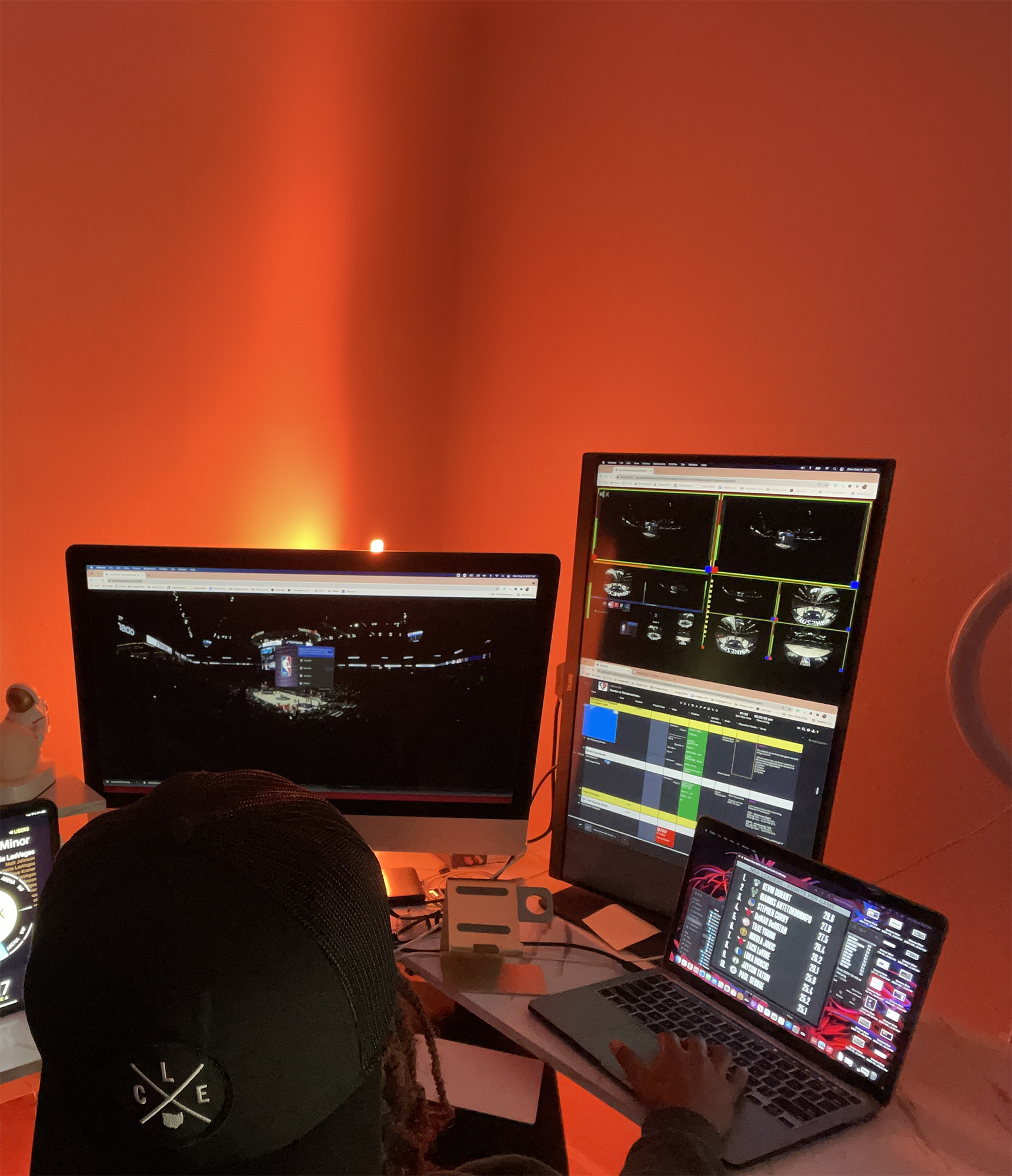
Create versatile, scalable, software-defined production systems while minimizing the risks of traditional broadcast.
Our software-defined broadcast infrastructure revolutionizes traditional broadcast pipelines by eliminating the need for a physical plant, enabling you to operate a 24/7 broadcast center with a globally distributed crew, selected based on their skills rather than location. With a secure, distributed infrastructure that offers robust redundancy, our software-defined offering reduces the risks incurred by traditional broadcasting workflows and slashes costs by an estimated 50% or more. In essence, software-defined production fundamentally changes teams’ relationships with equipment, crews and audiences, helping them deliver more to their organization.
-
Case Study
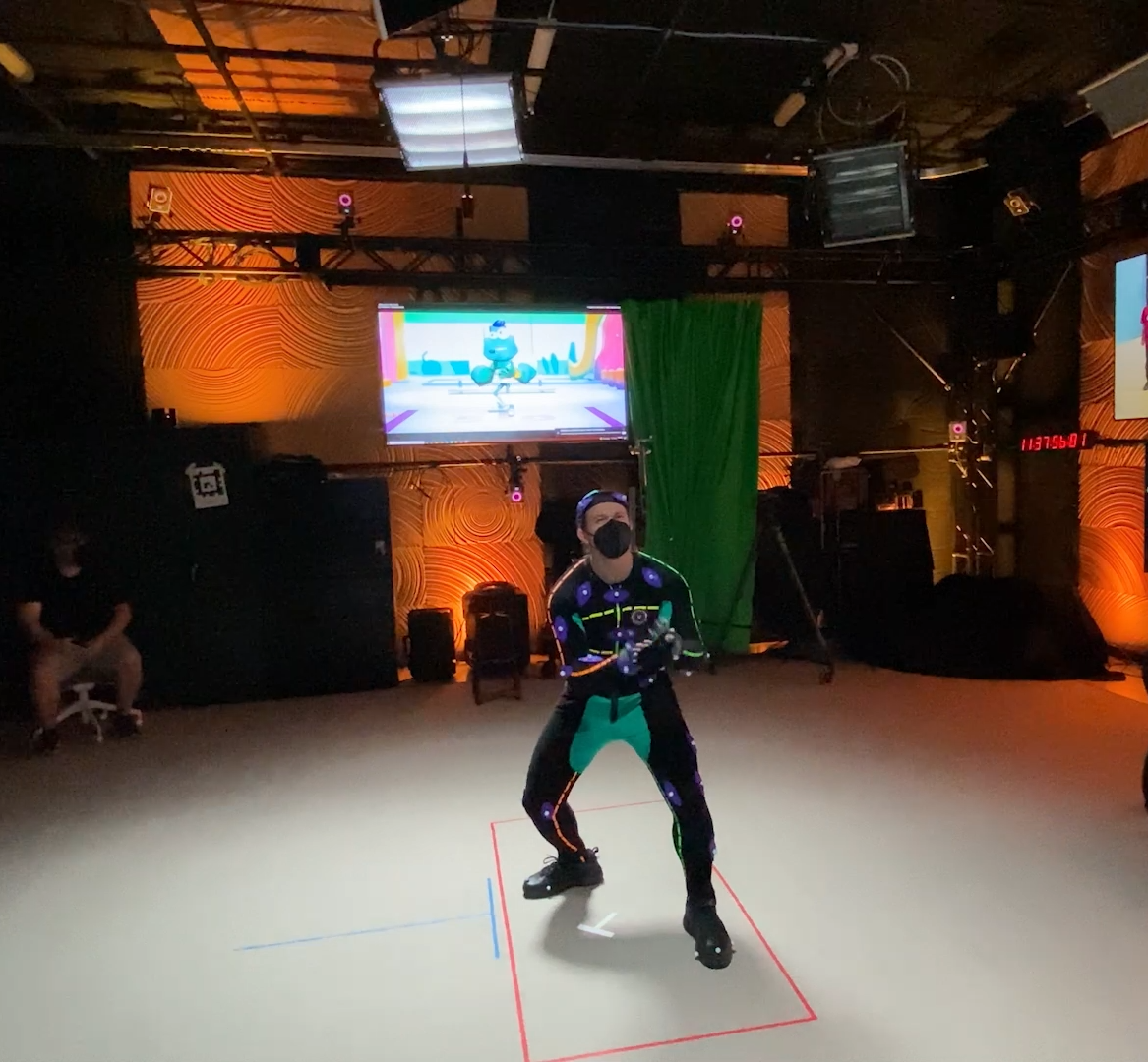
Terry’s Terrific Fitness Fantasy • We partnered with Verizon, GoNoodle, and quarterback Tua Tagovailoa to produce a cutting-edge broadcast that brought the popular world of GoNoodle to life.
-
![Tua Tagovailoa and Terry on a production stage filming]()
Opportunity
Using Verizon’s low-latency 5G network, we blended mocap data and multiple camera feeds into a seamless, interactive virtual world.
-
![4 screens showing the film production]()
![Terry a blue 3D animated character]()
-
Solution
The broadcast integrated live video of a classroom in Chicago, bringing students into the broadcast in real time—and encouraging kids everywhere to get up and play.
-
Want to learn more? See the full case.
Swipe
For More!
Drag
For More!
Evolve with the changing habits of today’s viewers.
The broadcast industry is in the process of intense transformation, spurred by trends that are challenging the industry in fundamental ways: shifting business economics due to the migration of linear to digital, consolidation of archives due to merger or acquisition, and an emphasis on sustainability. Add to that an antiquated infrastructure, with legacy workloads requiring heavy investment in (and transportation of) physical equipment and an overall lack of flexibility to reflect the dynamic requirements of broadcasting today. Software-defined production addresses each of these changes.

Software-defined production runs on the latest cutting-edge technology: NVIDIA, AWS, Adobe, Google Cloud Platform, Oracle, RED Digital Cinema, Vizrt, and Central Control.
Start your software-defined production journey now.
Delivering an immersive, interactive experience never seen before in broadcast.



How We Work
Harness software-defined production to reduce costs now.
Want to talk software-defined production? Get in touch.
Looking to learn more? Check out some of our related content.


A Look Into Our Virtual Celebrations Around the World
A Look Into Our Virtual Celebrations Around the World


This year, we learned a lot about creating virtual events, transitioning years of experiential expertise to offer brands the opportunity to continue to show up for audiences—whether building our own proprietary tool to enable true interaction through livestreams, designing virtual event halls to connect and network in, or developing new and immersive broadcasting solutions. And after a long year of social distancing, it only made sense that our global teams were eager to use what they’ve learned to celebrate and capstone 2020.
We’ve loved watching that expertise and practice pay off around the world as our teams have infused live virtual experiences with a greater level of interactivity and accessibility. Events like the LataMMairfest, our own end-of-the-year celebration for Latin America, and the WFH Wonderland, a cooking show for the culinary-inclined, served both as an entertaining experience and a showcase of our capabilities—an example of what we can be achieved when customer and client experience is applied internally, for one’s own team.

Getting ready for her close-up behind the scenes.
For the last few months, virtual experiences have been in the spotlight for building brand relevance among customers. And while in-person gatherings remain beyond the limits of possibility, the virtual ecosystem became the most efficient way to connect and celebrate with employees too, albeit not a simple one. It requires a new set of skills that test even the deftest event planners, but when done well, it offers unlimited opportunities for companies to deliver better employee experiences—for example, a livestream that connects an entire region of 800+ people that would never have been able to celebrate in the same physical space.
Planting the Seeds of Success Throughout the Year
Virtual events are still a novelty for brands, which means there’s plenty of uncharted territory. LataMMairfest integrated all LATAM offices across different time-zones, languages and cultures in the same virtual environment: a livestream fueled by local storytelling. Hosted by MediaMonks’ Events leads and our Marketing Director in LATAM, the show kicked off with a live music performance to hype up the team, followed by four segments—one per every featured country—and a final after-party. Each segment included vlogs from a selection of employees, showing the audience around their cities’ hidden spots and must-see places to make viewers feel closer to their colleagues and their company.
The planning, however, began long before the last few months of the year. “It’s important for us to celebrate as hard as we work,” says Daniela García, Events and Office Support Lead at MediaMonks Buenos Aires. “Keeping that philosophy alive in a year when we can’t see each other has been a real challenge, but one we tackled since day one by planning smaller events throughout the months to keep our people entertained.” The team had previously organized SpringFest, a livestream that brought 400+ people together virtually to celebrate the new season, including interactive elements like a live DJ set, karaoke, games and more.

The LataMMairfest event included a live musical performance.
Apart from creating the desired engagement and motivation, these events welcome new employees, help integrate the team across various mergers throughout the year, and inspire them to share snippets of the event on social media that fueled brand awareness externally. Such was the case with WFH Wonderland, as Peter Gerdes, Mobile Operations Manager and host, explains: “We went for organized chaos, bringing Monks together by cooking with our office chefs, who showed them how to prepare a great three-course dinner. For the not-so-culinary-inclined, we had René with an AirFryer, who cooked fries and made cocktails, of course! With an extra desert in the shape of a quiz and an after-party with DJ’s.”
As experiences go virtual, digital-first companies may be better equipped to deliver—but impressing a team of digital experts is its own challenge for organizers. Fernando Viñas, Events & Office Support Coordinator at MediaMonks Buenos Aires, explains, “Our goal as event coordinators is to make our people feel special, and the only way to do that for a group of detailed-oriented experts in the digital field is to make something as good as the work they produce on a daily basis.”
Stoking the Fire of Collective Enthusiasm
To keep people engaged and entertained through a screen over several hours is no easy feat, but there are a few tips companies should keep in mind. “It’s all about finding the right balance between sophistication and intimacy,” says Nicole ‘Lenny’ Aisemberg, Marketing Director LATAM. “Just like anything we pitch out to clients, we came up with an interesting concept and specific goals we wanted to attain. A virtual event must be professional, as it’s a reflection of our work. However, it should also feel like home. Personal touches can make a big difference in terms of engagement, and that’s why we chose to host the show ourselves. It wouldn’t have been the same with an outsider.”
Through this approach, companies can ensure a unique experience that can’t be replicated by anyone else. And for a company that works as one office in multiple locations like ours, creating one experience for the entire region made absolute sense—a logical, seamless extension of the unifying message emphasized every day of the year.
Building collective enthusiasm by sharing sneak peeks and gifts while keeping the mystery is another great way of stoking excitement and participation. “The hype is a crucial component in any event, but especially in a virtual one. No one knew what was going to happen, and we limited ourselves to small Easter eggs that would fuel conversation, but that’s it,” Viñas explains.
While they don’t completely recapture the experience of gathering in-person, virtual events can play a critical part in supporting a shared sense of community and culture among a team spread afar. And when people feel genuinely included, they’ll be more willing to share that with the world.
virtual events employee experience buenos aires livestreaming
Mix Entertainment and Shopping with Livestream Commerce
Mix Entertainment and Shopping with Livestream Commerce

Sectors of the retail industry have been hit especially hard with many businesses unable to open their physical doors. These brands are left to rely on big name retailers or pivot their approach to increase reach visibility to convert consumers digitally. To do so, many are seeking inspiration from the direct to consumer model to engage directly with their audiences and make their products more widely available. While retailers and brands have both incrementally invested in digital platforms more and more, year after year, these challenges show how the need to digitally transform has accelerated to keep up with shifting user behaviors.
At a time when consumers are craving entertainment and connection while at home, livestream commerce—evoking the idea of home shopping TV programs, but made more interactive—is an intriguing solution for brands to directly and authentically engage with audiences. As a response to increased video viewership of at-home audiences, the strategy builds on recent trends in shoppable social content and the rise of influencer partnerships.
China is No Stranger to Livestream Commerce
While it may be having a moment right now, livestream commerce isn’t new; Taobao Live, the largest ecommerce streaming platform in China and owned by Alibaba, made $2.85 billion in sales on Singles Day (the country’s biggest shopping event) last year. The COVID-19-induced lockdown in China has increased the popularity of the platform even further; in February, merchants on the platform raised by 719%, according to Glossy.
Much of the appeal of livestreaming commerce is its ability to mix engaging, interactive content with brand stories. JD.com, another ecommerce platform in China, hosted online “e-clubbing” events featuring musical performances and DJ sets—and the ability to buy liquor in a few taps, replicating the social experience of being at an actual club.
How Western Brands Are Experimenting with Shoppable Content
In the west, Amazon has similarly mixed commerce and content with its “Twitch Sells Out” event for Prime Day, enlisting influencers and content creators in the gaming space to showcase items on sale that are relevant to the content they typically put out—for example, listing their streaming setup, gaming equipment or merchandise for a favorite game franchise. More than just a one-off event, Amazon employees livestream commerce on its Amazon Live platform, where brands and influencers broadcast content with shoppable listings underneath.
Monk Thoughts
If ecommerce and conversion-based content is an essential bucket, we can help fill it faster and more effectively.

Elsewhere, other platforms have begun experimenting with shoppable advertisements. Instagram Checkout, lets users discover and purchase products right within the feed, and Levi’s has had success with a similar feature on TikTok. In the linear TV space, NBCUniversal has introduced NBCUniversal Checkout, making content across the brand shoppable. Emarketer’s Q1 2020 Digital Video Trends report notes that NBC’s Peacock streaming service will include shoppable content among the ads that it serves.
While these examples aren’t live, their development suggests there is a general growing demand for content that converts. MediaMonks Founder Wesley ter Haar notes that for many brands, conversion-based content remains top of mind as they consider ways to pivot existing strategies or continue to engage with audiences digitally.
“Brands are asking themselves if they need to keep the ‘content machine’ running,” he says. “If ecommerce and conversion-based content is an essential bucket, we can help fill it faster and more effectively by shifting from traditional production to tapping into influencers and livestreaming.”
While Social Distancing, Video is King
Over the course of the pandemic, at-home users have flocked to video content. According to data from WARC, 38% of consumers are watching more online video content now than they had before the pandemic. Out of that group, 73% say they expect to maintain that higher amount of viewing time. Among the most popular video content that people want to watch are how-to and tutorial videos, according to data from Hootsuite, a category that lends itself well to influencer content and B2B stories.
In fact, influencers are ideally situated to engage with new and existing customers with creative and livestreamed content. They are adept at using their voice and authority to recommend products to audiences and have built loyal followings through tutorial content—for example, the lucrative beauty space on YouTube that has catapulted popular vloggers into full-fledged business owners.
Monk Thoughts
User behavior is being built that will change how we use these tools and how we create and connect together.
In response to the challenges that brands and retailers have felt due to the ongoing pandemic, our influencer activation team IMA recently offered a few solutions, including multichannel influencer campaigns that amplify voice and awareness across communities, as well as partnering with existing product advocates to carry business momentum on social media. Such strategies enable brands to reach consumers authentically, backed by a consolidated effort to ensure working teams can easily continue production safely at home and produce the stream remotely.
Build Value Through Assistive Content
While brands and retailers are focused on solving the “now,” they must also look ahead into how they will serve consumers throughout what may be a difficult year ahead. As consumers seek out content and connection that helps them understand and make the most of a new normal—whether that means staying sane while social distancing or stretching the value of a dollar—livestream commerce offers a great opportunity to build a brand relationship.
Despite being a vehicle for commerce, it doesn’t have to be too salesy—think about a retailer offering a live cooking show focused on recipes using ingredients that are already in the pantry, for example, or a makeup artist giving tutorials featuring “dupes,” or greater-value versions of popular cosmetics.
“This is the new family dinner, this is how we watch movies together,” says ter Haar on the innovative ways that people are connecting. “We’re building traditions now that we don’t yet know are traditions. User behavior is being built that will change how we use these tools and how we create and connect together.”
Now more than ever, brands and retailers must be there for their audiences. Through livestream commerce, brands can accommodate new user behaviors that have emerged and engage in authentic, informative ways with video content. Accommodating a need for connection and entertainment, the format is well tailored to building strategic relationships into the year ahead.
Livestream commerce livestream content livestreaming ecommerce dtc influencers influencer marketing amazon taobao alibaba shoppable content shoppable video