Choose your language

Choose your language

The website has been translated to English with the help of Humans and AI

Dismiss

Revolutionize Live Broadcasts with AI-Powered, Real-Time Content Segmentation

Revolutionize Live Broadcasts with AI-Powered, Real-Time Content Segmentation

AI AI, Emerging media, VR & Live Video Production 4 min read
Profile picture for user Lewis Smithingham

Written by
Lewis Smithingham
SVP of Strategic Industries

The facade of the IBC convention hall is depicted. Large banners outside display text reading "Badge Collection," "Entrance," and "Redefining Media Leading Innovation." A futuristic image of a person wearing a virtual reality headset is featured. The foreground has a sign that reads "Welcome to IBC2024." People are gathered near the entrance, and a traffic cone is visible on the wet pavement.

We’ve just returned from IBC, the largest trade show and convention for broadcasters, and this year’s event was a whirlwind of innovation and cutting-edge technology. We had the opportunity to explore the latest advancements from industry leaders like NVIDIA and AWS, and I’m proud that we also showcased our own groundbreaking developments, including the debut of a new AI-powered product, StreamSearch.Flow.

StreamSearch.Flow is an advanced AI technology tailored for live broadcast environments, enabling broadcasters to pinpoint and segment particular objects, brand logos, keywords and more as they appear in content in real time. It isn’t just visuals that StreamSearch.Flow picks up; it can also recognize designated words within the audio stream, ensuring content—like real-time highlights, post-event recaps and more—is curated with precision.

Effortlessly capture and segment the content your fans crave.

While content segmentation itself isn't entirely new, StreamSearch.Flow stands out by offering broadcasters the capability to perform these tasks instantaneously during a broadcast. This means broadcasters are no longer limited to curating highlights post-broadcast, but can instead enhance viewer experience dynamically as events unfold, seamlessly delivering the output to live audiences across streaming channels.

This unique functionality is powered by NVIDIA Holoscan for Media, an AI-enabled, software-defined platform for live media. Additionally, StreamSearch.Flow integrates seamlessly with Monks.Flow, our professional managed AI service, providing broadcasters with a robust and comprehensive AI solution that enhances live broadcast operations effortlessly.

Why does this matter? Well, imagine being able to compile highlight reels based on precise criteria, such as capturing every slam dunk made by a basketball player wearing a specific brand's shoes. Or using real-time content segmentation to manage brand safety by instantly censoring inappropriate content, such as foul language, whether it's spoken or displayed on signs in crowd shots.

Similarly, StreamSearch.Flow can be used to verify how long a brand is featured for product placement or other sponsorship opportunities. For instance, during a morning show cooking segment, it can measure and verify the screen time devoted to a branded cooking product, ensuring that it receives the intended exposure in alignment with the brand's marketing goals. Similarly, in the context of a sponsored event, you could track the duration that a brand's logo is displayed on screen—confirming that it meets the agreed-upon airtime in the sponsorship agreement and, thus enhancing accountability and trust between sponsors and the broadcast team.

Each of these above use cases are possible, whether you’re streaming over the airwaves or on platforms like TikTok, Facebook Live, YouTube Live, Twitch and more. So, how does it all come together? Let’s look under the hood.

The Monks booth at IBC. The booth displays the text "Software-Defined Personalization Through Gen AI" and "Camera to Consumer." The setup includes three computer monitors. To the right, a large screen shows an image of a person wearing a coat, standing outdoors near a modern architectural structure.

IBC 2024 attendees had the chance to see StreamSearch.Flow and other demos in action at our booth.

Software-defined production paves the path for AI transformation in broadcast.

StreamSearch.Flow uses a highly adaptable large language model that can be tailored to meet the specific needs of a brand. By training the model to recognize keywords, logos or other content, broadcasters can ensure that their (or their audience’s) unique objectives are captured with ease. And because the model is trained specifically for their needs, brands mitigate the risk of sharing data with a publicly trained model, ensuring that sensitive information remains protected and proprietary.

AI tools like this thrive on software-defined production pipelines, which involve software to control and manage production processes in a way that is both flexible and automated. This replaces the traditional single-use hardware found in control rooms with versatile software applications. By integrating digital technologies instead—on premises or in the cloud—broadcasters can optimize their manufacturing and production workflows while reducing their physical footprint.

Traditionally, software-defined production involves using multiple virtual machines in the cloud, with each machine running a single software application due to the individual CPU requirements. Holoscan for Media enhances this approach through containerization, allowing multiple applications to share compute resources such as GPUs, CPUs, and RAM. This not only reduces the overall resources required but also facilitates lower latency and higher video quality. The efficiency of shared resources translates directly into superior performance and cost savings.

Holoscan for Media’s repertoire of applications for containerization is continuously expanding, with a substantial amount of software already containerized for broadcast pipelines. This makes it an ideal choice for us and our clients, supporting our vision that containerization will define the future of broadcasting by enabling functionality like StreamSearch.Flow.

A group of people gather around a robotic alien dressed in a beret and red scarf, holding a red apple, at a trade show. The puppet is seated at a small table, engaging with a seated woman in the foreground by drawing her portrait. Various exhibitors and displays are visible in the background.

In addition to seeing StreamSearch.Flow, attendees could have their portrait drawn by our robotic alien sketch artist, Sir Martian.

Keep ahead of emerging viewing habits and cultural affinities.

The ability to segment content in real time opens a new world of possibilities for enhancing viewer engagement. For example, broadcasters can move beyond traditional demographic categorizations, curating content that resonates with viewer interests and cultural affinities. This personalized approach ensures that the content delivered aligns more closely with what audiences truly care about, such as the sneaker-themed basketball highlights mentioned above, thereby offering new and exciting advertising opportunities for brands looking to sponsor tailored content.

Additionally, streaming platforms can act on the consumption data they have collected from viewers to provide highly targeted and personalized viewing experiences that reflect individual preferences. This level of customization not only enhances viewer satisfaction but also helps validate viewer identities, accommodating interests that might not traditionally fit within traditional broadcast contexts—like the intersection of fashion or music with sports.

As viewing patterns and demographics shift, particularly among audiences who prefer social platforms for viewing highlights rather than live events on TV, StreamSearch.Flow enables broadcasters to adapt seamlessly and maintain relevance with their younger, more digitally savvy fans.

The broadcast landscape is evolving. Are you ready for it?

Software-defined production is revolutionizing the broadcast industry, enabling broadcasters to work more efficiently and effectively than ever before. With the growing adoption of Holoscan for Media, broadcasters are empowered to take greater control of their workflows, enhancing their ability to deliver new and engaging viewing experiences to their audiences.

StreamSearch.Flow exemplifies the seamless integration of AI technology into broadcasting, helping broadcasters provide hyper-relevant content that resonates deeply with viewers. As the developer of one of many innovative technologies driving this transformation, we seek to demonstrate the potential of AI to reshape how content is curated and consumed.

We’ll continue to push the boundaries of what's possible in broadcasting, leveraging the latest technology from partners like NVIDIA to bring about the next wave of technological advancement—all to deliver cutting-edge solutions that meet the evolving needs of broadcasters and their audiences.

StreamSearch.Flow enables real-time, AI-powered segmentation of live broadcast content to enhance viewer engagement and operational efficiency. StreamSearch.Flow enables real-time, AI-powered segmentation of live broadcast content to enhance viewer engagement and operational efficiency. live broadcast services holoscan for media software-defined production content segmentation VR & Live Video Production AI Emerging media
`

September 13-16, 2024

Meet the Monks
at this year’s IBC

Join us as we engage with industry leaders, explore new collaborations, and showcase cutting-edge broadcast tech. Drop by our booth 14.AIB4 in the AI Tech Zone!

People on a panel at IBC talking

IBC (International Broadcasting Convention) is the world’s most inspiring content, technology and broadcasting event. Join our team of experts to discuss the challenges and opportunities in broadcasting, streaming and content distribution--and how we’re using the power of AI to innovate end-to-end. With decades of experience, we’re building upon our software-defined production offering to help our clients and partners stay ahead of the ever-evolving industry with our AI-centric solution Monks.Flow. Find out exactly what we’ll be up to throughout the week.

Event Details

Join us for in-depth panels and demos.

  • Monks Booth

    Stop by our dedicated area in the AI Tech Zone, which is prominently located near the main entrance. Stop by and let’s chat innovation!
    Find us here.

  • Sir Martian Demo

    Our advanced, AI-powered robotic system takes the role of a street caricaturist to draw passersby. It engages in conversation with Amazon Transcribe and engages people with emotion-driven voices powered by Amazon Polly.

  • Immersive LCP Demo

    Join us for a demo on producing live and recorded virtual reality content using cloud workflows and AWS’s cost-effective solutions, emphasizing the content creation process and AWS benefits.

  • AI Meets Software-Defined Infrastructure: Shaping the Future of Live Media | Panel

    Saturday, September 14th

    AI Tech Zone Hall 14

    This session will explore the transformative potential of AI-powered, software-defined broadcast environments, which offer unparalleled scalability and flexibility.

  • Unlocking New Pathways to Monetization with AI and the Cloud | Panel

    Sunday, September 15th

    AI Tech Zone Hall 14

    Don't miss this session to discover how AI's predictive capabilities and recommendation engines, woven into cloud-based workflows, are revolutionizing fan engagement and driving revenue as viewing habits evolve.

Experts on site

Meet the Monks

Connect with us at IBC 2024

Monks needs the contact information you provide to us to contact you about our products and services. You may unsubscribe from these communications at any time. For information on how to unsubscribe, as well as our privacy practices and commitment to protecting your privacy, please review our Privacy Policy.

Dive Deeper

Exploring the Software-Defined Infrastructure of the Future at IBC

Exploring the Software-Defined Infrastructure of the Future at IBC

Experience Experience, VR & Live Video Production 6 min read
Profile picture for user mediamonks

Written by
Monks

A broadcast room with so many monitors and a soundstage

IBC, one of the most influential events for the broadcast industry, has come and gone again. Hosted in Amsterdam, IBC is created “by the industry, for the industry,” focused on key opportunities, challenges, and innovations shaping the broadcast industry. We showed up to explore the exhibition floor and warm seats on the stage—most notably with a panel session alongside Amazon Web Services (AWS) and NVIDIA, “Tuned Into Tomorrow: Software-Defined Broadcast Infrastructure.” Watch the session here, or read below for a recap on what software-defined production is and its benefits to broadcasters.

Sepi Motamedi, the Global Broadcast Industry Marketing Lead at NVIDIA, moderated the panel. Our SVP of Innovation, Lewis Smithingham, participated in the panel discussion alongside Nina Walsh, the Head of M&E Business Development for APJ & Americas at AWS, and Richard Hastie, the Senior Director of Professional Visualization at NVIDIA. By combining their unique perspectives, the panelists discussed how software-defined production addresses common challenges in traditional broadcasting, such as cost reduction, increased flexibility, and decreased carbon footprints.

What is software-defined production?

The panel kicked off with a breakdown of software-defined production. Hastie put it simply: “It’s about having a piece of software that is completely abstracted from the hardware and effectively can run anywhere—whether that’s in the cloud, whether that’s on standardized hardware in the data center, or whether that’s even on power-optimized or location optimized devices at the edge.” It’s that neutrality and versatility, said Hastie, that makes software-defined production a game-changer.

Essentially, software-defined production frees the industry from limitations that have held it back. Smithingham shared an anecdote about how he set up a space with an 8K projector to immerse himself in the season’s NHL games, “but I realized the show is only broadcast at 720p. Why is that? We’re not innovating because we’re so tied to financial models built around physical infrastructure.”

This is an important point, as software-defined production effectively eliminates the costlier aspects of production. There’s no need for a large physical plant made up of control rooms or OB trucks that cost tens of thousands of dollars to rent each day—or millions to buy. The technology also reduces the number of boots on the ground, meaning significant savings in transporting people as well as equipment. We’ve estimated our software-defined offering can slash costs by an estimated 50% or more compared to traditional broadcasting.

Financial models notwithstanding, cautiousness is another barrier that has historically stood before innovation. It’s easy to see why. Broadcast professionals must avoid various risks in the traditional setup: generators can break down, a wire can be tripped, the list goes on. Why add more risk by completely changing the setup (and the skillset) required to produce a broadcast?

While there is a necessary learning curve, Hastie said, other industries have shown that you can migrate to the cloud and ultimately reduce risk. "Let me dispel some risks: broadcast, real-time media absolutely can be done using standardized hardware. It can be done in the cloud, it can be done on-prem,” he said. “It's irrelevant where the actual hardware now exists. And actually, you only have to look at other industries to validate that." He notes how the stock exchange and medical services both function on the cloud today, with billions of dollars (and human life) at stake in confidence that the technology will always remain stable.

So, how does software-defined production elevate creative potential? Smithingham revealed a sizzle reel featuring some of our most notable broadcast events.

00:00

00:00

00:00

Enable flexible, versatile production workstreams.

Smithingham noted how among the projects showcased above, most of the team weren’t on-site—and often weren’t on the same continent, with talent spread across several US states, Brazil, Argentina, Germany and more. This point touched on another clear benefit of software-defined production: flexibility in assembling your dream team for the creative process.

Monk Thoughts There are people I always wanted to work with, who I couldn’t have hired before. But we work in the cloud now, so location doesn’t matter.
Headshot of Lewis Smithingham

In addition to how you build your team, a software-defined approach opens opportunities to quickly adapt to the demands of individual productions or locations. Hastie shared an anecdote about a sports broadcaster who would fly in three flight cases of equipment to every game because it was impossible to tell what equipment would be needed until they got there.

“If they show up at the venue and they need one extra encoder, they might not have had that in the hardware flight case that they were shipping around. At that point they were completely inhibited from changing or deviating from the planned program they were trying to make,” he said. “But now in the software-defined world they can just download one more application and deploy it, or they can push it to the cloud and connect to it, job done. It's empowering when you think about the capability that software-defined production actually brings to creativity and production creation."

Unlock personalization and relevance at scale.

The flexibility unlocked by software-defined production enables greater personalization required to adapt to today’s viewing habits. Walsh shared that a key benefit to the technology is “Being able to respond to the wants, the asks of the audiences in almost real time—being able to ensure we're creating the content when they want it, where they want it. We have that flexibility to use the artists, the directors that we want to at the same time without borders and time zones being a restriction to that.”

Being able to pivot in real time to audience demand is crucial, because there’s a strong hunger for personalization, particularly among sports fandoms.  73% of sports viewers perceive rights owners’ use of fan data as “disappointing” (23.4%) or “below expectations but catching up” (49.7%).

Monk Thoughts We have to realize the way our audiences want to consume media has irrevocably changed. They want stuff that appeals to them as an identity or an individual, not a monolith.
Headshot of Lewis Smithingham

One example of how software-defined workstreams can help deliver relevant content is our Fan-Focused AI Highlights offering, announced at IBC in collaboration with AWS and NVIDIA. The offering uses AI and machine learning to instantly clip highlights in live broadcasts. The AI model is capable of segmenting individual people and objects in live broadcasts and effectively eliminates the need for manual selection and editing, a typically time-intensive process.

Regionalizing content is one major whitespace that Walsh touched on, drawing on her focus on the Asia Pacific and Japan. “The region is so diverse; you have different languages where you have to localize that content,” she said. “There's also bringing the feeds internationally from the US and Europe to deliver to those audiences because they don't want just local content, and vice-versa.”

Walsh named the PGA Tour’s Every Shot Live technology as a great example of enabling regional adaptation at speed. With it, broadcasters can follow the players who are important to their local audiences, rather than rely on a single global broadcast that focuses on the top-performing few. “Not having to fly in a crew, film it yourself, follow that crew around—it gives you that flexibility to be able to take those feeds, bring them back locally to audiences and cater to that maximum entertainment value,” says Walsh.

Sustainability is finally within the broadcaster’s grasp.

Flexibility and personalized content are great, but sustainability is a crucial benefit that software-enabled production allows. “It’s always been a foregone conclusion that production cannot be sustainable. ‘It’s never going to change, we need eight generators,’” Smithingham said.

But after adopting software-defined production and making it the norm for our broadcasts, an audit from PWC discovered eye-opening results: “We found that in seven shows, we produced 0.1 metric tons of carbon, which is effectively a rounding error. A flight one way from San Francisco to New York is six times that,” Smithingham said. “We found an 88% reduction in carbon footprint compared to previous shows.” Some of the ways that software-defined production cuts down on carbon include eliminating the need to fly out whole teams and reducing reliance on energy-intensive appliances and broadcast trucks.

The sustainability opportunity showcases why the industry must change. “Broadcasters genuinely have got to show their green credentials nowadays. Greenwashing is not acceptable—it isn't today and certainly won't be in the future,” said Hastie.

Software-enabled production is increasingly accessible for all.

Though software-defined production might currently have a learning curve (broadcast engineers who  understand cloud technology and IT), NVIDIA, AWS and Media.Monks are each working to make software-enabled pipelines more accessible for broadcasters and brands. Fan-Focused AI Highlights, and our software-defined production offering in general, are two examples of that.

On this need, Walsh shared her approach to helping customers strategize and plan their adoption of AWS. “How do they move from these on-prem, in-house-built solutions to leveraging these software solutions? Training, enablement, redefining what those roles look like and the structure of teams… there needs to be a clear strategy in place.”

Through these moves, broadcasters can better equip themselves to build and deliver content that today’s audiences truly want to watch. “We’re facing a multidimensionality of content delivery,” said Smithingham. “As media shifts from broadcasting to TikTok and Fortnite, having that flexibility as creators and broadcasters will really change how we deliver and personalize our content.”

Dive into a panel at IBC to learn how Media.Monks, AWS and NVIDIA are revolutionizing the broadcasting industry with software-defined production. live broadcast services broadcasting software-defined production Experience VR & Live Video Production
`

The Product

Expand your broadcast potential with software-defined production.

Virtualizing production to accelerate and innovate workflows, drastically reduce costs and decrease your global carbon footprint.

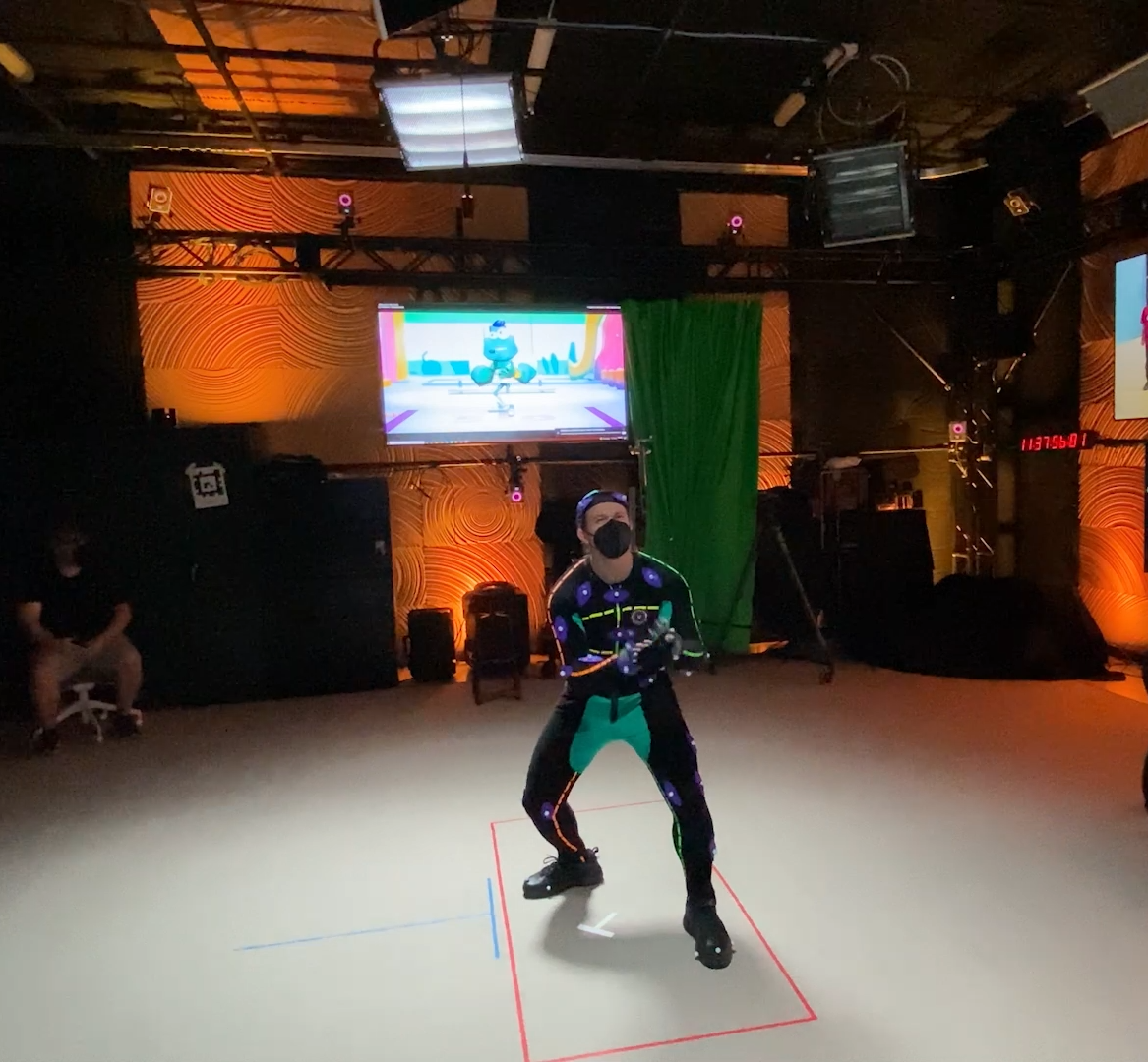
A person in a mocap suit on a soundstage
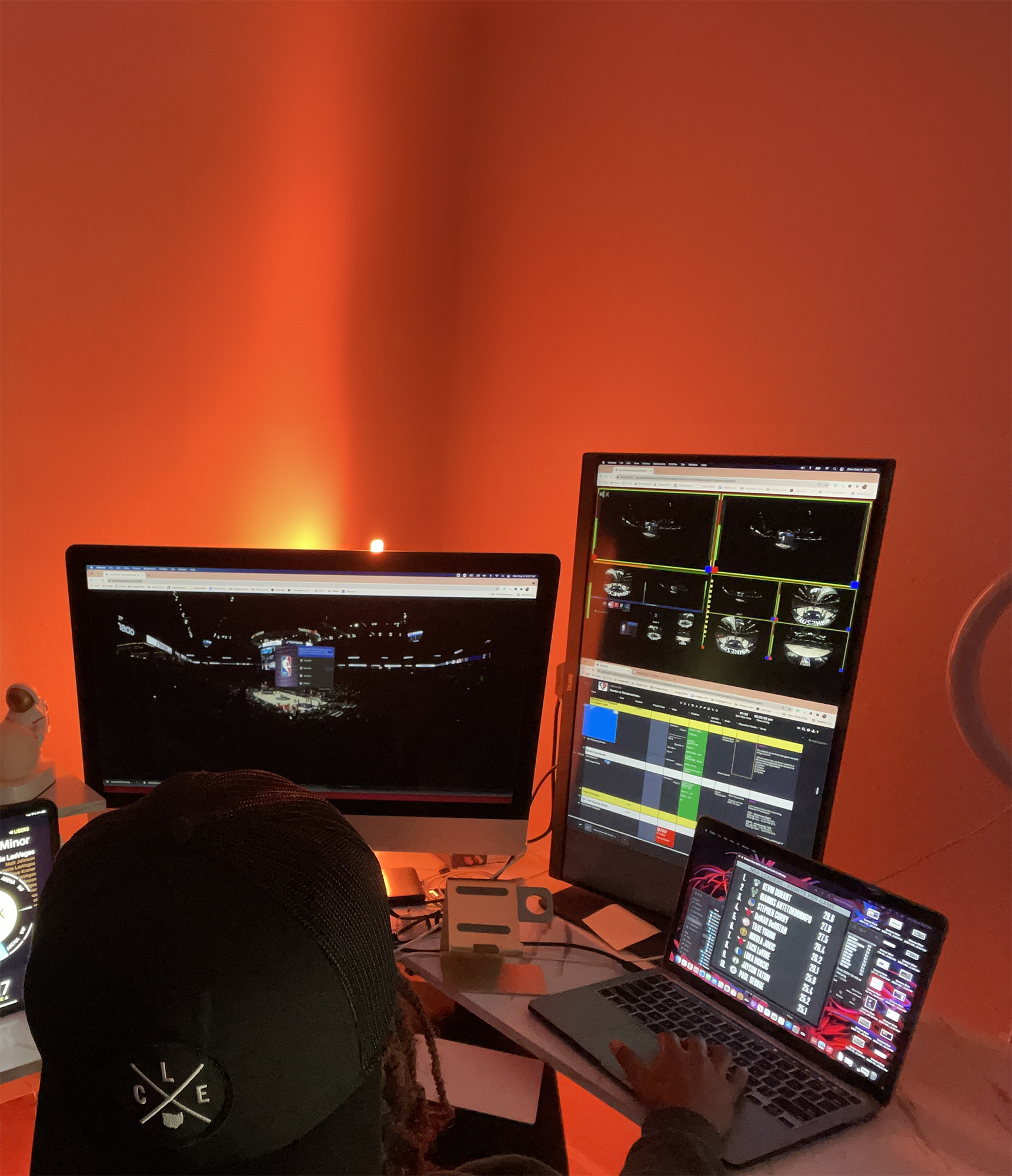
video editing a live broadcast

Create versatile, scalable, software-defined production systems while minimizing the risks of traditional broadcast.

Our software-defined broadcast infrastructure revolutionizes traditional broadcast pipelines by eliminating the need for a physical plant, enabling you to operate a 24/7 broadcast center with a globally distributed crew, selected based on their skills rather than location. With a secure, distributed infrastructure that offers robust redundancy, our software-defined offering reduces the risks incurred by traditional broadcasting workflows and slashes costs by an estimated 50% or more. In essence, software-defined production fundamentally changes teams’ relationships with equipment, crews and audiences, helping them deliver more to their organization.

  1. Case Study

    Terry’s Terrific Fitness Fantasy • We partnered with Verizon, GoNoodle, and quarterback Tua Tagovailoa to produce a cutting-edge broadcast that brought the popular world of GoNoodle to life.

  2. Tua Tagovailoa and Terry on a production stage filming

    Using Verizon’s low-latency 5G network, we blended mocap data and multiple camera feeds into a seamless, interactive virtual world.

  3. 4 screens showing the film production
    Terry a blue 3D animated character
  4. The broadcast integrated live video of a classroom in Chicago, bringing students into the broadcast in real time—and encouraging kids everywhere to get up and play.

  5. Want to learn more? See the full case.

Swipe
For More!

Drag
For More!

Evolve with the changing habits of today’s viewers.

The broadcast industry is in the process of intense transformation, spurred by trends that are challenging the industry in fundamental ways: shifting business economics due to the migration of linear to digital, consolidation of archives due to merger or acquisition, and an emphasis on sustainability. Add to that an antiquated infrastructure, with legacy workloads requiring heavy investment in (and transportation of) physical equipment and an overall lack of flexibility to reflect the dynamic requirements of broadcasting today. Software-defined production addresses each of these changes.

Logos

Software-defined production runs on the latest cutting-edge technology: NVIDIA, AWS, Adobe, Google Cloud Platform, Oracle, RED Digital Cinema, Vizrt, and Central Control.

Start your software-defined production journey now.

Hey👋

Please fill out the following quick questions so our team can get in touch with you.

Delivering an immersive, interactive experience never seen before in broadcast.

Someone wearing a VR headset
A person slamdunking a basketball
A basketball

Case Study

NBA in VRFor Meta & the NBA, we engineered the software-defined production platform to turn their VR broadcast ambition into an operational reality for 56 games across three seasons.

See Full Case Study

How We Work

Harness software-defined production to reduce costs now.

    • Sprints and Consulting

      Your cloud transformation, your way.

      Broadcast Cloud Integrator and Consulting Services are designed for your needs. Sprints often include an initial assessment tailored to your unique situation with the goal of determining the feasibility and benefits of migrating to the cloud. From there, we can identify workflows, create macro signal flows, and propose an initial long-term strategy and migration workflow. Cost comparison, comparative risk assessment and sustainability benefit sprints ensure we can build a solution with your goals in mind.

      Enterprise Consulting includes, but is not limited to:

      • Long-term staff augmentation
      • Long-term cloud control room leasing
      • End-to-end to builds
      • Long-term service agreements
      • Multi-year amortization and financial structuring
      • Complete and evolving architectural diagrams
    • Software-Defined Broadcasting

      A solution for every maturity level.

      Our software-defined broadcasting services span two offerings: software-defined production Managed Service and Virtual Deployable Control Rooms. Designed specifically for those with minimal cloud or broadcast experience who want to use a virtualized workflow for broadcast solutions, software-defined production Managed Service provides staff augmentation and in-housing, managed cloud control rooms, and on-location production services to customers. Our scalable model lets customers adjust Virtual Deployable Control Rooms to meet their needs; with as-a-service delivery, we manage the performance, security and software applications of your infrastructure within a cloud environment.

    • Fan-Focused AI Highlights

      Expand your broadcast rights with Fan-Focused AI Highlights.

      Fan-Focused AI Highlights utilizes AI and machine learning to select highlights from live broadcasts and more effectively distribute custom content highlights to tailored interest-based audiences. By training AI models on extensive footage, Fan-Focused AI Highlights can generate a high volume of clips for a wide array of platforms, eliminating the need for manual selection and editing. The speed and scalability of this service enables the creation of specialized content tailored to niche audiences, like focusing on a specific player for dedicated fans or curating shots of players' footwear for sneakerheads. Ultimately, Fan-Focused AI Highlights aims to help rights holders expand their audiences and increase the value of their content across channels. And this can all be done while eliminating the need for single-use equipment and working remotely, thus offering a scalable and cost-effective solution.

    • StreamSearch.Flow

      Transform live broadcasts into real-time searchable databases with StreamSearch.Flow.

      StreamSearch.Flow is an innovative solution that leverages NVIDIA’s Holoscan for Media platform to revolutionize how broadcast content is processed and analyzed. This powerful tool identifies objects, brand logos, and various features in live broadcasts, creating a searchable database of media in real-time.

      As a leading system integrator for Holoscan, we’ve designed a robust cloud-based workflow that incorporates our AI-centric solution, Monks.Flow. This integration empowers broadcast, media, and entertainment companies to develop hyper-personalized content quickly and efficiently. StreamSearch.Flow enables organizations to distribute tailored content across new media channels at unmatched speed and scale, enhancing viewer engagement and driving content relevance in an increasingly competitive landscape

Want to talk software-defined production? Get in touch.

Hey👋

Please fill out the following quick questions so our team can get in touch with you.

Looking to learn more? Check out some of our related content.

Choose your language

Choose your language

The website has been translated to English with the help of Humans and AI

Dismiss