Choose your language

Choose your language

The website has been translated to English with the help of Humans and AI

Dismiss

Building an Integrated Measurement Strategy With Falabella

Building an Integrated Measurement Strategy With Falabella

Data Data, Data Strategy & Advisory, Data maturity, Measurement 4 min read
Profile picture for user mediamonks

Written by
Monks

An illustrated person holding a phone

It’s the era of first-party data. More specifically, of reclaiming control over one’s data to build improved digital journeys. By now, the imminent death of the cookie is old news, and so is the need to adapt and evolve at the speed of the new digital trends. But while the last few years have cemented this notion for all kinds of businesses, many would agree that the journey to developing a modern, functional first-party data model has proven to be a bit bumpier than expected.

Think of, let’s say, a multinational holding company with about six subsidiaries in retail and banking, operating in seven countries with physical stores and both website and app platforms. Not all subsidiaries are present everywhere, and not all platforms use the same language. Now imagine wanting to unify all of that into a scalable system that provides updated, accurate information about your consumers—processed through reliable metrics that allow you to get a better grasp of their needs and interests. Not exactly child’s play, is it?

Our partners at Falabella, one of the largest retail companies in Latin America, were faced with that exact challenge in their ambition to develop their technological capabilities and strengthen their logistics to support the rapid growth of their online sales. The ultimate goal was simple: to better serve customers through personalized solutions and increase the company’s overall efficiency. The path to get there, though, required considerable expertise in the use and implementation of data. 

Falabella retail store

Growing Its Technological Muscles

Falabella’s flagship department stores, as well as its shopping centers and supermarkets, have crowned it the largest retail company in Chile, and one of the most important ones in Latin America. But while this long-standing brand was built on the foundations of a traditional physical store, the importance of having a strong online presence has never eluded them. 

Today, Falabella is in pursuit of becoming one of the region’s top ecommerce players. In other words, to take the relevance it’s built in the physical world and replicate it in the digital space. But to become the go-to ecommerce platform for a variety of needs, it had to integrate its four pre-existing platforms and their data into a single marketplace and a measuring system.

Our Head of Data Growth, South Cone, Walter Rebollo, was there to support them on that journey. “We put together a dedicated team that worked side by side with the brand’s, serving as a technological muscle,“ he says.

Monk Thoughts The main objective was to improve the quality of the data that Falabella was working with, unifying all its digital properties into a single measurement system.
Walter Rebollo headshot

For a company of this magnitude, any technological miscommunication between properties could hinder the accuracy of their data analysis, which explains the need for a foundational transformation. “Our team of analytics experts, consultants and engineers helped the brand design measurement plans that were aligned throughout the organization. They developed dashboards, documentation, manuals and provided technical support for their implementations,” adds Rebollo.  

It’s More Than Just Statistics

In addition to serving as the technological muscle, the team introduced the brand to a more analytical and data-driven mindset. After all, being cognizant of the potential that lies in one’s first-party data is the first step towards building a sharpened customer experience. And it’s not about playing with statistics to see what sticks. Think of first-party data as a source of truth that illustrates our customers’ personalities and behaviors; a roadmap of sorts to support your audience across the entire customer journey.

Javier Fernández Morales, Falabella’s Regional Head of Performance & Growth, puts it plainly, “As one of the sites with the highest traffic in the region, our first-party data is a key asset in order to provide a better shopping and browsing experience.

Monk Thoughts It allows us to build a closer relationship with our clients built on mutual trust, with personalized services and smarter product allocation.
Javier Fernandez headshot

In retail, consumers expect an omnichannel experience that’s tailored to them. They want to be able to switch between app, web and devices across the purchase journey from start to finish. We designed the analytics framework to capture that information, creating a setup that eased the understanding of how audiences behave and what they are interested in. 

“The digital transformation of Falabella encompassed a bunch of steps that led to the final goal,” explains Gastón Fossati, our VP of Data Growth SPLA. “For example, the implementation of the web ecommerce funnel for all countries, assessments to define the attribution model to be used, baking in machine learning for audience prediction, the implementation of enhanced conversions in Google Analytics and a monthly consulting service to work on the Firebase project for the app, among other things.” 

An Empowered Team Leads to Fast Decision-Making

Beyond providing a seamless customer experience, having a single measurement system aligned throughout the organization can be as helpful internally as it is for customer-facing interactions. Think about it: refined measurement leads to effective automated models, which can then save the team time and energy. “From a backend standpoint, having a better data management system has made it possible for us to develop a well-executed product scalability model,” says Fernández Morales. By allowing marketing technology tools to be executed with greater agility, we empower specialists to make better decisions, faster.

That said, the development of an integrated measurement system from the ground up is not something that happens overnight. In this year-long project—which stemmed from a three-year partnership—both teams worked in lockstep to create a measurement strategy according to each unit’s goals, integrate Google Analytics and train the brand’s team to act upon the information. “Our approach is one of democratizing knowledge, so we always make sure we’re not just delivering but also teaching our partners how and why we do what we do,” says Rebollo. 

Throughout that process, both teams blended with one another to the point where there was almost no distinction between each. “I find it truly remarkable that we’ve created a single team with not only a common goal but also a shared spirit,” says Lorena Alva Salazar, Head of Growth & Martech at Falabella.

Monk Thoughts We wanted partners who could push us, ask the hard questions and help us build the right vision—not just deliver what we ask for. I’m glad to know we have that now.
Javier Fernandez headshot

Today, they can bank not only on a solid, unified team, but also on reliable metrics that are immediately available for quick decision-making. The phase-out of third-party cookies poses no threat, and they are in fact better prepared to forge a closer relationship with consumers. First, an integrated framework and multiple data collection points provide invaluable information on their consumers. And second, the brand can now empower users to choose how much information they want to share, thus safeguarding their privacy.

Learn how our data experts helped Falabella develop a unified, personalized service for clients. content personalization personalized marketing first-party data data analytics Retail data privacy Data Data Strategy & Advisory Measurement Data maturity

Building Users’ Trust (and Better Customer Journeys)

Building Users’ Trust (and Better Customer Journeys)

5 min read
Profile picture for user Smita Salgaonkar

Written by
Smita Salgaonkar
Country Manager - Data & Digital Media, India

Building users trust written out

The richest currency that companies want to acquire is customer data. In today’s connected world, customer datasets with personally identifiable data are hardly in isolation. With each new customer activity, the Jenga tower of customer data grows taller and more unstable. I would propose then that the biggest currency is not just the customer data itself but also how it is used. Not only is customer data becoming harder to earn; cookie deprecation, increased privacy awareness and data privacy regulation are each challenging the data strategies that brands have relied on for years, leaving marketers to wonder what they should do to prepare.

Companies that don’t have privacy and transparency at the core of their data management strategy stand to have consumer trust hemorrhaging like a burst pipeline in the rain. While skepticism towards the collection and use of customer data grows, doubling down on earning users’ trust makes good marketing sense. 

At one of MMA’s Data Unplugged India Series, I was part of a panel discussion “Perspectives on the Evolving Online Data Environment” where we shared how businesses can prepare strategies for a user-first, privacy focused future. The following are my views on building users’ trust shared during the discussion, which I’m expanding on here.

Earning Users’ Trust

A recent survey by YouGov revealed that more than half of consumers are wary about sharing their data, as they don't want it to be misused surreptitiously. Consumers are tired of data breaches, invasive ads and opinion manipulation. Adding to that is the lack of knowledge on the use of cookies and how third-party tracking works. As a brand, if you can ethically convince your customers that they will benefit from the data exchange, they would be more likely to share. This revelation can help marketers in building their first-party strategies, on top of transparent forms of data collection such as loyalty programs, to establish long-term relationships between brands and their customers. 

However, before any first-party data (or 1P data) collection takes place, there must be a foundation of trust built with your audience and the onus falls on brands to keep users' data private and secure. A simple introspective exercise that I encourage my clients to follow whenever they aim to enhance customer profiles through data is to ask: what kinds of data are necessary, why and how it will be used, and whether it should be shared with an external party. 

My colleague Doug Hall, Senior Director of Analytics at Media.Monks, echoes this sentiment:  “Don’t just be legal, be righteous—it will give you a competitive advantage.” Privacy must be proactive and not reactive. It must also be preventative and not remedial. 

On a deeper level, it’s always a good practice to audit a business’s existing technology stack, no matter where the business is in its 1P data journey. An annual tech audit exercise helps businesses realign data priorities, get rid of redundant components or replace them with modern equivalents, and find opportunities in technology or skills that can boost 1P data capabilities.

Some areas to consider when auditing your tech stack for data privacy are:

  • Storage - Investing in keeping data safe and private should be on the forefront of any data collection exercise. Businesses can weigh the pros and cons of engaging a cybersecurity partner or establishing an in-house data security team against the data collected and how and where it is stored. 
  • Access - To address misuse of data, decide who are the essential personnel to have access to the data—is it marketing, data analysts or leadership? Hint: the fewer the better. Access can also be differentiated by the level of access (read or write) and scope of access (dashboard or entire list).
  • Portability - 1P data may be collected off- or online and from various sources. Hence, the data collected may be scattered across multiple systems. Integrating data from all touchpoints into a centralized system can be better for marketers to understand the entire customer journey and offers better control over access to data.
  • Activation - While modern martech systems are designed for customer data activation so that marketers can communicate with smart cohorts, the choice of method of activation matters greatly. Ingress and egress of unencrypted data into cloud stores or non-secured FTP (File Transfer Protocol) sites or email is considered the least safe. Using direct activation connectors between systems is considered the safest, followed by encrypted or private data exchange between trusted cloud systems.

Early Adoption and Smarter Practices

Like learning a new sport, the more you practice a privacy-minded approach to gathering user data, the more capable you will become. Early preparation can lead to greater learning and benefits further down the line as solutions become more sophisticated over time. Also, algorithms that have been trained on greater amounts of data over time instill more confidence and accuracy. Businesses operating with 1P data for longer will also enjoy more help and attention from key technology partners, which improves relationships with customers, partners and stakeholders. 

Privacy is an urgent yet evolving concern that requires everyone in our industry to get together and operate with consensus. By testing, evaluating and sharing new strategies, the faster we come to a common understanding of how privacy should work.

As we pivot to building and using 1P data to manage durability and scale, many may fear that prospecting will be negatively affected, since the decision to share 1P data is voluntary and lies in users’ hands. Building trust by being transparent, open and verifiable—and showing how the data exchange would help them with better customer experiences—encourages shareability. Furthermore, educating consumers about periodically reviewing their privacy settings and how the data is being used and deleted when the app’s life comes to an end further solidifies that faith. This is important as future engagements become first-party driven and businesses seek to become unreliant on unsustainable methods of personalization, such as cookies and resettable device identifiers. 

In scaling 1P data to increase the number of successful journeys, four actions need to be operating in a cycle. 

  • First, marketers need to continuously invest in acquiring prospects and observe their journeys by collecting first-party and behavioral data at key checkpoints. 
  • Once they have that data, they can optimize it by clearing bottlenecks and obstacles throughout the customer journey, such as misplaced calls-to-action or ambiguous navigation.
  • Marketers must observe patterns in journeys that have successfully reached desired goals. This helps catalog and reason as to why some communications journeys perform better than the others.
  • And finally, marketers should select the prospect cohorts that best match desired goals, then recreate successful journeys through prompts and navigation tools on their platforms. All these are contextual environmental variables that brands can still fine-tune to build more relevant and tailored experiences.

Bringing on Desirable Results

As a net impact, strong and responsible data practices can help an organization mature and transform into a better version of itself. First-party data is at the heart of any digital maturity and transformation journey. It helps you to get to know your customers, your markets and your business better. Auditing existing strategies by asking the right questions will guide you on the path to instilling trust in your audience. This can also lead to better data hygiene and evaluate policies on data usage. 

The pandemic has exacerbated and accentuated the way we see the world and how we experience it—more so on what’s wrong and how we can fix it. Privacy is a crucial demand today and is a compliance game changer. For those looking for more strategies and to get clued up on shifting attitudes and regulations surrounding privacy, we’ve put together a report on how brands can navigate imminent privacy changes and get up-to-speed with consumer conversations.

As marketers’ data strategies are increasingly challenged, earning users’ trust before collecting first-party data is a step in the right direction. As marketers’ data strategies are increasingly challenged, earning users’ trust before collecting first-party data is a step in the right direction. data first-party data data privacy
A stethoscope sits on top of a doctors notebook
Northwell Health logo

Northwell Data and Measurement • Teaming Up To Address The Pandemic Crisis Using Data

  • Client

    Northwell Health

  • Solutions

    DataData Strategy & AdvisoryMeasurementConsumer Insights & ActivationData Analytics

Northwell Health hospital building

Staying ahead of the curve.

Like many other healthcare systems, Northwell Health, New York’s largest healthcare provider and private employer, faced an unexpected crisis when COVID-19 cases began to rise in the United States. To address this public health emergency and anticipate future waves of the disease, Northwell Health needed to pinpoint first-party data sources that could serve as leading indicators in detecting and predicting surges in COVID-19 patients—and the need for care—earlier.

In partnership with

  • Northwell Health
Client Words Working with [Monks] to build out our analytics infrastructure allowed us to pivot quickly during a crisis, discovering a new use case for our marketing data that helped us stay weeks ahead of the curve, support public health, and save lives.
Paul Lambson headshot

Paul Lambson

Corporate Director, Customer Insights and Analytics, Northwell Health

Making a (bigger) impact with marketing data.

Just prior to the COVID-19 pandemic, Monks set up a privacy-compliant strategy and data architecture for the Northwell Health marketing team that allowed them to analyze vast amounts of site data white still protecting visitor and patient privacy. The data strategy measured key events and behaviors—like click-to-call, visit wait time tracking, looking up hospital directions, or checking for COVID-19 testing appointments. This data from Northwell Health’s Google Analytics dataset was pulled into a model built with Google Cloud Platform's BigQuery Machine Learning.

When the pandemic hit ground in the US, hospitals everywhere were quickly overwhelmed. Northwell Health started looking for ways to anticipate surges in visits to its facilities. Their newfound ability to analyze site data helped analysts identify patterns in web traffic before each wave of the virus hit. Looking closely at marketing data, they found that overall page views to the system’s website—along with searches for wait times at the emergency department and directions to a hospital—increased significantly leading up to each wave.

Stethoscope
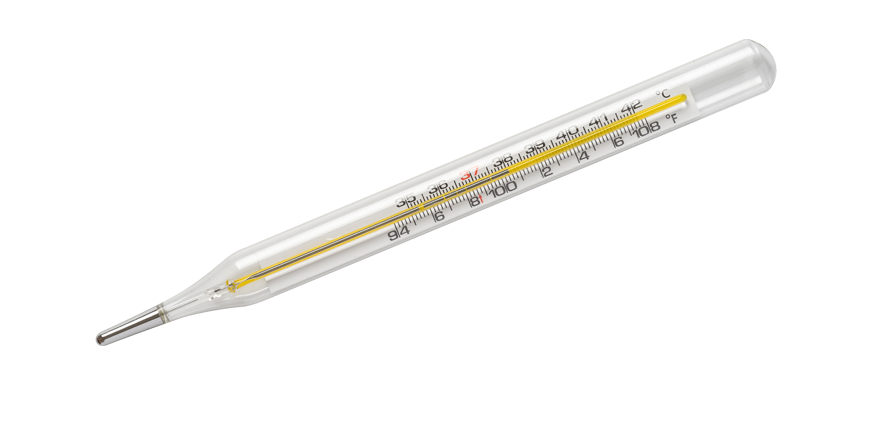
Thermometer
Press Using data from the first six months of the pandemic in New York, officials found that changes in certain areas of web traffic preceded Covid-19 positive diagnoses in the hospital by two weeks.
Read on WSJ

Moving at the speed of digital.

By implementing advanced data and analytics technologies, Northwell Health now has an innovative predictive model to anticipate the next wave of the virus. Insights from the model signal when to proactively allocate resources and staff to serve their patients, support public health, and respond with greater agility to large-scale health crises such as the COVID-19 pandemic.

Want to talk data? 
Get in touch.

Hey 👋

Please fill out the following quick questions so our team can get in touch with you.

Can’t get enough? Here is some related work for you!

`

Data Privacy

How to Get Ahead of Privacy Risks Now, An Ad Age Sponsored Online Event.

headshots of webinar speakers for mediamonks webinar on privacy regulations

00:00

00:00

00:00

What You'll Learn

How to stay ahead.

With movement in regulation, legal challenges to major tech companies, and monthly changes from platform players, many questions have arisen from marketers about what the implications are for their strategic decisions. Our guests Chris Martin, Co-Founder of Media.Monks and Zach Edwards, digital privacy expert and founder of boutique analytics consultancy Victory Medium join host Anna-Belle Buyse, Enterprise Consultant Manager at Media.Monks for a discussion on the important upcoming milestones that will alter your marketing.

Walk away knowing:

  • What we know about regulation now and where it’s headed
  • Where government and platform policy will clash with widely used ad technology in the near future
  • Ways to evaluate risk in your marketing strategy
  • What forward-thinking brands have done to get ahead of the curve
Monk Thoughts Data is not the new oil. Consumer data–at scale–is actually the new nuclear.
Portrait of Chris Martin

Want to talk data? 
Get in touch.

Hey?

Please fill out the following quick questions so our team can get in touch with you.

Can’t get enough? Here is some related work for you!

Report: Strengthen Perception with Brand Health Tracking

Report: Strengthen Perception with Brand Health Tracking

4 min read
Profile picture for user mediamonks

Written by
Monks

Report: Strengthen Perception with Brand Health Tracking

Today, purchase decisions are largely driven by brand values—sometimes more than the product itself. So, understanding consumer perceptions about your brand is key to modern marketing success.

new white paper authored by our behavioral science lead and Director of Strategy April Huff, PhD, outlines methods for measuring, monitoring, and analyzing your brand’s health to garner valuable insights about your brand as well as perceptions about your competitors, your industry and your positioning with both.

“During the pandemic, we’ve seen a lot of shifts in consumer behavior, and we’ve seen people have come to expect a lot from brands—maybe more than in the past,” says Huff. “To me, that indicates you must make sure you’re telling a coherent brand story while understanding your customer and what they expect.” And brand health tracking is one way that marketing teams can quickly get an overview of brand perception, either at a glance or over time—then apply those insights to strengthen consumer experiences.

Are You and Your Audience on the Same Page?

The simplest brand health tracking strategy can accomplish a variety of goals. It can help you understand how you size up among competition or identify your unique strengths. When tracking over time, you can even zero in on quickly shifting trends or sentiments about your products.

Monk Thoughts During the pandemic, people have come to expect a lot from brands—maybe more than in the past.
Headshot of April Huff

Speed is especially important for modern business. Every brand wants to become the most talked-about in their category, and those conversations happen increasingly online, meaning brands must feed the feeds through content that’s relevant to audiences and their concerns—like how L’Oréal Paris drew on social insight to develop a shoppable content hub, Beauty Click, or how Northgate Market capitalized on consumer behavior to hijack Super Bowl ads in a clever way. By tracking brand health over time and across audiences, brands can better identify opportunities to jump into a conversation, rework their messaging or design entirely new experiences—all at a greater speed. 

Build Experiences That Speak to Consumers’ Needs

Brand health tracking can have a much deeper impact than simply knowing what people think about or want from your brand. In fact, Huff advocates that brand teams should build a business case on how health tracking affects clear business KPIs. “Leadership wants to know what brand health is, but unless you can tie it to revenue or other important KPIs, it’s hard to make a compelling case on why these insights should be prioritized,” she says. How might the price of a product or its ease-of-use affect loyalty or purchasing intent, for example? Evaluation of brand health data can help find causality in the way several factors influence how and why people engage—or disengage—with your business.

As brands continue tracking health over time, it’s inevitable that metrics will become more consistent—but far from being a bad thing, this means it’s time to really dig in and pinpoint where to take action. “When we see a baseline established around familiarity, consideration, purchase intent and preference, we ask: where can we add value and move the needle a bit more?” says Huff.

This data may then inspire creative digital ideas, helping turn insights into action—a top-of-mind concern for modern marketers who aim to deliver a fair value exchange through virtualized experiences. In conversation with Tom Beck, Executive Director of SoDA, MediaMonks Founder Wesley ter Haar discussed what he calls the second reawakening of digital, in which experiences across a brand’s ecosystem are measured against how they build brand love while also driving real results.

Monk Thoughts When we see a baseline established, we ask: where can we add value and move the needle a bit more?
Headshot of April Huff

“We’re now at the point of maturity in the industry where we can go, it’s not just cool, it’s delivering impact, business impact,” says ter Haar. “There’s a celebration of digital beyond just being a channel for direct response. We truly believe doing amazing things in digital helps build brands and helps drive business.” Having a better understanding of the audience’s perspective can make these experiences much more effective.

Fill in Gaps in Research and Data

A robust brand health strategy is measurable against key business KPIs over time does more than just tell you how consumers feel about your brand—it’s an excellent initial step in building first-party data, too. “As we move into a world where first-party data becomes king, brand health tracking is an important channel to tap into to understand potential customers independent of changes in privacy laws,” says Huff.

Brand health tracking is built on data willingly offered by consumers—whether they’re your most loyal base or prospects in the general population. And the way you measure sentiment is largely defined by the kinds of data and research that you already have available, meaning brand health insights should complement existing strategies rather than sit in a silo. By growing in sophistication over time, brand health tracking can power evaluation techniques like driver analysis, perceptual maps and more that inform decision-making across the business and the customer experience.

When data and creativity come together, brands can better understand and act on consumer values. From gaining insights that inspire experiences, augmenting existing research or simply finding where your brand stands among the competition, brand health tracking is an important method to meet consumer concerns and needs more effectively—and April Huff’s report offers clear steps on how to apply what you’ve learned to your marketing strategy so that you can make the right decisions at the right time.

Give your brand health a checkup.

Brand health tracking is a simple way to see how others perceive your brand, either at a glance or over time. Report: Strengthen Perception with Brand Health Tracking It may be time to give your brand health a checkup.
Brand health first-party data consumer sentiment customer perception

Enhance Creative by Turning Data into Insights

Enhance Creative by Turning Data into Insights

4 min read
Profile picture for user mediamonks

Written by
Monks

Mejora la Creatividad Convirtiendo Datos en Conocimiento

Today’s CMOs have a lot on their plate: their role is increasingly responsible for overall business growth, managing brand communications, customer experience and in some cases the adoption of new technologies. Each of these responsibilities touch upon the different ways that consumers interact with a brand, making it essential for CMOs—and their teams—to manage a wide-lens view of the consumer journey. But in order to successfully integrate business objectives with data and customer experience, they’ll need to establish marketing strategies in which both work hand-in-hand to support one another.

By achieving this through constant performance measurement and optimization of content, organizations empower themselves to adopt a more agile process of marketing, which enables them to rapidly experiment and optimize campaign content and media spend through engagement. This culture of experimentation—with results to back it up—is key to achieving the always-on stream of content that today’s consumer expects, offering several relevant, personalized permutations of a message rather than the “big idea” campaign that was so popular in the past.

Close the Loop on End-to-End Marketing

Effective marketing today isn’t born just from an initial set of figures, but in fact results in new data that can be used to further optimize that content. This strengthens the creative so that it remains relevant to consumers along the digital journey. Whether an initial set of metrics lives up to expectations or not, data-confident organizations that continually measure performance may use those insights to increase content effectiveness, save in costs over the long-term and maintain trust in their creative partners.

Think about what a campaign that uses data poorly looks like. We’ve all found ourselves haunted by a product we’ve viewed (or even purchased) in our travels across the internet—an experience that can come off as annoying or even downright creepy. That this situation is all too common demonstrates how brands often miss key opportunities for effective retargeting or adapting their message to consumers’ changing priorities or intents. Those who continually optimize content through an agile process rapidly gain and apply new insights to adapt their message to the consumer’s interests or place in the sales funnel, resulting in more relevant and effective targeting.

Monk Thoughts Many brands may rely on automated optimization, but then they miss out on understanding what their audiences are thinking.

We took this end-to-end approach in a recent awareness campaign for Gladskin, the Dutch skincare brand, and their award-winning acne treatment. The processes described below enabled the brand to five-times lower CPM (cost per 1,000 impressions) and higher-than-forecasted reach. To achieve this, we measured what content brought audiences past initial engagement, then applied those insights to continually change the positioning, messaging and creative for greater results.

Optimizing Content for Increased Relevance

As with any campaign, this one began with an initial set of research on a hypothesized audience. Through preliminary engagements from consumers, we were able to quickly zero in on key insights that informed the next phase of production and user targeting. For example, we noticed that Instagram Story content focusing on models’ faces performed especially well in the awareness stage; this content achieved a 37% higher CTR than story content that focused on the product’s effect on the skin.

This aligned well with what you would expect from a platform like Instagram, as the face-focused content was akin to your standard beauty deliverable. But we found that the opposite was true in the consideration phase: Instagram Story content that performed better at this stage fixated on the skin and science behind the product.

Similarly, content that drove more users to convert focused on the research behind the product’s award-winning formula and customer testimonials, depending on the format used. The former was most effective with carousels that let users dive deeper into the product benefits in detail, while the latter performed best in single-image link ads.

Which type of message performs best per platform or format isn’t set in stone; it’s different per campaign, driving home the importance of closely measuring performance across the course of any campaign. But what both winning formats in the consideration and purchase phases had in common was that they provided consumers with justification to buy after their interest had initially been piqued, a key insight for subsequent retargeting efforts.

Screen Shot 2019-07-31 at 3.23.38 PM

Stitched together from a selection of pre-existing assets, we applied performance metrics to identify the most effective designs per segment and channel.

One can imagine how sticking to a single type of content throughout the consumer journey is comparatively ineffective in pushing consumers through the funnel; think back on that example of a product listing stalking a customer who happened upon it once. By highlighting new insights through frequent A/B testing, we could rapidly remix transformable assets into more and more attractive deliverables—and even support new creative formats, like Instant Experiences on Facebook.

Boost ROI with Optimized Spend

Cracking the code to the most thumb-stopping, relevant messages to consumers is one thing, but it doesn’t do anyone good when those messages fall on deaf ears. In addition to optimizing content, agile marketing processes let you plug data in to deeply target new groups (or continue to retarget engaged ones) for continued success.

For Gladskin, we worked with Brainlabs (an award-winning digital marketing agency) on a new approach to organizing target interests. Rather than sort them by theme—in this case, things like “teenage skincare” or “acne treatment”—we identified how well each individual interest performed. From there, we divided the top-performing ones from the bottom.

Weekly reporting enabled us to continually replace the lowest-performing interests with new ones. Over time, this process will result in ever-higher engagement rates and reach into new, increasingly relevant audiences over the course of the campaign. Tied with the process of optimizing insights-driven content as detailed above, this end-to-end approach is truly reactive to audience engagements and intents.

As measurement becomes increasingly essential for CMOs to improve customer experience, increase communication effectiveness and drive overall business goals, brands must embrace agile processes that allow for the continuous optimization of campaigns. This repeated experimentation through closed-loop, end-to-end systems provides brands with the insights they need to achieve specific business outcomes for long-term success.

Measuring campaign performance not only helps brands make creative decisions. It also grants them a clearer look at what different segments think at different stage of the customer journey. Enhance Creative by Turning Data into Insights Measuring performance to attain a clear, unblemished view of the consumer.
programmatic media buy performance marketing campaign performance assets at scale creative technology consumer data first-party data social media marketing channel marketing

The Sun is Setting on Third-Party Cookies and It’s Time to Move with the Market, Not Against It

The Sun is Setting on Third-Party Cookies and It’s Time to Move with the Market, Not Against It

4 min read
Profile picture for user simon_harris

Written by
Simon Harris

The Sun is Setting on Third-Party Cookies and It’s Time to Move with the Market, Not Against It

Google Chrome to Drop Third-Party Cookies

On January 15th, Google announced that third-party cookies would be blocked in Chrome by 2022. Over the past 24 months, increasingly aggressive iterations of Intelligent Tracking Prevention (ITP) in Apple products have challenged the third-party cookies used for measurement and targeting. However, Chrome currently commands a majority of desktop browser share globally, which makes Google's announcement significant for the industry. In the next 24 months, third-party cookies will become effectively unusable for advertising measurement.


browser-market-share-dec-2019.png


Based on current usage, by 2022 the market will be dominated by browsers that block some or all third-party cookies by default.


The Next Two Years

With this announcement and self-imposed deadline, Google will have to work out how their own ad platforms will interface with third parties, such as ad exchanges. The programmatic advertising ecosystem of which Google is a significant part of is based on third-party cookies. As things stand, Data Management Platforms (DMPs) will be significantly challenged. Likewise, view-based and today's multi-touch attribution (MTA) solutions are effectively moot. Many forms of third-party data, already challenged by government regulations like GDPR enforced in May 2018, will cease to exist.

Google has proposed a mechanism to allow for anonymized and aggregated measurement called the Chrome Privacy Sandbox which was announced in August 2019.


Sand What?

In August 2019, Google announced an initiative aimed at evolving the web with architecture that advances privacy, while continuing to support a free and open ecosystem. They call it a "Privacy Sandbox." Right now, these constitute a set of proposals for browser APIs that will eventually serve as privacy-preserving technical alternatives to third-party cookies.

There aren’t any tangible tools inside the Privacy Sandbox—at least not yet. Google said in their blog post that it aims to "eventually" build these tools with the industry over the next two years to ensure interoperability in the programmatic and ad tech ecosystem.


How Will We Target Audiences Without Cookies?

Third-party cookies have been used for everything from frequency management to behavioral targeting. How might marketers continue to employ these tactics moving forward?

Audience-based and user-level targeting have been the cornerstone of programmatic buying over the past decade. Indeed, the very concerns around ad targeting and user privacy contributed to Google's announcement.

There is every reason to believe that targeting will still be possible, as will attribution, but the mechanisms will need to radically change. The scale and scope of addressable audience targeting will decrease and advertisers may turn to federated learning, contextual targeting, and other techniques to drive business performance through programmatic platforms. Another suggested approach would be for the browser itself to segment audiences based on their browsing behavior, and once there are a sufficient number of other browsers in this interest group an advertiser could target them.

What about frequency management? In October 2019 Google introduced frequency management across bid requests without a third-party cookie associated with them. Instead, Google employs machine learning to analyze behavior from across their ad inventory and provide an estimate with a high degree of confidence the number of impressions an individual had been exposed to.

Lastly, publishers with first-party audience relationships are poised to fill in audience targeting gaps left by the removal of third-party data cookies. For example, this would include a publisher with a paywall that requires a user to login to read content. Publications are likely to sell more curated inventory packages (here's an example from Meredith), much of which will be available programmatically via private marketplaces (PMPs) and programmatic direct/guaranteed deals.


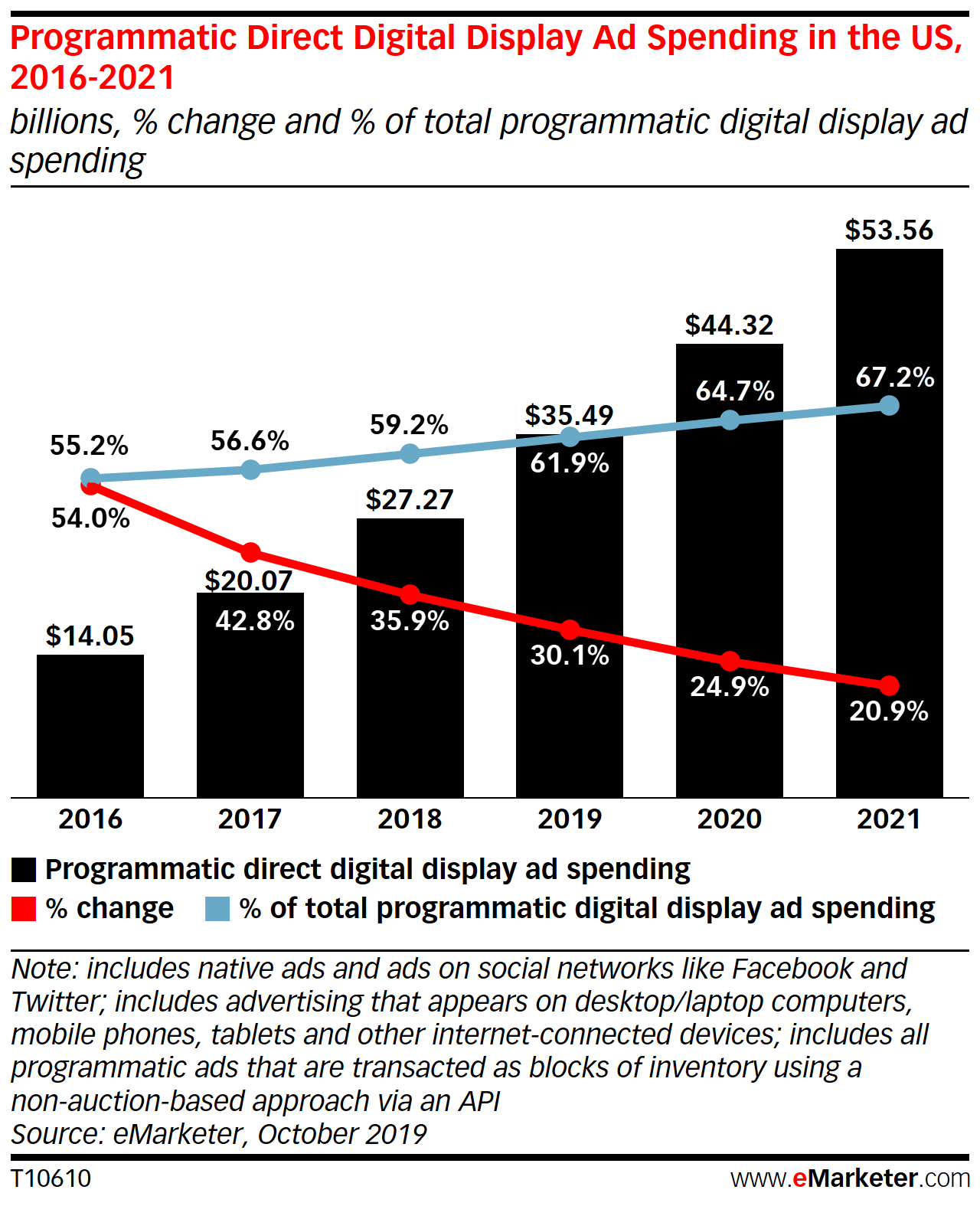
programmatic-direct-digital-display-ad-spending-us-2016-2021-emarketer.png


Spending on programmatic direct channels has grown significantly in recent years and is expected to continue climbing.


How Will We Measure?

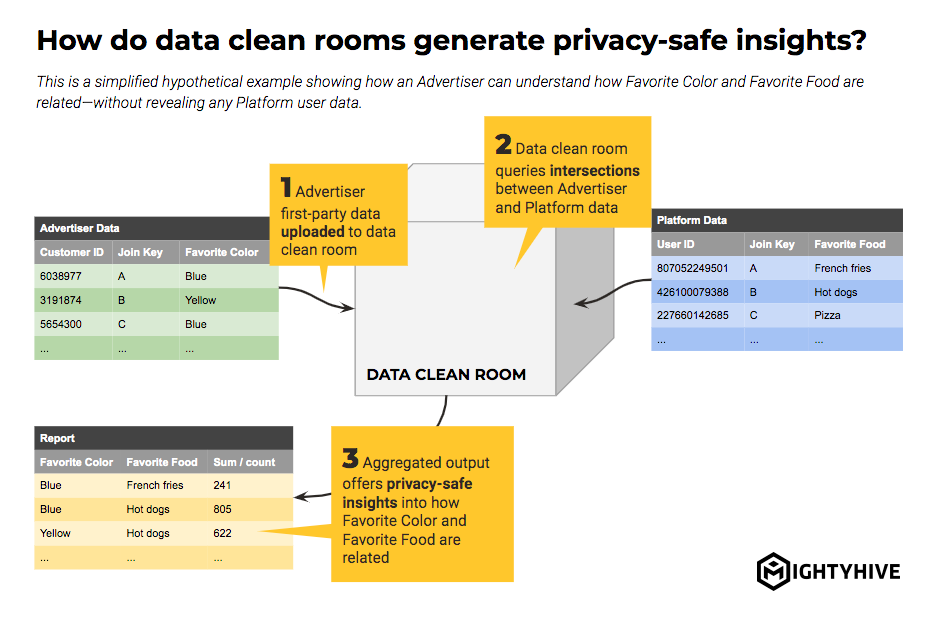
Conversion tracking will become increasingly difficult to measure using current approaches, but there are several solutions available now and on the horizon. For example, as Campaign Manager log-level data loses fidelity, solutions like Google Ads Data Hub stand to open up new possibilities with more durable data and more privacy-safe methodologies. Likewise, platforms like Amazon and Facebook are working on similar solutions.


data-clean-room-example.png


Source: "The New Possibilities of an ID-Redacted World"

Google's proposal for a conversion measurement API would allow for click-based attribution without using cross-site trackers. Trials for click-based conversion measurement sans third-party cookies will start by the end of 2020. Read more on the Chromium Blog and in AdExchanger.

What about view-based conversion tracking? Most current approaches will cease to work in any major browser once Chrome deprecates third-party cookies, but Google has indicated that the future of measurement may be more probabilistic or panel-based. Whether this will allow for view-through conversion tracking remains to be seen.


How MightyHive Will Adapt

As with many businesses in the programmatic space, a number of MightyHive services are built to some extent on top of the third-party cookie, such as programmatic audience activation, dynamic creative, and advanced attribution.

In their current state, these technologies will not work in two years’ time. However, there is every reason to believe that ad tech will continue to innovate and adapt with these changes opening up new opportunities for more advanced and smarter marketers in a new cookie-less era.

  • We have already started developing targeting and measurement approaches independent of cookie-based approaches for use on multiple bidding and measurement platforms. Further, as a leading Google partner, will be collaborating closely with Google on the Privacy Sandbox protocols and work hard to bring these solutions to our clients.
  • MightyHive has deep, holistic consultative expertise to bear on these challenges. For example, we have invested heavily into data science, API and Cloud-driven solutions to help marketers gradually increase the utility of their first-party data while simultaneously reducing reliance on third-party cookie pools.
  • As part of S4Capital, with our sister company MediaMonks, our clients are exploring end-to-end digital strategies that leverage first-party data to drive content and programmatic media.

We argue consumers should always be the first constituent in considering the digital advertising experiences online and adapting to this shift requires marketers to place more attention on the value exchange traded for a consumer's attention. The key will be to move with the market, as opposed to push against it and seek short-term fixes.

As always, MightyHive is your partner and your advocate.

Very soon third-party cookies will become effectively unusable for advertising measurement, and it's time to move with the market. data privacy data analytics third-party cookies first-party data

Choose your language

Choose your language

The website has been translated to English with the help of Humans and AI

Dismiss