















Choose your language

Choose your language

The website has been translated to English with the help of Humans and AI

Dismiss

An Orbit hose being sprayed in a garden of yellow flowers
Hands turning on an Orbit sprinkler unit in a green lawn

Off-Season, On Strategy • Turning Seasonality into a Strategic Advantage

  • Client

    Orbit

  • Solutions

    CommercePerformance MediaMediaProgrammatic

Results

  • 30% YoY increase in Q4 sales
  • 4.5x ROAS on new product launch
  • 15% higher conversion rate in Q4
  • Finalist for "Best Use of Retail Media" at the Digiday Awards 2025
  • Winner of "Best in Commerce Media" at the AdExchanger Awards 2025

Challenging seasonal norms.

Orbit Irrigation, a trusted brand in home watering systems, typically sees demand spike in the warmer months, while Q4 has traditionally been slower. Orbit partnered with Monks to build a seasonal Amazon Ads strategy that turned Q4 from a quiet period into a meaningful growth opportunity. Instead of scaling back, we used the off-season to boost brand visibility and lay the groundwork for a high-stakes product launch.

A strategy built for seasonality and sustained growth.

To set the foundation, we optimized 50+ product detail pages, refreshed Orbit’s Amazon Brand Store, acquired early customer reviews and ensured inventory was positioned to meet demand. From there, we used insights from Amazon Marketing Cloud to rebuild Sponsored Ads and DSP campaigns around real shopper behavior. To increase visibility, we expanded keyword coverage and used variation testing to group similar SKUs under a single parent listing. This helped capture more long-tail search traffic, while high-intent retargeting kept Orbit top of mind during key holiday moments.

In partnership with

  • Orbit
Client Words Q4 has always been a quieter time for our business, but working with Monks helped us turn that off-season into a strategic advantage. Their team brought fresh ideas, clear strategy, and thoughtful planning. We stayed focused, moved quickly, and made confident decisions—all while building on what already works.
Logo for Orbit Irrigation, a subsidiary of Husqvarna Group

Jose Preza Torres

Account Manager

Off-season strategy. On-season results.

Orbit’s new approach set a higher bar for seasonal planning. Q4 sales increased 30% compared to the previous year, with a 391% revenue surge in their top product category and a 15% lift in conversion rates. New-to-brand purchases remained above 70%, while Amazon DSP emerged as a top driver of performance. That momentum continued into January, where the new product launch achieved a 4.5x return on ad spend, proving that strategic groundwork during slower months can lead to strong results when demand returns.

Setting the stage for year-round performance.

Monks’ vigilant approach ensured that as consumer demand returned, Orbit was not just ready to respond but positioned to accelerate—maintaining share of voice, protecting search rank, and investing in audience engagement when others paused. By rethinking seasonal investment and leaning into full-funnel planning, Orbit not only saw a stronger-than-ever off-season but also created momentum for an even more successful on-season.

Want to talk retail media? Get in touch.

Hey 👋

Please fill out the following quick questions so our team can get in touch with you.

See more examples of excellence in commerce.

GenAI Powers ROI • Monks.Flow and Meta’s Advantage+ Drive Incremental Sales

  • Client

    Forever 21

  • Solutions

    Paid SocialArtificial IntelligencePerformance MediaMedia Strategy & Planning

  • +66% higher ROI
  • +71% higher CTR
  • +19% better CPC

00:00

00:00

00:00

Case Study

0:00

Making AI-powered marketing a reality for Forever 21.

We enabled Forever 21 to deliver the right ads to the right audiences at the right time, through the combined power of Monks.Flow and Meta's Advantage+.

The work

Hundreds of test ads in less than a day with AI-assisted production.

  1. Woman on a street in Forever21 clothes
  2. Woman on a beach in green Forever21 clothes
  3. Woman in Forever 21 clothes in front of a house with pink flowers
  4. Woman on a sidewalk in Forever21 clothes
  5. Woman in front of a plain wall wearing Forever21 clothes
  6. Woman in Forever21 clothes at sunset
  7. Woman in a pink Forever21 dress

Drag
For More!

Want to talk gen AI? Get in touch.

Hey 👋

Please fill out the following quick questions so our team can get in touch with you.

Can’t get enough? Here is some related work for you!

GNC package in black for Pure Isolate
Women in sportswear sitting outside in the sun on a stairs in a skate park drinking a sports drink
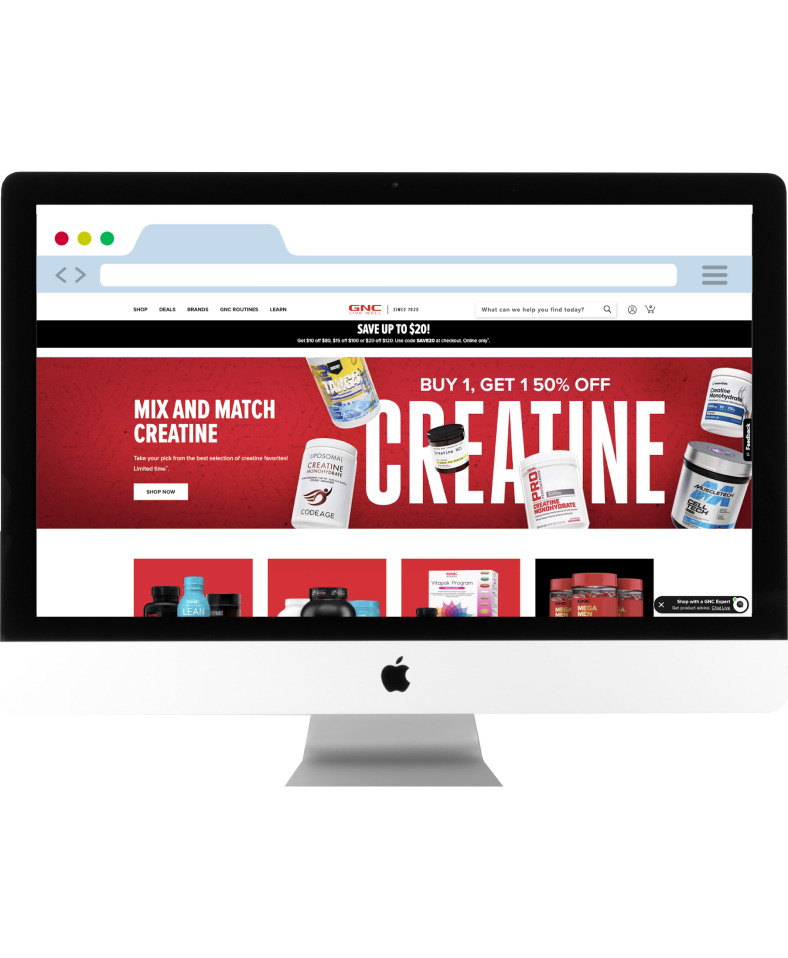
Mockup of a computer with the GNC website on screen

Partnering on Personalization for Ecommerce Revenue Growth • Salesforce Marketing Cloud Personalization

  • Client

    GNC

  • Solutions

    DataCRMCommerceTechnology ServicesTechnology Training & Coaching

Results

  • $600k+ within 6 weeks of go-live
  • 13% conversion in first several days of experience launch.
Person seen from behind. The person is looking at his mobile and on screen you see

Supporting a smooth and swift transition to a new marketing stack.

As a long-time and loyal Salesforce customer, with B2C Commerce Cloud, Sales Cloud and Service Cloud already in place, GNC decided to replace their legacy marketing stack and add another solution to the mix: Salesforce Marketing Cloud Personalization (MCP). However, this switch didn’t go as smoothly as planned, as some legacy triggers failed to reconnect. With the peak of holiday shopping season around the corner—and the goal to generate additional revenue beyond previous tech stack constraints top of mind—GNC needed to optimize ecommerce conversions, pronto. So, we stepped in as their Salesforce Consulting Partner to evaluate the impact and help expand usage upon proof of value.

In partnership with

  • GNC
Client Words Monks was a crucial partner in assisting us to fix some outdated, backend set-up in Salesforce Marketing Cloud that we didn’t have the internal expertise to do ourselves.
Portret of Jennifer Nordstrom

Jennifer Nordstrom

GNC’s Senior Manager, Owned Customer Channels

A test-and-learn approach homed in on solutions at speed.

To tackle the problem, we implemented MCP as a proof of concept, evaluating the solution before GNC was set to renew their contract—and helping them get to the so-called “aha moment.” This time to value was key to conducting analysis of event stream data and revenue attribution from the implemented use cases. Our Salesforce experts started off with discovery, planning and strategy, which primarily involved reconfiguring the solution. On top of this, we established four use cases to increase holiday shopping conversions, including Abandon Cart, Abandon Browse, Back in Stock, and Lightbox SMS Capture and Trigger. To make sure GNC’s team was completely set up for success, we hosted training sessions on how to best utilize this solution and any additional models moving forward.

Mockup of a laptop with the GNC website checkout screen visible

Marketing Cloud Personalization is a (Sales)force to be reckoned with.

GNC needed to solve this issue fast, so we tackled it with full force. In just six weeks, we built robust listening capabilities. Three weeks later, we deployed three triggers in production. Finally, in week 12 of our collaboration, we created and implemented a complex Lightbox SMS capture and trigger with a unique couponing solution—equipping the retail company to optimize conversions by providing their audiences with much more relevant 1:1 customer experiences. Safe to say, it was truly a jolly holiday shopping season.

Want to talk CRM? Get in touch.

Hey 👋

Please fill out the following quick questions so our team can get in touch with you.

Can’t get enough? Here is some related work for you!

an illustrated furniture set
A family lying on a bed smiling
A furniture set

Amazon Advertising Strategy • Boosting Sales With An Organic-First Approach

  • Client

    Maxwood Furniture

  • Solutions

    MediaCommercePaid SearchMedia Strategy & PlanningPerformance MediaProgrammatic

Results

  • 55% increase in total sales YoY
  • 41% Increase in branded searches within the first month
  • Tripled the number of keywords with top 10 page one organic rank placement
  • Acquired Amazon’s Choice badges on 17 additional keywords
A desktop holding a laptop showing an increase in website activity on a graph

Partnering to retool an ecommerce advertising strategy.

As a family-owned and -operated import and wholesale business since 2004, Maxwood Furniture specializes in the design, production and distribution of high-quality furniture, manufacturing three distinct brands and serving as a factory-direct shipping partner to retailers. Yet, after two years of highly successful growth fueled by the ecommerce boom of the early 2020s, Maxwood faced slowing demand and rising cost-per-click in the kid’s furniture category—which meant their low-funnel advertising approach was no longer working. We joined forces with Maxwood Furniture to boost brand awareness and drive incremental sales by restructuring the brand’s Amazon advertising strategy.

Monk Thoughts Our strategy focused on the bottom of the funnel up. With strategic audience targeting through Amazon DSP, the brand experienced higher sales velocity and improved organic rank.
Johnathon Braga headshot

Knowing when less can mean more.

Working as an extension of Maxwood’s internal team, we began with an extensive audit of the brand’s account and advertising strategy—reviewing all keywords, content, product listings, top-performing ASINs (Amazon Standard Identification Numbers, the unique identifiers assigned to products by Amazon.com and its partners) and past performance. We found that on high-volume search terms, Maxwood products had zero visibility in the top two rows of organic search results, and had earned only two Amazon’s Choice badges—an important designation given to products that best match target keywords—across non-branded keywords. We quickly determined that advertising efforts were spread too thin across a considerable number of keywords, products and match types resulting not only in low organic ranking and declining traffic on Amazon, but also fluctuating sales. We knew that by focusing more time and resources on fewer products—helping customers find a strategic set of products on Amazon—we could profoundly improve Maxwood’s short-term results while driving longer-term, sustainable growth.

An outdoor patio table and chairs
A mom talking to her children in bed

Adopting an organic approach to winning on Amazon.

We implemented our award-winning organic-first approach that began with focusing more time and resources on a core list of 10 ASINs. Our philosophy is that as organic rank and page visibility improves, brands will experience a sales lift across their entire product catalog. To optimize Maxwood’s advertising strategy, we dialed in the focus by categorizing advertised products into three individual tiers with defined goals: 

  • Tier 1: Drive sales through keyword segmentation to ensure high-volume keywords were not taking up all of the budget and that rank was improving across both high- and low-volume search terms.
  • Tier 2: Identify additional ASINs that could move up to Tier 1
  • Tier 3: Increase visibility on recently launched products

For Maxwood, the lift was immediate. Within the first month, branded searches increased by 41% and by the end of the campaign we’d tripled the number of Maxwood product listings that ranked organically on Amazon, translating to more traffic and customers for the brand.

In partnership with

  • Maxwood Furniture
Client Words Thank you for getting us to this fantastic result. We could not have gotten here without your help and thought leadership. We're looking forward to hitting another record on Prime Day.
Anne Jensen headshot

Anne Jensen

CMO, Maxwood Furniture

Awards

  • 1x AdExchanger Award

Want to talk performance? Get in touch.

Hey 👋

Please fill out the following quick questions so our team can get in touch with you.

Can’t get enough? Here is some related work for you!

IMO: How Reitmans Used Cloud Computing to Pivot With Changing Times

IMO: How Reitmans Used Cloud Computing to Pivot With Changing Times

Consumer Insights & Activation Consumer Insights & Activation, Data, Data maturity, Digital transformation, eCommerce Platforms 2 min read
Profile picture for user mediamonks

Written by
Monks

A collage of speakers headshots from the IMO webinar with Reitmans

When customer behavior changes, so does the technology used to connect with them. When shifting consumer habits met an increasingly fragmented data and marketing ecosystem, fashion retailer Reitmans Canada Limited began to notice blind spots appearing in the customer journey. But with over 400 brick-and-mortar locations, maintaining a relationship with its customers meant building a single source of truth throughout the entire organization.

In the latest episode of IMO, Brianna Mersey, Media.Monks Associate Director of Data, sat down with Marc Laurent-Atthalin, VP Data & Digital Media at Reitmans, and Zamira Khamidova, Director of Data North America at Media.Monks, to discuss what it took to shift the traditional retail business into a modern data stack capable of enabling marketing use cases. Throughout the conversation, they shared insight into how to set your data foundation up for success, the importance of aligning stakeholders across the business, and the need for a “test and learn” mindset. If you missed the episode, we’ve got you covered—watch it in full below.

Reitmans was able to adopt such advanced analytic methods because the team had already established a strong foundation of data, making it easy to implement models that were more reactive to customer behavior and transaction histories. Marc and Zamira offered advice on how to select which data sources to start with (opt for rich, actionable data sets that give you lots to work with) and how to ensure that data is clean and reliable.

Marc also shared the importance of aligning with internal stakeholders to gain buy-in and chart the path forward. “It’s important to build a clear vision and strategy initially and communicate it properly, and then use data to build your case,” Marc said. By tying data objectives with business outcomes, his team was able to prioritize use cases and deliver results quickly, then test and iterate from there. For example, building a 360-degree view of the customer provided insights to drive conversion, fulfilling the key business need to propel growth.

When it comes to initiatives like these, treating your partner as an extension of your team is key. “Collaboration is hugely important,” Zamira said. “When it comes to data, there are lots of questions on the context—especially with historical data, so it was important for us to have two-way communication and hear back on any questions we had.” This level of regular communication also helps with further collaboration as the engagement evolves. 

So, where is Reitmans headed next? You’ll have to watch above to find out—including the brand’s plans around Web3, which is set to transform the brand-customer relationship even further. And if you’re eager for more insights from Media.Monks subject matter experts and our partners, mark your calendar for the next episode of IMO later this month.

Learn how together Reitman’s and Media.Monks shifted the traditional retail business into a modern data stack capable of enabling marketing use cases. Retail data analytics consumer data data-driven marketing Data eCommerce Platforms Consumer Insights & Activation Data maturity Digital transformation

5 Reasons to Launch a Retail Media Network Now

5 Reasons to Launch a Retail Media Network Now

Commerce Commerce, Media, Retail media 3 min read
Profile picture for user mediamonks

Written by
Monks

Yellow data points connecting on a black background

Retailers have the data to know what sells, and advertisers need this data to refine their brand strategy. A win-win comes from collaboration between the two: retail media networks (RMN). Retailers have the opportunity to turn their first-party data and ad spaces into new revenue streams. However, many aren’t taking their chances and, as a result, miss out on a massive new source of revenue.

Retail media networks are when retailers establish an advertising platform on their own digital platforms—kind of like in-store advertising, but in digital format. This creates a new revenue stream for retailers by monetizing their first-party data through the launch of ad products. Though all of this is conceptually clear—every retailer wants to increase its revenues—the market is still reluctant to implement this solution. Retail companies either rely on selling their products and services rather than tapping into ad monetization, or they lack the right infrastructure and skills to build and run retail media networks. For most retailers, the latter is the issue. Some stick to what they know, whereas others outsource the work.

Monk Thoughts Only a few players have a clear focus on creating their RMN units, even though there’s so much potential. That’s why we have developed this solution within Media.Monks and implemented it for clients in the retail space.
Vinicius Galera headshot

The Business.Monks—Media.Monks’ business consulting category—focus on uniting strategy with experimentation, value creation with performance, and consulting methodologies with agency crafting. Given the high potential, it’s time to start building your retail media network, here’s why.

5 reasons why retailers should set up their retail media network.

RMN provides a new and very profitable revenue stream. “We’re talking about a new revenue stream with a margin between 60-90%, so it’s huge,” says Cacau Lima, Business Consulting Manager for the Business.Monks in São Paulo. Just look at Amazon Ads—in 2021, it reached over $31b in revenue, which is nearly 5% of Amazon’s total revenue. Additionally, RMN has a huge impact on the bottom line, with Onsite Campaigns yielding up to 90% of EBITDA.  

Advertisers want clear-cut solutions. Digital marketing is all about measuring the impact in sales. Though brands can measure clicks and impressions, the bottom line impact has always been estimated. With RMN, however, advertisers have the ability to measure bottom line conversion and optimize their media spend based on the increase in sales.

This solution is growing really fast. Today, $1 in every $6 is spent on media networks, and in about two years, it is projected to represent 20% of all digital media spend, according to Insider Intelligence. Currently, 82% of CPGs have already invested in Amazon Ads, while only 39% has invested in the second biggest retailer. This shows us that there are huge opportunities to increase investments in RMN. 

It’s all about the data. Since third-party cookies have crumbled, RMN is the sweet treat that both retailers and advertisers need. Through ad monetization with RMN, retailers can gain new insights into their customers’ behavior and interests, elevate their first-party data strategy, and engage audiences by giving relevant recommendations that suit their needs. As for advertisers, they can access the retailer’s precious first-party data and gather important information. 

We’re in the era of Everywhere Commerce. As CX and brand experiences become ever bigger and better, it’s crucial for advertisers to have control over how to engage with their consumers in every digital touchpoint. RMN ultimately creates the space and opportunities for advertisers to do so. On top of that, this business solution is beneficial to retailers, advertisers and consumers alike. “Between brand awareness and conversion, there’s typically a messy middle. RMN creates a one-stop shop, allowing customers to find a brand, get to know its history, and then convert in one go,” says Galera. 

Translating skills into solutions.

“In order to solve complex problems, we need to be able to speak different languages—that of media, social, data, and so on. So, we’ve built a team that can speak all these languages by mixing experts from different professional fields, who together give shape to an unbelievable diversity of mindset and innovative thinking,” says Helena Curado, VP Business Consulting LATAM, Media.Monks. 

To secure future success in this space, businesses—both retailers and brands—need to adapt to the ever-changing landscapes of commerce and consumer behavior, and it’s best to do it sooner than later. Taking the leap can be scary, but just take a look at the numbers—they show it will be worth it.

Retailers have the opportunity to turn their first-party data and ad spaces into new revenue streams. Find out how. Retail future of retail consumer data first-party data data-driven marketing Media Commerce Retail media

Desarrollando una estrategia de medición integrada con Falabella

Desarrollando una estrategia de medición integrada con Falabella

5 min read
Profile picture for user mediamonks

Written by
Monks

An illustrated person holding a phone

Es la era de la first-party data. Más específicamente, de recuperar el control sobre nuestra data para construir recorridos digitales mejorados. A esta altura, la muerte inminente de las cookies de terceros no es novedad, y tampoco lo es la necesidad de adaptarse y evolucionar a la velocidad de las nuevas tendencias digitales. Pero si bien los últimos años han consolidado esta noción para todo tipo de empresas, muchas estarían de acuerdo en que, en la práctica, desarrollar un modelo moderno y funcional de first-party data no es tan sencillo.

Pensemos, por ejemplo, en un holding multinacional con unas seis marcas filiales, presente en siete países con tiendas físicas y plataformas web y app. No todas las filiales operan en los mismos lugares, y no todas las plataformas utilizan el mismo idioma. Ahora imaginemos querer unificar todo eso en un sistema escalable que proporcione información actualizada y precisa de sus consumidores, procesada a través de métricas confiables que le permitan comprender mejor sus necesidades e intereses. No es tan fácil, ¿cierto?

Falabella.com, una de las empresas de retail más grandes de Latinoamérica, se enfrentaba a ese mismo desafío en la búsqueda de mejorar sus capacidades tecnológicas y fortalecer su logística para respaldar el rápido crecimiento de sus ventas online. Su objetivo final era simple: proporcionar un mejor servicio a través de soluciones personalizadas y aumentar la eficiencia general de la empresa. Sin embargo, llegar allí requería un nivel de experiencia considerable en el uso y la implementación de sistemas de datos. 

Falabella retail store

Desarrollando sus músculos tecnológicos

Las tiendas insignia de Falabella, así como sus centros comerciales y supermercados, la han coronado como la empresa de retail más grande de Chile y una de las más importantes de América Latina. Pero si bien esta marca histórica ha sido construida sobre los valores de una tienda física tradicional, la importancia de contar con una fuerte presencia online jamás se les ha escapado. 

Hoy, Falabella.com busca convertirse en uno de los protagonistas del ecommerce en la región. En otras palabras, tomar la relevancia que ha sembrado en el mundo físico y trasplantarla al mundo virtual. Pero para convertirse en la plataforma de ecommerce por excelencia para una amplia variedad de necesidades, precisaba integrar al menos cuatro plataformas preexistentes y sus datos en un solo marketplace y un único sistema de medición. 

Nuestro Head of Data Growth, South Cone, Walter Rebollo, estuvo allí para apoyarlos en ese recorrido. “Formamos un equipo dedicado que trabajó codo a codo con el de Falabella, actuando como un músculo tecnológico”, explica.

Monk Thoughts El objetivo principal era mejorar la calidad de los datos con los que trabajaba la marca, unificando todas sus propiedades digitales en un solo sistema de medición.
Walter Rebollo headshot

Para una empresa de tal magnitud, cualquier falta de comunicación tecnológica entre las propiedades podría afectar la precisión de su análisis de datos, lo que justifica la necesidad de una transformación absoluta. “Nuestro equipo de expertos y expertas en analytics, consultoría e ingeniería ayudaron a la marca a diseñar planes de medición que estuvieran alineados a lo largo de toda la organización. Desarrollaron dashboards, manuales, y brindaron soporte técnico para sus implementaciones”, agrega Rebollo. 

Más que solo estadísticas

Además de actuar como un músculo tecnológico, el equipo empapó a la marca de una mentalidad más analítica y data-driven. Después de todo, ser consciente del potencial de la first-party data es el primer paso para construir una experiencia del cliente más afinada. Y no se trata de jugar con las estadísticas a ver que pega. Debemos pensar en la first-party data como una fuente de información verídica que ilustra las personalidades y los comportamientos de nuestros clientes. Una especie de hoja de ruta para apoyar a la audiencia a lo largo de todo el recorrido. 

Javier Fernández Morales, Head Regional de Performance & Growth en Falabella.com, lo explica claramente: “Como uno de los sitios y app con mayor tráfico en la región, la utilización de nuestra first party data es un activo clave para brindar una mejor experiencia de compra y navegación.

Monk Thoughts Nos permite construir una relación más cercana con nuestros usuarios, basada en la confianza mutua, con servicios personalizados y una distribución de producto más inteligente.
Javier Fernandez headshot

En el comercio minorista, los consumidores esperan encontrarse con una experiencia omnicanal que se adapte a ellos. Buscan pasar de app a web y cambiar de dispositivo tantas veces como sea necesario a lo largo del proceso de compra. Es por eso que diseñamos el marco de análisis para capturar esa información, creando un setup que facilitó la comprensión de cómo se comportan las audiencias y qué les interesa.

“La transformación digital de Falabella abarcó una serie de pasos que nos llevaron al objetivo final”, explica Gastón Fossati, nuestro VP de Data Growth SPLA. “Por ejemplo, la implementación del funnel de web ecommerce para todo los países, evaluaciones para definir el modelo de atribución a utilizar, el agregado de machine learning, la implementación de Enhanced Conversions en Google Analytics y acompañamiento de consultoría mensual para trabajar en el proyecto de Firebase para la app, entre otros”.

Un equipo empoderado conduce a una rápida toma de decisiones

Más allá de brindar una experiencia fluida al cliente, contar con un único sistema de medición alineado a lo largo y ancho de la organización puede ser tan útil internamente como lo es de cara al cliente. La medición refinada conduce a modelos automatizados efectivos, que pueden ahorrarle tiempo y energía al equipo. 

“Desde el punto de vista de backend, contar con un mejor sistema de gestión de datos nos ha permitido desarrollar un modelo de escalabilidad de producto bien ejecutado”, explica Fernández Morales. Al permitir que las herramientas de tecnología sean ejecutadas con mayor agilidad, empoderamos a los especialistas a que tomen mejores decisiones, y más rápido. 

Dicho esto, el desarrollo de un sistema de medición integrado no es algo que suceda de la noche a la mañana. En este proyecto de años de duración, que surge de una asociación que lleva por lo menos tres años, ambos equipos trabajaron en conjunto para crear una estrategia de medición que se acoplara a los objetivos de cada unidad, integrar Google Analytics y capacitar al equipo de la marca para actuar sobre esa información. “Nuestro enfoque siempre es de democratizar el conocimiento, por lo que nos aseguramos de enseñar a nuestros socios cómo y por qué hacemos lo que hacemos”, dice Rebollo.

A lo largo de ese proceso, ambos equipos se unieron hasta convertirse en uno. “Me parece realmente destacable cómo hemos creado un único equipo que si bien cuenta con miembros de ambos lados, todos comparten un mismo espíritu”, dice Lorena Alva Salazar, Head of Growth & Martech en Falabella.

Monk Thoughts Queríamos un partner que nos empujara, que hiciera las preguntas difíciles y nos ayudara a perseguir la visión correcta, no solo entregar lo que pedimos. Me alegra saber que contamos con eso.
Javier Fernandez headshot

Hoy, Falabella.com no solo goza de un equipo sólido y unificado, sino también con métricas confiables que están disponibles de inmediato para una rápida toma de decisiones. La eliminación gradual de las cookies de terceros no supone una amenaza. De hecho, nunca han estado mejor preparados para forjar una relación más estrecha con los consumidores. Primero, porque un marco integrado y múltiples puntos de recopilación de datos brindan información invaluable sobre ellos. Y segundo, porque la marca ahora puede empoderar a los usuarios para que elijan cuánta información desean compartir, cuidando así su privacidad.

Cómo nuestro equipo de data ayudó a Falabella a desarrollar un servicio unificado y personalizado para sus clientes. content personalization personalized marketing first-party data data analytics Retail data privacy

Building an Integrated Measurement Strategy With Falabella

Building an Integrated Measurement Strategy With Falabella

Data Data, Data Strategy & Advisory, Data maturity, Measurement 4 min read
Profile picture for user mediamonks

Written by
Monks

An illustrated person holding a phone

It’s the era of first-party data. More specifically, of reclaiming control over one’s data to build improved digital journeys. By now, the imminent death of the cookie is old news, and so is the need to adapt and evolve at the speed of the new digital trends. But while the last few years have cemented this notion for all kinds of businesses, many would agree that the journey to developing a modern, functional first-party data model has proven to be a bit bumpier than expected.

Think of, let’s say, a multinational holding company with about six subsidiaries in retail and banking, operating in seven countries with physical stores and both website and app platforms. Not all subsidiaries are present everywhere, and not all platforms use the same language. Now imagine wanting to unify all of that into a scalable system that provides updated, accurate information about your consumers—processed through reliable metrics that allow you to get a better grasp of their needs and interests. Not exactly child’s play, is it?

Our partners at Falabella, one of the largest retail companies in Latin America, were faced with that exact challenge in their ambition to develop their technological capabilities and strengthen their logistics to support the rapid growth of their online sales. The ultimate goal was simple: to better serve customers through personalized solutions and increase the company’s overall efficiency. The path to get there, though, required considerable expertise in the use and implementation of data. 

Falabella retail store

Growing Its Technological Muscles

Falabella’s flagship department stores, as well as its shopping centers and supermarkets, have crowned it the largest retail company in Chile, and one of the most important ones in Latin America. But while this long-standing brand was built on the foundations of a traditional physical store, the importance of having a strong online presence has never eluded them. 

Today, Falabella is in pursuit of becoming one of the region’s top ecommerce players. In other words, to take the relevance it’s built in the physical world and replicate it in the digital space. But to become the go-to ecommerce platform for a variety of needs, it had to integrate its four pre-existing platforms and their data into a single marketplace and a measuring system.

Our Head of Data Growth, South Cone, Walter Rebollo, was there to support them on that journey. “We put together a dedicated team that worked side by side with the brand’s, serving as a technological muscle,“ he says.

Monk Thoughts The main objective was to improve the quality of the data that Falabella was working with, unifying all its digital properties into a single measurement system.
Walter Rebollo headshot

For a company of this magnitude, any technological miscommunication between properties could hinder the accuracy of their data analysis, which explains the need for a foundational transformation. “Our team of analytics experts, consultants and engineers helped the brand design measurement plans that were aligned throughout the organization. They developed dashboards, documentation, manuals and provided technical support for their implementations,” adds Rebollo.  

It’s More Than Just Statistics

In addition to serving as the technological muscle, the team introduced the brand to a more analytical and data-driven mindset. After all, being cognizant of the potential that lies in one’s first-party data is the first step towards building a sharpened customer experience. And it’s not about playing with statistics to see what sticks. Think of first-party data as a source of truth that illustrates our customers’ personalities and behaviors; a roadmap of sorts to support your audience across the entire customer journey.

Javier Fernández Morales, Falabella’s Regional Head of Performance & Growth, puts it plainly, “As one of the sites with the highest traffic in the region, our first-party data is a key asset in order to provide a better shopping and browsing experience.

Monk Thoughts It allows us to build a closer relationship with our clients built on mutual trust, with personalized services and smarter product allocation.
Javier Fernandez headshot

In retail, consumers expect an omnichannel experience that’s tailored to them. They want to be able to switch between app, web and devices across the purchase journey from start to finish. We designed the analytics framework to capture that information, creating a setup that eased the understanding of how audiences behave and what they are interested in. 

“The digital transformation of Falabella encompassed a bunch of steps that led to the final goal,” explains Gastón Fossati, our VP of Data Growth SPLA. “For example, the implementation of the web ecommerce funnel for all countries, assessments to define the attribution model to be used, baking in machine learning for audience prediction, the implementation of enhanced conversions in Google Analytics and a monthly consulting service to work on the Firebase project for the app, among other things.” 

An Empowered Team Leads to Fast Decision-Making

Beyond providing a seamless customer experience, having a single measurement system aligned throughout the organization can be as helpful internally as it is for customer-facing interactions. Think about it: refined measurement leads to effective automated models, which can then save the team time and energy. “From a backend standpoint, having a better data management system has made it possible for us to develop a well-executed product scalability model,” says Fernández Morales. By allowing marketing technology tools to be executed with greater agility, we empower specialists to make better decisions, faster.

That said, the development of an integrated measurement system from the ground up is not something that happens overnight. In this year-long project—which stemmed from a three-year partnership—both teams worked in lockstep to create a measurement strategy according to each unit’s goals, integrate Google Analytics and train the brand’s team to act upon the information. “Our approach is one of democratizing knowledge, so we always make sure we’re not just delivering but also teaching our partners how and why we do what we do,” says Rebollo. 

Throughout that process, both teams blended with one another to the point where there was almost no distinction between each. “I find it truly remarkable that we’ve created a single team with not only a common goal but also a shared spirit,” says Lorena Alva Salazar, Head of Growth & Martech at Falabella.

Monk Thoughts We wanted partners who could push us, ask the hard questions and help us build the right vision—not just deliver what we ask for. I’m glad to know we have that now.
Javier Fernandez headshot

Today, they can bank not only on a solid, unified team, but also on reliable metrics that are immediately available for quick decision-making. The phase-out of third-party cookies poses no threat, and they are in fact better prepared to forge a closer relationship with consumers. First, an integrated framework and multiple data collection points provide invaluable information on their consumers. And second, the brand can now empower users to choose how much information they want to share, thus safeguarding their privacy.

Learn how our data experts helped Falabella develop a unified, personalized service for clients. content personalization personalized marketing first-party data data analytics Retail data privacy Data Data Strategy & Advisory Measurement Data maturity

On a B2C Road to Nowhere? Here’s How to Navigate Your Consumer’s Complex Purchase Journey

On a B2C Road to Nowhere? Here’s How to Navigate Your Consumer’s Complex Purchase Journey

4 min read
Profile picture for user mediamonks

Written by
Monks

A woman on a computer and another person getting a credit card out of a bag

In the wake of massive changes to the retail landscape and the growing focus on zero- and first-party data collection, it’s particularly important to understand the purchase channels and touchpoints that are most important to your target consumer. But understanding your target consumer’s path to purchase without a purchase journey study is a bit like driving in a new city without a map: it’s not easy to navigate without one.

A consumer journey study is research conducted through direct interaction with or observations of your target consumers by way of interviews, field studies, focus groups and other methods that can help you better understand your customer’s path to purchase. Beginning with initial purchase inspiration to the final stages of product purchase and post-purchase product usage, a well-crafted study will illuminate purchase trigger behavior and influential touchpoints, and help guide the marketing team with actionable insights that can better influence those touchpoints along that path. 

The study can also help identify gaps in the consumer purchase funnel to help marketing turn product considerers into product buyers. For example, you might ask participants in your study why they decided to purchase a competitor’s product instead of your own to identify the main purchase barriers for your product and uncover potential solutions to overcoming these barriers.

Ready to initiate a consumer journey study? Here are some things to consider.

The Dos (and Don’ts) of Conducting a Study

The questions that you and your team decide to ask in a consumer journey study should help you better understand how to connect with your target consumer and pave the way for an ongoing relationship. Many common questions focus on purchase triggers (i.e. the reasons behind deciding to purchase a new item), different shopping channels (i.e. in-store and online channels), and satisfaction with the newly-purchased product. Oftentimes, it will also be important to gather demographic data about your key shopping segment (such as age, gender, parental status and household income) to better understand who is actually purchasing your products.


Let’s look at some best practices for launching and executing a consumer purchase journey study. These best practices are based on our own experience working with our clients and are designed to help you navigate the complex consumer journey landscape.


Focus on primary decision makers. In many households, it’s common for one or two people to be in charge of purchase decisions, such as a parent on behalf of his or her children. In this scenario, the parent would be considered the primary decision maker, not the children. In your consumer purchase journey study, it’s important to ask survey respondents about their role in the purchase decision-making process because you want to understand the purchase triggers and most influential shopping touchpoints of those who will ultimately decide whether or not to purchase your product. 

Consider long-term versus short-term purchase behaviors. The COVID-19 pandemic rapidly reshaped the retail landscape and transformed many consumers' typical purchase behaviors. For example, according to eMarketer, “click and collect” sales (i.e. sales of products purchased online and picked up in-store) increased 106.9% in 2020. However, not all of these COVID-driven changes are likely to stick, and it’s important to determine what behaviors are likely long-term versus short-term. For example, you can ask survey respondents in your study how they anticipate purchasing a product or service a year from now and compare that to how they have recently purchased a product or service. 

Understand the attributes and behaviors of those who considered, but did not purchase, your product. In your research, you will likely identify a few consumers who considered your product but ultimately did not purchase it. What happened? Why did the shopper decide to buy a competitor’s product? By understanding the attributes and behaviors of those who considered but ultimately did not purchase your product, you can identify potential product features or capabilities that might convert some of these considerers into purchasers. 

Conduct your consumer purchase journey study on a recurring basis. As the retail landscape continues to evolve, there will always be new channels and influential shopping touchpoints that emerge, such as livestream video shopping channels on Amazon and the recent emergence of in-app shopping on TikTok. Depending on your team’s resources and capabilities, consider running a consumer purchase journey study on an annual or semi-annual basis in order to capture the ongoing changes in your target consumer’s purchase journey. 

Partner with retailers and manufacturers to implement consumer journey findings at the retail level. Given that global eCommerce retail sales grew 27.6% while overall retail sales declined 3.0% in 2020, it’s no surprise that the websites of retailers and manufacturers are some of the most important and influential shopping touchpoints. Consumers turn to these channels to learn about products, read customer reviews and compare items. Once you have completed your consumer purchase journey study, consider sharing these insights with your key retail partners in order to implement these best practices at the retail point of sale.

By implementing these best practices in your next consumer journey study, you’ll strengthen your brand or product’s relationship with your target shopper and identify new ways to connect with your key consumers. Instead of being on a “road to nowhere,” you’ll have a clear roadmap of your intended consumer’s path to purchase.

Considering a consumer journey study? Our team of experts can help. 

With massive changes to the retail landscape, learn the purchase channels and touchpoints that are most important to your target consumer. With massive changes to the retail landscape, learn the purchase channels and touchpoints that are most important to your target consumer. customer journey Retail consumer journey

Choose your language

Choose your language

The website has been translated to English with the help of Humans and AI

Dismiss