

Choose your language

Choose your language

The website has been translated to English with the help of Humans and AI

Dismiss

From Insight to Impact • Increasing AOV by 29% for Euro Car Parts with Affinity Analytics

  • Client

    Euro Car Parts

  • Solutions

    Data AnalyticsDigital Experience Optimization

Results

  • 29% increase in average order value

Euro Car Parts, a key player in the UK’s automotive retail sector and part of LKQ UK & Ireland, sought to deepen customer engagement and uncover new cross-selling opportunities within their extensive product catalogue. Facing the challenge of harnessing transaction data to better understand product affinities and enhance promotional targeting, they turned to us for an innovative affinity marketing solution: building a dynamic, real-time view of customer behaviour to power smarter, more effective promotions.

EuroCarParts Logo on a black and white background of a garage with a car inside

Turning raw transaction data into actionable affinity marketing insights.

Our initial analysis focused on transaction data pulled from GA4 via BigQuery, to uncover meaningful patterns in customer purchasing habits. We developed a bespoke product affinity analytics tool within Google Cloud, which allowed us to generate actionable insights on product combinations that customers most frequently purchased together. With this custom affinity model, Euro Car Parts could base their promotional strategies and bundle offerings on clear, data-driven intelligence—unlocking the true potential of affinity marketing.

Tablet mock up of EuroCarParts website on tablet with taupe background
Man in autoshop stocking car parts

Applying customer behaviour analysis to deliver smarter promotions and bundles.

Armed with these insights, Euro Car Parts identified and launched optimal product bundles tailored to customer purchasing behaviour. This enabled them to deliver highly targeted promotions that encouraged repeat purchases and boosted sales across key customer segments. Our partnership gave them a sharper understanding of which product combinations resonated most, helping to refine their monthly promotional activity and ensure each offering was backed by real transactional data and robust customer behaviour analysis.

In partnership with

  • Euro Car Parts
The approach to leverage historical data along with machine learning to accelerate and access real-time cross-category insights has been invaluable. We’ve demonstrated incremental and measurable results which have driven commercial benefit through laser-focused analysis and working as a collaborative team with Monks.
headshot, picture of man wearing vest with beard and short hair

Dave Cain

Head of Digital Marketing, LKQ UK & Ireland

Data-driven transformation led the way to measurable growth and stronger customer loyalty.

As a result of this data-driven approach, Euro Car Parts experienced a 29% uplift in average order value. By integrating affinity insights into their monthly promotional planning, they now deliver highly relevant offers that adapt to customer preferences as they evolve seasonally and over time. This transformation has not only driven measurable sales growth but also strengthened customer loyalty by creating a more personalised, predictive shopping experience.

Want to learn more about what Affinity Analytics can do? Get in touch.

Hey👋

Please fill out the following quick questions so our team can get in touch with you.

Close up of a business women
Five9 logo
Two business women discussing a call over their desktop computers

Full-Funnel Performance for B2B SaaS • A Buyer Journey Revamp That Doubled Enterprise Sales

  • Client

    Five9

  • Solutions

    MediaPerformance MediaData

00:00

00:00

00:00

Case Study

0:00

Optimizing the demand generation funnel with performance media.

Five9 is the industry leading provider of cloud call center software. With over 2,000 customers worldwide and over 3 billion customer calls processed, Five9 helps contact centers of all sizes create powerful customer connections. But even with this success, Five9 still faced a growth challenge: the wanted to reach executives, decision makers and influencers whose roles intersect with business and technology—a notoriously competitive target market. We partnered with Five9 to optimize the quality of demand generation across the entire customer journey, from stoking interest early on to capturing and closing deals further down the funnel. Our key KPIs included increasing call duration (an indicator of quality) and improving overall sales.

In partnership with

  • Five9
Client words Monks bring to the table a phenomenal team that's been incredibly well trained, not just in paid search and display, but really in all aspects of the business. Their value add is their ability to understand your business and help translate what they know to help you run your business better.
Profile photo of Jason Yang

Jason Yang

Web Marketing Manager

Identifying leads and preparing the customer journey through data.

We began by ensuring that users we were targeting across Five9’s digital funnel accurately reflected the brand’s target profile. Through customer base analysis with historical data, we were able to isolate the demographic, behavioral and interest segments that best indicate a potential customer. From that historical customer understanding, we crafted curated display targeting combinations to isolate highly relevant users. The targeting types we leveraged included similar audiences, placements, topic categories, in-market audiences, demographic overlays, and device modifiers. To see any Five9 display ad, a user had to check several boxes of relevancy.

In partnership with

  • Five9
Client words Not only have there been conversion rate improvements, but also the engagement of users on our website, and we've seen improvement there by a lot of different recommendations that Monks has made.
Profile photo Andrew Gai

Andrew Gai

Web Marketing Manager

A full-funnel approach to nurturing leads.

Identifying prospects is only one piece of the puzzle; how to best support them throughout the journey is another. Five9 services enterprise, commercial and small/medium business customers, all of which have specific needs and pain points. We implemented a customer segment strategy that included call tracking, ad testing, and targeting expansion to maximize the customization for each customer journey.


To fully understand the quality of the leads driven by search engine marketing (SEM), we monitored Five9’s Salesforce CRM database to track three intermediate steps from SEM conversion to closed deal. With this data, we were able to evaluate, isolate and expand on sources of enterprise leads.

Results

  • 75% increase in overall call duration
  • 81% decrease in junk calls
  • 85% increase in assisted conversions
  • 100% increase in enterprise deals from SEM year-over-year

Want to talk media? Get in touch.

Hey 👋

Please fill out the following quick questions so our team can get in touch with you.

Can’t get enough? Here is some related work for you!

Meet Me in the Metaverse: Building Your Data Foundation for Web3 Customer Engagement

Meet Me in the Metaverse: Building Your Data Foundation for Web3 Customer Engagement

CRM CRM, Data, Experience, Metaverse, Web3 2 min read
Profile picture for user Ashley Musumeci

Written by
Ashley Musumeci
Global VP of Lifecycle Marketing & CRM

three portraits of women avatars in the metaverse against a rainbow background

Strengthen your data foundations to venture into Web3 with confidence.

Optimizing customer engagement is incredibly important to your business, but it’s about to get even more challenging with the proliferation of Web3. Fortunately, your data—when set up and used properly—can help you through these changes. And by taking the time to test and learn within the new space of Web3, you also have a chance to adapt for a new era of customer engagement.

In this episode of Meet Me in the Metaverse, host Ashley Musumeci, Director, Go-To-Market at Media.Monks, sits down with Jordan Cuddy, Chief Client Officer at Jam3, and Avanthika Ramesh, Senior Product Manager, NFT Cloud at Salesforce, to explore how building a resilient data foundation will help brands get a head-start into the Web3 future. Watch and listen below.

00:00

00:00

00:00

In this episode

2:13: Customer engagement changes in Web3

5:48: Ensuring long term value and utility of your Web3 activations

11:24: Choosing the right platforms

16:27: How to build people’s trust in brands

21:33: Activating responsibly

24:23: Change management needs

Solving the Web3 identity crisis.

Web3 offers new customer touchpoints, and with them come new kinds of personal data like anonymized wallets or communication in new channels. But elements of privacy and consent that were required in Web2 engagements still carry over into Web3, says Ramesh, introducing an identity crisis for brands to solve. “Even if you are bridging Web3 and Web2 data to bring all these identifiers about a consumer together, it’s really important that the user opts in and provides consent to merge these identities,” she says. This challenge has led to the release of new, Web3-connected CRMs from businesses like Salesforce who aim to solve the need for a full, 360-degree view of the customer.

For brands who want to engage meaningfully with consumers in the space, Cuddy encourages starting with a purpose. Jam3 helped Adidas take its first, sneaker-worn step into the metaverse to build hype for its new collection of Ozweego shoes. “What our strategy team found was that there was a shift from ‘Where can I go in the metaverse’ to ‘Who can I be in the metaverse.’” The team realized that options for self-expression in the metaverse were often limiting. Ozworld Alter Ego, a generative platform that creates a unique avatar based on personality and style, made perfect sense for a brand focused on self-expression through fashion.

As brands seek a unified approach to their data-driven marketing, a strong Web3 strategy makes for a valuable addition to their existing data foundations. From experimenting with new channels to developing your own platform like Complex did, there are many ways to test and learn your way to Web3 success. And by delivering experiences that people value, you’ll incentivize customers to share data that will help strengthen customer relationships.

Eager to learn how to build solid data foundations in Web3 and beyond? Catch the full episode of Meet Me in the Metaverse above.

In this episode of Meet Me in the Metaverse we explore how building a resilient data foundation will help brands get a head-start into the Web3 future. metaverse Web3 data customer journey customer experience Data CRM Experience Web3 Metaverse

How to Build Digital Platforms for the Evolving Customer Journey

How to Build Digital Platforms for the Evolving Customer Journey

Data Data, Death of the cookie, Platform, Websites & Platforms 4 min read
Profile picture for user mediamonks

Written by
Monks

A illustration of a hand pressing on mobile prototypes

Dotcoms, microsites, mobile apps, ecommerce sites—digital platforms come in all shapes and sizes, and they’re key components in building a strong brand identity. Having a platform strategy is now a requisite for any business to thrive, as they serve as the backbone of most efforts to immerse the audience into a brand’s world. But while this truth may elude no one, the fact that platforms inhabit an ever-growing digital ecosystem poses the question of how we can make them memorable.

Because they are a direct reflection of a brand’s values, products and services, platforms should embody the brand identity in their look and feel. Above all, they should strike the perfect balance between functionality and impact. That, however, may be easier said than done. The process of developing, implementing and maintaining great platforms calls for a high level of subject-matter expertise—and here are some of our learnings from years of building brand legacies in this space.

The brand impression is determined by the digital ecosystem.

Digital platforms have evolved from playing a supportive role in the customer journey to becoming one of the main destinations in the brand’s ecosystem. That means that the experience they get will dictate their impression of the brand. “I like to say that we need to design for the ‘first date,’ because in that initial encounter, the interface is the brand,” says Creative Director Niels Dortland. "If a dotcom is flat and unremarkable, consumers will extend that perception onto the brand."

Monk Thoughts Platforms need to be functional and easy to navigate, but they must be delightful digital experiences too.
Niels Dortland headshot

As opposed to other channels in the ecosystem, dotcoms offer a fully ownable space. Because of this, astute marketers strive to make them the number one place where consumers interact with the brand. “You can’t be certain where the consumer will land within the digital ecosystem, but you can make sure your dotcom is the one they choose to come back to,” explains Dortland. “Investing in platforms that offer a great digital experience is investing in relationship-building with customers and business growth.” 

While simplicity and clarity are great attributes for a platform to have, it doesn’t stop there. To stand out in a sea of sameness, we need to add another layer to the experience. Here’s the secret: the key to uniqueness lies in the brand’s identity.

Use your brand’s truth to rise above the noise.

Digital platforms are part of a broader ecosystem, and each one of these touchpoints should reflect the brand’s identity while serving a strategic purpose in the customer journey. “The way in which we add texture to an experience and make it truly authentic is by finding the brand’s truth and designing around it,” says Dortland. “If every platform is branded around that truth, that means they will be completely different to that of their competitors.”

Climate Pledge website homepage

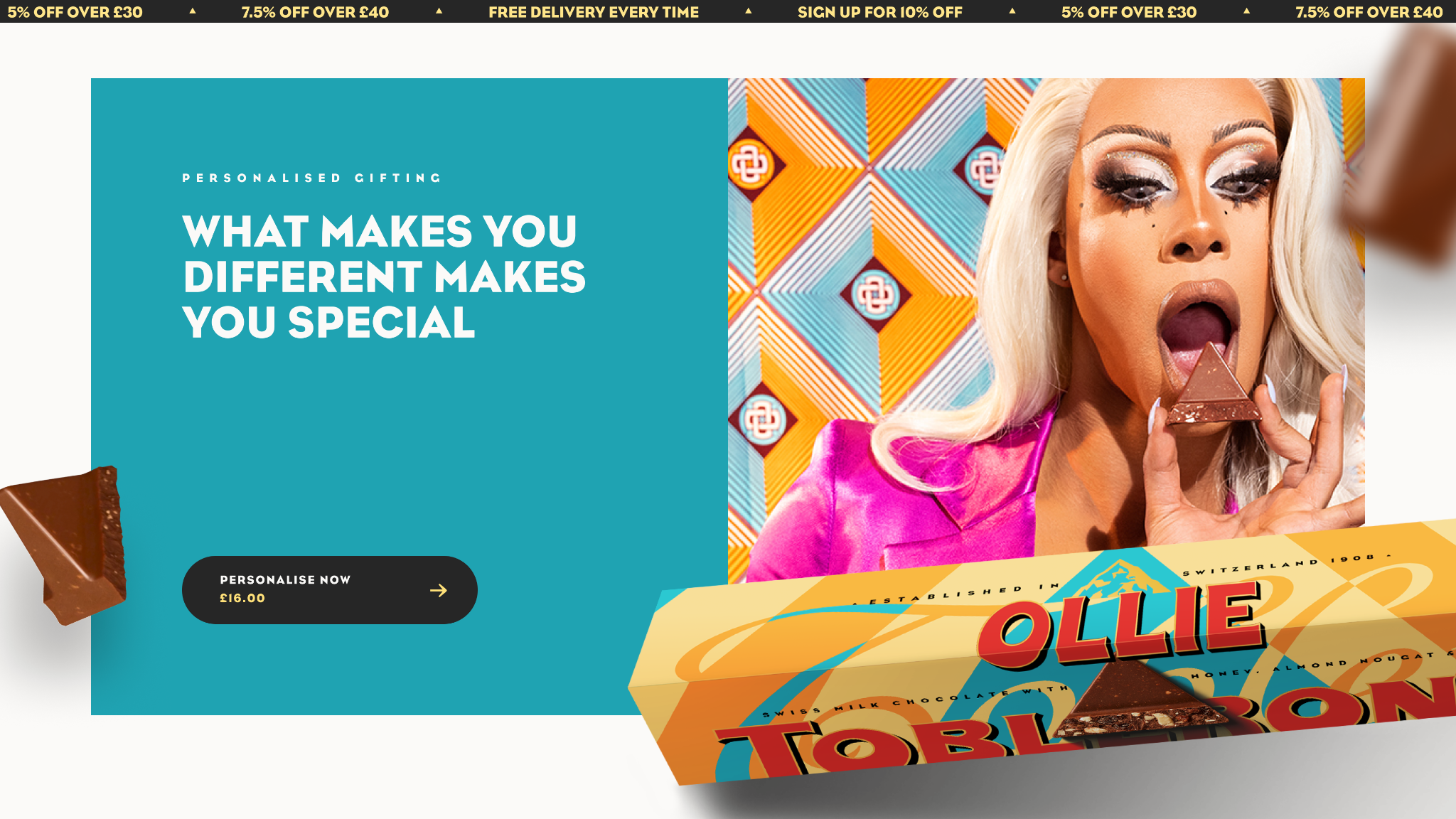
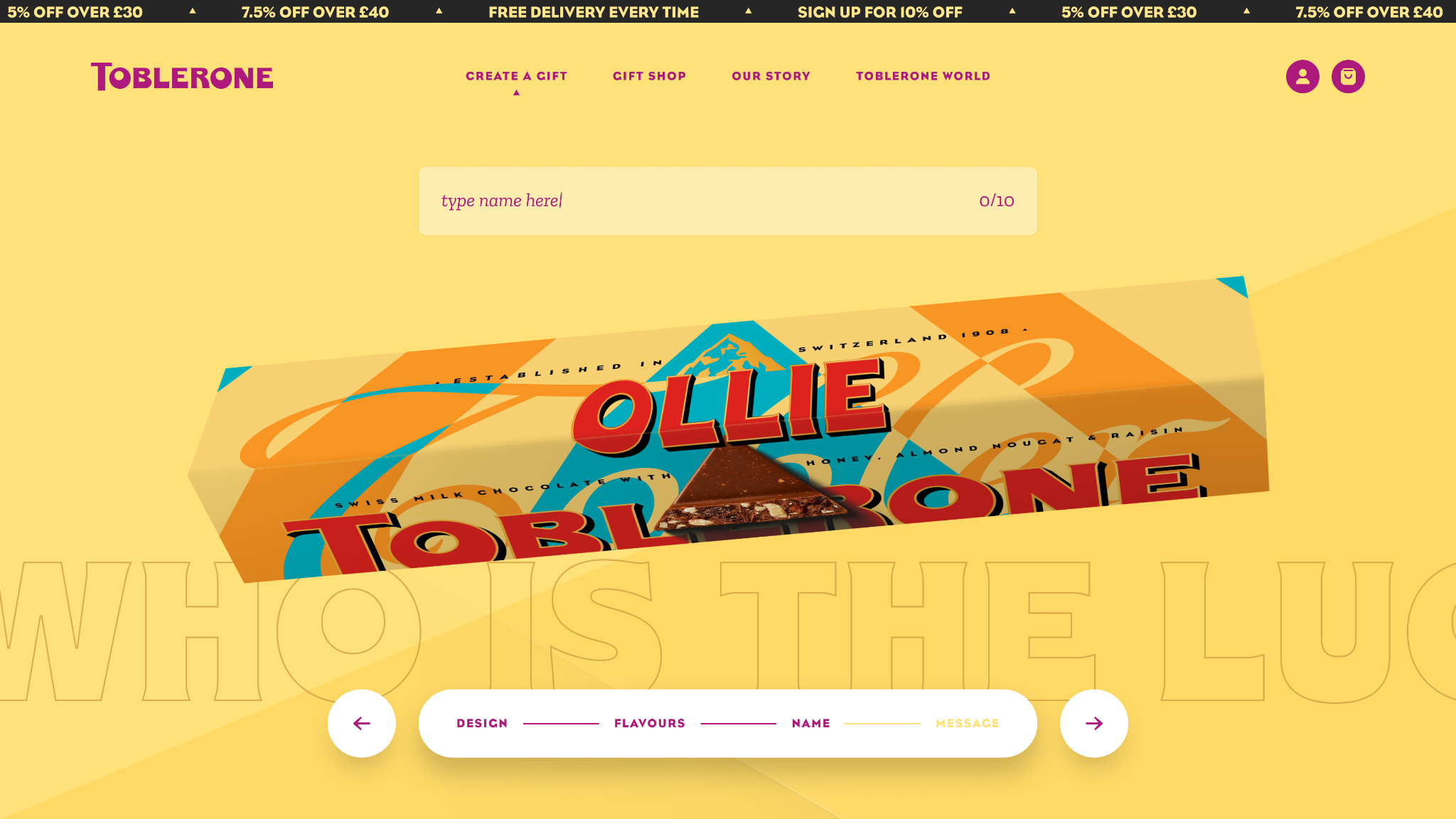
On The Climate Pledge platform, which we built in collaboration with Amazon, content comes to life through interactive elements and rich textures that fit WCAG 2.0 accessibility guidelines. When landing on the home page, visitors first see an animated intro video that spreads the optimistic ambition of the project, making for an impactful first impression. On Toblerone’s D2C platform, meanwhile, users are not only captivated by the stunning color palette, but also by the interactive features that allow them to create personalized gifts. Because they reflect the brand’s identity and tone of voice, both of these platforms are widely different, yet equally memorable.

Toblerone website with chocolate and a person eating a piece
Toblerone website with chocolate in a box

Of course, what visitors find impactful is always a moving target. With people seamlessly jumping from offline to online and into digital spaces where everything is customizable, expectations are high for what a bespoke user experience should look like. There’s a higher demand for creator-led experiences and personalization—which spurs brands to leverage the user data in ways that benefit consumers. 

First-party data elevates the potential of digital platforms.

The brand truth dictates the look and feel of your digital platforms, and data should also inform the design. Platforms facilitate interactions like product search and the purchase of goods and services, providing brands with new information about their consumers. In that process, any data collected should be used to offer experiences that are tailored to people’s needs, interests and even personalities.

What’s more, when the value exchange for someone’s data is clear, brands can establish a healthy feedback loop where they are providing a great service and gathering more information in the process. “The key to designing the right experience is listening to people’s behavior as they interact with the digital ecosystem,” says Dortland. “Our value lies in using data for customer understanding, which will ultimately help us design experiences that elevate brands, drive conversation and growth.” The more engaging the experience, the more data it will generate in return, meaning platforms can become increasingly more effective.

Platforms are more successful in a consistent brand ecosystem.

Essentially, platforms are key to enabling consumers to interact and transact with brands. They host digital experiences that optimize the customer journey and drive consumers’ loyalty. However, platforms are part of a larger brand ecosystem that needs to be consistent.

Monk Thoughts While apps and dotcoms are must-haves for brands, they can’t live up to their full potential if there isn’t a broader strategy to support them.
Niels Dortland headshot

If these touchpoints can’t be disconnected, neither should the teams that focus on each one. Working with partners that can develop an app from the ground up, create content for your brand’s social media or even deliver branded activations leads to a more cohesive narrative—a single truth that manifests itself across channels.

All of these considerations will help you forge deeper connections with your audience—and while building the perfect platform may not be easy, the good news is they are fully under your control. The customer journey never looks the same, but one thing is certain: behind every meaningful interaction is a bespoke platform strategy connecting the dots between people’s needs and a brand’s offering.

Key considerations for an impactful platform strategy in the new era of digital. digital platforms brand strategy content marketing strategy personalized content digital experience customer journey Platform Data Websites & Platforms Death of the cookie

On a B2C Road to Nowhere? Here’s How to Navigate Your Consumer’s Complex Purchase Journey

On a B2C Road to Nowhere? Here’s How to Navigate Your Consumer’s Complex Purchase Journey

4 min read
Profile picture for user mediamonks

Written by
Monks

A woman on a computer and another person getting a credit card out of a bag

In the wake of massive changes to the retail landscape and the growing focus on zero- and first-party data collection, it’s particularly important to understand the purchase channels and touchpoints that are most important to your target consumer. But understanding your target consumer’s path to purchase without a purchase journey study is a bit like driving in a new city without a map: it’s not easy to navigate without one.

A consumer journey study is research conducted through direct interaction with or observations of your target consumers by way of interviews, field studies, focus groups and other methods that can help you better understand your customer’s path to purchase. Beginning with initial purchase inspiration to the final stages of product purchase and post-purchase product usage, a well-crafted study will illuminate purchase trigger behavior and influential touchpoints, and help guide the marketing team with actionable insights that can better influence those touchpoints along that path. 

The study can also help identify gaps in the consumer purchase funnel to help marketing turn product considerers into product buyers. For example, you might ask participants in your study why they decided to purchase a competitor’s product instead of your own to identify the main purchase barriers for your product and uncover potential solutions to overcoming these barriers.

Ready to initiate a consumer journey study? Here are some things to consider.

The Dos (and Don’ts) of Conducting a Study

The questions that you and your team decide to ask in a consumer journey study should help you better understand how to connect with your target consumer and pave the way for an ongoing relationship. Many common questions focus on purchase triggers (i.e. the reasons behind deciding to purchase a new item), different shopping channels (i.e. in-store and online channels), and satisfaction with the newly-purchased product. Oftentimes, it will also be important to gather demographic data about your key shopping segment (such as age, gender, parental status and household income) to better understand who is actually purchasing your products.


Let’s look at some best practices for launching and executing a consumer purchase journey study. These best practices are based on our own experience working with our clients and are designed to help you navigate the complex consumer journey landscape.


Focus on primary decision makers. In many households, it’s common for one or two people to be in charge of purchase decisions, such as a parent on behalf of his or her children. In this scenario, the parent would be considered the primary decision maker, not the children. In your consumer purchase journey study, it’s important to ask survey respondents about their role in the purchase decision-making process because you want to understand the purchase triggers and most influential shopping touchpoints of those who will ultimately decide whether or not to purchase your product. 

Consider long-term versus short-term purchase behaviors. The COVID-19 pandemic rapidly reshaped the retail landscape and transformed many consumers' typical purchase behaviors. For example, according to eMarketer, “click and collect” sales (i.e. sales of products purchased online and picked up in-store) increased 106.9% in 2020. However, not all of these COVID-driven changes are likely to stick, and it’s important to determine what behaviors are likely long-term versus short-term. For example, you can ask survey respondents in your study how they anticipate purchasing a product or service a year from now and compare that to how they have recently purchased a product or service. 

Understand the attributes and behaviors of those who considered, but did not purchase, your product. In your research, you will likely identify a few consumers who considered your product but ultimately did not purchase it. What happened? Why did the shopper decide to buy a competitor’s product? By understanding the attributes and behaviors of those who considered but ultimately did not purchase your product, you can identify potential product features or capabilities that might convert some of these considerers into purchasers. 

Conduct your consumer purchase journey study on a recurring basis. As the retail landscape continues to evolve, there will always be new channels and influential shopping touchpoints that emerge, such as livestream video shopping channels on Amazon and the recent emergence of in-app shopping on TikTok. Depending on your team’s resources and capabilities, consider running a consumer purchase journey study on an annual or semi-annual basis in order to capture the ongoing changes in your target consumer’s purchase journey. 

Partner with retailers and manufacturers to implement consumer journey findings at the retail level. Given that global eCommerce retail sales grew 27.6% while overall retail sales declined 3.0% in 2020, it’s no surprise that the websites of retailers and manufacturers are some of the most important and influential shopping touchpoints. Consumers turn to these channels to learn about products, read customer reviews and compare items. Once you have completed your consumer purchase journey study, consider sharing these insights with your key retail partners in order to implement these best practices at the retail point of sale.

By implementing these best practices in your next consumer journey study, you’ll strengthen your brand or product’s relationship with your target shopper and identify new ways to connect with your key consumers. Instead of being on a “road to nowhere,” you’ll have a clear roadmap of your intended consumer’s path to purchase.

Considering a consumer journey study? Our team of experts can help. 

With massive changes to the retail landscape, learn the purchase channels and touchpoints that are most important to your target consumer. With massive changes to the retail landscape, learn the purchase channels and touchpoints that are most important to your target consumer. customer journey Retail consumer journey

How Remixing Rock Hall’s Website Struck a Chord

How Remixing Rock Hall’s Website Struck a Chord

4 min read
Profile picture for user mediamonks

Written by
Monks

The imperative to keep up digitally is felt by many, though the challenge is especially felt by museums under pressure to infuse their collections with cultural relevance for their patrons. In aiming to make a historic event more tangible or a culture more understood, digital media offers museums and cultural institutions an excellent opportunity to reconsider how they will continue to inspire the visitors of tomorrow.

Few institutions have the built-in relevance to contemporary pop culture than the Rock & Roll Hall of Fame, which honors the music genre’s most iconic and influential artists, both past and present (and just recently announced its inductees for 2020). Just in time for its new honorees, the Hall of Fame unveiled the fruit of its own reimagined efforts, made in collaboration with MediaMonks: a complete overhaul of its website, which now offers a bold, impactful visual style that complements the forward-thinking acts and artists to whom the museum pays tribute.

Drive Innovation with Purpose

The Rock & Roll Hall of Fame’s mission is “to engage, teach and inspire through the power of rock & roll.” The new website delivers on this promise through a content-heavy theme that brings artifacts from the museum’s collection to life through scans and images. This way, users can preview what the museum has to offer before they visit—or can enjoy bits from the collection even if they’re unable to make a trip.

“The artifacts enhance the discovery phase and tease the collection,” says Brook Downton, Executive Producer at MediaMonks. Users find this content strung across more than 300 Hall of Fame Inductee biography pages, which lend each artifact context and meaning. The biographies are also linked contextually; for example, each page invites you to explore other artists inducted in the same year or that are particularly relevant or influential.

Monk Thoughts With digital, museums can make the experience for patrons much more accessible and personalized.

On one hand, this encourages users to explore and browse through the Hall of Fame’s website much like they would wander around the museum itself—balancing a sense of aimless browsing with meaningful curation. “We bring the user into rabbit holes from one artist to another,” says Downton. “It’s a website where you can spend an hour, rather than just five minutes.”

This web of interconnected artists also enables a more personalized experience by making it easier for visitors to find and discover items they’d most like to see. Museums can be overwhelming, after all, but a data-driven user journey can help users not only find the most relevant exhibits, but also discover something entirely new. “Museums are a reflection of humanity and society, of art and movements,” says Downton. “With digital, museums can make the experience for patrons much more accessible and personalized.”

Build Efficiency to Build Momentum

So, how does one not only embark on such a transformation, but actually sustain it from concept to market? One of the biggest pain points that hinders a project of this scale is time, making it difficult for brands to continue their efforts to achieve long-term goals.

Noting that CMOs historically don’t last more than a few years in their role, Forrester Senior Analyst Tina Moffett writes in her report “Marketers, Stop Sacrificing Long-Term Goals for Short-Term Wins” that “This revolving door makes it difficult to execute long-term marketing strategies, especially ones that depend on data-driven insights that take six months to a year to measure.”

New RH Single

Integrated playlists are just one of many ways that digital patrons can interact with the collection.

A digital revolution is a lengthy process—so much so that it’s ever-evolving and never complete. There’s the need to transition away from legacy systems, invest in new skillsets and measure whether the transformation has even been effective. To meet success in these efforts, brands must carry momentum throughout a multi-phase process on the path to success.

That’s why we begin with a laser focus on delivering fast results that fuel investment in long-term goals. For the Rock & Roll Hall of Fame, for example, we began by transforming the look of microsite that allows fans to cast their vote for new Inductees—an important, annual activation that drives fan participation and renews public interest in the museum year after year. This smaller-scale transformation gives us (and brands) the chance to take our learnings and apply them to the main project once completed.

Honoring the Past, Looking to the Future

As you develop a project, continually look for new opportunities to improve the total brand experience. For museums, this means extending focus beyond the website and what role it plays in ultimately getting visitors through the door. The Rock & Roll Hall of Fame achieved this by offering a series of curated, self-guided tours on its website, though future plans include a feature that will let users build unique, personalized tours based on their favorite artists. Such features not only inform patrons of what they will see before they visit, but also functions as a tool to help them truly connect with what the museum has to offer.

Best-in-class digital design offers incredible opportunities for any brand to build impactful experiences, whether it be through social media-inspired navigation as described above or simply a remarkably designed website. This is especially true for cultural institutions with a mission to educate patrons and provide access to cultural artifacts—offering new ways to infuse relevance in a shared cultural heritage.

Discover new ways to engage audiences digitally.

Preserving cultural legacies, museums can transform their collections and content into engaging, personalized digital journeys. How Remixing Rock Hall’s Website Struck a Chord The museum hit a high note by digitizing much of its collection.
Museums content strategy cms personalization data customer journey customer decision journey digital transformation legacy brands

How Brands are Truly Taking Off with Creative Differentiation

How Brands are Truly Taking Off with Creative Differentiation

5 min read
Profile picture for user mediamonks

Written by
Monks

What separates your brand from competitors? Across industries, brands are increasingly investing and allocating resources to improving the customer experience (CX). While that’s great news for customers and the audiences they serve, for brands, it means they’ll have to work much harder to stand out. With a sea of sameness looming over the horizon, brands must hone in on their key, unique qualities that differentiate them from the rest through best-in-class creative experiences. 

Creative differentiation is more than simply raising awareness or traditional notions of driving customer loyalty. In his Forrester report “The Cost of Losing Creativity,” Jay Pattisall writes that “every brand offers the same digital experience because they all address the same customer needs.” Rather than fulfill the same KPIs as their competition, organizations must seek out opportunities that fulfill a unique brand promise and offer memorable creative experiences.

MediaMonks Founder and COO Wesley ter Haar notes that what separates average or even good creative from truly exceptional work is impact. “It’s not just about big ideas. If you have the right idea, you have to go really big on the idea itself,” he says. “The scale of those ideas–the way you commit to them to have real impact–defines the pinnacle of creative work.”

Screen Shot 2019-11-12 at 10.26.02 AM

We redesigned the Aeroméxico app to transform the customer experience from the ground up.

One way brands can begin thinking about this is through purpose. Look at it this way: while you might know your brand’s purpose, what really matters is whether consumers do. 76% of brands may think their organizations have a defined purpose, but only one in ten have actually defined a purpose statement that they’ve put into action, according to the ANA. 

When faced with competition from digitally-native brands that have integrated purpose well within their platforms (like making it easier to get a ride in a couple of taps at a guaranteed rate), brands must likewise ensure their promise is fulfilled through the creative user experience. It’s through these experiences, if done right, that brands can strike an emotional connection and build brand love in the mind of consumers.

Creativity as a Key Factor

The challenge of creative differentiation is felt across all industries these days, though it’s especially relevant to industries that push traditional strategies around growing loyalty–retailers, travel brands, and fintech are just some of the industries that could benefit most by embracing creative differentiation. As part of a digital transformation process, MediaMonks worked with leading Mexican airline brand Aeroméxico to revamp their app, turning the typical ticket-booking experience into a space for wanderlust and travel inspiration.

“What differentiates one brand from another nowadays?” asks Carlos Rivera, Consulting and Platforms Lead at MediaMonks Mexico. “Loyalty is not easily achieved unless through experiences that result in habits or small moments that inject emotion to the customer journey.”

Craft alone doesn’t solve the challenge. Brands must leverage consumer insights and data to address and solve the primary needs of customers, aligning the essence of their brand with a strategy that reacts to those needs. This makes all the difference between novelty and designing truly differentiated experiences that cultivate lasting emotional and business impact. “Differentiated creative combines an understanding of culture with real, heavy-lifting business impact that drives real bottom line value,” says ter Haar.

The process must begin with placing the human at the center of your creative focus. Working with Aeroméxico, MediaMonks put this idea into practice, helping the brand creatively differentiate by striving to truly transform the full scope of the customer experience. 

“Often it’s not about the place you’re going; it’s about the person you’re visiting,” says ter Haar. “This insight bubbled up, can we build people into the app as a destination? That’s a really nice message and normally if you look at the siloed nature of our industry, that’d be it–with some shiny creative around it. Instead, we’re filling the gaps. Yes, there’s creative and an app, but what’s happening in between?”

This question sparked the development of “People are the Places” for Aeroméxico, a state-of-the-art platform that enables the brand to build meaningful relationships by letting travelers experience places like never before: linking them to the people actually living there. This experience was recognized with the Gold Cannes Lion 2019 in Brand Experience & Activation.

The challenge in embedding such emotive experiences in a platform lies in “trying to communicate different experiences to different audiences,” says Aeroméxico’s Angélica Romero, UX and Web Optimization Lead. Brands must design strategies to create personalized experiences that impact users directly and make those experiences memorable. For example, once a user fills in their profile in the Aeromexico app, their name appears throughout the reservation flow, along with geolocalization and recent searches, which anticipate their needs and require fewer taps for them to take.

Redesigning the Customer Experience

Nowadays, many brands are redesigning their corporate image, but these tweaks are often a matter of brand identity. True transformation requires balancing commercial goals with experiences that resonate with consumers. The challenge with the Aeroméxico app was clear from the start: establish a strategy to increase ticket sales by improving the experience of buying a ticket in mobile format. This prompted the team to study the booking process, looking for opportunities to redesign the process as a whole, from discovering flights to inspiring users to act on a destination–a strategy that we’ve taken with subsequent campaigns for the brand, too.

The focus was put not only on helping the user find flights, but also on inspiring them to travel. “And so we launched the complete redesign of the reservations section with a user-thought experience process,” says Carlos Rivera. “We carried out prototypes, interviews and even testing sessions to ensure that every button made sense and to determine what information to show at what time during the reservation flow.” From color choice to animations, each element in the process serves a specific purpose to impact the user experience. Through ongoing analysis, MediaMonks and the Aeroméxico team can tweak and adjust the app to enhance the CX even further and continuously iterate.

Monk Thoughts We redesigned the visual layout to raise the user experience. We humanized a very functional flow without losing usability and conversion goals.

González notes that the centerpiece of the design is how visual elements change and conform as the user follows the flow. From the background image that changes when you select the destination, to the copy and image that indicate the step in which you are in the header of each screen, the design builds a sense of excitement and anticipation before culminating in an animated message that lets you know that “Your trip is ready!”

“We know that buying a plane ticket is a rational decision,” says González. “But that carries a very important emotional load because, in the end, it materializes in your next trip: It’s happening!” 

Creating user-centered experiences goes a long way to help brands make their purpose clear and to establish the differentiator that will make them stand out from the crowd. Addressing customer’s needs is something any brand can do, but doing it in a relevant and unique way is something only brands with defined purposes can aspire to achieve.

Transforming the customer experience (CX) can be key for brands that want to achieve creative differentiation through the use of design, data and technology. How Brands are Truly Taking Off with Creative Differentiation How design and technology come together to transform the customer experience in creatively differentiated ways.
customer experience data technology app apps platform digital transformation creative differentiation design UX UI customer journey Aeroméxico

Choose your language

Choose your language

The website has been translated to English with the help of Humans and AI

Dismiss