Choose your language

Choose your language

The website has been translated to English with the help of Humans and AI

Dismiss

Beer Retirement Account • A Digital Rewards Platform to Solve a Key Societal Challenge

  • Client

    Poker Beer

  • Solutions

    Websites & PlatformsData Strategy & AdvisoryConsumer Insights & ActivationPlatform

00:00

00:00

00:00

Case Study

0:00

A toast to bridging Colombia’s pension gap.

In Colombia, only 18% of citizens have access to a full pension due to widespread informal employment. We bridged this gap by partnering strategically with Poker (Colombia’s second top beer brand) to introduce the Beer Retirement Account. In collaboration with the Colombian government and the Colombian Pension Fund (Colpensiones), shopkeepers can now accumulate points with every beer they sell, which is translated directly into pension savings through AB InBev's global B2B digital platform, BEES.

A woman holding a phone standing in front of a store

Transforming every shopkeeper’s future with data.

Historically, the digital rewards platform BEES enabled shopkeepers to purchase beer for their businesses and earn redeemable rewards points. However, an astonishing 70% of these points went unused and expired. The innovative approach of converting BEES points to pension savings involves straightforward adjustments to the existing digital platform, which organizes and simplifies this vast quantity of data to identify how many points are not being used by each shopkeeper. It then suggests, via platform push notifications, that they convert these points into money and transfer it directly to their pension accounts. The service’s seamless integration ensures shopkeepers can easily opt-in without disrupting their daily business activities. Equipped with this tool, shopkeepers now view every sale of Poker not just as revenue but as an investment in their future.

From points to pension to presence.

Shopkeepers—who form the backbone of AB InBev’s distribution network and represent over 40% of the market in Colombia—often set aside long-term financial planning in favor of immediate needs such as family expenses and business overheads. This initiative was crafted specifically to make future savings accessible and manageable, while also encouraging shopkeepers to stock more Poker, which simultaneously bolsters their future financial stability and grows AB InBev's market presence. This innovative pivot—from reward points to pension contributions—turned a routine transactional sale into a substantive, life-impactful relationship with Colombian shopkeepers.

Savings for the future, one beer at a time.

Together with AB InBev, we turned routine business transactions into a stepping stone towards a financially secure future for many Colombians. The implementation of the Beer Retirement Account sets the stage for a sustainable economic improvement geared towards shopkeepers aged 40 to 60 years from lower socioeconomic backgrounds. This group, instrumental in beer sales and traditionally marginalized in pension schemes, has shown impressive engagement with the program. In merely four months, over 10,000 shopkeepers have started their journey towards a dignified retirement, with order volumes for Poker soaring by 12.5% nationwide.

Results

  • 21% increase in the adoption of the BEES digital platform among shopkeepers
  • 271.4 million BEES points redeemed for pension savings
  • 12.5% increase in orders from shopkeepers, with a remarkable 16% increase in major cities
  • 3x Cannes Lion

  • 7x LIAs

  • 6x El Ojo Awards

  • 1x CLIO Award

Want to talk platforms? Get in touch.

Hey👋

Please fill out the following quick questions so our team can get in touch with you.

Can’t get enough? Here is some related work for you!

.
.
.

NBA Pixel Arena • The World’s First Customizable Metaverse World for NBA Fans.

  • Client

    Google & NBA

  • Solutions

    ExperienceWebsites & Platforms

00:00

00:00

00:00

Case Study

0:00

Delivering the future of sports entertainment.

Google and the NBA partnered with Monks to design the future of sports entertainment: an immersive, multiplayer 3D world inside the NBA app. Inside this personalized metaverse world, fans could customize their avatar in futuristic street-style, recreate the legendary dunks of their favorite players and play battle royale minigames against other fans to unlock new, exclusive merch.

.
.

Creating a truly immersive experience for today’s fan.

The NBA has one of the most passionate followings of any league. How do you create an experience that revolutionizes the way they enjoy games? Alongside the NBA and Google, we set out to redefine the fandom experience through an iconic interactive world. We knew the experience had to reward fans with exclusive opportunities, foster community and connections, allow users to express themselves, and go deeper into the game they love.


A sprawling WebGL world.

The arena is a sprawling WebGL complex and metaverse world that fans can explore together. Generate a lifelike avatar of yourself in the locker room, then head to the highlight remixer to recreate iconic shots from the biggest players in the NBA. Head over to the skill zone to participate in multiplayer games with other fans and rise to the top of the leaderboard. Inside the arena you can purchase new items at the shops, join a game with other fans, and create a custom highlight reel. Ultimately, NBA Pixel Arena sets a new standard for fan-fueled experiences.


Want to talk experience? Get in touch.

Hey 👋

Please fill out the following quick questions so our team can get in touch with you.

Can’t get enough? Here is some related work for you!

eBay Brand Portal • How eBay Made Brand Training Worth Caring About

  • Client

    eBay

  • Solutions

    ExperiencePlatformBrandImpactful Brand ActivationsProduct & Service Design

00:00

00:00

00:00

Case Study

0:00

This is how you brand.

eBay approached us to help tell their brand story to their entire global team through a comprehensive training platform. An internal tool like this is a massive undertaking, and when done properly, has the power to unite an entire company—from the sales division to product development—around a central mission. We set out to create an innovative internal tool that would inform, surprise and entertain everyone across the eBay team.

Designing information

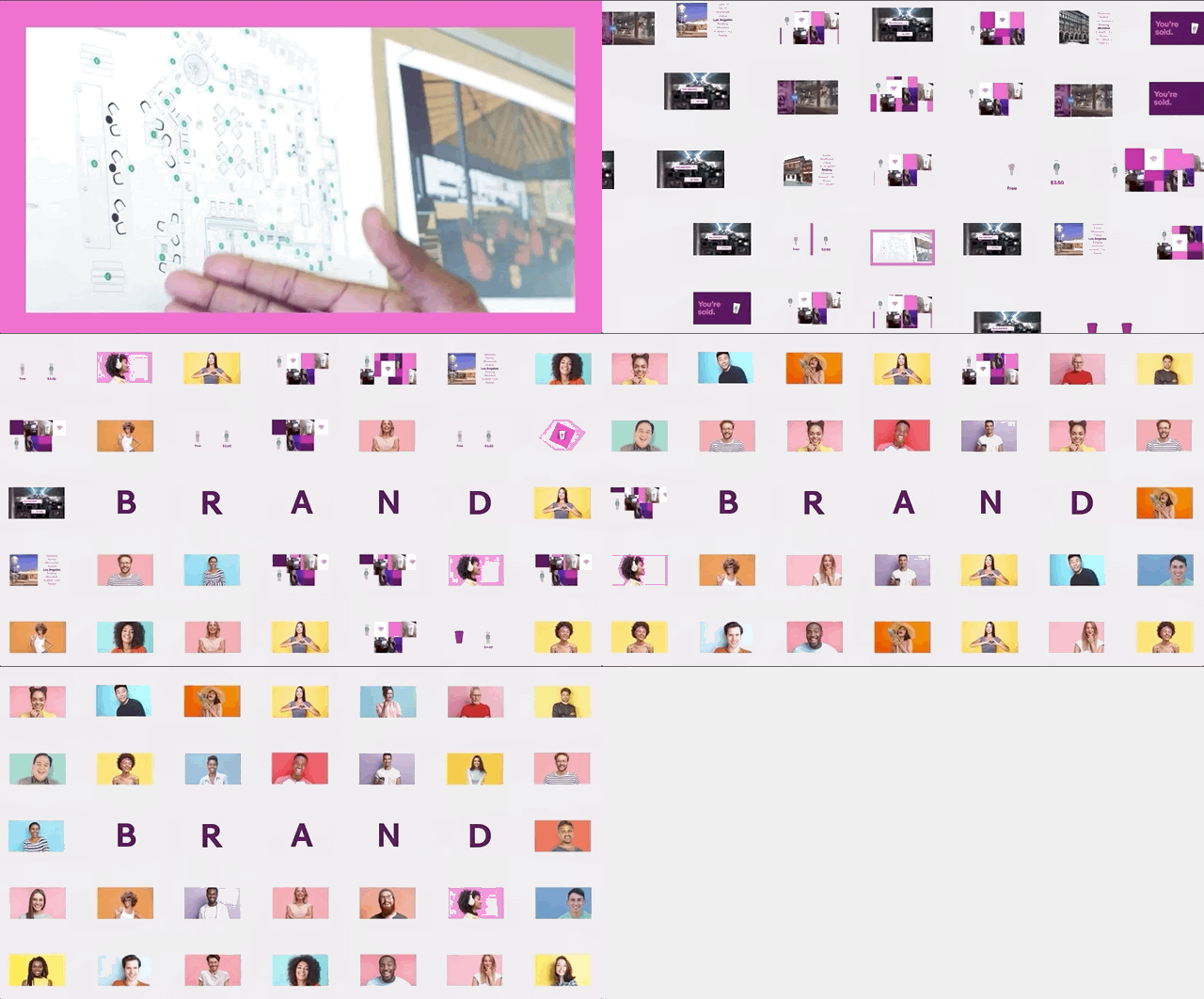
In order to tell this brand story, we developed the “map,” a visual language that complemented eBay’s mosaic style guide. We mapped out every beat of the experience, working closely with the strategy team to define every chapter, source every image, write every article, and design the interactive elements, including quizzes, graphs and videos.

Our Craft

A fully-customized brand management tool and training platform for eBay that's practical, impeccably organized, and beautiful.

Learning the ins and outs of the brand.

To convey the look, the history, and the pillars of the eBay brand, we became exceedingly well-versed in their ecosystem. This meant working very closely with our partners, ensuring every aspect of the training was authentic to the company. We also had to ensure it would be comprehensive enough for every member of their organization. Our primary challenge was creating an experience that would provide a clear vision of the company to every person working there.


.

Keeping a global team in the know.

The brand training comes in 30 and 60-minute versions and is mandatory for all employees and third-party vendors. The training also features an introductory video, made entirely in-house, that shows the importance and effectiveness of a cohesive brand. The key takeaway is that strong brands are made through the cooperation of every team member—and with its new internal tool, eBay’s brand culture is now stronger than ever.

Want to talk experience? Get in touch.

Hey 👋

Please fill out the following quick questions so our team can get in touch with you.

Can’t get enough? Here is some related work for you!

How AI-Driven Interfaces Help You Connect with Your Customer

How AI-Driven Interfaces Help You Connect with Your Customer

AI AI, AI & Emerging Technology Consulting, Digital transformation, Platform, Websites & Platforms 4 min read
Profile picture for user Niels Dortland

Written by
Niels Dortland
Group Creative Director

Stylized image of a woman looking at her laptop.

There’s a lot of talk about artificial intelligence (AI) related to marketing tools, trends and tech. But my latest obsession is how it can help build relationships between brands and customers—and how the current and coming changes will influence people’s behavior. As the AI revolution accelerates, how we interface with the internet itself stands to change. How will this be reflected in brand websites, apps and other platforms?

We’ve all seen and heard how generative AI can supercharge creative content production by creating large volumes of images, video and copy in just seconds. This is only one sliver of AI’s potential, because conversational interfaces that learn from us will profoundly transform the way we search for and discover products and information. And we’re already seeing it happen before our eyes: Instacart offers contextual advice for grocery shopping, Zalando created a virtual fashion consultant, and Intercom launched a GPT4-powered business messaging solution that can solve 50% of customer questions instantly. AI is changing the way people interact with your brand, and this is igniting a paradigm shift in brand interfaces and product design.

For many brands, this creates a challenge. How do we connect people with the right answer, content or product they are looking for? The examples above hint at an answer: AI and LLMs go a long way in making consumer experiences more intuitive. Here’s how we’re thinking about it in our Platforms practice.

New search behaviors will elevate the role of the dotcom.

One area that will drastically influence consumer behavior is search. Search is already the default starting point for consumers, but Google’s new AI-powered results page will soon be the only place a user needs to visit, bringing comparison and conversion onto one screen.

This brings some urgency to how brands approach their own platforms, because to bring their products to the top of search, they’ll need to think less about keywords and more about context and intent. What context would users search for around your products? What would they intend to do with it? What values do your offerings deliver to people?

No one yet can say how to solve SEO in the future. But we can help brands begin to integrate this layer of information into their catalogs and user experiences now to prepare for that kind of change—because in this new world, I see an elevated role for the brand dotcom. Think of Google as the department store that carries all brands, and your platform as the expressive branded spaces users will choose to go to connect and build a relationship. Delivering on this expectation will be the key factor to success in the age of AI.

AI is elevating the brand experience.

I’ll extend the department store analogy a little bit further to illustrate the role of AI on modern digital platforms. A good store employee only asks if they can help at the right moment, and AI will likewise be to gently and organically nudge users through conversation. The difference is that AI will be fully trained on your brand, products and services and can represent those perfectly. Think personal product advice, answers, cross- and up-sales, all in the context of a user’s intent.

A restaurant chain, for example, might use natural language to transform its ordering platform, especially for catering and large orders. Rather than scroll through a menu, users could describe an occasion, like “I’m throwing a birthday party for my 5-year-old son. We’ll have 15 people, mostly children.” The system can then take that information and recommend a customized party package. Any allergies among or dietary restrictions in the group? Not a problem—the AI can edit the order for the customer to review. Think of AI as a butler for your brand and its customers.

More personalized experiences give more opportunities for relationship building.

These little details—why you’re ordering, when you need it by, plus any additional personal requests—go a long way in getting to know your customers. The results are both better customer experiences and the ability to forge hyper-personal relationships, ultimately fulfilling the original promise of digital.

We are finally moving beyond segments and personas. A properly programmed AI understands every user’s personal sentiments, curiosities and needs, because it’s able to pull from and connect different pieces of data from across the consumer ecosystem. It can remember those facts and become more personal with every interaction, like offering personalized promotions and loyalty incentives honed to every user’s context. This new type of personalization shows great promise for conversion.

It's also great for building customer loyalty, because AI unlocks interactions that are designed specifically for building longer lasting relationships with them. As customers engage over time, their interactions across the platform produce greater and more detailed insights that can be used to further optimize the experience and deliver upon their unique needs.

Start with a sprint, then optimize and personalize.

AI will continue to shape consumer expectations and behaviors, underscoring the need for platforms that can pivot with speed and agility. It’s more important now than ever to be able to listen, learn and adapt to how your customers are engaging.

On the flip side, that means your implementation of AI is also always a work in progress. If any of the above sounds interesting to you, rest assured that you don’t have to make a full overhaul of your website. It starts with looking at what you already have and seeing if your tech stack can support these hyper-personalized experiences. Innovation sprints or experimenting with building better experiences—on the main dotcom or maybe in a separate domain—are great places to start, as are smarter search functions that are fairly easy to implement. Then optimize continuously to perfect your toolkit and extend your ability to personalize.

It's too early to say with utmost specificity how AI will shape customer experiences years down the line. But by realizing how recent AI developments are serving pre-existing marketing goals—more personalized user flows, greater customer loyalty, and an elevated brand experience—it’s clear that now is the time to lay the foundations for AI-powered customer journeys.

Want to learn more about how our platforms team can support you in building more personalized experiences?


As the AI revolution accelerates, how we interface with the internet itself stands to change. Find out how this will be reflected in websites, apps and other platforms. AI digital platforms apps mobile app development search engine marketing Platform AI & Emerging Technology Consulting Websites & Platforms AI Digital transformation
uni orange logo
Uni pens with blue, purple, and pink colors

Start Your Story • A Transformational Brand Refresh and Launch Campaign

  • Client

    uni

  • Solutions

    BrandBrand Identity & SystemsGo-To-Market StrategyMediaPaid SearchPaid Social

00:00

00:00

00:00

Case Study

0:00

Reimagining a legacy brand.

As a world-class provider of innovative writing and art instruments, uniball had always been well aware of the power that lies in doing things differently. But for a 135-year-old brand that held its position as an industry leader for decades, change doesn’t come without its challenges. To write the brand’s most exciting chapter yet, we teamed up with uniball and developed a fresh brand identity, along with a go-to-market strategy that helped introduce it to the world. Renamed as uni, we launched the brand through an end-to-end omnichannel campaign spanning content, film, media buying and more—honoring its heritage while looking forward to the future.

A woman wearing a colorful jacket stands in her studio
A woman drawing in her notebook with a uni pen
Press The vision for this campaign is to celebrate and empower people to take control of their personal journey.
Read on The Drum Pen maker Uniball writes new chapter as Uni

Transforming the brand experience from the inside out.

To create a new brand identity that resonates with consumers, we started by conducting a research study surveying over 500 primary household shoppers in the writing instrument category. This study informed the overall tone of voice, as well as the creation of hundreds of new brand assets—including a refined logo and color palette, brand guidelines, packaging and merchandising, social media channels, applications, OOH and print advertising. Turning uniball into uni, we helped create a more friendly brand, an approach that’s reflected in the optimized, revamped website. With different textures and popping colors, uni’s brand identity went from traditional to transformational—changing consumer perception while driving inspiration and fostering a stronger connection to the brands’ identity.

An insight-led campaign to establish stronger relationships.

To create a brand that resonates with consumers today, it’s vital to understand their core needs and shifting behaviors, as well as the market trends. So before we could introduce uni to the world, our strategy team identified customer, cultural, category and company insights through both primary and syndicated research. In doing so, we found that recent world events had awakened a desire to create and take on new challenges in the target audience. With this in mind, we developed a go-to-market strategy that articulated this sentiment.

Inspiring audiences to craft their own stories.

Once the new brand identity was ready and the research concluded, we developed and launched Start Your Story, an omnichannel campaign that centers on the first-person experiences of those writing their own futures. We focused on the brand’s inspiration pillar and kept an optimistic tone of voice that encouraged the audience to connect with their creative selves—raising brand awareness and driving audiences to see uni as a modern brand with a fresh new take.

To achieve maximum reach, our teams worked together to leverage the original research and created target personas, as well as allocated budget splits across media channels. This included using a testing framework with three creative variations and four measurement initiatives such as Brand Lift Studies and GWI Research, with data shown on an interactive live dashboard. In other words, we ensured the campaign was rolled out across today’s most relevant channels, according to their purpose within the brand ecosystem.

Results

  • 616% + planned paid media via online video and YouTube reach
  • 353% + planned social paid media reach
  • 46% + benchmark video completion rate
  • 30% + benchmark click-through rate
  • 29% + CPC benchmark with SEM

Looking to rebrand? Get in touch.

Hey 👋

Please fill out the following quick questions so our team can get in touch with you.

Can’t get enough? Here is some related work for you!

How Digital Products Define Brand Identity

How Digital Products Define Brand Identity

4 min read
Profile picture for user Fernanda González

Written by
Fernanda González
Group Experience Director

HP printing press

In the vast digital ecosystem, brands often have to play by the rules of third-party platforms. While social media is incredibly useful for business expansion, it comes with a set of general regulations, codes, and best practices. Similarly, large e-commerce sites offer few opportunities to stand out, with a few exceptions. But among these necessary platforms, a brand's own digital products stand out as flexible tools for transforming the brand experience.

The term "proprietary digital products" refers to any digital platform where the code is owned by the brand. The terms "platforms" and "digital products" are often used interchangeably, but while the former can be confused with external channels like TikTok or Instagram, the latter is, in my opinion, a better name for spaces that are uniquely a brand's own. Characterized by their flexibility and customization, these digital products range from websites to TV apps and can serve any purpose we deem necessary to achieve our goals and meet consumer desires.

Because there are no intermediaries, we can have full authority over the brand identity that our digital products project. And that is a great responsibility. The way the brand experience looks and feels on these platforms will shape how the audience perceives the brand, so what should we prioritize when creating our own digital products?

Functionality, Efficiency, and Innovation.

In the past, websites were one-way streets, serving primarily as a source of information. Today, the standards are much higher. Whether it's a content hub or a smartwatch app, successful digital products are those that strike a perfect balance between functionality, efficiency, and innovation. The audience won't stick around on websites that make it difficult to find what they're looking for, or, even worse, don't function well. But they will be loyal to those that provide a seamless user experience.

Monk Thoughts Within the entire brand ecosystem, proprietary digital products should be the most convenient channels.
Fernanda Gonzalez headshot

That said, creating functional websites from scratch is anything but easy. For this reason, many brands turn to auto-site builders, or automatic site creation tools, especially when integrating e-commerce features. This can solve the problem temporarily, but as a permanent alternative, it raises the question of whether consumers will be able to remember these standardized sites. If they open multiple tabs in search of a product, will ours stand out from the rest?

Innovation is about creating those “wow moments” that will be etched in people's minds, and adding the interesting features that make a platform very different from its competitors, even if the offering is similar. Possibility City from HP, for example, is not just another e-commerce platform. It's a showcase of HP's digital printing presses that also hosts multiple events, from product presentations and webinars to one-on-one demonstrations. And while visitors explore the product line, the platform learns from their interests to provide personalized recommendations.

HP Possibility City website screenshot of closeup of messages

Data and Personalization: The last frontier of loyalty.

If our platform is intuitive to use and pleasant in its appearance, the next step is to offer personalized features that transform the experience into something truly unique. To do that, we need a data analysis infrastructure that provides valuable information about our consumers, and a team that can turn those insights into action.

I always work closely with the data team both within the company and on the client side to improve our understanding of consumers. On one hand, a solid first-party data framework can help us identify how consumers move through the ecosystem: where they click, how they behave, and where they encounter friction points. By designing around these general trends, we can offer a smoother experience for everyone.

On the other hand, individual data opens up a new world of possibilities in terms of personalization. With Possibility City, for example, we included a virtual assistant that learns from visitors' preferences and guides them through the brand's offerings, whether they are looking for efficiency, sustainability, or security. We also linked the platform to a CRM funnel that helps automate sales closing, keeping us informed about customer needs and how to be more efficient.

Designing around the business priority.

In addition to collaborating with the data team, my colleagues and I often work with the business consulting unit, as they have valuable information about brands' digital roadmaps and their long-term business goals. Digital products must be built around this vision. Not only to help brands achieve their goals more quickly but also to ensure that their platforms are unique.

When working with multiple airlines throughout my career, for example, I discovered that some needs are universal, but no two business models are identical. Options like "search flights," "check-in," or "view my reservation" are commonplace, but while some brands simply wanted a functional app to help travelers organize their trips, others sought to increase the average ticket value, encouraging consumers to opt for upgrades, additional luggage, and other add-ons. The mere act of designing around these priorities makes each platform very different from the other.

In conclusion, digital products are both the translation of our business and the embodiment of the brand identity. To get the most out of them, we need to understand our consumers and, above all, the brand itself. When working with clients, my goal is to help them create differentiated products that drive the business, and it is the brand values that ultimately have a decisive importance. By taking identifiable brand elements and combining them with functional, innovative, and personalized digital products, we can create a truly memorable brand experience that forges deeper connections with the audience.

Discover how a brand's own digital products stand out as flexible tools to transform the brand experience. digital marketing digital platforms digital experience ecommerce first-party data

How Digital Products Define the Brand Image

How Digital Products Define the Brand Image

Brand Brand, Digital transformation, New paths to growth, Platform, Websites & Platforms, eCommerce Platforms 4 min read
Profile picture for user Fernanda González

Written by
Fernanda González
Group Experience Director

HP printing press

Lea este artículo en español aquí.

In the vast digital ecosystem, brands often have to play by the rules of third-party platforms. Social media, whilst incredibly helpful in the pursuit of business expansion, comes with a set of regulations, codes and best practices that everyone has to comply with. Similarly, large ecommerce sites offer little room for differentiation—with a few exceptions. But beyond these highly necessary platforms, digital products owned by brands themselves rise as flexible tools to transform the brand experience.

Owned digital products designate every digital platform whose code belongs to the brand. The terms “platforms” and “digital products” are often used interchangeably, but while the former can be mistaken for third-party channels like TikTok or IG, the latter is, in my opinion, a better name for a brand’s unique spaces. Marked by flexibility and potential for personalization, these digital products encompass everything from dotcoms to TV apps—and can serve whatever purpose brands deem necessary in meeting their goals and keeping with consumers’ desires.

Because there are no intermediaries, you can have full authority over the brand image that your digital products project. And that’s a big responsibility. What the brand experience looks and feels like on these platforms is how people will perceive your brand to be, so what should you prioritize when it comes to building your own digital products? 

Functionality, efficiency and innovation.

Back in the day, websites were unidirectional and served mostly as a source of information. Now, standards are higher. Whether we’re looking at content hubs or a smartwatch app, successful digital products must strike the right balance between functionality, efficiency and innovation. Consumers won’t stick around for websites that make it hard for them to find what they are looking for—or even worse, that don't fully work—but they will remain loyal to those that provide a seamless user experience.

Monk Thoughts Out of the entire brand ecosystem, owned digital products should be the most convenient channels for consumers to use.
Fernanda Gonzalez headshot

That said, building functional websites from scratch is no easy feat. Because of this, many brands resort to auto-site builders—especially when it comes to ecommerce integrations. While this may temporarily fix the problem, website templates are not a permanent solution because it begs the question of whether consumers are going to be able to remember it. As they search for product options and scour through multiple tabs, will yours stand out among the rest?

Innovation is about creating the “wow” moments that will remain engraved in people’s minds, and adding interesting features that make a platform completely different from those of your competitors—even if your offering is similar. HP’s Possibility City, for example, is not just another ecommerce platform. Rather, it’s a showcase of HP’s digital printing presses that doubles as a hub to house sales events—from product presentations and webinars to one-on-one demos. And while visitors explore the brand’s lineup, the platform learns from their interests and provides them with tailored content recommendations.

HP Possibility City website screenshot of closeup of messages

Data and personalization: the next frontier of loyalty.

Provided that your platform is intuitive in its use and delightful in its appearance, the next step is to offer personalized features that make the experience truly unique. To get there, you need the data analytics infrastructure to provide valuable information about your consumers and a team of experts who can turn that into actionable insights.

I always work closely with the data team on both the company and the client side to improve our customer understanding. On one hand, a strong first-party data framework can help you identify how consumers are moving across the ecosystem—where they click, how they behave and where they find friction points. By designing around these general trends, you can deliver a more seamless experience for all.

On the other hand, individual data unlocks a new world of possibilities in terms of personalization. With Possibility City, for example, we included a virtual assistant that learns from visitor preferences—whether they’re looking for efficiency, sustainability, security or other priorities—and guides them through the brand’s offering. We also tied the platform into a CRM funnel that helps automate the closing of sales, keeping us informed of customer needs and how to improve efficiency. 

Designing around your business priority.

In addition to collaborating with data experts, my team and I work closely with the business consulting unit, as they can provide valuable insights into a brand’s digital roadmap and long-term business goals. Digital products should be built around this vision—not only to help brands achieve their goals quicker; also, to ensure their platforms are one-of-a-kind. 

In working with multiple airlines throughout my career, for example, I found that while some needs were universal, no two business models were ever alike. Options like “book a flight,” “check-in,” or “see my reservation” were common currency—but while certain brands simply wanted a functional app to help travelers organize their trips, others sought to raise the average ticket value by encouraging consumers to opt for upgrades, extra bags and other add-ons. The mere act of designing around these priorities made each platform totally different from the next. 

The bottom line is that digital products are as much the translation of your business as they are the embodiment of your brand identity. To get the most out of them, you need to understand your consumers and, above all, your own brand. In working with clients, my goal is to help them create differentiated products that drive their business forward, and it’s the brand’s values and identity that ultimately do the trick. By taking identifiable brand elements and combining them with functional, innovative and personalized digital products, we can create a truly memorable brand experience that forges deeper connections with your audience.

Learn how digital products owned by brands themselves rise as flexible tools to transform the brand experience. digital marketing digital platforms digital experience ecommerce first-party data Platform eCommerce Platforms Websites & Platforms Brand Digital transformation New paths to growth

How to Fuel Connection Through Custom, Flexible Web Experiences

How to Fuel Connection Through Custom, Flexible Web Experiences

Brand Brand, Brand Identity & Systems, Monks news, Platform, Websites & Platforms 4 min read
Profile picture for user mediamonks

Written by
Monks

Two hands trying to touch

When it comes to flagship brand websites, it’s important to keep content current and relevant to key marketing moments. Whether adding a desired “wow” factor or signifying a key moment for the brand, custom web experiences can differentiate a platform, a brand or its content—yet many content management systems (CMS) are rigid and difficult to adapt, resulting in experiences that can feel dull even when you have the resources to keep fresh content flowing.

This was key to the design of our website, particularly our homepage, which emulates the look and feel of a newspaper. The format calls for experiences that feel new and contemporary on a regular basis, compounded by the accelerated pace in which our industry changes. Now one year since the launch of our brand, we’re looking at how our approach to content curation has panned out, solving key challenges that many brands face when it comes to delivering distinct digital experiences or breathing new life into their legacy content.

Set a foundation for flexibility at scale.

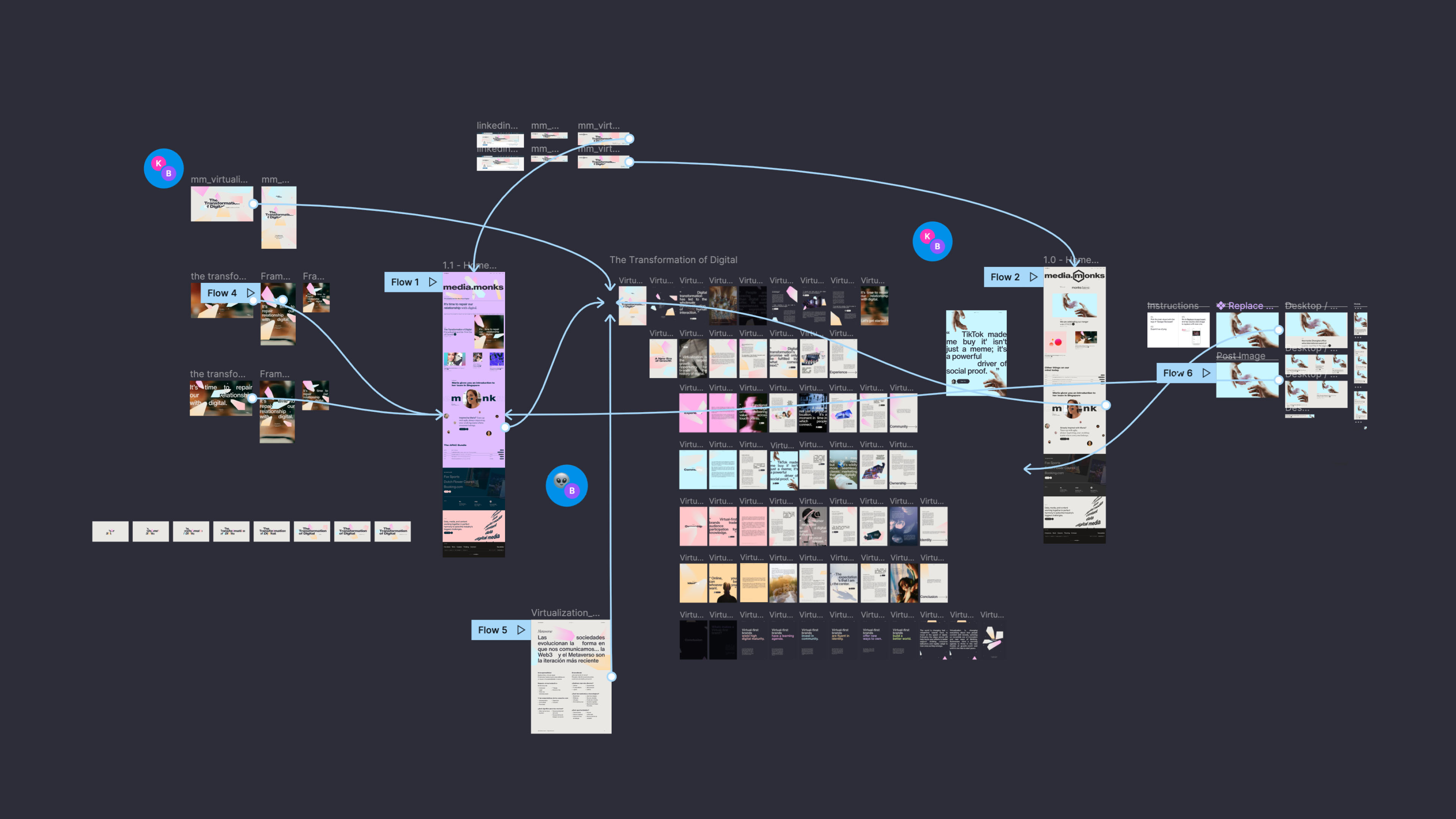
“Our homepage was designed to mark special moments in time, like a turning point for the company or when something is trending industry-wide that we have a strong point of view on,” says Vinicius Araujo, Creative Director. One recent moment was the release of The Transformation of Digital, our report detailing how consumer behaviors are shaping a new era of virtualization. To celebrate the launch of the report, our homepage took a new look: a unique color scheme, a curation of thematic content and an animated logo that represents the report’s visual identity.

Such an overhaul to the homepage may seem like a significant investment of time and resources, though the flexibility baked into our CMS made it a simple overnight change. Easy-to-update components and customizable fields also ensure that bespoke designs are scalable into the future. “It’s always ready to be updated in a heartbeat,” says Araujo. “And it’s ephemeral: it’s only there for a week, and then it’s gone.”

Monk Thoughts Our system is easy to use, but it’s balanced very well with our identity and ongoing marketing strategy. When design isn’t built to complement marketing activities, websites can become stale and flatline.
Brad Gardner headshot

On the flipside, the flexibility baked into our website keeps our content timely while ensuring we can authentically represent the breadth of our capabilities. At the same time, brands following a similar approach can iterate experiences that support the different needs of diverse audiences. “In curating the content for the virtualization takeover, one thing we considered was: How do we get someone who doesn’t want to digest the whole report to understand what this is?” noted Gardner, who gathered a wide selection of content that make virtualization tangible while also representing the diverse skills of our team.

Collaboration enables new ways to shape and expand content.

With our homepage takeover, it was important to build an experience that felt distinct right from the jump—not exactly separate from the other content on the website, but something that commanded attention as soon as people landed on the website.

Monk Thoughts The homepage has the shock factor when you enter. The first impression is completely new and different from our typical content, and past that moment everything else feels more familiar. We don't want people to have to relearn how to read our dotcom, so it has to be a measured shock.
Vinicius Araujo headshot

The first thing viewers saw when loading the page was a reanimated Media.Monks logo that leverages the bespoke identity crafted for the report—all built around a design language of four quadrilateral shapes that represented key themes of the virtualization report: ownership, identity, community and experience. These adapting shapes interact with each other at different frequencies throughout the report, keeping the audience focused on the insights. “It was important to create a wrapper that wouldn’t alienate the audience,” says Benjamin Tuffy, Design Director, noting that using iconography like VR headsets or futuristic environments could either limit virtualization’s scope, overwhelm non-technical readers or simply feel irrelevant for those who aren’t engaged in those channels.

But the shapes are just one kind of graphical element that made their way from the report to the homepage design. In discussing the role that bespoke experiences can play in enhancing the original source material, Tuffy spoke about a collaborative approach between design, copy and growth teams to pull the content into previously unforeseen directions.

Figma mockup showing the connection between our report and custom web experience

Figma mockup showing the connection between our report and custom web experience throughout the design process.

Monk Thoughts The bit I enjoyed most from the experience was finding key hooks in the language of the report that we could use to visually pull people in. The result is a series of spreads that put us on the hook for the statements we’re making.
Benjamin Tuffy headshot

Curation breathes new life into legacy content.

In addition to finding new ways to visually represent content from the report, our virtualization-themed homepage takeover also provided an opportunity to highlight ways that virtualization impacts different categories and audiences. “Leaders across different regions are bringing the story out to their teams,” says Tuffy, and viewers could see this play out through the content we curated to substantiate the report’s claims.

This highlights another purpose to building around key marketing moments: breathing new life into some of your existing content. In our case, this meant further drawing lines and connections between our multidisciplinary team. “We saw we had some content from Jam3 and a recently published piece by Chief Diversity Officer James Nicholas Kinney, both of which spoke to the purpose of virtualization from two different directions,” says Gardner, noting that the content helped showcase how we’ve been grappling with these ideas long before the report’s release.

Our special-edition homepage sought to leverage our CMS’s flexibility to deliver custom web experiences as new moments arise. Brands seeking to build bespoke, scalable web experiences can follow a similar approach by thematically curating and remixing new or legacy content, while also enhancing it further through added fit-for-format design elements. The result? A differentiated digital experience that never overstays its welcome and dazzles audiences with something new every time they visit.

We spotlight our approach to content curation, solving key challenges that brands face when it comes to delivering distinct digital experiences, and breathing new life into legacy content. content marketing strategy digital marketing digital platforms platforms digital experiences Platform Websites & Platforms Brand Brand Identity & Systems Monks news

How to Build Digital Platforms for the Evolving Customer Journey

How to Build Digital Platforms for the Evolving Customer Journey

Data Data, Death of the cookie, Platform, Websites & Platforms 4 min read
Profile picture for user mediamonks

Written by
Monks

A illustration of a hand pressing on mobile prototypes

Dotcoms, microsites, mobile apps, ecommerce sites—digital platforms come in all shapes and sizes, and they’re key components in building a strong brand identity. Having a platform strategy is now a requisite for any business to thrive, as they serve as the backbone of most efforts to immerse the audience into a brand’s world. But while this truth may elude no one, the fact that platforms inhabit an ever-growing digital ecosystem poses the question of how we can make them memorable.

Because they are a direct reflection of a brand’s values, products and services, platforms should embody the brand identity in their look and feel. Above all, they should strike the perfect balance between functionality and impact. That, however, may be easier said than done. The process of developing, implementing and maintaining great platforms calls for a high level of subject-matter expertise—and here are some of our learnings from years of building brand legacies in this space.

The brand impression is determined by the digital ecosystem.

Digital platforms have evolved from playing a supportive role in the customer journey to becoming one of the main destinations in the brand’s ecosystem. That means that the experience they get will dictate their impression of the brand. “I like to say that we need to design for the ‘first date,’ because in that initial encounter, the interface is the brand,” says Creative Director Niels Dortland. "If a dotcom is flat and unremarkable, consumers will extend that perception onto the brand."

Monk Thoughts Platforms need to be functional and easy to navigate, but they must be delightful digital experiences too.
Niels Dortland headshot

As opposed to other channels in the ecosystem, dotcoms offer a fully ownable space. Because of this, astute marketers strive to make them the number one place where consumers interact with the brand. “You can’t be certain where the consumer will land within the digital ecosystem, but you can make sure your dotcom is the one they choose to come back to,” explains Dortland. “Investing in platforms that offer a great digital experience is investing in relationship-building with customers and business growth.” 

While simplicity and clarity are great attributes for a platform to have, it doesn’t stop there. To stand out in a sea of sameness, we need to add another layer to the experience. Here’s the secret: the key to uniqueness lies in the brand’s identity.

Use your brand’s truth to rise above the noise.

Digital platforms are part of a broader ecosystem, and each one of these touchpoints should reflect the brand’s identity while serving a strategic purpose in the customer journey. “The way in which we add texture to an experience and make it truly authentic is by finding the brand’s truth and designing around it,” says Dortland. “If every platform is branded around that truth, that means they will be completely different to that of their competitors.”

Climate Pledge website homepage

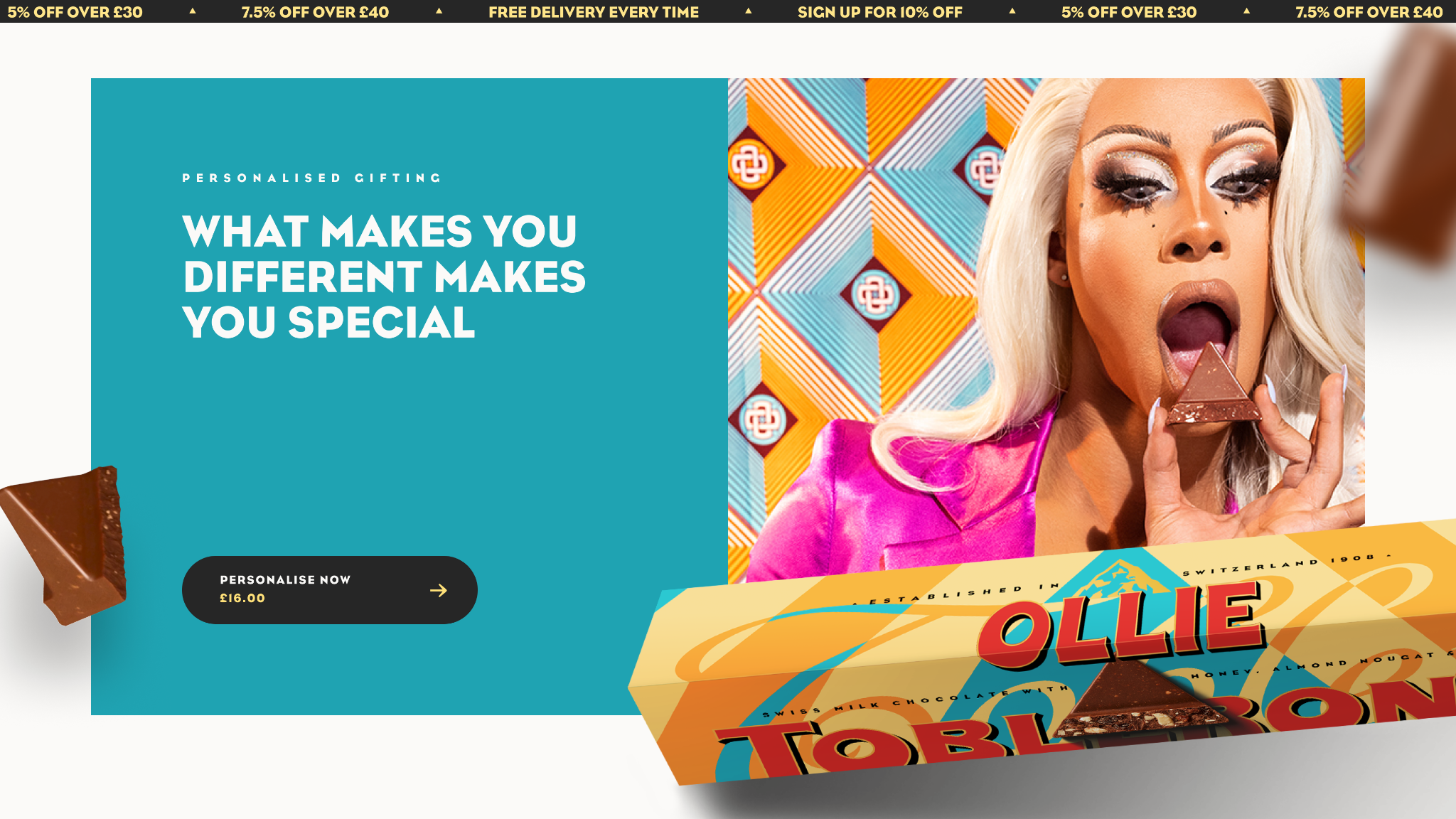
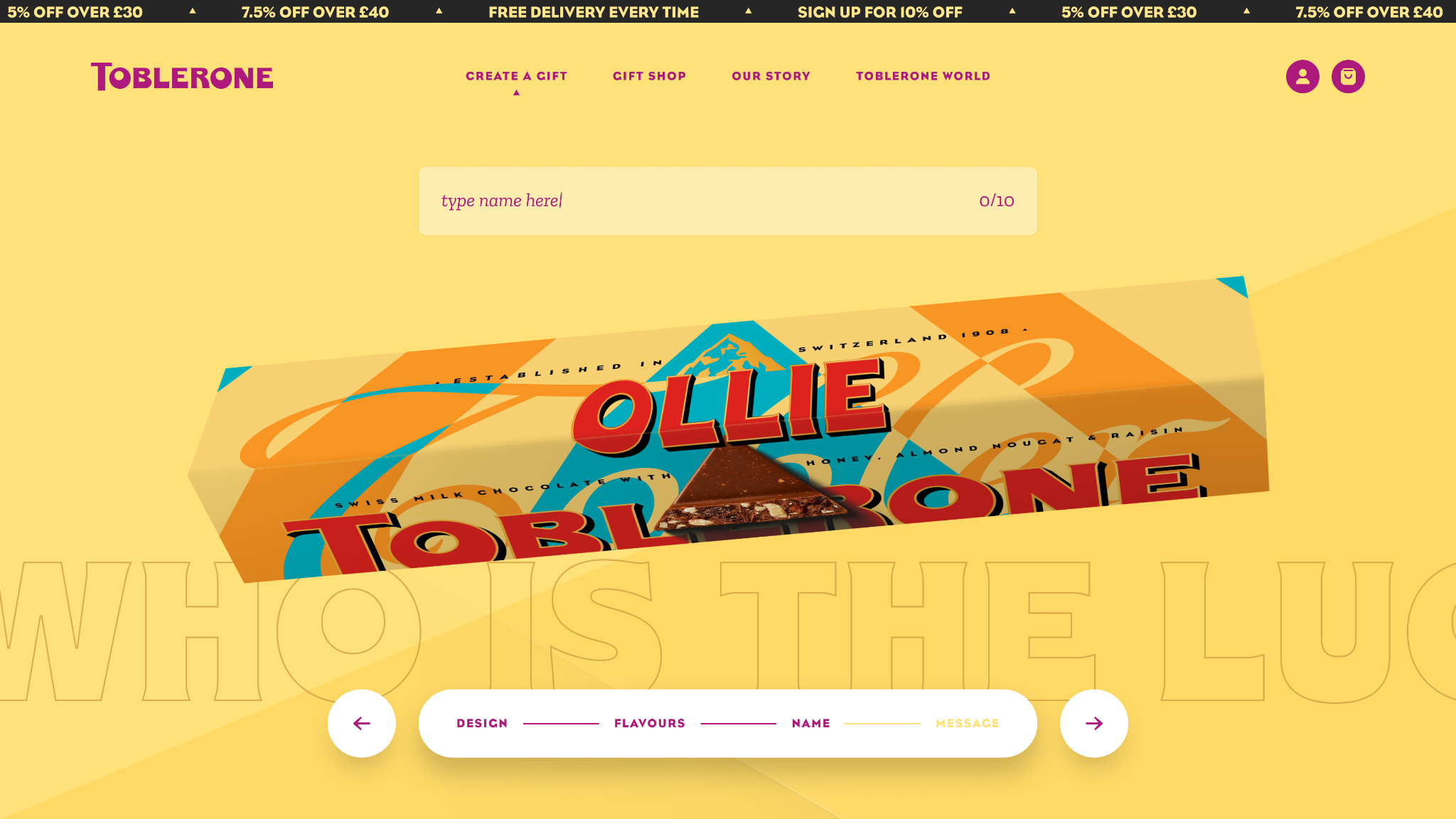
On The Climate Pledge platform, which we built in collaboration with Amazon, content comes to life through interactive elements and rich textures that fit WCAG 2.0 accessibility guidelines. When landing on the home page, visitors first see an animated intro video that spreads the optimistic ambition of the project, making for an impactful first impression. On Toblerone’s D2C platform, meanwhile, users are not only captivated by the stunning color palette, but also by the interactive features that allow them to create personalized gifts. Because they reflect the brand’s identity and tone of voice, both of these platforms are widely different, yet equally memorable.

Toblerone website with chocolate and a person eating a piece
Toblerone website with chocolate in a box

Of course, what visitors find impactful is always a moving target. With people seamlessly jumping from offline to online and into digital spaces where everything is customizable, expectations are high for what a bespoke user experience should look like. There’s a higher demand for creator-led experiences and personalization—which spurs brands to leverage the user data in ways that benefit consumers. 

First-party data elevates the potential of digital platforms.

The brand truth dictates the look and feel of your digital platforms, and data should also inform the design. Platforms facilitate interactions like product search and the purchase of goods and services, providing brands with new information about their consumers. In that process, any data collected should be used to offer experiences that are tailored to people’s needs, interests and even personalities.

What’s more, when the value exchange for someone’s data is clear, brands can establish a healthy feedback loop where they are providing a great service and gathering more information in the process. “The key to designing the right experience is listening to people’s behavior as they interact with the digital ecosystem,” says Dortland. “Our value lies in using data for customer understanding, which will ultimately help us design experiences that elevate brands, drive conversation and growth.” The more engaging the experience, the more data it will generate in return, meaning platforms can become increasingly more effective.

Platforms are more successful in a consistent brand ecosystem.

Essentially, platforms are key to enabling consumers to interact and transact with brands. They host digital experiences that optimize the customer journey and drive consumers’ loyalty. However, platforms are part of a larger brand ecosystem that needs to be consistent.

Monk Thoughts While apps and dotcoms are must-haves for brands, they can’t live up to their full potential if there isn’t a broader strategy to support them.
Niels Dortland headshot

If these touchpoints can’t be disconnected, neither should the teams that focus on each one. Working with partners that can develop an app from the ground up, create content for your brand’s social media or even deliver branded activations leads to a more cohesive narrative—a single truth that manifests itself across channels.

All of these considerations will help you forge deeper connections with your audience—and while building the perfect platform may not be easy, the good news is they are fully under your control. The customer journey never looks the same, but one thing is certain: behind every meaningful interaction is a bespoke platform strategy connecting the dots between people’s needs and a brand’s offering.

Key considerations for an impactful platform strategy in the new era of digital. digital platforms brand strategy content marketing strategy personalized content digital experience customer journey Platform Data Websites & Platforms Death of the cookie

Can Topics Enable Personalization at Scale?

Can Topics Enable Personalization at Scale?

4 min read
Profile picture for user Benjamin Combe

Written by
Benjamin Combe
Senior Manager, Analytics and Optimization

two images of people: on the left, a woman looking at her phone. On the right, the same woman smelling perfume at a store

Google have recently announced their newest proposed mechanism for enabling interest-based advertising following the phasing out of third-party cookies, called Topics. Topics replaces Google’s previous proposal, Federated Learning of Cohorts (FLoC), and aims to improve on that proposed solution based on stakeholder feedback.

With Topics, Chrome determines several thematic interests, like “Fitness” or “Travel,” based on a user’s recent browsing history. Topics are calculated and stored entirely on a user’s device without communicating with Google’s servers. They are designed to be transparent and viewable by the user, as well as easily interpreted by potential advertisers via a JavaScript API. This makes Topics a future-proofed solution for simply and clearly providing user’s browsing interests for site owners and advertisers, without exposing detailed browsing history or cookie-based identifiers.

While Topics are aimed primarily at enabling advertisers, it could help with better onsite actions using tools like Google Optimize, Adobe Target, Optimizely, or other onsite testing and personalization platforms.

Brands Need to Look Beyond the Third-Party Cookie

Currently, most optimization or personalization tools cannot be used directly to customize onsite content based on interests. If they can, they are reliant on data management platforms (DMPs) and other brittle solutions that continue to require soon-to-be-deprecated third-party cookies. 

For example, Google Optimize cannot be used directly based on interest or affinity information inferred from third-party cookies. Instead, interest data provided by users who consented to third-party cookie tracking is currently available in Google Analytics for reporting and analysis purposes. 

Since this data is not available for use in audiences shared with Google Optimize, one is unable to target or personalize onsite experiences based on it. Alternatively, while Adobe Target may be able to access this data through API integrations with DMPs, it is also dependent on soon-to-be deprecated third-party cookies, making the data integration moot.

Chrome’s implementation of the Topics API meanwhile presents a ripe opportunity for personalization tools to leverage user interests, agnostic of the third-party ecosystem. In particular, a user’s interest topics will be stored entirely on the browser and accessible via API, meaning that they can be surfaced to a website or other API caller without reference to an opaque third-party cookie. 

This change enables accessibility of users’ Topics directly within the browser, rather than having to be processed on Google’s servers—meaning that a tool like Google Optimize will be able to query and read a user’s Topics in real time when they land on a website, leading to better onsite personalization in a first party context on the browser.

How Topics Can Enable Post-Cookie Targeting

Imagine a user visits our site www.ecommerce.com. As they land on the site, a query to the Topics API returns a relevant interest for that user is “Fitness.” We can surface that topic to an optimization/personalization platform (e.g. Optimize or Target) for targeting, resulting in the optimization platform changing the homepage banner to direct that user to our Fitness product category. 

In this way, Topics and a personalization engine could be used to:

  • Update landing page copy and imagery to be more relevant
  • Personalize a homepage banner to hero relevant product categories
  • Feature content or articles more relevant to a user’s interests 
  • Feed personalized recommendations to users

Pending the exact specifications of how Topics are eventually rolled out, even more advanced use cases may be made possible via storing and linking a user’s topics with a first-party identifier. A first party identifier could be cookie based for anonymous users (e.g. a cookie ID like Google’s client ID), or an identifier linked to a known/authenticated user (e.g. a customer ID, a hashed email address etc). In the above example, it may be possible for the user’s “Fitness” topic to be tracked against their first party identifier in an Analytics tool (e.g. stored alongside a customer ID in Google Analytics). 

Once associated with a user’s first-party Universally Unique ID (UUID), this topic could then be integrated with CRM data and used to power relevant marketing automation emails. The topic could also be used to generate more relevant retargeting audiences (e.g. via customer match) or be used to power dynamic creative. Personalization to that level now seems like a hygiene factor with a recent McKinsey report sharing how 71% of customers  expect at least a basic level of personalization. However, a fine line needs to be maintained in how data informs the creative process rather than dominates it. 

Prepare for Cookie Deprecation Now

Topics are still a very new proposal from Google that has been released in order to prompt discussion and feedback, meaning that the actual Topics API has not been thoroughly tested by partners and stakeholders yet. While we can speculate on use cases and possible applications to personalization, all of the above will have to be tested thoroughly as the Topics API is rolled out by Google. 

While we await more detail and further evolution of the Topics API proposal, businesses can partially execute on these use cases by deploying a platform to test and personalize on their website, as well as targeting affinity/interest audiences either via media targeting or profiles available via data management platforms. This would mean a proactive approach to adapt to the eventual deprecation of third-party cookies. Topics may represent a way forward for providing more relevant customer experiences (both onsite and advertising) in a more robust, privacy-centric way.

While Google’s Topics are aimed primarily at enabling advertisers, it could help with better onsite actions using tools or testing and personalization platforms. While Google’s Topics are aimed primarily at enabling advertisers, it could help with better onsite actions using tools or testing and personalization platforms. personalization digital platforms Google third-party cookies

Choose your language

Choose your language

The website has been translated to English with the help of Humans and AI

Dismiss