Choose your language

Choose your language

The website has been translated to English with the help of Humans and AI

Dismiss

Creating Brand Love Through AI-Powered Customer Experiences

Creating Brand Love Through AI-Powered Customer Experiences

AI AI, AI & Emerging Technology Consulting, Emerging media, Experience, Go-To-Market Strategy, Impactful Brand Activations 4 min read
Profile picture for user rogier.bikker

Written by
Rogier Bikker
Managing Director - Greater China

Estee lauder and intel digital experiences using AI

If you'd asked anyone a year ago whether AI would come after creativity first, the answer would have been a resolute no. Up until a few months ago, the most broadly used AI applications centered around data. Today, AI-generated content is taking the world by storm. With the quantity and quality of content increasing exponentially, the cost of content will decrease exponentially. But humans can only consume so much content. Last time I checked, everyone still only has 24 hours in their day. So, while the cost of creating content will decrease, the cost of (earned) attention will most certainly increase.

AI process graph

To stay ahead of the curve in customer engagement, brands must move beyond delivering AI-generated content (AIGC) to delivering AI-powered consumer experiences (AICX). While AIGC levels up content by creating content at scale, AICX levels up the customer experience by creating personalized interactions. Applying AI to CX is not just about chatbots for customer service, it's about adopting a customer-centric approach across all functions, from product development to marketing, and across all touchpoints, from digital to retail, all enabled by AI. AI has the ability to create intimate and hyper-personalized one-to-one interactions across all touchpoints of the consumer decision journey, and will be a key factor in how brands are perceived, valued and ultimately loved by consumers. Here’s how, in three ways.

AICX levels up storytelling.

Applying AI to consumer experience means moving from advertising a brand world, to participating and engaging in a brand world. The most discerning audiences in the world are demanding nothing less than a seamless and immersive brand experience: 73% point to brand experience as an important factor in their purchasing decisions, right behind price and product quality. Here are the ways brands are already leveling up engagement via immersive brand experiences powered by AI, and developed by Media.Monks:

  • Building smart and immersive flagship stores. Chinese EV brand JIDU launched the world's smartest showroom in Beijing, powered by Baidu AI technology. This immersive space offers a unique brand experience with life-size avatars and captures valuable user data.  
  • Embedding consumers directly into any story. Intel’s AI-powered technology connects young people in China to their remarkable heritage by scanning and mapping their faces in real time onto historical figures in a series of animated films that were projected on the city walls of Xi’an.
Intel face capturing tech showing a woman's face in the camera

AICX levels up personalization.

The benefits of personalized customer experiences—one-on-one interaction between a customer and a brand—helps to massively uplift sales and loyalty. Research suggests that personalized and tailored CX drives over 66% of customer loyalty—more than price and brand combined. Meanwhile, 78% of consumers are more likely to make repeat purchases and recommend companies that personalize their interactions. 

  • Creating hyper-personalized celebrity content at scale. In collaboration with Spotify, we created an interactive listening experience with a deep fake version of The Weeknd giving users a personalized greeting using data from their Spotify accounts. We created an AI to synthesize the artist’s voice allowing for an interactive listening experience between the fan and the artist himself. Over 600K fans visited in the first few hours—and The Weeknd knew every one of them.
  • Personifying an AI personal shopper. What if your customers could have a conversation with an AI personal shopper that could recommend style tips and products, creating cross-selling and repeat purchase opportunities for higher customer lifetime value? For a long time, brands have tried to do this with chatbots to handle questions or complaints in a customer service capacity further down the funnel, but now conversational UI creates a smoother experience and will be used earlier in the funnel for ecommerce exploration. 

AICX levels up co-creation.

Involving consumers in product development very early on in R&D is proven to drive product success, advocacy and conversion. Companies that involve customers in the product development process see numerous benefits, including a higher customer advocacy, than those that don't. The proof is there, but brands find it very difficult to execute on immersive co-creation because it typically involves different departments and different organizational structures. That’s where AI comes in. Here are some AI-powered co-creation applications that we’re helping brands experiment with today.

  • Generating consumer insights. At the Estee Lauder R&D Experience Center in Shanghai, the beauty brand engages consumers and key opinion leaders in product testing, validation and co-creation sessions for new products. Touch tables and magic mirrors powered with AI technology enhance workshops and ideation sessions and support the generation of consumer insights from participants in the room.
  • Co-creating new products with customers in real time. What if a fashion lifestyle brand could run live design sessions with their community, their best creative directors and celebrities in a livestream that could generate the must-have sneaker, handbag or you-name-it based on their input…in real time? Not only would it speed products to market, but community co-creation and input would virtually guarantee success.
Inside the Estee Lauder companies experience showing a digital floor with screens
Outside the Estee Lauder companies building lit up in pink

Get ahead by embracing AICX now.

The evolution of AI technology—from analyzing and processing data, to creating more content faster and at scale, to facilitating personalized storytelling through experiences that deepen the collaboration and intimacy between brands and its customers—is extremely exciting…and disruptive. There are new developments in the technology and its application for brand engagement literally every day, and brands that are able to harness AI’s power will be able to build stronger, more meaningful relationships with their customers and drive business growth like never before. Again, this will mean looking beyond AI’s power to merely build efficiency; in an environment of content overload, delivering AICX is how brands can truly deliver value.

Find out how to stay ahead in customer engagement by moving beyond delivering AI-generated content (AIGC) to delivering AI-powered consumer experiences (AICX). AI artificial intelligence digital experiences customer experience content marketing strategy Experience Go-To-Market Strategy Impactful Brand Activations AI & Emerging Technology Consulting AI Emerging media

Boosting Your ROI by Strengthening the Upper Funnel

Boosting Your ROI by Strengthening the Upper Funnel

CRM CRM, Consumer Insights & Activation, Data, Data maturity, Measurement 3 min read
Profile picture for user Hyunjin.Oh

Written by
Hyunjin Oh
Senior Enterprise Consultant

An arm holding a iphone sitting at a table with a notebook and coffee

As an Enterprise Consultant, there’s a question I often get from clients when we start working together on their digital marketing campaigns: how can we improve the return on investment? Let’s take, for example, an email marketing campaign. There’s an abundance of factors that go into achieving the highest possible ROI—from personalizing your message to optimizing email campaign journeys based on the campaign performance—but while everyone’s focusing on click-through and open rates, the key is often hiding at an earlier stage.

For one of our clients, their team had spent quite a good amount of time and effort building a series of email marketing campaigns in order to optimize online customer journeys. Some results were great: the CTR, for example, was extremely high considering the industry benchmark. So, how come the team was not able to demonstrate the impact of their investment just yet?

As soon as our team set out to analyze the email campaign data from top to bottom, a common issue sprung into view. It wasn’t really about the email content or the automation settings. The problem was at the top of their email campaign journey: the number of email leads put into the campaign pipelines was significantly low.

Before you start, consider your input.

Data from the 2022 ROI Report by Nielsen shows that increased investment in upper-funnel to mid-funnel marketing campaigns elevated brands’ ROI by 70%. Clearly, it is critical to create and strengthen a marketing system where you can maximize the impact of your input and draw the best outcomes. However, at times, we forget two of the main aspects of implementing a successful marketing strategy: the amount and quality of your input. Both should be satisfied, because without a decent amount of quality email leads at the top of the email marketing funnel, the outcomes will never suffice or provide the expected value for the team’s investment.

The Nielsen report also shows a significant, positive correlation between audience targeting and campaign ROI: high target reach campaigns (those that aim to reach a large number of people within a specific target audience) present a higher ROI than medium and lower target reach campaigns. Considering the power of the upper-mid funnel marketing, audience targeting in the upper funnel can lead to unlock maximized potentials of campaign performance. But in order to secure a healthy amount of customers at the top of the funnel, approaching the right targets in your upper funnel campaigns is pivotal. And here’s the good news: media campaign platforms offer a variety of options for you to fine-tune your targeting strategies by grouping customers into meaningful subsets.

When it comes to navigating the myriad categories and data points used for targeting, I follow a list of strategies and criteria to better target and activate audiences in marketing campaigns, which in turn helps to improve the upper funnel. Note that some strategies may not be viable, depending on the features of the media campaign platforms your team is using or the availability of the online customer data.

  • Demographics: gender, age, education, job title, etc.
  • Life events: critical lifetime milestones such as change in marital status, having a baby, or buying a house.
  • Affinity: specific interests of consumers while browsing online.
  • In-market: strong consumer interest in the products or services you are selling.
  • Previous interactions with your website or app: visited, viewed a product, clicked “add to cart,” logged in, downloaded brochures, etc.
  • Current customers: existing records in CRM matching with the campaign channels.
  • Likely-to-be customers: people who are sharing similar characteristics to the existing customers.

By segmenting target customers into the right subsets and serving them relevant content in marketing channels, your team will be more likely to have strong upper pipelines, leading to stronger performance down the funnel. And if your team has robust input and a solid marketing system, ROI improvement is just around the corner!

There’s an abundance of factors that go into achieving the highest possible ROI, but while everyone’s focusing on click-through and open rates, the key is often hiding. Learn more. digital marketing campaign personalized marketing content marketing strategy media strategy Data Consumer Insights & Activation CRM Measurement Data maturity

How Hatch Leveraged Data to Deliver Hyper-Effective and High-Performance Ads

How Hatch Leveraged Data to Deliver Hyper-Effective and High-Performance Ads

Data maturity Data maturity, Media, Media Analytics, Performance Media 3 min read
Profile picture for user Performance.Monks

Written by
Performance.Monks

Four portraits of men and women in squares, waterfalling down a purple background

As the ecommerce space continues to expand, it’s increasingly critical to meet your customers where they are. However, digital brands that depend on platforms like Facebook, YouTube and Amazon face a string of challenges, including rising acquisition costs; a limited ability to manage their performance, attribution and audience targeting; and the risk of losing brand authenticity. These issues are costing many companies a good night of sleep—but not Hatch. Having seen it all, the fast-growing health and wellness brand decided to focus on its ad experience in coping with these changes. They found that the secret to sweet dreams is striking the right balance between performance and brand creative, while always staying close to your authentic brand look and feel.

In the latest episode of In a Monk’s Opinion, our SVP, Global Performance and Enterprise eCommerce Kashif Zafar sits down with special guest Holly Elliot, VP Growth Marketing at Hatch, and fellow Monks Robbie Wiedie, VP Creative Services, and Jackie Andreetta, Associate Director of eCommerce, to discuss the smart-sleeping giant’s approach to marketing and advertising and their most recent strategic decisions. Furthermore, they talk about Hatch’s partnership with Media.Monks, the value of starting a creative mission with data, the importance of keeping track of trends and meeting customers where they are, and why advertisers shouldn’t miss out on Amazon. The golden thread? Whatever you do, always test and learn. 

In case you missed it—you can watch the full conversation below.

Hatch has had creative consistency and an unquestionable brand ethos since day one, which was instantly clear to Holly when she joined the team in 2021. As any growth marketer knows, starting a new role shortly before Q4 can be quite intense, but luckily she was given a warm and well-branded welcome. However, in preparing the marketing and advertising for the upcoming holiday season, Holly discovered two gaps: channels were optimized in silos and creative work was conducted based on campaigns rather than evergreen performance—in short, nothing that Media.Monks can’t solve.  

Acting as an extension of Hatch’s creative team, our main task was to make memorable content that could also perform, keeping in mind the company’s paid efforts. “We like to think of performance creative as fuel for the media engine,” says Robbie. The secret to success is starting with the data. So, our team first looked at the performance data on all the creative work to date, and then took existing assets, learned to speak the brand language, and created iterations of the top performers. Through a post-production-only methodology, our team repurposed existing creative assets into channel-specific iterations in a fast and efficient way—with the first social ads going live within a couple of weeks, before moving on to user-generated content and larger campaign stories. “We often say data is our creative director and this really holds true,” says Robbie, noting the role that insights can play in refining creative ideas.

While Hatch’s internal creative team primarily works on brand marketing, Media.Monks focuses on the performance part. “The speed at which we work with Media.Monks is so essential,” says Holly. “We’re able to test content on new platforms very quickly, which we couldn’t have done on our own.” On top of that, media learnings make the process seamless. This is crucial, as the health and wellness brand plans to focus on media diversification even more in the future. “It’s all about making sure you find new places to reach people,” says Holly, to which Robbie adds: “And that it’s based on the learnings, because you can’t argue with data.” Curious to hear what else the future of Hatch will hold, and how the brand readies itself for the upcoming holiday season? Take a look at the video above to find out more.

In this episode of IMO, we talk about smart-sleeping giant Hatch’s strategic direction, data as your creative director, meeting customers where they are, why advertisers shouldn’t miss out on Amazon, and much more. amazon customer data data-driven creativity amazon advertising content marketing strategy Media Media Analytics Performance Media Data maturity

How to Strike the Balance Between Content and Context

How to Strike the Balance Between Content and Context

Media Media, Omni-channel Marketing, Performance Media 3 min read
Profile picture for user Shweta Khodade

Written by
Shweta Khodade
Associate Account Manager

A woman sitting on a bed with a towel around her head

In one day, the average consumer is bombarded by thousands of ads, each competing for their awareness and consideration. But how many ads are making an impact on the user? How many ads are providing the right information in the right place and at the right time?

We all know the age-old adage that content is king, but when all marketers use the same strategy by leveraging content to promote their product or service, the question remains: does this strategy still work? With millions of options available and thousands of alternatives in place, what can make your brand stand out as the most memorable? The answer to both questions lie in context marketing, a crucial strategy for helping your content resonate with audiences—and one that has enjoyed renewed interest and attention due to recent conversations about privacy and cookieless marketing.

Cut through the noise and drive memorability for your brand.

Context marketing provides the right meaning and insights to maximize relevance between people and your brand. Too often, brands focus fully on the content of their creative and not enough on the context in which people view them—the channels, cultural trends and other variables that shape their behavior online. But modern marketers know that there’s often a need to strategically balance content and context depending on their marketing goals. When building a content or context marketing strategy, there are a few factors that brands and marketers can consider. 

Frequency. How frequently will users see the ads? Too high a frequency can lead to ad fatigue. But if the ad frequency is low due to your budget or if your audience pool is smaller, there will only be a few chances to make an impact at speed. When users decide within a matter of seconds where to devote their attention, context can at times take priority over content. In Uni’s rebrand, focusing on enriching lives by inspiring creativity and connection, our paid media team worked closely with the creative team to ensure the media strategy was in line with the campaign’s creative vision. This approach enabled us to capture audience attention quickly through creative.

Shifts in preferences and trends. Over time, trends and shifts in consumer attitude will ebb and flow. For example, a particular skincare product is not useful for me in summer due to my skin type, but I did find it to be good for winter. Unfortunately for the brand, they never targeted me in the off season, which makes me wonder how things would have turned out differently had they re-evaluated audience targeting over time. Because trends and needs change, it’s wise to continually test audience targeting and exclusions over time. This will help you strategically adapt your marketing plan, its content and its context to meet changing tastes and preferences throughout the year.

Channel and vertical. The channel determines the format of creative and the content that will be delivered to the audience. For example, some channels favor video content while others are focused on images. Some are good for longform content, while content on others is more snackable. Some might even be interactive. Keep in mind how the channel may influence audience expectations, and also consider how your vertical may guide the approach to content. 

This is a strategy we used in helping Hatch, a fast-growing wellness and health brand, win over the hearts of countless people hoping to improve their sleep. We built a constant flow of fit-for-format content bespoke for each channel, each with narrative arcs that told the deeper story of Hatch Restore, the brand’s latest sleep assistant. The focus on format returned a 220% increase in click-through rate and 120% increase in view-to-completion rates.

Target audience. When it comes to your audience, it’s important to achieve the desired sentiment. This starts by selecting the right audience. For Hill House, a lifestyle direct-to-consumer brand, we analyzed audience signals from previous buyers to identify current and would-be customers. These insights allowed us to build data-driven creative we could optimize for this audience. These efforts not only drive performance—Hill House saw 80% higher ad engagement—but also enhance brand recall.

Maximize your marketing efforts with context marketing.

The above factors, while not all inclusive, offer a way to begin tapping into audiences more effectively through context marketing. Context marketing lets you deliver the right ad, at the right time, with the right message and format. By testing your creative relative to the variables above—frequency, trends, channel and audience—you enhance personalization and boost the strength of your marketing. This is especially useful as brands seek new strategies to adapt to a cookieless, more privacy-focused marketing landscape.

Ad fatigue is real: with so much content out there demanding our attention, it’s all too easy for audiences to tune things out. When it comes to building memorable creative, a strategic mix of content and context is key. That said, how will you build your next marketing strategy?

A crucial strategy for helping your content resonate with audiences is context marketing—which has a renewed interest due to privacy and cookieless marketing. third-party cookies content marketing strategy paid search paid social data privacy performance marketing Media Performance Media Omni-channel Marketing

How to Fuel Connection Through Custom, Flexible Web Experiences

How to Fuel Connection Through Custom, Flexible Web Experiences

Brand Brand, Brand Identity & Systems, Monks news, Platform, Websites & Platforms 4 min read
Profile picture for user mediamonks

Written by
Monks

Two hands trying to touch

When it comes to flagship brand websites, it’s important to keep content current and relevant to key marketing moments. Whether adding a desired “wow” factor or signifying a key moment for the brand, custom web experiences can differentiate a platform, a brand or its content—yet many content management systems (CMS) are rigid and difficult to adapt, resulting in experiences that can feel dull even when you have the resources to keep fresh content flowing.

This was key to the design of our website, particularly our homepage, which emulates the look and feel of a newspaper. The format calls for experiences that feel new and contemporary on a regular basis, compounded by the accelerated pace in which our industry changes. Now one year since the launch of our brand, we’re looking at how our approach to content curation has panned out, solving key challenges that many brands face when it comes to delivering distinct digital experiences or breathing new life into their legacy content.

Set a foundation for flexibility at scale.

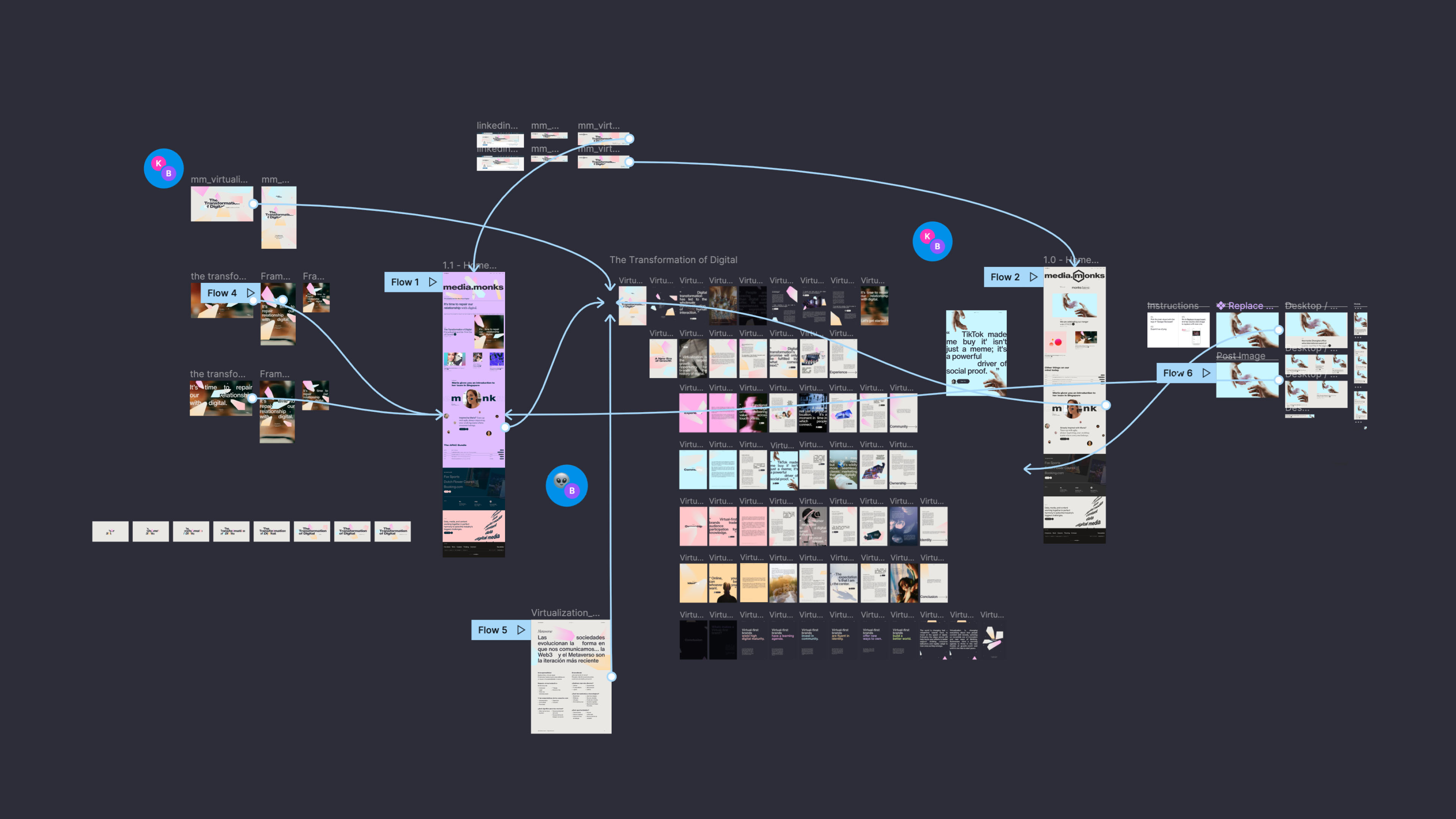
“Our homepage was designed to mark special moments in time, like a turning point for the company or when something is trending industry-wide that we have a strong point of view on,” says Vinicius Araujo, Creative Director. One recent moment was the release of The Transformation of Digital, our report detailing how consumer behaviors are shaping a new era of virtualization. To celebrate the launch of the report, our homepage took a new look: a unique color scheme, a curation of thematic content and an animated logo that represents the report’s visual identity.

Such an overhaul to the homepage may seem like a significant investment of time and resources, though the flexibility baked into our CMS made it a simple overnight change. Easy-to-update components and customizable fields also ensure that bespoke designs are scalable into the future. “It’s always ready to be updated in a heartbeat,” says Araujo. “And it’s ephemeral: it’s only there for a week, and then it’s gone.”

Monk Thoughts Our system is easy to use, but it’s balanced very well with our identity and ongoing marketing strategy. When design isn’t built to complement marketing activities, websites can become stale and flatline.
Brad Gardner headshot

On the flipside, the flexibility baked into our website keeps our content timely while ensuring we can authentically represent the breadth of our capabilities. At the same time, brands following a similar approach can iterate experiences that support the different needs of diverse audiences. “In curating the content for the virtualization takeover, one thing we considered was: How do we get someone who doesn’t want to digest the whole report to understand what this is?” noted Gardner, who gathered a wide selection of content that make virtualization tangible while also representing the diverse skills of our team.

Collaboration enables new ways to shape and expand content.

With our homepage takeover, it was important to build an experience that felt distinct right from the jump—not exactly separate from the other content on the website, but something that commanded attention as soon as people landed on the website.

Monk Thoughts The homepage has the shock factor when you enter. The first impression is completely new and different from our typical content, and past that moment everything else feels more familiar. We don't want people to have to relearn how to read our dotcom, so it has to be a measured shock.
Vinicius Araujo headshot

The first thing viewers saw when loading the page was a reanimated Media.Monks logo that leverages the bespoke identity crafted for the report—all built around a design language of four quadrilateral shapes that represented key themes of the virtualization report: ownership, identity, community and experience. These adapting shapes interact with each other at different frequencies throughout the report, keeping the audience focused on the insights. “It was important to create a wrapper that wouldn’t alienate the audience,” says Benjamin Tuffy, Design Director, noting that using iconography like VR headsets or futuristic environments could either limit virtualization’s scope, overwhelm non-technical readers or simply feel irrelevant for those who aren’t engaged in those channels.

But the shapes are just one kind of graphical element that made their way from the report to the homepage design. In discussing the role that bespoke experiences can play in enhancing the original source material, Tuffy spoke about a collaborative approach between design, copy and growth teams to pull the content into previously unforeseen directions.

Figma mockup showing the connection between our report and custom web experience

Figma mockup showing the connection between our report and custom web experience throughout the design process.

Monk Thoughts The bit I enjoyed most from the experience was finding key hooks in the language of the report that we could use to visually pull people in. The result is a series of spreads that put us on the hook for the statements we’re making.
Benjamin Tuffy headshot

Curation breathes new life into legacy content.

In addition to finding new ways to visually represent content from the report, our virtualization-themed homepage takeover also provided an opportunity to highlight ways that virtualization impacts different categories and audiences. “Leaders across different regions are bringing the story out to their teams,” says Tuffy, and viewers could see this play out through the content we curated to substantiate the report’s claims.

This highlights another purpose to building around key marketing moments: breathing new life into some of your existing content. In our case, this meant further drawing lines and connections between our multidisciplinary team. “We saw we had some content from Jam3 and a recently published piece by Chief Diversity Officer James Nicholas Kinney, both of which spoke to the purpose of virtualization from two different directions,” says Gardner, noting that the content helped showcase how we’ve been grappling with these ideas long before the report’s release.

Our special-edition homepage sought to leverage our CMS’s flexibility to deliver custom web experiences as new moments arise. Brands seeking to build bespoke, scalable web experiences can follow a similar approach by thematically curating and remixing new or legacy content, while also enhancing it further through added fit-for-format design elements. The result? A differentiated digital experience that never overstays its welcome and dazzles audiences with something new every time they visit.

We spotlight our approach to content curation, solving key challenges that brands face when it comes to delivering distinct digital experiences, and breathing new life into legacy content. content marketing strategy digital marketing digital platforms platforms digital experiences Platform Websites & Platforms Brand Brand Identity & Systems Monks news

How to Build Digital Platforms for the Evolving Customer Journey

How to Build Digital Platforms for the Evolving Customer Journey

Data Data, Death of the cookie, Platform, Websites & Platforms 4 min read
Profile picture for user mediamonks

Written by
Monks

A illustration of a hand pressing on mobile prototypes

Dotcoms, microsites, mobile apps, ecommerce sites—digital platforms come in all shapes and sizes, and they’re key components in building a strong brand identity. Having a platform strategy is now a requisite for any business to thrive, as they serve as the backbone of most efforts to immerse the audience into a brand’s world. But while this truth may elude no one, the fact that platforms inhabit an ever-growing digital ecosystem poses the question of how we can make them memorable.

Because they are a direct reflection of a brand’s values, products and services, platforms should embody the brand identity in their look and feel. Above all, they should strike the perfect balance between functionality and impact. That, however, may be easier said than done. The process of developing, implementing and maintaining great platforms calls for a high level of subject-matter expertise—and here are some of our learnings from years of building brand legacies in this space.

The brand impression is determined by the digital ecosystem.

Digital platforms have evolved from playing a supportive role in the customer journey to becoming one of the main destinations in the brand’s ecosystem. That means that the experience they get will dictate their impression of the brand. “I like to say that we need to design for the ‘first date,’ because in that initial encounter, the interface is the brand,” says Creative Director Niels Dortland. "If a dotcom is flat and unremarkable, consumers will extend that perception onto the brand."

Monk Thoughts Platforms need to be functional and easy to navigate, but they must be delightful digital experiences too.
Niels Dortland headshot

As opposed to other channels in the ecosystem, dotcoms offer a fully ownable space. Because of this, astute marketers strive to make them the number one place where consumers interact with the brand. “You can’t be certain where the consumer will land within the digital ecosystem, but you can make sure your dotcom is the one they choose to come back to,” explains Dortland. “Investing in platforms that offer a great digital experience is investing in relationship-building with customers and business growth.” 

While simplicity and clarity are great attributes for a platform to have, it doesn’t stop there. To stand out in a sea of sameness, we need to add another layer to the experience. Here’s the secret: the key to uniqueness lies in the brand’s identity.

Use your brand’s truth to rise above the noise.

Digital platforms are part of a broader ecosystem, and each one of these touchpoints should reflect the brand’s identity while serving a strategic purpose in the customer journey. “The way in which we add texture to an experience and make it truly authentic is by finding the brand’s truth and designing around it,” says Dortland. “If every platform is branded around that truth, that means they will be completely different to that of their competitors.”

Climate Pledge website homepage

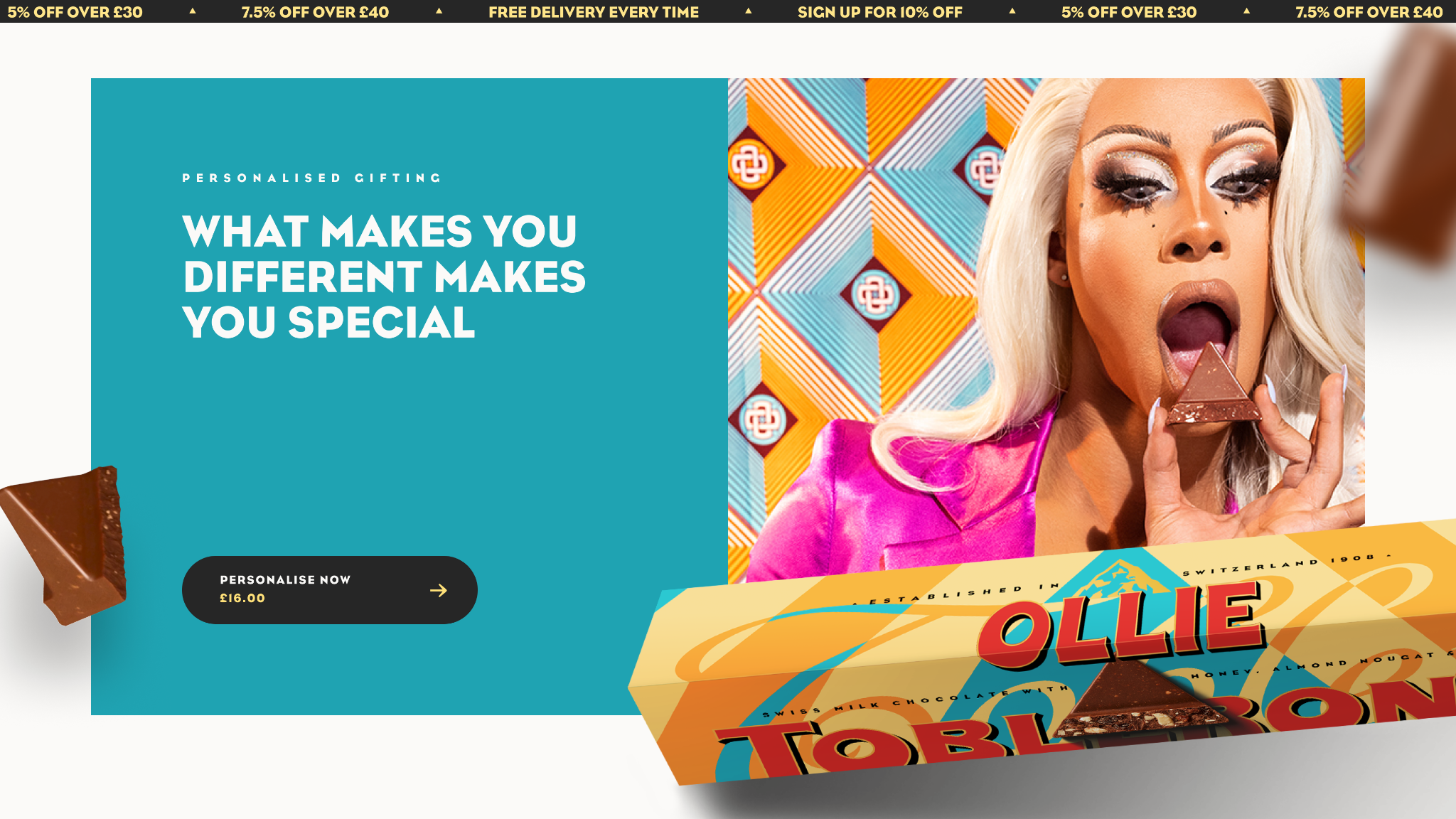
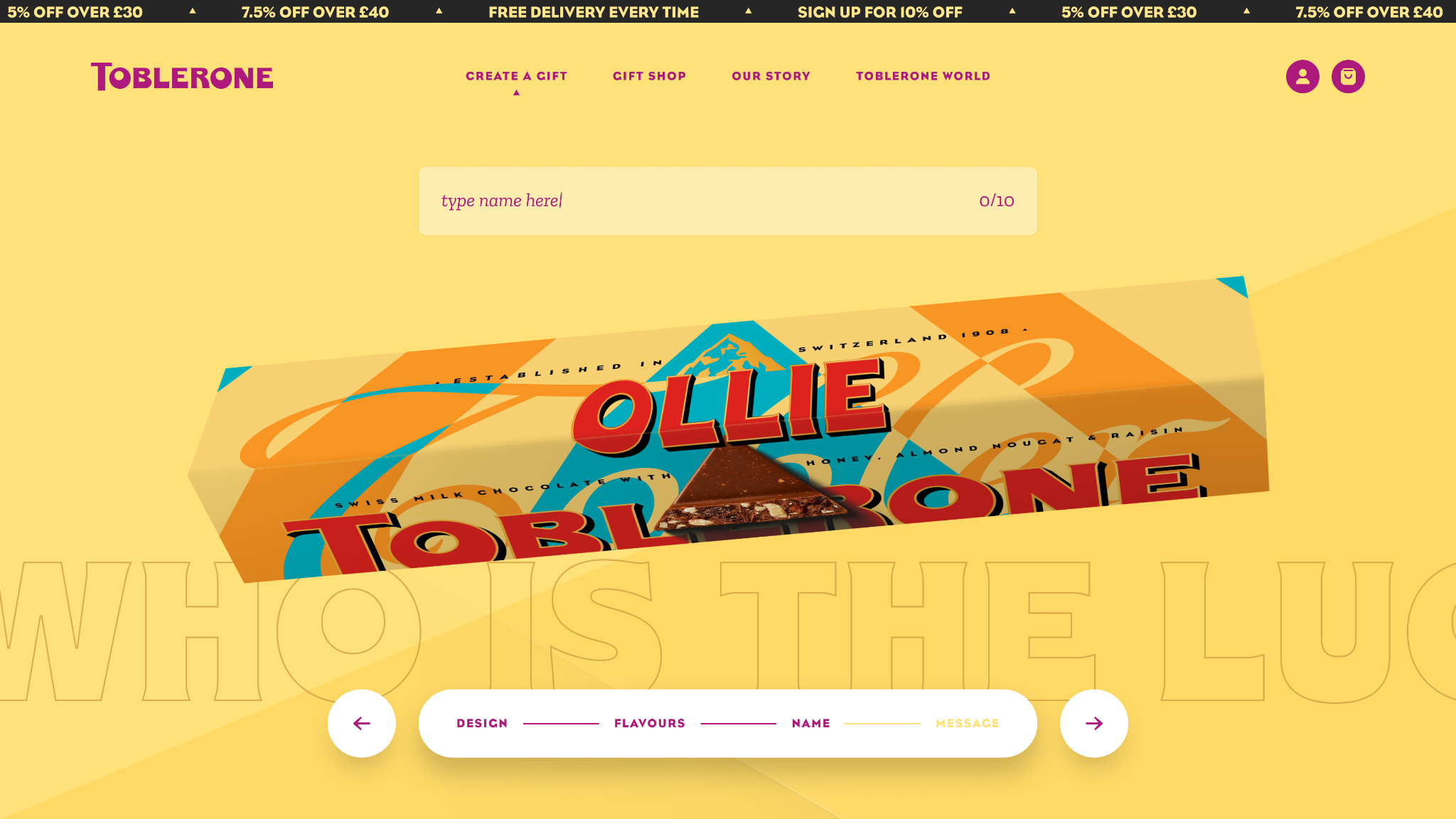
On The Climate Pledge platform, which we built in collaboration with Amazon, content comes to life through interactive elements and rich textures that fit WCAG 2.0 accessibility guidelines. When landing on the home page, visitors first see an animated intro video that spreads the optimistic ambition of the project, making for an impactful first impression. On Toblerone’s D2C platform, meanwhile, users are not only captivated by the stunning color palette, but also by the interactive features that allow them to create personalized gifts. Because they reflect the brand’s identity and tone of voice, both of these platforms are widely different, yet equally memorable.

Toblerone website with chocolate and a person eating a piece
Toblerone website with chocolate in a box

Of course, what visitors find impactful is always a moving target. With people seamlessly jumping from offline to online and into digital spaces where everything is customizable, expectations are high for what a bespoke user experience should look like. There’s a higher demand for creator-led experiences and personalization—which spurs brands to leverage the user data in ways that benefit consumers. 

First-party data elevates the potential of digital platforms.

The brand truth dictates the look and feel of your digital platforms, and data should also inform the design. Platforms facilitate interactions like product search and the purchase of goods and services, providing brands with new information about their consumers. In that process, any data collected should be used to offer experiences that are tailored to people’s needs, interests and even personalities.

What’s more, when the value exchange for someone’s data is clear, brands can establish a healthy feedback loop where they are providing a great service and gathering more information in the process. “The key to designing the right experience is listening to people’s behavior as they interact with the digital ecosystem,” says Dortland. “Our value lies in using data for customer understanding, which will ultimately help us design experiences that elevate brands, drive conversation and growth.” The more engaging the experience, the more data it will generate in return, meaning platforms can become increasingly more effective.

Platforms are more successful in a consistent brand ecosystem.

Essentially, platforms are key to enabling consumers to interact and transact with brands. They host digital experiences that optimize the customer journey and drive consumers’ loyalty. However, platforms are part of a larger brand ecosystem that needs to be consistent.

Monk Thoughts While apps and dotcoms are must-haves for brands, they can’t live up to their full potential if there isn’t a broader strategy to support them.
Niels Dortland headshot

If these touchpoints can’t be disconnected, neither should the teams that focus on each one. Working with partners that can develop an app from the ground up, create content for your brand’s social media or even deliver branded activations leads to a more cohesive narrative—a single truth that manifests itself across channels.

All of these considerations will help you forge deeper connections with your audience—and while building the perfect platform may not be easy, the good news is they are fully under your control. The customer journey never looks the same, but one thing is certain: behind every meaningful interaction is a bespoke platform strategy connecting the dots between people’s needs and a brand’s offering.

Key considerations for an impactful platform strategy in the new era of digital. digital platforms brand strategy content marketing strategy personalized content digital experience customer journey Platform Data Websites & Platforms Death of the cookie

Social Bites: Tune-Up Your Social Strategy to Reach Subcultures

Social Bites: Tune-Up Your Social Strategy to Reach Subcultures

3 min read
Profile picture for user mediamonks

Written by
Monks

A boy rides a skateboard and girl along his side poses with fairy wings behind her

Relevance boils down to a brand’s ability to connect with consumers. It’s a reflection of how closely they’ve been paying attention to their concerns, how genuine their relationship is and how they’ve been embracing culture. For all kinds of brands, being familiar with what their audience cares about and the values they hold dear is one of the greatest determinants of success.

On occasion, people’s particular interests grow into communities, and these communities evolve into subcultures. These subcultures come with beliefs, codes and languages that challenge the status quo and stoke the fire of societal change. But how do brands participate in this cultural transformation, and how can they authentically engage with them to resonate with society?

In the second edition of Social Bites, a series of quick explorations on various social media themes, the Social Innovation Lab delves into subcultures and how they can be woven into brands’ overall social marketing strategy. You can find the issue of Social bites here, along with some of our key findings below. 

Feeding Culture

While subcultures tend to begin in niche communities, they are quickly bleeding into the mainstream in society’s constant pursuit of novelty. The younger generation in particular is very welcoming of new ways of being, as they are more open to new identities and values that can help shape their own. 

Subcultures often break into the mainstream by permeating fashion, aesthetics and entertainment. Drag culture is a great example of this. With ideals of diversity and inclusivity, its values transcended marginalization and paved the way for a new era of fluid identities and entertainment—think RuPaul’s Drag Race and innovative beauty tutorials. In connecting with those subcultures, brands need to look at the values and ideals that come with it, as they offer a glimpse of shifts in societal values and cultural concerns. The goal is not to appropriate these subcultures; it’s supporting their ideals with authenticity.

Powering Communities in Social Media

Today, subcultures are born in social media and powered by it. Reddit, TikTok, Instagram and Tumblr play a fundamental role in community building, as they provide the digital spaces for people to connect with others. On these platforms, a subculture may even merge with another and form hybrid communities—a phenomenon prompted by the accelerated trends of the hyper-connected digital world and the app algorithms that connect the two with the same audience.

For brands, this serves as a guide on how communities are built and how novelty leads to excitement. While weaving these learnings into their cultural strategy, it’s important to remember that it’s not about trying to predict what subcultures will emerge; rather, it’s about cultivating them by being an active participant in today’s cultural scene. 

Achieving Social Cultural Insertion

To become a valuable player in social culture, brands need to acutely read their audience. The rise of a subculture on social media can be fast, so there’s no time to waste in becoming fluent in upcoming trends. The latest Social Bites report includes information on how brands can identify the rituals, habits and overall feel of a subculture to build a stronger cultural strategy that authentically supports those at the bleeding edge of culture. In this era of hyper-connectivity, brands can expect countless benefits from adapting fast to the evolving culture, as long as they approach their audience with transparency and purpose.

Looking for more social media insights? Tune into our weekly Social Innovation Lab podcast to hear from the brightest minds in social and learn how to create winning social media campaigns. Check out the latest episodes of the Social Innovation Lab podcast.

Our Social Innovation Lab delves into subcultures and how they can be woven into brands’ overall social marketing strategy. Our Social Innovation Lab delves into subcultures and how they can be woven into brands’ overall social marketing strategy. social media marketing content marketing strategy culture

How Brands of Any Size Can Deliver Modern, Personalized Content

How Brands of Any Size Can Deliver Modern, Personalized Content

6 min read
Profile picture for user Kate Richling

Written by
Kate Richling
CMO

As customer attention is placed more and more on a variety of digital channels, it’s increasingly important for organizations to appeal to them at the right place at the right time. The challenge? Most organizations feel limited—in terms of team size/bandwidth, awareness of local markets they might be catering to and more—in their ability to execute relevant, fresh content strategies.

From driving traffic to brand websites or engaging on social media with share-worthy, relatable content, a good content strategy is essential for boosting a brand’s presale capabilities. This is likely the reason why digital work makes up more than half of all US agency revenue today. So, how can brands of any size take better advantage of the technology available?

Monk Thoughts From dynamic videos to thousands of pieces of localized content for markets around the globe, a modern content strategy shouldn’t be out of reach for brands of any size.
Kate Richling headshot

Good Content Begets Better Content

This method of creating and distributing content is powerful because it can react to users’ experience along their journey. Think of it this way: good content leads to more sales, which feeds into welcoming new customers or building advocates through a great experience. This in turn should fuel your marketing efforts, opening a feedback loop: what about the customer experience really resonated? Where could messaging be stronger?

When it comes to marketing, I feel the traditional ad model sticks to a channel-based approach, but it’s important to remember that today’s consumers view digital as a series of experiences across several platforms and channels. Likewise, your content shouldn’t be relegated to a single channel—don’t set up a blog and call it a day. Instead, you should relate to the user on all the platforms they visit across the user journey in a way that makes sense, then use that activity to better inform your content and continue to provide value. While the model of expanding a big idea worked in the past, it doesn’t translate well to digital. A modern content strategy instead starts with a strategic foundation, which is then retailored, varied and personalized across the different platforms available, which in aggregate build into a creative direction.

The good news is that today we have a myriad of new ways to give context through content, allowing for more engaging experiences that relate to the users no matter the platforms they frequent. By making use of the latest technologies available, brands of all sizes can boost their creative capabilities and deliver more engaging content at scale, paving the way for better customer experiences.

Monk Thoughts The best place to begin devising a content strategy is to define your organization’s purpose.
Kate Richling headshot

But before going further, let’s make sure we’re all on the same page for what a content strategy is. Your content strategy encompasses the planning and development of all consumer-facing communication from your organization, including your CEO’s talking points, your PR strategy, how you introduce your organization in interviews and more. As the VP of Marketing at MediaMonks, I’ve led content marketing initiatives for organizations of all sizes. Through that experience, I’ve discovered a few strategies and takeaways for how brands big and small can take a more modern approach to their blog content.

The best place to begin devising such a content strategy is to define your organization’s purpose, so take a moment to consider your brand’s purpose and what it wants to achieve. Honing in on a purpose is easier for some brands than others; challenger brands by their very nature exemplify some sort of purpose, for example, while legacy brands might struggle to articulate the heritage and personality that they’ve built up within a fast-changing landscape.

Speak to Experiences

Today’s consumers are more concerned with experience than product. This shift might prompt a best-in-class grill manufacturer, for example, to devise a content strategy focused more on celebrating the act of grilling than the grill itself. Through content that seeks to inspire and inform, a key purpose for such a brand would be helping people make memories together.

image110-5552

BBQ Cultures is a fully integrated campaign in which Weber celebrates the different ways cultures relate to grilling.

If you’re uncertain on how to articulate your purpose, begin with your most profitable offering or differentiated value. From there, consider the white spaces—the stuff your audience is working to resolve or understand. This process helps you define talk tracks, or a handful of topics that your content will focus on. You should be able to examine a talk track from several viewpoints; for example, a talk track about “emerging tech” can explore AR, VR, artificial intelligence and more in terms of both their development, benefits and challenges. For our grilling example above, cultivating a sense of togetherness was key, which manifests in recipes, inspiration for entertaining or helping prospects discover which features of a grill or its accessories suits their lifestyle.

It may be tempting to chase several talk tracks, but keep it down to only three to five. Since you’ll consistently measure effectiveness for your content, you can always switch up or change talk tracks later.

The Demographic Death-Knell

On a basic level, you’ll need to divide your content up on where it sits within the sales funnel: whether someone is researching your product for the first time, is coming back from a retargeting campaign or is a repeat customer. Each step of this journey offers different questions the customer needs answered, which your content should support.

image12-15605

The content on these pillars made by JCDecaux react to live data, like changing language near baggage carousels based on flight origin.

In addition to planning around specific steps of the funnel or consumer journey, specific forms of content should be built around user personas: who are your best customers, and what do they respond to? How does that differ from your second-best? How do different talk tracks relate to different segments? When developing personas and segments, it’s better to group users by preferences and interest than demographics. Why? Because demographics are dead: an older, midwestern man who likes American Crime Story might have more interests in common with a teen girl from LA who also likes the show, than his own demographic peers. Simply put, “Demographic information doesn’t tell us anything,” says MediaMonks Founder and COO Wesley ter Haar. “It’s all about the user’ preferences.”

Defining personas makes it easier to develop content because you know what sort of things to include or exclude. If writing for an individual who prefers content geared at business-related tips and tricks, but also watches sports and is interested in local events, you know to play up those preferences in your content. Some organizations have several personas to accommodate; for example, a travel booking site would need to generate content for all their destinations, and perhaps interests as well—is the customer a partier, someone who likes historical places, a foodie? For organizations who need to develop content on a large scale, we offer them a modular approach: where we define what variables exist in your content, which can be tweaked and revised in different ways for different personas. With this plug-and-play, modular method, we’re not just generating content but creating an entire content framework that not only targets users but A/B tests what’s effective. This lets us dynamically produce content without additional cost.

Screen Shot 2019-02-26 at 10.14.08 AM

This transcreated Uber campaign gives the same selection of narratives a local feel across 11 markets.

These kinds of assets at scale are increasingly necessary with the rapid demand for always-on, personalized content. From dynamic videos custom-built to preferences without any user input to thousands of pieces of localized content for markets around the globe, brands face many challenges in providing timely, relevant content at scale. Even though most brands don’t have the resources that Netflix or Amazon do—which have perhaps two of the most-effective recommendation engines in the world—partnerships can help them fill those gaps. For those just starting out and who prefer a little more flexibility, an embedded team that can handle your content production is easily capable of scaling up if your needs or situation change.

For example, we just announced a new always-on content hub that will accommodate Avon’s million representatives spread across more than 50 markets. These assets are designed to maintain brand consistency while allowing representatives room to customize to their local markets’ needs. With each piece of content tailor-made for different channels, reps can effectively engage with their customers and clients wherever they’ve built those relationships—whether it be Facebook, Instagram, WhatsApp or somewhere else. In addition to reaching consumers in more relevant ways, the move helps Avon provide its reps with more autonomy in their messaging without risking the brand’s identity, supporting digital growth in the process.

A modern content marketing strategy is essential for reaching and relating to your audience across channels and segments. From defining your brand’s purpose to targeting segments, find out how to develop content that attracts and engages your audience. How Brands of Any Size Can Deliver Modern, Personalized Content To relate and resonate with consumers, brands require modern content strategies that speak personally to increasingly specific markets.
content marketing content strategy content marketing strategy brand strategy assets at scale personalization

Why Branded Search Terms Are the Key to a Winning Awareness Strategy

Why Branded Search Terms Are the Key to a Winning Awareness Strategy

4 min read
Profile picture for user ellie_onoratro

Written by
Ellie Onorato

Why Branded Search Terms Are the Key to a Winning Awareness Strategy

Each year the Super Bowl, arguably the ad industry’s highest-profile event, garners high viewership and impressions—with massive ad budgets to match. This year alone, despite the COVID-19 pandemic, the Super Bowl attracted close to 100M viewers: a huge audience and opportunity for brands to generate awareness and visibility. But once marketers drop an average of $5M on a painstakingly crafted 30-second long TV commercial, what steps should be taken to ensure consumers can easily learn more about their products/services, helping escort them down the funnel after the ad airs?

How to Win (or Lose) the Super Bowl

Let’s look at an example of two different approaches to a Super Bowl ad: one focused solely on TV eyeballs and one as part of a broader awareness campaign.

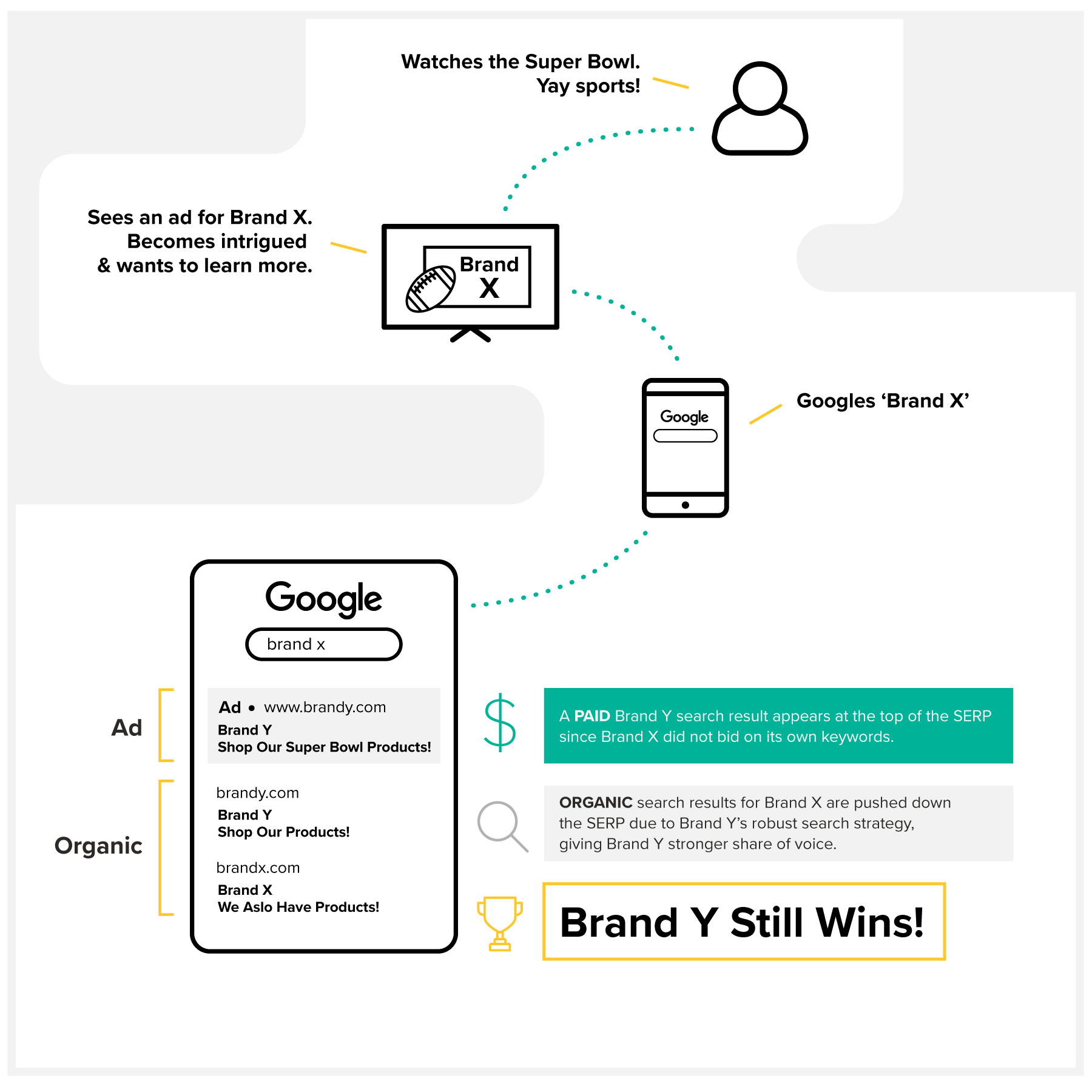
Brand X is relatively new to market, and purchases a wildly expensive Super Bowl spot to drive high-level awareness. The spot is well-produced and the creative is super sticky. Brand X’s marketing team is over the moon. They plan a watch party, their social team prepares for a huge increase in engagement, and they get the champagne ready. 

The ad airs, the team cheers, social media followers grow. But digital engagement is lackluster. Web traffic doesn’t spike as anticipated, conversion goals are missed, and the moment passes anticlimactically.

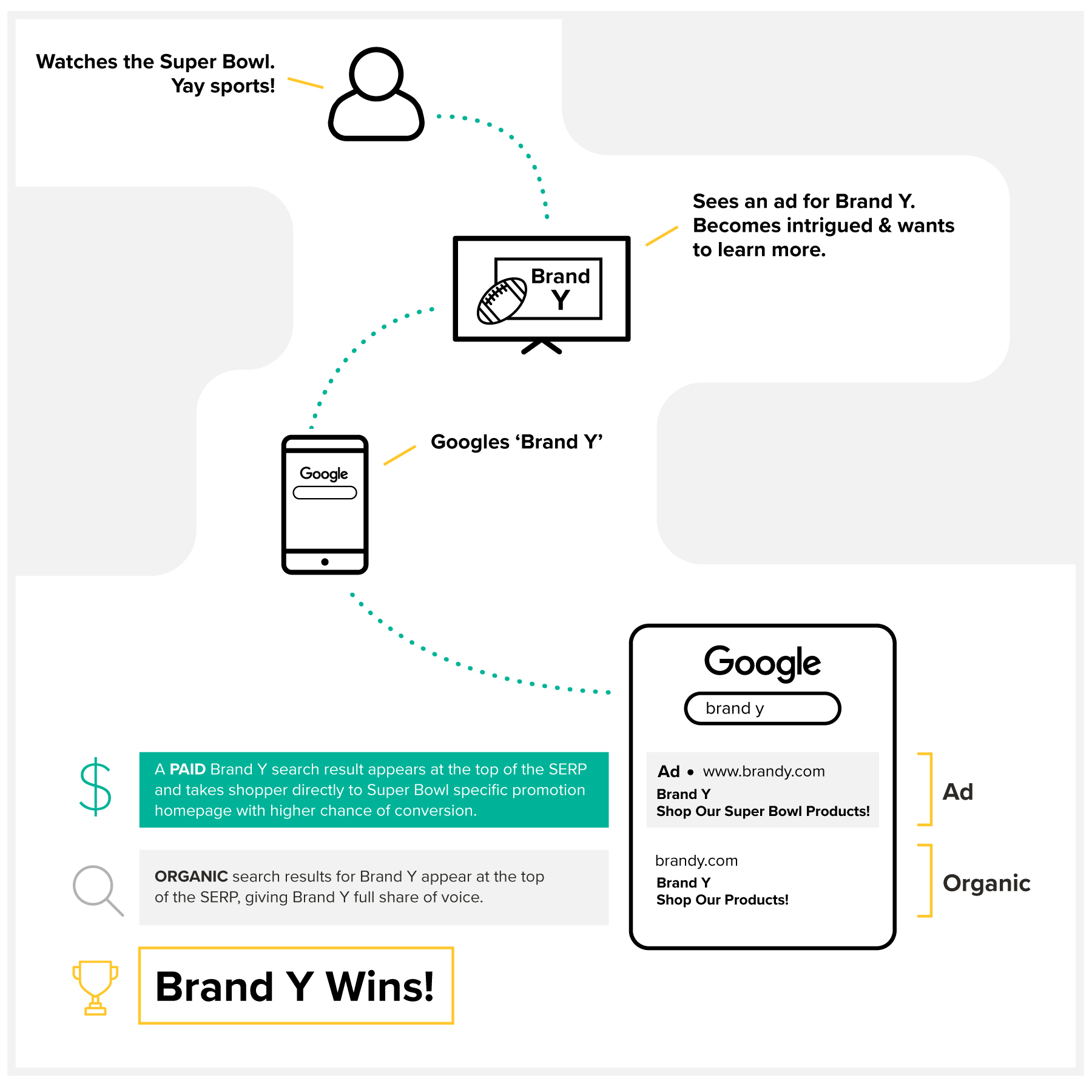
Competitor Brand Y, also pretty new to the market, purchases a similar wildly expensive Super Bowl spot to drive awareness as part of a well-planned omni-channel campaign. Brand Y, like Brand X, produces a high-quality spot, plans a watch party, and gets the champagne ready. But before popping the cork, the Brand Y digital team plans a smart search campaign, investing in its own branded keywords AND taking the added step of bidding on Brand X’s keywords.

The Brand Y ad airs, the team cheers, social media followers skyrocket. Digital engagement soars. Web traffic explodes, directing searchers to a landing page with helpful, specific information intended to help consumers decide which product to purchase, with a clear call to action and a simple checkout flow. Brand Y shatters its conversion goals, and the ad tech pundits applaud. The champagne flows freely.

Don’t Underestimate the Importance of Your Own Keywords

Brand X had a good ad. So what went wrong? Typically, when companies run TV ads, they’re looking to maximize reach and generate awareness by getting their name in front of as many eyeballs as possible. As consumers move down the marketing funnel, brands should aim to provide more detail about their products and services. One key component in this stage of the marketing funnel is running smart branded paid search campaigns, as Brand Y did in the example above.

paid search brand

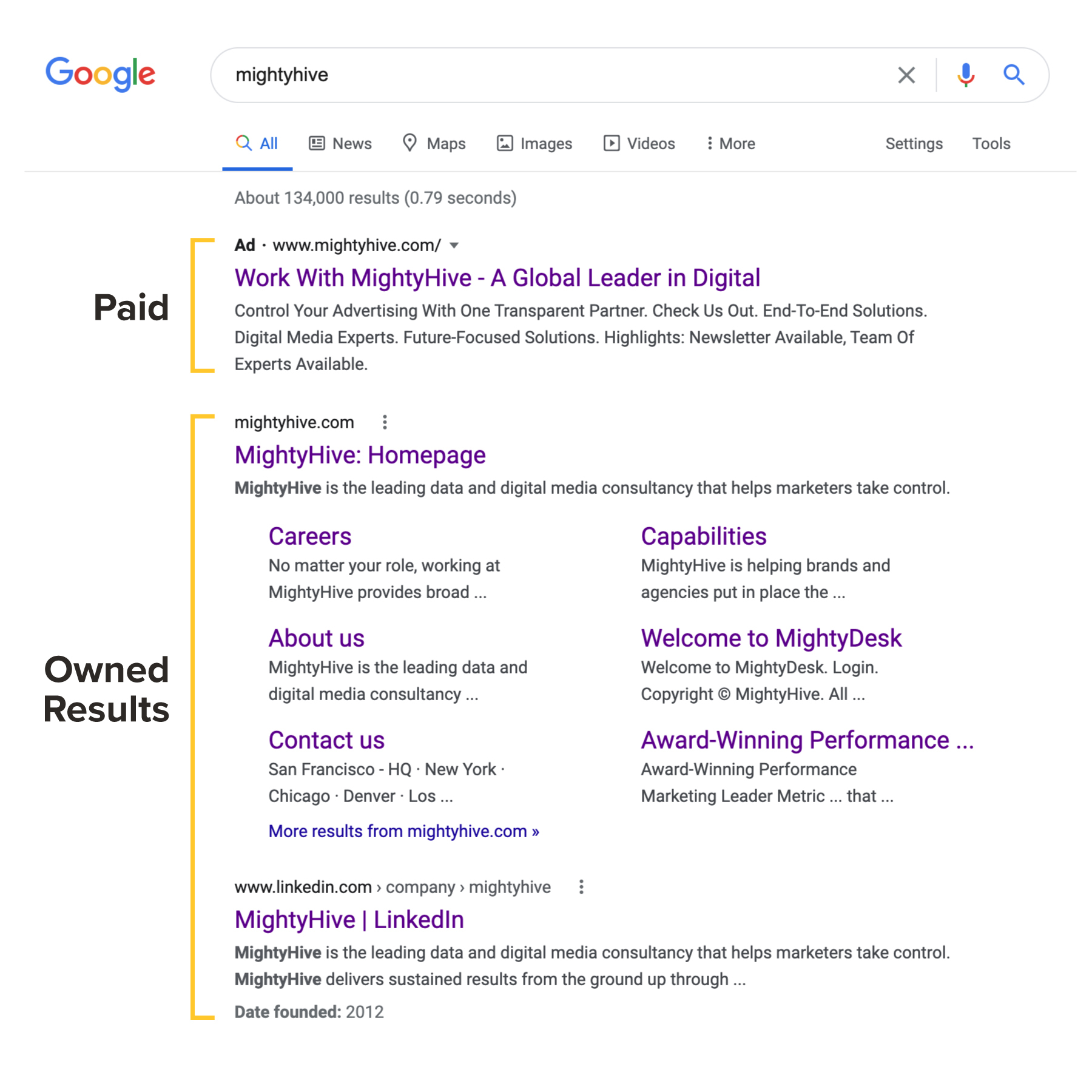
Many brands don’t believe that bidding on their own branded terms is worth the added cost, since they assume they’ll appear first on the search results page organically thanks to a solid SEO strategy. However, this may not always be the case—especially if similar brands bid on their competitors’ search terms. Branded paid search is an inexpensive and simple way to ensure that the brand is always at the top of the search results, especially during critical stages in the marketing funnel. Now let’s take a deeper look at why brands should be bidding on their own branded terms.

Dominate the SERP

The number one reason brands should run branded search is to increase visibility and ensure they are in full control over the search engine results page (SERP), especially in a mobile-first world where organic search listings are pushed even further down the page. When paid search and organic search strategies work together, marketers are more likely to establish their brands as category leaders, building credibility with potential customers and providing more opportunities for users to land on the intended website and eventually convert.

paid organic search

Defensive Bidding

Brands should also run branded campaigns because if a brand isn’t bidding on its own branded terms, competitors can easily do so. We call this “conquesting.” Conquesting is a popular tactic among competing businesses in order to intentionally gain the interest of a user who may be searching for a different company altogether. When a brand doesn’t bid on its own branded terms, a vacuum is created for competitors to capitalize on that awareness, grabbing a higher SERP slot and more market share.

paid search fail

We Rest Our Case in Defense of Branded Keyword Bidding

There’s no denying that branded terms are the best way to get in front of consumers that have strong intent to learn more about your brand. As such, with compelling branded paid search ads, marketers can deliver highly-effective and strong messaging to guide consumers down the funnel. With branded paid search, marketers can get more creative with features like dynamic copy, which updates instantly based on searched keywords, or ad extensions based on product offering. Branded search is a great way to generate revenue with highly tailored, powerful messaging to target the right user at the right time.

This past Super Bowl, we witnessed some very successful Brand Ys. Surprisingly, with all of the available resources and thought leadership around paid search, we also saw a handful of Brand Xs (their errors didn’t go unnoticed on Twitter). Don’t be a Brand X.

With compelling branded paid search ads, marketers can deliver highly-effective and strong messaging to guide consumers down the funnel. Learn how. media buying media strategy content marketing strategy

Choose your language

Choose your language

The website has been translated to English with the help of Humans and AI

Dismiss