Choose your language

Choose your language

The website has been translated to English with the help of Humans and AI

Dismiss

Why Your Holiday Ads ROI Doesn’t Matter (Yet)

Why Your Holiday Ads ROI Doesn’t Matter (Yet)

Commerce Commerce, Data Strategy & Advisory, Media Strategy & Planning, Retail media, Seasonal marketing, eCommerce Platforms 3 min read
Profile picture for user Wyatt Burley

Written by
Wyatt Burley
Senior Advertising Manager

holiday-roi

Every ecommerce and retail advertiser knows the pressure placed on holiday ad campaigns. Budgets climb, expectations rise, and leadership starts asking one question: did we actually see a return?

Most brands look to return-on-ad-spend (ROAS) or advertising-cost-of-sales (ACoS) for the answer during their holiday ad flights. But those metrics often tell the wrong story for meaningful growth. Chasing a low ACoS or high ROAS in November might look like smart efficiency, yet it’s one of the fastest ways to hurt long-term performance.

The real ROI of Q4 shows up in Q1.

The real value of Q4 isn’t the short-term revenue spike but the audience and data foundation it builds for Q1 and beyond.

The purchase path data I’ve seen across brands reinforces this idea. Using five-year lookback windows from my clients’ Amazon Marketing Cloud (AMC) instances, the data consistently shows that Q4 shoppers often make another purchase within three months. These repeat purchases start meaningfully changing the unit economics of customer acquisition and strengthening organic visibility across product lines. This shows that strategic holiday spend can deliver returns long after the season ends.

When it’s time to defend your budget, position Q4 spend for what it is: a prepaid customer acquisition voucher for Q1, bought at a 50 percent discount. This framing eases CFO concerns about short-term efficiency when you have the data to show you are buying future Customer Lifetime Value (LTV) that outweighs the immediate cost. Effective brands measure beyond short-term revenue by tracking LTV, New-to-Brand (NTB) acquisition, and repeat purchase rate.

If you don’t have AMC, start by tracking NTB Purchase Share during Q4 and revisit those shoppers in Q1. Quantifying how many came back and bought more can demonstrate long-term value without a complex tech stack. 

But the groundwork for that ROI is laid earlier than you think.

Many brands still invest the majority of their ad dollars in an extremely short holiday window and hold their breath for marketing KPIs hour by hour throughout Cyber Week. However, there are two challenges with this.

First, ROAS and ACoS are shaped by two unpredictable variables that marketers do not have direct control over: cost-per-click (CPC) and conversion rate (CVR). When those shift drastically due to surges in shopping behavior (for example, we often see CVRs double in a matter of hours or days once deal periods begin around November 21), performance can look unstable even when it isn’t. If you react by lowering bids or cutting keywords that are performing, you’re playing a losing game of whack-a-mole and risk losing reach right when shoppers are ready to buy.

Second, the data shows that purchasing behavior is spread over a much wider window. Aligning spend with real shopper behavior makes every dollar work harder, and brands that stay active through this lead-in period capture the surge when shoppers move from browsing to purchasing. Brands should think of holiday in three phases with long bookends: late summer through early November builds awareness and consideration. Mid-November through Cyber Week drives conversion. Early to mid-December is for remarketing and retention, which trickles into that Q1 payoff mentioned before. Each phase compounds on the one before it. Instead of aiming for perfection in ad performance during a handful of days, focus on building momentum in the weeks and months preceding.

The payoff from investing early in generating demand dwarfs the effect of focusing so heavily on demand capture during Cyber Week, but requires time-sensitive shifts to your media planning. For example, video is one of the best ways to prime consumers earlier in the buying journey, but many DSPs and publishers of premium video placements (from Disney to Netflix, to Amazon) shift toward guaranteed buys during the holidays. Late planners or brands trying to react to in-flight micro trends during peak periods will be priced out of top placements. Securing them early gives you an edge competitors can’t match, and primes consumers for purchase of your products before the competition heats up.

Measure the health of Q1, not just the success of Q4.

When brands treat the holidays as an investment in future performance rather than a sales sprint, they start the new year ahead. The best-performing brands keep investing through the holidays and enter January with stronger visibility, more efficient ad spend, and shoppers who convert faster.

Watch your post-holiday data closely. Consistent traffic to product detail pages and steady organic conversion rates are signs that your strategy is working. These indicators show that visibility and intent built during Q4 are carrying into the new year.

The smartest brands see Q4 (and earlier) as the start of a new growth cycle, not the entire moment of payoff. Every dollar spent builds data, loyalty, and future revenue. That is how short-term spend becomes long-term strength, and how real ROI is earned.

If you want to refine your Amazon holiday planning or evaluate your Q4 to Q1 performance, connect with our team.

See how Amazon holiday advertising turns Q4 spend into long-term holiday ROI by driving new-to-brand growth, repeat buys, and stronger Q1 performance. Why Your Holiday Ads ROI Doesn’t Matter (Yet) See how Amazon holiday advertising turns Q4 spend into long-term holiday ROI by driving new-to-brand growth, repeat buys, and stronger Q1 performance. amazon holiday advertising holiday roi holiday advertising strategy holiday campaigns ecommerce strategy amazon ads amazon dsp amazon marketing cloud amc ROAS acos q4 success seasonal campaigns holiday marketing amazon advertising Commerce eCommerce Platforms Media Strategy & Planning Data Strategy & Advisory Retail media Seasonal marketing

What unBoxed 2025 Tells Us About the Future of Amazon Advertising

What unBoxed 2025 Tells Us About the Future of Amazon Advertising

Commerce Commerce, Retail media, eCommerce Platforms 4 min read
Profile picture for user mediamonks

Written by
Monks

unboxed-mainstage

Amazon Ads’ annual unBoxed conference gives advertisers a glimpse into how Amazon is evolving their advertising solutions to help brands reach shoppers more effectively. The Monks team was on the ground (and onstage!) to get the latest news, so we can help brands stay on top of the changes.

This year, Amazon’s keynotes reinforced a clear message: positioning their ad offering as “full-funnel, at scale, for everyone.” Every announcement aimed to unite ad types, streamline operations and measurement for advertisers, and make creative more accessible to brands of all sizes. Here’s what advertisers need to know about the new product lineup, and what it tells us about the future of Amazon Ads.

Here’s what’s rolling out across Amazon’s newest products.

1. Eliminating silos between awareness and conversion. 

Amazon is making it easier for advertisers to connect upper- and lower-funnel campaigns, closing gaps that often make measurement and optimization harder. Brands should keep an eye out for:

  • Full-Funnel Campaigns, a new campaign type that expands on last year’s Brand+ and Performance+ formats. Amazon cited examples in which Brand+ and Performance+ are most effective when run together, such as a 144% lift in conversion rate and a 35% improvement in cost per acquisition for H&R Block, so they created a product to deliver that effect in one.
  • New consolidated interfaces to unite upper- and lower-funnel ads in one view. The new Campaign Manager combines AMS/Ad Console and Amazon DSP into a single workspace. This provides a complete view of Sponsored Products, Sponsored Brands, and programmatic campaigns in one place. Crucially, it also includes new unified metrics so brands can make apples-to-apples decisions. Amazon is doing the same for streaming and linear TV, launching Complete TV and Inventory Hub to unite digital and traditional media planning.
2. Democratized access to creative generation and deeper insights, even for smaller advertisers. 

Amazon is improving access to advanced creative and analytical tools for brands of all sizes. These updates help teams large and small act faster and test new ideas with fewer barriers. Brands should experiment with:

  • Ads Agent, an AI assistant that uses natural language to understand ad performance, make changes instantly, uncover new audiences, and pull insights from Amazon Marketing Cloud (AMC) without SQL knowledge or data science support.
  • The improved Creative Studio produces image, video and audio ads using generative AI with greater fidelity and complexity than prior iterations of the tool. For brands without a deep bench of design resources, this enables faster creative production and more relevant messaging during shopping “micromoments” and holidays.
3. A more educational shopper experience to reduce “leaky” funnels. 

These updates make it easier for shoppers to educate themselves and overcome friction while in the middle of their Amazon search journey, ultimately boosting sales for brands who need to educate their buyer in order to win the sale. The Amazon results feed will now include:

  • Sponsored Products Video, for brands to showcase motion assets directly within search results. This could be key for challenger brands to highlight their differentiators without requiring users to reach the product detail page.
  • AI Prompts, powered by Rufus, to anticipate shopper hesitations and educate them while they compare products. The in-feed Q&A modules will guide shoppers toward purchase by educating them when they’ve slowed their scroll through the results list.

Amazon’s changes point to two major themes.

Amazon is making it clear that they’re investing in taking control of advertiser perception of their offering, and are aiming to get two major themes across to brands:

  • They’re in your corner and responsive to your feedback. In all main stage talks, Amazon leadership reinforced how many of the product evolutions they were announcing were direct results of feedback from brands and partners. For example, advertisers have long asked for more accessibility and actionability from the gold mine of shopping data Amazon controls; in response, they expanded AMC’s ad-traffic lookback window from 13 to 25 months, launched country-level budget/bids in Amazon Ads Console, and premiered the Ads Agent for generating SQL queries faster. Additionally, even evolutions of existing products—like the launch of Sponsored Products Video—achieved an audible reaction of delight on the conference floor because brands have long asked for more engaging ways to stand out on the results page.
  • They’re more than the largest point of purchase, they’re the most integrated ecosystem in digital commerce. Amazon is making the most of their huge investments in upper-funnel properties (from Prime Video to Thursday Night Football to Twitch) with the launch of dedicated products for closing the gap between discovery and conversion. In the context of their history as an ad platform, these rollouts are an even firmer push into efficient, insight-driven advertising across the full funnel. Amazon is solidifying their shift from a purchase-focused platform into a connected ecosystem that partners with brands to drive discovery and educate shoppers, not just convert demand.

Prepare for the next chapter of Amazon advertising. 

This year’s unBoxed event showed a clear direction for where Amazon advertising is heading. Campaign management, creative production, and performance measurement are becoming unified to give advertisers more speed and clarity across the funnel. Looking to 2026, Amazon is positioning itself as an integrated partner for brands throughout the entire buyer journey, not only at the point of purchase.

As innovation accelerates, the opportunity lies in choosing the advancements that support long-term goals and applying them in measurable ways. Amazon Ads’ unBoxed 2025 offered a preview of what the future of commerce media will look like when insights, creative and optimization work within one connected ecosystem. If you’re exploring how these updates could fit into your 2026 plans, reach out and we can help assess which changes are worth testing.

unboxed team photo-1
unboxed team photos-2
Learn about key updates from Amazon Ads unBoxed 2025 and what they mean for brands’ full-funnel growth strategies for holiday and 2026. What unBoxed 2025 Tells Us About the Future of Amazon Advertising Learn about key updates from Amazon Ads unBoxed 2025 and what they mean for brands’ full-funnel growth strategies for holiday and 2026. amazon amazon ads amazon advertising full-funnel media Amazon Ads Partner amazon unboxed amazon announcements amazon advertising updates full funnel advertising Commerce eCommerce Platforms Retail media

Amazon’s Full-Funnel Strategy Just Inverted, and It Changes Everything

Amazon’s Full-Funnel Strategy Just Inverted, and It Changes Everything

Emerging media Emerging media, Performance Media, Real-Time Brands, Video (TV/CTV) 3 min read
Profile picture for user Ladipo Fagbola

Written by
Ladipo Fagbola
Ecommerce Account Director

Amazon Upfront UK

For years, Amazon Ads has championed a full-funnel narrative, but its 2025 UK Upfront presentation made one thing clear: the strategy has undergone a fundamental, strategic inversion. The central theme moved beyond reach and content, signaling Amazon's ambition to become the central operating system for modern advertising.

Just a few years ago, the conversation was about pushing large, endemic brands (brands who sell products on Amazon’s marketplace) to consider Amazon’s DSP for upper-funnel activations. The argument was functional but limited, with owned and operated (O&O) video largely confined to Twitch. The introduction of Prime Video advertising flipped the script entirely: today, Prime Video's ad inventory is dominated by large, non-endemic advertisers, like BYD, Morrisons and Uber Eats. Major non-endemic advertisers have been drawn by the promise of massive, engaged audiences, now reaching over 22 million monthly viewers in the UK.

Amazon's full-funnel message has pivoted to compelling new, top-of-funnel advertisers to engage further down the funnel. The strategy leverages Amazon's entire ecosystem to drive mid- and lower-funnel activations.  It’s a culture shift that has happened in less than three years, transforming Amazon Ads from a retail media network into a comprehensive media powerhouse.

Amazon is applying its 'everything store' principle to advertising.

Amazon’s strategic evolution in advertising mirrors the DNA of its marketplace, resulting in an  "everything store" for advertisers. 

The 2025 UK Upfront made this most evident through the sheer diversity of its original content slate.  From the reality-comedy of Last One Laughing and the high-stakes thriller Steal, to Riz Ahmed’s decade-in-the-making project, Bait, Amazon is serving every genre and niche of the entertainment landscape simultaneously. In the original ecommerce marketplace, unparalleled selection is key; Amazon is now applying that same principle to content. The significant number of actor-, writer-, and director-led projects brings fresh perspectives that might not find a home within traditional broadcast frameworks. This commitment is underscored by a promised £40 billion investment in UK content, signaling an ambition to outmatch competitors on content diversity by several magnitudes. The wider the audiences Amazon can attract with this programming, the more firepower they have to entice both endemic and non-endemic advertisers.

Beyond O&O, Amazon’s recent partnership announcements reflect an “everything store” approach to buying ad inventory as well. With recent integrations with platforms like Spotify, Netflix, and Disney, Amazon is embedding its marketplace DNA into its media offering. If an advertiser’s ideal inventory isn’t on an Amazon property, Amazon Ads can act as the trusted pathfinder to connect them, all powered by the first-party data collected across the marketplace and O&O properties. The announcement at Upfront UK that Amazon DSP can now reach eight out of ten UK households underscores this immense scale.

New ad formats signal a shift from engagement to orchestration.

All of the announcements at the Upfront UK signal that engagement and customer centricity are top of mind. The introduction of interactive pause and video ads, which their data shows have already proven to lift orders by 36% in the US, was deliberately timed. By allowing competitors to introduce the initial friction of new ad formats, Amazon aims to follow with a superior, data-driven version that enhances rather than disrupts the consumer experience. 

The Upfront programming also highlighted the effectiveness of engaging consumers in high-attention cultural moments. For example, the Morrisons sponsorship of Clarkson's Farm stood out, having driven a 17% increase in brand favorability.  Prime Video is one of many content subscriptions for consumers, but Amazon’s roadmap makes it clear they’re capturing attention share in a way that advertisers can’t ignore.

This year’s Upfront UK marked a turning point. Amazon's business has evolved from selling media into building an orchestration system where content, commerce and technology converge to deliver full-funnel advertising at scale. The future of advertising now hinges on choosing a comprehensive platform over individual channels, and Amazon is making a compelling case to be the only one marketers need.

Want to learn more about these updates and how Monks can help you maximize your Amazon Ads strategy? Learn more about our Amazon Ads capabilities by following the link below. 

Explore the game-changing strategy shift revealed at Amazon's 2025 UK Upfront. Learn how Prime Video, new ad formats, and a massive content investment are transforming Amazon Ads from a retail network into the "everything store" for modern advertising. amazon ads amazon advertising Performance Media Video (TV/CTV) Real-Time Brands Emerging media

Why Discounts Hurt Your Brand on Amazon (And What to Do Instead)

Why Discounts Hurt Your Brand on Amazon (And What to Do Instead)

Commerce Commerce, Industry events, Retail media, Seasonal marketing, eCommerce Platforms 3 min read
Profile picture for user Aaron Snow

Written by
Aaron Snow
Sr. Director of Sales

discounts-amazon

Amazon sales events such as Prime Day and Black Friday/Cyber Monday drive massive traffic and sales. But for brands, participating in every sales event can come at a cost. While deep discounts might deliver short-term revenue boosts, they also condition shoppers to wait for deals, ultimately damaging brand perception and long-term profitability. So, how can brands win Amazon sales events without falling into the discount trap? Let’s break it down. 

Discounting hurts your brand long-term.

As tempting as sales spikes are, aggressive discounting has hidden costs: 

  • It erodes margins. Short-term revenue gains are offset by lower profit margins. 
  • It trains consumers to wait. Shoppers begin expecting frequent discounts, hurting your ability to sell at full price.
  • It damages brand value. Consumers associate your products with price cuts instead of quality, undermining your brand’s premium positioning. 

Once shoppers become accustomed to discounts, shifting their mindset becomes increasingly difficult. Recent industry insights highlight that frequent discounts can significantly reduce consumers’ willingness to pay full price, leaving brands vulnerable to sustained margin pressures. Amazon thrives on a cycle of continuous promotions, encouraging consumers to hold out for lower prices and brands to participate in sales events to stay visible. But this turns pricing into a race to the bottom. When a brand tells me, “Sales are up, but our margins are suffering,” one of the things I ask is: Are you controlling your discounting strategy, or is Amazon controlling it for you? 

Here are smarter ways to win Amazon sales events.

To protect profitability while still benefiting from Amazon’s major sales events, brands need strategic alternatives to pure discounts: 

1. Bundle for value. Instead of slashing prices, create bundles to enhance perceived value. This naturally increases your Average Order Value (AOV) and maintains healthier margins.

Example: A skincare brand combined popular full-priced products with trial sizes in bundles for Prime Day, preserving margins and driving higher sales volumes.

2. Leverage Subscribe & Save and repeat purchases. Use sales events as a springboard for customer retention. Promoting Subscribe & Save discounts can drive long-term customer loyalty rather than one-time transactions. 

Example: A pet food brand promoted a 10% Subscribe & Save offer during Prime Day, securing ongoing monthly purchases and consistent long-term revenue.

3. Emphasize brand building and premium positioning. Sometimes the most effective strategy is not discounting at all. Instead, invest in branding, storytelling, enhanced product pages and high-quality creative content to justify premium pricing.

Example: A luxury kitchenware brand eliminated discounts entirely, focusing instead on premium branding, optimized listings and strategic ad placements to maintain full-price sales throughout Amazon’s sales events. 

4. But if you must, be selective with discounts. Not every product needs a price cut. Discount strategically, focusing on slow-moving inventory, new product launches or lower-priced items that attract new shoppers without sacrificing premium product margins. 

Example: A home goods brand offered discounts on select introductory items during Prime Day to attract new shoppers while preserving full prices on premium core products. 

Take control of your Amazon strategy.

Amazon’s promotional strategy doesn't have to dictate yours. If you control how and when you discount, you can win sales events without losing pricing power. But if you let Amazon dictate your pricing cycle, you risk becoming just another brand in the discount bin. At Monks, we prioritize your long-term success, guiding strategic decisions rather than short-term sales spikes. Our expert strategists are here to help your brand achieve sustainable, profitable growth on Amazon. Reach out today to start winning smarter. 

Strengthen your Amazon strategy during sales events without racing to the bottom. Learn how to use discounts, smart bundling, retention tactics, and premium positioning to protect profitability. Why Discounts Hurt Your Brand on Amazon (And What to Do Instead) Strengthen your Amazon strategy during sales events without racing to the bottom. Learn how to use discounts, smart bundling, retention tactics, and premium positioning to protect profitability. amazon prime amazon seller central vendor central online shopping ecommerce amazon ads amazon advertising eCommerce Platforms Commerce Seasonal marketing Retail media Industry events

Prosper & Shoptalk 2025: What You Missed and Why It Matters

Prosper & Shoptalk 2025: What You Missed and Why It Matters

Commerce Commerce, Industry events, Retail media, Seasonal marketing, eCommerce Platforms 4 min read
Profile picture for user mediamonks

Written by
Monks

Collage of Shoptalk and Prosper

Prosper Show and Shoptalk have earned their spots as the go-to events for retail media leaders and ecommerce operators alike. This year, both events focused on clarity, transformation, and the rising expectations of modern commerce. If you were heads-down managing Q1 campaigns or just couldn’t make the trip, we’ve got you covered. Our team attended both events and distilled the key takeaways ecommerce brands need to know now to stay ahead. Whether you sell on Amazon, Walmart, or DTC, these insights are designed to spark action.

These are our key takeaways from Prosper Show 2025.

  • Marketplace mastery was front and center. Prosper doubled down on how brands can win on marketplaces like Amazon and Walmart. Sessions focused on profitability through automation, scaling with Amazon DSP and Google Ads, fulfillment efficiency, and more.

Put it to work: Treat your product detail pages (PDPs) like your top-performing ad campaigns. Underperforming content is often the root of conversion loss. Start with A/B testing imagery and copy, and revisit your inventory planning to reduce stockouts and storage fees.

  • Retail media got tactical. With sessions diving into various ad formats, targeting options, and how to measure effectiveness within platforms like Amazon Advertising, retail media was a central focus at Prosper.

Put it to work: Stop viewing retail media as a cost center. Winning brands treat it as a revenue engine. Not using Amazon Marketing Cloud (AMC) yet? That’s step one. AMC unlocks signals like lifetime value, multi-touch attribution, and repeat purchase patterns.

  • Partnerships matter. The show floor was packed with tech partners, software providers, and ecommerce consultants. Each of them offers tools to help brands move faster.

Put it to work: Pressure-test your current tech stack. Are your partners helping you grow, or just maintaining the status quo? Now’s the time to evaluate and fill strategic gaps. 

Brush up on top insights from Shoptalk 2025.

  • Customer-centricity isn’t optional. Shoptalk was clear: everything must start with the customer. Sessions like “Embracing Welcoming Retail Experiences” and “Maximizing Shopper Value” reinforced that personalization, hospitality, and relevance are table stakes.

Put it to work: Every touchpoint either builds trust or breaks it. Map out your current customer journey and identify where friction or inconsistency exists. Whether it’s mobile UX or post-purchase communication, small improvements can drive big returns.

  • The rise of “The New Market.” Retail media grew up fast, and Shoptalk carved out an entire “show-within-a-show” for it. Think: connected TV, in-store ad tech, and the convergence of content and commerce.

Put it to work: If you’re not testing new ad formats, you’re falling behind. Explore influencer-led commerce, livestreaming, and video ads that blend shopping with entertainment.

  • Tech, innovation, and the retail road ahead. From generative AI to loyalty tech, Shoptalk showcased practical ways brands are applying emerging tools. The “Tech Solution Spotlights” were especially insightful for seeing what’s working now, not five years from now.

Put it to work: Skip the shiny objects. Invest in tools that directly improve your workflows (e.g., AI-powered content generation, dynamic promotions, or behavioral loyalty engines).

  • Future-proofing retail strategy. Shoptalk’s "Visions of the Future" track asked tough questions about what retail will look like in five to ten years. It’s clear that brands investing now in customer data, innovation, and agile operations will have the edge.

Put it to work: Think of this as your invitation to do a strategic audit. Where do you want to be in five years? Are your current tools and partners helping you get there?

  • Storytelling still wins. From brand voice to creator partnerships, Shoptalk underscored the importance of resonance in crowded markets. Sessions on brand narrative and talent-led growth made it clear that people connect with stories, not specs.

Put it to work: Revisit your brand messaging. Does it still resonate? Is it consistent across marketplaces, social, and DTC? If not, your customer experience is fragmented.

  • Unified commerce is the new normal. Digital and physical retail are no longer separate tracks. Sessions like “Store Operations that Blend Engagement and Efficiency” emphasized that shoppers expect one seamless journey.

Put it to work: Your customers don’t care about your internal silos. They just want a seamless experience. Audit your current ops and tech stack to make sure your front-end matches the back-end.

  • Data-driven decisions drive growth. Across the board, brands shared how they’re using analytics to better understand their shoppers and drive business decisions. The key here is actionable insights, not just dashboards.

Put it to work: Set clear KPIs for every campaign and channel. Then make sure your team has the right tools (and time) to actually analyze and act on that data. 

TL;DR: Let us simplify ecommerce complexity.

We attend these events so you don’t have to—because staying on top of ecommerce trends shouldn’t take you away from running your business. Our job is to make sense of what’s next and help your team turn insights into action. 

Prosper’s biggest lesson this year: Marketplace success is operational first, media second. If you want to scale, sharpen the basics and build your growth stack from there. Specifically:

  • Treat PDPs and inventory as growth levers, not maintenance tasks. 
  • Retail media needs strategic oversight and cross-functional alignment. 
  • The right partnerships can accelerate your growth trajectory.

Shoptalks’ biggest message: Future-proofing starts now. Customer experience, retail media expansion, and smart adoption of tech are no longer differentiators but expectations. Focus on the following:

  • Customer experience is your competitive edge. Start every strategy there. 
  • Retail media is evolving fast. Diversify your placements and lean into new formats. 
  • Practical innovation beats flashy tech. Invest in tools that solve real pain points. 
  • Think long-term. Your future strategy starts today. 

Whether your focus is retail media, marketplace growth, brand storytelling, or unified commerce, we’re here to help you take the next step. Ready to turn these insights into revenue? Let’s talk about what this means for your brand.

Get key takeaways from Prosper Show and Shoptalk for retail media and e-commerce leaders to stay ahead in modern commerce. Prosper & Shoptalk 2025: What You Missed and Why It Matters Learn about what went down at Prosper Show and Shoptalk 2025. amazon prime amazon seller central vendor central online shopping ecommerce amazon ads amazon advertising eCommerce Platforms Commerce Seasonal marketing Retail media Industry events

What to Know from Amazon unBoxed 2024: AI, Data and Creative Innovations

What to Know from Amazon unBoxed 2024: AI, Data and Creative Innovations

Commerce Commerce, Industry events, Retail media, Seasonal marketing, eCommerce Platforms 4 min read
Profile picture for user mediamonks

Written by
Monks

monks-at-amazon-unboxed-2024

Amazon unBoxed 2024, held from October 14-16, offered a glimpse into the future of advertising. Packed with keynotes, success stories and hands-on activations, this year's event highlighted Amazon’s commitment to scalable, high-impact solutions for brands of all sizes. From full-funnel measurement and reaching previously untapped audiences to AI-powered creative production, these updates are designed to help advertisers stay competitive, efficient and effective. As a gold sponsor, our team was on the ground in Austin, TX, diving into the key Amazon Ads updates that will impact brands moving forward. Here’s a recap of the highlights that stood out to us. 

Three updates to Amazon’s real-time measurement and analytics suite.

Gone are the days of waiting until the end of a campaign to understand what worked. Amazon’s advancements in measurement and analytics allow advertisers to adjust their strategies in real-time, maximizing ROI and optimizing performance on the fly.

1. Multi-Touch Attribution (beta). Tracks how multiple ad touchpoints influence conversions, including behavioral experiments, offering real-time insights so that mid-campaign adjustments can be made for better results. 

2. Conversion Path Reporting (beta). Identifies the key customer journeys and reveals how ads work together to drive conversions over a 30-day window, helping brands craft more targeted and effective campaigns. 

3. Long-Term Sales (beta). Allows brands to measure the impact of upper-funnel ads over 12 months, offering insights into how early impressions influence long-term sales growth. Also, this beta will help advertisers estimate yearly campaign impact on a brands sales across ad types.  

Three creative solutions to make content creation more accessible.

A major theme of this year’s event was the rise of AI in making creativity more accessible, powerful, and scalable for brands of all sizes. 

1. AI Creative Studio (beta). A centralized platform that brings together AI tools to help create and iterate thousands of ads effortlessly. Everyone, from beginners to seasoned professionals, can now access AI-generated images and videos, produce top-tier content and store it all in one place. 

2. Video Generator (beta). A free, AI-powered tool that simplifies video production, making ad-ready content more accessible to brands with limited time or resources. Video marketing is now faster, easier and more approachable for everyone. 

3. Audio Generator. This allows advertisers using Amazon DSP to create high-quality, interactive audio ads in minutes. Voice commands like, “Alexa, add to cart” make these ads dynamic and engaging, helping capture new customers and drive conversions.

Three innovative ad solutions to expand reach and drive results.

Amazon continues to expand possibilities for advertisers with new ad formats that enable brands to reach a wider, more targetable audience across premium channels, all without breaking the bank.

1. Sponsored TV. This self-service solution makes streaming TV ads accessible to brands of all sizes, with no minimum spend required. Now within reach for everyone, these ads deliver a 58% higher conversion rate compared to traditional TV ads when paired with Sponsored Ads (Amazon). 

2. Audience Bidding Controls. Combine Amazon Marketing Cloud data with your Sponsored Ads campaigns to unlock new potential. Leverage AMC insights to craft targeted audiences and adjust bids for Sponsored Products and Sponsored Brands, boosting visibility, measurability and driving more sales.

3. Prime Video Interactive Ad Solutions (beta). These interactive ads on Prime Video allow viewers to engage directly with brands, add items to their cart, or learn more about products without disrupting the viewing experience. According to Amazon, these ads can double brand favorability and increase purchases by 36%. 

unboxed-stage-2
group-pic-unboxed-2024

Six updates to Amazon DSP and AMC for more efficient campaigns. 

Amazon’s updates to its Demand-Side Platform (DSP) and Amazon Marketing Cloud (AMC) reflect a focus on efficiency, control and making advanced tools accessible to all advertisers. 

1. Amazon DSP Ad Relevance. Target audiences without relying on ad IDs by leveraging Amazon’s proprietary signals and AWS-powered AI. This update helps future-proof campaigns as privacy regulations evolve. 

2. Amazon DSP Performance+. AI-driven campaigns designed to maximize ROI for specific conversion goals. Automation reduces manual effort, delivering better results with less hassle. 

3. Amazon Marketing Cloud for Sponsored Ads. Brands working with an Amazon Partner and running Sponsored Ads can now access AMC insights without needing DSP. Using AMC Audiences, brands can better target customers throughout their shopping journey, tailoring ad bids to specific segments for higher conversion rates. 

4. AMC Solutions. A suite of tools designed to generate insights from Amazon Marketing Cloud data and take swift action on those insights. It’s user-friendly, requiring no SQL knowledge or advanced analytics skills.

5. Ads Data Manager (beta). A tool to streamline first-party data management across Amazon Ads products. Brands can control their data, enabling more effective, privacy-safe ad strategies. 

6. AMC Audience with Publisher Data (beta). Leverage publishers’ first-party data to target audiences across platforms like iOS and Firefox, which are traditionally harder to reach. No ad IDs required, just smarter targeting. 

Amazon’s innovations are bridging the gap between creativity and efficiency for advertisers.

Amazon’s suite of new tools–whether it’s AI-powered creative studios, interactive video, or advanced measurement–delivers a blend of efficiency, accessibility, and creative freedom for advertisers. This means a greater control over campaigns, with the flexibility to experiment, measure, and refine campaigns.

From streamlining ad creation to offering real-time insights, these updates open doors for advertisers and brands of all sizes to test, learn, and engage their audiences more effectively. With more advanced creative options and data-driven insights, advertisers can fine-tune their campaigns to achieve both short-term gains and long-term growth. 

Wrapping up Amazon unBoxed 2024 and what’s next for Amazon ads. 

In sum, Amazon unBoxed 2024 brought a wealth of new innovations that will shape how brands reach and resonate with their audiences. As we move into 2025, it’s clear that those who embrace AI-driven, interactive, and data-rich tools will have a significant advantage in building meaningful connections and driving real results. 

A new era of Amazon Ads is here, and it’s more accessible, flexible and powerful than before. Our team is ready to guide brands through these updates and ensure they get the most out of Amazon’s latest innovations. From exploring AI-powered creativity to optimizing campaigns with real-time analytics, let’s connect and start driving success today.

unboxed-2024
unboxed-booths
Recap the key updates from Amazon unBoxed 2024, including new AI tools and solutions for full-funnel advertising and measurement. What to Know from Amazon unBoxed 2024: AI, Data, and Creative Innovations Learn about key innovations from Amazon unBoxed 2024, including AI-powered creativity, real-time analytics, and new ad formats for brands of all sizes. amazon prime prime day amazon seller central vendor central online shopping ecommerce amazon ads amazon advertising eCommerce Platforms Commerce Seasonal marketing Retail media Industry events

From Legacy to Digital • Unlocking Ecommerce Potential

  • Client

    Diamond Foods

  • Solutions

    CommerceArtificial IntelligenceMedia Strategy & PlanningMedia

Results

  • Earned the Amazon Overall Choice badge for their Walnut product
  • +382% Organic Page 1 Keywords YOY
  • +352% Shipped COGS Q1 2024
  • +231% Shipped COGS YOY 2023
  • 1x AdExchanger Award

A collage with different images. An award. A badge and two images with Diamond food nuts.

Monks’ recipe for award-winning Amazon success.

Diamond Foods, Inc., founded in 1912 as a cooperative of California walnut growers, evolved into a leading snack food company, renowned for iconic brands like Emerald, Pop Secret, and Kettle Brand Chips. With the rise of ecommerce, Diamond Foods faced new challenges in capturing online sales. To strengthen their presence on Amazon and optimize their direct-to-consumer (DTC) strategy, Diamond Foods partnered with Monks for expert guidance. The results were substantial growth, a game-changing strategy, and recognition as the 2024 AdExchanger Best in Commerce Media Award winner.

Cracking the nut of ecommerce growth.

Even as a legacy grocery brand with a century-long history in brick-and-mortar sales, Diamond Foods faced the significant challenge of transitioning to digital channels. Key issues included, a digital media budget, an online presence, and a concrete ecommerce vision. 

To address these challenges, Monks implemented a comprehensive strategy that combined data insights, advanced technology, and innovative tactics to maximize Diamond Foods’ potential on Amazon. Our multifaceted approach focused on optimizing existing resources, enhancing product visibility, and expanding market share for key products. Our strategy was crafted to not only improve Diamond Foods’ immediate sales performance but also establish a strong foundation for long-term growth and sustainability. 

Catalog optimization: We started by optimizing Diamond Foods’ extensive ASIN catalog, identifying gaps in essential content, and prioritizing high-revenue potential products. 

Advertising approach: We refined Sponsored Products and Sponsored Brands campaigns to enhance visibility. Efficiency gains from these optimizations were reinvested into Amazon’s Demand-Side Platform (DSP), marketing Diamond Foods’ first foray into full-funnel advertising.  

AI-powered tools: Implementing AI-driven optimizations for creative production allowed continuous improvements in return on investment (ROI). This included generating new image variants using generative AI to accelerate time-to-market and reduce costs. 

Expanding reach: By monitoring keyword trends and identifying opportunities in adjacent markets, we expanded Diamond Foods’ reach and competitive set. Our keyword monitoring tools revealed that Diamond Foods ranked for the first time on a keyword in the chocolate snacks category, allowing us to capitalize on emerging trends and broaden their market presence.

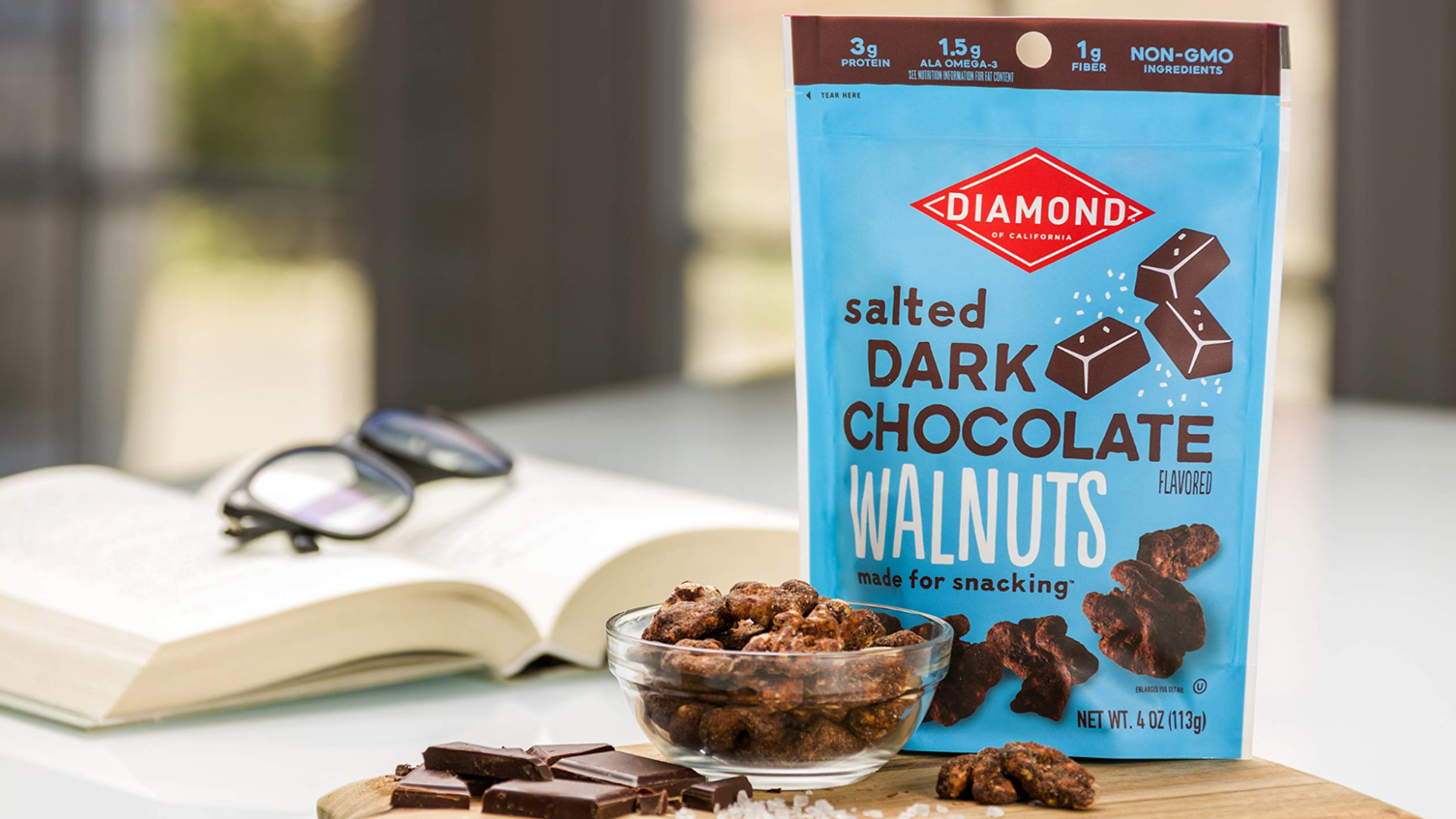
  • Diamond Foods chocolates in a blue bag on a table with a book and a cutting board Different bags of Diamond Foods nuts

Success has never tasted so good on Amazon.

Within a year, Diamond Foods realized its potential on Amazon. Top-line revenue saw a substantial rise, driven by improved visibility and strategic ad placements. Key products, once buried deep in search results, now dominated the top positions, attracting a surge of organic traffic. 

Through our partnership, Diamond Foods outpaced competitors and unlocked new growth opportunities on Amazon, setting the stage for sustained success and continued expansion.

Peanuts in a pile

In partnership with

  • Diamond Foods
Client Quote Maintaining an efficient presence on Amazon is a priority for Diamond Foods to stand out in the hypercompetitive snacking category. Monks has stretched our investment effectively with a robust advertising strategy—laying the groundwork for immense scale on the platform.
Craig Tokusato headshot

Craig Tokusato

CMO, Diamond Foods

Want to talk commerce? Get in touch.

Hey👋

Please fill out the following quick questions so our team can get in touch with you.

Can’t get enough? Here is some related work for you!

Amazon T-12: 4 Ad Strategies for Black Friday and Cyber Monday Success

Amazon T-12: 4 Ad Strategies for Black Friday and Cyber Monday Success

Commerce Commerce, Retail media, Seasonal marketing, eCommerce Platforms 4 min read
Profile picture for user Xuanmai Vo

Written by
Xuanmai Vo
Content Marketing Manager

black-friday

In recent years, Amazon has extended its key holiday shopping period, known as “Cyber 5.” Originally coined “Turkey 5” (T-5), this period focused on the five key shopping days from Thanksgiving through Cyber Monday. Last year, Amazon expanded this window to T-11, offering brands and sellers 11 days to capture shoppers’ attention. Now, in 2024, it’s been pushed further to T-12, running from November 21 through December 2. This longer timeline gives brands more opportunities to optimize campaigns, connect with eager shoppers, and drive additional revenue in Q4. To help you stand out in this competitive period, we’ve teamed up with Xmars to create a comprehensive guide filled with insights to help you make the most of Black Friday and Cyber Monday on Amazon. 

Why holiday advertising matters.

In 2023, consumers spent over $1.17 trillion globally, with Cyber Week alone accounting for 25% of that total (Salesforce). This highlights just how much shoppers rely on these key days. And with mobile shopping responsible for over half of all online sales and driving 80% of ecommerce growth (Adobe), having the right plan in place can make the difference between average results and record-breaking success. 

Below, our commerce experts outlined four key insights and actionable tips to help your brand stand out throughout the entire T-12 period. 

Maximize visibility and engagement during Amazon’s peak shopping events. 

Visibility is everything during peak shopping periods like T-12. Decorating your Sponsored Ads and Brand Store with festive, holiday-themed banners and images creates visual cohesiveness that aligns your brand with the season while attracting the right shoppers. Additionally, using placement modifiers ensures your ads appear in premium spots during peak times, allowing you to balance driving sales volume with maintaining profitability. It’s important to monitor performance in real time and adjust your strategy accordingly. 

For Sponsored Brands ads, consider refreshing your video content and switching to action-driven, holiday-specific messaging. Simple CTAs like “Shop Our Best Sellers for the Holiday Season” or “Shop Select Styles This Holiday Season” can make a significant difference and drive higher engagement during this period. 

Insights provided by Lillie Flagel, Advertising Manager. 

Start advertising early and maintain momentum for Amazon’s T-12 period. 

Timing is key during Black Friday and Cyber Monday, and starting your campaigns early while maintaining momentum throughout the T-12 period yields stronger results. A front-heavy approach for Sponsored Ads works best since traffic builds throughout November. Allocating a larger portion of your budget early on ensures your ads are visible as shoppers start researching deals ahead of the big event. 

As Cyber 5 approaches, fine-tune your DSP audiences and increase bids on must-win keywords. Focus on optimizing CPCs based on recent performance, but be careful not to overbid. During the event, keep a close eye on your campaigns to make sure your budget lasts through peak shopping hours, but don’t be afraid to invest heavily in these key moments. After Cyber 5, continue retargeting shoppers who didn’t convert during the event and gradually reduce bids as conversions naturally taper off. 

Insights provided by Johnathon Braga, Senior Advertising Manager. 

Tailor messaging and promotions for different shoppers. 

Not all holiday shoppers are the same. Some are premium buyers seeking high-end products, while others are more budget-conscious. Tailoring your messaging to meet the specific needs of each type of shopper, going beyond simple demographics, is vital for success. 

When remarketing, it’s important to differentiate your approach based on whether the customer is familiar with your brand. For existing shoppers, focus on building loyalty, while potential shoppers can be reached through lookalike audiences to expand your reach. Using behavior data allows you to deliver relevant promotions, such as highlighting a new collection that might interest your audience. With Amazon’s lookalike audience feature and AMC data, you can refine your targeting further, finding audience overlaps and optimizing campaigns for better engagement and ROI. Additionally, life events such as new parents seeking convenience or recent movers upgrading their living spaces can play a significant role in purchasing decisions. Aligning your messaging with these life moments allows for more meaningful engagement and conversions during the T-12 period. 

Insights provided by Tara Lynne Ferguson, Director of Commerce Advertising.

Leverage the power of custom audience creation and insights for Amazon brands. 

Custom audiences are one of the most valuable tools for reaching the right shoppers, but the true value lies in understanding your audience’s behavior, not just what products you’re pushing. Knowing where your audience is in the funnel and how they react at different stages helps you target specific behaviors more effectively. For instance, AMC purchase analysis can help determine how long it typically takes for your audience to convert, allowing you to set the right look-back windows for retargeting, especially for cart abandonment or product searches. 

Don’t rely on assumptions. Testing different look-back windows, such as three, five, or seven days, helps identify what works best for your audience. Additionally, keeping an eye on frequency caps and viewability rates is important. While retargeting helps maintain momentum, over-targeting can alienate your shoppers. Leveraging AMC data allows you to lower CPM and maximize returns by focusing on actual behaviors rather than assumptions. 

Insights provided by Wyatt Burley, Senior Advertising Manager.

Don’t leave your holiday season performance up to chance. 

With so much at stake during the T-12 period, having a holistic advertising strategy will help you make the most of the opportunities available. By focusing on custom audiences, optimizing bids, and tailoring your messaging, your brand can better connect more effectively with shoppers and boost performance. For more insights and detailed strategies to navigate Black Friday and Cyber Monday on Amazon, check out the full guide here.

Ready to make the most of Amazon’s T-12 period? 

Our team partners with some of the world’s most innovative brands to fine-tune their Amazon advertising strategy. Through data-driven insights, technology and a team of retail media specialists, we help increase visibility, engage the right audiences, and drive meaningful conversions throughout the holiday season. Whether you’re looking to optimize ad placements or refine audience targeting, we’re here to help you succeed during Black Friday, Cyber Monday, and beyond. Let’s talk about how we can support your holiday sales goals.

Optimize your ad campaigns and download our guide for additional tips to boost sales during the T-12 period, including Black Friday and Cyber Monday. Amazon T-12: 4 Ad Strategies for Black Friday and Cyber Monday Success Optimize your ad campaigns and download our guide for additional tips to boost sales during the T-12 period, including Black Friday and Cyber Monday. amazon prime Black Friday amazon seller central vendor central online shopping ecommerce amazon ads amazon advertising Holiday campaigns eCommerce Platforms Commerce Seasonal marketing Retail media

Turning Prime Day Momentum into Holiday Season Success

Turning Prime Day Momentum into Holiday Season Success

Commerce Commerce, Retail media, Seasonal marketing, eCommerce Platforms 6 min read
Profile picture for user Nate Hogle

Written by
Nate Hogle
VP, Commerce Business Management

black-friday

Prime Day is often referred to as the Super Bowl of retail media and though it’s now behind us, its impact is far from over. For brands on Amazon, the insights and momentum gained during Prime Day provide a critical foundation for planning the upcoming holiday season, including Black Friday, Cyber Monday, and other major shopping events. With high stakes and intense competition, brands and advertisers must base their decisions on well-grounded data.

To help you navigate these opportunities, Monks teamed up with Pacvue to provide an in-depth analysis of Prime Day performance. By breaking down key metrics and trends, our goal is to provide insights that can refine your strategies and enhance your advertising campaigns as we head into the busiest shopping season of the year. 

During Prime Day 2024, our partner Pacvue collected data and insights into its advertisers' behavior and performance, including ad spend, cost-per-click, ROAS, conversion rates, and more, from thousands of Amazon advertisers in the United States, spanning every major category and brand size. Here's what we've learned from it. 

The predictable yet strategic nature of Prime Day. 

This year’s Prime Day played out much as expected, with predictable trends like higher CPCs, consistent shopping behavior, and a focus on mobile and personalization. While this predictability might seem mundane, it can be advantageous for prepared brands. Even in a predictable event, brands need to be strategic to stand out. 

FOMO drives last-minute purchases. While Day 1 sales were initially higher, Day 2 experienced a late surge in last-minute purchases driven by FOMO. This late-day surge is typical for Prime Day and presents an opportunity for strategic advertising. It’s beneficial for brands to reserve some ad budget for the final hours of any shopping event to capture these last-minute consumers.

Market leaders face growing challenges. Market leaders are finding it harder to retain and grow market share as the “Amazon formula” becomes widely understood. Lesser-known brands are entering the market with high-quality content, making it essential for big-name brands to not only rely on their legacy but also invest in premium content to stay competitive.

“As consumers become more price-sensitive, a recognizable brand name is no longer enough. Consumers are opting for copycat products that are 15% cheaper. Big-name brands must pair their legacy with high-quality content to retain their hold as the market leader," adds Matthew Boardman, Director of Content. 

Riding the halo effect into the holidays. 

Prime Day’s “halo effect” ensures that increased visibility and sales don’t end with the event. Categories like electronics (61% sales boost) and small kitchen appliances (76% surge) are likely to maintain their strong performance into the holiday season. But this impact isn’t limited to traditional holiday items—back-to-school spending spiked by 216%, demonstrating how early promotions can sustain interest and drive continued engagement in specific categories.

“Even if you’re not selling traditional back-to-school items, this season is a golden opportunity. Parents are in shopping mode, and there’s a halo effect across categories like household goods and apparel,” says Holly Johnson, Senior Advertising Manager. 

Rising Amazon DSP ad spend reflects shifting strategies. 

During Prime Day, Amazon DSP ad spend saw a 39% YoY increase, underscoring its growing role in product discovery and customer acquisition. However, despite a 135.4% spike in DSP ad spend leading up to Prime Day—aimed at capturing more new-to-brand (NTB) sales—key metrics like eCPM (effective cost per mile) and ATCR (add-to-cart rate) declined. This suggests that while DSP ads are attracting more attention, their cost-effectiveness and conversion efficiency are diminishing, pointing to a need for more refined targeting and optimized ad placements. 

"Expect more brands to incorporate lead-out deals for PD2 and T11,” advises Wyatt Burley, Senior Advertising Manager. “Combining AMC and DSP data from a promo period can be highly profitable for retargeting consumers who almost purchased. These consumers represent low-hanging fruit that only DSP/AMC users can effectively target.”

Amazon DSP is particularly valuable during seasonal events like back-to-school due to its ability to target in-market and lifestyle audiences. Brands should enhance their DSP creatives with lifestyle imagery and refreshed messaging to better engage consumers. Retargeting campaigns after Prime Day allow brands to reach a pool of already engaged consumers who are likely to be in the market for back-to-school shopping. 

Cross-selling is another effective strategy during these periods. For example, brands selling related products can use Amazon DSP to retarget consumers who recently purchased one item but not the other. This approach not only drives incremental sales but also strengthens brand loyalty. 

“By using DSP to retarget consumers with complementary products, like pencil boxes for those who bought pencils, brands can effectively increase basket size and reinforce customer relationships,” notes Mckay Elliott, Advertising Manager. 

Conversion rates reveal opportunities for strategic improvement. 

While Prime Day delivered strong sales, conversion rates revealed some challenges that brands need to address. For instance, the automotive category saw a 35.4% increase in conversions, likely driven by stable CPCs, but the Toys & Games category struggled with declining ROAS. As the holiday shopping season heats up, optimizing for conversion will be key to turning clicks into sales. Brands must focus on enhancing their ad creatives, sharpening targeting strategies, and improving the overall user experience on Amazon product pages.

“CPCs will rise across multiple categories during sales events, whether your brand is participating or not. Your costs will increase even if you’re not actively reaping the benefits so strategic refinement is vital,” says Tara Lynne Ferguson, Director of Commerce Advertising. 

Consumer behavior trends that are shaping the future.

Prime Day 2024 highlighted several trends in consumer behavior that brands should consider as they plan for the holiday season: 

Mobile shopping is on the rise. With 49.2% of Prime Day purchases made on mobile devices, brands must optimize their online presence for mobile users. This includes creating a seamless shopping experience across brand stores, creative assets, websites, and landing pages—efforts that can significantly boost conversions. 

"Brands that prioritized mobile optimization and had a well-planned SEO strategy saw the best results. Those that diversified their deals across their catalog rather than focusing on a few specific items were better positioned to navigate the volatility of deal placements and timing," says Johnathon Braga, Senior Advertising Manager

Personalization drives engagement. Today’s consumers expect personalized shopping experiences tailored to their preferences. Brands that offer customized deals and engaging content, such as lifestyle images and Sponsored Brand Videos, can better connect with consumers and showcase their products more effectively. 

“Leveraging AMC data to understand purchasing behavior allows brands to provide customized deals and recommendations that enhance the shopping experience and significantly boost conversion rates,” says Alyssa Schafer, ​​Retail Media Account Manager at Pacvue.

The growing impact of social media and influencers. Both continue to play a significant role in shaping consumer decisions. Brands can collaborate with influencers, host Amazon Live sessions, and create engaging campaigns to reach wider audiences. Promoting these efforts on Amazon brand stores and landing pages can further amplify their impact. 

“Consumers are getting savvier about what they truly ‘need’ and what’s a genuine ‘deal.’ With wallets not growing at the same rate as the economy, brands need to prepare for a more selective shopper this holiday season,” notes Catherine Sherwood, Associate Director of Commerce Account Management.

Prime Day as a springboard for holiday success.

Prime Day offers critical insights for refining strategies as we approach subsequent sales events like Black Friday and Cyber Monday (BFCM). The data helps brands identify what worked and what didn’t, enabling brands to refine their promotional strategies for seasonal holidays and shopping periods.

"While BFCM is a longer event, the insights from Prime Day guide how brands should adjust their lead-in and lead-out strategies. Onsite ad targeting and strategies can be repurposed to maximize the impact during these shopping events," says Alyssa Schafer, ​​Retail Media Account Manager at Pacvue.

As the holiday season approaches, brands must analyze which products performed well during Prime Day, fine-tune ad targeting, and ensure product listings are optimized for search. For instance, categories like Toys & Games, which saw a 191.4% YoY increase in ad spend during Prime Day, are likely to continue driving significant revenue during the holidays. Brands should consider doubling down on promotions in these high-performing categories and leveraging advanced analytics to sharpen their strategies. 

The lasting gift of Prime Day. 

Prime Day 2024 may have been predictable, but this predictability highlights the need for strategic preparation. The data and trends from Prime Day are a lasting gift that provides valuable insights as we approach the busiest shopping season of the year. The halo effect, combined with a deep understanding of consumer behavior and spending patterns, equips brands to turn their Prime Day success into sustained growth through the end of the year and beyond. 

Building on Prime Day’s success for Q4. 

Ready for more? Contact us for tailored advice to keep the momentum going. 

Leverage Prime Day 2024 insights for holiday success. Explore strategies to turn momentum into sustained growth through Black Friday, Cyber Monday, and beyond. Turning Prime Day Momentum into Holiday Season Success Leverage Prime Day 2024 insights for holiday success. Explore strategies to turn momentum into sustained growth through Black Friday, Cyber Monday, and beyond. amazon prime prime day amazon seller central vendor central online shopping ecommerce amazon ads amazon advertising Holiday campaigns back to school eCommerce Platforms Commerce Seasonal marketing Retail media

From Prime Day to Holidays: Using the Halo Effect to Keep the Momentum Going on Amazon

From Prime Day to Holidays: Using the Halo Effect to Keep the Momentum Going on Amazon

Commerce Commerce, Retail media, Seasonal marketing, eCommerce Platforms 4 min read
Profile picture for user Xuanmai Vo

Written by
Xuanmai Vo
Content Marketing Manager

halo-effect-on-amazon

Prime Day’s benefits don’t have to end when the event ends. Our experts agree: the work doesn’t stop once Prime Day is over. To truly capitalize on Prime Day’s success, you must plan your post-Prime Day strategies in advance, leveraging the halo effect for incremental growth on Amazon. Strategize to extend your sales momentum into busy seasons like back-to-school, the Turkey 5 (Black Friday and Cyber Monday) and the holidays. Each promotional period requires tailored approaches based on your brand’s goals and product seasonality. While the mechanics of preparation—like advertising and content readiness—remain consistent, the specifics might vary depending on the product launch and targeted keywords. Ultimately, it’s about aligning promotional strategies with the overarching goals for each sales event. Here’s how you can plan for post-Prime Day conversions. 

Prime Day might end after two days, but your sales momentum should continue. 

Adjust your bids and budgets back to their pre-Prime Day settings to avoid diminishing returns as ROAS drops due to deal fatigue. Wyatt Burley, our senior advertising manager highlights, “Maintaining the same strategy post-Prime Day will waste money, lower conversion rates, reduce efficiency and negatively impact your SERP relevancy and organic ranking, leading to long-term business consequences.” 

With that out of the way, let’s focus on what you should do after Prime Day ends. By understanding what worked and what didn’t, you can refine your strategies for future events. 

Monitor and analyze performance. Conduct a thorough analysis to identify areas for improvement by examining key metrics such as sales, conversion rates, customer acquisition and traffic sources. Dive deeper into long-tail metrics, including the number of new-to-brand customers acquired, glance view lifts, and assess the duration of these effects. This data will help your team understand the broader impact of your Prime Day efforts.

Align with your goals. Ensure that your post-Prime Day analysis aligns with the goals you set before the event. Whether it was increasing visibility, boosting sales or acquiring new customers, make sure you evaluate each lever that contributed to these goals.

Analyze competitor strategies. Plan to analyze what your competitors did during Prime Day and how they performed. Megan Boyko, our Account Director, suggests, “Take note of what the competition did because that may be telling for what they’re going to do for future promotional periods.” This information can help you refine your strategies and anticipate market trends.

Maintain advertising momentum. Don’t stop your advertising efforts once Prime Day ends. Instead, adjust your strategy to capitalize on the increased traffic and interest. Johnathon Braga, a Senior Advertising Manager, notes, “There’s a six-week window where you should retarget all the non-converters and cross-sell to those who didn’t purchase.” This extended advertising push can help maintain visibility and drive additional sales.

Leverage customer feedback. Reviews, ratings and social media comments can offer valuable insights into how your products were received. Use this feedback to address negative comments and to highlight positive reviews in your marketing efforts. This information is valuable for making necessary adjustments to your products or listings.

Leverage the halo effect to enhance your back-to-school sales and extend Prime Day momentum into the holiday season. 

Prime Day is part of a larger promotional calendar. Leverage the insights gained to prepare for upcoming events like Black Friday, Cyber Monday and other peak shopping periods. The same principles apply across all sales events. Brands need to examine not just the bottom-line sales but also glance views, conversion rates and both organic and paid traffic. Analyzing performance product-by-product is required to understand what drove the lift and identify any underperformers. Comparing this data with platform category performance reports helps forecast and refine strategies. This detailed analysis ensures that brands can effectively make informed decisions and optimize future promotions. 

The halo effect refers to the continued increase in brand awareness and sales following a major event like Prime Day. Increased visibility and heightened consumer interest create lasting brand impressions. Shoppers who engaged with your brand during Prime Day are more likely to return for back-to-school supplies and holiday gifts, driven by their previous positive experiences. The data collected during Prime Day, such as top-performing products and shopper preferences, can inform more targeted and effective promotional strategies for these upcoming events. Here’s how to leverage it: 

  • Analyze the data for targeted campaigns. Determine which products performed best, which customer segments were most engaged and which promotional tactics drove the highest conversions. This information can guide your back-to-school and holiday campaigns. For instance, if certain school supplies or holiday gifts experienced a surge in sales, prioritize these items in your upcoming promotions. Tailor your messaging to address the preferences and behaviors observed during Prime Day. 

  • Extend promotions and prepare for retargeting. With a whole new audience now familiar with your brand, aim to get them to make their second or third purchase within a few weeks after the event. Implement retargeting campaigns that remind shoppers of their Prime Day engagement and offer incentives to return. The goal is to keep your brand top-of-mind and encourage repeat purchases. 

  • Focus on content optimization. Now that you have fresh data, analyze shopper feedback and reviews to identify areas for improvement. Update your product listings with enhanced images, videos and detailed descriptions that address common questions or concerns. Ensuring your content is polished and informative will improve the shopping experience and boost conversions during the busy back-to-school and holiday seasons. 

  • Capitalize on seasonality and timing. Begin planning your back-to-school campaigns immediately after Prime Day. Highlight essentials like stationery, electronics, apparel or dorm room essentials to cater to students and parents. As you transition into the holiday season, emphasize gift ideas, festive decorations and exclusive holiday bundles. Align your promotions with key shopping dates and trends to maximize impact.

Wrap up Prime Day by sustaining momentum and driving incremental growth. 

If the past years have told us anything, it’s that Prime Day’s benefits can extend far beyond the two-day event. By planning these post-Prime Day strategies in advance, you can sustain momentum, drive continuous growth and turn one-time shoppers into loyal customers. These steps also allow you to analyze your Prime Day performance and make data-driven decisions for future campaigns. 

Ready to maximize your post-Prime Day success? 

Contact us for tailored advice and detailed tips to keep the momentum going. 

Extend Prime Day success with the Halo Effect. Discover strategies for back-to-school and holiday sales to maintain momentum year-round. From Prime Day to Holidays: Using the Halo Effect to Keep the Momentum Going on Amazon Extend Prime Day success with the Halo Effect. Discover strategies for back-to-school and holiday sales to maintain momentum year-round. amazon prime prime day amazon seller central vendor central online shopping ecommerce amazon ads amazon advertising eCommerce Platforms Commerce Seasonal marketing Retail media

Choose your language

Choose your language

The website has been translated to English with the help of Humans and AI

Dismiss