Choose your language

Choose your language

The website has been translated to English with the help of Humans and AI

Dismiss

Turning Cultural Conversations Into Brand Icons • Elevating Heinz Mustard Through Real-Time Brand Participation

  • Client

    Kraft Heinz

  • Solutions

    Video (TV/CTV)SocialMediaInfluencer Marketing

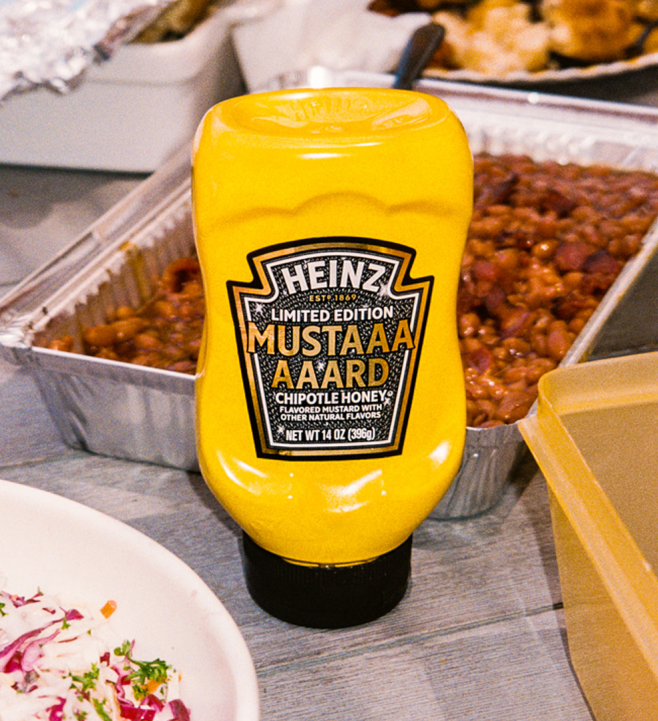
Bright yellow Heinz Limited Edition Mustaaaaard Chipotle Honey bottle, prominently displayed on a wooden picnic table next to a fruit salad, baked beans, and fresh buns, highlighting the perfect summer BBQ condiment.

From supporting role to conversation-worthy icon.

Heinz Mustard has long played a supporting role in the Heinz brand universe, overshadowed by the iconic Heinz Ketchup. Our challenge was to position Heinz Mustard as a culturally relevant and engaging brand—particularly with younger, diverse audiences—breaking through the noise of consumer indifference and establishing it as a conversation-worthy icon. So when Kendrick Lamar turned the word “mustard” into a viral catchphrase, we knew what we had to do.

Turning Heinz Mustard into a real-time brand for cultural relevance.

We took a culture-driven marketing approach, tapping into the conversations around music and entertainment, creating an authentic and organic campaign that resonated with modern audiences. During a pivotal cultural moment in 2024—the Kendrick Lamar and Drake rap feud—Kendrick’s now-viral “MUSTAAAAAARD” shout catapulted renowned producer Mustard (Dijon McFarlane) into the spotlight. We meticulously tracked social chatter and music trends, quickly devising a plan to capitalize on this sudden surge in relevance. Seizing the moment, we united Heinz Mustard with Mustard in a first-of-its-kind collaboration: Mustard X Mustard.

We kicked off at the Grammy Awards with a disruptive TV spot that transformed a ketchup ad into a “Mustaaaaard”-powered celebration, airing it moments after Mustard’s own Grammy win. Leading up to the Super Bowl, we doubled down by naming Mustard as Heinz’s Chief Mustard Officer, launching DOOH billboards in Inglewood, and releasing exclusive content and remixes online. On game day, we capitalized on real-time engagement with hashtags, memes, and custom content, embedding Heinz Mustard in the Super Bowl conversation without buying a traditional ad spot.

Music producer DJ Mustard grilling outdoors at a luxurious summer party, promoting the new Heinz Mustaaaaard product collaboration with a backyard BBQ lifestyle feel.

Authentic engagement with pop culture boosts your brand results.

Our media strategy prioritized essential culture-defining and multicultural publications, driving a ripple effect into mainstream national press. The Mustard X Mustard campaign smashed objectives across the board, transforming perceptions and cementing Heinz Mustard’s place in culture. Social conversations surged, with thousands of mentions and millions engaged. The brand achieved unparalleled visibility during key cultural moments, trending hashtags, and meme-worthy content. Most importantly, this organic, authentic participation drove fresh brand love and positioned Heinz Mustard as a modern cultural player. We proved that when brands engage with culture authentically and leverage the right celebrity partnerships, they can inspire conversation at scale.

Building sustained buzz into the drop.

Following the cultural takeover at the Grammys and Super Bowl, we kept the conversation alive with smart, timely extensions that pushed Heinz Mustard even deeper into culture. We tapped relevant partners like Buffalo Wild Wings to create cross‑channel moments that connected the collab to real‑life flavor experiences, while ongoing collaborations with influencers and Mustard’s own social presence ensured fans stayed engaged well past the initial hype. We deliberately framed each phase to lead audiences from the tease to the taste, to the drop, a narrative arc that built anticipation and participation across organic conversation, earned media, and paid amplification. This momentum culminated in the ultimate product launch in late July, as the Heinz Chipotle Honey Mustaaaaaard became available for purchase at Walmart.com, Amazon and Target. where curiosity transformed into trial, driving both cultural relevance and real‑world ongoing sales.

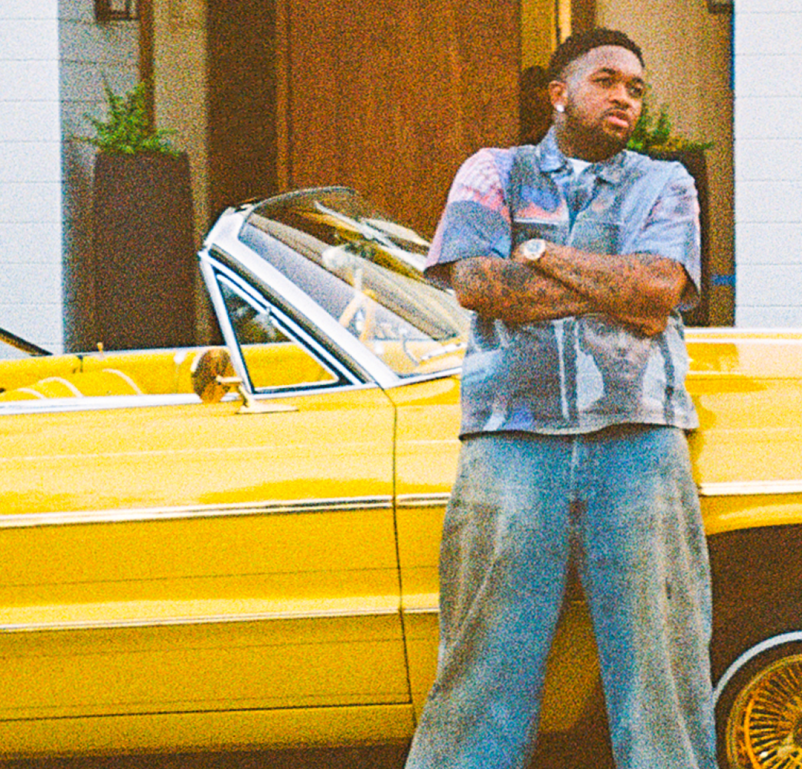
DJ Mustard, the brand collaborator, leaning against a vintage bright yellow low-rider convertible with gold wire wheels, capturing the vibrant, custom-culture aesthetic of the Heinz Mustaaaaard campaign.
Close-up detail shot of the Limited Edition Heinz MUSTAAAARD Chipotle Honey 14oz bottle, emphasizing the unique flavor name and packaging for a product description page.
Press Quote The MUSTAAAAAARD campaign highlights both HEINZ and Mustard’s commitment to craftsmanship, going all in on what they do best: producing quality product whether in the recording studio or at the grill.
Read full story Heinz and Music Producer Mustard Drop the Sauce of the Summer

Results

  • Named one of the best Super Bowl Ads (even though our ad didn’t run during the Big Game)
  • 1.1 Billion Earned Media Impressions
  • 324 Earned Media Placements
  • 3 Million Social Engagements
  • +138% engagement over social benchmark
  • 3x ADC Awards

  • 3x One Show Awards

Want to talk Culture and Strategy? Get in touch.

Hey 👋

Please fill out the following quick questions so our team can get in touch with you.

Can’t get enough? Here is some related work for you!

Black History / Our History: Honoring Legacies, Inspiring Futures

Black History / Our History: Honoring Legacies, Inspiring Futures

Culture Culture, DE&I 8 min read
Profile picture for user mediamonks

Written by
Monks

A design of nine circles, arranged in a 3 by 3 square. Four of them include headshots of the employees featured in the blog post.

We believe in the importance of celebrating the histories and contributions of all the communities that shape our world. Black History Month is a chance to reflect on the rich legacy and lasting impact of Black individuals—not just in history, but in how they continue to influence our present and shape our future.

Black History Month started in the United States in 1926 as Negro History Week, founded by Carter G. Woodson to honor the achievements of Black Americans. Over the years, it has grown into a global observance, with countries like the United Kingdom and Ireland holding their own celebrations at different times of the year. No matter when it’s observed, the purpose is to recognize and uplift the creativity, resilience and influence of Black communities.

Black history transcends borders and continues to shape industries, communities and cultures everywhere. This month, we celebrate the voices and contributions of Black members of our global team, whose perspectives make us stronger, spark innovation and help us better connect with the people we serve.

While Black History Month is a time to reflect and celebrate, our commitment to diversity and inclusion is year-round. Across our business, we witness firsthand how diversity drives our internal success and our ability to connect with and influence the world around us. It’s not just a value; it’s essential to who we are and how we grow.

So, who are we? Meet some of the Black voices on our team as they share how Black history has shaped who they are—and how they’re continuing to make a difference today.

Headshot of Amira Battle. Text says: "One tradition within the Black community that I really cherish is storytelling. Whether through conversations, music, or literature, storytelling has always been a way for us to pass down our history."

Amira Battle

What does Black History Month mean to you?

Black History Month is a time to honor the resilience, brilliance and contributions of Black people throughout history. As a Black woman, it’s deeply personal—it’s about celebrating the achievements of those who came before us and acknowledging the struggles they endured to pave the way.

The title of this piece is “Black History / Our History.” Describe the significance of that title.

The title “Black History / Our History” is powerful because it reminds us that Black history isn’t just a story for Black people—it’s a critical part of world history.

How has your understanding of Black history evolved over time, and what experiences have contributed to that growth?

Growing up, I learned about Black history in a very limited way—primarily through school lessons on slavery and the Civil Rights Movement. Over time, I’ve realized how much more there is to our story.

What is a tradition or cultural practice within the Black community that you cherish, and how do you incorporate it into your life?

One tradition I really cherish is storytelling—whether it’s through conversations with family, music, or literature. Storytelling has always been a way for us to pass down our history, lessons, and values.

What message or lesson from Black history do you believe is particularly relevant for today's society?

The message I always come back to is that knowledge is power. Black history shows us that seeking information, reading, and going beyond the headlines are forms of liberation.

How do you celebrate or honor Black history in your everyday life, beyond Black History Month?

I honor Black history every day by living with intention and pride in my identity. I support Black-owned businesses, mentor young Black professionals, and make sure I’m always giving back to the community.

Headshot of Nyle Paul. Text reads: "When I was younger, I viewed Black history as a celebration of prominent figures from the past. It took time for me to recognize that I, too, am part of the story."

Nyle Paul

What does Black History Month mean to you?

To me, Black History Month means Black appreciation. Appreciation of our history and of our people.

The title of this piece is “Black History / Our History.” Describe the significance of that title.

This title emphasizes that we are a part of Black history.

How has your understanding of Black history evolved over time, and what experiences have contributed to that growth?

When I was younger, I thought of Black History only as celebrating prominent figures from the past. I didn't realize then that I, too, am part of Black History.

What is a tradition or cultural practice within the Black community that you cherish, and how do you incorporate it into your life?

I really cherish family gatherings that include storytelling, food and music that honors our heritage.

What message or lesson from Black history do you believe is particularly relevant for today's society?

The Civil Rights Movement taught the power of standing together to challenge systemic racism.

How do you celebrate or honor Black history in your everyday life, beyond Black History Month?

I support Black-owned businesses, read books about Black history in my free time, and cook foods that are a part of the Black diaspora. Each day of Black History Month, I research two or three people whom I was unfamiliar with and study their impact on Black History.

Headshot of Billy Lemorin. Text reads: "To me, the title of this blog emphasizes the impact of Black contributions and acknowledges that Black history is integral to understanding the full history of society.

Billy Lemorin

What does Black History Month mean to you?

Black History Month is a time to honor the resilience, creativity and contributions of Black people throughout history. It's also a moment to celebrate and reflect on the stories and legacies that shape our culture.

The title of this piece is “Black History / Our History.” Describe the significance of that title.

The title “Black History / Our History” signifies that Black history is not just a separate narrative but an essential part of the collective story. To me, it emphasizes the impact of Black contributions and acknowledges that Black history is integral to understanding the full history of society.

How has your understanding of Black history evolved over time, and what experiences have contributed to that growth?

My understanding of Black history has evolved from first viewing it as just lessons in school to growing up and actually seeing it as a living, ongoing story. Experiences like learning about Haiti's revolutionary history and connecting with my own heritage have deepened my appreciation for the complexity and breadth of Black history.

What is a tradition or cultural practice within the Black community that you cherish, and how do you incorporate it into your life?

A cultural practice I cherish is storytelling. For me, storytelling is one of the best ways to preserve history, pass down traditions and celebrate cultural heritage. I incorporate this into my life through my work as an artist, using my creativity to showcase Black narratives and experiences.

What message or lesson from Black history do you believe is particularly relevant for today's society?

A message from Black history that resonates today is Dr. Martin Luther King's quote, “The time is always right to do right.” It's a reminder that justice and integrity should never be postponed, especially in the face of injustice.

How do you celebrate or honor Black history in your everyday life, beyond Black History Month?

I honor Black history daily by ensuring my work depicts Black themes accurately, supporting Black-owned businesses, and continuing to learn about our history. I also carry it with me through my tattoos—one of '1804' to signify the year Haiti gained its independence and another of Kobe Bryant to honor the late, great legend and his legacy of excellence.

Headshot of Rebecca Beyene. Text reads: "My understanding of Black history has evolved from viewing it as isolated stories of struggle and chievement to recognizing it as the foundation of global culture, innovation and resistance."

Rebecca Beyene

What does Black History Month mean to you?

For me, Black History Month means the celebration and preservation of our achievements throughout the past, present and future.

The title of this piece is “Black History / Our History.” Describe the significance of that title.

The title “Black History / Our History” is a statement that highlights the interconnection of Black history within the broader collective history of humanity.

How has your understanding of Black history evolved over time, and what experiences have contributed to that growth?

My understanding of Black history has evolved from viewing it as isolated stories of struggle and achievement to recognizing it as the foundation of global culture, innovation, community and resistance.

What is a tradition or cultural practice within the Black community that you cherish, and how do you incorporate it into your life?

I'm not sure if this is considered a traditional or cultural practice, but I just love that unspoken camaraderie we have with one another.

What message or lesson from Black history do you believe is particularly relevant for today's society?

A message from Black history that I believe is particularly relevant is that joy is a form of resistance.

How do you celebrate or honor Black history in your everyday life, beyond Black History Month?

My pride extends beyond the month of February, and I celebrate my Blackness 365 days a year. I celebrate Black History Month in many ways, including sharing stories or interesting historical facts on social media.

Image of Ifetayo Jabari-Kitwala. Test reads: I am an important part of Black history. I carry the resilience of those who came before me, standing as both a survivor of their struggles and an embodiment of their triumphs.

Ifetayo Jabari-Kitwala

What does Black History Month mean to you?

Black History Month is a time to shine a spotlight on the countless contributions Black people have made to our daily lives—past, present and future. It’s a chance to honor the trailblazers who came before us, celebrate the resilience and brilliance of those shaping the present, and inspire the dreamers building a brighter tomorrow. Black History Month invites us to pause, reflect on the journey we’ve traveled, and embrace a unified hope for a future filled with equity, opportunity and joy. It’s more than a celebration; it’s a heartfelt reminder of the strength, creativity and love that continue to shape our world.

The title of this piece is 'Black History/Our History' - describe the significance of that title.

I am an important part of Black history. I carry the resilience of those who came before me, standing as both a survivor of their struggles and an embodiment of their triumphs. I am evidence of the present, living proof of the progress we’ve made and the work still to be done. And I am a catalyst for the future, using my voice, my actions and my story to inspire and shape what comes next.

How has your understanding of Black history evolved over time, and what experiences have contributed to that growth?

My understanding of Black history has evolved as I’ve come to realize that Blackness, in all its forms, defies limitations. While my identity is deeply rooted in Christ, it is equally rooted in my Blackness. A pivotal part of my growth has been challenging everything I was ever told I was “supposed” to be—what I should do, how I should act, and where I should fit in. Black history, Blackness, Black women, Black men, Black jobs—Black anything and everything—cannot and should not be defined or confined by anyone else’s standards. Once I embraced this truth, my perspective shifted, and my growth became limitless. It’s a constant journey of unlearning, learning and celebrating the freedom to simply be.

What is a tradition or cultural practice within the Black community that you cherish, and how do you incorporate it into your life?

One tradition I deeply cherish within the Black community is Saturday morning cleaning and Sunday dinners. No matter where I am—whether in a new place or on vacation—I try to incorporate these rituals into my life. There’s something so grounding about starting the weekend with a good, deep clean, fueled by old-school Black hits blasting in the background. The broom turning into a mic stand? That’s a vibe all on its own. It sets the tone for a fresh, rejuvenated space. And then there’s Sunday dinner—a hearty, soul-filling meal that wraps up the weekend perfectly. Sharing that kind of love and comfort, even if it’s just with myself, feels like a connection to my roots that’s truly unmatched.

What message or lesson from Black history do you believe is particularly relevant for today's society?

Black history isn’t confined to our textbooks or the well-known “greats” who broke barriers—it’s so much more than that. While celebrating the iconic moments and achievements is important, Black history is also about the subtle, enduring impact of the Black experience on everyday life and decisions. It’s found in the mundane, the creative and the unseen contributions that shape culture and society in powerful ways. History is being made right now, across all industries, if we take a moment to open our eyes to it. It’s not just about shattering glass ceilings—it’s about recognizing the brilliance in each day and how it continues to pave the way for a brighter, more inclusive future.

How do you celebrate or honor Black history in your everyday life, beyond Black History Month?

I celebrate and honor Black history in my everyday life by staying connected to my roots and uplifting my community. I read books by Black authors to expand my knowledge and perspective. I explore new ways to care for my health, skin and hair, embracing practices rooted in our heritage. I make a conscious effort to support Black-owned businesses and products, knowing that every purchase is a vote for our collective success. I listen to the stories of my family and others, cherishing the wisdom and resilience that continually shape the woman I am today. And hey, adding a brown or black heart or a Black hand emoji on Slack? A small but heartfelt gesture of pride and solidarity that never hurts.
In honor of Black History Month, our team celebrates the profound impact of Black history on our past, present and future. culture understanding black history black history month Culture DE&I

We’ve Entered Newsweek’s Top 100 Global Most Loved Workplaces 2023, and It’s the Best News Yet

We’ve Entered Newsweek’s Top 100 Global Most Loved Workplaces 2023, and It’s the Best News Yet

Monks news Monks news 4 min read
Profile picture for user James Nicholas Kinney

Written by
James Nicholas Kinney
Global Chief People Officer

Employee group photos at media.monks events

Fresh off the press, I am exhilarated and honored to share some incredible news: Media.Monks has entered Newsweek’s Top 100 Global Most Loved Workplaces for the first time. In partnership with benchmark research company Best Practice Institute, Newsweek has carefully crafted this list of companies whose people truly feel appreciated, valued and cared for.

“The companies on this list stand out to their employees. They have open-door policies where employees feel heard, offer flexibility that supports work/life balance, and provide opportunities for professional development, promotion and recognition—to name a few,” to use the words of Nancy Cooper, Newsweek’s Global Editor in Chief. 

This recognition goes to show that our mantra—empathy, transparency and diversity—has paid off, and there’s no doubt that these goals will continue to guide the efforts of our global and local leadership in providing a space for all our people to thrive and feel pride in their work. It’s safe to say that this is one of the greatest moments in my time at Media.Monks, especially as this past year hasn’t been an easy one. 

We’re here to help our people overcome obstacles. 

From a people perspective, our organization—and many others with us—has been met with various unexpected and very difficult social challenges these last couple of years. While strict lockdowns as a result of the pandemic kept several of our teams in Asia-Pacific homebound, our people in Ukraine were suddenly forced to flee or take shelter due to the ongoing war. At the start of this year, we were also deeply saddened by the disastrous impact of the earthquake in Turkey and Syria. More than anything, these tragic and unforeseen events have made it abundantly clear that taking care of our people, which means making sure they are safe, satisfied and happy, should and always will be our top priority. 

Meeting our people’s needs and caring for them is not something that can be done in a couple weeks—it must happen in the present. That’s why we practice what we preach every single day, and if I may speak on behalf of our global People team, we are very proud and honored that our efforts to establish a clear vision and direction for the health, wellbeing and happiness of our people hasn’t gone unnoticed. Now, let’s take a closer look at what exactly we do to support our talent. 

Paving the path for our people to thrive. 

Beyond providing the basics such as health insurance, caregiver leave and paid vacation days, I believe that building a workplace where our 8,700+ people worldwide feel at home is about culture, belonging and representation, and making sure this is in line with everyone’s unique needs. 

Before we dive into this, it’s important to highlight that as an organization with presence in every part of the world, we always have to make sure our efforts and initiatives account for the many jurisdictional, regulatory, cultural and demographic differences that constitute our global footprint—what may be a mandatory diversity policy in one country, might be legally prohibited in another. That’s why we not only prioritize data-driven analysis of Diversity, Equity, and Inclusion challenges to support more localized approaches, but we also encourage and facilitate employee-led community groups and initiatives in all our offices. 

In establishing a company culture where everyone can flourish, our initiatives are aimed at fostering an environment of DE&I and belonging. From supporting women in tech to taking action to realize diversity, these initiatives include community groups—think of our Melanin.Monks, Pride.Monks or AAPI Community Group—cultural and heritage-based events and celebrations, and local coalitions to support near and dear creators and businesses. 

Besides fostering a safe and inspiring environment, most of the above initiatives facilitate peer-to-peer learning, which is just as important in building a solid company culture. And if we encourage our talent to educate themselves and others, then we should also provide space and opportunities for growth. That’s why we have initiated a range of educational programs, including our Women Leadership Program and the S4Capital Fellowship. Furthermore, next to offering bespoke online training on various topics, from foundational DE&I principles to managing a team with empathy, we’ve recently launched our first-ever global professional development program: Accelerate.Monks. Featuring internal subject matter experts, this initiative is all about upskilling and knowledge sharing between our talented colleagues. 

The golden thread in all of this is our insatiable curiosity, creative spirit and can-do mentality. To better understand the experience of our talent, the People team has deployed net promoter scores and found that many of us have dreams way beyond our daily work and want more purpose-driven jobs. These insights have ultimately shaped our operating model of creative-first and “break it and make it.” I believe that creativity breeds creativity, and long-lasting culture is all about constantly reinventing yourself in art, culture and business—that’s why we give our talent the tools they need to always rise to the moment. 

Another accolade closer to our mission.   

Despite our size and relative infancy in this industry, our mission is to become an industry force, and raising extraordinary talent is essential to this. That’s why I’m so thrilled that Media.Monks has received this honor, as it’s testament to our efforts and proof that we’re on the right track. As a top 10 Cannes Creative Company of the Year, Webby Production Company of the Year, and the owner of the most FWAs ever, I believe there’s no doubt about our creative chops. But as the Global Chief People Officer, entering Newsweek’s Top 100 Global Most Loved Workplaces just hits different, because this tells me that our talent not only creates outstanding work, but they feel appreciated, valued and cared for in doing so—and right now, that’s all that matters.

Fresh off the press, Media.Monks has entered Newsweek’s Top 100 Global Most Loved Workplaces for the first time. diverse workplace culture DEI diversity and inclusion diverse talent Monks news

Three Steps to Creating Engaging Financial Content for Gen Z

Three Steps to Creating Engaging Financial Content for Gen Z

Culture Culture, Social, Social Campaigns, Social moments 4 min read
Profile picture for user Vanessa.Lim

Written by
Vanessa Lim
Social Media Strategist

Gen Z taking a group selfie

A lot has been said about capturing the attention of Gen Z, and the theory behind their behavior as consumers. Particularly for financial services, we’ve covered how to win their trust and how to help them build their financial knowledge, all with authenticity at the forefront. We’ve learned that we need to focus on the content that matters most to our audience, that transparency is key and that we have to speak a consistent language that’s also the language of Gen Z. So far so good, but how do you translate those learnings into execution?

When it comes to creating work that works, the key is in the details. We need a strategic process that allows brands to optimize for performance and apply learnings to future projects. But generic approaches only produce generic results, so while we require a systematic process to guide us, it’s important to open ourselves up to new opportunities. Sounds challenging, but the results can be impressive: Klarna, for example, garnered 4+ million views in the Playing for Keeps livestream partnership with Snoop Dogg and Twitch streamers. Here’s how you too can turn needs into actionable strategies, split into three digestible phases. 

Phase 1: Discovery 

First, we need to lay the groundwork: understanding the performance of your brand’s existing social media content, competitor mapping and social listening on topics that are relevant to the brand. This will provide your team with a better grasp of how the brand is truly doing on social media compared to the market and industry benchmark. 

We apply the discovery methodology not only for client work but for a number of trends and culture reports too, such as The Power Of Fandom Is Not Random, in which we dive into the rise of fandom culture and how brands can act on its potential. In the discovery phase, it’s crucial to define the brand’s problems and business objectives regarding social media, to then establish goals and target metrics. 

Phase 2: Brainstorming 

Armed with a baseline understanding of where your brand stands and where you want to take it, it’s time to think about your target audience. No industry, market or brand is the same, so this analysis should be tailored to yours. For example, you could start by asking your partners, the team and yourself the following questions:

  • Who are we talking to, and how do we define them? What do we know about them?
  • Are we targeting the audience demographic in specific markets and/or regions?
  • What are the audience's pain points and motivations?
  • What should our persona and voice be like on social media?
  • How does this ladder up to our brand and vision?

With the answers to these questions, you can then determine a strategic proposition and creative platform to address Gen Zs in their specific contexts. 

Phase 3: Creation

You now have all the building blocks in place to create content that Gen Zs can’t resist. The final phase is where the magic happens. What you will be producing at this stage are conceptual proposals, mock-ups and communication plans that string all the pieces together to reach your audience across various touchpoints. The best briefs are co-created, so brand-agency alignment is crucial to the success of each campaign or strategy. 

Through the three-phase process, our team created Ally Island, a branded space within the game Animal Crossing, which peaked during the pandemic. Packed with minigames showcasing different aspects of Ally, the space educated visitors on money management while helping to promote the bank’s services amongst youths. The cherry on top? The participation of a popular Animal Crossing streamer, Kang, who taught gamers how to make money work smarter. In the end, the activation was featured on the front page of Twitch for three weeks, won The FWA of the Day and even bagged an Effie Award. But most importantly, it achieved 1.38+ million individual viewers and 112+ hours spent with the brand by the target audience.  

Similarly, the German fintech company N26 teamed up with us to bring their YouTube content strategy to life. To show you how the three-phase approach played out in that case, here are the outcomes of the workshop and brainstorming sessions:

  • Audience pain point: There’s a huge disconnect between the values of our consumers and the financial system as a whole.
  • Audience insight: Our audience has new lifestyles and changed expectations towards banking, asking for solutions that fit their life versus the other way around.
  • Audience motivation: Confidence, relevance.
  • Point of entry: Show N26 as a way to achieve our goals, instead of a barrier that keeps us from our goals.
  • Role of brand: Be the finance partner for an entire generation.
  • Strategic springboard: Making you the expert. We’ll leverage Gen Z’s desire for personalization by building talking tracks around N26 being the financial partner that caters to this generation’s values. 

After the brainstorming sessions, we moved into the creation stage. The result? A YouTube content strategy that was introduced in five markets and featured content series like “Talking to friends about money,” which resulted in a 289k average view rate for the fintech company. 

It all boils down to the idea that crystallizing everything into a single brief allows teams to address the heart of the matter and inspire creatives. A lot can be achieved with purpose and intention, especially when it comes to winning with Gen Zs. Trust building shouldn’t be hard—at least not if brands are staying true to their mission. So follow these steps with confidence and remember: generic approaches breed generic work. A willingness to embrace new opportunities can lead to impressive results.

Learn how you too can turn needs into actionable strategies, split into three digestible phases when creating content for Gen Z. gen z content strategy culture social media marketing Social Social Campaigns Culture Social moments

Celebrating Strength and Solidarity on International Women's Day

Celebrating Strength and Solidarity on International Women's Day

DE&I DE&I, Monks news 3 min read
Profile picture for user Kate Richling

Written by
Kate Richling
CMO

Women leaders at Media.Monks headshots

A few months ago, I read Indra Nooyi's autobiography about her time leading up to, and as, Pepsi’s (first ever female) CEO. If you ask anyone who works on my team, they were well aware I was reading it as I proceeded to quote it, reference it and share my “a-ha” moments in the weeks that followed. But my favorite takeaway, far above anything I learned about the stock market or executive planning or annual reports, was her advice for supporting women as a business leader.

Practical and realistic advice that centered on the responsibility of executives now to create professional settings and a culture that helps women thrive. Support like providing fertility benefits that enable women to prioritize their careers early and feel more comfortable putting off family planning decisions until later in life. Advice and recommendations that actually empower women to climb the ladder, change their minds and rethink what “having it all” really means. 

That being said, it takes everyone’s support to make meaningful changes like these. As my colleague (and an all around amazing person), Jess Davey put it:

Monk Thoughts We absolutely appreciate the support of male allies. It cannot be done without male allies. But like I said, ally is a thing you get to earn through your choices, it is not just a word that you get to use once a year.
Jess Davey headshot

I just passed my fifth year at Media.Monks, and watching the company grow from 800 to 9,000+ in that time has included a number of personal career milestones for me as a woman. I’ve had the opportunity to see more women appointed to our executive team, work firsthand with emerging leaders inspired to drive initiatives that empower other women, and watched our People team evolve and implement surveys and DE&I efforts to better track and understand our progress. I’ve also built my own team, full of women who continue to push us (and me) in new (better) directions. A few of these women on my team are behind this year’s International Women’s Day, during which we’ll host a day of content, connected under the theme “Engage with Equity,” as I recently shared with The Drum.

Around the world, we’ll be taking the day to celebrate and uphold the contributions of some of the women from across S4 Capital. Our global programming includes a panel discussion with members from our Executive Leadership Team and our Global General Counsel, presented by Jess Clifton, who also supports our women year-round through her initiative “Women Connect.” We've invited everyone from the Women Connect community to submit questions and videos in advance to keep the conversation dynamic and personal—and to foster those one-to-one connections and conversations that I think set us apart. 

Our event will be streamed around the world on our internal video platform, the Shift, and our local offices are putting on viewing parties and other activities to uniquely reflect the women in their communities. But as we spend the day focused on women, the hope is everyone will show up. Jordan Cuddy captured this sentiment, as she so often does, in a post on LinkedIn: “Ideally more men would show up to support the women sharing their experiences. Get comfy with being a little uncomfy. And think about how they can be more aware, more supportive. True allyship is demonstrated by taking action to support minorities, even when that action might affect one’s status, wallet, time or access. Show up for the women this month.”

As part of our IWD programming, we’ll feature speakers from across many different teams, disciplines and countries around the world for “Take 10,” a set of mini-presentations, including: Jordan Cuddy on “How to F*cking Sell,” Aisha Bean on “Leaving a Leadership Legacy,” Nimo Awill and Tash Rosehill on “The Workplace as a Safe Space,” Luciana Haguiara on “10 Tips to Be a Great Creative Leader” and Jess Davey on “Being a Woman is a Superpower.”

One of the best parts of my job is acting as an editor for all the stories our team produces every day just like these. We get to amplify the most exciting bits and on days like today, and then take a moment to reflect on all we’ve achieved—as a team, and collectively as a company. My colleague Charlotte Mceleny reinforced  the importance of these efforts at New Digital Age:

Monk Thoughts What I am proud of is getting personal stories out into the industry that I think could inspire people for good. We can all talk a big game on diversity but it’s up to industry comms and marketing people to make sure we’re pushing this out as a priority.
Charlotte Mceleny headshot

So for today, here’s to the women at Media.Monks making headlines, setting new paths… and owning it… right now. With that I’ll leave you with one more (...much more punchy) line from Jess: “If women could fix this sh*t on their own, we would have already. It has to be a partnership in continuing to drive transformation and change.”

Our CMO Kate Richling shares personal experiences, spotlights internal initiatives, and celebrates all women at Media.Monks on International Women’s Day. women in tech diverse workplace culture Monks news DE&I

Asian American and Pacific Islander History / Our History

Asian American and Pacific Islander History / Our History

9 min read
Profile picture for user mediamonks

Written by
Monks

Media.Monks employees on a grey background in colorful squares

Every year in May, in recognition of Asian American and Pacific Islander Heritage Month, Media.Monks works to amplify awareness of the achievements and challenges of the AAPI community and their contributions to US history as well as today’s society. Throughout the month, we’ll spread the love by highlighting our AAPI community group and amazing employee base in their work towards celebrating the unique history and incredible impact of the Asian American and Pacific Islander community.

President Jimmy Carter designated May 4 to 10 as the official Asian/Pacific American Heritage Week on October 5, 1978. This moment in time signifies an important victory for Asian Americans and Pacific Islanders, the result of a long uphill battle during which both groups worked hard to prove their legitimacy to the national government. Following a pattern similar to the establishing of other heritage celebrations in the United States, it took more than a decade for Congress to pass a bill signed by President George H.W. Bush in May 1990, finally extending the week into a whole month. Years and many celebrations later, President Barack Obama officially changed the name to Asian American and Pacific Islander (AAPI) Heritage Month. 

The inauguration of May as the official Asian American and Pacific Islander Month was not a matter of chance, as it commemorates two crucial events in time. On May 7, 1843, the first Japanese migrants arrived in the United States, and on May 10, 1869, primarily Chinese laborers completed the construction of the transcontinental railroad on what is known as Golden Spike Day—literally and figuratively connecting East to West. 

At Media.Monks, we operate under people-centric values that empower our employees to build, innovate and work together as one team—where everyone belongs and everyone has a voice. We focus on fostering an environment where everyone feels at home by treating people in the way they want to be treated, encouraging colleagues to raise their voices, and working together to complement our differences and learn from one another. To that end, we support each and every person in creating community groups in recognition and honor of our unique identities and affinities. Ultimately, this helps create space for employees to share and celebrate both contrasting and common life experiences.

In recognition of Asian American and Pacific Islander Heritage Month, members of our DEI and Culture team and our AAPI Community Group have come together to reflect on and celebrate the history of these communities.


Andrew Weig headshot

Andrew Kondo Weigl

Chicago, Illinois

I’ve been with Media.Monks for: 3 months

My role: Associate Creative Director & Copywriter 

What AAPI History Month means to me: To me, it means a time to acknowledge the past and look to the future, while celebrating our collective accomplishments and honoring our losses. It’s an opportunity for self-reflection on how being Asian American has and continues to affect my life. 

A moment in AAPI history that has influenced or shaped me the most: Though it was before my time, the internment of Japanese Americans during WWII, including my American-born grandparents and aunt, has had a profound effect on my perception of the realities of the country that my family, friends, brothers, sisters, son and I in solidarity live in. The intimacy and connection I share with those who lived through it have made it an undeniable part of my own story. 

I am inspired by: Japanese American civil rights activist Yuri Kochiyama.

Monk Thoughts A time to acknowledge the past and look to the future. To celebrate our collective accomplishments and honor our losses. A chance for self-reflection on how being Asian American has and continues to affect my life.
Andrew Weig headshot
Nicholas Seo headshot

Nicholas Seo

New York City, New York

I’ve been with Media.Monks for: Almost 7 years

My role: Director, Go-to-Market for Commerce

What AAPI History Month means to me: Many things! Most importantly, it celebrates the diversity and richness across Asian and Pacific regions by honoring our past and reflecting on the present, which means casting a spotlight to remember and respect the heritage that has shaped our history and taking time to decipher what it means to be Asian in America today, and to shine a light on pressing issues that impact our future.

A moment in AAPI history that has influenced or shaped me the most: Again, many things, but in more recent memory, I would say the proliferation of Asian and Asian American representation in mass media and the growing acceptance of our stories as being "universal"—as having the shared condition of being human. This includes literature like "Minor Feelings" by Cathy Park Hong to cinema, like "Minari" by Lee Isaac Chung, and much more. The amplification of Asian American voices has inspired me to embrace my own AAPI identity, which I once shied away from.

I am inspired by: Grace Lee Boggs, a prominent Chinese American human rights activist, who was on the frontlines in the fight for social justice for minority communities, radicalizing what it meant to be an “American” in society.

Monk Thoughts AAPI History Month celebrates the diversity and richness across Asian and Pacific regions by honoring our past and reflecting on the present.
Nicholas Seo headshot
Deborah Kuzma headshot

Deborah Kuzma

Los Angeles, California 

I’ve been with Media.Monks for: 6 months

My role: Senior Art Director 

What AAPI History Month means to me: It gives me a chance to reflect upon my immigrant family's past and how it has shaped my personal life experiences.

A moment in AAPI history that has influenced or shaped me the most: The high-profile departure of Ann Curry from her post as co-host of NBC's TODAY in 2012 shaped my view of the continued need for conversation regarding the female Asian-American experience in the workplace.

I am inspired by: Kamala Harris, the Vice President of the United States of America.

Monk Thoughts It gives me a chance to reflect upon my immigrant family's past and how it has shaped my personal life experiences.
Deborah Kuzma headshot
Kervin Ray Morales headshot

Kervin Ray Morales 

New York City, New York

I’ve been with Media.Monks for: 2 years and 2 months

My role: Design Lead/Senior Art Director 

What AAPI History Month means to me: To me, AAPI history month is a month of proactive observance and acknowledgement. I’m proud of my Filipino heritage and it’s important to me to reflect and spotlight all the amazing creative work coming from the community. 

A moment in AAPI history that has influenced or shaped me the most: I don’t know if I would point to a specific moment in AAPI history, but seeing the recent increase in violence towards AAPI individuals has made me understand the importance of our visibility and community. 

I am inspired by: José Rizal has always been an inspiration to me. Outside of his political work, he also wrote beautiful poems and books about love, war and people.

Monk Thoughts AAPI history month is a month of proactive observance and acknowledgement for me. I’m proud of my Filipino heritage and it’s important to me to reflect and spotlight all the amazing creative work coming from the community.
Kervin Ray Morales headshot
Tiffanie Jan Lee headshot

Tiffanie Jan Lee

New York City, New York

I’ve been with Media.Monks for: 9 months

My role: Associate Creative Director

What AAPI History Month means to me: This is a simple question, but the answer is complicated. AAPI Heritage Month seems like a relatively new concept, or at least the mainstream celebration of it. Growing up, this wasn't a thing, but it is for kids today, and that is so important. I rarely saw people who looked like me mirrored in textbooks, unless it was about wars or quite frankly, stereotypes and antiquities. But whenever my passions brought me to fellow AAPI people across music, art, culture, media and activism, it always gave me the courage to continue doing my thing. My hope is that young people won't have to work so hard to find their communities and to feel seen, heard and safe. While AAPI Heritage month is about awareness and education, it is also very much about making visible the beauty across our vast diaspora—with all of our myriad nuances.

A moment in AAPI history that has influenced or shaped me the most: There isn't one moment per se. However, both Taiwan and Hong Kong New Wave cinema, think of directors like Hou Hsiao Hsien and Wong Kar Wai, heavily influenced me in my younger years. I'm also really into contemporary AAPI photographers like Peter Ash Lee, Zorawar Waraich, Heather Sten, Justin Wee and Kee Dinesh.

I am inspired by: Doris Ho-Kane. She is an archivist and community activist who has tirelessly and single-handedly illuminated AAPI and API women's history around the world. The type of stories she has documented are truly stunning—all real history that's been invisibilized and marginalized from culture and curriculum. Superwoman status!

Monk Thoughts ... while AAPI Heritage month is about awareness and education, it is also very much about making visible the beauty across our vast diaspora—with all of our myriad nuances.
Tiffanie Jan Lee headshot
Jemm Cellan headshot

Jemm Cellan

Ontario, Canada

I’ve been with Media.Monks for: 2 years and 8 months

My role: Senior Product Marketing Manager

What AAPI History Month means to me: To me, it means adaptability and a strong sense of belonging, wherever I may be. 

A moment in AAPI history that has influenced or shaped me the most: Both my grandmother and grandfather were guerilla fighters and war veterans during WWII. Their colorful stories are inspiring and humbling at the same time. More importantly, they helped shape how I tackle challenges today and how I pick my battles on a daily basis.

I am inspired by: While there are many Filipino icons, the one that springs to mind is Lea Salonga. Filipinos are almost always associated with our shared love for music and I am no exception. Lea is best known for her theater roles—Miss Saigon and Les Misérables, to name a few—and she was the singing voice behind Princess Jasmine and Mulan.

Monk Thoughts It means adaptability and a strong sense of belongingness wherever I may be.
Jemm Cellan headshot
Lani Tuitasi headshot

Lani Tuitasi

Los Angeles, California

I’ve been with Media.Monks for: 4 years

My role: Director of Cultural Innovation

What AAPI History Month means to me: My Polynesian heritage—I’m a mixed Samoan, Tongan, and European Pacific Islander in the States—has always been important to me. I'm passionate about writing stories that centralize Polynesian American voices as well as exploring ways to own our narratives as a community. While the islands are small, the power of our culture is big and I want the world to know. 

A moment in AAPI history that has influenced or shaped me the most: During Samoa's fight from colonial rule, the women fearlessly protected the men who were under attack, peacefully protesting through dance and helping lead legislative efforts to successfully gain independence. My ancestry is rooted in the Mau and I try to tap into their strength and bravery in everything I do—from writing Polynesian stories to delivering big pitches at work. This AAPI month I honor them, my ancestors, and the Polynesian women today who carry their legacy. Fa'afetai.

I am inspired by: I am most influenced by the women of the Mau Movement in Samoa in the 1920s.

Monk Thoughts My Polynesian heritage has always been important to me…While the islands are small, the power of our culture is big and I want the world to know.
Lani Tuitasi headshot
Matthew Au headshot

Matthew Au

New York City, New York

I’ve been with Media.Monks for: 2 years

My role: Brand Manager

What AAPI History Month means to me: To me, it's the time when I can unabashedly and unapologetically show off why I'm proud to be Asian American and the highs and lows that my family has experienced in the past, present and future. It's a time for me to reflect on my heritage and, especially for a third-generation Hong Konger-American like myself, to think about what it means for me to be both Asian and American—when to be "more Asian" or "more American," knowing that I’ll never be fully Asian or fully American. As a linguist and polyglot, AAPIHM is also a time when I, pragmatically, am more thoughtful about my culture and the role of language. I’m not able to communicate fluently with my grandparents, so I think of how so many other Americans don't know how much they take for granted that they can speak to their grandparents about more than just food, mahjong or the weather.

A moment in AAPI history that has influenced or shaped me the most: I will never forget the Chinese Exclusion Act of 1882, which is the only US law ever passed by Congress that prevents a specific ethnic or national group from entering the United States.

I am inspired by: Too many to name, but Vera Wang stands out in particular.

Monk Thoughts AAPIHM is a celebration of the diversity of Asian and Pacific Islander cultures that exist. To me, it's the time when I can unabashedly, unapologetically (and with no qualifiers) show off why I'm proud to be Asian American…
Matthew Au headshot
Brittany Calvo headshot

Brittany Calvo

Oahu, Hawaii

I’ve been with Media.Monks for: Almost 4 years

My role: Creative Ops Manager

What AAPI History Month means to me: AAPI History Month is important to me because it presents an opportunity to share and raise awareness of the many, many cultures that make up Asian Americans and Pacific Islanders, as well as challenges that our community continues to face.

A moment in AAPI history that has influenced or shaped me the most: I’m inspired by my grandfather, Paul McDonald Calvo. Amongst the many other wonderful and inspiring things that he has accomplished, he served as Governor of Guam and in 1980 signed legislative Bill 417 into Public Law 15-128, creating the first Commission on Self-Determination (CSD) for the People of Guam. The Commission on Self-Determination was tasked with gauging the desire of the people of Guam as to their future relationship with the United States. 

I am inspired by: Furthermore, I’m inspired by the Hawaiian activist, educator, author and poet Haunani-Kay Trask.

Monk Thoughts AAPI History Month is important to me because it presents an opportunity to share and raise awareness of the many many cultures that make up Asian American Pacific Islanders, and challenges our community continues to face.
Brittany Calvo headshot
In recognition of Asian American and Pacific Islander Heritage Month, our DEI and Culture team and our AAPI Community Group come together to reflect and celebrate these communities. DE&I culture diverse workplace

Social Bites: Tune-Up Your Social Strategy to Reach Subcultures

Social Bites: Tune-Up Your Social Strategy to Reach Subcultures

3 min read
Profile picture for user mediamonks

Written by
Monks

A boy rides a skateboard and girl along his side poses with fairy wings behind her

Relevance boils down to a brand’s ability to connect with consumers. It’s a reflection of how closely they’ve been paying attention to their concerns, how genuine their relationship is and how they’ve been embracing culture. For all kinds of brands, being familiar with what their audience cares about and the values they hold dear is one of the greatest determinants of success.

On occasion, people’s particular interests grow into communities, and these communities evolve into subcultures. These subcultures come with beliefs, codes and languages that challenge the status quo and stoke the fire of societal change. But how do brands participate in this cultural transformation, and how can they authentically engage with them to resonate with society?

In the second edition of Social Bites, a series of quick explorations on various social media themes, the Social Innovation Lab delves into subcultures and how they can be woven into brands’ overall social marketing strategy. You can find the issue of Social bites here, along with some of our key findings below. 

Feeding Culture

While subcultures tend to begin in niche communities, they are quickly bleeding into the mainstream in society’s constant pursuit of novelty. The younger generation in particular is very welcoming of new ways of being, as they are more open to new identities and values that can help shape their own. 

Subcultures often break into the mainstream by permeating fashion, aesthetics and entertainment. Drag culture is a great example of this. With ideals of diversity and inclusivity, its values transcended marginalization and paved the way for a new era of fluid identities and entertainment—think RuPaul’s Drag Race and innovative beauty tutorials. In connecting with those subcultures, brands need to look at the values and ideals that come with it, as they offer a glimpse of shifts in societal values and cultural concerns. The goal is not to appropriate these subcultures; it’s supporting their ideals with authenticity.

Powering Communities in Social Media

Today, subcultures are born in social media and powered by it. Reddit, TikTok, Instagram and Tumblr play a fundamental role in community building, as they provide the digital spaces for people to connect with others. On these platforms, a subculture may even merge with another and form hybrid communities—a phenomenon prompted by the accelerated trends of the hyper-connected digital world and the app algorithms that connect the two with the same audience.

For brands, this serves as a guide on how communities are built and how novelty leads to excitement. While weaving these learnings into their cultural strategy, it’s important to remember that it’s not about trying to predict what subcultures will emerge; rather, it’s about cultivating them by being an active participant in today’s cultural scene. 

Achieving Social Cultural Insertion

To become a valuable player in social culture, brands need to acutely read their audience. The rise of a subculture on social media can be fast, so there’s no time to waste in becoming fluent in upcoming trends. The latest Social Bites report includes information on how brands can identify the rituals, habits and overall feel of a subculture to build a stronger cultural strategy that authentically supports those at the bleeding edge of culture. In this era of hyper-connectivity, brands can expect countless benefits from adapting fast to the evolving culture, as long as they approach their audience with transparency and purpose.

Looking for more social media insights? Tune into our weekly Social Innovation Lab podcast to hear from the brightest minds in social and learn how to create winning social media campaigns. Check out the latest episodes of the Social Innovation Lab podcast.

Our Social Innovation Lab delves into subcultures and how they can be woven into brands’ overall social marketing strategy. Our Social Innovation Lab delves into subcultures and how they can be woven into brands’ overall social marketing strategy. social media marketing content marketing strategy culture

Hear from the S4 Fellows on Why You Should Apply

Hear from the S4 Fellows on Why You Should Apply

2 min read
Profile picture for user S4 Fellows

Written by
S4 Fellowship Team

S4Capital Fellowship program title

Welcome! We’re the inaugural class of S4 fellows, and we want to introduce you to an incredible program that we helped develop, open to HBCU graduates interested in the advertising and digital marketing industry. The two-year, immersive (and paid!) S4 Fellowship Program aims to empower exceptional college graduates with hands-on experience working in the industry directly with and learning from leading executives and colleagues on global teams at Media.Monks.

00:00

00:00

00:00

Hailing from the Atlanta University Center’s Morehouse and Spelman College, we are excited to extend the program's reach to HBCU graduates nationwide.

We went into this experience cold—inspired by a desire to learn and driven by an opportunity to pioneer, all while embracing the discomfort of growth. Now, as we celebrate our one-year anniversary in the fellowship, we’re delighted to share the experiences we’ve had alongside the nitty-gritty details of this incredible program to inspire and encourage recent graduates to apply.

The application process will prove to be an introspective experience—heightened by discussions with stakeholders all across the globe—that will equip applicants with a rich toolset they can carry well into their futures. 

If you haven’t already, take a look at our video above, directed and produced by our own Arion Kidd-Weeks, for some of our candid thoughts about the fellowship and tips on how to apply. 

  • Erena Reese - Spelman College ‘20, Atlanta, GA
  • Alfred Mohammed - Morehouse College ‘20, New York, NY
  • Arion Kidd-Weeks - Morehouse College ‘20, Los Angeles, CA

S4 Fellowship program details

The S4 Fellowship was conceived to give college graduates embarking in their careers a strong start in and an enthusiasm for the advertising and digital marketing industry. As we were preparing to launch the application process for the inaugural class of fellows, the tragic events of June 2020 pointed a spotlight on racial injustices and the need for action. So we pivoted our approach to take steps in addressing the imbalance in employment and future opportunities for underrepresented groups. Our focus on inviting graduates from Historically Black Colleges and Universities (HBCUs) to apply for the fellowship was a first, small step. Our hope is that the S4 fellows will serve as role models for young people in the field, and inspire the next generation of talent. 

The S4 Fellowship is a paid, two-year immersive accelerator program. Fellows work on the essential practicalities of digital advertising and marketing and learn in-depth how the industry and brands are adapting to the continually changing digital landscape, gaining a fundamental understanding of everything we do—firsthand. This includes how data and analytics inform better content, how we use programmatic to plan and buy advertising for our clients and how technology is applied to the outcome. All for clients in technology, FMCG, pharmaceutical, financial services, manufacturing and many more areas as part of a planned curriculum for the fellows’ career development.

Our company is evolving fast, and we expect our fellows to do the same. The S4 Fellowship provides a secure platform and scope to grow. Each role and responsibility is designed so fellows can contribute directly to the company’s success, which is contingent on all of our individual successes. We’re in this together and will learn from each other.

S4 fellows invite HBCU graduates to apply for the S4Capital Fellowship, a paid accelerator program in advertising and digital marketing. S4 fellows invite HBCU graduates to apply for the S4Capital Fellowship, a paid accelerator program in advertising and digital marketing. S4Capital Fellowship Program S4Capital culture

Sowing the Seeds of Office Innovation at the Monks Farm

Sowing the Seeds of Office Innovation at the Monks Farm

4 min read
Profile picture for user mediamonks

Written by
Monks

A collage of the media.monks garden on an office terrace in Brazil

Whether you’re reading this from your office downtown or haven’t set foot on your company’s grounds since the start of the pandemic, there’s a strong likelihood that your workspace looks a lot different than it used to a few months ago. For decades, the concept of the office had been almost stagnant, presenting little to no innovation beyond tearing down a few walls to fuel collaboration. But now with hybrid working models becoming the norm, the rules have changed—and there seems to be a perfect opportunity to use the workspace in smarter ways.

A lot is being said about what offices may look like in the near future, and the role they’ll play in the lives of employees. All over the world, companies from different industries are starting to rethink how they use their office space, and breathing new life into it with new purposes. Such is the case with the BR.Monks, who turned our terrace in São Paulo into a fully-automated vegetable garden. 

Powered by solar panels and an innovative system that automates the harvest of various produce, this initiative emanated from two fundamental needs from the Brazilian team, whose primary expertise lies in experiential and fabrication: leveraging empty space and putting their dormant passion for building installations to good use. While only a small team who’s working from the office has had the opportunity to enjoy the first harvests, they look forward to the day when everyone can eat from their vegetable garden.

00:00

00:00

00:00

The Office of the Future Comes Into Full Bloom

Step into our São Paulo office, and you’ll be dazzled by the myriad of objects straight out of a sci-fi film. Toys with pop-culture references, mementos of past projects and leading-edge robotics tell a story of unparalleled innovations that lurk behind the mysterious graffiti wall surrounding the office in Pinheiros, one of the city’s most vibrant neighborhoods.

At first glance, the vegetable garden stands in stark contrast to the mechanical nature of the office’s high-tech devices. But it’s just as much an innovation as anything else created by the team. About its origin, Executive Creative Director Rafael Fittipaldi explains, “The few of us in the experiential team who were working from the office realized that it was pretty much empty—and that it would continue to be until the end of this year, at least. We wanted to leverage all that space with something that was good for both the environment and our people.”

Fittipaldi and his team—which is led by Partner and Lab Director Andre Tatiyama—soon found that a vegetable garden ticked all those boxes. Together with a group of colleagues that specialize in engineering and the development of OOH installations, they poured all their energy into a passion project that was later called “Monks Farm,” which condensed all of their technical knowledge into a force for good. 

But just like with everything they put their hands on, it was imperative to take the project to the next level. “We are innovators, so as we started to conceive this idea, we asked ourselves, ‘What if the farm could take care of itself?’” says Fittipaldi. Fast forward to today, and you’ll find a fully automated program that tracks humidity, temperature, and sunlight, then feeds that information into a built-in system that evaluates when it’s time to irrigate or harvest. The cherry on top is that to communicate the information back to the team, the system uses Amazon Alexa’s virtual assistant technology—a great example of how to build on the existing resources to create something entirely new. 

Nurturing Employee Engagement With a Sustainable Initiative

Even though the innovative aspect of the garden has reached unexpected heights, Fittipaldi explains it’s not just the technology that makes the project a cause for celebration; rather, it’s about the feelings of joy and unity that the initiative awakens. “People are using their time and energy to work on the garden, which in return provides fresh vegetables they can eat,” he says. “Working on it, watching the plants grow, or even standing close to the garden during our breaks brings us a lot of joy.”

It’s no secret that the opportunity to get your hands dirty and breathe fresh air can definitely put you in a better frame of mind. The rise of biophilic design—a strategy that incorporates natural elements to the office to help with stress reduction—proves that affiliating with nature can bring countless benefits in the modern world; and yet, we rarely see organizations pushing for more time spent outdoors. To that end, tending to a vegetable garden is the perfect excuse to take a break, connect with nature and refuel the creative well.

A garden growing vegetables

Moreover, building a system that’s powered almost entirely by solar panels serves as an experiment on sustainable practices. Earlier this year, we sealed our commitment to achieving more efficient and sustainable workstreams by signing The Climate Pledge, Amazon’s initiative to meet the goals of The Paris Agreement 10 years early. Global commitments like this are what push the industry forward—but it’s also important to start by building a better environment with smaller projects that make a tangible impact people can see. 

Reaping the Rewards of Cross-Department Collaboration

Team-building work like looking after a vegetable garden can help people mix with colleagues from different departments and connect with others. While the doors of our São Paulo office are not yet open to all employees at once, the team is looking forward to the day everyone can work together on the garden, or cart home the harvest.

At the same time, the Monks Farm project will add value to the team’s greatly missed tradition of hosting barbecues with home-grown vegetables. “Before the pandemic, our office was known for its weekly get-togethers and big celebrations,” says Fittipaldi. “The next time we have one, people will help themselves to fresh products from our very own garden.” In more ways than one, the initiative has proven to be a driving force of good—so much so, our international offices are now looking to replicate it in their respective spaces.

All over the world, the universal experiment in working from home was more successful than anyone would’ve anticipated. This means that now, companies will have to compete against the comfort of working from home and lure people back to the office with tangible benefits that make it worth the effort. Although an office garden may not be the first thing that springs to mind when thinking about the corporate workplace, it’s a great example of how we can build spaces that raise spirits and make being at work more enjoyable.

The BR.Monks build the office of the future by turning our terrace in São Paulo into a fully-automated vegetable garden. The BR.Monks build the office of the future by turning our terrace in São Paulo into a fully-automated vegetable garden. sustainability culture OOH

Choose your language

Choose your language

The website has been translated to English with the help of Humans and AI

Dismiss