Choose your language

Choose your language

The website has been translated to English with the help of Humans and AI

Dismiss

The Answer Engine Battles: Navigating the ChatGPT Ad Rollout

The Answer Engine Battles: Navigating the ChatGPT Ad Rollout

AEO/GEO AEO/GEO, AI, AI & Emerging Technology Consulting, Media Strategy & Planning, Paid Search, Performance Media 4 min read
Profile picture for user Tory Lariar

Written by
Tory Lariar
SVP, Paid Search

search

The wait is over: OpenAI has officially announced they are moving into the testing phase for ads. As of January 16, 2026, the company confirmed it is beginning to test ads in the U.S. for logged-in adult users (18+) on the Free and the newly launched ChatGPT Go ($8/month) tiers. Here’s what brands need to know as this long-speculated move unfolds.

OpenAI confirms initial ad details.

OpenAI is proceeding with extreme caution to protect the “answer independence” that makes the platform valuable.

  • Placement & Format: Ads are contextual text ads located at the bottom of the chat response. They will be clearly labeled as "Sponsored" and physically separated.
  • Privacy & Opt-Outs: OpenAI promises not to sell user data to advertisers or make conversations accessible to them. Users who want more control over their experience and their data can turn off personalization, clear ad data, or opt for a paid, ad-free tier (as of launch, this will include Plus, Pro, Business, Enterprise, and Edu).
  • The Demographics: The ad-supported audience will likely skew young, based on OpenAI’s research study of consumer ChatGPT usage. Gen Z is dominant among demographics on the platform. The study shows 58% of adults under 30 use ChatGPT consumer plans, and their activity makes up a large volume of conversations: nearly half of all messages come from users under 26. Adoption drops to just 10% for users over age 65.
  • Pricing & Access: No public self-service advertising platform exists yet. OpenAI has not released pricing or an application process to join the tests, but early reports indicate a pay-per-impression (PPM) pricing model will be used, with up to seven-figure media commitments.

The rollout follows a strategic path.

While official details are sparse, our analysis of the rollout suggests a specific trajectory will be most likely:

  1. Vertical-Specific Testing: Initial tests will likely be an invite-only closed beta for enterprise brands focused on the D2C vertical. We expect industries like Retail and Travel to be emphasized. They have high-intent data feeds that are easily mapped to AI queries, making them a common first testing ground for other answer engines releasing new products and new experiences in the last few years.
  2. The "Perplexity" Precedent: Like early tests on Perplexity, we expect initial placements to be limited—potentially only one advertiser per answer experience—to maintain a premium feel and support their “answer independence” philosophy. ChatGPT head Nick Turley said in an interview last year that any ad experience would need to be "tasteful" to avoid disrupting the experience, fueling this likelihood.
  3. Activating via Contextual Intent: OpenAI has described the eventual ad experiences as contextual to the conversations. Given the fluidity of a "conversation" with ChatGPT and the evolutions of the search industry overall, we suspect that instead of bidding on specific keywords, advertisers will likely be bidding on specific prompts and target personas.
Image of a man in a t-shirt using an LLM engine from his cell phone.

Prepare, don't just wait.

Brands are hungry for placement in this space, but ChatGPT ads won’t be a fit for every advertiser. All brands should first consider the alignment with their target market before making a plan to invest. Per the demographics above, there is a risk of a demographic mismatch for brands in B2B, or those that target middle-aged or senior demographics. The users seeing ads (Free/Go tiers) are statistically more likely to be students or early-career professionals. Plus, while all LLM adoption tends to correlate with higher educational attainment and greater household income, the most tech-savvy users are more likely to be using the ad-free Pro/Business tiers. While ChatGPT usage has grown exponentially, that doesn’t mean your target audience is spending a notable amount of time on the platform.

Currently, we are advising brands to embrace the "duality of visibility" in their AI answer engine strategy. You cannot succeed in Paid without a solid Organic foundation, so our recommendations for brands is to prioritize the below.

Step 1: Prioritize AI Visibility (AEO/GEO)

If your brand isn’t cited in the organic response, your ad will feel like an intrusion. Increase your odds of getting cited organically by optimizing your:

  • Content Density: LLMs prefer "dense" data over marketing fluff. Focus on long-form FAQs, transparent pricing, and competitor comparisons.
  • Technical Readiness: Ensure Server-Side Rendering (SSR) and Schema markup are implemented so bots can easily digest your site.
  • Permit Crawling: Verify that your robots.txt is not blocking GPTBot or Google-Gemini.

Step 2: Define Your Persona Strategy

Determine exactly what questions and contexts you want your brand to show up for. Optimize your on-site content to answer those specific prompts. Ensure your brand has a presence on “source” sites that AI trusts, such as Wikipedia, YouTube, and high-authority community forums.

Step 3: Budget for Experimentation

As the testing expands beyond the initial invite-only phase, brands should have “test-and-learn” funds ready. Success in the conversational AI space will require a different set of KPIs than traditional search, focusing on intent alignment rather than just click volume. The right KPIs and tools will be critical to bringing AEO (answer engine optimization) and traditional search (both paid and organic) data together to make it easier to understand holistic trends for engaged consumers in your industry.

Optimize to ensure long-term visibility.

The launch of ChatGPT ads increases the available real estate for advertisers to reach engaged, intent-rich consumers. While this will only be accessible to a select set of advertisers in the near term, every brand should compare their target audience to ChatGPT’s user base to understand the growth opportunity for them on the platform. In the meantime, brands who invest in answer engine optimization (AEO) will be poised for the strongest positioning and performance once advertising opens up more broadly. Use an in-depth guide to engine optimization to begin testing your AI readiness and measure your baseline performance, and be ready to strike when the opportunity becomes available.

OpenAI begins testing ChatGPT ads. Learn what brands should prepare for ahead of rollout, including how to optimize your brand for AI answer engines (AEO/GEO). OpenAI begins testing ChatGPT ads. Learn what brands should prepare for ahead of rollout, including how to optimize your brand for AI answer engines (AEO/GEO). ChatGPT paid search Generative Engine Optimisation (GEO) Answer Engine Optimization Paid Search AI & Emerging Technology Consulting Media Strategy & Planning Performance Media AEO/GEO AI

Quality and Quantity • Paycor & Monks Double Average Lead Value with Google’s Demand Gen

  • Client

    Paycor

  • Solutions

    Performance MediaMediaProgrammaticPaid Search

Results

  • 2x average lead value
  • 90% increase in appointments
  • 20% improvement in cost per opportunity

Scaling lead generation for future growth.

Paycor is a platform built to help leaders recruit, manage and develop high-performing teams through technology that supports everything from payroll to performance management. The SaaS brand needed to scale their primary indicators of pipeline growth, marketing qualified leads (MQLs) and first-time appointments with sales reps (FTAs), but already had a mature digital program in place. With their existing digital strategy reaching a plateau, Paycor challenged Monks to unlock new avenues for scalable growth.

Businessmen shaking hands in a factory. Two factory workers and two people in suits are collaborating.
A man in an office working on a computer.

A full-funnel media mix guided users to act.

Standard display tactics on the Google Display Network had been relatively effective for the brand; engagement was strong and the campaigns helped maintain visibility with remarketing audiences, but cost-per-click (CPC) was relatively high. To really scale, we turned to AI. Unlike traditional display tactics, Google’s Demand Generation product could learn, adapt and scale outcomes faster if given the right inputs.

Our team designed a two-part Demand Gen strategy tailored to Paycor’s goals. We started by running prospecting campaigns focused on competitor audiences to attract new, high-potential users. Then we layered in remarketing to re-engage users who had already shown interest but hadn’t yet converted. Both campaigns used a mix of static imagery and messaging pulled from top-performing Search ads, but video quickly became a standout performer.

We tested a range of video formats, from 30-second feature clips to five-minute product tours. The long-form videos drove the highest engagement and view-through rates, helping build interest and familiarity with Paycor's offering. The shorter videos were stronger at driving direct conversions. This combination formed an integrated creative system that guided users from awareness to action within the same campaign environment.

In partnership with

  • Paycor
Client Words We value our partnership with Monks because of their consistent push for experimentation. The strong pipeline contributions of the Google Demand Gen campaigns are a result of our close collaboration on business priorities and a testament to their never-settle approach.
Nick Berta from Paycor, smiling at the camera in front of a window

Nick Berta

Manager, Digital Marketing

Smart bidding aligned spend with business goals.

To build early traction, we launched with a Max Clicks bidding strategy to give Google room to gather data and optimize delivery. Once the campaigns were capturing enough engagement volume to shift out of the algorithmic learning phase, we shifted to Maximum Conversion Value to align spend with deeper-funnel results. We also implemented a tailored value-based bidding structure that reflected Paycor’s business goals. To align with these goals, we dynamically weighted MQLs based on company size and historical close-rate trends. FTAs and Opportunity Created conversions were given higher, fixed values to reinforce the quality of those users, while early-stage leads were excluded to sharpen the algorithm’s focus on revenue-ready prospects.

The AI-powered campaigns drove impressive results.

When we looked at performance side by side, the difference between the Demand Gen and traditional GDN campaigns was immediately clear: we saw a 2x increase in average lead value, a 90% increase in appointments, and a 20% improvement in cost per opportunity. These improvements reflect the stronger intent and relevance of the audiences we reached through AI-powered targeting and a dynamic value-based bidding structure that mapped directly to Paycor's business priorities. By focusing on signals that aligned with revenue potential, we quickly outperformed legacy display tactics and validated Demand Gen campaigns as a scalable approach to drive pipeline for Paycor.

Want to talk demand generation? Get in touch.

Hey 👋

Please fill out the following quick questions so our team can get in touch with you.

See more examples of excellence in media.

More Data, More Value • Enhanced Conversion Data Drives 62% More Lead Value

  • Client

    Paylocity

  • Solutions

    Paid SearchMediaPerformance Media

Results

  • 62% life in lead conversion value
  • 61% higher MQL-to-SQL conversion rate
  • 19% increase in First-Time Appointments (FTAs)

Solving to attribute revenue back to marketing efforts.

Paylocity, a leading HCM SaaS built to make work simpler, has been working with Monks since 2023. Since Paylocity serves brands from 35-person SMBs to teams of 25k employees, the value of each lead and time to sale varies greatly. They struggled to connect leads to their eventual business value, making it difficult to optimize campaigns for high-quality conversions.  This hindered their ability to measure Google Ads’ revenue impact and confidently drive leads in every buyer segment without sacrificing quality. Paylocity partnered with Monks to solve this challenge and unlock the full value of their ad spend.

Monks' Victoria Lariar and Paylocity's Maddy Cross speaking at Google Think Leads 2025

Monks' Victoria Lariar, SVP Search, and Paylocity's Maddy Cross, Director of Marketing,
spoke about the results of this work at Google's Think Leads event in 2025.

Unified ad and sales data led to smarter, value-based bidding.

To help Paylocity bridge the gap between the initial click and the business outcome they’re accountable to (first-time appointments with sales, FTAs), we helped upgrade the data integration with their CRM. Our team drove the strategic planning and technical implementation, using Enhanced Conversions for leads and Google Data Manager. This increased the number of match keys used (specifically Google click IDs or “GCLIDs,” email addresses, and phone numbers) and resolved data-formatting issues. These improvements made it possible to differentiate a high-quality lead from a low-quality one within the ads platform and lean into value-based bidding (VBB), bidding directly against SQLs to achieve more FTAs.

In partnership with

  • Paylocity
Client Words Monks has helped us form a more complete picture of how our digital investment is impacting our pipeline, and optimizing our full-funnel campaigns to true, high-value business metrics. Our partnership with Monks ensures we're investing our marketing budget confidently and with clear accountability to business growth, which is critical to me as a leader.
Maddy Cross, Director of Marketing at Paylocity, smiling at the camera in a white office building

Maddy Cross

Director of Marketing

Better data drove impressive business growth.

The improved data connections allowed Paylocity to recognize a greater proportion of its sales-qualified conversions in Google Ads. The brand saw a 62% lift in conversion value of leads from Google Ads, a 61% higher conversion rate from marketing qualified lead (MQL) to sales qualified lead (SQL), and a 19% gain in first-time appointments (FTA). For the first time, the brand could make better decisions about scaling ad spend, confident that a higher lead cost would drive more business value. This critical insight gave Paylocity a more complete picture of the funnel than they could get from other media investments.

00:00

00:00

00:00

Google highlighted these results during the keynote presentation at Think Leads 2025.

Want to talk search? Get in touch.

Hey 👋

Please fill out the following quick questions so our team can get in touch with you.

See more examples of excellence in media.

From Dreams to Reality • AI-Powered Performance Creative for Hatch

  • Client

    Hatch

  • Solutions

    Artificial IntelligencePaid SearchMedia Strategy & PlanningPerformance MediaPerformance Creative

Results

  • 50% fewer design & production hours
  • 31% better cost-per-purchase
  • +80% CTR
  • +46% more engaged site visitors

00:00

00:00

00:00

Case Study

0:00

Managing the cost of consumer education.

Hatch, a sleep wellness company that teaches families how to develop better sleep habits with its restful technology devices, sought to engage new audiences for their Restore 2 product. Operating in a unique product category, Hatch needed their ads to balance consumer education with performance.  They opted for an audience-first approach to advertising that helps users envision an unfamiliar product slotting into their lifestyle. However, this comes with challenges. Namely, digital ad platforms require more creative assets to perform effectively, but photoshoots, customized ad ideation and design for multiple personas can be both expensive and time-consuming. To tackle this, we partnered with Hatch to leverage AI to strategize, concept, produce and launch personalized ad creative across diverse audience segments in a matter of weeks.

  1. The Process

    Monks.Flow In Action • Our AI-assisted workflows took us from research and concepting to ad launch in just six weeks using Monks.Flow and Google Gemini.

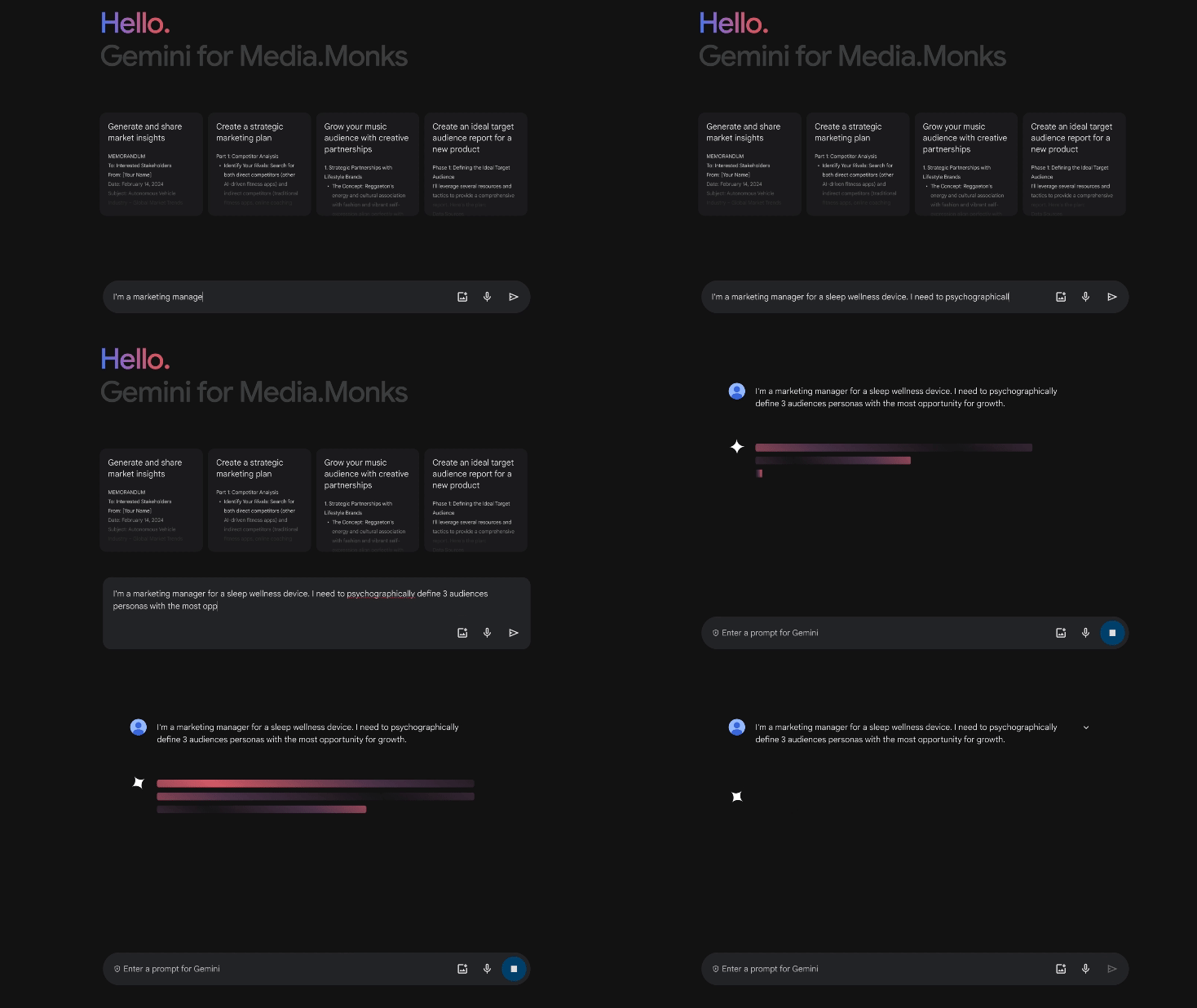
  2. Conversation with Google Gemini LLM to create personas for Hatch
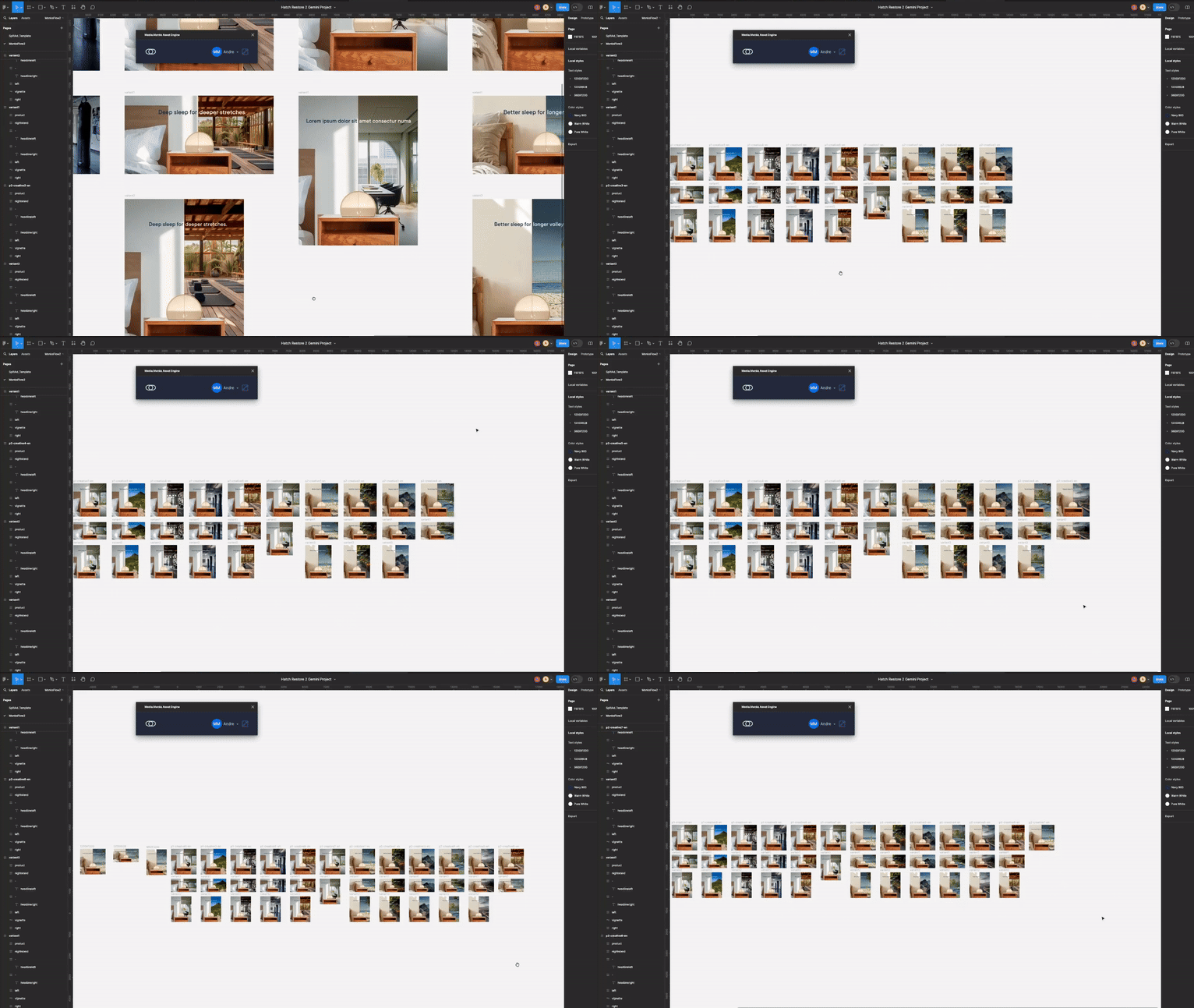
  3. Moving images of generative AI ad components for Hatch including pictures of a bedroom and a yoga studio

    From AI "conversations" with our new personas, we came up with a new modular creative platform we could customize to each.

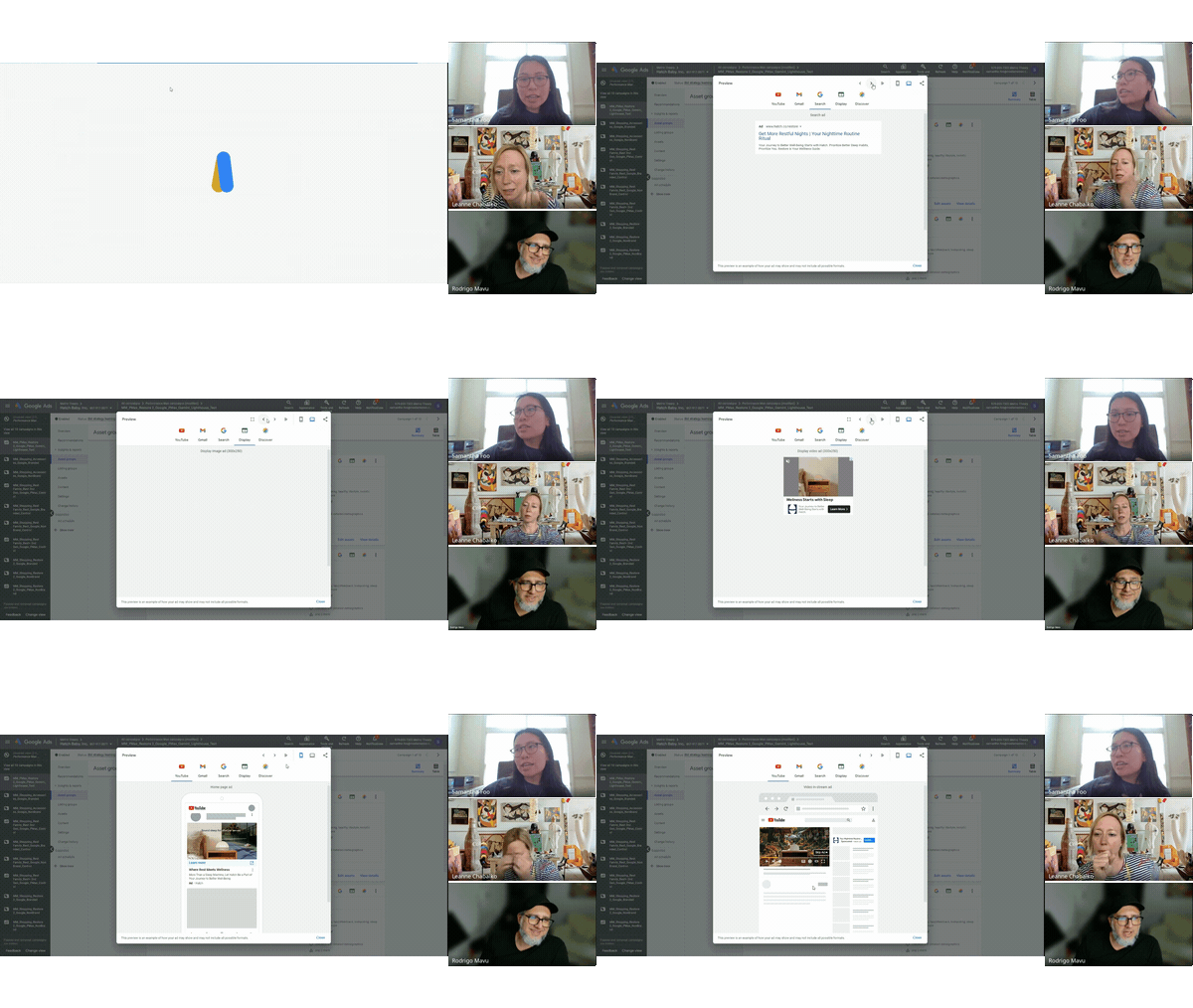
  4. Media.Monks team discussing Performance Max ad strategy on a virtual meeting
  5. Layouts and designs were crafted with Google Performance Max campaigns in mind, then our Generative AI workflows produced huge quantities of assets in a matter of hours.

  6. Generative AI production workflow from Monks.Flow
  7. Ready to integrate AI into your ad creation workflows?

Swipe
For More!

Drag
For More!

Incorporating AI from end to end.

We used an end-to-end AI-driven approach to tackle these challenges—from the audience research and ideation stage through the production and launch. Here’s what that process looked like:

  1. Persona Development: We leveraged Google’s AI tool, Gemini, to identify three distinct audience personas that would help us reach beyond the historical core buyer. By having “conversations” with the AI personas, we could better understand their lifestyles and preferences, from how they decorate their bedrooms to their hobbies and routines.
  2. Creative Framework: We accelerated the creative process by teasing out insights from the AI on what a good night’s rest means for our target personas. This led us to a new creative framework for the campaign that our human creative team could expand and run with quickly. The AI-assisted ideation helped us land on a fresh platform to test, positioning Restore as “the everything machine” that enhances daily performance through better sleep. Plus, this gave our team a springboard for new taglines, concepts and test themes.
  3. AI-Driven Asset Design: Building on this data-driven platform, our team crafted immersive visual environments that were tailored to each persona. Conversations with AI personas allowed us to marry visual cues from our personas’ lifestyles—from their aspirations and behaviors to their bedroom decor—with performance-first best practices, while honoring Hatch’s brand guidelines and their typical look-and-feel. Freed from the costs or logistics of location shoots and the limitations of repetitive and uncustomizable stock image libraries, generative AI helped us take relevance and personalization to a whole new level.
  4. Rapid Production: Monks.Flow, our proprietary AI workflow technology, facilitated the rapid generation of high-quality ad variations tailored to each persona. We quickly generated dozens of new ad variants in a matter of hours, designed specifically for Google’s Performance Max (PMax) campaigns.


    An effective PMax strategy isn’t just about imagery; it involves video and many text assets too. We used AI to create custom soundscapes using Hatch’s base audio and multiple descriptive text variants to ensure the algorithm had plenty of assets to choose from when serving tailored ads to each user.
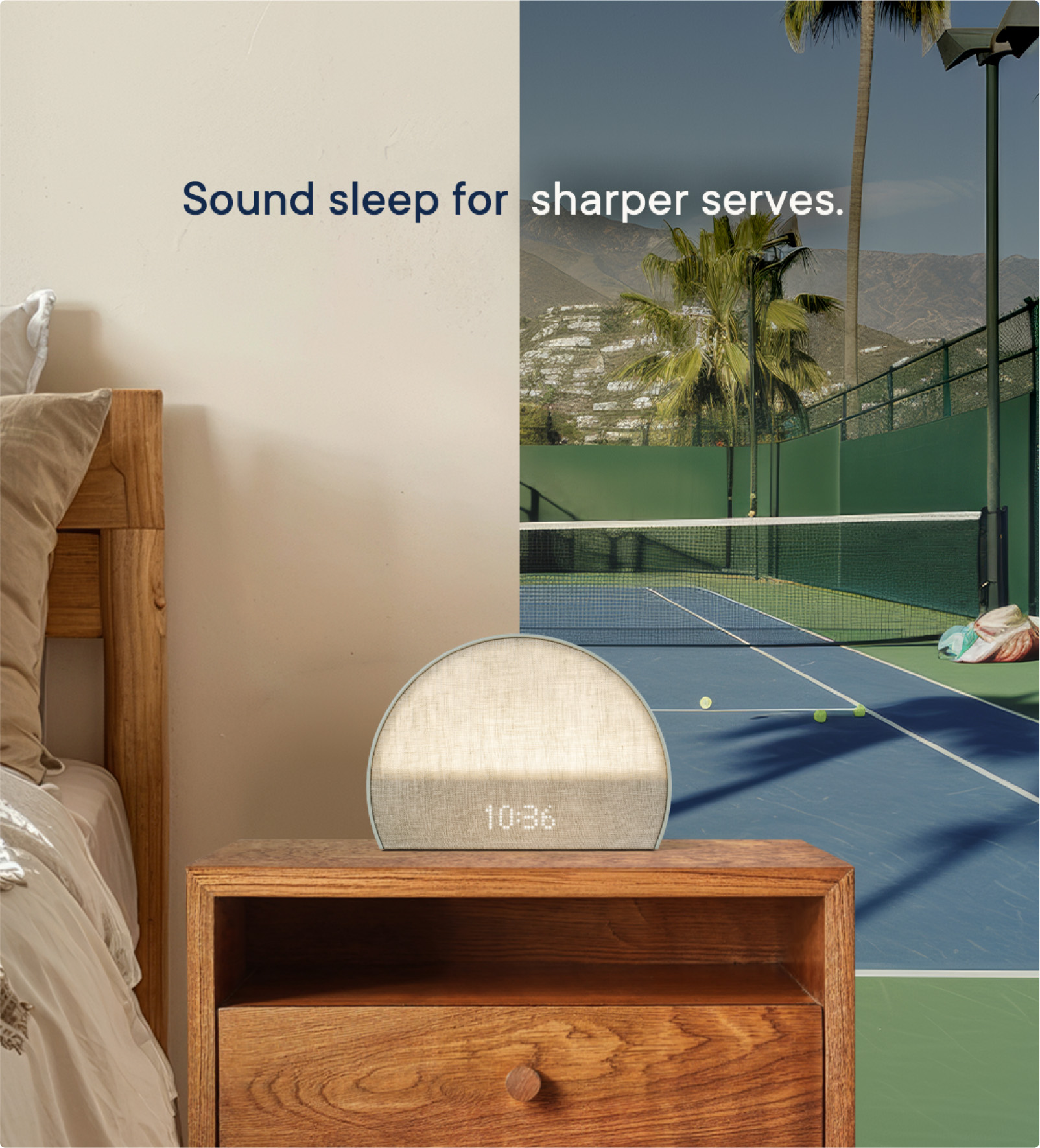
hatch restore on a nightstand

In partnership with

  • Hatch
Client Testimonial Monks.Flow is helping our creatives focus more on being creative, and less on rote production tasks—amplifying our team’s mission to bring craftsmanship, speed, and a sense of relevance and culture to our marketing. Not to mention, more time for sleep!
Eric Pallotta, CMO of Hatch

Eric Pallotta

CMO

AI-assisted creative proves efficient and effective.

By integrating AI workflows into the creative process, we produced:

  •   Three original audience personas
  •   One innovative creative idea
  •   Three videos
  •   60 unique ad variants

…at faster speeds and lower costs than ever before. Overall, this campaign represented a 50% reduction in hours and 97% reduction in costs from legacy approaches, freeing up massive resources for creatives and marketers to focus on areas where the human touch is more critical. From ideation to campaign launch, the entire process was completed in half the time of a standard campaign, thanks to AI-powered marketing.

The Hatch team was thrilled: "Hatch is a company that is uniquely positioned to help so many different people and personalities develop better personalized sleep habits. Partnering with Monks to test AI integrations in our ad workflow that will appeal to all these different types of people and their interests, without spending a ton on net new shoots for every single one, has been incredibly exciting to test out," says Eric Pallotta, CMO. "Monks.Flow is helping our creatives focus more on being creative, and less on rote production tasks—amplifying our team’s mission to bring craftsmanship, speed, and a sense of relevance and culture to our marketing. Not to mention, more time for sleep."

00:00

00:00

00:00

Even better, these AI-generated ads are already outperforming legacy tactics. When combined with the power of Performance Max’s AI-fueled audience targeting and ad delivery, these campaigns are driving 31% better cost-per-purchase (CPA) than comparable campaigns.

Additionally, users are engaging more with the Monks.Flow-generated assets and staying engaged after the click: we're seeing 80% higher CTR and 46% higher site engagement rate than other campaigns.

Monks.Flow and Google Gemini were critical in enhancing efficiency without compromising creativity or impact. By integrating AI-assisted workflows into every step—from persona development to asset creation—we delivered an extraordinarily personalized and effective ad campaign for Hatch in record time.

Good nights indeed make great days—and exceptionally effective ad campaigns.


Want to try generative AI that performs? Get in touch.

Hey 👋

Please fill out the following quick questions so our team can get in touch with you.

Check out other AI-fueled client wins.

Google’s AI Overviews: FAQs & Action Items for Marketers

Google’s AI Overviews: FAQs & Action Items for Marketers

Paid Search Paid Search, Performance Media 10 min read
Profile picture for user Tory Lariar

Written by
Tory Lariar
SVP, Paid Search

Person holding a cell phone in an office environment

It has been a landmark few weeks for search advertisers: Google’s AI Overviews, formerly known as the Search Generative Experience (SGE), are moving from the experimental Search Labs to public usage, as announced at Google I/O. Then, hot on their own tracks, they confirmed at Google Marketing Live 2024 that the obvious missing component from the announcement—ad placements—are coming now as well. Initially rolling out in the US, with global adoption not far behind, we’ve officially arrived at an AI-powered SERP from both an organic and paid search perspective. Let's explore what this means for marketers and how they can optimize to this new landscape.

Recapping what Google is rolling out this year.

AI Overviews are designed to provide users with summarized, informative answers directly on the Search Engine Results Page (SERP). These overviews are aimed to offer a general response to the user's query and display clickable sources for deeper exploration. Beyond just answering queries, they will allow users to continue the interaction, refine their search and dive into specifics without leaving the SERP, or to view and click into the specific sources that informed that AI response.

Google is also bolstering AI Overviews with related features fed by its AI technology, Gemini. Among the notable new features rolling out over the coming months, their announcements included:

  • "Simplify" and "Break it Down" to make complex answers more digestible
  • Multi-step question handling, to tackle more intricate queries
  • Organizing search results into AI-curated categories
  • Enhanced planning features, to generate complex answers for leisure and travel activities
  • Integrated video search using Google Lens

AI Overviews experience example, with integrated ad placements, provided from Google.

With the announcement of ad placements for AI Overviews, marketers finally had confirmation of how ad placements would be affected by the rollout of the generative content above-the-fold. The ads will include both search and shopping results; the algorithm will coordinate the chosen ad variant or chosen SKU with the user’s query and the content generated in the AI overview, prioritizing relevance. The ads eligible to serve in AI Overviews will be selected from brands’ Broad match search campaigns and Performance Max (PMax) campaigns (which they’re terming “the Power Pair”).

Google also shared that at first, AI Overview Ads will be more focused on retail, travel, home improvement, moving, and similar consumer verticals—this is unsurprising given these are industries that rely heavily on feed-based data, giving the algorithm more data to assess ad relevance from than just some ad copy and a landing page.

With AI Overviews rolling out for both organic and paid search results, marketers are facing several key questions about how to position their brands best and avoid getting knocked down below the fold. Here’s everything you need to know about setting your brand up for success.

Will AI Overviews push my ads lower on the SERP? Not necessarily.

The announcement of integrated ad placements within the AI Overviews section of the SERP changes the initial understanding that many marketers had after Google I/O earlier in May. We can see now that AI Overviews do not inherently push paid results lower on the page, but will fit them into a new context, as part of the generated response. Since the public launch, regular ad placements have been continuing to serve below the AI Overviews as well.

We currently see in our testing that ads appear with the same frequency as before, but we are seeing more experimentation from Google post-GML. We’ve recently seen examples in the wild of AI Overviews showing below-standard ad units (i.e. ads that are not integrated into the AI Overviews content), as well as AI Overviews content serving for mid- and lower-funnel queries (more on that below, see our example images). Marketers should expect ad positioning to keep evolving this year and beyond.

Google search results showing AI Overviews

While AI Overviews are typically the highest result on the SERP (left), we're seeing Google continue to experiment with different layouts, so standard ads could still serve above AI Overviews (right).

Since ad placements are dynamic to each search, Google itself is continually gathering data about what layouts lead to more engagement and satisfaction from users. The launch of all the new ad features will keep impacting this; therefore, it remains to be seen how ad placements will be affected when AI-based search categories and multi-step answers roll out later in the year.

What about organic results? Yes, expect to appear lower and expect traffic decreases.

This has been one of the chief concerns from publishers and marketers since SGE was first announced: if users are getting information straight from the SERP, won’t that mean less traffic to my site? Yes, zero-click content from AI Overviews will take up real estate on the SERP, meeting some searchers’ needs directly.

However, this is part of a longstanding trend of SERP layout changes, from the shift of Shopping results from the right rail to the top of the page, to expansion of Knowledge Graph content like Featured Snippets, People Also Ask (PAA), and other panels. Because of this, “traditional 'Top 10' organic ranking positions no longer exist,” says Dang Nguyen, Sr. SEO Strategist at Monks. “Webpages ranking below the fifth position will be pushed even further out of searchers’ view, and inevitably will see a drastic drop off in CTRs.”

However, there will be more chances for brands to get content to appear in the AI Overviews, to balance out for the decrease. “Since Google is providing multiple links to sources in AI Overviews, there are more chances to get included compared to Featured Snippets, which only provide one source link,” says Nguyen. “If users want more than the brief AI Overview summary, they’ll click through.” This shifts the focus for SEOs and brands to optimize to what the AI Overviews algorithm seeks. More on that below.

Monk Thoughts Traditional 'Top 10' organic ranking positions no longer exist. Webpages below the fifth position will inevitably see a drastic drop off in CTRs.
Dang Nguyen smiling at the camera

Will this affect all queries? Mostly upper-funnel terms…for now.

Our testing shows the most impact at the top of the funnel. Our team has been monitoring key terms for our clients in both the Labs environment throughout Q1 2024 and now in the public SERP. In our live testing, we’re primarily seeing AI Overviews serve for head terms and informational queries; they’re typically mapping to users in a top-of-funnel research journey. For the last few months, we have seen less frequent use of AI Overviews when queries are more “consideration” oriented (typically aligning with mid-funnel or bottom-funnel searches), or especially when users seek out a particular brand.

However, we are seeing early shifts since AI Overviews moved from Labs to public usage: recently, more AI content is appearing for consideration queries, especially those comparing different types of product/service offerings or seeking instruction. See the example images below, captured only days after GML.

Most of the other features announced at GML 2024 focused on queries with high commercial intent; advertisers should expect that brand queries and bottom-funnel queries are more likely to be impacted by Visual Brand Profiles, for example, than AI Overviews.

Google search results comparing the SERP before AI Overviews and after AI Overviews

During Google's Search Labs testing, we observed AI Overviews most often for informational queries, while queries with bottom-funnel intent or brand names were less likely. After GML 2024, we’re seeing more mixed usage for consideration and conversion queries (right image).

Should advertisers be concerned about brand safety?

No, not enough to justify any resistance to these changes. With the public rollout came fresh scrutiny, including inaccurate AI responses going viral, causing a stir in the marketing and tech worlds. It’s not surprising that an LLM would generate some buggy content while being brought up to scale for the first time, or when the user base expands so broadly (from Labs users likely testing it for professional purposes, to any user) that it would need to adapt more human elements, like satire. At the end of the day, marketers should remember:

  1. The generated content is not a black box, for a reason. Google’s search results and Featured Snippets have always relied on user input to validate that they’re serving the right content, and this is no different. No matter what, AI Overviews list sources so users have full access to the original information, and can judge what source sites they trust.
  2. Google is incentivized to improve this product. Since other tools like Microsoft Copilot or Perplexity AI are regularly making headlines and receiving favorable reactions, Google has a competitive need to ensure AI Overviews are meeting users’ needs as quickly and seamlessly as possible—otherwise they’d be jeopardizing their search revenues in the long run.

How can marketers optimize their SEO to appear as sources for AI Overviews?

With the recent SEO algorithm "leak", uncovering documentation about Google’s ranking factors, marketers everywhere are buzzing with “gotchas” about how to hack the organic ranking algorithm; however, at its heart, content SEO is still about understanding your target audience’s needs and buying journey to produce valuable content that they will seek out. Even when AI-generated content was rolled out last year as the Search Generative Experience, we were already talking about how it doesn’t change the fundamentals for a strong SEO strategy as much as people might assume.

First, technical SEO principles are still critical for Google to even be able to effectively find and interpret your site’s content, and must always be addressed first. But beyond that, here are tips to evolve your content strategy for the AI-first SERP:

  1. Focus on depth and own your niche to be considered a topical authority. While many brands are leaning on generative AI to churn out surface-level content quickly and cost-effectively for a wide variety of keywords, Google will be more likely to view your content as meaty enough for the LLM to learn from if it goes deep and offers unique value. “Now more than ever, publishers need to provide much more value-add to their content to succeed,” says Nguyen. “Brands should produce niche-relevant content that doesn't exist anywhere else, eg. new knowledge and facts, interviews with industry experts, verification of accuracy and fact checking, etc… basically everything that good journalism represents.” Websites that show a deeper level of knowledge and expertise will thrive in the new Google search landscape.
  2. Instead of a discrete list of keywords, built content around topics in a hub-and-spoke model based on the buyer journey and natural language. Google touted at GML that searches are continually getting longer, as users query the search engine with more complexity. As searching becomes a more immersive experience, this behavior will be reinforced, until searches more closely mirror conversations. For example, instead of users searching “smartphone with best camera,” in the future they will be more likely to query “currently have a google pixel phone and looking for something better, price point max of $1,000, and a device where I can take great landscape pictures.” Basic keyword analysis won’t cut it anymore in that environment. “It’s important to understand the entire customer journey and how it relates to the user’s intent in that moment, then offering that exact information they’re looking for,” Nguyen adds. “Ensure that your content is covering the entirety of the customer journey.”
  3. Don’t neglect third-party credibility. Brands must reinforce overall site authority with good backlinks from other highly relevant and authoritative sites. This doesn’t just include press coverage and classic backlinking tactics, but also engaging where users are already having conversations. “Don’t forget to distribute content across various social platforms and UGC forums (serving the appropriate format), like Reddit.com and Quora.com,” Dang Nguyen suggests.
  4. Learn from the AI-generated content itself. Unfortunately, at this time Google Search Console won’t differentiate the traffic coming from AI Overviews specifically, but we can learn from the answers they receive when performing our own searches. Marketers should engage with AI Overviews themselves. On a recurring basis, see what content serves for your most relevant queries and analyze AI Overview responses to identify gaps and opportunities for enriched content creation.

     
header

How can advertisers serve in AI Overview Ads, and what’s the “Power Pair”?

AI Overview Ads are not fueled by their own campaign type the way Demand Gen and Performance Max campaign placements are. Instead, eligible ads come from the “Power Pair”— PMax campaigns and Broad match keywords in search campaigns. Therefore, it’s critical for advertisers to lean into both tactics, prioritizing budget allocation and testing to increase your odds of serving. To make sure you’re hitting performance goals when leaning into the Power Pair, advertisers should:

  • Pay attention to the top and the bottom. Monitor your top-performing keywords for any immediate performance losses across core KPIs as AI Overviews roll out. This would signal that users only sought a surface-level answer and didn’t get added value from clicking to your site. Also, reinforce your foundation by continuing to monitor for poor-performing queries on your Broad terms, maintaining robust negative lists.
  • Share knowledge more frequently. Continually align on cohesive keyword and topic strategies with SEO to share learnings about which paid keywords perform best and to supplement any burgeoning site content with paid ads.
  • Check ad strength, and perform more copy tests as needed. To combat expected decreases in CTR, ensure your ads have strong ad strength or you’ll risk serving even less frequently. If strength ratings aren’t as high as you’d like to see, launch new RSA tests that prioritize relevance (more directly work in the query to the ad copy and landing page experience).
  • Maximize audience signals to feed the algorithm. To thrive in this new landscape, brands must feed the ever-hungry algorithm as much data as possible. First-party audience data from a CRM or CDP is worth its weight in gold, in addition to increasing the number of (meaningfully different!) creative variants, and making your product feeds as robust as possible. All of these signals will point the algorithm the right direction towards users most likely to convert.

What other changes do advertisers need to make to gain a competitive advantage?

Nimble advertisers who can act quickly in these other areas will have the most to gain:

  • Utilize more visual ad formats to stand out as Google makes the SERP layout even more dynamic. Enhanced personalization means marketers must compete even more for relevance.
  • Establish new performance benchmarks. With CTR and traffic volume likely to shift rapidly, it’s important to update the SEM/SEO KPIs you measure against, to proactively understand MoM and YoY differences. Google Search Console won’t necessarily shed light on this directly: “At this point, clicks and impressions shown in GSC will not discern between regular SERP clicks and AI Overviews clicks,” says Nguyen. Therefore, to quantify the impact of zero-click content, leverage incrementality testing, such as matched market tests or holdout tests. Historically, most SEM marketers have focused their holdout tests on Brand terms, but with AI Overviews impacting terms at every stage of the funnel, it's now crucial for broader categories.
  • Combat rising CACs from lower traffic with CRO. While we anticipate a decline in CTR and click volume, the clicks that do occur will likely be of higher intent, leading to better conversion rates (CVR). To bolster this, brands should invest in conversion rate optimization, A/B testing their landing pages and site experiences to reduce friction or leaks in their conversion process.
  • Consider the impact to other media channels. For example, with lower site traffic from some search terms we can expect remarketing pools to decline; to avoid oversaturating your consideration audiences if they shrunk, set frequency caps on your remarketing campaigns.

The SERP of 2024 and beyond is personalized and interactive; are you ready to embrace the change?

Google's rollout of AI Overviews marks a significant evolution in the search experience. This AI-driven shift promises a more personalized and interactive SERP; if this pays off with  enhanced user satisfaction and engagement as Google projects, it’s ultimately a win for marketers hoping to reach engaged audiences. To benefit from this, it necessitates strategic recalibration for both advertisers and SEO professionals. Embracing this change with innovative approaches and enriched content will be key to thriving in the evolving search landscape. Welcome to the future of search—where AI Overviews lead the way.

Take action on recent news and ongoing developments about Google’s AI Overviews, with these FAQs and action items from the SEM and SEO experts at Media.Monks. Take action on recent news and ongoing developments about Google’s AI Overviews, with these FAQs and action items from the SEM and SEO experts at Media.Monks. paid search google Generative AI AI search engine marketing search engine optimization Performance Max Google AI Overviews Paid Search Performance Media

Get Ready: The Impact of Google Marketing Live 2024

Get Ready: The Impact of Google Marketing Live 2024

Emerging media Emerging media, Paid Search, Performance Media 7 min read
Profile picture for user Tory Lariar

Written by
Tory Lariar
SVP, Paid Search

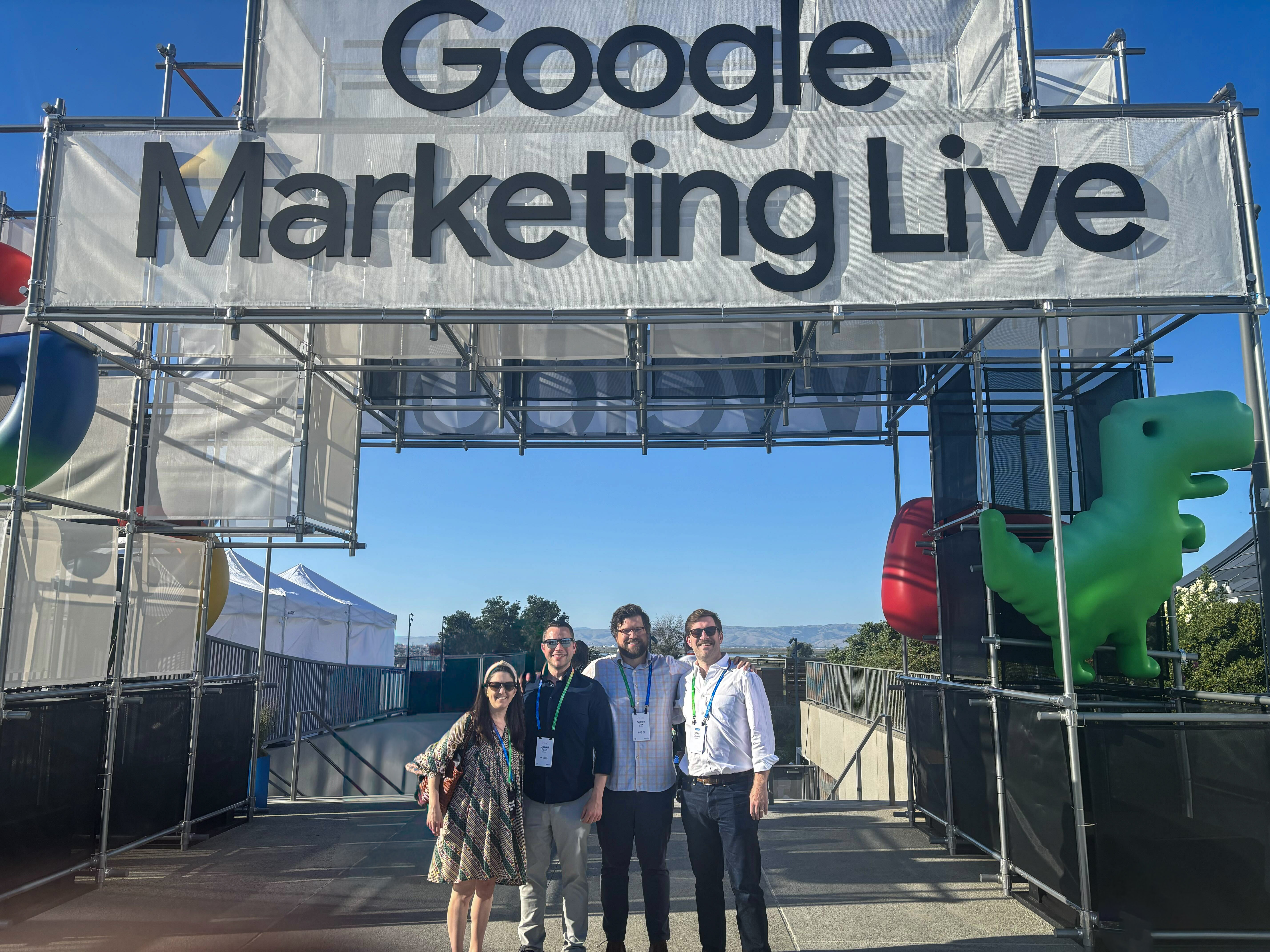
Three people in front of Google sign at GML 2024 event

Google Marketing Live 2024 on May 21st unveiled several game-changing features for advertising products, shaping the future of digital marketing. Our team was on the ground in all three locations – Mountain View, Los Angeles, and New York – to capture the announcements in real time and dissect their potential impact on marketers. Let’s break down the key takeaways for advertisers and what to do about these rollouts.

Here's what Google announced onstage.

The introduction of ad units within AI Overviews, the generative AI-powered section of the SERP, had long been speculated. These ad units were the missing component from Google I/O’s rollout of AI Overviews (formerly known as the Search Generative Experience, SGE) the prior week. AI Overview ads will integrate the power of Google's Gemini to deliver highly relevant ads based on user intent. Because the ad experience will be dynamic, this rollout is particularly impactful for verticals that can leverage product feeds like shopping and travel. We’re especially excited about the potential of AI Overview Ads when combined with complex search and visual search ads.

Google also announced several enhancements to Performance Max (PMax) campaigns, specifically asset and placement reporting. This long-awaited functionality allows advertisers to gain critical insights into how specific creative elements and YouTube video placements are performing in campaigns that previously did not have this transparency. Alicia Pachucki, Director of Search at Monks, mentioned: "The announcement of new Performance Max reporting by asset and by YouTube placement was met with huge cheers at the NYC event; clearly marketers were thrilled."

These insights will not only empower iterative creative learnings but also enhance the potency of hyper-personalized asset generation; with the potential to pair with generative AI workflows, such as those within Monks.Flow, this update will propel the scaled creation of high-performing, compelling assets. From there, performance marketers can do what performance marketers do best: test rapidly, with greater precision. Rob Shultz, Sr. Director of Ecommerce at Monks, added, "Asset-level reporting is a win for performance marketers everywhere. We’ve all been begging for more layers of the PMax black box to be unveiled to aid with optimization and creative strategy, and this is a massive step in that direction."

The introduction of profit optimization bidding for PMax, allowing advertisers to bid against product margins from their product data feed, is a “game changer” to Ezra Sackett, Associate Director of Search. “These columns have existed in Google Ads for a few years, but accurately uploading data to work with them has been out of reach for most ecommerce advertisers in the past.” Our team has seen positive success with the New Customer acquisition objective for PMax, and this complementing option caters to broader business needs for many ecommerce businesses. “It’s great to see that Google is bringing the algorithm closer and closer to the actual bottom line for the advertiser. This step from ROAS to POAS optimization has the potential to drive even more significant performance gains than the transition from CPA to ROAS bidding a few years ago,” says Sackett.

Several other PMax/Shopping features were announced, including:

  • Loyalty Promotions and New Customer Pricing, for personalized promotions in Shopping results based on a user’s prior purchasing status
  • Shopping ads in Lens Search results, fueled by the fact that “25% of Lens searches have commercial intent,” according to Google
  • Merchant Center Next auto-generated reporting/insights, to save marketers time
Monk Thoughts We're witnessing a shift in user behavior with how people are searching due to AI Overviews. It's our job as marketers to pivot with it, not try to resist.
Deanna Stein

Several new visual and experiential features were unveiled, including Image-to-Video, Virtual Try-On, Automated Product Highlights, and Visual Brand Profiles, all of which are powered by Google Gemini. These tools help ecommerce brands create more immersive shopping experiences and better convey the real-life look and feel of their products—without the need for costly and time-consuming physical product shoots. “Especially in my work with midmarket brands, the high costs of live product shoots can hold them back from producing enough motion and visual assets to effectively leverage YouTube ads and Demand Generation campaigns,” says Lauren Weisel, Sr. Director of Search. “Since the algorithm thrives off of more asset options, this can unlock great opportunities for performance, as well as differentiation in a competitive SERP environment.”

Other engaging ecommerce ad features that were announced include: 

  • Visual brand profile on Google Search, an image-forward companion to Google Business profiles to help brands stand out and differentiate. (Notably, Google shared that “more than 40% of Shopping searches mention a brand or retailer” in the query.)
  • More engaging ads on YouTube Shorts, including stickers, interactive gestures, and animated image ads generated from your product feed
  • Improved image generation for Performance Max and Demand Gen campaigns
  • Affiliate and Partnership program expansions for YouTube Shorts (powered by a Shopify integration and Google’s BrandConnect, respectively)

New updates to the Ads Data Manager are being made accessible to all advertisers, equipping them with the capability to organize and activate against disparate first-party data sources. The updated Data Manager capabilities will allow automated connection, transformation, and import of first-party data, making it easier to input the most up-to-date data with as little manual intervention as possible. Importantly, this is one of the few announcements from GML 2024 that is likely to have immediate impact beyond the ecommerce vertical—B2Bs and other brands with lead generation or signup objectives should take note. Since the ultimate goal of these updates is to enrich audience insights and targeting effectiveness by enhancing the quality of data inputs for AI-based bidding, B2Bs may stand to gain the most in the long run.

Other data features that were announced include:

  • Improvements in Lookalike segments for Demand Gen campaigns
  • Incorporation of AI Essentials into account optimization scores and recommendations
Images of Media.Monks team members at Google Marketing Live, and Shaquille O'Neal being interviewed onstage

GML 2024 was attended by Monks like SVP Search Tory Lariar and SVP Media Growth Greg Kirby (left), Alicia Pachucki, Group Director of Digital Strategy (right), hundreds of Google product leaders and key partners… oh, and Shaquille O’Neal (below).

Monks Takeaway: User behavior is shifting.

At a macro level, search behavior is evolving to favor longer, more complex search queries. During the GML keynote, Google highlighted that "search queries with 5+ words are growing 1.5x faster than shorter queries.” They also repeated that their long-touted statistic—that 15% of search queries every day are new to Google—still holds true today. It’s telling that even as the algorithm’s predictive capabilities evolve so drastically, users continue to seek information in unprecedented ways. There’s an interesting “what came first, the chicken or the egg” aspect to this: are users asking longer questions of search engines because it mirrors how they ask questions of humans (prompting Google to keep up) or are users’ queries more complex because the SERP results for shorter head terms are no longer meeting their needs? 

Advertiser Action Item: Optimize your keyword strategy for themes, not queries.

Regardless, the evolving SERP necessitates that advertisers pivot their keyword strategies to fit the changes in the product experience. Google’s discussion of the “Power Pair” of Performance Max and Broad match keywords is key here: Google recommends that brands lean into Broad Match to enhance relevance. This is true, but even beyond this: we believe advertisers must also incorporate long-tail terms as Broad match variations too, rather than just use Broad to pick up variants of head terms. Rob Shultz notes that moving forward, “keyword strategies will likely focus on Exact match for Brand terms and broad ‘themes’ everywhere else” to maintain relevance and effectiveness in search ads. Performance marketers must test into new best practices for Broad match variations, to determine ideal keyword lengths and clustering strategies to increase the relevancy of where we are trying to serve.

Monk Thoughts With every update we are moving more and more away from Exact and Phrase match types because we are moving further from being able to predict the variations of what a user will search.
Emmanuel Delamota

Monks Takeaway: We’ve arrived at the AI-powered SERP.

Through the keynote’s emphasis on the "Power Pair," Demand Gen campaigns, and ad placements within AI Overviews, it’s clear that automation will soon be the backbone of the entire SERP experience. The keywordless future is not a new concept, but GML 2024 does reinforce the inevitability of a future dominated by fully-automated campaigns. The role of marketers will shift to focus on managing the overlap between multiple black boxes (currently, Performance Max and Demand Gen with Feeds), rather than tweaking tactics ourselves. The verticals with the most to gain in the short term include ecommerce/retail and travel/hospitality; they’ll be the bellwethers marketers should monitor to understand what performs and what doesn’t in the AI-powered SERP.

Advertiser Action Item: Invest in improving the data you feed the algorithm.

Google’s sustained drive towards a dynamic, personalized, and AI-powered SERP experience will be underpinned by marketers’ inputs: product feeds, audience data, brand website content, and high-quality photography and video assets. The further brands can optimize the quality of these assets now, the better positioned they will be to be aiming the algorithm in the right direction to hit your goals. More importantly, as Google continues to incorporate more variations of optimization settings that are attuned to different business objectives (such as the ability to optimize to profit, as described above), advertisers who can build processes and data strategies to learn how to fuel the algorithm now will be best positioned to take advantage of more customized or relevant features down the line. There has never been a better time to invest in:

  • Optimizing your product feed for high-traffic terms and detailed product segmentation
  • A/B testing product images and testing generative AI and digital twin technology to get new images in market faster
  • Conversion-rate optimization, to balance out for potential decreases in site traffic
  • Enhanced 1P data strategies, both from a conversion tracking standpoint (server-side tracking, offline conversion imports, etc.) to audience data augmentation and segmentation (including CDPs and data integration tools)

If needed, brands should fund these initiatives by re-allocating from working ad dollars, using incrementality experimentation to identify non-incremental media spend that can be pulled away with little risk to the bottom line. Investing now in learning how to fuel the algorithms effectively will be one of the largest possible competitive advantages for brands as we continue moving forward into this AI-powered SERP.

At the nexus of the 2024 Google Marketing Live announcements lies a SERP and cross-channel landscape that are evolving in close conjunction with shifts in user behavior. These new features ultimately continue us on the path of evolving to a more streamlined advertising experience, combined with a more dynamic and immersive consumer experience. To avoid getting left behind, marketers must not only continue to evolve their strategies but ultimately reconceptualize their roles in this process as a hybrid of business analyst, prompt engineers, creative strategists, and more—in service of better arming ourselves to feed the algorithm the right kind of data, in the right way, at the right time.

See full recap and expert analysis of Google Marketing Live 2024, from Media.Monks' SEM leaders, with action items and recommendations for your ad strategy. See full recap and expert analysis of Google Marketing Live 2024, from Media.Monks' SEM leaders, with action items and recommendations for your ad strategy. paid search search engine marketing Paid Search Performance Media Emerging media

How AI is Influencing the Future of Search

How AI is Influencing the Future of Search

AI AI, Data maturity, Media, Paid Search 5 min read
Profile picture for user Tory Lariar

Written by
Tory Lariar
SVP, Paid Search

Two hands typing on a laptop

The future of search is undoubtedly going to be shaped by the integration of artificial intelligence, particularly large language models (LLMs) such as Google Bard and OpenAI GPT-4, and brands that want to stay ahead of the curve should seek to understand how AI will influence search.

Those who engage with AI will be better equipped to deliver personalized, relevant and effective content that engages users and helps them stand out in an increasingly competitive digital landscape, and they may do so by investing in first-party data integration, testing AI-driven bidding and creative tools, experimenting with more visual content, and preparing for the eventuality that AI will change the search engine results page (SERP) ad landscape as we know it.

Late last year, ChatGPT took the world by storm, becoming the fastest product in history to accumulate one million users in just five days. This same technology went on to power the launch of Microsoft’s new Bing search experience. Since then, Bing launched an ads experience that surfaces ads and recommendations based on relevance to the conversation. This seems to be working, as the search engine's audience has grown significantly to over 100 million daily active users.

Unsurprisingly, Google is beginning a limited release of the Search Generative Experience, with ad formats that are highly focused on travel and shopping experiences. Meanwhile, the traditional Google SERP will bring in generative AI responses to further improve how we search for, engage and ingest information we seek. Search ads will continue to show in traditional ad slots, but there will be a totally different experience based on the conversation, rendering relevant links and ads.

Still, artificial intelligence isn’t new to search; in fact, it influences a variety of factors that influence results, from bidding to search query matching to creative optimization. But the introduction of large language models (LLMs) into the equation will significantly impact not only the user experience, but also how content is valued and ranked on the results page and how we buy media. They’ll also significantly change the way we create content. Here are three big ways the future of search will force brands to adapt—and what you need to do now to stay ahead of the curve.

AI-generated content will be a double-edged sword.

 Conversational search opens the possibility of delivering highly relevant, personalized responses to users on the fly. While the benefits to this are obvious, AI’s talent for spinning up content on its own presents a double-edged sword. Some verticals—like healthcare, pharma and finance—will struggle to keep up with the pace of automation given the various rounds of legal and regulatory approval required for their creative before it goes live.  

AI-generated content risks circumventing these hurdles. It’s also vulnerable to spreading misinformation. But brands can mitigate these concerns by ensuring human review before the approval and publication of ads. Through proper tuning and training of AI models, brands can quickly spin up content that incorporates regulatory guidelines that they are beholden to.

Search will be more engaging, visual, and interactive.

The future of search isn’t all text. Search is also skewing toward more visual and experiential content. Sure, image extensions make search more visually engaging to users. But also consider more sophisticated platforms like Google Lens or Snapchat Scan, which use computer vision to make a user’s surroundings searchable. AR is another format that will add a new dimension to search and is already offered by Google, allowing users to engage directly with virtual animals, objects and places in real time.

The idea is to build a more immersive experience versus the infinite scroll. Travel, retail and lifestyle brands may benefit most from this because they already have robust libraries of visual assets to draw from. Others, like B2B brands, healthcare, pharma, and finance, will need to catch up by building libraries of visual and experiential content that engage users to avoid stock images. At the recent Google Marketing Live, new products for asset creation using generative AI were announced, making it easier for those without libraries to build creative in Google’s advertising platform. Generative AI can certainly help brands develop assets at speed and scale, although it’s important to remember that they aren’t yet production ready on their own. There may also be open questions of legal ownership and intellectual property rights.

Data streams will continue making search more predictive and proactive.

Search is already steering in a direction where it can serve more personalized results based on previous activity or what the search engine already knows about you—for example, suggesting local restaurants when searching for food on Google, or recommending related products on an Amazon product page. These experiences generally help users find what they’re searching for faster and keep them coming back for future searches.

It’s not a stretch of the imagination, then, to envision a future in which search engines anticipate user needs before they are typed. They will go beyond keyword query and apply previous behaviors and contextual information—like the intent unlocked by a conversational interface—to generate entirely unique responses for each user. That sounds amazing, but the more conversational search improves, the better it will be at delivering answers that satisfy users’ queries without their having to click through to another website—reducing opportunities for ads in the traditional sense.

The data streams that enable this experience will play an outsized role in how search continues to evolve. Brands who have first-party data will have opportunities to use it to enable even greater predictive and personalized experiences. While we don’t know for sure how this space will evolve—concerns about privacy and transparency, especially globally, may interrupt progress here—it seems likely that search experiences will continue to evolve in this trend. The lesson is clear for brands: the accumulation of data assets and the ability to deploy AI will be differentiators as the SERP ad landscape changes.

Don’t wait to update your search strategy.

Unsurprisingly, a strong data foundation will be crucial to keeping ahead of these changes. Maintain a competitive edge by investing in first-party data integrated across touchpoints in the conversion cycle. Apply conversion modeling to help fuel more relevant ads and higher returns. These insights will prove critical as brands adapt to conversational search, providing them with the insights and tools they need to deliver more personalized, relevant and effective content.

Speaking of content, brands can also future proof by updating their approach to activation and creative. Test AI though bidding, ad creative and playing with broad matches. Experiment with tools like Google’s Performance Max—an AI feature deployed in the GMP suite that allows for cross channel campaign launches and optimizations all from a single campaign configuration—and automated asset generation.

Finally, break away from relying on text by testing more image extensions and invest in performance creative to help stand out. Leveraging AI to optimize and find the best creative combinations will help brands adopt a more asset-based approach and prepare for search’s increasingly experiential, visual and conversational interfaces.

All of these developments are happening right now, and brands will need to adapt through experimentation with emerging AI tools.

By doing so, they will be better equipped to deliver personalized, relevant, and effective content that engages users and helps them stand out in an increasingly competitive digital landscape. And lastly, AI is far from perfect, so check the sources and verify the generative responses.

Learn how search will be shaped by the integration of artificial intelligence, and how brands can stay ahead of the curve. artificial intelligence paid search AI first-party data search engine marketing Media Paid Search AI Data maturity

How to Strike the Balance Between Content and Context

How to Strike the Balance Between Content and Context

Media Media, Omni-channel Marketing, Performance Media 3 min read
Profile picture for user Shweta Khodade

Written by
Shweta Khodade
Associate Account Manager

A woman sitting on a bed with a towel around her head

In one day, the average consumer is bombarded by thousands of ads, each competing for their awareness and consideration. But how many ads are making an impact on the user? How many ads are providing the right information in the right place and at the right time?

We all know the age-old adage that content is king, but when all marketers use the same strategy by leveraging content to promote their product or service, the question remains: does this strategy still work? With millions of options available and thousands of alternatives in place, what can make your brand stand out as the most memorable? The answer to both questions lie in context marketing, a crucial strategy for helping your content resonate with audiences—and one that has enjoyed renewed interest and attention due to recent conversations about privacy and cookieless marketing.

Cut through the noise and drive memorability for your brand.

Context marketing provides the right meaning and insights to maximize relevance between people and your brand. Too often, brands focus fully on the content of their creative and not enough on the context in which people view them—the channels, cultural trends and other variables that shape their behavior online. But modern marketers know that there’s often a need to strategically balance content and context depending on their marketing goals. When building a content or context marketing strategy, there are a few factors that brands and marketers can consider. 

Frequency. How frequently will users see the ads? Too high a frequency can lead to ad fatigue. But if the ad frequency is low due to your budget or if your audience pool is smaller, there will only be a few chances to make an impact at speed. When users decide within a matter of seconds where to devote their attention, context can at times take priority over content. In Uni’s rebrand, focusing on enriching lives by inspiring creativity and connection, our paid media team worked closely with the creative team to ensure the media strategy was in line with the campaign’s creative vision. This approach enabled us to capture audience attention quickly through creative.

Shifts in preferences and trends. Over time, trends and shifts in consumer attitude will ebb and flow. For example, a particular skincare product is not useful for me in summer due to my skin type, but I did find it to be good for winter. Unfortunately for the brand, they never targeted me in the off season, which makes me wonder how things would have turned out differently had they re-evaluated audience targeting over time. Because trends and needs change, it’s wise to continually test audience targeting and exclusions over time. This will help you strategically adapt your marketing plan, its content and its context to meet changing tastes and preferences throughout the year.

Channel and vertical. The channel determines the format of creative and the content that will be delivered to the audience. For example, some channels favor video content while others are focused on images. Some are good for longform content, while content on others is more snackable. Some might even be interactive. Keep in mind how the channel may influence audience expectations, and also consider how your vertical may guide the approach to content. 

This is a strategy we used in helping Hatch, a fast-growing wellness and health brand, win over the hearts of countless people hoping to improve their sleep. We built a constant flow of fit-for-format content bespoke for each channel, each with narrative arcs that told the deeper story of Hatch Restore, the brand’s latest sleep assistant. The focus on format returned a 220% increase in click-through rate and 120% increase in view-to-completion rates.

Target audience. When it comes to your audience, it’s important to achieve the desired sentiment. This starts by selecting the right audience. For Hill House, a lifestyle direct-to-consumer brand, we analyzed audience signals from previous buyers to identify current and would-be customers. These insights allowed us to build data-driven creative we could optimize for this audience. These efforts not only drive performance—Hill House saw 80% higher ad engagement—but also enhance brand recall.

Maximize your marketing efforts with context marketing.

The above factors, while not all inclusive, offer a way to begin tapping into audiences more effectively through context marketing. Context marketing lets you deliver the right ad, at the right time, with the right message and format. By testing your creative relative to the variables above—frequency, trends, channel and audience—you enhance personalization and boost the strength of your marketing. This is especially useful as brands seek new strategies to adapt to a cookieless, more privacy-focused marketing landscape.

Ad fatigue is real: with so much content out there demanding our attention, it’s all too easy for audiences to tune things out. When it comes to building memorable creative, a strategic mix of content and context is key. That said, how will you build your next marketing strategy?

A crucial strategy for helping your content resonate with audiences is context marketing—which has a renewed interest due to privacy and cookieless marketing. third-party cookies content marketing strategy paid search paid social data privacy performance marketing Media Performance Media Omni-channel Marketing
`

Paid Search

Paid Search Performance

Achieve measurable growth with tailored paid search strategies.

search mapping
search

Goal-Driven Search Engine Marketing Strategy

Our SEM strategy starts with your business goals first. Our clients range from high-growth disruptors to major big box retailers and leading public companies, but they all have one thing in common: they all know that we drive measurable growth with paid search strategies that cover the entire customer journey.

Logos of notable brands that we have worked with

Drive Results with Paid Search, Get in Touch with Our Team Today

Hey👋

Please fill out the following quick questions so you can learn more about your business.

  1. SEM Services • Our teams specialize in all aspects of the ever-evolving search landscape where search is no longer keyword only, but inclusive of image, video, audience, feeds, and voice.

  2. Data & Measurement

    Data integration and measurement play integral roles when ensuring our partners are maximing their media dollars in SEM.


    eCommerce

    Our eCommerce experts drive direct sales through end-to-end feed & shopping optimizations.

  3. Ad Copy

    We turn your industry expertise into meaningful messaging that delivers proven results.


    Keywords

    While keywords remain at the forefront of traditional SEM, we are experts in the full funnel search experience that delivers results.

  4. Automation

    Automation is at the core of our SEM strategy. Our teams provide necessary human input to ensure optimal algorithm performance.


    Testing

    Our methodical and systematic testing through a robust learning agenda ensures consistent improvement in business KPI's.

  5. Lead Gen

    Our focus on Lead Quality & Offline Conversion Tracking means we deliver qualified Opportunities to your SDRs.


    Beyond Traditional Search

    The full-funnel approach doesn't end with Search. App, Video and Display are key components in our holistic media strategy.

  6. Find Out More About Our Paid Search Services.

Swipe
For More!

Drag
For More!

See How we Increased Paycor's Leads with Paid Search

Paycor logo
A phone showing Paycor's application interface

Case Study

Audience-Based Market GrowthWith our custom data reporting tool, we helped Paycor scale audience-based growth, resulting in a 240% increase in leads.

See Full Case Study

Get in Touch with Our Paid Search Team

Hey👋

Let us know how we can reach you and discuss how to grow your business.

Interested in more? Here's some related content for you.

Choose your language

Choose your language

The website has been translated to English with the help of Humans and AI

Dismiss