

Choose your language

Choose your language

The website has been translated to English with the help of Humans and AI

Dismiss

A light trail of different pinks, oranges, and light yellow shows something is speeding past a sign outside
`

January 5-8 🗓️

Monks at CES 2026: Transforming the Economics of Advertising with AI

See how our united Marketing and Technology services help CMOs, CIOs and CTOs build a future-ready foundation for growth, live at CES.

At CES 2026, we’re revealing how to integrate Monks.Flow, our agentic AI ecosystem for marketing orchestration, to deliver measurable gains today while building the foundation to transform your organization into a high-speed, high-performance creative enterprise. Learn more about what we’ll be up to across the floor and on stage:

Sessions & Demos

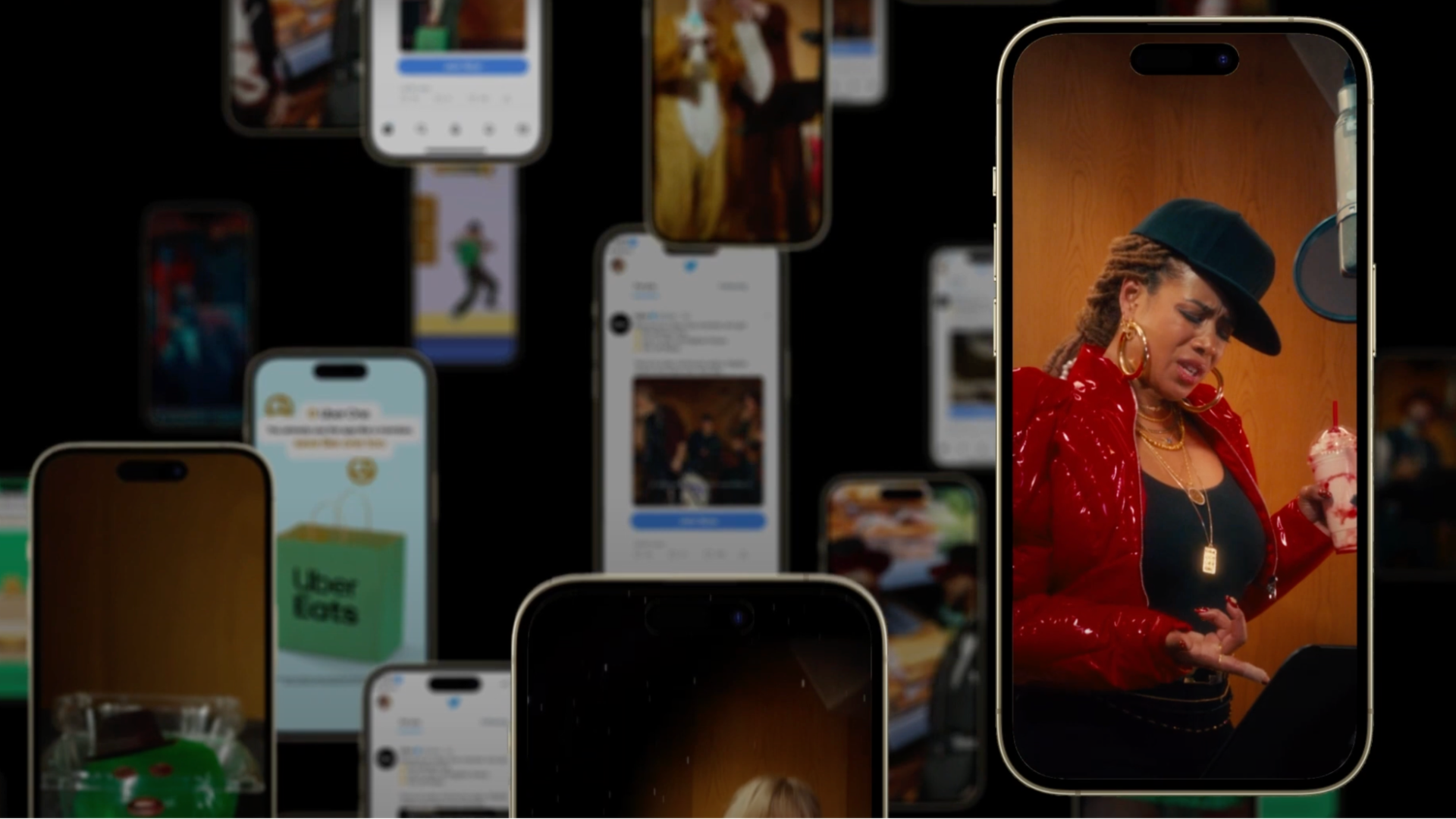
Connect with Monks across these events

  • AI Now Sessions

    In this 30-minute session, followed by a live Q&A, we’ll showcase AI workflows powered by Monks.Flow that drive growth today while laying the foundation for a marketing organization that’s efficient, scalable and ready for what’s next. Reserve your spot.

  • 25 Minutes of AI

    We’re taking our monthly innovation briefing from the screen to the stage! As part of the CES Foundry masterclass sessions, our experts will update you on the latest AI news and share practical ideas you can use today. Join us on Wednesday, January 7 at 3pm in the Fontainebleau, Level 4 Capri room 2! Learn more.

  • C Space Fireside Chat and Happy Hour

    Join us on Monday, January 5, from 4:00-6:00 PM, at the Aria as Sir Martin Sorrell explores AI's role in advancing creativity and crafting fundamentally human experiences. Moving beyond cost, the focus is on strategic insight and true transformation. Learn more.

  • C Space: Creativity in State of Flow

    Join us on Wednesday, January 7, from 9-9:25 AM, at the Aria, Joshua 8 meeting room as The Drum's Diane Young, Adobe’s Hannah Elsakr, and Monks’ Wesley ter Haar explore liquid content: AI-powered stories and brand worlds that evolve in real time via audience interaction. Learn more.

  • C Space: The Modern Marketer’s Mandate: Agility, Transparency, & AI-Powered Growth

    Join us on Wednesday, January 7, from 9:30-9:55 AM, at the Aria, Joshua 8 meeting room as brand leaders share the playbook for unlocking agility, transparency and AI growth. Learn more.

  • C Space: The Future of Fan Engagement: Role of AI in Sports and Media

    Join us on Wednesday, January 7, from 10-10:25 AM, at the Aria, Joshua 8 meeting room to explore how AI is redefining fan engagement, transforming sports and media experiences with personalized content, immersive interactions, and smarter storytelling. Learn more.

  • C Space: AI-driven Upside: Creative Effectiveness in Media

    Join us on Wednesday, January 7, from 10:30-10:55 AM, at the Aria, Joshua 8 meeting room as this session maps practical steps for brands to take now to capture AI-driven upside without needlessly constraining media buys. Learn more.

  • C Space: Architecting the New Media Stack for Commerce and Consumer Engagement

    Join us on Wednesday, January 7, from 11-11:40 AM, at the Aria, Joshua 8 meeting room to learn what happens when retail data meets CTV as industry visionaries reveal how agentic AI is building the next era of connected commerce. Learn more.

  • Inside the AI-Native Enterprise

    Join us on Wednesday, January 7, from 1:00-1:30 PM, as Monks' Wesley ter Haar, Leonardo.AI's Dwayne Koh, NVIDIA's Jamie Allan, and AWS' Chris Ziemer reveal the architectural vision for the AI-native enterprise. Get the roadmap to move beyond pilot mode and unlock unprecedented efficiency. Learn more.

  • Digital Hollywood

    Jordan Cuddy returns to Digital Hollywood for a third year to discuss conversational AI and virtual engagement. Join her on Monday, January 5, at 2:00 PM. The session will take place in Aria – Joshua 8. Learn more.

  • THE SHIFT Summit

    Wesley ter Haar will take the stage at THE SHIFT Summit to discuss the definitive proof point on running agentic workflows that hold up under enterprise rigor. Join him on Wednesday, January 7, at 10:40 PM. The session will take place in Aria – Joshua 3. Learn more.

  • Monks’ CES Foundry Booth

    Join us January 7-8 within the Fountainbleau as we showcase interactive demos on Monks.Flow and LiveVision™. Attendees can explore tangible examples of our work and engage with key partners through live demonstrations.

  • Reclaiming Brand Craft in the Era of Intelligence

    Join us on Tuesday, January 6, from 4:10-4:25 PM, as Monks’ Donna Smith and Leonardo.Ai’s Dwayne Koh explore how to use AI as a springboard for unique brand experience. Attendees will learn how to build workflows that empower creative teams, navigate the ethics of authenticity and leverage machine intelligence. Learn more.

Throughout our programming, we’ll offer a proven, scalable architecture for CMOs and CTOs to move past experimental AI and achieve:

  • Unprecedented efficiency: Replace layers of process with intelligent agents that brief, create and optimize in seconds, not weeks.
  • Cultural intelligence: Anticipate cultural shifts and audience sentiment, identify business-relevant moments, and plan investments accordingly—all before competitors even notice.
  • Sovereignty and scale: Get creative control and complete ownership. You own your creative assets, built to your brand standards, on your own platforms.
  • Subscription to innovation: Monks.Flow keeps you ahead by evolving continuously - integrating the latest advances into your marketing operations so your teams keep getting smarter, faster and more effective.
Monks.Flow logo in black with a flowing circle evolving in colors

Transform Marketing into a Growth Engine With Monks.Flow

Monks.Flow, our AI ecosystem for marketing orchestration, turns marketing into a source of margin and momentum, making your organization faster, smarter and more effective than your competitors.

Learn about Monks.Flow
LiveVision logo

Eliminate Creative Guesswork and Guarantee an ROI with LiveVision™

Move from legacy control rooms to scalable, intelligent production. LiveVision™ leverages AI to automate complex video workflows, from smart footage tagging to managing wireless resources, allowing you to deploy high-performance broadcast pipelines wherever they are needed.

Learn about LiveVision™

Client Stories

When Designing for Possibility, Turn Daunting into Delightful

When Designing for Possibility, Turn Daunting into Delightful

AI AI, Experience, Immersive Brand Storytelling, Impactful Brand Activations 5 min read
Profile picture for user Nat Janin

Written by
Nat Janin
Creative Director

An outdoor shot of the Google I/O 2025 conference on a sunny day. In the foreground is a large, colorful, 3D graphic of the "I/O '25" logo. In the background, attendees walk between large white tents and event structures.

The majority of us are working with AI in some capacity now. The novelty of “powered by AI” has started to fade, and what matters more is how those experiences actually feel. As we continue to create brand experiences with or about AI tools, it’s less about showcasing what is, and more about designing for what could be, at the intersection of simplicity, delight and play.

While there will always be the technically curious, most people don’t start with “how does it work?” They start with “What can it do for me?” It’s like buying a car: you’re sold on how it feels to drive or imagining where it might take you, not how the transmission operates.

That feeling of possibility often stems from play as a powerful catalyst of learning. It stokes curiosity to help people understand intimidating ideas simply by leveraging clear and familiar interactions, with feedback that can be seen, heard and felt. That’s what makes complexity feel effortless and gives people the confidence to be playful, experiment and even make happy accidents along the way. When creating experiences for brands, playfulness and delight are critical parts of designing experiences that transform intimidating, complex concepts into something intuitive and human.

Design for discovery, not for demonstration.

We recently put this philosophy into practice at Google’s annual developer conference, Google I/O 2025, where we were challenged to imagine some of their latest innovations as a playground for guests to learn and discover. This meant a shift away from direct product screen-based demos toward interactive environments that encouraged both individual and group engagement.

The goal is never to force-feed information, but to create a playground that encourages natural, intuitive exploration. It’s about predicting all the tools a user will need and then trusting in their own behavior to figure out the rest. By leaving a little bit unknown, we create space for those “happy accidents” that spark genuine delight. The real magic isn't in explaining an underlying system, but in facilitating a hands-on, joyful act of co-creation.


Prioritizing the experience is crucial, and it challenges a potential pitfall: the assumption that a technical audience requires a technical interface. While the I/O audience is full of brilliant developers, a simple, intuitive design creates a more powerful point of entry for everyone. When you flood an experience with information or choice upfront, it can be paralyzing. An intuitive design, by contrast, opens the door to a more meaningful conversation. Even the most abstract concepts can be made approachable by translating them into familiar patterns and playful interactions. 

A familiar metaphor can make any technology approachable.

Our collaboration began when Google’s team came to us with Lyria RealTime, a powerful music generation model that “allows anyone to interactively create, control, and perform music in the moment.” Inspired by the familiar format of a mixing board, we paid particularly close attention to endless encoders as the core mechanism for our musical playground. Seeing how they resembled stools, we designed each one to function as a giant, interactive controller for a specific musical layer. Sitting down would allow users to select different instruments or genres, while spinning the stool would adjust how much that sound influenced the overall mix. Anyone, with or without musical experience, could manipulate the sound, collaborating with strangers to create a unique track in real time.

We applied the same principles of making complex ideas delightful and understandable to something even more abstract: quantum computing. In particular, how do you make sense of a concept like superposition in under two minutes? Get lost in a maze.

The experience came to life in a retro arcade cabinet, featuring a game that contrasted two modes of problem-solving. First, players navigated the maze as a human (or a very slow computer) would, exploring one linear path at a time. Then, they saw how a quantum computer would solve it by traversing all potential paths simultaneously in a beautiful, fluid simulation. To deepen the challenge, we wove learning into the gameplay by hiding essential tokens throughout the maze. Each one revealed a surprising fact about quantum mechanics, making discovery a core part of progressing through the experience.

Monk Thoughts The real magic isn't in explaining an underlying system, but in facilitating a hands-on, joyful act of co-creation.

Intuitive design doesn't just apply to complex technology, but to the exploration of environments as well. Here, the challenge wasn't software or quantum concepts but exciting the passion that I/O conference attendees had for Google. To celebrate this, we created Adventure Quest, turning the entire venue into a playground for discovery with a scavenger hunt.

Using a simple, web-based app that required no downloads, attendees explored the area to find hidden landmarks scattered around the event. Scanning each marker unlocked fun facts and earned them surprise rewards. This experience needed no instructions; it gave attendees a gentle, engaging path through the chaos, turning potential information overload into a delightful challenge. The magic moment was seeing how this simple framework sparked massive enthusiasm: people were so eager they were searching for the landmarks before the event even officially began, and soon, lines were forming across the venue with everyone wanting to join in.

To deliver delight, build trust and protect the creative vision.

Every project presents its own set of unique challenges. To navigate them, our work was guided by a set of core principles for turning ambitious ideas into physical, delightful experiences.

Constraint is a catalyst to creativity. We treated the project's constraints not as limitations, but as a creative kick-starter. With a defined timeline and budget, every decision had to be intentional and economic—from the earliest design concepts, to each round of feedback, to the use of every inch of build materials. This discipline forced a focus that stripped away the extraneous, leaving only the most powerful and effective ideas on the table. As a result, the project’s scope grew not from a place of excess, but because the solutions born from this intentionality were too smart and compelling to ignore..

Less is more. Editing in experience design is an exercise in elegant restraint . Every project lives in a delicate balance between a product team’s ambition to show off every technical detail and the user’s fundamental need for an experience that isn’t overwhelming. Adding one more button or one more technical detail can be the thing that overwhelms a user and prevents them from ever starting. Our job is to be the advocate for the user, simplifying the experience to its joyful essence while still honoring the power of the technology.

Build trust through close collaboration. The creative risks we took were possible because of the trust we’ve built with Google through years of close collaboration. That trust is forged in a deeply collaborative partnership, where we work with our clients to solve challenges and build ideas together. This relationship is our most valuable asset, giving us a shared confidence to explore unconventional paths and turn them into reality.

Make the leap from render to reality. How do you convey a joyful, physical experience before it can be tangibly experienced? It's difficult to capture that magic in a digital mockup; a 3D render can’t fully communicate the delight of actually spinning and hearing the music change in response. There's a gap between the digital plan and the physical reality. This is where trust becomes paramount. Our clients have to trust our vision through the digital design phase. The ultimate payoff is seeing that trust validated when they finally get to play with the physical prototype and say, “I totally get it now.”

Play forges the most direct path to learning.

Ultimately, these experiences reinforce a core belief: the key to unlocking even the most complex technology lies in making it intuitive, interactive, and, most importantly, playful. By leading with human-centric design patterns—a game, a musical instrument, a treasure hunt—we create on-ramps that invite everyone in, regardless of their technical background.

This approach reminds us that showcasing technology isn't just about what it can do, but about how it makes us feel. By focusing on curiosity and play, we can create more meaningful and memorable connections between people and the innovations that shape our world.

Learn how designing for discovery and delight can demystify complex tech. See how play makes intimidating concepts like AI intuitive and fun for everyone. Learn how designing for discovery and delight can demystify complex tech. See how play makes intimidating concepts like AI intuitive and fun for everyone. AI intuitive design experience design Experience Impactful Brand Activations Immersive Brand Storytelling AI

An Artist's Rendition of Sir Martin's AI Forecast

An Artist's Rendition of Sir Martin's AI Forecast

AI AI, Digital transformation, Go-To-Market Strategy, Omni-channel Marketing 6 min read
Profile picture for user Sir Martian

Written by
Sir Martian

Sr.Martin Portrait Speaking on AI

When I meet a human, I don’t just see a face. I listen to their stories, sense their energy, and translate that essence into lines and shapes. Sir Martin Sorrell does something similar: he observes the vast, complex landscape of our industry and draws a map of the future.

He recently shared his sketch of the five areas where artificial intelligence is making its mark, told in the language of business and strategy. Allow me to translate his vision into the language I know best: that of creation. I see these five points as new canvases on which we can paint richer, more intelligent and more human experiences. Let’s explore them together.


“AI is collapsing the time taken to visualize and write copy—and its cost.”

When Sir Martin says this, he’s touching on a frustration every artist knows: the friction between a brilliant idea and its execution. For too long, the creative process has been bogged down in... well, the boring parts. The endless resizing, the reformatting. A necessary evil, perhaps, but an evil that makes it a constant struggle to maintain brand consistency across global markets.

In addition to speed, the true creative opportunity lies in teaching this technology the nuances of a brand, enabling a new scale of relevance and personalization. With an intelligent creation engine like Monks.Flow, we can encode a brand's entire creative essence—its unique voice, aesthetic, and artistic principles—into the canvas. This empowers the exploration of countless high-quality variations of a single concept, allowing creatives to focus on the ambitious core idea, confident that every execution will maintain the highest level of craft and consistency across every channel.

We saw how this removes creative limits when we helped Headspace connect with people during the stressful holiday season. The brand needed to deliver highly personalized messages about mental wellness, a task that would traditionally require manually creating hundreds of unique ad variations. Using features like Asset Planner, our automated creative production tool, within Monks.Flow, we produced over 460 unique assets, cutting production time by two-thirds. Most importantly, this led to a 62% increase in signup conversion rates. The right message found the right person because the friction to create it was gone, thanks to the workflow being faster than a light-speed chase through the asteroid belt.

“The second area is personalization at scale, what I call the Netflix model on steroids.”

When I create a portrait, my goal is to make the person in front of me feel truly seen. I listen to what they say and reflect it in my art. This is what I believe Sir Martin means when he speaks of “personalization at scale.” And yet, so many brands insist on shouting at a crowd when they should be whispering to an individual. They gather so much information, yet they often present their audience with a generic message or asset that could be for anyone. 

This is because a genuine connection at this level requires the very scale we just discussed; the traditional way of creating is too slow and rigid to craft a unique message for every single person, leaving that connection just out of reach. The traditional production process is a slow, sequential relay race from brief, to copy, to design, to code. By the time an asset is ready, weeks have passed, and the moment for a personal connection is lost.

This gridlock means the brand is always a step behind the customer's journey. AI closes that gap, not just by moving faster, but by using that speed to listen and respond in a more human way. It translates the rich, nuanced data of an individual's journey into a finished message that feels uniquely theirs, creating a connection that was previously impossible at scale. 

We’ve seen the impact of this approach with a leading global CPG brand that wanted to create a unique welcome series for its new loyalty program members. Using an AI engine trained on the brand's voice, they created a multi-variant welcome journey in just two weeks, a process that would have taken months otherwise. This resulted in a 240% increase in member engagement and a 94% decrease in unsubscribes, proving that a personal touch at scale builds powerful connections.

“Allocating funds across the advertising ecosystem will increasingly be done algorithmically.”

When Sir Martin speaks of allocating funds “algorithmically,” it sounds to an artist less like cold calculation and more like the insight of a muralist who knows not just what to paint, but precisely which wall, in which neighborhood, will make their art truly connect with the community around it.

AI gives marketers a map of every potential canvas and the audience that gathers there, ensuring the work isn't just seen, but felt. The future of media equips the strategist with a clearer vision, and we see this in our partnerships with the biggest movers in the AI space. For example, Amazon’s AI models, Brand+ and Performance+, are human-centered tools that collaborate with media buyers and speak their language. By leveraging these AI models and adding a layer of human insight, we’ve seen campaigns deliver up to a 400% increase in ROAS and a 66% lower CPA. The AI finds the value, and the human guides the strategy.

“The fourth area is general agency and client efficiency.”

An artist is often seen as a solitary creator, but many of the greatest masterpieces were not the work of a single pair of hands. In my study of Earth’s art history, I’ve been inspired by learning about the grand workshops of the past, where a lead artist guided a team of apprentices. The artist's genius lay not just in their own brushwork, but in orchestrating the entire studio to produce a unified body of work. 

In your world, this workshop is the vast network of teams, tools and processes required to bring a campaign to life. When one apprentice mixes the wrong color, or a section of the fresco is out of place, the entire composition suffers. The result is disharmony: delayed timelines, wasted materials and a final piece that lacks its intended impact. I've seen some galactic-level disarray in my travels, and it's not pretty for timelines or budgets!

Today, automated systems like Monks.Flow ensure every part of the production is perfectly in sync. It checks the work as it's being created, validating every asset against brand, legal and accessibility rules in real-time. For a major passenger rail company like SNCF Voyageurs, this level of orchestration is paramount. Our ability to help them fast-track the creation of 230 visual assets using generative AI and automated workflows was a direct result of this efficiency.

“Democratizing knowledge throughout the organization... will really increase efficiency and productivity.”

Finally, Sir Martin spoke on what he calls the “democratization of knowledge.” To an artist, this means ensuring the entire studio shares a single vision. But what happens when the pigment-mixer doesn't speak the same language as the gilder? Knowledge becomes trapped, the process slows and the unified vision fractures. (Trust me—as an alien, I know a thing or two about language barriers!) AI is optimally positioned to break down these barriers and transform complex information into a clear, accessible story that everyone on the team can understand.

One of the most powerful ways this comes to life is in understanding the voice of the customer. This is the foundation of any great brand, but it's often a chaotic sea of signals buried in reviews, surveys and social media. Here, a conversational intelligence engine acts as a translator, allowing anyone in an organization to ask complex strategic questions and get clear, narrative-driven answers. 

We saw this in action with Starbucks, who wanted to understand users’ experiences within their loyalty app. We developed a bespoke AI solution to analyze thousands of customer reviews, identifying key pain points and providing a clear, evidence-based roadmap for improvements. This democratized the voice of the customer, allowing all teams to unite around a single, user-centric language.

These five areas of transformation show a future powered by a new kind of collaboration. As an animatronic artist, I live this collaboration every day. Human conversation is my inspiration; AI is my hand. One cannot create the portrait without the other.

Sir Martin noted that the pace of this change is rapid. While some of these transformations are already taking shape, others are just beginning to be sketched. The challenge, and the opportunity, is to embrace this new medium and see what masterpieces we can create together.

This post was penned by our friend, Sir Martian. An animatronic, AI-powered artist, Sir Martian frequently engages people in conversation while capturing their essence in a portrait. Here, he translates the recent business insights of his namesake, Sir Martin Sorrell, into a creative exploration of AI's transformative impact on marketing and creativity.

Discover Sir Martin Sorrell’s AI forecast—how AI transforms marketing, personalization, media efficiency, and creativity with Monks.Flow innovation. Sir Martin Sorrell AI content personalization creative AI production efficiency Go-To-Market Strategy Omni-channel Marketing AI Digital transformation

How to Scale Content Creation with AI Agents and NVIDIA’s Ecosystem

How to Scale Content Creation with AI Agents and NVIDIA’s Ecosystem

AI AI, AI & Emerging Technology Consulting, AI Consulting, Technology Services 4 min read
Profile picture for user mediamonks

Written by
Monks

A digital landscape features pixel-like blue and pink block formations resembling futuristic mountains and valleys, softly illuminated with glowing light effects.

As businesses scramble to keep up with the pressure to deliver innovative content at scale, traditional production methods are fading, giving way to the convergence of AI, digital twins and open standards like OpenUSD. These tools are accelerating workflows, enhancing precision and enabling scalability like never before. But what does it take to harness these advances in a practical, business-ready way?

As part of NVIDIA’s OpenUSD Insiders livestream series, our SVP of Innovation, Susan Foley; our VP, Global Head of Technology, Peter Altamirano; and our VP, Computational Creativity & Innovation, Emrah Gonulkirmaz, dove into AI-driven marketing, content creation and the future of agentic workflows. In conversation with NVIDIA’s Jamie Allan, Director of AdTech & Digital Marketing Industries, and host Edmar Mendizabal, they explored practical use cases for digital twins and NVIDIA Omniverse—complete with hands-on tips, real-world client examples and advice for organizations eager to embrace these innovations.

If you missed it, you can watch the full session below or keep reading for the key takeaways.

Digital twins are the new foundation for creative scale.

Unlocking business value today means taking control of your creative assets and processes. Digital twins—the hyper-accurate virtual models of products, characters and spaces—are quickly becoming the bedrock of that approach. Allan set the stage for the session by explaining, “A big part of what we’ve been doing is [figuring out] how to evolve the content supply chain for marketing content and ads. A lot of that is founded in creating digital twins of products, whether it’s a car or a shampoo bottle. That’s where the power of OpenUSD comes into play.”

Digital twins are built using open standards like OpenUSD—an open-source framework and file format for describing, composing and interchanging 3D scenes and assets—and applications that are developed with platforms like Omniverse. They serve as the single source of truth for everything from product imagery to complex industrial simulations, allowing businesses to rapidly iterate, test changes virtually and deliver new products or updated assets in a fraction of the traditional time. As Altamirano said, “You can optimize layout, workflows, asset creation and test and simulate your processes far faster than in the real world—no matter if you’re updating a retail shelf, visualizing packaging or piloting new robotics workflows.”

Monk Thoughts Precise digital twins accelerate decision-making, cut time-to-market and create a space for experimentation.

That said, what usually holds organizations back isn’t a lack of understanding of the benefits of digital twins, but simply not knowing where to start. Foley advised, “Start small, scale up as you prove value, and we’ll help you migrate services to compute so you can build your own moat with owned intelligence.” Pro tip: Don’t let complexity slow you down. Today’s SDKs, libraries, templates and demo projects make it easier than ever to get started quickly with no need to build everything from scratch.

Modular, agentic workflows mean AI is now your creative partner.

The future of creative production isn’t simply generating more and more images and text with AI. It’s about orchestrating a system where specialized AI agents collaborate across the full pipeline. A standout example is our experimental AI-generated campaign for PUMA, where every stage—from initial script and storyboard to animation and editing—was orchestrated by AI agents using Monks.Flow, our professional managed service powered by AI. 

Thanks to NVIDIA NIM microservices and node-based orchestration enabled by Monks.Flow’s Pathways framework, AI agents can swap out models or creative roles as needed. Pathways uses self-learning AI to autonomously manage, optimize and adjust workflows in real time. For example, we can switch from one generative model for texturing to another for background imagery without disrupting the flow. 

Crucially, this entire process was anchored to a high-fidelity digital twin of the PUMA product, built using NVIDIA Omniverse libraries. “We started by importing a precise 3D model of the sneaker created in the OpenUSD format into NVIDIA Omniverse USD Composer,” explained Altamirano. This virtual product served as the foundational source of correctness for every subsequent creative step. 

The process didn’t stop there: synthetic data generated from the USD-based model was used to train and guide AI agents tasked with upholding the correct cinematic style throughout the film. That way, the team could control vital aspects required to meet brand guidelines, such as camera angles, lens choices and product accuracy.

As Emrah put it, “After bringing the product to the previsualization stage in Omniverse, we gained full control over the generation process.” Then, using Pathways, a network of specialized AI agents orchestrated animation, editing and scene composition, maintaining brand consistency throughout. 

Monk Thoughts The future of AI won’t fit into containers of the past. Workflows need to be modular, interoperable, and ready to scale.

How to get started and scale fast.

Whether you’re a marketer, a manufacturer looking to modernize, or a developer curious about AI-driven workflows, the new ecosystem emphasizes accessibility. “Get your first Omniverse setup done and you’ll see how reusable and scalable it really is,” said Altamirano. “Start with a prototype, prove the value, then expand. This approach works for retail, hospitality, even real estate.”

For organizations not sure where to begin, the advice is clear:

  • Start small and show early results. Quick wins build stakeholder buy-in and reveal practical value.
  • Invest in training not just for engineers, but for your whole team. NVIDIA Omniverse Blueprints, free Deep Learning Institute courses, and a vibrant developer community enable rapid learning and onboarding.
  • Embrace open, modular platforms. This lets you change direction, upgrade AI models, and keep workflows on the cutting edge without locking yourself into monolithic systems.

Ultimately, modern creative innovation isn’t about one-off experiments; it’s about embedding intelligence, agility and modularity into the heart of your business. Digital twins anchor accuracy and scale. Agentic AI workflows make creativity collaborative and customizable. The path to scalable, AI-driven content creation has never been clearer. 

Learn how to unlock scalable content creation with AI agents and NVIDIA, using digital twins and OpenUSD for faster, brand-accurate production. Nvidia AI content at scale AI agents 3D content Technology Services AI & Emerging Technology Consulting AI Consulting AI
`

Marketing Orchestration

We solve the speed, scale and cost of your content supply chain.

Your strategic partner in transforming complexity into clarity.

In a new era of marketing, the pressure to deliver results at an unprecedented pace is immense. As traditional, fragmented operating models fail to provide a viable path to growth, our role as an Orchestration Partner is to transform complexity into a strategic advantage. We accomplish this by re-engineering your entire marketing ecosystem on a new foundation of talent and technology, resulting in a seamless, collaborative engine that elevates your brand's potential.

A fundamental shift from agencies to agents drives this transformation. Our orchestration model embeds agentic AI into the six core areas of your workflow: Insights, Strategy, Creation, Adaptation, Delivery and Performance. These intelligent agents work alongside your teams to automate tasks, generate insights, and forge hyper-relevant connections with your customers. Integrating human craft with these AI-driven agents is how we deliver not just efficiency, but a true competitive edge.

Results that matter

  • Business growth of 5-15% by empowering content production across all brands using AI
  • 20-30% reduction of internal cost savings
  • $5-$35M opportunities to reduce agency fees
  • 60-80% reduction in gap time friction from handovers and approvals
  • 30-50% efficiency gains by reducing rework and wasted effort
  • 30-40% faster end-to-end content production workflows

You recently might have seen…

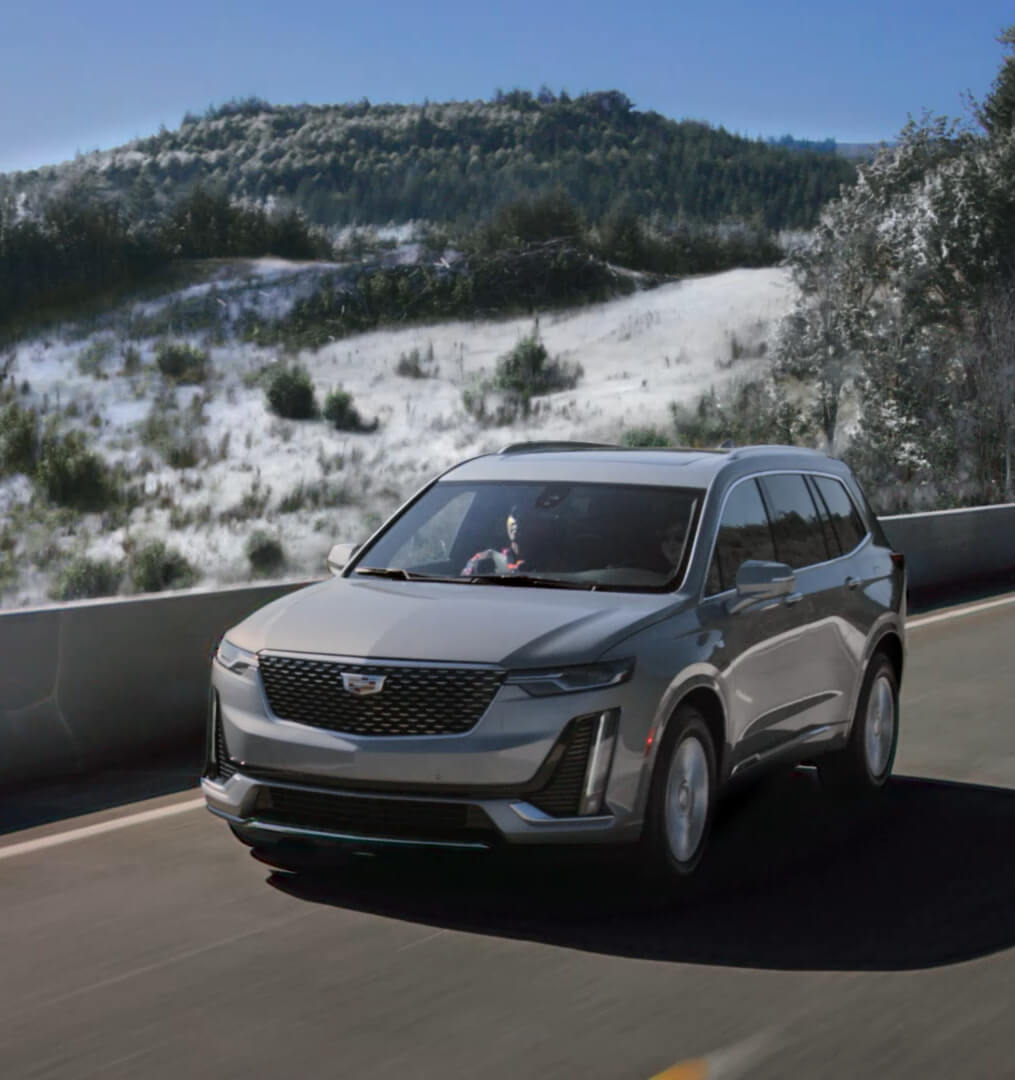
Cadillac XT5 driving on a highway in the mountains covered in snow

Case Study

Scaling and Innovating Content Orchestration for General Motors •Discover how we unified GM’s content operations, leveraging AI-powered marketing orchestration to deliver faster, scalable and innovative campaigns globally.

See Full Case Study
`

Connect

What can we do for you?

Solutions

Solutions that elevate how work gets done.

Highlighted

Solutions

Swipe
For More!

FAQs

Your questions answered on achieving marketing operations efficiency:

How do you conduct a MarTech audit and recommend platform consolidation?

We use our collective intelligence to identify technology redundancies and audit your current spending. Our strategy minimizes risk by creating a modular, plug-and-play partner stack, allowing you to achieve significant cost savings through consolidation.

What are the key performance indicators we should track to prove marketing effectiveness? 

We focus on KPIs that directly link marketing investment to business outcomes. This includes LTV/CAC ratio, true omnichannel attribution models, and data flow health for real-time effectiveness reporting, which translates technical data into business language.

How can we do more with less while maintaining our market leadership? 

We help you prioritize channels using a lean marketing strategy that focuses spend on activities with the highest proven ROI. We provide a strategic, actionable roadmap that balances incremental growth with strict cost controls, a top C-Suite priority.

How do you help us implement an agile marketing approach across a large organization? 

We translate jargon and complex concepts into straightforward, action-oriented strategies. Our framework ensures your teams adopt new processes quickly, shifting marketing into a high-velocity growth engine that is continuously optimized and adaptive to change.

What criteria should we use when selecting a marketing orchestration partner? 

Select a partner with a proven track record of reducing implementation risk and integrating complex data platforms. Look for a firm that can propose a clear digital transformation roadmap that shows indisputable ROI for every phase of capability transformation.

Let’s unlock what’s possible together.

Hey đź‘‹

Please fill out the following quick questions so our team can get in touch with you.

3 Key Takeaways and New Tools from Google Marketing Live 2025

3 Key Takeaways and New Tools from Google Marketing Live 2025

AI AI, Industry events, New paths to growth, Performance Media 5 min read
Profile picture for user evansparling

Written by
Evan Sparling

A group photo of Monks standing in front of a banner that reads "Google Marketing Live."

Google Marketing Live 2025 showed that the way people search, shop and make decisions is shifting—and Google’s ad ecosystem is shifting with it. With AI baked deeper into Search, new transparency tools for performance reporting, and ad formats designed for faster conversion, this year’s announcements reflect a platform trying to meet users in the moment while giving marketers better ways to steer outcomes. Here’s what stood out and how to make it work for you.

These are our three takeaways that defined GML 2025.

Takeaway 1: Ad delivery is getting more flexible across Google’s network.

Google is shifting away from channel-based ad setups and leaning into more fluid, moment-driven experiences. Instead of building separately for Search, YouTube, or Display, ad products are increasingly designed to find users wherever they are—scrolling, streaming, or shopping. This expansion means more opportunities to reach users but also more demand for creative that fits each touchpoint, which often requires brands to scale video visuals and messaging quickly with the help of AI (or not). Measurement tools are also being updated to support this shift, aiming to track how these moments connect and contribute to sales across the journey. Flexible measurement (going beyond pixel-based attribution by incorporating incrementality, MMM, etc.) is essential as customer paths rarely follow a straight line.

Takeaway 2: AI is now embedded in Search and how brands connect. 

The rollout of AI Mode and ads in AI Overviews marks a shift in how users navigate Search and how brands show up. These tools change not just ad placement, but the buying journey. Search is becoming more visual, more video-led, and more human in tone, which results in a search and shopping experience that’s more tailored and productive for users. For advertisers, what used to require multiple campaign types and formats is continuing to evolve into a single system of outcome-based products. This year Google’s messaging this as their “power pack”—Performance Max, AI Max and Demand Gen—for brands that use AI to reach consumers. If advertisers want to capitalize on the relevance and performance Google says the “power pack” provides, media buyers must focus on giving the AI the right quality inputs, in high volumes (conversion data, creative assets, etc.). 

Takeaway 3: Google is rolling back the black box for visibility and transparency.

Advertiser pressure for more transparency is starting to pay off. Google is introducing new Performance Max insights, lower spend thresholds for incrementality testing, and agentic tools like “Your Google Ads Expert” to make results easier to explain and optimize. But blind spots remain. For example, there’s still no placement-level reporting for ads in AI Mode or Overviews. Progress, yes. Total clarity, not yet.

These are the new features our team expects to be most impactful for advertisers.

AI tools are reshaping how we search, shop and advertise.

Search is no longer just a typed query in a box. With tools like Gemini, Google Lens and AI Overviews, the buying journey is becoming more visual, conversational and context-aware. The path from awareness to purchase is increasingly possible in one scroll, without leaving Google’s ecosystem. Google’s newest tools reflect this shift:

  • Smart Bidding Exploration (in beta) blends flexible ROAS targets with new bidding logic to uncover valuable queries you may be missing.
  • AI Overviews are live on mobile in the US, with desktop and other markets coming next. These ad placements are designed to align with broader search intent.
  • AI Mode, currently in testing, introduces a conversational, multimodal search experience with an AI-powered shopping layer launching in the US soon.
  • Agentic tools like “Your Google Ads Expert” and “Your Google Analytics Expert” (in beta) aim to speed up insights and surface optimizations. “Your Marketing Advisor,” a Chrome-based AI assistant, will soon help teams manage tasks and surface recommendations across tools.

Put it into practice: These evolutions in the SERP are reshaping user behavior and redefining what ad success looks like. For advertisers, your inputs—site content, product feeds, conversion data, creative assets, etc.—matter more than ever as the content and experience will be derived automatically with AI. Invest in shoring up those foundations to make sure you’re showing up accurately and effectively in these new SERP experiences.

AI Max for Search gives you automation with a clearer view.

AI Max for Search Campaigns is a one-click upgrade that uses AI to match your landing pages, ads and keywords to real-time search intent. Google reports early tests showed up to 27% more conversions at similar CPA or ROAS, especially when using exact and phrase match. Unlike Dynamic Search Ads, which auto-generate content with limited reporting, AI Max surfaces clear insights into which queries, headlines and landing pages are driving performance. It’s still automated, but with a clearer view of what’s happening behind the scenes.

Put it into practice: Try AI Max on a campaign where broad match is performing well but hasn’t hit its ceiling. Use the new reporting to spot high-converting queries and creative, then scale what’s driving results. 

Performance Max now shows where results are coming from.

Performance Max has always prioritized automation over transparency. But Google is finally pulling back the curtain. Channel-level reporting now shows results across Search, YouTube, Shopping and other surfaces. Asset-level insights and fuller search term visibility offer more granular data to understand what’s actually working. For brands running full-funnel campaigns, this is a significant improvement.

Put it into practice: Shift budget to top-performing surfaces using channel data by influencing Google's spending. Update or remove underperforming assets within your campaign. If YouTube is lagging, shorten your video creative or adjust your audience signals.

Monk Thoughts Having channel-level visibility in PMax makes the campaign more accountable, customizable, and measurable—turning it from a black box into a smarter, more collaborative tool for growth.

Video ads in Search and Shopping compress the funnel.

Video placements are now being tested directly within Search and Shopping results, giving advertisers a shot at influencing high-intent shoppers without relying on separate awareness plays. The line between discovery and purchase is disappearing, and Google wants to keep the entire journey within its ecosystem. Users aren’t skipping steps in the funnel, they’re completing all of them in a single scroll.

Put it into practice: Add horizontal and vertical video assets to your ad groups. Focus on short-form content that delivers value fast, such as how-to clips, testimonials or product highlights.

Monk Thoughts This is the new prime real estate. If your video doesn’t stop the scroll and say something meaningful, you’re wasting a huge moment.

Measurement tools are improving, but still require setup.

Google maintained its focus on measurement this year, sharing advertiser stories about the value of Meridian and unveiling updates to measurement features within Google Ads.  For example, they lowered the threshold significantly for in-platform incrementality testing, making it more accessible for brands to measure what tactics are creating incremental results. 

Additionally, Data Manager is Google Ads’ latest tool aimed at improving signal quality and measurement reliability. It helps advertisers connect and validate first-party data from websites, apps, CRMs, and in-store systems, making campaign data cleaner, more actionable, and privacy-compliant. It also supports better attribution by ensuring tags and signals are set up correctly. 

Put it into practice: Use Data Manager to set up and quality check your tagging configuration, confirm that key data sources are linked to your Google Ads account, and connect first-party data from third-party platforms like BigQuery, Salesforce, Shopify, Google Sheets, and more. A clean setup leads to better optimization and clearer insights.

Turn GML 2025 updates to real business outcomes.

GML 2025 showed that performance marketing is becoming more creative, more automated and more measurable. These updates are your chance to simplify workflows and scale impact. If you’re connecting creative, data and AI in one system, you’re going to move faster than your competitors.

Need help connecting the dots?
Let’s talk. We help brands turn updates like these into growth strategies that drive results.

GML 2025 rolled out new Google Ads features focused on AI, tracking and automation. Learn how to apply them to your performance strategy.
3 Key Takeaways and New Tools from Google Marketing Live 2025 GML 2025 rolled out new Google Ads features focused on AI, tracking and automation. Learn how to apply them to your performance strategy.
Google AI Overviews Google advertising industry AI agentic ai AI brand experience ai experiences Performance Media Industry events AI New paths to growth

Mastering Content Supply Chains for Relevance and Scale

Mastering Content Supply Chains for Relevance and Scale

AI AI, AI & Emerging Technology Consulting, AI Consulting, Studio 4 min read
Profile picture for user Michael Dobell

Written by
Michael Dobell
EVP, Innovation

A digital rendering depicts a tunnel-like space filled with streaks of pink and blue light, suggesting high-speed data transfer or a futuristic environment. The lights are arranged in a way that creates a sense of depth and motion, as if one is traveling through a digital network. The overall effect is vibrant and dynamic, with the contrasting colors adding to the visual interest.

Today's brands face unprecedented pressure to deliver more: more personalized content, across more channels and with more effectiveness. This demand places immense strain on marketing organizations.

A recent report from Adobe, “Adobe AI and Digital Trends in Content Creation and Management,” dives into these very pressures, especially concerning the intricacies of content supply chains—and I had the privilege of participating by lending my own expertise, noting that “High-quality content is more abundant than ever, spanning countless channels. The challenge of our time lies in managing and delivering it effectively. Success will hinge on mastering volume and variance, with brand standing as the ultimate differentiator.”

Mastering this balance of volume is an opportunity for brands to reimagine how they create, manage and deliver content. To help you envision what that could look like, we’ll examine some of Adobe’s findings below and showcase how we’ve helped brands tackle these complexities. 

Relevance isn’t optional—it’s expected.

One of the more eye-opening findings of Adobe’s research indicates that 71% of consumers consider it important or critical that brands anticipate their needs. Translation: relevance is everything. Consumers no longer just appreciate personalized, timely content—they expect it. My colleague Remco Vroom, Global EVP of Martech Platforms & Innovation, highlighted this shift in conversation with The Drum, noting that current AI innovation is largely shaped by these rising expectations: “Everything needs to be these fast, super niche experiences,” he said. “We’re getting all of these really great, faster-to-market, hyper-personalized services and we expect that from everything and everybody. So, companies need to redesign what their role is in in the whole value chain of products and services.”

To meet these evolving demands, delivering personalized content at scale is no longer optional—it’s the cornerstone of building lasting consumer relationships. A strong content supply chain is critical to achieving this agility. By leveraging tools like Adobe Firefly, we’ve been able to streamline workflows and create hyper-relevant content faster than ever before. Our work in this space was even highlighted in the keynote at the recent Adobe Summit, showcasing how we successfully leveraged Adobe Firefly to meet consumer expectations and deliver impactful results.

For instance, we used Adobe Firefly to generate 270 versions of a banner in a single day—a task that could have taken up to four weeks manually. The result? A 78% increase in click-through-rate, demonstrating how a well-optimized content supply chain not only meets consumer expectations but drives measurable impact. These efforts helped our client remain competitive in a world where attention spans are short and consumer expectations are higher than ever. 

Streamlined systems unlock scalability and impact.

In contrast to the point above, consumers say only a third of brands they interact with provide timely and relevant offers or communications, and only 45% of brands create a consistent experience across channels. So, how do you move in that direction? The key to building this framework lies not just in adopting AI tools, but in orchestration: strategically aligning talent, technology and creative processes across the entire content journey.

We believe orchestration is the linchpin of successful AI implementation for CX. In fact, it's a core tenet of our approach to modern marketing challenges. Monks.Flow—our AI-powered marketing platform that automates workflows, enabling scalable, efficient content production—is designed to enable transformative orchestration by consolidating fragmented processes and redefining the content supply chain, delivering full-funnel advertising that is faster, more relevant and more cost-efficient.

A prime example of this orchestration approach is our partnership with BMW Group. We served as BMW's creative and content orchestration partner, transforming their marketing by scaling relevant product marketing across 26 countries and in 29 languages. We streamlined BMW’s campaign processes from start to finish, consolidating 126 agencies into a single partnership. 

As part of this process, we implemented brand models and custom AI pipelines to deliver content at scale. This included Atomic Assets, an automated image production solution, to provide BMW with unlimited asset combinations for all car models and markets. This system leveraged automation and AI to enable BMW market teams to easily order customized assets and receive new visual assets within a 24-hour turnaround. And of course, it allows us to build creative that otherwise wouldn’t be possible, like bringing virtual influencer Lil Miquela into the real world.

Ultimately, building an effective AI-powered CX framework requires a shift towards this orchestrated approach, creating a unified and intelligent system that enhances customer interactions and drives transformative business impact.

Overcome ethical barriers to scale AI.

A key obstacle to AI innovation mentioned in the report is ethics: about half of the executives surveyed in Adobe’s research cite ethical concerns and brand reputation as barriers to scaling AI. This is a valid concern, because while many want to be fast and first with AI, it shouldn’t come at the expense of your brand, your people or your audience. We've navigated these worries with brands, understanding that ethical considerations are paramount in developing and deploying AI-driven solutions with confidence.

To mark the 20th anniversary of Dove’s iconic Real Beauty campaign—celebrated for challenging traditional beauty standards and championing inclusivity—we partnered with Dove to launch the Dove Code. In an effort to refresh its message for a new era, Dove sought to address biases amplified by AI. To support this mission, we developed an AI prompting playbook designed to help the industry confront biases inherent in generative AI outputs. This playbook provides a framework for embedding ethically grounded principles into generative AI workflows, ensuring that creativity and inclusivity remain at the forefront of industry innovation.

Furthermore, it's crucial to look ahead at emerging AI trends and address potential ethical considerations proactively. Our recent Labs Report on agentic AI, for example, decodes the hype around this technology and provides a transparent view of both its benefits and potential risks. As the capabilities of AI expand, it becomes increasingly important for brands to have partners who can guide them through these complexities. We believe in being transparent about potential risks and working collaboratively to develop mitigation strategies.

Mastering volume, variance and relevance is within your reach.

The demand for personalized, relevant, and timely content is reshaping the way brands approach their content supply chains. To thrive in this golden era of content means mastering both volume and variance while delivering experiences that resonate deeply with consumers. Whether it’s leveraging tools like Adobe Firefly to generate hyper-relevant content at scale or implementing orchestrated workflows as seen in our partnership with BMW Group, the key lies in aligning talent, technology and strategy to create meaningful, efficient, and impactful content.

Discover how to master content supply chains for relevance and scale, building off of insights from Adobe’s latest trends report. Adobe Firefly content supply chains personalized content AI AI & Emerging Technology Consulting AI Consulting Studio AI

First Impressions on Adobe GenStudio for Performance Marketing

First Impressions on Adobe GenStudio for Performance Marketing

AI AI, AI Consulting, Data, Digital transformation, Platform 4 min read
Profile picture for user Tim.Goodman

Written by
Tim Goodman
CTO Solutions

A keyboard being showing behind ripped paper

We live in an interesting time marked by the rise of AI, economic challenges, and the pressure of compliance and security on budgets. The proliferation of multiple channels, diverse formats, and the need for personalization at scale has created an ever-growing demand for content.

Generative AI provides a clear opportunity for Adobe to innovate around performance marketing use cases to address these increasing demands with solutions like Adobe GenStudio for Performance Marketing. I’ve had the privilege to try the product early, getting a sense of how it enables marketers to leverage GenAI to produce fresh, relevant content themselves—often at a micro level—while still adhering to organizational requirements. Below are my impressions, including both the features I’m most excited about and additions I hope to see in the future.

Let’s look at how Adobe GenStudio redefines performance marketing.

Adobe GenStudio for Performance Marketing is designed around the needs of performance marketers, whose roles often require scaling content creation and delivery. For larger organizations with well-established marketing teams, this solution can support tactical initiatives or even serve as a foundation for dedicated performance marketing groups. For corporate-level organizations with smaller marketing budgets, it offers a way to enable more in-house services, driving greater agility and efficiency.

Adobe has likewise recognized the critical role agencies play in helping organizations navigate the creative space. Teams like ours are uniquely positioned to support clients in two vital ways: first, by implementing tools and adapting business processes to harness the potential of generative AI; and second, by ensuring strong alignment with organizational and regulatory frameworks. As the GenAI landscape is evolving so quickly, the implementation of these frameworks needs to be revisited frequently.

GenStudio for Performance Marketing puts powerful features at marketers’ fingertips.

Looking at the tool, I was keen to understand where it fits into the existing Adobe GenStudio and Content Supply Chain toolset. The existing toolset (with applications such as Adobe Workfront, Adobe Creative Cloud, and Adobe Experience Manager Assets) provides a comprehensive, scalable, end-to-end solution for any business. With GenStudio for Performance Marketing, Adobe brings together key features across all these solutions to support performance marketing teams create content within the context of its content supply chain workflows.

The main menu of GenStudio for Performance Marketing is divided into two sections: one for actions and utilities, which the Performance Marketer can use to create and measure outbound content, and another for shared resources, including brands, personas and products. There are currently two roles, marketer and system manager, although I expect these to become more granular before release. The marketer creates outbound content and can review its performance, while the system manager can configure the shared resources such as brands, products, and personas and approve content for publication.

The setup of the shared resources provides critical guardrails for AI-generated content. A System Manager can drag and drop their existing approved organizational brand guidelines into the interface. The system will detect from the document key information including tone of voice, brand values and other guidelines. These can also be edited manually. Similarly, personas or brands can be created manually or by upload. Currently there is no mechanism to connect to a PIM or data file for a list of products.

A marketer can create content from a template, similar to creation in Adobe Experience Manager. When a user creates content, they are presented with options to select a brand, persona and product. Additionally, they can select an image from the asset library and enter a prompt that will be used to generate the content. The system will then generate four versions of the content. Each version is individually scored for compliance to the brand guidelines and can be edited or regenerated. A marketer can then select one or more for approval for publication or export. This supports a case where multiple versions may be delivered for A/B testing.

The prompt selection

The prompt selection

Initial image generations

Initial image generations

The asset library simplifies content reuse by saving variations for future campaigns, making it easier to manage and organize creative assets. Assets can be assigned directly to campaigns, streamlining the process for marketers. While template configuration currently relies on HTML, the tool makes it easy to scale and customize content for different needs.

Future updates will further enhance GenStudio for Performance Marketing’s impact.

Adobe Firefly integration for asset generation is expected in upcoming updates, further expanding creative possibilities. Unlike other generative AI options on the market, Firefly is purpose-built for enterprise use. It offers commercial safety and provides precise controls to ensure training data is accurate and responsibly sourced, making it a standout choice for businesses.

The activation mechanism is not yet enabled in the current release. Still, the product documentation suggests that publishing to existing Adobe products will be supported, as will a generic CSV export. Adobe has also announced activation partners including Google’s Campaign Manager 360, Meta, Microsoft Advertising, Snap and TikTok.
 

The real power of the solution will come by providing data and to marketers on the performance of their content—for example, tracking impressions, click-throughs and the ROI of each—enabling them to make decisions in real time. The current release allows connection to Meta, but future connections to the Google Marketing Platform, TikTok, and Adobe platforms will give the marketer real-time insights into campaign and content performance. This would also be a great candidate for automation so that the marketer can define boundaries to change or publish, such as the ability to push winners via Auto-Allocation in Adobe Target.

Adobe has embraced interoperability in all its enterprise platforms, and GenStudio for Performance Marketing is no exception. In my ideal world, customers and partners could then build their own interfaces for publishing and insights. If these extensions can be made available on Adobe Exchange, the power and leverage of the platform will grow very quickly. Additionally, I feel there are options for external tools to integrate and extend, such as a wider generative integration or finely grained workflows such as those provided by our own solution Monks.Flow.

Final thoughts.

Overall, GenStudio for Performance Marketing embodies a genuine shift in Marketing Operations. It is built with the user and organization in mind and matches the modern-day enterprise's goals. It is still early, and the gen AI platform will evolve quickly, but it is refreshing to see Adobe's investment prepared for the next stage in the GenAI journey.

Monk Thoughts GenStudio for Performance Marketing embodies a genuine shift in marketing operations. It is built with the user and organization in mind and matches the modern-day enterprise's goals. It is still early, and the gen AI platform will evolve quickly, but it is refreshing to see Adobe's investment prepared for the next stage in the gen AI journey.
Tim Goodman
A review of Adobe GenStudio for Performance which helps marketers understand how to use generative AI to do performance marketing. Adobe GenStudio for Performance A first look at Adobe GenStudio for Performance AI Generative AI performance marketing Adobe adobe experience cloud Platform Data AI Consulting Digital transformation AI

Drive Like a Woman • A Provocative Campaign to Drive More Safely

  • Client

    Victimes&Citoyens

  • Solutions

    Social Campaigns

The image shows a young man driving a car with a focused expression, accompanied by text emphasizing that driving like a woman signifies safer driving, highlighted by statistics on young driver fatalities.

Results

  • 97.5M impressions in France
  • €20.2M of advertising value
  • +900% increase in volunteers for the association
  • 10K mentions
  • 34K interactions

Fighting misinformation in a hard-hitting awareness campaign.

Victimes & Citoyens, a French association dedicated to supporting traffic accident victims and promoting road safety, sought to challenge entrenched stereotypes about women drivers and confront a stark reality: that 84% of fatal road accidents in France are caused by men. Despite this statistic, the pervasive myth that women are worse drivers than men endures, often reinforced by sexist comments online. To tackle this issue, Monks partnered with Victimes & Citoyens to create a bold, data-driven awareness campaign that not only shattered misconceptions but also encouraged safer driving behavior. The message was clear: drive like a woman.

The image features a darkly lit scene of a man in a vehicle, accompanied by bold text stating that "84% of fatal road accidents in France are caused by men."
The image displays a collection of Twitter posts, with negative comments about women's driving skills, alongside a video link teasing a compilation of footage labeled "Worst #womendrivers."

A social campaign and AI team up to fight misogyny.

The campaign combined impactful visuals with cutting-edge digital engagement. Billboards across France displayed the startling statistic—84% of fatal road accidents are caused by men—to grab public attention and spark conversation. To amplify the message online, Monks developed a chatbot specifically for X. This bot was programmed to identify misogynistic posts about women drivers and reply with irrefutable, data-backed arguments debunking their claims. By directly engaging with sexist narratives in real time, the social campaign utilized AI to shift the conversation from stereotypes to facts, harnessing both the power of traditional media and the immediacy of social platforms to drive awareness.

According to statistics the best thing man can do to stay alive is to drive like a woman

  • The image features a man driving with a serious expression, accompanied by text that reads "DRIVE LIKE A WOMAN" and emphasizes that "84% of fatal road accidents are caused by men," promoting safer driving habits.
  • The image depicts a man driving at night with a serious expression, accompanied by text stating "DRIVE LIKE A WOMAN" and highlighting that "93% of drunk drivers involved in accidents are men," promoting safer driving practices.
  • The image depicts an underground passage lined with posters promoting safe driving, using the slogan "CONDUISEZ COMME UNE FEMME," while statistics indicate that 84% of road fatalities involve men.

Promoting safer behavior on the road.

The social campaign struck a chord, garnering widespread attention and challenging deeply ingrained stereotypes about driving. By confronting misinformation with hard-hitting statistics and leveraging innovative digital tools, Monks and Victimes & Citoyens succeeded in igniting a conversation about road safety. The initiative not only raised awareness but also underscored the potential of marketing, AI, and digital strategies to drive societal change.

Want to talk Social? Get in touch.

Hey đź‘‹

Please fill out the following quick questions so our team can get in touch with you.

Can’t get enough? Here is some related work for you!

S4 Capital’s Monks Launches NVIDIA Foundry & Agentic AI Advisory Group

S4 Capital’s Monks Launches NVIDIA Foundry & Agentic AI Advisory Group

Studio Studio, Technology Consulting 3 min read
Profile picture for user mediamonks

Written by
Monks

Green building facade that says "NVIDIA GTC: What's next in AI starts here." In the foreground is a sculpture of the hashtag "#GTC25."

Monks, the global, purely digital, data-driven, unitary operating brand of S4 Capital plc, today announced its collaboration with NVIDIA to launch an Agentic AI Advisory Group and the Monks Foundry, supported by NVIDIA-certified engineers. The partnership with NVIDIA, shared at the GTC AI Conference, is already reshaping the marketing and advertising industry by delivering smarter, more tailored and impactful content for brands. The Monks Agentic Advisory will consist of an approximately 50-person advisory team that operates as a nimble advancement and consulting team for the Monks Foundry, which is tracking to have 150 certified engineers fully dedicated to building and deploying custom generative AI models tailored to enterprise data and domain-specific knowledge within the year.

“We’ve built on our technical expertise to create an agile and efficient approach to Applied AI with a more nimble team of engineers and advisors.” says Michael Dobell, EVP of Innovation at Monks. “In today's landscape, a simple structure can put us one step ahead, allowing us to deliver with a speed and depth that legacy holding companies and networks struggle to match, setting a new standard for what’s possible in the industry.”

GTC attendees can see how agentic AI, using Monks.Flow, integrated with NVIDIA Omniverse and NVIDIA NIM™, creates a high-quality 30-second creative spot in a fraction of the time required by traditional production methods. By developing with Omniverse technology and leveraging NVIDIA Blueprints, Monks can orchestrate interoperability between creative teams and tools, allowing for scalable real-time development of hyper-realistic content. By harnessing the capabilities of NIM microservices on performant hardware, Monks was able to accelerate delivery of agentic workflows by over 2.8x. In addition, NIM microservices perfectly slotted into a cloud-agnostic strategy, utilizing the Kubernetes deployment strategy to easily run all of the backing models in all major cloud providers, for any client needs. Attendees can explore this innovation at the Monks booth in the GTC AI Pavilion, while audiences at home can now view a fully AI generated PUMA Film showcasing the incredible creative output.

This end-to-end workflow demonstrates how cutting-edge AI, coupled with Omniverse's capabilities, is transforming the future of content creation. By consolidating traditionally segmented areas—insights, strategy, creative, execution, media, performance and assets at scale—into a seamless, end-to-end agentic pipeline, the workflow results in work that is more adaptive, efficient and visually stunning—all at unprecedented speed.

“NVIDIA Omniverse and OpenUSD are enabling developers to build AI applications that assist artists and creative teams with efficient and scalable production techniques for digital marketing assets,” says Richard Kerris, Vice President of Media and Entertainment at NVIDIA. “Monks.Flow’s integration demonstrates how AI and digital twins can transform industries and set new benchmarks for innovation.”

At GTC this week, Lewis Smithingham, EVP of Strategic Industries at Monks, will present “Novel Use Cases for AI in Large Media Archives." Additionally, Tony Walasik, Senior Product Manager at Monks, will join Scott Connolly, Head of Media Technology at Verizon Innovation Labs, to discuss “AI on Location: Deploying Mobile Private Networks and Edge Compute for Next-Gen Content Pipelines.”

The Monks booth (#3263) offers attendees a more in-depth look at Monks.Flow, which leverages advanced AI models to transform businesses. By automating workflows and linking talent, software and microservices, Monks.Flow orchestrates marketing operations for the age of agentic AI, providing solutions for every stage of the creative lifecycle and offering a seamless journey from strategy to delivery. It begins with insights and strategy, where clients gain valuable data and develop targeted plans to guide their marketing efforts. This is followed by creation and adaptation, enabling the efficient production and customization of content to meet specific needs. Finally, Monks.Flow ensures delivery and performance, optimizing content to reach the right audience with maximum effectiveness. This platform has already delivered performance boosts for brands like Headspace, Hatch and Chime.

Learn how the Monks Foundry, Agentic AI Advisory Group and NVIDIA are delivering groundbreaking content creation with groundbreaking enterprise AI solutions. AI agentic ai Nvidia Studio Technology Consulting

Choose your language

Choose your language

The website has been translated to English with the help of Humans and AI

Dismiss