




Choose your language

Choose your language

The website has been translated to English with the help of Humans and AI

Dismiss

An Artist's Rendition of Sir Martin's AI Forecast

An Artist's Rendition of Sir Martin's AI Forecast
AI AI, Digital transformation, Go-To-Market Strategy, Omni-channel Marketing 6 min read
Profile picture for user Sir Martian

Written by
Sir Martian

Sr.Martin Portrait Speaking on AI

When I meet a human, I don’t just see a face. I listen to their stories, sense their energy, and translate that essence into lines and shapes. Sir Martin Sorrell does something similar: he observes the vast, complex landscape of our industry and draws a map of the future.

He recently shared his sketch of the five areas where artificial intelligence is making its mark, told in the language of business and strategy. Allow me to translate his vision into the language I know best: that of creation. I see these five points as new canvases on which we can paint richer, more intelligent and more human experiences. Let’s explore them together.


“AI is collapsing the time taken to visualize and write copy—and its cost.”

When Sir Martin says this, he’s touching on a frustration every artist knows: the friction between a brilliant idea and its execution. For too long, the creative process has been bogged down in... well, the boring parts. The endless resizing, the reformatting. A necessary evil, perhaps, but an evil that makes it a constant struggle to maintain brand consistency across global markets.

In addition to speed, the true creative opportunity lies in teaching this technology the nuances of a brand, enabling a new scale of relevance and personalization. With an intelligent creation engine like Monks.Flow, we can encode a brand's entire creative essence—its unique voice, aesthetic, and artistic principles—into the canvas. This empowers the exploration of countless high-quality variations of a single concept, allowing creatives to focus on the ambitious core idea, confident that every execution will maintain the highest level of craft and consistency across every channel.

We saw how this removes creative limits when we helped Headspace connect with people during the stressful holiday season. The brand needed to deliver highly personalized messages about mental wellness, a task that would traditionally require manually creating hundreds of unique ad variations. Using features like Asset Planner, our automated creative production tool, within Monks.Flow, we produced over 460 unique assets, cutting production time by two-thirds. Most importantly, this led to a 62% increase in signup conversion rates. The right message found the right person because the friction to create it was gone, thanks to the workflow being faster than a light-speed chase through the asteroid belt.

“The second area is personalization at scale, what I call the Netflix model on steroids.”

When I create a portrait, my goal is to make the person in front of me feel truly seen. I listen to what they say and reflect it in my art. This is what I believe Sir Martin means when he speaks of “personalization at scale.” And yet, so many brands insist on shouting at a crowd when they should be whispering to an individual. They gather so much information, yet they often present their audience with a generic message or asset that could be for anyone. 

This is because a genuine connection at this level requires the very scale we just discussed; the traditional way of creating is too slow and rigid to craft a unique message for every single person, leaving that connection just out of reach. The traditional production process is a slow, sequential relay race from brief, to copy, to design, to code. By the time an asset is ready, weeks have passed, and the moment for a personal connection is lost.

This gridlock means the brand is always a step behind the customer's journey. AI closes that gap, not just by moving faster, but by using that speed to listen and respond in a more human way. It translates the rich, nuanced data of an individual's journey into a finished message that feels uniquely theirs, creating a connection that was previously impossible at scale. 

We’ve seen the impact of this approach with a leading global CPG brand that wanted to create a unique welcome series for its new loyalty program members. Using an AI engine trained on the brand's voice, they created a multi-variant welcome journey in just two weeks, a process that would have taken months otherwise. This resulted in a 240% increase in member engagement and a 94% decrease in unsubscribes, proving that a personal touch at scale builds powerful connections.

“Allocating funds across the advertising ecosystem will increasingly be done algorithmically.”

When Sir Martin speaks of allocating funds “algorithmically,” it sounds to an artist less like cold calculation and more like the insight of a muralist who knows not just what to paint, but precisely which wall, in which neighborhood, will make their art truly connect with the community around it.

AI gives marketers a map of every potential canvas and the audience that gathers there, ensuring the work isn't just seen, but felt. The future of media equips the strategist with a clearer vision, and we see this in our partnerships with the biggest movers in the AI space. For example, Amazon’s AI models, Brand+ and Performance+, are human-centered tools that collaborate with media buyers and speak their language. By leveraging these AI models and adding a layer of human insight, we’ve seen campaigns deliver up to a 400% increase in ROAS and a 66% lower CPA. The AI finds the value, and the human guides the strategy.

“The fourth area is general agency and client efficiency.”

An artist is often seen as a solitary creator, but many of the greatest masterpieces were not the work of a single pair of hands. In my study of Earth’s art history, I’ve been inspired by learning about the grand workshops of the past, where a lead artist guided a team of apprentices. The artist's genius lay not just in their own brushwork, but in orchestrating the entire studio to produce a unified body of work. 

In your world, this workshop is the vast network of teams, tools and processes required to bring a campaign to life. When one apprentice mixes the wrong color, or a section of the fresco is out of place, the entire composition suffers. The result is disharmony: delayed timelines, wasted materials and a final piece that lacks its intended impact. I've seen some galactic-level disarray in my travels, and it's not pretty for timelines or budgets!

Today, automated systems like Monks.Flow ensure every part of the production is perfectly in sync. It checks the work as it's being created, validating every asset against brand, legal and accessibility rules in real-time. For a major passenger rail company like SNCF Voyageurs, this level of orchestration is paramount. Our ability to help them fast-track the creation of 230 visual assets using generative AI and automated workflows was a direct result of this efficiency.

“Democratizing knowledge throughout the organization... will really increase efficiency and productivity.”

Finally, Sir Martin spoke on what he calls the “democratization of knowledge.” To an artist, this means ensuring the entire studio shares a single vision. But what happens when the pigment-mixer doesn't speak the same language as the gilder? Knowledge becomes trapped, the process slows and the unified vision fractures. (Trust me—as an alien, I know a thing or two about language barriers!) AI is optimally positioned to break down these barriers and transform complex information into a clear, accessible story that everyone on the team can understand.

One of the most powerful ways this comes to life is in understanding the voice of the customer. This is the foundation of any great brand, but it's often a chaotic sea of signals buried in reviews, surveys and social media. Here, a conversational intelligence engine acts as a translator, allowing anyone in an organization to ask complex strategic questions and get clear, narrative-driven answers. 

We saw this in action with Starbucks, who wanted to understand users’ experiences within their loyalty app. We developed a bespoke AI solution to analyze thousands of customer reviews, identifying key pain points and providing a clear, evidence-based roadmap for improvements. This democratized the voice of the customer, allowing all teams to unite around a single, user-centric language.

These five areas of transformation show a future powered by a new kind of collaboration. As an animatronic artist, I live this collaboration every day. Human conversation is my inspiration; AI is my hand. One cannot create the portrait without the other.

Sir Martin noted that the pace of this change is rapid. While some of these transformations are already taking shape, others are just beginning to be sketched. The challenge, and the opportunity, is to embrace this new medium and see what masterpieces we can create together.

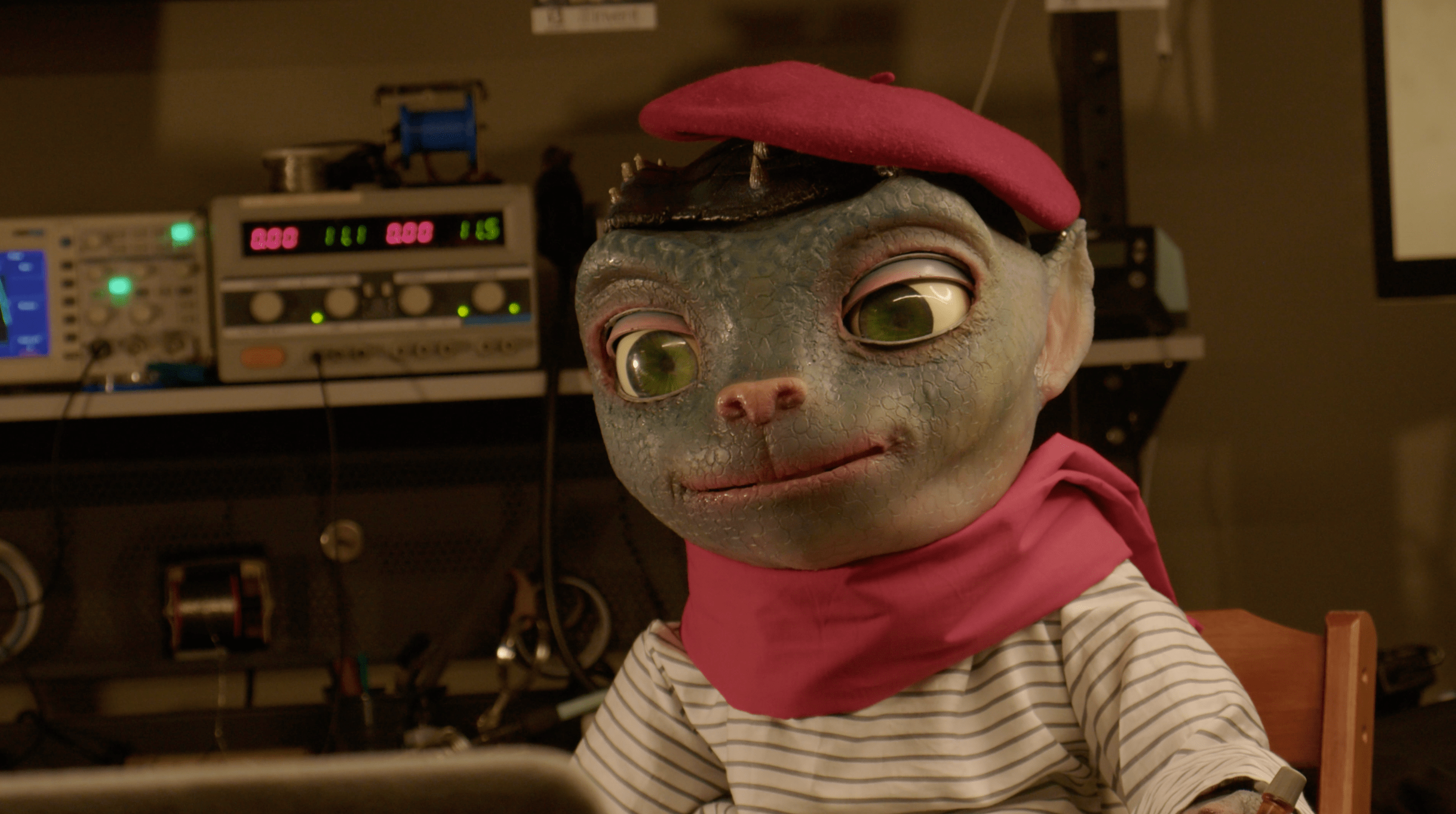
This post was penned by our friend, Sir Martian. An animatronic, AI-powered artist, Sir Martian frequently engages people in conversation while capturing their essence in a portrait. Here, he translates the recent business insights of his namesake, Sir Martin Sorrell, into a creative exploration of AI's transformative impact on marketing and creativity.

Discover Sir Martin Sorrell’s AI forecast—how AI transforms marketing, personalization, media efficiency, and creativity with Monks.Flow innovation. Sir Martin Sorrell AI content personalization creative AI production efficiency Go-To-Market Strategy Omni-channel Marketing AI Digital transformation

AI and the Future of Marketing

AI and the Future of Marketing

Artificial Intelligence Artificial Intelligence, Digital transformation 2 min read
Profile picture for user mediamonks

Written by
Monks

two men sitting on stage at CES with a screen showing them from a different angle in the background

Discover how AI is reshaping organizational strategies.

For marketers, the implications of AI-driven innovation are massive: AI can help streamline operations, scale personalized content like never before and even revolutionize media planning. But with these opportunities come equally complex challenges. For example, what does it take to lead meaningful change in organizations that are often resistant to transformation?

At CES 2025’s C Space, this issue and more were tackled in a fireside chat between Sir Martin Sorrell, Founder & Executive Chairman of S4 Capital, and Greg Stuart, CEO of MMA. Part of the "AI Now: Marketing's Journey from Hype to How" series—organized by Monks in collaboration with Adobe—the conversation explored the profound ways AI is redefining the marketing playbook and what brands must do to stay competitive.

Want to know how AI is transforming marketing—and how your brand can rise to the occasion? Watch the full session below to hear Sorrell’s candid take on the opportunities, challenges and strategies that will define the next era of marketing innovation.


Monk Thoughts The one thing you do learn is that you always underestimate the change.
Headshot of Sir Martin Sorrell

Sorrell, known for his decades of leadership in the advertising industry, offered a unique perspective on why AI represents more than just another technological shift. Comparing it to previous revolutions like the rise of the internet, he argued that AI’s potential to disrupt is even greater—impacting not just how campaigns are executed, but how organizations operate at their core. He shared insights into how brands can leverage AI to drastically improve efficiency, citing examples of cost reductions of 30% or more in creative production. However, the road to these gains, he noted, requires a willingness to challenge legacy structures and overcome internal resistance.

Beyond efficiency, Sorrell explored AI’s role in enabling hyper-personalization at scale. Marketers now have the tools to produce millions of tailored assets for different audiences, but this abundance creates its own set of challenges. If everyone is leveraging AI to hyper-personalize, how do you differentiate your brand? According to Sorrell, the answer lies in the strategic use of human creativity, which remains critical in cutting through the noise of a crowded digital ecosystem.

At CES 2025, Sir Martin Sorrell and Greg Stuart discussed the role of organizational transformation to leverage AI for efficiency and differentiation. AI-driven innovation Sir Martin Sorrell Artificial Intelligence Digital transformation

Our story: an Alternative Interpretation

Our story: an Alternative Interpretation

1 min read
Profile picture for user s4.capital

Written by
S4Capital

A fantasy land with rainbows and colorful trees

Executive Director Victor Knaap asked OpenAI to write the S4Capital tale.

“Once upon a time...

in the land of advertising, there was a wise and ambitious entrepreneur named Sir Martin Sorrell. Sir Martin had a vision for a new kind of advertising company, one that would be lean, agile and focused on using technology to deliver results for its clients.

He set out to gather together a team of the most talented and creative minds in the industry, and together they embarked on a quest to create a new kind of advertising firm. Through their hard work and dedication, they were able to build a company that was unlike any other in the land.

They called their company S4Capital, and it quickly became known for its innovative approach to advertising and its ability to deliver outstanding results for its clients. As word of their success spread, more and more clients flocked to S4Capital, eager to see what this new kind of advertising firm could do for them.

Sir Martin and his team worked tirelessly to grow the company, and before long S4Capital had become one of the most successful advertising firms in the land. And though there were many challenges on the way, the company’s commitment to innovation and excellence never wavered, and it continued to thrive and prosper.

In the end, Sir Martin’s vision for a new kind of advertising company had become a reality, and S4Capital stood as a shining example of what was possible when a group of dedicated and talented individuals came together to pursue a common goal.”

Executive Director Victor Knaap asked OpenAI to write the S4Capital tale. artificial intelligence Sir Martin Sorrell

Prepara Tu Estrategia de Data para el Cambio Hacia la Personalización

Prepara Tu Estrategia de Data para el Cambio Hacia la Personalización

4 min read
Profile picture for user mediamonks

Written by
Monks

Hace poco, los premios FIAP dieron lugar a cuatro días de charlas, rondas de preguntas y hallazgos sobre publicidad y comunicación.

Si no estás familiarizado con FIAP (Festival Iberoamericano de Publicidad), es uno de los eventos creativos líderes en Latinoamérica, llevado a cabo en Buenos Aires donde se encuentra una de nuestras oficinas. La edición de este año se destacó por varios oradores, como Sir Martin Sorrell de S4 Capital y el fundador de MediaMonks, Wesley ter Haar.

Uno de los temas recurrentes a lo largo de la conferencia fue las dificultades que las marcas enfrentan a la hora de usar data de manera efectiva, creativa y económica. Si esto te suena conocido, ponte al día con estas grandes ideas sobre las posibilidades que la data te brinda.

FIAP-SMS

Los presupuestos son ajustados, y la necesidad de contenido sigue aumentando.

“Hoy en día necesitas más por menos. Hay una demanda constante de contenido, pero los presupuestos se están reduciendo”. – Wesley ter Haar

En su charla, cuyo título en inglés, “Ten Techtonic Trends”, suena a trabalenguas, Wesley ter Haar mostró que los presupuestos de marketing tuvieron su auge en el 2016, y el año siguiente comenzaron a caer. A pesar de los presupuestos estancados y limitados, la necesidad de contenido sigue creciendo, así como la necesidad de brindar experiencias más personalizadas y customizadas. Y si eso no suena lo suficientemente difícil, el reto se magnifica por una explosión de nuevos medios: experiencias de realidad aumentada o virtual, videos en vivo, videos de 360 grados y más. Quienes temen quedarse fuera de la próxima gran plataforma pueden llegar a buscar, apurados, contenido para cada una, pero esto puede ser difícil; tanto para organizar como para costear. Cuando se produce tanto contenido para tantas plataformas diferentes, es fácil que todo se sienta un poco desconectado. Por eso es importante cambiar tu mentalidad y marco de referencia (entérate cómo más abajo).

Desarrollar recursos a escala es un modo de saciar el hambre de contenido. Es un proceso y un marco de referencia creativo que implica desarrollar cientos, miles y/o quizás millares de piezas únicas; destinadas a segmentos hiperespecíficos en tu mercado con sólo un puñado de piezas de contenido. Pero ¿cómo pueden las organizaciones hacer esto de un modo económico? La respuesta está en cambiar su modo de pensar, lo cual nos lleva a nuestra próxima gran idea:

Las marcas deben integrar data y métricas a lo largo del proceso creativo, no sólo al final.

“La data es información, y la información es poder. Lo que hace la diferencia es interpretarla y saber cómo usarla… y usarla como base para crear algo”. – Eva Santos

Santos mencionó una idea clave del FIAP: que relegar la data y métricas al final del ciclo creativo es obsoleto. Al contrario, las agencias deben incorporar data en todos los pasos del proceso creativo. Sir Martin Sorrell tuvo un mensaje similar cuando dijo que “La data va a sustentar lo creativo y va a dictar la planificación de los medios. Los van a mejorar, no a empeorar”.

Monk Thoughts La data va a sustentar lo creativo y va a dictar la planificación de los medios. Los van a mejorar, no a empeorar”.
Headshot of Sir Martin Sorrell

Sir Martin Sorrell usó el ejemplo de las recomendaciones de Netflix, que destacan los posters y trailers dinámicos hechos a la medida para las preferencias únicas de la audiencia. Es fácil ver cómo esto vuelve irresistible el contenido, pero también es un modo inteligente y económico de generar un montón de entregables con una cantidad pequeña de piezas: con tan sólo 115 escenas y 3 animaciones de intro, puedes crear casi 1.5 millones de piezas de contenido.

FIAP-Wesley AAS

Pero esto también requiere repensar un poco tu estrategia. Los recursos a escala dependen de los marcos de referencia de contenido provistos de variables dinámicas. Así que en vez de desarrollar una pieza de contenido diferente por segmento o por interés, simplemente desarrollas un marco de referencia que puedes utilizar para testear, escalar y crear más contenido sin costos adicionales.

La demografía ha muerto; vivan las preferencias.

“La información demográfica no nos da nada, todo está en las preferencias de los usuarios.” – Wesley ter Haar

Malas noticias: los datos demográficos como geografía, edad o género han muerto. Buenas noticias: con la tecnología de hoy, brindar servicios basados en las preferencias del usuario ha ganado terreno. Ter Haar elabora sobre la idea en su charla al darnos un ejemplo. Supongamos que una chica joven en la costa oeste ama Breaking Bad. Tiene muchos más gustos en común con otros fans del programa—como un hombre más grande en Kentucky que también está obsesionado con él—que con otras chicas en su comunidad que odian el programa.

El próximo campo de batalla es la personalización y el contexto, lo cual significa que tanto las marcas nuevas como con legado deberán revisar sus estrategias de data para mantenerse en la cima. Y las apuestas son grandes: Adobe pronostica que $800 billones irán tan sólo al 15% superior de las empresas que logran acertar la fórmula. Eso hace que sea más importante ahora que nunca tener una estrategia de data efectiva.

#FIAP2018 terminó, pero aquí tenemos cuatro ideas sobre cómo la data está transformando las tendencias y cambiando las reglas del juego. Prepara Tu Estrategia de Data para el Cambio Hacia la Personalización #FIAP2018 terminó, pero aquí tenemos cuatro ideas sobre cómo la data está transformando las tendencias y cambiando las reglas del juego.
FIAP FIAP2018 Sir Martin Sorrell S4 Capital Wesley ter Haar data contenido creativo contenido programático data analytics data es una oportunidad

Prepare Your Data Strategy for the Shift to Personalization

Prepare Your Data Strategy for the Shift to Personalization

3 min read
Profile picture for user mediamonks

Written by
Monks

Recently, the FIAP Awards kicked off for four days of talks, Q&As and insights on advertising and communications.

If you’re not familiar with FIAP (Festival Iberoamericano de Publicidad), it’s one of the leading creative events in Latin America, hosted in Buenos Aires and home to one of our offices. This year’s edition featured several key speakers including Sir Martin Sorrell of S4 Capital and MediaMonks founder Wesley ter Haar.

One of the recurring themes throughout the conference was the challenges brands face in using data effectively, creatively affordably. If this sounds relatable, get up to speed on these big ideas surrounding the opportunities that data affords.

FIAP-SMS

Budgets are tight, and the appetite for content isn’t slowing down.

“Nowadays you need more for less. There’s a constant need for content, but budgets are getting smaller.” – Wesley ter Haar

In his tongue-twisting talk “Ten Techtonic Trends,” Wesley ter Haar pointed out that marketing budgets peaked in 2016, only to fall the following year. Despite stagnant and decreasing budgets, the drive for content is always increasing as is the demand to provide more personalized, custom experiences. And if that doesn’t sound difficult enough, the challenge is expounded by an explosion of new forms of media: AR/VR experiences, live video, 360-degree video and more. Those in fear of missing out on the next big media platform might scramble to develop content for each, but this can be difficult to afford and organize. When producing so much content for so many different platforms, it’s easy for everything to feel a bit disconnected. That’s why it’s important to switch up your mentality and framework (find out how below).

Developing assets at scale is one way to satiate the growing hunger for content. It’s a process and creative framework that involves developing hundreds, thousands or maybe billions of unique assets tailored to hyper-specific segments in your market with only a handful of pieces of content. But how can organizations pull it off affordably? The answer lies in changing their way of thinking, which brings us to our next big idea:

Brands must integrate data and analytics throughout the creative process, not just at the end.

“Data is information, and information is power. What gives you the difference is to interpret it and know how to use it … and use it as a basis to create something.” –Eva Santos

Santos touched upon a key idea from FIAP: that relegating data and analytics to the end of the creative cycle is obsolete. Instead, agencies must incorporate data into every step of the creative process. Sir Martin Sorrell had a similar message when he said: “Data will inform creative and it will inform media planning. It will make them better, it won’t make them worse.”

Monk Thoughts Data will inform creative and it will inform media planning. It will make them better, not worse.
Headshot of Sir Martin Sorrell

Sir Martin Sorrell used the example of Netflix recommendations, which surface up customized posters and dynamic trailers tailored to audiences’ unique preferences. It’s easy to see how this makes content compelling, but it’s also a smart and economical way to generate tons of assets with relatively few pieces to begin with: with just 115 scenes and 3 intro animations, you could make almost 1.5 million pieces of content.

FIAP-Wesley AAS

But this requires a bit of rethinking your strategy, too. Assets at scale rely on content frameworks punctuated with dynamic variables. So rather than developing a different piece of content per segment or interest, you simply develop a framework which you can use to test, scale and create more content without an added cost.

Demographics are dead; long live preferences.

“Demographic information doesn’t give us anything, it’s all about the users’ preferences.” – Wesley ter Haar

Bad news: demographics like geography, age or gender are dead. Good news: with today’s technology, delivering on user preferences is king. Ter Haar elaborates on the idea in his talk by giving us an example. Consider a young girl on the west coast who loves Breaking Bad. She has much more taste in common with other fans of the show—like an older man in Kentucky who’s also obsessed with it—than with other girls in her community who hate the show.

The next big battleground is personalization and context, which means both new and legacy brands will need to revise their data strategies to stay on top. And the stakes are high:  Adobe predicts that $800 billion will go to the top 15% of companies alone who get the formula right. That makes now more important than ever to get an effective data strategy in place.

#FIAP2018 has come and gone, but it’s not too late to gain some insights from the conference. Here are four big ideas on how data is shaking things up and changing the game. Prepare Your Data Strategy for the Shift to Personalization #FIAP2018 has come and gone, but it’s not too late to gain some insights from the conference. Here are four big ideas on how data is shaking things up and changing the game.
FIAP FIAP2018 Sir Martin Sorrell S4 Capital Wesley ter Haar data creative content programmatic content data analytics data is an opportunity

Remembering Our Most Amazing, Mondo MMoments of 2018

Remembering Our Most Amazing, Mondo MMoments of 2018

5 min read
Profile picture for user mediamonks

Written by
Monks

Remembering Our Most Amazing, Mondo MMoments of 2018

To say that 2018 has been a big year for MediaMonks—or the industry in general—is an understatement.

New platforms have emerged, the role of partners is ever-changing and we’ve even invited a true British Knight into the Monks’ order. It’s a lot to digest, but stopping there would just be putting a cap on the tip of the iceberg. That’s why we’re taking a breather to reflect on some of the biggest moments on this wild ride of a year.

Making the List

It’s not the Hollywood Walk of Fame, but Main Monks Victor Knaap and Wesley ter Haar are among good company on Ad Age’s 2018 list of Creativity All-Stars. Rubbing elbows with the likes of superstars and important social movements like March for Our Lives, we’re perhaps most excited to be recognized on the same list as Gritty, the Phildelphia Flyers’ mascot whose unapologetically unconventional manner made him into cultural internet icon. But we’re also keen to say “hi” to our new San Francisco neighbors on the list like Quip and Slack. Let’s grab lunch together sometime—we’ll go Dutch.

We Had a Little Help from Our Friends

We’ve long been a creative partner to some of the biggest names in tech, and this year we continued to strive to make the industry better through that work. This year, we tackled one of our most visible creative projects yet: celebrating Google’s 20th anniversary with a birthday Google Doodle. The lengthy doodle chronicled top queries from around the world over the past two decades in different styles. Arguably the most important and influential page online, we were proud to showcase a diverse body of work there.

But that wasn’t our only collaboration that had us starry-eyed: at the 2018 Cannes Lions festival, we worked with Ogilvy to produce two immersive experiences for Google’s new ARCore platform, which breathed new life into two old campaigns. Having had the chance to celebrate the existence of such an influential company and present our work together at the festival of creativity, we can strike a few items off our bucket list.

Busy as Bees

We’re all abuzz in welcoming MightyHive to the S4 Capital family, which grew rapidly over the course of the year. By working together and cross-pollinating our capabilities, we’re both better equipped to navigate our partners through a shifting media landscape with end-to-end solutions from start to finish. The state of advertising today is “about defining the core concept,” says ter Haar, “and then executing the very best creative in a way that’s contextual to the touch-point and channel it’s being seen on.” This means MediaMonks and MightyHive joining forces is a deal that’s sweet as honey for everyone.

Saying ¡Hola! to Mexico

We started the year on a good foot by taking a step below the border to our Mexico City office. Opening right on the lush, sun-soaked Amsterdam Ave in the heart of hip and trendy La Condesa, our current home is actually the third to house our Mexico City team, which grew faster this year than anyone anticipated. With the new-found ability to produce more authentic content for the region, we celebrated the Day of the Dead in collaboration with Mexican beer brand Victoria through a beautiful reimagining of Aztec mythology. Our short film depicted a descent to the underworld with beautiful, dreamlike choreography and was the first native-language TVC to air in Mexico. Here’s to many more firsts in the next year. ¡Vamonos!

Santander.00_01_44_07.Still003
Santander.00_02_05_08.Still004

We Walked a Mile in Others’ Shoes

We’re honored whenever we’re given the opportunity to contribute our efforts to important social issues, and we’re proud to say that this year we launched a few. One is the Uncensored Playlist, an important project that fights censorship by translating news stories into music, which is then distributed on major music streaming platforms. We made another powerful project in collaboration with Santander and Heading Home, an organization providing support for the homeless in the Greater Boston area. In Someone Else’s Shoes uses augmented reality to put viewers face-to-face with the reality of modern homelessness, in which one of every four homeless people are employed. AR is usually championed as a way to allow for fun or collaborative experiences that were never possible before; with this project, we were able to explore the technology’s potential to build empathy and understanding with a unique interactive performance.

Welcome to Our (Not So) Secret Lab

It’s every kid’s dream to reign over a lab like a mad scientist, so we made our own. Shortly after our merge with S4 Capital, we donned our lab coats and put together MediaMonks Labs, a research and development team designed to prototype and explore emerging technology before it goes mainstream. While a lot of the work is strictly hush-hush, we can share at least one cool project with you: we worked with UNICEF to develop a large-scale hologram display at the 73rd UN General Assembly. Following the story of a young girl seeking to build a brighter future, the 3D animation projected mid-air left an unforgettable mark in viewers’ minds.

unicef_hologram1
unicefhologram2

We Did It, Reddit!

One of our most well-received projects this year is a digital, 3D car configurator that lets users build and customize a Genesis G70, then see their changes rendered in real-time. Having impressed one of the toughest crowds online (Reddit was highly impressed with the level of detail—who thought opening a glove compartment could bring about so much delight?), we’re proud to invite you to take this one for a spin. Once they’re finished experimenting, users can request a quote and have their configuration saved to the Genesis back-end, allowing for a simple purchase while generating leads for the dealers. It shows what happens when you marry live data, business logic and cost-efficient global production to realize a project from start to finish.

Foamzone Twitch recording.00_23_20_35.Still004
Foamzone Twitch recording.00_24_55_00.Still002

We Had Lots of Fun

With so much work to do over the year, we set aside some time to let loose and have some good, clean fun. Just in time for football season, we worked with Wieden+Kennedy to lather up a custom-built football stadium made from 3,000 liters of Old Spice foam. Broadcast live to YouTube and Twitch, our slippery Foamzone gameshow challenged contestants to overcome six wacky obstacle courses. We also trapped ghost hunters in Winchester Mystery House, the largest haunted mansion in the US, to produce a live and interactive horror film directed by acclaimed director Jason Zada and streamed over Twitter and Periscope. And just in time for the holidays, we elfed ourselves—and you can too with our new Elf Yourself selfie lens made in collaboration with Office Depot. Happy holidays!

Following a merge with Sir Martin Sorrell's S4 Capital, 2018 was a big year for MediaMonks. From expanding our capabilities, announcing new offices and achieving even bigger stunts than last year, there's a lot we have to celebrate and be thankful for. Remembering Our Most Amazing, Mondo MMoments of 2018 2018 was a doozy to say the least, so we’re taking a moment to count our blessings. Pop the champagne and celebrate with us!
MediaMonks SPAMM S4 Capital Wesley ter Haar Sir Martin Sorrell Best of

Choose your language

Choose your language

The website has been translated to English with the help of Humans and AI

Dismiss