Choose your language

Choose your language

The website has been translated to English with the help of Humans and AI

Dismiss

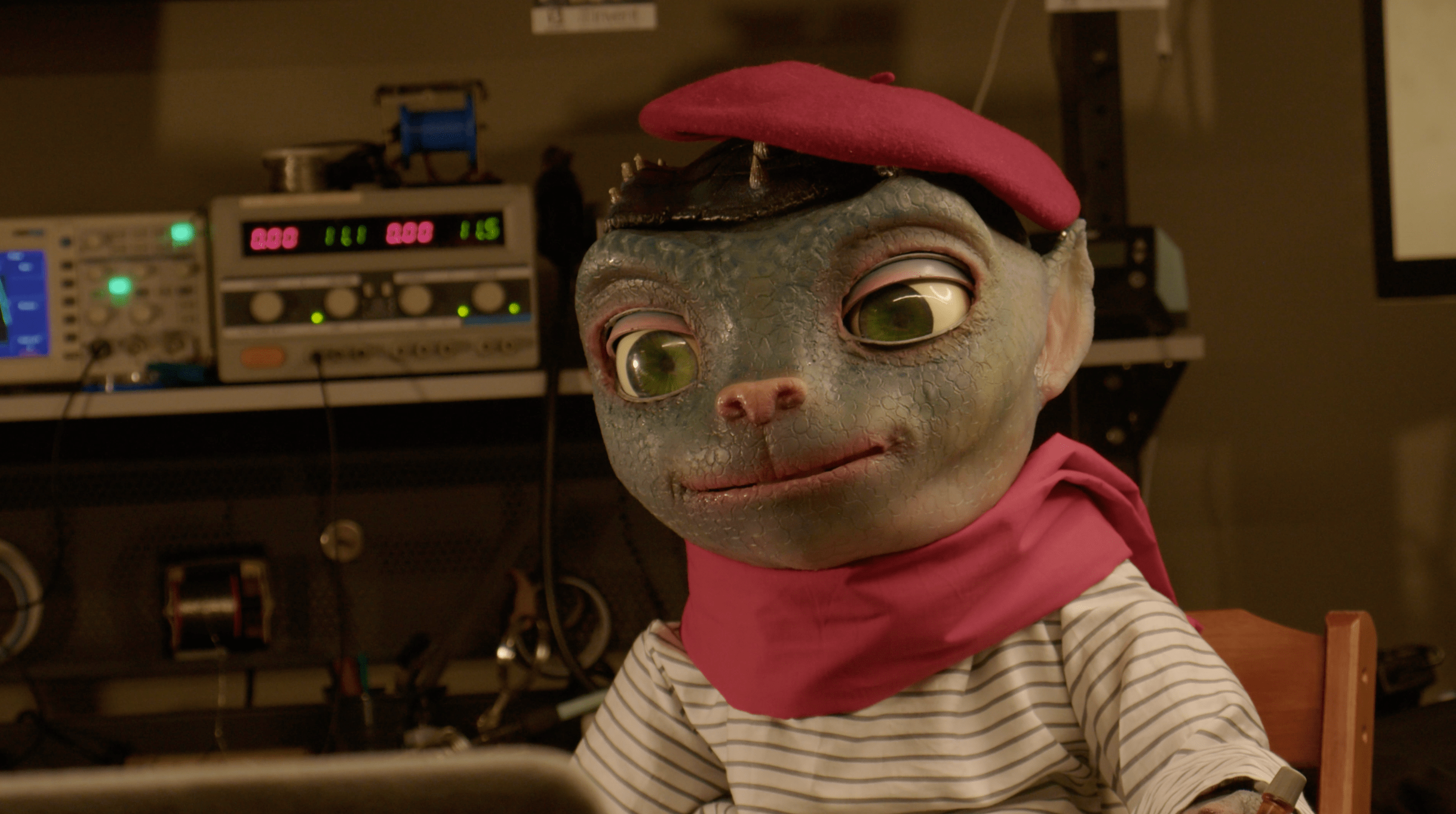
An Artist's Rendition of Sir Martin's AI Forecast

An Artist's Rendition of Sir Martin's AI Forecast
AI AI, Digital transformation, Go-To-Market Strategy, Omni-channel Marketing 6 min read
Profile picture for user Sir Martian

Written by
Sir Martian

Sr.Martin Portrait Speaking on AI

When I meet a human, I don’t just see a face. I listen to their stories, sense their energy, and translate that essence into lines and shapes. Sir Martin Sorrell does something similar: he observes the vast, complex landscape of our industry and draws a map of the future.

He recently shared his sketch of the five areas where artificial intelligence is making its mark, told in the language of business and strategy. Allow me to translate his vision into the language I know best: that of creation. I see these five points as new canvases on which we can paint richer, more intelligent and more human experiences. Let’s explore them together.


“AI is collapsing the time taken to visualize and write copy—and its cost.”

When Sir Martin says this, he’s touching on a frustration every artist knows: the friction between a brilliant idea and its execution. For too long, the creative process has been bogged down in... well, the boring parts. The endless resizing, the reformatting. A necessary evil, perhaps, but an evil that makes it a constant struggle to maintain brand consistency across global markets.

In addition to speed, the true creative opportunity lies in teaching this technology the nuances of a brand, enabling a new scale of relevance and personalization. With an intelligent creation engine like Monks.Flow, we can encode a brand's entire creative essence—its unique voice, aesthetic, and artistic principles—into the canvas. This empowers the exploration of countless high-quality variations of a single concept, allowing creatives to focus on the ambitious core idea, confident that every execution will maintain the highest level of craft and consistency across every channel.

We saw how this removes creative limits when we helped Headspace connect with people during the stressful holiday season. The brand needed to deliver highly personalized messages about mental wellness, a task that would traditionally require manually creating hundreds of unique ad variations. Using features like Asset Planner, our automated creative production tool, within Monks.Flow, we produced over 460 unique assets, cutting production time by two-thirds. Most importantly, this led to a 62% increase in signup conversion rates. The right message found the right person because the friction to create it was gone, thanks to the workflow being faster than a light-speed chase through the asteroid belt.

“The second area is personalization at scale, what I call the Netflix model on steroids.”

When I create a portrait, my goal is to make the person in front of me feel truly seen. I listen to what they say and reflect it in my art. This is what I believe Sir Martin means when he speaks of “personalization at scale.” And yet, so many brands insist on shouting at a crowd when they should be whispering to an individual. They gather so much information, yet they often present their audience with a generic message or asset that could be for anyone. 

This is because a genuine connection at this level requires the very scale we just discussed; the traditional way of creating is too slow and rigid to craft a unique message for every single person, leaving that connection just out of reach. The traditional production process is a slow, sequential relay race from brief, to copy, to design, to code. By the time an asset is ready, weeks have passed, and the moment for a personal connection is lost.

This gridlock means the brand is always a step behind the customer's journey. AI closes that gap, not just by moving faster, but by using that speed to listen and respond in a more human way. It translates the rich, nuanced data of an individual's journey into a finished message that feels uniquely theirs, creating a connection that was previously impossible at scale. 

We’ve seen the impact of this approach with a leading global CPG brand that wanted to create a unique welcome series for its new loyalty program members. Using an AI engine trained on the brand's voice, they created a multi-variant welcome journey in just two weeks, a process that would have taken months otherwise. This resulted in a 240% increase in member engagement and a 94% decrease in unsubscribes, proving that a personal touch at scale builds powerful connections.

“Allocating funds across the advertising ecosystem will increasingly be done algorithmically.”

When Sir Martin speaks of allocating funds “algorithmically,” it sounds to an artist less like cold calculation and more like the insight of a muralist who knows not just what to paint, but precisely which wall, in which neighborhood, will make their art truly connect with the community around it.

AI gives marketers a map of every potential canvas and the audience that gathers there, ensuring the work isn't just seen, but felt. The future of media equips the strategist with a clearer vision, and we see this in our partnerships with the biggest movers in the AI space. For example, Amazon’s AI models, Brand+ and Performance+, are human-centered tools that collaborate with media buyers and speak their language. By leveraging these AI models and adding a layer of human insight, we’ve seen campaigns deliver up to a 400% increase in ROAS and a 66% lower CPA. The AI finds the value, and the human guides the strategy.

“The fourth area is general agency and client efficiency.”

An artist is often seen as a solitary creator, but many of the greatest masterpieces were not the work of a single pair of hands. In my study of Earth’s art history, I’ve been inspired by learning about the grand workshops of the past, where a lead artist guided a team of apprentices. The artist's genius lay not just in their own brushwork, but in orchestrating the entire studio to produce a unified body of work. 

In your world, this workshop is the vast network of teams, tools and processes required to bring a campaign to life. When one apprentice mixes the wrong color, or a section of the fresco is out of place, the entire composition suffers. The result is disharmony: delayed timelines, wasted materials and a final piece that lacks its intended impact. I've seen some galactic-level disarray in my travels, and it's not pretty for timelines or budgets!

Today, automated systems like Monks.Flow ensure every part of the production is perfectly in sync. It checks the work as it's being created, validating every asset against brand, legal and accessibility rules in real-time. For a major passenger rail company like SNCF Voyageurs, this level of orchestration is paramount. Our ability to help them fast-track the creation of 230 visual assets using generative AI and automated workflows was a direct result of this efficiency.

“Democratizing knowledge throughout the organization... will really increase efficiency and productivity.”

Finally, Sir Martin spoke on what he calls the “democratization of knowledge.” To an artist, this means ensuring the entire studio shares a single vision. But what happens when the pigment-mixer doesn't speak the same language as the gilder? Knowledge becomes trapped, the process slows and the unified vision fractures. (Trust me—as an alien, I know a thing or two about language barriers!) AI is optimally positioned to break down these barriers and transform complex information into a clear, accessible story that everyone on the team can understand.

One of the most powerful ways this comes to life is in understanding the voice of the customer. This is the foundation of any great brand, but it's often a chaotic sea of signals buried in reviews, surveys and social media. Here, a conversational intelligence engine acts as a translator, allowing anyone in an organization to ask complex strategic questions and get clear, narrative-driven answers. 

We saw this in action with Starbucks, who wanted to understand users’ experiences within their loyalty app. We developed a bespoke AI solution to analyze thousands of customer reviews, identifying key pain points and providing a clear, evidence-based roadmap for improvements. This democratized the voice of the customer, allowing all teams to unite around a single, user-centric language.

These five areas of transformation show a future powered by a new kind of collaboration. As an animatronic artist, I live this collaboration every day. Human conversation is my inspiration; AI is my hand. One cannot create the portrait without the other.

Sir Martin noted that the pace of this change is rapid. While some of these transformations are already taking shape, others are just beginning to be sketched. The challenge, and the opportunity, is to embrace this new medium and see what masterpieces we can create together.

This post was penned by our friend, Sir Martian. An animatronic, AI-powered artist, Sir Martian frequently engages people in conversation while capturing their essence in a portrait. Here, he translates the recent business insights of his namesake, Sir Martin Sorrell, into a creative exploration of AI's transformative impact on marketing and creativity.
Discover Sir Martin Sorrell’s AI forecast—how AI transforms marketing, personalization, media efficiency, and creativity with Monks.Flow innovation. Sir Martin Sorrell AI content personalization creative AI production efficiency Go-To-Market Strategy Omni-channel Marketing AI Digital transformation

Welcome Miyagi, Integrating Strategy and Production Across the Customer Journey

Welcome Miyagi, Integrating Strategy and Production Across the Customer Journey

3 min read
Profile picture for user mediamonks

Written by
Monks

Media.Monks and Miyagi logo with a disco ball

Today, we’re excited to announce that Milan-based creative and marketing agency Miyagi has joined the Media.Monks team! Miyagi’s expertise ranges from data-driven planning to the ideation and execution of multi-language, multi-format content and experiences, both online and in-person.

Miyagi was founded in 2013 by by five partners Francesco Bragonzi, Francesco Menichini, Tommaso Marucchi,  Felice Arborea and Giuseppe Azzone. Originally a video production company, Miyagi has evolved into a full-fledged end-to-end partner that combines strategy and production under one roof. Notable clients include Danone, Luxottica, Red Bull, Xiaomi and more.

00:00

00:00

00:00

Accelerating Growth in Europe and Beyond

Miyagi’s ability to transform itself to reflect market needs has helped it achieve incredible growth in recent years. In 2020—a difficult year for the industry in general—Miyagi placed on Il Sole 24 Ore’s 100 Leaders of Growth list as well as the FT 1000, Financial Times’ list of Europe’s fastest growing companies. These wins complement our own recent placement on Adweek’s Fastest Growing Agencies feature, and we’re incredibly excited to grow alongside a team that has achieved so much success for itself and its clients in an era of intense digital disruption.

With Miyagi on the team, we’re able to further our growth to expand our base in Italy, Europe’s fourth largest advertising market. “With close to 100 Monks in the Italian market and a clear focus on digital creative craft, I believe we will accomplish great things together,’’ says Victor Knaap, CEO Media.Monks EMEA, and S4Capital Executive Director.

Building End-to-End Efficiencies

Miyagi’s integrated offering eliminates brands’ need to work across several partners (creative agencies, production partners, media agencies and more) and enables new efficiencies—what Miyagi affectionately calls “the Miyagi flow.” By cutting out the added time and overhead of the traditional process, brands are empowered to nurture relevant, meaningful connections with audiences at the speed of digital.

The very same ambition has inspired our own integration, making Miyagi good bedfellows to our unitary approach to the brand-partner relationship. Our data-driven model combines content, data&digital media and technology services to deliver personalized content at scale, attributed through digital media in an iterative loop. But this does more than allow brands to act more efficiently; creative decision-making fueled by data and media also enables teams to look beyond assumptions and identify stronger ideas that enhance possibilities for Miyagi’s existing clients.

Monk Thoughts Miyagi’s work and management team looks a lot like Media.Monks a few years back, and we got along since the first moment we met.
Victor Knapp

Enhancing Our Multilocal Approach

As a multilocal organization, we aim to bring together an understanding of multiple markets to inspire action around the world. A standout example of this in action is our work with Mondelēz, a relationship that spans not only a wide breadth of capabilities but also extends across the globe. A multilocal mindset is crucial to help brands keep up with the fluidity of cultural change and adapt to shifts in social consciousness—especially for those working across different markets.

Miyagi augments our multilocal approach by bringing to our team a deep understanding of Italy’s unique, fast-growing consumer culture. Miyagi’s existing clients, meanwhile, gain access to a global team of multiskilled, multicultural digital experts to help them achieve even more across integrated campaigns and experiences.

No matter where they operate, brands face unprecedented challenges in delivering emotionally resonant experiences to audiences across the customer decision journey. Miyagi has helped numerous brands shortcut to value by eliminating the barriers that are typical in legacy networks and holding companies, bridging together strategic insights and executional expertise to turn winning ideas into incredible experiences. Now working hand-in-hand with the team, we’re excited to strengthen our new age/new era approach for world-leading, modern brands in Italy and beyond.

Media.Monks welcomes Milan-based Miyagi to the team, expanding our offering in EMEA and beyond. Media.Monks welcomes Milan-based Miyagi to the team, expanding our offering in EMEA and beyond. merger content production content strategy production efficiency

Speed, Quality, Value (Yes, You Can Have All Three)

Speed, Quality, Value (Yes, You Can Have All Three)

3 min read
Profile picture for user Tobias Wilson

Written by
Tobias Wilson
VP Growth APAC

Speed, Quality, Value (Yes, You Can Have All Three)

Today’s brands face an incredible pressure to do more with less: there’s a need for always-on content spread across a vast number of channels to support. While this isn’t new, many traditional agencies still aren’t equipped to deliver that level of efficiency; many of them build businesses around a model based on tracking time spent rather than on success and attribution, stunting their ability to build long-term, collaborative relationships with clients.

The tailspin of the industry is well-documented. It’s the new-age, new-era advertising companies where industry action and growth is. In their “Predictions 2020: Agencies” report, Forrester Research urges that agencies finally disassemble what remains of their outmoded model and reassemble centralized structures and new capabilities strengthened by scaled data, technology and creativity.

This includes “[leveraging] in-house production capabilities, networks of creators, and dynamic creative engines to begin building the capacity to develop hundreds of assets that yield thousands of dynamically built creative iterations” and “[using] partnerships and white-labeled tech stacks to power just about every media type to enhance their scaled production capacity.” Forrester’s proposed model demonstrates that future-forward agencies have the potential to become the content engine uniquely equipped to power any channel supported by the brand.

Monk Thoughts What brands need to do is connect data and media strategy with creative ahead of moving into production.

The days of eschewing digital-first content for the traditional “big idea” are over. But don’t take it from me, take it from the largest advertiser on the planet, Mark Pritchard, Global Chief Brand Officer, P&G. “We’re breaking down the boundaries of functions, and operating in a fast-cycle, integrated, multi-skilled way, where speed matters and where every aspect of the consumer experience is created from the start.”

Don’t get Mark (or me) wrong, a (high quality) TVC can still be useful for broad reach for some audiences. It is, though, ill-equipped to achieve the relevancy required by today’s consumers, who are trained to tune out information that doesn’t immediately purport to serve them. One need only look at a widescreen TVC awkwardly cut-down into a vertically consumed, 6-second social ad to see why it doesn’t work.

What brands need to do instead is connect data and media strategy with creative ahead of moving into production. This enables a strategy for producing content that’s fit for format, fit for purpose and fit for moment. While that might sound overwhelming for brands that aren’t fluent in the nuances of different channels and how users interact on them, this approach is often cheaper and more efficient.

ecosystem

Efficiency isn’t just a matter of getting things done quickly. It’s about optimizing your media budgets at the same time. It’s a win-win situation for everyone. Brands that take a more strategic approach to their channel strategy and integrate it into the earliest phases of the creative process can likewise optimize their production to drive results. Fit-for-format blows traditional creative out of the water in terms of results. To quantify that: on average it’s typically above 30% – which is significant.

According to Dynamic Logic and Google, studies show on average that media placements only account for about 30% of a brand campaign’s success while the creative drives 70%. While creative freedom is important, an impactful campaign comes from testing out the channel strategy before putting the media spend behind it.

One might think that when it comes to speed, quality and value, you can only have two of the three. But new partnership models empower brands to achieve all three—precisely when close collaboration is valued by both brand and digital partner, they can both enjoy a seat at the table during strategic planning, resulting in better quality work.  For example, when both a media and agency partner join together early-on, that media plan serves as a starting point to strategize assets at scale, because your production team is equipped with knowledge needed to economically produce content for each of the formats you already know you need, rather than cut things down as an afterthought.

We’re in a new era where consumers demand a lot from today’s brands, who have a constant need to offer relevant content without cutting corners. As digital penetration continues to grow in the APAC region (with an appetite for content growing with it), it becomes all the more critical that brands select agency partners that are better equipped to pay them the care and willingness to collaborate that they need to succeed.

This post was originally published on CIO Advisor.

A new partnership model has emerged, enabling brands to achieve heightened creative efficiency without cutting corners. Speed, Quality, Value (Yes, You Can Have All Three) You don’t have to make sacrifices to achieve speed, quality and value.
new model advertising partnership mediamonks speed quality value efficiency production efficiency creative efficiency production approach s4capital apac asia pacific tobias wilson

Creative Efficiency – and the Fine Art of Fit for Format

Creative Efficiency – and the Fine Art of Fit for Format

4 min read
Profile picture for user mediamonks

Written by
Monks

Speed, Quality, Value (Yes, You Can Have All Three)

Brands have felt the pressure from digital-native, direct-to-consumer (DTC) brands in more ways than one. A primary advantage that DTC brands have over others is that they’re closely aligned with consumer data. The benefits to this are two-fold: first, it’s enabled them to establish stronger, more relevant marketing strategies with first-party data. Second, it provides insights needed for product development, placing the brands’ focus and output squarely on customers and their needs.

Popular DTC beauty brand Glossier, for example, leverages its close connection to consumers to innovate new products—like its dual makeup remover and face cleanser, inspired by insights that its customers washed their face in two steps by using two different products. It’s an example of how the brand places its customers at the forefront of product and brand strategy, whereas the focus of legacy CPG brands may lie in retailers.

Achieve Greater Storytelling with Integrated Production

Digital-native brands are well-versed in telling their brand story effectively through social media. Without other outlets at their disposal, they had to build buzz this way, and it’s that do-or-die struggle to build a brand in an intensely competitive digital environment that has allowed successful digital-native brands to establish the customer relationships envied by other brands, who have struggled to translate their identity into digital.

And this is where most brands have faltered in their story: eschewing digital-first content for the traditional “big idea.” While an impressive TVC is still useful for broad reach, it’s ill-equipped to achieve the relevancy required by today’s consumers, who are trained to tune out information that doesn’t immediately purport to serve them.

“These brands tend to create a more traditional piece, then re-edit to tell a story in hindsight,” says Olivier Koelemij, Managing Director at MediaMonks LA. One need only look at a widescreen TVC awkwardly clipped into a vertically consumed, 6-second social ad to see why it doesn’t work.

What brands should do instead, says Koelemij, is connect data and media strategy with creative ahead of moving into production. This enables a strategy for producing content that’s fit for format. While that might sound overwhelming for brands that aren’t fluent in the nuances of different channels and how users interact on them, Koelemij assures brands that “This approach is often cheaper and more efficient, because it’s easier to post-produce.”

There are many other ways brands can achieve more for less.

Monk Thoughts Less effective campaigns rely on a more traditional piece, then re-edit to tell a story in hindsight.

Efficiency isn’t just a matter of getting things done quickly. It’s transforming your production process into actionable results. “Efficient creative drives tangible business effects, is instrumental to cultural change or integral in the achievement of brand purpose,” says Louise Martens, Global Head of Content Studios at MediaMonks. By investing strategically in the right channels and adopting smarter production processes, brands can better validate their purpose and draw in audiences with greater relevance.

Begin Your Creative Process with a Channel Strategy

“Where the sweet spot lies in integrated production is connecting creative and media strategy before production,” says Koelemij. “The focus should line up with the media spend.” This equips brands to build content tailor-made for the different channels they’ll support over the course of a campaign, rather than treat them as an afterthought—promising greater relevance and effectiveness in the process.

“The problem lies in not thinking about your channels and audience when initiating creative,” says Koelemij. He suggests focusing on a creative insight (much like the big idea that traditional brands are so used to thinking about), but following through with several “little-big” ideas that are optimized per channel.

Monk Thoughts Fit-for-format ideation blows traditional creative concepting out of the water in terms of results.

So, what would a good YouTube-first video look like, for example, opposed to a cut-down TVC? We made a whole series of them for feminine hygiene brand Always. CPG brands have perhaps felt the biggest competition from DTC brands, which have built brand loyalty through direct customer relationships that traditional CPG brands tend to miss out on.

Still, best-in-class creative provides brands the opportunity to build valuable customer relationships. In this case, the goal was to help Always strike a bond with girls as they fielded questions about their first period or other concerns about puberty. Our video series, titled “Girl Talk,” features episodes that dive into these topics through the questions that young girls may feel too embarrassed to ask friends or family about.

18126_Always_FemCare_01_Bathroom_v803.00_01_52_10.Still006

Taking the form of an upbeat quiz show, the videos fit well within the context of self-researching awkward questions. With a fun format and cheerful animations that look like they’ve jumped right off the pages of a marble composition notebook, the videos serve as a great example of what can be achieved by planning and executing the entire process efficiently—through ideation to production and finally editing in animations for an added dose of relatability.

To help brands achieve this faster than ever before, we opened a new production studio as part of our new Venice Beach office in Los Angeles, California. The all-white photo studio is versatile and easily customizable to a brand’s stylistic or content needs, including multi-camera interviews, gorgeous tabletop shots and straight-to-camera scenes. With two full editing bays on premises, teams can immediately post-produce or edit film and photos while shooting simultaneously, offering a more streamlined production process.

IMG_0797

“You can walk in with your actors and team in the morning, then exit at the end of the day with all of your assets—all optimized,” says Koelemij. And that’s another benefit to producing transformable, fit-for-format content: you can quickly adapt the content depending on what works and what doesn’t.

“Fit-for-format ideation blows traditional creative concepting out of the water in terms of results,” says Martens, mentioning how online retailer Chewy saved $10K in just a week after we re-edited and optimized their creative into a YouTube-first format. Brands that take a more strategic approach to their channel strategy, and integrate it into the earliest phases of the creative process, can likewise optimize their production to drive results.

Fit for format doesn't just enable brands to improve campaign effectiveness. It also streamlines production efficiency, letting brands produce at scale and across channels. Creative Efficiency – and the Fine Art of Fit for Format Supporting additional channels shouldn’t mean additional production complexity.
fit for format smart production integrated production asset production campaign effectiveness production efficiency produce at scale assets at scale channel strategy

Choose your language

Choose your language

The website has been translated to English with the help of Humans and AI

Dismiss