Choose your language

Choose your language

The website has been translated to English with the help of Humans and AI

Dismiss

How to Scale Content Creation with AI Agents and NVIDIA’s Ecosystem

How to Scale Content Creation with AI Agents and NVIDIA’s Ecosystem
AI AI, AI & Emerging Technology Consulting, AI Consulting, Technology Services 4 min read
Profile picture for user mediamonks

Written by
Monks

A digital landscape features pixel-like blue and pink block formations resembling futuristic mountains and valleys, softly illuminated with glowing light effects.

As businesses scramble to keep up with the pressure to deliver innovative content at scale, traditional production methods are fading, giving way to the convergence of AI, digital twins and open standards like OpenUSD. These tools are accelerating workflows, enhancing precision and enabling scalability like never before. But what does it take to harness these advances in a practical, business-ready way?

As part of NVIDIA’s OpenUSD Insiders livestream series, our SVP of Innovation, Susan Foley; our VP, Global Head of Technology, Peter Altamirano; and our VP, Computational Creativity & Innovation, Emrah Gonulkirmaz, dove into AI-driven marketing, content creation and the future of agentic workflows. In conversation with NVIDIA’s Jamie Allan, Director of AdTech & Digital Marketing Industries, and host Edmar Mendizabal, they explored practical use cases for digital twins and NVIDIA Omniverse—complete with hands-on tips, real-world client examples and advice for organizations eager to embrace these innovations.

If you missed it, you can watch the full session below or keep reading for the key takeaways.

Digital twins are the new foundation for creative scale.

Unlocking business value today means taking control of your creative assets and processes. Digital twins—the hyper-accurate virtual models of products, characters and spaces—are quickly becoming the bedrock of that approach. Allan set the stage for the session by explaining, “A big part of what we’ve been doing is [figuring out] how to evolve the content supply chain for marketing content and ads. A lot of that is founded in creating digital twins of products, whether it’s a car or a shampoo bottle. That’s where the power of OpenUSD comes into play.”

Digital twins are built using open standards like OpenUSD—an open-source framework and file format for describing, composing and interchanging 3D scenes and assets—and applications that are developed with platforms like Omniverse. They serve as the single source of truth for everything from product imagery to complex industrial simulations, allowing businesses to rapidly iterate, test changes virtually and deliver new products or updated assets in a fraction of the traditional time. As Altamirano said, “You can optimize layout, workflows, asset creation and test and simulate your processes far faster than in the real world—no matter if you’re updating a retail shelf, visualizing packaging or piloting new robotics workflows.”

Monk Thoughts Precise digital twins accelerate decision-making, cut time-to-market and create a space for experimentation.

That said, what usually holds organizations back isn’t a lack of understanding of the benefits of digital twins, but simply not knowing where to start. Foley advised, “Start small, scale up as you prove value, and we’ll help you migrate services to compute so you can build your own moat with owned intelligence.” Pro tip: Don’t let complexity slow you down. Today’s SDKs, libraries, templates and demo projects make it easier than ever to get started quickly with no need to build everything from scratch.

Modular, agentic workflows mean AI is now your creative partner.

The future of creative production isn’t simply generating more and more images and text with AI. It’s about orchestrating a system where specialized AI agents collaborate across the full pipeline. A standout example is our experimental AI-generated campaign for PUMA, where every stage—from initial script and storyboard to animation and editing—was orchestrated by AI agents using Monks.Flow, our professional managed service powered by AI. 

Thanks to NVIDIA NIM microservices and node-based orchestration enabled by Monks.Flow’s Pathways framework, AI agents can swap out models or creative roles as needed. Pathways uses self-learning AI to autonomously manage, optimize and adjust workflows in real time. For example, we can switch from one generative model for texturing to another for background imagery without disrupting the flow. 

Crucially, this entire process was anchored to a high-fidelity digital twin of the PUMA product, built using NVIDIA Omniverse libraries. “We started by importing a precise 3D model of the sneaker created in the OpenUSD format into NVIDIA Omniverse USD Composer,” explained Altamirano. This virtual product served as the foundational source of correctness for every subsequent creative step. 

The process didn’t stop there: synthetic data generated from the USD-based model was used to train and guide AI agents tasked with upholding the correct cinematic style throughout the film. That way, the team could control vital aspects required to meet brand guidelines, such as camera angles, lens choices and product accuracy.

As Emrah put it, “After bringing the product to the previsualization stage in Omniverse, we gained full control over the generation process.” Then, using Pathways, a network of specialized AI agents orchestrated animation, editing and scene composition, maintaining brand consistency throughout. 

Monk Thoughts The future of AI won’t fit into containers of the past. Workflows need to be modular, interoperable, and ready to scale.

How to get started and scale fast.

Whether you’re a marketer, a manufacturer looking to modernize, or a developer curious about AI-driven workflows, the new ecosystem emphasizes accessibility. “Get your first Omniverse setup done and you’ll see how reusable and scalable it really is,” said Altamirano. “Start with a prototype, prove the value, then expand. This approach works for retail, hospitality, even real estate.”

For organizations not sure where to begin, the advice is clear:

  • Start small and show early results. Quick wins build stakeholder buy-in and reveal practical value.
  • Invest in training not just for engineers, but for your whole team. NVIDIA Omniverse Blueprints, free Deep Learning Institute courses, and a vibrant developer community enable rapid learning and onboarding.
  • Embrace open, modular platforms. This lets you change direction, upgrade AI models, and keep workflows on the cutting edge without locking yourself into monolithic systems.

Ultimately, modern creative innovation isn’t about one-off experiments; it’s about embedding intelligence, agility and modularity into the heart of your business. Digital twins anchor accuracy and scale. Agentic AI workflows make creativity collaborative and customizable. The path to scalable, AI-driven content creation has never been clearer. 

Learn how to unlock scalable content creation with AI agents and NVIDIA, using digital twins and OpenUSD for faster, brand-accurate production. Nvidia AI content at scale AI agents 3D content Technology Services AI & Emerging Technology Consulting AI Consulting AI

Personalization at Scale • AI Gets Right Message to Right User for 62% CVR Boost

  • Client

    Headspace

  • Solutions

    Performance CreativeMediaEconomies & Content at ScalePaid SocialPerformance Media

Results

  • 62% Higher CVR
  • 13% Better Cost-Per-Signup
  • Production time reduced by two-thirds
  • 460 motion and static assets produced
  • Winner for "Best Use of AI" at The Drum Awards North America, Digiday Awards, and Meta Agency Awards

Getting mental health resources into the hands of the many.

Headspace, a leading provider of digital resources for mental health and wellness, is on a mission to guide consumers to more joy, less stress and better sleep. But with no one-size-fits-all solution and countless use cases for Headspace’s offerings, it can be challenging to get the right resources and right messages to the right consumers at scale. Heading into their busiest season—the holidays—we turned to generative AI to power a new ad campaign designed to be as personalized as possible.

A woman laying on a yoga mat with headphones in

The approach

Mental health is not one-size-fits-all. Generative AI gets the right message to the right user at the right time.

Personalization made possible by AI.

The process began with gaining a deeper understanding of the prospective consumers. Using Persona.Flow, we gathered consumer research insights about the seasonal stressors that impacted the target audience’s mental health during the holidays—a process completed in a matter of minutes rather than the days or weeks required by a traditional research program. This efficiency enabled us to get past the monolith of a single persona and dig into the nuances of multiple consumer profiles to springboard creative concepts that could be adapted for everyone.

The work

Adaptable design to appeal to unique audiences

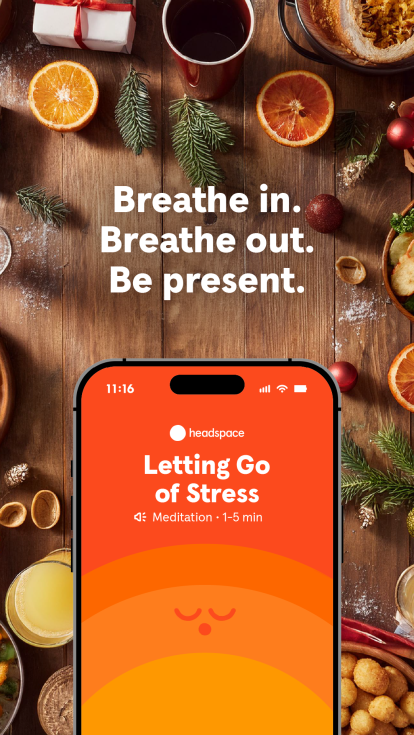
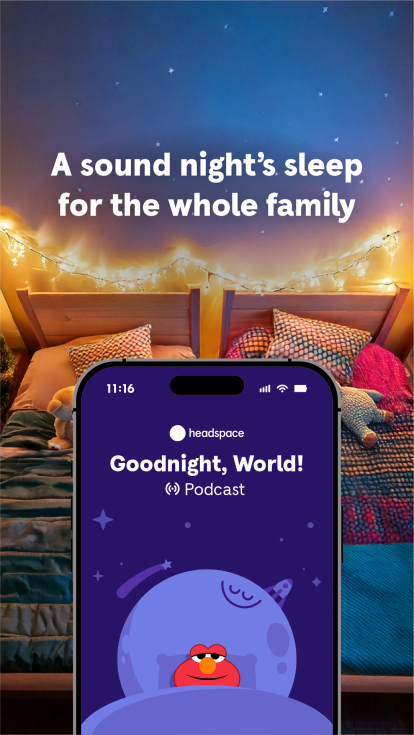
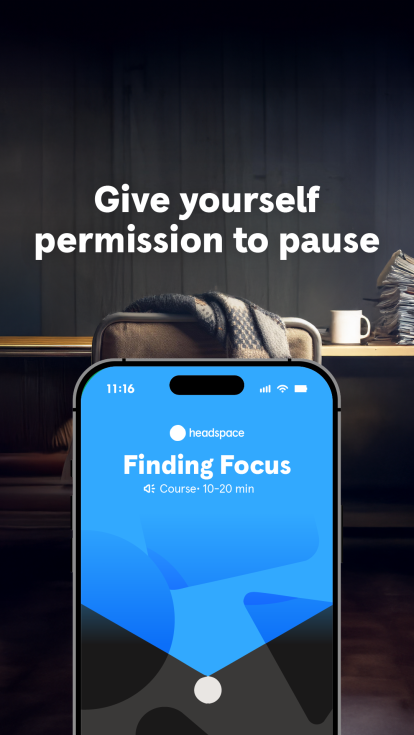
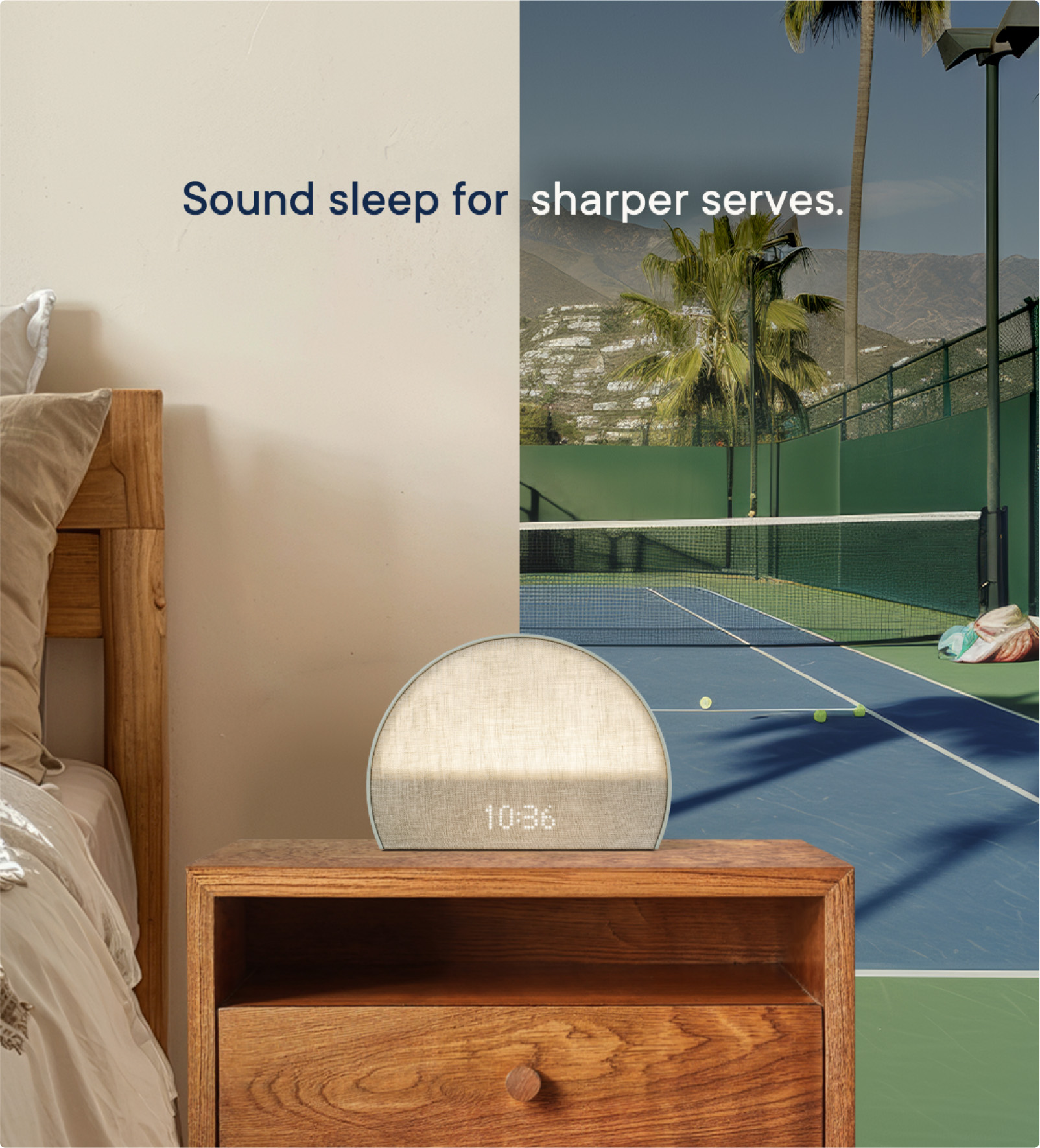
  1. Example of a Headspace ad created with Monks.Flow
  2. Example of a Headspace ad created with Monks.Flow
  3. Example of a Headspace ad created with Monks.Flow
  4. Example of a Headspace ad created with Monks.Flow

Drag
For More!

Modular concepts for maximum relevance.

We developed a modular ad concept that could pair seasonal emotional challenges with specific types of resources available from Headspace. Using Monks.Flow, our AI suite of tools, we combined ad elements—AI-generated backgrounds, product interface imagery and branded illustrations and iconography—to produce hundreds of assets at scale. For static and motion versions in multiple aspect ratios, production hours would have quickly racked up in a traditional design process. With AI-powered image generation and production, we had assets for 20 distinct use cases ready for approval quickly, and overall cut production time by two-thirds.

00:00

00:00

00:00

Launch and learn with machine learning.

The ads were designed for Meta’s Advantage+ campaigns, the machine learning-powered product to deliver ads to the right users. By combining AI creative and ad delivery, we created a highly relevant experience for the users, leading to higher-quality site traffic. North American users who saw the AI-assisted holiday assets through Advantage+ converted to a signup at a 62% higher rate than Headspace’s other Advantage+ traffic.

Initially, the AI assets started out with a lower CTR than traditional ads while the learning phase was in progress. However, we improved performance by providing a larger round of AI-assisted creatives for the New Year—and the improvement was clear. With more data to work with, the algorithm could successfully narrow the CTR gap between the test and control campaigns. The AI-assisted campaigns became even more efficient, driving over 10% more conversions at a 13% better cost-per-signup compared to the control campaign.

In partnership with

  • Headspace
Client Words We loved collaborating with Monks on this initiative for their thoughtful and responsible approach to generative AI. Their innovative process and tools enabled rapid experimentation, allowing us to deliver the right message to the right consumer at the right time—effectively and impactfully.
Maria Reinoso from Headspace, in front of a colorful background

Maria Reinoso

VP, Strategy, Operations, and GM D2C

Less stress, more joy.

With over 460 original ad assets designed from scratch for personalized testing, we helped Headspace work smarter, not harder, using generative AI. By combining multiple tools—from our proprietary Monks.Flow and Firefly generative technology from Adobe—with the expertise to steer the ad delivery algorithms by feeding campaigns the right asset fuel, Headspace is able to get even more people access to mental health resources, helping them lead more stress-free, joyful lives.

Want to talk generative AI? Get in touch.

Hey 👋

Please fill out the following quick questions so our team can get in touch with you.

See more examples of high-performing creative.

Building MINIWOOD • A First-of-Its-Kind, Scalable Virtual Production Studio

  • Client

    BMW

  • Solutions

    StudioArtificial IntelligenceAI & Emerging Technology ConsultingPerformance MediaCRM

00:00

00:00

00:00

Case Study

0:00

Balancing personalization with brand excellence.

The introduction of the new MINI family in 2024—including the new all-electric MINI Cooper, the new MINI Countryman and the first-ever MINI Aceman—marked a pivotal moment in the brand’s journey. In addition to an entirely new product lineup, it included a complete gear shift in the overall strategy and a fresh corporate identity, all designed to meet consumer demands for personalization while upholding the brand’s quality standards. Creating content for three completely new products within a tight timeline is daunting on its own, but doing so while building a new visual style from scratch can be quite overwhelming. That is, unless you have access to a cutting-edge virtual production design system.

An advanced automated solution for consistent, scalable content and immersive experiences.

An advanced automated solution helps streamline digital production at speed.

To help MINI create diverse content at scale, we built MINIWOOD, a first-of-its-kind digital production solution. Emulating Hollywood’s dynamic production capabilities, this dedicated virtual studio combines the power of Unreal Engine and our advanced automated managed service, Monks.Flow, to create automated workflows for a wide range of assets—from still images to entire product films. A major advantage is that MINIWOOD offers a pick-and-click web interface where producers and marketers can select, customize and start content production orders. It features a custom Universal Scene Description (.USD) workflow, capable of staging every possible car configuration and background setting, enabling the creation of diverse campaigns within a single modular setup and from a single render. 

Innovation meets scalability.

MINIWOOD ensures a cohesive visual language across both virtual and live-action productions. Plus, its dynamic virtual environments highlight the unique character of each MINI model, enhancing product differentiation. By 2024, all 12 new models will be integrated into the virtual studio, with each family showcased in distinct worlds—like rugged settings for the MINI Countryman and vibrant urban locales for the Aceman. This approach helps us meet the high demand for content while remaining cost-effective. Moreover, it supports digital sales globally across the US, Europe and China, covering all model variants in both still and video formats. In other words, it provides unparalleled flexibility for marketers to create campaigns tailored to specific consumer insights and the nuances of different regional markets.

Redefining automotive marketing.

MINIWOOD’s innovative production technique creates all campaigns in a single virtual space, guaranteeing brand consistency in today’s programmatic world. Above all, it reinforces the brand’s playful and pioneering ethos in a thriving digital age. By transitioning from conventional photography to a state-of-the-art digital environment, MINIWOOD helps MINI enhance customer engagement through personalized, immersive content experiences. This creative approach not only enhances efficiency but also stands out as a strong asset in the competitive automotive market.

Awards

  • 3x ADC Awards

Want to talk advanced automated solutions? Get in touch.

Hey👋

Please fill out the following quick questions so our team can get in touch with you.

Can’t get enough? Here is some related work for you!

`

Social

Social Content at Scale

Maximize relevance and reach with scalable, impactful social content.

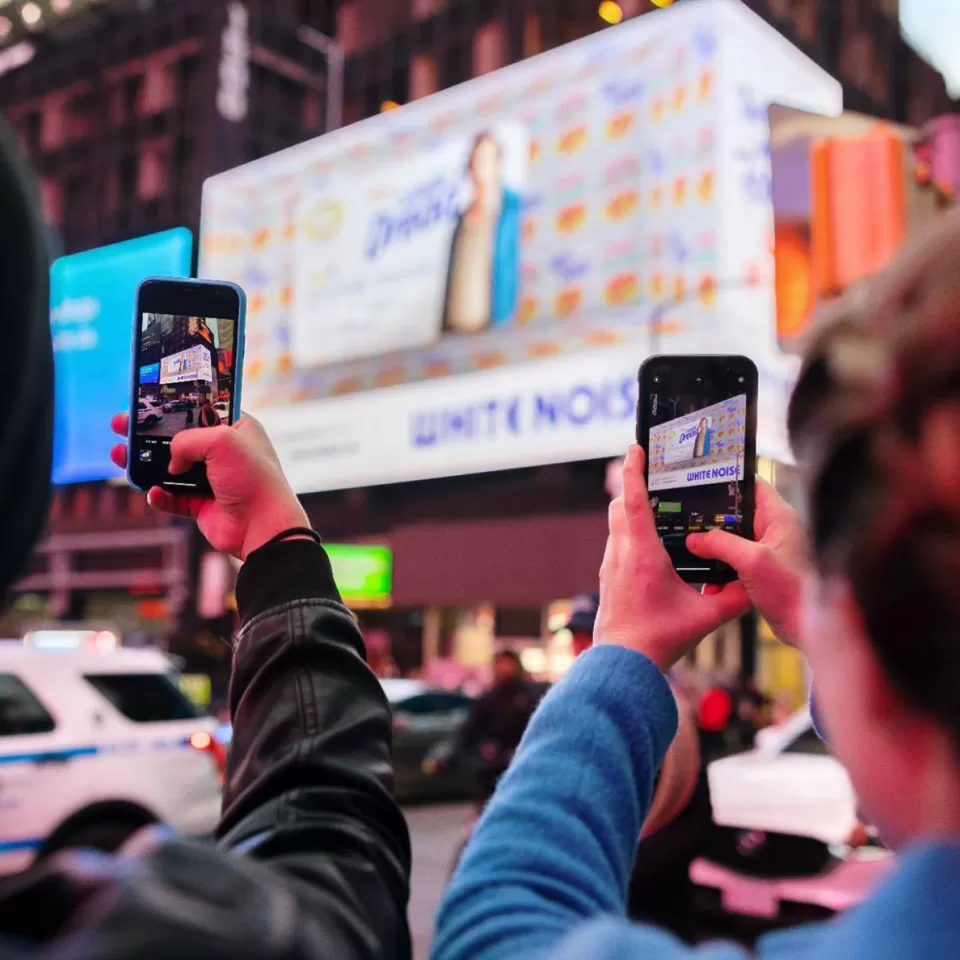
People taking photos on their phone of a billboard

Expand your brand's social footprint through social content at scale.

Maintaining a strong and competitive social media presence is vital in today’s business landscape. However, catering to a wide audience across networks, geographies and communities isn’t always easy. By leveraging economies of scale to optimize the production process, we help brands expand and strengthen their social footprint with tailored assets that align seamlessly with each social platform, ensuring authenticity and resonance. With access to a diverse group of talent spanning across countries, time zones and cultures, we maintain brand consistency and amplify reach while accommodating local priorities and cultural significance.

Monk Thoughts Consolidation takes multi-market brands to the next level, combining the best of global and local through quality standardized services, on-demand local activations and consistent efficiencies.
Profile photo Daniel Diez

We maximize scalable content production with global strategies that prioritize cost-effectiveness.

To enhance brands’ social media presence, we specialize in crafting comprehensive strategies that effectively expand their reach with cost efficiency and speed. That means we’re able to produce, adapt and distribute a large volume of content across various platforms. Here’s how we do it:

  • Social-first expansion: Our hub-and-spoke model features a central office hub with smaller satellites. This setup aids our partners in broadening their brand’s global social presence by leveraging economies of scale, overseeing and coordinating the brand’s social media strategy across various regions. 
  • Social power studio:  We function as an extension of your marketing team, collaborating to ideate, produce and adapt social content on a large scale. This approach generates significant impact and optimizes your return on investment by strategically crafting and distributing content. 

Want to talk Social? Get in touch.

Hey👋

Please fill out the following quick questions so our team can get in touch with you.

How MediaMonks and Firewood Empower Brands with a True Sense of Partnership

How MediaMonks and Firewood Empower Brands with a True Sense of Partnership

4 min read
Profile picture for user mediamonks

Written by
Monks

How MediaMonks and Firewood Empower Brands with a True Sense of Partnership

Over the past few years, brands have aimed to beef up their creative and production capabilities. The reasons why are clear: doing so offers them numerous opportunities to streamline the production workflow, enhance creativity with brand knowledge and retain a closer connection to consumers. They also become more versatile in the process; Forrester Research defines such brands as those which interweave “key capabilities across creative, digital marketing, and media between in-house and external agencies.”

Firewood has helped carve this path, coining the phrase “your in-house team, extended,” offering a variety of services such as creative, strategy and planning, performance media, technology and events. Firewood recently ranked #6 on Adweek’s Fastest Growing Large Agencies—and for good measure, as they’ve pioneered the embedded agency model in Silicon Valley and across the Americas and Europe. With service offerings that closely align with our own dedication to brands, we welcome Firewood into the S4 Capital family.

“Firewood’s ’embedded’ approach will allow us to build deeper and broader relationships with our clients, helping us work in a more flexible, collaborative and integrated way,” explains MediaMonks Founder Wesley ter Haar. That flexibility and sense of collaboration are key; the embedded model helps brands achieve success much more easily through direct access to specialized skillsets as needed, helping them scale up and achieve a more streamlined production process.

Attaining Greater Transparency

Among one of the greatest concerns that brands face is a need for greater transparency. Whether it’s in cost of services or ensuring they’re not victims of ad fraud, there are some trust issues brewing between brands and traditional agencies. The embedded model does away with these tensions by fully integrating its staff within the client’s infrastructure and go-to-market strategies. This gives brands a seat at the table and alleviates the pain points that they may feel by working with traditional agencies—like a cycle of rework.

Monk Thoughts Firewood’s 'embedded' approach will allow us to build deeper and broader relationships with our clients.
black and white photo of Wesley ter Haar

This offering is just one of the ways that the S4 model aims to integrate capabilities that help brands take a more active role within the production process. Our sister company MightyHive, for example, helps brands become more self sufficient in their media planning and spend. By pairing clients with the specific capabilities they require, we remain laser focused on helping them achieve success without having to sacrifice their ownership of a project.

Cutting Cost & Time, Not Corners

Brands are also driven to boost their internal creative capacity to produce work faster, aided by a closer connection between the creative team and decision makers. With a strong sense of ownership, they uphold a high standard of what makes good creative work. Still, a key challenge many brands face is a lack of resources that allow them to meet their fullest potential, whether it be a need for all hands on deck to produce always-on content, or specialized skillsets for quick and one-off projects.

This highlights another need for new partnership models. As the time-to-market shortens and the pressure for always-on content at scale grows, brands don’t have time to waste by following the typical RFP process or in hiring and onboarding new talent. Instead, an embedded team can offer an individual who provides direction and is backed by an agency’s full creative and production abilities.

Building a Culture of Confident Experimentation

When enjoying a closer relationship with consumers and a faster time to market, brands are in a great position to rapidly experiment and optimize their creative strategy, helping them home in on creatively differentiated experiences and messaging for their audiences. But truly delivering on this potential requires they cover the full end-to-end capabilities spectrum.

Monk Thoughts With traditional work, there’s a conservatism that you can’t marry data with being creative.
black and white photo of Wesley ter Haar

But most in-house agencies begin with just a specific capability that they strive to support and grow out from there. We believe a truer sense of partnership, designed specifically around enhancing in-house skillsets. At this year’s Advertising Week New York conference, MediaMonks Founder and COO Wesley ter Haar shared the stage with S4 Capital’s Sir Martin Sorrell and MightyHive’s Emily Del Greco to discuss how aligning data and creative is essential to innovating through experimentation.

“With traditional work, there’s a conservatism that you can’t marry data with being creative,” ter Haar said, noting how brands can take risks with confidence when backed by partners who have their back. As the S4 model grows, it will help brands integrate forward by taking back control and retaining a sense of ownership in their creative and production, ensuring they can meet success easier than ever before.

You can learn more about Firewood and S4 Capital joining forces through numerous sources covering the merger. Watch Sir Martin Sorrell’s on-air interview on the new partnership over at CNBC; at Ad Age, you can find Firewood Co-Founder and CEO Juan Zambrano provide insight on how his client-side background inspired the agency’s unique approach. And as covered by Reuters, Sir Martin offers a couple hints behind the overall S4 strategy and what to look forward to next for brands seeking new ways of working. We can’t wait to see what’s on the horizon.

As the need for always-on content at scale grows, we welcome Firewood Marketing to the S4 family, who pioneered the embedded agency model. How MediaMonks and Firewood Empower Brands with a True Sense of Partnership We welcome the newest member of the S4 family.
always-on content content at scale Firewood marketing S4 capital embedded team embedded agency production asset production talent

When Automation and Creativity Collide

When Automation and Creativity Collide

3 min read
Profile picture for user mediamonks

Written by
Monks

Thomas Strerath’s Data Advocacy for a New Era

Earlier this year, Adobe’s Digital Trends for Creative and Design Leaders report showed that front-end customer experiences had become a key differentiator for brands, though only 28% of creatives and marketers felt their company did an excellent job at personalizing content across consumer touch points. Fast-forward to now, and it doesn’t seem like much has changed.

According to Adobe’s new State of Creative and Marketing Collaboration Survey, 59% of marketers agree that it’s difficult to personalize content at scale, in part because of the time it takes to generate content. While everyone seems to agree that personalization is important (creative and agency leaders both cited it as the most exciting medium-term opportunity in the earlier report), keeping up with the pace of user demand is a considerable challenge.

Delivering at scale with a greater speed requires organizations to rethink their creative culture process. One example of how you can achieve this is with smart production, which enables you to generate dozens (if not hundreds) of assets customized to persona or location. Starting with just a handful of assets or a single shoot, smart production shows what brands are capable of when revising their creative framework to the technologies available today.

Monk Thoughts 59% of marketers agree that it’s difficult to personalize content at scale.

Foster a More Creative Environment

High-ranking businesses in the McKinsey Design Index (which measures an organization’s strength in design with respect to financial performance) outperformed industry benchmark growth as much as two to one across industries. They also resulted in higher revenue growth and returns to shareholders than their less design-focused counterparts. This is because a creative culture is key to developing standout content that differentiates a brand.

Another big factor is digital maturity. The Adobe State of Creative and Marketing Survey reported that 59% of organizations that consider themselves digitally mature say they are outperforming competition—something only 39% of other companies can say. They were also more likely to cite marketing as a differentiation for their organization.

See what happens when creative and automation come together.

The numbers indicate organizations must catch up to the technologies available today to create personalized content. Fostering a creative environment can be a great way to futureproof an organization and target the skills necessary for new digital marketing opportunities. Raising skill visibility or keeping the creative juices flowing by encouraging side projects is another great way for organizations to remain adaptive. This is particularly useful for organizations that are design-focused, yet still notice significant skill gaps.

Don’t Shun Data and Automation—Work with It

Quality of content is top-of-mind for designers and marketers, ranking as a higher priority than cost and personalization. This suggests no one wants to sacrifice quality for more accurate personalization or a faster output. While data-led marketing, bolstered by AI and machine learning, can help marketers keep up with growing user expectation and demand for constant content, many worry that doing so could cheapen the content quality or stifle creativity.

Monk Thoughts 59% of digitally mature organizations say they outperform competition.

But having a clear understanding of user behavior and interests can free up time to focus on creative work by better defining personas or use cases—or even provide new creative opportunities. And while personalization is less important to marketers than overall content quality, it’s worth mentioning that the two aren’t mutually exclusive: content that’s more relevant to audiences is certainly more resonant. In their primer on workplace creativity, Harvard Business Review made the genius analogy of Leonardo da Vinci, who drew on science to support his creative ideas. Likewise, today’s brands can discover a wide breadth of opportunities for storytelling with today’s tools at their disposal.

The typical pain point here is outdated workflows which slow teams down. But with pressure to deliver large amounts of timely, personalized content, creative teams don’t have time to spare tied up in red tape. One of the most effective ways to work more creatively with data is to break down silos within the organization and allow for more cross-functional collaboration.

In general, organizations will need to rely on entirely new ways of thinking in the creative process to generate massive amounts of personalized content at scale. Leveraging today’s technologies like smart production don’t only allow you to cater to specific personas; it also lets you frame your messaging to several different platforms and touchpoints where consumers might come in contact with your organization, allowing for engaging integrated campaigns with much less effort.

With their ideas and workflows optimized by using data productively, your design team becomes a more strategic and valuable asset within the organization—which in turn allows you to better reach your business goals. Designing new creative frameworks enhanced by data and tech therefore equip organizations to become more agile and efficient in their marketing, maintaining a competitive edge to meet demanding output.

With increasing user demand, personalizing content at scale is a challenge for many organizations. Rethinking creative frameworks and growing your talent’s skillset are two great ways to meet the growing need without sacrificing quality. When Automation and Creativity Collide The idea that automation stifles creativity is a myth. Instead, today’s technology enables brands to deliver more personalized content and experiences at scale.
personalizing content at scale content at scale smart production content production digital content production

Choose your language

Choose your language

The website has been translated to English with the help of Humans and AI

Dismiss