



Choose your language

Choose your language

The website has been translated to English with the help of Humans and AI

Dismiss

Personalization at Scale • AI Gets Right Message to Right User for 62% CVR Boost

  • Client

    Headspace

  • Solutions

    Performance CreativeMediaEconomies & Content at ScalePaid SocialPerformance Media

Results

  • 62% Higher CVR
  • 13% Better Cost-Per-Signup
  • Production time reduced by two-thirds
  • 460 motion and static assets produced
  • Winner for "Best Use of AI" at The Drum Awards North America, Digiday Awards, and Meta Agency Awards

Getting mental health resources into the hands of the many.

Headspace, a leading provider of digital resources for mental health and wellness, is on a mission to guide consumers to more joy, less stress and better sleep. But with no one-size-fits-all solution and countless use cases for Headspace’s offerings, it can be challenging to get the right resources and right messages to the right consumers at scale. Heading into their busiest season—the holidays—we turned to generative AI to power a new ad campaign designed to be as personalized as possible.

A woman laying on a yoga mat with headphones in

The approach

Mental health is not one-size-fits-all. Generative AI gets the right message to the right user at the right time.

Personalization made possible by AI.

The process began with gaining a deeper understanding of the prospective consumers. Using Persona.Flow, we gathered consumer research insights about the seasonal stressors that impacted the target audience’s mental health during the holidays—a process completed in a matter of minutes rather than the days or weeks required by a traditional research program. This efficiency enabled us to get past the monolith of a single persona and dig into the nuances of multiple consumer profiles to springboard creative concepts that could be adapted for everyone.

The work

Adaptable design to appeal to unique audiences

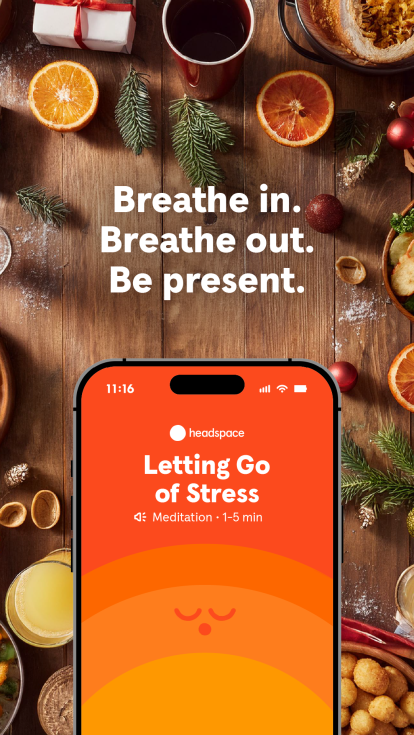
  1. Example of a Headspace ad created with Monks.Flow
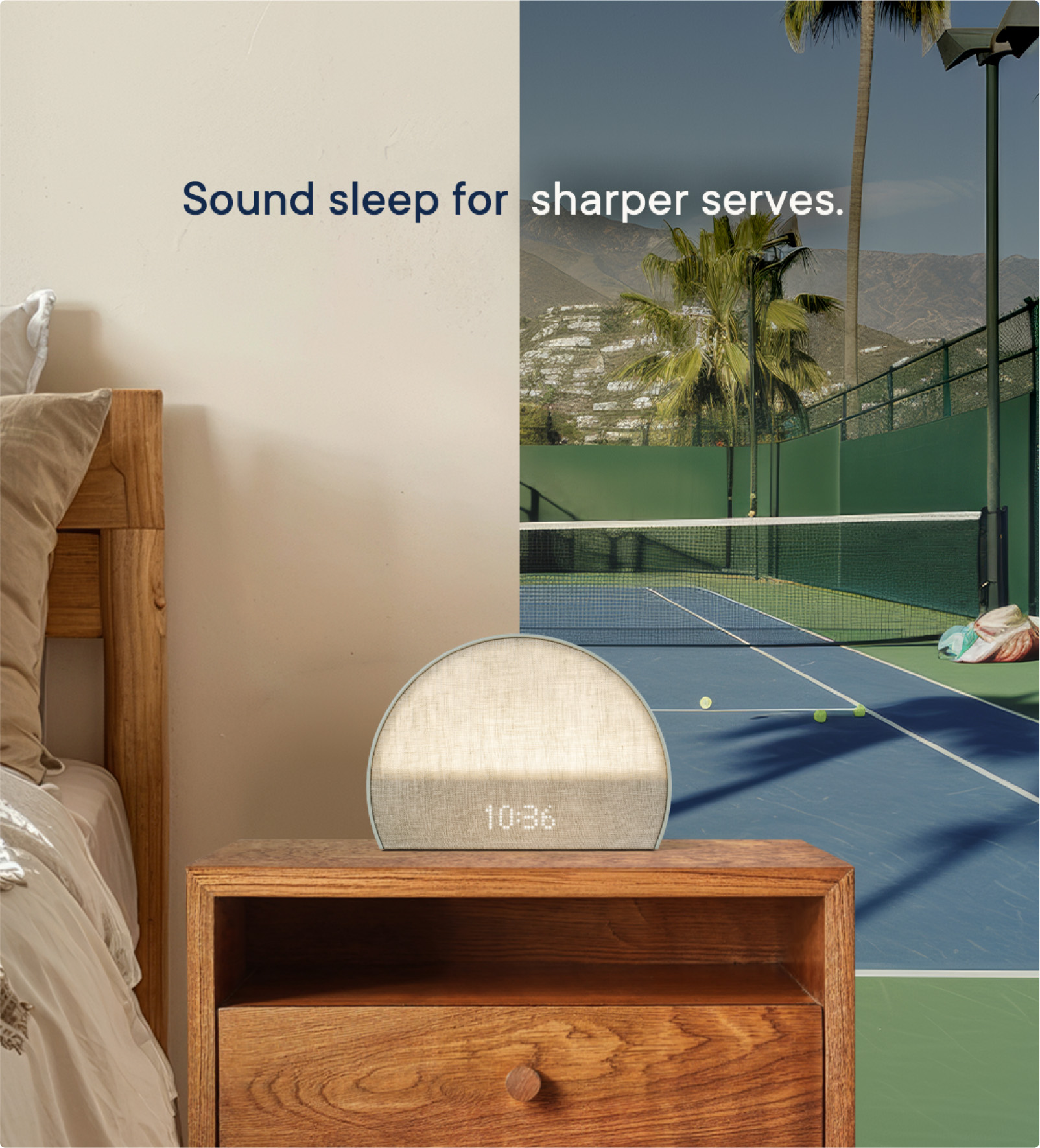
  2. Example of a Headspace ad created with Monks.Flow
  3. Example of a Headspace ad created with Monks.Flow
  4. Example of a Headspace ad created with Monks.Flow

Drag
For More!

Modular concepts for maximum relevance.

We developed a modular ad concept that could pair seasonal emotional challenges with specific types of resources available from Headspace. Using Monks.Flow, our AI suite of tools, we combined ad elements—AI-generated backgrounds, product interface imagery and branded illustrations and iconography—to produce hundreds of assets at scale. For static and motion versions in multiple aspect ratios, production hours would have quickly racked up in a traditional design process. With AI-powered image generation and production, we had assets for 20 distinct use cases ready for approval quickly, and overall cut production time by two-thirds.

00:00

00:00

00:00

Launch and learn with machine learning.

The ads were designed for Meta’s Advantage+ campaigns, the machine learning-powered product to deliver ads to the right users. By combining AI creative and ad delivery, we created a highly relevant experience for the users, leading to higher-quality site traffic. North American users who saw the AI-assisted holiday assets through Advantage+ converted to a signup at a 62% higher rate than Headspace’s other Advantage+ traffic.

Initially, the AI assets started out with a lower CTR than traditional ads while the learning phase was in progress. However, we improved performance by providing a larger round of AI-assisted creatives for the New Year—and the improvement was clear. With more data to work with, the algorithm could successfully narrow the CTR gap between the test and control campaigns. The AI-assisted campaigns became even more efficient, driving over 10% more conversions at a 13% better cost-per-signup compared to the control campaign.

In partnership with

  • Headspace
Client Words We loved collaborating with Monks on this initiative for their thoughtful and responsible approach to generative AI. Their innovative process and tools enabled rapid experimentation, allowing us to deliver the right message to the right consumer at the right time—effectively and impactfully.
Maria Reinoso from Headspace, in front of a colorful background

Maria Reinoso

VP, Strategy, Operations, and GM D2C

Less stress, more joy.

With over 460 original ad assets designed from scratch for personalized testing, we helped Headspace work smarter, not harder, using generative AI. By combining multiple tools—from our proprietary Monks.Flow and Firefly generative technology from Adobe—with the expertise to steer the ad delivery algorithms by feeding campaigns the right asset fuel, Headspace is able to get even more people access to mental health resources, helping them lead more stress-free, joyful lives.

Want to talk generative AI? Get in touch.

Hey 👋

Please fill out the following quick questions so our team can get in touch with you.

See more examples of high-performing creative.

Lessons from the Experts on Data-Driven Marketing at Scale

Lessons from the Experts on Data-Driven Marketing at Scale

5 min read
Profile picture for user mediamonks

Written by
Monks

Drive impact across the customer journey.

Data can be overwhelming for marketers—there are so many KPIs to consider, touchpoints to measure, and you’ve probably collected more data than you know what to do with. Realizing the data challenges that clients are facing (and the urgency to let go of old habits as new restrictions loom on the horizon), we partnered with Brand Innovators to host an afternoon-long event focused on data-driven marketing at scale.

The discussion featured leadership from both regional and world-leading brands, who each discussed their unique relationships with data. From building a more holistic understanding of the customer journey to enabling more impactful personalization and experiences and more, each speaker across four segments revealed their success stories in activating data. You can watch the full event here, or find key insights from speakers below.

Data-Driven Marketing Should Enhance the Customer Experience

It’s easy to feel lost with acclimating to recent (or upcoming) changes in privacy and data collection. As marketers navigate a privacy landscape transformed by new features in iOS 14, the cookie apocalypse and more, a good rule of thumb is to focus your data-driven marketing strategy on enhancing the customer experience.

“The goal is to take as much data as you can that makes your experience better and helps you truly understand the customer,” says Erin Levzow, Vice President of Marketing Technology at Del Taco Restaurants. She opened her fireside chat by drawing a distinction between what kinds of experiences make personalization more meaningful in the minds of consumers versus strategies like relentless retargeting that simply creep people out. “When it’s done well, that’s great—but when a brand knows I just bought an end table and offers me another end table, it doesn’t feel very personalized.”

Screenshot of an interview between Erin Levzow and Jaime Frey.

Erin Levzow spoke with Jaime Frey, Vice President of Account Services at Metric Theory, which joined Media.Monks in 2021.

By zeroing in on value for the customer instead, brands set themselves up to capture the first-party data that is so crucial to building relationships with consumers today. “One thing we've benefitted from around the strength of our loyalty program is that so many of our customers are willing to uniquely identify themselves across channels to take advantage of our benefits,” says Holly Waisanen-Hatipoglu, Vice President of Loyalty Performance Management at Marriott International. “That's made it easier for us to at a minimum have some kind of customer ID that goes across multiple platforms.”

A customer-centric focus can also help unpack which metrics hold value to your brand and how to interpret them. Levzow detailed how for a quick-service restaurant like Del Taco, a lot of time spent on the website isn’t the good signal it may mean for other businesses. “Customers are looking for information fast—what on my website do I want them to spend time doing?” she says. “They’re looking for things like nearby locations, so if they’re spending a lot of time on the website, then I should be concerned. We absolutely look at numbers differently.”

Take a Holistic Approach to Measuring Across the Customer Journey

A recurring topic of conversation throughout the day was the role that data plays in reaching audiences where they’re at, then using those insights to accurately pinpoint where you should invest your spend. Chris Marino, Global Head of Performance Marketing & Media at Bloomberg Media, drew on his experience of driving consumer subscriptions—a process that entails reaching audiences offsite, whether through social, search, OTT media and more.

“I’m very passionate about making the right levels of investment in upper and mid-funnel marketing initiatives, knowing that that’s where the opportunity and scale really exists to drive consideration—then ultimately using that scale, content and insights to bring someone down the funnel and drive a really efficient conversion,” says Marino. Subscriptions to Bloomberg Media grew by 34% in the first half of the year, reaching more than 325,000.

Advocating for building a more holistic understanding of the customer journey, Marino cautioned against taking a last-touchpoint approach to measurement. When it comes to assessing media spend, for example, your Google Analytics reporting may give a lot of credit to the role your website plays in driving conversions. But basing decisions on that information alone loses sight of the influences that consumers have engaged with on the path to get there.

Screenshot of the Brand Innovators event, featuring an interview between Brittany Blanchard and Chris Marino.

Chris Marino shared his insights in conversation with Brittany Blanchard, Vice President of Account Services at Metric Theory.

“If it takes them five or more touchpoints to become a paid subscriber, if we were to only think about things on a last-touch basis, we might limit investments that bring customers through the funnel,” Marino says. So, how do you get out of that last-touch mindset? “Stop thinking about channel attribution and what we as an individual have contributed and start thinking about how we as marketers all come together to create the most optimal customer experience,” he says.

Align Data and Content Creation for Marketing at Scale

Of course, data plays an important role in identifying and understanding new user behaviors. Canva, a platform that makes it easy to design graphics, presentations, documents and more, saw a large uptick in adoption from educators last year as learning migrated online. Noticing this trend, the Canva team designed templates to help teachers quickly and easily design their own worksheets.

While it’s clear data can signal the need for new product features, that same user data generated in the platform can also inform marketing content to further fuel growth. "Marketing is on the front lines of testing and learning about customers,” says Sunil Subhedar, Global Head of Growth at Canva.

He spoke on the importance of having an AI-based recommendation engine built into digital products, noting that the very same technology can power marketing performance. When users begin a new project on Canva, for example, they’re met with popular templates to get started. Canva depicts these same popular templates in marketing materials, which show prospective users what others are building through the platform’s ease of use.

While this approach is effective, many brands will rely on a skilled partner to execute at scale. “To scale the amount of content would require an army of people,” says Subhedar. “So there is an opportunity to partner with an agency to build this complementary service and fuel global creative using a template brand toolkit and a way of disseminating that across different languages and markets.” It’s a challenge that we enjoy, weaving data insights and production together to power marketing at speed and scale for audiences all over the world.

There’s lots of ways you can use data to power marketing and performance. Whether it’s better understanding segments of your audiences and their needs, gaining a 360-degree view of the customer decision journey or integrating artificial intelligence into the creative process, data-driven marketing at scale doesn’t have to be the scary prospect that it may seem. In fact, heeding the advice shared during the Brand Innovators event is an excellent way of preparing yourself ahead of time for new policies and shifting consumer attitudes toward privacy—and that’s an insight you can count on.

Marketing leaders share insights on impacting the customer journey with data-driven marketing at scale. Marketing leaders share insights on impacting the customer journey with data-driven marketing at scale. data-driven marketing personalizing content at scale customer data consumer data

When Automation and Creativity Collide

When Automation and Creativity Collide

3 min read
Profile picture for user mediamonks

Written by
Monks

Thomas Strerath’s Data Advocacy for a New Era

Earlier this year, Adobe’s Digital Trends for Creative and Design Leaders report showed that front-end customer experiences had become a key differentiator for brands, though only 28% of creatives and marketers felt their company did an excellent job at personalizing content across consumer touch points. Fast-forward to now, and it doesn’t seem like much has changed.

According to Adobe’s new State of Creative and Marketing Collaboration Survey, 59% of marketers agree that it’s difficult to personalize content at scale, in part because of the time it takes to generate content. While everyone seems to agree that personalization is important (creative and agency leaders both cited it as the most exciting medium-term opportunity in the earlier report), keeping up with the pace of user demand is a considerable challenge.

Delivering at scale with a greater speed requires organizations to rethink their creative culture process. One example of how you can achieve this is with smart production, which enables you to generate dozens (if not hundreds) of assets customized to persona or location. Starting with just a handful of assets or a single shoot, smart production shows what brands are capable of when revising their creative framework to the technologies available today.

Monk Thoughts 59% of marketers agree that it’s difficult to personalize content at scale.

Foster a More Creative Environment

High-ranking businesses in the McKinsey Design Index (which measures an organization’s strength in design with respect to financial performance) outperformed industry benchmark growth as much as two to one across industries. They also resulted in higher revenue growth and returns to shareholders than their less design-focused counterparts. This is because a creative culture is key to developing standout content that differentiates a brand.

Another big factor is digital maturity. The Adobe State of Creative and Marketing Survey reported that 59% of organizations that consider themselves digitally mature say they are outperforming competition—something only 39% of other companies can say. They were also more likely to cite marketing as a differentiation for their organization.

See what happens when creative and automation come together.

The numbers indicate organizations must catch up to the technologies available today to create personalized content. Fostering a creative environment can be a great way to futureproof an organization and target the skills necessary for new digital marketing opportunities. Raising skill visibility or keeping the creative juices flowing by encouraging side projects is another great way for organizations to remain adaptive. This is particularly useful for organizations that are design-focused, yet still notice significant skill gaps.

Don’t Shun Data and Automation—Work with It

Quality of content is top-of-mind for designers and marketers, ranking as a higher priority than cost and personalization. This suggests no one wants to sacrifice quality for more accurate personalization or a faster output. While data-led marketing, bolstered by AI and machine learning, can help marketers keep up with growing user expectation and demand for constant content, many worry that doing so could cheapen the content quality or stifle creativity.

Monk Thoughts 59% of digitally mature organizations say they outperform competition.

But having a clear understanding of user behavior and interests can free up time to focus on creative work by better defining personas or use cases—or even provide new creative opportunities. And while personalization is less important to marketers than overall content quality, it’s worth mentioning that the two aren’t mutually exclusive: content that’s more relevant to audiences is certainly more resonant. In their primer on workplace creativity, Harvard Business Review made the genius analogy of Leonardo da Vinci, who drew on science to support his creative ideas. Likewise, today’s brands can discover a wide breadth of opportunities for storytelling with today’s tools at their disposal.

The typical pain point here is outdated workflows which slow teams down. But with pressure to deliver large amounts of timely, personalized content, creative teams don’t have time to spare tied up in red tape. One of the most effective ways to work more creatively with data is to break down silos within the organization and allow for more cross-functional collaboration.

In general, organizations will need to rely on entirely new ways of thinking in the creative process to generate massive amounts of personalized content at scale. Leveraging today’s technologies like smart production don’t only allow you to cater to specific personas; it also lets you frame your messaging to several different platforms and touchpoints where consumers might come in contact with your organization, allowing for engaging integrated campaigns with much less effort.

With their ideas and workflows optimized by using data productively, your design team becomes a more strategic and valuable asset within the organization—which in turn allows you to better reach your business goals. Designing new creative frameworks enhanced by data and tech therefore equip organizations to become more agile and efficient in their marketing, maintaining a competitive edge to meet demanding output.

With increasing user demand, personalizing content at scale is a challenge for many organizations. Rethinking creative frameworks and growing your talent’s skillset are two great ways to meet the growing need without sacrificing quality. When Automation and Creativity Collide The idea that automation stifles creativity is a myth. Instead, today’s technology enables brands to deliver more personalized content and experiences at scale.
personalizing content at scale content at scale smart production content production digital content production

Choose your language

Choose your language

The website has been translated to English with the help of Humans and AI

Dismiss