


Choose your language

Choose your language

The website has been translated to English with the help of Humans and AI

Dismiss

A person jumping in the air
A person taking a photo with their phone
Hands typing on a cellphone

Sprint Media Buying • Moving Ops In-House for a Data-First Approach to Business

  • Client

    Sprint

  • Solutions

    MediaTransformation & In-HousingTechnology Training & CoachingMedia Strategy & PlanningProgrammatic

A person smiling and standing in front of a Sprint logo

Results

  • Increased conversions by 99% and cut digital acquisition costs in half within the first year.
  • Saved $6 million in costs annually.
  • With savings reinvested into working media, 
drove a significant increase in sales through 
Sprint digital channels.

Revamping operations for a move in-house.

Before it merged with T-Mobile US in 2020, Sprint was the fourth-largest network operator in the United States, providing wireless services to over 50 million customers. While, like its competitors, most of Sprint’s sales were transacted either over the phone or in-store, company leadership knew that more and more customers would be interacting with the brand online—and expecting more from those interactions. To enhance the company’s ability to respond to the market in real time and curb rising advertising and customer acquisition costs, Sprint sought to revamp its digital marketing operations and gradually move media planning and buying in-house.

The Sprint team was confident that being closer to their marketing data and execution would help them win in an extremely competitive telecom space, but there were few examples of other companies having made such a change. Given our deep Google ecosystem knowledge and flexible service model, we were selected to partner with Sprint in facilitating the transition.

After a very brief audit phase, we took over Sprint’s media management and embedded our teams within the Sprint and Boost Mobile digital marketing organization. We spent the first year laying the groundwork for an effective digital marketing team—rebuilding their campaign structure, reporting and best practices. We then spent the next 18 months assisting with recruiting and hiring efforts, and then trained in-house teams to self-sufficiency.

A person on their phone enjoying a cup of coffee on the couch
A person walking and talking on a cellphone
Quite honestly, moving in-house has blown away our expectations in terms of how much year-over-year improvement we’ve been able to see, both from a top-line and a bottom-line perspective.
Read on Campaign

Pulling back the curtain.

Before Sprint was able to more effectively activate its enormous wealth of customer data, it was crucial to gain transparency into Sprint’s digital advertising technology fees, data fees and inventory costs. We worked directly with Sprint’s external vendors to identify opportunities to decrease tech and data fees and eliminate waste from audience oversaturation. These efficiencies allowed Sprint to reduce overall ad spend while continuing to increase working media.

With transparent service models and media spend in place, Sprint was ready to run with its wealth of marketing data. We oversaw the consolidation of disparate data sources into in-house data lakes, allowing for significantly more granular segmentation and targeted programmatic campaigns. Sprint’s newfound laser focus on precise and meaningful audience segmentation helped the brand realize increased efficiencies in its programmatic media spend and stronger campaign performance.

A graphic of a computer showing a dashboard full of data

Taking the reins.

In the early stages of the project, Monks was on-site twice a month—and more frequently as the in-housing phase approached—to facilitate clear lines of communication with Sprint’s project stakeholders and familiarity with the personalities and working styles of auxiliary team members across web analytics, design and website development. We worked hand-in-hand with the team to manage the transition from their external agency and to refine their digital program. We helped identify new KPIs and measurement models, found ways to reduce waste, and created an audience framework that attracted higher-quality traffic. We also developed a multi-touch attribution model for better insights and built a system for real-time reporting.

After proving the early results of bringing digital media in-house, we helped Sprint with the next phase of the journey—assisting in the design of their team structure, creating candidate profiles to identify the right talent to handle digital media planning and buying. In-person training—literally with hands on the keyboard together as key capabilities were turned over—ensured a smooth transition from Monks to Sprint team members.

A person smiling with their arms folded on a yellow background

In partnership with

  • Sprint
Client Words Monks' deep programmatic expertise and advisory capabilities made them an easy choice. They’ve helped us gain the control, insights and flexibility to be able to better meet the needs of our customers and our business as a whole.
Rob Roy headshot

Rob Roy

Chief Digital Officer, Sprint

Impact

Inspiring a generation of business leaders.

Beyond the benefits Sprint experienced over the course of the relationship, in 2020, we had the privilege of working with the Sprint digital team and Harvard Business School to create a case study on Sprint’s digital transformation success. We are humbled that our work is included in the Harvard curriculum for future business leaders.

Harvard business sheet on a red background

Want to talk media? 
Get in touch.

Hey👋

Please fill out the following quick questions so our team can get in touch with you.

Can’t get enough? Here is some related work for you!

A colorful green and blue circle
Hands pilled on top of each other
Bayer sign on the wall

Bayer Consumer Health • Moving Digital Media Ops In-House For Greater Control

  • Client

    Bayer

  • Solutions

    MediaMedia AnalyticsTransformation & In-HousingMedia Strategy & PlanningDataMeasurement

Results

  • $10 million in cost savings within 
the first six weeks.
  • Increased working media, targeted impressions, category reach and, 
ultimately, ROI.
  • 35% ongoing efficiency improvement in media cost.

Taking the wheel.

Bayer’s Consumer Health Division brings consumers some of the world’s best-known and most trusted over-the-counter medications, nutritional supplements and other self-care products. In 2018, Bayer Consumer Health US sought to make its digital advertising more responsive, effective and cost-efficient. So the company embarked on a plan to bring digital ad operations in-house. 

The goal of transitioning to an in-house shop was to improve performance and transparency while reducing fees, improving speed to market and developing data insights for smarter decision-making. They also wanted to broaden and deepen digital expertise across their organization. To execute on this vision, Bayer partnered with Monks to support the transition and help build out the in-house team and systems.

A person on a bicycle along with the bayer logo and a colorful circle

Driving efficiency at scale.

Our team worked with Bayer to develop a two-phased approach to digital media self-sufficiency. In phase one, we took interim control of campaigns and technologies across two dozen brands while we helped Bayer establish frameworks and processes for digital ad buying that would drive efficiency at scale.

A few pictures of doctors working in a hospital

As a first step, we helped Bayer gain access to underlying campaign data and identify opportunities to reduce or eliminate fees from digital media buys. Bayer brand expertise, coupled with access to data, immediately unlocked opportunities for the team to quickly gather insights and make them actionable. Data fueled the creation of a highly complex but unified taxonomy to assist with analysis and provide a consistent data feedback loop. We integrated cleaner data into dashboards, giving the Bayer team fast and easy ways to interact with data and uncover insights. With ownership of media costs, weekly sales, profit data and competitive reports, the Bayer team was empowered to make optimization decisions that would have the most meaningful impact.

Bayer logo on a building
man sitting in front of a projected presentation at a conference
A person playing chess with a kid
Press As we start to onboard all of our data and put things into our system, there will be the question of the bandwidth of the team, which is why it’s so important to have a group like Monks support the business.
Read on Digiday

Impact

The road to self-sufficiency.

To build a self-sufficient team and ensure a smooth transition, we worked with Bayer to create and establish job descriptions, communication flow and performance and workflow standards. We implemented a staggered transition plan, with a period of overlapping support, so Bayer could hire and train the necessary talent to take over day-to-day ownership of media, search, social, programmatic, analytics and strategy—all achieved two months ahead of schedule.

Given the success of the Consumer Health engagement and the strength of our partnership, Bayer sought Monks’ advice and support on digital transformations for the Pharma and Crop Science divisions.

Results

  • 1x AdExchanger Award

Want to talk media? 
Get in touch.

Hey 👋

Please fill out the following quick questions so our team can get in touch with you.

Can’t get enough? Here is some related work for you!

In-House or External Agency? An Embedded Mindset Offers the Best of Both Worlds.

In-House or External Agency? An Embedded Mindset Offers the Best of Both Worlds.

5 min read
Profile picture for user melanie-sweet

Written by
Melanie Sweet

In-House or External Agency? An Embedded Mindset Offers the Best of Both Worlds.

This article was originally published in Campaign Asia @ campaignasia.com

In marketing and advertising, the only thing we know for certain is that things always change. And in today’s world where we’ve learned that everything can change on a moment’s notice, brands are starving for working models that allow them more control of their narrative and the content they create. 

We know that the traditional brand-agency relationships are limited—the growing trend of companies moving to in-house teams is proof of that. In August 2020, a Gartner spend survey of CMOs found that 32% of external agency work had shifted to in-house teams over the previous 12 months. But while in-housing can offer brands major benefits—like cost savings, faster speed to market, and consistency over the brand narrative—purely in-house teams can lack elements of innovation and inspiration that the cross-pollination of diverse business categories and verticals affords agency creatives and marketers. Not to mention that adapting to the discomfort and inconvenience of quickly changing landscapes—something external agencies thrive on—may be difficult for brand teams.

The embedded partnership offers brands the best of both worlds. For some companies that have relied heavily on external agency partners, the embedded partnership allows them to quickly adapt to change while continuing to serve their audiences. For others, an embedded agency partnership serves as a hybrid first step toward full in-housing. And there are many, many brands we work with—large companies and start-ups alike—that maintain embedded agency staffers long term to help manage the ebbs and flows of marketing needs.

Enter the embedded partnership

In the embedded partnership model, brand and agency teams brainstorm together, edit each other’s work, talk daily, and often sit in the same offices. The most common misconception about the embedded model, however, is that simply putting people together in the same space—either virtually or on site—is the solution. “Embedded” means teams are involved in strategic conversations much further upstream than traditional agencies and openly collaborating on assignments to the point that ideas flow more naturally and decisions are made faster. Much more than a model, an embedded partnership is a mindset. This deep engagement based on teamwork and mutual trust yields results that exceed expectations, integrate fully with a brand’s existing infrastructure, and align with the latest go-to-market strategies. 

Keeping it fresh

Once thought appropriate only for content production needs, embedded agency engagements have expanded to cover end-to-end solutions spanning many areas: data, strategy, creative, production, platform development, optimization, and media, among others. And given the recent focus on privacy and preparing for a world without cookies, embedded digital marketing staff would be the ideal resource for managing a brand’s first-party data

Why are brands turning to embedded teams? Acquiring and energizing creative talent has historically been a challenge for in-house agencies—a challenge that can intensify when budgets are tight but marketing needs necessitate new skill sets. Plus, there’s always the risk that wholly internal teams turn into echo chambers for internal assumptions and company speak or, even worse, become insulated from emerging trends. An independent contractor or boutique agency can serve as a means of outsourcing small tasks but an embedded partner has immediate and greater access to talent and specialized skills, as well as external ties that can help introduce innovation. And given its proximity internally, the partner agency can become an extension of the company’s marketing team to seamlessly amplify the team’s power. 

Staying nimble

One of the main drawbacks to fully in-housed teams is their limited ability to handle sudden increases of work or reduce costs during periods of lower demand. And one of the key elements of the embedded model is that it provides flexibility in scale and skills sets available on demand as needs dictate. In large companies, for example, internal marketing teams can hum along until an unforeseen opportunity presents itself and a massive program needs to be executed—fast. Hiring full-time employees for a three- to six-month program is hard to justify, but so is signing on with an agency (even for minimum contracts) or hiring and then managing individual contractors. With the embedded model, a middle way emerges—a team of experts from a single agency can be brought in to leverage insights and execute quickly and smoothly. 

Covering all the bases

Building and maintaining a full in-house team is not for the faint of heart. In-housing requires a major commitment of time and money that can be a difficult pill for an organization to swallow—especially when striking the perfect balance between capacity and utilization is nearly impossible in today’s changing marketing environment. In smaller companies—like technology start-ups where most early resources are funneled to engineering and go-to-market timing is a moving target—there may not be the right staff on hand to handle the next phase of growth. But hiring quality employees takes time, and bringing in a full-on agency is costly and time-consuming. With the embedded model, interim senior marketers with the support of a full agency behind them can be quickly enlisted to execute everything from consumer tests to full marketing programs, without a major long-term commitment. This flexibility provides for support in tackling everything from operational problems to pilot testing new ideas and products to full go-to-market strategies—with companies only expending associated costs, rather than ramping overhead.

The many flavors of the embedded model

At its core, the embedded approach blends internal and agency teams working side by side with full transparency and higher accountability. That said, for as many different companies there are in this world, there are likely just as many different embedded combinations possible! Personnel models span fully embedded models with agency individuals and teams on site, hybrid models with some combination of on-site and off-site support, and fully off-site models supported by local or remote staff. And financial models that are retained, based on time and materials, project- or work stream-based, or a combination.  

To best determine whether an embedded partnership is right for your organization, you must consider short-term needs and long-term goals, and then evaluate your capabilities to determine where (and potentially when) you’d need to shore up resources. To put you in the partnership mindset, here are just a few areas where an embedded agency model can help:

  • Consultancy to handle strategic work or restructuring, such as developing new operating models or in-house studios
  • Plug-and-play project support with individuals or teams delivering part of a project or dropping into an existing workflow on a project
  • Ongoing work streams with dedicated individuals or teams for everything from onboarding to in-market delivery
  • End-to-end teams and solutions working as an extension of your team to absorb a higher volume of work for an extended period
Bridging the gap

As brands search for a model that provides them more control, a key challenge many of them face is a lack of resources that allow them to meet their fullest potential—whether it’s the need for all hands on deck to produce always-on content, or specialized skill sets for quick and one-off projects. The embedded model is what allows brands to bridge the time, skills, and needs gap to deliver results in an always-on world with speed, quality, and value. In its purest sense, the embedded model boils down to true partnership—a relationship based on shared goals, teamwork, and trust. And at the end of the day, relationships are what make the difference.

The traditional brand-agency relationships are limited. Brands need working models that allow them more control of their narrative. Here are just a few areas where an embedded mindset and model can help. In-House or External Agency? An Embedded Mindset Offers the Best of Both Worlds. in-house marketing in-house agency embedded agency

How MediaMonks and Firewood Empower Brands with a True Sense of Partnership

How MediaMonks and Firewood Empower Brands with a True Sense of Partnership

4 min read
Profile picture for user mediamonks

Written by
Monks

How MediaMonks and Firewood Empower Brands with a True Sense of Partnership

Over the past few years, brands have aimed to beef up their creative and production capabilities. The reasons why are clear: doing so offers them numerous opportunities to streamline the production workflow, enhance creativity with brand knowledge and retain a closer connection to consumers. They also become more versatile in the process; Forrester Research defines such brands as those which interweave “key capabilities across creative, digital marketing, and media between in-house and external agencies.”

Firewood has helped carve this path, coining the phrase “your in-house team, extended,” offering a variety of services such as creative, strategy and planning, performance media, technology and events. Firewood recently ranked #6 on Adweek’s Fastest Growing Large Agencies—and for good measure, as they’ve pioneered the embedded agency model in Silicon Valley and across the Americas and Europe. With service offerings that closely align with our own dedication to brands, we welcome Firewood into the S4 Capital family.

“Firewood’s ’embedded’ approach will allow us to build deeper and broader relationships with our clients, helping us work in a more flexible, collaborative and integrated way,” explains MediaMonks Founder Wesley ter Haar. That flexibility and sense of collaboration are key; the embedded model helps brands achieve success much more easily through direct access to specialized skillsets as needed, helping them scale up and achieve a more streamlined production process.

Attaining Greater Transparency

Among one of the greatest concerns that brands face is a need for greater transparency. Whether it’s in cost of services or ensuring they’re not victims of ad fraud, there are some trust issues brewing between brands and traditional agencies. The embedded model does away with these tensions by fully integrating its staff within the client’s infrastructure and go-to-market strategies. This gives brands a seat at the table and alleviates the pain points that they may feel by working with traditional agencies—like a cycle of rework.

Monk Thoughts Firewood’s 'embedded' approach will allow us to build deeper and broader relationships with our clients.
black and white photo of Wesley ter Haar

This offering is just one of the ways that the S4 model aims to integrate capabilities that help brands take a more active role within the production process. Our sister company MightyHive, for example, helps brands become more self sufficient in their media planning and spend. By pairing clients with the specific capabilities they require, we remain laser focused on helping them achieve success without having to sacrifice their ownership of a project.

Cutting Cost & Time, Not Corners

Brands are also driven to boost their internal creative capacity to produce work faster, aided by a closer connection between the creative team and decision makers. With a strong sense of ownership, they uphold a high standard of what makes good creative work. Still, a key challenge many brands face is a lack of resources that allow them to meet their fullest potential, whether it be a need for all hands on deck to produce always-on content, or specialized skillsets for quick and one-off projects.

This highlights another need for new partnership models. As the time-to-market shortens and the pressure for always-on content at scale grows, brands don’t have time to waste by following the typical RFP process or in hiring and onboarding new talent. Instead, an embedded team can offer an individual who provides direction and is backed by an agency’s full creative and production abilities.

Building a Culture of Confident Experimentation

When enjoying a closer relationship with consumers and a faster time to market, brands are in a great position to rapidly experiment and optimize their creative strategy, helping them home in on creatively differentiated experiences and messaging for their audiences. But truly delivering on this potential requires they cover the full end-to-end capabilities spectrum.

Monk Thoughts With traditional work, there’s a conservatism that you can’t marry data with being creative.
black and white photo of Wesley ter Haar

But most in-house agencies begin with just a specific capability that they strive to support and grow out from there. We believe a truer sense of partnership, designed specifically around enhancing in-house skillsets. At this year’s Advertising Week New York conference, MediaMonks Founder and COO Wesley ter Haar shared the stage with S4 Capital’s Sir Martin Sorrell and MightyHive’s Emily Del Greco to discuss how aligning data and creative is essential to innovating through experimentation.

“With traditional work, there’s a conservatism that you can’t marry data with being creative,” ter Haar said, noting how brands can take risks with confidence when backed by partners who have their back. As the S4 model grows, it will help brands integrate forward by taking back control and retaining a sense of ownership in their creative and production, ensuring they can meet success easier than ever before.

You can learn more about Firewood and S4 Capital joining forces through numerous sources covering the merger. Watch Sir Martin Sorrell’s on-air interview on the new partnership over at CNBC; at Ad Age, you can find Firewood Co-Founder and CEO Juan Zambrano provide insight on how his client-side background inspired the agency’s unique approach. And as covered by Reuters, Sir Martin offers a couple hints behind the overall S4 strategy and what to look forward to next for brands seeking new ways of working. We can’t wait to see what’s on the horizon.

As the need for always-on content at scale grows, we welcome Firewood Marketing to the S4 family, who pioneered the embedded agency model. How MediaMonks and Firewood Empower Brands with a True Sense of Partnership We welcome the newest member of the S4 family.
always-on content content at scale Firewood marketing S4 capital embedded team embedded agency production asset production talent

Marketers Looking To Go In-House Must Evaluate Where They Fall on the Spectrum of Control

Marketers Looking To Go In-House Must Evaluate Where They Fall on the Spectrum of Control

2 min read
Profile picture for user mediamonks

Written by
Monks

Understanding the spectrum of control in text

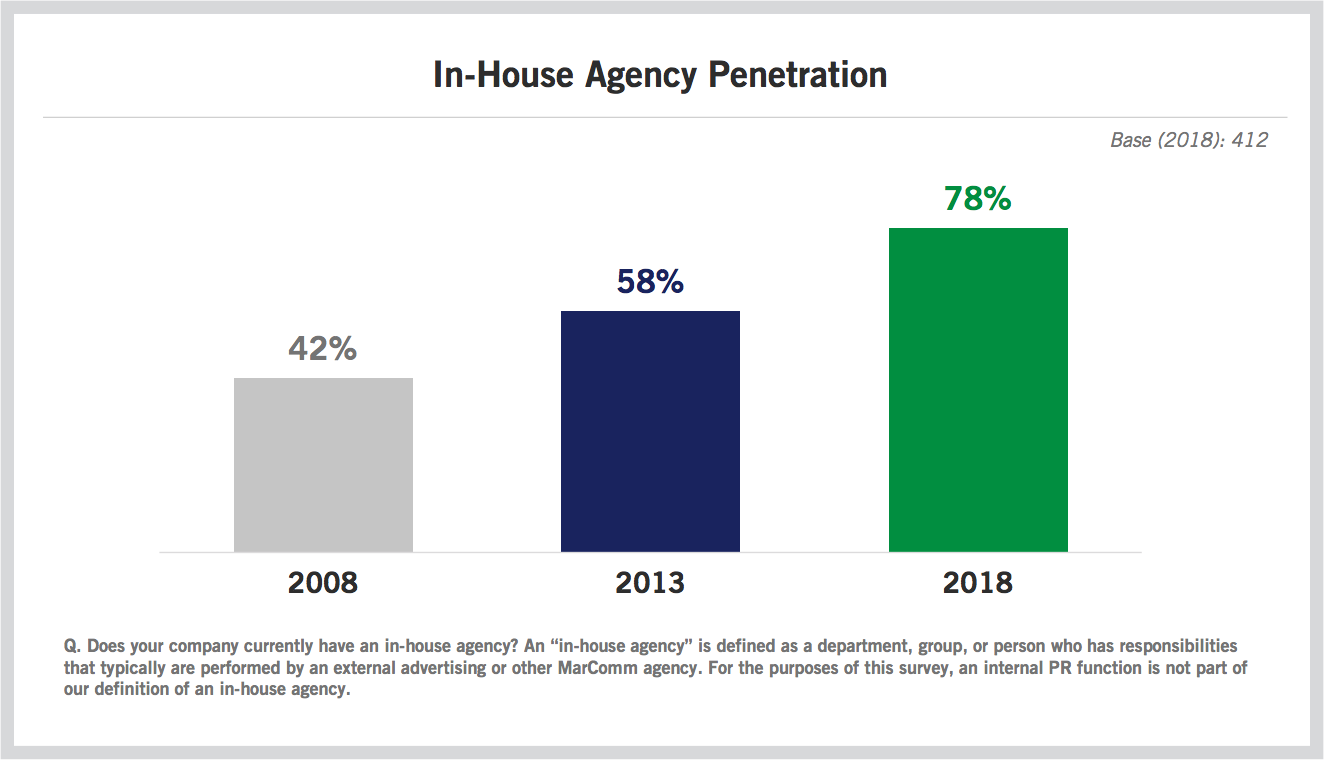
The ANA recently conducted a survey of their members asking about their in-housing plans. The results were compiled into a report, which revealed that 78% of marketers have some kind of in-house agency. Just five years ago, only 58% of marketers had these insourced resources. Research suggests that these numbers may be low, as many brands are hesitant to reveal their strategy by disclosing their plans.

There has been a trend towards increasing in-house capabilities over the last five years as marketers look to take more ownership of their data and digital strategy. With brands like GlaxoSmithKlineBayer, and Uber announcing that they are taking programmatic in-house, it’s a trend that’s quickly gaining widespread adoption. With greater transparency, control, and cost efficiencies on the table, in-housing is an appealing solution for enterprise marketers who are under pressure to deliver results while simultaneously reducing costs.

ANA in-housing graphs

Source: "The Continued Rise of the In-House Agency." ANA, 2018.

Driving Value With In-Housing

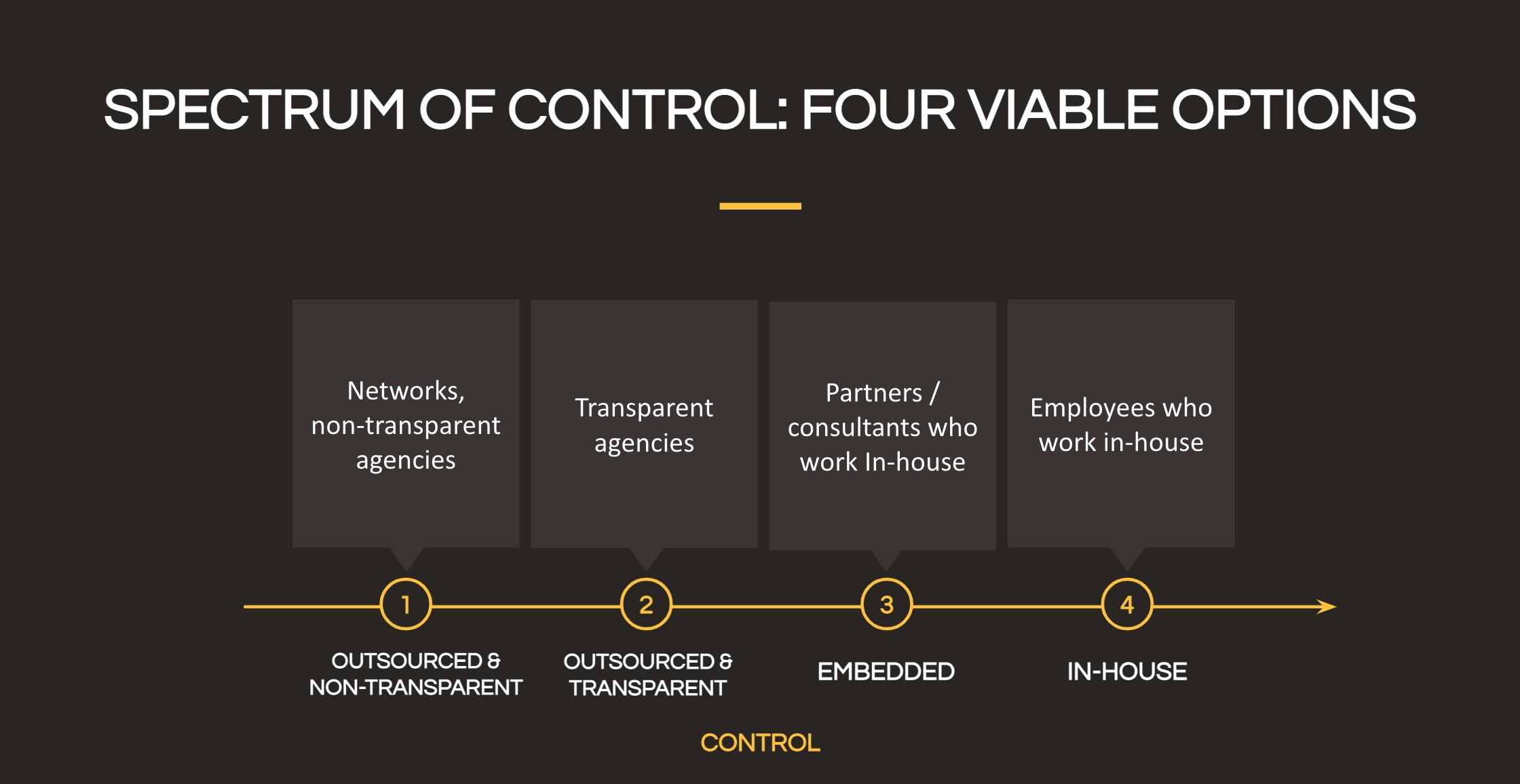
While there are benefits to be gained from in-housing, there are also considerations that marketers should evaluate when thinking about moving forward with an in-housing strategy. Taking any of your media or marketing in-house is not a binary decision, there is a full spectrum comprised of different levels of control.

Spectrum of control chart
Monk Thoughts Digital transformation doesn't happen overnight - you have to make an in-housing plan based on your goals and go step by step.
Pete Kim headshot

The Spectrum of Control

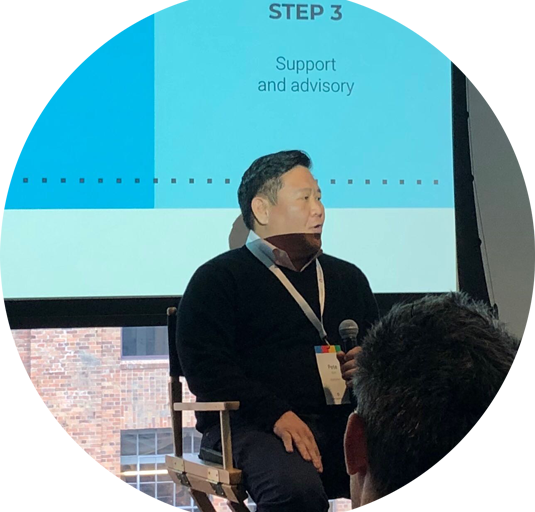
As Media.Monks Co-founder, Pete Kim, presented on stage at AdExchanger’s Programmatic I/O in October, there is not a one size fits all approach for digital transformation. Individual organizations need to evaluate their capabilities to determine the right mix of in-housing and outsourcing that aligns with their goals and resources.

There are multiple approaches to successfully and effectively execute any solution along the spectrum. However, each and every solution takes time to execute on — transformation doesn’t (and can’t) happen overnight.

00:00

00:00

00:00

With greater transparency, control, and cost efficiencies on the table, in-housing is an appealing solution for marketers to reduce costs and get results. With greater transparency, control, and cost efficiencies on the table, in-housing is an appealing solution for enterprise marketers looking to deliver results while simultaneously reducing costs. in-house marketing embedded agency media strategy in-house agency

Choose your language

Choose your language

The website has been translated to English with the help of Humans and AI

Dismiss