






Case Study
Meta
Sharp content strategy, relentless media, wild metaverse plays, and fast AI innovation.


Monks is a proud partner with Meta, offering cutting-edge digital solutions that leverage Meta's expansive platforms and innovative technologies like LLaMA-powered AI. Our end-to-end services span sharp content strategy across organic and influencer marketing, relentless advertising campaigns, state-of-the-art creative production, and immersive metaverse experiences. Our expertise ensures your brand engages consumers authentically and thrives in the ever-evolving digital landscape.
Our end-to-end Meta services
Highlighted
Swipe
For More!
-
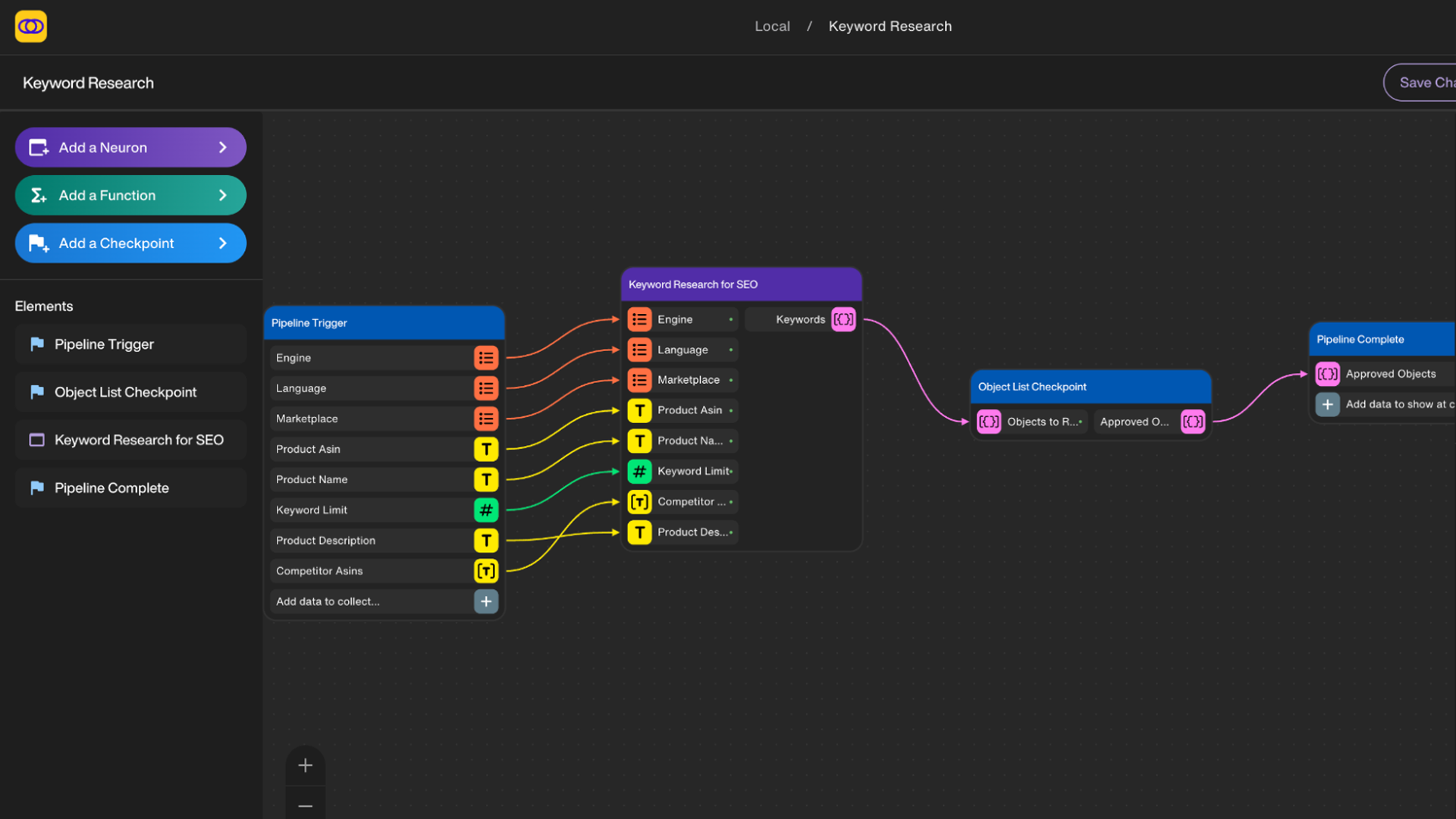
AI Workflows
Automate and scale creative production.
Automate and scale creative production. Monks.Flow connects talent to pre-tested AI pipelines, boosting efficiency and freeing up your team.
![AI-driven workflow showing different stops within the flow]()
-
Social Strategy
Develop organic and paid social media plans.
Develop organic and paid social media plans. We drive engagement to help you achieve your growth goals.
![A person on a cellphone on social media]()
-
Content Production
Create compelling content to capture attention.
Create compelling content to capture attention. We produce for Instagram, Facebook, Horizon Worlds, and more.
![Myla Unique Minor and Renee Montgomery shoot a basketball in the metaverse]()
-
Community Management
Foster engaged communities.
Foster engaged communities. We provide active moderation on Meta platforms.
![A group of fans overlooking their computers in the library]()
-
Influencer Management
Manage influencer partnerships.
Manage influencer partnerships. We amplify your brand's message across Meta with user-generated content.
![A girl taking a selfie under an umbrella]()
-
Paid Media Management
Grow your new business with paid advertising.
Grow your new business with paid advertising. We create integrated campaigns that drive real action and results.
![A person holding a cellphone on social media]()
-
Tagging + Data Architecture
Implement robust tagging strategies.
Implement robust tagging strategies. Leverage valuable insights from Meta platforms.
![A person talking to a colleague at their desk]()
-
Horizon Worlds Development
Build immersive virtual experiences.
Build immersive virtual experiences. We build engaging new worlds for your audience.
![A person using a VR headset]()
-
Instagram Shops Management
Optimize your Instagram Shops presence.
Optimize your Instagram Shops presence. Ensure seamless product discovery and boosted sales.
![Increase Google Shopping Revenue With Feed A/B Testing]()


Dive Deeper


How can we help you innovate? Let’s talk.
Media
Performance-Driven Creative Production
Blend data-driven creative and performance media strategies to drive conversion.
Fuel for the media engine.
As black-box algorithmic campaigns take over digital platforms, creative is the most critical lever to fuel new performance gains. The modern digital landscape requires all ad creative to be quantifiable, tested at scale, audience-specific and channel-native. To deliver on this, our performance creative experts work hand-in-hand with media strategists and AI technology to rapidly produce and optimize new assets according to your business goals. Our solutions combine agile development, iterative testing, generative AI, and human ingenuity to deliver the most effective and relevant message to your target audience and unlock efficient growth for your brand.

What We Do
-
Our Services • We quickly concept and develop direct response creative, often from existing partner assets, to test against specific audiences and relevant funnel placements, fueling ROI from paid media efforts.
-
![Creative services GIF for just fab]()
Asset Optimization
Unlock limitless test variations from your existing image and video assets with fresh copy, overlays, resizes and movement.
-
![Lifestyle UGC video for a coffee maker]()
User-Generated Content
Build authentic customer relationships using high-quality UGC, with rapid time-to-market and pre-planned test iterations.
-
![performance creative foxtrot brand example gif]()
Movement & Video
Stand out in your audience’s feeds with movement-first design, including video, GIFs, animation and more.
-
![Top 5 Best Amazon Storefront Examples]()
Ecommerce Content
Optimize and elevate your PDPs and brand store, from Amazon to TikTok Shop and other marketplaces.
-
![performance creative work example gif format]()
Illustration & Animation
Educate your target audience with explainers and attention-grabbing graphics, no photography needed.
-
![A studio with film equipment shooting a suv commercial]()
Modular Production Shoots
Build a custom, modular content library to unlock thousands of performance tests with original photo and video assets.
-
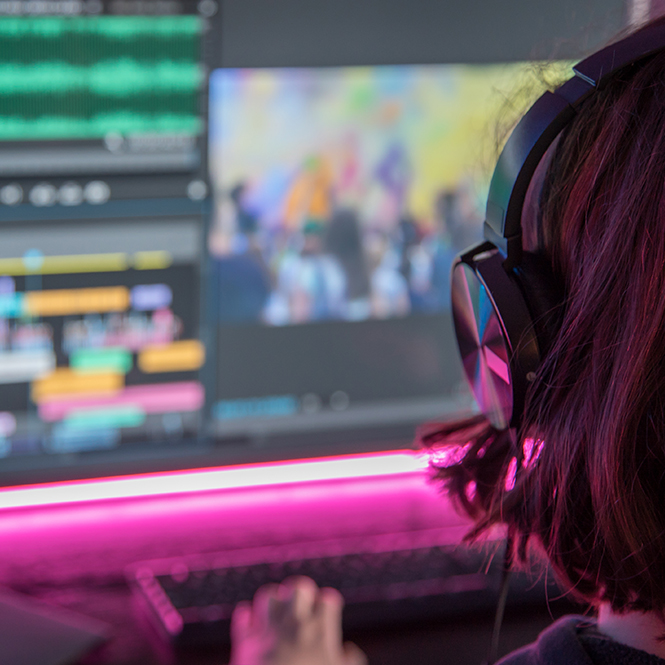
![An employee editing a video on a desktop]()
Channel Customization
Native design and fit-for-format testing helps your assets fit in on CTV, TikTok, YouTube, LinkedIn, Pinterest and more.
-
Want to learn more?






Swipe
For More!
Drag
For More!
00:00
00:00
00:00
Case Study
0:00
Powering 44% more sales for Hatch.


AI in Creative
Text-to-image technology gets our creative in market faster, unlocking multiple benefits in the creative process. In addition to cutting down time spent on concepting and approvals with AI-generated mockups, the technology also speeds up QA with automated content checks based on your brand guidelines, testing taxonomy, and ad platform requirements.
Even the biggest brands have challenges maintaining fresh asset libraries, with long timelines and high cost to shoot new content. Generative AI allows us to get scrappy with existing content and create modularity. From new backgrounds to alternating models, localization to platform-native aspect ratios, the opportunities are endless.
Want to rev up your creative performance? Let's connect.
Integrating test plans with design.
Our performance creative experts are embedded with our media strategists to put data-driven testing at the beginning of the development process, rather than retrofitting tests onto existing brand work. We start with custom learning agendas based on historical performance and your business goals, then bake in our testing dimensions to the creative concepts themselves, from visuals to value props to tone and more. We generate a tailored ad taxonomy to analyze results in aggregate, then fuel iteration quickly. Every decision is data-driven, while keeping your brand’s voice center stage.

Extension of your creative team, partner to your media buyers.
Our creative strategists form an agile bridge between your brand designers and your advertising experts, whether in-house or outsourced. Your creative team benefits from extended capacity, combined with deep knowledge of performance media best practices, while your media marketers can ramp up their testing velocity without sacrificing quality or learnings. ROI is our north star as we adapt your brand concepts and traditional media assets into bespoke digital iterations for each stage of the funnel and each ad placement. We are equally fluent in “art director,” “media buyer,” and “data analyst”—our cross-functional expertise seamlessly integrates us into your team to benefit your bottom line.
-
Designing for performance benefits every vertical. • Motion-first testing can help B2B, SaaS, and digital platforms stand out from the pack.
-
-
![Animated B2B SaaS ad]()
-
![Animated ad showing a search query]()
-
![Animated ad showing design software in use]()
-
Breathe life into your SaaS ads today.



Swipe
For More!
Drag
For More!


Let's talk about your ad creative.
Thanks! We'll get in touch shortly.
Before you look around more, we would love to know how you found out about us.
Can’t get enough? Here is some related content for you!
-
![An illustrated rocketship shoots off into space]()
Blog Post
Transform Your Marketing Performance Through Your Creative Planning Process By Robbie Wiedie 4 min read -
![A landscape animated mountainside with mist and fog]()
Blog Post
A Frame-by-Frame Look at How Generative AI Supercharges Creativity By Labs.Monks 6 min read -
![person photographing someone trying clothes on at a store]()
Blog Post
Uniting Brand and Performance in Marketing Strategies By Julia Pacheco 4 min read



Explore more of our Media solutions


Award-winning programmatic experts help you take control of your media and invest with confidence.
Programmatic media efficiency and effectiveness is harder than ever to get right. In the privacy era of advertising, you need a partner proven to navigate the complex programmatic landscape while holding media accountable to your growth goals—at every point in the funnel. We're the key programmatic partner to the world’s most innovative brands, helping them achieve incremental growth by guiding cross-platform strategy, streamlining operations, enabling personalization, and constantly experimenting.

Capabilities
Activate all forms of programmatic media
Highlighted
Capabilities
Swipe
For More!
-
Online Display and Video
Reach your audience wherever they spend time online with efficiency and effectiveness.
![Person browsing the web on a laptop]()
-
ConnectedTV and OTT
Connect with cord-cutters using high-impact, non-skippable placements.
![Woman holding a remote to watch TV]()
-
Digital Out-of-Home (DOOH)
Target high-traffic areas in key markets to stand out with your target audience.
![City street with digital billboards]()
-
Podcasts & Streaming Audio
Join your audience on the go through programmatic and direct audio ad buys.
![Person wearing over-the-ear headphones]()
-
Native & Content Syndication
Use content to engage and educate your target audience.
![Man browsing a news site on a tablet]()
-
Account-Based Marketing (ABM)
Engage your target accounts to generate pipeline and close new revenue.
![Two men talking over a tablet at work]()
-
Dynamic Creative Optimization (DCO)
Personalize the user experience to your audience’s browsing behavior.
![Person shopping on a smartphone]()
-
Private Marketplace Deals (PMPs)
Get access to high-quality inventory for control and transparency.
![Person reading a news website]()
-
Direct Buys & High-Impact Takeovers
Make a memorable splash on the sites your audience frequents most.
![Person browsing online]()









Blog post
Monks Secures 5th Consecutive ‘Programmatic Power Player’ Recognition
By Liz DeAngelis 3 min readFlexible engagement models to fit any brand.
We know that no two programmatic programs are alike. We offer a range of support models to adapt to your internal resources, your technology needs, and your growth goals. You'll benefit from advantageous licensing rates, hands-on support, and flexible engagement terms so you can be empowered to own your data and optimize your business.
- End-to-End Programmatic Management
Our platform experts will drive your programmatic strategy, operations, and optimization across the leading DSPs, search management platforms, and social channels. Our data-driven planning and activation approach integrates audience research, creative, personalization, and measurement to maximize growth. - Programmatic In-Housing
Our bespoke advisory engagement model helps brands take complete control of their media programs and by bringing all planning and buying in-house. We consult to help brands streamline operations, consolidate vendors, maximize your tech stack, and seamlessly take over media management at scale. - Media Platforms and Technology Licensing
Our platform experts will help set you up on the leading biddable media platforms at advantageous rates. You’ll have access to a flexible array of support services to fit your needs and will be able to tap into our best practice advisory and robust training resources.

In partnership with
- Sprint
Monks’ deep programmatic expertise and advisory capabilities made them an easy choice. They’ve helped us gain the control, insights and flexibility to be able to better meet the needs of our customers and our business as a whole.

Rob Roy
General Manager, Channel Partners
Want to optimize your programmatic media buying?
Wide platform expertise, backed by partners you trust.
We partner with high-growth brands in every vertical—from retail to financial services, consumer tech to B2B SaaS—to build a strong digital media foundation on the right tech stack. Our teams are experts in all leading DSPs, including Display & Video 360, Amazon DSP, The Trade Desk, Verizon Media, Xandr, and more. We will guide your ad operations and platform selections based on your business’s needs.

In partnership with
- TheTradeDesk
From our partners
Throughout our partnership, Monks has been a beacon of transparency, adeptly navigating complexities with an open and honest approach for key brand clients. Our strategic alignment allows them to combine their best in class trading and custom solution engineering powered by The Trade Desk to deliver the best results on behalf of their clients.

Matt Fogarty
General Manager, Channel Partners
Precision. Agility. Accountability.
Programmatic isn’t a channel, it’s a bridge for all forms of digital media. Our programmatic experts maximize efficiency by finding and engaging your audience where they live, optimizing frequency across touchpoints while eliminating redundancy and siloes. Our process starts with detailed research into your audience’s online behaviors, then weaves in AI for dynamic personalization and optimization. We make the most of every dollar invested with advanced measurement methodologies. No blind awareness buys or over-reliance on cookie-based attribution here; we’ll help you understand incrementality, time to impact, and profitability of your campaigns and guide your investments accordingly. Efficiently reach the users who matter most to your business, without waste.


Want to hear more on our media capabilities? Let’s connect.
Explore more of our Media solutions
Raising Media-Driven Revenue With Market Mix Modeling
Raising Media-Driven Revenue With Market Mix Modeling


In light of current economic conditions, which make it critical to do more with less budget, measurement of media effectiveness is becoming ever more important. In this context, incrementality—a term that has long been used in the world of consumer-packaged goods and promotions—is making its way onto the media scene, while innovations such as AI are used to accelerate the work.
The reason why we measure more and more is straightforward: so that we can forecast the performance of different strategic scenarios, and thereby help the brands we partner with optimize their media efforts. And just like any other discipline within advertising, the field of media continues to evolve, so let’s put a spotlight on what matters right now and will support your media measurement.
Welcoming incrementality in the media world.
First, let’s take a step back and look at what incrementality entails. Simply put, it refers to the lift in conversions or sales that can be attributed to a specific advertising campaign above those that would have occurred regardless—also known as the base. Incrementality has recently been adopted by us media folks, and the term has risen in importance because it’s a media measurement solution that isolates the incremental uplift. This matters because otherwise you can’t tell which media is driving growth and which is just harvesting conversions that you would have gotten anyway. As such, incrementality delivers a far more accurate view of how your media channels are driving conversions.
For example, traditional multi-touch attribution (MTA) often fails to separate the base from the uplift of the advertising campaign. This can lead to overstated results. Instead, in order to accurately measure incrementality, it's important to use MTA in conjunction with incremental techniques like market mix modeling (MMM). This way, you can better understand the true impact of advertising campaigns, move from ROAS to ROI, and as such have a more sensible conversation with your finance teams on the effectiveness of media.
How market mix modeling has got media measurement’s back.
Market mix modeling—sometimes referred to as media mix modeling, but I prefer the former—is certainly not new to the scene, and this technique has been around in its commercial application to understand media uplifts for several decades now. However, the discipline has significantly improved, especially in the last few years.
Contemporary MMM has come a long way. In the old days, annual updates would take months to bear results, while today you can get a pilot up and running within six weeks and use automation and machine learning to obtain monthly updates in just a matter of days. Besides, visualizations have also become much better, as today’s reporting dashboards offer analysts a plethora of ways to approach the data sets.
Monk Thoughts
From the economy to seasonality, market mix modeling considers all drivers of sales, which makes the technique useful for CMOs as well as CFOs and a company’s board.

It's important to note that market mix models consider the whole market—including drivers like promotions to pricing, the recent pandemic, seasonality and more—and thus offer a holistic view. If you fail to take these other factors into account, you can’t get an accurate read on media and risk overstating its impact. As such, we’re seeing more and more brands partner with specialist MMM experts to help build the market mix models, or work with them to in-house this capability.
I have to point out that some players out there might say they execute “media mix modeling,” but are actually just building a simple regression with media variables or using multi-touch pathway techniques (which is not an incremental analysis). What’s so concerning about this is that they offer so-called MMM solutions at very cheap rates, which may sound appealing, but the damage of using these cannot be underestimated. Basing your decisions on a cheap but bad model could go wrong and cost you over 40% of your media-driven revenue—compared to an increase of roughly 30% if the technique is applied properly. You can make the call on what’s best for your brand.
Leveraging AI to accelerate our analysis.
Another very timely reason why I’m so excited about applying market mix modeling is the recent rise of artificial intelligence and the automation solutions that have stemmed from it—AI has been advancing fast in various areas, and it did not forget about MMM.
At Media.Monks, we’re bullish about AI. That said, we also know that it’s important to be cautious and do our due diligence, especially as we see many AI providers claiming to build market mix models without having the right experience and tools to do so. When it comes to MMM, we believe that AI and automation solutions can be incredibly useful in speeding up the process, but of course there are also some instances that require manual labor. Let’s take a look.
Raw data and processing. This can be automated using APIs or templates to stream data in, and then pre-ordained processes automate cleaning, saving lots of time. Beware of providers who take several months to initially onboard data pipes, as you really should be up and running in a matter of weeks.
Initial models. We use evolutionary algorithms to automate the initial model build, running thousands of models instantly in the cloud and scoring them, which enables us to arrive at a base model much faster and save weeks across MMM projects with multiple KPIs.
Final models. Note that this (still) requires manual intervention with a very experienced modeling team. We need to sense-check the models, triple-check the data, and use our extensive experience to spot any anomalies and alternative analysis to interrogate any controversial findings.
Sales effects and ROI calculations. These can be automated without the use of AI—this is just a process that can easily be repeated using code.
Automated reporting. Once all the numbers are calculated, it’s easy to automatically populate dashboards and media optimization tools. One thing that can’t be automated, however, is the answering of bespoke client questions around most effective second length, audience, and more.
Engagement. Reporting ROIs and optimizations is one thing, but gaining an understanding of and trust in the models is another. Therefore, in the early stages of MMM engagements, it's imperative to have people who can explain the models and results to the wider team—not just marketing, but also finance, sales, the board, to name a few. My advice would be to circle back to this in later stages, once people understand and trust the model, and then you can move to more automated reports.
In short, automation can replace a lot of the heavy lifting of data and results processing and visualization, while AI can be used in the initial modeling stage. But what can’t be replaced is the sense-checking, interpretation, and experience of a good modeler to ensure the results are robust, realistic, understood and therefore usable.
Decreasing time, while increasing results.
In the context of economically uncertain times, a time-saving—and thus cost-saving—solution like market mix modeling, especially when it’s powered by AI and automation, comes in very handy. Based on these models, media measurement typically enables brands to forecast different sales scenarios. In turn, having a robust forecast of performance is critical in justifying different strategic scenarios to the board, owners and investors of a company.
Incrementality is critical in the quest for accurate ROI, and MMM is a main way to get there. Though this technique has been around for decades, its pace of change and adoption rate is accelerating, which I’m sure will be further driven forward by AI. That said, in order for you to reap the many rewards of this tried and tested technique, it’s critical to work with a media partner who includes the whole mix of sales drivers and can take your models from sheer numbers to clear business actions.
How to Choose Media Channels to Drive the Best ROI
How to Choose Media Channels to Drive the Best ROI


When planning a media campaign, it is important to choose a mix of channels that will provide the greatest return on investment (ROI). The more sales driven by each unit spent on a channel, the more successful that channel has been at driving ROI. Marketing mix modeling tells us that channels vary in their average ROI, with some media giving you more bang for your buck than others. Where TV used to be the media channel that was most likely to pay back a company’s investments, marketers now primarily turn to social media. According to HubSpot’s State of Inbound Marketing Trends Report 2022, Facebook is still the leading social media channel in terms of engagement—and thus a go-to platform for marketers.
It’s not only important to know which media channels perform best, but also why they do better than others. To help your marketing team figure out what works best for your brand, our media experts have outlined four main factors that help explain the ROI of a particular media channel.
Engagement. Due to the medium used, some channels are naturally more engaging than others. The more engaging an advert, the more memorable and more likely it is that consumers will react to it. Comparing TV adverts to print, the former makes use of visual and sound effects that allows for more engaging content, whereas the latter is more limited by its medium. When it comes to social media, popular platforms such as TikTok have shown the widespread impact of video content in any form. “From the addition of Reels into Facebook, to the rise of YouTube Shorts and TikTok overtaking Google as the most popular domain, the great shift to short-form video is in full swing,” according to HubSpot.
Targetability. This factor refers to how well marketers are able to reach their target audience using their selected channels. Online channels tend to have greater targetability than offline due to their ability to choose to show adverts to very specific demographics. Online channels also allow for retargeting customers who have already seen an advert from the same company, which is very useful when it comes to selling a large amount of items like flight tickets. Greater targetability boosts ROI because less spend is wasted on people who see the advert, but aren’t likely to purchase the advertised product. That said, the requirement of targetability depends on what a brand is selling, as some products appeal to broad demographics and thus do not necessitate targeted advertising.
Adstock. The adstock effect—which is also known as the ‘memory’ effect of media—differs between media channels. TV, for example, tends to have a higher adstock because the adverts are often more memorable compared to channels like online display, where the adverts are typically simpler, subtler and therefore less engaging.
Reach. Last but certainly not least, the number of views and impressions that an advert can generate depends on what media channel is used. By working with channels that have large and widespread audiences, you increase the chances that your advert reaches many people. Some channels are more limited and simply have less consumers using them, which can lead to diminishing returns because your ads keep reaching the same, smaller audience.
In all, these pillars help explain the differences in sales uplift per dollar spent when comparing the impact of your ads across different media channels. This knowledge is especially useful when it comes to making a decision about your brand’s optimal media channel mix. However, that said, it is important to note that a channel’s ROI shouldn’t be its only measure of success. Some channels serve a particular purpose such as driving brand awareness, and thus might still deserve a place in your brand’s optimal media mix, despite their potentially lower returns. In short, ROI isn’t the main metric that brands should be chasing—rather, from a business point-of-view, it’s best to consider this in maximizing net profit. Learn more about how we can help now.
Media
Moving beyond full-funnel marketing to real-time growth.


Advertisers are spending more but getting less.
Legacy omnichannel strategies built on rigid quarterly timelines can no longer keep pace with today's algorithmically driven, real-time world. To win attention and drive sustainable growth, brands don't just need a standard media buyer—they need a responsive architecture built for speed. At Monks, we transform your media ecosystem into a living system that senses, responds, and adapts. We bridge the gap between media spend and true business performance by unifying intelligence, content, and activation into a single, cohesive engine.
Results
Others optimize channels, Monks accelerates outcomes.
-
Doubled rate of growth YoY for Coursera.
-
53% more first-time buyers for a leading skincare brand.
-
134% higher ROAS for cancer research hospital.
-
2x average lead value for Paycor.
Creative is the new targeting.
Today, digital ad networks are designed to optimize themselves. We’ve said goodbye to “hacking” growth through manual optimization, or expensive, opaque third-party data layers to locate audiences. Instead, success depends on what you feed the algorithm and how you harness the data. We eliminate the operational friction that bogs down traditional models, shifting your digital and offline media into a living system that meets your target buyer where they’re at. Monks empowers brands to be faster to insight, faster to action, and faster to connection.
In partnership with
- Paycor
From our clients
Monks' expertise crafting an iterative testing program has proven invaluable... Their partnership has been instrumental in driving our growth and achieving our goals.

Carly Pennekamp
VP, Strategy, Operations, and GM D2C
Solutions
We are here to help with...
Highlighted
Solutions
Swipe
For More!
-
Media Strategy & Planning
Clarity at every stage of the journey.
Clarity at every stage of the journey. Blend a broad range of data and intelligence to plot your media strategy.
![A group of employees working in a conference room and at a whiteboard]()
-
Media Analytics
Metrics that matter.
Metrics that matter. Scientific, predictive measurement frameworks and testing strategies to drive bottom line impact.
![A person using google analytics on a laptop]()
-
Commerce
Maximize conversion to digital point-of-sale.
Maximize conversion to digital point-of-sale. Connect the dots across the digital journey to drive sales impact.
![A person checking out using a tablet at a fashion store]()
-
Video (TV/CTV)
Deliver high-attention programming.
Deliver high-attention programming. We use the largest unified cross-screen planning tool to fix audience fragmentation.
![A tv and remote showing commercials]()
-
Performance Creative
Scale your Creative.
Scale your creative with insights, generative AI, and a self-improving feedback loop of performance data. Creative testing strategy woven seamlessly with agile AI production to maximize performance.
![Graphic designer working on laptop and tablet]()
-
Programmatic
Trackable and transparent.
Trackable and transparent. Programmatic advertising with measurable impact on brand awareness and sales.
![A person using google analytics on a laptop]()
-
Paid Search
Own the AI Answer.
Own the spectrum of influence from traditional to AI Search channels. Ad copy and testing, keyword research, remarketing and other PPC management services.
![A person holding a cellphone on social media]()
-
Paid Social
Rise above the chatter.
Rise above the chatter. Supercharge social ad performance by tracking and maximizing impact across channels and devices.
![A person on a cellphone on social media]()
-
Brand Media
Breaking down the silos of performance and brand.
Breaking down the silos of performance and brand. We connect investment and measurement to maximize business outcomes.
![A production in process with lights, camera equipment, and actors]()
-
Performance
Plan for success using full funnel objectives.
Plan for success using full funnel objectives. We operationalize models to ensure every brand is performance driven.
![Two people laughing while working on laptops]()
-
Affiliate & Influencer
Collaborate with confidence.
Collaborate with confidence. Management of affiliate platforms, influencer offers and revshare relationships.
![A girl taking a selfie under an umbrella]()






Connect
How can we help you innovate? Drop us a line.
One connected system. Zero lag.
Rather than managing marketing tactics in isolated silos, we orchestrate the entire ecosystem around four interconnected pillars to deliver real value to our clients:
- Unified Intelligence: We turn fragmented information into immediate action. By consolidating consumer behavior, cultural trends, and marketplace data into a single strategy layer, we help brands identify untapped white spaces faster.
- Value-Aligned Activation: We work with the algorithms, not against them. Leveraging deep global platform partnerships and unparalleled technical expertise, we design the underlying signal and content infrastructure that fully unlocks unmatched value from your media spend.
- Compounded Outcomes: Forget legacy last-click and vanity proxy metrics that distort the truth. We implement transparent, experiment-driven data architectures that connect your in-market choices directly to long-term business outcomes and measurable incrementality.
- Seamless Experience Design: An ad gets a consumer noticed, but the experience earns the customer. Our optimization doesn’t freeze at the click; we harmonize every digital, physical, and owned touchpoint to ensure the entire consumer journey is entirely frictionless.


Egoless partnerships designed for you.
We don't force you into a rigid, one-size-fits-all model. We design our solutions around your business goals, offering full transparency and completely aligned incentives to move your organization forward.
- Agency (Full Media AOR): We manage the entire media operation from end to end with full strategic accountability and seamless integration.
- Partner Technology: Get set up on leading DSPs and ad platforms with advantageous rates, detailed training, and flexible support.
- Hybrid Partnership: We work directly alongside your existing in-house teams to co-develop modern workflows, allowing you to tap into specialist expertise where you need it.
- In-Housing & Transformation: We help you build the foundational capabilities, infrastructure, and tooling to successfully manage your own media systems over the long term.
Reducing media costs while driving performance.
-
Work
Sprint Media Buying • We revamped digital marketing operations and moved media capabilities in-house which enhanced Sprint's ability to respond to the market in real time.
-
![A person smiling and standing in front of a Sprint logo]()
Our Challenge
Sprint knew customers would be interacting with the brand online—and expect more. Our focus was to enhance the company’s ability to respond to the market and curb rising advertising and customer acquisition costs.
-
![A person looking at their phone and enjoying a cup of coffee on the couch]()
![A person jumping in the air]()
-
We helped identify new KPIs and measurement models, found ways to reduce waste, and created an audience framework that attracted higher-quality traffic. We also developed a multi-touch attribution model for better insights and built a system for real-time reporting.
After proving the early results of bringing digital media in-house, we helped Sprint with assisting in the design of their team structure, creating candidate profiles to identify the right talent to handle digital media planning and buying.
-
Want to learn more about our partnership with Sprint? Check out the full case.


Swipe
For More!
Drag
For More!



Want to hear more on our media capabilities? Let’s connect.
More of our thinking
-
5 Reasons to Launch a Retail Media Network Now
-
CTV Testing Drives Incremental B2B Pipeline
-
Performance Marketers Should be at the Center of AI Transformation
-
How Hatch Leveraged Data to Deliver Hyper-Effective and High-Performance Ads
-
Beauty and The E-commerce Beast: Tackling Y(our) Challenges
-
Why Market Mix Modelling Should Be Integrated Across the Whole Business
-
Uniting Brand and Performance in Marketing Strategies
-
Performance Max: Over a Year in, Are We Prepared for a Keyword-less Future?
Boosting Your ROI by Strengthening the Upper Funnel
Boosting Your ROI by Strengthening the Upper Funnel


As an Enterprise Consultant, there’s a question I often get from clients when we start working together on their digital marketing campaigns: how can we improve the return on investment? Let’s take, for example, an email marketing campaign. There’s an abundance of factors that go into achieving the highest possible ROI—from personalizing your message to optimizing email campaign journeys based on the campaign performance—but while everyone’s focusing on click-through and open rates, the key is often hiding at an earlier stage.
For one of our clients, their team had spent quite a good amount of time and effort building a series of email marketing campaigns in order to optimize online customer journeys. Some results were great: the CTR, for example, was extremely high considering the industry benchmark. So, how come the team was not able to demonstrate the impact of their investment just yet?
As soon as our team set out to analyze the email campaign data from top to bottom, a common issue sprung into view. It wasn’t really about the email content or the automation settings. The problem was at the top of their email campaign journey: the number of email leads put into the campaign pipelines was significantly low.
Before you start, consider your input.
Data from the 2022 ROI Report by Nielsen shows that increased investment in upper-funnel to mid-funnel marketing campaigns elevated brands’ ROI by 70%. Clearly, it is critical to create and strengthen a marketing system where you can maximize the impact of your input and draw the best outcomes. However, at times, we forget two of the main aspects of implementing a successful marketing strategy: the amount and quality of your input. Both should be satisfied, because without a decent amount of quality email leads at the top of the email marketing funnel, the outcomes will never suffice or provide the expected value for the team’s investment.
The Nielsen report also shows a significant, positive correlation between audience targeting and campaign ROI: high target reach campaigns (those that aim to reach a large number of people within a specific target audience) present a higher ROI than medium and lower target reach campaigns. Considering the power of the upper-mid funnel marketing, audience targeting in the upper funnel can lead to unlock maximized potentials of campaign performance. But in order to secure a healthy amount of customers at the top of the funnel, approaching the right targets in your upper funnel campaigns is pivotal. And here’s the good news: media campaign platforms offer a variety of options for you to fine-tune your targeting strategies by grouping customers into meaningful subsets.
When it comes to navigating the myriad categories and data points used for targeting, I follow a list of strategies and criteria to better target and activate audiences in marketing campaigns, which in turn helps to improve the upper funnel. Note that some strategies may not be viable, depending on the features of the media campaign platforms your team is using or the availability of the online customer data.
- Demographics: gender, age, education, job title, etc.
- Life events: critical lifetime milestones such as change in marital status, having a baby, or buying a house.
- Affinity: specific interests of consumers while browsing online.
- In-market: strong consumer interest in the products or services you are selling.
- Previous interactions with your website or app: visited, viewed a product, clicked “add to cart,” logged in, downloaded brochures, etc.
- Current customers: existing records in CRM matching with the campaign channels.
- Likely-to-be customers: people who are sharing similar characteristics to the existing customers.
By segmenting target customers into the right subsets and serving them relevant content in marketing channels, your team will be more likely to have strong upper pipelines, leading to stronger performance down the funnel. And if your team has robust input and a solid marketing system, ROI improvement is just around the corner!
Four Predictions for Retail Media Networks in 2023
Four Predictions for Retail Media Networks in 2023


As 2022 has come to a close, my team and I like to take some time to reflect on our learnings and what our focus will be in the new year. Over the past year, retail media networks (RMNs) have blown up and worked their way into the hearts of retailers, advertisers, and marketing services partners. Looking both back and ahead, I can say with absolute certainty that much of our efforts will be dedicated to helping our partners set up this technology.
In case you need a little refresher, retail media networks are advertising platforms established by retailers on their own digital platforms—it’s sort of like in-store advertising, but in digital format. This creates a new revenue stream for retailers, as RMNs enable them to monetize their first-party data through the launch of ad products. Essentially, it’s all about the data, as ad monetization with RMN allows retailers to gather new information on the behavior and interests of their customers, enhance their first-party data strategy, and engage with new audiences by meeting their specific needs. Ever since third-party cookies have started crumbling, RMNs have emerged as the sweet treat that both retailers and advertisers need—and the demand for this solution is rising at an incredibly fast pace.
The tried and tested RMN trend will continue to accelerate in the new year. Here are four developments that retailers, advertisers and digital marketing services partners alike need to prepare for.
RMNs go global. In short, every retailer around the globe is going to have a retail media network, if they don’t already—it’s simply becoming pure table stakes. What started in North America, with Amazon leading the charge, has been rubbing off on businesses in every other part of the world. I can guarantee that only a year or two from now, even small-scale regional retailers will have an RMN, whether that’s in Italy, Thailand or Argentina. Why? Because once the flame of a business trend has been ignited and fueled by a new, but proven economic paradigm, the fire simply has to spread. That said, it is important to note that all of this may seem like a scenario with no downsides, but there is a potential one: if RMNs are not executed well, retailers and advertisers run the risk of diminished customer experience. For this reason, many brands choose to team up with a partner that’s specialized in this technology.
Put creative differentiation at the core. Up until very recently, the game of retail media completely revolved around data and mathematics, with people and technology coming in to better execute what is essentially a quantitative effort. As such, RMNs allowed very little space for creativity. Now, however, we are seeing retailers such as Amazon move up the funnel and into the world where creativity truly matters: branding. When it comes to building brand awareness and bringing in new customers, data definitely counts—but it’s the creative that can make a real difference. So, while you still need the smartest people and the savviest technology to handle quantitative details, retail media is more and more a game of bringing in the right creative. Considering there’s so much more opportunity for creative differentiation, the brands that are best able to bridge data with creativity are the ones that will succeed.
Tailor unified real-time strategies. So far, most brands (and even some of their partners) have been deploying retail media networks per channel, which means that an advertiser’s budget and approach for Amazon may differ from its budget and approach for Walmart. In other words, they have been working in silos and optimizing within the lengths of each different platform. However, this is all about to change. In the near future, I believe brands will view retail media networks as interconnected advertising channels instead of a handful of unrelated platforms. With that, it will become more and more feasible for brands to build a single retail media strategy, which allows them to be more flexible and seamlessly move between different channels. In the same vein, they will start to use unified real-time optimization tactics to capitalize on arbitrage opportunities between various retail media networks. This essentially means that brands will take more of an active daytrading type of approach. While some parts of this process can be automated, many others will still require manual efforts and human intervention in the form of more centralized retail media teams—both at the side of advertisers and their partners.
Deliver dynamic in-real-life placements. As retail media networks—which are currently completely digital—expand, retailers will start to move ads from their online platforms to their offline spaces. For example, Amazon has announced that it will install more digital signage in its Whole Foods stores across the US and connect their DSP to their in-store screens. This will enable the retailer to use first-party data to dynamically serve ads in a previously analog framework and programmatically target consumers, thereby transforming the century-old concept of paid POS into an extension of digital advertising.
In short, dynamic IRL placements can help retailers and advertisers enhance their targeting. However, one issue with this approach is that it’s still based on backward-looking data. Simply put, ad placements are currently based on average demographic numbers. This means that a retailer doesn’t actually know who is in its store in real time. However, with Amazon’s Just Walk Out technology, where cameras and sensors follow customers throughout their entire in-store journey, retailers and advertisers will be able to gather aggregated data of everyone who’s in a particular store in real time. This technology may already be in use in Amazon Go stores, but I believe it will take a few more years before it can scale, especially considering its significant privacy concerns—so I’ll save this prediction for another time.
Teamwork to make the RMN dream work.
Over the last year, retail media networks have blown up and blown our minds. The impact of this technology is far-reaching and will only continue to expand in the coming years. Now, it’s up to retailers and advertisers to dive in and start monetizing their first-party data. As for my final piece of advice, make sure to team up with an experienced partner that can help you along the way—this will benefit every party involved.
Curious to learn more about retail media networks? Get in touch with our team via sales-ecommerce@mediamonks.com.
Looking Back at a Year of Digital Innovation
Looking Back at a Year of Digital Innovation

Lea este artículo en español aquí.
And just like that, another year comes to a close—twelve months packed with the emergence of exciting developments in technology and new consumer behaviors. The metaverse matured, commerce went social, and brands learned to move beyond vanity metrics and cookie consent to build actionable data with bottom-line impact. In essence, there’s been no shortage of challenges (and solid victories) over the past year—so as you begin to look ahead at the next, let’s take a quick review of 2022 highlights and trends.
Virtualization defines the transformation of digital.
As the world opened back up, an era of digital transformation gave way to the transformation of digital. By this, we mean virtualization: a set of new audience behaviors, cultural norms and technology paradigms resulting from 30 years of digital transformation, hyper-accelerated over the past five years. Virtualization, covered in our report earlier this year, marks a revolution in consumer behavior as people demand more from the digital platforms they engage with, which implicates the ways they look at digital experience, community, ownership and identity. For example, the design of ComplexLand, a virtualization of the hype-fueled annual event ComplexCon, was built around the insight that today’s fashion trendsetters are becoming just as invested in their digital identities as their corporeal ones.
The Social Innovation Lab, who explores up-and-coming trends in social, delved deeper into what motivates some of these behavioral changes in The Search for Meaning. By exploring how technology shapes the ways consumers find and make meaning in their lives, the Social Innovation Lab uncovers how brands can adapt to the new era in digital.
Monks Thoughts
We're seeing the emergence of a new set of consumer expectations based on digital experiences that are richer, more meaningful, and more ownable. New tools, technologies, and talent on part of brands to show up and meet consumers in a new way. We call this virtualization
00:00
00:00
00:00
Doug Hall
VP, Data Services and Technology
Experiments in the metaverse drive real success.
One of the biggest manifestations of the virtualization trend has been the rise of the metaverse, which many brands have experimented with this year to find their footing. Duolingo celebrated the birthday of its lovable (and persistent) mascot by hosting a game jam in Roblox and building larger-than-life public artwork in Decentraland. Logitech for Creators reinvented the awards show format by building the first music awards show in the metaverse, the Song Breaker Awards.
The fashion industry in particular has found a lot of success in the space. Liam Osbourne, Global Client Partner at the FLUX.Monks, our dedicated fashion and luxury team, shared with Vogue some insight on how the metaverse is an opportunity to become more inclusive. For brands exploring that question and more, the FLUX.Monks have authored a quick bulletin on why the metaverse matters.
Monk Thoughts
Exploring the rules for access that are not the traditional levers of wealth or proximity to power would be great to see.

As the metaverse continues to take shape, now is an excellent time for brands to continue experimenting in the space, which was a large part of a discussion shared between SVP Web3, Metaverse & Innovation Strategy Catherine D. Henry; Chief Innovation Officer Henry Cowling; and Mike Proulx, VP and Research Director at Forrester as part of our Meet Me in the Metaverse series. Eager to get started experimenting in the metaverse yourself? Our map of the metaverse can help you find the right home for your brand within this quickly evolving space.
Web3 and other emerging tech begin to mature.
In addition to the metaverse, other emerging technologies have fueled transformative digital experiences—most notably Web3. We showed up at NFT.NYC, the biggest Web3 conference on this side of the screen, with an immersive installation for Cool Cats that blurred the boundary between virtual and the real. Meanwhile, Gucci opened the virtual door to an immersive gallery space used to host an auction of NFT artwork.
More than just a new tech infrastructure, Web3 marks a foundational shift in brand-consumer relationships, a topic covered in a bulletin we released in collaboration with Salesforce this year titled Web 3: The Future of Customer Engagement. For those wondering how to begin making moves in Web3, check out insights from our In a Monk’s Opinion series, which lays out everything you need to know about NFTs and the blockchain. One tip from the Labs.Monks: be sure to make your NFT projects sustainable.
Speaking of the Labs.Monks, our R&D team has continually released missives on the bleeding edge of tech throughout a year of innovation. Their most recent report on generative AI explores the potential of AI tools like Dall-E and Mid Journey that have captured creatives’ imagination (and people’s social feeds). One example of what the tech can achieve: unlocking efficiencies in animation and other production needs.
Creativity and media go hand in hand.
Throughout the digital era, it’s been tempting to focus attention on vanity metrics. But as CMOs invest more dollars into media (and face increasing budget scrutiny with a possible recession), they will benefit from transforming their approach to a more holistic strategy that blends media and creative to optimize their spend. Speaking to Digiday, Media.Monks Global Head of Media Melissa Wisehart unveiled how our integrated media pillar is designed to help brands make this leap.
Monk Thoughts
We’re really looking at and drawing statistical correlation between what happened in the media universe and what is the downstream business impact.

Uni's relaunch campaign demonstrates this more holistic approach through the development of both the creative and media placement by one partner. With three creative variations and four measurement initiatives, we ensured the creative rolled out across today’s most relevant channels according to their purpose within the brand ecosystem.
When it comes to creative optimization, wellness brand Hatch found great success—and shared some of their secrets in an episode of In a Monk’s Opinion featuring Hatch’s VP Growth Marketing Holly Elliott. Many brands that rely on digital platforms for their marketing face a series of challenges: rising acquisition costs; a limited ability to manage their performance, attribution and audience targeting; and the risk of losing brand authenticity. Hatch assuaged these concerns by striking a balance between creative and performance. In the episode, Holly and our creative performance experts offer insight into how historical performance data can fuel further creative iterations.
Brands prepare for the oncoming privacy era.
While media optimization and performance may be top of mind now, budget conscious CMOs are also eyeing another obstacle on the horizon: overcoming their reliance on third-party cookies as attitudes in privacy shift and as Google aims to sunset third-party cookies with the Chrome browser. And speaking of cookies, VP of Data Services and Technology Doug Hall recently shared ways marketers can rethink cookie consent and management using the Privacy Sandbox platform.
Add to the mix that Google is sunsetting GA360 to make way for its new GA4 platform, meaning brands have plenty of adjustments to manage in the near future. Thankfully, GA360’s sunset was postponed to July 2024, meaning they have more time to perfect their migration strategy. Our data experts put their heads together to create a short guide on how to maximize your move to GA4 before the deadline.
Monk Thoughts
Google is postponing the Google Analytics 360 sunset. The move to GA4 is now 2024. This is not a time to pivot on your data and privacy strategy, this is the time for you to perfect your migration over to GA4.
00:00
00:00
00:00
Doug Hall
VP, Data Services and Technology
We’ve also got some inspiration based on how other brands have future-proofed their data strategies with great success. We began our partnership with Molson Coors in 2021 with the goal to bring more of its digital media in-house. By taking an ambitious, holistic approach focused on modernization, we’ve since helped the brand future-proof with a robust, in-house digital media team: a data transformation that ranges from data acquisition, data activation and enrichment, and optimization.
And in the commerce space, leadership from Canadian retailer Reitmans shared the role cloud computing played in building a single source of truth throughout its entire organization, joining online consumer behavior with data from over 400 brick-and-mortar locations. Check out the episode of IMO to learn how a strong data foundation helped the brand adapt at speed.
Speaking of data foundations, emerging technologies like Web3 offer new ways of connecting with consumers and strengthening relationships. In an episode of Meet Me in the Metaverse, Ashley Muscumeci, our Director, Go-to-Market, sat down with Jordan Cuddy, Chief Client Officer at Jam3, and Avanthika Ramesh, Senior Product Manager, NFT Cloud at Salesforce, to explore how building a resilient data foundation will help brands get a head-start into the Web3 future. One key insight: despite being a new space, the same rules apply when it comes to user consent. “Even if you are bridging Web3 and Web2 data to bring all these identifiers about a consumer together, it’s really important that the user opts in and provides consent to merge these identities,” says Ramesh.
Commerce goes social and creators go virtual.
In recent years, creators have expanded their digital footprint into new spaces—like gaming and social audio—and have even adopted new content ventures to translate audience engagement into revenue for brands. So, what does the intersection of content, commerce and entertainment look like today? The Social Innovation Lab launched a report earlier this year, The Year of Digital Creators, to explore the state of the creator economy in depth, available in English, Spanish and Portuguese.
One example of how creators have transformed the consumer journey is through the rise of live commerce, the subject of a recently released Social Bite from the Social Innovation Lab. Live commerce blends communities and real-time connection to offer entertaining, interactive and personalized experiences for audiences, and the short deck offers a glimpse into the live commerce journey and how brands can activate audiences every step of the way.
What’s next in the realm of digital creators? Expect more and more virtual influencers in the form of CGI-rendered fictional characters or avatar alter-egos of real people. With the rise of the metaverse and more accessible motion capture technology, virtual influencers are primed to become a more common presence in brands’ influencer marketing strategies—and if you’re curious about the role one could play in your own marketing, check out another Social Bite about how virtual influencers are coming alive.
Here's to a new year of innovating!
With so much innovation in the last year spanning experiences, content creation and optimization through data, there’s a lot to celebrate as we cap off 2022. Looking ahead into the new year, these trends will continue to shape brands’ strategies as they seek to engage with hyper connected audiences in the new digital era.
Where will you begin? Reach out to start your 2023 journey with confidence.
Repasando los hitos de un año de innovación digital
Repasando los hitos de un año de innovación digital
Y así sin más, otro año llega a su fin: doce meses repletos de desarrollos tecnológicos y nuevos comportamientos de lxs consumidorxs. El metaverso maduró, el ecommerce se volvió social, y las marcas aprendieron a ir más allá de las métricas de vanidad y el simple consentimiento respecto a las cookies para crear conjuntos de datos procesables con un impacto real. En esencia, los desafíos no han escaseado (ni tampoco las victorias) durante el último año. Mientras comenzamos a pensar en el próximo, repasemos rápidamente los hitos y tendencias del 2022.
La virtualización define la transformación de lo digital.
A medida que el mundo volvió a abrirse, una era de transformación digital dio paso a la transformación de lo digital. Con esto nos referimos a la virtualización: un conjunto de nuevos comportamientos, normas culturales y paradigmas tecnológicos que son el resultado de 30 años de transformación digital, particularmente hiperacelerada en los últimos cinco. La virtualización, como explicamos en nuestro informe a principios de este año, representa una revolución en el comportamiento de lxs consumidorxs, quienes demandan más de las plataformas digitales con las que interactúan, derivando en cambios en la idea de experiencia digital, comunidad, propiedad e identidad.
Por ejemplo, el diseño de ComplexLand, una virtualización del popular evento anual ComplexCon, gira en torno a la idea de que lxs trendsetters de la moda de hoy en día se están interesando en sus identidades digitales tanto como en las corporales. De forma similar, la campaña de lanzamiento de Cielo Grande en Netflix incluyó la gamificación de la trama de la serie en Roblox, una plataforma extremadamente popular entre preadolescentes. Con misterios a resolver y ‘meet&greets’ con el elenco, se trata de una experiencia digital completamente nueva en la que la audiencia puede interactuar directamente con los personajes de la serie a través de avatares.
Los experimentos en el metaverso llevan al éxito verdadero.
Una de las mayores manifestaciones de la virtualización ha sido el surgimiento y crecimiento del metaverso, en el que muchas marcas han comenzado a establecerse a través de distintos experimentos. Duolingo celebró el cumpleaños de su adorable (e insistente) mascota organizando un game jam en Roblox y construyendo obras de arte en Decentraland. Macy’s extendió su desfile del Día de Acción de Gracias a una experiencia virtual en OnCyber, donde fans de todo el mundo podían explorar cinco galerías con colecciones de NFT y votar por sus favoritas.
La industria de la moda en particular ha sido muy exitosa en este aspecto. Liam Osbourne, Global Client Partner de lxs FLUX.Monks, nuestro equipo dedicado a ‘Luxury & Fashion’, compartió con Vogue algunas ideas sobre cómo el metaverso es una oportunidad para que las marcas sean más inclusivas. Para quienes quieran saber más sobre este tema, lxs FLUX.Monks elaboraron un breve boletín sobre la importancia del metaverso.
Monk Thoughts
Sería genial explorar nuevas reglas de acceso que no sean los medios tradicionales de riqueza o proximidad al poder.
Ahora que el metaverso está tomando forma, nos encontramos en un momento ideal para que las marcas continúen experimentando en este espacio. De eso mismo hablaron Catherine D. Henry, nuestra SVP Web3, Metaverse & Innovation Strategy; Henry Cowling, Chief Innovation Officer; y Nike Proulx, VP y Research Director en Forrester, en un episodio de nuestra serie Meet Me in the Metaverse. Si estás ansiosx por comenzar a experimentar, nuestro mapa del metaverso es de gran ayuda a la hora de encontrar el espacio adecuado para tu marca.
La Web3 y otras tecnologías emergentes comienzan a madurar.
Además del metaverso, otras tecnologías emergentes han sido el motor de experiencias digitales transformadoras, principalmente la Web3. Durante NFT.NYC, la conferencia Web3 más grande de este lado de la pantalla, nos presentamos con una instalación inmersiva para Cool Cats que difumina el límite entre lo virtual y lo real. Mientras tanto, Gucci abrió su propia galería inmersiva para albergar una subasta de obras de arte NFT.
Más que una nueva infraestructura tecnológica, la Web3 marca un cambio fundamental en las relaciones marca-consumidor, un tema tratado en un folleto que publicamos en colaboración con Salesforce este año. Para quienes se preguntan cómo comenzar a moverse en la Web3, pueden consultar los insights de nuestra serie In a Monk’s Opinion, que expone todo lo que necesitamos saber sobre los NFT y la blockchain. Un consejo de los Labs.Monks: debemos asegurarnos de que los proyectos NFT sean sostenibles.
Hablando de los Labs.Monks, nuestro equipo de investigación y desarrollo ha publicado una serie de misivas sobre las tecnologías más avanzada a lo largo de este año de innovación. Su informe más reciente sobre IA generativa explora el potencial de las herramientas de inteligencia artificial como Dall-E y Mid Journey, que han capturado la imaginación de lxs creativxs (y los feeds de social media). Un ejemplo de lo que la tecnología puede lograr: desbloquear eficiencias en animación y otras necesidades de producción.
Creatividad y media van de la mano.
A lo largo de la era digital, ha sido tentador enfocar nuestra atención en las métricas de vanidad. Pero a medida que lxs CMO invierten más dinero en medios (y se enfrentan a un escrutinio presupuestario cada vez mayor con una posible recesión), es más beneficioso adoptar un enfoque más holístico que combine medios y creatividad para optimizar su gasto. En conversación con Digiday, nuestra Head of Media Melissa Wisehart reveló cómo nuestro pilar de medios integrados está diseñado para ayudar a las marcas a dar este salto.
Monk Thoughts
Realmente estamos observando y trazando una correlación estadística entre lo que sucedió en el universo de los medios y el impacto comercial posterior.
Este enfoque más holístico se puede apreciar en nuestra campaña de relanzamiento de Uni, para quien desarrollamos tanto la creatividad como el posicionamiento en medios. Con tres variaciones creativas y cuatro iniciativas de medición, nos aseguramos de que la creatividad se implementara en los canales más relevantes según su propósito dentro del ecosistema de la marca.
Cuando se trata de optimizar la creatividad, la marca de bienestar Hatch parece haber encontrado la fórmula del éxito, como explicaron en un episodio de In a Monk’s Opinion con Holly Elliott, VP de Growth Marketing en Hatch. Muchas marcas que dependen en plataformas digitales para su marketing se enfrentan a una serie de desafíos: aumento de los costos de adquisición; límites en la capacidad de administrar su performance, atribución y targeting; y el riesgo de perder autenticidad. Hatch alivió estas preocupaciones logrando un equilibrio entre creatividad y performance. En el episodio, Holly y nuestrxs expertxs en performance ofrecen información sobre cómo los datos históricos de rendimiento pueden impulsar más iteraciones creativas.
Las marcas se preparan para la era de la privacidad.
Si bien la optimización y la performance de medios pueden ser de lo más importante hoy en día, lxs CMO que están pendientes del presupuesto también anticipan otros obstáculos: superar su dependencia en las cookies de terceros a medida que cambia la actitud en torno a la privacidad y Google busca eliminar las cookies de Chrome. Y hablando de cookies, nuestro VP de Data Services and Technology , Dough Hall, compartió recientemente formas en que lxs marketers pueden repensar la idea de consentimiento y la administración de cookies utilizando la plataforma Privacy Sandbox.
Si le sumamos a eso el hecho de que Google se está despidiendo de GA360 para dar paso a su nueva plataforma, GA4, es evidente que las marcas tendrán muchos ajustes que hacer en el futuro cercano. Afortunadamente, el fin de GA360 se pospuso hasta julio de 2024, lo que significa que hay más tiempo para perfeccionar las estrategias de migración. Nuestrxs expertxs en data trabajaron en conjunto para crear una breve guía sobre cómo maximizar este proceso antes de la fecha límite.
El comercio se vuelve social y lxs creadorxs se vuelven virtuales.
En los últimos años, los creadores y creadoras han expandido su huella digital a nuevos espacios, como juegos y redes sociales de audio, e incluso han utilizado su contenido para transformar el engagement de la audiencia en ingresos para las marcas. Entonces, ¿cómo luce hoy la intersección de contenido, ecommerce y entretenimiento? El Social Innovation Lab lanzó un informe llamado “El año de lxs creadorxs digitales”, que explora en profundidad el estado de la economía de lxs credorxs y está disponible en inglés, español y portugués.
Un ejemplo de cómo lxs creadorxs han transformado el journey de lxs consumidorxs es a través del live commerce, o comercio en vivo. El live commerce combina comunidades y conexión en tiempo real para ofrecer experiencias entretenidas, interactivas y personalizadas para las audiencias, tal como exploramos en este informe (actualmente solo disponible en inglés).
¿Y qué es lo que sigue en el universo de lxs creadorxs digitales? Para empezar, podemos esperar ver más influencers virtuales en CGI o alter-egos de personas reales en forma de avatares. Con el auge del metaverso y más acceso a tecnologías de motion capture, lxs influencers virtuales se convertirán en un elemento más común en las estrategias de marketing.
¡Por un nuevo año de innovación!
Con tanta innovación en el último año; desde nuevas experiencias y creación de contenido hasta optimización a través de datos; hay mucho que celebrar. De cara al nuevo año y a medida que le damos un cierre al 2022, estas tendencias seguirán dando forma a las estrategias de las marcas, siempre y cuando busquen interactuar con audiencias hiperconectadas en la nueva era digital. ¿Por dónde empezarás tú?