Choose your language

Choose your language

The website has been translated to English with the help of Humans and AI

Dismiss

Your Top 5 Questions About Threads, Answered

Your Top 5 Questions About Threads, Answered

Community Management Community Management, Emerging media, Social AOR, Social moments 4 min read
Profile picture for user Daniela González

Written by
Daniela González
VP, Global Social Strategy

A person using Threads on their iPhone

2023 is looking like the year of the microblog. Whether by adapting to changes at Twitter or experimenting with any number of alternatives in the intervening months, brands are keeping a close eye on the space. Just recently, Meta surprised the world with an entirely new entrant, Threads, which surpassed 100 million users in less than five days.

What’s special about the platform that netted Jennifer Lopez, Netflix, Amazon, Spotify, and Shakira as early adopters, and where does it fit in your brand’s strategy? You’ve probably got a lot of questions about Threads, and we’ve got answers.

Monk Thoughts Threads’ integration with Instagram is a smart strategy that seamlessly leverages Instagram’s userbase.
Daniela González headshot

How has Threads grown so quickly, and does it have staying power?

Much of Threads’ success is thanks to its close integration with Instagram; users simply carry over their existing usernames onto the new app, where a ready-made account awaits them. This seamless transition from one network to the next eliminates some of the complicated barriers of entry that are present on other microblogging platforms. Bluesky and Mastodon, for example, require users to sign up to one of many servers, and while each server is interoperable, following users on a different one can be difficult for a novice to wrap their head around. Threads has no such hurdles, simply requiring an Instagram handle to start.

Monk Thoughts Privacy concerns may delay an EU launch, but Meta is putting transparency and user choice at the forefront.
Dulce Mattos headshot

What do I need to know about privacy?

Threads currently faces scrutiny due to privacy concerns, as mandatory iOS disclosures reveal the app collects highly sensitive user information, including health and financial data, in addition to all the typical things to expect. This may turn some users off, but more notably, it puts the app’s future in the EU into question.

EU data protection regulations require explicit consent for processing sensitive information like health data. Adding to that, Meta has listed Threads as a “gatekeeper” under the Digital Markets Act, a law that prohibits gatekeepers from combining users’ personal data across different platforms. Threads currently isn’t available in the EU as Meta determines how data sharing with Instagram will comply with local regulations. 

The good news: Threads is transparent about the data it collects and requires explicit consent to gather it, which is a step in the right direction for companies who prioritize transparency and user choice.

Monk Thoughts In its infancy, Threads still has some catching up to do with its social media peers.
Daniela González headshot

Are there limitations for users? What about for advertisers?

After signing up for Threads, users quickly took notice of missing features found on similar platforms. There is no “discovery” page, hashtags, trending topics or search function, limiting discovery on the platform. This means brands will do best by focusing on organic strategies that drive brand love by being fun and entertaining, rather than just selling. It’s also worth noting that Threads lacks an API, meaning community managers will need to manually manage and administer content on the channel.  

Still, we can expect that Threads will eventually become an additional option in Meta’s ad manager, following a similar strategy used with WhatsApp and emerging Instagram features, like extending the reach of content on the Explore page.

Monk Thoughts Engaging with any new platform starts with answering the question, ‘What type of community do I want to build?'
Daniela González headshot

How do I build a strategy around Threads or decide if it’s right for my brand?

Before migrating to any platform, consider if it aligns with your needs and values. Think about your goals as a brand and the type of community you want to engage with. I always recommend that brands secure their official handles on any platform, but actively participating on those channels requires a clear understanding of their functionality and their data-sharing practices. That said, diversifying your presence across many platforms is a smart move, and Threads offers yet another place to cultivate community.

An interesting strategic consideration about Threads is how the platform brings the decentralization trend into the mainstream. Meta has plans to soon make Threads interoperable with Mastodon through W3C’s open social networking protocol, ActivityPub. This strategic move aligns with Meta’s recognition that the future of social networks will be decentralized—even if that means relinquishing some control—while also making it easier for brands to join and find their friends on such networks.

Monk Thoughts Before you make your first post on Threads, get a vibe for the community and what it stands for.
Daniela González headshot

I’m in—so how do I show up?

Before you get started on Threads, understand that this is a platform that is focused on healthy conversation. Many brands have had success on Twitter by talking smack and starting tongue-in-cheek Twitter beefs, but that’s not the kind of climate that Meta is trying to cultivate on Threads. Focus on fun and positivity—and while the platform may be mostly text-focused, consider incorporating eye-catching photos, videos, and graphics that complement your message to stand out from the crowd.

Feeling the pressure of your first Threads post? Here are three ideas to get you started:

  • Step onto the scene. Ask your followers to give you the scoop on what’s been going down while you were away.
  • Unveil your essence. Share more about yourself or your brand—and inspire others to do the same.
  • Make a gentle nudge. Share a mesmerizing tale relevant to your specialized domain.

Then what? “Once you’ve made some posts, begin to identify top-performing content types, topics, and formats on Threads,” advises my colleague Paula Velandia, Head of Data, US. “Tailor your content to maximize engagement and drive desired outcomes."

Unfortunately, there are currently no built-in insights or analytics features on Threads, so you’ll need to manually track content’s performance. “Test and learn, and try to understand the platform's algorithm to adapt your content strategy effectively. Monitor brand health and sentiment: Without social listening software on Threads, rely on vigilant community managers,” adds Velandia.

In short: have fun with it! It’s been incredible to see how Threads has spun up so quickly—and at a pivotal point in the realm of social media. Only time will tell how the platform continues to evolve amidst a growing list of microblogging competitors, and how brands will experiment with folding them into their strategies.
What’s special about Threads and where does it fit in your brand’s strategy? You’ve probably got a lot of questions, and we’ve got answers. Facebook social media marketing Social AOR Community Management Social moments Emerging media

How to Choose Media Channels to Drive the Best ROI

How to Choose Media Channels to Drive the Best ROI

Data maturity Data maturity, Media, Media Analytics, Media Strategy & Planning 3 min read
Profile picture for user mediamonks

Written by
Monks

A magnifying glass laying on a graph

When planning a media campaign, it is important to choose a mix of channels that will provide the greatest return on investment (ROI). The more sales driven by each unit spent on a channel, the more successful that channel has been at driving ROI. Marketing mix modeling tells us that channels vary in their average ROI, with some media giving you more bang for your buck than others. Where TV used to be the media channel that was most likely to pay back a company’s investments, marketers now primarily turn to social media. According to HubSpot’s State of Inbound Marketing Trends Report 2022, Facebook is still the leading social media channel in terms of engagement—and thus a go-to platform for marketers.

It’s not only important to know which media channels perform best, but also why they do better than others. To help your marketing team figure out what works best for your brand, our media experts have outlined four main factors that help explain the ROI of a particular media channel. 

Engagement. Due to the medium used, some channels are naturally more engaging than others. The more engaging an advert, the more memorable and more likely it is that consumers will react to it. Comparing TV adverts to print, the former makes use of visual and sound effects that allows for more engaging content, whereas the latter is more limited by its medium. When it comes to social media, popular platforms such as TikTok have shown the widespread impact of video content in any form. “From the addition of Reels into Facebook, to the rise of YouTube Shorts and TikTok overtaking Google as the most popular domain, the great shift to short-form video is in full swing,” according to HubSpot

Targetability. This factor refers to how well marketers are able to reach their target audience using their selected channels. Online channels tend to have greater targetability than offline due to their ability to choose to show adverts to very specific demographics. Online channels also allow for retargeting customers who have already seen an advert from the same company, which is very useful when it comes to selling a large amount of items like flight tickets. Greater targetability boosts ROI because less spend is wasted on people who see the advert, but aren’t likely to purchase the advertised product. That said, the requirement of targetability depends on what a brand is selling, as some products appeal to broad demographics and thus do not necessitate targeted advertising.

Adstock. The adstock effect—which is also known as the ‘memory’ effect of media—differs between media channels. TV, for example, tends to have a higher adstock because the adverts are often more memorable compared to channels like online display, where the adverts are typically simpler, subtler and therefore less engaging.

Reach. Last but certainly not least, the number of views and impressions that an advert can generate depends on what media channel is used. By working with channels that have large and widespread audiences, you increase the chances that your advert reaches many people. Some channels are more limited and simply have less consumers using them, which can lead to diminishing returns because your ads keep reaching the same, smaller audience.

In all, these pillars help explain the differences in sales uplift per dollar spent when comparing the impact of your ads across different media channels. This knowledge is especially useful when it comes to making a decision about your brand’s optimal media channel mix. However, that said, it is important to note that a channel’s ROI shouldn’t be its only measure of success. Some channels serve a particular purpose such as driving brand awareness, and thus might still deserve a place in your brand’s optimal media mix, despite their potentially lower returns. In short, ROI isn’t the main metric that brands should be chasing—rather, from a business point-of-view, it’s best to consider this in maximizing net profit. Learn more about how we can help now.

Find out the four main factors that help explain the ROI of a particular media channel, and which works best for your brand. media strategy media buying TikTok Facebook Media Media Strategy & Planning Media Analytics Data maturity
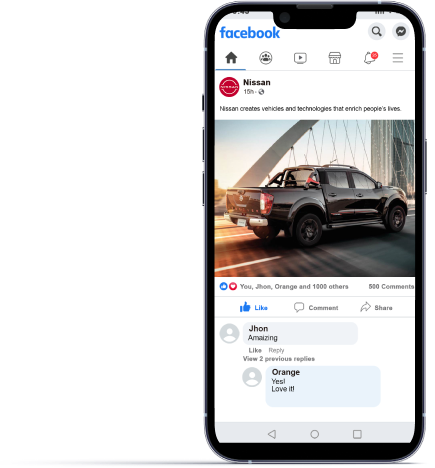
Nissan ad on facebook showing a truck
A tablet showing a graph increasing
A grey nissan car on the road

Nissan Increased Conversion Tracking • Overcoming Obstacles to Follow the User Journey

  • Client

    Nissan Thailand

  • Solutions

    DataData Privacy & GovernanceConsumer Insights & ActivationMeasurement

Results

  • 96% increase in total conversions
  • 30% increase in conversion rate
  • 45% decrease in average cost per conversion

On the road to increase performance and efficiency.

In the automotive category, digital experiences and offline sales touchpoints are traditionally disconnected. With consumers following increasingly complex journeys that span both, Nissan United Thailand wanted to ensure they could not only gain insight into digital behavior, but also apply that knowledge to reach future buyers more efficiently. Yet platform changes designed around user privacy limited the tried-and-true methods of traffic tracking that Nissan relied on. To adapt, Nissan hired Monks to help steer the brand on a path to greater efficiency and performance.

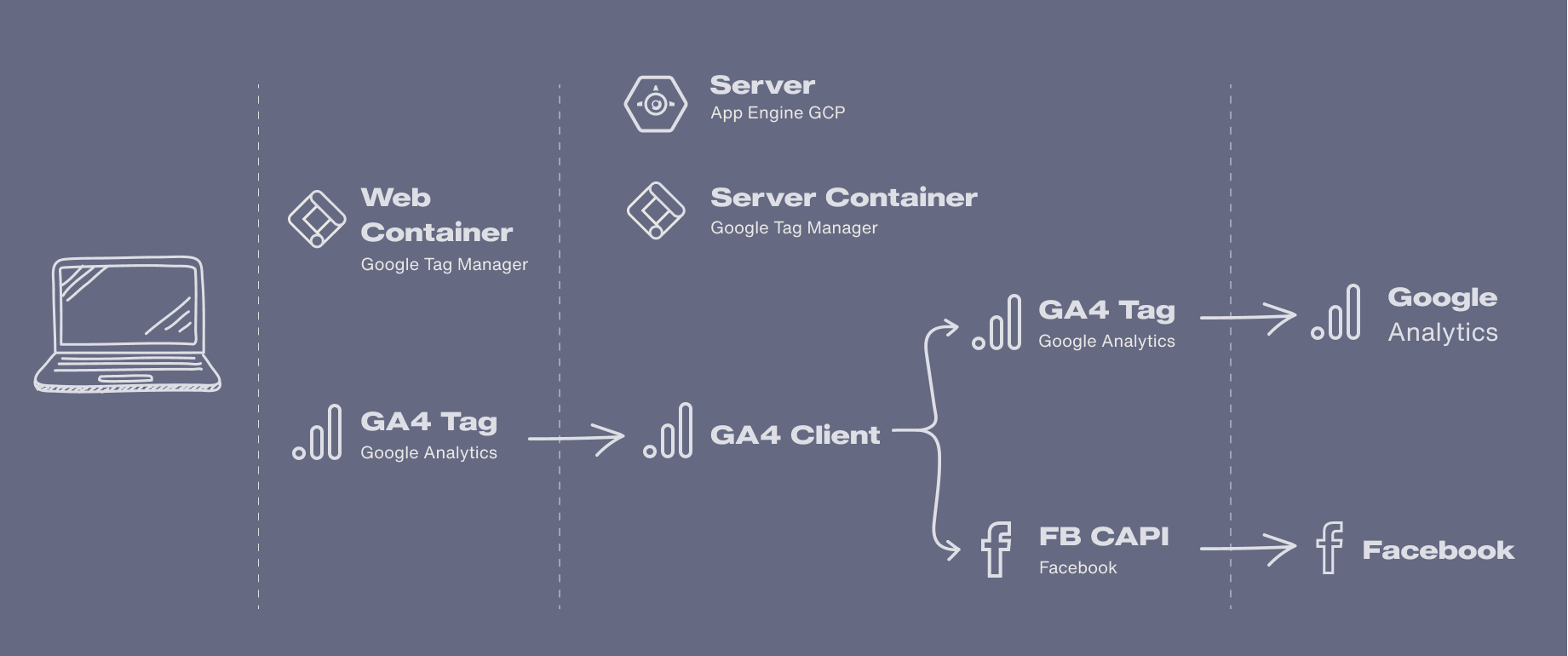
A diagram showing the mapping of google tag manager

Maintaining success amidst new privacy constraints.

Historically, the client-side deployment of the Meta Pixel via Google Tag Manager has been the quickest and simplest way for Nissan to track activity across their website. But this method has suffered some setbacks since the introduction of Intelligent Tracking Prevention (ITP) by Apple, which limits tracking capabilities in the Safari browser. More recent updates to iOS have further limited web traffic by extending ITP restrictions to all browsers installed on the device by default. But these bumps in the road weren’t cause for panic; to increase Facebook campaign efficiency, we implemented Meta’s Conversion API to align traffic and behavior data in a way that still safeguards user privacy.

Nissan car wheel with a black rim

In partnership with

  • Nissan Thailand
Client Words We were excited by the idea of making the Facebook algorithm smarter by giving it signals coming from our proprietary data, as we heavily rely on it to locate our best customers. We have improved our Facebook campaign efficiency across the board since installing Conversions API, which has had a great impact on the business.
Nissan logo

Anuwat Eiamsa-art (Nu)

Head of Data, Tech, and Analytics, Nissan United Thailand

Increasing conversions with Conversion API.

The Conversion API is designed to reliably connect server-side marketing data to Meta’s business and marketing tools. We implemented the API by creating a Server-Side Google Tag Manager (SSGTM) instance. The SSGTM worked as a proxy between client-side user activity and the third-party vendor’s server. When a user triggers an event, the SSGTM container can read and transform the data before it reaches the vendor’s server.

Google cloud interface on a laptop

Unlocking new possibilities for data activation.

Our solution using the Conversion API gives Nissan new capabilities in terms of conversion tracking and remarketing, data governance, security and performance. We closely monitored Nissan’s eight active Facebook campaigns for a period of two weeks before and after the SSGTM implementation and saw a significant uplift in website conversions. The successful implementation not only helped Nissan continue to activate data despite new constraints, but also serves as another leg in the journey to future proof in the privacy era.

Want to talk data? Get in touch.

Hey 👋

Please fill out the following quick questions so our team can get in touch with you.

Can’t get enough? Here is some related work for you!

Dispatch from Cannes 2019: A Time of Transformation

Dispatch from Cannes 2019: A Time of Transformation

5 min read
Profile picture for user mediamonks

Written by
Monks

This year’s Cannes Lions International Festival of Creativity captured an industry in transformation, with brands extending their capabilities in-house, embracing performance and shifting attention toward emerging platforms and formats that have disrupted the environment.

And of course, there were parties. MediaMonks teamed up with MassiveMusic to host an embassy-themed rooftop party in which every attendee represented a unique fictional nation. In all the revelry, the party offered a diplomatic neutral ground to celebrate creativity—much like the festival itself. If you were unable to attend, we’ve got a nice summary of emergent trends and things to look out for coming away from La Croisette. 

A Push for Inclusivity

On a sober note, the MMMMbassy party signaled the power in bringing people together with creativity. And it’s a prescient message, as inclusivity and values-based messaging has struck a chord: Nike’s “Dream Crazy” campaign, featuring Colin Kaepernick, took both an Inaugural Entertainment for Sport Grand Prix win in addition to an Outdoor Grand Prix win, while Johnson & Johnson’s 5B, a documentary following nurses who cared for patients during the AIDS epidemic, also took a Grand Prix win in the Entertainment category.

Image from iOS (9)

Google hosted a panel on diversity at Cannes.

Our own “Mind the (Pay) Gap” campaign, in collaboration with Serviceplan and German transportation company BVG, took away a Bronze Cannes Lion Direct. The campaign powered ticket vending machines throughout Alexanderplatz with facial recognition to determine passengers’ genders, rewarding women with a 21% discount on flat-rate tickets. The discount reflected the 21% gap in pay between women and men.

Maybe it’s time for a Cannes Lioness? Google showed off its Lioness AR app that surrounds the user with 3D lionesses representing women in the ad industry. When users tap a lioness, they hear a real woman’s story, then answer questions about their own workplace experiences. Users then see the percentage of others who answered similarly, breaking the silence of gender inequality with a lioness’ roar.

Günther

These ticket machines, enhanced with facial recognition, were sure to put a smile on some women's faces.

Renewed Focus on Responsibility

Social responsibility isn’t just about showcasing a great cause. Elsewhere, global brands and media partners alike came together to launch a Global Alliance for Responsible Media in response to growing unease from brands about sponsoring or appearing alongside harmful content. And with mounting anxieties about data practices, organizations will have to adopt responsible governance practices that place value and user benefit at the forefront. As MediaMonks Founder & COO Wesley ter Haar says, “People want to feel heard, not overheard.”

Our “People are the Places” campaign for Aeroméxico—which won a Gold Lion for Brand Experience and Activation—demonstrates how handing over personal data should be a value-based exchange. Noticing that travel destinations are just as much about the people and culture as they are the location, the “People are the Places” website prompts visitors to input information about themselves and the people they’d like to meet, resulting in a dynamic video pulling from social content that transforms individual people into destinations themselves.

Creative ingenuity can also poke holes through forms of oppression. On World Day Against Censorship, Reporters Without Borders launched an innovative playlist—found on major streaming services like Spotify, Deezer and Apple Music—that translates important stories by censored journalists into subversive songs. We worked with DDB Berlin to launch the platform for the initiative, which won a Titantium Lion award celebrating ground-breaking work. The campaign’s success shows the social impact that outside-the-box creative can achieve.

Offering a Taste of the Future

Of course, Cannes isn’t just about looking back at the most interesting creative produced in the past year; La Croisette was packed with demonstrations of new content formats and innovative ways to connect with consumers. Over at the Unity cabana, for example, attendees could step out of the French Riviera and into an alternate dimension powered by augmented reality with Pharos AR.

The AR experience, produced by MediaMonks in collaboration with Unity, Google and Childish Gambino, takes users on a cosmic voyage from an enigmatic cave to the furthest reaches of space and is infused with a soundtrack from the artist that features an exclusive new song. “The journey from cave to space feels like the story of humanity,” Donald Glover told Fast Company. As for the reason why he chose AR as a platform? “AR technology is going to play a huge part of everyday life in the future,” Glover said.

Not to be outdone, Facebook offered their own immersive stage for storytelling with its Stories Xperience, which we built in collaboration with 72andSunny. It comprises a series of monitors that display vertical video Story content, inspiring attendees to embrace the growing format. Users select the theme of content that plays, and can direct the kinetic monitors to come together or apart, offering several perspectives on the potential of Stories.

But you can’t highlight new creative opportunities without mentioning Fortnite, a game that’s dramatically risen in popularity over the past year and has turned into a hangout spot for digital natives. Fast food brand Wendy’s took the Social & Influencer Grand Prix for its Fortnite livestream, which recognized the brand for setting a new trend. “Fortnite is the new Facebook in some ways,” MediaMonks Creative Managing Director Henry Cowling told Ad Age earlier this month. “Millennials and Gen Z are much more used to living on platforms like Fortnite.”

Evolving Beyond Traditional Formats

In addition to flashy formats, attendees at Cannes showed an interest in reinventing and evolving more traditional types of advertising as well. In an interview with LinkedIn, S4 Capital Executive Chairman Sir Martin Sorrell discussed the importance in experimenting with tried-and-true formats, mentioning the 1.7-second videos that MediaMonks made with L’Oreal following a Facebook insight about video consumption behavior.

Even the humble radio ad has potential for an upgrade. Take Spotify, for example, who is looking to provide dynamic ad insertion for its podcast content. “The audio ad unit hasn’t seen any innovation in the last 80 years, so we feel we need to disrupt it,” Spotify VP and Global Head of Advertising Brian Benedik told Ad Age.

Similarly, Comcast expressed interest in opening up more inventory for addressable TV advertising, which is currently limited to two minutes on the hour. The growing use of addressable ads will vastly improve the personal relevance of TVC, whose strength had traditionally been to cast a wide reach across the general population. Both this and Spotify’s move toward dynamic insertion show how traditional formats are growing up—and brands will have to get their data in order to take advantage of these programmatic opportunities.

While the past year may have been a bit rocky for brands and agencies alike, you can’t deny that it’s an exciting time. This year’s Cannes International Festival of Creativity highlighted that energy, and conveyed an optimism for how the industry as a whole has set expectations for greater heights—not just in terms of creativity, but in social impact as well.

This year’s Cannes Lions festival pinpointed emergent trends, opportunities for traditional formats to evolve and an imperative for inclusivity. Dispatch from Cannes 2019: A Time of Transformation Missed the event—or partied too hard? We’ve got the highlights from La Croisette.
Cannes Cannes Lons Cannes Festival of Creativity Cannes 2019 Google Facebook Fortnite BVG MassiveMusic Aeromexico

Choose your language

Choose your language

The website has been translated to English with the help of Humans and AI

Dismiss