Choose your language

Choose your language

The website has been translated to English with the help of Humans and AI

Dismiss

Mastering Content Supply Chains for Relevance and Scale

Mastering Content Supply Chains for Relevance and Scale

AI AI, AI & Emerging Technology Consulting, AI Consulting, Studio 4 min read
Profile picture for user Michael Dobell

Written by
Michael Dobell
EVP, Innovation

A digital rendering depicts a tunnel-like space filled with streaks of pink and blue light, suggesting high-speed data transfer or a futuristic environment. The lights are arranged in a way that creates a sense of depth and motion, as if one is traveling through a digital network. The overall effect is vibrant and dynamic, with the contrasting colors adding to the visual interest.

Today's brands face unprecedented pressure to deliver more: more personalized content, across more channels and with more effectiveness. This demand places immense strain on marketing organizations.

A recent report from Adobe, “Adobe AI and Digital Trends in Content Creation and Management,” dives into these very pressures, especially concerning the intricacies of content supply chains—and I had the privilege of participating by lending my own expertise, noting that “High-quality content is more abundant than ever, spanning countless channels. The challenge of our time lies in managing and delivering it effectively. Success will hinge on mastering volume and variance, with brand standing as the ultimate differentiator.”

Mastering this balance of volume is an opportunity for brands to reimagine how they create, manage and deliver content. To help you envision what that could look like, we’ll examine some of Adobe’s findings below and showcase how we’ve helped brands tackle these complexities. 

Relevance isn’t optional—it’s expected.

One of the more eye-opening findings of Adobe’s research indicates that 71% of consumers consider it important or critical that brands anticipate their needs. Translation: relevance is everything. Consumers no longer just appreciate personalized, timely content—they expect it. My colleague Remco Vroom, Global EVP of Martech Platforms & Innovation, highlighted this shift in conversation with The Drum, noting that current AI innovation is largely shaped by these rising expectations: “Everything needs to be these fast, super niche experiences,” he said. “We’re getting all of these really great, faster-to-market, hyper-personalized services and we expect that from everything and everybody. So, companies need to redesign what their role is in in the whole value chain of products and services.”

To meet these evolving demands, delivering personalized content at scale is no longer optional—it’s the cornerstone of building lasting consumer relationships. A strong content supply chain is critical to achieving this agility. By leveraging tools like Adobe Firefly, we’ve been able to streamline workflows and create hyper-relevant content faster than ever before. Our work in this space was even highlighted in the keynote at the recent Adobe Summit, showcasing how we successfully leveraged Adobe Firefly to meet consumer expectations and deliver impactful results.

For instance, we used Adobe Firefly to generate 270 versions of a banner in a single day—a task that could have taken up to four weeks manually. The result? A 78% increase in click-through-rate, demonstrating how a well-optimized content supply chain not only meets consumer expectations but drives measurable impact. These efforts helped our client remain competitive in a world where attention spans are short and consumer expectations are higher than ever. 

Streamlined systems unlock scalability and impact.

In contrast to the point above, consumers say only a third of brands they interact with provide timely and relevant offers or communications, and only 45% of brands create a consistent experience across channels. So, how do you move in that direction? The key to building this framework lies not just in adopting AI tools, but in orchestration: strategically aligning talent, technology and creative processes across the entire content journey.

We believe orchestration is the linchpin of successful AI implementation for CX. In fact, it's a core tenet of our approach to modern marketing challenges. Monks.Flow—our AI-powered marketing platform that automates workflows, enabling scalable, efficient content production—is designed to enable transformative orchestration by consolidating fragmented processes and redefining the content supply chain, delivering full-funnel advertising that is faster, more relevant and more cost-efficient.

A prime example of this orchestration approach is our partnership with BMW Group. We served as BMW's creative and content orchestration partner, transforming their marketing by scaling relevant product marketing across 26 countries and in 29 languages. We streamlined BMW’s campaign processes from start to finish, consolidating 126 agencies into a single partnership. 

As part of this process, we implemented brand models and custom AI pipelines to deliver content at scale. This included Atomic Assets, an automated image production solution, to provide BMW with unlimited asset combinations for all car models and markets. This system leveraged automation and AI to enable BMW market teams to easily order customized assets and receive new visual assets within a 24-hour turnaround. And of course, it allows us to build creative that otherwise wouldn’t be possible, like bringing virtual influencer Lil Miquela into the real world.

Ultimately, building an effective AI-powered CX framework requires a shift towards this orchestrated approach, creating a unified and intelligent system that enhances customer interactions and drives transformative business impact.

Overcome ethical barriers to scale AI.

A key obstacle to AI innovation mentioned in the report is ethics: about half of the executives surveyed in Adobe’s research cite ethical concerns and brand reputation as barriers to scaling AI. This is a valid concern, because while many want to be fast and first with AI, it shouldn’t come at the expense of your brand, your people or your audience. We've navigated these worries with brands, understanding that ethical considerations are paramount in developing and deploying AI-driven solutions with confidence.

To mark the 20th anniversary of Dove’s iconic Real Beauty campaign—celebrated for challenging traditional beauty standards and championing inclusivity—we partnered with Dove to launch the Dove Code. In an effort to refresh its message for a new era, Dove sought to address biases amplified by AI. To support this mission, we developed an AI prompting playbook designed to help the industry confront biases inherent in generative AI outputs. This playbook provides a framework for embedding ethically grounded principles into generative AI workflows, ensuring that creativity and inclusivity remain at the forefront of industry innovation.

Furthermore, it's crucial to look ahead at emerging AI trends and address potential ethical considerations proactively. Our recent Labs Report on agentic AI, for example, decodes the hype around this technology and provides a transparent view of both its benefits and potential risks. As the capabilities of AI expand, it becomes increasingly important for brands to have partners who can guide them through these complexities. We believe in being transparent about potential risks and working collaboratively to develop mitigation strategies.

Mastering volume, variance and relevance is within your reach.

The demand for personalized, relevant, and timely content is reshaping the way brands approach their content supply chains. To thrive in this golden era of content means mastering both volume and variance while delivering experiences that resonate deeply with consumers. Whether it’s leveraging tools like Adobe Firefly to generate hyper-relevant content at scale or implementing orchestrated workflows as seen in our partnership with BMW Group, the key lies in aligning talent, technology and strategy to create meaningful, efficient, and impactful content.

Discover how to master content supply chains for relevance and scale, building off of insights from Adobe’s latest trends report. Adobe Firefly content supply chains personalized content AI AI & Emerging Technology Consulting AI Consulting Studio AI

AI-Powered Transformation: Reimagine the Creative Enterprise

AI-Powered Transformation: Reimagine the Creative Enterprise

AI AI, Artificial Intelligence, Industry events 2 min read
Profile picture for user mediamonks

Written by
Monks

three people sitting on a stage at CES

Brands today face a perfect storm of challenges: skyrocketing demand for personalized content, shrinking timelines and an explosion of data that’s often underutilized. As these pressures mount, generative AI offers a vital solution. However, navigating this new landscape requires more than tools—it demands a transformation of workflows and mindsets.

At CES 2025, industry leaders from Meta, Adobe, NVIDIA and AWS convened to discuss the future of AI in creative enterprises. Moderated by our Chief Innovation Officer, Henry Cowling, the panel explored gen AI’s role in transforming workflows, breaking organizational silos and unleashing the potential of data and creativity. For those unable to attend, the full session is accessible below, along with key insights from the discussion.

“It’s critical that organizations move from being static and siloed to becoming more fluid. The key isn’t just adopting AI but organizing your teams in an organism mentality.”

— Jimmie Stone, VP, Creative Shop at Meta

Tackling the pressure to do more with less.

Today, brands are being asked to do far more with the same—or even fewer—resources. Varun Palmer, General Manager at Adobe Gen Studio, captured this challenge perfectly: “There is a need for 5x more content in the next two years. But I don’t know any CMO with a budget that’s increasing five-fold.” 

Enter the indispensable role of generative AI. It offers not just cost-effective scalability but also operational efficiencies that make it possible to meet rising demands. Adobe’s own marketing workflows reflect this promise, with their team now generating billions of emails annually using generative AI, delivering faster and more personalized experiences without sacrificing quality.

Jimmy Stone, who is VP, Creative Shop at Meta, emphasized the shift required for creative teams, encouraging brands to evolve from relying on singular big ideas to embracing systems of ideas. Fueled by AI, this approach enables diverse campaigns that adapt to the speed of culture, delivering relevant content at the right moment and scale.

Building an organization fit for an AI era. 

A recurring theme throughout the panel was that AI alone is not the solution—it’s how organizations prepare themselves to integrate it. Generative AI holds vast potential to unlock data insights, enhance creative workflows, and drive efficiency, but rigid, siloed structures within enterprises are a significant barrier to success. NVIDIA’s Director of Data Science for Media & Entertainment, Bianca Pryor, emphasized this point, calling on brands to break down internal silos and unify scattered datasets across marketing, IT and sales.

“The future of machine learning and AI is in experimentation. You’re sitting on a treasure trove of data—now’s the time to get down and dirty with it, running models, creating insights, and accelerating workflows.”

— Bianca Pryor, Director of Data Science for Media & Entertainment at NVIDIA


AWS’s Worldwide Strategy & Business Development Leader of Monetization, Chris Ziemer, reinforced this approach, noting that a strong foundation of integrated data infrastructure—combined with AI—enables companies to adapt quickly and scale creative and operational efficiencies.

Ultimately, brands must evolve into dynamic, collaborative organisms. This shift demands more than embracing AI—it requires rethinking internal workflows, encouraging cross-team collaboration and unlocking innovation at every level. To learn more about how to make this shift, watch the full session for deeper insights.

Fresh from CES 2025, explore how gen AI is revolutionizing creative enterprises with scalable workflows, personalized content and data-driven innovation. AI adoption Generative AI personalized content AI workflows Artificial Intelligence Industry events AI

How to Build Digital Platforms for the Evolving Customer Journey

How to Build Digital Platforms for the Evolving Customer Journey

Data Data, Death of the cookie, Platform, Websites & Platforms 4 min read
Profile picture for user mediamonks

Written by
Monks

A illustration of a hand pressing on mobile prototypes

Dotcoms, microsites, mobile apps, ecommerce sites—digital platforms come in all shapes and sizes, and they’re key components in building a strong brand identity. Having a platform strategy is now a requisite for any business to thrive, as they serve as the backbone of most efforts to immerse the audience into a brand’s world. But while this truth may elude no one, the fact that platforms inhabit an ever-growing digital ecosystem poses the question of how we can make them memorable.

Because they are a direct reflection of a brand’s values, products and services, platforms should embody the brand identity in their look and feel. Above all, they should strike the perfect balance between functionality and impact. That, however, may be easier said than done. The process of developing, implementing and maintaining great platforms calls for a high level of subject-matter expertise—and here are some of our learnings from years of building brand legacies in this space.

The brand impression is determined by the digital ecosystem.

Digital platforms have evolved from playing a supportive role in the customer journey to becoming one of the main destinations in the brand’s ecosystem. That means that the experience they get will dictate their impression of the brand. “I like to say that we need to design for the ‘first date,’ because in that initial encounter, the interface is the brand,” says Creative Director Niels Dortland. "If a dotcom is flat and unremarkable, consumers will extend that perception onto the brand."

Monk Thoughts Platforms need to be functional and easy to navigate, but they must be delightful digital experiences too.
Niels Dortland headshot

As opposed to other channels in the ecosystem, dotcoms offer a fully ownable space. Because of this, astute marketers strive to make them the number one place where consumers interact with the brand. “You can’t be certain where the consumer will land within the digital ecosystem, but you can make sure your dotcom is the one they choose to come back to,” explains Dortland. “Investing in platforms that offer a great digital experience is investing in relationship-building with customers and business growth.” 

While simplicity and clarity are great attributes for a platform to have, it doesn’t stop there. To stand out in a sea of sameness, we need to add another layer to the experience. Here’s the secret: the key to uniqueness lies in the brand’s identity.

Use your brand’s truth to rise above the noise.

Digital platforms are part of a broader ecosystem, and each one of these touchpoints should reflect the brand’s identity while serving a strategic purpose in the customer journey. “The way in which we add texture to an experience and make it truly authentic is by finding the brand’s truth and designing around it,” says Dortland. “If every platform is branded around that truth, that means they will be completely different to that of their competitors.”

Climate Pledge website homepage

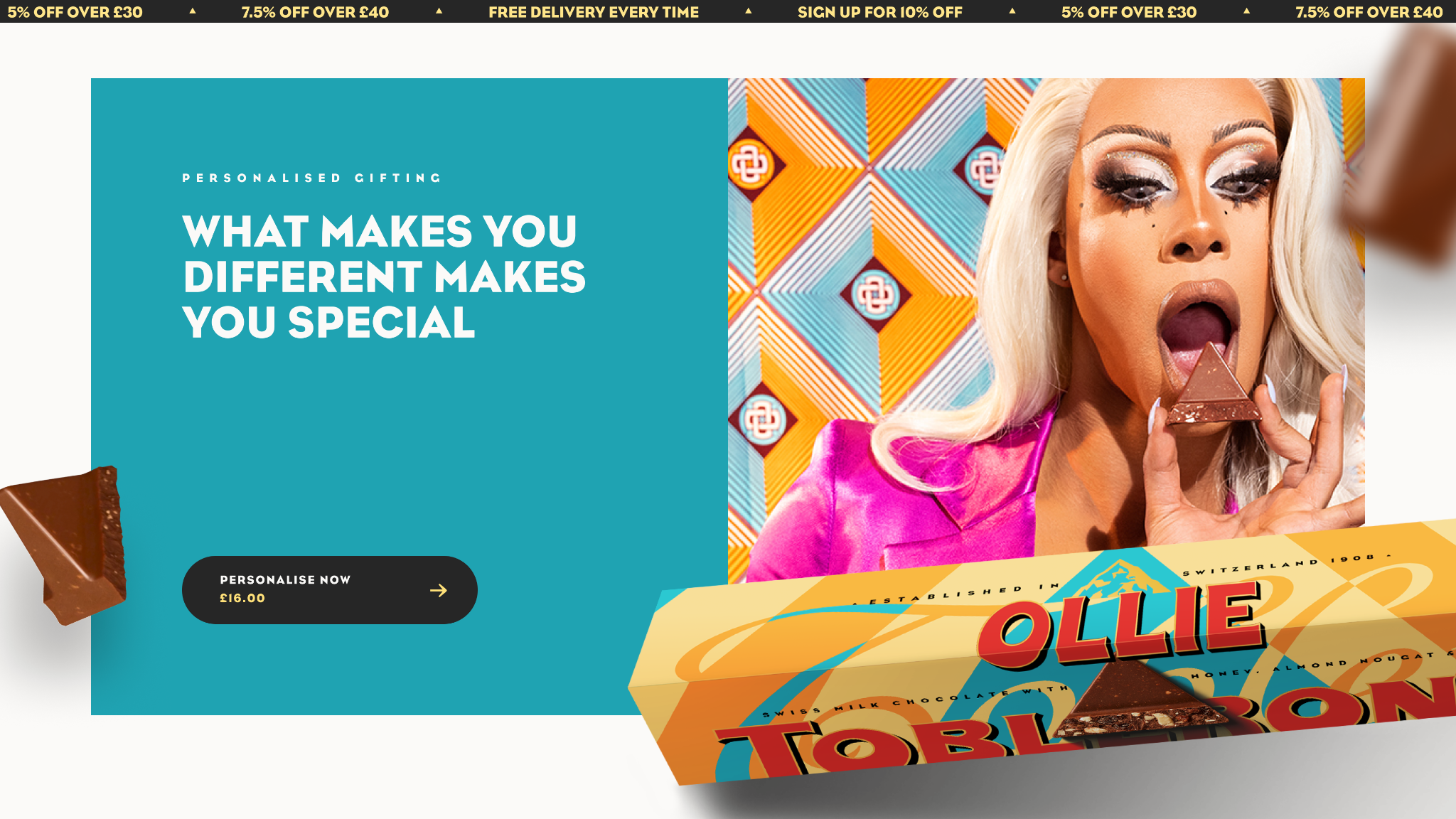
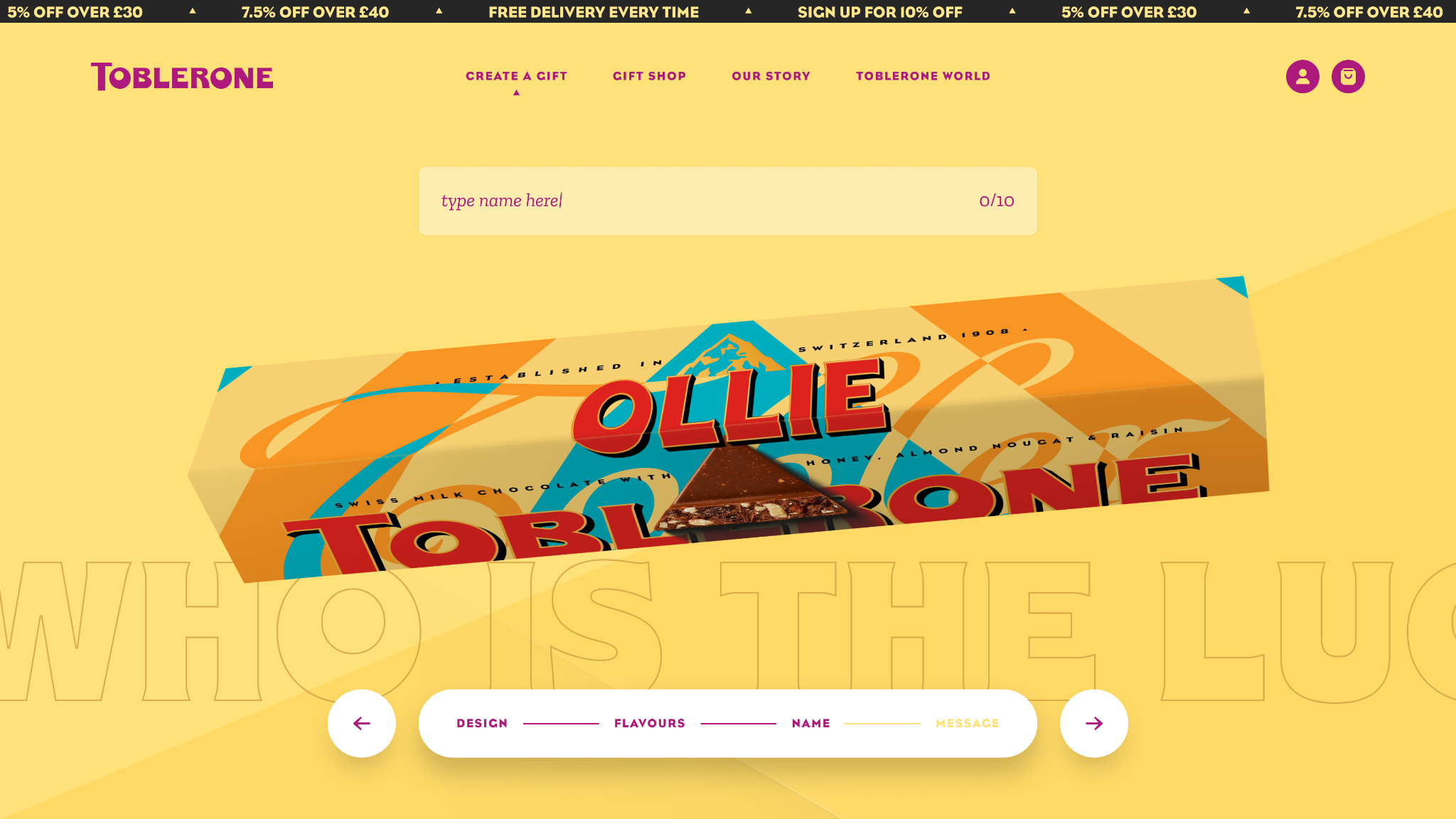
On The Climate Pledge platform, which we built in collaboration with Amazon, content comes to life through interactive elements and rich textures that fit WCAG 2.0 accessibility guidelines. When landing on the home page, visitors first see an animated intro video that spreads the optimistic ambition of the project, making for an impactful first impression. On Toblerone’s D2C platform, meanwhile, users are not only captivated by the stunning color palette, but also by the interactive features that allow them to create personalized gifts. Because they reflect the brand’s identity and tone of voice, both of these platforms are widely different, yet equally memorable.

Toblerone website with chocolate and a person eating a piece
Toblerone website with chocolate in a box

Of course, what visitors find impactful is always a moving target. With people seamlessly jumping from offline to online and into digital spaces where everything is customizable, expectations are high for what a bespoke user experience should look like. There’s a higher demand for creator-led experiences and personalization—which spurs brands to leverage the user data in ways that benefit consumers. 

First-party data elevates the potential of digital platforms.

The brand truth dictates the look and feel of your digital platforms, and data should also inform the design. Platforms facilitate interactions like product search and the purchase of goods and services, providing brands with new information about their consumers. In that process, any data collected should be used to offer experiences that are tailored to people’s needs, interests and even personalities.

What’s more, when the value exchange for someone’s data is clear, brands can establish a healthy feedback loop where they are providing a great service and gathering more information in the process. “The key to designing the right experience is listening to people’s behavior as they interact with the digital ecosystem,” says Dortland. “Our value lies in using data for customer understanding, which will ultimately help us design experiences that elevate brands, drive conversation and growth.” The more engaging the experience, the more data it will generate in return, meaning platforms can become increasingly more effective.

Platforms are more successful in a consistent brand ecosystem.

Essentially, platforms are key to enabling consumers to interact and transact with brands. They host digital experiences that optimize the customer journey and drive consumers’ loyalty. However, platforms are part of a larger brand ecosystem that needs to be consistent.

Monk Thoughts While apps and dotcoms are must-haves for brands, they can’t live up to their full potential if there isn’t a broader strategy to support them.
Niels Dortland headshot

If these touchpoints can’t be disconnected, neither should the teams that focus on each one. Working with partners that can develop an app from the ground up, create content for your brand’s social media or even deliver branded activations leads to a more cohesive narrative—a single truth that manifests itself across channels.

All of these considerations will help you forge deeper connections with your audience—and while building the perfect platform may not be easy, the good news is they are fully under your control. The customer journey never looks the same, but one thing is certain: behind every meaningful interaction is a bespoke platform strategy connecting the dots between people’s needs and a brand’s offering.

Key considerations for an impactful platform strategy in the new era of digital. digital platforms brand strategy content marketing strategy personalized content digital experience customer journey Platform Data Websites & Platforms Death of the cookie

CRM

Foster customer loyalty with a robust CRM strategy.

  • Monks

    170+

  • Projects

    300+

A woman on a laptop
A illustrative cube with different colors
hands holding a tablet in front of a laptop

A fresh approach to building customer-obsessed brands.

Touchpoints have exploded, with the average consumer making 20+ interactions with a brand before purchasing. As a result, the loyalty landscape is evolving from a product and reward-centric model to a future where emotional connections drive engagement. Finding the balance between a privacy-first and personalized customer experience can be challenging, especially with the increasing complexity of the martech landscape. To execute a proper CRM strategy, brands need to create extended ecosystems, deeper connections and meaningful experiences for their consumers.

CRM is key to unlocking lasting relationships.

CRM is more than just a lead management tool; it’s a resource that gives you a 360-degree view of your customers. We understand that a CRM strategy is only as effective as the technology and data that powers it, and complex martech platforms can be difficult to use. Furthermore, your CRM technology is only one piece of the puzzle that needs to be integrated across your entire customer data ecosystem to be effective. This means looking holistically across your first-, second- and third-party data sources to find ways to connect them together, share data between platforms and deploy a truly seamless experience for customers.

Deliver greater effectiveness by orchestrating paid and owned channels.

Direct channels are key to driving leads down the funnel, boosting media ROI, and improving lifetime value and retention. Our approach begins with leveraging insights to identify the role your brand and its marketing programs play in consumers' lives, meeting their needs while achieving your business goals. 

Monk Thoughts Your CRM strategy is about more than just tracking sales leads and opportunities, it’s about customer data and how brands become more mindful about bringing data together to create the ideal experience for their customers.
Ashley Musumeci headshot

A partnership process you can rely on.

  1. How We Work • Our services cover everything you’d expect from an end-to-end CRM partner from discovery to strategy to activation and optimization.

  2. Colorful shapes

    Understand how to build a true 360° view of your customer, then use that to activate connected customer experiences across CRM technology.

  3. Colorful shapes changing

    Stand up customized solutions across the CRM platform that are integrated across the rest of your technology stack and enable the activation of personalized experiences.

  4. Colorful shapes changing

    Enable teams to drive long-term value from solutions through training, ongoing optimization and real-time reporting & analysis.

  5. We're not only your go-to CRM partner. Learn more on what we have to offer.

Swipe
For More!

Drag
For More!

Want to talk CRM? Get in touch.

Hey👋

Please fill out the following quick questions so our team can get in touch with you.

Solidify Your Data Strategy with The Unlocking Personalization at Scale On-Demand Video

Solidify Your Data Strategy with The Unlocking Personalization at Scale On-Demand Video

CRM CRM, Consumer Insights & Activation, Data, Data maturity, Death of the cookie 1 min read
Profile picture for user Ashley Musumeci

Written by
Ashley Musumeci
Global VP of Lifecycle Marketing & CRM

A yellow data block in the shape of a pyramid

Maybe it has been awhile since you thought about your data. Over the decades, digital marketers stacked one tech solution on top of another to add functionality, but after more than 20 years the data is unregulated and sprawled throughout the organization. It’s all there somewhere, but data sets can’t connect, insights can’t be shared across departments and much of the data is no longer actionable.

Earlier this year, Ashley Musumeci, Director Go-to-Market, CRM at Media.Monks, spoke to a packed house at Salesforce Connections. This exclusive 15-minute video captures her presentation in which she outlines how brand marketers are using Salesforce to deliver a personalized customer experience at scale when a clear data strategy is in place.

Ashley headshot on a title card

Build a strong data foundation by:

  • Establishing naming conventions
  • Standardizing data collection
  • Learning how to unify the data
  • Creating a single source of truth

This experience is best viewed on Desktop

Download Now
Ashley Musumeci, Director Go-to-Market, CRM explains how brands can deliver personalized customer experiences at scale when a clear data strategy is in place. CRM strategy personalization personalized marketing personalized content data analytics Data CRM Consumer Insights & Activation Data maturity Death of the cookie

How to Make a Personalized Campaign That Sticks

How to Make a Personalized Campaign That Sticks

4 min read
Profile picture for user mediamonks

Written by
Monks

How to Make a Personalized Campaign That Sticks

These days, there’s a lot that inhibits brands from standing out: there’s an onslaught of competing content, user attention spans are shortening and budgets (not to mention time) are tight, making it difficult to rapidly produce and experiment with content that truly sticks.

That latter point is perhaps the most significant, because the biggest indicator of whether or not a user will engage with your content is whether it’s relevant to them. This desire of relevance elevates personalization beyond just a simple business need—in today’s market, it’s expected by users and required from brands.

Monk Thoughts 83% of global business leaders are increasing personalization budgets in 2019.

This results in an imperative for efficient, cost-effective production that cuts through the noise and lands directly in front of the right consumer at the right time. A report recently released by SoDA showed that brands understand the need for personalization, with 83% of global business leaders increasing their investments in it for 2019, and nearly a third increasing their personalization budgets significantly.

People who touch an item feel an increased sense of ownership toward it—and personalized experiences are poised to persuade and push them over the edge of purchasing. Coca-Cola’s 2014 “Share a Coke” campaign was massively popular simply by creating a situation for customers to engage with the brand in a personal and social way. Marmite has taken a similar approach with its personalized jars, which provide a point of identification for the user.

But making strategic use of personalization remains a key challenge, particularly with production of content that benefits from personalization. In the same report, 55% of business leaders cited a clear focus on producing content quicker, and 47% sought greater cost-efficiency in content production.

But producing personalization at scale doesn’t have to be burdensome for brands. Through an integrated production process and technologies that enable dynamic delivery of content, organizations can produce a staggering volume of hyper-targeted content with ease—though it may require them to rethink their creative approach.

Levels of Personalization

Personalization in marketing certainly isn’t new, though most organizations operate on a relatively low level of personalization maturity. Rather than relying on basic data metrics like greeting a user by their name or using rules-based segmentation, brands can achieve best-in-class, highly relevant creative by optimizing content for omnichannel journeys (remembering the user along the way), integrating behavioral recommendations and applying AI to predictive personalization.

Stimorol.BOF.NL20sec.00_00_14_15.Still002

While every video features the same ranger, viewers will see different scenarios based on their preferences.

Now, don’t get too scared—all of the above likely sounds complicated, especially if you don’t yet have a distinct personalization or data strategy in place. But the good news is that personalization is less about the amount of data that you have, and more about what you do with the data. Minimal personalization can make a big impact.

To illustrate this, let’s look at a great example of an omnichannel campaign that reacts to user behaviors in a way that’s surprising to users, grabbing their attention by speaking directly to them. When Danish gum brand Stimorol decided to branch out into a new form of candy, they needed an awareness campaign that would challenge consumers to likewise extend outside their comfort zones. But how can you challenge someone to try something new without knowing what they habitually do? That’s where the creative opportunity behind personalization emerges.

We solved this problem by producing an integrated campaign that responds to user behaviors. Key to the campaign are YouTube bumper ads that respond to the types of videos that individual consumers are watching. While watching sports videos, for example, users may be treated to an ad that prompts them to try playing sports instead of just watching them.

These bumpers make use of one key data point—the type of content that users are watching—but does so in a clever way that immediately grabs viewer attention and prompts them to identify with the message in a personal way. While they might not be willing to change their own habits, trying a new Stimorol candy sounds like a sweet deal in comparison.

Personalization that Enhances, not Inhibits, Production Quality

Isn’t it unsustainable to produce several variations of content like the kind mentioned above? Not if you have already outlined the variables that differentiate individual pieces of content, or have clearly mapped out the touch points to be supported by an omnichannel campaign. We optimized production for the Stimoroll campaign by limiting it to a single-day shoot at a single location, resulting in over 150 format-ready deliverables capable of greeting the right consumers at the right place and time.

Giraffe#1_Intro.00_00_08_23.Still005(1)

Are you a dog or giraffe person? Your preferences will determine what you see in this dynamic video, highlighting different destinations.

According to Salesforce, 57% of customers are happy to provide personal data in exchange for personalized marketing—which means data can inform awesome content and vice-versa. The key is that the data exchange should provide consumers with obvious value.

With the technology available today, brands can achieve an even greater level of relevance with their content, dynamically stitching together personalized content reactive to several data points. With Google Vogon, for example, brands can automatically translate a single base video into dozens of personalized variations on the fly, resulting in a high volume of unique videos that don’t push film crews to their limits or sacrifice quality.

Our dynamic video content for Booking.com was designed from two base videos: one featuring a giraffe browsing for travel destinations while another focused on a dog doing the same. But the type of animal featured is just one of several variables that enable 54 permutations tailored to hyper-specific segments and interests. These include the target market, different destinations found within those markets and a key passion (like shopping, dining or sightseeing) that provides added inspiration.

Both campaigns discussed above demonstrate how brands can efficiently target key segments of their audiences through personalization. Whether employing just one data point or many, personalization at scale can grab user attention and leave an indelible mark on them, and the right creative and production strategy enables brands to take advantage of these benefits without wearing themselves thin.

Smart use of personalization makes the difference between marketing that blends in vs. interrupts. How to Make a Personalized Campaign That Sticks Make work that blends in, not interrupts.
personalization assets at scale content personalization dynamic content personalized content personalized marketing

Transform Sports Spectators into Active Participants with Emerging Tech

Transform Sports Spectators into Active Participants with Emerging Tech

5 min read
Profile picture for user mediamonks

Written by
Monks

Transform Sports Spectators into Active Participants with Emerging Tech

While an exciting game and sports-stars-turned-celebrities alone were once enough to raise an audience for broadcast sports, today’s leading brands strive to provide premier, engaging digital experiences that reach users through personalization and emerging tech. And we know, because MediaMonks recently went for the gold and made it onto the Hashtag Sports Engage 150 list, which features the top partners engaging consumers through sports and fan culture today.

Through our sports-related work—encompassing platforms, creative content and technical innovation—we’ve formulated a game plan for brands to better engage and deliver upon the needs of fans through sports. This includes more effective utilization of user data and investing in emerging tech solutions, allowing brands to bring their A-game to enhance spectatorship for fans both near and far away from the game.

Transform Spectators into Active Participants with Emerging Tech

We all know the joke of those who buy the biggest TV screen available before an important game, only to return it after hosting a viewing party. But today’s digital media allows brands to do more than just provide a larger-than-life picture; through emerging tech, they can provide entirely new experiences that significantly improve spectatorship through heightened immersion.

A premier platform achieving this is the 2018 Webby Award-winning Red Bull Air Race for Google Daydream, which takes users on a thrilling ride aboard a virtual airplane that follows actual flight paths from real races. Giving users full control to look wherever they please, the experience makes them feel as if they’re really there.

screenshot_04

But VR lets you do more than let users feel present in the moment. “The benefit something like AR has over 360-degree video is that it’s a platform,” says Robert-Jan Blonk, Senior Interactive Producer at MediaMonks, noting the amount of on-screen data present to the user. “In this case, we built a platform with pilot info, race standings and different locations where races are held, which users can go back and replay.”

This added level of autonomy is powerful for fans who want to be part of the action. “Sports fans want to feel like they have a role in the game and aren’t just bystanders,” says Emily Veraart, Senior Digital Strategist at MediaMonks. While Red Bull Air Race users don’t influence the race directly, interactive toggling of the camera lets them experience the event in their preferred way—whether it be the middle of the fray or at a safe, omniscient distance.

For MediaMonks Operations Manager Donny Hofman, this level of interactivity is integral to the experience.  “The most interesting thing about an experience like this is the freedom you can give to users,” he says. “You can potentially get anywhere in the action that you want—and where you can’t place a camera in real life, you can in VR.” That latter point describes how emerging tech can enhance sports spectatorship through entirely new perspectives: “It’s a rediscovery of something you’re familiar with,” says Hofman.

Monk Thoughts You can potentially get anywhere in the action that you want—and where you can’t place a camera in real life, you can in VR.

Reach Fans with Targeted Content and Personalization

The sports industry encompasses several different parties, each of whom has their own fans and content: teams, federations, individual players and industry-adjacent influencers. This makes the industry ripe for producing always-on content.

During the Rio Olympics, we produced with Google Zoo a platform to deliver content to sports fans throughout the Games. Designed for both online fans and those visiting Rio de Janeiro to attend in-person, the platform integrated various forms of content (like timely updates and summaries from some of the region’s most influential YouTube content creators, the Castro brothers) onto a map of the city. In addition to providing relevant spatial information in this way, the platform surfaces up personalized content responsive to how they interact with the platform, like recommending content based off behavioral habits and viewing preferences.

The benefits to better understand fans are measurable. According to MightyHive’s Data Confident Marketer report, data-confident marketers’ success “is attributed to becoming more customer-centric: they’re able to apply first-party data in ways that help them understand who their customers are, what motivates them, and how digital advertising plays a role in their purchasing decisions.” Such confidence in their data allows brands to identify which information fans seek, where and when—and which partners make the best sense for engaging with fans through supplementary content.

Monk Thoughts Smart data helps brands "understand who their customers are, what motivates them, and how digital advertising plays a role in their purchasing decisions.

This level of personalization, paired with forging partnerships with content creators and influencers, is ideal for delivering upon changing user expectations for how to consume sports. “With sports, there’s a bigger generational divide in user behavior,” says Veraart. “Baby boomers and millennials are used to watching sports with their family, but Gen Z doesn’t have that relationship with how they watch sports.” According to Veraart, much of this shift is informed by the constant discussion happening on social media, as well as an abundance of statistics and data available for the most avid fans to track. Brands can meet this need with a content strategy that offers a sliding scale of data and content tailored to fans’ individual preferences.

Engage User Needs through Contextual Design

When developing a digital platform for sports consumption, carefully consider the context in which users will interact. Consider micro-moments that prompt users to engage in the first place: the sports tourist attending a big gaming event in town, the stats-obsessed fan, the user who simply wants to see what games are playing at the height of the season. “How you guide the user through a schedule is a key example of the types of challenges a sporting federation may face,” says Joeri Lambert, Business Monk at MediaMonks. “Another is how you apply the data that you have to alert the user of games or information that they want to see.”

google_rio_mm_case_01

The All of Brazil Plays platform provided users with personalized, contextual information for following the Olympic Games as they happened.

One crucial consideration in how to best support user context is whether the platform is accessed via mobile or desktop. With the All of Brazil Plays platform, for example, the mobile experience was tailored more toward location-based information for those attending the Games who needed to know where to go, and when. On desktop, meanwhile, users were treated to their personalized newsfeed of recap content, perfect for those catching up on a day’s many events.

Marrying data with digital creative—whether it be a digital content platform or emerging tech—is a smart strategy for brands to reach sports-obsessed and average fans alike. From helping users keep up with their favorite team to placing them right into the action with immersive tech, digital content transforms spectatorship from a passive experience to an active one, letting everyone revel in a good sporting victory.

Through data-driven content and new experiences made possible with emerging tech like VR, brands can place sports fans in the center of the action before, during and after the game. Transform Sports Spectators into Active Participants with Emerging Tech With personalized content that provides a more immersive spectator experience, fans and brands win big.
sports sports content sports brands creative content personalized content personalization emerging technology VR olympics red bull content platform

Choose your language

Choose your language

The website has been translated to English with the help of Humans and AI

Dismiss