Choose your language

Choose your language

The website has been translated to English with the help of Humans and AI

Dismiss

How Sports Marketers Can Crack The Gen Z Code and Score Big

How Sports Marketers Can Crack The Gen Z Code and Score Big

Culture Culture, Emerging media, Experience, Social, VR & Live Video Production 1 min read
Profile picture for user Ali Rodriguez

Written by
Ali Rodriguez
Marketing Director, Experience

Pixel basketball player

A look into Gen Z’s changing relationship to sports.

The value of the North American sports market is projected to surpass $83 billion this year. However the way we consume sports has changed completely. Traditional TV viewership is declining, and to engage Gen Z, the old playbook won’t cut it anymore.

Fans have new expectations.

  • They demand streaming options & a diverse media ecosystem, completely bypassing traditional sports coverage.
  • They are seeking increased avenues for interaction with the games themselves, desiring immersive experiences that go beyond mere spectatorship.
  • They also crave more opportunities to engage directly with their favorite players, fostering a sense of connection and intimacy. A dunk isn’t enough, they want to get to know Lebron.

We’ve identified key changes in Gen Z sports preferences in the areas of Consumption, Participation, and Human Values. And we’ve added recommendations and real-world examples for each from McLaren Racing, the NBA and more.

Best viewed on Desktop

We’re Experience.Monks.

As experts in brand experience design, we work to elevate and innovate your brand through every single consumer touchpoint. We are your consultancy, agency and production arm all in one, specifically designed to help modern brands looking to disrupt, differentiate, and innovate everywhere customers interact with them.

A short trend report about Gen Z’s changing relationship to sports and how marketers can ensure participation in this new, wild landscape. gen z sports advertising and culture live broadcast services social media Social Experience VR & Live Video Production Culture Emerging media
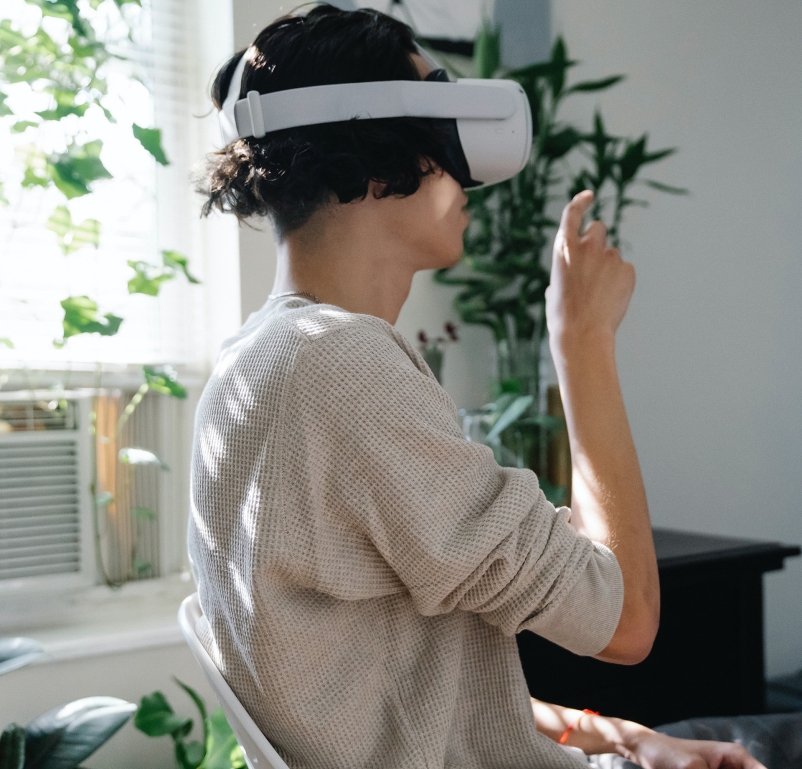
Someone wearing a VR headset
A person slamdunking a basketball
A basketball

NBA in VR • Transforming the Fan Experience

  • Client

    Meta

  • Solutions

    Technology ServicesExperienceVR & Live Video Production

nba basketball court with a camera on the sideline

Immersing fans in the action with NBA in VR.

You’re sitting courtside at an NBA game with your best friends, enjoying commentary from an NBA world champion. Your friends, who live across the country, didn’t fly in to see it with you—because you’re all experiencing the game live in VR with a Meta Quest headset. Today’s sports fans want to feel close to the action while engaging with their favorite games, so we partnered with Meta to immerse audiences within 56 NBA games across 3 seasons, offering a social and interactive viewing experience that goes well beyond traditional broadcasting.

Going beyond broadcast possibilities with software-defined production.

With a 180° courtside view captured in 5K and fluid 60 frames per second, we delivered a lifelike experience to fans. But building such an environment required going beyond the limitations of traditional broadcasting. With advances in technology from Meta, AWS and NVIDIA, we built a cloud-based, software-defined production workstream that significantly reduced the amount of equipment, personnel and cost normally required to broadcast a game. Compared to the 54 camera angles at the NBA 2020 Finals, we only needed five cameras and three people on the ground supported by a remote crew.

A media.monks employee editing live footage in VR

A social experience between friends and fan favorites.

Once in the game, audiences could do more than merely watch. Within Meta’s socially focused venue, viewers could engage with friends and fellow fans—and even familiar athletes. Each game featured live commentary from guests like NBA champion Richard Jefferson and WNBA champion Renee Montgomery, making each game feel like a conversation. In addition to the immersive VR experience, the broadcast pipeline is built to allow for content distribution across a wide range of formats and channels. Gen Z fans consume more highlights (50%) than live (35%), validating the appetite for this moment-based approach to content delivery.

A person using a VR headset
A person wearing a VR headset
Press This quality was outstanding in stunning 5K resolution. For comparison, the “majority of game feeds” on the NBA redesigned global app are in 1080p and you may find 720p for some broadcasts as well. The difference is massive.
Read on USA Today I watched an NBA game through their VR broadcast and it made me excited for the future

Evolving the future of media and entertainment, now.

NBA in VR was designed to reflect fans’ desire for authentic, interactive experiences—adding a revolutionary new layer to watching sports from home. By leveraging the combined expertise of Meta and Monks, we were able to create a groundbreaking VR broadcasting capability for NBA games that pushed the boundaries of traditional broadcasting and paved the way for the future of media and entertainment. Together, we delivered a lifelike and immersive experience to fans to connect with each other and their favorite athletes.

Want to talk experience? Get in touch.

Hey 👋

Please fill out the following quick questions so our team can get in touch with you.

Can’t get enough? Here is some related work for you!

Two roblox hockeyland players skating
Two roblox players on ice chatting in hockeyland

Hockeyland • A Innovative Challenge to Spark Hockey Fandom

  • Client

    Sportsnet

  • Solutions

    ExperienceImpactful Brand ActivationsImmersive Brand StorytellingExperiential Strategy & Production

00:00

00:00

00:00

Case Study

0:00

Bringing a beloved sport to a new generation.

To celebrate the 2022 NHL season play-off, we partnered with Sportsnet to launch Hockeyland: an immersive, hockey-themed adventure map available on the Mineraft Marketplace. Conceived by our in-house creative team, Hockeyland aims to inspire hockey fandom among a new, younger generation by bringing the sport to their “home ice”: one of the best-selling video games of all time. Combining best-in-class game design and metaverse strategy with executional expertise from Blockworks UK, one of a select few content creators certified by Microsoft to produce and distribute content on the Minecraft Marketplace, we helped Sportsnet deliver an accessible Minecraft experience that allows anyone to discover the sport in a fun and familiar way.

A metaverse strategy enhanced by familiar, gamified elements.

It’s not a true Minecraft experience without mining for precious resources to power-up your character and shape your environment. We built Hockeyland around a handful of familiar gamified elements designed to help players hone their skills and ice out the competition in their quest to be the best. Players can craft hockey equipment like helmets, stick upgrades, shoulder pads and more to strengthen their abilities, then put them to the test in a series of challenges against enemy Grinders (that’s hockey lingo for players who pressure opponents through physical force). From target practice in the Hockey Stick Forest to racing down the Ice Track Course, players can see if they have what it takes to achieve the game-winning goal: scaling the frigid heights of Playoff Peak to stand the literal top of the world.

An avatar in minecraft skating on ice dressed up in hockey gear

In partnership with

  • Sportsnet
Client Words We know these audiences are spending time on new, immersive platforms and we wanted to meet them exactly where they are. As innovation and technology continue to re-shape fandom, we're proud to be the first Canadian broadcaster to enter the Minecraft space.
Hilding Gnanapragasam headshot

Hilding Gnanapragasam

Director of Sports Creative, Sportsnet

An authentic approach to virtual, experiential marketing.

When it comes to inspiring the next generation of fans, Sportsnet knows where the puck is headed: today’s audiences crave interactive environments where they can play and connect. Hockeyland is a first-of-its kind experience that signifies the broadcaster’s new approach to reaching Gen Z and Gen Alpha audiences in immersive ways. In addition to meeting younger generations where they already are, we amplified the experiential marketing engagement with a 360-degree campaign spanning Sportsnet social channels, a Twitch paid media buy and organic outreach with Minecraft-focused content creators. Altogether, the metaverse strategy helped bring a beloved sport to life in a new medium—where Sportsnet can continue to grow and build for years to come.

Want to talk experiences? Get in touch.

Hey 👋

Please fill out the following quick questions so our team can get in touch with you.

Can’t get enough? Here is some related work for you!

Football players go up for the ball
Girls playing field hockey
A baseball player throws a pitch to a batter

Data Analytics at Scale • Getting 1,400 Partners Playing Team Ball

  • Client

    SIDEARM Sports

  • Solutions

    DataData AnalyticsTransformation & In-HousingData Strategy & Advisory

A basketball goes through a basketball hoop

Impact

200 hours saved.

Based on a templated approach to measurement, we deployed both Google Tag Manager and Google Analytics reliably, consistently, and at scale across over 1,400 sites in under two weeks. This reduced an estimated manual workload of more than 200 hours to just minutes, bringing human input to an absolute minimum and assuring high quality data using QA automation.

Data, data everywhere.

SIDEARM Sports is the technology engine that powers websites, mobile apps, video streaming, ecommerce and unique digital fan experiences to over 1,400 partners in college athletics. And that’s a ton of data. 

To best manage this data firehose, SIDEARM wanted Google Universal Analytics (GA) and Google Tag Manager (GTM) deployed over all 1,400 partner sites to ensure data quality throughout the entire organization. Integral to SIDEARM’s success was minimizing time-consuming, manual work and automating as much of the configuration process as possible.

a computer showing data analytics on the screen

Optimization, automation, organization.

The strategy was to employ a single visual interface so coding and manual changes are virtually eliminated, and site instrumentation can be rolled out easily and accurately. To do this, we developed a cloud-hosted tool that utilizes Google Analytics Management and Google Tag Manager API functionality for automating configuration tasks. The tool also automates future configuration updates so SIDEARM is always in lockstep with its partner.

To assure data quality, we built another tool to check the status of sites and their dataLayers by verifying it against a master data source that contains all the true values for the sites. To assure the data was being collected reliably, the tool produces a spreadsheet that can be audited within a few minutes allowing people with little technical GA expertise to QA the setup.

A white volleyball

In partnership with

  • SIDEARM Sports
Client Words [Monks] got all our 1,400 online properties operating on Google Marketing Platform in record time which reduced staff hours, improved data quality, and got us making faster business decisions.
Jeffrey Rubin headshot

Jeffrey Rubin

Chief Executive Officer, SIDEARM Sports

Want to talk data? Get in touch.

Hey 👋

Please fill out the following quick questions so our team can get in touch with you.

Can’t get enough? Here is some related work for you!

bob paisley head avatar
bob paisley holding uniform

Stand Red x Bob Paisley • Bringing Liverpool FC Legend Bob Paisley to a New Generation of Fans

  • Client

    Standard Chartered, Octagon

  • Solutions

    StudioImmersive Brand StorytellingMobile Apps

00:00

00:00

00:00

Case Study

0:00

Treating fans to a winning experience.

Liverpool Football Club is a team with a rich and celebrated history that spans generations. To honor both the team and its fans, we gave fans intimate access to the club’s late legendary manager Bob Paisley, on what would have been his 100th birthday. 

In collaboration with Octagon and Standard Chartered, we brought fans closer to the club by creating the Stand Red mobile app. Celebrating Bob Paisley’s life and legacy, the immersive AR experience allowed people to enter Liverpool’s fabled Boot Room and converse back and forth with the club’s famed manager.

  • Inside fabric of a shirt with the signature "Bob Paisley" English football locker room with jerseys hanging on the wall
  • Portrait of Bob Paisley, created by 3D modeling, on the field at a stadium a cell phone with the Boot Room AR experience loaded on it

Retelling a legend.

Stepping into the virtual Boot Room let fans step back in time, where they could engage with Bob’s legacy through several interactions. They could discover historic radio broadcasts by turning the knob of a vintage radio, view shoes signed and worn by the club’s most legendary players, and test their own sense of strategy by perusing Bob’s own playbook. These artifacts provided fans with a tangible experience that met them on a more personal level.

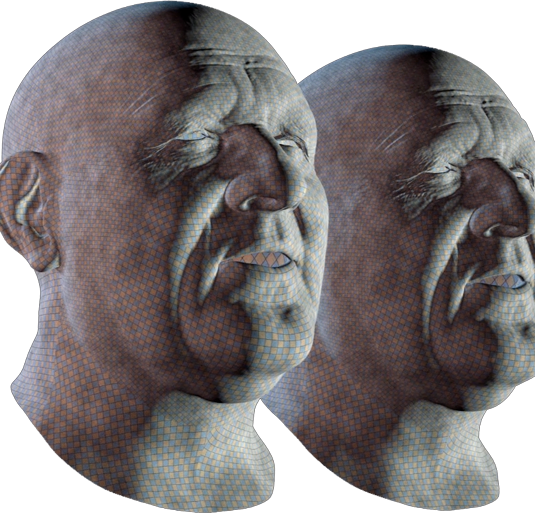
Accompanying the Boot Room experience were five films that provided fans with a front-row seat to see the sporting icon again through a mix of CGI and live-action acting. With Bob’s family’s blessing, we shot an actor with a similar body shape over four shoot days and tracked his facial movements using 42 facial markers. 400 hours, 200 facial shapes and 200,000 meticulously placed hair follicles later, we delivered an authentic performance to the club’s most dedicated fans.

Winning fans over for generations to come.

While many virtualized representations of celebrities or athletes draw a red card, both the AR experience and films won big with fans and players alike, who took to social media to share the poignant and moving experience. By introducing Paisley and Liverpool FC history to a new generation of fans, we brought everyone closer to the club and won them over.

Results

  • 76.4 million total views.
  • 1.3 million social comments and engagements online.
  • 95% positive sentiment among those who engaged with the campaign.
  • 191 pieces of earned media coverage globally across digital, print, broadcast and radio.
  • 1x FWA

  • 1x Digital Advertising Award

  • 2x Lovies

Two 3D model heads of Bob Paisley
Close up of a 3D model of a face
Press Project Stand Red perfectly exemplifies our innovation mind-set by using smart technology to introduce one of Liverpool’s most beloved managers to the next generation of fans.
Read on The Drum

Want to talk sports? Get in touch.

Hey 👋

Please fill out the following quick questions so our team can get in touch with you.

Can’t get enough? Here is some related work for you!

Changing the Game: Bringing Sports to the Virtual Stadium

Changing the Game: Bringing Sports to the Virtual Stadium

4 min read
Profile picture for user Labs.Monks

Written by
Labs.Monks

Changing the Game: Bringing Sports to the Virtual Stadium

From the Fortnite challenge on late-night TV to politicians meeting constituents in-game, it’s no secret that gaming has risen to become an incredibly profitable entertainment industry—a trend that has accelerated in the past year as consumers have flocked to online environments for connection.

Just look at esports’ growth: the esports ecosystem is expected to surpass $1 billion in revenue this year, most of which will come from sponsorship and advertising. So, while gaming audiences have historically been difficult to connect with, emerging interest in esports has caught the attention of brands.

This development comes at a time when consumption of traditional sports has waned. So, will esports replace traditional sports completely? Of course not—but the ways that gaming audiences connect and consume could offer a glimpse at broadcast viewing experiences of tomorrow.

Esports Broadcasts Pull Fans into the Game

While esports organize in competitive leagues, they uniquely blend together what happens both in the game and in the arena. Technology like extended reality lets a broadcast drop character models directly in front of the characters who choose them. Meanwhile, commentators may stand beside an augmented reality diorama of the game to show replays in immersive detail. These innovations stand in contrast to watching a physical sport. “Cameras in a sports stadium are still very flat and traditional,” says Geert Eichhorn, Innovation Director at MediaMonks. “What fans want is an environment you can walk around and engage with.”

Traditional sports have long sought ways to make the viewing experience more engaging to audiences at home, though those experiences have largely remained linear. Today’s sports audiences connect through a variety of digital channels to seek new ways of getting closer to the action, and esports audiences are accustomed to interactive viewing experiences delivered through livestreaming channels like Twitch or YouTube. Sports can look toward esports’ innovation to enable more engaging experiences that break down the barriers between the audience and the game—with brands serving as the MVP’s that power these experiences.

Building the Virtual Stadiums of the Future

For esports and traditional sports alike, virtual stadiums set the stage for immersive and interactive viewing experiences. “You have to think: what can we offer in a virtual space—how are we using the third dimension?” says Eichhorn. “You can do more than just recreate a stadium by letting spectators look beyond the fixed angle of a camera.”

What’s more, much like a physical venue, a virtual one opens up unique sponsorship opportunities for brands, whether it’s more measurable and personalized ad targeting or branded stadiums

Map higher res

The MediaMonks Labs team has built its own virtual stadium that draws on data from Player Unknown's Battlegrounds, tracking each player's location on a 3D map in real time.

When it comes to consuming videogames within a virtual stadium, APIs are crucial. An API funnels data from the game in and into the viewing platform in real time—for example, the health of each player, their current equipment, whether they’re in a vehicle and more. In-game assets like maps, player models and animations can also translate seamlessly into the viewing environment.

MediaMonks Labs, our R&D team, has experimented with this technology by building their own virtual venue in Mozilla Hubs. Inside, a small group of viewers can meet together to watch a game of Player Unknown’s Battlegrounds both traditionally (a recording on a stream) and through a 3D map that shows each player’s location in real time—a lot like the park map featured in the HBO series Westworld.

Eichhorn explains why the prototype is limited in the in-game data it uses: “Many game developers are guarded with API access to data in an effort to minimize cheating,” he says. “But a brand or creative partner working directly with a developer to virtualize a competition would have access to much more.”

Sports can Take a Page from the Esports Playbook

We’re still a way off from watching a full traditional game at that level of detail. “Volumetric in real time is difficult for live sports, because it takes days to stitch together everything into a 3D file.”  Though some are bridging the gap, like NBA’s games broadcast in Oculus venues, which lets viewers from afar watch together in a virtual environment—albeit from a linear, fixed-camera perspective. 

18

The Soul & Science app made in collaboration with Intel Studios transports athletes to your immediate surroundings, letting you watch the action from any angle.

However limited immersive broadcasting within a virtual venue may remain today, there is a strong potential to fuel entirely new content experiences. “Intel creates replay clips through its True View volumetric capture,” says Nora Henrikkson, Managing Director at MediaMonks. “These clips pause at a key moment to let the viewer look around in 360 degrees. In the future, it would be cool to broaden that experience and put more control in spectators’ hands.” The same technology powers our work with Intel, which uses volumetric augmented reality to let sports enthusiasts watch, rewind and examine athletes’ moves from any angle.

Esports are branching out and following the lead of traditional sports—like franchising teams, organizing in season matches—but traditional sports can likewise learn from their digital counterparts. At the very least, virtual stadiums set the stage for more impactful, engaging and interactive digital experiences that bring people together, a goal shared by both industries. As brands aim to connect with audiences as well, virtualized environments and platforms that level-up the viewing experience offer an opportunity to change the game forever.

As esports grow and innovate in spectatorship experiences, traditional sports can borrow from their playbook. Changing the Game: Bringing Sports to the Virtual Stadium It’s time for sports to take a page from the esports playbook.
esports sports virtualization competition videogames video games

How Immersive Broadcasting is Enhancing Sports Spectatorship

How Immersive Broadcasting is Enhancing Sports Spectatorship

3 min read
Profile picture for user Lewis Smithingham

Written by
Lewis Smithingham
SVP of Strategic Industries

How Immersive Broadcasting is Enhancing Sports Spectatorship

Being a sports fan often means being a geek for stats. Here’s a couple interesting ones: last year’s televised NBA finals gained a viewership of almost 18.9 million. In comparison, NBA 2K20, a videogame that puts you in charge of your favorite team and players, amassed an audience of over 19 million players in the year since its release—on just the Playstation 4 platform alone.

Surprising? Perhaps it shouldn’t be.

While videogames like NBA 2K20 have filled a void for fans early in the pandemic as they waited for games to return, these numbers point to something more: fans want to feel closer to the action and feel like they’re a part of the game. They’ve also become accustomed to new ways to engage with their favorite franchises, whether it’s through gaming or livestreams. These trends present a new opportunity for sports as they return to broadcasting: innovate and deliver on fans’ new needs and digital habits to enhance the spectatorship experience.

How Digital Heightens a Viewers’ Emotion

This desire for immersive digital experiences inspired an amazing feat of sports innovation: pulling fans directly into a series of NBA Restart games with courtside seats in VR. The NBA’s official marketing partner Yahoo Sports, next-generation motion picture studio RYOT and MediaMonks came together to redefine sports spectatorship and demonstrate how the at-home experience can become closer to—or extend beyond—the thrill of being there in person.

Game15_6

Broadcasting through a more immersive channel like VR gives fans an experience that makes them truly feel like they’re part of something bigger. One response to the NBA games in Oculus Venues that really struck me was from a user review that said the user was sick of Zoom and FaceTime calls, and that watching the game with their brother was “the closest thing that I’ve felt to going out and doing something normal in five months.”

But it’s not just about mimicking a return to normalcy. After the pandemic, consumers likely won’t find value in comparing how well a digital experience stacks up to being there—but the reviewer’s sentiment does show how closely these experiences get to merging the spectator experience and watching a game live and in-person. And through added digital interactions, sports spectatorship offers fans opportunities they may have only dreamed of before.

A Whole New Ballgame for Sports Broadcasting  

Throughout 2020, we’ve become all too accustomed to enjoying experiences in highly mediated ways: through the screen. While the computer or TV screen has been a lifeline to consumers, it hasn’t accurately delivered on the breadth of creative experiences that consumers demand today. Think about a recent digital event you may have watched, versus a Zoom happy hour with friends, versus a video conference call at work.

NBA Live event

One of our Monks, Bernard Gray, joined sportscaster Adam Amin and NBA Champion Richard Jefferson to provide commentary.

There’s probably little to no difference between each; every event and experience has begun to feel the same, creating a need to enrich production value and differentiate experiences. What we’ll see moving forward is that digital production partners will become more like broadcasters, and traditional broadcasters will seek to reskill their teams to deliver high-caliber digital viewing experiences—creating a new hybrid offering.

It’s unlikely that you would see a traditional broadcaster bring sports or an event like the Grammys to a platform like Twitch, where content thrives on user interaction—most simply aren’t that tapped into these platforms’ communities and features. Not to mention how tech progression is changing the game: speaking with TechCrunch alongside RYOT, MediaMonks SVP of Growth Eric Shamlin discussed how 5G is set to revolutionize production. But traditional skillsets still have value—pair together these skills with a digital partner who’s adept at infusing emotional resonance and interactivity into cultural events online, and you’ll begin to see some fascinating results.

Anticipating a Future of Immersive Sports Experiences

 2020 has exposed a lack of digital experiences that connect with consumers beyond traditional, filmic storytelling. Sports spectatorship is an act of active consumption: fans get together and cheer on their favorite teams and players. Digital experiences should enable the same level of interaction—or go beyond it.

Creating these memorable moments through a live, shared experience should be the goal. A sense of placeness and immersion can enhance the memory-making process. Studies have shown that VR platforms are incredibly effective in education and workplace training compared to traditional digital methods.

Digital broadcasts can likewise enhance memory by instilling meaning in the experience. There’s little difference in the experience of watching one game on TV versus another, but through delivering distinct digital experiences that enhance the spectatorship experience in novel ways, you can help viewers encapsulate that moment and create meaningful experiences.

From immersive formats to 5G-powered production, broadcasting is rapidly evolving–providing new ways to engage with fans and viewers from afar. How Immersive Broadcasting is Enhancing Sports Spectatorship Giving fans the best seat in the house – literally.
NBA sports VR NBA Restart sports virtualization

How Competition is Fueling Connection Amidst COVID-19

How Competition is Fueling Connection Amidst COVID-19

4 min read
Profile picture for user mediamonks

Written by
Monks

Through local shelter-in-place policies and the cancellation of entire professional sporting seasons, COVID-19 has disrupted athletics to the dismay of fans and gym-goers. This is because sports and athletics revolve around community; whether it’s a fitness class you attend regularly or a regional sports team you root for, athletics are as much about gathering and competing with others in addition to one’s own personal development.

With a sudden shift from the field to digital platforms, consumers are craving that sense of connection—and looking for inspiration to get moving while staying at home, often without equipment they’d find at a gym. Below, we look at a couple of ways that sports-focused brands can fill the void and continue to support restless audiences.

Get People Moving Without Leaving the Home

With consumers staying home, it can be difficult to keep active and get proper exercise. Realizing this opportunity, gyms and fitness influencers have retained connection with audiences through fitness-focused livestreams (kind of like the good old days of Richard Simmons workout tapes—who’s also putting workout routines online). Such broadcasts offer a relatively simple way to keep connected with audiences by supporting their need to keep moving.

Akin

One brand with a digital advantage here is Nike; the brand had capped off Q4 in APAC with impressive numbers—only about a 5% decrease in sales during the worst of China’s COVID-19 crisis, with 75% of its retail stores closed—thanks to its strong digital ecosystem and network of elite trainers. As part of its “Play Inside” campaign, which offers content, gear and workouts to keep healthy at home, MediaMonks partnered with Nike and Wieden+Kennedy to livestream weekly community workout sessions via YouTube, bringing viewers and fitness fans together.

The livestreams—which are intentionally lo-fi, informal and broadcast from trainers’ homes—make Nike’s existing network of trainers more accessible to audiences, than ever giving them a chance to interact directly. “It’s about people tuning in together. The chat is wild, and there’s a Q&A at the end of each workout,” says Ciaran Woods, EP Experiential & Virtual Solutions at MediaMonks. “There is a sense of community, that we’re in this together and people just want to make it work.”

There’s also value in having a weekly routine for audiences to stick to. “In many conversations, we’re asking ourselves: what does it mean to have an experience online?” says Travis Craw, Executive Producer at MediaMonks. “One of the interesting things about livestreams is having something to put on your calendar and look forward to.”

Despite the casual feel of the livestream, the production remains professional: disinfected equipment including a camera, tripod, lighting and a LiveU (a live video transmitter) are packaged in cardboard, delivered to trainers with zero contact. Because COVID-19 can only survive on a cardboard surface for 24 hours, the trainers set up the equipment the following day.

Monk Thoughts There is a sense of community, that we're in this together.
Ciaran Woods headshot

With foolproof diagrams and stickers added to equipment to show what goes where, this process enables anyone to build a professional livestreaming setup—and during the stream itself, a remote crew enables production by serving questions from the live chat, mixing audio and more. “With live switching and live editing, we’ll see these livestreams look more like how a news or sports broadcast works,” says Craw.

Fuel Competition Through Digital Alternatives

Getting people moving is just one side of tackling sports and athletics within a world of social distancing. Over the past few weeks, there have been a number of interesting ways that sports organizations and resourceful fans have adapted to the new normal: Formula 1 is launching a Virtual Grand Prix series to entertain audiences as they wait for postponed races, and some NBA players have joined fans in NBA 2K20 video game tournaments. Basically, esports is extending outside of its niche—and viewership on Twitch, a livestreaming site that focuses primarily on videogame content, has risen since stay-at-home orders were put in place throughout different regions around the world.

While these digitized competitions offer an interesting alternative now, there’s no permanent replacement for the excitement of entering a stadium, being surrounded by fans and watching a game played right before your eyes. How might sports organizations experiment with emerging digital behaviors today and pay those learnings forward into a post-COVID-19 world?

red_bull_3X_webgame_bridge_court

The Red Bull 3×3 Online Basketball Contest serves as a possible example. We built an arcade-style browser game that lets fans compete in a virtual 3×3 basketball contest, learning about the game format and racking up high scores. The game leans into the fast-paced excitement of 3×3 basketball and fuels a sense of competition online, building excitement for the eventual live tournament.

“A while back, LeBron James said he didn’t want to play without fans present,” says Olivier Koelemij, Managing Director at MediaMonks LA, noting that the reality has changed in the global pandemic. “Whether you fight or embrace that outlook, be creative by leveraging the power of digital platforms.” Koelemij suggests diving head-first into the unique offerings of a given digital platform, and aligning content with user behaviors there.

“Another interesting aspect is the ability to combine channels and platforms to make content more relevant,” he adds. “You want to consider the whole experience journey: from buying a ticket to the lead-up, to the experience itself and the aftercare.”

Critical to tailoring such an experience is having the data needed to engage at the right place and time, as well as an understanding of what makes a given platform unique. By considering what sets one digital medium apart from another and why fans gather there, brands can apply those learnings and discover new ways to engage with customers through value-added experiences.

A focus on customer obsession is key to delivering assistive digital experiences.

Unable to leave their homes, sports and fitness fans seek connection and competition online. Here's how athletic brands are filling the void. How Competition is Fueling Connection Amidst COVID-19 We’re rooting for the stay-at-home team.
Athletes athletics sports digital sports esports videogames livestream live experiential youtube web game influencers

Transform Sports Spectators into Active Participants with Emerging Tech

Transform Sports Spectators into Active Participants with Emerging Tech

5 min read
Profile picture for user mediamonks

Written by
Monks

Transform Sports Spectators into Active Participants with Emerging Tech

While an exciting game and sports-stars-turned-celebrities alone were once enough to raise an audience for broadcast sports, today’s leading brands strive to provide premier, engaging digital experiences that reach users through personalization and emerging tech. And we know, because MediaMonks recently went for the gold and made it onto the Hashtag Sports Engage 150 list, which features the top partners engaging consumers through sports and fan culture today.

Through our sports-related work—encompassing platforms, creative content and technical innovation—we’ve formulated a game plan for brands to better engage and deliver upon the needs of fans through sports. This includes more effective utilization of user data and investing in emerging tech solutions, allowing brands to bring their A-game to enhance spectatorship for fans both near and far away from the game.

Transform Spectators into Active Participants with Emerging Tech

We all know the joke of those who buy the biggest TV screen available before an important game, only to return it after hosting a viewing party. But today’s digital media allows brands to do more than just provide a larger-than-life picture; through emerging tech, they can provide entirely new experiences that significantly improve spectatorship through heightened immersion.

A premier platform achieving this is the 2018 Webby Award-winning Red Bull Air Race for Google Daydream, which takes users on a thrilling ride aboard a virtual airplane that follows actual flight paths from real races. Giving users full control to look wherever they please, the experience makes them feel as if they’re really there.

screenshot_04

But VR lets you do more than let users feel present in the moment. “The benefit something like AR has over 360-degree video is that it’s a platform,” says Robert-Jan Blonk, Senior Interactive Producer at MediaMonks, noting the amount of on-screen data present to the user. “In this case, we built a platform with pilot info, race standings and different locations where races are held, which users can go back and replay.”

This added level of autonomy is powerful for fans who want to be part of the action. “Sports fans want to feel like they have a role in the game and aren’t just bystanders,” says Emily Veraart, Senior Digital Strategist at MediaMonks. While Red Bull Air Race users don’t influence the race directly, interactive toggling of the camera lets them experience the event in their preferred way—whether it be the middle of the fray or at a safe, omniscient distance.

For MediaMonks Operations Manager Donny Hofman, this level of interactivity is integral to the experience.  “The most interesting thing about an experience like this is the freedom you can give to users,” he says. “You can potentially get anywhere in the action that you want—and where you can’t place a camera in real life, you can in VR.” That latter point describes how emerging tech can enhance sports spectatorship through entirely new perspectives: “It’s a rediscovery of something you’re familiar with,” says Hofman.

Monk Thoughts You can potentially get anywhere in the action that you want—and where you can’t place a camera in real life, you can in VR.

Reach Fans with Targeted Content and Personalization

The sports industry encompasses several different parties, each of whom has their own fans and content: teams, federations, individual players and industry-adjacent influencers. This makes the industry ripe for producing always-on content.

During the Rio Olympics, we produced with Google Zoo a platform to deliver content to sports fans throughout the Games. Designed for both online fans and those visiting Rio de Janeiro to attend in-person, the platform integrated various forms of content (like timely updates and summaries from some of the region’s most influential YouTube content creators, the Castro brothers) onto a map of the city. In addition to providing relevant spatial information in this way, the platform surfaces up personalized content responsive to how they interact with the platform, like recommending content based off behavioral habits and viewing preferences.

The benefits to better understand fans are measurable. According to MightyHive’s Data Confident Marketer report, data-confident marketers’ success “is attributed to becoming more customer-centric: they’re able to apply first-party data in ways that help them understand who their customers are, what motivates them, and how digital advertising plays a role in their purchasing decisions.” Such confidence in their data allows brands to identify which information fans seek, where and when—and which partners make the best sense for engaging with fans through supplementary content.

Monk Thoughts Smart data helps brands "understand who their customers are, what motivates them, and how digital advertising plays a role in their purchasing decisions.

This level of personalization, paired with forging partnerships with content creators and influencers, is ideal for delivering upon changing user expectations for how to consume sports. “With sports, there’s a bigger generational divide in user behavior,” says Veraart. “Baby boomers and millennials are used to watching sports with their family, but Gen Z doesn’t have that relationship with how they watch sports.” According to Veraart, much of this shift is informed by the constant discussion happening on social media, as well as an abundance of statistics and data available for the most avid fans to track. Brands can meet this need with a content strategy that offers a sliding scale of data and content tailored to fans’ individual preferences.

Engage User Needs through Contextual Design

When developing a digital platform for sports consumption, carefully consider the context in which users will interact. Consider micro-moments that prompt users to engage in the first place: the sports tourist attending a big gaming event in town, the stats-obsessed fan, the user who simply wants to see what games are playing at the height of the season. “How you guide the user through a schedule is a key example of the types of challenges a sporting federation may face,” says Joeri Lambert, Business Monk at MediaMonks. “Another is how you apply the data that you have to alert the user of games or information that they want to see.”

google_rio_mm_case_01

The All of Brazil Plays platform provided users with personalized, contextual information for following the Olympic Games as they happened.

One crucial consideration in how to best support user context is whether the platform is accessed via mobile or desktop. With the All of Brazil Plays platform, for example, the mobile experience was tailored more toward location-based information for those attending the Games who needed to know where to go, and when. On desktop, meanwhile, users were treated to their personalized newsfeed of recap content, perfect for those catching up on a day’s many events.

Marrying data with digital creative—whether it be a digital content platform or emerging tech—is a smart strategy for brands to reach sports-obsessed and average fans alike. From helping users keep up with their favorite team to placing them right into the action with immersive tech, digital content transforms spectatorship from a passive experience to an active one, letting everyone revel in a good sporting victory.

Through data-driven content and new experiences made possible with emerging tech like VR, brands can place sports fans in the center of the action before, during and after the game. Transform Sports Spectators into Active Participants with Emerging Tech With personalized content that provides a more immersive spectator experience, fans and brands win big.
sports sports content sports brands creative content personalized content personalization emerging technology VR olympics red bull content platform

Choose your language

Choose your language

The website has been translated to English with the help of Humans and AI

Dismiss