Choose your language

Choose your language

The website has been translated to English with the help of Humans and AI

Dismiss

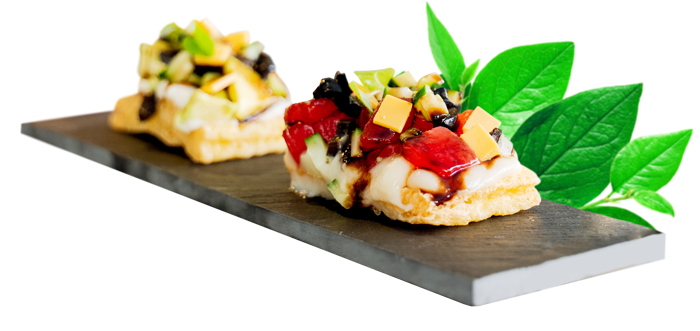
A small plate of JUST Egg inspired food
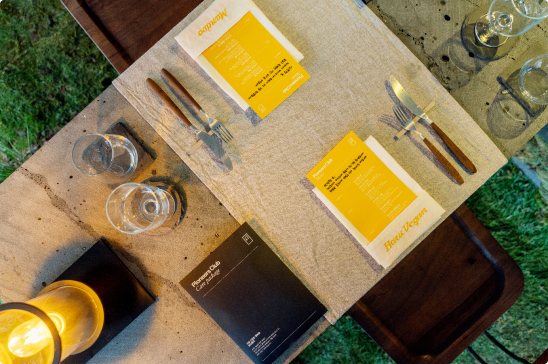
A nice place setting at a dining table
the outside of the pioneers club restaurant with vines growing on the walls

Pioneers Club • A Hyper-Personalized Dining Experience

  • Client

    Eat Just, Inc.

  • Solutions

    ExperienceExperiential Strategy & ProductionSocialInfluencer Marketing

A table with JUST Egg products on it covered in green leaves

Hatching up a launch rich in experience.

JUST Egg is a plant-based alternative to commercially produced eggs developed by San Francisco-based company Eat Just. With an aim to enter Asia’s alternative protein market, the brand partnered with us to create a launch campaign that creates buzz among chefs, plant-based advocates, foodies and influencers, starting with Seoul. Not one to chicken out on Covid challenges presented to us at the time—safety restrictions, supply chain deficiency and time and resources constraints— we leveraged them as an opportunity to set up an intimate, immersive and Covid-safe pop-up restaurant, The Pioneers Club.

Monk Thoughts When developing the concept...the Covid restrictions in South Korea kept changing to become more strict. We decided to turn these new challenges into creative opportunities.
Jesper Larsson headshot

Whipping up a hyper-personalized dining experience in an herbs-filled environment

  • A desk in a restaurant overgrown by plants Two chefs work on the presentation of JUST Egg dishes
  • Two people stand in front of a grassy wall with their names shined on it Two people's feet touching a grass ground of the restaurant

Planting the right ambience.

Designed with personal safety as a main priority, The Pioneer’s Club was a plant-based pop-up restaurant that offered a unique and exclusive fine dining experience in a verdant herbs-filled environment. The name was carefully chosen as a tribute to the pioneers who helped the plant-based movement gain traction in South Korea. The design theme of the space was “wild nature reclaiming modern life,” which referenced both the growing plant-based movement in South Korea and JUST Egg’s new Korean tagline, “The egg born from the ground (땅이 낳은 에그),” also developed by Monks.

A noodle dish made with JUST Egg products
A chef stands in front of the restaurant neon sign covered in plants

Customized elements to suit every taste.

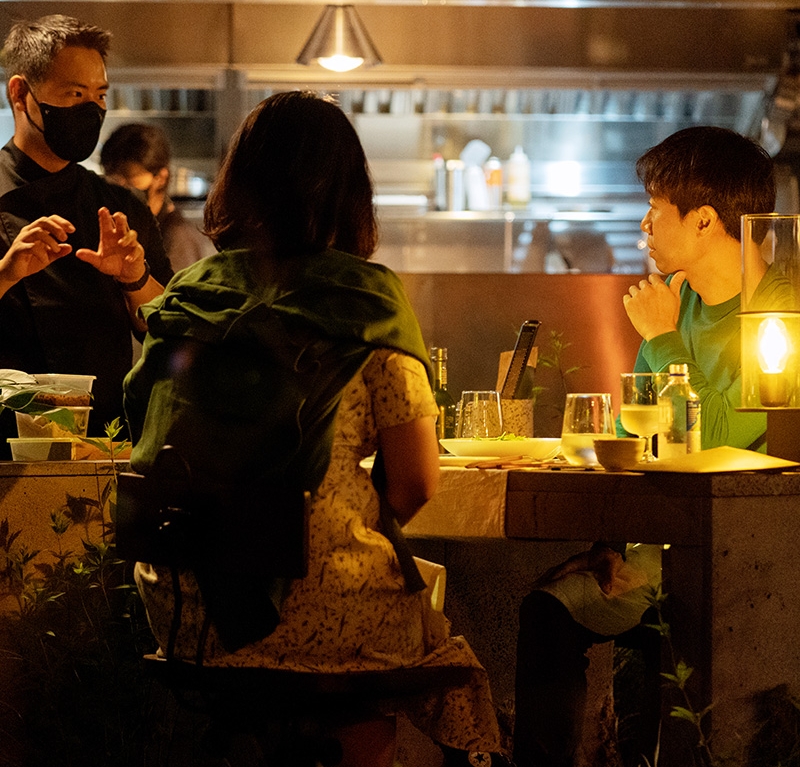
At The Pioneers Club, only two guests at a time can be seated, with the guests’ dietary restrictions and allergies influencing the menu. By working together with renowned chefs and letting them create localized recipes, we showcased the potential of the product and developed content to feed the feeds for months after the event. And by inviting the right crowd while showing the potential of the product, it quickly opened doors to get JUST Egg on the menu of other trendy plant-based cafes and restaurants, such as Millennial Dining and Monk’s Deli.

A couple sitting at a table at night with yellow light keeping them lit
Press To drum up buzz around converting diners to this food form, American plant venture Just Egg teamed up with Monks to develop the pop up restaurant Pioneers Club, inviting local plant-based advocates to a foliage-filled fine dining experience.
Read on Campaignasia.com

Want to talk experiences? Get in touch.

Hey 👋

Please fill out the following quick questions so our team can get in touch with you.

Can’t get enough? Here is some related work for you!

Imprinting Brand Value Through Experiential Marketing

Imprinting Brand Value Through Experiential Marketing

4 min read
Profile picture for user mediamonks

Written by
Monks

A crystal showing the experiential.monks in type

In a hyperconnected world where most of us are one click away from endless sources of content, it’s no surprise that consumers crave unique experiences that take them out of their everyday lives. Whether physical, virtual or hybrid, brands that create these meaningful moments have the power to forge closer ties with people—and not by interacting for interaction’s sake. “Experiential is not only about bringing a product to market,” explains Chris Kaliszewski, VP, Experiential & Virtual Events. “It’s about providing value to your customers and doing so in a way that puts them at the center of the experience.”

But generating value is where the challenge usually lies. Take a look at the world of experiential marketing, and you’ll find most brands use it almost exclusively as a way to kick off a product launch or a specific release. But to treat these experiences merely as a one-and-off strategy is to miss out on the opportunity to inspire people to build a long-lasting relationship with your brand—one that goes beyond the release of a specific product, and instead keeps them coming back for more.

00:00

00:00

00:00

Make People the Heroes of an Unforgettable Experience

Experience is an essential element of customer engagement, which makes it important to connect with audiences in ways that stand out and are unique to your brand. The shape that these experiences will take ultimately comes down to your goals. “Experiential marketing is so broad that most brands struggle to identify what their activation should look like, or where to start,” explains Kaliszewski. “The first stage is one of discovery and collaboration, where we try to identify what kind of medium will help us achieve our objectives.”

In that exploration stage, you may find that a long-term installation better suits your requirements. When Pepsi wanted to build an experience reflecting its historic partnership with the Super Bowl Halftime Show, our colleagues at Jam3 worked with them to create a permanent installation cementing the brand’s commitment to the iconic annual concert. The experience at Hersheypark in Pennsylvania features private performance pods with gesture-based interaction and navigation. Inside, guests can create their own pop star avatars and select a killer track from artists like Imagine Dragons or the Black Eyed Peas. When the music starts, they can let loose and bust out their best moves while the avatar on screen matches their movements, all in a fully touchless experience that hits on the fun and excitement of the Halftime Show.

A permanent installation like this one lets you shape new spaces for consumers to experience your brand firsthand. Of course, experiences can come in many forms. Whether your experience is a permanent installation or a temporary one, one thing is true for them all: the more immersive it is, the more affinity, loyalty and awareness it drives.

Valuable Brand Activations Enhance Their Surroundings

It’s easy to think of experiential activations as self-contained spaces. But some of the most effective ones make clever use of their surroundings in order to tap more authentically into a community or cultural moment. For experiences that stand out, it is sometimes better to blend in—with a unique twist.

DoorDash branded concession booth with candy and treats

Earlier this year, the Tribeca Film Festival marked the return of in-person cultural experiences in New York City. With the aim of feeding the locals’ passion for film, we partnered with DoorDash to build a classic movie theater concession stand combined with a typical NYC deli ticket counter. Packed with bagels, pretzels and anything you would normally order through DoorDash, the space felt familiar to hungry viewers—until it was time to make an order. In exchange for their food (and a redeemable coupon from DoorDash) visitors were invited to perform the line of dialogue written on their ticket.

The concession stand’s ability to capture the unique interest of festival film fans led to thousands of cumulative impressions on social media as people shared their attempts to reenact iconic scenes.  Ciaran Woods, VP Experiential & Virtual Events, explains, “For us, experiential has always been focused on online amplification, and now the industry has grown accustomed to its benefits. With this kind of event, virtualization continues to be cost-effective: you can get the value of a physical venue while amplifying your reach online.”

Turning Traditional into Transformational

All things considered, it’s important to focus on the consumer at the heart of the experience at all times. So no matter what, default to simply providing an experience that’s fun and couldn’t have been made possible without your brand.

An event booth with two people standing on casino chips playing a game

For the release of the new Netflix film “Army of the Dead,” we teamed up with advertising agencies Dziadek do orzechów and Plej to turn Warsaw’s passersby into zombie-apocalypse survivors. Playing for the chance to win official Netflix merchandise, visitors could use their phones to control their character as they make their way through an abandoned casino, take as much money as possible and wipe out any zombies that they encountered along the way.

Combining an in-person experience with a compelling digital layer, we amplified the level of engagement and turned the film’s release into a very tangible experience. Moreover, the act of blending real-world objects with augmented sets—whether AR, VR or any immersive technology—enables a new breed of experiences that can hardly be replicated. 

When done right, experiential marketing can imprint people's memories, which then translates into brand awareness, affinity and loyalty. But the most compelling activations provide true value for audiences and their communities beyond simply promoting a specific product. When in doubt, focus on crafting new, original concepts for how you present your brand to consumers every day, and the results will follow.

The Experiential.Monks share insights on creating brand activations that provide true value for audiences. The Experiential.Monks share insights on creating brand activations that provide true value for audiences. experiential experiential marketing live experiential virtual events

How Competition is Fueling Connection Amidst COVID-19

How Competition is Fueling Connection Amidst COVID-19

4 min read
Profile picture for user mediamonks

Written by
Monks

Through local shelter-in-place policies and the cancellation of entire professional sporting seasons, COVID-19 has disrupted athletics to the dismay of fans and gym-goers. This is because sports and athletics revolve around community; whether it’s a fitness class you attend regularly or a regional sports team you root for, athletics are as much about gathering and competing with others in addition to one’s own personal development.

With a sudden shift from the field to digital platforms, consumers are craving that sense of connection—and looking for inspiration to get moving while staying at home, often without equipment they’d find at a gym. Below, we look at a couple of ways that sports-focused brands can fill the void and continue to support restless audiences.

Get People Moving Without Leaving the Home

With consumers staying home, it can be difficult to keep active and get proper exercise. Realizing this opportunity, gyms and fitness influencers have retained connection with audiences through fitness-focused livestreams (kind of like the good old days of Richard Simmons workout tapes—who’s also putting workout routines online). Such broadcasts offer a relatively simple way to keep connected with audiences by supporting their need to keep moving.

Akin

One brand with a digital advantage here is Nike; the brand had capped off Q4 in APAC with impressive numbers—only about a 5% decrease in sales during the worst of China’s COVID-19 crisis, with 75% of its retail stores closed—thanks to its strong digital ecosystem and network of elite trainers. As part of its “Play Inside” campaign, which offers content, gear and workouts to keep healthy at home, MediaMonks partnered with Nike and Wieden+Kennedy to livestream weekly community workout sessions via YouTube, bringing viewers and fitness fans together.

The livestreams—which are intentionally lo-fi, informal and broadcast from trainers’ homes—make Nike’s existing network of trainers more accessible to audiences, than ever giving them a chance to interact directly. “It’s about people tuning in together. The chat is wild, and there’s a Q&A at the end of each workout,” says Ciaran Woods, EP Experiential & Virtual Solutions at MediaMonks. “There is a sense of community, that we’re in this together and people just want to make it work.”

There’s also value in having a weekly routine for audiences to stick to. “In many conversations, we’re asking ourselves: what does it mean to have an experience online?” says Travis Craw, Executive Producer at MediaMonks. “One of the interesting things about livestreams is having something to put on your calendar and look forward to.”

Despite the casual feel of the livestream, the production remains professional: disinfected equipment including a camera, tripod, lighting and a LiveU (a live video transmitter) are packaged in cardboard, delivered to trainers with zero contact. Because COVID-19 can only survive on a cardboard surface for 24 hours, the trainers set up the equipment the following day.

Monk Thoughts There is a sense of community, that we're in this together.
Ciaran Woods headshot

With foolproof diagrams and stickers added to equipment to show what goes where, this process enables anyone to build a professional livestreaming setup—and during the stream itself, a remote crew enables production by serving questions from the live chat, mixing audio and more. “With live switching and live editing, we’ll see these livestreams look more like how a news or sports broadcast works,” says Craw.

Fuel Competition Through Digital Alternatives

Getting people moving is just one side of tackling sports and athletics within a world of social distancing. Over the past few weeks, there have been a number of interesting ways that sports organizations and resourceful fans have adapted to the new normal: Formula 1 is launching a Virtual Grand Prix series to entertain audiences as they wait for postponed races, and some NBA players have joined fans in NBA 2K20 video game tournaments. Basically, esports is extending outside of its niche—and viewership on Twitch, a livestreaming site that focuses primarily on videogame content, has risen since stay-at-home orders were put in place throughout different regions around the world.

While these digitized competitions offer an interesting alternative now, there’s no permanent replacement for the excitement of entering a stadium, being surrounded by fans and watching a game played right before your eyes. How might sports organizations experiment with emerging digital behaviors today and pay those learnings forward into a post-COVID-19 world?

red_bull_3X_webgame_bridge_court

The Red Bull 3×3 Online Basketball Contest serves as a possible example. We built an arcade-style browser game that lets fans compete in a virtual 3×3 basketball contest, learning about the game format and racking up high scores. The game leans into the fast-paced excitement of 3×3 basketball and fuels a sense of competition online, building excitement for the eventual live tournament.

“A while back, LeBron James said he didn’t want to play without fans present,” says Olivier Koelemij, Managing Director at MediaMonks LA, noting that the reality has changed in the global pandemic. “Whether you fight or embrace that outlook, be creative by leveraging the power of digital platforms.” Koelemij suggests diving head-first into the unique offerings of a given digital platform, and aligning content with user behaviors there.

“Another interesting aspect is the ability to combine channels and platforms to make content more relevant,” he adds. “You want to consider the whole experience journey: from buying a ticket to the lead-up, to the experience itself and the aftercare.”

Critical to tailoring such an experience is having the data needed to engage at the right place and time, as well as an understanding of what makes a given platform unique. By considering what sets one digital medium apart from another and why fans gather there, brands can apply those learnings and discover new ways to engage with customers through value-added experiences.

A focus on customer obsession is key to delivering assistive digital experiences.

Unable to leave their homes, sports and fitness fans seek connection and competition online. Here's how athletic brands are filling the void. How Competition is Fueling Connection Amidst COVID-19 We’re rooting for the stay-at-home team.
Athletes athletics sports digital sports esports videogames livestream live experiential youtube web game influencers

Build Layers of Digital Interaction in Experiential Activations

Build Layers of Digital Interaction in Experiential Activations

4 min read
Profile picture for user mediamonks

Written by
Monks

Today’s consumers privilege experiences over things, while brands seek to capture audiences’ attention in unique and innovative ways. A natural trend in response to both is the brand activation: moments or events that reinvent the space around them or make the impossible, possible.

Experiential events may range from offline installations to comprehensive, larger-than-life livestreams that compress time and space to deliver wild experiences to far-flung audiences. Experiential and brand activations typically build buzz around a brand or product, but most importantly they should celebrate what makes those things unique through creative, inventive spectacles.

At the 2019 SXSW Music Festival in Austin, Texas, for example, on-demand food delivery service DoorDash celebrated the festival’s love for tacos and its own penchant for fast, dependable delivery by inviting attendees to a tiny home installation, where hungry participants could experience at-home delivery away from home. By ordering through a custom app and even answering a door to get their meal, the activation made for a fun twist on the experience of dining out—or in.

DJI_0030

While this style of experience is rewarding for those who are able to attend, why not share the fun with a wider audience? Bolstered by streaming platforms, live activations add a new layer to the experience through audience interaction. “Live experiential is all about building innovative and interactive experiences while amplifying their online reach through livestream opportunities,” says Ciaran Woods, Producer at MediaMonks São Paolo. Through live experiential, brands can scale up the experience and go beyond simply building buzz.

Tiers of Amplification

Every experience has an air of FOMO (fear of missing out) about it, making them great for prompting user-generated content and social buzz whether online or off. For simpler experiences that aren’t broadcast to live platforms, this can manifest in providing Instagram-ready spaces or share-worthy moments. When influencers are added to the mix, you can take the conversation even further. For example, laundry detergent brand Skip invited influencers to try on outfits in front of a smart mirror that measured their excitement about them, allowing them to take home anything that scored high on the excitement meter. The event resulted in footage and UGC that drove conversation online about the brand.

42 - header

But social only goes so far, and is often one-sided in terms of audiences living vicariously through the fewer in-person attendees. Live experiential can offer all the social amplification discussed above, while also providing a more level playing field on the amount of influence and enjoyment that distant audiences can have with the experience. And that interactivity is key: according to Woods, “Viewer interaction must be ingrained in the experience. The viewer has a say.” In other words, live experiential should not only ask viewers to watch, but to act.

Portraying the Brand Value

The best experiential activations reflect their brands’ offerings in a fun, unique way. Take Xfinity’s “Project Dead Zone” for example, in which paranormal investigators broadcasted their exploration of the Winchester Mystery House—the largest haunted house in the US—to an audience of over 3 million live viewers, who offered the investigators words of encouragement via Periscope and Twitter.

In this case, the tech behind the broadcast itself highlighted the brand’s value. In order to broadcast all throughout the spooky house, the crew made use of Xfinity’s xFi Pod series of WiFi extenders. As viewers watched in horror while investigators disappeared one after another, one thing that never went missing over the course of the stream was a stable connection.

Xfinity_ Project Dead Zone.00_01_08_01.Still006

Live experiential requires a crew that's ready to cut to the action when it happens, as seen with Xfinity's Project Dead Zone.

Finding this value and creatively building upon it is among the most fun parts of designing an experience. It can also be the most challenging, especially when it comes to making such ideas a reality. For organizations that don’t know where to start their idea (or how to execute loftier goals), a creative and production partnership can help to lend shape to the experience—all by keeping viewers’ experience in mind. “What makes these experiences cool is having a commentator booth you can cut to, or a reporter on the ground,” says Woods. “Basically, treat it like the Super Bowl.” Because a key aspect of live experiential is how it will be broadcast to far-away audiences, it’s important that brands don’t lose sight of production needs.

Supporting User Interactions

Because viewer interaction is essential to live experiential, brands interested in hosting such activations must familiarize themselves with interactions and features unique to the livestreaming platforms available. While live experiential can be platform agnostic, designing your experience with specific interaction triggers in mind helps to make it the best it can be.

Perhaps the most feature-rich of the major livestreaming platforms is Twitch, which supports open-source, custom “Twitch Extensions” that prompt viewers to interact with a stream in unique ways. These can include minigames that relate in some way to what users are watching, heatmaps tracking viewer cursors, scoreboards, voting and more—because the technology is open-source, the possibilities are endless.

Monk Thoughts Live experiential amplifies innovation’s reach through livestream opportunities.
Ciaran Woods headshot

The fact that Twitch has such robust viewer interactions supported lends to the fact that it’s purely a livestreaming platform. It also has a more niche audience, though alternatives such as YouTube and Facebook offer massive userbases and reach. Facebook’s major interaction outside of chat is its emoji-style reactions: viewers can select an emoji that represents how they feel about what they’re watching in that specific moment. And don’t forget more mobile-focused broadcast platforms like Periscope and Instagram, which are lighter in terms of features but lend a unique level of authenticity.

No matter the platform (or platforms) you choose, “the trick is to build a system that can translate those interactions into real-world effects,” says Woods. This requires a mature technical understanding and a flair for innovation—and is an area in which working with a creative partner from the earliest stage of the project makes the most sense. In addition to making these interactions possible, a partner may also develop an entire content package for how the experience can enjoy a life beyond the initial broadcast—like through film.

No matter the type of experiential you seek to support, the key is to highlight what makes your brand unique in a fun, innovative way—then reward your audience for their enthusiasm to engage with it. Integrating online platforms through social sharing or livestreaming helps to spread that sense of fun far and wide, providing brands with the opportunity to lead the conversation that surrounds them. It’s time to go big or go home—but no matter where you go, ensure your audience is provided with opportunities to engage.

Online interactions augment and amplify the value of innovative, experiential brand activations by scaling them up to a massive audience. Build Layers of Digital Interaction in Experiential Activations The more, the merrier! Scale up an activation by making it accessible to a digital audience.
experiential brand activation live experiential retail experiential installation

Choose your language

Choose your language

The website has been translated to English with the help of Humans and AI

Dismiss