Choose your language

Choose your language

The website has been translated to English with the help of Humans and AI

Dismiss

Generate Content at a Fast Clip with Fan-Focused AI Highlights

Generate Content at a Fast Clip with Fan-Focused AI Highlights

AI AI, Emerging media, Experience, VR & Live Video Production 4 min read
Profile picture for user Lewis Smithingham

Written by
Lewis Smithingham
SVP of Strategic Industries

VR headsets and production equipment images are collaged together

With an explosion of connected technology—from VR to virtual worlds, TikTok to Instagram brands and more—the business of broadcast is now the business of content, commerce and culture delivered fit to format. Essentially, broadcast today is all about having the best content pipeline that’s able to deliver to myriad audiences across channels.

59% of Gen Z watch longer videos they discovered on short-form video apps, demonstrating the need for broadcast rights-holders to embrace ecosystem-level thinking. We’ve worked alongside brands like Meta, Hasbro, TikTok and Verizon to evolve their broadcasting approach and meet the habits of today’s viewers through experiences that are immersive, interactive, and reach audiences where they are. Now, we’re developing an AI solution that will further revolutionize this next-generation broadcast workflow to create more engaging, personalized content for consumers with Fan-Focused AI Highlights.

Fan-Focused AI Highlights clips hyper-relevant content at speed and scale.

Fan-Focused AI Highlights, currently in development, uses AI and machine learning to instantly clip highlights in live broadcasts. The AI model is capable of segmenting individual people and objects in live broadcasts and effectively eliminates the need for manual selection and editing, a typically time-intensive process.

The speed and volume of content unlocked by Fan-Focused AI Highlights is crucial to delivering the snackable content today’s sports viewers crave. Gen Z now consumes more highlights (50%) than live content (35%), validating the appetite for a moment-based approach to content delivery that is also more personalized.

EVP, Global Head of Experience at Media.Monks and former NCAA player Jordan Cuddy offers one example of how this trend is impacting the world of sports. “With Lionel Messi now signed onto Inter Miami, many of his fans may not care to watch American soccer,” she says. “Rather than sit through a 90-minute game, they just want to see the eight minutes where he’s touching the ball.” Her point is backed up by the fact that 80% of Gen Z fans not only follow a professional athlete online but seek to watch the events those athletes participate in, as well as follow the brands they engage with. With Fan-Focused AI Highlights, you could automatically clip together a reel of the game focused on Messi’s—or any athlete’s—best plays with ease.

Deliver on the hunger for affinity-based content.

The same approach above could apply to even more niche content and viewer interests. Imagine a basketball game that AI automatically slices into social media content focused on footwear worn by the athletes, then pushed out to an audience of sneakerheads by an athletic apparel brand. This is easily achieved with Fan-Focused AI Highlights—helping brands and broadcast rights holders alike reach audiences in more relevant ways, while also expanding the quantity and value of your broadcast rights.

We’re in a new era where people are no longer defined by demographics broken up by where they live; now it’s about identity groups. Rather than carve up territories on a map, broadcasters can creatively package up content for numerous subcultures simultaneously, leveraging the power of AI and machine learning to distribute custom highlight content to tailored interest-based audiences more accurately and effectively. This is a massive opportunity for rights holders, as 73% of sports viewers perceive rights owners’ use of fan data as “disappointing” (23.4%) or “below expectations, but catching up” (49.7%).

Adapt broadcast content to fit today’s viewing habits.

Fan-Focused AI Highlights is the latest solution within our software-defined production offering, which effectively eliminates the need for a large physical plant—like large control rooms or OB trucks that cost tens of thousands to rent per day or the dozens of crew members to maintain them—in favor of versatile, nimble broadcast workstreams. Single-use appliances designed for one task alone make way for NVIDIA GPUs in the cloud (or a server rack), adding additional efficiency, flexibility and reduced cost, while remote teams allow rights holders to hire the best talent for the job regardless of their proximity to the event.

Software-defined production has even enabled us to do what was never done before. Working with UNC Blue Sky Innovations, we streamed the first sporting event in stereoscopic 3D at 60 frames per second and an 8K resolution, directly to VR headsets. The custom-designed pipeline features a RED Digital Cinema camera; RED CPUs that decode, color correct and de-warp footage directly from that camera; a Blackmagic controller for live switching and encoding (from NVIDIA GPUs for a high-quality bitrate); and a 1GB network to deliver the feed to an AWS instance on its way to VR headsets.

All this equipment took up the modest space of a standard foldout table—a small footprint for an innovative pipeline and history-making broadcast. Still, broadcast professionals are a traditionally superstitious bunch, and it’s easy to see why moving much of the equipment and processes to software could leave them wary: what if you run into connectivity issues or a data center goes down? The same data centers that AWS uses also host banks and other extremely sensitive operations, meaning there are multiple safeguards in place to ensure service isn’t interrupted. And if one does go down, we can spin it up on another one. With multiple redundancies in place, any technical difficulty with software is faster and easier to fix than if your truck generator went down.

A sustainable approach to innovation.

In addition to reduced risk and additional flexibility, software-defined production offers another important benefit: sustainability. Media.Monks won a Sustainability in Leadership award at NAB Show by greatly reducing the carbon footprint of broadcasts with AWS. In addition to avoiding travel-related emissions, the software-defined production workstream is powered by 95%+ renewable energy, further reducing environmental impact.

With Fan-Focused AI Highlights added to the mix, brands can continue to deliver even more personalized, relevant content designed for today’s audiences with less emissions, risk, cost and people on the ground.  As viewers crave a more moment-based approach to the media and entertainment they consume, this revolutionary broadcast model helps brands expand the value of their broadcast rights in innovative new ways.

Find out how our Fan-Focused AI Highlights solution creates more engaging, and personalized content for consumers. AI live broadcast services livestream Experience VR & Live Video Production AI Emerging media
Someone wearing a VR headset
A person slamdunking a basketball
A basketball

NBA in VR • Transforming the Fan Experience

  • Client

    Meta

  • Solutions

    Technology ServicesExperienceVR & Live Video Production

nba basketball court with a camera on the sideline

Immersing fans in the action with NBA in VR.

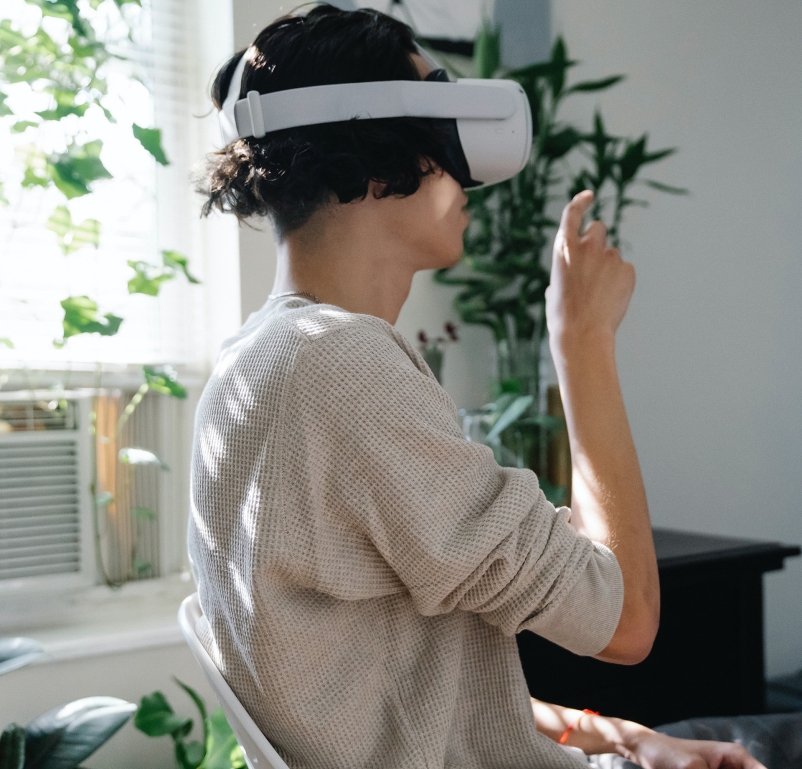
You’re sitting courtside at an NBA game with your best friends, enjoying commentary from an NBA world champion. Your friends, who live across the country, didn’t fly in to see it with you—because you’re all experiencing the game live in VR with a Meta Quest headset. Today’s sports fans want to feel close to the action while engaging with their favorite games, so we partnered with Meta to immerse audiences within 56 NBA games across 3 seasons, offering a social and interactive viewing experience that goes well beyond traditional broadcasting.

Going beyond broadcast possibilities with software-defined production.

With a 180° courtside view captured in 5K and fluid 60 frames per second, we delivered a lifelike experience to fans. But building such an environment required going beyond the limitations of traditional broadcasting. With advances in technology from Meta, AWS and NVIDIA, we built a cloud-based, software-defined production workstream that significantly reduced the amount of equipment, personnel and cost normally required to broadcast a game. Compared to the 54 camera angles at the NBA 2020 Finals, we only needed five cameras and three people on the ground supported by a remote crew.

A media.monks employee editing live footage in VR

A social experience between friends and fan favorites.

Once in the game, audiences could do more than merely watch. Within Meta’s socially focused venue, viewers could engage with friends and fellow fans—and even familiar athletes. Each game featured live commentary from guests like NBA champion Richard Jefferson and WNBA champion Renee Montgomery, making each game feel like a conversation. In addition to the immersive VR experience, the broadcast pipeline is built to allow for content distribution across a wide range of formats and channels. Gen Z fans consume more highlights (50%) than live (35%), validating the appetite for this moment-based approach to content delivery.

A person using a VR headset
A person wearing a VR headset
Press This quality was outstanding in stunning 5K resolution. For comparison, the “majority of game feeds” on the NBA redesigned global app are in 1080p and you may find 720p for some broadcasts as well. The difference is massive.
Read on USA Today I watched an NBA game through their VR broadcast and it made me excited for the future

Evolving the future of media and entertainment, now.

NBA in VR was designed to reflect fans’ desire for authentic, interactive experiences—adding a revolutionary new layer to watching sports from home. By leveraging the combined expertise of Meta and Monks, we were able to create a groundbreaking VR broadcasting capability for NBA games that pushed the boundaries of traditional broadcasting and paved the way for the future of media and entertainment. Together, we delivered a lifelike and immersive experience to fans to connect with each other and their favorite athletes.

Want to talk experience? Get in touch.

Hey 👋

Please fill out the following quick questions so our team can get in touch with you.

Can’t get enough? Here is some related work for you!

How Live Remote Production Keeps Sustainability Goals Grounded

How Live Remote Production Keeps Sustainability Goals Grounded

Emerging media Emerging media, Experience, Sustainability, VR & Live Video Production 4 min read
Profile picture for user mediamonks

Written by
Monks

A person on a laptop

As the effects of the climate crisis become more apparent and time is running out to act, sustainability has become a key focus for brands and consumers alike. Brands are setting up ambitious targets to turn the tide—and we’re no different, holding ourselves to UN Sustainable Development Goals and formalizing our commitment to become net-zero by signing the Climate Pledge in 2021.

Among our foundational environmental, social and governance goals, we aim to become a climate-neutral, environmentally conscious business—and a catalyst for change in our industry, leading by example and helping brands become more sustainable themselves. So while programs like carbon offsets are steps in the right direction, the key to meeting sustainable goals is to design operations that limit carbon emissions to begin with, and our live remote production workstream fits the bill.

Sustainable workstreams shouldn’t be a tradeoff.

Sometimes the road to being green can feel like making a series of concessions, but working sustainably often means working smarter. When reliance on digital grew throughout the Covid-19 pandemic, we adapted by designing a remote broadcasting workflow that limited the number of people needed on location. This production pipeline, with Amazon Web Services (AWS) as its backbone, did more than help us deliver incredible, live digital experiences to people everywhere—like immersing audiences in a VR Post Malone performance that transforms the experience of listening to an album. It also significantly reduced our carbon footprint.

Our live remote production connects teams to broadcasting software, eliminating the need for gas-guzzling broadcasting trucks on location. It also cuts out the need for specialized talent to travel to shoot an event: we’ve reduced our number of on-site broadcast talent by 83%. Adding to those benefits, our primary workload is based out of the AWS Northern Virginia region, which was powered by over 95% renewable in 2021.

Who wouldn’t want to trade lugging around energy-intensive equipment prone to breaking down—be careful not to trip on a wire and shut down the whole show!—for the cloud? This pipeline recently earned us the coveted Sustainability in Leadership award at NAB Show, the leading conference dedicated to the evolution of broadcast.

NAB awards ceremony with people on stage

Lewis Smithingham, far right, accepts the Sustainability in Leadership award at NAB Show.

Monk Thoughts We're incredibly honored and excited for this award because we believe sustainability can and should drive innovation and creativity throughout the production process.
Headshot of Lewis Smithingham

The benefits extend to talent as well. Gone are the long, grueling hours spent on set. The ability to collaborate remotely broadens our talent pool, ensuring the best person is cast for each job, even if they’re working across the country—or in a different one. Our experiential team has also developed a suite of tools like LiveXP that furthers the connection between audiences and the action beyond the screen.

One key benefit of live remote production is risk mitigation. First, the greatly diminished environmental impact reduces the social risk of a brand missing their pledged environmental, social and governance (ESG) commitments. Second, cloud-based tools are also more reliable. Traditional broadcast production teams have only a finite set of equipment that may break down. In the cloud, we can plan for redundancies and quickly spin up a new virtual machine should something happen to an existing one. You can learn more about what live remote production looks like on Amazon’s blog

Let sustainability be the byproduct of innovation.

Sustainability and innovation go hand in hand, and our low carbon, live remote production uniquely enables compelling virtual and hybrid experiences—filling a crucial whitespace in broadcasting as the culture shifts to more immersive and creator-led channels.

“Broadcasting is culture. It’s the vehicle by which culture spreads,” says Smithingham. Increasingly, culture is happening within immersive, interactive spaces like gaming, social feeds and metaverse worlds—behaviors that are challenging broadcasting to adapt. “A core undercurrent across all of this is if something is not interactive to younger generations, it feels broken and it feels disconnected.”

Look at award shows for example. Exclusive and invite-only, viewers must watch the fun from a mediated distance, chattering in backchannels like social media. We flipped the script by partnering with Logitech For Creators to host the first music award show in the metaverse—The Song Breaker Awards—which invited everyone to not only attend but actually become part of the show in Roblox.

What about hybrid experiences? When it comes to sharing an esports experience with audiences around the world, you’d be forgiven for using traditional sports broadcast as a blueprint. But with sports facing a decline in young viewership, it’s clear the formula is worth shaking up. In celebration of Valorant’s first anniversary, we translated the game’s rich lore into a recognizable IRL environment, then pit attendees against livestream viewers in a challenging bout. Viewers could frustrate on-site players by sharing hashtags in the chat that triggered traps—setting a new precedent for gamified broadcast experiences.

Both experiences were designed to connect with consumers in ways that weren’t possible before. If an experience calls for disruptive ways of working, why not use that as a forcing function to move a part of the operations to a low-carbon approach?

Live remote production balances efficiency and sustainability.

By leveraging live remote production, our experiential team can deliver interactive experiences that drive culture and ROI with incredible efficiency, reducing greenhouse gas emissions in the process. The best part? Those benefits contribute directly to brands’ ESG goals and industry mandates. This is a win-win as we connect with consumers in innovative ways, contribute to carbon reduction goals, and reduce risk along the way.

As consumers increasingly demand sustainability from the brands they engage with, offering environmentally friendly solutions becomes an urgent need. And because sustainability challenges us to accomplish our goals in new or different ways, it can unlock innovative ways of reaching audiences. So, whether it’s a matter of saving the planet or simply saving consumers from boredom in fresh ways, we’re down for the challenge.

Our live, remote production worksteam limits carbon emissions in a practical way—achieving sustainable goals and delighting audiences in the process. sustainability amazon livestream film production digital production virtual experiences hybrid events Experience VR & Live Video Production Emerging media Sustainability

Social Bite: Live Commerce Comes Alive

Social Bite: Live Commerce Comes Alive

Affiliate & Influencer Advertising Affiliate & Influencer Advertising, Commerce, Culture, Emerging media, Influencer Marketing, Retail media, Social 1 min read
Profile picture for user mediamonks

Written by
Monks

black and white photo of a young guy filming himself on a phone with doodles around the photo

Accelerating the path to purchase through live commerce.

As a combination of livestreams and ecommerce, live commerce may feel similar to the traditional home-shopping TV model. But what separates live commerce from the days of call-in orders is its inherently social nature, which can take many forms.

In this Social Bite, we explore what live commerce can be and how it can help you not only activate your audience in the moment, but also build a relationship into the future. Discover the different forms of live commerce and the roles that brands and their ambassadors take to inspire their audiences.

In this guide, you will:

  • Discover the different types of live commerce activations available
  • Dive into the three elements that make a successful live commerce activation
  • Break down how to engage audiences at every stage of the journey

Historically, live commerce has been most popular in China, where the format makes up 10% of the overall ecommerce market. Accelerated in part by the pandemic, live commerce has continued to gain traction in the Asia-Pacific region. Now, brands elsewhere around the world are taking note—and so are social and retail platforms, both of whom are experimenting with new features and revenue streams to bring live commerce to life. Serving the need for new ways to engage their customers in social, shoppable and entertaining experiences that blend brand love and conversion, live commerce combines spectacle, presence and interchange to build excitement among highly engaged audiences.

In this Social Bite, we explore what live commerce can be and how it can help you not only activate your audience in the moment, but also build a relationship into the future. e-commerce ecommerce social media Livestream commerce livestream Social Commerce Affiliate & Influencer Advertising Influencer Marketing Emerging media Retail media Culture

How Brands Can Support Everlasting Pride

How Brands Can Support Everlasting Pride

4 min read
Profile picture for user mediamonks

Written by
Monks

Whether you celebrate in June, July or in other months based on where you are in the world, this year’s Pride comes at an interesting time: its 50th anniversary intersects with shelter-in-place orders and protests around the world, particularly in the United States where the Pride marches began. These events prompt a more reflective look at Pride and what it means to members of the LGBTQ+ community—and to the contributions that brands make to the movement.

For example, how long should you keep your rainbow-infused logo? How does your commitment to LGBTQ+ equality translate to more meaningful action than a visual cue or a limited-release product? Consumers support brands that truly show up and act in support of social movements and societal needs, recognizing those causes are sincere drivers of the brand—and Pride is no different. Highlighting recent work from Netflix and Circus Marketing, which joined MediaMonks earlier this year, we’re taking a look at how brands can drive real support during Pride.

“We wanted to stand up to say something we truly believe: this is not just a day, Pride is a lifetime,” says Pablo Miranda, Sr. Creative at Circus. “Our goal for Pride Day was to celebrate and highlight stories that prove Pride is bigger than 24 hours. Instead of just talking about the LGTBQ+ Netflix shows, our efforts were focused on spotlighting the real people out there who inspire them.”

LGBTQ+ Support Must Extend Beyond a Month

True allyship requires passionate advocacy for a given cause or community internally—not just in your messaging. Brands exhibit this through internal employee resource groups, committees led by those who identify within the community or through external partnerships.

In partnering with GLADD, Netflix found how entertainment uniquely serves as a vehicle for building empathy and understanding toward the LGBTQ+ community—which meant the platform has a significant responsibility to portray diverse stories and highlight marginalized voices. This insight highlights Netflix’s long-term commitment and year-round support to depicting authentic LGBTQ+ stories. For example, La Casa de las Flores is one of the platform’s most popular international series—particularly in Latin America, where it’s been celebrated for its open and positive portrayal of LGBTQ+ characters (and where Circus produced a live, digital extravaganza celebrating the series’ end).

Netflix Pride Live Historias que nos unen 04

Through social listening, Circus also found that brands generally focus LGBTQ+ efforts in June only, often with messaging that consumers find passive or superficial. In our work with Netflix, the focus wasn’t to deliver just a message for Pride, but rather signal the brand’s commitment toward supporting diversity throughout the year through visibility and representation.

And this work was deeply personal for some of those involved in Circus’ creative team, too. “I came out of the closet after a deep process of self-acceptance, and I know representation makes a huge impact in the way you can embrace your reality and share who you are with others,” says Isabella Soto, Project Manager. “Being part of this project let me work for my community and tell their stories.”

Support LGBTQ+ Communities at Home with Virtualization

Pride is characterized by marches and parades that hearken back to its protest origins. This makes Pride celebrations especially challenging this year, when many must stay at home and keep physically apart due to the COVID-19 pandemic. And stay-at-home orders especially impact those who feel they can’t be themselves at home, highlighting the need for spaces and events where the LGBTQ+ community can thrive and be more open.

Monk Thoughts We wanted to stand up to say something we truly believe: this is not just a day, Pride is a lifetime.

This made it important to offer a virtual safe space where LGBTQ+ viewers could be themselves and surround themselves with their community. Absent of a physical Pride event, we helped Netflix–who was listed in Newsweek as one of 50 US businesses that stood out during the pandemic–virtualize the festivities.

“As a part of the LGBTQ+ community, Pride happening at home meant a number of things,” says Naville Obeso, Creative Content Creator at Circus Marketing “But the most important was the fact that a range of young and adult LGBTQ+ members of the community were going to be uncomfortable, unsafe or sad to be at home ‘back in the closet.’ We knew that we had to deliver something warm at heart to those people. We wanted to build a bridge of empathy, tell them stories that could let them know that this too shall pass and that it gets better.”

We developed video content that invites the LGBTQ+ community to not only watch and relate to character portrayals, but also become active participants in sharing their own personal stories. The first of these is a hero video that remixes previous Pride march footage with scenes from Netflix shows—and from viewers, highlighting messages and tender moments of real lives in a stylized picture-in-picture look.

But the centerpiece of the festivities was “Stories that Unite Us,” a live show kicking off Pride Day. Inspired by quotes from LGBTQ+ Netflix characters, the show prompted real people to share their own stories—including a real, live marriage proposal from the show’s host to his partner.

“During the show, we could read in comments that some were watching it secretly, because at home it is not possible for them to consume LGBTQ+ content with their family,” says Yaneth Velázquez, Global Head of Client at Circus Marketing. “We hope that bringing visibility to stories of the community (real and fictional) can eventually help to open homes and hearts.”

Others on the team agree. “For me, the work represents the power we have to educate thousands of people like my family, people that often don’t have the opportunity to see other realities,” says Sebastián Urrutia, Sr. Creative at Circus. These projects show different ways that a brand can show up and provide support—whether supporting LGBTQ+ people at a time when lack of visibility and a safe space stifles the freedom to connect with others and be yourself, or whether driving change and commitment internally to support the LGBTQ+ and other diverse communities into the long term. These steps go well beyond changing a logo or packaging, and consumers appreciate brands that feel such a responsibility to their audiences.

This year's Pride is unlike any other, highlighting ways for brands to sustain long-term support for the LGBT+ community beyond rainbow-infused packaging and logos. How Brands Can Support Everlasting Pride There’s no end of the rainbow here.
Pride gay pride LGBTQ+ pride pride march virtualization circus marketing netflix havaianas livestream pride marketing

Tearing Down Walls and Bringing People Together in Digital Times

Tearing Down Walls and Bringing People Together in Digital Times

4 min read
Profile picture for user mediamonks

Written by
Monks

Derribando Muros y Uniendo a las Personas en Tiempos Digitales

In building assistive experiences across the customer decision journey, effective channel strategy is key. Tobias Wilson, VP of Growth, recently made this point clear to Campaign, where he advised brands whose strategies were affected by COVID-19 to “pivot in a way that makes sense. If the channels you’d invested effort in were no longer viable (such as out of home or in-person experiential, in this case), the worst thing you can do is just try to haphazardly replicate that activity online.”

This requires brands to not only look at digital channels they may know, like owned social feeds, but beyond what may have been previously thought possible, reaching audiences where they’re at in this moment. This need led MediaMonks, Reporters Without Borders and DDB to collaborate in building the Uncensored Library, a Minecraft map that users can explore to discover stories written by journalists who have been jailed, exiled or even killed for their work, even if censorship stops them from accessing such stories through other channels. Recognizing Minecraft as an increasingly important space for global youth to gather, socialize and exchange ideas, the virtual library demonstrates how far brands can go to actually connect audiences like never before.

Edificio-neoclasico-de-la-biblioteca-sin-censura-Minecraft-The-Uncensored-Library

The Uncensored Library

We’ve long advocated for digital, user-centered strategies, which are even more critical as brands look for ways to connect with socially-isolated consumers. We find that customer obsessed organizations (which we explore in-depth in our latest report) are better set up to reimagine what these connections can look like and execute them swiftly.

“Astute brands seize the power of digital and flex it to their categories’ unique need profiles to build experiences of irreplaceable value,” according to Dipanjan Chatterjee, VP & Principal Analyst at Forrester, et al., in the report, “Generate Brand Energy With Digital Experiences: Engage, Excite, And Entangle Your Customer.” Focusing on user needs is vital for brands that want to maintain and improve their connection with consumers. By reinforcing native user behaviors and aligning them with brand values in a creative way, brands can offer relevant solutions that build an emotional impact.

Improve Connections by Fostering Interactions

In today’s changed landscape, brands can no longer rely on face-to-face interactions with their customers. “As we come to grips with a world where we can’t shortcut to experience through physical engagement and personal proximity, the challenge is to deliver on the original intent of digital,” says MediaMonks founder Wesley ter Haar. “Interactive, tactile and personalized moments of magic that create conversation, conversion and commercial opportunities.”

Monk Thoughts Interactive, tactile and personalized moments of magic that create conversation, conversion and commercial opportunities.
black and white photo of Wesley ter Haar

Spotify has exhibited these moments of magic since its start, by receiving, connecting, and interacting diverse social and cultural inputs from thousands of channels and content. One such event is Spotify’s recent digital-native take on musical award ceremonies, including a livestream around the world and via TV broadcast, awarding winners across 57 different categories chosen by user-driven data.

In the months leading up to the ceremony, fans were encouraged to promote their favorite artists and music on social media to boost their chances of winning. “Knowing that their behavior could have a real impact became an incentive for fans to help their favorite artist win by consuming their music on Spotify, whether it was by listening to their tracks, adding them to playlists or following them on the platform,” explains Alejandro Ortiz-Izquierdo, Creative Director at Circus, which merged with MediaMonks in January 2020. 

Tasked by Spotify to build the visual identity surrounding the show, the creative team led by Ortiz-Izquierdo and Alberto Guerra, used a data-driven approach as inspiration. Its main motif was the polygon, designed by connecting the top five streaming cities in Mexico, the regional focus of the show, together. Other polygons took shape by connecting the top streaming cities for different artists, resulting in a series of unique shapes used to develop graphic materials for all communications. “After this, we launched a personalized campaign that focused on celebrating the power of the fans through the data that they generated on Spotify,” says Ortiz-Izquierdo. “From the get-go, there was a great response from the users, with a lot of excitement, engagement and involvement. When we launched the awards, people actually campaigned for their artists.”

Screen Shot 2020-04-13 at 10.53.12 AM

The polygon motif was created using data from users' Spotify streaming behavior.

Users’ excitement to engage highlights an important part of meeting consumers’ needs in impactful, new ways: operating with transparency. With a focus on user-generated data at every level of the award show’s planning and visual design, listeners understood how their actions made impact. And it drove results, too: “With the event, the number of conversions to premium users grew; new users, streams, and general behavior on the platform increased from the moment we launched the list of finalists,” says Daniela González, Head of Digital Strategy at Circus.

There Are No Borders, Your Playground is Digital

In a world defined by globalization, digital platforms allow users to connect, engage and share with people all over the world, irrespective of nationalities, languages, or cultures––and this, in turn, helps them define their own identities and the communities with which they seek to connect. 

If brands want to connect with their target audience, especially with Gen Z, it’s vital for them to remain aware of how communities are built and redefined. This includes understating the new ways that younger consumers reshape the ways they gather, build identity and engage with brands, which is the focus of a recent whitepaper from IMA, our influencer activation team.

Social channels, in particular, have allowed people from different backgrounds and across the world to connect in virtual spaces, where they can congregate with others who share their interests, beliefs and values. But to recognize these interests and what truly resonates with audiences spread across the CDJ, brands must improve their digital maturity through smarter investments in personalization.

Monk Thoughts Social media has become a true melting pot, where everyone and everything fits.
Bruno Lambertini headshot

“Social media has become a true melting pot, where everyone and everything fits; interests, similarities and differences in culture, ethnicity or gender, as well as attitudes, personalities and values. Making room for all users to feel at home within a massively globalized world,” says Bruno Lambertini, Founder and CEO of Circus. 

The rate of hyperadoption, in which consumers quickly develop new behaviors, has picked up at a critical time when meeting consumers’ needs across the customer decision journey has become table stakes for brands. By recognizing and rewarding such behaviors through relevant channel strategies, brands better position themselves to bring diverse audiences together online ––and across the world.

How digital experiences like the livestreamed Spotify Awards, the Uncensored Library in Minecraft and more can bring people together across borders in a time of social distancing. Tearing Down Walls and Bringing People Together in Digital Times Building digital connection with customers in times of social distancing.
Spotify Awards livestream streaming interactions building connection consumers social media social distancing digital platforms digital Uncensored Library Reporters Without Borders Minecraft brands customer obsession

How Competition is Fueling Connection Amidst COVID-19

How Competition is Fueling Connection Amidst COVID-19

4 min read
Profile picture for user mediamonks

Written by
Monks

Through local shelter-in-place policies and the cancellation of entire professional sporting seasons, COVID-19 has disrupted athletics to the dismay of fans and gym-goers. This is because sports and athletics revolve around community; whether it’s a fitness class you attend regularly or a regional sports team you root for, athletics are as much about gathering and competing with others in addition to one’s own personal development.

With a sudden shift from the field to digital platforms, consumers are craving that sense of connection—and looking for inspiration to get moving while staying at home, often without equipment they’d find at a gym. Below, we look at a couple of ways that sports-focused brands can fill the void and continue to support restless audiences.

Get People Moving Without Leaving the Home

With consumers staying home, it can be difficult to keep active and get proper exercise. Realizing this opportunity, gyms and fitness influencers have retained connection with audiences through fitness-focused livestreams (kind of like the good old days of Richard Simmons workout tapes—who’s also putting workout routines online). Such broadcasts offer a relatively simple way to keep connected with audiences by supporting their need to keep moving.

Akin

One brand with a digital advantage here is Nike; the brand had capped off Q4 in APAC with impressive numbers—only about a 5% decrease in sales during the worst of China’s COVID-19 crisis, with 75% of its retail stores closed—thanks to its strong digital ecosystem and network of elite trainers. As part of its “Play Inside” campaign, which offers content, gear and workouts to keep healthy at home, MediaMonks partnered with Nike and Wieden+Kennedy to livestream weekly community workout sessions via YouTube, bringing viewers and fitness fans together.

The livestreams—which are intentionally lo-fi, informal and broadcast from trainers’ homes—make Nike’s existing network of trainers more accessible to audiences, than ever giving them a chance to interact directly. “It’s about people tuning in together. The chat is wild, and there’s a Q&A at the end of each workout,” says Ciaran Woods, EP Experiential & Virtual Solutions at MediaMonks. “There is a sense of community, that we’re in this together and people just want to make it work.”

There’s also value in having a weekly routine for audiences to stick to. “In many conversations, we’re asking ourselves: what does it mean to have an experience online?” says Travis Craw, Executive Producer at MediaMonks. “One of the interesting things about livestreams is having something to put on your calendar and look forward to.”

Despite the casual feel of the livestream, the production remains professional: disinfected equipment including a camera, tripod, lighting and a LiveU (a live video transmitter) are packaged in cardboard, delivered to trainers with zero contact. Because COVID-19 can only survive on a cardboard surface for 24 hours, the trainers set up the equipment the following day.

Monk Thoughts There is a sense of community, that we're in this together.
Ciaran Woods headshot

With foolproof diagrams and stickers added to equipment to show what goes where, this process enables anyone to build a professional livestreaming setup—and during the stream itself, a remote crew enables production by serving questions from the live chat, mixing audio and more. “With live switching and live editing, we’ll see these livestreams look more like how a news or sports broadcast works,” says Craw.

Fuel Competition Through Digital Alternatives

Getting people moving is just one side of tackling sports and athletics within a world of social distancing. Over the past few weeks, there have been a number of interesting ways that sports organizations and resourceful fans have adapted to the new normal: Formula 1 is launching a Virtual Grand Prix series to entertain audiences as they wait for postponed races, and some NBA players have joined fans in NBA 2K20 video game tournaments. Basically, esports is extending outside of its niche—and viewership on Twitch, a livestreaming site that focuses primarily on videogame content, has risen since stay-at-home orders were put in place throughout different regions around the world.

While these digitized competitions offer an interesting alternative now, there’s no permanent replacement for the excitement of entering a stadium, being surrounded by fans and watching a game played right before your eyes. How might sports organizations experiment with emerging digital behaviors today and pay those learnings forward into a post-COVID-19 world?

red_bull_3X_webgame_bridge_court

The Red Bull 3×3 Online Basketball Contest serves as a possible example. We built an arcade-style browser game that lets fans compete in a virtual 3×3 basketball contest, learning about the game format and racking up high scores. The game leans into the fast-paced excitement of 3×3 basketball and fuels a sense of competition online, building excitement for the eventual live tournament.

“A while back, LeBron James said he didn’t want to play without fans present,” says Olivier Koelemij, Managing Director at MediaMonks LA, noting that the reality has changed in the global pandemic. “Whether you fight or embrace that outlook, be creative by leveraging the power of digital platforms.” Koelemij suggests diving head-first into the unique offerings of a given digital platform, and aligning content with user behaviors there.

“Another interesting aspect is the ability to combine channels and platforms to make content more relevant,” he adds. “You want to consider the whole experience journey: from buying a ticket to the lead-up, to the experience itself and the aftercare.”

Critical to tailoring such an experience is having the data needed to engage at the right place and time, as well as an understanding of what makes a given platform unique. By considering what sets one digital medium apart from another and why fans gather there, brands can apply those learnings and discover new ways to engage with customers through value-added experiences.

A focus on customer obsession is key to delivering assistive digital experiences.

Unable to leave their homes, sports and fitness fans seek connection and competition online. Here's how athletic brands are filling the void. How Competition is Fueling Connection Amidst COVID-19 We’re rooting for the stay-at-home team.
Athletes athletics sports digital sports esports videogames livestream live experiential youtube web game influencers

Choose your language

Choose your language

The website has been translated to English with the help of Humans and AI

Dismiss