Case Study
Shopify
Drive growth with a customer-first commerce strategy on Shopify.


We’re more than just a Shopify partner—Shopify is knitted into the fabric of our history. We're experienced commerce operators who understand how to drive business outcomes. From custom store design to conversion-optimized marketing, we offer end-to-end expertise to drive substantial growth and craft a seamless user experience that’s true to your brand.
Solutions
Our end-to-end Shopify partner services
Custom Shopify Store Design
Your storefront should be uniquely yours. Work with our team of Shopify experts to create a store designed just for your brand.
Theme Customization
One size doesn’t always fit all. If you’re building your Shopify store on a theme, partner with our team to customize that theme to fit your unique commerce needs.
Commerce SEO and Marketing
We make sure your brand gets seen—whether that’s working with our SEO experts to optimize your search strategy or unlocking a next level marketing strategy.
Shopify Migration Services
Need to move your storefront to Shopify? Our team are migration experts who will make migration a breeze.
Payment Gateway Integration
With expertise across all major payment gateways and providers, our team can seamlessly integrate the payment method of your choice.
Ongoing Support and Maintenance
Our work doesn’t end at launch. Partner with our team for ongoing support and maintenance and gain peace of mind knowing that our experts are here for your store when you need them.
Shopify App Development
Have an app that you want to develop for the Shopify app store, but don’t know where to start? Our team can optimize for the Shopify app marketplace.


Monk Thoughts
We empower clients to unlock Shopify's full potential—from headless infrastructure to IRL retail to robust analytics. Through our partnership, we are elevating the customer experience with frictionless interactions and tailored solutions that drive growth for our clients.
How can we help you innovate? Let’s talk.
Dive Deeper


Leveraging AI: Moving from Theory to Tangible Impact
Leveraging AI: Moving from Theory to Tangible Impact


Cracking the code of emerging technologies and translating their power into practical solutions—that's what truly fuels my passion as the VP of Platform + Products at Media.Monks. Working collaboratively with our clients, I get to be on the front line with a team that takes concepts like artificial intelligence and crafts them into real-world solutions, with real-world impact. It's an exciting, dynamic space where creativity meets tech, and drives actual, tangible improvements.
There's a lot of talk about AI's potential—its future possibilities and predictions. But let me assure you, the moment for AI is not just coming; it's here, it's now, and it's making waves across all industries. And what’s specifically interesting to me is that it’s changing the world of marketing and digital platforms.
But what about the barriers to entry? It's important to remember that incorporating AI into your operations doesn't mean a full-scale overhaul is necessary. At Media.Monks, we understand that each brand is unique and some may require a more iterative approach. This perspective allows for cost-effectiveness and accessibility while still benefiting from the AI wave. A phased introduction of AI-driven improvements can bring immediate benefits to your customers and your business performance. You might begin with an AI chatbot to enhance customer service, or leverage machine learning to personalize content for each website visitor. Initial steps like this can provide quick wins, delivering enhanced user engagement and improved conversion rates. As these enhancements demonstrate their value, you can gradually expand AI's role within your digital landscape. It's about creating a tailored, strategic path towards AI integration, instead of diving headfirst into the deep end.
So, let’s take a journey into the current and very real applications of AI within the digital platforms landscape, areas where AI is not just delivering promises, but measurable results for marketers.
Here’s where to get started with AI.
Integration of AI with traditional platforms. The integration of AI with conventional platforms is helping businesses refine operations and customer experiences. The merging of CRM systems with AI, for example, allows a brand to learn from its customers’ behaviors in real-time, thus offering better service and products tailored to individual preferences.
Optimizing user experience. AI-driven data analysis is providing actionable insights that directly enhance user experiences. Whether it’s through customized content, personalized interfaces, or the elimination of user flow pain points, AI is driving a new era of user-centric platforms.
Facilitating personalized marketing. Gone are the days of generic, one-size-fits-all marketing. AI is enabling a new level of personalization that makes every interaction feel like it's uniquely crafted for the individual user. From product recommendations to personalized messaging, AI is helping brands forge deeper connections with their customers.
Enhancing analytics. AI-powered predictive analytics are transforming how businesses understand their customers and markets. These tools provide an unprecedented level of insight into future customer behavior, market trends, and potential business risks.
Cross-department collaboration. AI isn’t just for tech teams. It’s providing opportunities for seamless collaboration between departments, helping to create unified, efficient approaches to everything from product development to customer service.
AI solves many of the challenges brands are dealing with right now.
Next, let’s look at some great real-world examples where we have worked on bringing transformational improvements to key KPIs by both iterative and larger form implementation of AI enhancement. Here are some of the challenges we are helping with day to day:
“Help, I’m drowning in a sea of content!” When the volume and complexity of the information is overwhelming for visitors, sometimes standard search just won't cut it. A potential application of AI here is to create an intelligent search functionality that leverages natural language processing and machine learning. It understands user queries better, allows for conversational dialogue and provides more relevant results, continuously improving based on user interaction patterns.
“How do we extend meaningful connections with customers whilst building a community of users?” An AI-enhanced platform could provide personalized content based on customer interests and product usage patterns. By understanding each customer’s interaction with the product, AI can tailor content, extending the brand experience and fostering an engaging online community around shared product experiences.
“How do we cope with the daunting task of managing job applications from a vast pool of diverse applicants and numerous roles?” Here, AI can be employed to develop self-segmentation tools and create individual user journeys based on each user's unique profile and preferences. AI can analyze data at scale, drawing insights that allow a recruitment agency to tailor each experience and guide potential applicants towards roles that suit their skills and aspirations.
“How do we effectively showcase an extensive network of services and provide evidence of campaign effectiveness to potential customers?” By implementing AI-driven analytics, this company could deliver detailed campaign performance reports to customers, even predicting potential future outcomes based on historical data. This approach provides a tangible measure of ROI for clients.
Each of these scenarios illustrates the transformative potential of AI within the digital platform landscape. Broadly speaking, AI complements and enhances our existing strategies, enabling us to craft more engaging, personalized, and efficient experiences for users. AI isn't just a box to be checked; it's a versatile tool that we are using daily to create meaningful and impactful digital experiences.
Prepare yourself for sustained success with AI.
With AI’s potential being realized in real time, the thrill is in watching these developments unfold and harnessing them in transformative ways. Remember, the future is not some distant point on the horizon; it’s happening right now. By embracing AI in a thoughtful and strategic manner, we can achieve immediate wins and lay the groundwork for sustained, long-term success.
How AI-Driven Interfaces Help You Connect with Your Customer
How AI-Driven Interfaces Help You Connect with Your Customer


There’s a lot of talk about artificial intelligence (AI) related to marketing tools, trends and tech. But my latest obsession is how it can help build relationships between brands and customers—and how the current and coming changes will influence people’s behavior. As the AI revolution accelerates, how we interface with the internet itself stands to change. How will this be reflected in brand websites, apps and other platforms?
We’ve all seen and heard how generative AI can supercharge creative content production by creating large volumes of images, video and copy in just seconds. This is only one sliver of AI’s potential, because conversational interfaces that learn from us will profoundly transform the way we search for and discover products and information. And we’re already seeing it happen before our eyes: Instacart offers contextual advice for grocery shopping, Zalando created a virtual fashion consultant, and Intercom launched a GPT4-powered business messaging solution that can solve 50% of customer questions instantly. AI is changing the way people interact with your brand, and this is igniting a paradigm shift in brand interfaces and product design.
For many brands, this creates a challenge. How do we connect people with the right answer, content or product they are looking for? The examples above hint at an answer: AI and LLMs go a long way in making consumer experiences more intuitive. Here’s how we’re thinking about it in our Platforms practice.
New search behaviors will elevate the role of the dotcom.
One area that will drastically influence consumer behavior is search. Search is already the default starting point for consumers, but Google’s new AI-powered results page will soon be the only place a user needs to visit, bringing comparison and conversion onto one screen.
This brings some urgency to how brands approach their own platforms, because to bring their products to the top of search, they’ll need to think less about keywords and more about context and intent. What context would users search for around your products? What would they intend to do with it? What values do your offerings deliver to people?
No one yet can say how to solve SEO in the future. But we can help brands begin to integrate this layer of information into their catalogs and user experiences now to prepare for that kind of change—because in this new world, I see an elevated role for the brand dotcom. Think of Google as the department store that carries all brands, and your platform as the expressive branded spaces users will choose to go to connect and build a relationship. Delivering on this expectation will be the key factor to success in the age of AI.
AI is elevating the brand experience.
I’ll extend the department store analogy a little bit further to illustrate the role of AI on modern digital platforms. A good store employee only asks if they can help at the right moment, and AI will likewise be to gently and organically nudge users through conversation. The difference is that AI will be fully trained on your brand, products and services and can represent those perfectly. Think personal product advice, answers, cross- and up-sales, all in the context of a user’s intent.
A restaurant chain, for example, might use natural language to transform its ordering platform, especially for catering and large orders. Rather than scroll through a menu, users could describe an occasion, like “I’m throwing a birthday party for my 5-year-old son. We’ll have 15 people, mostly children.” The system can then take that information and recommend a customized party package. Any allergies among or dietary restrictions in the group? Not a problem—the AI can edit the order for the customer to review. Think of AI as a butler for your brand and its customers.
More personalized experiences give more opportunities for relationship building.
These little details—why you’re ordering, when you need it by, plus any additional personal requests—go a long way in getting to know your customers. The results are both better customer experiences and the ability to forge hyper-personal relationships, ultimately fulfilling the original promise of digital.
We are finally moving beyond segments and personas. A properly programmed AI understands every user’s personal sentiments, curiosities and needs, because it’s able to pull from and connect different pieces of data from across the consumer ecosystem. It can remember those facts and become more personal with every interaction, like offering personalized promotions and loyalty incentives honed to every user’s context. This new type of personalization shows great promise for conversion.
It's also great for building customer loyalty, because AI unlocks interactions that are designed specifically for building longer lasting relationships with them. As customers engage over time, their interactions across the platform produce greater and more detailed insights that can be used to further optimize the experience and deliver upon their unique needs.
Start with a sprint, then optimize and personalize.
AI will continue to shape consumer expectations and behaviors, underscoring the need for platforms that can pivot with speed and agility. It’s more important now than ever to be able to listen, learn and adapt to how your customers are engaging.
On the flip side, that means your implementation of AI is also always a work in progress. If any of the above sounds interesting to you, rest assured that you don’t have to make a full overhaul of your website. It starts with looking at what you already have and seeing if your tech stack can support these hyper-personalized experiences. Innovation sprints or experimenting with building better experiences—on the main dotcom or maybe in a separate domain—are great places to start, as are smarter search functions that are fairly easy to implement. Then optimize continuously to perfect your toolkit and extend your ability to personalize.
It's too early to say with utmost specificity how AI will shape customer experiences years down the line. But by realizing how recent AI developments are serving pre-existing marketing goals—more personalized user flows, greater customer loyalty, and an elevated brand experience—it’s clear that now is the time to lay the foundations for AI-powered customer journeys.
Want to learn more about how our platforms team can support you in building more personalized experiences?
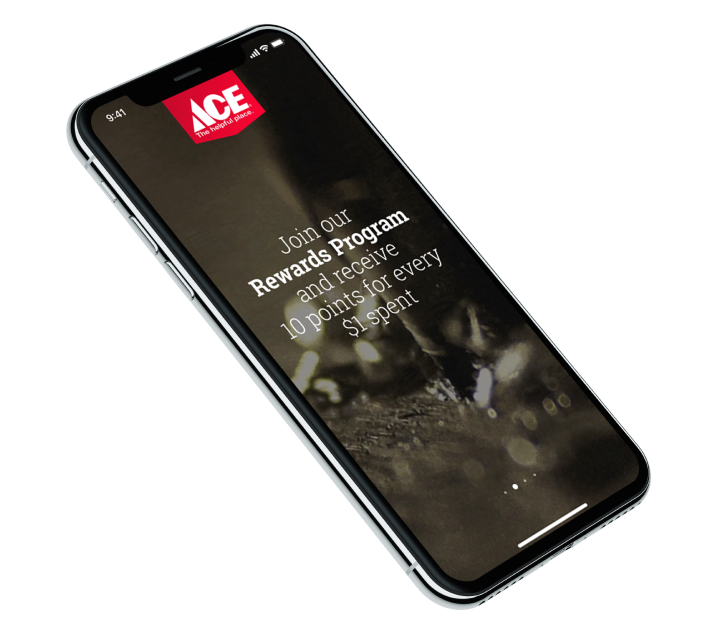

Ace Google Cloud Platform & App • Building Insights Across the Customer Journey
00:00
00:00
00:00
Case Study
0:00
Results
-
Over one million app installs.
-
Over 150K new rewards accounts.
-
$30 million in omnichannel revenue.
Acing the customer journey through data and design.
Ace Hardware is the world’s largest hardware and retail cooperative, with more than 5,300 independently owned and operated stores in over 70 countries. As a fixture in communities all over the United States and around the world, Ace Hardware is affectionately known as “The Helpful Place” and prides itself on superior customer service. But to better deliver the hardware, advice and expertise that people need to improve their homes, Ace Hardware’s digital presence needed some refurbishing of its own—including the build of an entirely new mobile app platform.
Keeping the customer front and center.
Retail digitalization trends have accelerated at a breakneck pace and today’s customers expect a seamless, omni-channel experience. They may start product exploration minutes, hours, or days before a digital or in-store purchase, switching between app, web, and devices as they do. While Ace Hardware had an existing web analytics setup and webview app in its toolbox, these properties didn’t speak to one another—obscuring important first-party data and leading to inefficient analysis of data. To bring these signals together, we helped Ace Hardware connect its web and app analytics for a full picture of the customer journey—while improving the experience through a completely new mobile app, built from the ground up.


Building loyalty—and first-party data.
With constantly evolving digital transformation comes an increased scrutiny on privacy. Marketers can offer more meaningful personalization if there is a fair value exchange for customers. That’s why a foundational step to our approach was to reimagine Ace Hardware’s loyalty program by building a rewards app user experience that continually earns customers’ loyalty by engaging their expectations, emotions and behaviors.
Keeping in mind Ace Hardware’s customer engagement KPIs focused on loyalty and rewards, we mapped out data collection points that would allow the business to measure and optimize to meet aggressive short-term goals, while also strategically collecting data like home type and home characteristics to allow for highly accurate personalization and relevance for the customer down the line—while helping customers gain rewards and information they need.
Furthermore, we designed the analytics framework to capture location, demographic and purchase data in addition to loyalty and engagement data from the outset, creating a future-proofed app analytics setup that would eliminate the need for costly and time-consuming app rebuilds as business needs shift.

In partnership with
- Ace Hardware
Client Words
[Monks] delivered an outstanding work product quickly and efficiently that not only addressed our project KPIs, but went above and beyond to anticipate our future needs.

Deanna Hernandez
Senior Ace App Manager, Ace Rewards & Analytics, Ace Hardware

Rebuilding from the inside out.
We tackled Ace Hardware’s analytics framework and mobile app with a lockstep approach to development. This joined together front- and back-end processes—which are typically siloed—to result in an experience that captures data critical to enhancing the customer experience. Integrated teams worked together to design the app with customer interaction framework, data collection points, and analytics built in from the start, producing the highest-quality output more quickly and efficiently.
Our Craft
Personalization and customer loyalty are just a tap and a swipe away.


An immediate payoff.
Working with Monks for both production and analytics streamlined communication, accelerated project timelines and culminated in a more cohesive final product and better customer experience. The app immediately generated results, too, and within seven months of launch:
Results
-
Over one million app installs
-
Over 150K new rewards accounts
-
$30 million in omnichannel revenue
Want to talk data? Get in touch.
Can’t get enough? Here is some related work for you!


Stand Red x Bob Paisley • Bringing Liverpool FC Legend Bob Paisley to a New Generation of Fans
00:00
00:00
00:00
Case Study
0:00
Treating fans to a winning experience.
Liverpool Football Club is a team with a rich and celebrated history that spans generations. To honor both the team and its fans, we gave fans intimate access to the club’s late legendary manager Bob Paisley, on what would have been his 100th birthday.
In collaboration with Octagon and Standard Chartered, we brought fans closer to the club by creating the Stand Red mobile app. Celebrating Bob Paisley’s life and legacy, the immersive AR experience allowed people to enter Liverpool’s fabled Boot Room and converse back and forth with the club’s famed manager.


Retelling a legend.
Stepping into the virtual Boot Room let fans step back in time, where they could engage with Bob’s legacy through several interactions. They could discover historic radio broadcasts by turning the knob of a vintage radio, view shoes signed and worn by the club’s most legendary players, and test their own sense of strategy by perusing Bob’s own playbook. These artifacts provided fans with a tangible experience that met them on a more personal level.
Accompanying the Boot Room experience were five films that provided fans with a front-row seat to see the sporting icon again through a mix of CGI and live-action acting. With Bob’s family’s blessing, we shot an actor with a similar body shape over four shoot days and tracked his facial movements using 42 facial markers. 400 hours, 200 facial shapes and 200,000 meticulously placed hair follicles later, we delivered an authentic performance to the club’s most dedicated fans.


Swipe
For More!
Drag
For More!
Winning fans over for generations to come.
While many virtualized representations of celebrities or athletes draw a red card, both the AR experience and films won big with fans and players alike, who took to social media to share the poignant and moving experience. By introducing Paisley and Liverpool FC history to a new generation of fans, we brought everyone closer to the club and won them over.
Results
-
76.4 million total views.
-
1.3 million social comments and engagements online.
-
95% positive sentiment among those who engaged with the campaign.
-
191 pieces of earned media coverage globally across digital, print, broadcast and radio.
-
1x FWA
-
1x Digital Advertising Award
-
2x Lovies

Want to talk sports? Get in touch.
Can’t get enough? Here is some related work for you!


The Recipe for Higher-Quality Engagement in an Era of Digital Diets
The Recipe for Higher-Quality Engagement in an Era of Digital Diets


Calling it a “digital diet,” mobile users are making a point to reduce and limit screen time; even Apple and Google are jumping on the bandwagon by integrating features into iOS and Android, that alert users to the amount of time they devote to their apps. While this might seem like bad news in the attention economy, don’t run for the hills just yet. “With growing user awareness of smartphone addiction and new tools to monitor and limit use,” MediaMonks Co-founder & COO Wesley ter Haar assures developers, “brands will need to switch focus from extending to enriching user engagement.”
In simple terms, don’t try to capture your users’ attention for as long as possible in a single setting. Instead, leverage good design to create a first-class customer experience that will encourage them to keep coming back. “Great UX and design can turn otherwise unremarkable interactions into brand experiences that directly affect customer satisfaction and loyalty,” says ter Haar. One such “unremarkable interaction” is calling for a cab, which Uber has turned into a luxe and frictionless experience that users, it seems, can’t see themselves living without.
Monk Thoughts
Having the ‘brand at hand’ enables more meaningful data collection for brands and more relevant content to their users.

Brands hoping to reach that level of customer loyalty and enthusiasm will want to pay special care to how they design digital experiences—which can have a significant impact on the bottom line, too. At a MediaMonks event in Mexico City in February, ter Haar shared industry findings on the business value of good customer experience design: “Companies that use design more effectively enjoy higher revenue growth than those in the same industry that don’t.”
Mobile is the New Wallet
What better place to look for ways to heighten user loyalty through design is there than loyalty apps? Loyalty programs have long prompted customers to make repeat visits or purchases at a store, and today their presence on mobile has made them more akin to marketing platforms. “Mobile is the new wallet,” says ter Haar, “and having the ‘brand at hand’ enables more meaningful data collection for brands and more relevant content to their users.”

Your mobile app should go beyond simply targeting users with sales and promotions (though those certainly help in providing value to them). A truly engaging customer experience is built around small moments that take advantage of the brand’s presence in users’ pockets, enhancing their day-to-day needs and activities.
One great example of this is the Club Premier app, which lets users handle everyday tasks like checking their balance or use the points they’ve saved. But it goes beyond that: through a dynamic design and engaging UX, the app surfaces up personalized content through its Experience Companion feature, which informs users on how they can make the most out of their Club Premier membership. Built around customers’ unique needs and providing convenience when and where it matters most, the app enhances the way customers engage.
Catering to Mobile Moments
Delivering a better customer experience through your mobile app begins in identifying its place within a larger ecosystem of interactions with your brand. One area to focus on is optimizing these experiences: a fashion brand might make it easier for users to reserve and purchase items that are high in demand as soon as they release, for example, like the Adidas Confirmed app that we redesigned for a more stable and smooth user experience.

But designing around mobile moments should do more than optimize. Here, it’s the little details that matter, which can be as simple as acknowledging a user on their birthday. One app that shows how a touch of whimsy can build a better experience is ING’s Kudos app. Designed to provide a way for ING employees to compliment and recognize one another’s contributions, the app uses bright colors and badges to gamify workflows and make complimenting more fun. And if you don’t believe us, look at the numbers: over 50% of internal employees shared kudos on the app in the first three months, which is quite good for an internal business tool.
Because gamification features like badges in Kudos encourage a sense of progress, they make as a nice example for how developers can encourage repeat check-ins and actions from users in their mobile design. In addition, they show how apps designed expressly for customer loyalty can extend beyond the obvious offerings of discounts. Insights gained from such apps—like location, time in-store, browsing or purchasing history and more—may then power more personalized content, allowing for a more engaging customer experience. This way, brands can focus less on delivering more quality in the time users spend within an app than focus on the amount of time. This way, the focus isn’t on the amount of time users spend in an app, but the quality of time spent with the brand—the perfect recipe for satiating the digital diet trend.
mobile app development mobile app attention economy digital diet customer loyalty customer experience user experience UX