

Choose your language

Choose your language

The website has been translated to English with the help of Humans and AI

Dismiss

We've raised Magalu App's rating • Our performance strategy to reach the top of the ratings

  • Client

    Magazine Luiza

  • Solutions

    Performance MediaMobile Apps

Magazine Luiza has established itself as a Brazilian retail giant, tracing a successful trajectory from its origins in the interior of São Paulo. The company has become a protagonist in the digital transformation, evolving from a chain of physical stores to a large ecosystem that connects thousands of sellers to millions of consumers, boosting countless businesses that join its platform. With this pace of expansion, Magalu has set out to do nothing less than digitize Brazil, taking e-commerce to all four corners of the country.

We, as the company's strategic performance partners, have helped to strengthen Magalu's position as the main shopping platform for Brazilians. In this case, we will demonstrate how we contributed directly to achieving one of Magalu's main business objectives: expanding the app's reach and use, increasing the active user base and achieving a better position in the app store's shopping categories.

Building a virtuous cycle of positive evaluations

Improving the user experience and strengthening the presence of the Magalu app in app stores was a challenge for the brand. In a market as competitive as e-commerce, the app's visibility and reputation are essential for attracting and retaining users. With the aim of raising the app's rating and optimizing its organic discovery, we developed a joint strategy on two fronts, focused on encouraging positive comments from repeat users and fault control aimed at reducing negative comments.

In order to encourage positive reviews of the Magalu app, several optimizations were implemented. We contributed to the app's sentiment and failure analysis, while the development team made efforts to reduce errors and improve overall performance, ensuring a more fluid and intuitive experience, as well as more efficient communication with the user.

In partnership with

  • Magazine Luiza
Among Brazilian retailers, Magalu has the largest app, offering a fluid experience with exclusive purchase conditions, a broad base of sellers and a complete ecosystem, including payments, insurance, ads, content and an affiliate platform.
Gabriela de Sousa

Gabriela de Sousa

Acquisition Lead

Growth in application platforms

We started working on increasing the rating of the Magalu app, using targeted strategies such as continuous monitoring of comments and sending push notifications. The result was a jump in ratings: from 4.2 to 4.5 on Android, the highest average rating for the Magalu app since its launch, and from 4.7 to 4.9 on iOS.

During the last Black Friday, we reached 1st position overall in the App Store and maintained 5th position in the Shopping category on Android. In addition, we were named App of the Day on November 29 and 30, bringing us visibility during the most important retail period.

Another highlight was the improved control of crashes and ANRs (Application Not Responding), situations in which the app fails to respond, causing crashes and interruptions to the user experience. In this way, we ensured greater stability for users and enhanced the app experience.

In terms of communication, the app was recognized 6 times on Google Play Console over the course of the year, due to its prominence in LiveOps promotional events, generating more than 150,000 additional purchases during the periods in which it was in the spotlight.

Following the improvements, we recorded a growth of more than 10% in the install base, while also increasing the number of year-over-year acquisitions by around 10% and app impressions by 31%. The combination of these efforts consolidated our performance, guaranteeing better scores, new positions in the rankings and an increasingly engaged user base

Monk Thoughts Taking part in this project with the Magalu team was a great challenge and an incredible opportunity. Working together, we managed to grow the app's ranking significantly. During the last Black Friday, seeing the app take 1st place in the App Store was a great victory. The 16% increase in the user base shows that we are on the right track. We're excited to continue driving the Magalu shopping experience forward together.
Lucas Pizetta

The success of the Magalu app was also featured in Sensor Tower's State of Mobile report , which highlighted the app among the top 5 shopping apps in Brazil. The report highlights the growing importance of omnichannel platforms in retail, offering consumers an integrated experience between physical, online and mobile stores.

Want to know more about application optimization? Get in touch

Hello

Please fill in the following quick questions so that our team can get in touch with you.

bob paisley head avatar
bob paisley holding uniform

Stand Red x Bob Paisley • Bringing Liverpool FC Legend Bob Paisley to a New Generation of Fans

  • Client

    Standard Chartered, Octagon

  • Solutions

    StudioImmersive Brand StorytellingMobile Apps

00:00

00:00

00:00

Case Study

0:00

Treating fans to a winning experience.

Liverpool Football Club is a team with a rich and celebrated history that spans generations. To honor both the team and its fans, we gave fans intimate access to the club’s late legendary manager Bob Paisley, on what would have been his 100th birthday. 

In collaboration with Octagon and Standard Chartered, we brought fans closer to the club by creating the Stand Red mobile app. Celebrating Bob Paisley’s life and legacy, the immersive AR experience allowed people to enter Liverpool’s fabled Boot Room and converse back and forth with the club’s famed manager.

  • Inside fabric of a shirt with the signature "Bob Paisley" English football locker room with jerseys hanging on the wall
  • Portrait of Bob Paisley, created by 3D modeling, on the field at a stadium a cell phone with the Boot Room AR experience loaded on it

Retelling a legend.

Stepping into the virtual Boot Room let fans step back in time, where they could engage with Bob’s legacy through several interactions. They could discover historic radio broadcasts by turning the knob of a vintage radio, view shoes signed and worn by the club’s most legendary players, and test their own sense of strategy by perusing Bob’s own playbook. These artifacts provided fans with a tangible experience that met them on a more personal level.

Accompanying the Boot Room experience were five films that provided fans with a front-row seat to see the sporting icon again through a mix of CGI and live-action acting. With Bob’s family’s blessing, we shot an actor with a similar body shape over four shoot days and tracked his facial movements using 42 facial markers. 400 hours, 200 facial shapes and 200,000 meticulously placed hair follicles later, we delivered an authentic performance to the club’s most dedicated fans.

Winning fans over for generations to come.

While many virtualized representations of celebrities or athletes draw a red card, both the AR experience and films won big with fans and players alike, who took to social media to share the poignant and moving experience. By introducing Paisley and Liverpool FC history to a new generation of fans, we brought everyone closer to the club and won them over.

Results

  • 76.4 million total views.
  • 1.3 million social comments and engagements online.
  • 95% positive sentiment among those who engaged with the campaign.
  • 191 pieces of earned media coverage globally across digital, print, broadcast and radio.
  • 1x FWA

  • 1x Digital Advertising Award

  • 2x Lovies

Two 3D model heads of Bob Paisley
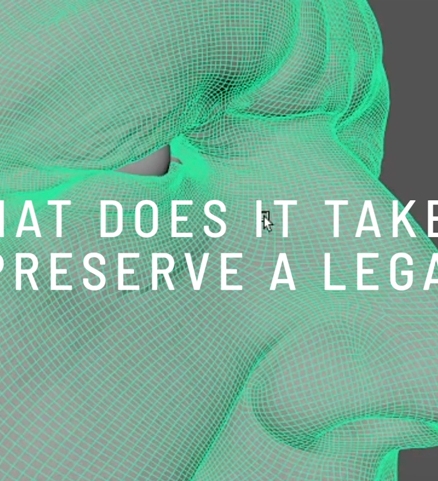
Close up of a 3D model of a face
Press Project Stand Red perfectly exemplifies our innovation mind-set by using smart technology to introduce one of Liverpool’s most beloved managers to the next generation of fans.
Read on The Drum

Want to talk sports? Get in touch.

Hey 👋

Please fill out the following quick questions so our team can get in touch with you.

Can’t get enough? Here is some related work for you!

Digital Transformation Doesn’t Have to Be an Identity Crisis

Digital Transformation Doesn’t Have to Be an Identity Crisis

4 min read
Profile picture for user mediamonks

Written by
Monks

With an ever-quickening rate of technological change and new platforms emerging just as fast, it can be tough for businesses to adapt. Rather than reinvent the wheel, legacy businesses should strive to be themselves.

When it comes to digital transformation, legacy businesses are in a uniquely tight spot: they must consider how to provide new, innovative experiences while retaining the character, image and customer relationship that have worked so well thus far. In some cases, rigid brand standards and internal reluctance to change can squander customers’ relationship with even beloved brands. So how does one invest in digital transformation without losing what made them unique and successful? 

Take stock of customers’ needs and how you can meet them.

The first step in adopting a digital strategy is to keep a customer-centric focus. How can digital platforms add value for them on top of your existing IP and products? Which of your customers’ needs are unmet given the channels that are available to you today? In addition to focusing on customer habits and needs, you should keep an eye on competition for inspiration, benchmarks and to see where possibilities lie. Are there any ways you can provide an even better experience than them?

When envisioning the experience that you want to give customers, avoid a common pitfall that befalls some brands: the dubious assumption that digital transformation solely involves a flashy site or app. In fact, digital transformation is a multifaceted process that will require you to restructure the way you do business. So rather than just invest in a new website or app experience, you’ll need a much more integrated approach to how your core message is amplified across several touchpoints, media and other messaging. This also means restructuring your team a bit. One example of changes you might implement includes marrying your marketing and IT teams to ensure a smoother user experience on the web.

Use your stature to your advantage—but don’t be afraid of change.

Old habits die hard, but legacy businesses have one advantage over newer ones: decades of cultural relevance and consumer trust that they can draw upon when asserting themselves in a digital space. Take, for example, one of the most iconic toy brands of all time: LEGO. When children’s attention shifted from physical toys to smartphones and iPads, LEGO wasn’t going to go down without a fight. The big, bad wolf of digital media failed to huff, puff and blow the LEGO-brick house down. Instead, the Danish toymaker chose to follow the wind and invest heavily in apps, videogames and film. The digital transformation effort has proved so successful that it’s today regarded as the “Apple of toys.”

Niels B. Christiansen, LEGO CEO, mentioned in the LEGO Play Well Report 2018 that “today’s children are seamlessly merging what’s real and what’s virtual, reinventing play in ways people of my own generation could never have envisioned.” This inspired the brand to similarly blur the lines between physical and digital experiences. “We at LEGO are embracing that fluidity in play,” added LEGO CMO Julia Goldin, “and we want to have a bigger role in a child’s development” both online and off.

instruction_0013_Layer 1
instruction_0007_Layer 7
monstrox_0027_Layer 7

LEGO’s sophistication in digital platforms culminated in Nexo Knights, a toy franchise designed to hold children’s attention across an entire ecosystem of experiences and media including a TV series, a mobile app, retail VR experiences and a web game. The robust campaign introduced children to the world of the toy series—but even with the bells and whistles of a VR game and mobile app, the focus was still on the boxes of brightly colored, plastic bricks that kids could dive their fists into.

Monk Thoughts A lot can be lost about the product in a shift to digital.
Sander van der Vegte headshot

Some things simply aren’t replicated digitally, according to Sander van der Vegte, Head of Labs at MediaMonks Labs. “From the feeling of the bricks to the sound of them clicking together,” there are many physical elements to the beloved brick toy that would make it impossible to replace the physical aspect of play. The big question to consider with digital transformation is how digital can augment the experience or thing that people already love about your brand.


See how we pieced together the Nexo Knights launch brick-by-brick.

Don’t cling to legacy business models, but enhance them in a smart way.

Clinging to a legacy business model can be suicide amidst changing consumer habits. Companies that are early in the digital transformation process can prioritize tools, platforms and features that fit within their existing business model rather than try to reinvent the wheel or deny the changing tide of customer needs.

12829399_1110456972308654_3983464893523943167_o

One aspect of the Nexo Knights campaign that shouldn’t be overlooked is that it invites customers to visit and explore LEGO retail stores in a couple of different ways—despite the fact that most toy sales are happening online rather than off. What sounds like a bad idea has proven fruitful for the brand. A keystone of the campaign is the Nexo Knights VR experience, which lets customers literally step into the IP’s world as soon as they walk through the doors of a LEGO store. After they became acquainted with the product, children were able to find power ups at stores that they could scan into the Nexo Knights app, enhancing their digital experience with in-store visits. With both assets, the brand leveraged digital tech to enhance brick-and-mortar retail and to encourage kids to see the products in-person. Who said retail was dead?

Digital transformation can certainly be intimidating—it forces you to take a long, hard look at the way you form relationships with customers and can even cannibalize your product. But adopting a digital strategy doesn’t have to result in an identity crisis. Sometimes the best strategy is to be yourself.

Legacy brands often struggle with their digital transformation efforts: how can they provide innovative, new experiences on mobile, social and emerging tech while retaining their identity? Digital Transformation Doesn’t Have to Be an Identity Crisis Legacy brands sometimes struggle with digital transformation, they can stay true to themselves by remembering why customers love them in the first place.
digital transformation branding digital marketing digital advertising innovation emerging tech vr ar mobile app retail

The Recipe for Higher-Quality Engagement in an Era of Digital Diets

The Recipe for Higher-Quality Engagement in an Era of Digital Diets

3 min read
Profile picture for user mediamonks

Written by
Monks

The Recipe for Higher-Quality Engagement in an Era of Digital Diets

Calling it a “digital diet,” mobile users are making a point to reduce and limit screen time; even Apple and Google are jumping on the bandwagon by integrating features into iOS and Android, that alert users to the amount of time they devote to their apps. While this might seem like bad news in the attention economy, don’t run for the hills just yet.  “With growing user awareness of smartphone addiction and new tools to monitor and limit use,” MediaMonks Co-founder & COO Wesley ter Haar assures developers, “brands will need to switch focus from extending to enriching user engagement.”

In simple terms, don’t try to capture your users’ attention for as long as possible in a single setting. Instead, leverage good design to create a first-class customer experience that will encourage them to keep coming back. “Great UX and design can turn otherwise unremarkable interactions into brand experiences that directly affect customer satisfaction and loyalty,” says ter Haar. One such “unremarkable interaction” is calling for a cab, which Uber has turned into a luxe and frictionless experience that users, it seems, can’t see themselves living without.

Monk Thoughts Having the ‘brand at hand’ enables more meaningful data collection for brands and more relevant content to their users.
black and white photo of Wesley ter Haar

Brands hoping to reach that level of customer loyalty and enthusiasm will want to pay special care to how they design digital experiences—which can have a significant impact on the bottom line, too. At a MediaMonks event in Mexico City in February, ter Haar shared industry findings on the business value of good customer experience design: “Companies that use design more effectively enjoy higher revenue growth than those in the same industry that don’t.”

Mobile is the New Wallet

What better place to look for ways to heighten user loyalty through design is there than loyalty apps? Loyalty programs have long prompted customers to make repeat visits or purchases at a store, and today their presence on mobile has made them more akin to marketing platforms. “Mobile is the new wallet,” says ter Haar, “and having the ‘brand at hand’ enables more meaningful data collection for brands and more relevant content to their users.”

clubpriemier_headerimage_1920x480

Your mobile app should go beyond simply targeting users with sales and promotions (though those certainly help in providing value to them). A truly engaging customer experience is built around small moments that take advantage of the brand’s presence in users’ pockets, enhancing their day-to-day needs and activities.

One great example of this is the Club Premier app, which lets users handle everyday tasks like checking their balance or use the points they’ve saved. But it goes beyond that: through a dynamic design and engaging UX, the app surfaces up personalized content through its Experience Companion feature, which informs users on how they can make the most out of their Club Premier membership. Built around customers’ unique needs and providing convenience when and where it matters most, the app enhances the way customers engage.

See how Club Premier’s app fit within a larger digital transformation strategy.

Catering to Mobile Moments

Delivering a better customer experience through your mobile app begins in identifying its place within a larger ecosystem of interactions with your brand. One area to focus on is optimizing these experiences: a fashion brand might make it easier for users to reserve and purchase items that are high in demand as soon as they release, for example, like the Adidas Confirmed app that we redesigned for a more stable and smooth user experience.

5

But designing around mobile moments should do more than optimize. Here, it’s the little details that matter, which can be as simple as acknowledging a user on their birthday. One app that shows how a touch of whimsy can build a better experience is ING’s Kudos app. Designed to provide a way for ING employees to compliment and recognize one another’s contributions, the app uses bright colors and badges to gamify workflows and make complimenting more fun. And if you don’t believe us, look at the numbers: over 50% of internal employees shared kudos on the app in the first three months, which is quite good for an internal business tool.

Because gamification features like badges in Kudos encourage a sense of progress, they make as a nice example for how developers can encourage repeat check-ins and actions from users in their mobile design. In addition, they show how apps designed expressly for customer loyalty can extend beyond the obvious offerings of discounts. Insights gained from such apps—like location, time in-store, browsing or purchasing history and more—may then power more personalized content, allowing for a more engaging customer experience. This way, brands can focus less on delivering more quality in the time users spend within an app than focus on the amount of time. This way, the focus isn’t on the amount of time users spend in an app, but the quality of time spent with the brand—the perfect recipe for satiating the digital diet trend.

With consumers and developers supporting the “digital diet” trend, brands will have to cultivate a higher quality of attention from the user. The Recipe for Higher-Quality Engagement in an Era of Digital Diets The “digital diet” trend signals a need for a higher quality—not quantity—of attention in mobile user experiences.
mobile app development mobile app attention economy digital diet customer loyalty customer experience user experience UX

Choose your language

Choose your language

The website has been translated to English with the help of Humans and AI

Dismiss