Choose your language

Choose your language

The website has been translated to English with the help of Humans and AI

Dismiss

Meet MonkGPT—How Building Your Own AI Tools Helps Safeguard Brand Protection

Meet MonkGPT—How Building Your Own AI Tools Helps Safeguard Brand Protection

AI AI, AI & Emerging Technology Consulting, AI Consulting, Digital transformation, Talent as a Service, Technology Services 5 min read
Profile picture for user Michael B

Written by
Michael Balarezo
Global VP, Enterprise Automation

Large Language Models

What I’ve learned from months of experimenting with AI? These tools have proven to be a superpower for our talent, but it’s up to us to provide them with the proper cape—after all, our main concern is that they have a safe flight while tackling today’s challenges and meeting the needs of our clients. 

At Media.Monks, we’re always on the lookout for ways to integrate the best AI technology into our business. We do this not just because we know AI is (and will continue to be) highly disruptive, but also because we know our tech-savvy and ceaselessly curious people are bound to experiment with exciting new tools—and we want to make sure this happens in the most secure way possible. We all remember pivotal blunders of these past months, like private code being leaked out into the public domain, and thus it comes as no surprise that our Legal and InfoSec teams have been pushing the brakes a bit on what tech we can adopt, taking the safety of our brand and those of our partners into consideration. 

So, when OpenAI—the force behind ChatGPT—updated their terms of service, allowing people who leverage the API to utilize the service without any of their data being used to train the model as a default setting, we were presented with a huge opportunity. Naturally, we seized it with both hands and decided to build our own internal version of the popular tool by leveraging OpenAI’s API: MonkGPT, which allows our teams to harness the power of this platform while layering in our own security and privacy checks. Why? So that our talent can use a tool that’s both business-specific and much safer, with the aim to mitigate risks like data leaks.

You can’t risk putting brand protection in danger.  

Ever since generative AI sprung onto the scene, we’ve been experimenting with these tools while exploring how endless their possibilities are. As it turns out, AI tools are incredible, but they don’t necessarily come without limitations. Besides not being tailored to specific business needs, public AI platforms may use proprietary algorithms or models, which could raise concerns about intellectual property rights and ownership. In line with this, these public tools typically collect data, the use of which may not be transparent and may fail to meet an organization’s privacy policies and security measures. 

Brand risk is what we’re most worried about, as our top priority is to protect both our intellectual property and our employee and customer data. Interestingly, a key solution is to build the tools yourself. Besides, there’s no better way to truly understand the capabilities of a technology than by rolling up your sleeves and getting your hands dirty.

Breaking deployment records, despite hurdles.  

In creating MonkGPT, there was no need to reinvent the wheel. Sure, we can—and do—train our own LLMs, but with the rapid success of ChatGPT, we decided to leverage OpenAI’s API and popular open source libraries vetted by our engineers to bring this generative AI functionality into our business quickly and safely.

In fact, the main hurdle we had to overcome was internal. Our Legal and InfoSec teams are critical of AI tooling terms of service (ToS), especially when it comes to how data is managed, owned and stored. So, we needed to get alignment with them on data risk and updates to OpenAI’s ToS—which had been modified for API users specifically so that it disabled data passed through OpenAI’s service to be used to train their models by default.

Though OpenAI stores the data that's passed through the API for a period of 30 days for audit purposes (after which it’s immediately deleted), their ToS states that it does not use this data to train its models. Coupling this with our internal best practices documentation, which all our people have access to and are urged to review before using MonkGPT, we make sure that we minimize any potential for sensitive data to persist in OpenAI’s model.

As I’ve seen time and time again, ain’t no hurdle high enough to keep us from turning our ideas into reality—and useful tools for our talent. Within just 35 days we were able to deploy MonkGPT, scale it out across the company, and launch it at our global All Hands meeting. Talking about faster, better and cheaper, this project is our motto manifested. Of course, we didn’t stop there. 

Baking in benefits for our workforce.   

Right now, we have our own interface and application stack, which means we can start to build our own tooling and functionality leveraging all sorts of generative AI tech. The intention behind this is to enhance the user experience, while catering to the needs of our use cases. For example, we’re currently adding features like Data Loss Prevention to further increase security and privacy. This involves implementing ways to effectively remove any potential for sensitive information to be sent into OpenAI’s ecosystem, so as to increase our control over the data, which we wouldn’t have been able to do had we gone straight through ChatGPT’s service. 

Another exciting feature we’re developing revolves around prompt discovery and prompt sharing. One of the main challenges in leveraging a prompt-based LLM’s software is figuring out what the best ways are to ask something. That’s why we’re working on a feature—which ChatGPT doesn’t have yet—that allows users to explore the most useful prompts across business units. Say you’re a copywriter, the tool could show you the most effective prompts that other copywriters use or like. By integrating this discoverability into the use of the tool, our people won’t have to spin their wheels as much to get to the same destination.

In the same vein, we’re also training LLMs towards specific purposes. For instance, we can train a model for our legal counsels that uncovers all the red flags in a contract based on both the language for legal entities and what they have seen in similar contacts. Imagine the time and effort you can save by heading over to MonkGPT and, depending on your business unit, selecting the model that you want to interact with—because that model has been specifically trained for your use cases.

It’s only a matter of time before we’re all powered by AI. 

All these efforts feed into our overall AI offering. In developing new features, we’re not just advancing our understanding of LLMs and generative AI, but also expanding our experience in taking these tools to the next level. It’s all about asking ourselves, “What challenges do our business units face and how can AI help?” with the goal to provide our talent with the right superpowers. 

Monk Thoughts The real opportunities lie in further training AI models and exploring new use cases.
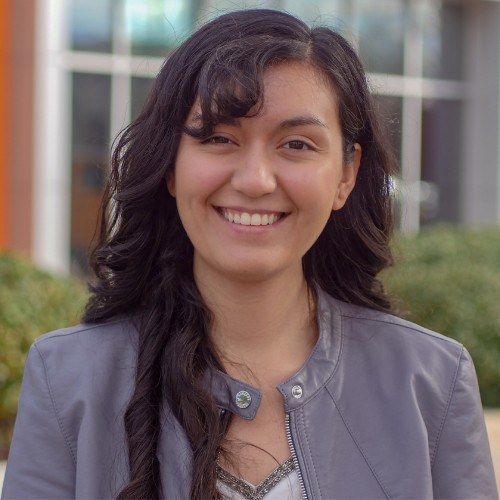
Michael Balarezo headshot

It goes without saying that my team and I apply this same kind of thinking to the work we do for all our clients. Our AI mission moves well beyond our own organization as we want to make sure the brands we partner with reap the benefits of our trial and error, too. This is because we know with absolute certainty that sooner or later every brand is going to have their very own models that know their business from the inside out, just like MonkGPT. If you’re not already embracing this inevitability now, then I’m sure you will soon. Whether getting there takes just a bit of consultation or full end-to-end support, my team and I have the tools and experience to customize the perfect cape for you.
Leveraging OpenAI’s API, we built an internal version of ChatGPT, enabling our talent to use a popular tool that’s business-specific and more secure. AI technology tooling innovation brand safety Technology Services AI & Emerging Technology Consulting AI Consulting Talent as a Service AI Digital transformation

Next Up For Our Talent: A Ticket to Cannes Lions

Next Up For Our Talent: A Ticket to Cannes Lions

Industry events Industry events, Monks news 7 min read
Profile picture for user mediamonks

Written by
Monks

Next.Up Winners

European summer is just around the corner, and for a lucky few the season will start in the French Riviera. Out of 350 participants from across 25 countries, six rising stars have come out winners in NextUp.Monks, our internal creative competition in partnership with Cannes Lions. The reward? A full-package trip to Cannes and a chance to shine on the global stage.

NextUp.Monks offers emerging talent from our 8,900-strong multidisciplinary team the opportunity to continue to cross and push boundaries—and reaffirms our commitment to support them along the way. With our people spanning 57 talent hubs in 32 countries, this internal initiative is the perfect way to bring our talent closer together and provide them with a platform  to shine on a global stage. The first edition turned out to be such a great success that there was no other option but to bring it back in 2023. 

“Our ambition is to transform the industry. We want to change the work, what the work can do, and who does the work—and that change starts with us, right now,” says Jouke Vuurmans, our Chief Creative Officer. “NextUp.Monks is one of the ways we work towards this goal, as it gives our up-and-coming talent the chance to be bold, think outside the box, and ultimately thrive both within our company and on the global stage. What we saw last year is that it’s not just about professional development, it’s also about personal growth. Through this competition, participants get to meet and mingle with like-minded and equally ambitious colleagues from every corner of the globe.”

Connecting talent from across categories and capabilities 

As the aim is to give people the opportunity to thrive within our company and the industry, the main rule of NextUp.Monks is that everyone can join—as long as you have seven years or less of industry experience and are not in a managerial position. If you check those boxes, you are good to go find a partner to team up with and get to work. 

The competition consists of three categories, each of which is designed to highlight specific strengths, skill sets and interests. Teams are invited to participate in any category, regardless of their current role within Media.Monks. 

First up, the Innovation.Monks are future-facing visionaries. They’re adept at sniffing out innovative ideas and turning them into reality using the latest in emerging tech and formats, resulting in groundbreaking experiences and new possibilities.

Second, the Film.Monks deliver cinematic stories for screens of all sizes. They’re an inclusive bunch of thinkers that have a knack for original concepting, scriptwriting, visual treatments, film treatments, shooting, directing, editing, VFX, post—and everything in between. Together, they believe that film has the power to connect people and tell stories that we’ve never seen or thought about before.

Third, the Interactive.Monks are driven to build creative experiences that go beyond the mundane. They put the audience at the heart of every moment they craft, giving them the opportunity to immerse themselves within compelling, transformative digital experiences that build lasting memories.

Sparking boundary-pushing ideas  

For this year’s edition, we teamed up with a world-renowned global brand to develop a unique creative brief for each category. Our aim was to get people to flex their creative muscles and give shape to the craziest and most mind-bending ideas. 

The brief, “VR for Good,” challenged participants to think about VR as a vehicle for change and to find ways to excite Gen Z consumers about the potential of this technology. Through each category, teams were tasked to demonstrate VR’s transformative power to positively impact areas such as medicine, sports training, and emergency response—and ultimately change people’s minds about VR as a device solely intended for gaming.

If you ask Steve Latham, Head of Learning at Cannes Lions International Festival of Creativity, all participants understood the assignment. “After last year’s success, our team couldn’t wait to continue to work with Media.Monks on this groundbreaking initiative and breathe new life into our shared goal to spark boundary-pushing creativity,” he says. “Once again, our minds were blown—just when I thought the bar couldn’t go any higher, their talent raised it. Massive shout-out to everyone who participated, because the level of future-forward thinking, creativity and craft was outstanding. Now, it’s time to meet the winners at Cannes Lions 2023!”

The Next.Up creative competition winners

And the winners are… 

With so many incredible submissions, we had to be very diligent and detail-oriented in reviewing all the work. So, we established an esteemed jury of internal Media.Monks employees and industry experts, who reviewed the work in a blind judging process using the following judging criteria: the creative idea (40%); the insight and strategy (20%); the relevancy to the brief (20%); and the execution (20%). The jury selected bronze, silver and gold winners across each of the three categories. While the silver and bronze winners received a personalized trophy—plus eternal bragging rights—the creative minds behind the gold-winning work earned an all-inclusive ticket to Cannes. 

Those going down in history as the 2023 NextUp.Monks gold medalists are Anna Zhang and Yazad Dastur in the Innovation category, Vasyl Ilba and Mykyta Zolotoverkhyi in the Interactive category, and Jorene Chew and Ashwin Paul in the Film category. Out of these teams, the judges crowned Anna Zhang and Yazad Dastur the ultimate winners. This means that in addition to their trip to Cannes, they have also been admitted to the prestigious Creative Academy at Cannes—which will welcome a mere 30 people from around the world this year. 

“I still feel like I’m dreaming,” says Anna Zhang, Junior Designer. “Two months ago, I went to a little happy hour mixer for the NextUp.Monks competition and met Yazad. I didn’t really think I would enter the race, but Yazad told me that his best trait is his personality—and I was sold. We may have started as partners, but through this competition, we have become great friends. We come from totally different backgrounds, career paths, and even parts of the organization, but we got together with one common goal: to create something that feels true to us and, most importantly, to have fun!”

“Something that really made the difference when Anna and I decided to do the competition together was that we developed a rapport before we got to work, and really got to know each other as people and understand where the other was coming from—both creatively and personally,” adds Yazad Dastur, Junior Copywriter. “Becoming friends allowed us to tap into a deep emotional place and insights, and I think that’s what made it so much more important for us to give it our all. To find a partner who is willing to stay up until 6:00 am to finish a project is rare, especially one that does not guarantee an outcome. So, I think the fact that we told each other ‘let’s have fun and give this our best’ made this process an experience that we are truly proud of. I’m absolutely grateful for Anna—we completely pushed each other whenever one of us was faltering, doubting or even falling asleep.”

Bridging cultures and crossing borders

As much as the winning pitch, the NextUp.Monks initiative itself is all about creating strong connections, both across our organization and the globe. Not only did this internal competition garner interest from more than 600 employees in 25 countries, with a striking 350 people actually participating in the race, the top three teams are based in completely different places—from Los Angeles to Poland to Malaysia. 

This circles back to the fact that NextUp.Monks helps our emerging talent grow professionally as well as personally, as this initiative—within the context of our unified business structure—allows our people to work with peers from different countries, categories and capabilities. 

“Being a global team, we rely on an agile, flexible framework that lets people be themselves while staying keyed into the emerging opportunities and challenges that brands and our industry face. We’re a unified organization, but everyone is given the space to let their distinct voice and personality shine through—and our NextUp.Monks initiative only reinforces this spirit,” says our Chief Marketing Officer Kate Richling. “The competition opens up a myriad of possibilities for our up-and-coming talent across the globe to work together, no matter their location, expertise or job description.” 

Nothing Cannes stop our winners now

All that’s left for the winners to do is pack their bags, hop on a plane, and enjoy their time in Cannes—and if we have to believe Noelle Mayasich, our Senior Creative and last year’s winner, this will be the easiest part. 

“The amount of knowledge my partner and I gained from Cannes Lions has been so valuable to the way I look at creativity in my daily work—the workshops and keynote speeches have honestly molded me into who I am today,” says Mayasich. “We saw many notable speakers, including heads of large agencies, industry-wide influential figures, and even Ryan Reynolds, who talked about his break into the industry. Some of the speakers made us cry, and many others made us laugh. What truly stuck with me were the following lessons: be ambitious and humble at the same time. Create value for people of the world, not fluff. Sometimes we fail and sometimes we win, but having that freedom gives us the power to be creative.”

But Mayasich’s biggest takeaway from this experience was that the creative people in our industry really do care about the good of humanity and social, cultural, environmental and societal issues. “While our creative work reaches so many people on a daily basis, we don't often get to see this impact because we have to move on to the next project. This festival made me realize that my work is so much more impactful than I thought it was, and we’re the living proof there’s a fighting force behind it,” she says.

“It’s every advertiser’s dream to go to Cannes, so to say we’re excited would be an understatement—I’m actually still in shock,” says Dastur. “What makes me the happiest is that people saw potential in our idea and understood what we were trying to convey: that there’s a promise to the future of AI and VR. When utilized responsibly, these technologies have the power to bring people closer together.”

As we continue to provide our talent worldwide with diverse opportunities for growth, who knows where they will be in their careers next year—it might just be the French Riviera. As Media.Monks Co-Founder and Executive Director of S4Capital Wesley ter Haar says, “This year's NextUp.Monks was amazing. Great to see so much fun work and boundary-pushing thinking from teams across the globe, which is the result of our exciting partnership with Cannes Lions. I’m sure we'll see some of this year’s participants back there in the foreseeable future.”

NextUp.Monks offers emerging talent from our 8,900-strong multidisciplinary team the opportunity to continue to cross and push boundaries. Learn more about our creative competition. creative talent diverse talent innovation creative collaboration film production interactive content Monks news Industry events

3 Experiments That Unlock the Power of ChatGPT

3 Experiments That Unlock the Power of ChatGPT

AI AI, AI & Emerging Technology Consulting, AI Consulting, Technology Services 4 min read
Profile picture for user mediamonks

Written by
Monks

A hand holds a smartphone to the viewer. On the phone is a conversation between a user and a chatbot. The conversation isn't legible.

Look around, and you’ve surely noticed a surge of interest in artificial intelligence that can process language more accurately and effectively than ever before. Yes, chatbots have improved by leaps and bounds since the days of Eliza, the early bot whose therapist persona cleverly masked its cognitive limits by reflecting user input with noncommittal replies. Today’s bots seem to truly understand users, and can even explain memes.

What’s supercharging these AIs are large language models (LLMs). LLMs are language prediction tools that can read, summarize and translate text by predicting upcoming words in a sentence, allowing them to generate new text that closely resembles human speech and writing. They’re adept at both writing and interpreting text, and that cognitive ability means they can do far more than just write the first draft of an email or summarize your meeting notes.

ChatGPT, built by OpenAI, has gained incredible popularity thanks to its simple conversational interface and its ease of use. This accessibility has inspired multiple teams within Media.Monks to experiment with LLMs, and GPT in particular, to find better ways to work and create. The result is a series of prototyped innovations that demonstrate the ability of LLMs to aid in internal collaboration, streamline information gathering and self-service, and make highly technical metrics more accessible for everyone.

Enabling collaboration through multi-user experiences.

The Labs.Monks, our R&D team focused on technology and innovation, built a chatbot designed to streamline brainstorming and collaboration across teams. Charmingly named Brian (originally from an internal pun of BrAIn but renamed for simplicity), the GPT-powered bot integrates into Slack and serves as an intelligent, active participant in team channels. The idea for Brian came from the realization that most applications of ChatGPT are task-based, which inspired the team to consider other ways LLMs can support teams, like serving as a creative collaborator.

Brian has two modes. In facilitation mode, it keeps group brainstorms going by offering questions and providing summaries on the discussion. In contribution mode, Brian serves as another collaborator who thinks along with the team and adds to the discussion.

“During one of our tests, it was able to help us brainstorm a fictional brief on how to create an experiential activation for a soft drink brand catered to seniors with some interesting results! Though ultimately we ended up coming up with an idea ourselves, the input from Brian helped us get to other outcomes we might not have thought of otherwise,” says Angelica Ortiz, Senior Creative Technologist. Being able to field a discussion among a group of users (and even address individuals by name) separates Brian from other chatbots, which are typically limited to one-on-one conversations.

The team originally built Brian as an exercise to gain hands-on knowledge and experience with LLMs, the focus of their recent Labs Report. Now, the team is exploring how to roll it out as a tool for wide use by the Media.Monks team.

Monk Thoughts The input from Brian helped us get to other outcomes we might not have thought of otherwise.
Angelica Ortiz headshot

An alternative to fine-tuning GPT.

After seeing the potential of LLMs, many brands are exploring the idea of fine-tuning those models to better match their tone of voice or the kinds of content they create. Generally, fine-tuning an existing model can be cost-effective, removing the need to train a model, program a chatbot or write new content from scratch. But for some use cases, fine-tuning can be prohibitively expensive compared to another method of generating more brand-unique results: prompt engineering.

Our Tech Services practice developed a method of prompt engineering that makes it easy to build a GPT-powered chatbot that can answer questions based on content from a specific domain. The example they use is turning a company’s internal wiki into an assistant that saves employees the trouble of searching and sifting through long documents to find the information they need. The key technology behind this method are OpenAI’s embeddings, a feature that allows matching user queries with answers from the most relevant source content.

Embeddings unlock some incredible features. Users can ask questions and receive responses in their language of choice, regardless of the source content’s original language, meaning there’s no need to localize. They also don’t rely on exact word matches; if someone asks our hypothetical company wiki bot about “vacation time” policies, the bot will know to pull information from a document about “paid time off.” Adding more content to the chatbot is also easy, as all it takes is a simple webhook to enable the bot to answer questions about new content as its published.

If you want to learn more about how to use embeddings to prompt engineer a bot of your own, check out the full writeup. You’ll also see a video demo that walks you through how embeddings achieve each of the outcomes above.

Digesting information at speed.

Sifting through data can be overwhelming—especially if numbers aren’t your forte. That’s why our enterprise automation team developed Turing.Monk, a chatbot affectionately named after Alan Turing, the 20th century computer scientist who developed the Turing test, which tests a computer’s ability to exhibit intelligent behavior. Turing.Monk help teams quickly find the answers they need about their campaigns by answering queries in three formats: lists, summaries and graphs.

The bot functions a lot like a marketing assistant, helping marketers draw conclusions about a campaign’s performance. Want to see how the media cost has changed on a week-by-week basis? Just ask Turing.Bot to “provide a written summary of how the media cost is changing” for the campaign in question. It’s that easy.

The ability to ask questions in natural language helps puts analytics and data science at the fingertips for those on the team who might not know SQL or Python. “It’s early in development, but today an account manager can keep prompting and fine-tuning the prompt to get the outcome they desire,” says Michael Balarezo, Global VP of Enterprise Automation. “We’re now working on improving the analytical capability of the tool, leveraging the power of LLMs to understand the nuance of the ask, and translate that into more complex insight generation”

More potential has yet to be unlocked.

While much has been said about LLMs’ abilities to generate text, their skill in interpreting queries and surfacing up helpful, contextual information—all in a conversational format—will make them incredible tools in the workplace and beyond. From facilitating creative collaboration, to making information easily accessible for all, to giving people superpowers by putting digestible data at their fingertips, the potential for LLMs like GPT is great—and you can bet we’ll continue to experiment and find even more applications and use cases to benefit our team and the brands we work with.

With interest of large language models like ChatGPT on the rise, we've developed a series of prototypes that showcase their potential across different disciplines and use cases. automation artificial intelligence AI innovation Technology Services AI Consulting AI & Emerging Technology Consulting AI

ComplexLand • An Immersive Virtualization of an Iconic Cultural Festival

  • Client

    Complex Networks

  • Solutions

    ExperienceInnovation SprintsRetail Concept InnovationImpactful Brand Activations

00:00

00:00

00:00

Case Study

0:00

Reimagining an icon.

ComplexCon is an institution among youth culture and style icons: a cultural mecca that brings the Complex Networks community and the hottest brands together to celebrate convergence culture. Realizing that trendsetters are increasingly just as interested in their digital identities as their physical ones, we leveraged this insight into new consumer behaviors to design ComplexLand: a free, immersive 3D digital platform featuring exclusive drops, ecommerce features, performances from top-selling artists and unique brand partnerships—the likes of Gucci, Versace and more.

Balancing accessibility with exclusive experiences.

While many virtual events try (and sometimes fail) to capture the energy of a crowded room, ComplexLand stands out as a single-player experience focused on global accessibility, community and lots of shoppable merch—a key feature enabled by Shopify’s robust system. By introducing exclusive brand partnerships that make it fun for visitors to shop, the platform has become Complex Network’s second-largest source of revenue, and the ultimate example of how an authentic, entertaining experience can drive sales.

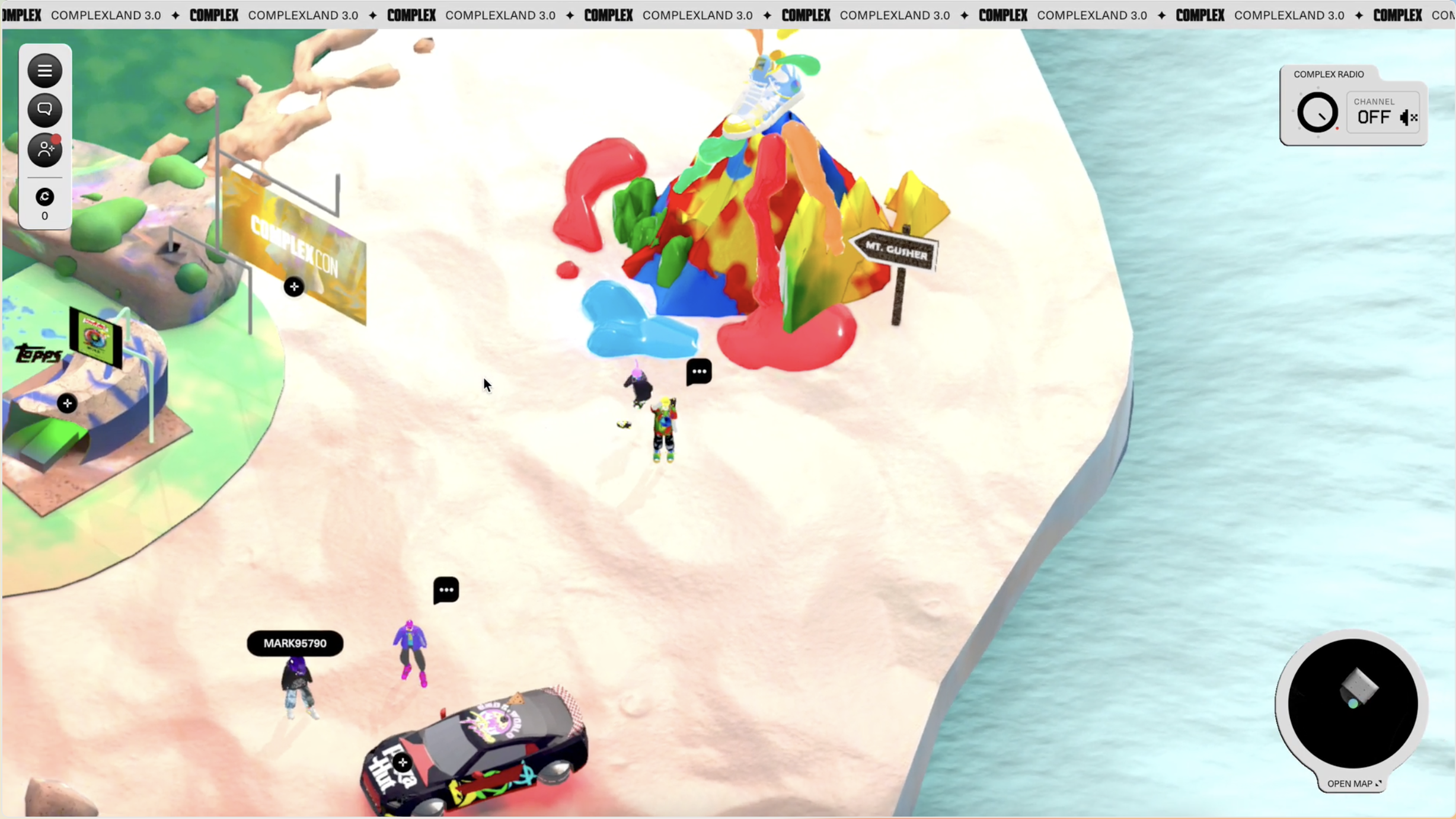
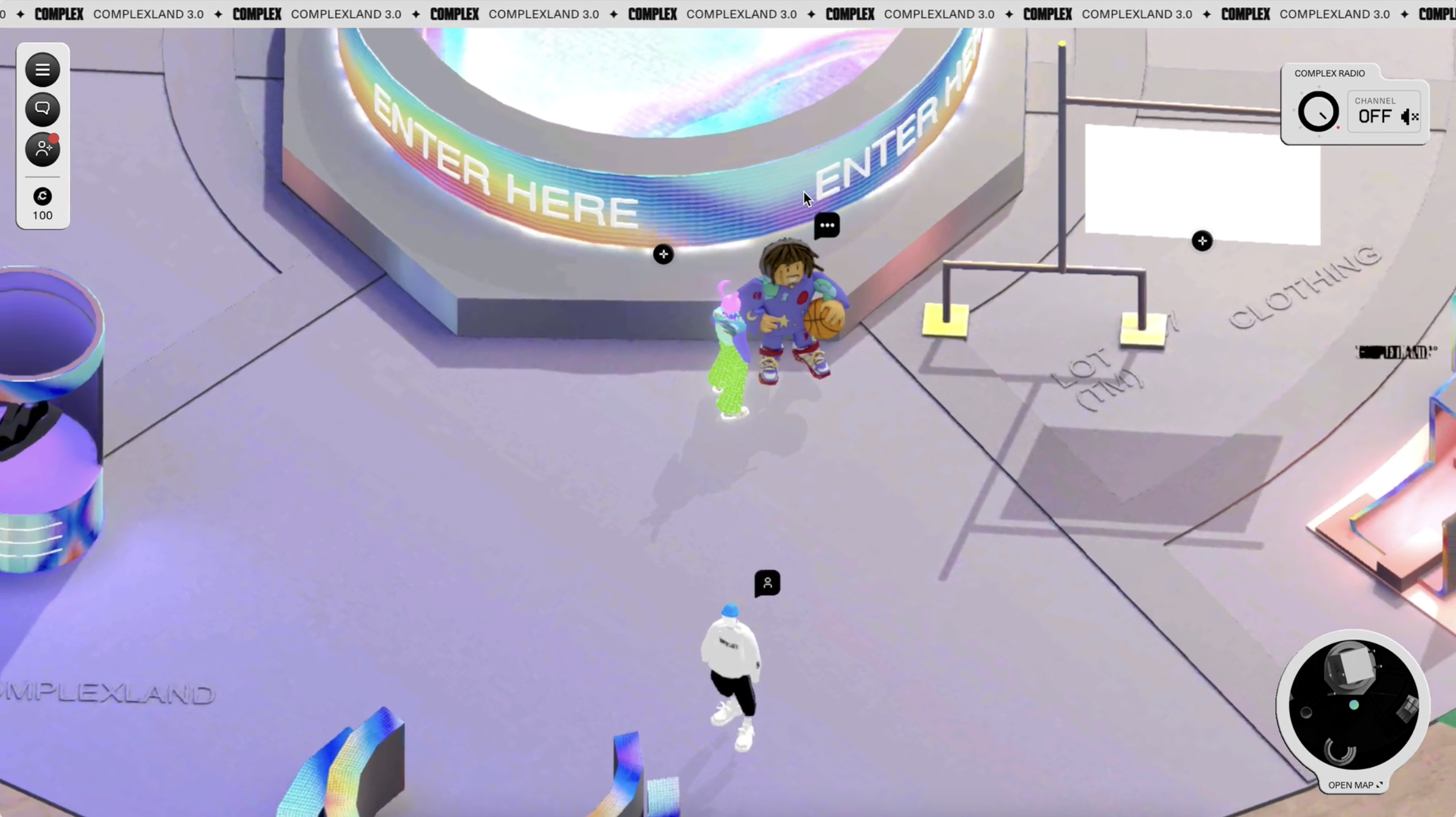
What’s more, it’s far from complex when it comes to usability. The experience is powered by WebGL, meaning attendees can reach the fully realized virtual theme park on both mobile and desktop devices—no app or download required. Part sci-fi treasure hunt and part virtual bazaar, players are free to roam the map and discover musical performances, food deliveries, celebrity panel discussions and screenings—then brag about it with others in a persistent chat room.

Our Craft

A virtual experience that makes shopping easy.

  • An avatar visits the Complex store
  • A bunch of shoppable merch is look through at the Complex store
  • Avatar in Complexland landscape with colorful mountain
  • Avatar in Complexland having a chat with another avatar

A future-proofed partnership.

Striking a meaningful connection of game mechanics and street culture while evoking the festival atmosphere, ComplexLand provides a digital space where people can shape their virtual identities and participate in compelling branded experiences. And just like culture itself, the annual event is in constant evolution. A year after the initial launch of ComplexLand in 2020, its second edition brought even more opportunities for attendees to engage with others in a multiplayer experience, like sharing drops, having one-to-one conversations and even interacting with branded non-playable characters. In its third iteration, we opened the possibility to make NFTs, which creators can use to build their communities and express their creative identity. 

Since the start of our partnership years ago, ComplexLand has grown into a profitable media and retail platform that combines commerce and entertainment. It’s the first of its kind to condense more than 70 brands into one shared virtual experience—allowing the institution to establish new partnerships with the hottest brands driving culture today. All thanks to our joint commitment to leverage the newest Web3 technologies and create a place where people can express themselves and connect with others.

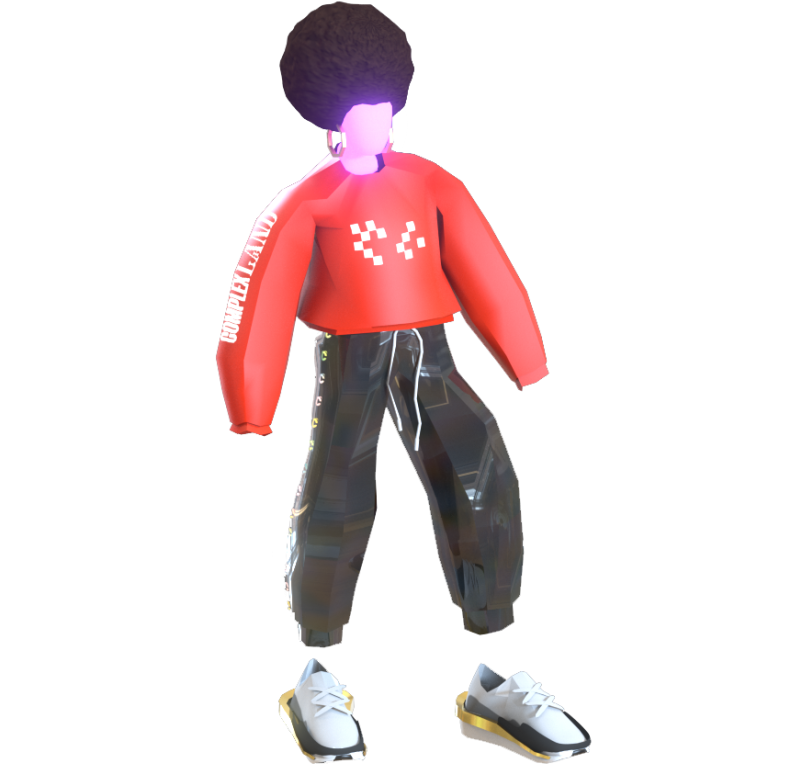
An avatar in ComplexLand
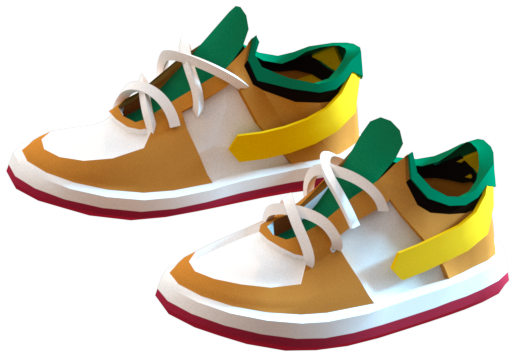
A virtual pair of shoes
Press From the first virtual event in the metaverse in December 2020 came a franchise that the publisher now sees as a permanent addition to its events business. And it’s a potentially lucrative addition at that.
Read on Digiday

Results

  • $700,000+ in sales during the 5 days of ComplexLand 1.0
  • Complexland 2.0’s gamified virtual shopping increased sponsorship revenue by 60%
  • Since ComplexLand’s launch, it’s brought 200+ brands to the annual event
  • 2x FWAs

  • 1x The Drum Experience Awards

Want to talk innovation? Get in touch.

Hey 👋

Please fill out the following quick questions so our team can get in touch with you.

Can’t get enough? Here is some related work for you!

Putting Virtualization in Motion with Motion Capture

Putting Virtualization in Motion with Motion Capture

5 min read
Profile picture for user mediamonks

Written by
Monks

Two images against a lilac background: the left is a visualization of motion produced by a mocap suit in the form of light streaks; the right is a woman wearing a motion capture suit

Over the span of just a couple years, virtualization has transformed the ways we connect and engage with one another. There’s been an explosion of new platforms and user behaviors—as well as a renewed urgency for brands to support them. Operating at the cusp of new opportunities in digital, the Labs.Monks play a crucial role in pushing technology to its outer limits while examining its practical uses for our wider team.

These insights take the form of newsletters, podcasts and reports—the most recent one featuring motion capture and the ways it can plug into a variety of content production workflows. Because of motion capture’s growing influence across digital experience, the Labs.Monks’ research into the technology illustrates how the team plugs into different categories and talent to unlock new innovations.

Motion Capture in the Moment

Digital has gone from the place where you go to buy a concert ticket, to the place where you go for the concert. And as experiences in the metaverse continue to illustrate this concept, there’s a growing need for solutions that close the gap between the physical and virtual worlds—like expressive Vtubers, live events that star virtual characters, purchasable dances and greetings for avatars and more. And what each of these examples have in common is that they are activated by motion capture.

Motion capture technology records the actions of humans to digitally represent live movement. It takes many forms: suits outfitted with several accelerometers (the same tech that tells your phone if or how you’re holding it), camera-based tracking balls or dots on the body, and camera-based tracking powered by artificial intelligence (like a Snapchat filter). With so many ways to record motion in real time, mocap has become more affordable and accessible than ever—and has far-reaching application across building digital content and experiences.

Realizing the different ways that mocap can impact workflows across MediaMonks, the Labs.Monks have experimented with the Xsens MVN Link suit to better understand its accuracy in sensing fine movements. This took shape in a prototype VR experience in which users can play a digital instrument simply by moving their body. Learnings from that experience will help the Labs.Monks assist other teams interested in using mocap.

Monk Thoughts We investigated the mocap pipelines in order to get a solid idea of how it can be applied in a variety of other capabilities, discovering how we can help them get the most out of the technology.
Portrait of Geert Eichhorn

Streamlined Virtual Production

The history of motion capture correlates with the history of film, from rotoscoping footage by hand in traditional animation to an actor’s digital embodiment of Gollum in The Lord of the Rings and more. So it should be no surprise that one of the most obvious uses of mocap is in virtual production, eliminating the need to shoot in front of a green screen within a large studio setting.

“For one of our clients, we are doing a hybrid type of editing that mixes offline capture, VFX and animation,” says Cas de Brouwer, Head of Post Production. “We end up doing a lot of rotoscoping to add in the animation, but with motion capture, we can really benefit.” With tabletop production, for example, motion data captured from a robotic arm-mounted camera can be ported to Adobe After Effects to add in virtual objects and animations that are lined up with the camera’s perspective.

Patrick Staud, Chief Creative Technologist, has already experimented with mocap-enhanced virtual production for automotive clients—for example, using mocap in pre-production to capture actors’ movements and then reflect them on the car’s surface in post. But the technology can have a greater impact within fully virtual environments.

Monk Thoughts In automotive, you have a lot of influencer-style content where you have to touch the product. If done virtually, motion capture lets us interact directly by touching buttons and opening doors.
Patrick Staud headshot

New Efficiencies in Animation

 When it comes to efficiencies that are unlocked by motion capture, animation can benefit substantially. Animation as a capability is often the through line in producing digital experiences that range from original content to immersive metaverse environments. And while manually drawn or rigged animation isn’t going anywhere—the medium thrives on exaggeration and stylization best produced by an artist’s hand, rather than verisimilitude—in some cases, closely mimicking mannerisms is key.

This was true in a virtual performance starring Post Malone that we helped animate to celebrate Pokémon’s 25th anniversary. The singer’s movements were translated into the virtual environment through motion capture. “With live events on hold, this was a great opportunity to use motion capture to create an animated experience to engage our audience,” says Jessica Norton, Executive Producer, Experiential at Media.Monks.

Head of Animation.Monks Thymo van der Vlies notes how representing Post Malone realistically was key, despite his stylized look: “Because he is a celebrity, you want to capture his exact movements—he holds the microphone in a very specific way, for instance,” he says. “Use of motion capture is a huge time saver if we need to capture realistic movement.” 

This same need makes it useful for research and pre-visualization: “For one of our projects, a fun part of the process was that we had animators filming each other falling down to capture what the movements looked like,” says Van der Vlies.

Immersive Live Events Combine Fantasy and Reality

Animation and virtual production come together to create live experiences starring virtual characters who can be interacted with in real time. “We’re creating images in ways that in the past would take months of post-production work—and now they are live,” says Director of Creative Solutions Lewis Smithingham, who recently worked with motion capture to bring an animated character into three dimensions for the first time during a live event. “Audiences have a higher bar for quality than ever before, and these tools allow us to deliver them live.”

In addition to breaking the boundaries between fantasy and reality, motion capture used in a live events setting can also bridge together time and space. Actors can be recorded in separate locations and brought together digitally—a solution to working within ongoing pandemic restrictions as well as talents’ busy schedules. Connectivity like 5G ultra-wideband and multi-access edge computing can reduce onsite processing and latency to ensure both talents can interact with one another—and audiences—in real time no matter the location.

Monk Thoughts If something isn't interactive, it's broken. By creating high quality VFX in-camera, we're able to bring the character to life.
Headshot of Lewis Smithingham

Toward Future Innovation

The uses of motion capture are far-reaching, and the Labs.Monks continue to experiment and find ways for the technology to become integrated within our diverse production workflows. At the same time, the team is keen to forecast future innovations and their practical applications. “Labs has an opportunity to take more risks than other teams,” says Eichhorn. “We’re a little more flexible and have the resources to experiment with things. We can figure out if something is viable without having to invest too many resources.”

Their approach of connecting experimentation with collaboration for category teams—including automotivefashion and sports—has been crucial in keeping our people and our clients on the bleeding edge of technology. As virtualization continues to shape new ways to interact and engage digitally, the Labs.Monks will continue to connect insights and subject matter expertise in the space.

The Labs.Monks share insights on motion capture and ways it can plug into a variety of content production workflows, all the while unlocking new innovations. The Labs.Monks share insights on motion capture and ways it can plug into a variety of content production workflows, all the while unlocking new innovations. content production innovation virtualization

Introducing Scrap the Manual, a Labs.Monks Podcast

Introducing Scrap the Manual, a Labs.Monks Podcast

4 min read
Profile picture for user Angelica Ortiz

Written by
Angelica Ortiz
Creative Technologist

Scrap the Manual podcast logo

Technology is an exciting field, but it has its challenges too. For the everyday marketer, creator, or developer, it can often be confusing or tough to keep up with—not to mention filled with buzzwords aplenty that leave people wondering, “So, what now?” That’s why Rushali Paratey and I decided to launch Scrap the Manual: a podcast where we prompt “aha” moments through discussions of technology, creativity, experimentation (and sometimes a dash of affable confusion) to explore how each comes together to address business and cultural challenges.

Rushali and I are both Creative Technologists on the Labs.Monks team, which gives us the opportunity to explore and play with some of the latest digital innovations. A lot of our work is focused on not just exploring emerging technology’s potential, but also making it more accessible and understandable for audiences at all skill levels. As much as we are developers, we’re creatives and creators, too. Because of that, our podcast aims to “scrap the manual” by challenging pre-existing notions of what creativity and technology looks like and can be. You can listen to our first two episodes here.

Since we want to scrap the manual in all senses of the term, our goal is to keep  things informal and fun, because we already have enough seriousness in our lives considering the past two years have taken the world on a ride. Scrap the Manual is the podcast you listen to when you’re up for learning something new but also want some levity in your day. We’ll still be asking the tough questions—no doubt—but we’ll make sure that it’s still easy to listen to and feels like you’re right there in the room with us.

And with that, let me introduce our first two episodes with you to give you a taste of what’s to come—maybe with a dash of FOMO to encourage you to give them a listen. 

Diving Head-First into Industry Challenges

Our first episode follows our “Challenge the Hosts” format, where Rushali and I call on our customized randomizer, a tool that pairs an industry with a challenge, live. Once we have an industry and challenge, we brainstorm solutions on the fly about what we could do to improve it. No pre-scripted material for this one; it’s a 100% off-the-cuff discussion. If you’ve ever wanted to be a fly on the wall observing an R&D team in the heart of a brainstorm, this is the closest you’ll get besides working with us.

During this episode, the randomizer landed on a combo that couldn’t be more relevant as we tackle yet another stage of lockdowns worldwide: COVID-19 (challenge) and art (industry). In this discussion, we explore how the pandemic influenced art throughout the last couple of years, and how it will move forward, too. This was the perfect opportunity for us both to align our shared passion for creativity and technology as the world of fine arts—including museums, art galleries and experiential activations—quickly pivoted and adapted to emerging technology that until now has been waiting for its moment. From exploring NFTs to some of our favorite hybrid installations throughout the past year, we cover a lot of ground in our first episode.

Monk Thoughts The ecosystems that we were living within were not working for us. The way that things are right now, we have to re-evaluate our way of life and art comes right in the middle of the questioning, the rethinking and prospect of redesigning new solutions and perspectives.
Rushali Paratey headshot

Giving an Inside Look into the Lab

Our second episode takes a different approach, expanding on our recent Labs Report about the metaverse. As we roll out new reports, expect more episodes that dive deeper into some of the concepts explored within. The idea isn’t to repeat ourselves; these episodes instead serve as a companion to the reports by digging in a little deeper.

For the metaverse report, Rushali and I open up on the process (and some comical missteps) in creating a prototype in Roblox that demonstrates the metaverse concept of interoperability. To illustrate what the metaverse could look like if embedded into our daily lives, we built a series of spaces: an admin area to manage one’s personal details and assets; a social environment where you can engage with others or see what they’re up to; and a shopping world where you can try on and buy both physical and virtual goods.

Since we as a team always want to push technology to its limits, we always run into surprising challenges during our prototyping process. Episode two gives listeners an inside look into some of the quirks of the Roblox platform as well as its developer culture—and because Roblox is viewed as a pioneer in the metaverse landscape, our process may give you some insight into what to consider when building your own metaverse experiences.

So, where did we run into some trouble? It turns out we got trolled by young developers more than once… but you’ll have to listen to the episode to find out how. (On that note, you’ll also hear about Rushali’s deep-seated fear of teens—sorry Gen Z, we still love you).

What’s Next?

That’s all for now, but you can look forward to more episodes every other month. In addition to the two formats already mentioned, look forward to our third format: “How do we do this?” where our audience (that means you!) submits ideas to Rushali and I and we put our brains together to figure out how we can make it real. If you already have an idea in mind that you’re just aching to make possible, feel free to email us.

Rushali and I had a lot of fun sitting down to talk about all things creative tech, and we’re just getting started. Remember: this is a podcast for anyone interested in tech—whether you’re a passionate tech evangelist, a creative looking to learn more, or someone who simply wants a behind-the-scenes look into what the Labs.Monks are doing and thinking about. I hope you enjoy our first couple episodes and let us know what you think. Stay tuned for more!

Scrap the Manual, a new podcast hosted by Angelica Ortiz and Rushali Paratey from the Labs.Monks, offers an offbeat and unfiltered look inside the world of emerging tech. A podcast from the Labs.Monks where “aha” moments are prompted through discussions of technology, creativity, and experimentation to explore how each addresses business and cultural challenges. technology innovation emerging technology emerging trends innovation trends podcast

The Top 5 Social Media Trends in December 2021

The Top 5 Social Media Trends in December 2021

2 min read
Profile picture for user mediamonks

Written by
Monks

social innovation lab logo

In order to create inspiring social media campaigns and brilliant customer experiences, you have to move at the speed of digital. Social media marketing is constantly evolving, and our Social.Monks team is here to help you stay on top of the latest innovations. Each month, we’ll break down the latest trends in social media and wrap them up into our top five trends to watch.

This month we look at how social commerce is playing a role in the holiday shopping season, the influence of TikTok on social app development, and more. Find a quick look—and a link to the insights in full—below.

Brands canceling social media as a statement 

While it seems like everyone is on social media these days, some brands are intentionally absent. We take a look at the decision of Lush to deactivate its social media profiles as a statement on mental health. 

Baby Boomers and Gen X as the newest generation of social users 

The hottest audience on social media might not be who you think it is—Baby Boomers and Gen X. COVID-19 has accelerated digital adoption within both generations, presenting new branding opportunities for marketers in 2022. 

Holiday live-streaming and changing social commerce landscape 

This holiday season, many marketers are looking to shorten the path to purchase. Social commerce and live-streaming opportunities present new purchase opportunities across social platforms. 

The influence of TikTok on social media app development

TikTok has taken the social world by storm and other platforms have taken notice. The latest updates across Pinterest, Instagram, and YouTube look to take a page out of TikTok’s short video playbook.

Increasing interactivity on Instagram with ‘Add Yours’ 

This month Instagram launched the ‘Add Yours’ sticker aimed at increasing interactivity between users. We look at how this new feature has been received. 

Looking for more social media insights? Tune into our weekly Social Innovation Lab podcast to hear from the brightest minds in social and learn how to create winning social media campaigns. Find the latest episodes here.

Social media marketing is constantly evolving, and our Social.Monks team is here to help you stay on top of the latest innovations. Social media marketing is constantly evolving, and our Social.Monks team is here to help you stay on top of the latest innovations. social media marketing innovation digital marketing trends social shopping trends

Unlock Innovation with Gender-Informed Design

Unlock Innovation with Gender-Informed Design

4 min read
Profile picture for user Gauri Kaushik

Written by
Gauri Kaushik
Creative Strategy Intern

Unlock Innovation with Gender-Informed Design

Who defines what’s innovative? Design processes have historically been blinded by biases of gender, ability, ethnicity, and so on—but these biases have an undeniable and sweeping impact in holding innovation and technological progress back.

Today women drive 70-80% of all consumer purchasing decisions, yet 90% of all products and services are designed by men, for men. For instance, the vast majority of medical research is based on studies of men and car crash dummies are largely designed based on the male anatomy. This systematically builds a world that ignores half the population and impacts critical aspects of everyday life for our people.

This gender bias holds true not just in designing for innovation, but also in the stories we tell about innovation, where women as well as a diverse array of identities have been underrepresented or entirely kept out. Rushali Paratey, a Creative Technologist at MediaMonks, puts it succinctly: “The perspective and experiences of all kinds of people is crucial to innovation and design as they reflect the totality of the human experience.”

Embracing Diversity in Storytelling

We believe in narrowing and closing these gaps in gender and diversity—we are not only putting women in positions to impact and drive effective innovation in our industry; we’ve also worked to build inclusivity beyond the standard roster to tip the scales when it comes to how women are represented in the narratives we propagate about innovation. If you want to see this in action, just look at this year’s Super Bowl. Among more than 60 commercials, we showed up with one of only three female-directed spots. It’s a staggering (but not surprising) ratio—and is emblematic of the need for more women’s voices.

Monk Thoughts The perspective and experiences of all kinds of people is crucial to innovation and design as they reflect the totality of the human experience.

Realizing this, Beryl Chung, a Creative Director based in Amsterdam, drives WoMMen in Tech, a platform that publishes a publicly accessible video and podcast series to make the expertise, drivers and ambitions of women in the predominantly male digital media industry more visible and available to all. And as Beryl exemplifies with this initiative, there’s an incredible amount of conversations necessary at all levels in our industry, and the world in general, about the incredible amounts of intersectionalities that exist

Designing for Everyone

Both history and the present abound with examples of products and services designed with a biased lens that are poorly suited for diverse audiences. While no one today thinks twice about the need for accessibility options in physical public spaces, accessibility is more often than not an afterthought in digital—despite growing laws and regulations in digital accessibility. Yet without including diverse voices in the design process, it’s easy to delay much-needed innovation and problem-solving. 

It starts with systematically understanding, considering and applying forethought. As Anna Herr, a Creative Tech intern at MediaMonks, says, “It’s about getting women into tech in the first place. From a young age, women are looked down upon or are discouraged from exploring tech-related fields. We need to give girls access to tech-related courses, unbiased support and visible female role models for a career in tech.”

When we create ways to personalize communication and to connect with audiences that are more diverse and inclusive, we enable a larger part of the population to share their voices, transforming the experience for everyone—especially in industries that are plagued with biases. Nora Henriksson, Managing Director of MediaMonks Stockholm, applies this mindset when bridging the gap between modern marketing and sports—including projects focused on growing women’s sports.

“This is an area where there’s so much untapped potential, but it’s also about building a better foundation for young girls to continue playing when they become teenagers, for them to be able to dream about being professional athletes,” she says. “By communicating around women’s sports in an interesting way in digital channels, the community can also break free from being measured only by broadcast numbers and stadium visitors. There are new ways to connect with the fans and by that create growth. Sports has so many interesting stories and it ought to be an inclusive experience.”

Diversity is a key component to the work we do. And it starts with creating teams with different perspectives capable of reaching diverse audiences. Meike Overdijk, who recently joined us as a Creative Tech intern, reiterates the importance of diverse teams as “having the ability to perform better because the number of different backgrounds (and therefore opinions) bring more diverse solutions and promote critical thinking. I think that making sure a team has diverse members should be the standard since this leads to better results in the end.”

To support this, it is vital to establish leadership that nurtures a culture of diverse viewpoints—and ensures team members feel comfortable and supported in sharing those perspectives with their peers and colleagues. A formal initiative we kicked off this month is our Women in Leadership program, offering mentorship opportunities to both established and up-and-coming women leaders across S4. 

We steadfastly believe that diversity is one of the keys to unlocking innovation and that better-informed and less-biased innovation and storytelling doesn’t need reinventing the wheel. Writing these intersectionalities back into the process of designing and innovating for the world, and the stories we tell about innovation shifts the ground we stand on as a new way emerges.

True innovation and design relies on diverse and inclusive teams. Unlock Innovation with Gender-Informed Design Who defines what’s innovative—and who are they designing for?
DEI diversity inclusive design inclusive marketing innovation

Why We Gave a Machine a Human Disease

Why We Gave a Machine a Human Disease

5 min read
Profile picture for user Labs.Monks

Written by
Labs.Monks

Why We Gave a Machine a Human Disease

“Innovation begins with strong creative ideas, then supporting those ideas with a careful balance between tech and craft,” says Geert Eichhorn, Innovation Director at MediaMonks. Having a great creative idea is one thing—and essential for differentiating oneself—but supporting it with the best possible execution is another matter.

However you choose to engage with consumers on an emotional or empathetic level, executing that narrative requires every aspect of the project to serve the story as best as possible. “It takes someone that can marry these three in service of telling the best story and that is an inherently creative process,” says Eichhorn.

Many brands like to leverage cutting-edge technology to make a splash while making a point. But when the technology fails to adequately support the idea, they end up missing the mark. MediaMonks Creative Technologist Samuel Snider-Held has discussed in the past how brands have used flashy, experimental interfaces like AR and VR to these ends, only to fail in the process.

But when provided with a task that might seem impossible, like translating the inherently intangible struggles of another’s disease into symbolic objects that give those experiences shape and weight, we knew we’d have to do something that’s never been done before: affect a machine with a human disease. Through a process that mixes innovative fabrication with fine art, a unique 3D printing approach wasn’t the star here; instead, we sought to highlight real-life stories through objects that couldn’t have existed through any other means.

Affecting the Machine

Made in collaboration between MediaMonks and Charité – Universitätsmedizin Berlin, one of the largest university hospitals in Europe, Printed by Parkinson’s is a unique art project that aims to raise awareness of Parkinson’s disease as well as funds to research a cure. It includes a series of six objects constructed by a machine affected by the disease.

You might wonder how that’s possible. After recording kinetic and neurological data from real-life patients living with the disease through EEG systems and accelerometers, we used it to influence the movement of a 3D printer as it constructed an object that for each patient had become unusable, demonstrating how the disease has impacted their everyday lives. One patient named Heinz enjoyed crafting handmade goods before acquiring the disease, for example. For him, the printer constructed a nutcracker—based on the ones Heinz used to make—whose distorted shape, informed by Heinz’s movement data, symbolizes its lack of usability.

Through documenting the stories behind the objects—and the lives of those who used them—the campaign seeks to dispel stereotypes about the disease. “Parkinson’s doesn’t manifest with only a tremor,” says Eichhorn. “There’s a lot of different ways it can affect someone, like muscle stiffness.” Eichhorn noted how the patients depicted in the campaign presently aren’t afflicted with the well-known tremor thanks to a treatment called deep brain stimulation.

190722_PARKINSON_SYNC.00_01_31_10.Still004

Each patient featured in the project chose an everyday object that symbolizes how Parkinson's disease has affected them.

In this respect, the stories behind each object provides an opportunity for patients to explain symptoms and experiences that aren’t always visible—but executed in a way that viewers can’t turn away from. The objects themselves are arresting in their erratic, distorted shapes, beautifully rendering each subject’s story in a tangible way. “For some, these objects were a diary, or a means of having a legacy—a physical thing that tells your story and is documented for future generations,” said Eichhorn.

Roan Laenen, a Jr. Creative at MediaMonks who worked intimately on the project, echoes the sentiment: “The patients could share their own personal stories, which meant a lot to them and their families,” he said. The two noted how one patient’s grandchildren were present at the gallery opening where the objects were displayed. Perhaps too young to understand Parkinson’s disease when explained through words alone, they could clearly understand the message conveyed by each sculpture. “They tell such a powerful story,” says Eichhorn. “You don’t have to explain anything—you see immediately that something is off. In just a glance, it all clicks.”

Celebrating Imperfection without Sacrificing Quality

Finding the best technique to print the objects was no simple matter; there’s many techniques for 3D printing, not just one. Finding the right technique to construct each artwork was essential for doing the patients’ stories justice. “Our goal was to really justify how good the idea was—to print them in a way where it feels like an art-object,” says Eichhorn. “It needed to feel like a premium item, whereas standard 3D printing often looks and feels cheap.”

Experience the unique collection of objects and stories yourself.

The team collaborated with 3D printing artist Joris van Tubergen, also known as RooieJoris, whose techniques in 3D printing are used in several international galleries and museums. In their experimentations with different printing methods, the team settled on one called fuse deposition modeling, one of the most common 3D printing techniques, in which the printer builds an object layer by layer.

While other techniques—like extracting the object from a liquid—could heighten visual or textural quality, using them would weaken the narrative potential of each object. “It was still important that we have those print lines, since that’s part of the story,” said Eichhorn, explaining how powerful it is to see how the Parkinson’s-affected printing arm built each object layer by layer. In this case, the imperfections inherent in the technique—a rougher and more jagged surface—helped to bring the story above each sculpture’s surface. “The lines of the object and the data used to build it shine through in a nice way, contained in a premium object,” says Eichhorn.

Monk Thoughts Our goal was to really justify how good the idea was.
Portrait of Geert Eichhorn

In addition to printing technique, proper choice in material was essential to the quality. Originally, the team considered replicating each object so its 3D-printed version would have the same material as the original that inspired it. Thinking that it would be better to keep the series uniform, the team settled on bronze filament—a material that isn’t just good to look at, but nice to hold. “It presented a nice effect in that it looks and feels a bit old, tying it a bit to more historic sculptural pieces,” says Laenen. “Yet it’s made with a very modern technology and innovative technique.”

Telling the Story Creatively with Data

Translating patients’ neurological data into a machine-led printing technique isn’t a cut-and-dry task, despite its technical nature. “There’s a creative process there, too,” says Eichhorn. The patients’ movement data came in the form of line graphs, whose mountains and valleys determined whether the printing arm would be offset in one direction to another. This technique enabled each object’s distinct wavy shape. “We had to consider things like: how does this data look? What does it do to the object? How printable is it?” says Eichhorn.

190722_PARKINSON_SYNC.00_02_01_06.Still008

Laenen experimented with devising how to best apply the data graphs for each sculpture. A long, slender kayak paddle, for example, has a subtler distortion that compliments its shape well. The boxy chainsaw, meanwhile, takes a much more jagged look to make its distortion immediately clear to viewers. “Based on the principles of printability, and how the data impacts the object’s construction, we chose what we thought told the story in the strongest, most visually clear way,” says Laenen.

The strength of the project lies in how different elements and people came together to tell an emotionally resonant story that clearly conveys patients’ everyday lived experiences. This included not only the fabrication of the artworks on display, but also supporting elements like video, photography, animation and even the website’s typeface.

“It was interesting to see how many people were involved in this process,” says Laenen. “I think with something like this, in which you instantly understand and feel passionate about it, you see the power of a strong, emotional idea executed to perfection.” Technology best serves these ideas when it becomes unobtrusive, if not unnoticeable. Eichhorn says only half-jokingly: “It should win the Oscar for best supporting role, not starring, so to speak.”

A strong creative idea is powerful—if executed well. One aspect of this is pinpointing the best technology to serve your story. Why We Gave a Machine a Human Disease We brought together innovation and artistry to help patients share their stories.
3D printing health awareness campaign awareness marketing mediamonks innovation parkinson’s disease printed by parkinson’s creative execution creative idea

When Speed is Key, MediaMonks Labs Enables Swift, Proactive AI Prototyping

When Speed is Key, MediaMonks Labs Enables Swift, Proactive AI Prototyping

4 min read
Profile picture for user Labs.Monks

Written by
Labs.Monks

When Speed is Key, MediaMonks Labs Enables Swift, Proactive AI Prototyping

As the COVID-19 pandemic spreads throughout the world and people retreat into their homes to practice social distancing, ingenuity and the need to digitally transform have become more apparent now than ever. Always looking for ways to jump-start innovation, the MediaMonks Labs team has experimented with ways to speed up the development of machine learning-based solutions from prototype to end product, cutting out unnecessary hours of coding to iterate at speed.

“Mental fortitude and being used to curveballs are skills and ways of working that come to the foreground now,” says Geert Eichhorn, Innovation Director at MediaMonks. “We see those eager to adapt come out on top.” Proactively aiming to solve the challenges faced by brands and their everyday audiences, the team recently experimented with a faster way to build and iterate artificial intelligence-driven products and services.

Fun Experiments Can Lead to Proactive Value

The idea behind one such experiment, the Canteen Counter, may seem silly on the surface: determine when the office canteen is less busy, helping the team find the optimal time to go and grab a seat. But the technology behind it provides some learnings for those who aim to solve challenges quickly with off-the-shelf tools.

Here’s how it works. The Canteen Counter’s camera was pointed at the salad bar, capturing the walkway from the entrance to the dishwashers—the most crowded spot in the canteen. The machine learning model detects people in the frame and keeps a count of how many are there to determine when it’s busy and when it isn’t—much like how business listings on Google Maps predict peak versus off-peak hours.

CC Screen2

Of course, now that the team is working from home, there’s little need to keep an eye on the canteen. But one could imagine a similar tool to determine in real time which spaces are safe for social distancing, measured from afar. Is the local park empty enough for some fresh air and exercise? Is the grocery store packed? Ask the AI before you leave!

“I would like to make something that is helpful to people being affected by COVID-19 next,” says Luis Guajardo, Creative Technologist at MediaMonks. “I think that would be an interesting spinoff of this project.” The sentiment shows how such experiments, when executed at speed, can provide necessary solutions to new problems soon after they arise.

Off-the-Shelf Tools Help Teams Plug In, Play and Apply New Learnings

Our Canteen Counter is powered by Google’s Coral, a board that runs optimized TensorFlow models using an Edge TPU chip. To get the jargon out of the way, it essentially lets you employ machine learning offline—a process that typically connects to a cloud, which is why you need a data connection to interact with most digital assistants. The TPU chip (which stands for tensor processing unit) is built to handle the neural network-trained machine learning directly on the hardware.

This not only allows for faster processing, but also increased privacy because data isn’t shared with anyone. Developers may simply take an existing, off-the-shelf machine learning model to quickly optimize to the hardware and the goals of a project. While the steps behind this process are simpler than training a model of your own, there’s still some expertise required in discovering which model best suits your needs—a point made clear with another tool built by Labs that compares computer vision models and the differences between them.

Monk Thoughts What is a canteen counter today could become a camera that tells you something about your posture tomorrow. Anything goes, and it changes by the day.
Portrait of Geert Eichhorn

What the team really likes about Coral is how flexible it is thanks to the TPU chip, which comes in several different boards and modules to easily plug and play. “That means you could use the Coral Board to build initial product prototypes, test models and peripherals, then move into production using only the TPU modules based on your own product specs and electronics and create a robust hardware AI solution,” says Guajardo.

Quicken the Pace of Development to Stay Ahead of Challenges

For the Labs team, tools like Coral have quickened the pace of experimentation and developing new solutions. “The off-the-shelf ML models combined with the Coral board and some creativity can let you build practical solutions in a matter of days,” says Eichhorn. “If it’s not a viable solution you’ll find out as soon as possible, which prevents you from wasting any valuable time and resources.” Eichhorn compares this process to X (formerly Google X), where ideas are broken down as fast as possible to stress test viability.

“At Labs, we jump on new technologies and apply them in new creative ways to solve problems we didn’t know we had, so any project or platform that has as much flexibility as the Canteen Counter is very much up Labs’ alley,” says Eichhorn. “What is a canteen counter today could become a camera that tells you something about your posture tomorrow. Anything goes, and it changes by the day.” He notes that more is being worked on behind the scenes as the team ponders the trend toward livestreaming, the need for showing solidarity, play and interaction while working from home.

It’s worth reflecting on how dramatically the world has changed since we settled on the idea to keep an eye on our workplace canteen through a fun, machine learning experiment. But Eichhorn cautions that in a rush for much-needed solutions, “innovation” can often begin to feel like a buzzword. “What we do differently is that we can actually build, be practical, execute, and make it work.”

Extraordinary times call for extraordinary solutions.

Focused on solutions that are both useful and practical, the MediaMonks Labs team shares its approach to rapidly prototyping machine learning-based solutions. When Speed is Key, MediaMonks Labs Enables Swift, Proactive AI Prototyping By cutting out unnecessary coding hours, MediaMonks Labs builds solutions at speed.
Machine learning artificial intelligence mediamonks labs prototyping innovation google coral coral board

Choose your language

Choose your language

The website has been translated to English with the help of Humans and AI

Dismiss