Choose your language

Choose your language

The website has been translated to English with the help of Humans and AI

Dismiss

A light trail of different pinks, oranges, and light yellow shows something is speeding past a sign outside
`

January 5-8 🗓️

Monks at CES 2026: Transforming the Economics of Advertising with AI

See how our united Marketing and Technology services help CMOs, CIOs and CTOs build a future-ready foundation for growth, live at CES.

At CES 2026, we’re revealing how to integrate Monks.Flow, our agentic AI ecosystem for marketing orchestration, to deliver measurable gains today while building the foundation to transform your organization into a high-speed, high-performance creative enterprise. Learn more about what we’ll be up to across the floor and on stage:

Sessions & Demos

Connect with Monks across these events

  • AI Now Sessions

    In this 30-minute session, followed by a live Q&A, we’ll showcase AI workflows powered by Monks.Flow that drive growth today while laying the foundation for a marketing organization that’s efficient, scalable and ready for what’s next. Reserve your spot.

  • 25 Minutes of AI

    We’re taking our monthly innovation briefing from the screen to the stage! As part of the CES Foundry masterclass sessions, our experts will update you on the latest AI news and share practical ideas you can use today. Join us on Wednesday, January 7 at 3pm in the Fontainebleau, Level 4 Capri room 2! Learn more.

  • C Space Fireside Chat and Happy Hour

    Join us on Monday, January 5, from 4:00-6:00 PM, at the Aria as Sir Martin Sorrell explores AI's role in advancing creativity and crafting fundamentally human experiences. Moving beyond cost, the focus is on strategic insight and true transformation. Learn more.

  • C Space: Creativity in State of Flow

    Join us on Wednesday, January 7, from 9-9:25 AM, at the Aria, Joshua 8 meeting room as The Drum's Diane Young, Adobe’s Hannah Elsakr, and Monks’ Wesley ter Haar explore liquid content: AI-powered stories and brand worlds that evolve in real time via audience interaction. Learn more.

  • C Space: The Modern Marketer’s Mandate: Agility, Transparency, & AI-Powered Growth

    Join us on Wednesday, January 7, from 9:30-9:55 AM, at the Aria, Joshua 8 meeting room as brand leaders share the playbook for unlocking agility, transparency and AI growth. Learn more.

  • C Space: The Future of Fan Engagement: Role of AI in Sports and Media

    Join us on Wednesday, January 7, from 10-10:25 AM, at the Aria, Joshua 8 meeting room to explore how AI is redefining fan engagement, transforming sports and media experiences with personalized content, immersive interactions, and smarter storytelling. Learn more.

  • C Space: AI-driven Upside: Creative Effectiveness in Media

    Join us on Wednesday, January 7, from 10:30-10:55 AM, at the Aria, Joshua 8 meeting room as this session maps practical steps for brands to take now to capture AI-driven upside without needlessly constraining media buys. Learn more.

  • C Space: Architecting the New Media Stack for Commerce and Consumer Engagement

    Join us on Wednesday, January 7, from 11-11:40 AM, at the Aria, Joshua 8 meeting room to learn what happens when retail data meets CTV as industry visionaries reveal how agentic AI is building the next era of connected commerce. Learn more.

  • Inside the AI-Native Enterprise

    Join us on Wednesday, January 7, from 1:00-1:30 PM, as Monks' Wesley ter Haar, Leonardo.AI's Dwayne Koh, NVIDIA's Jamie Allan, and AWS' Chris Ziemer reveal the architectural vision for the AI-native enterprise. Get the roadmap to move beyond pilot mode and unlock unprecedented efficiency. Learn more.

  • Digital Hollywood

    Jordan Cuddy returns to Digital Hollywood for a third year to discuss conversational AI and virtual engagement. Join her on Monday, January 5, at 2:00 PM. The session will take place in Aria – Joshua 8. Learn more.

  • THE SHIFT Summit

    Wesley ter Haar will take the stage at THE SHIFT Summit to discuss the definitive proof point on running agentic workflows that hold up under enterprise rigor. Join him on Wednesday, January 7, at 10:40 PM. The session will take place in Aria – Joshua 3. Learn more.

  • Monks’ CES Foundry Booth

    Join us January 7-8 within the Fountainbleau as we showcase interactive demos on Monks.Flow and LiveVision™. Attendees can explore tangible examples of our work and engage with key partners through live demonstrations.

  • Reclaiming Brand Craft in the Era of Intelligence

    Join us on Tuesday, January 6, from 4:10-4:25 PM, as Monks’ Donna Smith and Leonardo.Ai’s Dwayne Koh explore how to use AI as a springboard for unique brand experience. Attendees will learn how to build workflows that empower creative teams, navigate the ethics of authenticity and leverage machine intelligence. Learn more.

Throughout our programming, we’ll offer a proven, scalable architecture for CMOs and CTOs to move past experimental AI and achieve:

  • Unprecedented efficiency: Replace layers of process with intelligent agents that brief, create and optimize in seconds, not weeks.
  • Cultural intelligence: Anticipate cultural shifts and audience sentiment, identify business-relevant moments, and plan investments accordingly—all before competitors even notice.
  • Sovereignty and scale: Get creative control and complete ownership. You own your creative assets, built to your brand standards, on your own platforms.
  • Subscription to innovation: Monks.Flow keeps you ahead by evolving continuously - integrating the latest advances into your marketing operations so your teams keep getting smarter, faster and more effective.
Monks.Flow logo in black with a flowing circle evolving in colors

Transform Marketing into a Growth Engine With Monks.Flow

Monks.Flow, our AI ecosystem for marketing orchestration, turns marketing into a source of margin and momentum, making your organization faster, smarter and more effective than your competitors.

Learn about Monks.Flow
LiveVision logo

Eliminate Creative Guesswork and Guarantee an ROI with LiveVision™

Move from legacy control rooms to scalable, intelligent production. LiveVision™ leverages AI to automate complex video workflows, from smart footage tagging to managing wireless resources, allowing you to deploy high-performance broadcast pipelines wherever they are needed.

Learn about LiveVision™

Client Stories

`

January 6-9

Join Monks at CES 2025. Let’s shape the future of innovation together.

This year, we'll explore how cutting-edge technology, innovation and creativity intersect to fuel brand growth.

A blurred face turning quickly with a headline on the left of the image

Event Details

Here's what you can expect this year from Monks.

    • C Space Conference Track

      AI Now: Marketing's Journey from Hype to How

      Join us as we partner with Adobe and other leaders to discuss trends shaping entertainment, media, and brand marketing.

      • When: Wednesday, January 8th 
      • Time: 10 - 11:40 AM
      • Where: ARIA, Level 1, Joshua 8
    • Empowering Creativity in the Enterprise with NextGen Tech

      Join us for an engaging fireside chat including insights on the state of creativity in the enterprise. Explore how generative AI is revolutionizing creative processes and driving innovation in customer experiences across various sectors. Discover how the fusion of AI-driven personalization and creativity, rooted in inspiring brand themes, captivates the imagination of Gen Z and beyond.

      • With: Denise Colella, VP, Head of Digital Strategy Group, Adobe
      • When: Wednesday, January 8th  
      • Time: 10 - 10:20 AM 
      • Where: ARIA, East Level 1, Joshua 8
    • GenAI Personalization: Advancing the Promise of Digital

      Generative AI is enabling brands like Delta Air Lines and Paramount+ and Adobe to advance digital marketing’s promise of getting “the right message to the right user at the right time.” In this panel, we'll explore how brands are using AI to create a cohesive and relevant user experience for consumers—that effectively generates revenue. Learn strategies to scale ad creative, ramp up testing, and personalize messaging, while also improving performance outcomes and ROI. Gain practical insights to elevate your digital advertising efforts through generative AI.

      • With: (Moderator) Linda Cronin, EVP Media, Monks; Sam Garfield, Head of Digital Strategy, Communications, Media and Travel, Adobe; Jake Abel, Head of Marketing Strategy, Operations, & Planning, Delta; Michelle Garcia, SVP Marketing, Paramount+
      • When: Wednesday, January 8th  
      • Time: 10:20 - 10:40 AM 
      • Where: ARIA, East Level 1, Joshua 8
    • AI-Powered Transformation: Reimagine the Creative Enterprise

      Join industry leaders from Adobe, AWS, Meta, Monks and NVIDIA as they explore AI-driven creative enterprise transformation. Explore practical strategies for integrating advanced technologies to enhance efficiency, foster innovation, and enable seamless collaboration. Discover how strategic partnerships between CIOs and CMOs can facilitate these transformations, and gain insight into leveraging data capabilities for real-time personalization and elevating your brand's creative processes.

      • With: (Moderator) Henry Cowling, Chief Innovation Officer, Monks; Varun Parmar, VP & GM, Adobe; Chris Blandy, Global Leader, Strategy & Business Development for Media & Entertainment, AWS; Bianca Pryor, Director of Data Science for Media & Entertainment at NVIDIA; Jimmie Stone, VP, Global Head of Creative Shop, Meta
      • When: Wednesday, January 8th  
      • Time: 10:40 - 11:10 AM 
      • Where: ARIA, East Level 1, Joshua 8
    • Fireside Chat – AI and the Future of Marketing

      Join Sir Martin Sorrell and MMA Global CMO Greg Stuart for a fireside chat on the industry opportunity to revolutionize brand creativity through AI. In this discussion, Sir Martin Sorrell and Greg Stuart will explore how generative AI is reshaping content creation, enabling personalized consumer touchpoints, and driving measurable marketing outcomes. As the marketing landscape rapidly evolves, learn how Monks is empowering brands to harness AI's potential for enhanced creativity, reduced costs, and streamlined collaboration—all while keeping relevance at the forefront. Join us in navigating these practical applications of AI that are setting the standard in modern marketing.

      • With: Sir Martin Sorrell, Founder & Executive Chairman, S4 Capital; Greg Stuart, CMO, MMA Global
      • When: Wednesday, January 8th  
      • Time: 11:10 - 11:40 AM 
      • Where: ARIA, East Level 1, Joshua 8
    • AI Now Sessions

      A person standing over mountains and cities

      Schedule an AI Now session led by an executive from our Innovation team to learn how to validate and scale your AI investments. Email ces@monks.com to book your 45 minute slot.

    • Unified AI workflows are key to achieving today's marketing goals.

      The scaled integration of teams, capabilities and technology is instrumental in meeting the most vital needs of the CMO's agenda. Successful workflows unlock a cascade of growth, savings, efficiency and effectiveness.

    • Failure to implement AI workflows leaves value on the table.

      Extract new value from prior investments. Latent insights lie beneath the surface of your existing data, waiting to be found in service of profitable growth; don't leave them behind.

    • Realizing AI's promise relies on paying gains forward.

      Agencies dangle productivity gains before their clients while holding cost savings close to their chests. We're building the model that offers both to our clients, underpinned by service-level agreements and ongoing advisory.

    • Live Demos

      Join us in our C Space Hospitality Sky Suite at the ARIA for hands-on demos of both Sir Martian and our proprietary AI-driven tool Monks.Flow.

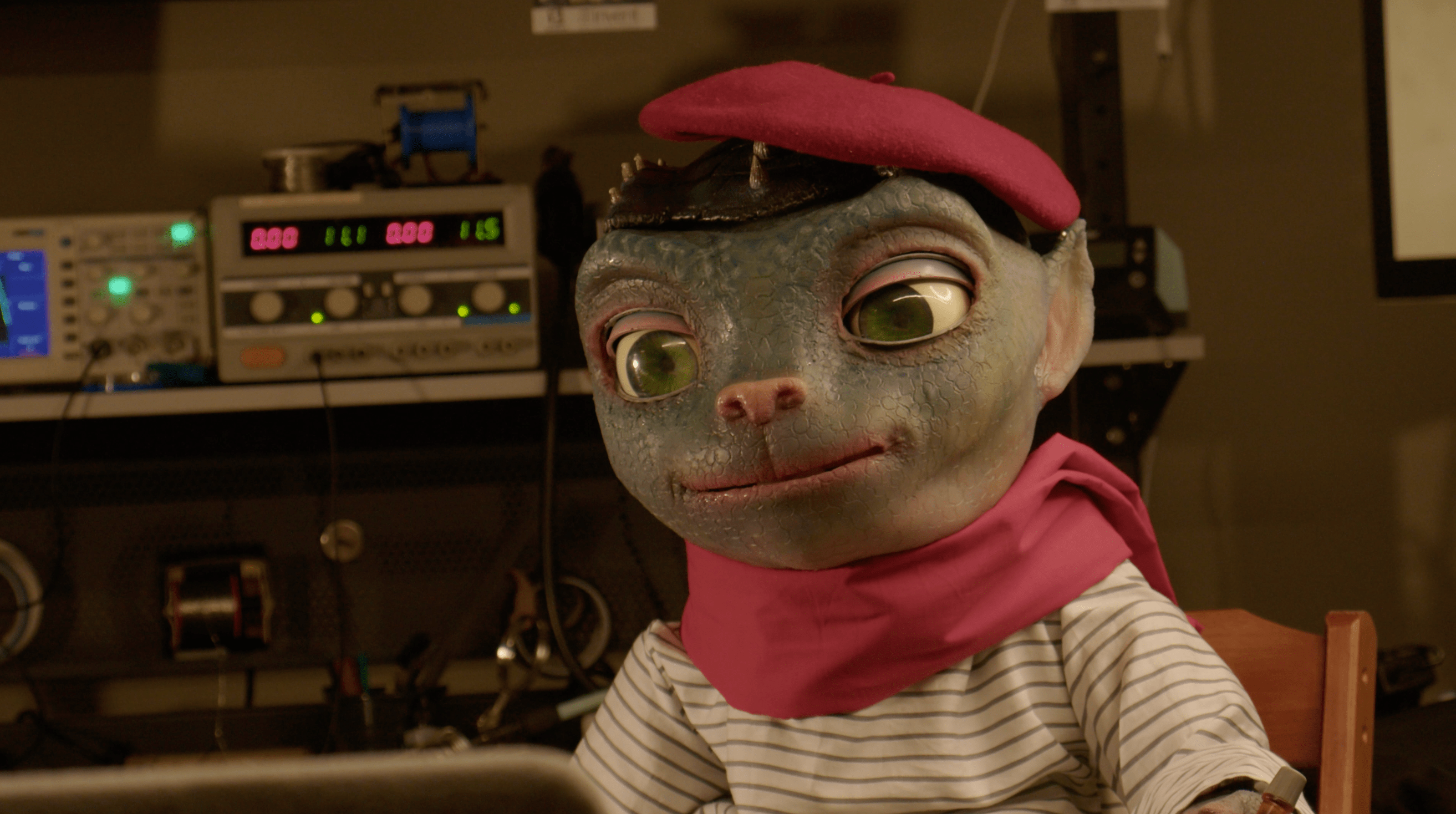
    • Meet Sir Martian, our AI-powered robot with lots of personality!

      Image of Sir Martian, an animatronic in the form of an alien with large eyes and a cat-like nose. He wears an outfit befitting a Parisian street portrait artist.

      Sir Martian is a groundbreaking fusion of AI innovation and artistic expression, transforming the traditional experience of street portraiture into an interactive, otherworldly encounter. This humanoid alien robot, affectionately named after S4 Capital Executive Chairman Sir Martin Sorrell, invites visitors to engage in a dynamic conversation while it creates a personalized line art portrait. This experience is not just about capturing a likeness but also the essence of the individual, informed by the dialogue shared.

      Learn More
    • Monks.Flow–An end-to-end AI professionally managed service.

      Monks.Flow branding with colorful waves

      Monks.Flow is an AI-centric professional managed service for marketers. It streamlines how people and AI work together. It offers solutions for major marketing activities by connecting AI, Enterprise Software, and microservices into efficient, automated workflows.

      Learn More
    • STEMinists: Architecting Tomorrow's Digital Landscape

      In our hyper-connected world, STEM careers are the cornerstone of an equitable and innovative technological future. Yet, the gender disparity persists, with women occupying only 35% of STEM positions in the U.S.—a gap that widens on the global stage. This conversation brings together STEM leaders to band together in our desire to increase women’s representation in the field. Together we’ll talk about the importance of recruitment, methods for fostering career advancement, and work to chart a course for a more diverse and inclusive tech ecosystem.

      • With: Jordan Cuddy, EVP, Global Head of Experience; Aisha Bowe, Founder and CEO, STEMBoard; Allison Stransky, Chief Marketing Officer, Samsung Electronics America; Kamal Bhandal, VP, Invisalign® Brand and Consumer Marketing, Align Technology; Amber Coleman-Mortley, Sr. Director, Community and Culture, The Female Quotient
      • When: Wednesday, January 8th 
      • Time: 4:30 - 5 PM
      • Where: Cathédrale at ARIA
      Learn more
    • Virtual Humans, Conversational AI: Text/Video/Audio Experience

      An AI that can respond with human intelligence & human emotion, that can reason, that can converse in text, with a pleasant voice or even with human-like appearance is here today.

      • With: Jordan Cuddy, EVP, Global Head of Experience; Jessica Berger, Senior Vice President, Innovation, Publicis Media; John Canning, Director Developer Relations - Creators, AMD; Jake Becker, Director of Creators and Founding Team, Genies; Kumaran Ponnambalam, Principal Engineer, AI, Outshift by Cisco; Joanna Popper, Former Chief Metaverse Officer, CAA; (Moderator) Lori H. Schwartz, Founder & CEO, StoryTech
      • When: Monday, January 6th 
      • Time: 2 - 2:40 PM 
      • Where: ARIA, East Level 1, Joshua 8
      Learn more

Subject Matter Experts

Monks on the ground

Highlighted

Subject Matter Experts

Swipe
For More!

Want to keep up on all the happenings? Get in touch and get notified.

Thanks! We'll get in touch shortly.

Keep an eye on your email and stay up to date with Monks throughout CES.

Monks needs the contact information you provide to us to contact you about our products and services. You may unsubscribe from these communications at any time. For information on how to unsubscribe, as well as our privacy practices and commitment to protecting your privacy, please review our Privacy Policy.

woman walking up stairs to a clearing in a forest

Report

25 Key Insights for 2025

Get our latest report from our multidisciplinary team of global experts that will help reshape how brands engage, grow and thrive in the year ahead.

Learn more

Dive Deeper

Labs Report 32: Generative AI

Labs Report 32: Generative AI

AI AI, AI & Emerging Technology Consulting, Digital transformation, Experience 1 min read
Profile picture for user Labs.Monks

Written by
Labs.Monks

A digital view of inside a castle with pink walls and stairs

Generating the future of content through AI.

We’ve seen DALL-E 2, Midjourney, Stable Diffusion and other powerful image generation tools take over our social feeds. The tech is making giant leaps each week, and a future in which it fuels entire industries is not too far away. Those with a deep understanding of the tech and can adopt it into their existing workflows to empower–rather than replace–their teams will remain ahead of the curve.

In this Labs report, we'll uncover how Generative AI is impacting digital creation today, and will explore how to keep ahead of where the tech is going next.

In this Labs report, you’ll:

  • Learn what Generative AI is and what’s currently available
  • Understand how the tech works
  • See the technology in real-world action
  • Peek into what the future holds
  • Learn how to harness its power now

00:00

00:00

00:00

Ancestor Saga is a cyberpunk fantasy adventure created using state of the art generative AI and rotoscoping AI technology.

Generative AI supercharges production for higher quality creative output.

In this animated trailer for an original series called "Ancestor Saga," we demonstrate how Generative AI can be applied to film production. This prototype leverages Stable Diffusion AI for generating background scenes and custom Img2Img neural networks for AI-based rotoscoping of virtual characters.

See our findings about the benefits of using generative AI, including time and labor reduction in production, in the report.

In this Labs report, we’ll discover how Generative AI is going to impact digital creation, and provide a breakdown to help you get ahead. AI artificial intelligence emerging tech creative AI Experience AI & Emerging Technology Consulting AI Digital transformation

Futureproof Your IHA Through External Partnerships

Futureproof Your IHA Through External Partnerships

3 min read
Profile picture for user mediamonks

Written by
Monks

Futureproof Your IHA Through External Partnerships

A common challenge that in-house agencies (IHAs) have always faced is difficulty in training and hiring the talent they need to pull off excellent creative. Unfortunately, this strain doesn’t seem to be going away. According to a survey by the ANA, 44% of US IHAs cite attracting top-tier talent as a primary creative content concern. And it’s not just about merely acquiring talent: an even bigger challenge they face lies in keeping their talent energized.

It’s no surprise, then, that so many external partnerships for IHAs revolve around two key capabilities: executing ideas in new and interesting ways, or offering access to specialized skillsets. Both are key in today’s digital landscape, which is defined as an age of hyperadoption, in which users adopt and drop new behaviors at an unprecedented rate. In addition to all of the channels that are cropping up, you don’t even know which will stick around a few years down the line.

As brands gauge the next big channels they’ll use to connect with consumers, they must adopt new digital skillsets in lockstep. But given the talent concerns mentioned above, how can IHAs keep up with these shifting user behaviors? The answer lies in new breeds of partnership that give IHAs the skills and tools they need to fulfill the brand promise in ways that not only stand out and “wow” consumers, but make sense to them.

Stand Out by Innovating Strategically

In his talk at the IHAF Conference this week, which brings together and celebrates hundreds of in-house agency professionals, Forrester analyst Jay Pattisall discussed the importance of creative differentiation. Most digital experiences look and feel the same, opening an opportunity for brands to stand out through best-in-class creative. Fitting well within the conference’s theme of “Futureproof,” Pattisall set his focus on recent shifts in the creative landscape, and where IHAs fit within it.

Monk Thoughts Differentiated creative combines an understanding of culture with real, heavy-lifting business impact that drives real bottom line value.
black and white photo of Wesley ter Haar

IHAs have thrived thanks in part to their unrivalled brand knowledge; they understand the purpose, intricacies and nuances of their brand. As Darren Abbott, SVP, Creative at Hallmark said while noting the power of IHAs to their brands: “We’re not part of Hallmark, we make it Hallmark.”

Yet executing their vision in an environment that encompasses so many emerging channels can be tough. New partnership models that aim to augment in-house teams’ understanding of technology, or that push them to think in new ways, can aid in both forecasting future opportunities and identifying the best channels available today for bringing the brand experience to life.

magnum template

AR, like this Snapchat game we made for Magnum Ice Cream, is loved by users and easily accessible for brands.

If you’re intrigued by some of today’s emergent technology, consider putting it through what MediaMonks Founder and COO Wesley ter Haar calls the “trend lens.” Discussed in his skill session at the IHAF Conference, “Extending Beyond the Horizon,” ter Haar described the trend lens as a strategy through which you can gauge the maturity of emerging tech as it rises up—or drops off from—the hype curve. It’s how we help brands arrive at solutions that best fit their capabilities and needs.

Let Your Brand Story Drive Tech Investment

The assessment specifically measures how a technology or platform meets user behavior (what consumers are doing with it) and distribution (how widely it’s adopted). VR, for example, isn’t distributed among consumers as well as AR is; this makes the former more ideal for installations and trade shows, while the latter serves as a popular way for consumers to simultaneously connect with brands and communicate with friends on mobile.

The trend lens works because it asks brands to really consider how their audience naturally behaves on a given channel. But brands must ensure that the creative idea is aligned with a clear business goal. At MediaMonks, for example, we don’t strive to sell brands on whatever the hot, novel technology of the day is. Instead, we experiment to push technology to its limit ourselves, then pay those learnings forward to help brands approach emerging tech strategically and tell their stories the best way they can.

Again, an IHA’s strength stems from its passion and knowledge of the brand. External partnerships that challenge their approach to creative and assess new opportunities granted by emerging tech are essential for futureproofing and connecting with consumers as the digital landscape continues to evolve.

External partnerships can prove essential in helping IHAs keep up with emerging tech opportunities when facing talent constraints. Futureproof Your IHA Through External Partnerships Don’t let talent constraints hold you back from chasing future-focused opportunities.
IHAs in house agencies in house agency IHAF creative differentiation innovation emerging tech ar augmented reality tech trends

What Robots Can Teach Us About Human-Centered Creative

What Robots Can Teach Us About Human-Centered Creative

4 min read
Profile picture for user Labs.Monks

Written by
Labs.Monks

What Robots Can Teach Us About Human-Centered Creative

In his Forrester report “CMOs: Define Your Role in Digital Transformation,” Forrester Vice President and Principal Analyst Thomas Husson notes that the average CMO tenure is just over four years. “This volatility is primarily due to the CMO’s poorly designed, unclear role and the high mismatch between the CMO’s authority and the CEO’s expectations,” writes Husson.

It’s easy to understand the frustrations that CMOs face. In an effort to better align the creative and technical capabilities of the brand, many organizations have redefined or broken up the CMO role into new ones: things like Chief Collaboration Officers or Chief Innovation Officers, both of which are positioned to bridge together the marketing and tech departments.

A lack of role definition can severely limit the effectiveness of a brand’s marketing efforts. “Consolidation and ownership are key when developing a campaign that goes beyond the status quo and evolves the brand,” says Chris Byrne, Director of Partnerships and Production at MediaMonks. “Some organizations involve too many decision-makers in the creative and production processes, while others enlist a Jack-of-all-trades who masters none.” The result can be a campaign that feels unfocused rather that holistic across the user journey, signaling the need for brands to rethink the way they reach audiences.

Monk Thoughts Many organizations involve too many decision-makers, or a Jack-of-all-trades mastering none.

Transforming the Marketing Approach

In conversation with brands, Byrne has noticed that many of them still focus on making a shiny film or TVC that anchors their marketing strategy for a year—with support for other channels like social taking a back seat. “It should all be thought about up-front,” says Byrne. “Otherwise, you’re missing out on the breadth of the full consumer journey, and you’re incurring a lot of costs by scheduling different shoots every month.”

It’s easy to see why despite the costs, brands remain focused on the traditional big-idea model. “A nice film is something you can proudly show off, while it’s more difficult to show off a social post,” Byrne says. MediaMonks founder Wesley ter Haar made a similar point in the Forrester report “The Cost of Losing Creativity,” mentioning the importance not to dismiss opportunities for purposeful brand-building across the digital ecosystem.

phone demo

Our focus on digital video tailor-made for Facebook resulted in an innovative, new format for L'Oreal Pais--the ultra-short "unmissable ad."

Far from producing a TVC and calling it a day, brands must be equipped to look at the options available to offer their audiences more lasting experiences that speak to the contexts through which they engage. “Look at the success of brands like Quip or L’Oreal,” says Byrne. “These CPG brands have met success because they’re able to convey their value through a series of short social content.”

Building Equity Through New Interfaces

The evolving marketing approach goes beyond positioning relevant content to the user across touch points. Today’s most future-focused brands are seeking out new interfaces and ecosystems in which they can carve out a space and mark their territory, offering remarkable and never-before-seen experiences in the process.

One brand that has done an excellent job in anticipating future creative possibilities is Mastercard. Having dropped the “Mastercard” name from its logo earlier this year, the card lender unveiled its sonic brand identity—basically, the sound version of its visual identity, which will include hold music, acceptance sounds and sound logos. The change anticipates a world in which voice-operated and screenless digital devices become the primary interfaces through which consumers engage with the brand.

Monk Thoughts I don’t think that advertising, the way we know it, will last for a very long time.

Voice is one major interface on the horizon, but what about augmented reality? Popular musical artist Childish Gambino has innovated beyond the typical music video with his Pharos AR app—released this year and developed in collaboration with MediaMonks, Google and Unity—which treats users to a personal and interactive performance that takes place within their immediate surroundings. In addition to bringing elements of Childish Gambino’s Pharos Festival to users no matter where they are, the app serves as a direct channel through which the artist can release new music and additional content.

Offering New Possibilities with the Latest Tech

Both of the forays into semi-uncharted territory mentioned above give brands the opportunity to create resonant, emotive experiences—which is exactly the thing that’s missing from too many campaigns in the era of ad blocking. Raja Rajamannar, Chief Marketing and Communications Officer at Mastercard noted the need for advertising and creative to go a little further to deliver purposeful, value-added experiences. “With all the ad blocks, with the migration of consumers to ad free environments, even by paying money, I don’t think that advertising, the way we know it, will last for a very long time. It’s going to transform completely,” he said on stage at the Cannes International Festival of Creativity last month. “In that situation we have to find alternate ways [to reach the consumer].”

And Mastercard definitely knows some unique ways to get people together—like employing advanced telepresence robots that let hospitalized children step onto the soccer field with their favorite players, as seen in its “Impossible Mascots” campaign.

The campaign shows the power to provide more purposeful experiences that don’t just touch viewer’s hearts through the TV screen, but truly impact lives for the better. Known for its iconic “Priceless” campaigns that highlight extraordinary experiences, Mastercard leveraged cutting-edge technology to truly make the impossible possible. Of course, pulling it off was tricky: working with WMcCann, we developed the robots to ensure they could safely traverse the field’s terrain in rain or shine. A built-in display and camera enabled the children to communicate with players face-to-face, and custom-designed streaming software ensured a crystal-clear signal immune to interference from TV transmitters and radio frequencies.

Of course, not every brand is in the market to develop custom-built, state-of-the-art robots—although it sounds like the world would be a cooler place if they could. Still, the point stands that brands must evolve beyond the traditional Madison Avenue mindset to make a bigger impact on their audience across their journeys. By developing more focused roles capable of marrying creative and tech, or by signing on partners who can fill in those gaps, brands begin to take the first step into an impactful future of resonant, meaningful messages.

Advertising as we know it is poised to evolve—is your brand evolving with it? See how tech-focused, creative leadership results in messaging that’s more resonant now than ever before. What Robots Can Teach Us About Human-Centered Creative How a more, ahem, technological approach results in greater cultural relevance.
emerging tech robotics robots mastercard tvc commercial film big idea creative tech

Using AR to Tell a Story from Your Façade

Using AR to Tell a Story from Your Façade

4 min read
Profile picture for user mediamonks

Written by
Monks

Using AR to Tell a Story from Your Façade

A hallmark of the high-street shopping experience is to gaze at the various retail window displays while shuffling about. These intricate dioramas capture the attention of passersby and invite them inside through their creativity and intrigue—but these displays have long lacked a crucial element of engagement: interactivity.

A Forrester report highlighting the need for reaching consumers through digital experiences discusses the need for brands to center their marketing strategy on brand experience: “Digital is much more than marketing technology and channels; it is a way to harness technology’s enormous and unbridled capacity to reach out, connect, personalize, and engage.” The report goes on to mention how engagement through emerging digital channels in particular increases messaging salience, making it key for brands to continually bolster their understanding of emerging tech and its many applications.

To explore how brands could engage with audiences this way through one emerging channel—AR—the MediaMonks Labs team collaborated with one of the major players in the medium, Google. Together, they came up with an experimental app that transforms ground-level windows into portals to virtual worlds. Here’s how it works: take a look at a storefront window and you’ll find imaginative posters portraying friendly bees. Scan the marker with your phone’s camera, and the bee-bedecked windows transform into a splendid virtual world found inside a cartoonish beehive, the scene chosen for the tech’s prototype.

onboard3

Inside the hive, busy bees work tirelessly to support their society (but not without having some fun). The idea is that a place of business could use this virtual display to invite passersby to peek “inside” their windows and get a sense of what’s going on there—in this case, workers doing their due diligence—without sacrificing privacy. Of course, the small virtual world offers numerous opportunities for digital brand storytelling as well.

What sets the app apart from your typical AR portal is that it’s designed for a specific window layout at a specific building, which allows for a more convincing virtual scene. For example, the precise measurements already programmed into the app allows the scene to continue to render even as users turn away from the AR marker that activates the experience. This means some bees can fly outside of the virtual space and into the surrounding world. Small details like this add to the scene’s realism and lets the digital experience spill out into the real world. “With this technology, you can tell a story on your façade,” says Geert Eichhorn, Innovation Director at MediaMonks. “You can take anything you want to showcase from your business at that moment.”

Showcasing Brand Values

In addition to letting viewers “peek in” to a place of business while maintaining privacy, the tech can also help white collar businesses maintain a friendly, active presence within its surrounding community through inviting digital experiences. With a quirky art style and delightful interactions, for example, the virtual beehive shows that the hosting office space isn’t your typical, boring place to work—and is committed to helping society as a whole, just like the friendly bees support their own. For retail businesses, similar AR experiences transform traditional window displays into memorable, interactive experiences—an objective that’s become increasingly popular for retailers in particular.

Guards

AR is a versatile technology, which means the virtual diorama doesn’t have to stick to a place of business, either. “Another aspect of this sort of experience is its portability,” says Roan Laenen, Jr. Creative at MediaMonks. “You can take the posters to other places, like a school. This digital beehive could easily be reframed as an educational tool on how bee colonies function or to raise awareness of dwindling bee populations.” As users interact with the hive, they’re treated to a selection of fun facts about the bees, delivered in an amusing environment.

While the context of interaction is different at a storefront versus a classroom, brands can consider how their AR campaign translates or integrates with larger social initiatives. For brands seeking ways to offer values-based marketing, AR provides an excellent opportunity to showcase those values in a fun, digestible way.

Engage Through Explorable Interactions

“Other storytelling mediums are linear, but this experience is personalized and reactive to the user’s exploration of the space,” says Eichhorn. Just like in a human city, life inside the beehive is broken down into various role-based areas: the nursery where bee larvae are fed and cared for, the queen’s palace, the construction site where builder bees press new honeycombs and more.

builderinteract3

As users fix their gaze on these areas, a guide bee flies toward it and asks if they’d like to engage or learn more. “The guide bee isn’t just telling you what to do,” says Eichhorn. “His suggestions are built into the way the user looks around and explores, making him more like a real person who guides you through a space.” The guide balances the tightrope between leading users’ attention while also providing the freedom to engage however they please.

As a medium, AR naturally opens up opportunities for play and exploration. This results in a sense of intuitiveness that can’t be beat by most other forms of digital media. “This type of experience feels fun and understandable for young kids, yet it’s engaging for older people as well,” says Laenen, “even if they don’t understand the tech behind it.”

Good AR is a Multi-Discipline Effort

The guide bee buzzing to and fro isn’t the only way the experience captures user attention. “It’s a coming together of various talents and disciplines,” says Laenen. “The gamified element that attracts users to interact really flourishes with the animations and sound effects that also make up the experience.”

Poster Mockup - The Hive Drive

While much of the installation’s focus may be on the virtual world rendered via AR, one can’t forget the importance of the printed posters that activate the experience. They are, after all, what make the first impression to passersby and invite them to act. Printed collateral must not only be engaging, but consistent with the virtual experience. “The poster art easily translates to the 3D models,” says Laenen. “Close collaboration between the 3D modelers and the illustration team allowed us to realize a whole intricate world.”

By leveraging the latest digital technology, brands can reach their audiences in surprising and new ways, sometimes where consumers least expect it. By rendering imaginative virtual worlds as seen with MediaMonks Labs’ and Google’s digital beehive, brands can educate their audiences on brand values or key social issues in a way that sticks—and that sounds like a recipe sweeter than honey.

Learn how AR can bring physical spaces to life for more enchanting experiences and storytelling opportunities, like window displays that peek into alternate, fantastical worlds. Using AR to Tell a Story from Your Façade AR can transform any space into a digital stage, like turning a stagnant window display into an interactive Wonderland.
augmented reality ar retail technology emerging tech retail technology trends

Harness the Power of Emerging Tech Like a Techno-Wizard

Harness the Power of Emerging Tech Like a Techno-Wizard

4 min read
Profile picture for user Labs.Monks

Written by
Labs.Monks

Harness the Power of Emerging Tech Like a Techno-Wizard

This week saw the 4A’s CreateTech conference in New York City for a rousing exchange of ideas from creative technologists and leaders in advertising. Focused on technology’s power to provide new forms of storytelling and engagement, this year’s event was focused on the new “Innovation Imperative,” a sink-or-swim feeling faced by organizations who find themselves anxious about identifying the next big thing—or struggling to catch up to the last one.

The conference had a sense of urgency about it, but not without excitement, too. Its prevailing theme was to look past preconceived notions of what’s possible and to view challenges as new opportunities. A shortlist of concerns: What if artificial intelligence threatens my job security? How can my organization reach audiences on cutting-edge channels? How do we anticipate the fabled Next Big Thing?

Monk Thoughts We must all become creative technologists.

Attendees didn’t have to wait very long for a solution to these questions. In her opening remarks, 4A’s President and CEO Marla Kaplowitz presented an edict in response to technology’s encroachment into the creative process: “We must all become creative technologists, at every level of the organization.” Easier said than done, perhaps, though with so many bright minds in a room together, plans of action were sure to emerge.

Eschew Fear for Fun

Our very own Sam Snider-Held, VR/AR Creative Technologist at MediaMonks NY, uses the term “techno-wizard” to describe the work that he does: “It’s like being a wizard, but instead of using magical stones and spell books, my tools are VR, AR, programming and machine learning.” In his playful talk “Becoming a Techno-Wizard,” Snider-Held expressed how a personal, creative goal can propel anyone “through learning all the hard, technical stuff” in their way. In essence, creative technologists should have fun.

pepsi5
Pepsi2

For Snider-Held, that goal is “technologically-driven lucid dreaming,” or translating environments from imagination to virtual space with as little friction as possible using machine learning. This nod to imagination and play highlights how ingenuity shouldn’t be lost in working with tech. In fact, at a later CreateTech panel on artificial intelligence, event emcee Charlie Oliver and CEO of Tech2025 mused how “Something that’s missing in AI is ‘charm.’” Basically, she says, technology’s status as a black box sometimes leads to a sense of unease for creatives and marketers who don’t yet understand it.

But this anxiety about the changing tech landscape is exactly why Snider-Held suggests everyone empower themselves to leverage for their own goals. “AI isn’t going to take my job,” he says. “Instead, it’s allowing me to spend more time to make cool things rather than do detail-oriented, repetitive work.”

Become a Techno-Wizard

Snider-Held may be right that the closest thing we have to magic is technology, but how does a techno-muggle become a techno-wizard? The answer lies in committing to a constant willingness to learn and expand your (or your team’s) skillset bit-by-bit through an iterative process.

Monk Thoughts AI allows me to spend more time on making cool things.

The industry tends to think of innovation and “the next big thing” as a monolith—a disrupting force that must be unlocked. But this view obscures all the little things that made it possible to arrive at the big thing. In his opening keynote at CreateTech, Dr. Kumar Mehta offered a tongue-twisting shift of perspective: “The thing behind the next big thing might be ‘the thing.’” He gave the example of how the invention of the wheel is seen as remarkable, “but what gave it value was the axle, which attached it to a movable platform.” Innovation, then, is an iterative process where one thing leads to another—the big thing is an aggregate of little things. Those who really want to lead in “innovation” must first and foremost treat it as a learning process where experimentation can eventually lead to value.

This way of thinking provides a more approachable framework for adapting to trends: start somewhere small and work up from there. Snider-Held walked the audience through his iterative process of creating a simple tool that performs complex world-building tasks in virtual reality. With just a few gestures, the tool lets you place AI-designed, animated three-dimensional assets within the space.

Monk Thoughts Make your boss happy by making yourself happy first.

Just a small experiment born out of curiosity—“What if I could use machine learning to place assets in a virtual environment?”—snowballed into something bigger, resulting in a tool that could help Snider-Held and colleagues design much faster. But the experiment isn’t the only thing that transformed: so did Snider-Held. “I started off being the AR and VR guy on the team,” he told the audience, “but now I’m the AR, VR and machine learning guy.” He also mentioned how such experiments can result in ready-made prototypes that can serve as tangible solutions to new problems, showing how the techno-wizard mindset is as useful to entire organizations as it is for inspired individuals.

In summary, “Don’t wait for opportunities,” says Snider-Held, which really speaks to the over-arching theme of the event. Organizations shouldn’t wait for a big change but continually seek out new ways of doing things. Through this, both organizations and individuals can enjoy a new sense of confidence and enthusiasm to tackling the latest trend challenges.

At the 8th annual 4A's CreateTech conference, global brands came together to discuss the biggest challenges to innovation. With a "techno-wizard" mindset, organizations can cultivate a more adaptive and agile environment to meet these concerns. Harness the Power of Emerging Tech Like a Techno-Wizard If anticipating the next innovative leap feels like gazing into a crystal ball, just learn the (not-so-dark) art of techno-wizardry.
Digital transformation digital marketing channel strategy innovation innovation imperitive emerging technology emerging tech

CES 2019 Reveals New Possibilities with Data and Creative Interfaces

CES 2019 Reveals New Possibilities with Data and Creative Interfaces

4 min read
Profile picture for user mediamonks

Written by
Monks

CES 2019 Reveals New Possibilities with Data and Creative Interfaces

The Consumer Electronics Show, or CES for short, is one of the world’s greatest celebrations of advancement in consumer technologies. Running throughout the week in Las Vegas, both the biggest players in tech and new startups alike have descended upon the conference to discuss and show off some of the biggest breakthroughs in tech throughout the past year.

While new tech is always exciting, each year presents its own challenge in separating hyped-up optimism from reliable use cases. But this time around, it seems that some technologies have graduated past the hype curve and are settling into proven, worthwhile use cases. Here are some of our highlights from CES 2019.

Reality is shifting. Dive deeper into the promise of AR.

Monk Thoughts Fragmentation is the enemy of speed.
Pete Kim headshot

The Family Came Together

To kick off the conference, the faces of S4 Capital shared the stage for a panel session on the first day of the show. Sir Martin Sorrell was joined by Wesley ter Haar of MediaMonks and Peter Kim of MightyHive, bringing the whole S4 family together to discuss the ever-evolving landscape of storytelling in the digital age. The three discussed some of the biggest challenges for organizations, mainly the need for always-on creative and personalization as well as control of data required to deliver on those creative opportunities. On that latter point, Kim offered a solution.

“Fragmentation is the enemy of speed,” he said, “and we see the opportunity to unite the creative and media function in a way that hasn’t been done for decades.” It’s clear that it’s time to tear down the walls that lock away the data needed to provide a better experience to users and help brands in their media buys. And speaking to that need for personalizes data at a faster output, Sir Martin Sorrell identified the platform that will have perhaps the biggest impact in the next five years: voice.

Everything’s Getting a Voice

Just how important is voice, anyway? Take a look at the CES show floor and the answer is obvious: extremely. In the past year, Amazon has made a point to introduce its Alexa assistant to seemingly any and every device and appliance in the home. Kohler showed off its Alexa-controlled Numi toilet, which allows users to heat the seat, control lights or play ambient sounds via voice. If that signals anything, it’s that no space is off-limits.

Monk Thoughts Voice is turning homes into the new frontier for business.
Portrait of Geert Eichhorn

Now Google, who has given its Google Assistant a heavy presence at this year’s show, is following Amazon’s example in unveiling its Google Assistant Connect platform. The tool enables developers to integrate the assistant into their own devices more easily, allowing for an entire home ecosystem of Assistant-enabled devices and inviting entirely new user contexts into the home.

Voice-enabled interfaces are “turning homes into the new frontier for business,” according to MediaMonks Innovation Director Geert Eichhorn. While AI has been ubiquitous in our lives for some time—controlling air traffic, recommending movies based on our view history and more—it’s this new humanization of AI that’s helping brands get their foot through users’ front doors.

AR and VR Continue to Show Promise

Voice isn’t the only hot interface at this year’s show. AR and VR also made an exciting splash—for example, HTC’s announcement of the Vive Cosmos, a virtual reality headset that promises to pair not just with PC’s but also smartphones as well, letting users take it on the go

vlcsnap-2017-09-12-17h46m26s471

Our Weber Pulse app reveals not only product features, but also how useful AR can be for retail.

At a panel titled “The Augmented Reality Experience,” Managing Director at MediaMonks LA Olivier Koelemij offered a few key insights and takeaways about AR for brands who want to take advantage of the tech, but don’t know where to begin. First, “Mildly branded, shareable filters like you see on Facebook and Snapchat have been really positive examples for the new types of advertising enabled by AR.” But most exciting to him were platforms like Google Playground, which enables users to create shareable AR content directly in their smartphone’s camera, opening up new types of interactions for users.

Monk Thoughts Pick the right reality for the right idea.

Whether your experience is the right fit for virtual reality, augmented reality or mixed reality depends on what you’re trying to achieve: AR selfie filters are great for letting users express themselves, though it can be a powerful tool for showing off how a product fits into users’ lives (for example, previewing how furniture looks in the home). VR, meanwhile, provides a great environment for storytelling and building empathy.

And that’s a wrap! CES never fails to disappoint, and there’s plenty to look forward to in the next year. While creative ideas like roll-up displays and flying cars take the imagination for a wild ride, the real theme of this year’s CES is the data that, when used effectively, lets organizations develop content and experiences in demand by their audience. We’re excited to watch—and continue to participate in—the industry’s evolving trajectory.

Amidst flashy tech like roll-up displays, Alexa-enabled toilets and flying cars, there’s one clear winner at CES 2019: the data required to support these technologies and provide compelling creative experiences. CES 2019 Reveals New Possibilities with Data and Creative Interfaces Amidst the chaos of CES, we zero in on the biggest opportunity shown at the conference: unlocking data to power creative, compelling user experiences.
CES CES 2019 consumer electronics show innovation emerging tech emerging technology

Digital Transformation Doesn’t Have to Be an Identity Crisis

Digital Transformation Doesn’t Have to Be an Identity Crisis

4 min read
Profile picture for user mediamonks

Written by
Monks

With an ever-quickening rate of technological change and new platforms emerging just as fast, it can be tough for businesses to adapt. Rather than reinvent the wheel, legacy businesses should strive to be themselves.

When it comes to digital transformation, legacy businesses are in a uniquely tight spot: they must consider how to provide new, innovative experiences while retaining the character, image and customer relationship that have worked so well thus far. In some cases, rigid brand standards and internal reluctance to change can squander customers’ relationship with even beloved brands. So how does one invest in digital transformation without losing what made them unique and successful? 

Take stock of customers’ needs and how you can meet them.

The first step in adopting a digital strategy is to keep a customer-centric focus. How can digital platforms add value for them on top of your existing IP and products? Which of your customers’ needs are unmet given the channels that are available to you today? In addition to focusing on customer habits and needs, you should keep an eye on competition for inspiration, benchmarks and to see where possibilities lie. Are there any ways you can provide an even better experience than them?

When envisioning the experience that you want to give customers, avoid a common pitfall that befalls some brands: the dubious assumption that digital transformation solely involves a flashy site or app. In fact, digital transformation is a multifaceted process that will require you to restructure the way you do business. So rather than just invest in a new website or app experience, you’ll need a much more integrated approach to how your core message is amplified across several touchpoints, media and other messaging. This also means restructuring your team a bit. One example of changes you might implement includes marrying your marketing and IT teams to ensure a smoother user experience on the web.

Use your stature to your advantage—but don’t be afraid of change.

Old habits die hard, but legacy businesses have one advantage over newer ones: decades of cultural relevance and consumer trust that they can draw upon when asserting themselves in a digital space. Take, for example, one of the most iconic toy brands of all time: LEGO. When children’s attention shifted from physical toys to smartphones and iPads, LEGO wasn’t going to go down without a fight. The big, bad wolf of digital media failed to huff, puff and blow the LEGO-brick house down. Instead, the Danish toymaker chose to follow the wind and invest heavily in apps, videogames and film. The digital transformation effort has proved so successful that it’s today regarded as the “Apple of toys.”

Niels B. Christiansen, LEGO CEO, mentioned in the LEGO Play Well Report 2018 that “today’s children are seamlessly merging what’s real and what’s virtual, reinventing play in ways people of my own generation could never have envisioned.” This inspired the brand to similarly blur the lines between physical and digital experiences. “We at LEGO are embracing that fluidity in play,” added LEGO CMO Julia Goldin, “and we want to have a bigger role in a child’s development” both online and off.

instruction_0013_Layer 1
instruction_0007_Layer 7
monstrox_0027_Layer 7

LEGO’s sophistication in digital platforms culminated in Nexo Knights, a toy franchise designed to hold children’s attention across an entire ecosystem of experiences and media including a TV series, a mobile app, retail VR experiences and a web game. The robust campaign introduced children to the world of the toy series—but even with the bells and whistles of a VR game and mobile app, the focus was still on the boxes of brightly colored, plastic bricks that kids could dive their fists into.

Monk Thoughts A lot can be lost about the product in a shift to digital.
Sander van der Vegte headshot

Some things simply aren’t replicated digitally, according to Sander van der Vegte, Head of Labs at MediaMonks Labs. “From the feeling of the bricks to the sound of them clicking together,” there are many physical elements to the beloved brick toy that would make it impossible to replace the physical aspect of play. The big question to consider with digital transformation is how digital can augment the experience or thing that people already love about your brand.


See how we pieced together the Nexo Knights launch brick-by-brick.

Don’t cling to legacy business models, but enhance them in a smart way.

Clinging to a legacy business model can be suicide amidst changing consumer habits. Companies that are early in the digital transformation process can prioritize tools, platforms and features that fit within their existing business model rather than try to reinvent the wheel or deny the changing tide of customer needs.

12829399_1110456972308654_3983464893523943167_o

One aspect of the Nexo Knights campaign that shouldn’t be overlooked is that it invites customers to visit and explore LEGO retail stores in a couple of different ways—despite the fact that most toy sales are happening online rather than off. What sounds like a bad idea has proven fruitful for the brand. A keystone of the campaign is the Nexo Knights VR experience, which lets customers literally step into the IP’s world as soon as they walk through the doors of a LEGO store. After they became acquainted with the product, children were able to find power ups at stores that they could scan into the Nexo Knights app, enhancing their digital experience with in-store visits. With both assets, the brand leveraged digital tech to enhance brick-and-mortar retail and to encourage kids to see the products in-person. Who said retail was dead?

Digital transformation can certainly be intimidating—it forces you to take a long, hard look at the way you form relationships with customers and can even cannibalize your product. But adopting a digital strategy doesn’t have to result in an identity crisis. Sometimes the best strategy is to be yourself.

Legacy brands often struggle with their digital transformation efforts: how can they provide innovative, new experiences on mobile, social and emerging tech while retaining their identity? Digital Transformation Doesn’t Have to Be an Identity Crisis Legacy brands sometimes struggle with digital transformation, they can stay true to themselves by remembering why customers love them in the first place.
digital transformation branding digital marketing digital advertising innovation emerging tech vr ar mobile app retail

Watch Your Mouth: Key Considerations for Developing Chatbots

Watch Your Mouth: Key Considerations for Developing Chatbots

4 min read
Profile picture for user mediamonks

Written by
Monks

Watch Your Mouth: Key Considerations for Developing Chatbots

Today’s consumers demand relevant, personalized content and instantaneous access to information at all hours of the day. With closer access to brands through social and messaging channels, chatbots have proven to be an effective way for organizations to strike a deeper connection with users, whether they be consumers or employees.

There are several different use cases for a chatbot; it can help you provide always-on customer service, provide personalized content to users in regular intervals, help your organization proactively screen job applicants and do much more. In essence, the main benefit that chatbots provide is the automation of routine, repetitive and simple tasks to make processes more efficient. They’re also an excellent source of user behavioral data, including finding patterns in terms used, most popular queries, user demographics and more. All these benefits help brands maintain a more direct, constant connection with consumers—if they’re designed with some key considerations in mind.

Before Building, Balance Benefits and Demand

Unlike a human, a chatbot is available at a moment’s notice, 24/7. Think of bots as modern, more interactive and relevant FAQ lists at its simplest level, but be aware that they are capable of doing much more, like engaging with users based on their surroundings. Whether it be providing entertainment or self-service troubleshooting, chatbots allow brands to provide services without the need for human intervention (though in some cases a human takeover is recommended, like solving more complex tasks or providing support in emotionally charged scenarios).

Screen Shot 2019-04-17 at 12.57.38 PM

To meet consumer need, this chatbot by Johnsville makes it easy for customers to order food quickly.

That said, chatbots aren’t the right fit for everyone. Before you invest in building one for your brand, consider your target demographic and the value you wish for the bot to provide. A lack of desire for automation can cause frustration for users who must use a chatbot. There may also be a learning curve to adapt to a new technology depending on your demographic, which can lead to more problems than solutions overall. A good method for determining whether a chatbot is right for your organization is to weigh the potential benefits with user desire or demand.

Know How to Set the Tone

A chatbot serves as a notable channel for representing a brand voice. Far from a frivolous thing, an attractive voice and personality can be incredibly beneficial for brands. Microsoft’s Xiaoice chatbot, for example, employs advanced emotional intelligence to carry humanlike, nuanced conversations with users. With the persona of a teenage girl, the AI is so popular in China that she has achieved celebrity status, according to Microsoft.

image06

This chatbot for Absolut employs a fun (if not a little disconcerting) voice to entertain the user.

But Xiaoice is just one fraction of a larger AI framework, and her underlying mechanisms power branded, third-party characters as well. So, what’s the value in these bots’ trademark small talk and chit-chat that has made them so popular with Eastern users—and what does it mean for chatbots that are designed to accomplish a specific task or organizational goal? The value lies in providing social capital by keeping users engaged, allowing for deeper emotional connections.

Given the power of a good voice, brands interested in the technology should consider the tone of voice and identity that fits their brand. While a consumer-facing bot has the freedom and flexibility to speak in a more casual tone, one that’s intended for employee use should take on a more professional persona. Will your bot speak to users in gifs? Will it offer emoji-based button responses? Is it lazy, or energetic? These are some questions you can ask to envision the personality your bot can take. Have fun with it!

Earn Users’ Trust

Chatbots are excellent at providing relevancy and personalization in their messaging to users—and they accomplish that by leveraging data gathered across the course of conversation or even through external sources (more on that below). For users to feel comfortable sharing their data with organizations, the value that data provides must be clear.  Chatbots are ideal for this because they can walk users through an onboarding process that asks permissions for data, clearly explaining why it’s necessary at each step.

Screen Shot 2019-04-17 at 12.44.37 PM

This Lufthansa bot offers value before asking for added input, gaining user trust in the process.

As users interact with a chatbot, they get instant feedback about how that data informs the user experience. For example, a bot with knowledge of a user’s home and work addresses can prove lifesaving for finding one’s way at rush hour when transit services change. While users might find most data collection and practices to be esoteric and opaque, the question-and-answer approach (not to mention the personality) of chatbots makes this process more transparent. And once that data is in their hands, organizations can also use it to discover new trends or forecast emerging user needs, thereby improving the experience even more.

Architecture and Maintenance

Speaking of data collection, an effective chatbot requires an architecture that plugs into one or several data sources. This might include data you already have about the user (for example, a retailer pulling from a user’s purchasing history), knowledge bases that troubleshoot common questions, partner data or other sources. Whatever data sources you pull from, you must ensure your chatbot’s architecture supports it—and be prepared to add more if and when it becomes necessary. When in doubt, consider partnering with a developer who can audit your data sources and build an architecture equipped to plug into these forms of data.

On that note, to develop a chatbot is to commit to the long haul: it’s important to iterate and optimize the bot for a better user experience based on the feedback collected, whether it be explicit comments from users or implicit usage data. One major example of this is expanding your market and localizing chatbot content to match. Brands must be sure they’re ready to scale up the growing capabilities of a chatbot to accommodate emerging user behaviors—though if they don’t have the resources, a creative partner experienced in tooling assets at scale for a global audience can be of help.

A chatbot can make for a valuable service to your audience, whether its focus is on consumers or employees. But conversation is an artform, and just like any artist, you need a vision and tools in place to deliver the experience you seek for your users. Having established that, your brand is ready to say “Hello” to deeper, closer relationships with your audience.

Chatbots are a great way to inject brand engagement with a little added personality. But just like with human interaction, first impressions matter. Keeping these guidelines in mind, brands and developers alike can confidently pursue one-to-one interactions with chatbots. Watch Your Mouth: Key Considerations for Developing Chatbots Before developing that bot, brush up on some rules of netiquette.
chatbots bot assistant facebook messenger emerging tech emerging technology

Choose your language

Choose your language

The website has been translated to English with the help of Humans and AI

Dismiss