
00:00
00:00
00:00
Choose your language
The website has been translated to English with the help of Humans and AI
Dismiss
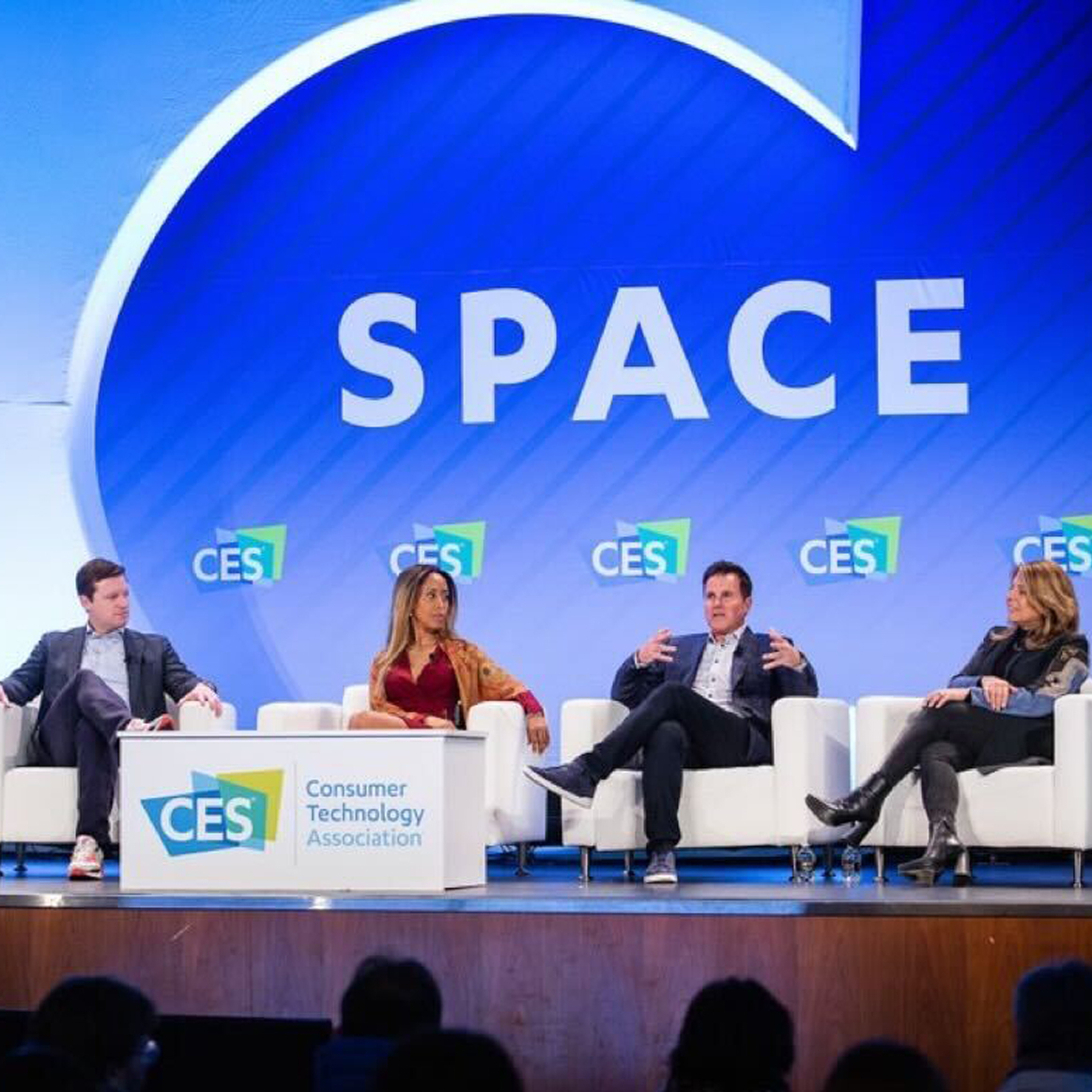
On the ground we saw trends from the showroom floor offer a way forward for brands looking to trailblaze new paths to growth.
A lot happened at CES this year—and while the conference famously offers a glimpse into the future of technology, we’re excited to apply the learnings that we’ve gathered to help brands innovate now. As attendees descended into Las Vegas to attend the show, many wondered: what’s in the cards for technology and culture this year, and how can I make smart investments rather than take a gamble? Fueled by insights and observations from our people on the ground, we’ve rounded up key trends from the CES floor—along with what they mean for brands as they begin to embark on new paths to growth.
Hey?
00:00
00:00
00:00
The decade is drawing quickly to a close, and it’s been a wild ride. From new technologies to new members of our family (we welcomed BizTech, IMA, Firewood Marketing and WhiteBalance this year), 2019 presented us with a lot of thrilling changes—and some exciting opportunities as we enter a new era. Looking back, we polled managing directors from our offices around the world for their favorite trends and technologies that have emerged in the past year—and what they’re looking forward to next.
Interest in mixed and extended reality (the combination of real and virtual objects or environments, like augmented or virtual reality, enabled by mobile or wearable devices) has been growing. At the same time, mixed reality has made strides in maturity over the past year, like Google’s efforts in making virtual objects feel truly anchored to the environment with occlusion, in which virtual objects are responsive to their surrounding environment—for example, disappearing behind real-world objects.
For Martin Verdult, Managing Director at MediaMonks London, extended reality is among the innovations he’s become most excited about going into 2020, and not just for the entertainment potential: “Virtual and augmented reality will become increasingly prevalent for training and simulation, as well as offering new ways to interact with customers.” For example, our Spacebuzz virtual reality experience gives children a unique look at the earth and environment they may typically take for granted, using the power of immersive tech to leave an indelible mark.
Value comes from connecting an IP to a brand through a deeply engaging hyper reality experience.
As the technology that powers extended reality matures, so will its potential use cases. But when a technology is still evolving significantly in short time, it can be difficult for brands to translate their ideas or goals into clear, value-added extended reality experiences. “We have introduced creative sprints for our core clients to get these ideas in a free flow,” says Verdult.
Among Verdult’s favorite examples of augmented reality projects MediaMonks has worked on this year is Unilever’s Little Brush Big Brush, which uses whimsical, virtual animal masks to teach children proper brushing habits and turn a chore into playtime. Similarly, extended reality can bring products to life in an engaging way—or if used in a customer’s research phase, it can help customers interact with a product with minimal (or no) dedicated retail shelf space.

Part of the Little Brush Big Brush’s charm is that it extends beyond simply AR, connecting to a web cartoon series and a Facebook Messenger chatbot to reward kids with stickers at key milestones. “Value comes from connecting an IP to a brand through a deeply engaging hyper reality experience,” says Olivier Koelemij, Managing Director at MediaMonks LA. “One that only a well-executed integrated production can offer, combining digital and physical in new and extraordinary ways.”
One can’t reflect on past innovations and look to the future without mentioning artificial intelligence and machine learning. From programmatic delivery to enabling entirely new creative experiences—like matured extended reality powered by computer vision—to connecting cohesive experiences across the Internet of Things, artificial intelligence “will change our interaction with technology in ways we can’t imagine yet,” says Sander van der Vegte, Head of MediaMonks Labs, our research and development team that continually experiments with innovation.
The most creatively inspiring uses of AI are the ones that will help us understand the world and our fellow humans. In collaboration with Charité, for example, we programmed a 3D printer to exhibit common symptoms of Parkinson’s disease and its effect on motor skills. The result is a series of surreal art-objects that make real patients’ experiences tangible for the general population.

Ask Sicco Wegerif (Managing Director at MediaMonks Amsterdam) what struck him this year, and he’ll tell you it’s the elevation of social content in purchasing—for example, how Instagram made influencer posts shoppable early this year. Wegerif notes that about a quarter of consumers have made a purchase on social media, signaling new opportunities for brands to build connections with consumers.
“Looking at this from an integrated and smart production perspective, we can help brands create so many assets and storylines that tap into this trend, especially when combining this with data so we can be super personal and relevant.” When social media is prioritized early in the creative and planning process, it can enable more meaningful experiences.
For example, our “People are the Places” activation for Aeromexico used Facebook content to transform the way users discover destinations around the world. Instead of researching and booking a city, users get to learn about people around the world—then purchase a ticket to where they call home. The social content enriches the experience and builds emotion into the experience. “It’s in essence a very simple thought that can change the whole CX,” says Wegerif.
Speaking of social media, it can become a powerful tool to build relevance and connection with experiential. Jason Prohaska, Managing Director at MediaMonks NY, says: “Experience and social work hand-in-hand as part of the digital plan for many brands, and are no longer below the priority line.” With live experiential—which elevates the role of the online audience to interact, take part in and build buzz around experiences—brands can achieve greater strategic impact in how they build connection with their consumers.
But doing so successfully requires a confluence of data, influencers, experiential storytelling and production. The future of this looks good to Prohaska. “We expect 2020 to deliver several use case scenarios at scale for brand identity that may set benchmarks for personalization, automation, customer journey optimization, efficacy, performance and engagement.”
Koelemij looks forward to stronger investment in digital and consumer understanding as brands begin to integrate experiences even further going into 2020. “With most good work, success and performance can now be better attributed to digital as we get more advanced in understanding what success looks like,” he says, “especially in how we can measure it across blended activations.”
And that’s exactly how we’d like to spend 2020: helping brands achieve their goals with data-backed, insights-driven creative across the customer decision journey. Through added capabilities thanks to companies like WhiteBalance, Firewood, BizTech and IMA joining the S4Capital family in 2019, we achieve this by greatly prioritizing and enhancing key elements of the marketing mix for daring brands—and as we reflect on the past year, we can’t wait to see what’s next.
A common challenge that in-house agencies (IHAs) have always faced is difficulty in training and hiring the talent they need to pull off excellent creative. Unfortunately, this strain doesn’t seem to be going away. According to a survey by the ANA, 44% of US IHAs cite attracting top-tier talent as a primary creative content concern. And it’s not just about merely acquiring talent: an even bigger challenge they face lies in keeping their talent energized.
It’s no surprise, then, that so many external partnerships for IHAs revolve around two key capabilities: executing ideas in new and interesting ways, or offering access to specialized skillsets. Both are key in today’s digital landscape, which is defined as an age of hyperadoption, in which users adopt and drop new behaviors at an unprecedented rate. In addition to all of the channels that are cropping up, you don’t even know which will stick around a few years down the line.
As brands gauge the next big channels they’ll use to connect with consumers, they must adopt new digital skillsets in lockstep. But given the talent concerns mentioned above, how can IHAs keep up with these shifting user behaviors? The answer lies in new breeds of partnership that give IHAs the skills and tools they need to fulfill the brand promise in ways that not only stand out and “wow” consumers, but make sense to them.
In his talk at the IHAF Conference this week, which brings together and celebrates hundreds of in-house agency professionals, Forrester analyst Jay Pattisall discussed the importance of creative differentiation. Most digital experiences look and feel the same, opening an opportunity for brands to stand out through best-in-class creative. Fitting well within the conference’s theme of “Futureproof,” Pattisall set his focus on recent shifts in the creative landscape, and where IHAs fit within it.
Differentiated creative combines an understanding of culture with real, heavy-lifting business impact that drives real bottom line value.
IHAs have thrived thanks in part to their unrivalled brand knowledge; they understand the purpose, intricacies and nuances of their brand. As Darren Abbott, SVP, Creative at Hallmark said while noting the power of IHAs to their brands: “We’re not part of Hallmark, we make it Hallmark.”
Yet executing their vision in an environment that encompasses so many emerging channels can be tough. New partnership models that aim to augment in-house teams’ understanding of technology, or that push them to think in new ways, can aid in both forecasting future opportunities and identifying the best channels available today for bringing the brand experience to life.

AR, like this Snapchat game we made for Magnum Ice Cream, is loved by users and easily accessible for brands.
If you’re intrigued by some of today’s emergent technology, consider putting it through what MediaMonks Founder and COO Wesley ter Haar calls the “trend lens.” Discussed in his skill session at the IHAF Conference, “Extending Beyond the Horizon,” ter Haar described the trend lens as a strategy through which you can gauge the maturity of emerging tech as it rises up—or drops off from—the hype curve. It’s how we help brands arrive at solutions that best fit their capabilities and needs.
The assessment specifically measures how a technology or platform meets user behavior (what consumers are doing with it) and distribution (how widely it’s adopted). VR, for example, isn’t distributed among consumers as well as AR is; this makes the former more ideal for installations and trade shows, while the latter serves as a popular way for consumers to simultaneously connect with brands and communicate with friends on mobile.
The trend lens works because it asks brands to really consider how their audience naturally behaves on a given channel. But brands must ensure that the creative idea is aligned with a clear business goal. At MediaMonks, for example, we don’t strive to sell brands on whatever the hot, novel technology of the day is. Instead, we experiment to push technology to its limit ourselves, then pay those learnings forward to help brands approach emerging tech strategically and tell their stories the best way they can.
Again, an IHA’s strength stems from its passion and knowledge of the brand. External partnerships that challenge their approach to creative and assess new opportunities granted by emerging tech are essential for futureproofing and connecting with consumers as the digital landscape continues to evolve.
Choose your language
The website has been translated to English with the help of Humans and AI
Dismiss