Choose your language

Choose your language

The website has been translated to English with the help of Humans and AI

Dismiss

Vision Pro Is a Mixed Reality Milestone—Here’s What It Means for Brands

Vision Pro Is a Mixed Reality Milestone—Here’s What It Means for Brands

Experience Experience, Extended reality, Immersive Brand Storytelling, Metaverse, VR & Live Video Production 4 min read
Profile picture for user mediamonks

Written by
Monks

A person wearing a AR headset

If the reveal of Apple’s Vision Pro has made one thing clear, it’s that we’re currently at an inflection point where hardware innovation meets consumer behavior. Though it isn’t the first mixed reality headset on the market, following Magic Leap and Meta’s Oculus, it comes at a moment when the industry is poised to redefine how we interact with digital content.

“This is perhaps one of the most hotly anticipated product launches in recent years,” says our VP, Interactive Projects Simon Joseph. “It not only gives credit to the field of augmented and mixed reality, but also to its staying power and the potential for the future to come. For the era of spatial computing and AR, this is only just beginning, and we are so excited to see where it goes from here.”   

Anyone who has ever dabbled in augmented reality (AR) knows that it’s a powerful tool for capturing people’s attention and standing out in a crowded market by seamlessly blending digital content with the physical world through visual overlays, engaging audio and motion control. Parallel to the metaverse’s rise in the cultural consciousness, these immersive features are proving advantageous to brands who aim to shine in an abundance of content, stuffed social feeds and crowded app ecosystems. On top of that, the technology promises to evoke truly memorable and emotional responses in consumers. 

Innovations across the board are helping AR advance at speed.

Compared to consumers, brands have been slower to recognize AR’s practical use. Data from Snap and Ipsos shows that 90% of brands think AR is primarily for fun, while only 57% of consumers think of it that way, instead seeing potential in activities such as shopping. As a trio of technological forces—not just hardware, but also software and heightened connectivity—converge to enable a new breed of AR experiences, we believe brands will realize AR’s potential across the customer journey. 

New AR headsets are gaining interest and intrigue—there will be over 1.7 billion active AR devices worldwide in 2024, and 18 million AR/VR headsets will ship this year—but software like visual positioning systems will also greatly enhance multiplayer digital experiences on mobile devices. Moreover, 5G Advanced is set to improve speed, coverage, mobility and power efficiency, which means no latency and no more cache limitations as people will stream high-quality experiences in real time. 

The fact that AR experiences will become more easily accessible for consumers is great news for brands, because AR’s value extends from the top to the bottom of the sales funnel. Research from WARC found that “AR ads capture the attention of broad audiences who are early in their purchase journey, with a +7% increase in aided ad recall among this group of consumers. And AR can help brands nudge consumers who are in the consideration phase by making the brand seem more up-to-date and differentiated.” 

Dive in head first to get ahead.

Time has shown that early adopters can reap first-mover rewards, and the present moment offers brands a chance to get ahead: with the launch of new hardware comes a new app marketplace, and early explorers of AR are primed to benefit from being quick to take the plunge. That said, effectively introducing AR into your customer experience journey requires careful consideration—questions around the medium, culture fit, and collaborating with vendors are bound to come up—so here are some chief concerns marketers should consider in setting themselves up for success.

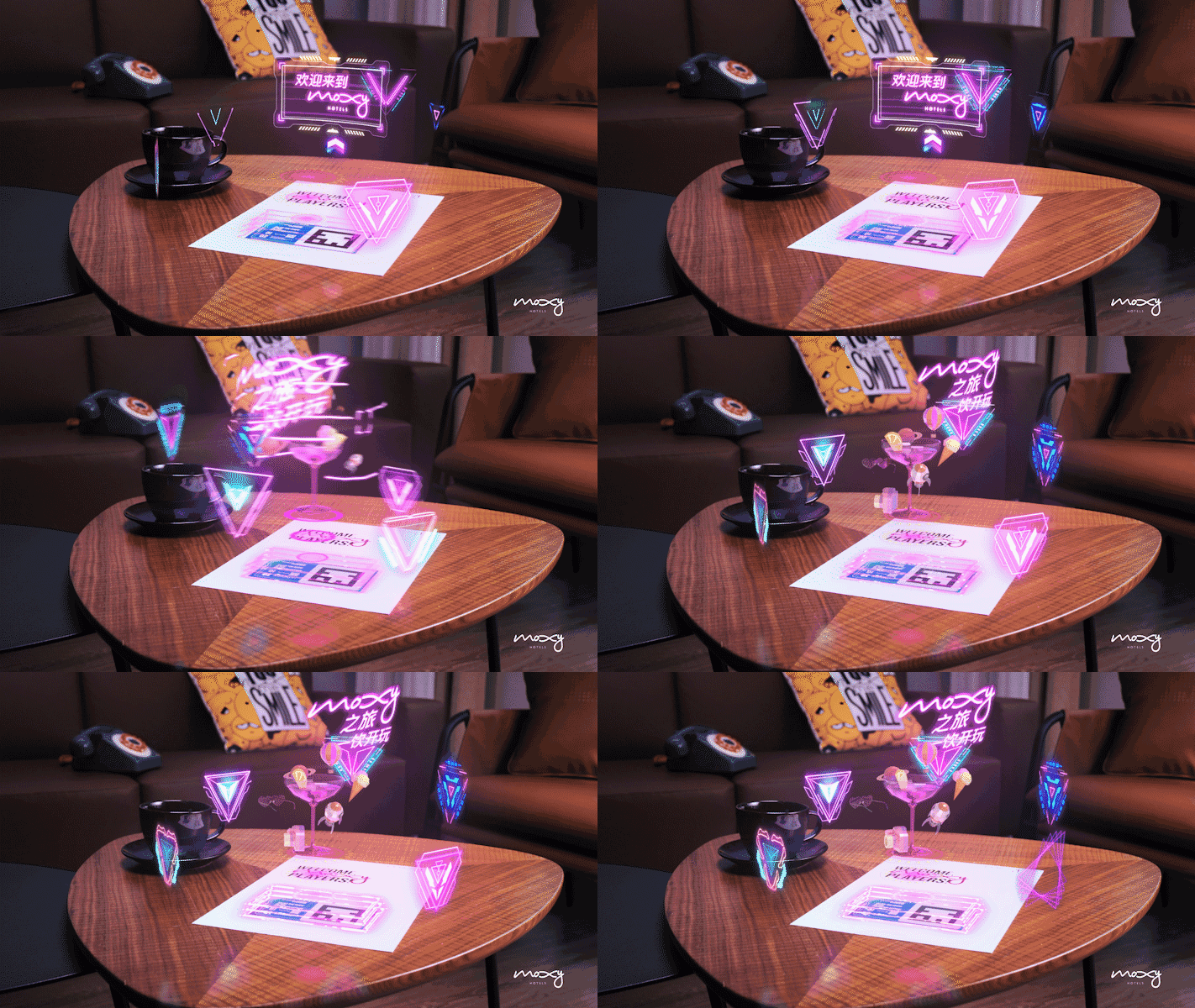
A table showing 3D moxy hotel perks
A phone showing an augmented avatar

For starters, find out whether immersive AR experiences will excite your audiences. To understand how AR might make sense for your brand, follow the “jobs to be done” framework, an important tool for assessing any innovation. Consider customer needs and the motivations that drive them, as well as the circumstances in which they achieve them. 

Furthermore, make sure you take advantage of the medium. Whether you’re aiming to drive powerful immersion through interactive content or overlay real-world contexts with useful information, the medium determines the benefits. That’s why it’s important to carefully plan how certain benefits from AR can help your brand achieve its goals. 

Finally, explore other tools that aid AR development. Thanks to software kits and frameworks, creating AR experiences has never been easier—and with new urgency to develop immersive 3D content, various AI-powered tools have emerged to streamline content creation. Nvidia’s Instant NeRF allows teams to quickly create digital doubles of photographed objects, while Stability for Blender adds the force of Stable Diffusion to 3D software and Unity AI leverages the power of Unity game engine and large language models by building entire scenes based on a written prompt.

It’s time to break the mold and trust the potential of AR. 

AR is an undeniably powerful tool for brands to connect with their audiences. Through immersive and interactive experiences, this technology is transforming the traditional customer journey, offering a blend of entertainment and utility that captures people’s attention and drives engagement. Several brands are already shaping the future of consumer engagement. By exploring the vast possibilities of AR, addressing key considerations, and leveraging innovative technologies, your brand can unlock the full potential of the technology, too, cementing your position as a leader in this rapidly evolving landscape.

AR is a powerful tool for brands to connect with their audiences. Learn how to unlock the full potential of the technology and cement your position as a leader in this landscape. AR augmented reality mixed reality emerging technology Experience VR & Live Video Production Immersive Brand Storytelling Extended reality Metaverse

Scrap the Manual: Tech Across APAC

Scrap the Manual: Tech Across APAC

19 min read
Profile picture for user Labs.Monks

Written by
Labs.Monks

Scrap the Manual - Asia Pacific

APAC is not only one of the most populous and diverse regions in the world, it is also leading the way for unique technologies and innovation. In this episode, host Angelica Ortiz is joined with a fellow Media.Monks’ Creative Technologist, Leah Zhao from our Singapore office. Together, Angelica and Leah give a TLDR overview of our newest Labs Report, Tech Across APAC—providing insight into the regions’ emerging AI, AR, automation, and metaverse technologies–along with a sneak peek into the prototype leveraging an upcoming tech from the region.

You can read the discussion below, or listen to the episode on your preferred podcast platform.

00:00

00:00

00:00

Angelica: Hey everyone! Welcome to Scrap The Manual, a podcast where we prompt “aha” moments through discussions of technology, creativity, experimentation, and how all those work together to address cultural and business challenges. My name is Angelica and we have a very special guest host. Yay!

Leah: Hi! It's great to be here, my name is Leah. We are both Creative Technologists with Media.Monks. I specifically work out of Media.Monks’ Singapore office.

Angelica: Today we're going to be giving a quick TLDR of one of our lab reports and deep dive into something that we didn't get to cover in depth in the reports, such as expanding on our prototype we created, a topic that has some interesting rabbit holes that didn't fit neatly onto a slide, you know, that kind of thing. 

Leah: So for this episode, we are going to be covering technology and innovation culture in Asian Pacific region. If you haven't had a chance to read our APAC Lab Report, here's a quick TLDR.

The most influential technologies from the region are AI automation, AR and computer vision, and the metaverse. China and Japan are leading the growth in AI and machine learning together with Singapore and South Korea. If you come to this region, you might be surprised how people are embracing this advanced technology. People accept it because it is just so convenient and thanks to those Super Apps we have. 

Angelica: To clarify for people who may not be familiar, what are Super Apps? 

Leah: Yeah. So Super Apps are mobile applications that can provide multiple services. And you may have heard of some of the Super Apps such as WeChat in China. Kakao from South Korea, Line app from Japan (that's also widely used in Taiwan and Thailand) and Grab from Singapore, which is used in Southeast Asia. On Super Apps, you can use multiple services from online chatting, shopping, food delivery, to car hailing and digital payments. We literally live our social and cultural life on the Super Apps.

Angelica: Is it sort of like if Uber had one app, but not necessarily branded it's more of just, I'm going to go to WeChat, it'll call a ride, rent a scooter, or order in. You just download one app versus having to download five different ones. 

Leah: Yeah, definitely. But actually for WeChat, it's more complicated, I would say, because there is a whole ecosystem on WeChat because WeChat uses mini programs. Just think of as a microsite on WeChat…

Angelica: Mm-hmm. 

Leah: where they can sell their product and they can have these food delivery services. And for other Super Apps like Line app and Grab it's just exactly like you said. One example is that Burberry launched its social retail store in collaboration with Tencent, which integrates its offline store with mini programs on WeChat. It enables some special features in the store, such as earning social currencies, by engaging with the brand and even raising your own animal based avatars. This is pretty cool as it links up our digital and physical experiences. 

Angelica: Yeah. What I really liked about this example was how technology was seamlessly integrated throughout. It wasn't like, “Hey scan this one QR code.” It went a little bit further to say, “Okay, if you interact with this mini program, then you'll have access and unlock particular outfits or particular items for the digital avatar. You'll be able to actually unlock cafe items in the real store.” So it seemed like it was all a part of one ecosystem. It didn't feel tacked on. It was truly embedded within the holistic retail experience. I know with a lot of branded activations within the US specifically, there's always that question of, should it be accessible through a mobile website or is it something that we can use a downloaded app for? And most clients tend to go with the mobile website. 

Leah: Yeah. 

Angelica: Because there's this hesitancy to download just another application, just to do another thing. And then worrying about the wifi strength when on site when asking people to download these apps. But it'd be interesting for brands creating these mini programs within a larger Super App that then consumers won't necessarily have to do anything else other than access that mini program versus having to download something. Then there's a lot more flexibility in what brands can do and they're not limited to what's available on a mobile website. They have the strength of what can be possible with an app. 

Leah: Yeah, agreed. So another observation actually from our report is that the metaverse is on the rise in the APAC region. It might outplay the plans laid down in the West. Some platforms that draw our attention are Zepeto from South Korea and TME land in China

Angelica: Yeah, and what's cool about those platforms is we see this emphasis on virtual idols, avatars and influencers. From the research that we did, we noticed that there are certain countries that are a bit more traditional culturally… 

Leah: mm-hmm

Angelica: and are strict in how people can be in their real selves to have this sort of escape of the bounds culturally of what people can and cannot be because it's right or wrong or not necessarily accepted. People are going towards anonymity…

Leah: Yeah. 

Angelica: for being able to express themselves. Sort of like the Finstagram accounts that happen in the US or expressing themselves through these virtual influencers, because then their virtual selves can be much more free to express themselves than their real versions could be.

Leah: And also Asia has a rich fandom culture. So it's not a surprise that we see the emphasis on virtual idols and virtual influencers because it enables the fans to interact with the superstars anytime, anywhere.

Angelica: Yeah. And from a branding aspect of things as well, virtual influencers and avatars can also be much more easy to control. Like all the controversies that happened because someone did something either way back in their past or something recently, that makes brands nervous about being able to endorse real people because people are flawed. With virtual influencers, you can control everything. You have teams of people being able to control exactly what they look like, what their personality is, what they do, and that flexibility and customizability…that's a lot more intense than it would be for a real person that has real feelings.

So there's some limitations on what the brand can do, where it's a lot more flexible with virtual influencers. 

Okay, we've covered quite a lot there. There's a lot of really interesting examples that we see within the APAC region that definitely could be applied within Western countries as well. With this said, we're gonna go ahead and move on to what we did for the Labs Report prototype and expand a little bit more on our process.

Let's start with: what was even the prototype? For the prototype we leveraged Zepeto. Zepeto is a metaverse-like experience world platform…insert all buzzwords here…where it allows users to interact like you would for a Roblox world that you go and experience to, but it has additional social features to it.

So what we would think of as an Instagram feed or something like that, it has that embedded within the Zepeto platform. So instead of going to Instagram to talk about your Roblox experience, those two experiences are integrated within one platform. What we also wanted to achieve with this prototype is leverage a technology that originated from the APAC region, and specifically Zepeto. Zepeto is available globally for the most part, with a few exceptions, but it originated within South Korea. We really wanted to use Zepeto because it's available globally for most audiences and it takes the current fragmented way of how the metaverse worlds are created and integrates them with virtual influencers and social media.

With these gamified interactable experiences, the social aspects are really what makes this particular platform shine. And we are also doing this because the metaverse even a year or so later is still an incredibly popular topic. People are still having a lot of discourse about what the metaverse is, what it can be, discussing how brands have already interacted with their first steps into the metaverse, how they're going to continue to grow.

And this is part of what we do a lot at Media.Monks. We get a lot of client requests for similar types of experiences, whether that be Roblox, Decentraland, Horizon World, Fortnite…and Zepeto is just a great platform that no one's really talking a lot about within the Western dialogue, but it's incredibly powerful and it reaches so many people. We saw that it was an amazing platform that put the promise of what the metaverse can and will be to the next level.

Leah: Yeah. I also like Zepeto because Zepeto not only has Asian style avatars and it enables you to customize your avatar from your head, body, hair, outfits, and even poses and dancing steps you can have. So with Zepeto you can purchase a lot of outfits and decorations with the Zepeto money, which is a currency that you earn by app purchases or being more active on the platform. 

Angelica: Yeah. There's two different types of currencies that Zepeto has. One of which are called Zems…i.e. gems. And then there's another one, which are coins. For creator made items, you can set a price for how many Zems you want them to go for. Anything that's created by users can only be sold by Zems, which are very difficult to get free with an app. That's where, you know, the free to play tends to come in. With a Euro you can get 14 Zems, so then you can buy more digital clothing. There are coins that you start the experience with that you can use to purchase Zepeto-created items. And so that's kind of how they have that difference there. 

Leah: But my favorite part about Zepeto is the social aspect as you mentioned earlier. For me, it's like TikTok in the metaverse because it has the Feed feature.

You know, there are three pages of the feed: For you, following, and popular. Under the feed you can see live streaming by the virtual influencers and you can have your own live stream as well.

Angelica: For the live stream that's using some motion capture as well, because it's either pre-made models and moves that are created or people can actually have their face being recognized in real time...

Leah: Yeah. 

Angelica: to then translate to that virtual avatar. 

Leah: Yeah. Zepeto, they have the Zepeto camera. So with this camera, you can create content with your own avatar and the AR filter, which copies your facial expression quite accurately, and even brings your own avatar to real life. So you can place your own avatar on the table in your room.

Angelica: One part that I also thought was really cool…you had mentioned earlier with the poses. Think about if we see a celebrity on the street, we're gonna take a photo with them. Right. We can't just let that celebrity pass by without being like, “oh yeah, I totally saw JLo in Miami,” you know? The “take a photo or it didn't happen” type of thing, haha. There's a version of that on Zepeto. Fans can take a photo with you with their virtual avatars with your virtual avatar. So it takes the virtual autograph, of sorts, to a different level. You can live vicariously through your avatar by having them take a photo with your, your favorite celebrity or your favorite influencer. So I really love that aspect of being able to build that audience virtually as well. 

Something also that's really cool about Zepeto is within those world experiences, the social aspects are still very much ingrained in there. It's not just, “Okay, you have this separate social feed, you have the separate virtual influencer side, and then you have the world.” They're all integrated.

An example of this is the other day we were testing out the Zepeto world and we were all in the same experience together. When someone would take a selfie, and that's right: there is a selfie stick in this experience and it looks exactly like what you would imagine, but the virtual version of it too. And when someone takes a photo or a video, it automatically tags people that were within that photo.

So it's generating all of this social momentum, like really, really quickly. And soon as you take that photo, you can either download it directly to your device. Or you can go ahead and immediately upload it. What was great for me personally…figuring out how to have, you know, just the right caption... that's something that takes me way too long to figure out what are the right words and the right hashtags. But you don't even need to worry about captions when taking photos within these worlds. As soon as you say, “I wanna upload it,” it automatically captions, tags people, and also gives other related hashtags for how other people could see that experience from you.

So it's very seamless and easy. 

Leah: Yeah. That's amazing. 

Angelica: It's just like the next level of how it makes sharing super, super, super easy, so that's something I really like there too. 

Speaking of the worlds: now, within this next part of the prototyping process, it was up to us to determine the worldscape and interactions. And as a part of the concept, we wanted to create a world that plays into what real life influencers would be looking for when trying to fill their feed. And that is: creating content. Specifically: selfies. And so we created four different experiences that would have the ultimate selfie moment.

One, which is this party balloon atmosphere. Sort of think about these like really big balloons that you can kind of poke with the avatar as you move around, or even like jump on some of the balloons to get a higher view from it as well.

The second was like a summer pool party. You could actually swim in the pool. It would change the animation of the avatar when you're in the water part. And, you know, the classic, giant rubber ducky in the pool and all those things. So definitely brought you in the moment.

The third was an ethereal Japanese garden, so very much when wanting to get away and have a chill moment, that was definitely the vibe we were going for there.

And then lastly, we had the miniaturized city. So what you would think is the opposite of meditation is the hustle and bustle of the big city. And we created that experience as well. There is also a reference to the Netherlands. So you'll just have to keep an eye out for what that is and let us know if you find it.

Leah: Is there a hidden fifth environment?

Angelica: There it is. Yeah. You know, what was interesting is when we were testing out the environment and we were all together. 

Leah: Yeah. 

Angelica: We created our own room. 

Leah: Yeah. 

Angelica: And then we thought it was just gonna be the eight of us that were testing it out and then other people, random people showed up. 

Leah: Wow.

Angelica: I was just like, “where did you guys come from?” There were two people that actually used the chat within the room and they belined directly to where that fifth environment was. 

Leah: Yeah. 

Angelica:  So it was just really interesting that people one were specifically coming to the world to experience it together.

Leah: Mm. 

Angelica: And then two, we saw a lot of random people. There would be dead spots where it’s just like, “okay it's just one of us in the room.” We're just testing it. But as soon as all of us got in there together and started taking photos, there were so many people that showed up. It's just like “What? This is insane!”

Leah: Was it the recommendation system on Zepeto?

Angelica: Yeah. That's what we're thinking. Because the room that was created…we thought it was not, I guess it wasn't a private room. It was probably a public room. 

Leah: Yeah. 

Angelica: But it was interesting that as soon as we started playing around and posting content, then people were like, “Okay, I'll join this room.”

Leah: Yeah. Maybe because of tagging as well.

Angelica: Yeah, exactly. And that goes to our earlier point of how really powerful that platform is and how posting would give that direct result of someone posting something and other people wanting to be a part of it. There was one person that liked my post that had like 65,000 followers.

Leah: Whoa. 

Angelica: And I'm like, who are you? What is this? 

Leah: That's definitely a virtual idol. 

Angelica: Yeah, exactly. They only had like six posts though, which was a little weird, but they had so many followers. It was nuts. 

Leah: Actually today I just randomly went into a swimming pool party on Zepeto. I went into the world, people were playing with water guns together.

Angelica: Mm-hmm 

Leah: So I had just arrived. Landed. Then someone just shoot me with a water gown and I was hit. I must lose my block. 

Angelica: Oh no! Haha, that sounds fun though. 

Leah: Yeah, that was fun. 

Angelica:  Was it like a big room? Like how many people were in that environment at once? 

Leah: When I was there, it was around 80 people in the world.

Angelica: Oh, wow.

Leah: Yeah, it's quite a lot actually. 

Angelica: There's definitely something to be said about how there's superfans of Zepeto. Like that's kind of part of the daily aspect of it. Being able to meet people through the social aspects and then hang out with them through these worlds.

But all this to say this entire worldscape and all these interactions that we included within the prototypes were all built within what they call their BuildIt platform.

Leah: It's quite user-friendly. It's very easy to create a world yourself even with zero experience of any 3D modeling software. 

Angelica: Yeah. BuildIt is like a 3D version of website builders. You have the drag and drop type of thing. Where instead of a 2D scrolling website experience, now you have that drag and drop functionality with a lot of different assets into a 3D space. We can also create experiences like this through Unity. The only caveat to Unity is that the experience that we would create there would only be available on mobile devices. And we didn't wanna restrict the type of people that would be able to experience this. So we decided to do it on BuildIt because the end result of those worlds would be able to be accessed on both desktop and mobile. 

Leah: Other than the world space, you can also create some clothes for your avatar to make it look more unique and with its own personality. So in our case, we create a more neutral looking avatar with blue skin. Very cool, they're slightly edgy but approachable. And the process of creating clothes was very friendly. So you just download the template and then add the textures in Photoshop. We chose a t-shirt, jacket, bomber, and wind breaker. And then we touched it up with some Oriental elements such as a dragon and soft pink color, which matches our Shanghai office. Everyone can create their own unique clothes with simple editing of the textures. 

Angelica: Yeah. We really wanted to play within clothing specifically because that's a part of this digital ecosystem of being an influencer. You may have branded experiences that you take part of, or brands sponsor you. Influencers will wear custom clothing either that they design or that they're representing another brand. All those things we wanted to integrate within this. 

So the influencers are visiting this world. They could say, “Hey, I'm in this Media.Monks experience” or “insert brand here” experience. And I'm also wearing their custom clothing. It's sort of a shout out to the clothing as well as the world. So it's at the heart of this larger ecosystem. The world is not exclusive to the clothes…is not exclusive to social. All of those elements are all playing together and this leads to creating social content.

Once we had the world and the merchandise solidified, we continue to build off this virtual influencer style by creating content of our own. What we did is we analyzed popular Zepeto influencers. We even made a list of the types of content they create, which is going to someone else's world, doing an AR feature with their real life self. Being able to do posed photos with other avatars. All those were a part of the social content that we created as a part of this. 

Now that the prototype is ready to go, it's time to think about what the prototype did not yet achieve but that we would really like to see in the future. So one thing that we recommend is: when wanting to create branded fully custom worlds, those should definitely be made within Unity to have the most flexibility. At this time of recording, being able to export worlds means that only is on mobile devices. So, you know, that's something to keep in mind there. 

Leah: For clothing creation, there are some limitations. For example, for the texture, the maximum resolution we can upload is 512 x 512. So it means we can't add detailed patterns or logos onto our clothes. And we can't create physics of our clothing materials. That is another thing that I think the platform can improve. 

Angelica: Yeah. It's not able to show the fuzziness of a sweater or if we're creating a dress or a shirt that needs to be flowy, it won't show that that shirt or that dress is fuzzy or flowy. It'll just be the pattern that's shown, but the texture of how a clothing might feel based on seeing it is not reflected there. So it's a give and take where it's very easy to create clothing items 

Leah: Yeah. 

Angelica: …but it doesn't go so far as to have a realistic look. 

Leah: Yeah, but I think this is something that’s not just Zepeto. Other metaverse platforms can improve with that because I don't see many platforms can have physics of the clothing itself. It would be great if the physics of the clothing could be implemented in the workspace as well as in the AR camera. It would add extra immersion and fidelity to the whole experience. 

Angelica: Yeah. It would also help with making those small micro interactions really fun. Let's say there's a skydiving experience that's in Zepeto and someone is jumping off of the plane and is doing their skydive.

Leah: Yeah.

Angelica: It'd be cool. If the physics of the clothing would react to, like this virtual wind that is happening, or something like that. Or if it's a really puffy sweater, it kind of like blows up because all of the air is kind of getting stuck in it. Those are just the fun things that make people get even more immersed within the environment too. 

Moving forward in creating branded experiences, having a closer relationship with Zepeto’s support team and development team will be really helpful in a lot of the things that the BuildIt platform has a restriction for. But when collaborating with Zepeto and with using the Zepeto plugin for Unity, then we can unlock a lot of interactions that make the experience a lot deeper. 

The other thing to mention here is it'd be really great to see Zepeto integrate with other social media platforms versus the Zepeto specific one. We've talked a lot about how Zepeto is a really powerful platform because it combines social with the virtual experience as well. And it would just be great if let's say there's an experience that happens in Zepeto and we're taking a photo or video, we say we wanna post it. Could that be post, all in one swoop, be posted to Instagram, posted to Twitter, posted to Facebook and all of those things, instead of this Zepeto ecosystem kind of being stuck.

So all the cool stuff that we're saying, it gets left within this platform and they're not necessarily shared outside of it unless you did the repost thing. That's kind of how it would work with Zepeto, but it'd be really great if all those rich features that we get with Zepeto could be extended to other platforms.

And I mean, there's already the platform fatigue of having to keep up five or many more social media platforms. So auto captioning for Instagram would be great or having an experience in Zepeto and then moving that on to what I wanna post on Twitter that would just make the process so much easier. 

Leah: The full integration of that might take some time…

Angelica: Mm-hmm 

Leah: since there are more things to consider such as data privacy. 

Angelica: Yep. 

Leah: But we might say it's coming faster in APAC. If one day the metaverse platform is integrated into the Super Apps. Just imagine by then it would be truly one ecosystem. 

Angelica: Exactly. It'd be a really powerful way to have things all within one place. Meta has tried with this “connecting what you do virtually and connecting it to other social media platforms” specifically within its own ecosystem of Facebook, but it's had mixed success. There's just not as much of, “Okay. I'm posting what I'm doing in VR to Facebook.” There's not as much of that traction happening as with going in Zepeto, having this experience, posting it, and people randomly show up because of the social stuff. You could see that immediate interaction. It'd be really great to see this integration outside of just Zepeto social into other social media experiences to really expand its reach. Also particularly because of the virtual influencer aspect of things. Just imagine having this facial mocap that you do within Zepeto and that livestream could go to Instagram, Facebook, and multiple platforms at once. That would really increase the visibility of that virtual influencer and the social clout. 

So we're getting towards the end. Let's go ahead and think about what are some concrete takeaways that the audience can implement and use within their daily lives, as they're considering Zepeto. And then also just in general, the APAC trends that we're seeing here.

Something that I think of is: gaming and social media don't have to be separate anymore. Like when playing online experiences, traditionally, it'll be either playing Warhammer on Steam and having the voice app within there, or opening up Roblox and a Discord channel. But those are two separate platforms: one to connect and one to play. With Zepeto, it's really inspiring to think about how those interactions can be in one. And not just voice, but the social aspect and everything that comes with that. It's really the next level of getting closer to what we talk about the metaverse can be. And Zepeto is really inspiring in that way. 

Leah: Yeah. To your point about this social aspect: Zepeto is actually what we need right now. We can't expect everyone directly dive into virtual without connecting them with the social life in the real world. And Zepeto has this potential to bridge the gap between our social life in the physical world and the digital one. 

Angelica: Yeah, Zepeto is a sleeping giant of sorts where it could have huge potential for a global audience. It is accessible in other countries outside of the APAC region, like we mentioned, but there's just not as much buzz around it as the platform definitely deserves. There are platforms that have tried to have the integration that Zepeto has within those three categories of virtual influencers, social media and experiences. But there just hasn't been as much from those other platforms as Zepeto has been able to succeed in.

So like Decentraland, Sandbox Roblox, Fortnite, Horizon Worlds…all those platforms have tried to get this integration, but it just has not been as successful. Something also to keep in mind and why Zepeto is just a really great platform is that there have been brand activations that have happened on Zepeto already.

There have been concerts and virtual representations of BTS or even Selena Gomez going into those concerts. Like what we applauded a few years ago with the Fortnite concert, Zepeto has already been within those realms already. There's a Samsung activation. There's a Honda activation, and a Gucci one as well.

And those are definitely getting a lot of traction and movement with people who are actually part of those experiences. And because it's integrated within its own social media ecosystem with purchasing items with virtual influencers, there's just so much potential for when brands are getting into these spaces, the type of impact and interaction they can have with consumers.

Leah: Yeah. The last thing we learned from this region: currently the West and the East still feel very distinct technologically and also culturally, with some crossover happening, but it's not as much as we would like to see. Things like virtual influencers, technology in retail, Super Apps, increased use of digital payments, those have been used to deepen collections with consumers and enhance ease of use. It would be amazing to see that more widely integrated within the West.

Angelica: Yeah, exactly. There's a lot of cultural and technological crossover to Eastern countries in terms of, you know, the US culture and colloquialisms always make their way around the globe. And it would be really great to see the really impactful technological and cultural innovations that are happening within the East, make their way more holistically towards the West. Not just here or there, but how Google has been embraced within APAC. It'd be great to have some of those APAC platforms integrated in the west. There's a lot that each can learn from each other and build up on each other. It's not necessarily let's distinguish the West from the East, because we talked about that quite a bit, but what is the way that globally we can improve experiences for consumers. And there's a lot of ways technology can empower people to have those deeper connections and how brands can also be a part of that story.

Leah: Yeah. 

Angelica: So that's a wrap! Thanks everybody for listening to the Scrap The Manual Podcast. Be sure to check out our blog post for more information, references, and also a link to our prototype. Remember to check out the Netherlands references and also the hidden fifth world within that prototype. If you like what you hear, please subscribe and share! You can find us on Spotify, Apple Podcasts and wherever you get your podcasts.

Leah: If you want to suggest topics, segment ideas, or general feedback, feel free to email us at scrapthemanual@mediamonks.com. If you want to partner with Media.Monks Labs, feel free to reach out to us at that same email address. 

Angelica: Until next time!

Leah: Bye.

Our Labs.Monks provide insight into APAC’s emerging AI, AR, automation, and metaverse technologies–along with a sneak peek into the prototype leveraging an upcoming tech from the region. artificial intelligence AR augmented reality technology emerging technology

Social Bites: State of Play and the Augmentation of Self

Social Bites: State of Play and the Augmentation of Self

Culture Culture, Social, Social AOR 1 min read
Profile picture for user mediamonks

Written by
Monks

A person hitting a tennis ball and an augmented reality headset

Uncovering new tactics to win audiences over.

One of the best ways to learn is through play (consider the instructive and empathy-building power of role play as one example). When used to better oneself, it’s easy to see how aspects of play extend beyond games and frivolity: they’re embedded in many of the ways we interact with one another, from making negotiations to measuring how your work stacks up against KPIs.

Building on this realization, the Social Innovation Lab have dedicated the latest issue of Social Bites to examining “The State of Play” and its role in modern marketing. This means more than the gamification strategies of awarding badges or leveling up from one loyalty tier to the next; the function of play is quickly evolving, influenced by spaces like the metaverse that offer fresh opportunities to push oneself beyond traditional limitations. Whether to fuel competition or cooperation, “State of Play and the Augmentation of Self” illustrates how digital communities and the channels they call home are integrating playful design to augment the self.

Access the issue now and you’ll learn:

  • Game theory and its role in motivating choices and interaction
  • How to seamlessly integrate actions between physical and virtual spaces
  • How to build a sense of belonging in spaces like the metaverse by enabling a sense of play
Our Social Innovation Lab have dedicated the latest issue of Social Bites to examining “The State of Play” and its role in modern marketing. social media marketing brand strategy metaverse augmented reality Social Social AOR Culture

Report: Make Sense of the Metaverse

Report: Make Sense of the Metaverse

5 min read
Profile picture for user mediamonks

Written by
Monks

Making the metaverse with digital graphics surrounding the words

It feels like everyone has been talking about the metaverse these days. If you’re trying to participate in metaverse-related conversations of your own but wish you had a more foundational understanding of the space, you’re in luck. Leadership from across our team have put their heads together to build a solid framework that explores the opportunities for brands in the metaverse, and they’ve collected their findings in a report that you can download now in English, Spanish, Portuguese, and Chinese.

We get that the metaverse can be confusing, which is why we wanted to make it more understandable for everyone. Titled “Making the Metaverse,” our report discusses recent trends that have set the stage for what some have called “the successor to the internet,” and the moves that brands can make right now to realize their role within it.

Virtualization Lays the Groundwork

Understanding the metaverse begins with understanding virtualization. Last year, our commissioned study with Forrester Research found that “The next frontier for digital transformation is brand virtualization—meeting customers where they are with differentiated, digital environments.”

Digital transformation in the traditional sense has covered table stakes groundwork as brands moved offline to on, but virtualization’s focus is on putting emotion into the code—the process of adapting to a state in which the digital environments, relationships and activities are perceived as being just as real as their physical counterparts. While virtualization is considered the next phase of digital transformation, the metaverse is often discussed as the next iteration of the internet—what Mark Zuckerberg calls the “embodied internet.”

Think of how the internet has evolved over the decades. In the days of dial-up, navigating web pages and bulletin boards connected via hyperlinks were the primary form of consuming and producing information online. The rise of social media gave way to “web 2.0,” an era of user-generated content and a more participatory way of consuming and co-creating content. Around the same time, smartphones made the internet mobile friendly.

Now, technology like extended realities and gaming are fueling a desire for more meaningful connections and collaboration experienced in real time. "While these environments are virtual, the emotions that they evoke are very real,” says Catherine Henry, SVP of Growth, Metaverse and Innovation Strategy.

Monk Thoughts I've had conversations with people I've met in virtual environments and I forget we don't actually know each other, because I feel as though we've attended something together or have lived something together.

Sima Sistani, Co-Founder of the video chatting network Houseparty, describes the shift this way: “If the last generation is about sharing, the next generation of social is going to be about participating.” A great example of this is the Rift Tour featuring Ariana Grande in Fortnite—a performance that you don’t simply watch, but navigate and explore with others to the sound of the music.

Opportunities Abound for Brands in the Metaverse

While a fully realized metaverse doesn’t exist yet, many of its building blocks do, from virtual assets to embodied, digital experiences like the concert mentioned above. These technologies and platforms present myriad opportunities for brands to stake their claim in the future of digital expression as the metaverse begins to take shape.

 “Just as every company a few decades ago created a webpage, and then at some point every company created a Facebook page, I think we’re approaching the point where every company will have a real-time live 3D presence,” Tim Sweeney, CEO of Epic Games, told the Los Angeles Times last year. Brands may naturally wonder: what could that look like?

Ally island video game showing 3D characters racing

Ally Bank, a leader in online banking, partnered with gaming experts on the Media.Monks team to bring its outstanding service to the hit Nintendo Switch game, Animal Crossing: New Horizons. We furnished an island with branding and minigames that aligned the bank’s promise—to be a relentless ally for financial wellbeing—with a crucial aspect of the game: money and resource management. We not only helped make the only bank worth visiting in Animal Crossing—we also won a Silver Effie Award for the US Brand Experience: AR/VR/Digital category and were a Finalist in the US Finance category.

Building a 3D presence can also open new revenue streams. Recent enthusiasm around the collection of NFTs (in simple terms, a certificate of authenticity for a digital good) has normalized the idea of owning unique digital assets. And that doesn’t include only works of art; NFTs are also being used to buy digital objects and even virtual real estate. To promote the final season of the AMC series The Walking Dead, we partnered with Verizon to build a platform where fans can receive unique virtual collectibles—and even get them digitally signed by a member of the cast. The platform, whose launch coincides with New York Comic Con, virtualizes the excitement of fan signings.

Octagon_Bob_Paisley_TechBTS_v405.00_01_30_10.Still003

Branded mascots may also be overdue for a digital upgrade. The Labs.Monks, our R&D team, has explored possibilities surrounding virtual humans. Whether they take the form of fictionalized influencers, give a face to digital assistants or serve as avatars to be “worn” by fans, these characters present a way for brands to connect with their audience on an emotional level everywhere they’re at.

Cooperation and Collaboration will Bring the Metaverse to Bear

With urgency and opportunity to virtualize, you may be wondering: what needs to be done before the metaverse truly exists? In coming years, advances in wireless connectivity, cloud computing and incrementally smaller GPUs will bring the metaverse closer to reality. But those aren’t the only hurdles for tech companies to solve.

A crucial characteristic of the metaverse is interoperability, or the seamless connection between digital experiences. Yet currently, closed platforms are the norm. Developing the decentralized, interoperable environment of the metaverse will require the creation of open standards that allow for the exchange of information between one platform or system to another.

Otherwise, what’s the fun in buying a digital outfit that you can’t take with you to other worlds? Geert Eichhorn, Innovation Director at Media.Monks, likens it to the development of public space shared by and accessible for all: “Walled gardens make no sense when you’re trying to build a park.” He sees an opportunity for teams like ours to connect the dots among our partners as competition gives way to cooperation, and his team of Labs.Monks have explored several applications of the metaverse already.

So, no single person or team is building the metaverse—we all are, and while there’s much work to be done, there’s boundless possibilities for brands to kick off their virtualization journeys and build value already. You can learn more about how to prepare for the metaverse in our report.

A new report from Media.Monks aims to make the metaverse comprehensible for everyone, showcasing what brands can do now to prepare for the “next stage of the internet.” A new report from Media.Monks aims to make the metaverse comprehensible for everyone, showcasing what brands can do now to prepare for the “next stage of the internet.” augmented reality brand virtualization virtual reality sports virtualization virtual experience metaverse
bob paisley head avatar
bob paisley holding uniform

Stand Red x Bob Paisley • Bringing Liverpool FC Legend Bob Paisley to a New Generation of Fans

  • Client

    Standard Chartered, Octagon

  • Solutions

    StudioImmersive Brand StorytellingMobile Apps

00:00

00:00

00:00

Case Study

0:00

Treating fans to a winning experience.

Liverpool Football Club is a team with a rich and celebrated history that spans generations. To honor both the team and its fans, we gave fans intimate access to the club’s late legendary manager Bob Paisley, on what would have been his 100th birthday. 

In collaboration with Octagon and Standard Chartered, we brought fans closer to the club by creating the Stand Red mobile app. Celebrating Bob Paisley’s life and legacy, the immersive AR experience allowed people to enter Liverpool’s fabled Boot Room and converse back and forth with the club’s famed manager.

  • Inside fabric of a shirt with the signature "Bob Paisley" English football locker room with jerseys hanging on the wall
  • Portrait of Bob Paisley, created by 3D modeling, on the field at a stadium a cell phone with the Boot Room AR experience loaded on it

Retelling a legend.

Stepping into the virtual Boot Room let fans step back in time, where they could engage with Bob’s legacy through several interactions. They could discover historic radio broadcasts by turning the knob of a vintage radio, view shoes signed and worn by the club’s most legendary players, and test their own sense of strategy by perusing Bob’s own playbook. These artifacts provided fans with a tangible experience that met them on a more personal level.

Accompanying the Boot Room experience were five films that provided fans with a front-row seat to see the sporting icon again through a mix of CGI and live-action acting. With Bob’s family’s blessing, we shot an actor with a similar body shape over four shoot days and tracked his facial movements using 42 facial markers. 400 hours, 200 facial shapes and 200,000 meticulously placed hair follicles later, we delivered an authentic performance to the club’s most dedicated fans.

Winning fans over for generations to come.

While many virtualized representations of celebrities or athletes draw a red card, both the AR experience and films won big with fans and players alike, who took to social media to share the poignant and moving experience. By introducing Paisley and Liverpool FC history to a new generation of fans, we brought everyone closer to the club and won them over.

Results

  • 76.4 million total views.
  • 1.3 million social comments and engagements online.
  • 95% positive sentiment among those who engaged with the campaign.
  • 191 pieces of earned media coverage globally across digital, print, broadcast and radio.
  • 1x FWA

  • 1x Digital Advertising Award

  • 2x Lovies

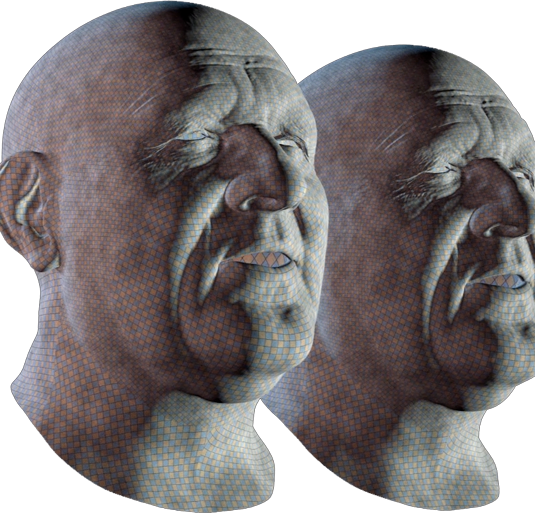
Two 3D model heads of Bob Paisley
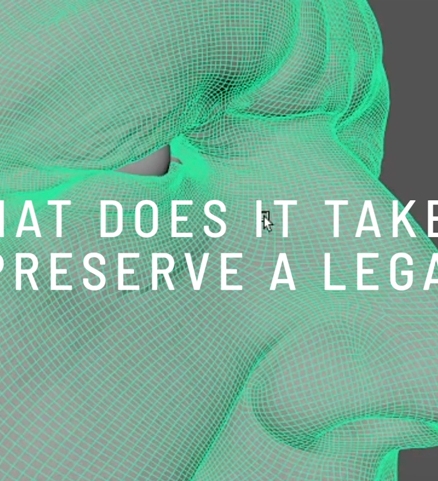
Close up of a 3D model of a face
Press Project Stand Red perfectly exemplifies our innovation mind-set by using smart technology to introduce one of Liverpool’s most beloved managers to the next generation of fans.
Read on The Drum

Want to talk sports? Get in touch.

Hey 👋

Please fill out the following quick questions so our team can get in touch with you.

Can’t get enough? Here is some related work for you!

Virtual Clothing Is Helping Fashion Brands Dress to Impress

Virtual Clothing Is Helping Fashion Brands Dress to Impress

4 min read
Profile picture for user mediamonks

Written by
Monks

Virtual Clothing Is Helping Fashion Brands Dress to Impress

Earlier this year, our research and development team MediaMonks Labs partnered with FLUX, our fashion and luxury team, to explore the virtualization of fashion. The report explored digital’s impact on fashion design, production and consumer experiences—one of those being the  opportunity to try on digital garments using AR.

 Now, the Labs team has completed a prototype that allows people to do just that. Based on full-body tracking, the prototype features an original digital garment designed by Brandi LaCertosa, a Creative at MediaMonks with a background in fashion design. But the immersive experience does more than let people virtually “wear” a garment; it also offers a glimpse into the ways that digital technology can help consumers engage with the meaning and inspiration behind a design through storytelling and interactivity.

Trying on a New Technology

 If you’ve ever played around with a face filter on Instagram or Snapchat, then you already have an inkling of how the try-on prototype works—the main difference is that the prototype tracks the whole body, rather than simply tracking the face. So just like how a face filter might let you try on cosmetics, full-body tracking lets you view an entire virtual outfit on your own body.

When the team first began experimenting with the prototype, only 2D tracking was available by Snapchat. Since then, the platform has released 3D body tracking, which recognizes the position and rotation of joints for a more convincing experience.

Monk Thoughts We used the industry standard tools for design, modeling and output to see how these tools work together.
Portrait of Geert Eichhorn

There are some limits to the technology. The camera’s view must frame the entire body, which is good to get an overall look at an outfit, but can make it tricky to capture the finer details (like buttons on a blouse) that require bringing the device in closer range to see.  The technology also doesn’t allow for sizing adjustments, meaning a single virtual garment won’t fit all body types. Grading (fashion-speak for making larger or smaller sizes) a virtual garment follows the same process as a physical one.

The team anticipates demand for 3D content will continue to grow in the fashion industry. Realizing this, they built their approach around the way fashion houses produce physical collections. “We used the industry standard tools for design, modeling and output to see how these tools work together, and what we need to learn for future projects using this production pipeline,” says Geert Eichhorn, Innovation Director.

Designing in a New Dimension

The process of designing an outfit and translating it into digital was a unique collaboration between cutting-edge technology and traditional fashion design. “I wanted this garment to be a heritage piece, something that I would design regardless of it being digital,” says LaCertosa, noting that a fashion brand wouldn’t take the digital aspect into consideration when designing—instead, executing digitally would be our challenge to solve. The team worked with a Marvelous Designer, which allowed the team to work with the same kind of digital patterns that brands are already using in their current design process.

The digital production process emulated the way that a garment comes together physically, with the Labs team translating LaCertosa’s designs into patterns that would join together in a 3D shape. “We weren’t physically together, so I couldn’t make patterns for them,” says LaCertosa. She provided the team with references—“We use very specific terminology in fashion,” she adds—and connected with them over calls to suggest any changes that needed to be made. “It’s the same process you’d have by physically meeting in a factory,” says LaCertosa. “We followed that same production flow, but virtually—and it was quite smooth.”

modelpatterns

Just like a physical garment, the 3D one is made from two-dimensional patterns.

This process gave the team the chance to test the new value chain mapped out in their previous report—a fashion cycle transformed by new technologies. “It speaks to how we do things. We have so much expertise across our teams, and it’s about trusting each other and knowing what someone doesn’t have and needs,” says Eichhorn. “There’s an understanding that all these things feed into one another, from design to production to the end-consumer, so it’s natural for the Monks to work together in an integrated way.”

Translating Inspiration into Tactile Experiences

The technology prototyped by Labs is more than just a tool for trying on clothes digitally—it also opens up sophisticated forms of storytelling. The inspiration behind LaCertosa’s design hearkens back to the Greek island of Chios, her family’s homeland. Among the island’s most famous stories is that of the Ottoman invasion of Anavatos, a fortress-like village high up in the mountains. As the Ottomans stormed the village, the women made a drastic sacrifice to avoid falling into a life of slavery: they jumped from the cliffs to their deaths and were regarded as heroes by the locals.

Elements of this story come to life in the details of LaCertosa’s design. Its silhouette takes inspiration from traditional Greek garb worn in the War of Independence, while ruffles climb up the shoulder to evoke ascension (“Anavatos” translates to “ascendable” or “climbable”). Worry beads made from resin produced by the mastic tree, which is most prevalent on the island, become shank buttons adorning the garment.

moodboard

While it’s not unique for a piece of clothing to tell a tale, such stories are seldom shared with consumers. “Designers love telling their stories and sharing how they pull inspiration,” says LaCertosa. “Now, you have more opportunities to let people get to know the garment and learn more. Even small details incorporated through sound and animation could have a great effect.”

On that note, Guajardo continues to experiment with the prototype by adding different visual effects that make the try-on experience more unique, immersive and emotionally engaging. “I’m fascinated that you can mix different techniques that we use with lenses,” he says. “I’m using particles and segmentation to test different atmospheric effects.”

So, while some may use full-body tracking and 3D technology to show how a garment looks on their body, others might wield virtualization to tell feature-rich, emotionally driven narratives. From production to the consumer experience, digital’s unique ability to convey the inspiration behind a design and immerse people within the world of the brand continues to grow—and the team is keen to see where that takes the industry next.

There’s more where that came from.

Snapchat’s 3D body tracking lets people wear digital garments—and how they engage with fashion. Virtual Clothing Is Helping Fashion Brands Dress to Impress Is it time to trade your full body mirror for full body tracking?
Fashion 3d content ar augmented reality snapchat

How We Let Liverpool Fans Step into the Past with AR

How We Let Liverpool Fans Step into the Past with AR

4 min read
Profile picture for user Thomas Dohm

Written by
Thomas Dohm
Sr. Producer at MediaMonks

How We Let Liverpool Fans Step into the Past with AR

Among industries affected by COVID-19, sports were hit especially hard, with seasons canceled and postponed until the pandemic could be contained. We’re now approaching a closer sense of normalcy, with sporting events now back on—albeit for digital audiences. What the pandemic has shown is that leagues, clubs and sports brands can go much further in using digital technology to reach and support fans.

The Stand Red app, made by MediaMonks in collaboration with Octagon and Standard Chartered Bank (led by Marc Davies, Snr. Sponsorship Manager), Main Club Partner of Liverpool FC, does an excellent job at connecting Liverpool Football Club with all of the team’s activities. Allowing fans to countdown the time to the next game and digitally show their support, the centerpiece of the app is its virtualization of Liverpool’s fabled Boot Room at Anfield, where the club’s legendary manager Bob Paisley pored over strategies. The Boot Room just recently won an FWA award for the app.

Boot Room Outside

After scanning their surroundings, a door to the Boot Room opens up to fans.

The AR experience lets users step into the Boot Room themselves, where club memorabilia springs to life—and where they’ll find the late Bob Paisley, who sits in the room and converses with fans. Paisley’s presence is part of a celebration of his 100th birthday, and is just the latest example of how we, alongside Octagon and Standard Chartered, wanted to pay tribute to this iconic figure in club history.

In addition to the Boot Room experience, we used a mix of CGI and live action acting to bring Bob Paisley back to the big screen in a series of five films. The films, produced alongside the Boot Room experience for Standard Chartered,  give fans the opportunity to see the sporting icon again, and while pulling off such an illusion in a Hollywood-level production is impressive, it’s a whole new thing to be able to physically walk into a room and engage with the legend himself. The project’s success shows the importance of digital fan engagement—here’s what we’ve learned in the process of building it.

First, in our attempt to bring Bob Paisley to audiences on-screen, we understood that digitally representing someone on film—especially the deceased—raises real concerns about bodily autonomy. When reproducing someone’s likeness, start by getting their family’s blessing, and include them as stakeholders in the process. Following the development of the app and films, Graham Paisley, Bob Paisley’s son, said: “It’s been an incredible process to see how this technology works, and also very moving. My grandchildren never got the chance to meet Dad in person, so this is a nice way of showing them who he was and what he meant to people. The whole family is really happy with the result.”

Let Authenticity Drive the Experience

Authenticity was key in recreating the Boot Room digitally, ensuring both its contents and Paisley himself were faithfully portrayed. Paisley’s model in the AR experience is downscaled from the one seen in the films, and capturing the manager’s spirit on-screen was one of the biggest challenges of the project. In creating a realistic portrayal in CGI, we mined video footage of Paisley for a variety of distinct facial expressions that we could manually model, then animate. This included the careful work of recreating even the finest details of Paisley’s face: 200 unique facial shapes and 200,000 hair follicles manually placed and more, in over 400 hours of modelling time.

Octagon_Bob_Paisley_TechBTS_v405.00_01_35_00.Still004

We took great care in sculpting Bob Paisley's face with high fidelity.

But even more impressive than making this incredibly high-res model, perhaps, is how we managed to squeeze it down into a model that could be used within an AR environment. AR requires a small digital footprint, which means developers must be very economical. We managed to keep high fidelity despite sizing down the digital Bob Paisley’s head from over 100,000 polygons to just 10,000!

Approach Your Subject with Respect and Passion

Bringing Bob Paisley in front of fans again was a privilege, but so was reproducing the various items and artifacts that users engage with within the virtual Boot Room. Collectively, these artifacts give fans a tangible experience with the club’s history, helping them forge deep personal relationships. These include radio broadcasts, which users discover by turning the knob of a vintage radio; signed shoes worn by the club’s most legendary players; Bob’s own notebook, which tests users’ own sense of strategy and more.

Boot Room Radio

Once in the Boot Room, fans can engage with objects and artifacts.

Ben Phillips, one of our Film Creatives involved in the project, noted to me that working on this project felt more poignant than uses of similar technology that gives posthumous Hollywood actors one more chance on the big screen. “It felt more significant with the timing,” he said. “Not only because it was a celebration of Bob’s 100th birthday, but also because it coincided with the club enjoying a renewed period of success on all fronts–the best that Liverpool fans have seen since Bob Paisley’s era.” In this case, the films and the Boot Room experience serve like a passing of the torch from one great manager to the next.

 Football fans are incredibly passionate. I’ve been working with Octagon and Standard Chartered on sponsorship projects for close to two years, and there is something fascinating about creating content for football fans. They are, by definition, “fanatics,” and in a world where every brand is competing for attention, content created for football fans automatically gets talked about when they engage organically but obsessively.

When the work is done at a high level of quality, fans will react with satisfaction, delight and passion. It’s all the more important, then, that sports brands take special care in how they engage with audiences digitally. There’s so much potential for brands to capture the passion of their audience, giving them tangible ways to connect with the brand—whether in the stadium or at home.

And while we all look for meaning in our work, it’s not every day that we can read on social media that our work gave someone goosebumps or brought them to tears in the way that our work for Standard Chartered and Liverpool FC has—and that’s a powerful thing.

Augmented reality breathes new life into Liverpool Football Club's history, showing how digital and emerging tech can satiate sports fans' craving for connection. How We Let Liverpool Fans Step into the Past with AR Enter Liverpool FC’s most fabled space with the power of augmented reality.
liverpool fc liverpool football club augmented reality AR the boot room standard chartered

3D Content Adds a New Dimension to ROI

3D Content Adds a New Dimension to ROI

4 min read
Profile picture for user mediamonks

Written by
Monks

3D Content Adds a New Dimension to ROI

While online platforms have traditionally merely catalogued inventory and product descriptions, today’s technology enables consumers to get up close and engage with products—a useful feature in a time when physical touch has become discouraged.

This fast-changing development has challenged brands to think in terms of new digital formats and channels, identifying untapped opportunities to strike a connection with consumers. One exciting example of this is Google’s Swirl ad format, which transforms banner ads into spaces to engage directly with 3D product models.

Google recently released a case study detailing a Swirl campaign co-developed by MediaMonks for French fragrance brand Guerlain. The ads invite users to explore the brand’s perfume, turning a digital bottle to reveal floral ingredients that visually evoke its scent in an almost synesthetic fashion. While achieving the “wow” factor of an appealing interactive experience, the ad drove results, too: Google notes a three-time increase in engagement compared to other rich media formats, a 34% increase in exposure time and a 17-point increase in customer purchase intent. The ad’s success showcases how technical innovation and creative storytelling come together to drive unique engagement opportunities.

Content That Goes Beyond the Bounds of Possibility

Swirl ads function in two ways: first, there’s the initial banner view, whose animation is triggered by the user’s scrolling down a page. Within this mode, users can rotate the product and zoom in to explore its details more closely. If they like what they see, there’s a prompt to open the experience in a full-screen view, enabling greater detail and additional features.

swirl watches

Swirl ads let users dive deep into product features in an engaging way.

Tommy Lacoste, who is a Senior Project Manager at MediaMonks and worked on Guerlain and other Swirl campaigns, noted that “The most compelling thing about the format is having a beautiful, 3D object with real time reflection and shadows,” mentioning the creative goal of achieving visual fidelity. Another unique aspect of the format compared to other interactive banners, he says, is that it doesn’t immediately redirect you somewhere else. Exploration and engagement are critical. “With the Swirl format, we can really dress up and contextualize the object,” says Lacoste.

Showcasing the Guerlain perfume’s ingredients digitally as a beautiful bouquet within the bottle is just one example of how brands can use 3D content to creatively build new contexts for learning about or enjoying a brand. This applies to other content like AR filters as well; for example, MediaMonks worked with Unilever to develop a Facebook Messenger-connected AR game that turns the daily habit of brushing one’s teeth into playtime, helping establish healthy habits by tapping into children’s imagination.

Striking Personalized Emotional Resonance

As shoppers increasingly turn to digital channels to research, discover and make purchases online, 3D content also offers an immersive opportunity to strike a personalized connection. While this need has ramped up after the rise of COVID-19’s spread, Swirl ads were already live well before then, demonstrating how the appetite for such content has already existed. The format serves as an effective vehicle for building emotional resonance, which is increasingly critical to differentiating the brand as consumers turn their attention toward experiences.

In the Forrester report “Navigate Four Waypoints To Build Brand Resonance,” Forrester VP and Principal Analyst Dipanjan Chatterjee notes the importance of driving emotional connections between a brand and its audience. “Brands do not just satisfy our material needs; they also speak to our subconscious,” writes Chatterjee. “The best ones connect to us emotionally in ways that secure them an unassailable position. It is much easier for competitors and entrants to innovate and replicate features and functionality than it is to displace an emotionally rooted bond.”

Monk Thoughts The challenge is to deliver on the original intent of digital.
black and white photo of Wesley ter Haar

In search of the emotional resonance in content, MediaMonks Founder Wesley ter Haar laments that over the years, many brands and advertisers have privileged linear storytelling formats for too long, avoiding a key benefit of digital formats: interactivity. “The challenge is to deliver on the original intent of digital,” says MediaMonks founder Wesley ter Haar. “Interactive, tactile and personalized moments of magic that create conversation, conversion and commercial opportunities.”

Brands that seek new yet meaningful ways to connect with consumers digitally require a more innovative approach to the standard toolkits they’ve been working with. By rethinking how consumers can interact with physical products digitally, Swirl ads and other 3D content like AR filters encourage brands to adopt a channel-specific mindset that identifies opportunities to meet consumers in unique, but increasingly relevant, ways.

Brands Are Best Served with a 3D Strategy in Place

3D content replicates the physical experience of engaging with a product, but has the opportunity to go even further because it’s unbounded by physical constraint—aside from file sizes and loading times, anyway. But conceptually, 3D creative content offers brands a way to immerse users within the brand story at a low barrier of entry. In this respect, Lacoste recommends brands use 3D content purposefully: “In many instances, a video suffices. 3D content must be used with purpose, and made interactive for the full effect.”

Little Brush Big Brush Case Video.00_00_15_17.Still009

The "Little Brush Big Brush" AR game for Unilever demonstrates how 3D content can offer new contexts for consumers to engage digitally.

Also look for opportunities to to maximize value and efficiency. “Let’s say I’ve made a 3D model of a perfume bottle to use in a banner,” says Lacoste. “We can reuse that in an AR lens or in a marketing video.” While most brands still consider 3D content as a “nice-to-have” rather than a “must-have,” it’s worth understanding the versatility of the assets.

In fact, in a webinar hosted by the In-House Agency Forum, ter Haar advised brands to “Try to make the 3D element part of your production workflow. One of the big challenges we see is that brands don’t have the assets.” By reusing pre-existing CAD designs, for example, much of the development work is already taken care of.

Whether watching linear video advertising in the form of product unboxings or engaging in new formats, like trying on makeup using AR filters, consumers are eager to replicate tactile, tangible shopping experiences in virtual environments. As brands face a reckoning moment to support this ever-increasing desire, they must do so strategically and efficiently. Simple 3D experiences like those delivered in Swirl ads offer an accessible way for brands to upgrade their storytelling and increase engagement that converts.

3D content offers a way for brands to captivate consumers through interactive, emotionally resonant experiences that replicate physical engagement. 3D Content Adds a New Dimension to ROI Swirl ads put a spin on tactile digital engagement.
3D content google swirl 3d ad format banner ads display ads ar filters ar augmented reality

Bridge the Online and Offline Shopping Experience with AR

Bridge the Online and Offline Shopping Experience with AR

5 min read
Profile picture for user mediamonks

Written by
Monks

Bridge the Online and Offline Shopping Experience with AR

The rate of hyperadoption in digital retail has accelerated in recent months: consumers are buying online more than ever before, and retailers selling non-essentials online saw a 65% uptick in online revenue from March 14 to April 17, according to Forbes. As consumers adapt to the necessity and convenience of discovering, researching and purchasing online, retailers must also harness this moment to bridge the online and offline shopping experiences.

Econsultancy reports that “47% percent of respondents from large enterprises say that in the past several weeks, they have observed product or service innovations at their organizations as a result of the outbreak, while 49% have observed innovation in marketing messaging or branding that they might use post-outbreak.” One such innovation that marketers are exploring is augmented reality (AR), specifically for industries in which meeting in-person was previously thought to be critical in making a purchasing decision—take luxury retailers, commercial and residential real estate, car buying and more.

AR Offers an Intuitive Digital Shopping Experience

Many consumers are already familiar with AR technology thanks to the ubiquity of AR filters in camera apps like Instagram or Facebook Camera. In fact, Facebook also offers AR-based advertisements within the newsfeed, allowing customers to “try out” products virtually—for example, testing lipstick shades using the front-facing camera.

AR technology links the convenience of shopping from home with the ability to inspect, explore and assess products on a store shelf. This offers a comfortable middle ground for consumers who want to bring the retail experience closer to home, either out of personal preference or due to a need for contactless shopping solutions.

A new normal requires new ways to engage.

Monk Thoughts Interacting with product makes you feel like you already own it.
black and white photo of Wesley ter Haar

Retailers are also primed to become the next big media platforms for brands to tell their stories, according to insights from the Forrester report, “Retailers: You’re The Next Media Moguls.” “Shopping is fragmented and the shopping journey isn’t linear, but consumers are nonetheless likely to discover and research high- and low-consideration products in retail stores and on retail websites,” writes Forrester VP, Principal Analyst Sucharita Kodali. “As sources of information, retailers like Amazon, Best Buy, Target, and Walmart know they are well positioned to tell brand stories to these shoppers on their and other websites.”

Big-box retailers and leading ecommerce platforms can transform the shopping experience and support the businesses they represent by offering such highly personalized digital experiences. By baking AR into its app, for example, Amazon enables brands to engage with customers while they’re already in the mindset to shop. But perhaps more important to the role that retail must play for consumers moving forward, these experiences build a personalized connection and emotional resonance.

In his talk “Extending Beyond the Horizon,” delivered to the In-House Agency Forum, MediaMonks Founder Wesley ter Haar discussed the impact that engaging with an object—physically or digitally—has on consumers. “Interacting with product in physical space makes you feel like you own it. Building that into the digital experience delivers on that user expectation for personalization that’s often missing.”

Streamline the In-Store or Showroom Experience

While the immediate benefits of AR are clear to at-home shoppers, the technology can enhance and streamline the brick-and-mortar retail experience as well. Examples include wayfinding toward specific products via a mobile camera or offering AR directories that may make it easier to find specific stores and departments. AR product demonstrations like those mentioned above serve a purpose in-store, too, offering a high-tech alternative to display products or expert-led demos, enabling an overall contactless shopping experience.

Monk Thoughts What do you want people to unlock when consumers scan something?
black and white photo of Wesley ter Haar

In this respect, retailers should approach AR with a sense of purpose, ensuring the space embraces a “camera-ready” approach. “Is your packaging ready for cameras, is your retail space ready for cameras?” asks ter Haar. “In building an overall AR infrastructure, consider: What do I want people to unlock when they scan something?”

Supporting these technologies also establishes a long-term strategy for real estate businesses to activate spaces and build a sense of placemaking for their retail tenants. Similarly, 3D content offers an engaging way for these businesses to entice new tenants: for example, offering an AR overlay that virtually furnishes the space, adds data visualizations or lets users see the effect that time of day has on lighting. In response to social distancing, for example, venues are building digital twins that let online users truly inhabit spaces digitally. Such features would also prove useful to both retail and residential real estate.

Focus on Simplicity and Efficiency in Building AR Experiences

For brands that are experimenting with AR for the first time—either as one-off campaigns or as a sustained feature in an ecommerce platform—it’s important to keep things simple. The most complex and feature-rich AR experiences require users to download and install a brand app, which many users may be unwilling to do. “One aspect that’s very critical is how seamlessly you can enter an AR experience,” says Marie-Céline Merret Wirström, Executive Producer at MediaMonks. “Downloading an app is a huge barrier of entry.” Instead, retailers may consider web-based AR experiences that plug in directly with an existing ecommerce platform with just a simple tap.

Social AR experiences, like those you can find on Snapchat, Instagram and Facebook Messenger, offer a simple way for brands and retailers to experiment with AR. “AR is really powerful in the funnel,” says ter Haar. “Lenses are often thought of just as something that is entertaining but a throwaway experience, buy you can build really impactful functionalities by connecting AR with platforms like Facebook Messenger.”

Build snackable AR experiences that inspire.

Web-based AR is another simple platform to get started on, with an added benefit: users can jump seamlessly into the experience through their web browser. It’s also a very easy platform for brands to develop for. “If you are, say, a luxury brand and have a product that people will want to examine for size and detail, you should be using WebAR,” says ter Haar. “It’s very easy to implement because you just need the 3D format, the model of the product.”

Merret Wirström notes that even the most simplistic AR experiences can be effective for driving digital engagement. “Being able to see a product in 3D in high resolution is all you need, and from there you can expand to include specific features or variations in product,” she says. “That’s just a bare minimum approach, but it’s already so much more effective than looking at a flat image or reading product specifications.”

The Purina One: 28 Day Challenge serves as a good example of how a simple web-based AR experience can inform users while also building an emotional connection. Once activated, users simulate feeding a pet dog or cat that appears within the space they’re in. As the pet eats the Purina blend, the web app highlights signs to look for (and when) to determine improvements in health.

Screen Shot 2020-04-30 at 10.36.46 AM

As a means to become more equipped to offer AR experiences, ter Haar suggests that brands elevate the role of 3D content in the marketing mix. “Try to make the AR or 3D element part of your production workflow,” he says. “One of the biggest challenges we run into with AR is that brands don’t have the assets available.”

Volvo’s Polestar 1 Experience, developed for the Geneva Motor Show in 2018, offers a high-end product demonstration by overlaying the Volvo Polestar with AR assets that showcase internal features. While this showroom experience is much more complex than what a retailer might offer at home, it provides an example of how AR can uniquely demystify product attributes through intuitive, customer-led exploration using CAD assets.

Augmented reality remains an efficient and effective way for retailers and real estate businesses to, well, augment the digital experience by building personalized impact. By integrating AR features natively into an ecommerce platform or even in a store, businesses can bridge the gap between online and offline shopping, providing a middle ground that accommodates the shifting needs of consumers.

As consumers turn to shopping online, AR technology offers a convenient way for retailers to offer utility and emotional connection. Bridge the Online and Offline Shopping Experience with AR AR offers a comfortable middle ground between viewing items in-store and online shopping.
Retail augmented reality ar real estate ecommerce experiential mobile ecommerce mobile shopping web ar digital transformation

Choose your language

Choose your language

The website has been translated to English with the help of Humans and AI

Dismiss