Choose your language

Choose your language

The website has been translated to English with the help of Humans and AI

Dismiss

‘We Peer into Pandora’s Box’ – How MM Labs Is Bringing Black Mirror to Reality

‘We Peer into Pandora’s Box’ – How MM Labs Is Bringing Black Mirror to Reality

4 min read
Profile picture for user Labs.Monks

Written by
Labs.Monks

‘We Peer into Pandora’s Box’ – How MM Labs Is Bringing Black Mirror to Reality

If you have any interest in tech, chances are you’ve watched an episode or two of Black Mirror, Netflix’s massively popular series that dives into uneasy relationships between people and tech (and if you haven’t, we suggest you start). While the drama sets its sights in the near future, its power—and proficiency for inducing anxiety in viewers—stems from the fact that the questions it explores are just as applicable to the present day.

If you take solace in the fact that Black Mirror’s terrifying tech hasn’t yet (or never will) come to fruition, don’t get too comfortable: the future is now, they say, and the mad minds at MediaMonks Labs are releasing a web app that brings the show one step closer to reality.

In the season 2 episode “White Christmas,” a neural implant called Z-Eye provides an augmented reality interface within a user’s field of vision. Among its features is the ability to block other people in real life, which makes them appear as gray silhouettes with muffled speech. Inspired by the feature, MediaMonks Labs built an AR filter that likewise renders a user’s body as a pixelated, black-and-white shape (try it here–best enjoyed on a tablet or laptop).

demo

While it’s not quite as advanced as what you see on Black Mirror—it doesn’t require an implant, thankfully, and works with only one person in the view—it demonstrates how technology featured in speculative fiction is closer to reality than audiences might anticipate. In this case, the technology is so accessible that it requires little setup for users to play with. “What makes this so cool is that it’s running in your browser and any out-of-the-box webcam,” says Joe Mango, Creative Technologist at MediaMonks Labs, who built the tool. “It’s clickable and usable at any time.”

Block Out Anyone—No Implant Required

The filter is powered by BodyPix, an open-source machine learning model that enables body-part segmentation. “Segmentation” is a process in which a machine takes an image or video and separates the pixels that belong to a person versus those that do not. It’s the same idea behind using a green screen, no screen necessary.

What makes BodyPix unique is that it not only separates a body from its surroundings, but can also segment that body into 24 specific parts; for example, the left side of the face versus the backside of a subject’s right arm. Such technology could have several applications, like creating precise, body-tracking augmented reality filters or image editing.

With BodyPix as an underlying machine learning model, the Labs-developed body-blocking tool isn’t TV magic. And even though the technology that makes it work is quite complex, the concept behind body blocking is relatedly simple.

screen_shot_2019-03-21_at_5.04.54_pm

How the body-masking technology works.

Rendering formless, pixelated bodies in real time, the Labs-developed body-blocking tool isn’t movie magic. The tech powering it is quite complex, but the concept behind body blocking is rather simple and relies on editing two identical video feeds together. On one end, the tool takes the camera feed and applies a shader that distorts and pixelates it. On the other end, a separate version of the video is segmented to cut out the user’s body—as if you took the magic wand tool image-editing program to select an object and delete it. This version of the video is pressed on top of the distorted one, resulting in a pixelated, black-and-white body surrounded by an otherwise normal environment.

Finding the Science Behind Science-Fiction

While the tool isn’t totally accurate to the technology as seen in the show, its underlying mechanics can help viewers understand and envision a technology that previously may have seemed possible only in the realm of science fiction. It also demonstrates the value of trying to make the impossible possible through cutting-edge and emerging technology.

“It may seem unusual that a creative and production company like MediaMonks is doing such in-depth technological research,” says Mango, though that openness to experiment can help brands find new opportunities to take experiences available in their worlds and replicate them for fans in ours. When Mango stumbled upon BodyPix in GitHub, for example, “My mind immediately went to the Black Mirror episode.”

Monk Thoughts We peer into Pandora’s box to see what’s possible—and the questions raised.

The pitch to build upon the software to reproduce the startling Z-Eyes feature was surprisingly easy: “When I approached [Head of Labs Sander van der Vegte] with the idea, he said, ‘That sounds cool, let’s do it!’” recounts Mango. “In a nutshell, it’s that simple to get sign-off on a project thanks to the open, creative environment.” But considering Black Mirror is often a case study in troubling uses of technology, this zeal to experiment shouldn’t be viewed as flippancy. “We’re able to peer into Pandora’s box to see the interesting possibilities that are available—and the questions they raise,” says Mango.

And that ties back to how such projects can help end-users better apply fictitious, futuristic tech they see in the media to their own lives—and to anticipate or wrangle with some of the ethical dilemmas that inspire speculative fiction. And of course, such projects are just plain cool, too. In essence, it all boils down to making a connection that breaks down barriers between the real and imagined.

The world depicted in Netflix’s Black Mirror isn’t so far off—which is why it’s so compelling. MediaMonks Labs bridges fact and fiction by making startling tech from the show a reality with AR. ‘We Peer into Pandora’s Box’ – How MM Labs Is Bringing Black Mirror to Reality The near-future is inching ever closer. Are you scared?
black mirror science fiction augmented reality AR emerging tech ethical tech technology ethics

Prepare for the Next Big Differentiator: Data Security and Responsibility

Prepare for the Next Big Differentiator: Data Security and Responsibility

3 min read
Profile picture for user mediamonks

Written by
Monks

Prepare for the Next Big Differentiator: Data Security and Responsibility

These days, everyone is a data company. If you’re collecting and using data, you’re responsible for it and how it’s used. We saw brands come to grips with this when several prominent American news publications were blocked from the EU weeks after GDPR regulations’ passing. Even a year after unprecedented data scandals and regulation, brands still sense users’ unease about big tech and the power it wields. Rather than worry too much, though, brands should view this as an opportunity to leverage their data on building consumer trust or using their influence to promote beneficial initiatives.

Consumer trust in data privacy and security is of increasing business value to all brands, not just tech giants. In fact, data security and the responsible use of technology is primed to become a major area of growth and competitive differentiation for brands, according to a Forrester report on the subject: “Sustained compliance [to data regulation] allows firms to capitalize on the business value of security and privacy, including company reputation, share values, and customer engagement,” writes the report. Brands hoping to lead in this new competitive battleground shouldn’t wait to establish trust with their customers.

Building Trust in Tech

One of the simpler ways to build a culture of responsibility within your organization is to make the data tradeoff clear to consumers. This means plainly or creatively defining to your users the need for their data—for example, rewarding users with a stellar customer experience. It’s no secret that Uber maintains vast amounts of data on its ridership, for example, and the brand’s promise is that it uses this data to help passengers travel more efficiently. When Uber launched in Southeast Asia, it leveraged data and study findings to demonstrate how its services could make cities more livable by improving their infrastructure.

Nest screenshot website 05

Those taking the lead in creating tech experiences must likewise position the value that they provide in making customers’ everyday lives better. The popular smart home brand Nest achieved this through its Power Project, which is focused on providing help to families unable to afford energy costs. Like Uber, Nest builds trust by presenting hard numbers in a way that’s easy for audiences to extract value. After informing users of the startling statistics about those burdened by the cost of energy, the website connects them with programs where they can donate or seek aid. The initiative connects clearly with the brand’s devotion to greater energy efficiency through its self-learning thermostats and other connected-home products.

Don’t Shy Away from Tough Decisions—Welcome Them

Organizations are bound to find themselves amidst difficult conversations about tech responsibility, since many pressing issues have yet to be defined through regulation. Again, brands can view these discussions as an opportunity to take a leading role. With 5G technology looming on the horizon (a technology that’s still met with confusion by lay users), GSMA chose to embrace the questions that the mobile technology raises about information policy, data security and city infrastructure.

The result was a VR experience showcased at this year’s Mobile World Congress in Barcelona, which is the largest gathering of mobile tech industry insiders in the world. Developed in collaboration with MediaMonks, the immersive VR experience prompts users to make policy decisions about mobile technology, then renders the impact of those choices on the virtual city around them.

gsma_cityofthefuture_socialmediateaser_extratext.00_00_11_05.Still001

Because the original VR experience was exclusive to conference VIP (but you can play with a web version of it here), it helped to kickstart a dialogue with decision makers by providing context for 5G’s use and addressing the challenges and social issues that its wide adoption will prompt. And because the questionnaire provides consequences for each decision users make, it’s apparent that GSMA has considered multiple viewpoints with each challenge.

Making the tough and sometimes controversial decisions about responsibility in tech certainly makes for a bitter pill to swallow. Microsoft recently found itself embroiled in controversy when its employees demanded that the company cancel a contract with the US military licensing its HoloLens for use in combat training. In contrast to Microsoft’s moving forward with the deal, last year Google opted not to renew its contract with the US Defense Department in response to a similar controversy. As tech companies carefully consider the power they wield in society and confront these challenges and criticisms head-on, they may find themselves emerging at the other end having built goodwill, equity and a greater sense of transparency.

Technology is ramping up to have a wider influence on our lives each day. Its disruptive nature might prompt unease and worry in some, though brands should view these moments as opportunities to differentiate by leading conversations and informing consumers about the value of their services. From there, the uncertain technological landscape of the near future becomes less scary and instead is made much more exciting.

Data security and responsibility in tech are set to become major brand differentiators as tech companies face greater scrutiny from the public. But here's a surprise: every organization collecting data is a data company, which means everyone must take note. Prepare for the Next Big Differentiator: Data Security and Responsibility Any organization collecting data is a data company. Which means you (yes, you) must seek opportunities to build trust.
data security data responsibility tech responsibility responsible tech responsibility in tech emerging tech

Taking Insights from SXSW to the Boardroom

Taking Insights from SXSW to the Boardroom

4 min read
Profile picture for user mediamonks

Written by
Monks

Taking Insights from SXSW to the Boardroom

Returning from any conference or festival presents a bit of a honeymoon situation: having absorbed insights and ideas, your brain is firing on all cylinders for ways to implement them into your organization or workflow. It’s important to carry that momentum while it’s fresh in your mind, so use this time to reflect on opportunities and raise them with leadership.

If you’re not sure where to begin, consider wise words from MediaMonks founder Wesley ter Haar, who presented his “Top Techtonic Trends” talk at the Brand Innovators Summit at SXSW. In the talk, ter Haar asks a crucial question: “Will we be relevant in X?” It’s something MediaMonks asks itself each day, and every department or team within an organization should likewise reflect on how they can maintain relevancy during a time where means of interaction are always in flux.

IMG_0359

"Will we be relevant in X?" asks MediaMonks founder Wesley ter Haar in his talk, "Top Techtonic Trends."

Often, this boils down to how one can provide a greater customer experience with the technology available. “When you talk about how you deliver exceptional experience, those are the companies that will win,” SAP’s CMO Alicia Tillman offered in a fireside chat at the event. But that’s easier said than done; how can brands actually execute better experiences?

At the “Behind the Brand: Johnson & Johnson” panel, moderated by MediaMonks Head of Growth Joe Olsen and hosted at SXSW’s Brand Innovators Summit, key players within one of the world’s biggest home and pharmaceutical brands gave their insights on how to drive innovation internally to meet the growing needs and expectations of consumers.

“When you think of innovation with CPG, it’s usually about what’s on the shelf: the physical good,” Sarah Debolt, Manager at Johnson & Johnson’s Marketing Accelerator, told the panel audience. “What my team is trying to encourage—and where the market is going—is thinking about the digital products and services that surround the tangible products that you’re using.” According to Debolt, organizations have to look beyond the products they offer and instead focus on adding value to customers’ lives and how they engage with the brand.

Innovation is About Value, Not Perception

Consumers can tell whether a brand is innovating or merely seeking the perception of innovation. Whether out of concern for budget or brand reputation, leadership aren’t likely to sign off on innovation for innovation’s sake. “People in the industry feel like there’s a first-mover’s advantage to these technologies,” said Mike Summers, Brand Manager and Digital Strategist at Listerine. “’Let me get there first.’ But there’s really not an advantage unless you have a reason to be there.” The attitude that Summers hints at is why many organizations stumble awkwardly into the emerging tech space, like when Kodak hopped on the blockchain bandwagon before falling right off of it.

Monk Thoughts When you can talk about how you deliver exceptional experience, those are the companies that will win.

These missteps lend to leadership’s skepticism of innovation’s value. So how do you break through that? By thinking like the C-suite and identifying innovation’s clear business value. The best way to ensure your initiative is on the right path is to invite key stakeholders from across the organization to the planning table, then working together to seek out opportunities for emerging technology to meet those needs.

For example, a request to better invest in data for stronger customer targeting first requires an understanding of what data is needed and why. The key is to identify pain points first, then apply the best tech solutions that solve them. That’s something that challenger brands have understood for a while. At a challenger brands fireside chat session, Sr. Director of Consumer Marketing at Invisalign Kamal Bhandal noted that “Believe it or not, we position ourselves as a technology company, and data fuels so much of our business.”

Make a Case by Speaking Leadership’s Language

If you’ve selected the best technology to solve a specific business need, you’ll have a much easier time explaining its value to decision makers in your organization. Matthew Fantazier, Senior Brand Manager and Digital Strategist of Johnson’s Baby, explained how this business-first focus helps sell digital innovation within Johnson & Johnson. “We don’t have a chatbot strategy or an AI strategy,” he told the audience. “We have business strategies. If there’s something cool that Sarah and her team are working on and I have this problem I need to solve, my job is to find a way to integrate that, to make it meaningful and impactful.”

Monk Thoughts Worry about what you’re trying to accomplish as a business first.

That last point about developing meaningful solutions is the most important; by highlighting the impact any given tech will have on improving the customer experience, you can better speak to its value across different levels of the organization. It’s all about looping the conversation back to the value for the customer value. As ter Haar said in his talk, “Mix empathy with engineering for the future. It’s not just about the data, but how the data is being used.”

Innovating isn’t easy—if it were, there wouldn’t be so much urgency surrounding it. But that urgency shouldn’t come from rushing to lead with “the next big thing.” Instead, set your focus on discovering ways that emerging technology can enhance the relationship your brand has with new and existing customers. By maintaining this focus in your innovation initiatives, you’ll have no problem framing it in a way that promotes a clear value to leadership and stakeholders throughout the organization.

Everyone's feeling the innovation imperative, but how to sell innovation forward internally? The secret is to gather key stakeholders to identify business goals, then the emerging tech best suited to achieving them. Taking Insights from SXSW to the Boardroom How do you carry the momentum when the post-conference honeymoon period is over?
emerging tech innovation innovation imperative how to sell innovation internal innovation

Our Best Foot Forward: Functional AR

Our Best Foot Forward: Functional AR

4 min read
Profile picture for user Labs.Monks

Written by
Labs.Monks

Our Best Foot Forward: Functional AR

There’s no denying that online retailers make shopping more convenient, but in some ways the digital shopping experience falls short. For one, you can’t try on clothing or fashion accessories before having them shipped to your door, which means you might discover after days of waiting that something doesn’t fit. To get around this, customers might buy several versions of an item in different sizes, which can be costly to them in the immediate term while contributing to scarcity of high-demand items—for example, sneaker releases, which have generated $20 billion in U.S. sales alone in 2017 and have a resale market valued at over $1 billion.

There has to be a way to instill purchasing confidence in consumers, which is why one of the latest projects to come out of MediaMonks Labs, our internal R&D team, is an AR tool that uses computer vision to accurately measure shoppers’ feet. While it may not sound like the most exciting use of AR (no, it won’t transport virtual monsters to your living room or render a shoe directly on your feet), “it speaks a lot to what else we do beyond the crazier stuff,” says Joe Mango, Creative Technologist at MediaMonks Labs. “We explore things where there’s need, and see how feasible—or infeasible—it is. There’s high interest in exploration and discovery.”

Sander van der Vegte, who leads the Labs team, discusses the importance for more practical uses of the tech in both its adoption and signaling value to consumers: “Everyone’s pushing AR, but why is it useful? This tool is designed purely to solve a specific problem, and is functional in doing so.”

Improving CX with a “Form Follows Function” Approach

While most people are aware of their shoe size, fits aren’t so cut and dry; shoppers often get some shoes in one size and some in another. “Shoe shopping becomes more complicated when different brands and shoes have different sizing charts, making it harder to gauge what fits,” says Mango, who brought the tool to life. It can get around this issue by automatically translating a unit measurement into a specific brand’s sizing chart, giving the perfect size recommendation as users shop online. Ideally, the tool could exist within a retailer’s app, seamlessly aligned with the browsing process.

Monk Thoughts We explore things where there’s need, with high interest in discovery.

The tool has practical value for both consumers and retailers alike: shoppers know their purchase will fit before they buy it, and retailers don’t have to foot the bill of processing returns. This also means customers don’t have to worry about being blacklisted from making frequent returns, either—a fail-safe measure some retailers have used that erodes consumer trust and confidence. But perhaps most importantly, the tool serves as example for how retailers can use emerging technology to give consumers an obvious reason to provide their data. In this case, the length of their foot improves and optimizes the customer’s journey by enabling them to make the right purchasing decision.

Improving Measurements with Computer Vision

It’s worth noting that measuring via AR isn’t an entirely new capability: Apple, for example, integrates an AR “tape measurer” into the current version of iOS. While the feature is great for measuring perfectly straight lines or edges, it’s not the most accurate tool of measuring the length of a foot: there’s a lot of user error in moving the phone and finding the right angle to measure the foot.

Sock_test

The tool first identifies the size of a reference object, like a coin...

SockTest_2

...then compares that measurement to the relative size and shape of the foot.

The tool built by MediaMonks Labs is powered by OpenCV (a programming library for computer vision) and takes a different approach. Starting with a top-down photo of the user’s foot, it uses edge detection to determine and outline its shape. It then compares the size of that shape to a reference object whose size is defined and absolute—for example, a ubiquitous coin—which results in a consistently accurate measurement. While the output is in units of inches or centimeters, the tool has the potential to translate these measurements to brands’ custom sizing charts, taking the guesswork out of determining what fits.

Taking the Next Steps in Consumer-Friendliness

While the value of the AR tool is clear, added steps can be taken to improve usability. “There is a caveat to this method of measurement,” says Mango. “You need a flat color-contrasted background for accuracy,” which helps the computer vision model detect the foot’s edges.

Monk Thoughts Everyone’s pushing AR, but brands must ask why and how the technology is useful.
Sander van der Vegte headshot

Mango also discovered that the tool had difficulty differentiating a foot from the rest of a leg. The solution was simple: by wearing ankle socks he could segment the two with consistent accuracy. These limitations, along with the requirement of a universal reference object, present opportunities to make the tool more user-friendly for commercial use.

Despite its current limitations, the tool shows how brands might identify common issues on both the business and consumer side of the equation, then implementing technology in new creative, new ways to solve them. In the immediate term, these unique applications can provide the retailer with brand equity through emerging technology’s novelty. More importantly, though, they can deliver a better online or offline shopping experience to customers.

Augmented reality doesn’t have to be flashy to make a mark. Sometimes a more functional and utilitarian approach is best. See how the latest AR project from MediaMonks Labs shows the tech's ability to can enhance digital retail without bells and whistles. Our Best Foot Forward: Functional AR The latest from MM Labs shows that AR doesn’t have to be flashy to make a mark and provide lasting value.
AR augmented reality ecommerce digital retail retail emerging tech augmented reality in retail AR use case in retail

How to Be Somewhere You’re Not | The Island of Santa Cruz Del Islote

How to Be Somewhere You’re Not | The Island of Santa Cruz Del Islote

5 min read
Profile picture for user Reinder Nijhoff

Written by
Reinder Nijhoff
Technical Director

How to Be Somewhere You’re Not | The Island of Santa Cruz Del Islote

Santa Cruz del Islote is one of the world’s most fascinating communities. Learn how we put it on the map for The School of Sustainability.

Santa Cruz del Islote is a remote Colombian island just under the size of two football fields and home to around 500 residents. Situated two hours from the mainland, they don’t have access to things we take for granted like running water or electricity grids — resource conservation is simply a way of life.

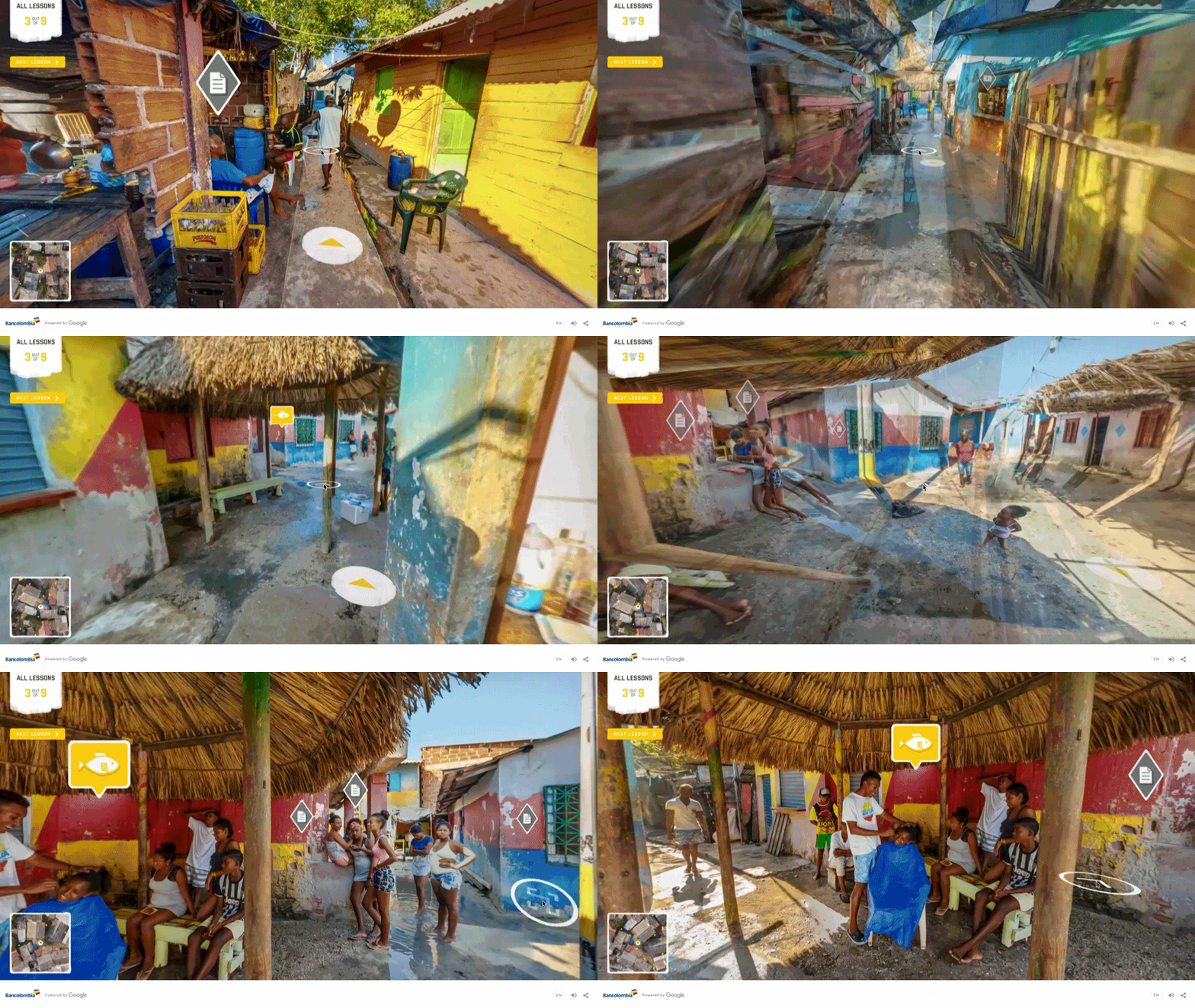
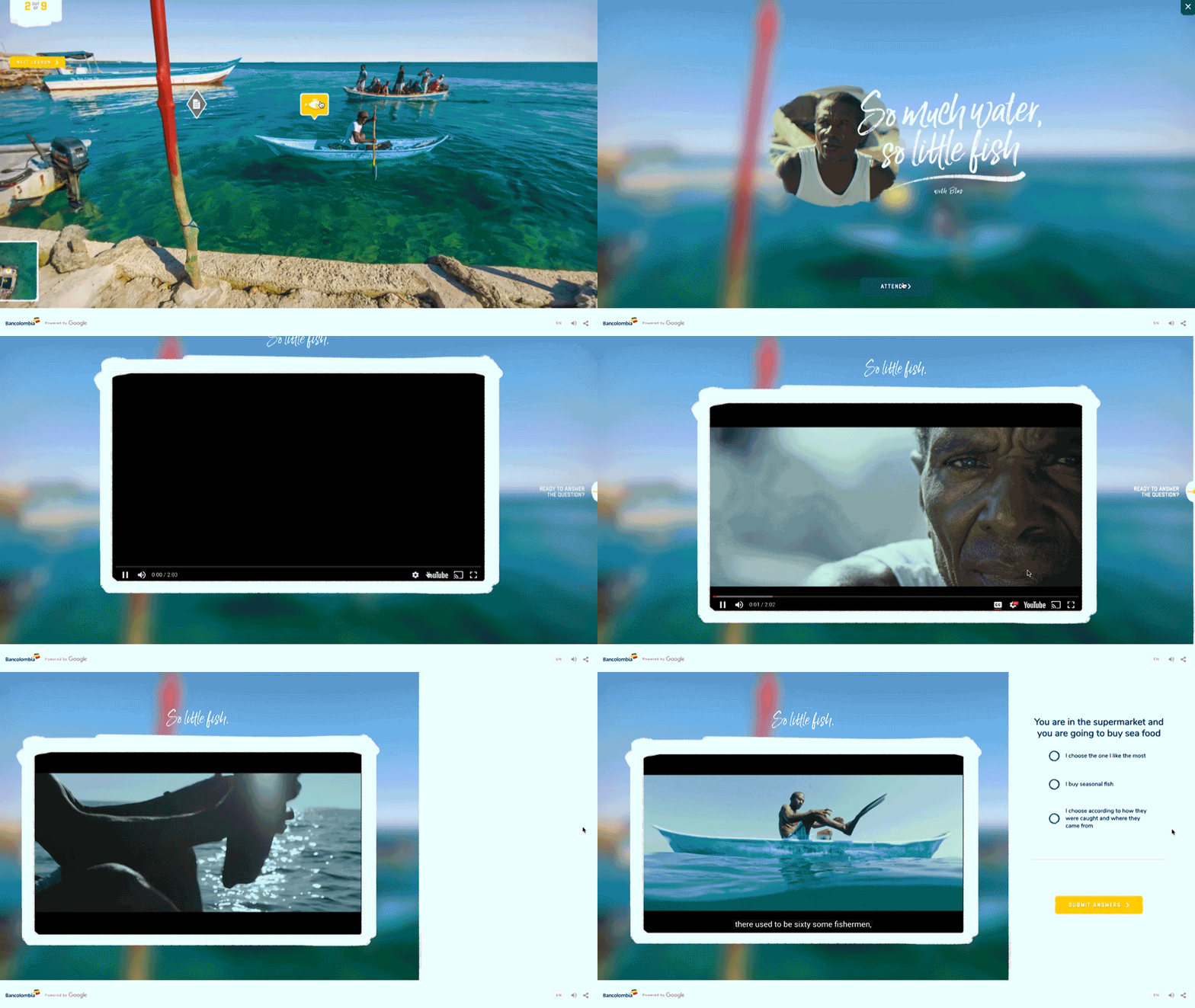
Around the island, we placed lots of clickable hotspots that take a user to a story or interesting fact from an islander. We made these hotspots viewable from multiple photospheres, so a user can see them from a distance while traversing across the island. The hotspots have a 3D position, so they behave like real objects in space when the user walks from sphere to sphere.

As well as the clickable hotspots, we placed audio sources with atmospheric sounds in the 3D space. These sounds were recorded directly from the island and can be heard from multiple photospheres. The spatial audio helps the viewer to locate where the sound may be coming from. As the user comes closer or pass by it, audio intensity and panning changes, based on the distance to the audio source and the view direction of the user.

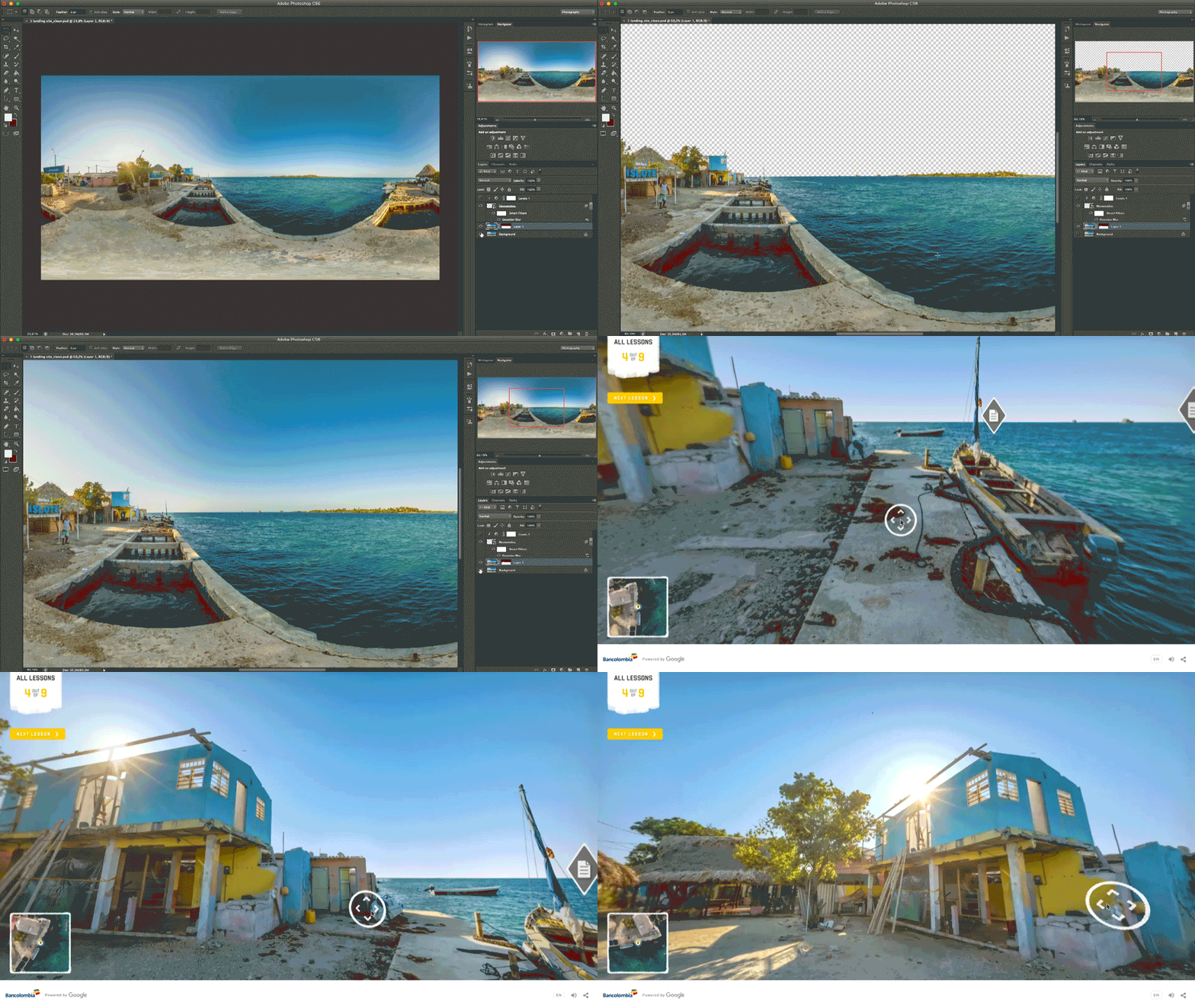
Furthermore, a completely custom sky was created, with animations of frigate birds passing over. This required us to manually cut out the sky from every photograph which was quite a labour intensive method.

Finally, we added a layer of lens flare and a subtle vignette effect, just to really help ensure a smooth transition and make the different photospheres as similar looking as possible.

5

The 3D Map

For the map and the overview of the island you see during the intro sequence of the website, we used a simplified version of the high poly mesh from the photogrammetry, again using Reality Capture.

Because all photospheres are positioned in 3D, we could easily create near-seamless transitions between this overview and the photospheres. Hopefully, this gives the user an even better understanding of their position on the island, and strengthens the illusion of walking around in an immersive environment.

6

Being able to explore a real-life location you might never see is one of the gifts recent technology has given us.

Remember when Google Street View first came out and it was a treasure to hover over Manhattan? Then came along Canadian artist Jon Rafman’s incredible Nine Eyes project capturing real-life scenes across the globe and GeoGuessr taking us from the outback of Australia to the fjords of Norway. Humans love exploring, and by mapping Santa Cruz del Islote, we hope that we have created a more immersive street view experience that everyone wants to pay a virtual visit to.

Explore The School of Sustainability for yourself.

This article originally appeared on Digital Arts Online on May 29, 2018.

Santa Cruz del Islote is a remote Colombian island just under the size of two football fields and home to around 500 residents. Situated two hours from the mainland, they don’t have access to things we take for granted like running water or electricity grids — resource conservation is simply a way of life.

All this makes the tiny island an interesting place to explore, which is why Colombia’s most sustainable bank, Bancolombia, decided to use it as their base for The School of Sustainability.

Developed as a Google Street View-like experience, virtual visitors can explore the island in detail, get to know the community, and learn nine core lessons in sustainability and resource conservation.

Together with fellow crafters and makers Google and SanchoBBDO, our goal was to create an immersive, cohesive island experience utilizing emerging tech that hadn’t been done to this level of detail before, while also making sure that people left their virtual tour with a new appreciation for resource conservation and living a more sustainable lifestyle. So how was the experience created?

1_05Rv-TVsmzRDchMOXVIUEg

Capturing the Island in Stunning Detail

We travelled to the island with a full film crew. Armed with a tripod and SLR, our photographer focused on capturing the island with beautiful shots from every angle. These shots would then go into 140 photospheres placed around the island, with each giving the viewer a high fidelity 360 degree view.

Each shot was carefully framed to ensure that there was a snapshot of island life in each photosphere, with the idea to offer a virtual tour through the lives of the residents.

2

Creating a More Immersive Street View Experience

While it was up to our photographer to capture island life in beautiful photos, we also had to make sure that the transition between each shot was as seamless (and similar) as possible, in order for the user to feel they are actually walking around the island and not just moving between a series of images.

And to create a cohesive transition between each photosphere, we used a variety of tricks to ‘glue’ them together.

The School of Sustainability 3

Photogrammetry

To get a fluid transition, we needed a (low poly) 3D mesh of the island, so we could project the current photosphere on this mesh at the start of a transition, and then fade the projection to a projection of the destination photosphere while moving in 3D.

This is similar to what Google does for their own Street View. Google creates the low poly mesh needed by using a 3D scanner placed at the same location as the camera. Because we used a traditional camera to create the photospheres and couldn’t use a 3D scanner, we had to make the 3D model in a different way.

Photogrammetry was the technique we used to map the island in 3D. At heart, photogrammetry is a transformative tech technique of automatically creating a 3D model of an object, by analyzing photos of the object taken from several angles.

We used a drone for aerial photography and shot thousands of photos at ground level and then created the high poly 3D mesh we needed with photogrammetry-software called Reality Capture.

In the end, we optimized this mesh by hand. The resulting low poly mesh is used for the transitions between the different photospheres.

Imitating Real Life

The photosphere-to-mesh projection during transitions really helps in getting a more immersive experience. It gives the photospheres a 3D position in world space, and the warping of the photospheres during a transition (based on the projection on the low poly mesh) helps to give the user the feeling that they are moving through a 3D environment.

To create an even more immersive experience, we added elements to the scene that are stable and consistent between each photosphere — helping the viewer experience a more coherent transition as they explore the island.

The School of Sustainability 4
Santa Cruz del Islote is a remote Colombian island just under the size of two football fields and home to around 500 residents. Situated two hours from the mainland, they don’t have access to things we take for granted like running water or electricity grids — resource conservation is simply a way of life. Today, being able to explore a real-life location you might never see is one of the gifts recent technology has given us. How to Be Somewhere You’re Not | The Island of Santa Cruz Del Islote Today, being able to explore a location like Santa Cruz del Islote that you may never see in real-life is one of the gifts technology has given us.
immersive emerging tech transformative tech

Attracting the Right Talent to Future-Proof Your Organization

Attracting the Right Talent to Future-Proof Your Organization

3 min read
Profile picture for user mediamonks

Written by
Monks

Attracting the Right Talent to Future-Proof Your Organization

The three ingredients to a future-focused workforce are fostering new skills, finding passionate talent and empowering them with internal mobility.

Future-proofing your team isn’t just about investing in the hottest technology or pivoting to the next big media trend. While keeping up with the rate of change in the market gets tougher each day, revising your hiring process and management style are two great ways to ensure your organization is prepared to weather any surprise the future might have in store.

Seek Out Multi-skilled Talent

Don’t shy away from the millennial or gen-z workforce; learn to work with them. Today’s new breed of workers is multi-talented and adept at navigating today’s tech and media space, making them highly adaptive to sudden shifts in tech and media. A young writer who is also experienced in video editing social content won’t have much grief in a pivot to video, for example. And a graphic designer with back-end experience can prove essential to new platforms you might want to work with in the future. A team with variable skillsets is not only prepared for unforeseen requirements—they’ll also communicate with one another better thanks to a more thorough understanding of the various stages in a project cycle.

Strike a Connection with Brand Personality

Unfortunately when it comes to in-house agencies, marketing and advertising teams, there’s a sense that the work offers less variation and flexibility than with bigger outside agencies, which makes them less attractive to jack-of-all-trade creatives. But Warren Chase, COO of Verizon’s own internal agency 140, calls this a myth: “We see more and more rising stars coming out of school or leaving agencies,” he said at the ANA Masters of Marketing Conference. “They’re saying ‘I’m done with this pitching all the time, working all weekend—I want to build a career in a place that supports my ideas [where] I can actually have a life.'”

DSC06220

With a dwindling distinction between work and personal life, today’s workforce primarily seeks rewarding work that supports their passions. Carefully considering how your brand vision aligns with potential candidates’ values is a great way to attract talent that will help you translate that passion to customers. Shiny, flashy awards can go a long way to capture creatives’ attention as well. Creative prospects eye opportunities that can enhance their portfolios and resumes, including awards that lend their work a little cachet. If awards feel out of reach for where your brand stands now, consider forming partnerships with award-winning companies—begin by seeking out awards that fit your industry or model (for example, the In-House Agency Forum Awards).

Target Specific Skills with a Nurture Campaign

One way to discover and nurture talent that will help you achieve long- and short-term goals is to have a hand in their training. Participate in internship programs or host competitions with magnet schools and universities to help talent get their foot in the door (and to give them a taste of the projects you’d throw at them). This is a great way to hunt for specific skillsets that might currently be lacking in your organization.

DSC06232

Empower Your Team with Talent Mobility

When it comes to future-proofing your organization through finding the right talent, hiring is only half the battle. Once your team is in place, you’ll need to revise your management style to encourage talent visibility and mobility. This means having a pipeline in place to tap into any relevant skills at a moment’s notice when strategies shift and requirements change.

One clever way to enhance skill visibility is to take a cue from the gig economy and offer quick, short-term opportunities for those within your organization to experiment with roles unrelated to their typical everyday responsibilities. This not only lets your team gain new skills, but also helps them meet and work with others in the organization to foster collaboration and skill sharing. Adopting a horizontal, startup-like structure is another way to achieve this open environment of collaboration that fosters creativity. “I think there is an excitement to working in a slightly less formatted and structured way,” MediaMonks founder told the Looking Glass earlier this year.

Monk Thoughts We're trying to get people to have that slight amount of chaotic friction that I think you need in a creative business.
black and white photo of Wesley ter Haar

Other ways to keep abreast of employee skills include devoting some time to employees’ personal projects, providing accelerator programs or hosting internal creative challenges. The key is to encourage employee’s ambitions to see where their capabilities lie—and to understand how changes in technology might affect them. With a culture in place for continual learning and celebrating employee’s passions and skills, your organization should be equipped to anticipate the unexpected.

Future-proofing your organization isn't just about investing in new tech. Making changes in hiring and nurturing talent can both help your organization, marketing team, advertising team or in-house agency prepare for unexpected market shifts or emerging trends. Attracting the Right Talent to Future-Proof Your Organization Future-proofing an organization requires investing in talent, not just in tech. Here’s how to find the talent you need and put their skills to good use.
hiring creative talent human resources leadership in-house agency internal egency marketing team emerging tech emerging trends market trends innovation

Choose your language

Choose your language

The website has been translated to English with the help of Humans and AI

Dismiss