Choose your language

Choose your language

The website has been translated to English with the help of Humans and AI

Dismiss

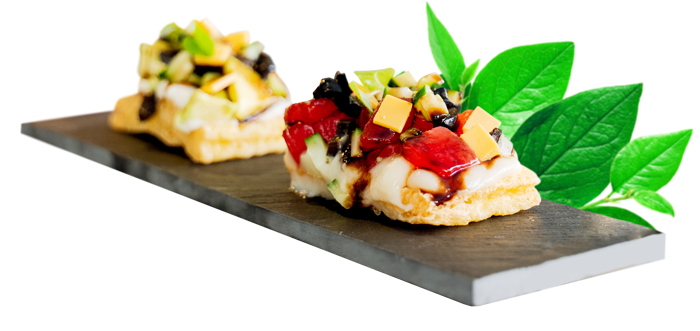
A small plate of JUST Egg inspired food
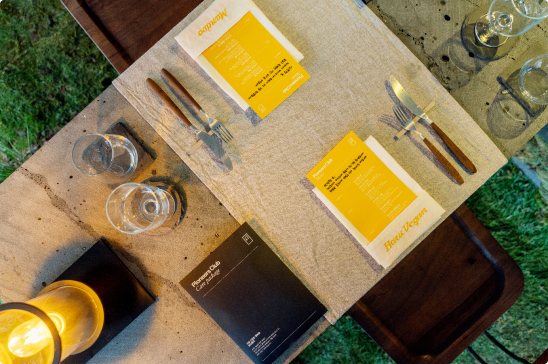
A nice place setting at a dining table
the outside of the pioneers club restaurant with vines growing on the walls

Pioneers Club • A Hyper-Personalized Dining Experience

  • Client

    Eat Just, Inc.

  • Solutions

    ExperienceExperiential Strategy & ProductionSocialInfluencer Marketing

A table with JUST Egg products on it covered in green leaves

Hatching up a launch rich in experience.

JUST Egg is a plant-based alternative to commercially produced eggs developed by San Francisco-based company Eat Just. With an aim to enter Asia’s alternative protein market, the brand partnered with us to create a launch campaign that creates buzz among chefs, plant-based advocates, foodies and influencers, starting with Seoul. Not one to chicken out on Covid challenges presented to us at the time—safety restrictions, supply chain deficiency and time and resources constraints— we leveraged them as an opportunity to set up an intimate, immersive and Covid-safe pop-up restaurant, The Pioneers Club.

Monk Thoughts When developing the concept...the Covid restrictions in South Korea kept changing to become more strict. We decided to turn these new challenges into creative opportunities.
Jesper Larsson headshot

Whipping up a hyper-personalized dining experience in an herbs-filled environment

  • A desk in a restaurant overgrown by plants Two chefs work on the presentation of JUST Egg dishes
  • Two people stand in front of a grassy wall with their names shined on it Two people's feet touching a grass ground of the restaurant

Planting the right ambience.

Designed with personal safety as a main priority, The Pioneer’s Club was a plant-based pop-up restaurant that offered a unique and exclusive fine dining experience in a verdant herbs-filled environment. The name was carefully chosen as a tribute to the pioneers who helped the plant-based movement gain traction in South Korea. The design theme of the space was “wild nature reclaiming modern life,” which referenced both the growing plant-based movement in South Korea and JUST Egg’s new Korean tagline, “The egg born from the ground (땅이 낳은 에그),” also developed by Monks.

A noodle dish made with JUST Egg products
A chef stands in front of the restaurant neon sign covered in plants

Customized elements to suit every taste.

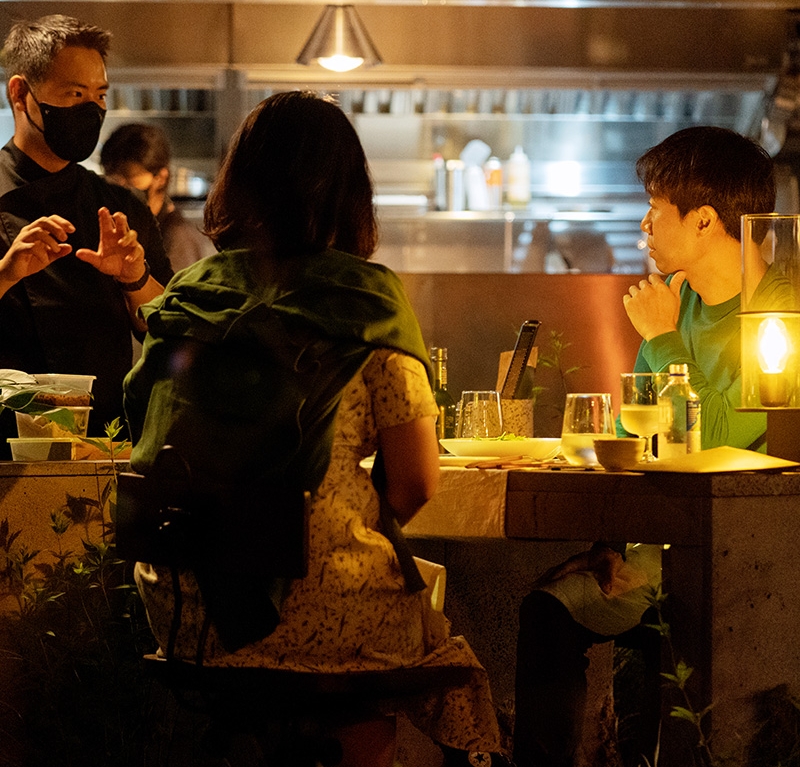
At The Pioneers Club, only two guests at a time can be seated, with the guests’ dietary restrictions and allergies influencing the menu. By working together with renowned chefs and letting them create localized recipes, we showcased the potential of the product and developed content to feed the feeds for months after the event. And by inviting the right crowd while showing the potential of the product, it quickly opened doors to get JUST Egg on the menu of other trendy plant-based cafes and restaurants, such as Millennial Dining and Monk’s Deli.

A couple sitting at a table at night with yellow light keeping them lit
Press To drum up buzz around converting diners to this food form, American plant venture Just Egg teamed up with Monks to develop the pop up restaurant Pioneers Club, inviting local plant-based advocates to a foliage-filled fine dining experience.
Read on Campaignasia.com

Want to talk experiences? Get in touch.

Hey 👋

Please fill out the following quick questions so our team can get in touch with you.

Can’t get enough? Here is some related work for you!

Distinguish Your Brand in the Immersive Web

Distinguish Your Brand in the Immersive Web

4 min read
Profile picture for user Zoe Anderson

Written by
Zoe Anderson
Client Partnerships Director, Jam3

An immersive website for T.I's new album

I played witness to brands’ torrid relationships with websites throughout my time at Superhero Cheesecake—a boutique digital creative studio founded in the Netherlands with the aim of building premium work for the web—which integrated into Media.Monks earlier this year after merging back in 2016. It's been amazing to see how the indie feel that made Superhero Cheesecake so attractive hasn't been lost in meeting the ever-growing demand for amazing web platforms.

Right now, a need to differentiate and capture first-party data is revitalizing the potential of the web experience. In my new role with the Jam3 team, we focus on combining insight, creativity and technology to align with culture and connect with people. Because websites have become the primary sales support and source of information for audiences once again, they must also pull their weight in building deeper connections with audiences. Yet many designers and development teams are focused on ticking every best practice off the list, resulting in websites that end up looking and feeling the same, lacking the unique spark needed to make an indelible impression with audiences. 

We need to raise the standards and expectations on what a website can achieve—so I say rip up the rulebook and trade best practices for bespoke, premium solutions that forge deeper connections with audiences and immerse them within the world of the brand.

Set Your Brand in Motion—Literally

There’s a saying we like to use: the interface is the brand. It means every experience across the digital ecosystem becomes a direct reflection of its core products and services. So when we set out to build an immersive web experience, we begin by examining the essence of the brand and how to communicate that through a series of moments. What is the emotion we want to trigger with visitors? Building a uniquely differentiated platform starts with defining what you want audiences to feel at every step.

This is where conventional wisdom to stick to standard best practices falls flat. Limiting your website interface to static text and images does little to bring brand moments to life. Interactive elements in particular—think real-time rendering and explorable 3D product models, or even full games themselves—enable user journeys that feel premium and personalized, but even little touches in motion design go far beyond user expectation.

Form Meets Function

Elements like those described above aren’t just for looking good; they can also help translate abstract concepts into tangible, memorable experiences. Product demonstrations are a great example of this. With 3D interactive models, you can break apart a product to explain its various pieces, like an exploded-view diagram.

A 3D animated Lucid Motors car

Above: An animation that highlighted the key features we needed to communicate to the consumer as part of our work with Lucid Motors

This was our approach to building a strong online identity for Lucid Motors, creators of the most luxurious electric cars on the market. We built the user journey around motion visuals and CGI assets that were animated to perfectly highlight key features of the automaker’s technology, including components of the chassis and the battery pack that powers it all.

The scalable platform is also lightning fast. This is an important consideration that can’t be overlooked: when you have resource-intensive, motion-heavy assets and animation, your team must ensure the experience doesn’t slow down and freeze up—especially for those on mobile devices. What’s the highest performance, most flexible way of representing the brand? This is a critical question but one that most production studios skimp out on, sacrificing performance for flashy visuals. But the fluidity of moving through a platform contributes just as much, if not more, to the experience than visual fidelity alone.

Building Effective Experiences

With the rise of the immersive web, much of the work that was once restricted to microsites has made its way onto brand platforms and commerce. Which means truly standing out requires a totally different set of skills than many teams may be accustomed to. Realizing the market need for experiences built upon a foundation of data-driven and strategic insights, we’re scaling up our own capabilities within the Media.Monks team to defy convention and create work that breaks new ground.

What we do is highly specialist—and that can make it tough to find the finest talent in-house to support brands’ growing ambitions. To combat this lack of talent, we recently launched a six-months paid immersive web traineeship to cultivate a pool of specialist creative web developers who have instilled our values and pursuit of perfection from the start.

This means tackling historic challenges like measuring the value of touchpoints like microsites. In the early aughts (when the microsite was king), they lacked the analytics to understand if their million-dollar investments were worth it. The present-day focus on conveying the feeling of a brand may not be as concrete as selling X amount of product, but it’s no longer immeasurable.

The ultimate goal is to forge a connection and relationship with audiences. While today’s immersive web thrives from CMOs willing to take creative risks to build something special, there’s opportunity to bridge together creative UX design, strategy and analytics to eliminate risk and enhance the brand—even without relying on best practices that have sucked the feeling out of the everyday digital experience.

With Wajer Yachts, for example, we used the website to transport visitors to the exact moment of casting off with a yacht in a single click. 360-degree product views and gorgeous imagery of the yachts’ interiors offered a vivid experience and a sensation of ownership. But it didn’t just look good: time spent on the website increased by 250% after launch and generated qualified leads increased by 450%, demonstrating the value of bespoke branded experiences.

The internet in its current form is closing to its end. A new era of immersive, personalized experiences is emerging, as evidenced in recent discussion around the metaverse. As brands aim to build relationships with consumers through bespoke touchpoints, the role of web experiences—enhanced by immersive web technology—has elevated to become an essential space to differentiate the brand and translate it into compelling experiences.

Our immersive web team outlines solutions that forge deeper connections with audiences and immerse them within the world of the brand. immersive brand virtualization platforms data-driven marketing

How Gaming Is Shaping the Future of Work in the Metaverse

How Gaming Is Shaping the Future of Work in the Metaverse

4 min read
Profile picture for user mediamonks

Written by
Monks

Screen grabs of videos games on a black background

Today, gaming is the gateway to the metaverse. Brands know it, marketers know it, and so it comes as no surprise that Microsoft has reached a deal to buy Activision Blizzard in the biggest all-cash acquisition in history. Or that just days before, Take-Two Interactive had made its own powerful move by agreeing to acquire Zynga, arguably the biggest company in social gaming.

For the industry, these two momentous deals are bursting with clues of what the future might look like. Brands are moving into or doubling down on gaming as they seek to tap into that community, bring interactive features to their business and create new virtual worlds to connect with consumers. And in years to come, we’ll continue to witness big moves in that direction as brands become increasingly interested in leaving their mark on the metaverse.

But in addition to gearing up for something that’s still being developed, these companies know that gaming spaces are already rich in cultural momentum and provide endless opportunities to create virtual environments where people can collaborate, exchange ideas and engage with others. But it’s not just consumers who will be there—these experiences can also extend to brands’ prospects and their own workforce. So, what exactly does the gaming trend mean for the future of work? 

Investing in Memory-Making

If you’ve read our metaverse report, which you can read in English, Spanish, Portuguese or Chinese, you may recall the anecdote of how our Director of Creative Solutions Lewis Smithingham had a meeting with his client in the video game Red Dead Redemption, where their business talk was interrupted by a lion attack. Far from being ruined, the meeting became an inside joke that brought them closer together—a fun memory that they wouldn’t have made on a regular video conference.

The anecdote shows how the memories we form online can have the same value as those made in any IRL experience. Perhaps even more so, as virtual spaces enable us to do things we wouldn’t have otherwise—like fending off your adversaries with clients. The fact is, people have been collecting real memories online for a long time, participating in exchanges over their shared passions and making new friends. It’s only natural for companies to start leveraging the potential for memory-making, and bring that value internally.

The report also illustrates how gaming drives the desire for cooperation, which becomes easier and more engaging in immersive worlds. On one hand, it erases the notion of borders and physical distance, meaning two people can be present in the same virtual space in a matter of seconds. It also levels the playing field: with games like The Last of Us, people can customize their experience through the accessibility settings, which includes features that benefit low-vision players and other options focused on fine motor and hearing.

Horizon Workrooms’

The same level of personalization can be extended to virtual workstations. People with chronic medical conditions or disabilities can personalize their setup according to their own needs and preferences instead of adapting to the one-size-fits-all kind of equipment they would find anywhere else. Horizon Workrooms’ settings, for instance, include color correction filters that help color blind people better distinguish elements. 

Beyond the Fun and Games

It would be a big mistake to assume that immersive worlds can only bring value to the entertainment industry. Microsoft’s Mesh, for instance, is a platform that enables team collaboration through immersive telepresence, making use of elements of the AtspaceVR platform that the company acquired. Soon, that same technology will be used to enhance the Teams platform. Noticeably, Microsoft has identified immersive worlds’ potential to bring work teams together and provide them with the same engaging, bonding effect it has on consumers.

Immersion can also be extremely powerful when it comes to networking. As a guest on the Campaign Chemistry podcast, Smithingham explains there’s a special level of focus that comes from having one’s hands on a controller, which pushes you to be present in the moment. So while regular video conferences lack some of the most engaging elements of an in-person meeting or the famous “hallway moment,” immersive worlds reduce the possibilities for distraction, leading to higher productivity.

When it boils down to it, accommodation makes all the difference in performance. The virtual workspace offers the possibility to be designed and redesigned for each individual without intruding on the preferences of others. With personal assistive technology, workers easily focus on their tasks and preserve energy for what really matters instead of wasting it on working around the same old barriers.

That said, as we embrace these technologies we must make a conscious effort to erase other inequalities—financial, cultural, racial—and create digital environments for everyone. “An open metaverse is more than just interoperability; it's about accessibility,” explains Catherine D. Henry, SVP Growth, Metaverse Innovation & Transformation Strategy, XR Creative Technology.

Monk Thoughts Digital democracy is ensuring everyone has access to the tools to participate in the virtual economy. The more active participants, the richer the ecosystem and the user experience.
Catherine Henry headshot

The Gateway to the Metaverse

For companies looking to build these immersive, collaborative environments, gaming serves as a source of inspiration and technological prowess. It shows how personalization and accessibility can bring about meaningful experiences, and that we don’t need to be in the same physical space to create a culture we truly feel part of. 

But among all the learnings that transpire from gaming brands, perhaps the most important is the value they place on authenticity. These brands keep players’ interests at heart to focus solely on experiences and partners that deliver true value to their community. By the same token, it’s essential to take a people-centric approach when it comes to virtual workspaces. Only if we put people’s preferences first will we be able to become the sponsors of an unforgettable experience. 

In seizing all the opportunities that the gaming industry is enabling for brands, it would be wise to approach each with an open mind. We’re already witnessing how modern and traditional companies alike are dipping their toes in gaming to unlock untapped audiences, but these values will also shift the way we approach other instances of life, such as work. 

If the metaverse is the successor of the internet, and gaming is defining the shape it’s going to take, it’s time we start looking at the tools and features that make it so engaging, and find new ways to incorporate them into our own business. After all, experimenting internally is the first step to providing our audiences with the virtual, immersive worlds they crave.

As companies invest in gaming, the development of immersive worlds will shift the way we approach work. As companies invest in gaming, the development of immersive worlds will shift the way we approach work. gaming metaverse immersive future of work

The Anatomy of an Artful Intervention

The Anatomy of an Artful Intervention

3 min read
Profile picture for user mediamonks

Written by
Monks

While a clear distinction between art and advertising may not always exist, consumers have a sixth sense for ads that tug at the heartstrings with one hand and their wallets with another.

What makes the difference between a campaign that delightfully intervenes rather than one that merely interrupts, and how can you begin to develop and conceptualize such a creative piece? With MediaMonks’ Water Ripples installation as an example (produced in collaboration with Stella Artois, Mother New York and Water.org), we’re diving into three main ingredients that make up an artful intervention.

And that’s really the test for elevating something to an art form—helping your audience situate themselves and your brand within a larger framework of social good, taking them outside of themselves and their everyday. While aesthetic beauty is ideal for creating a memorable campaign, it’s that self-identification with the human condition that leaves a lasting impact.

Thirsty for more? Read more about Water Ripples from FWA.

stella_casevideo_Still003

1. A Culturally Relevant Purpose

Both works of art and advertising evoke emotion in the audience, which means a particularly artistic campaign should have a clear, culturally relevant value proposition or purpose. A good place to find inspiration is to back a cause or highlight an issue that you feel aligns with your business or audience. And consumers agree: to a Sprout Social study from earlier this year, about two thirds of them think it’s important for brands to take a social stance, so don’t be shy. While it may seem risky, an experience or campaign that drives social good connects to audiences on a human level–and demonstrates your business’ desire to be socially responsible. Even if you aren’t able to solve the world’s problems, you can at least aim to unite people together or ask them to contemplate their place in society, just like any work of art or literature would.

The Water Ripples piece aimed to portray Stella Artois’ care for the clean water effort. And that’s a great cause for a brewery: beer is 90 to 95% water, after all. Through the use of 600 motor-controlled water droplets to replicate the look of rippling water, the installation beautifully depicted the “rippling effect” that the brand and installation participants made in social impact.


Water Ripple 2

2. An Experience that Enhances the Environment

Whether you’re building a large-scale art installation or want to play with a digital platform in a unique way, cleverly intervening with your audience’s everyday environment can go a long way in striking an emotional or empathetic connection between themselves and your cause.

While the Water Ripples’ most outstanding feature is its visuals, its biggest effect on viewers and participants was that it provided a quiet, contemplative and meditative space—a stark contrast to the hustle-and-bustle of Grand Central Station during commuting time.

Monk Thoughts We wanted to grab New Yorkers out of their busy commuter routine. Breaking out of that was a way of giving something to the participant.
Water Ripple 3

3. Audience Agency

Every good campaign should have a call to action, but an artistic one should offer a call to contribution—and that contribution should prompt participants to feel as though they’ve made a significant impact or connection with other people in the world (and hopefully your brand, too). How do you allow participants to immerse themselves in the cause by providing an experience?

To answer this question, the team behind the Water Ripples installation accounted for several tiers of participation, including those who answered the call to contribution as well as those who were simply passing by. Participants who made a financial contribution by purchasing a limited-edition Stella Artois chalice were able to make the water ripple, symbolically signifying the impact of their participation—and providing delight to those viewing from afar with the beautiful show.

Helping your audience place themselves within the grand scheme of the human experience doesn’t have to be that lofty—sometimes it’s as simple as designing a specific place for photo-ops and Instagram-worthy moments.

Monk Thoughts A lot of experiential is about creating this blank space for people to insert themselves.
Using the Water Ripples installation made by MediaMonks in collaboration with Stella Artois, discover the building blocks that make up an artistic brand campaign. The Anatomy of an Artful Intervention Using the Water Ripples installation made by MediaMonks in collaboration with Stella Artois, discover the building blocks that make up an artistic brand campaign.
immersive experience experiential innovation campaign branding stella artois mediamonks water ripples art eric wagliardo

How to Be Somewhere You’re Not | The Island of Santa Cruz Del Islote

How to Be Somewhere You’re Not | The Island of Santa Cruz Del Islote

5 min read
Profile picture for user Reinder Nijhoff

Written by
Reinder Nijhoff
Technical Director

How to Be Somewhere You’re Not | The Island of Santa Cruz Del Islote

Santa Cruz del Islote is one of the world’s most fascinating communities. Learn how we put it on the map for The School of Sustainability.

Santa Cruz del Islote is a remote Colombian island just under the size of two football fields and home to around 500 residents. Situated two hours from the mainland, they don’t have access to things we take for granted like running water or electricity grids — resource conservation is simply a way of life.

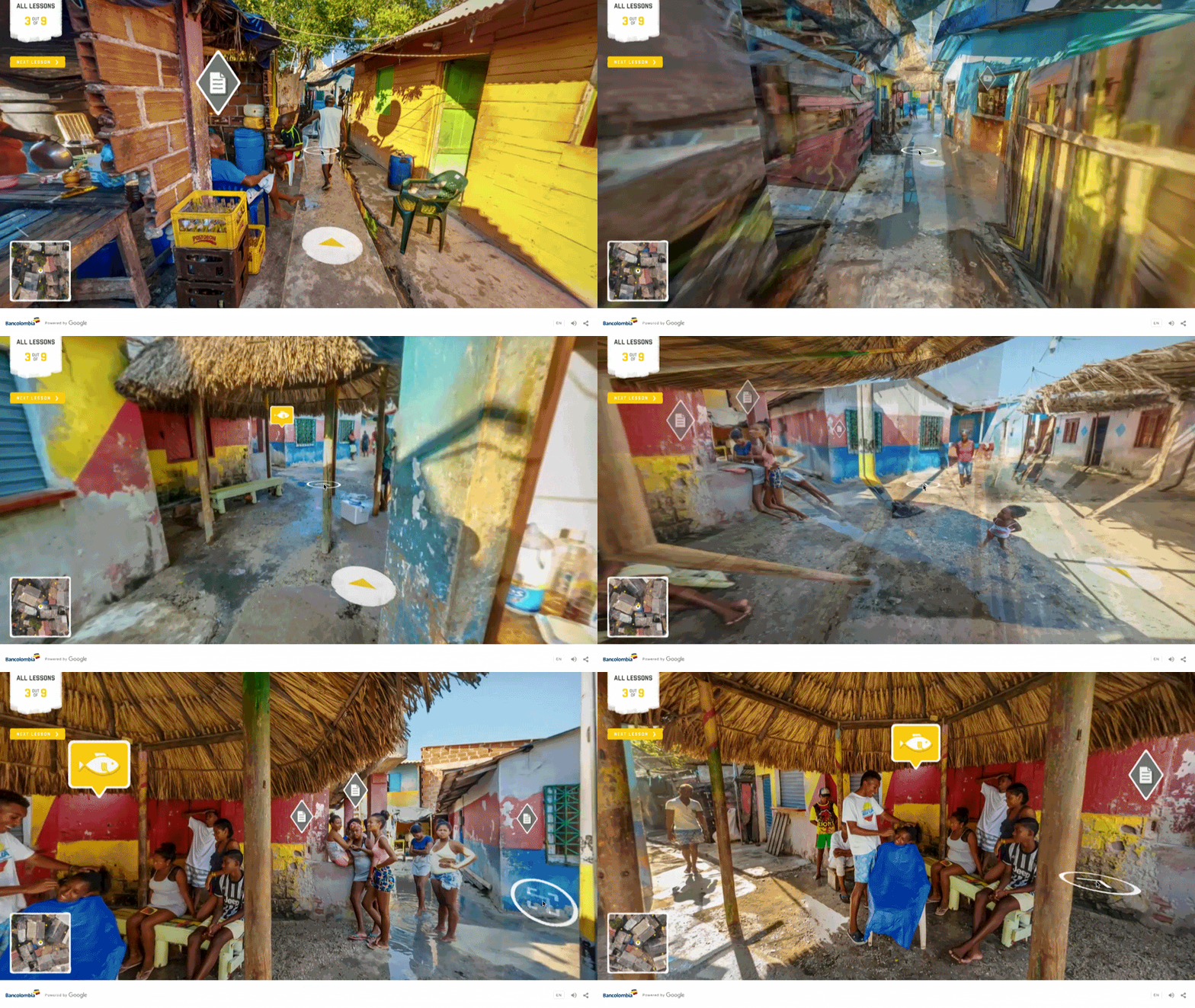
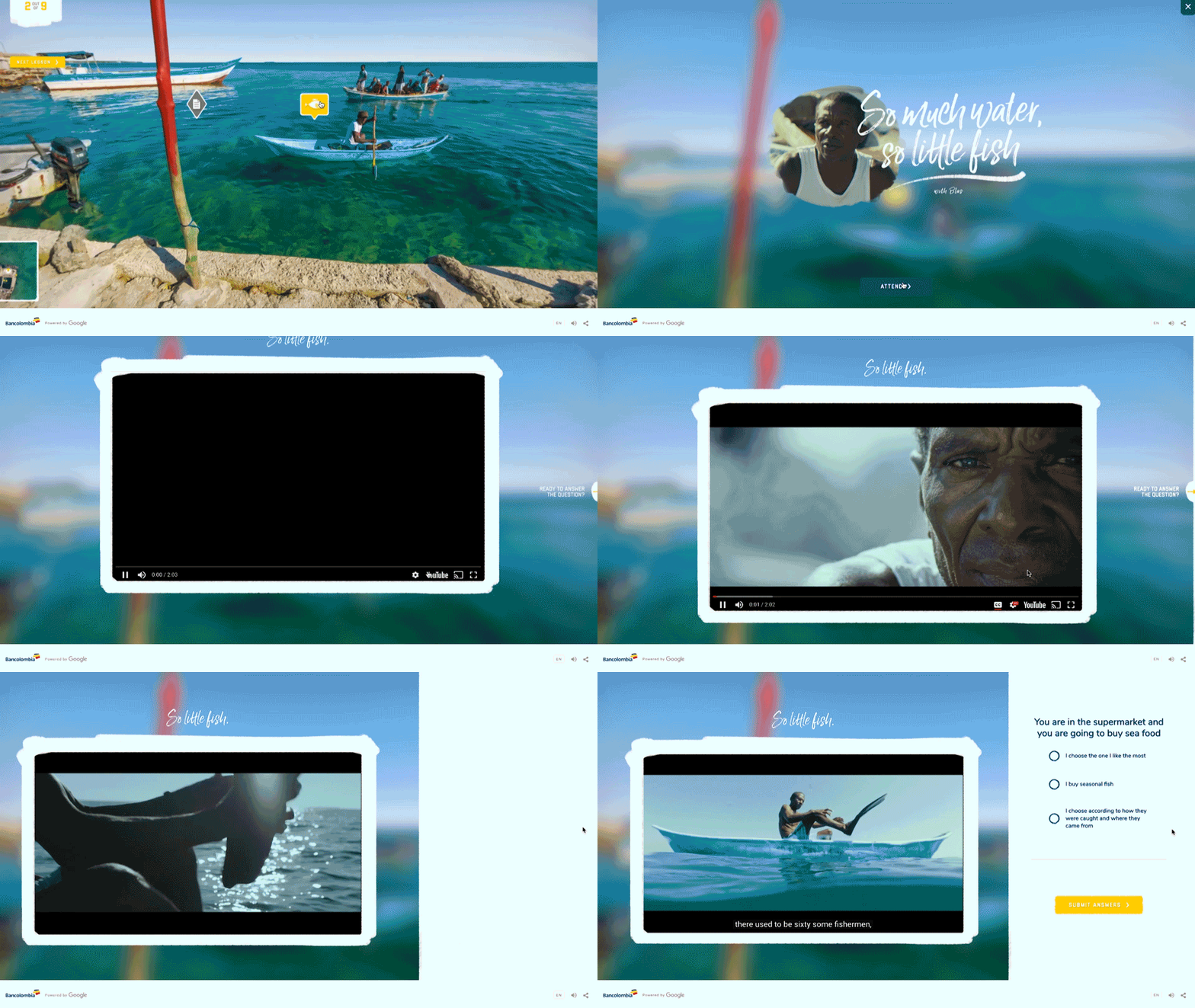
Around the island, we placed lots of clickable hotspots that take a user to a story or interesting fact from an islander. We made these hotspots viewable from multiple photospheres, so a user can see them from a distance while traversing across the island. The hotspots have a 3D position, so they behave like real objects in space when the user walks from sphere to sphere.

As well as the clickable hotspots, we placed audio sources with atmospheric sounds in the 3D space. These sounds were recorded directly from the island and can be heard from multiple photospheres. The spatial audio helps the viewer to locate where the sound may be coming from. As the user comes closer or pass by it, audio intensity and panning changes, based on the distance to the audio source and the view direction of the user.

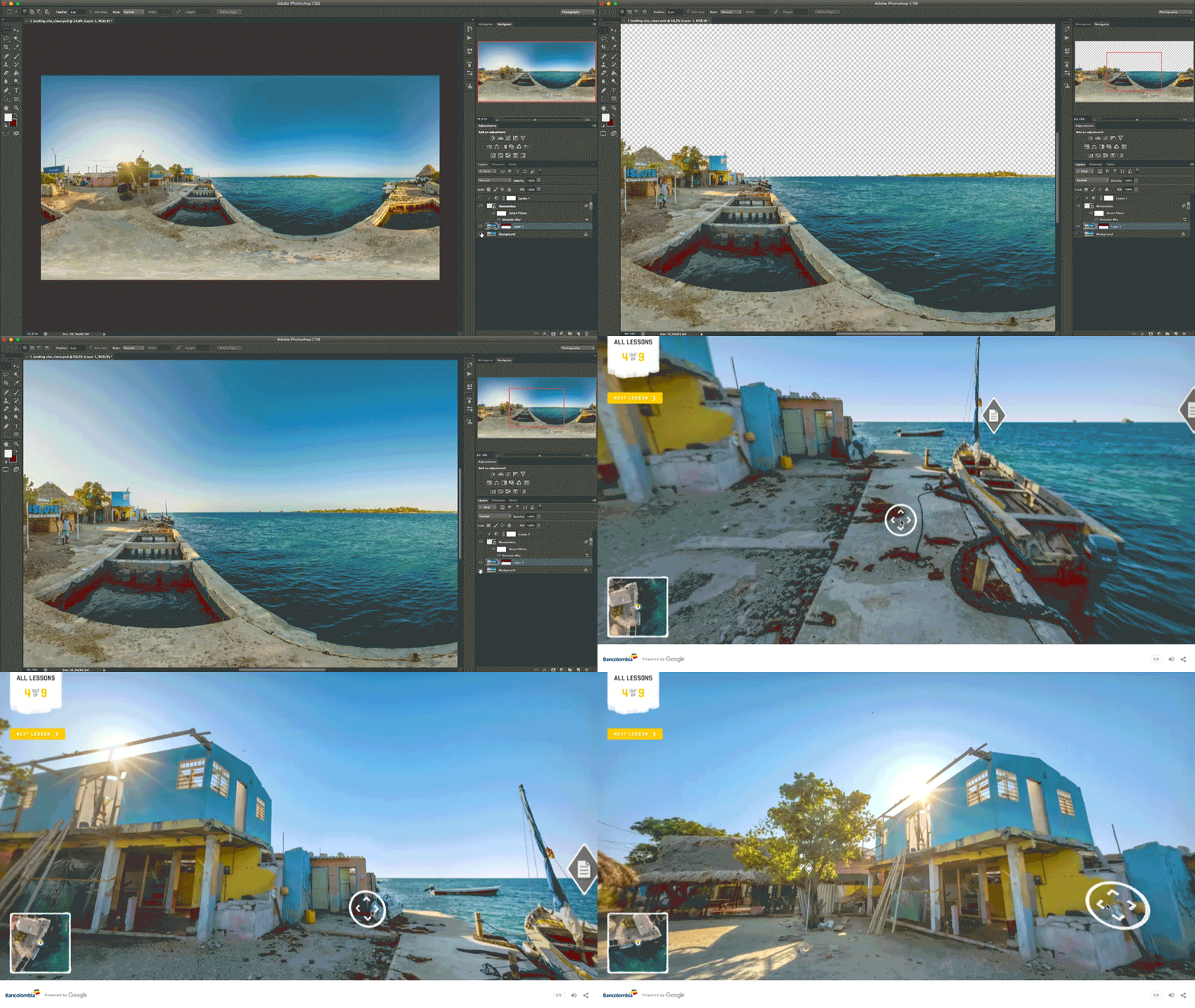
Furthermore, a completely custom sky was created, with animations of frigate birds passing over. This required us to manually cut out the sky from every photograph which was quite a labour intensive method.

Finally, we added a layer of lens flare and a subtle vignette effect, just to really help ensure a smooth transition and make the different photospheres as similar looking as possible.

5

The 3D Map

For the map and the overview of the island you see during the intro sequence of the website, we used a simplified version of the high poly mesh from the photogrammetry, again using Reality Capture.

Because all photospheres are positioned in 3D, we could easily create near-seamless transitions between this overview and the photospheres. Hopefully, this gives the user an even better understanding of their position on the island, and strengthens the illusion of walking around in an immersive environment.

6

Being able to explore a real-life location you might never see is one of the gifts recent technology has given us.

Remember when Google Street View first came out and it was a treasure to hover over Manhattan? Then came along Canadian artist Jon Rafman’s incredible Nine Eyes project capturing real-life scenes across the globe and GeoGuessr taking us from the outback of Australia to the fjords of Norway. Humans love exploring, and by mapping Santa Cruz del Islote, we hope that we have created a more immersive street view experience that everyone wants to pay a virtual visit to.

Explore The School of Sustainability for yourself.

This article originally appeared on Digital Arts Online on May 29, 2018.

Santa Cruz del Islote is a remote Colombian island just under the size of two football fields and home to around 500 residents. Situated two hours from the mainland, they don’t have access to things we take for granted like running water or electricity grids — resource conservation is simply a way of life.

All this makes the tiny island an interesting place to explore, which is why Colombia’s most sustainable bank, Bancolombia, decided to use it as their base for The School of Sustainability.

Developed as a Google Street View-like experience, virtual visitors can explore the island in detail, get to know the community, and learn nine core lessons in sustainability and resource conservation.

Together with fellow crafters and makers Google and SanchoBBDO, our goal was to create an immersive, cohesive island experience utilizing emerging tech that hadn’t been done to this level of detail before, while also making sure that people left their virtual tour with a new appreciation for resource conservation and living a more sustainable lifestyle. So how was the experience created?

1_05Rv-TVsmzRDchMOXVIUEg

Capturing the Island in Stunning Detail

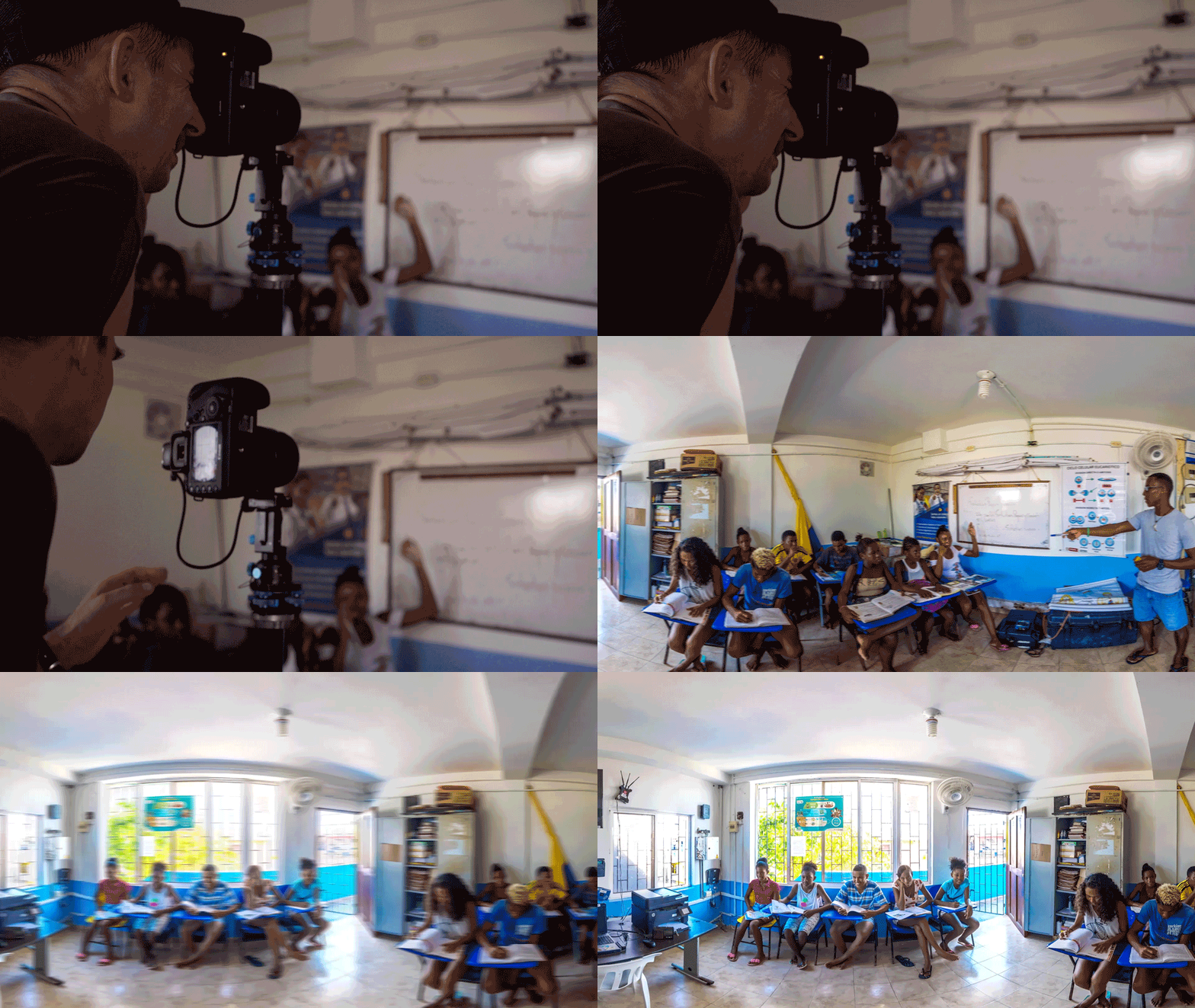
We travelled to the island with a full film crew. Armed with a tripod and SLR, our photographer focused on capturing the island with beautiful shots from every angle. These shots would then go into 140 photospheres placed around the island, with each giving the viewer a high fidelity 360 degree view.

Each shot was carefully framed to ensure that there was a snapshot of island life in each photosphere, with the idea to offer a virtual tour through the lives of the residents.

2

Creating a More Immersive Street View Experience

While it was up to our photographer to capture island life in beautiful photos, we also had to make sure that the transition between each shot was as seamless (and similar) as possible, in order for the user to feel they are actually walking around the island and not just moving between a series of images.

And to create a cohesive transition between each photosphere, we used a variety of tricks to ‘glue’ them together.

The School of Sustainability 3

Photogrammetry

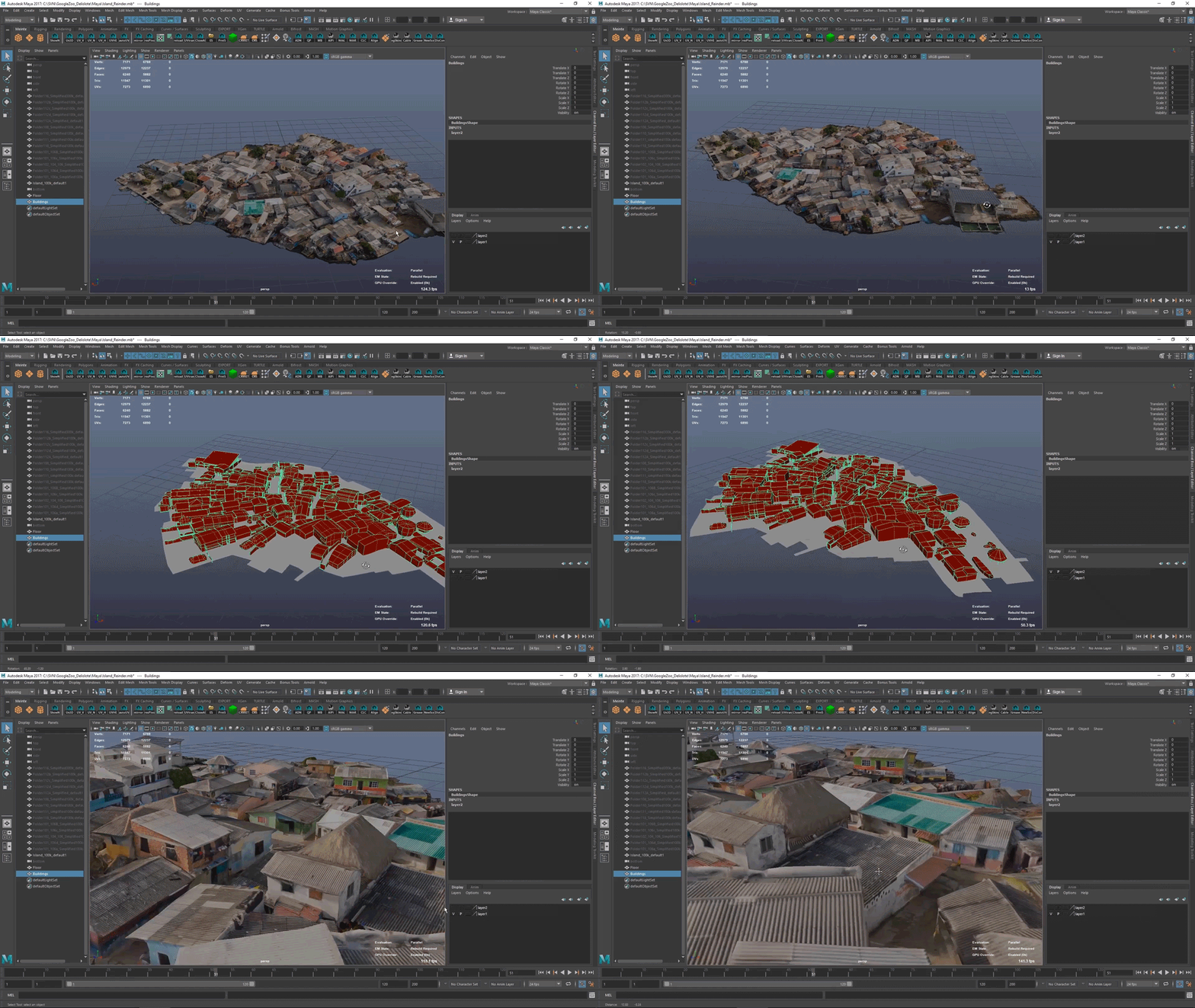
To get a fluid transition, we needed a (low poly) 3D mesh of the island, so we could project the current photosphere on this mesh at the start of a transition, and then fade the projection to a projection of the destination photosphere while moving in 3D.

This is similar to what Google does for their own Street View. Google creates the low poly mesh needed by using a 3D scanner placed at the same location as the camera. Because we used a traditional camera to create the photospheres and couldn’t use a 3D scanner, we had to make the 3D model in a different way.

Photogrammetry was the technique we used to map the island in 3D. At heart, photogrammetry is a transformative tech technique of automatically creating a 3D model of an object, by analyzing photos of the object taken from several angles.

We used a drone for aerial photography and shot thousands of photos at ground level and then created the high poly 3D mesh we needed with photogrammetry-software called Reality Capture.

In the end, we optimized this mesh by hand. The resulting low poly mesh is used for the transitions between the different photospheres.

Imitating Real Life

The photosphere-to-mesh projection during transitions really helps in getting a more immersive experience. It gives the photospheres a 3D position in world space, and the warping of the photospheres during a transition (based on the projection on the low poly mesh) helps to give the user the feeling that they are moving through a 3D environment.

To create an even more immersive experience, we added elements to the scene that are stable and consistent between each photosphere — helping the viewer experience a more coherent transition as they explore the island.

The School of Sustainability 4
Santa Cruz del Islote is a remote Colombian island just under the size of two football fields and home to around 500 residents. Situated two hours from the mainland, they don’t have access to things we take for granted like running water or electricity grids — resource conservation is simply a way of life. Today, being able to explore a real-life location you might never see is one of the gifts recent technology has given us. How to Be Somewhere You’re Not | The Island of Santa Cruz Del Islote Today, being able to explore a location like Santa Cruz del Islote that you may never see in real-life is one of the gifts technology has given us.
immersive emerging tech transformative tech

10 Years of Branded Games: From Flash to the Future

10 Years of Branded Games: From Flash to the Future

4 min read
Profile picture for user Sander van der Vegte

Written by
Sander van der Vegte
Head of MediaMonks Labs

10 Years of Branded Games: From Flash to the Future

MediaMonks Games unlocked its own achievement this November, as the most playful proposition in the global creative production company celebrated turning ten.

During this time the industry has gone through its own transformation. From Flash bursting onto the scene, to the rise of mobile and gaming for the masses, it’s been a decade packed full of developments.

Flash Back

The games industry looked a lot different pre-2006. There was very little advertising and branded games weren’t that common. Early attempts weren’t always on point. Two in particular spring to mind — Pepsiman, which was so out-of-the-box that it wasn’t comparable to anything out there.

The second is Crazy Taxi, which paved the way with high production value and included some sublimely subtle branding. Around 2006 Flash came into play, which opened up both opportunities for branded games and helped the industry grow as a whole. Along with Flash came the opportunity to make games for more web browsers, and because games were now available on more web browsers, it opened up a whole new audience for the industry.

Pepsiman_Crazy Taxi

Pepsiman & Crazy Taxi

Typical of the Flash era were games like Dofus and Habbo Hotel. Overall it became far easier to both make and play branded games. And because more audiences could be reached, the interest in branded games from advertisers grew.

iPhone Changes the Game

A few years after Flash came another game changer — the iPhone 3G. By offering licenses for $99 (instead of thousands) the games platform was suddenly affordable. The iPhone proved to be a liberator for games, as developers — who were no longer at the mercy of a select few platforms — could themselves create games for the app store. I consider it to be the industry’s Braveheart moment. With affordable licenses came clamorous cries of freedom.

Entertainment developers switched their focus to making games for mobile devices, whilst the advertising industry focused on targeting mobile phone users. The advertising and entertainment industries suddenly found themselves together on the same platform and both industries had to compete for consumers’ time. In those days, I think the advertising industry was lagging a bit behind the entertainment industry in understanding what motivates people to play games. Back then we prioritised the message over the fun and, as Candy Crush emphatically showed, it didn’t work. No matter how many brands made variations of Candy Crush, none were ever half as popular or successful as the entertainment version.

For us in the industry it became clear we had to think about games in a different way. We needed to think how we could make amazing games that were appealing, yet still incorporated branding.

From Niche to the Masses

Around 2011 — as iPhones became synonymous with cool — there was also a cultural shift in how game players were perceived. Gamers were no longer seen as nerds; gaming was now the norm. Within a relatively short period there was now the audience and cultural perception that made games a primary medium for brands to interact with consumers. From there, the industry started thinking about how games could be integrated into other mediums and experiences.

We moved from the likes of Pepsiman and co. to producing quality branded games. It was clear to see how far the industry had evolved. At MediaMonks Games, we produced Macy’s Wish Writer which sums up the progress perfectly. Within the app we merged research, tradition, and technology, packed it with mini-games, narrative and activities, all with seamlessly integrated branding.

Here’s a look at a few examples from our 2016 Games Reel–

In the wider industry, games like Pokemon and LEGO Star Wars were flawlessly designed to bring consumers into contact with both the brand and the product. Advertisers had perfected the art of reaching consumers via games.

Golden Times Ahead

It used to be that as a games developer you either wanted to be associated with Hollywood AAA or Indie groups. Over the last few years we’ve seen the rise of a third group; the branded game developer. They are perhaps less vocal, but they’re now more relevant than ever. And importantly, they’ve produced some brilliant games.

Right now advertising games are more creative and immersive. Developers and creatives haven’t been tied down by the limitations of only being able to produce games for consoles. I think you can really see that in some refreshingly creative games for mediums like AR/VR (check out the VR game Accounting). The creative progress in advertising has definitely been noticed by the entertainment industry too. Giants like Sony, who have traditionally been console-only, are now branching out into other mediums like streaming services to compete creatively.

What this means for the future only time will tell. It’s been a great ten years and it’s a great time to be involved in the industry. Whatever happens, I have no doubt the new platforms, creativity, content and battle for people’s attention will only make better games. And in my opinion, it’s only a win-win for consumers!

This article was originally posted on HuffPost on September 12, 2016.

From Flash to the advent of the iPhone to where we are today and the future – with AR, VR and other immersive tech – MediaMonks Head of Games Sander van der Vegte looks back on the past decade of branded games. This article originally appeared on HuffPo on December 10, 2016. 10 Years of Branded Games: From Flash to the Future From Flash to the iPhone to where we are today and the future – with AR, VR and other immersive tech – Head of Games Sander van der Vegte looks back on the past decade of branded games.
AR VR immersive

Choose your language

Choose your language

The website has been translated to English with the help of Humans and AI

Dismiss