Choose your language

Choose your language

The website has been translated to English with the help of Humans and AI

Dismiss

Creating an Emotionally Resonant Customer Journey With XR

Creating an Emotionally Resonant Customer Journey With XR

5 min read
Profile picture for user mediamonks

Written by
Monks

Meet the XR.Monks

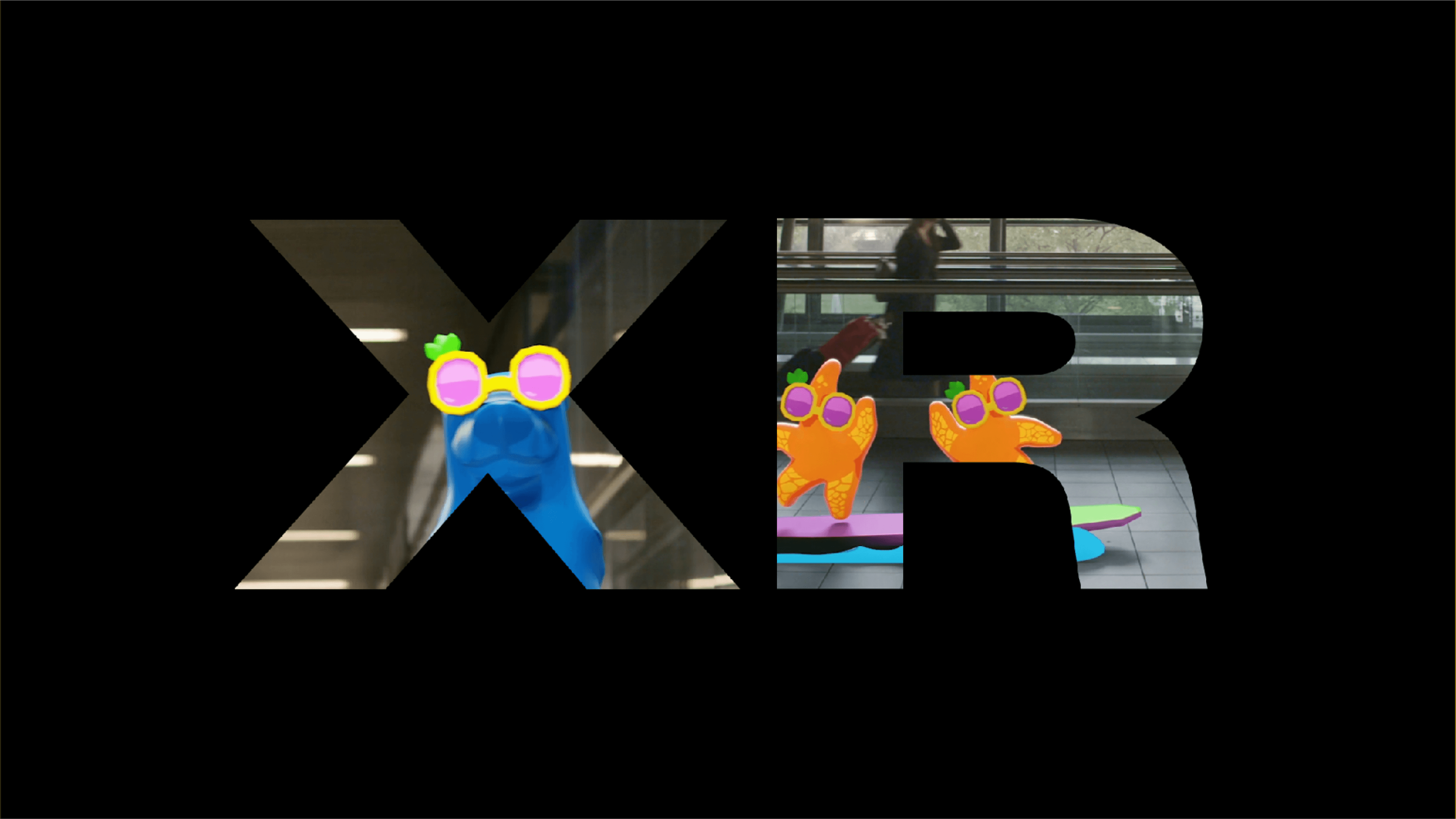
Behind the industry’s latest buzzwords like XR and the metaverse, there’s a lot to unpack. Extended realities (XR) and its two primary formats, virtual reality (VR) and augmented reality (AR), have been making waves across the marketing industry at large. With VR, users are immersed in new, virtual worlds experienced through headsets. AR, on the other hand, adds a digital layer of imagery to the real world through a smartphone or special glasses—like the selfie filters you may encounter on platforms like Instagram.

Although it’s constantly evolving, this technology is not necessarily new—and neither are the opportunities that come with it. When done right, XR can push reality beyond its limits, creating new experiences that may be artificial, yet fuel real and lasting memories. At first, XR may seem like your typical sci-fi innovation, so it’s easy to get wrapped up in the novelty. However, where the experiences truly shine lies in their emotional resonance, making them a useful component to campaigns and activations across brands and industries.
00:00

00:00

00:00

Start at the Customer Journey

Even if more and more brands are finding the value in XR, some still feel it’s exclusive to the most digitally-mature. But in reality, XR has become accessible enough for every brand to adopt it. “Oftentimes, vendors focus on the technological aspect of it all, the tools they have and all this jargon,” explains Creative Director Patricio Berrios Lobos. “This makes it harder for brands to understand the real value of XR beyond the tech gimmick. We have to focus on the value for the user.” 

Experiences both big and small, complex or simple, can each deliver impact. Think about product demonstrations in VR or trying on an outfit in AR—both of which can create a perception of ownership for users as they engage. By putting them at the center of an immersive experience, XR can help build a real connection between them and a brand’s product.

Monk Thoughts When you think about the stories you can tell from the lens of immersion and the emotions you can evoke, that’s when you realize the potential of XR.

A marketer’s goal is to turn the customer decision journey into engaging moments that resonate emotionally—and XR can impact these moments by transforming consumers, their spaces and their looks into the true protagonists. Especially with AR, the cherry on top is that it amplifies the shareability of the experience, as everyone feels enticed to share those they connect with.

“When you think about the stories you can tell from the lens of immersion and the emotions you can evoke, that’s when you realize the potential of XR,” says Berrios Lobos. “There’s an important element of play and joy that gets people actively engaged with the brand in a way that video or print just can’t achieve.” These moments of play are best served as part of a bigger narrative and strategy. Don’t build XR as just a one-off experiment; rather, truly consider how it can complement the overall journey.

Inspire Action Through Emotionally Driven XR

Again, XR’s value extends across industries—and isn’t just for commercial experiences. In fact, both VR and AR have become powerful tools in education and applied learning. Extended realities can turn complex concepts into interactive experiences—and although these may be artificial, a first-hand approach to learning can profoundly change a student’s perspective on a variety of subjects. 

People with VR lenses inside a spaceship

The multi-sensory VR education program virtually launches children into space to teach them about our planet.

Not long ago, we joined forces with SpaceBuzz, a nonprofit that focuses on teaching children about the importance of protecting planet Earth. Betting on the power of applied learning and technological advancement to further encourage curiosity, we built a multi-sensory VR education program that virtually launches them into space to see our planet in all its wonder and fragility. Seeing the Earth from space themselves instead of learning through the filter of others helped kids draw their own conclusions and create their own educational narrative.

But not all applications of XR have to be an out-of-this world journey. Partnering with Olay, we created a VR experience to immerse brand ambassadors in the science behind skincare—transporting them to the surface of the skin at a cellular level. Taking an entertaining approach to an otherwise complex topic, we helped the brand educate its advocates on the different causes of unhealthy skin, and challenged them to create their own treatments by mixing Olay ingredients. The result: better understanding of the brand’s unique formula.

More individual experiences without an on-site installation, like an AR game, can also build awareness. To help promote Red Bull’s national and regional activations, we built a suite of five AR games within the brand’s app—each one rendering a virtual landscape around a real Red Bull can. Users can play the games after purchasing a Red Bull product, with a chance to win a grand prize. 


A series of AR games

Each AR game renders a virtual landscape around a real Red Bull can.

Both on-site experiences and those at easy reach on everyone’s smartphone can positively impact your brand. While the latter offers greater accessibility and reach, dedicated venues can enable more immersive, technologically-advanced activations.  “When people are on site, we can build more complex experiences and have more fun overall,” explains Quentin de La Martinière, Executive Producer, Extended Realities at Media.Monks. “We tend to take more risks, because we’re there to guide them every step of the way and to make sure our message is getting across.”

Greater Adoption Means More ROI

As we move forward, the evolution of this technology will make it easier for mainstream consumers to afford and adopt. VR has benefitted in the past two years by the release of consumer-friendly headsets like the Oculus Quest, while WebAR and 5G connections offer engaging AR experiences without the need to download an app. “With WebAR being just one tap away, you don’t have to ask that much from the users,” says de La Martinière. “A mobile browser is enough to see how a pair of shoes would look on you. This idea of frictionless access to content is becoming the norm.”

With more people having XR experiences within easy reach, the potential ROI becomes more enticing for brands. But to optimize it, one thing is key: “As long as your focus is in the right place, and you know what you want to accomplish with XR, the balance will be positive,” de La Martinière explains. Add to that the technological advances, and XR ceases to be out of reach. “When done right, there’s no need to spend hundreds of thousands of dollars to create XR experiences for your brand.”

The possibilities are endless with XR. Regardless of what you want to accomplish with it, having a clear goal in mind is pivotal to deliver on its promise. Adopting this technology for the sake of appearing innovative is not nearly as valuable as truly leveraging the opportunities that come with AR and VR to deliver compelling, emotionally rich experiences.  And, as the technology continues to grow in fidelity, so too will it grow in user base and ease of access, making it crucial for modern brands to embrace its potential to impact the customer journey through personalized, user-driven experiences.


Our XR.Monks explain how to leverage AR and VR to build compelling experiences for your consumers. Our XR.Monks explain how to leverage AR and VR to build compelling experiences for your consumers. xr VR social ar spacebuzz red bull customer decision journey

How Remixing Rock Hall’s Website Struck a Chord

How Remixing Rock Hall’s Website Struck a Chord

4 min read
Profile picture for user mediamonks

Written by
Monks

The imperative to keep up digitally is felt by many, though the challenge is especially felt by museums under pressure to infuse their collections with cultural relevance for their patrons. In aiming to make a historic event more tangible or a culture more understood, digital media offers museums and cultural institutions an excellent opportunity to reconsider how they will continue to inspire the visitors of tomorrow.

Few institutions have the built-in relevance to contemporary pop culture than the Rock & Roll Hall of Fame, which honors the music genre’s most iconic and influential artists, both past and present (and just recently announced its inductees for 2020). Just in time for its new honorees, the Hall of Fame unveiled the fruit of its own reimagined efforts, made in collaboration with MediaMonks: a complete overhaul of its website, which now offers a bold, impactful visual style that complements the forward-thinking acts and artists to whom the museum pays tribute.

Drive Innovation with Purpose

The Rock & Roll Hall of Fame’s mission is “to engage, teach and inspire through the power of rock & roll.” The new website delivers on this promise through a content-heavy theme that brings artifacts from the museum’s collection to life through scans and images. This way, users can preview what the museum has to offer before they visit—or can enjoy bits from the collection even if they’re unable to make a trip.

“The artifacts enhance the discovery phase and tease the collection,” says Brook Downton, Executive Producer at MediaMonks. Users find this content strung across more than 300 Hall of Fame Inductee biography pages, which lend each artifact context and meaning. The biographies are also linked contextually; for example, each page invites you to explore other artists inducted in the same year or that are particularly relevant or influential.

Monk Thoughts With digital, museums can make the experience for patrons much more accessible and personalized.

On one hand, this encourages users to explore and browse through the Hall of Fame’s website much like they would wander around the museum itself—balancing a sense of aimless browsing with meaningful curation. “We bring the user into rabbit holes from one artist to another,” says Downton. “It’s a website where you can spend an hour, rather than just five minutes.”

This web of interconnected artists also enables a more personalized experience by making it easier for visitors to find and discover items they’d most like to see. Museums can be overwhelming, after all, but a data-driven user journey can help users not only find the most relevant exhibits, but also discover something entirely new. “Museums are a reflection of humanity and society, of art and movements,” says Downton. “With digital, museums can make the experience for patrons much more accessible and personalized.”

Build Efficiency to Build Momentum

So, how does one not only embark on such a transformation, but actually sustain it from concept to market? One of the biggest pain points that hinders a project of this scale is time, making it difficult for brands to continue their efforts to achieve long-term goals.

Noting that CMOs historically don’t last more than a few years in their role, Forrester Senior Analyst Tina Moffett writes in her report “Marketers, Stop Sacrificing Long-Term Goals for Short-Term Wins” that “This revolving door makes it difficult to execute long-term marketing strategies, especially ones that depend on data-driven insights that take six months to a year to measure.”

New RH Single

Integrated playlists are just one of many ways that digital patrons can interact with the collection.

A digital revolution is a lengthy process—so much so that it’s ever-evolving and never complete. There’s the need to transition away from legacy systems, invest in new skillsets and measure whether the transformation has even been effective. To meet success in these efforts, brands must carry momentum throughout a multi-phase process on the path to success.

That’s why we begin with a laser focus on delivering fast results that fuel investment in long-term goals. For the Rock & Roll Hall of Fame, for example, we began by transforming the look of microsite that allows fans to cast their vote for new Inductees—an important, annual activation that drives fan participation and renews public interest in the museum year after year. This smaller-scale transformation gives us (and brands) the chance to take our learnings and apply them to the main project once completed.

Honoring the Past, Looking to the Future

As you develop a project, continually look for new opportunities to improve the total brand experience. For museums, this means extending focus beyond the website and what role it plays in ultimately getting visitors through the door. The Rock & Roll Hall of Fame achieved this by offering a series of curated, self-guided tours on its website, though future plans include a feature that will let users build unique, personalized tours based on their favorite artists. Such features not only inform patrons of what they will see before they visit, but also functions as a tool to help them truly connect with what the museum has to offer.

Best-in-class digital design offers incredible opportunities for any brand to build impactful experiences, whether it be through social media-inspired navigation as described above or simply a remarkably designed website. This is especially true for cultural institutions with a mission to educate patrons and provide access to cultural artifacts—offering new ways to infuse relevance in a shared cultural heritage.

Discover new ways to engage audiences digitally.

Preserving cultural legacies, museums can transform their collections and content into engaging, personalized digital journeys. How Remixing Rock Hall’s Website Struck a Chord The museum hit a high note by digitizing much of its collection.
Museums content strategy cms personalization data customer journey customer decision journey digital transformation legacy brands

Upgrade Your Digital Marketplace Strategy to Build Brand Love

Upgrade Your Digital Marketplace Strategy to Build Brand Love

3 min read
Profile picture for user mediamonks

Written by
Monks

Upgrade Your Digital Marketplace Strategy to Build Brand Love

Consumer buying habits have significantly shifted to digital over recent months. Ecommerce giant Amazon, achieved record growth in Q1 2020, seeing its largest increase ever in revenue for its online stores, with 24.3% growth in online store revenue alone. Now is the time for brands to change their consumer approach by building digital marketplace strategies that recognize and meet consumer needs across the entire customer decision journey, not just when they visit a marketplace to make a purchase.

One need only look at the rise in online grocery shopping to understand the increasing importance of ecommerce today: online grocery penetration is expected to meet (or exceed) 10% in the US, beating previous industry forecasts. While buying a mattress online may have felt strange and novel five years ago, today’s consumers don’t bat an eye by turning to digital marketplaces to discover, research and ultimately purchase products of all types.

Digital Marketplaces Double as Important Media Channels

This shift in user behavior has elevated the role online marketplaces as media channels that are important to telling the brand story to shoppers. “By serving ads to their customers at relevant moments, digital business professionals and commerce companies deliver a superior customer experience while also cultivating a rapidly growing new revenue stream with healthy margins,” writes Forrester VP, Principal Analyst Sucharita Kodali in the Forrester report, “Retailers: You’re The Next Media Moguls.”

Monk Thoughts Customers are already in shopping mode, making the creative much more powerful.

One reason why advertising is so effective on these channels is because consumers are already in the shopping mindset when visiting a digital marketplace. “Mercado Libre has millions of users and visits each day, among different advertising formats,” says Pablo Tajer, Creative Director at MediaMonks Buenos Aires, discussing the most popular ecommerce giants in LatAm. “People that see these ads are already in shopping mode, which makes it much more powerful than seeing it on another channel where you’re not thinking about buying anything.” By connecting technology and creative, brands can lend greater value to an audience that is more receptive to learning about products and their features.

Identify Brand Opportunities Across the Full Digital Retail Ecosystem

Tajer leads our newly announced BrandLab partnership with Mercado Libre Publicidad. BrandLab serves as a team that highlights advertising opportunities for the biggest brands on the platform. Previously, Tajer fulfilled a similar role within Facebook’s Creative Shop. After receiving a brief from a brand, the BrandLab team helps build bespoke creative ideas that fit Mercado Libre’s formats and ecosystem, fulfilling a real need for brands that strive to differentiate and stand out in the user experience.

MercadoLibre MM

“The cool part is that we have an opportunity to create an idea that goes throughout the whole customer journey across Mercado Libre’s ecosystem,” says Tajer. “It can start with the branding on a product description page, then move to the payment step with the platform’s digital wallet (MercadoPago), and finally when you get the product itself through Mercado Libre’s shipping service.”

In this respect, to succeed in digital marketplaces brands must look beyond simply converting at a point of sale. Global ecommerce giants like Amazon in the US, Mercado Libre in LatAm or Alibaba in China are more than just marketplaces; they provide total ecosystems that include digital payment systems and delivery logistics networks. By managing each step of the customer journey—from awareness to purchase or even receiving the package itself—these ecommerce platforms offer several opportunities for brands to engage with their customers.

Monk Thoughts We have an opportunity to create an idea that goes throughout the customer decision journey.

Inject the Brand Story into Your Ecommerce Efforts

The opportunity to embrace the total brand experience on ecommerce highlights a common misstep for brands selling and advertising on online marketplaces: the brand story is often missing from the equation. “It’s a platform that people view as purely performance based,” says Tajer. “It’s not just about performance, but also branding. Between searching for products and comparing which is better than another, there’s a lot more happening on an ecommerce platform than just clicking ‘buy.’”

For many consumers, a digital marketplaces is often the first place they visit for product searches. As important spaces for product discovery, it’s important that marketers don’t assume consumers are visiting with a specific product already in mid—or are even aware of the brand before seeing its product listed. This highlights a need for brands to view ecommerce as an important space to build brand love and awareness through impactful creative storytelling. “We want to be a lighthouse that shows brands and their partners the way.” says Tajer, “Together, we can grow stronger, platform-specific campaigns that drive consumer value.”

Support your audiences across the creative experience journey.

Digital marketplaces offer significant creative opportunities throughout the path to purchase, yet the brand story is often absent. Upgrade Your Digital Marketplace Strategy to Build Brand Love Fit-for-format ecommerce content shouldn’t just convert; it should build brand love, too.
Mercadolibre brandlab amazon digital marketplace online marketplace ecommerce digital retail ecommerce strategy creative that converts customer decision journey cdj customer obsession online shopping mercado libre

Choose your language

Choose your language

The website has been translated to English with the help of Humans and AI

Dismiss