Choose your language

Choose your language

The website has been translated to English with the help of Humans and AI

Dismiss

Creating an Emotionally Resonant Customer Journey With XR

Creating an Emotionally Resonant Customer Journey With XR

5 min read
Profile picture for user mediamonks

Written by
Monks

Meet the XR.Monks

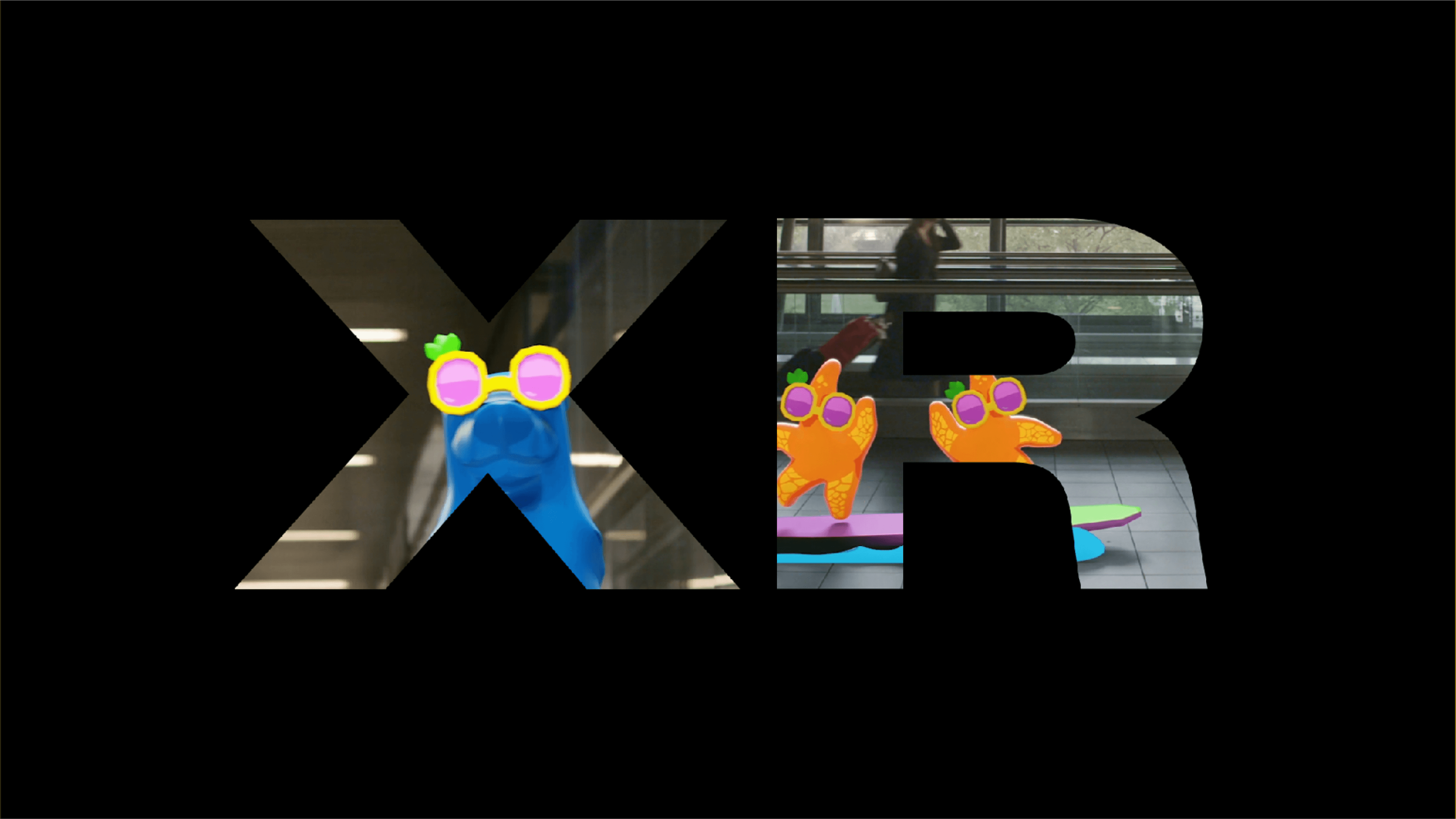
Behind the industry’s latest buzzwords like XR and the metaverse, there’s a lot to unpack. Extended realities (XR) and its two primary formats, virtual reality (VR) and augmented reality (AR), have been making waves across the marketing industry at large. With VR, users are immersed in new, virtual worlds experienced through headsets. AR, on the other hand, adds a digital layer of imagery to the real world through a smartphone or special glasses—like the selfie filters you may encounter on platforms like Instagram.

Although it’s constantly evolving, this technology is not necessarily new—and neither are the opportunities that come with it. When done right, XR can push reality beyond its limits, creating new experiences that may be artificial, yet fuel real and lasting memories. At first, XR may seem like your typical sci-fi innovation, so it’s easy to get wrapped up in the novelty. However, where the experiences truly shine lies in their emotional resonance, making them a useful component to campaigns and activations across brands and industries.
00:00

00:00

00:00

Start at the Customer Journey

Even if more and more brands are finding the value in XR, some still feel it’s exclusive to the most digitally-mature. But in reality, XR has become accessible enough for every brand to adopt it. “Oftentimes, vendors focus on the technological aspect of it all, the tools they have and all this jargon,” explains Creative Director Patricio Berrios Lobos. “This makes it harder for brands to understand the real value of XR beyond the tech gimmick. We have to focus on the value for the user.” 

Experiences both big and small, complex or simple, can each deliver impact. Think about product demonstrations in VR or trying on an outfit in AR—both of which can create a perception of ownership for users as they engage. By putting them at the center of an immersive experience, XR can help build a real connection between them and a brand’s product.

Monk Thoughts When you think about the stories you can tell from the lens of immersion and the emotions you can evoke, that’s when you realize the potential of XR.

A marketer’s goal is to turn the customer decision journey into engaging moments that resonate emotionally—and XR can impact these moments by transforming consumers, their spaces and their looks into the true protagonists. Especially with AR, the cherry on top is that it amplifies the shareability of the experience, as everyone feels enticed to share those they connect with.

“When you think about the stories you can tell from the lens of immersion and the emotions you can evoke, that’s when you realize the potential of XR,” says Berrios Lobos. “There’s an important element of play and joy that gets people actively engaged with the brand in a way that video or print just can’t achieve.” These moments of play are best served as part of a bigger narrative and strategy. Don’t build XR as just a one-off experiment; rather, truly consider how it can complement the overall journey.

Inspire Action Through Emotionally Driven XR

Again, XR’s value extends across industries—and isn’t just for commercial experiences. In fact, both VR and AR have become powerful tools in education and applied learning. Extended realities can turn complex concepts into interactive experiences—and although these may be artificial, a first-hand approach to learning can profoundly change a student’s perspective on a variety of subjects. 

People with VR lenses inside a spaceship

The multi-sensory VR education program virtually launches children into space to teach them about our planet.

Not long ago, we joined forces with SpaceBuzz, a nonprofit that focuses on teaching children about the importance of protecting planet Earth. Betting on the power of applied learning and technological advancement to further encourage curiosity, we built a multi-sensory VR education program that virtually launches them into space to see our planet in all its wonder and fragility. Seeing the Earth from space themselves instead of learning through the filter of others helped kids draw their own conclusions and create their own educational narrative.

But not all applications of XR have to be an out-of-this world journey. Partnering with Olay, we created a VR experience to immerse brand ambassadors in the science behind skincare—transporting them to the surface of the skin at a cellular level. Taking an entertaining approach to an otherwise complex topic, we helped the brand educate its advocates on the different causes of unhealthy skin, and challenged them to create their own treatments by mixing Olay ingredients. The result: better understanding of the brand’s unique formula.

More individual experiences without an on-site installation, like an AR game, can also build awareness. To help promote Red Bull’s national and regional activations, we built a suite of five AR games within the brand’s app—each one rendering a virtual landscape around a real Red Bull can. Users can play the games after purchasing a Red Bull product, with a chance to win a grand prize. 


A series of AR games

Each AR game renders a virtual landscape around a real Red Bull can.

Both on-site experiences and those at easy reach on everyone’s smartphone can positively impact your brand. While the latter offers greater accessibility and reach, dedicated venues can enable more immersive, technologically-advanced activations.  “When people are on site, we can build more complex experiences and have more fun overall,” explains Quentin de La Martinière, Executive Producer, Extended Realities at Media.Monks. “We tend to take more risks, because we’re there to guide them every step of the way and to make sure our message is getting across.”

Greater Adoption Means More ROI

As we move forward, the evolution of this technology will make it easier for mainstream consumers to afford and adopt. VR has benefitted in the past two years by the release of consumer-friendly headsets like the Oculus Quest, while WebAR and 5G connections offer engaging AR experiences without the need to download an app. “With WebAR being just one tap away, you don’t have to ask that much from the users,” says de La Martinière. “A mobile browser is enough to see how a pair of shoes would look on you. This idea of frictionless access to content is becoming the norm.”

With more people having XR experiences within easy reach, the potential ROI becomes more enticing for brands. But to optimize it, one thing is key: “As long as your focus is in the right place, and you know what you want to accomplish with XR, the balance will be positive,” de La Martinière explains. Add to that the technological advances, and XR ceases to be out of reach. “When done right, there’s no need to spend hundreds of thousands of dollars to create XR experiences for your brand.”

The possibilities are endless with XR. Regardless of what you want to accomplish with it, having a clear goal in mind is pivotal to deliver on its promise. Adopting this technology for the sake of appearing innovative is not nearly as valuable as truly leveraging the opportunities that come with AR and VR to deliver compelling, emotionally rich experiences.  And, as the technology continues to grow in fidelity, so too will it grow in user base and ease of access, making it crucial for modern brands to embrace its potential to impact the customer journey through personalized, user-driven experiences.

 

Our XR.Monks explain how to leverage AR and VR to build compelling experiences for your consumers. Our XR.Monks explain how to leverage AR and VR to build compelling experiences for your consumers. xr VR social ar spacebuzz red bull customer decision journey

Elevating Education with Edtech

Elevating Education with Edtech

5 min read
Profile picture for user Geert Eichhorn

Written by
Geert Eichhorn
Innovation Director at MediaMonks

Elevating Education with Edtech

Granted, it’s been a while since I’ve been at the student’s end of a classroom, but I’d like to think I haven’t totally lost touch with my childhood education. And as much as I enjoyed being in school, my fondest memories—prior to discovering the internet—are probably those that were most hands-on.

Field trips and practical lessons gave me the chance to learn on my own terms. Rather than learning through the filter of others, these outings allowed me to create my own educational narrative and learn through first-hand experience—escaping the usual set up where you sat staring at a teacher as they talked at you from the front of the room.

However, since my earlier expeditions to the local science museum or treatment plant—yes, my school was very progressive—educational technology (edtech) has changed the game considerably. Smartboards (digital whiteboards), laptops, and smartphones have made their way into the classroom and the curriculum. And as with anything concerning children, this influx of technology in the classroom adds fuel to the fire of the helpful vs. harmful debate.

IntotheWild

The "Into the Wild" mixed reality experience at ArtScience Museum in Singapore brings the rainforest to life within the museum walls.

We have to deal with the fact that progress is inevitable. My parents for one, missed out on most of the digital revolution, leaving them oblivious to a lot of its benefits. Who would have expected that with just a smartphone and a selfie-stick, you can discover parts of life on earth that are otherwise invisible or out of reach? That’s the innovation that Google Expeditions, an educational tool launched in 2017, offers by showcasing the promising ways in which AR and VR can turn your average lesson into an extraordinary expedition.

While we might not be able to avoid progress, we can influence it by deciding how to expose future generations to innovative tech. What better place to start than by using innovative tech to take children to places beyond their wildest imagination—creating experiences that even field trips can’t match?

Back to the Chalkboard

I’ve never met anyone who learned to play football just by reading about Cruijff’s biggest feats alone or could ride a bicycle after watching Peter Sagan pull-off a winning sprint. If we want to develop certain skills and learn valuable lessons, we have to live them. And even though offline teaching increasingly revolves around exploration, there’s still a gap between many areas of applied learning and everyday practice.

Why not close the gap by using technological advancements to our advantage? By giving children access to experiences that are quite literally out of this world, we can further encourage the development of real-world skills—without having to leave the classroom. 

Others are taking note of this potential; investments dollars have risen in edtech over the years, with over $1.45 billion raised by US edtech startups in 2018—beating the $1.2 billion raised the year before. But that money is also going into fewer and fewer companies, demonstrating a need for edtech tools and startups to stand out with unique experiences and demonstrable educational results.

Monk Thoughts There’s still a gap between many areas of applied learning and everyday practice.
Portrait of Geert Eichhorn

As this increasingly competitive environment matures, the winning edtech startups are those that provide differentiated experiences. They won’t use tech for tech’s sake, but will find the best medium for the message and iterate upon it. Sitting for hours on end scrolling through our feeds is not something you want to actively encourage, but exploring a virtual visualization of a DNA string is.

Designing these experiences requires educators to build an appetite to try new things and innovate—essentially, they must become students themselves, seeking out ways to innovate. A publisher can translate their book into a CD or internet portal, which might offer some interactivity and exploration, but that does little to make the lesson significantly more engaging or meaningful to a student. Instead, edtech requires an entirely new mentality around learning.

The Next Frontier  

It’s not just earthly life that’s suddenly at our fingertips thanks to new technical interfaces. VR offers the first real means of making “space travel” possible for everyone. The SPACEBUZZ project is something particularly close to my heart. TLDR: a real-life rocket pulls up to schools, virtually launching students into orbit.

While working on SPACEBUZZ, I got to see first-hand how an interactive VR experience can leave a lasting impression on developing minds and encourage curiosity. Guided by real-life astronaut André Kuipers (who helped develop a fact-based script and serves as Mission Commander in the experience), kids get to gear up and produce in a 15-minute space flight.

remkodewaal-spacebuzz-094

At Spacebuzz, students enter a spacecraft and strap in...

Still VR Film 01

...and embark on an epic journey in space through VR.

What really makes a difference is giving children the hands-on experience to learn. While children who watched just the VR flyover film were impressed by the view of earth from space, the students who experienced the onboarding mission first got into the mindset to better investigate and understand what they were seeing from the stellar view—like the visible effects of deforestation, air pollution and more. Similarly, the Lockheed Martin initiative, Field Trip to Mars, shows just how much influence a positive application of technology can have on the appetite for learning, bolstering a positive perception of digital experiences.

By embedding practical technology in the everyday lives of the next generation, in the right setting, we’ll not only see a continuation of positive technological experiences but also provide access to a broader educational experience. In addition to giving children a new perspective on the world around them, these digital experiences could inspire deep engagement with their passions across a variety of subjects, helping cultivate the next generation of scientists, teachers, astronauts, manufacturers and more. We could tailor parts of these experiences to speak to individual needs, because who knew that according to one study girls learn better from a virtual teacher while boys prefer tutoring from a drone?

The above gets at the heart of what makes edtech such a powerful tool: teach students in a scalable way that’s personalized to their individual learning styles. In a Medium post that serves as a primer to the different styles of personalized learning, the Office of Educational Technology within the US Department of Education defines personalized learning as “instruction in which the pace of learning and the instructional approach are optimized for the needs of each learner.” The key thing is that “learning activities are made available that are meaningful and relevant to learners, driven by their interests and often self-initiated,” and edtech offers an excellent opportunity to prompt that sense of exploration in students.

Monk Thoughts We’ll not only see a continuation of positive technological experiences, but provide access to a broader educational experience.
Portrait of Geert Eichhorn

With this potential for individual enrichment, edtech doesn’t have to be limited to education throughout the formative years. Imagine what we could do if we applied the same theory throughout the entire educational infrastructure? In supporting lifelong learning, edtech could play a key role in training across disciplines, including fields in which the stakes are high, like in the medical industry, combat training or of course: space travel.

From digital experiences that inspire to the possibility of personalized courses and expert guidance based on personal data, edtech can set students up for a lifetime of learning, helping them discover and apply their passions to benefit society as a whole.

I might not be in formal education anymore, but I’m definitely still learning—and look forward to continue paying that experience forward to help tech users of any age better explore and relate to the world around them.

Edtech is a fast-growing industry that offers new ways to engage students through meaningful, hands-on experiences with emerging technology. Elevating Education with Edtech With meaningful use of tech, kids go over the moon about learning.
edtech educational technology immersive learning emerging technology edtech industry spacebuzz vr virtual reality

Choose your language

Choose your language

The website has been translated to English with the help of Humans and AI

Dismiss