Choose your language

Choose your language

The website has been translated to English with the help of Humans and AI

Dismiss

Creating an Emotionally Resonant Customer Journey With XR

Creating an Emotionally Resonant Customer Journey With XR

5 min read
Profile picture for user mediamonks

Written by
Monks

Meet the XR.Monks

Behind the industry’s latest buzzwords like XR and the metaverse, there’s a lot to unpack. Extended realities (XR) and its two primary formats, virtual reality (VR) and augmented reality (AR), have been making waves across the marketing industry at large. With VR, users are immersed in new, virtual worlds experienced through headsets. AR, on the other hand, adds a digital layer of imagery to the real world through a smartphone or special glasses—like the selfie filters you may encounter on platforms like Instagram.

Although it’s constantly evolving, this technology is not necessarily new—and neither are the opportunities that come with it. When done right, XR can push reality beyond its limits, creating new experiences that may be artificial, yet fuel real and lasting memories. At first, XR may seem like your typical sci-fi innovation, so it’s easy to get wrapped up in the novelty. However, where the experiences truly shine lies in their emotional resonance, making them a useful component to campaigns and activations across brands and industries.
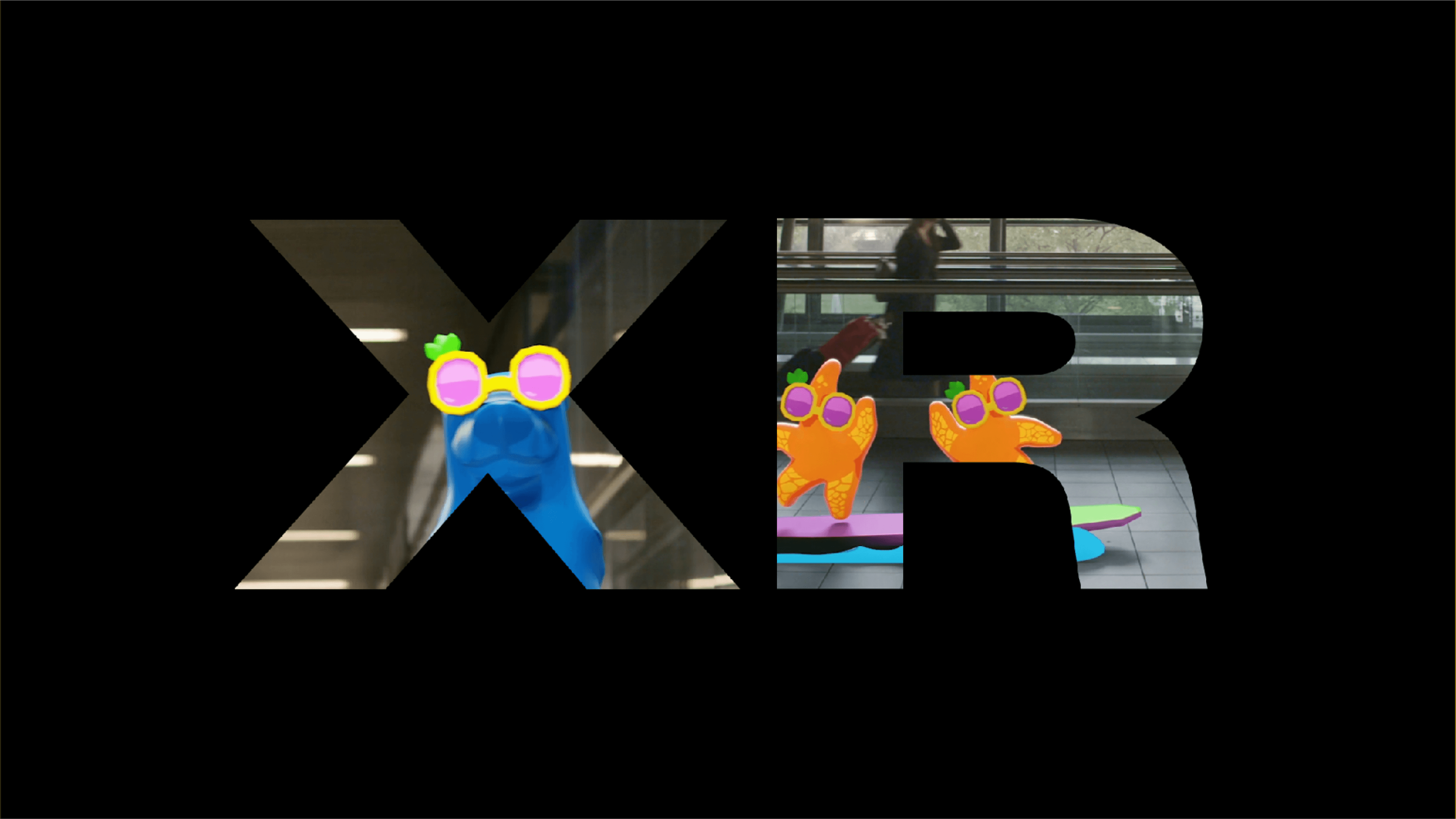
00:00

00:00

00:00

Start at the Customer Journey

Even if more and more brands are finding the value in XR, some still feel it’s exclusive to the most digitally-mature. But in reality, XR has become accessible enough for every brand to adopt it. “Oftentimes, vendors focus on the technological aspect of it all, the tools they have and all this jargon,” explains Creative Director Patricio Berrios Lobos. “This makes it harder for brands to understand the real value of XR beyond the tech gimmick. We have to focus on the value for the user.” 

Experiences both big and small, complex or simple, can each deliver impact. Think about product demonstrations in VR or trying on an outfit in AR—both of which can create a perception of ownership for users as they engage. By putting them at the center of an immersive experience, XR can help build a real connection between them and a brand’s product.

Monk Thoughts When you think about the stories you can tell from the lens of immersion and the emotions you can evoke, that’s when you realize the potential of XR.

A marketer’s goal is to turn the customer decision journey into engaging moments that resonate emotionally—and XR can impact these moments by transforming consumers, their spaces and their looks into the true protagonists. Especially with AR, the cherry on top is that it amplifies the shareability of the experience, as everyone feels enticed to share those they connect with.

“When you think about the stories you can tell from the lens of immersion and the emotions you can evoke, that’s when you realize the potential of XR,” says Berrios Lobos. “There’s an important element of play and joy that gets people actively engaged with the brand in a way that video or print just can’t achieve.” These moments of play are best served as part of a bigger narrative and strategy. Don’t build XR as just a one-off experiment; rather, truly consider how it can complement the overall journey.

Inspire Action Through Emotionally Driven XR

Again, XR’s value extends across industries—and isn’t just for commercial experiences. In fact, both VR and AR have become powerful tools in education and applied learning. Extended realities can turn complex concepts into interactive experiences—and although these may be artificial, a first-hand approach to learning can profoundly change a student’s perspective on a variety of subjects. 

People with VR lenses inside a spaceship

The multi-sensory VR education program virtually launches children into space to teach them about our planet.

Not long ago, we joined forces with SpaceBuzz, a nonprofit that focuses on teaching children about the importance of protecting planet Earth. Betting on the power of applied learning and technological advancement to further encourage curiosity, we built a multi-sensory VR education program that virtually launches them into space to see our planet in all its wonder and fragility. Seeing the Earth from space themselves instead of learning through the filter of others helped kids draw their own conclusions and create their own educational narrative.

But not all applications of XR have to be an out-of-this world journey. Partnering with Olay, we created a VR experience to immerse brand ambassadors in the science behind skincare—transporting them to the surface of the skin at a cellular level. Taking an entertaining approach to an otherwise complex topic, we helped the brand educate its advocates on the different causes of unhealthy skin, and challenged them to create their own treatments by mixing Olay ingredients. The result: better understanding of the brand’s unique formula.

More individual experiences without an on-site installation, like an AR game, can also build awareness. To help promote Red Bull’s national and regional activations, we built a suite of five AR games within the brand’s app—each one rendering a virtual landscape around a real Red Bull can. Users can play the games after purchasing a Red Bull product, with a chance to win a grand prize. 


A series of AR games

Each AR game renders a virtual landscape around a real Red Bull can.

Both on-site experiences and those at easy reach on everyone’s smartphone can positively impact your brand. While the latter offers greater accessibility and reach, dedicated venues can enable more immersive, technologically-advanced activations.  “When people are on site, we can build more complex experiences and have more fun overall,” explains Quentin de La Martinière, Executive Producer, Extended Realities at Media.Monks. “We tend to take more risks, because we’re there to guide them every step of the way and to make sure our message is getting across.”

Greater Adoption Means More ROI

As we move forward, the evolution of this technology will make it easier for mainstream consumers to afford and adopt. VR has benefitted in the past two years by the release of consumer-friendly headsets like the Oculus Quest, while WebAR and 5G connections offer engaging AR experiences without the need to download an app. “With WebAR being just one tap away, you don’t have to ask that much from the users,” says de La Martinière. “A mobile browser is enough to see how a pair of shoes would look on you. This idea of frictionless access to content is becoming the norm.”

With more people having XR experiences within easy reach, the potential ROI becomes more enticing for brands. But to optimize it, one thing is key: “As long as your focus is in the right place, and you know what you want to accomplish with XR, the balance will be positive,” de La Martinière explains. Add to that the technological advances, and XR ceases to be out of reach. “When done right, there’s no need to spend hundreds of thousands of dollars to create XR experiences for your brand.”

The possibilities are endless with XR. Regardless of what you want to accomplish with it, having a clear goal in mind is pivotal to deliver on its promise. Adopting this technology for the sake of appearing innovative is not nearly as valuable as truly leveraging the opportunities that come with AR and VR to deliver compelling, emotionally rich experiences.  And, as the technology continues to grow in fidelity, so too will it grow in user base and ease of access, making it crucial for modern brands to embrace its potential to impact the customer journey through personalized, user-driven experiences.


Our XR.Monks explain how to leverage AR and VR to build compelling experiences for your consumers. Our XR.Monks explain how to leverage AR and VR to build compelling experiences for your consumers. xr VR social ar spacebuzz red bull customer decision journey

Facebook’s New AR Ads: Get Ready for Your Close-Up

Facebook’s New AR Ads: Get Ready for Your Close-Up

4 min read
Profile picture for user mediamonks

Written by
Monks

Facebook ads are about to become a lot more fun. In the lead-up to the recent Advertising Week New York conference, Facebook announced three interactive ad formats that offer new ways for consumers to engage with brands: video poll ads, playable game ads and interactive AR ads built through Facebook’s Spark AR platform.

Each of these may look familiar, as they’re not entirely new. Video poll ads have been available in Instagram Stories for quite some time, prompting users to answer a question while watching video content. Like with Facebook’s Instant Experience formats, brands can use video polls to open up a web page in-app, allowing users to act on the video content (like downloading a mobile game as its trailer plays). Playable ads essentially function like minigames. While they were originally open to select brands, they are now available to all advertisers.

Perhaps most exciting are playable AR ads, which bring the familiar experience of selfie filters and Facebook Camera Effects into the mobile News Feed. AR ads became available to a subset of advertisers in July 2018 for testing, and the results, according to Facebook, look promising: the social network notes that AR ads drove a 27.6-point lift in purchases for WeMakeUp. By inviting users to try on lipstick shades, the ad also drove an average of 38 seconds of interaction—a significant increase in the 1.7 seconds users typically spend consuming content on the platform.

Monk Thoughts We’re still at a place where AR is a thing people know about, but you have to go through a lot of steps to get there.
Samuel Snider-Held headshot

They weren’t the only ones. Fellow beauty brand Bobbi Brown tested AR ads earlier this year against regular video ads. Their AR ads—also allowing users to try on new lip colors—tripled click-through rates and doubled website purchases compared to video, according to Glossy.

Bringing Together Fun and Function

One reason the examples above are so effective because they offer a low barrier of entry to try out and experiment with products at the top of the funnel: just a single tap. “We’re still at a place where AR is a thing that people know about and can be used for advertising, but you have to go through a lot of steps to get there,” says Samuel Snider-Held, Creative Technologist at MediaMonks. “This is a way of removing one of the steps.”

While entertainment-based Camera Effects make a great way for brands to promote sharing and empower users to tell their own stories, AR ads focusing on utility can help users really understand and research a product, driving meaningful engagements and measurable results. “Makeup and glasses have been some of the most poignant use cases for advertising with Camera Effects because people immediately see it and understand it,’” says Snider-Held.

Spark AR is also an incredibly accessible platform for brands to build simple, snackable experiences, and is a low-hanging fruit for experimenting with supporting augmented reality. Developing just a single Camera Effect, for example, provides brands the opportunity to establish a direct connection with consumers at scale—especially for brands that strive to take their creative capabilities in-house, but are tight on resources.

Little Brush Big Brush Case Video.00_00_15_17.Still009

Our Camera Effect experience for Unilever’s Signal toothbrush, transforming their Little Brush Big Brush web series into a full-fledged AR experience that gets kids in the groove of establishing healthy brushing habits. With animal mask filters and gamified elements, the Camera Effect shows how AR can be made both fun and functional, as well as the power of content to build brand love through differentiated, engaging digital experiences.

Building on User Behavior

It’s easy to see why AR ads are so effective for Facebook users: integrated directly within Stories and now the mobile News Feed, these effects fit seamlessly within the ways that users interact with one another on Facebook—opposed to, say, an AR experience that engages users on Facebook but ultimately pulls them away to an external microsite.

As brands invest more in digital advertising, they must evolve their strategies to react to emergent user behavior, because doing so is key to remaining relevant and driving meaningful engagement with their audiences. A good creative and production partner can help brands become more relatable and engaging with the dominant modes of interaction and communication today, and help them anticipate or overcome common challenges in the process.

frame_03_2000x1200

With back-facing camera support, brands can make their surroundings much more fun and engaging.

For example, Snider-Held highlights one challenge that some brands—luxury ones in particular—may run into with AR ads: file size limitations, which make it tough to highlight minute details, like stitching on a bag. “If the file size stays limited, brands will have to decide if they want to use that space to entertain the user, or make a product model that looks as high quality as possible,” he says.

In a panel focused on the S4 Capital model at Advertising Week New York, Sir Martin Sorrell noted the that S4 is committed to partnering with tech giants and working with in-house teams—a quality that differentiates the group from the approach that traditional agencies take. This partnership can help you forecast future opportunities that emerge with new technology. “If we can use the back-facing camera as well, you could put a model of a car in your driveway,” says Snider-Held. He compares this functionality to similar uses of AR that lack the visibility offered by the Facebook News Feed, like platform-specific AR models only available on certain apps on specific devices.

But these new means of collaborating are essential in ensuring brands are equipped to engage in step with changing means of communication, perhaps even innovating in the process. We’re excited to see how Facebook has revitalized familiar ad formats like video polls and Camera Effects by transferring each to a new environment, and look forward to how both will enable new conversations between users and brands.

Experiment with Camera Effects that really inspire.

Facebook’s new ad formats show a commitment to cultivating meaningful interactions between brands and their consumers, particularly through snackable AR experiences. Facebook’s New AR Ads: Get Ready for Your Close-Up Facebook is bringing its popular Camera Effects straight to the mobile News Feed.
spark ar facebook facebook ar facebook camera effects camera effects social ar augmented reality video polls

Building Shared Experiences with Snapchat Games

Building Shared Experiences with Snapchat Games

4 min read
Profile picture for user mediamonks

Written by
Monks

Building Shared Experiences with Snapchat Games

At its Snap Partner Summit just weeks ago, Snapchat announced its Snap Games platform. A bit like Facebook’s Instant Games for Messenger, Snap Games are simple, HTML5-based experiences that users can instantly activate via chat. What makes the platform unique, though, is that its games seamlessly integrate into the chat platform, allowing users to continue talking to friends via text or audio as they play. The move signals the changing way that brands and users are approaching games: not just as a diversion, but as a means of connecting digitally with one another through shared experience.

“Friendship is more than just the things you chat about,” Head of Snap Games Will Wu explained to an audience at the summit. “Friendship is also about experiences you have together.” He went on to highlight the need for offering an environment for friends to get together and do more than just socialize—an idea that’s taken wind as people have come to view the popular game Fortnite as more than just a game but rather a hot, new social environment.

Today’s Gamer Isn’t Who You May Think They Are

The still-new platform isn’t yet open for everyone to develop, but brands and developers that are inspired by the sense of play can still provide gaming experiences in the platform. Take Snappables, for example, which are Snap-produced selfie lenses infused with game mechanics to make them more fun. While the Snappables moniker is reserved for lenses developed by Snap themselves, anyone can likewise make experiences of their own that are game-like.

Monk Thoughts We try to enhance ideas by taking them to the next level.

First, why support game-based AR lenses? The gaming population has changed surprisingly with the growing popularity of mobile gaming. While many assume the typical gamer is a boy under the age of 18, running the numbers challenges that notion: according to a report by the Entertainment Software Association, 45% of US gamers are women, and the average age for female gamers is 36. The average age of gaming males in 32.

Second, the social mobile environment is an easy fit for supporting modern gaming behaviors. According to the same ESA report, 42% of gamers play together with friends, while 36% play on a smartphone—equal to the percentage of gamers who play on dedicated game consoles.

Consumers Seek Value-Added Interactions

But for MediaMonks Senior Project Manager Tommy Lacoste, infusing an AR lens with game mechanics often just makes sense for providing a compelling interactive element without making the experience too complex. “People typically want to emulate flashy, cool AR experiences that they’ve seen elsewhere, but the experience must demonstrate brand value or fit the platform,” says Lacoste.

For example, our #LongestGoal Snapchat lens (made in collaboration with 180 LA for UNICEF to celebrate the World Cup) challenged users to scream “Goal!” for as long as possible. The longer they yelled, the higher their score—turning a key spectator behavior into an opportunity for friendly competition. The interaction perfectly fit the brand goal—in this case, highlighting a World Cup campaign.

As a Snapchat partner, MediaMonks helps brands zero in on ideas for captivating interactive experiences by offering several options to build on a brand’s idea. “We try to enhance ideas by taking them to the next level,” says Lacoste. But this can be tricky, as AR lenses for Snapchat and Facebook Camera alike are constrained to specific size limits. To squeeze the most value and functionality out of your experience, working with a creative and production partner who knows how to balance platform opportunities and limitations is key.

Designing an AR experience is easier than you think.

Selfie Lenses Go Beyond Face Masks

Gamified lenses that emulate Snap’s own Snappables series of games require quite a bit of ingenuity and creativity. “You don’t usually see much of this sort of thing with AR lenses, because it’s not necessarily the way they were originally intended,” says Lacoste. But adding in game mechanics doesn’t make a Snap lens heavier; instead, it requires technical understanding of what’s possible given advances in computer vision.

“With the Snapchat AR Developer Platform, we can detect where your head or parts of the body are,” says Lacoste. “From there, we can detect and measure interactions with virtual objects. So if we wanted the user to bounce a virtual ball on their head or nose, we can count that and keep score.” With these game-like interactions, selfie lenses go beyond being simple facial masks and encourages interactivity—and a reason to keep playing to get a high score.

magnum template

Our recent Snapchat lens for ice-cream brand Magnum does this by challenging users to try to eat every Magnum bar floating around them before their screen fills with ice-cream, a bit like bobbing for apples. “Testing is crucial with these experiences,” says Lacoste. “First, you need to prototype and iterate the technical side of things. Second, you also must ensure the experience is fun…or funny for the user.”

That’s a good point: chomping at virtual ice-cream bars that dangle around you may be fun, but it’s also fun for others to watch. While a user may feel driven to share their high score, playing with the lens results in user-generated content that’s sure to get a laugh from friends. And that brings us back to our starting point: today’s consumer seeks out experiences they can enjoy among friends. Gamified AR selfie lenses offer an excellent opportunity for brands to provide simplified yet engaging moments to deliver on this demand.

Dive deep into the possibilities of mixed reality.

Snapchat’s newly unveiled Snap Games platform signals a change in the way we look at digital games: not to fill idle moments, but to bring people together. Learn how you can engage audiences with gamified AR lenses. Building Shared Experiences with Snapchat Games Digital games aren’t just a diversion—they seek to bring people together.
snapchat games snapchat selfie lens ar filter social ar

Choose your language

Choose your language

The website has been translated to English with the help of Humans and AI

Dismiss