Choose your language

Choose your language

The website has been translated to English with the help of Humans and AI

Dismiss

The Craft Behind the Commercial: How Tabletop Connects Physics With Creativity

The Craft Behind the Commercial: How Tabletop Connects Physics With Creativity
Culture Culture, Original Content, Studio 5 min read
Profile picture for user Elnaz.Bahrami

Written by
Elnaz Bahrami
Business Lead Tabletop & Food Solutions

Fruit falling into a bowl of yogurt

Whenever someone tries to understand what exactly it is that we do within the field of marketing and advertising, I say the following: imagine if you’re working with an actress, it’s very likely that she will smile when you ask her to smile. Now, imagine your actress is a strawberry. If you ask the strawberry to wiggle and jump gracefully into a bowl of fresh yogurt, what do you think our star of the show is going to do? Exactly, absolutely nothing—because as much as we love this sweet, summery fruit, food is simply not a team player. That’s why every tabletop director needs technical engineers who understand both film and physics, and thus can help make the creative’s wildest imagination come true.

In the field of tabletop, which typically refers to the shooting of objects in great detail, products such as food, drinks, cosmetics or other liquids serve as the actors. But because they don’t live, talk or respond to our cues, we need our technicians on set to make the products move in the ways that our tabletop directors want them to. Using specialized equipment, our engineers can work their magic on said strawberry to not only let it wiggle, but do so perfectly timed and in focus. In other words, every day we have to fight gravity on set to keep our actors in control—all to tell a tasty-looking story that resonates with the audience. Let’s take a look at how.

Appealing to the audience takes tickling the right taste buds.

For the purpose of this piece, let’s focus on the shooting of food, keeping the strawberry in mind as the hero of our campaign. It all starts with defining the taste appeal of a brand and its product. With every client, our team’s goal is to help them translate their brand strategy into food imagery with the aim to create distinctive taste appeal—and there are various routes to arrive at this destination, each with their own expressions and associations. 

“We help brands build recognizable and earnable taste appeal, for instance through tools such as movement,” says our Film Director Catherine Millais. “Should the product move in an explosive or elegant way? Should it breakdance or do ballet? Should it jump, hop or only ever fall? When you’re thinking about how you’re going to present the food to a consumer, those are the types of questions that you have to ask, so that you can start defining a set of visuals for your design, sonic rules for your sound, and behavioral rules for your product.” 

It’s important to keep in mind that food is inherently cultural, social and emotional. As such, the visual language of food products is constantly in flux—it reacts to geography and changing sociocultural attitudes, to what’s happening in popular culture, and even to technological advances. As filmmakers in marketing and advertising, it’s crucial to be sensitive to the changing aesthetics of food and the different ways in which taste appeal can be delivered. In fact, it allows us to view taste through new lenses. Above all, it helps us understand how our clients can establish their own take on deliciousness.

Enter the scene: our toolbox of taste, which we’ve developed for our clients to understand how we can play with various elements to determine the taste appeal of a product. Various tools help us define this, such as movement, camera speed, sound, setting, or even food styling, just to name a few, all of which we have readily available at our studio. Our first job is to sit down with the brand’s marketers and make sure we translate the brand voice and creative brief into a commercial that’s in tune, impactful and tasty-looking. 

The main challenge is how to stand out in a sea of deliciousness. The first thing that will make your commercial distinctive is the creative concept. The second is how you leverage the tools at hand—and this is where our SFX specialists come in.

Need to cause a controlled explosion? Just call our SFX team.

The special effects are a critical part of a tabletop shoot. Our SFX specialists control the motion of the objects we are filming, like the automatic release of liquids or the explosions of products—all with millisecond precision. Each movement has to happen in the exact same place each time so that it’s always in focus. Try telling that to the strawberry that’s meant to jump onto a creamy bed of yogurt.

Before our specialists can start testing and setting up any effects, they first need to understand the director’s vision. Our SFX Specialist Jesse Dermout tells me that “a director’s idea can be quite abstract, which can make it hard for me to understand what exactly they’re after. Once we’ve talked it through and we’re aligned, it’s a matter of finding the right tools to get the desired effects. For slow movement, for instance, I would use an electric motor that’s programmed to do very precise steps, while for something more explosive, I would use pneumatics, which is pressurized air to blow stuff away with.” 

In essence, our SFX team provides support to our directors and other engineers on set, like our robot operators, which makes the special effects work both creative and technical. “Though my role is mostly technical, the creative side of it is thinking about how to make effects work in a ‘film’ kind of way, meaning that it has to be maneuverable, the movements have to be very small, and there can’t be too many things in frame,” says Dermout. In other words, SFX is about getting past the boundaries that film itself poses, like lighting, the set, the frame and so on—all the while making sure the effects work. 

The way to realize this is through rigorous testing. Once the director’s creative brief is locked and loaded, our SFX specialists do test after test after test—then conducting stress analyses, creating rigs in modeling software, 3D printing prototypes and testing out the physical version of a rig—until they finally get the director’s brief to work in practice. Safe to say, it takes not only a solutions-oriented mind and an eye for detail to be an SFX specialist, but also lots of patience.  

Robotics, the strawberry on top.

Without specialized equipment, such as our custom-made rigs to move materials in specific ways and our high-speed cameras, tabletop wouldn’t be possible. But there’s one more tool that our team can’t do without: our robot. Tabletop requires you to get each element under control, and motion control is key. Mo-co refers to computer controlled motion and can be used to move the camera, the object you are shooting, lighting or all of the above simultaneously. In tabletop, this gives us repeatable and precise accuracy and speed, which helps, since it often comes down to the millisecond. A robotic mo-co arm can travel smoothly at a speed of 1 meter per 0.5 seconds, meaning that you can repeatedly follow your wiggly strawberry and move the camera around the fruit as it falls. 

A human hand will never drop something in the exact same place and at the exact same time. So, you have to limit all your variables to not only achieve a certain effect, but do so in focus, in the right way and at the right moment. You're engineering a product to do something that it wouldn't naturally do, which is a challenge in itself. But people in the field say the real challenge is fighting gravity, because tabletop is where creativity and physics meet. Fortunately, our team of food creatives, directors, engineers, editors and producers is tight-knit and trained to work closely together, from exploring taste identity with a brand’s marketers, to using high-end equipment to deliver delicious and distinguishable commercials—and all the messy moments (literally) in between.
Get a behind the scenes look at how our Film.Monks achieve deliciousness when providing tabletop solutions for some of the worlds biggest brands. tabletop production film production VFX commercial film Studio Original Content Culture

Lowering the Tabletop Threshold—How We’re Bringing Rising Stars and Film Experts Together in One Studio

Lowering the Tabletop Threshold—How We’re Bringing Rising Stars and Film Experts Together in One Studio

DE&I DE&I, Emerging media, Original Content, Studio 5 min read
Profile picture for user Catherine.Millais

Written by
Catherine Millais
Film Director

bright red raspberries in yogurt

If you’ve ever tried to make a single bubble dance across an underwater probe lens, as a robotic arm flies around a (dangerously fragile) glass aquarium at 1000 frames per second, you might know some of the intricate challenges of tabletop filmmaking. It takes a unique skill set, an inventive creative mind, and lots of patience. The only way to find out if you are cut out for this niche profession is by doing it.

Picture the scene: a creative brief lands on your desk that requires the slow-motion drip of coffee, a chocolate vortex, or the perfect drop of foundation on glowy skin. Cue a producer’s concerned frown, because the type of filmmaking that can capture these specific motions in astounding detail—known as tabletop—requires specialized knowledge. It’s a very particular nook within advertising and marketing, and that’s why there are only so many people who (can) do it. 

Case in point: our Film.Monks team in Amsterdam, which is one of our global film hubs, is one of the few (say, handful) players to offer tabletop services in Europe. On top of that, we have our own robotics in-house, which we need to test ideas and do the actual shoots. This also means we’re in the fortunate position to be able to lower the threshold of entering this field, which is typically hard to get into. That’s why we’ve been welcoming up-and-coming talent into our studio to let them have a taste of tabletop.

Making a tough field to break into more accessible. 

First, let’s back it up a bit and take a look at what tabletop is exactly. This term typically refers to the shooting of objects—think of food and drinks, beauty products or other liquids—in great detail. When you are this close up to a product, storytelling becomes focused around colors, shapes and textures. In practice, it’s all about getting the objects to behave in whatever way you want them to, so that their movements tell the story or create character. Naturally, there are some nice pieces of equipment to help you do the job. 

As a tabletop creative and director—which allows me to be a stunt coordinator, a mess maker, a prop eater or even an explosion specialist every now and then—you have to think deeply about the dynamics and qualities of products, in more detail than you would even think is possible. For example, let’s say we’re creating a commercial for a coffee brand that aims to spotlight the different strengths of its new line of coffee beans. This means we not only have to think about how to communicate the brand voice and product range, but we also need to consider what consumers want to be told, what would catch their attention, and what appeals to their taste. So, what we would do here is bring in color and shape signifiers, like a rounded, soft yellow for the mildest bean and a bold, sharp purple for the strongest flavor, to visualize these slight differences. 

Working creatively within such a narrow scope may be frustration-inducing for some, but highly satisfying for others, and apparently I am the latter type of person. I discovered this when I was given the unique opportunity to explore the world of tabletop—I started as a tabletop director’s Personal Assistant, working as his producer of sorts. After spending many long days assisting on set with no real idea what was happening, writing treatments and even acting in an ad, I finally thought: hang on, I reckon I can do this! Getting such an extensive chance to discover this profession doesn’t come by often, and that’s exactly why we’ve decided that we actively want to make the field more accessible for promising talent.

film studio with lights and camera equipment

Carving out a niche for up-and-coming talent and ourselves.  

Let’s zoom in on the how. For a while now, we’ve been involving juniors—including both early career employees and temporary interns—in our tabletop work wherever and whenever we can. Our aim is not only to share knowledge and experience and enable our up-and-coming talent to learn by doing, but also to pass on our passion for the profession in all its messy glory.

From ideation to execution, we make sure to include our rising stars in every step of the tabletop journey, while always taking into consideration where their specific strengths and interests lie. Whereas special effects (SFX) interns might like to know how to get products to move in different ways, junior creatives would need to learn how to flesh out ideas so that the camera team understands what they want. By bringing up-and-coming talent from different disciplines together in one studio team, we allow them to learn a range of new skills within and outside their specific field of interest. For example, how to write and develop short-form storytelling, how to operate cameras, how to train your eyeballs to see in high-speed vision, or how to engineer explosions of chocolate nuts (and many other special effects). And guess what? My fellow experienced Film.Monks and I learn a lot from them, too. 

The secret to discovering talent? Let them show you what they’ve got. 

One of our most successful shared learning experiences so far has been our ongoing Emotional Eats series. This internal initiative, which we started at our tabletop studio in Amsterdam, revolves around producing fun and quirky short-form content that presents the feelings behind your food. Since there is no client pressure, we thought it would be a great way to get our juniors involved.

00:00

00:00

00:00

Grocery Glam - a short tabletop film created by our junior talent here at Media.Monks.

So, on a bi-weekly basis, we organize a test-and-learn day with the aim to scope out new rigs and develop new technologies. We consider it an opportunity to not only improve our creative development and craft, but also hone the creative conceptualization and directing skills of our entire studio team, including juniors, through regular “experiment and play” time. It’s important to highlight that, while we aim to provide creative and technical guidance, we make sure we give our juniors free reign and full autonomy to do what they want. 

Thus far, the Emotional Eats series has allowed us to educate our up-and-coming talent on the engineering behind this beautiful profession and show them how far you can push emotional storytelling in tabletop through light, movement and sound design. In turn, our juniors have taken this time and used this space to experiment, ask questions and take note, coming up with many groundbreaking ideas along the way. It’s not about simply getting interns to help us out—instead, it’s about building a culture of learning and experimentation, while helping them take the next step in their professional journey.

Ultimately, our main goal is to give those who are still at the dawn of their careers, but show great promise, a chance to explore new avenues in the advertising industry and take a peek into our tabletop processes and projects. More than just a way for us to put the feelers out and see if people would want to join our tabletop team by letting them experience the work, initiatives like our Emotional Eats series are a means to raising our talent internally by allowing them to expand their palate and grow both vertically and horizontally—safe to say, it’s a win-win for everyone involved.

Our Film.Monks are lowering the threshold of entering tabletop filmmaking, by welcoming up-and-coming talent into our studio to test ideas and do actual shoots. film production tabletop production asset production creative talent diverse talent Studio Original Content Emerging media DE&I
Oreo logo
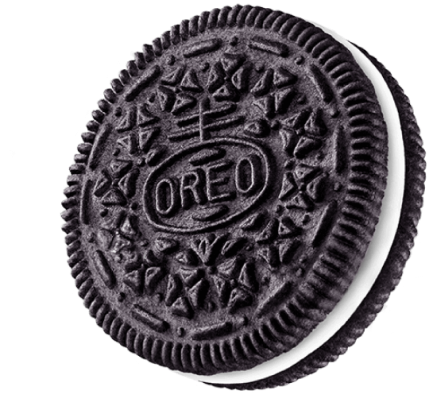
3D Oreo cookie

Oreo Virtual Production • A Mouthwatering Approach to Tabletop Production

  • Client

    Mondelēz

  • Solutions

    StudioContent Adaptation and Transcreation

A tabletop approach you can dunk on.

Twist, dunk or eat it in one mouthful—there are several ways to enjoy an Oreo, milk’s favorite cookie. With so many preferences and Oreo fans around the world, Mondelēz needed a way to whet the appetites of consumers everywhere with mouthwatering, locally relevant creative captured at scale.

A delicious blend of creativity and technology.

For global brands, tabletop production can be a costly endeavor—for both time and budget. Every market differs in package design and legal requirements, and legacy processes make it difficult to produce relevant creative at the speed and scale needed for today’s consumer packaged goods brands. So we changed the game using Unreal Engine, developed by Epic Games, to bake up and automate tabletop production.

Using the real-time engine enables local teams to switch out packs in just a few clicks—and a few seconds—rather than wait through the long rendering times that are typical in the traditional CGI process. This makes it easy to iterate and scale up, satisfying cravings everywhere.

Close up of an Oreo cookie

In partnership with

  • Mondelēz
Client Words Our customers work at a pace that demands innovation, collaboration and iteration—all at high quality. [Monks] share this vision, and I’m honored to invite them to the Epic MegaGrant community as they work to reinvent production processes with Unreal Engine.
Headshot of John Buzzell

John Buzzell

Enterprise Licensing Lead, Unreal Engine (Americas)

Providing meaningful work for the future—in real time.

Oreo lovers weren’t the only ones left drooling; our innovative approach to using Unreal Engine in tabletop advertising also inspired a course in Unreal Futures, a learning series that prepares tomorrow’s developers and creatives for success in 3D careers across different industries. Collaborating with Epic Games, our employees walk students step-by-step through our process and challenge them to develop a 3D advertisement of their own using Unreal Engine.

So whether inspiring a purchase or inspiring the next generation of 3D creatives, we took a bite out of tired, traditional processes—maximizing quality, speed and efficiency to connect with consumers of all tastes.

Monk Thoughts From an artistic standpoint, I see so many opportunities to up-level our creative outputs in Unreal Engine, blending creativity and technology to shape better content and stronger stories that propel the industry forward.
Headshot of John Paite

00:00

00:00

00:00

Results

  • 1x CSS Site of the Day

Want to talk real-time? 
Get in touch.

Hey 👋

Please fill out the following quick questions so our team can get in touch with you.

Can’t get enough? Here is some related work for you!

A Look Inside Our Safe, Sanitized Shoot Studio

A Look Inside Our Safe, Sanitized Shoot Studio

3 min read
Profile picture for user mediamonks

Written by
Monks

Una Mirada al Interior de Nuestro Estudio Seguro y Desinfectado

While it might feel as though the world has come to a standstill in some ways, things are moving faster than ever in others. It’s been only a week and a half since our previous post about seamlessly continuing production in a world changed by COVID-19, but in the interim our film and production team has put incredible effort into developing a safe shooting space for content production—retaining the same level of quality you would expect from a traditional shoot.

Housed in our Amsterdam office, our in-house production studios have been set up to comply within safety standards by keeping members of a lean crew team at least 1.5 meters apart. Other members of the production (such as the director or brand team) observe either from another room or from a remote location via livestream.

This is made possible through an automated shooting process, aided by the use of robocams that have long been used in our tabletop and food-focused content. By consolidating every step of production under one roof—including creative, scriptwriting, treatments, pre-production, set builders to studio crew and postproduction—or remote, the process mitigates risk and places brands within a safe set of (washed) hands.

In Considering New Solutions, Strategize Around Your Output

While it’s reassuring that brands can still achieve a high-quality standard of filmmaking, this moment serves as a good time to stop and reflect on previous production strategies. Might any of the changes they make today carry into the long term? “We’re seeing that you can still do things without the elaborate components, or travel, craft services,” MediaMonks Founder Wesley ter Haar told audiences in APR’s Virtual Town Square webinar. “it’s all a bit scrappier—as a culture, we’ll probably be a lot more mindful about our impact on the world and how we manage to get through this.”

As culture continues to shift toward digital at an unprecedented rate, brands can begin honing their content strategies by first considering what the ideal output should be. For example, ter Haar notes that brands view conversion-based content as a high priority to fill, with a need to develop that content faster and at a greater value.

Monk Thoughts As a culture, we’ll probably be a lot more mindful about our impact on the world and how we manage to get through this.
black and white photo of Wesley ter Haar

But consumer needs are also shifting, whether it be aesthetic sensibilities informed by memes and independent content creators or the emergence of new digital behaviors. “There are numerous ways to shift efforts from traditional production,” says ter Haar. “Instead of doing a traditional shoot with 80 people, why not have 80 people do their own shoot?” This twist on shooting style opens up interesting, new opportunities for content, like partnering with influencers or exploring a single theme through different viewpoints.

Find Creative Opportunity Through Constraint

As brands continue to consider the changes they should make to production strategies right now, they should also keep an eye on the future. How can constraints that exist today help us all achieve even better ways of working tomorrow? Ter Haar compares new production strategies with the shift that businesses have already taken by working from home. “While it’s been relatively easy for us to switch to working from home because we’re a global organization, it’s also nice to see that things that felt like they could only work in person are perfectly fine to do in a digital manner.”

This observation drives home the sentiment that while the speed at which the landscape has changed may have overwhelmed some teams, it presents an opportunity to develop new creative solutions—for example, cutting travel costs or becoming less reliant on gathering large teams within a single location. By working with brands to understand and delivering on needs as they emerge, we’ll emerge from this situation stronger than ever.

There are more opportunities to reassess your marketing and production strategies.

Our new studio setup enables premier production quality for the age of social distancing, including remote oversight for teams. A Look Inside Our Safe, Sanitized Shoot Studio Don’t worry: we give hygiene the same eye for detail as our art direction.
Covid coronavirus covid-19 film production tabletop film tabletop production remote filmmaking remote production work from home

Choose your language

Choose your language

The website has been translated to English with the help of Humans and AI

Dismiss