Choose your language

Choose your language

The website has been translated to English with the help of Humans and AI

Dismiss

Split and A/B Testing for Amazon Sellers

Split and A/B Testing for Amazon Sellers

Data maturity Data maturity, Digital transformation, Media, Media Analytics, Media Strategy & Planning, New paths to growth, Performance Media 4 min read
Profile picture for user Xuanmai Vo

Written by
Xuanmai Vo
Content Marketing Manager

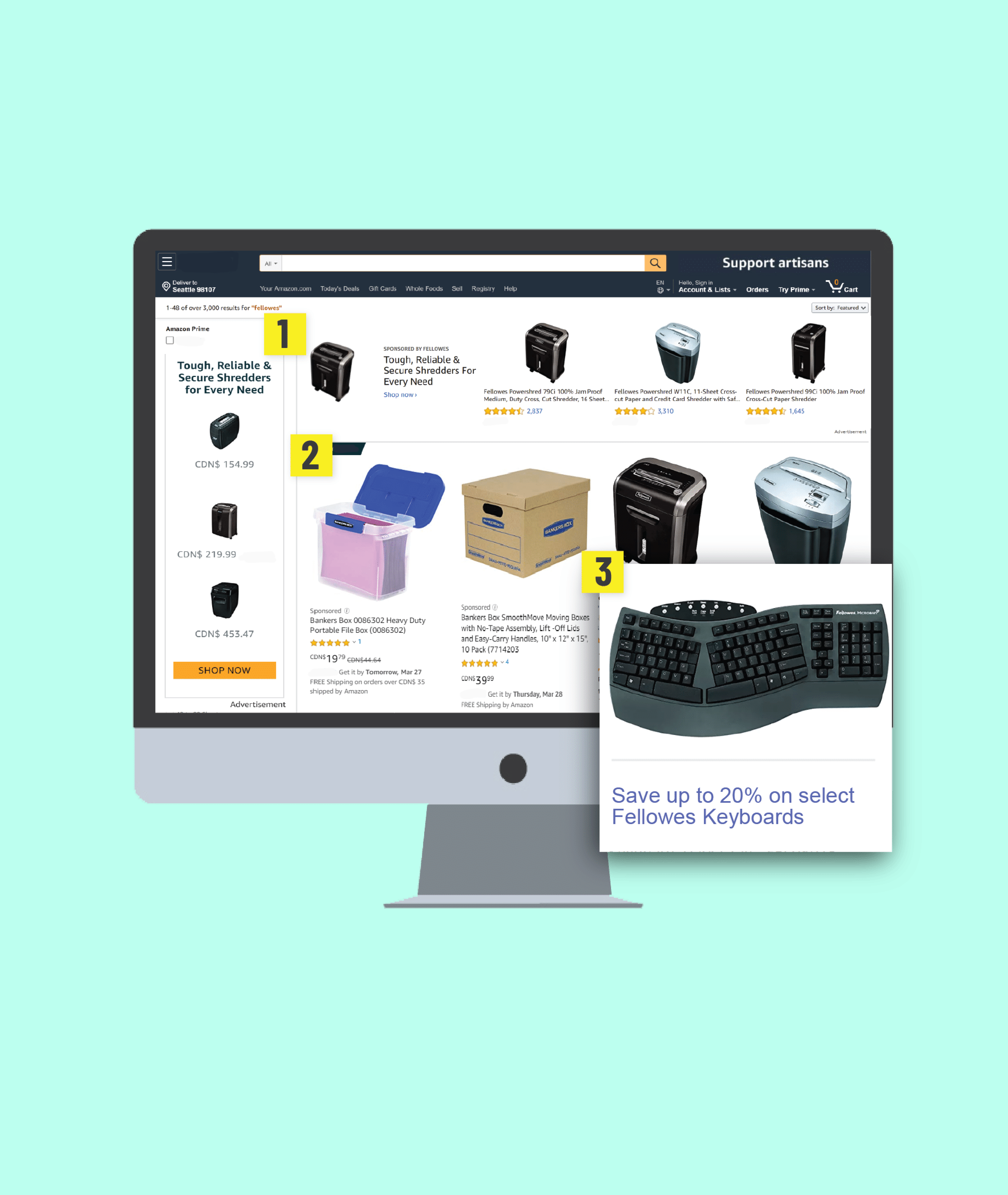
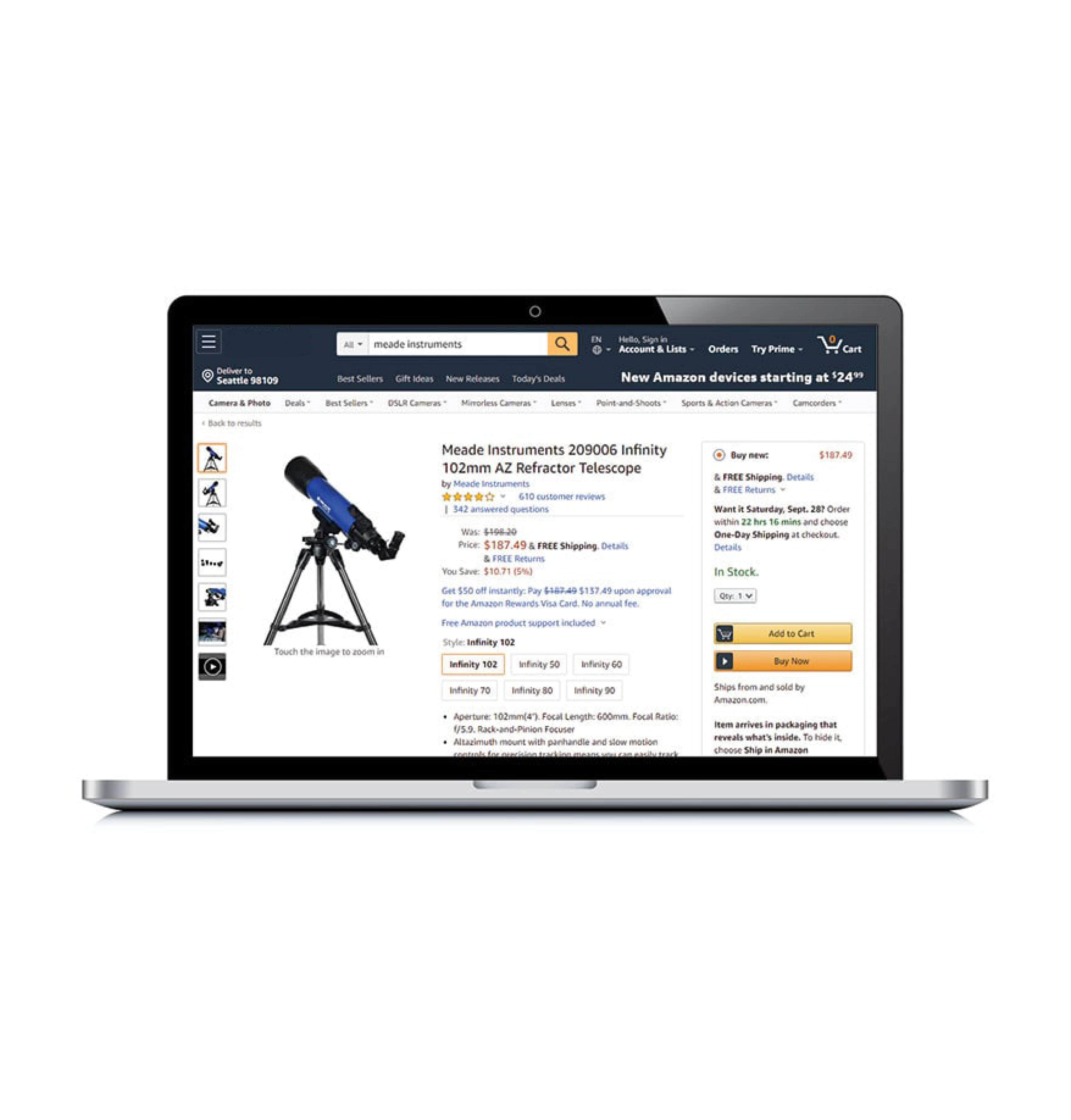
A colorful green background showing a laptop illustration

If you are selling on Amazon, you may find yourself scratching your head wondering why your competitors are outranking and outselling you. There are lots of variables that affect success on Amazon, including how you market your products through Sponsored Ads, A+ Content, Basic Content, etc. That said, crafting a product listing to persuade shoppers to choose your product over your competitors requires an in-depth understanding of testing methods and analyzing results. Since this is not a one-time task, it is critical to run A/B testing on various elements of your listing and identify which version performs best.

What is A/B testing?

In a digital environment where everything can be tracked and measured, testing your strategies is a no brainer. Content strategy plays a key role in driving organic traffic and converting sales, so by leveraging and optimizing your content, you can increase the chances of shoppers purchasing your product over your competitors. A/B testing is one of a handful of the best practices you can use to enhance content on the platform.

Also known as split testing, A/B testing on Amazon is a method of determining the best-performing product listing variation. By comparing two versions of the same content, you can identify the exact element that is driving purchase-ready shoppers to act, taking into account metrics such as conversion rate, sessions, and total sales. That being said, you should have a strong understanding of your current metrics, performance and challenges before building an A/B testing plan. This will allow you to have a solid base foundation before making any changes.

Start by running an A/B test experiment on Amazon.

Amazon launched its own A/B testing tool in 2019 called Manage Your Experiments, which allows US brand owners to test two variations of one product listing element. As a brand owner wanting to test different A+ content elements, you must have eligible ASINs, otherwise they will not be displayed in the A/B test experience. To be eligible, ASINs must belong to your brand, and they must have high enough traffic in their respective categories to determine content winners with confidence. 

Keep best practices for A/B testing in mind.

By following a few tips, you can begin your test experiment with confidence. Here are some recommendations:

  • Strategically create a hypothesis to learn something from the experiment regardless of the outcomes.
  • To get a larger sample size, experiment on high-traffic ASINs.
  • Stick to making one change at a time to avoid confusion on which variables influenced the experiment outcomes. 
  • Don’t stop early – you can run experiments for four, six, eight or ten weeks to ensure accurate results.

Get to know the elements of A/B testing.

Nearly any element of your A+ content can be A/B tested. However, you should use your own judgment to determine what to test based on your current performance. Consider working with an Amazon Ads Partner to strategically outline the testing method. Some variation ideas for your A/B experiment: 

  • Utilize a comparison chart.
  • Rearrange and update your modules and images.
  • Present the same images and text using a different module layout.
  • Include lifestyle images.
  • Highlight one set of product features versus a different set.
  • Add your brand name to the product title.
  • Use different headlines to engage and motivate shoppers to learn more about your product.

Keep in mind that your experimental content should differ from the existing content, otherwise it is less likely to affect consumer behavior and you may not be able to confidently determine a winning variation. The key to a unified branding strategy is consistency, which applies to your color scheme, icons, layout, and even text fonts.

Wait for optimal data.

Patience is key here as most tests need several weeks to gather enough data to determine a winning variation. While Amazon recommends testing for eight to ten weeks, you can adjust the schedule or even turn off the test while it is running. You will start to see data within one or two weeks, although this preliminary data is not representative of the true impact of your experiment. Be sure to let your experiment run its full course before interpreting the results and making a decision. 

Gauge the effectiveness of your experiment.

While launching new marketing initiatives on Amazon can lead to an increase in traffic, you should know how to gauge the effectiveness of each initiative to dial in on what works best. 

Once your A/B test ends, you will get the following from Amazon: 

  • Recommendations on which content variation is more effective
  • A confidence level of the recommendations
  • A confidence interval of likely outcomes from that content
  • Estimated 12-month impact on sales

These insights will highlight the most effective content for your product detail pages to boost total sales and conversions for your Amazon products. By learning from these experiments, you can optimize and improve your other product listings. You might find it beneficial to run experiments during different seasonal periods as this will provide you with a better understanding of your consumers and their expectations. 

When analyzing your results, be sure to keep your audience in mind to make the most informed decision. Although it takes time and patience to run A/B tests, the optimization is worth it if you want to dominate your market. Happy testing and selling!

There are lots of variables that affect success on Amazon. Learn how A/B testing can determine the best-performing product listing and your success. amazon amazon account management amazon consulting amazon listing optimization performance marketing Media Media Strategy & Planning Media Analytics Performance Media Data maturity Digital transformation New paths to growth

Transform Your Marketing Performance Through Your Creative Planning Process

Transform Your Marketing Performance Through Your Creative Planning Process

Content Adaptation and Transcreation Content Adaptation and Transcreation, Media, Performance Media 4 min read
Profile picture for user Robbie Wiedie

Written by
Robbie Wiedie
VP, Creative Services

An illustrated rocketship shoots off into space

Digital has transformed along with the explosion in new channels and behaviors that are challenging the way brands show up online and in culture. With a need to meet increasingly fragmented and oversaturated audiences, going all in on one “big idea” no longer suits audiences’ increasing expectation for relevant, channel-native content—and certainly doesn’t deliver the top-line outcomes of engagement and conversion brands so hungrily seek.

CMOs understand this need to meet audiences where they are more effectively: research from WARC shows that half of marketers say they are spending more on performance this year than last. If marketers are not marrying the performance levers of media and measurement to that of creative, they are not leveraging the most-malleable potential for aptly fueling for performance.

Adopting the performance creative mindset does more than enhance the rigor of ideas; it helps brands develop creative that is authentic to each channel and made for a target-specific audience. If done strategically, it educates and informs consumers, meeting them where they are—at the right place and right time, motivating them to engage with the brand speaker and (eventually) move down-funnel to purchase. Let’s dig into the tenets for performance creative success.

Be data-first, always.

Rethink your approach to creativity to make room for data inputs and outputs. Challenge yourself to view each new idea as potentially iterative, malleable for specific audiences and the different ways they interact across the user journey. This also gives ideas legs to stay relevant in the long term.

Monk Thoughts Data is the ultimate creative director; think of it as the North Star that guides everything you do.
Robbie Wiedie headshot

The old agency practice is antiquated, but many still place longform TV spots on digital. Rather, we must put in the time and energy to meet people where they are, creating meaningful experiences for audiences in a personalized and culturally conscious fashion. When we think with our audience truly in mind, they accept our invitation and welcome us as a speaker.

In this respect, performance creative isn’t about ticking off the boxes to optimize for the lowest common denominator in the audience. In an interview with SoDA Executive Director Tom Beck, Media.Monks Co-founder Wesley ter Haar put it this way: “It’s about how we message and personalize in ways that are actually meaningful for people and fun… understanding where the content lives and whether the effectiveness of the work you’re doing actually delivers the results you want.”

We aim to create the most-refined “fuel" for the media engine through rigorous iterative testing. With data as our driver, we continue to learn virtuously through an ever-evolving approach where performance metrics inform future creative briefs. Because we have the data, we understand what messaging and visuals perform best with our audience. And, in turn, we can more-confidently invest in larger creative production efforts.

Produce at scale to extend campaign lifespans.

To fuel experimentation and maximize the lifespan of any campaign, it's important to capture as much raw content as possible when investing the time, energy and capital in live production. This yields a healthy reservoir of raw content that you can continually draw from in post-production to craft an ecosystem of deliverables that are channel-specific in terms of best practice and intended audience consumptive behavior. And, past 2-3 weeks of placement, we can continue to adjust iteratively based on performance data indicators.

Here's how it worked for Hatch, a brand whose devices help people achieve better sleep. We used an out-of-the-box creative approach combining feedback data and content production to iterate fresh content at speed. We identified top-performing creative placements based on key metrics and began our efforts by iterating messaging and intro visuals as our baseline to quickly improve rising CPAs. Initial learnings led to wider, net-new messages and visual testing utilizing post-production only, and also instilled confidence in briefing live production efforts. Following this plan, Hatch was able to meet larger audiences more effectively, all with a greater variety of data-driven creativity.

Meet people where they are.

An insights-based approach to production also helps teams focus on which creatives best appeal to audiences on different platforms. Think about it: people turn to YouTube to lean back and relax, Pinterest for shopping inspiration, or TikTok for user-generated content and snackable reels—and content that performs best on these channels is designed to meet those expectations. We must, therefore, always begin all efforts with our audience in mind.

It’s important to be purposeful in how you show up across channels and play by the best practices to reflect the content each audience seeks. A look that fits the feed means all the difference between a viewer who’s engaged versus one who’s pining to hit the “skip” button as soon as five seconds are up. And be aware of what you’re up against: on social media, for example, your content competes with the personal relationships and connections that people care most about. Making a strong opening hook is crucial to capture attention, stopping audience thumbs and eyes and driving them to engage.

Also consider creative’s place in the funnel. Awareness content is most powerful when it’s educational and informative, while consideration content lends itself well when focused on a product’s single-minded, USP-specific message. Conversion content should be quick to incentivize the viewer.

Turning fear of failure into data-driven success.

If you don’t see improved metrics out of the gate, you must go back and keep trying. A lack of performance doesn’t necessitate a lack of learnings to inform future creative efforts. Even when a creative placement “fails,” we’re able to glean data on what does not work and devise new approaches. Follow the mantra: “Always be testing.”

Once you have built an ecosystem of deliverables that enable creative testing at scale, you’ll be able to iterate content at scale with data as your guide. So don’t be afraid to fail. It takes the best scientists time to synthesize the purest fuels and ignite transformative, new compounds. Likewise, performance creative begins by making a commitment to being data-driven, producing at scale and being willing to test, iterate and learn to meet audiences meaningfully where they are. We must be creative scientists in the endless pursuit to synthesize better and better assets to fuel media efforts.

Adopting the performance creative mindset does more than enhance the rigor of ideas. If done strategically, it educates and informs consumers. Learn how. performance marketing performance creative content brand creative assets at scale data driven creative Media Performance Media Content Adaptation and Transcreation
`

Amazon Services

Amazon Account Management

Elevate your Amazon strategy to accelerate growth.

Amazon brand store image
Amazon product detail page image

Maximize your Amazon success with a strategic partner.

amazon ads partner badge


We’re the expansion pack that leading brands leverage to accelerate growth through embedded Amazon strategy. Combining repeat wins as AdExchanger’s Best Commerce Agency with AdWeek’s inaugural AI Agency of the Year. We deliver world-class Amazon conversion-driven strategy, execution, management and operational support with tactical advertising and conversion content performance, backed by a full suite of tech capabilities to solve any problem you may face as your business scales.


  1. Full-service management on Amazon • We offer comprehensive Amazon management services to help you get in front of your customers and achieve long-term growth, on and off the platform.

  2. Amazon platform illustration

    From Amazon Sponsored Ads (PPC) to Amazon DSP, our combined value of talent + technology helps you maximize your ad spend, measure results, and drive remarkable sales.

  3. Illustrative desktop with ecommerce ads

    We design and optimize best-in-class product listings and utilize top-industry software tools to build brands' share of voice, increase discoverability, and drive customer loyalty.

  4. Illustration showing a person leaving a truck with boxes

    Our team offers forecasting & demand planning, 1P/3P strategy, review monitoring, profitability & pricing, and more to achieve operational success.

  5. A colorful chart trending upwards

    Flytedeck - Our state-of-the-art software gives our clients unprecedented visibility into their Amazon business and the technological edge over their competitors.

  6. Find out more about our Amazon services.

Swipe
For More!

Drag
For More!

Badges of Retail and Ecommerce awards that Monks has won, including AdExchanger Award for Best Commerce Services, Amazon Ads Partner Awards, and NRF's Retail Voice Award 2026

Start growing your Amazon business today.

Hey👋

Please fill out the following quick questions so we can learn more about your amazon business.

Logos of notable brands that we have worked with

In partnership with

  • Reebok
Client Words We selected Monks from a group of their peers and couldn't be happier with the choice. Their command of the Amazon platform is second to none.
Reebok logo in black

AJ Purpura

Senior Key Accounts Manager

This how we launch on Amazon

A black reebok shoe
Reebok logo
A person doing crossfit climbing a rope

Case Study

Amazon Sponsored AdvertisingFacing relentless competition on Amazon, we helped Reebok turn the tide with a restructured PPC strategy that resulted in a 106% increase in month-one sales.

See Full Case Study

Contact us today to learn more about our Amazon services.

Hey👋

Let us know how we can reach you and discuss how to grow your Amazon business.

Interested in more? Here's some related Amazon advertising content.

A black reebok shoe
Reebok logo
A person doing crossfit climbing a rope

Amazon Sponsored Advertising • Doubling Reebok’s month-one Sales while reducing ACoS

  • Client

    Reebok

  • Solutions

    MediaPerformance MediaPaid SearchCommerce

A red background holding a tablet with the reebok amazon page

An exercise to get PPC in shape.

Reebok is a global fitness brand with a wide catalog of products from athletic to fashion footwear. While the ubiquity of the brand produced ample organic search traffic on Amazon, the storied shoemaker was struggling to gain new customers and fend off competitors due to various structural inefficiencies in their Amazon Pay Per Click (PPC) strategy. With a need to defend their brand and reach new Amazon customers, we partnered with Reebok to restructure their Amazon PPC strategy.

A shoe-in sales strategy to meet high-priority goals.

Reebok's primary goal was to drive top-line sales. Together, we designed an advertising strategy to promote best-selling products and other high-priority items that lined up with initiatives Reebok was running both on and off the Amazon platform. By shifting marketing budget toward high-priority items and optimizing high-traffic content first, Reebok was able to lean into their strengths to drive incremental growth. Throughout this process, efficiency was key; because advertising campaigns were organized by specific category type, Reebok could easily swap out products for new priority items without sacrificing keyword relevancy.

A tablet showing a line graph trending down

Keeping the pace for long-term success.

On a platform known for disruption like Amazon, it's important for brands of all sizes to get noticed. So while driving sales was always the top goal, we understood the value in building brand awareness. This took shape through several Sponsored Brand campaigns that increased Reebok's share of voice and new-to-brand sales.

Finally, for brands like Reebok who are subject to conquesting on the platform, brand keyword defense is crucial. Instead of starting out with a high number of keywords within their campaigns, Reebok utilized phrase and exact match to strategically add keywords over time as campaign performance grew. Together, these strategies helped carry the footwear icon beyond short-term sales goals and into long-term success.

Want to talk performance? Get in touch.

Hey 👋

Please fill out the following quick questions so our team can get in touch with you.

Can’t get enough? Here is some related work for you!

Paycor logo
A phone showing Paycor's application interface

Audience-Based Market Growth • Deep Data Dive to Improve the Customer Journey

  • Client

    Paycor

  • Solutions

    MediaPerformance MediaCRMDataPaid SearchPaid Social

Results

  • 67% increase in ad CTR
  • 240% increase in leads
  • 63% improvement in cost per acquisition
A computer showing the paycor app

Fueling audience-based marketing growth.

Paycor, a leading Human Capital Management SaaS platform, needed to find a new growth path for both overall leads and small business users. But there was a challenge: while reaching SMB prospects on networks like LinkedIn is straightforward, search ads don't offer the same level of dependable audience data. Realizing that pricing is a key decision criteria for that market, we worked with Paycor to develop a plan to segment and increase SMB leads for search using pricing as the central offer—overall scaling growth for the market.

Orange squares

In partnership with

  • Paycor
Client Words SMB leads are very important to us and the strategy that our two teams have crafted, using all data available to us, has meant that we are able to grow those leads in a cost-effective way.
Lauren Denison headshot

Lauren Denison

Manager, Digital Marketing at Paycor

Defining unknowns with behavior-driven insights.

To serve personalized messaging to enterprise and SMB separately on search, we created Customer Match audiences by cross-referencing known audience data from Paycor's CRM with searchers who are already categorized and known to Google.

Segmentation was harder for unknown searchers. With the help of our Compass reporting suite, Paycor integrated their CRM data to analyze keyword groups based on historical CRM behavior, including where prospects were in the funnel when they converted and the size of the company. These insights allowed the teams to categorize search markets into groups and to personalize the customer journey on search ads and other channels, like paid social.

A person using paycor on their tablet at a desk

Unlocking granular specificity—and results.

For the key SMB audience, the teams were able to reduce the number of clicks it took to find cost info at all stages, and added price-specific language to ad messaging for those closer to the purchasing decision. They also applied a funnel-specific call to action from ad copy to landing pages, increasing from three to 18 messaging and landing page combinations.

This kind of specificity had not been possible before, and was the result of SEM data analysis driven by Compass, aggregated client CRM data, and unique client-side customer research insights that gave the teams what was needed to personalize the customer journey. The updated approach to messaging for both known and extrapolated audiences led to surprisingly large gains in ad engagement and enabled even more growth in new business opportunities for Paycor.

Want to talk performance? Get in touch.

Hey👋

Please fill out the following quick questions so our team can get in touch with you.

Can’t get enough? Here is some related work for you!

A woman laughing behind a coffee shop counter
A man standing in front of a school

Scaling Impact and Performance • Supporting Those in Need, Every Day

  • Client

    GoFundMe

  • Solutions

    MediaPerformance MediaData Strategy & AdvisorySocial CampaignsConsumer Insights & Activation

Results

  • 20% increase in branded search revenue
  • 130% increase in new market fundraisers
  • 868% increase in social ad-generated fundraisers

An aim to inspire.

GoFundMe is the world’s largest social fundraising platform, supporting those in need—every day—by making it easy for fundraisers to inspire the world and turn compassion into action. Monks partnered with the brand to scale its impact globally by entering new markets, lowering user acquisition costs on social media, and onboarding more fundraisers and users. Together, we propelled GoFundMe toward being the world’s default giving platform.

Two women making hats
A man showing a kid how to DJ

Aligning data to fuel growth.

As the leading name in giving, GoFundMe faces stiff competition on brand searches, while the cost and competitive environment for paid social ads has also sharply increased over time. By combining Facebook and YouTube channel data with internal data, we developed more channel-specific customer acquisition goals. As a result, we were able to grow monetized fundraisers from branded search by double digit percentages quarter-over-quarter.

Monk Thoughts One of the main focuses of our partnership with GoFundMe was making sure the ad experience for each audience was customized, and curated to what they needed throughout the entire customer journey.

00:00

00:00

00:00

Megan Beatty Senior Director, Paid Social
A woman holding a child

A test-and-learn approach to profitable global expansion.

Given the diversity of ad types, channels, and targeting that GoFundMe was growing into, ad creative rotation became incredibly important. We continually performed new creative tests to inform strategy in newer, growing markets. This allowed for quicker, more immediately successful launches capable of inspiring the spirit of giving everywhere.

Want to talk performance? Get in touch.

Hey👋

Please fill out the following quick questions so our team can get in touch with you.

Can’t get enough? Here is some related work for you!

different colored headbands
clothing items lying on a white background
A woman lying on a white bed with a robe and towel

High-Performance Social Campaigns • Awakening Authentic Content

  • Client

    Hill House Home

  • Solutions

    MediaSocialBrandPerformance MediaOmni-channel Marketing

Results

  • 250% increase in new customers
  • 261% increase in revenue
  • 80% higher ad engagement
A woman lying on a white bed with a robe doing her makeup

A dream performance partnership.

As a lifestyle direct-to-consumer brand, Hill House Home prizes authenticity when connecting with their audience, which has given them a strong following of brand advocates. But with rising ad costs and the number of new brands vying for attention, creating a true standout brand via Facebook and Instagram advertising provides a major challenge. We partnered with Hill House Home to help the brand shine in the intensely competitive D2C bedding category through authentic social content.

In partnership with

  • Hill House Home
Client Words Growth on Facebook and Instagram is a daunting challenge for us, just like it is for any brand. For our teams to have found something so successful, so quickly takes a lot of experience, and a true understanding of who our customer is and what they care about.
A woman smiling in front of a window

Nell Diamond

Founder and CEO

Waking up to audience insights.

We began by analyzing audience signals from previous buyers to gain insight into current and would-be customers, which helped the team zero in on the creative choices that resonated best with them. This process improved the brand’s creative strategy and audience targeting on Facebook and Instagram—both important learnings, as consumer behavior and preference change on these platforms almost daily.

A tablet showing a graph of data

Authentic, native-feeling content.

Armed with key audience insights, the team incorporated fit-for-format video that echoed the user-generated social posts of their most loyal customers. This authentic approach cut through the clutter of overworked DTC ads people were used to seeing. On Facebook, which historically had been a performance challenge for Hill House Home, we took advantage of the emerging Stories format to scale reach and make Hill House Home the go-to lifestyle choice.

Want to talk performance? Get in touch.

Hey👋

Please fill out the following quick questions so our team can get in touch with you.

Can’t get enough? Here is some related work for you!

How to Gain New Insights Through A/B Testing

How to Gain New Insights Through A/B Testing

3 min read
Profile picture for user mediamonks

Written by
Monks

Two different colored walls

Everyone remembers the classic school experiment where two seeds are planted separately in different conditions: one kept in a dark cupboard and the other in the light. Everything was kept equal except one variant. This is a very simple example of A/B testing, which this article will seek to explain in greater detail.

Making greater use of data and analytics than with the simple (yet effective) example above, A/B testing can be used to measure the impact of a range of different tests, such as email marketing, PPC campaign testing, website content and more. 

But here, we’re going to discuss a very simple scenario. Let’s say we want to run a regional marketing test, and therefore wish to measure its impact to inform whether it’s worth running again in the future or not. But what exactly is A/B testing, and how can it help in this case? How should we go about running the test itself? And how do we actually measure its impact?

What is A/B testing?

A/B testing, sometimes otherwise known as split testing or test and control, is used to compare two versions of something and measure the impact from one element that is changed. In our regional marketing test example, we are looking to measure the uplift (if any) across the regions that the marketing ran, compared with the regions where it didn’t.

How do you run an A/B test?

Start with the hypothesis to be tested. For example, you believe a certain piece of marketing will outperform the norm. This could be prompted by a question, such as “Why isn’t a particular channel working?” or “We’d like to explore this strategy in the future, how can we test if it works?” The latter fits well with our regional marketing example.

From here, make sure you have the data required to measure the test and set it up in the correct way. For example, if running a regional test, ensure you are able to collect regional/store level data. And be sure to discuss the test with the relevant parties to ensure that the spend, flighting and regions chosen for the test are sufficient. 

At any one time, there will be a whole range of factors that influence sales. However, keeping everything the same except for the marketing that is being tested, we can confidently assume that any uplift is coming from the test itself.

How do you measure A/B test results?

First, we have to collect all required data. In our example of regional testing, split the sales data into two distinct sets: a test set and a control set. Collecting store level sales data would inform the split of sales data in our case. 

Next, we must index the test and control sets to have the same baseline so that a fair comparison can be made. Given that they may be of different absolute values, this is the best way of comparing the two when looking at the change in sales.

As mentioned previously, by keeping all other factors the same (i.e. availability of product, no differences in offering between stores, etc.), any difference seen in the test set can be attributed to the marketing activity we have run. See the chart below for a nice visual example of this.

What A/B testing achieves.

A/B testing allows us to calculate ROI more accurately than we would be able to otherwise, for example by modelling total national sales with traditional MMM. Store level modelling is another solution, but for smaller ad-hoc tests it is often not cost efficient due to the resource required and relative spend behind the test.

A/B testing doesn’t just provide data-driven proof that a test has or hasn’t worked. It also provides the opportunity to apply insights into consumer behavior across other areas of your marketing. If a regional test has worked when marketing a particular product, then it may well work again by using a different channel.

Carrying out regular testing works best, as it helps to reach the optimal marketing spend and laydown quicker within each channel, making for more fruitful marketing. And of course, similar to our favorite seed experiment, shedding more light on marketing will only help its impact grow! Learn more about how we can help you now.

Learn how A/B testing can be used to measure the impact of a range of different tests, such as email marketing, PPC campaign testing, website content and more. performance marketing

My Marketing Channel Doesn't Work: A Digital Ad Fallacy

My Marketing Channel Doesn't Work: A Digital Ad Fallacy

3 min read
Profile picture for user adam

Written by
Adam Edwards
EVP, Performance Media

A hand drawn rocket ship flies through the sky

Digital marketers are testing more new tactics, channels and strategies than at any time in recent memory. During the early 2000s, digital marketing mostly meant search and display efforts without much variety beyond those two ad formats. Today’s advertiser has a slew of new arrows in their quiver. While the interest in trying new channels and tactics has expanded, the evaluation criteria hasn’t. Way too often I hear, “we tried _____, but it wasn’t working, so we shut it off.” The common thread in almost all of these cases is that the marketers are not evaluating a channel or tactic based on what it was designed to do.

How Do I Know It’s Working?

I recently talked to an advertiser for an enterprise software product who was leveraging target account marketing on LinkedIn to reach executive-level decision makers. He told me it “wasn’t working.” When I asked him, “what do you mean when you say it isn’t working?” he responded that it wasn’t generating any leads. I looked at his campaigns, and saw that he was showing ads to VPs and CXOs, driving them to a free demo signup page.

Put yourself in the prospect’s shoes for a moment: A senior executive isn’t interrupting their day to click on an ad from a company they’ve never interacted with, and then immediately signing up for a demo with a salesperson without interacting with any other content on the site. Heck, even a junior employee doing research for a senior executive probably wouldn’t request a sales demo without doing significantly more research than reading one ad and one landing page. Saying that these LinkedIn campaigns “don’t work” is like throwing a cheetah in a swimming pool with a dolphin and calling it slow when it loses a swim race.

Think Like a Customer

Last year we invested in a single sign on software (SSO) to enhance our company’s digital security. Our CEO was the ultimate decision-maker on the purchase and gave signoff on the investment, but there was no chance that he would take 30 minutes listening to a demo pitch. He assigned our Director of Technology to lead the evaluation process. That director did demo four different software platforms before ultimately making a recommendation that our CEO approved.

Ok fine, but then why worry about showing our CEO an ad at all? When our CEO tasked that director with leading the evaluation process, he mentioned that he knew Company A and Company B had offerings that were worth evaluating. So before any serious research took place, two of the four spots for consideration were decided. Influencing our CEO’s likelihood of mentioning, remembering, or just being aware of Company A and Company B is exactly why you show him an ad even if he’s never going to convert on a demo offer.

Evaluate the Right Way

So how should you evaluate success? That depends on what marketing tactic you’re using and what it is meant to accomplish. Or, continuing the metaphor from before, whether it was designed to sprint in the plains or swim in the ocean, so to speak.

If you imagine yourself as the SSO software marketer trying to influence our CEO, you should first divvy up targeting between prospecting and remarketing for evaluators and influencers. Each of the four segments would have a different measure for success.

If you’re getting in front of CXOs and driving heavy site engagement and lots of return visits, you’ve won. How much would you pay for the CEO of one of your top 500 target accounts to come to your site, spend five minutes clicking around, seeing that you are a leader on a recent Gartner report (or any other prominent award), and then download an ungated asset? For many B2B companies, that’s probably worth $500+. So who cares if you’ve spent $5,000 with two conversions if you’re driving killer engagement left and right?

The purchase funnel continues to get more complex. You’re rarely going to hit a home run on the first pitch, so start to weigh the walks and singles that ultimately lead to scoring runs. If you’re evaluating the right metrics and not giving up on channels and tactics for the wrong reasons, you’re going to end up with more deals and revenue, and those are the ultimate success metrics.

Learn more on how our performance.monks can help with these tough challenges as they arise.

Make sure you're evaluating the proper metrics for your marketing campaigns before you determine that they "don't work." Our SVP, Digital Strategy discusses how to evaluate the proper metrics for your marketing campaigns before you determine that they "don't work." performance marketing data analytics digital marketing campaign

Enhance Creative by Turning Data into Insights

Enhance Creative by Turning Data into Insights

4 min read
Profile picture for user mediamonks

Written by
Monks

Mejora la Creatividad Convirtiendo Datos en Conocimiento

Today’s CMOs have a lot on their plate: their role is increasingly responsible for overall business growth, managing brand communications, customer experience and in some cases the adoption of new technologies. Each of these responsibilities touch upon the different ways that consumers interact with a brand, making it essential for CMOs—and their teams—to manage a wide-lens view of the consumer journey. But in order to successfully integrate business objectives with data and customer experience, they’ll need to establish marketing strategies in which both work hand-in-hand to support one another.

By achieving this through constant performance measurement and optimization of content, organizations empower themselves to adopt a more agile process of marketing, which enables them to rapidly experiment and optimize campaign content and media spend through engagement. This culture of experimentation—with results to back it up—is key to achieving the always-on stream of content that today’s consumer expects, offering several relevant, personalized permutations of a message rather than the “big idea” campaign that was so popular in the past.

Close the Loop on End-to-End Marketing

Effective marketing today isn’t born just from an initial set of figures, but in fact results in new data that can be used to further optimize that content. This strengthens the creative so that it remains relevant to consumers along the digital journey. Whether an initial set of metrics lives up to expectations or not, data-confident organizations that continually measure performance may use those insights to increase content effectiveness, save in costs over the long-term and maintain trust in their creative partners.

Think about what a campaign that uses data poorly looks like. We’ve all found ourselves haunted by a product we’ve viewed (or even purchased) in our travels across the internet—an experience that can come off as annoying or even downright creepy. That this situation is all too common demonstrates how brands often miss key opportunities for effective retargeting or adapting their message to consumers’ changing priorities or intents. Those who continually optimize content through an agile process rapidly gain and apply new insights to adapt their message to the consumer’s interests or place in the sales funnel, resulting in more relevant and effective targeting.

Monk Thoughts Many brands may rely on automated optimization, but then they miss out on understanding what their audiences are thinking.

We took this end-to-end approach in a recent awareness campaign for Gladskin, the Dutch skincare brand, and their award-winning acne treatment. The processes described below enabled the brand to five-times lower CPM (cost per 1,000 impressions) and higher-than-forecasted reach. To achieve this, we measured what content brought audiences past initial engagement, then applied those insights to continually change the positioning, messaging and creative for greater results.

Optimizing Content for Increased Relevance

As with any campaign, this one began with an initial set of research on a hypothesized audience. Through preliminary engagements from consumers, we were able to quickly zero in on key insights that informed the next phase of production and user targeting. For example, we noticed that Instagram Story content focusing on models’ faces performed especially well in the awareness stage; this content achieved a 37% higher CTR than story content that focused on the product’s effect on the skin.

This aligned well with what you would expect from a platform like Instagram, as the face-focused content was akin to your standard beauty deliverable. But we found that the opposite was true in the consideration phase: Instagram Story content that performed better at this stage fixated on the skin and science behind the product.

Similarly, content that drove more users to convert focused on the research behind the product’s award-winning formula and customer testimonials, depending on the format used. The former was most effective with carousels that let users dive deeper into the product benefits in detail, while the latter performed best in single-image link ads.

Which type of message performs best per platform or format isn’t set in stone; it’s different per campaign, driving home the importance of closely measuring performance across the course of any campaign. But what both winning formats in the consideration and purchase phases had in common was that they provided consumers with justification to buy after their interest had initially been piqued, a key insight for subsequent retargeting efforts.

Screen Shot 2019-07-31 at 3.23.38 PM

Stitched together from a selection of pre-existing assets, we applied performance metrics to identify the most effective designs per segment and channel.

One can imagine how sticking to a single type of content throughout the consumer journey is comparatively ineffective in pushing consumers through the funnel; think back on that example of a product listing stalking a customer who happened upon it once. By highlighting new insights through frequent A/B testing, we could rapidly remix transformable assets into more and more attractive deliverables—and even support new creative formats, like Instant Experiences on Facebook.

Boost ROI with Optimized Spend

Cracking the code to the most thumb-stopping, relevant messages to consumers is one thing, but it doesn’t do anyone good when those messages fall on deaf ears. In addition to optimizing content, agile marketing processes let you plug data in to deeply target new groups (or continue to retarget engaged ones) for continued success.

For Gladskin, we worked with Brainlabs (an award-winning digital marketing agency) on a new approach to organizing target interests. Rather than sort them by theme—in this case, things like “teenage skincare” or “acne treatment”—we identified how well each individual interest performed. From there, we divided the top-performing ones from the bottom.

Weekly reporting enabled us to continually replace the lowest-performing interests with new ones. Over time, this process will result in ever-higher engagement rates and reach into new, increasingly relevant audiences over the course of the campaign. Tied with the process of optimizing insights-driven content as detailed above, this end-to-end approach is truly reactive to audience engagements and intents.

As measurement becomes increasingly essential for CMOs to improve customer experience, increase communication effectiveness and drive overall business goals, brands must embrace agile processes that allow for the continuous optimization of campaigns. This repeated experimentation through closed-loop, end-to-end systems provides brands with the insights they need to achieve specific business outcomes for long-term success.

Measuring campaign performance not only helps brands make creative decisions. It also grants them a clearer look at what different segments think at different stage of the customer journey. Enhance Creative by Turning Data into Insights Measuring performance to attain a clear, unblemished view of the consumer.
programmatic media buy performance marketing campaign performance assets at scale creative technology consumer data first-party data social media marketing channel marketing

Choose your language

Choose your language

The website has been translated to English with the help of Humans and AI

Dismiss