Case Study
Performance Solutions
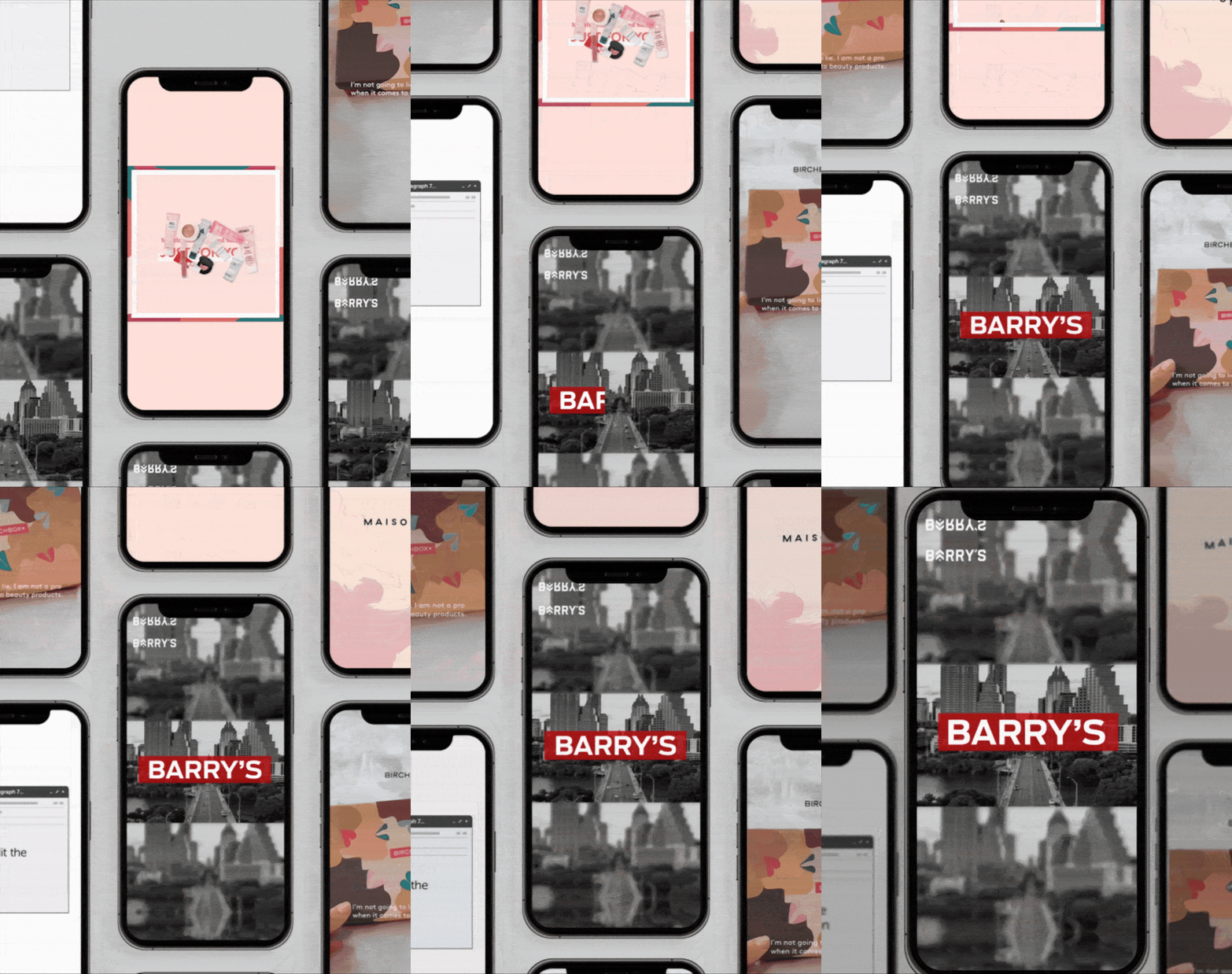
Performance Creative:Data-Driven Production
Fuel for the Media Engine
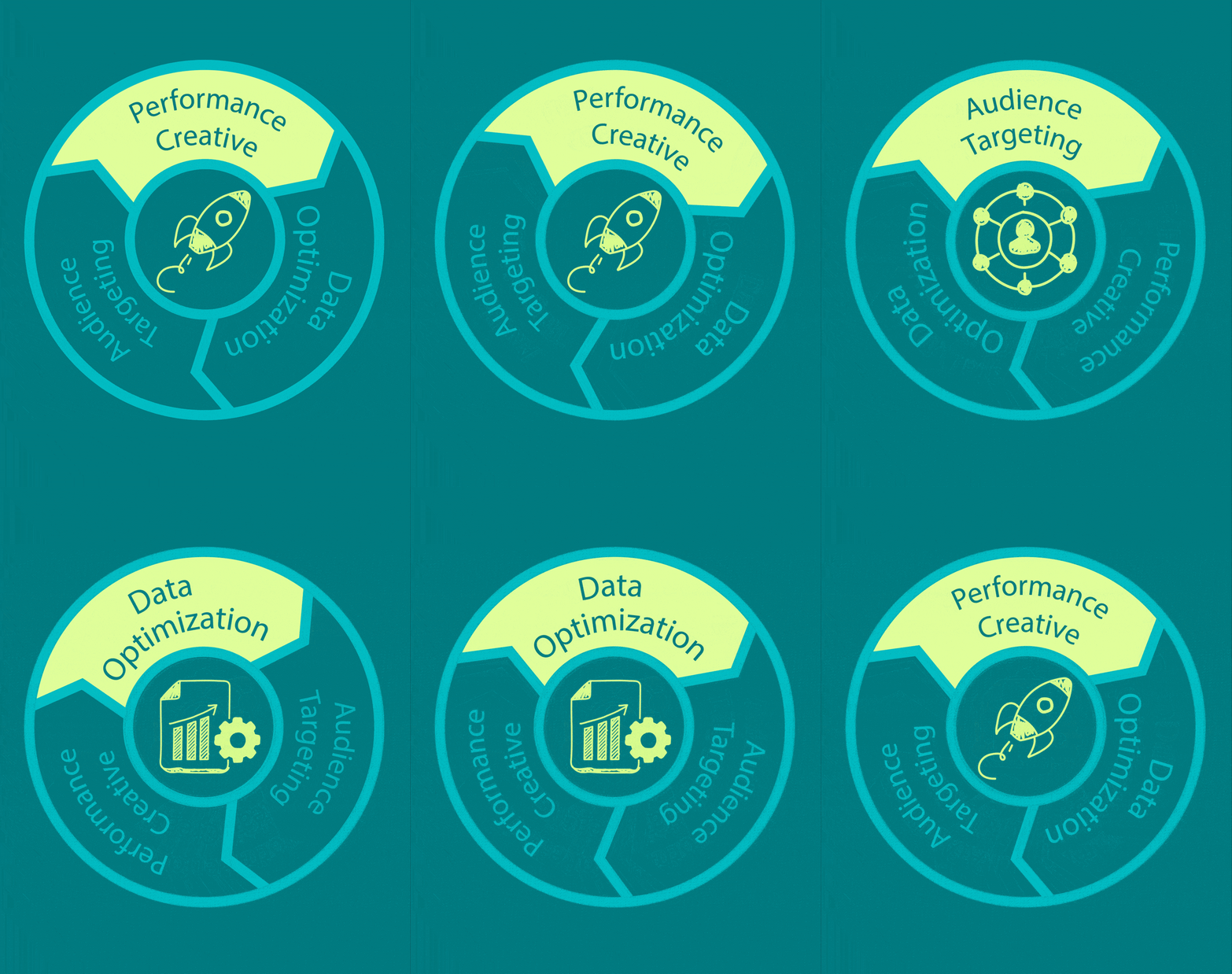
Our creative team works alongside our media strategists, testing creative iteratively at scale. We're your executional partner, adopting digital best practices per channel to yield an ecosystem of creative assets that are quantifiably measured via performance.
High-Performance Creative for Hatch


What We Do
-
Our Services • We quickly concept and develop direct response creative, often from existing partner assets — launching placements to specific audiences and funnel placements, aiming to fuel paid media efforts for as long as possible.
-
![Creative services GIF for just fab]()
Existing Asset Optimization
We take your brand materials and repurpose them for quick learnings to inform larger creative efforts.
-
![performance creative work example gif format]()
Illustrated Animation
A post-production-first approach to generate net-new creative that drives results.
-
![performance creative foxtrot brand example gif]()
Micro Production or UGC
Faster, more-efficient UGC-centric efforts that are learnings-based and designed to fuel paid efforts longer.
-
Find Out More About Our Creative Services.



Swipe
For More!
Drag
For More!


Want to talk performance creative solutions?
Interested in more? Here's some related content for you.
-
![An illustrated rocketship shoots off into space]()
Blog Post
Transform Your Marketing Performance Through Your Creative Planning Process By Robbie Wiedie 4 min read -
![Four portraits of men and women in squares, waterfalling down a purple background]()
Blog Post
How Hatch Leveraged Data to Deliver Hyper-Effective and High-Performance Ads By Performance.Monks 3 min read -
![person photographing someone trying clothes on at a store]()
Blog Post
Uniting Brand and Performance in Marketing Strategies By Julia Pacheco 4 min read



Explore more of our Media solutions
Transform Your Marketing Performance Through Your Creative Planning Process
Transform Your Marketing Performance Through Your Creative Planning Process


Digital has transformed along with the explosion in new channels and behaviors that are challenging the way brands show up online and in culture. With a need to meet increasingly fragmented and oversaturated audiences, going all in on one “big idea” no longer suits audiences’ increasing expectation for relevant, channel-native content—and certainly doesn’t deliver the top-line outcomes of engagement and conversion brands so hungrily seek.
CMOs understand this need to meet audiences where they are more effectively: research from WARC shows that half of marketers say they are spending more on performance this year than last. If marketers are not marrying the performance levers of media and measurement to that of creative, they are not leveraging the most-malleable potential for aptly fueling for performance.
Adopting the performance creative mindset does more than enhance the rigor of ideas; it helps brands develop creative that is authentic to each channel and made for a target-specific audience. If done strategically, it educates and informs consumers, meeting them where they are—at the right place and right time, motivating them to engage with the brand speaker and (eventually) move down-funnel to purchase. Let’s dig into the tenets for performance creative success.
Be data-first, always.
Rethink your approach to creativity to make room for data inputs and outputs. Challenge yourself to view each new idea as potentially iterative, malleable for specific audiences and the different ways they interact across the user journey. This also gives ideas legs to stay relevant in the long term.
Monk Thoughts
Data is the ultimate creative director; think of it as the North Star that guides everything you do.

The old agency practice is antiquated, but many still place longform TV spots on digital. Rather, we must put in the time and energy to meet people where they are, creating meaningful experiences for audiences in a personalized and culturally conscious fashion. When we think with our audience truly in mind, they accept our invitation and welcome us as a speaker.
In this respect, performance creative isn’t about ticking off the boxes to optimize for the lowest common denominator in the audience. In an interview with SoDA Executive Director Tom Beck, Media.Monks Co-founder Wesley ter Haar put it this way: “It’s about how we message and personalize in ways that are actually meaningful for people and fun… understanding where the content lives and whether the effectiveness of the work you’re doing actually delivers the results you want.”
We aim to create the most-refined “fuel" for the media engine through rigorous iterative testing. With data as our driver, we continue to learn virtuously through an ever-evolving approach where performance metrics inform future creative briefs. Because we have the data, we understand what messaging and visuals perform best with our audience. And, in turn, we can more-confidently invest in larger creative production efforts.
Produce at scale to extend campaign lifespans.
To fuel experimentation and maximize the lifespan of any campaign, it's important to capture as much raw content as possible when investing the time, energy and capital in live production. This yields a healthy reservoir of raw content that you can continually draw from in post-production to craft an ecosystem of deliverables that are channel-specific in terms of best practice and intended audience consumptive behavior. And, past 2-3 weeks of placement, we can continue to adjust iteratively based on performance data indicators.
Here's how it worked for Hatch, a brand whose devices help people achieve better sleep. We used an out-of-the-box creative approach combining feedback data and content production to iterate fresh content at speed. We identified top-performing creative placements based on key metrics and began our efforts by iterating messaging and intro visuals as our baseline to quickly improve rising CPAs. Initial learnings led to wider, net-new messages and visual testing utilizing post-production only, and also instilled confidence in briefing live production efforts. Following this plan, Hatch was able to meet larger audiences more effectively, all with a greater variety of data-driven creativity.
Meet people where they are.
An insights-based approach to production also helps teams focus on which creatives best appeal to audiences on different platforms. Think about it: people turn to YouTube to lean back and relax, Pinterest for shopping inspiration, or TikTok for user-generated content and snackable reels—and content that performs best on these channels is designed to meet those expectations. We must, therefore, always begin all efforts with our audience in mind.
It’s important to be purposeful in how you show up across channels and play by the best practices to reflect the content each audience seeks. A look that fits the feed means all the difference between a viewer who’s engaged versus one who’s pining to hit the “skip” button as soon as five seconds are up. And be aware of what you’re up against: on social media, for example, your content competes with the personal relationships and connections that people care most about. Making a strong opening hook is crucial to capture attention, stopping audience thumbs and eyes and driving them to engage.
Also consider creative’s place in the funnel. Awareness content is most powerful when it’s educational and informative, while consideration content lends itself well when focused on a product’s single-minded, USP-specific message. Conversion content should be quick to incentivize the viewer.
Turning fear of failure into data-driven success.
If you don’t see improved metrics out of the gate, you must go back and keep trying. A lack of performance doesn’t necessitate a lack of learnings to inform future creative efforts. Even when a creative placement “fails,” we’re able to glean data on what does not work and devise new approaches. Follow the mantra: “Always be testing.”
Once you have built an ecosystem of deliverables that enable creative testing at scale, you’ll be able to iterate content at scale with data as your guide. So don’t be afraid to fail. It takes the best scientists time to synthesize the purest fuels and ignite transformative, new compounds. Likewise, performance creative begins by making a commitment to being data-driven, producing at scale and being willing to test, iterate and learn to meet audiences meaningfully where they are. We must be creative scientists in the endless pursuit to synthesize better and better assets to fuel media efforts.
Digital Media
Creative data
meet media data


00:00
00:00
00:00
What You'll Learn
Why keep creative and media data separate?
As the digital advertising landscape continues to grow more complicated with highly segmented audiences, increasing privacy regulations, and more vendors in the fray, creative assets will need to work more efficiently (and effectively) to reach and engage customers. But it’s nearly impossible to understand why advertising works (or doesn’t) by looking at media and creative in isolation. The two must work together in a creative data loop that informs future campaigns and increases performance in ways traditional analytics cannot. But how to get there when digital media and creative are managed by different teams, tech stacks, and agency partners?
Jackie Saplicki, Global Director of Technology Consulting with the Data.Monks, helps bring marketing, advertising, consumer and content data to life for some of the world’s biggest brands. Now, she’s sharing practical steps for bringing media and creative together to significantly improve campaign performance. Learn how to:
- Combine media and creative data sets to harness data “exhaust” that can fuel rich creative insights
- Gather new insights not reliant on third-party data
- Better utilize digital media dollars, facilitate more complete analytics for creative optimization and gain more control over customer journeys
- Streamline creative production for increased speed and agility
Monk Thoughts
Knowing which ads the customer is actually seeing, can be the difference between success and failure.

Want to talk data? Get in touch.
Can’t get enough? Here is some related content for you!


(Re)Focus Advertising on Value
(Re)Focus Advertising on Value

It’s time to acknowledge the elephant in the room: during a time of instability and hardship, should brands halt their advertising and go dark? Data shows that most consumers still want to hear from brands, but their message should be focused on building value. Still, even the idea of what constitutes as an appropriate response varies day-by-day and by location, highlighting the need for brands to invest in truly understanding their audiences and how they can lend support to them at speed.
In fact, brands who continue to invest in advertising spend throughout a recession tend to benefit by experiencing revenue gains that persist beyond its passing. 44% of consumers plan to delay purchases until after the COVID-19 outbreak has ended, and brands must use this time to prepare for the inevitable need to quickly grow following significant revenue loss throughout the pandemic.
Still, brands must consider whether spending makes sense. “Traditional advertising response is spend, spend, spend,” S4Capital Chairman Sir Martin Sorrell told audiences in conversation with Ad Age. “But when companies are facing existential crises in Q2 and not sure if they have enough money to survive, it’s ridiculous.” Instead, he recommends that those in tech who planned campaigns and sponsorships for canceled sporting events “should divert that spending to doing good, purpose-driven campaigns. But those campaigns should be highly practical–equipment, vaccine development, therapy–supporting those on the frontline. It shouldn’t be self-seeking. You have to encourage clients to deploy their resources more effectively and divert money into digital because that’s more effective.”
Still how do brand ensure their focus is on providing real, authentic value to audiences in the coming months? The secret lies in redefining the role of the brand in consumers’ lives and being proactive to their shifting needs in a disruptive landscape.
Invest in Insights-Driven Creative
“In the first couple of weeks, data suggested that people didn’t want to hear from brands,” says Andre Rood, Global Advertising Director at MediaMonks. “Afterwards, you saw them slowly get into the mindset, as long as brands were being helpful.” He notes how brands’ initial response to the coronavirus from felt so repetitious, with so many brands reiterating the same message: wash your hands for 20 seconds and stay at home. They weren’t differentiating or cutting through to individuals’ specific needs at the time.
Monk Thoughts
The way you should target and personalize should be totally different now.
MediaMonks Founder Wesley ter Haar notes that in reacting to COVID-19, it’s more important than ever that brands invest in personalization, or they risk looking insensitive. This prompts brands to consider personalization beyond the typical categories of demographics and user preferences. Instead, they have to dig deep into the nuances of what their audiences are dealing with, and the myriad ways that the brand can help.
“The COVID curve is different everywhere, even affecting people differently who live in the same community,” ter Haar says. “For some that means looking for a cure to boredom—but that messaging is insensitive for a family of six that is homeschooling while working from home, who are too busy to be bored. It’s never been more important to actually understand who you’re talking to.”
Rood echoes this sentiment by cautioning that brands shouldn’t rely on the standard segmentation methods, which currently offer little relevance. “The way you should target individuals should be totally different now,” he says. Mood triggers, for example, can help a brand tailor the most supportive and relevant message to audiences whose experience with the pandemic can wildly differ.
Test New Production Solutions at Speed
The speed at which the COVID-19 situation can change also poses a challenge to brands focused on keeping connected with their audiences throughout the full scope of the pandemic. For example, a brand might be set to launch a campaign, only to find that it’s suddenly no longer relevant. In addition to offering a dynamic campaign as mentioned above, brands must employ rigorous testing to understand how people are responding to creative week by week.

Our awareness campaign for Gladskin was optimized per channel and format based on weekly reportage.
“Due to the fact that this is moving so quickly into unknown areas, brands must be able to galvanize and shift content immediately,” says Patrick Kirby, Digital Strategist at MediaMonks, noting that becoming more agile is essential to success.
Ways to do this include repurposing archival material for legacy brands who have it, turning to quick and versatile animation as a production alternative or encouraging UGC and influencer content to build community engagement. Each of these approaches enable brands to reallocate budgets or refresh existing content, but more importantly, they can do so at speed.
Redefine the Brand’s Role
More than simply continuing to advertise to consumers with conversion-based content, now is a good time for brands to truly focus on building brand value and becoming more purposeful. For example, while brands should tread lightly in approaching the current moment with humor, there is value in using creative to lift spirits and boost morale.
Monk Thoughts
What’s important isn’t just the product, but the full story around it.
There’s a lot of talk too about how manufacturers have done substantial good by shifting operations to produce much-needed masks, hand sanitizer, ventilators and more. This approach isn’t practical for many—for example, smaller or mid-sized brands. But there are still opportunities to get creative in how you leverage your channels and platforms, like HP and Folding@Home’s initiative that encourages users to donate a fraction of their computing power to aid in the research toward a COVID-19 cure.
Such approaches are rooted in customer obsession, in which brands pool together resources to listen to the customer and deliver upon those needs. Willemijn Jongbloed, Digital Strategist at MediaMonks, notes how Nike was able to adapt well to offer value to consumers under quarantine thanks to its customer obsession strategy. MediaMonks has partnered with the athletic brand and Wieden+Kennedy to host a weekly series of livestreamed workouts that get people active and moving despite staying at home.

“When Nike moved into events, that was a bold move at the time, but now you can clearly see the many sides of the brand. In a time when people have largely stopped buying clothes, they have created the ability to move into online events, and thus can instantly serve their audience in a different way.” What makes the experience powerful isn’t just the product itself, she says, “but the full story around it—including all benefits, use cases, mindset and emotional connection that will set a company up for success.”
That drives home an important point for brands as they seek to engage with and support consumers over the next few months. Wielding brand voice in a global pandemic isn’t a matter of simply keeping your name out there or driving conversions; it’s also about building trust, becoming more purposeful and experimenting with more agile ways of working. As brands hone these skills now, they’ll emerge from the other end of the pandemic stronger than before, and their audiences will come to appreciate those efforts.
Digital advertising social advertising advertising strategy media strategy pandemic coronavirus insights driven creative data driven creative brand value brand differentiation