Choose your language

Choose your language

The website has been translated to English with the help of Humans and AI

Dismiss

Pedro Paramo’s Truce • Putting an End to the Eternal Rivalry Between Books and Films

  • Client

    Netflix

  • Solutions

    SocialSocial AORStudioOmni-channel Marketing

00:00

00:00

00:00

Case Study

0:00

The power of an integrated marketing strategy to unify audience support.

Pedro Páramo, a 1957 novel by Juan Rulfo, is an iconic work whose haunting narrative and cultural significance have cemented it as a cornerstone of Mexican identity. However, this status also rendered it “untouchable,” with book lovers deeply doubtful of any adaptation—so when Netflix announced its film adaptation, critics questioned whether the American streaming giant could faithfully adapt a story so ingrained in Mexican heritage. The challenge was clear: overcome the apprehension of both book lovers and cinephiles by proving the adaptation was a respectful and authentic homage to the original.

Netflix’s strategy was rooted in acknowledging these concerns and shifting the focus from the medium (film or book) to the shared love for Pedro Páramo. The campaign sought to unite audiences through immersive experiences and meaningful partnerships that highlighted the film’s authenticity and cultural respect.

Our Craft

Transforming downtown Morelia into the fictional town of Comala

Drag
For More!

Winning over film buffs with an omnichannel marketing approach.

To address the skepticism of discerning film enthusiasts, Netflix prioritized creating a cultural moment that demonstrated the film’s artistic merit and reverence for the source material. The campaign kicked off at the prestigious Morelia Film Festival, a significant gathering for cinephiles in Mexico. While Pedro Páramo was not part of the official festival lineup, Netflix turned this challenge into an opportunity to make a bold statement.

Transforming downtown Morelia into the fictional town of Comala (the setting of the story), Netflix recreated a vibrant carnival that serves as a key scene from the film. Following the red-carpet premiere, festivalgoers were surprised by the immersive experience, which featured over 150 performers in authentic costumes and props from the movie. Dancers, musicians and actors brought the world of Pedro Páramo to life, captivating attendees and proving to cinephiles that the adaptation was a labor of love, earning their intrigue and trust.

Out-of-home advertising turned a friendly rivalry into a key alliance.

Recognizing the strong hesitation among book lovers, we sought to bridge the divide with a bold and unexpected partnership with Librerías Gandhi, Mexico’s most prominent bookstore chain. Gandhi, known for its witty campaigns championing books over films, was a natural yet surprising ally. While they initially teased Netflix on social media, we used this playful rivalry as an opportunity to unite both brands under a shared admiration for Pedro Páramo.

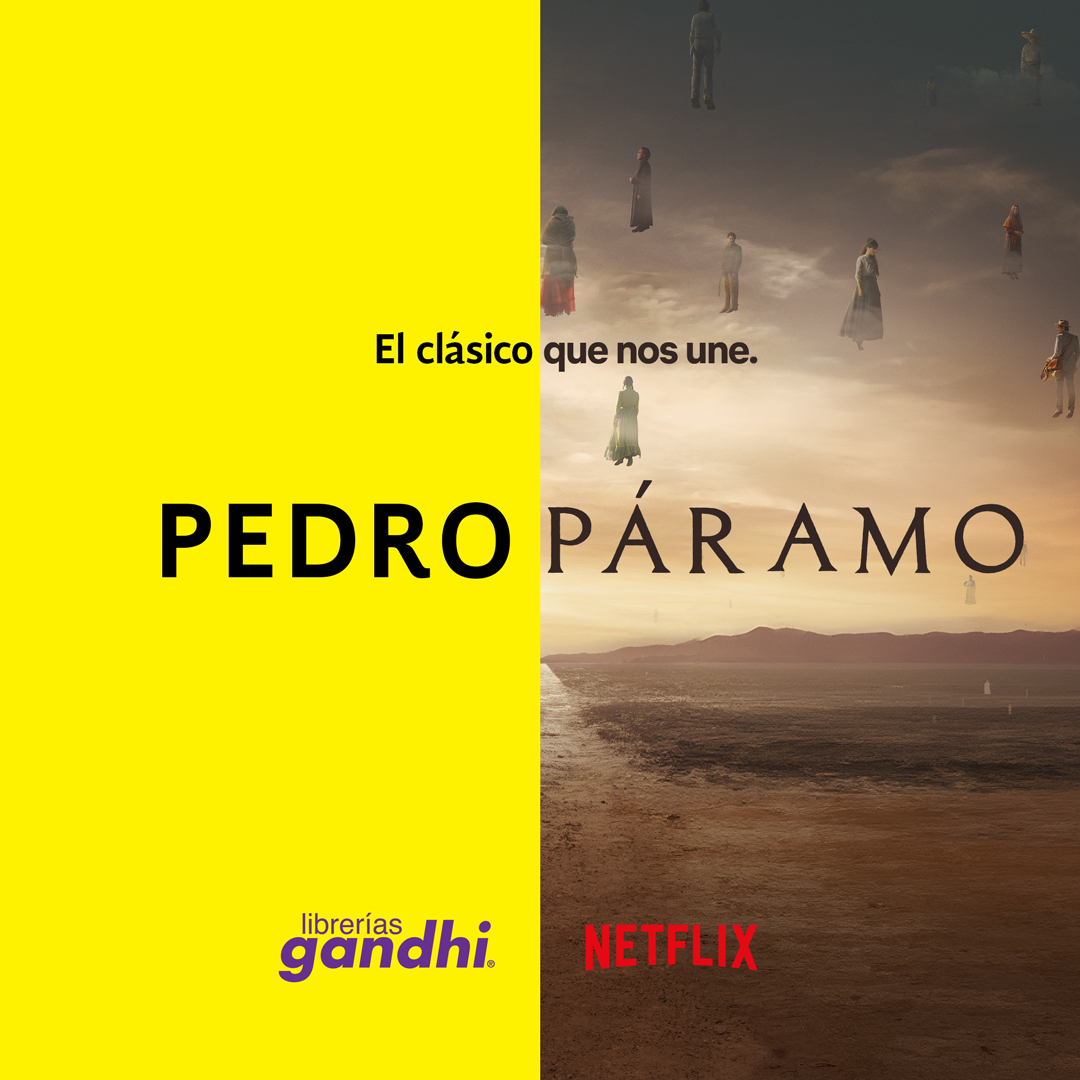
We orchestrated a striking out-of-home (OOH) campaign that went far beyond traditional billboards. On the facades of a skyscraper, we arranged massive ads that celebrated this collaboration, blending Gandhi’s iconic yellow design with Netflix’s sleek black branding. One ad proclaimed, “Fans of Pedro Páramo, the book,” while Gandhi countered with, “Fans of Pedro Páramo, the film.” This exchange captivated audiences and lent credibility to the adaptation. By facilitating this alliance, we turned doubt into curiosity, encouraging book lovers to support the film and film enthusiasts to explore the novel.

Rivalry transforms into partnership, promoting Pedro Páramo for book and film lovers.

  • The image shows a social media post from Librerías Gandhi featuring a bold yellow background with the text "Sólo los lectores saben dónde está Comala," along with a link and hashtag relating to "Pedro Páramo."
  • The image displays a social media post from Netflix Latinoamérica with a bright yellow background and a message teasing an upcoming reveal on November 6th.
  • The image features two large billboards on buildings, one advertising a book titled "Pedro Páramo" associated with Netflix, and the other promoting the film adaptation of the same title.
  • The image features a promotional design for "Pedro Páramo," with floating characters in a desolate landscape and text indicating its connection to both Librerías Gandhi and Netflix.

Not just marketing: a true work of art befitting the Netflix platform.

In a groundbreaking move to underscore the cultural reverence for Pedro Páramo, we conceived the idea of creating a foreword for the film—an homage inspired by the literary tradition of book forewords. This foreword, made by director Rodrigo Prieto, served as a love letter to the novel and its cultural significance. It was a heartfelt manifesto affirming the adaptation’s respect for the source material and inviting viewers to engage with Pedro Páramo in their own way.

We ensured this foreword had maximum impact by distributing it widely. It was published in newspapers (transcribed to text), displayed prominently in public spaces and was even projected at the start of the film’s premiere. Most notably, the foreword became a permanent part of the film on Netflix’s platform, appearing before the movie began. This innovative addition not only conveyed Netflix’s dedication to honoring Pedro Páramo but also invited audiences to embrace adaptations as opportunities for creative reinterpretation, rather than threats to beloved works.

00:00

00:00

00:00

Case Study

0:00

A strong cultural marketing campaign can shift public opinion.

The success of Pedro Páramo marked a shift in attitudes toward adaptations of beloved works. By the campaign’s end, audiences were not only embracing the film but also expressing optimism about future adaptations, including Netflix’s upcoming One Hundred Years of Solitude. Through its culturally sensitive approach, Netflix demonstrated that even “untouchable” classics can be reimagined with care, authenticity and artistry.

The image depicts a man in traditional Mexican attire and a large sombrero standing in a surreal landscape, with ghostly figures floating above an arid setting framed by old buildings.

Results

  • Top 10 non-English film (globally)
  • Top 10 film (Mexico)
  • 4x Circulo Creativo Awards

Want to talk Social? Get in touch.

Hey👋

Please fill out the following quick questions so our team can get in touch with you.

Can’t get enough? Here is some related work for you!

Fancy Meeting You Here: Reaching Audiences with Channel Strategy

Fancy Meeting You Here: Reaching Audiences with Channel Strategy

4 min read
Profile picture for user mediamonks

Written by
Monks

While social media platforms might share key features, there’s no one-size-fits-all approach when it comes to marketing on them. A vertical video is right at home in a Snap ad, sure, but doesn’t work as well on YouTube. Meanwhile, assets that ask users to vote among options are a natural fit for platforms like Twitter or Instagram stories.

In addition to the unique features of digital platforms, a shift in audience significance can also prompt brands to rethink their channel strategies. For example, Millennial consumers are finally coming to age with a greater share of purchasing power: according to a Forrester webinar presented by Satish Meena and Michael O’Grady, they’ll make up 46% of adults by 2020, while today 86% of them live in emerging markets. But reaching this audience isn’t as easy as reaching their parents, as we’ll explore below in detail. With shifting audience demographics and the emergence of new platforms, an effective channel strategy is key to providing engaging digital experiences.

Channel strategy is focusing on the right platforms to convey the value of your brand, product or service. This is an essential part of planning out an integrated campaign and is increasingly important for providing a consistent experience across the user journey where users research to make a buying decision. The process for establishing a good channel strategy involves listing out the goals you hope to achieve, the personas you want to engage, then strategizing which channels can bring those goals and people together.

Monk Thoughts Good channel strategy “contains crucial elements that are attractive to the audience in mind.

Finding the Features that Fit

The first step to any effective channel strategy is to plan out your objective. Are you trying to reach a new audience? Do you want to increase engagement through more interactive content? Perhaps you want to raise awareness and drive signups to a newly launched service, just like Amazon did with their Amazon Teen service that allows kids to make a purchase with their parents’ approval. Once you’ve set your campaign’s goals, you must identify target personas, paying special care to their digital habits. For Amazon teen, the personas were pretty easy to spot: parents and their teenage children.

When taking digital habits into account, the generation gap can sometimes feel like a perilous chasm, highlighting the importance in researching the differences in how the audiences you’re approaching interact online. Just like the way Millennials have been accused of killing the canned tuna industry, much has been said about how Gen-Z users just aren’t into Facebook as much as their parents are. This means that while Facebook would be a good channel to sell the Amazon Teen service to parents, we’d need a different approach to speaking to kids in their own language.

Through research, we identified key differences between teens’ and their parents’ online interactions. Teens prefer visual communications while older generations prefer standard email, for example. Parents also prefer sharing videos on Facebook while their children enjoy creating and consuming mobile video.

Screen Shot 2019-02-11 at 5.01.34 PM

Equipped with the info above, the next step was to strategize which channel would bridge the gap between the service being sold and the audience Amazon wanted to reach. This inspired a microsite that mimicked the content creation tools that teens enjoy on apps like Instagram and Snapchat, offering interactions through playful, brightly colored stickers and other artistic tools. Because the microsite targeted teens through ads on those platforms, its lighthearted design and prompt for them to create allowed for a seamless transition from social platform to branded experience. The trick was just to translate those native creative functions to the brand.

The Integration Imperative

Far from just driving awareness to a service, a channel strategy that smartly leans in to content creation and sharing can have a profound effect on a user’s personal connection with a brand. This is where channel integration plays a key role: once your audience has had an awesome experience with you, how will they share that out to friends?

While works of art exist to strike a human connection, Amsterdam’s world-renowned Rijksmuseum felt that your average museum tour could use an upgrade in order to better connect with youth. Rijksmuseum partnered with Maak creative agency to produce a Snapchat-inspired tour guide in which influencers would lead visitors from work to work through short videos, then encourage viewers to record their own reflections. While Maak created the concept and video content, they brought MediaMonks on to build the mobile web experience allowing users to take the video tour.

“SnapGuide is a powerful, new channel for Rijksmuseum to connect with the youth,” said Rik Spruijt, Producer at MediaMonks. One way to meet a new target demographic: speak their language, which is why Rijksmuseum prompted youth-oriented influencers to give the virtual tours. “They didn’t give the influencers much brief,” says Spruijt. “By letting them make videos in their own tone and voice, the experience could remain as authentic as possible.”

Visitors follow along with some of their favorite influencers as they explore the museum. Once they complete watching a video, they’re prompted to respond via Snapchat, Instagram or their phone’s camera. The transition between the mobile site and social media is seamless, allowing users the ability to engage without having to download any extra apps.

“This experience is tailored for a specific target demographic: young people,” says Spruijt. “So it contains crucial elements that are very attractive to them, like snappy content and usability that they’d expect from apps like Snapchat and Instagram.”

Rijks SnapGuide 3

Despite its simplicity, SnapGuide does quite a bit: it entertains users, prompts them to reflect on the works of art through content creation, then provides a fast and easy way to share it. The guide shows how an engaging experience doesn’t have to come with the cost of a complex, flashy app; it only takes a few well-executed features refined through channel strategy. In fact, the video tour has been so popular that subsequent tours have dropped the sole focus on a student audience and diversified to accommodate other segments of the museum’s clientele.

What’s important to remember is that channel strategy isn’t just a matter of what you say, but how and where you say it. It requires a key understanding of what kinds of interactions are supported on the myriad of platforms out there, and how those interactions inform the way users connect with content. From there, it’s essential that you provide audiences with the tools they’ll need to express themselves and pass your message along. A mix of smart channel strategy and seamless integration, then, is the fulcrum on which a campaign hinges between #awesome and #fail.

An effective channel strategy includes not just saying the right thing at the right time. You must also enhance your message by taking advantage of what makes each platform unique or tailoring to the features audiences expect. Fancy Meeting You Here: Reaching Audiences with Channel Strategy Can you talk the talk and walk the walk? Channel strategy isn’t about what you say, but how and where you say it.
channel strategy omnichannel marketing omnichannel strategy marketing strategy

Unless Creative and Media Play Nice, Big Data Remains Largely Untapped

Unless Creative and Media Play Nice, Big Data Remains Largely Untapped

3 min read
Profile picture for user mediamonks

Written by
Monks

It’s clear that big data is valuable, but there’s so much of it—often siloed and locked away—that marketers and agencies alike can have a tough time measuring performance. A more integrated approach between data and creative is increasingly important with the rise in programmatic spending, so how can businesses keep up?

From departmental silos to media companies that refuse to share data due to strong privacy regulations and public scrutiny, measuring performance and tracking which media spend offers the best results are common thorns in marketers’ side. And when businesses are unable to measure data with efficiency, consumers are deprived of the personalized, relevant experiences they come to expect when handing over all that data.

The problem gets even more difficult with the rise of new players and platforms entering the arena. As the adoption of voice platforms like Amazon’s Alexa grows, for example, marketers will find themselves more beholden to platforms that might make data-crunching an even bigger challenge in addition to social and traditional search. Some of the biggest players are also the most resistant in sharing user data, facing pressure from regulators and the public to use it responsibly. But marketers need it to effectively inform their ad spend and create experiences optimized for each touchpoint on the consumer journey.

Monk Thoughts Programmatic is a canvas for delivering better creative.
Victor Knapp

Programmatic’s Popularity Requires More Efficient Data

With programmatic ad delivery on the rise (41% of businesses are investing more in programmatic next year, and an additional 20% said they intend to invest significantly more, according to an Adweek Branded report), efficient access to data for measuring the performance of content becomes all the more important. But where there’s a challenge, there’s opportunity: MediaMonks CEO Victor Knaap believes the programmatic trend will prompt businesses to better integrate data into their creative process. “Programmatic is put into the outer areas of tech, start-ups and media buyers,” says Knaap, “but it is actually a canvas for delivering better creative.”

When data is built into the creative process early on, you can build much more personalized content optimized for the context of the platform. One elegant example is the U.S. Air Force website, which draws on user data to deliver dynamic, targeted content for a more relevant user experience. The U.S. Air Force needed such a data-driven approach because queries in the recruitment process ate up time and money. By tending to prospects’ needs and concerns through the content, they could better identify the most qualified applicants. And that’s important to note: the point of the website revamp wasn’t to generate more recruits, but rather more qualified ones. This heightened the need for highly accurate and actionable data.

First-Party Data to the Rescue

To achieve these goals, brands are hoping to leverage first-party data by investing in data management tools or offering platforms of their own. The U.S. Air Force website again serves as a great example of how brands can offer their own platform to meet these needs. Visitors begin their journey by providing key details like who they are, their work experience and what they hope to gain from a career with the force. This provides a starting point to surface up content that will grow more relevant as they browse.

af_02_900x575
Screen Shot 2016-01-15 at 14.21.47

Customer data platforms are useful, but it can be tough to choose the one that best fits your overall strategy or brand needs: according to the Adweek report, martech vendors have risen from a paltry 250 to about 7,000 over the past six years. Those equipped to provide a more integrated approach with marketers’ creative efforts and planning will undoubtedly prove the most attractive partners.

Aligning data with creative requires a flexible design. Once more, let’s look at how the U.S. Air Force website does it: by tracking users’ paths through the content, the front-end dynamically adapts to produce content on-the-fly. Variables in content include the images displayed, content headlines as well as the body copy itself. Suggested content for continued reading ensures users will never run out of content—and every time they click to read something else, they’re helping to train the website to identify the content they’re most interested in.

This AI-enhanced approach to A/B testing resulted in a 60% increase in conversion rates and 35% increase in higher-quality applications. While this technology is relatively advanced, any business can benefit from identifying opportunities to design with a modular, more flexible approach.

Creative is the crux where marketing and business interests meet the interests of consumers. It’s essential, then, that the marketing message is designed from the ground up to best fit the platform it’s delivered on. This makes it all the more important to adopt a performance-driven approach to creative that recognizes the context in which users interact with them.

Because of privacy concerns, departmental silos and inaccuracies, businesses commonly struggle to use data effectively. But integrating data analytics early into the creative process is essential for effective, high-performance marketing. Unless Creative and Media Play Nice, Big Data Remains Largely Untapped It goes without saying that data is useful—if you can even access it. Businesses must take an unsiloed approach that marries data with content creation to provide stellar experiences.
digital marketing omnichannel marketing multiplatform marketing big data programmatic campaign performance

Choose your language

Choose your language

The website has been translated to English with the help of Humans and AI

Dismiss