Choose your language

Choose your language

The website has been translated to English with the help of Humans and AI

Dismiss

Building MINIWOOD • A First-of-Its-Kind, Scalable Virtual Production Studio

  • Client

    BMW

  • Solutions

    StudioArtificial IntelligenceAI & Emerging Technology ConsultingPerformance MediaCRM

00:00

00:00

00:00

Case Study

0:00

Balancing personalization with brand excellence.

The introduction of the new MINI family in 2024—including the new all-electric MINI Cooper, the new MINI Countryman and the first-ever MINI Aceman—marked a pivotal moment in the brand’s journey. In addition to an entirely new product lineup, it included a complete gear shift in the overall strategy and a fresh corporate identity, all designed to meet consumer demands for personalization while upholding the brand’s quality standards. Creating content for three completely new products within a tight timeline is daunting on its own, but doing so while building a new visual style from scratch can be quite overwhelming. That is, unless you have access to a cutting-edge virtual production design system.

An advanced automated solution for consistent, scalable content and immersive experiences.

An advanced automated solution helps streamline digital production at speed.

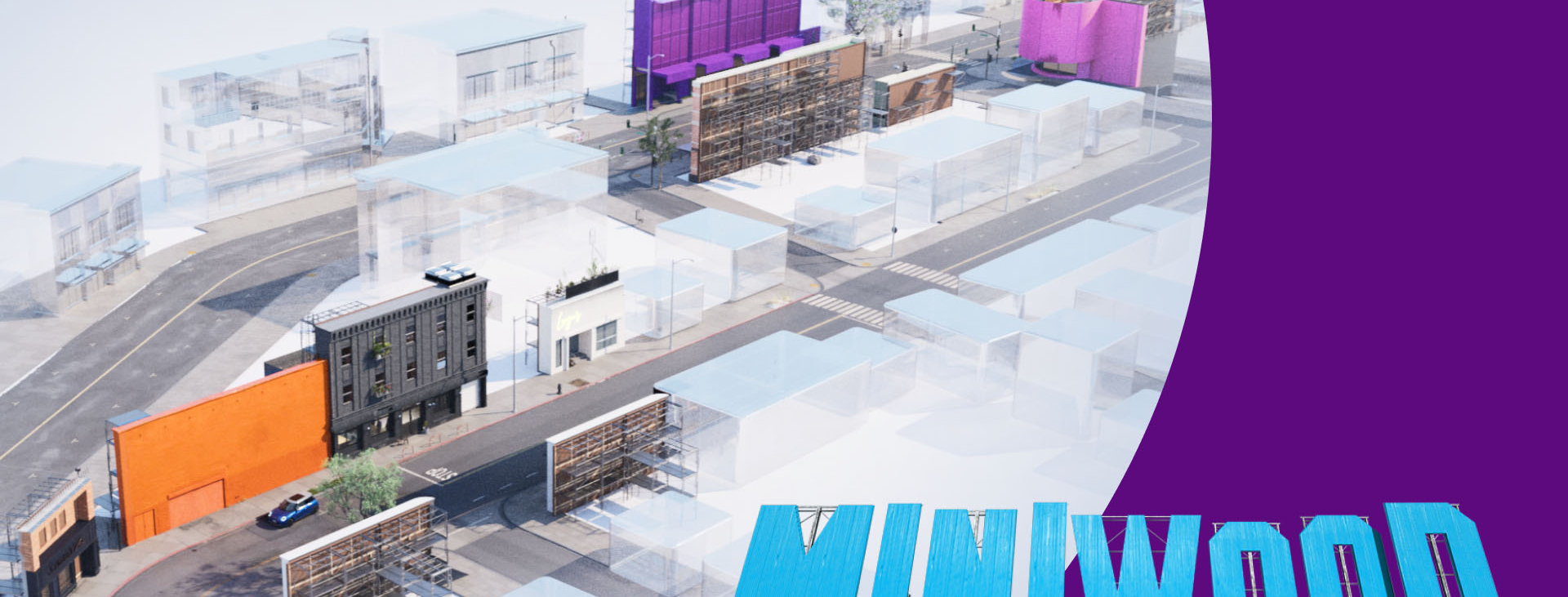
To help MINI create diverse content at scale, we built MINIWOOD, a first-of-its-kind digital production solution. Emulating Hollywood’s dynamic production capabilities, this dedicated virtual studio combines the power of Unreal Engine and our advanced automated managed service, Monks.Flow, to create automated workflows for a wide range of assets—from still images to entire product films. A major advantage is that MINIWOOD offers a pick-and-click web interface where producers and marketers can select, customize and start content production orders. It features a custom Universal Scene Description (.USD) workflow, capable of staging every possible car configuration and background setting, enabling the creation of diverse campaigns within a single modular setup and from a single render. 

Innovation meets scalability.

MINIWOOD ensures a cohesive visual language across both virtual and live-action productions. Plus, its dynamic virtual environments highlight the unique character of each MINI model, enhancing product differentiation. By 2024, all 12 new models will be integrated into the virtual studio, with each family showcased in distinct worlds—like rugged settings for the MINI Countryman and vibrant urban locales for the Aceman. This approach helps us meet the high demand for content while remaining cost-effective. Moreover, it supports digital sales globally across the US, Europe and China, covering all model variants in both still and video formats. In other words, it provides unparalleled flexibility for marketers to create campaigns tailored to specific consumer insights and the nuances of different regional markets.

Redefining automotive marketing.

MINIWOOD’s innovative production technique creates all campaigns in a single virtual space, guaranteeing brand consistency in today’s programmatic world. Above all, it reinforces the brand’s playful and pioneering ethos in a thriving digital age. By transitioning from conventional photography to a state-of-the-art digital environment, MINIWOOD helps MINI enhance customer engagement through personalized, immersive content experiences. This creative approach not only enhances efficiency but also stands out as a strong asset in the competitive automotive market.

Awards

  • 3x ADC Awards

Want to talk advanced automated solutions? Get in touch.

Hey👋

Please fill out the following quick questions so our team can get in touch with you.

Can’t get enough? Here is some related work for you!

As the Auto Industry Evolves, All Roads Lead to Content

As the Auto Industry Evolves, All Roads Lead to Content

4 min read
Profile picture for user Labs.Monks

Written by
Labs.Monks

User interacting with the Results page of an Alexa skill designed to select cars best fit for particular lifestyle needs.

After a slow 2020, car sales are kicking into high gear as consumers become mobile. S&P forecasts that global sales will expand by 8%-10% this year, with the European market driving further growth in electric vehicles. As auto manufacturers accelerate into a brighter future, the Labs.Monks—our R&D and innovation group—are exploring the evolution of the auto industry and where it’s headed next in a new report.

The report tackles key concerns for automakers: the rise of D2C and foreign challenger brands, an urgent need for customer insights and the quickly evolving definition of what it means to be an auto brand today. At the center of each concern stands an opportunity to invest and experiment with content channels that engage consumers across the brand experience—whether in the pre-purchase consideration phase or while driving the car itself.

A Shift to Content and User Experience

Gone are the days where a car’s value is staked on horsepower and mechanics alone; while those certainly remain important, consumers are increasingly focused on software updates, wireless connectivity and digital user interfaces. At the same time, a future in which autonomous vehicles become the norm is prompting brands to rethink the elements that make up an ideal user experience. For example: when a car drives itself, what’s left for passengers to engage with? “Entertainment becomes more important,” says Jamie Webber, Business Director.

Monk Thoughts Brands are wondering: do you have to partner with a streaming service? Do you become an entertainment brand as much as an automotive brand?
Portrait of Jamie Webber

We’re still years away from fully autonomous cars. But “it’s a multiyear timeline, and brands want to be ready by the time cars can perform,” says Geert Eichhorn, Innovation Director. He notes how companies like Google are laying the groundwork now with platforms like Android Auto, a version of its mobile operating system designed for use in the car.

Just like how the iPhone revolutionized our concept of what a mobile phone can do, digital dashboards and new user interfaces have the potential to redefine how we engage with automobiles right now—like a speed dial that turns red when you’re speeding. Patrick Staud—Chief Creative Technologist at STAUD STUDIOS, which joined our team this year—even envisions deep customization opportunities through content packs. “One area we like to think about is the personalization of sound design for electric engines, buttons and different functions—much like mobile ringtones,” Staud says. “Customization could go so far as downloading dials and themes into your car’s interior, which could become a huge new channel for revenue.”

Building Direct, Digital Relationships

Content channels like those mentioned above can solve a critical challenge that automakers have universally wrestled with over the years: capturing consumer data. Dealerships commonly own the relationship with consumers—they walk them through the consideration phase, understand their preferences and ultimately close out the sale. Brands are now aiming to develop stronger customer relationships of their own, whether through D2C offerings or by offering digital experiences.

Such experiences can profoundly transform brand-consumer relationships by supporting new customer behaviors and instilling confidence in the buying journey. “In the luxury automotive sector, we’ve seen a growing use of digital tools, especially by women and people of color who prefer digital tools because they find dealerships talk down to them or don’t take them as seriously,” says Daniel Goodwin, a Senior Strategist who works with auto clients. So while in-person activities like test drives remain important for many, there’s a growing demand for virtualizing the dealership experience.

An Alexa assistant asks a user whether the vehicle they may buy will be used for off-roading.

An Alexa skill prototyped by the Labs.Monks lets users easily find the right car to suit their lifestyle.

In addition to providing a more comfortable experience, Goodwin also notes how direct, digital relationships can enable greater customization. “Customization is good for both brands and consumers,” says Goodwin. “COVID-19 has changed car buying behavior, and consumers are now more willing to wait for a car to be delivered that meets their exact needs rather than pick one up from a lot on the same day.” While made-to-order cars are a staple for luxury automakers, brands like Ford are moving toward the model to support the change in buying behavior. “This also helps brands that have been suffering from chip shortages, want a more direct relationship with consumers and no longer want their cars sitting unused in car lots,” says Goodwin.

In exploring how digital platforms can help consumers find the right car for them, the Labs.Monks prototyped an Alexa-based assistant that learns users’ specific needs through a simple question-and-answer format. The assistant may ask you things like whether you need a car for your commute, or what the size of your family is. Responses are measured against a database of 2,000 cars from 42 different brands, organized using machine learning and computer vision. The assistant is a contrast to complex search engines or nuts-and-bolts configurators.

Monk Thoughts It’s not a sterile kind of experience. It’s much more about the personal lifestyle that suits you.
Portrait of Geert Eichhorn

Cultivating Online Community

As automakers reconsider the shifting definition of what it means to own a car—an identity that’s perhaps less “driver” and more “user”—there’s a growing focus on supporting owners by building community. The desire for brand community certainly isn’t new; Jeep owners have built a culture of serendipitously greeting one another on the road for decades with the infamous “Jeep wave.” More recently, Tesla has organized local chapters of its Tesla Owners Club in which owners share knowledge or build advocacy for the brand.

As brands consider how to get owners talking to one another, they might take inspiration from community-minded platforms already on the market. “Look at the Waze app,” says Webber. “I use it for its GPS function, but there are a lot of attempts it makes to prompt interactivity between drivers, whether it’s reporting police activity, road closures, traffic and more.” Brands can similarly adopt a community-oriented role using driver data it picks up, whether through digital experiences or even on the road—in fact, Eichhorn adds that vehicle-to-vehicle communication is already being explored to increase driver safety.

Customizable digital dashboards, in-cabin entertainment, online communities—auto brands may begin to look a lot more like content brands in the future. Not only does an increased focus on content lay the foundation for the fully autonomous passenger experience; it can also help brands hold onto consumer interest in the months (or sometimes years) that they wait for their custom configuration to be made—an increased concern with supply chain issues and longer wait times imposed by the pandemic. But perhaps more importantly, digital content and experiences will help them better understand consumers and their needs, with data and insights steering their business in the right direction for years to come.

For the automotive industry, the brand-consumer relationship is quickly evolving. Learn how the path to purchase and automotive marketing have shifted. For the automotive industry, the brand-consumer relationship is quickly evolving. Learn how the path to purchase and automotive marketing have shifted. mediamonks labs Automotive automotive marketing Alexa skills voice assistant

Welcome STAUD STUDIOS, Turbocharging Automotive Marketing

Welcome STAUD STUDIOS, Turbocharging Automotive Marketing

3 min read
Profile picture for user mediamonks

Written by
Monks

We’ve hit our stride over the past few weeks in announcing new members of the S4Capital family—but we’re not hitting the brakes just yet. Today we welcome a new member to the Media.Monks team: STAUD STUDIOS.

STAUD STUDIOS is a full-service, data-driven marketing solution serving the world’s most iconic automotive brands. Based in Stuttgart, Germany, the team enables brands to match customer insights to a data-driven production pipeline, delivering personalized assets powered by real-time production.

“STAUD STUDIOS is already playing a key part in the marcom engine solution we have developed for BMW & MINI, and their automotive expertise is second to none,” says Victor Knaap, Media.Monks CEO and S4Capital Executive Director. “Going forward, Pascal and his team in Stuttgart will become the global center of expertise and mobility at Media.Monks.”

Giving Content Production Additional Horsepower in Real Time

One of the greatest challenges faced by brands across industries is producing the volume of assets needed to offer relevance to a variety of audiences, especially when marketing budgets have been slashed due to the pandemic. This is especially tough for automotive brands, who have been hit especially hard in the past year. But as the year looks increasingly optimistic for the automotive industry, brands require a solution that will help them drive cultural relevance and conforms to local market regulations.

Of course, individual consumer preferences also play a major role in performance as well, demanding automakers represent the vast breadth of possible car configurations to cater to consumer taste. And just like our smart production approach, STAUD STUDIOS eschews the need to shoot individual assets by instead using a composition technique they compare to the way atoms make up a molecule: swapping individual details like backgrounds, car color, lighting, headlines, legal copy and more based on where it’s delivered.

StaudStudios_Family

The Staud family, posing under the Magicflash technology pioneered by René Staud in automotive photography.

Real-time 3D rendering plays an essential role in this process. Using the Unreal Engine made by Epic Games, STAUD STUDIOS dynamically builds every permutation of a car’s configuration, seamlessly delivering the most relevant one to consumers. This approach is far faster than setting up a real, in-person photoshoot of each model and its various configurations—without sacrificing quality. Last year, we were awarded an Epic MegaGrant to explore Unreal Engine’s potential in automating content production at scale. STAUD STUDIOS’ expertise will help us apply that talent with a dedicated service to auto brands around the world.

Media.Monks’ New Global Mobility Hub Built on Heritage and Craft

Founded in 1983 by legendary photographer René Staud, STAUD STUDIOS has grown alongside the automotive industry and has worked with almost every auto brand in the world. More than just a heritage, high-end production studio, STAUD has pushed the evolution of marketing technology over the decades by marrying a classic commitment to craft with innovative technological techniques, helping auto brands embrace digital in the process.

STAUD’s unique competence is its combination of real shoot capabilities with CGI and interactive production methods to develop assets at scale and in real time. An international and interdisciplinary team of 75 individuals is led by Pascal Staud (CEO), Patrick Staud (Chief Creative Technologist), Uwe Jakob (Chief Creative Engineer), Marco Rex (Chief Delivery Officer) and Dagmar Kraus-Stubenrauch as CFO.

Monk Thoughts We look forward to transforming the way automotive and mobility brands go to market alongside our new colleagues.
Pascal Staud headshot

STAUD joins in our approach to aligning data and creativity to facilitate a true, one-to-one dialogue with audiences across the customer decision journey (CDJ). Through reverse-funnel planning and helping brands seamlessly connect ownable data into third-party systems, they give tech-savvy auto brands a head-start in delivering the right creative to the right audience in the competitive race to attract consumer attention.

“We see a huge demand for change in the automotive industry with a specific need for direct-to-consumer models, personalized interactions and scalable digital and 3D experiences,” says Pascal Staud, CEO of Staud Studios. “As Media.Monks’ Global Mobility Hub, we are very excited to help clients on their path of transformation. We look forward to transforming the way automotive and mobility brands go to market alongside our new colleagues at Media.Monks and S4Capital.”

Today, brands everywhere are challenged to achieve more with less: more audiences to reach, more products and configurations to represent and more channels to serve. Martech innovation—from data-driven production pipelines to real-time 3D production and more—will prove essential for brands as they aim to capture audience attention at ever-greater speed and scale.

“The possibility to plug in our production pipeline into Media.Monks makes our work truly global and scalable, which is essential to serve car brands on their future needs,” adds Patrick Staud. With STAUD STUDIOS on the team, we’re better equipped to help auto and mobility brands tune up their marketing across the CDJ.

MediaMonks welcomes STAUD STUDIOS, a high-end production studio pushing the evolution of marketing technology. Welcome STAUD STUDIOS, Turbocharging Automotive Marketing The race is on to build better automotive experiences at speed.
Automotive automotive marketing real time production game engine unreal engine staud studios

Choose your language

Choose your language

The website has been translated to English with the help of Humans and AI

Dismiss