Choose your language

Choose your language

The website has been translated to English with the help of Humans and AI

Dismiss

Meet Your Digital Double: How Metahumans Enhance Personalization

Meet Your Digital Double: How Metahumans Enhance Personalization

AI AI, AI & Emerging Technology Consulting, Experience, Extended reality, Web3 4 min read
Profile picture for user mediamonks

Written by
Monks

A virtual human head inside a clear box

Picture this: you’re a well-known figure in your field, perhaps even a celebrity, who follows a similar routine every day. You shoot commercials for different markets, reply to every single message in your DMs with a personalized note, host a virtual event where you meet and greet thousands of fans and even teach an on-demand class where you and your students engage in meaningful conversations. It’s all happening at the same time and all over the world, because it’s not your physical self who’s doing it, but your digital double.

Since its launch in 2021, Epic Game’s MetaHuman Creator, a cloud-based app for developing digital humans, has extended its range of possibilities by adding new features—such as Mesh to MetaHuman. Using Unreal Engine, this plugin offers a new way to create a metahuman from a 3D character mesh, allowing developers to import scans of real people. In other words, it makes it easier to create a virtual double of yourself (or anyone else) almost immediately.

Inspired by this significant update and following our tradition of enhancing production workflows using Unreal Engine, our team of dedicated experts decided to build their own prototype. Needless to say, they learned a few things along the way—from the practical possibilities of metahumans to the technicalities of applying motion capture to them. As explained by the experts themselves, here’s what you need to know about creating and unlocking the full potential of virtual humans.

00:00

00:00

00:00

Be everywhere at once—at least virtually.

If you ever fantasized about cloning yourself to be able to comply with all your commitments or complete your pending tasks, metahumans may be just what you were looking for. Virtually, at least. As digital representatives of existing individuals, metahumans offer endless possibilities in terms of content creation, customer service, film and entertainment at large. Sure, they won’t be able to do your dishes—at least not yet—but if you happen to be a public figure or work with them, it’s a game changer. 

By lending likeness rights to their digital doubles, any influencer, celebrity, politician or sports superstar will be able to make simultaneous (digital) appearances and take on more commercial gigs without having to be on set. As John Paite, Chief Creative Officer of Media.Monks India, explains, “Celebrities could use their metahuman for social media posts or smaller advertising tasks that they usually wouldn’t have the availability for.” Similarly, brands collaborating with influencers and celebrities will no longer need to work around their busy schedules.

The truth is, virtual influencers are already a thing—albeit in the shape of fictional characters rather than digital doubles of existing humans. They form communities, partner with brands and are able to engage directly and simultaneously with millions of fans. Furthermore, they are not stuck in one place at a time nor do they operate under timezone constraints. In that regard, celebrities’ digital doubles combine the benefits of virtual humans with the appeal of a real person.

A new frontier of personalization and localization.

Because working with virtual humans can be more time-efficient than working with real humans, they offer valuable opportunities in terms of personalization and localization. Similarly to how we’ve been using Unreal Engine to deliver relevant creative at speed and scale, MetaHuman Creator takes localization to a new level. As Senior Designer Rika Guite says, “If a commercial features someone who is a celebrity in a specific region, for example, this technology makes it easy for the brand to replace them with someone who is better known in a different market, without having to return to set.” 

But not everything is about celebrities. Metahumans are poised to transform the educational landscape, too, as well as many others. “If you combine metahumans with AI, it becomes a powerhouse,” says Paite. “Soon enough, metahumans will be teaching personalized courses, and students will be able to access those at a lower price. We haven’t reached that level yet, but we’ll get there.”

For impeccable realism, the human touch is key.

To test how far metahumans are ready to go, our team scanned our APAC Chief Executive Officer, Michel de Rijk, using photogrammetry with Epic Games’ Reality Capture. This technique works with multiple photographs from different angles, lighting conditions and vantage points to truly capture the depth of each subject and build the base for a realistic metahuman mode. Then, we imported the geometry into MetaHuman Creator, which our 3D designers refined using the platform’s editing tools. 

“Because Mesh to Metahuman allows you to scan and import your real face, it’s much easier to create digital doubles of real people,” says our Unreal Engine Generalist Nida Arshia. That said, the input of an expert is still necessary to attain top-quality models. “Certain parts of the face, such as the mouth, can be more challenging. Some face structures are harder than others, too. If you want the metahuman to look truly realistic, it’s important to spend some time refining it.” 

Once we got our prototype as close to perfection as possible, we used FaceWare’s facial motion capture technology to unlock real-time facial animations. While FaceWare’s breadth of customization options made it our tool of choice for this particular model, different options are available depending on the budget, timeline and part of the body you want to animate. Unreal’s LiveLink, for example, offers a free version that allows you to use your phone and is easy to implement both real-time and pre-recorded applications, but focuses on facial animations only. Mocap suits with external cameras allow for full-body motion capture, but with mid-fidelity, and recording a real human in a dedicated mocap studio unlocks highly realistic animations for both face and body. 

At the same time, the environment we intend the metahuman to inhabit is worth considering, as the clothes, hair, body type and facial structure will all need to fit accordingly. Naturally, different software may adapt better to one style or another. 

While this technology is still incipient and requires some level of expertise, brands can begin to explore different ways to leverage metahumans and save time, money and resources in their content creation, customer service and entertainment efforts. Similarly, creators can start sharpening their skills and co-create alongside brands to expand the realm of possibilities. As Arshia says, “We must continue to push forward in our pursuit of realism by focusing on expanding the variety of skin tones, skin textures and features available so that we can build a future where everyone can be accurately represented.”

Our experts share what you need to know about creating and unlocking the full potential of virtual humans. Virtual humans unreal engine artificial intelligence AI Personalization Experience AI & Emerging Technology Consulting AI Web3 Extended reality
An animated Unreal Engine logo
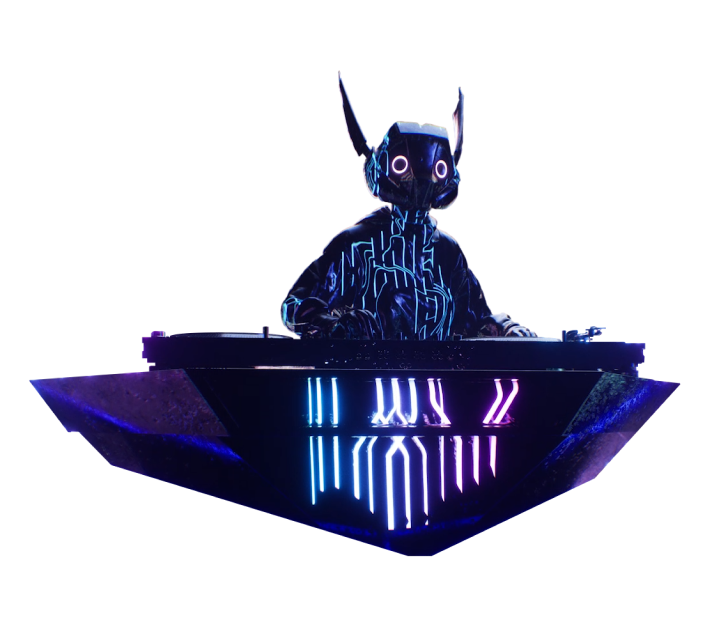
An animated DJ plays music around a lit up stage

The Thread • A Groundbreaking Animation Adventure Built in Real-time

  • Client

    Epic Games

  • Solutions

    StudioOriginal ContentImmersive Brand StorytellingVR & Live Video ProductionTechnology Consulting

00:00

00:00

00:00

Case Study

0:00

A next-level approach to storytelling.

Epic Games invited us to create an immersive animation for their Unreal Build livestream. Titled The Thread, the film was made entirely in Unreal Engine. Ordinarily used as a video game development tool, we set out to showcase the engine’s cinematic qualities by taking Epic’s audience of developers through a variety of scenes—demonstrating the possibilities Unreal Engine’s technology can achieve–all in real time.

Captivating audiences with show-stopping visuals and technology.

Billed at halftime during Epic’s livestream event, we knew in order to hold viewers’ attention, we needed to show up with an immersive experience that expertly illustrated concepts touched on throughout the show. Led by a neon-lit thread, the audience was launched into a cinematic sequence of all the live possibilities Unreal Engine can enhance, such as: science visualization, music concerts, automotive races, or even sports.

Pushing Unreal Engine’s boundaries even further, we also integrated the Niagara particle system to create and adjust visual effects in-engine and without the assistance of a programmer. While traditional entertainment production uses additional 3D software for particle effects, our film proves entire broadcast segments can be made exclusively in Unreal Engine—down to the last pixel.

Showcasing the future of entertainment–in real time.

By rendering expertly crafted scenes, we reinvented the typical title sequence and brought imagination into tangible reality, connecting with Epic’s global audiences on an emotional level. With real-time technology, we proved the endless possibilities that Unreal Engine offers in blending reality and entertainment together.

Threads outline the Unreal Engine logo
Hands spin records on a turn table
Monk Thoughts Creatively, our aim was to recreate the typical title sequence that is usually seen in this broadcast design space, bringing our own new take on this sequence, created 100% in real-time 3D, every final pixel was directly from Unreal Engine.
Romain Demongeot headshot

Results

  • 1x FWA

Want to talk animation? 
Get in touch.

Hey 👋

Please fill out the following quick questions so our team can get in touch with you.

Can’t get enough? Here are some related work for you!

Oreo logo
3D Oreo cookie

Oreo Virtual Production • A Mouthwatering Approach to Tabletop Production

  • Client

    Mondelēz

  • Solutions

    StudioContent Adaptation and Transcreation

A tabletop approach you can dunk on.

Twist, dunk or eat it in one mouthful—there are several ways to enjoy an Oreo, milk’s favorite cookie. With so many preferences and Oreo fans around the world, Mondelēz needed a way to whet the appetites of consumers everywhere with mouthwatering, locally relevant creative captured at scale.

A delicious blend of creativity and technology.

For global brands, tabletop production can be a costly endeavor—for both time and budget. Every market differs in package design and legal requirements, and legacy processes make it difficult to produce relevant creative at the speed and scale needed for today’s consumer packaged goods brands. So we changed the game using Unreal Engine, developed by Epic Games, to bake up and automate tabletop production.

Using the real-time engine enables local teams to switch out packs in just a few clicks—and a few seconds—rather than wait through the long rendering times that are typical in the traditional CGI process. This makes it easy to iterate and scale up, satisfying cravings everywhere.

Close up of an Oreo cookie

In partnership with

  • Mondelēz
Client Words Our customers work at a pace that demands innovation, collaboration and iteration—all at high quality. [Monks] share this vision, and I’m honored to invite them to the Epic MegaGrant community as they work to reinvent production processes with Unreal Engine.
Headshot of John Buzzell

John Buzzell

Enterprise Licensing Lead, Unreal Engine (Americas)

Providing meaningful work for the future—in real time.

Oreo lovers weren’t the only ones left drooling; our innovative approach to using Unreal Engine in tabletop advertising also inspired a course in Unreal Futures, a learning series that prepares tomorrow’s developers and creatives for success in 3D careers across different industries. Collaborating with Epic Games, our employees walk students step-by-step through our process and challenge them to develop a 3D advertisement of their own using Unreal Engine.

So whether inspiring a purchase or inspiring the next generation of 3D creatives, we took a bite out of tired, traditional processes—maximizing quality, speed and efficiency to connect with consumers of all tastes.

Monk Thoughts From an artistic standpoint, I see so many opportunities to up-level our creative outputs in Unreal Engine, blending creativity and technology to shape better content and stronger stories that propel the industry forward.
Headshot of John Paite

00:00

00:00

00:00

Results

  • 1x CSS Site of the Day

Want to talk real-time? 
Get in touch.

Hey 👋

Please fill out the following quick questions so our team can get in touch with you.

Can’t get enough? Here is some related work for you!

Welcome STAUD STUDIOS, Turbocharging Automotive Marketing

Welcome STAUD STUDIOS, Turbocharging Automotive Marketing

3 min read
Profile picture for user mediamonks

Written by
Monks

We’ve hit our stride over the past few weeks in announcing new members of the S4Capital family—but we’re not hitting the brakes just yet. Today we welcome a new member to the Media.Monks team: STAUD STUDIOS.

STAUD STUDIOS is a full-service, data-driven marketing solution serving the world’s most iconic automotive brands. Based in Stuttgart, Germany, the team enables brands to match customer insights to a data-driven production pipeline, delivering personalized assets powered by real-time production.

“STAUD STUDIOS is already playing a key part in the marcom engine solution we have developed for BMW & MINI, and their automotive expertise is second to none,” says Victor Knaap, Media.Monks CEO and S4Capital Executive Director. “Going forward, Pascal and his team in Stuttgart will become the global center of expertise and mobility at Media.Monks.”

Giving Content Production Additional Horsepower in Real Time

One of the greatest challenges faced by brands across industries is producing the volume of assets needed to offer relevance to a variety of audiences, especially when marketing budgets have been slashed due to the pandemic. This is especially tough for automotive brands, who have been hit especially hard in the past year. But as the year looks increasingly optimistic for the automotive industry, brands require a solution that will help them drive cultural relevance and conforms to local market regulations.

Of course, individual consumer preferences also play a major role in performance as well, demanding automakers represent the vast breadth of possible car configurations to cater to consumer taste. And just like our smart production approach, STAUD STUDIOS eschews the need to shoot individual assets by instead using a composition technique they compare to the way atoms make up a molecule: swapping individual details like backgrounds, car color, lighting, headlines, legal copy and more based on where it’s delivered.

StaudStudios_Family

The Staud family, posing under the Magicflash technology pioneered by René Staud in automotive photography.

Real-time 3D rendering plays an essential role in this process. Using the Unreal Engine made by Epic Games, STAUD STUDIOS dynamically builds every permutation of a car’s configuration, seamlessly delivering the most relevant one to consumers. This approach is far faster than setting up a real, in-person photoshoot of each model and its various configurations—without sacrificing quality. Last year, we were awarded an Epic MegaGrant to explore Unreal Engine’s potential in automating content production at scale. STAUD STUDIOS’ expertise will help us apply that talent with a dedicated service to auto brands around the world.

Media.Monks’ New Global Mobility Hub Built on Heritage and Craft

Founded in 1983 by legendary photographer René Staud, STAUD STUDIOS has grown alongside the automotive industry and has worked with almost every auto brand in the world. More than just a heritage, high-end production studio, STAUD has pushed the evolution of marketing technology over the decades by marrying a classic commitment to craft with innovative technological techniques, helping auto brands embrace digital in the process.

STAUD’s unique competence is its combination of real shoot capabilities with CGI and interactive production methods to develop assets at scale and in real time. An international and interdisciplinary team of 75 individuals is led by Pascal Staud (CEO), Patrick Staud (Chief Creative Technologist), Uwe Jakob (Chief Creative Engineer), Marco Rex (Chief Delivery Officer) and Dagmar Kraus-Stubenrauch as CFO.

Monk Thoughts We look forward to transforming the way automotive and mobility brands go to market alongside our new colleagues.
Pascal Staud headshot

STAUD joins in our approach to aligning data and creativity to facilitate a true, one-to-one dialogue with audiences across the customer decision journey (CDJ). Through reverse-funnel planning and helping brands seamlessly connect ownable data into third-party systems, they give tech-savvy auto brands a head-start in delivering the right creative to the right audience in the competitive race to attract consumer attention.

“We see a huge demand for change in the automotive industry with a specific need for direct-to-consumer models, personalized interactions and scalable digital and 3D experiences,” says Pascal Staud, CEO of Staud Studios. “As Media.Monks’ Global Mobility Hub, we are very excited to help clients on their path of transformation. We look forward to transforming the way automotive and mobility brands go to market alongside our new colleagues at Media.Monks and S4Capital.”

Today, brands everywhere are challenged to achieve more with less: more audiences to reach, more products and configurations to represent and more channels to serve. Martech innovation—from data-driven production pipelines to real-time 3D production and more—will prove essential for brands as they aim to capture audience attention at ever-greater speed and scale.

“The possibility to plug in our production pipeline into Media.Monks makes our work truly global and scalable, which is essential to serve car brands on their future needs,” adds Patrick Staud. With STAUD STUDIOS on the team, we’re better equipped to help auto and mobility brands tune up their marketing across the CDJ.

MediaMonks welcomes STAUD STUDIOS, a high-end production studio pushing the evolution of marketing technology. Welcome STAUD STUDIOS, Turbocharging Automotive Marketing The race is on to build better automotive experiences at speed.
Automotive automotive marketing real time production game engine unreal engine staud studios

Forrester Spotlights How to Power Up Production with Game Engine

Forrester Spotlights How to Power Up Production with Game Engine

4 min read
Profile picture for user mediamonks

Written by
Monks

Forrester Spotlights How to Power Up Production with Game Engine

With many consumers still at home around the world, brands’ need to show up for audiences digitally has never felt more urgent, particularly through immersive content and experiences that recapture some of what’s lost in interacting with a brand, loved ones or product in-person.

And with this need, a perhaps unlikely tool for marketers has emerged: game engines. The role of gaming in the marketing mix has also risen, providing new, engaging environments to meet consumers. Glu Mobile’s apartment decorating game Design Home, for example, lets players customize a home using real furniture from brands like West Elm and Pottery Barn—and is now even offering its own series of real-world products through its Design Home Inspired brand, effectively turning the game into a virtual retail showroom.

But game engines aren’t just for making content consumed in games. They also provide an environment for brands to build and develop 3D assets to use both internally and to power a variety of virtualized experiences. We recently announced receiving an Epic MegaGrant to automate virtual tabletop production using Unreal Engine, and additionally we use Unity Engine—which powers 53% of the top 1,000 mobile games within the App Store and Google Play Store—to build mobile and WebGL experiences with consumer audiences in mind.

3D Adds a New Dimension to Content Production

In addition to serving increasingly digital user behavior, the use of 3D content has the potential to help brands build efficiency across the enterprise and customer decision journey. A new report from Forrester, “Scale Your Content Creation With 3D Modeling” by Ryan Skinner and Nick Barber, details how 3D content solves a critical challenge that brands face today: the need to keep up with demand for content while faced with dwindling budgets. “Particularly in e-commerce, marketers have learned they need product images to reflect every angle, every variation, and a multitude of contexts; without updated and detailed imagery, engagement and sales suffer,” the authors write.

Cookies 2 Animated

Pick your flavor: game engines let brands tweak and change assets with ease and speed.

One solution mentioned in the report is building a CGI-powered production line. MediaMonks Founder Wesley ter Haar notes in the report that “This is very top of mind for us right now,” a sentiment that is reinforced by how we’re powering creative production at scale using tools like Unreal Engine and Unity, as mentioned above.

“What’s exciting about real-time 3D is that it ticks a bunch of boxes for a brand,” says Tim Dillon, SVP Growth at MediaMonks, whose primary focus is on our game engine-related work. “You can use it in product design, in your marketing, in retail innovation–it’s touching so many different end use cases for brands.” A CAD model used internally for product design, for example, could also be used in virtual tabletop photography, in a retail AR experience, in 3D display ads and more—reconfigured and recontextualized to accomplish several of a brand’s goals in producing content and building experiences.

When it comes to content, game engines make it easier for teams to create assets at scale through variations in lighting, environment or color—especially when augmented by machine learning and artificial intelligence. “When creating content in real time, brands not only make content faster but can react and adapt to consumer needs faster, too,” says Dillon. “Things like 3D variations, camera animation and pre-visualization become much faster to achieve—and in some cases more democratic too, by putting new 3D tools in our client teams’ hands to make these choices together,” he says.

Genesis Car Configurator

The Genesis car configurator lets users view their customizations in real time.

A case in point is the car configurator we built for Genesis, built in Unity and covered in their recent report: “25 Ways to Extent Real Time 3D Across Your Enterprise.” The web-based configurator offers a car customization experience as detailed and fluid as you’d find in a video game, letting consumers not only see what their custom model would look like with different features, but also within different environmental factors like time of day—all in real time.

Making a Lasting Impact Through Immersive Moments

Through greater adoption of immersive storytelling technologies and ultra-fast 5G connection, we are entering a virtualized era capable of placing a persistent 3D layer across real-world environments—already made possible through Unity technology and cloud anchors by Google, which anchor augmented reality content to specific locations that people can interact with over time. Consider, for example, a virtual retail environment that never closes and provides personalized service to each customer.

These experiences have become all the more relevant with the pandemic. In the Forrester report mentioned above, ter Haar says: “With COVID, we’re seeing greater interest to demo in 3D. The tactile and physical nature of seeing something makes it easier to buy.”

But perhaps more important for brands is that immersive experiences have the power to create real, lasting memories—a focus of a recent talk by Quentin de la Martinière (Executive Producer, Extended Realities at MediaMonks) and Ron Lee (Technical Director at MediaMonks) at China Unity Tech Week.

remkodewaal-spacebuzz-094

Spacebuzz takes students on an out-of-this-world journey through VR.

“We start from the strategy of who you want to engage with,” says Lee, delving into the storytelling potential of 3D content. “From there, we try to understand the vision we want to build to grab the user’s attention and put them in the world.” This includes deciding on the best venue for a 3D experience: augmented reality, virtual reality, mixed reality or on the web? By making the right selection, brands can build experiences that explain while they entertain.

Lee and de la Martinière showed Spacebuzz as an example of how immersive experiences can have lasting impact. Through a 15-minute VR experience built in Unity, school children are taken to space where they experience the “overview effect”: a humbling shift in awareness of the earth after viewing it from a distance.

“The technology and the story bring together the vision and the message of the experience,” says Lee. “Building that immersive environment in Unity and translating this information on a deeper level creates real memories for the kids who engage with it.” Likewise, brands can leave a memorable mark on consumers through 3D content. “These extremely personalized experiences allow the brand to leave a deep impression on audiences and intensify brand favorability,” Lee says.

From streamlining production to powering experiences across a range of consumer touchpoints, the value of 3D content is building for brands. Working closely with the developers of leading game engines that enable these experiences, like Unity and Unreal Engine, we’re helping brands add an entirely new dimension to their content and storytelling for virtualized audiences.

Game engines enable brands to scale up content and drive value across the enterprise—including the customer journey. Forrester Spotlights How to Power Up Production with Game Engine From new realities to memorable moments, game engines deliver.
Game engine unity unity engine unreal engine epic games extended reality 3D content

With Epic MegaGrant, MediaMonks Takes Automated Production to the Next Level

With Epic MegaGrant, MediaMonks Takes Automated Production to the Next Level

3 min read
Profile picture for user mediamonks

Written by
Monks

MediaMonks has been awarded an Epic MegaGrant to explore the next frontier in automated tabletop and production using Epic’s Unreal Engine, the world’s most open and advanced real-time 3D creation tool built by the developer behind Fortnite and other high-profile videogames.

Product packaging and tabletop production are table stakes in the advertising industry, as bespoke assets are needed for a single brand in every market around the world. Producing assets, packaging and labels at speed and scale has never been without challenges—and in 2020 it was upended by COVID-19. That’s why MediaMonks is setting out to automate an age-old process, leveraging Unreal Engine to maximize quality, speed and efficiency in advertising production through innovation. 

“A tremendous amount of time and money is spent on product photography and videos for food, drinks and other consumer products,” said MediaMonks SVP, Growth Tim Dillon. “These shoots are costly, slow and must be repeated with each new product, or product version, for each region on a seasonal basis. It’s an aspect of the advertising industry that has been slow to innovate and could benefit from the speed, flexibility, repeatability and quality controls that Unreal Engine delivers.”

Cookies 2 Animated

Virtual production in Unreal Engine makes it easy to change color, shape and more in real time.

These benefits go well beyond the short-term solution of safely and efficiently producing creative in a time of social distancing. Virtual production in game engines like Unreal Engine are particularly attractive for global brands that seek to deliver a cohesive experience for consumers across markets. These 3D assets could also be ported to other touchpoints, including immersive experiences and more tangible product listings for ecommerce, making virtual production an approachable starting point for CPG brand virtualization.

A team of Monks in India has been especially hard at work, creating and iterating in Unreal Engine to translate these ideas into tangible outputs. With a keen eye for creativity and storytelling, they’re harnessing the power of this new technology to advance and disrupt. India CCO John Paite says, “From an artistic standpoint, I see so many opportunities to up-level our creative outputs in Unreal Engine, blending creativity and technology to shape better content and stronger stories that propel the industry forward. Having witnessed what the team has accomplished so far, I can’t wait to see what the future holds.”

“In a constant pursuit to further disrupt the industries we innovate in, I’m thrilled MediaMonks has received this support from Epic,” said MediaMonks Director of Creative Solutions Lewis Smithingham. “With our MegaGrant we have a great opportunity to develop an Unreal Engine-based solution that empowers advertising agencies and commercial production companies to efficiently, and cost-effectively increase flexibility and customization, while also improving quality.”

Monk Thoughts Our customers work at a pace that demands innovation, collaboration and interaction—all at high quality.

MediaMonks is proud to join the Epic MegaGrants community, backed by Epic’s commitment pledging $100 million to support game developers, enterprise professionals, media and entertainment creators, students, educators, and tool developers doing amazing things with Unreal Engine.

“At Epic Games, we are working constantly to give creators, agencies and brands the freedom and control to deliver cutting edge content, interactive experiences and immersive virtual worlds,” said John Buzzell, Enterprise Licensing Lead for Unreal Engine in the Americas. “Our customers work at a pace that demands innovation, collaboration and iteration—all at high quality. MediaMonks shares this vision, and I’m honored to invite them to the Epic MegaGrant community as they work to reinvent production processes with Unreal Engine.”

Around the world, MediaMonks’ future-forward teams are identifying opportunities to leverage game engines to drive efficiency across a variety of industries and sectors. MediaMonks aims to foundationally disrupt the production process for speed and scale, pushing the industry forward through branded 3D content that connects consumers seamlessly across digital ecosystems and builds brand love.

Joining the Epic MegaGrant community, MediaMonks is exploring ways to safely and efficiently power production at scale with the Unreal Engine. With Epic MegaGrant, MediaMonks Takes Automated Production to the Next Level By joining the Epic MegaGrant community, we’re supercharging production for brands at speed and scale.
Epic unreal engine game engine megagrant virtual production production at scale

Choose your language

Choose your language

The website has been translated to English with the help of Humans and AI

Dismiss