Why Branded Search Terms Are the Key to a Winning Awareness Strategy
Why Branded Search Terms Are the Key to a Winning Awareness Strategy


Each year the Super Bowl, arguably the ad industry’s highest-profile event, garners high viewership and impressions—with massive ad budgets to match. This year alone, despite the COVID-19 pandemic, the Super Bowl attracted close to 100M viewers: a huge audience and opportunity for brands to generate awareness and visibility. But once marketers drop an average of $5M on a painstakingly crafted 30-second long TV commercial, what steps should be taken to ensure consumers can easily learn more about their products/services, helping escort them down the funnel after the ad airs?
How to Win (or Lose) the Super Bowl
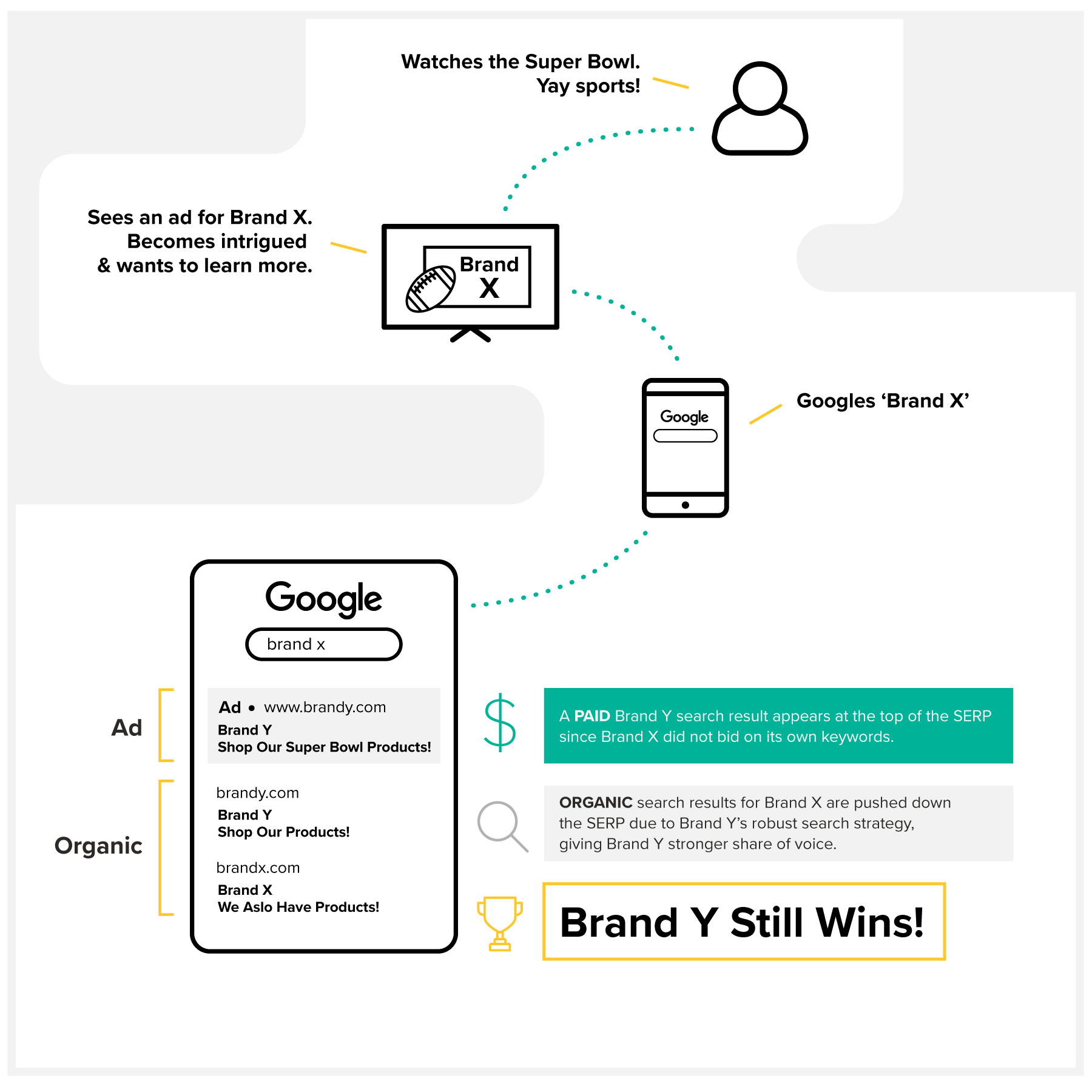
Let’s look at an example of two different approaches to a Super Bowl ad: one focused solely on TV eyeballs and one as part of a broader awareness campaign.
Brand X is relatively new to market, and purchases a wildly expensive Super Bowl spot to drive high-level awareness. The spot is well-produced and the creative is super sticky. Brand X’s marketing team is over the moon. They plan a watch party, their social team prepares for a huge increase in engagement, and they get the champagne ready.
The ad airs, the team cheers, social media followers grow. But digital engagement is lackluster. Web traffic doesn’t spike as anticipated, conversion goals are missed, and the moment passes anticlimactically.
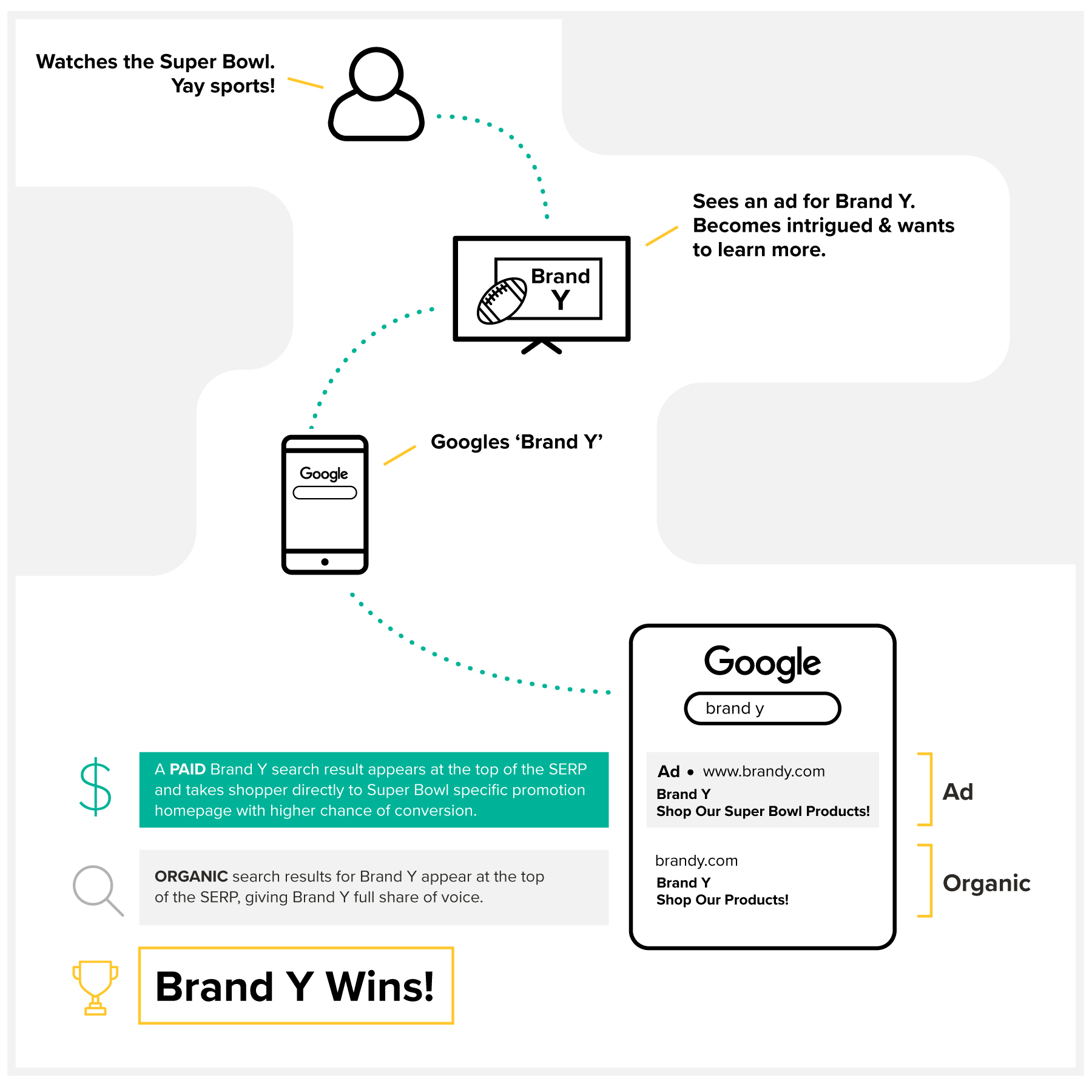
Competitor Brand Y, also pretty new to the market, purchases a similar wildly expensive Super Bowl spot to drive awareness as part of a well-planned omni-channel campaign. Brand Y, like Brand X, produces a high-quality spot, plans a watch party, and gets the champagne ready. But before popping the cork, the Brand Y digital team plans a smart search campaign, investing in its own branded keywords AND taking the added step of bidding on Brand X’s keywords.
The Brand Y ad airs, the team cheers, social media followers skyrocket. Digital engagement soars. Web traffic explodes, directing searchers to a landing page with helpful, specific information intended to help consumers decide which product to purchase, with a clear call to action and a simple checkout flow. Brand Y shatters its conversion goals, and the ad tech pundits applaud. The champagne flows freely.
Don’t Underestimate the Importance of Your Own Keywords
Brand X had a good ad. So what went wrong? Typically, when companies run TV ads, they’re looking to maximize reach and generate awareness by getting their name in front of as many eyeballs as possible. As consumers move down the marketing funnel, brands should aim to provide more detail about their products and services. One key component in this stage of the marketing funnel is running smart branded paid search campaigns, as Brand Y did in the example above.
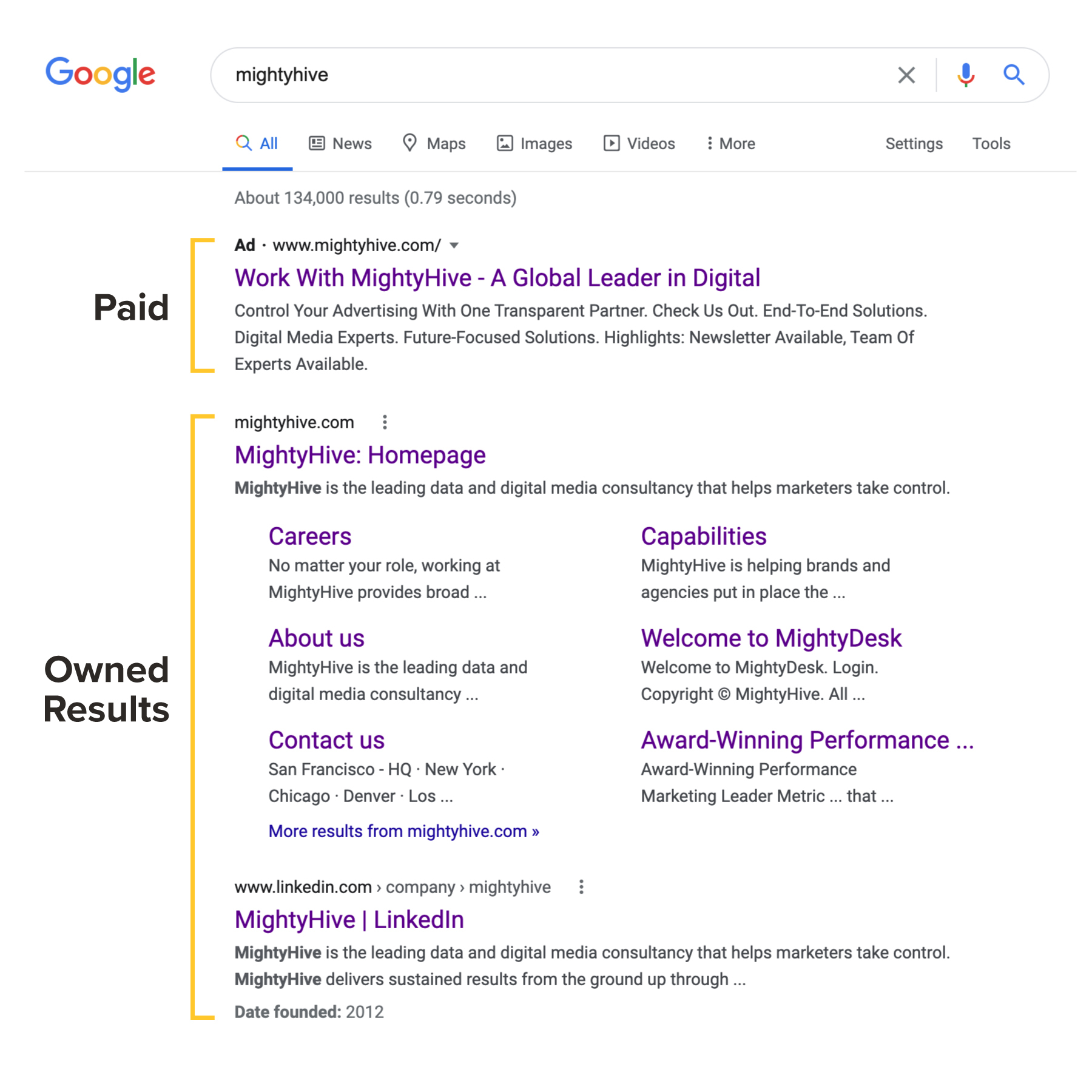
Many brands don’t believe that bidding on their own branded terms is worth the added cost, since they assume they’ll appear first on the search results page organically thanks to a solid SEO strategy. However, this may not always be the case—especially if similar brands bid on their competitors’ search terms. Branded paid search is an inexpensive and simple way to ensure that the brand is always at the top of the search results, especially during critical stages in the marketing funnel. Now let’s take a deeper look at why brands should be bidding on their own branded terms.
Dominate the SERP
The number one reason brands should run branded search is to increase visibility and ensure they are in full control over the search engine results page (SERP), especially in a mobile-first world where organic search listings are pushed even further down the page. When paid search and organic search strategies work together, marketers are more likely to establish their brands as category leaders, building credibility with potential customers and providing more opportunities for users to land on the intended website and eventually convert.
Defensive Bidding
Brands should also run branded campaigns because if a brand isn’t bidding on its own branded terms, competitors can easily do so. We call this “conquesting.” Conquesting is a popular tactic among competing businesses in order to intentionally gain the interest of a user who may be searching for a different company altogether. When a brand doesn’t bid on its own branded terms, a vacuum is created for competitors to capitalize on that awareness, grabbing a higher SERP slot and more market share.
We Rest Our Case in Defense of Branded Keyword Bidding
There’s no denying that branded terms are the best way to get in front of consumers that have strong intent to learn more about your brand. As such, with compelling branded paid search ads, marketers can deliver highly-effective and strong messaging to guide consumers down the funnel. With branded paid search, marketers can get more creative with features like dynamic copy, which updates instantly based on searched keywords, or ad extensions based on product offering. Branded search is a great way to generate revenue with highly tailored, powerful messaging to target the right user at the right time.
This past Super Bowl, we witnessed some very successful Brand Ys. Surprisingly, with all of the available resources and thought leadership around paid search, we also saw a handful of Brand Xs (their errors didn’t go unnoticed on Twitter). Don’t be a Brand X.