Choose your language

Choose your language

The website has been translated to English with the help of Humans and AI

Dismiss

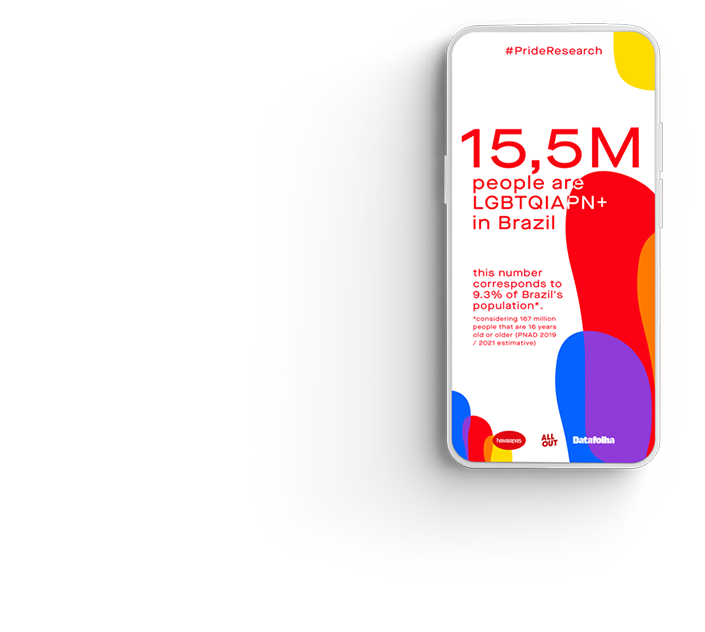
Mobile phone mockup that shows the result that 15,5 Million people are LGBTQ+ in Brazil
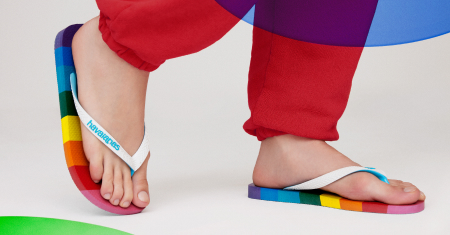
Two feet with a short bit of red pants showing. Wearing Haivaianas Pride flip flops
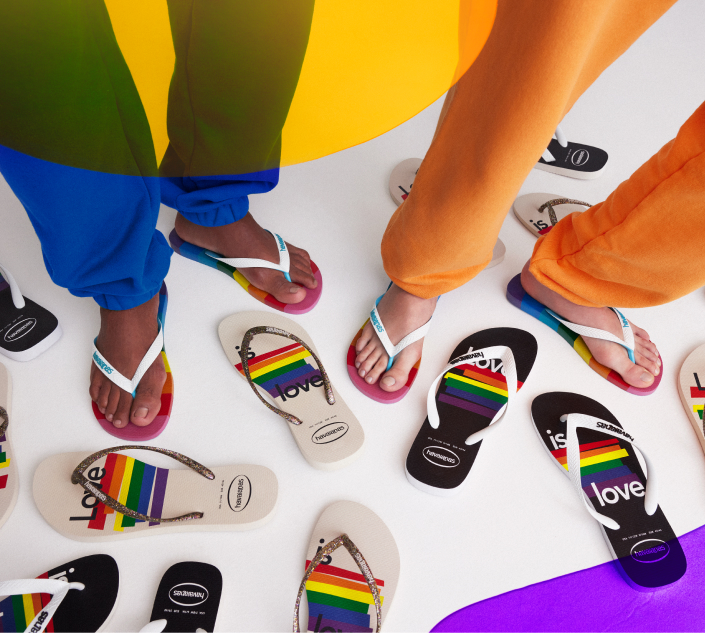
Two people wearing Havaianas pride flip flops. Only the legs and feet are visible. On the white floor there are flip flops scattered around them

Pride Research • Reinforcing commitment to the LGBT+ community

  • Client

    Havaianas

  • Solutions

    SocialSocial AORDataData Strategy & AdvisoryConsumer Insights & ActivationStudioBrandPlatform

00:00

00:00

00:00

Case Study

0:00

A brand that embodies the Brazilian spirit and inspires change.

The iconic footwear brand Havaianas is on a mission to bring more lightness, color and comfort to people's lives—a goal that inspired the brand to strengthen its commitment to the LGBT+ community by donating 7% of its Pride product sales to the cause since 2020. But when the Brazilian government excluded information about sexual orientation and gender identity from its census, Havaianas was inspired to strengthen its commitment to the community and public good.

Realizing that the lack of data made it difficult to advocate for policies and resources needed to support the LGBT+ Brazilians, the brand took on an ambitious initiative as part of its Pride platform: a national survey that sought to bring visibility to the community. We were responsible for the strategy, concept and creative execution of the idea, ensuring the needs of the community were shared with color and flair.

Havaianas flip flop ad with people holding each other

Seeking visibility for a forgotten community.

In partnership with Brazil's most reliable research institute, DataFolha, and All Out, a global non-profit focused on political advocacy for LGBT+ people, Havaianas spent eight months traveling to over 150 cities to cover all regions of the Brazilian territory. This journey resulted in a comprehensive 78-page report, filled with valuable information about the needs, insecurities, family and workplace relationships, of the community—and most importantly, how many Brazilians identify as LGBT+. For the first time in history, over 15.5 million Brazilians identified with the community, which is five times higher than the government's official data of 2.9 million.

Havaianas flip flop ad in rainbow colors

Mapping everyday realities for the LGBT+ community.

The team began by carrying out numerous online interviews that covered topics relevant to the LGBT+ community. Following the thorough analysis of that data, the team conducted three waves of in-person interviews throughout densely populated areas. This data was then cross-referenced and collated into a comprehensive report. We launched the report through a beautifully designed, interactive web platform, a press conference and an out-of-home campaign that brought insights to strategic locations like universities, train stations and supermarkets.

A person holding havaianas flip flops in front of their face

Inspiring the efforts of other brands—and of the law.

The Pride Research project has become an essential resource for other brands seeking to launch their own projects in support for the LGBT+ community. Report data is inspiring Ben & Jerry’s development of diversity, equity and inclusion (DE&I) initiatives; +Diversidade is likewise using the data to assist their clients in the creation of DE&I programs. Burger King drew from the data in their own campaigns, and the São Paulo Pride Parade shaped the theme of the 2023 Pride Parade based on the report’s insights. 

But owing back to the idea that inspired the project—a lack of government acknowledgement of the community—All Out is using the report’s findings to advocate for affirmative programs with the government, and Congressman Fabio Felix has leaned on the data to drive progressive legislation. Through these efforts, Havaianas has truly made an impact in its steps toward bringing color to people’s lives—including the LGBT+ community.

Results

  • 1M USD in earned media
  • 160 press publications with 100% positive NPS
  • 14M impressions in the first week alone
  • +8 point increase in perception of "inclusive brand that values diversity"
  • 13M reached through DOOH, with over 533,000 impressions
  • 2x Cannes Lions

Want to talk social? Get in touch.

Hey 👋

Please fill out the following quick questions so our team can get in touch with you.

Can’t get enough? Here is some related work for you!

Your Guide to the Mindset Shifts Driving the 2023 Festive Season in APAC

Your Guide to the Mindset Shifts Driving the 2023 Festive Season in APAC
Brand Brand, Commerce, Culture, Seasonal marketing 3 min read
Profile picture for user mediamonks

Written by
Monks

A colorful collage of people checking their cellphones and shopping

Beyond Lunar New Year: the mindset shifts that will drive APAC’s diverse festive calendar in 2023

As the Asia Pacific region moves beyond its first big 2023 celebration and the world settles into the Year of the Rabbit, brands are gearing up for a calendar full of festivities across the region. But are you well versed in the latest changes in consumer behavior and how they are shifting the way people shop, connect and engage with brands?

From expecting a higher degree of honesty and authenticity to how more people are choosing to live alone, this report covers the main mindset shifts we’ve observed in APAC and offers practical advice for brands looking to build or maintain their cultural relevance. With insights from our regional team of experts, you’ll learn how to embrace these changes and celebrate with customers in ways that are actually meaningful to them. 

Access your copy by filling out the form below.
Guide to APAC Festive Season report cover

You’re one download away from…

  • Understanding the latest changes in consumer behavior and how to leverage them to connect with people.
  • Learning what consumers in APAC expect from brands today.
  • Gaining a new perspective on the diversity of celebrations across the region and how to tackle them.

This experience is best viewed on Desktop.

Download Now

One of the most important lessons for any brand looking to engage with consumers in the APAC market is that the region is not a monolith. It’s a collection of cultures, histories, languages and, most importantly, moments of celebration. Lunar New Year, which is one of the biggest celebrations in the calendar, has just passed—but the opportunity for marketers to truly understand what consumers want from them during these festivities is still there.

The APAC calendar is incredibly rich and diverse in regard to festive moments. There may be a few specific dates that take the vast majority of our focus. Still, with brands having to build more and more local relevance, there’s value in considering a wider pool of these crucial moments to connect with customers. 

In Singapore, you may start with Lunar New Year, which is followed by Easter, Ramadan, Vesak Day, Diwali and even National Day, to name a few. In Thailand, the first thought might be Songkran, but what about Māgha Pūjā and Loy Krathong? Over in India, brands often congregate around a wide selection of days, including Holi, Diwali, Gandhi Jayanti, Independence Day or Republic Day, cementing a new normal for hyper-local strategies. 

As you try to win the hearts of consumers in APAC around these dates, it’s important to understand how each market connects with brands and what they expect from them today. For example, we’ve found that many consumers are moving from wanting instant gratification to taking their time and pausing for consideration. We’ve also surfaced a mindset shift in people using digital media for honesty and transparency, rather than validating through positivity. 

To understand more about these mindset shifts, we’ve created a report with practical advice for marketers that will help them navigate both the diversity of APAC’s festive calendar and the common mindset shifts that are uniting a need for a new approach.

Discover how brands are preparing for the festive season in APAC, and how they’re staying culturally relevant by understanding changing consumer behavior. holiday marketing strategies cultural relevance consumer insights consumer research apac Brand Commerce Seasonal marketing Culture

4 Focus Group Alternatives for More Varied Consumer Research

4 Focus Group Alternatives for More Varied Consumer Research

5 min read
Profile picture for user mediamonks

Written by
Monks

4 Focus Group Alternatives for More Varied Consumer Research

Focus groups may be one of the most well-known consumer research methods there is, but they’re not always the most effective in reaching your goals. Camera setups and a sterilized, corporate environment could make the experience feel very artificial for consumers, amounting to less than stellar (or super accurate) results. While focus groups have their opportunity to shine, some situations call for other options.

No matter which method you prefer in gathering user research, having multiple options is best: some methods are best for qualitative research while others are best for quantitative. Ideally, your research approach should include a method for both. “Research just for the sake of it isn’t good for the project,” says Fernanda Gonzalez, a Sr. UX Designer at MediaMonks who has done research on behalf of travel brands including Aeroméxico. “Use two methods that fit directly with your objective.” This allows for both broad, statistically valid insights as well as the deeper understanding required in maintaining a focus on the user experience.

Where Focus Groups Can Fall Short

Focus groups certainly have their uses: they’re versatile enough to use at different stages of the discovery or design process, and can aid in testing which creative approach resonates best with a handful of users. But their biggest limitation is that they often feel artificial. “The process is so well-known to consumers, and the setup can often alienate the subjects from those doing the research,” says Gonzalez—not something you want when seeking open, honest responses from your audience.

Monk Thoughts The more hygienic and clean the environment gets, the further you are from the consumer experience.

For UX Researcher Olivia Cabello, who has provided consumer insights to brands like ServiceNow, the potential for groupthink can also limit the value of insights derived from focus groups. “The loudest person in the group tends to influence others’ opinions,” she says. “In the past, I’ve prompted individuals to privately give written responses before the group discussion. When checking them afterward, you can see how their opinions changed throughout the conversation.” Therefore, this method can result in biased responses or ones less specific than anticipated.

Giving Research a Human Touch

“The more hygienic and clean the environment gets, the further you are from the consumer experience,” says Daniel Goodwin, a Digital Strategist at MediaMonks in Hilversum who has worked with brands like Heineken and McLaren. Highlighting this need, brands must introduce empathy through alternative approaches that bridge the gap between business and customer perspective. Each of the methodologies outlined below place their focus on validating the user experience on an individual level.

Monk Thoughts It’s important to say ‘I am here to listen to you, to understand your challenges.’

In this respect, Gonzalez stressed the importance of treating users as active participants rather than study subjects. “It’s a mistake to act as if we’re equally impacted by how a platform or service will affect us,” she says. “It’s more important to say ‘I am here to listen to you, to try to understand your challenges and to help build something useful.’ This frames them as part of the solution, not just someone being helped.’” Because consumer research relies on trust for open, honest responses, it’s important to treat subjects with sensitivity and care—a goal which leads to the more human approach we strive to take in research.

1. Good Things Come in Threes

Gonzalez’s favorite alternative to focus groups is the three-person method: simply gather three people of a similar demographic or persona, then interview them about their experience. While the loudest voice in a focus group often dominates others, these smaller groups comprising similar or like-minded subjects is more akin to a group of friends chatting about their experiences. The approach establishes a more collaborative and casual environment that makes it easy for subjects to share their perspective, making it ideal for validating creative concepts.

“When you have a group of people complementing one another in terms of persona or segment, you avoid the issue of a leader emerging, like in focus groups,” says Gonzalez. “Instead, group members build off one another’s ideas, which also makes it useful for gauging brand perception.” Gonzalez recommends working with two groups, resulting in insights from six similar subjects. This lets you gain a good scope of the user experience in just an hour or so.

2. Dive Deep with Individual Interviews

The deepest insights come from individual interviews, whether it be through questioning about their experience or observing the way they behave with a product or platform. Trade shows and industry conferences make great environments for gathering several viewpoints in-depth. For example, one client that Cabello worked with wanted to target customers via old-school mailers. But when Cabello, who’s based in New York, spoke directly to this audience at an industry trade show with her team, they found that the target audience felt annoyed by mailers. After taking this insight back to the client, the business shifted focus on other channels that would better engage their customers.

Cabello advises researchers to gather perspective from several roles, personas and stakeholders with this method, and to keep interviews short and sweet: “At some events there is limited time between talks, so strategically selecting about five questions is best for keeping the conversation focused.”

Monk Thoughts You’re not going to change people’s mentalities; supporting user behavior is key.

User testing, meanwhile, is key for understanding an audience’s thought process and to test whether a design process makes sense. “What I love most is when people do workarounds, they find a way to do it differently rather than how it’s designed. That’s the perfect moment to ask why they did this, leading to valuable results.”

When applying these insights, it’s important that the brand supports—not replace—user behaviors. “No matter what you build or create, you’re not going to change people’s mentalities,” says Cabello. For example, a cloud computing service Cabello worked with wanted to build a documentation portal to help users learn how to use the platform effectively. But Cabello found that users already met this need by sharing tips through community-building. The insight prompted the brand to pivot away from a documentation portal and toward a community platform that would empower users to instruct one another and bounce off ideas.

3. Gain Insights Over Time with Diary Studies

When you need to know how a user engages with a platform, service or need over time, diary studies make for an excellent tool. Whether they really shine is by placing those interactions in the context of daily life: what motivates them to use the product? What barriers exist? For Gonzalez, prompting users to regularly reflect and record engagements as they happen leads to fresh results.

“By being involved in the day-to-day rather than taking subjects outside of the experience for gathering research, diary studies can result in more information than sitting subjects down and asking them to remember tasks from their day,” says Gonzalez. The approach is ideal for seeking inspiration before zeroing in on a specific solution to validate.

Monk Thoughts Use two research methods that fit directly with your objective.

4. Poll Internal Stakeholders, Too

Consumer research shouldn’t just target consumers. In some cases, you’ll want to talk to other roles or stakeholders within the organization to understand how their interactions with customers can shape their experience with the brand. Goodwin has worked with clients in which their headquarters and roles working more directly with customers have become misaligned. In this situation, Goodwin recommends interviewing those with consumer-facing roles.

This practice not only aligns organizational goals, but also casts a wide net on user experiences. “Consumers have just one viewpoint: theirs,” says Goodwin. “But someone who interacts with them each day has a broad view of the different problems they run into.” By interviewing people with these roles, you can identify several opportunities to better support an audience’s need in little time.

Each of the methods outlined above aim to gather perspective on the customer experience without taking them out of the everyday. By engaging with research subjects out in the field and on their level, brands can achieve actionable insights without disrupting users or asking them to provide responses they think brands want to here. Instead, the approach should focus squarely on individual user need in the context of their daily lives.

Focus groups can certainly be useful for consumer research, but not in every case. In fact, effective market research requires multiple methodologies--here are some of our Monks' favorites. 4 Focus Group Alternatives for More Varied Consumer Research The most effective consumer research includes multiple methodologies, not just one.
consumer research market research brand strategy focus groups research methodologies

Choose your language

Choose your language

The website has been translated to English with the help of Humans and AI

Dismiss