Next Stop, Cannes: A Conversation with Our Top NextUp.Monks Winners
Next Stop, Cannes: A Conversation with Our Top NextUp.Monks Winners

The Cannes Lions International Festival of Creativity is just around the corner, and many are in the midst of settling their itineraries and finalizing their travel plans. Among them are six up-and-coming creatives who have spent only a handful of years formally honing their craft in the industry, yet have already shown incredible promise and excellence: the winners of the annual NextUp.Monks competition.
In partnership with Cannes Lions, this contest showcases emerging talent globally. Open to employees with up to seven years of industry experience, participants join in pairs to compete across multiple categories. Three teams will earn a trip to Cannes, with one standout team gaining the additional honor of attending the prestigious Creative Academy.
The contest includes three categories that explore creativity in different ways:
- Film: Deliver cinematic stories for screens of all sizes, featuring elements like original concepting, scriptwriting, visual treatments, film treatments, shooting, directing, editing, VFX, post—and everything in between.
- Innovation: Turn visionary, future-facing ideas into reality using the latest in emerging tech and formats, resulting in groundbreaking experiences and new possibilities.
- Interactive: Go beyond the mundane while putting the audience at the heart of every moment, giving them the opportunity to immerse themselves in compelling, transformative digital experiences.
So, what creative challenge were they trying to solve? This year, the brief focused on a fictional beauty and skincare brand called TriVitalize. The mission: build an innovative and social-first campaign to launch a new line of sustainable, luxury shower products, with the goal of recapturing market share and shelf space.
Interestingly, all three winning teams were from Latin America, with two teams from Brazil and one from Argentina. Juan Orlievsky and Julia Calvo won in the Film category for a campaign that plays on the “shower thoughts” phenomenon; while Everton Souda and Thiago Assunção won in the Innovation category with the “feelings translator,” an AI-powered technology that turns customer testimonials into beautiful, synesthetic works of art.
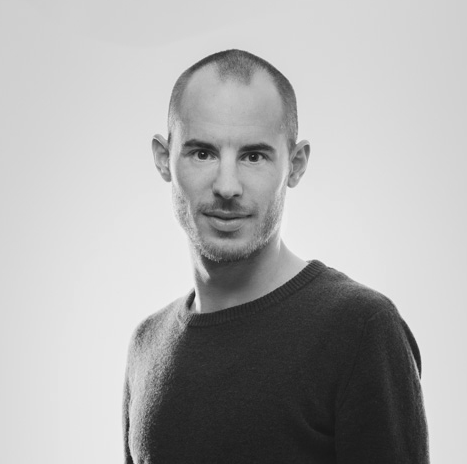
But the top win went to Hitamara Tamizou and Matias Marcossi in the Interactive category. Their project, “My Side of the Mirror,” is a clever take on self-affirmations inspired by the insight that women criticize themselves on an average of four times a day. Realizing that feeling good about yourself while looking in the mirror can often be a challenge, their concept centers around an AI-powered app that features a personalized digital double, based on the user’s likeness and voice, that greets them with messages of affirmation.
We had a chance to speak to Hitamara and Matias to learn more about their winning concept and how it came to be. Read below to peek behind the scenes into the creative process.
What were your initial impressions of the brief, and how did that lead to the beginning stages of developing your concept?
Matias: First of all, we found it a little challenging to work with a brand that is fictional, because you don’t have previous information of how the brand communicates with the public. So the challenge begins there.
We started by doing our research, which was pretty easy because we had a lot of material based on the struggles that women face through their lives. As a transgender person, I remember those struggles very well—and now I have new ones. So, the first thing was to think about this fictional brand and how we could bring them to life in a way that spoke to those struggles.
Hitamara: I say myself in those statistics about women criticizing themselves. So this work means a lot to me, because I not only saw myself within it but could participate in discussions that help solve those challenges and support women by building the self-confidence that they usually lack. That focus on confidence, for me, helped shape the creative idea.
Matias: Next, we tried to think how we could universalize that experience. We are both based in Brazil, so a lot of our initial thinking focused on that experience—but given the fact that this is a global brand, we had to think of how we could connect with women everywhere.
Universalizing the idea for “My Side of the Mirror” grew from the trope of fantasy and fairy tales that are well known across different cultures. For example, you see the queen in Snow White ask, who’s the most beautiful woman in the world? And it’s not her; it’s Snow White. We wanted women to be able to seek approval from themselves through self-affirmation.
You mentioned research, and your concept draws heavily on insights and statistics. What were you looking for when embarking on the research phase?
Hitamara: A lot of our research focused on the experience of Black women in particular, as they make up a significant portion of our population in Brazil. But while our finished concept is focused on fun and self-confidence, we were initially thinking around heavier themes like harassment and the lack of safety women feel, because in order to have the opportunity to take care of yourself, you have to make it home first. In Brazil, many women face harassment on the street.
Matias: We thought a lot about external issues like harassment and violence, but realized that we were creating more fear rather than finding solutions. This prompted us to look internally at what we can change within ourselves, seeking positive solutions to more personal challenges like self-confidence.
You had a diverse range of personas in mind when developing your concept. How did their particular needs influence your creative approach?
Matias: This goes back to what I said before about universalizing the experience. The personas were a very important part here, because while the creative idea is designed to appeal to everyone, how people engage with it can be very different. How does someone in the Deaf community see themselves, how might a blind person feel their skin differently?
We didn’t have a star at the center of the campaign; it’s about putting the focus on yourself. I think brands should do more of that strategy—instead of hiring a famous musician, how can we allow the consumer to be at the center of the experience? Many people with disabilities, for example, never see themselves in a beauty campaign, but we can change that. And focusing on a minority doesn’t limit the appeal, either; it creates empathy for everyone, because empathy is a universal feeling.
Did the experience of participating in the contest give you the chance to use skills outside of your day-to-day roles?
Matias: As a copywriter, representing and expanding upon the idea through copy was routine. But for the real clients that we work with, the brand is already well defined in terms of its visuals and overall look—so we have a limited range sometimes when it comes to producing really big ideas like this one.
Hitamara: I am a motion graphic designer, but in this work, I was able to take on the role of an art director. Like Matias said, real brands often have their design language and visuals laid out, so I was excited to have the opportunity to develop all the visual aspects of the fictional brand and its campaign—and I love working with Matias! This opportunity really encouraged me to do my best and to show my creativity. When we finished the project, I felt really proud of what we accomplished.
In addition to the AI-powered experience, your pitch also touches on making the experience shareable on social and using that to hijack toxic beauty trends. Could you discuss that aspect of the work?
Matias: Effectively using social media is key for a young brand, especially on channels like TikTok where it’s easy to go viral with the right content. Still, social media harbors a lot of toxic content that shapes how we perceive ourselves, so we thought, let’s hack that to deliver a positive message to people who need to see it most. Our concept prioritizes an organic strategy to social rather than a paid one, thinking that that approach would make the message more appealing and relevant to our audience.
Your work takes a very socially purposeful approach to the use of AI. AI is a technology that inspires both excitement and unease; what’s your take on its use and potential in marketing?
Matias: I see AI as a powerful tool to change self-perception. I have a bunch of ideas that involve AI now, especially when related to the trans community. I think it has the power to amplify connections, but for that we need to develop a very responsible and empathetic vision for it. We are trying to make that here, not just with “My Side of the Mirror,” but in other ways that we use AI.
For example, we can use generative AI to aid in representation; if I type “transgender person” as a prompt and keep pressing enter, it’s going to show me a different result every time. That can teach people that we can’t be put in a box; you may have expectations about my body, but there are infinite ways we can express ourselves.
Hitamara: As an art director and motion designer, AI can be incredibly helpful throughout the creative process, but there are ethical concerns as well. Artists are afraid of their style being stolen, and there’s a similar discussion to be had about the risk of cultural appropriation in AI’s output. So while I’ve relied on AI a lot to optimize and amplify my own work, I don’t forget or shy away from those moral or ethical concerns. It’s a powerful tool, but it comes with responsibility.
Finally, your prize for winning the contest is a trip to Cannes. How does it feel?
Matias: I couldn’t sleep in the days following the announcement that we won! I was really, really excited. It’s a great opportunity, especially as a transgender person; you don’t see a lot of us in the industry, so bringing that representation to such an important place is almost like a duty.
Prior to my time at Media.Monks, I was a teacher, but decided to switch careers in search of better working conditions. So, this is a message for all the people out there like me that you can do it as well. You have such great ideas—it is achievable.
Hitamara: I had originally studied chemistry, so I made a big change in my career as well. Media.Monks is the first agency that I’ve worked at, and I’ve been here for almost three years. During that time, I’ve found it to be a great place for talent development. Winning NextUp.Monks is like a dream—I’m living a dream.
Finally, we would also like to congratulate our Silver and Bronze winners.
Interactive, Silver:
- Leah Zhao, Creative Technologist
- Ed Lee, Developer
Interactive, Bronze:
- Rodrigo Escobedo, AV Social Developer
- Carlos Cravioto, AV Social Developer
Film, Silver:
- Santiago Cifuentes, Motion Graphics Designer
- Felipe Chavez, Art Director
Film, Bronze:
- Sergio Cardozo, Designer
- Alejandra Gonzalez, Designer
Innovation, Silver—which includes a tie between two teams:
- Eyleen Camargo, Art Director
- Kyara Ortega, Copywriter
- Mariana Ramirez Feijoo, Art Director
- Evelyn Su Pérez Islas, AV Developer
Innovation, Bronze:
- Grace Tankersley, Copywriter
- Diana Backer, Senior Creative