Choose your language

Choose your language

The website has been translated to English with the help of Humans and AI

Dismiss

IBC Show 2022 Captures Broadcasting for a New Era

IBC Show 2022 Captures Broadcasting for a New Era
Experience Experience, Industry events, Metaverse, VR & Live Video Production 7 min read
Profile picture for user mediamonks

Written by
Monks

Media.Monks employees on stage at IBC

September saw the launch of IBC 2022 in Amsterdam, one of the most influential conferences of the broadcasting industry, which made its triumphant return to face-to-face engagement. Naturally, we couldn’t pass up on the opportunity to show up in person.

Many might think that broadcasting is very traditional, loosening its grip on the cultural current as people turn more and more toward immersive, interactive experiences like gaming and the metaverse. But the IBC Show is anything but traditional, and this year our Monks on the ground (and on the stage) explored the broadcasting’s transformation in the virtualized era, from capturing new kinds of content to showing off workstreams that unlock incredible, new storytelling opportunities.

Monk Thoughts Innovation is at the forefront of the conference. We’re leaning into the future, and IBC is an optimistic part of that future.
Headshot of Lewis Smithingham

If it’s not interactive, it’s broken.

Video killed the radio star—and with the rise of the metaverse and an increasingly digital culture, is TV next on the chopping block? Smithingham opened the second day of the event with a keynote talk, “Step Into the Metaverse,” in which he set the stage for a new era of multi-dimensional, interactive media. The central thesis: traditional, flat media is less relevant today’s Gen Z and Gen Alpha audiences. “A core undercurrent across all of this is if something is not interactive to younger generations, it feels broken and disconnected,” says Smithingham, showing how live sports viewership is down and that most of the discussion surrounding the Super Bowl is about the halftime show instead of the game.

Still, Smithingham doesn’t want to discourage the industry; rather, now is the time for broadcasting players to take an active part in driving culture forward. “Broadcasting is culture. It’s the vehicle by which culture spreads,” he says, making the case by illustrating how text messaging volume directly correlated with American Idol viewership throughout the aughts. Likewise, broadcasting can embrace emerging technologies and behaviors—like livestream commerce—to connect more closely with today’s audiences and tap into new storytelling possibilities. For example, we partnered with Logitech to break out of the exclusive, VIP-focused awards show format with the Song Breaker Awards, making it more accessible and interactive for audiences in the metaverse. 

To Rob McNeil, VP of Live at Media.Monks, these immersive experiences will become complimentary to more traditional broadcast experiences. “It will coexist. Certain people will gravitate toward certain kinds of content,” he says, noting how he personally would rather watch sports in VR rather than on a TV. While he sees a future in 180- or 360-degree movies and TV shows, music performances and sports seem to be the use cases that make the most sense right now. “These are natural areas for immersive experiences,” he says, noting how music in particular takes advantage of spatial audio in the Meta Quest 2.

The lesson for brands and broadcasters? Break out of the traditionally one-way conversation of broadcasting and instead create a multidirectional ecosystem: a halo of virtual worlds, social content, streaming content, creator channels, podcasts, audience interaction and more. “It’s about feeding an audience that’s always on,” says Smithingham. “We have to evolve how we tell our stories.” You can learn more insights from Smithingham in the IBC interview below.

Esports points a way forward.

Marketers and broadcasters looking for examples of multidirectional ecosystems can turn to the esports space, which is taking some learnings from traditional sports while also establishing best practices of its own. Esports are a fast-growing industry, with 29.6 million monthly esports viewers this year—an 11.5% increase over 2021, according to Insider Intelligence. Funs Jacobs, our Gaming Category Lead, shared the stage with Nicolas Bourdon, CMO at EVS, and George Pratchett, Production Manager at Promod Esports, to discuss the new frontier of esports as they become increasingly mainstream.

Jacobs notes that most of the revenue earned in esports comes from sponsorships—but the number of esports games per year pale in comparison to, say, your average FIFA league, which amounts to less opportunities for sponsorship overall. That’s why in addition to hosting more games and tournaments, Jacobs encourages competitive gaming developers, leagues and teams to explore fan engagement on new social platforms. In addition, there is a new opportunity to strengthen their communities with blockchain-enabled technologies like NFTs, as brands can now cultivate a sense of ownership with their fans.

Monk Thoughts Give brands more opportunities to get involved. The viewer numbers are there, and the overall number of people who play video games is 3 billion worldwide.
Funs Jacobs headshot

Teams like FaZe Clan and 100 Thieves have done well to expand beyond tournaments into video content—FaZe Clan has four YouTube channels and 8.66 million subscribers to its main one—apparel, NFT drops, podcasts and dozens of channels run by individual content creators and pro players that have signed onto teams. 100 Thieves is even in the early stages of developing a game of its own. 

The variety of digital content offers not only new opportunities for sponsorship and revenue, but also different options for fans and viewers to engage as they see fit. “One thing we can learn from streamers is the level of accessibility,” says Jacobs. “These creators are so accessible despite being so far away in terms of lifestyle and skill level.”

Cloud-based workflows unlock new storytelling opportunities.

Broadcasting of the future requires new ways of working, and Smithingham joined Samira Bakhtiar, Director of Sales, Media & Entertainment at Amazon Web Services (AWS) to give conference attendees an inside look at our global, AWS-based virtual production team. While broadcasts are typically produced by an on-the-ground team tangled in wires and packed in a truck, our cloud-based setup unites personnel who are working across several different locations. 

Here's what it looks like. We put together a rack of gear, coders, monitors and uninterruptible power supplies. We then send two or three people to a location who take the rack, power it up and plug it directly into AWS via a network connection. “This is a direct connection outside of the internet, so we’re not susceptible to interferences, says Patrick Jones, Senior Director of Engineering, Live/Broadcast and Creative Solutions at Media.Monks. “We don’t have issues like outages from local ISPs.” 

Anywhere from 36 to 40 virtual machines are connected in the cloud, ranging from graphics servers, audio servers, playback servers that enable instant replays, and more. The cloud also connects dozens of people throughout a distributed team. “A director in Florida can collaborate with a tech director in England and audio people in New York,” says Jones. And despite the distance across teams, latency is negligible and just a matter of milliseconds.

Monk Thoughts There are people all over the place, and that’s the beauty of having a decentralized workflow. Our communications system lets us talk as if we’re right next to each other, which makes things so much simpler.
Patrick Jones headshot

Still, any live broadcast comes with a series of factors that may present the need for redundancies, whether that be extra equipment or multiple recording backups. “We’re the department of redundancy. It’s what we do: continue to make sure we have multiple systems in place to protect us,” says Jones. He notes that while traditional broadcasting trucks also have redundancies built in, things break, and having two of every piece of equipment isn’t practical. “If you’re in a truck, you may not have the ability to get another computer in. But in the cloud, we can quickly pivot to spin up another system or backup.”

Beyond the added efficiencies in stability and collaboration, one benefit of the AWS-powered workstream shouldn’t go unnoticed: it greatly reduces the carbon footprint of a broadcast, which would traditionally involve flying out an entire fleet of professionals. “We just have three people flying in for a typical production, and everyone else is in the cloud,” says Smithingham.

Broadcasting continues to evolve and innovate.

“Two years ago, we didn’t have some of the tools in the cloud that we have now,” says Jones. After exploring the showroom floor, he applauds the level of innovation at IBC. “Seeing all the people that are innovating, we advanced by maybe three years in six months. The pandemic forced a lot of companies to up their game, and we’re all reaping the benefits of that.”

We showed off our own innovation at the booth for RED Digital Cinema, who is disrupting the film production scene with camera equipment that is more affordably priced than more traditional names. At the booth, we shared a behind-the-scenes look at the making of Post Malone’s Twelve Carat Toothache VR performance, viewable on Meta Quest devices captured on RED’s cameras. Our team built a way to live-stitch the footage to accommodate VR viewing in a 4K resolution, streamed directly to Quest headsets as the footage is captured.

The shooting-to-viewing pipeline is important because advanced imaging isn’t just a learning curve for production crews; it forces performers to engage with the camera in new ways, too. “The camera’s movement is often limited, due to naturally occuring motion sickness,” says McNeil. “For artists, that’s challenging because they have to come toward the camera, rather than have the camera come to them.” Throughout the Twelve Carat Toothache shoot, the crew could let Post Malone inhabit the viewer’s perspective in between performances, influencing his stage presence.

To bring the same experience to the demo booth, we had headsets on hand capturing live footage of the conference floor. “As people create content with technology like this, we become desensitized to it, but people experiencing it for the first time were like, ‘This is simply stunning—absolutely amazing,’” says Jones.

The demo between team Media.Monks and team RED demonstrated more than just the potential of new technology. It also showed a spirit of partnership that permeated much of IBC this year. “You saw a lot of people going from booth to booth—not like an upstart going to the industry giants to get their foot in the door, but rather a lot of established names wanting to work together,” says McNeil.

Monk Thoughts It used to be separate workflows across the board. Now everyone has their own nuance or expertise and are working together to see what they can do together.
Rob McNeil headshot

To say that the world has changed since IBC’s last in-person conference in 2019 would be an understatement. But this year’s edition showed how the broadcast itself is in a state of evolution—one that will show no signs of slowing down soon. “We need to virtualize everything from our culture to how we do our work,” says Smithingham. From expanding content across different formats, to learning from emerging industries like esports, to exploring entirely new workflows, IBC 2022 offered several looks into the future of broadcasting—and it’s looking bright.

This year’s IBC Show offers a look into how the desire for interactive experiences and the metaverse are transforming the broadcast industry for the better. metaverse interactive content digital experiences amazon gaming Experience VR & Live Video Production Industry events Metaverse

Build Your Data Game Plan with Insights from Superweek

Build Your Data Game Plan with Insights from Superweek

Data Data, Data Privacy & Governance, Data Strategy & Advisory, Death of the cookie, Industry events 1 min read
Profile picture for user mediamonks

Written by
Monks

Headshots of Doug Hall and Julien Conquet

The data landscape is no stranger to tectonic shifts that curtail brands' control. From Google's announcement to push back cookie deprecation once more, to Apple's app tracking transparency, to differences in data regulation around the globe, emerging bumps in the road continue to challenge plans to provide personalized user experiences. These issues—and more—were discussed at the 2022 Superweek Analytics Summit, a global community of digital marketing professionals, analysts and thought leaders of the measurement industry.

Now, marketers can relive the excitement and ideas of the conference (or encounter them for the first time) in a new documentary. THE GAME features insights from speakers—including Vice President of Data Services and Technology (EMEA) Doug Hall and Senior Director of Analytics, EMEA Julien Coquet—to discuss how recent developments in data collection, activation and regulation are reshaping the strategies of brands and their partners.

For a clear understanding of where the industry is headed, find the documentary in full below. Look forward to more Superweek next year, running from January 30 to February 3 in Egerszalok, Hungary!

Monk Thoughts It's like the classic physics three-body problem, where we have tech, regulation and public opinion are the three bodies. The physics problem states that their orbits are so complex in the system that you cannot predict where these entities are going to go.
Doug Hall headshot
Get insights from this year’s Superweek Analytics Summit, a global community of digital marketers, analysts and thought leaders of the measurement industry. data analytics google Google Analytics data privacy third-party cookies first-party data Data Data Privacy & Governance Data Strategy & Advisory Industry events Death of the cookie

Takeaways From Cannes We Cannes’t Stop Thinking About

Takeaways From Cannes We Cannes’t Stop Thinking About

Industry events Industry events 6 min read
Profile picture for user Kate Richling

Written by
Kate Richling
CMO

A scribble design in different colors

This year’s Cannes Lions International Festival of Creativity brought the industry’s top minds back together, and we were there to welcoMMe them back by debuting our integrated Media.Monks team in person. The momentous occasion, after canceling our ‘22 CES plans and skipping SXSW, called for an all-new approach. From our digital ads at the Nice airport that set the stage, to our (humble) Les.Monks Café directly across from the Palais, to bringing back our (epic) party with MassiveMusic, we took the opportunity to (re)connect with our clients, partners and press—including Calum Jaspan, who encapsulated the festival’s vibe in Mumbrella:

“Sorrell sat down last week with Mumbrella at a bustling Les.Monks Cafe, Media.Monks’ headquarters at the festival in the South of France. The festival appeared to be in line with Sorrell’s vision for the future of S4Capital, citing the intersection of tech, digital, and creativity as why it may have been well-timed for the freshly merged Media.Monks at Cannes.” Sir Martin concurred in conversation with LinkedIn News at Cannes:

Monk Thoughts This not a festival of creativity. It’s a festival of creativity driven by data and technology. The world has changed dramatically. Our model is data-driven, driving insights that we create content around and personalization at scale.
Portrait of Sir Martin Sorrell, smiling

And with that, here’s a quick look of what I learned from the Grand Prix Lions and our Monks, who took the stage and chatted with press to make their thoughts known. And because it’s not a Media.Monks missive without either alliteration or a punny sense of humor, here are the top takeaways I Cannes’t stop thinking about since I crossed the pond back home. If a deck is more your speed, don’t miss our #MonkNews Wrap-Up.

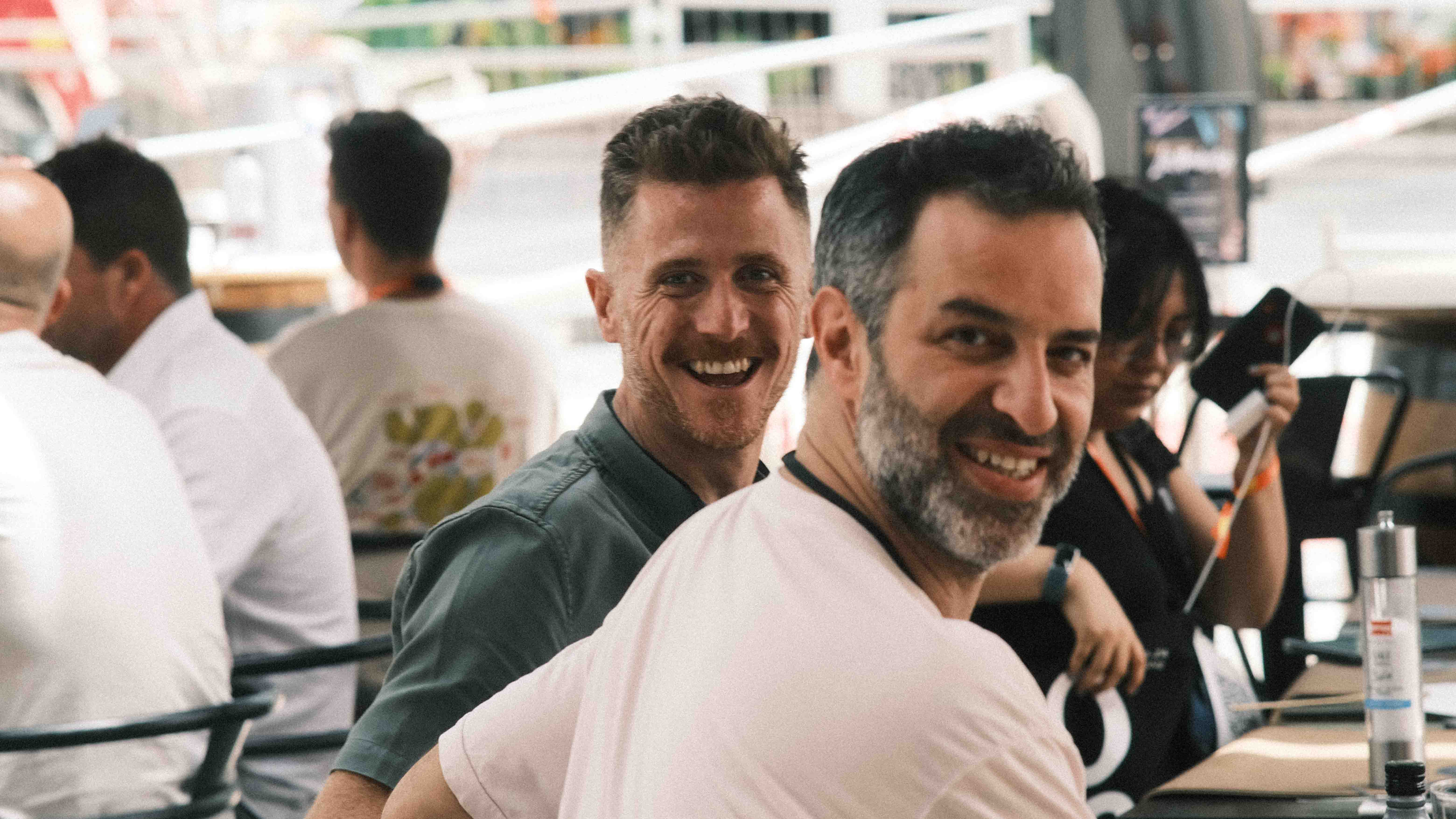
Two media.monks employees drinking wine at Cannes
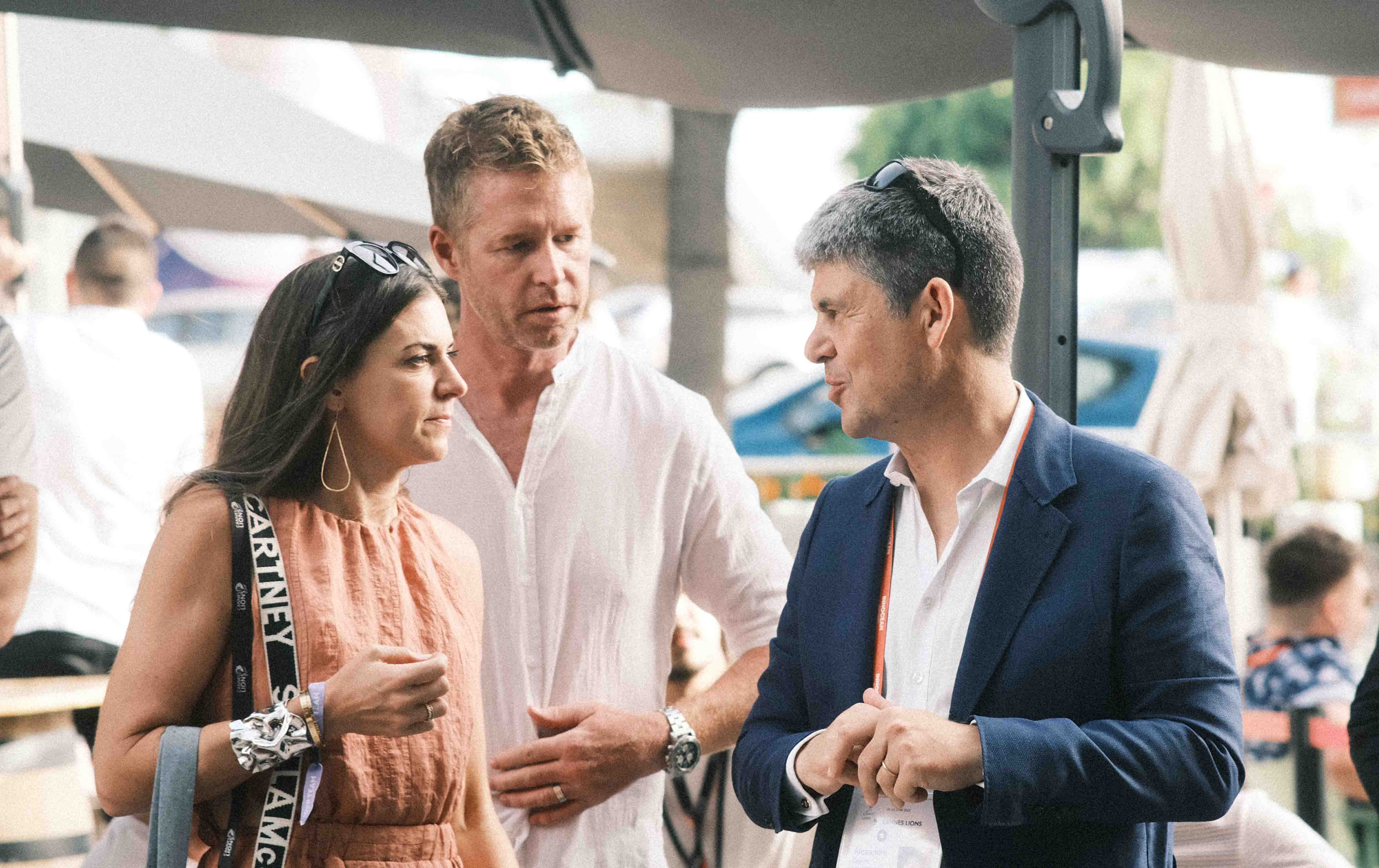
Three employees chat together at Cannes meet-up

Purposeful, human-centered creativity stole the show.

“The pandemic proved that creativity can help pull a business through a crisis,” the Cannes Lions summed up in their Official Wrap-Up Report. “The most dynamic transformations [use] creative solutions to change the fundamentals of how businesses operate and inspire industry-wide, cultural change that will have a lasting impact.”

This became clear as the wins rolled in. Against the backdrop of the war and residue of the pandemic, this year’s Grand Prix winners raised topical issues, and set out to solve problems rather than just generate awareness. Putting people, creators and communities at the heart of the creative process, the big winners focused on emotion and practical solutions, rather than tech innovation and clever use of platforms that have won in previous years. As a result, the category relevance became almost secondary–and several of the campaigns won big across multiple categories.

“Flashiness for its own sake no longer cuts it,” Sara Cosgrove, Global Director of Awards and Creativity at Media.Monks, shared at our team’s Creative Council meetup at Les.Monks Café. “But while tech may have taken a backseat this time around, that certainly doesn’t mean innovation is any less important than it ever was. As a focus on human behavior takes the wheel, a virtualized approach will help brands leverage emerging technologies to drive culture forward, build legacies and meet people’s needs in creative new ways.”

Innovation met cultural needs to truly drive impact.

While the content program was rife with metaverse and Web3 sessions, the two were largely absent from the Grand Prix winner’s lineup. On one hand, these spaces are nascent; with time to mature, they may have a bigger presence among winners next year. But, Media.Monks Chief Creative Officer Jouke Vuurmans challenged the audience at his Young Lions Session to reconsider misuse of innovative tech for its own sake: “Blinded by a shiny new thing, a nearsighted pursuit of rapid innovation can lead to a misuse of technology. With flashy acts that don’t contribute to overall brand business objectives, the fun is over before it ever even really begins. How can we be better as an industry in this next phase? Let’s do it right.”

Luciana Haguiara, Executive Creative Director, Media.Monks and Digital Craft Jury President, shared a similar sentiment with LBBOnline, recapping her thoughts after exiting the jury room. “In the last year we’ve seen a lot of work that exists as a response to Covid: a wave of virtual events, digital experiences and entertainment, living side-by-side with campaigns and content that reflect the important cultural shifts and difficult conversations.” She went on to say:

Monk Thoughts Digital is a place to meet people and make stuff, not a machine to fuel clicks and conversation. The big takeaway from Cannes will be about how brands will enter the virtualization era in a meaningful way.
Luciana Haguiara headshot

Virtualization gave shape to the transformation of digital.

Luciana’s comment hinted at a major theme that we’ve been following over the last couple of years: that we’ve entered the era of virtualization. Virtualization is defined by a set of new audience behaviors, cultural norms and technology paradigms resulting from 30 years of digital transformation, hyper-accelerated over the past five years. Consumers today have heightened their expectations, adopted new behaviors and ultimately demand more from the brands they engage with, each of which are covered in our recent report, “The Transformation of Digital: Virtualization & the New Era of Growth," which released just in time for this year’s festival. Designed to help brands build lasting legacies now and into the future, we amplified report takeaways throughout the week.

Two media.monks employees smiling at the camera
An employee hugging another employee at Cannes

Our Chief Innovation Officer Henry Cowling hosted a meetup that distilled the transformation of digital for the festival audience, explaining that “after two years of hyper online behavior, consumers are craving more than traditional digital can offer: access, information and connectivity are table stakes. For a new generation, digital experience is becoming foundational to their identity––and with the advent of Web3, ownable. For many, it’s not even digital anymore. It’s just life…we’re seeing a new relationship with digital that we’re just starting to scratch the surface with.” 

And much of this year’s winning Cannes Lions work demonstrates the profound ways that post-digital transformation behavior and culture are redefining concepts of experience, community, ownership and identity, and we’ve selected some of our favorite examples in our #MonkNews Cannes Wrap-Up I mentioned above.

Creative effectiveness became top-of-mind.

“Build some preparedness for what’s next by placing small investments in your company and its learning today. It’s the new ROI: Return on Innovation,” wrote Jordan Cuddy, Chief Client Officer, Jam3, in an op-ed for Adweek. Published at the start of the festival, her point proved prescient and anticipated a growing theme as the week went on: that brands need to balance innovation and effectiveness in their strategies, especially as a likely recession comes into focus.

Of course, the metaverse was a popular topic of conversation when it came to meaningful investments in innovation. Sir Martin shared his own bullish perspective on the space, which we saw make headlines in the days following his mainstage talk with Christian Deuringer, Head of Global Brand Communication at Allianz, and John Stinchcomb, Global Chief Revenue Officer of The Wall Street Journal. Sir Martin explained: “The revenue opportunities for brands using the metaverse are currently limited. Conversations that open up about the metaverse often lead elsewhere. We have a long way to go to understand this and it will be extremely important in the long term.”

One of the ways that marketers can dip their toes into the metaverse—or simply adopt a more virtualized mindset, no matter which channels they choose to serve—is by reconsidering the role community plays in their ecosystem. Today’s consumers don’t want to simply purchase a good. They want to invest their time, talent—and yes, money—into helping shape brands and communal environments. At the Les.Monks Café, Jordan Cuddy joined Matthew Sweezey, Co-founder of the Salesforce Web3 Studio, to celebrate the studio’s launch. In the fireside chat, she noted:

Monk Thoughts Community used to be, I would say, a bottom part of the funnel from a marketing perspective. But now it's the first thing you think of. Community is the experience now, and digital is the destination.
Jordan Cuddy headshot

A formula to win over hearts (and Lions) comes into view.

If the discourse at Cannes has made anything clear, it’s that now is the time for purpose to take center stage. The last two years have prompted brands and consumers alike to reassess their priorities and evaluate whether initiatives truly make a mark (and a difference) in the culture. And as communities finally meet in-person again, new challenges—a trough of disillusionment and a looming recession—are again substantiating the need for creativity that supports new human behaviors amidst the shifting values of modern society.

Looking ahead, virtualization will offer a path to solving these needs: helping brands better understand their audiences, where they’re at, and how we can ultimately innovate together to overcome these challenges. It’s through this collaborative approach that virtual-first brands will build meaning into every part of their business—a formula that won’t just win Lions, but also the hearts of many.

This year’s Cannes Lions International Festival of Creativity brought the industry’s top minds back together, and we were there to welcome them back. Cannes Festival of Creativity brand virtualization brand strategy emerging tech trends Industry events

Choose your language

Choose your language

The website has been translated to English with the help of Humans and AI

Dismiss