Choose your language

Choose your language

The website has been translated to English with the help of Humans and AI

Dismiss

Report: Web3 and the Future of Luxury

Report: Web3 and the Future of Luxury

AI & Emerging Technology Consulting AI & Emerging Technology Consulting, CRM, Customer loyalty, Experience, Web3 2 min read
Profile picture for user mediamonks

Written by
Monks

web3 and the future of luxury text with blue and purple designed patterns

Inside the New Guild reshaping craft and self-expression.

Web3 is further spawning novel, ownable ways for self-expression—and the realm of fashion and luxury are paying attention. The British Fashion Council have introduced a Metaverse Design category and Decentraland launched the first-ever Metaverse Fashion Week. With coveted “verified” checkmarks, exclusive profile pics and more, what drives the desire to own or flex certain visual markers online? Do these new cues count as “fashion?” How much of it is just the emperor’s new clothes? Built on insights from some of the biggest names in both traditional and virtual fashion and luxury, this bulletin seeks to answer these questions and more by examining how fashion and luxury brands are experimenting in Web3, as well as the new generation of makers who are helping them.
web3 and the future of luxury text with blue and purple designed patterns

You’re one download away from…

  • Learning how digital fashion aids in identity formation.
  • Discovering new roles emerging in fashion and luxury.
  • Understanding blockchain’s benefits to memberships, provenance and more.

This experience is best viewed on Desktop.

Download Now
Monk Thoughts In Web3, brands become the platform for the creator economy. Understanding this new class of consumers is key to unlocking growth within the new era of customer engagement.
sol

The time has passed for flashy, disconnected activations or the cash grabs that once earned fleeting attention. How can brands relate to the tastemakers, innovators, entrepreneurs and investors of tomorrow? Now is the time for brands to build their understanding of what motivates people in this space, and how their continued activities will reshape the brand-customer relationship for the better.

Learn more about our end-to-end Salesforce capabilities, from discovery to strategy to activation and optimization, here.

Discover how Web3 is reshaping the realm of fashion and luxury, with insights from Media.Monks and Salesforce. customer experience Web3 Fashion luxury metaverse Experience AI & Emerging Technology Consulting CRM Web3 Customer loyalty

From Luxury Fashion to Luxury NFTs: Gucci Can Do It All

From Luxury Fashion to Luxury NFTs: Gucci Can Do It All

Platform Platform, Web3, eCommerce Platforms 5 min read
Profile picture for user mediamonks

Written by
Monks

A Gucci NFT showing colorful illustrations and clothing

What started as a branch for creative exploration within the Italian fashion house Gucci, is now seen as one of the most innovative spaces within fashion and luxury, inspiring brands within this industry and beyond. You guessed it, we’re talking about Vault, Gucci's experimental online space envisioned by its Creative Director Alessandro Michele. Together with its focus on restoring vintage pieces with love and care, Vault has expressed its true colors as a platform to experiment, innovate and celebrate emerging talent. One of its latest ventures? The Vault Art Space—and our FLUX.Monks helped bring the digital gallery to life.

In partnership with Vault, SuperRare and NiftyKit, we launched the Vault Art Space during NFT.NYC, thereby helping the luxury brand cement its Web3 credentials. It is a place where Gucci fans, art lovers and crypto-natives can bid on, mint and collect curated digital artworks that are available exclusively on this platform—making Gucci the first legacy brand in the world to own and manage its own digital art marketplace. In its first online exhibit and auction titled “The Next 100 Years of Gucci,” 29 carefully selected artists share their vision of the brand’s infinite horizons. Despite a crypto downturn just days before the launch, the Vault Art Space managed to attract Gucci connoisseurs and other Web3-savvy fashion fans far and wide, as the highest valued artworks were snapped up in a matter of days.

Pink outlandish looking gucci shoes
A colorful illustration of two people head to head holding each other

While Gucci was already one of the most active fashion brands in Web3, it has now truly demonstrated its literacy and legitimacy in this space, as well as its ability to move beyond the hype. When it comes to the next web, there’s an important chain of causation at play: culture, community and then commerce. Without your cultural credentials, consumers won’t take you seriously—and with the Vault Art Space, Gucci shows that it has understood the assignment. How so? Let’s lay out the evidence. 

Without strategic direction, one might get lost on the road to success. 

It’s safe to say that in terms of legacy brands, Gucci has been leading the charge for a while now. Having dabbled in NFTs and collectibles—and successfully so, as it was the first luxury brand to sell an NFT—it was high time to venture into new territory: the art space. What differentiates Gucci is that it’s truly alive to the real spirit of Web3. To Michele and his team of creatives, it’s not just a buzzword. Instead, they understand that this is the future of the internet, and so all their investments in this space are to future-proof their business. In other words, Gucci is in it for the long run.

To play the long-term game, you need an airtight strategy. This starts with why Gucci wanted to build their own digital art marketplace. In previous activations, the fashion brand leveraged existing communities and marketplaces, like Bored Ape Yacht Club through 10KTF and OpenSea, essentially Guccifying things that were already out there. However, the issue with this is that you lose control over the customer experience; product details may be stated on the webpage, but everything around it is typically commodified. Especially for a luxury brand, this is challenging. Therefore, Gucci made the conscious decision to leverage their own community and create their own marketplace, with the aim to regain control over their customer experience. This circles back to our point about the “culture, community and commerce” chain of causation—to all brands planning to follow suit, it’s absolutely critical to take this into account when treading into Web3. 

The next era of the internet is all about culture and community-building. From day one, this has been at the heart of Gucci’s digital gallery initiative. As such, it’s only natural that Vault—a vehicle for novel brand partnerships and spotlighting upcoming talent—is the context within which Gucci is experimenting in the Web3 space. Vault is not only about creating cool, cultural stuff, but it’s also about learning what latches onto people and what tends to lose value. “It’s about building and playing in public, which is very true to the spirit of Web3,” says Sophie Dean, Associate Account Director.

Monk Thoughts Gucci knows that in one way or another this is going to be the future of everything they do as both a brand and a business, so bold moves like this are very much a learning exercise before they fold it into their broader business strategy.
Sophie Dean headshot

When talking about the strategic foundation of this project, another main pillar is the question of how. We’ve already mentioned our FLUX.Monks joining forces with Vault, SuperRare and NiftyKit to bring this marketplace to life, but what about the content? Next to building the platform, we helped Gucci curate the selection of artists, which includes both cryptoart natives and more traditional creatives looking to experiment with digital platforms. Given this interesting mix of crypto-focused and “real-world” artists, it’s important to highlight the casting process.

Monk Thoughts This was a deliberate decision to make sure this project not only speaks to Gucci’s fluency in crypto, but also to the fact that it’s a legacy brand with a past and a future that’s able to bridge Web3 with the real world.
Sophie Dean headshot

"That’s why we wanted to find a way to bring real-world artists into the crypto realm,” Dean says. Interestingly, this strategic decision reverberates another key element of Web3: its promise to facilitate mobility between URL and IRL

Web3 is not a one-time gig, it’s a long-term game. 

Moving beyond collectibles and one-off NFTs, Gucci’s Vault Art Space demonstrates that the brand is committed to Web3. In the end, the reality is that the digital art market in particular is a long-term play. You don’t enter this space if you want to make a quick buck, because the rules of the game in the NFT world are—unsurprisingly—very similar to the rules of the art market in the real-world; if there’s money to be made, it’s generally on the secondary market, not the initial sale. But what is beautiful about Web3 is that everyone gets remunerated for each subsequent sale on the secondary market, for eternity. In other words, if you truly want to make a difference in this space, it’s crucial to think about long-term strategies. 

And that’s exactly what we did in collaboration with Gucci’s Vault: the luxury brand not only wanted to innovate with the speed of digital, but especially be able to control the customer experience, ensuring their cultural touch is at the heart of everything they create, and learn what it takes to own and manage their own digital art marketplace. “With this digital exhibition platform, they’re literally two years ahead of everybody else. This can’t be thought of as a singular project,” says Liam Osbourne, Global Client Partner, FLUX.Monks. “This is now going to be a Web3 platform for a multitude of endeavors—and we’re excited to continue to partner with Gucci on this initiative.”

In partnership with Vault, SuperRare and NiftyKit, we launched the Vault Art Space during NFT.NYC, helping Gucci cement its Web3 credentials. Web3 NFT Fashion luxury Platform eCommerce Platforms Web3
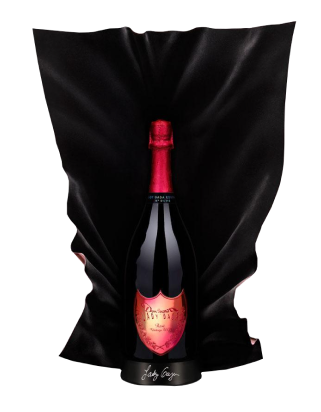
Dom Perignon champagne bottle in front of a black sheet
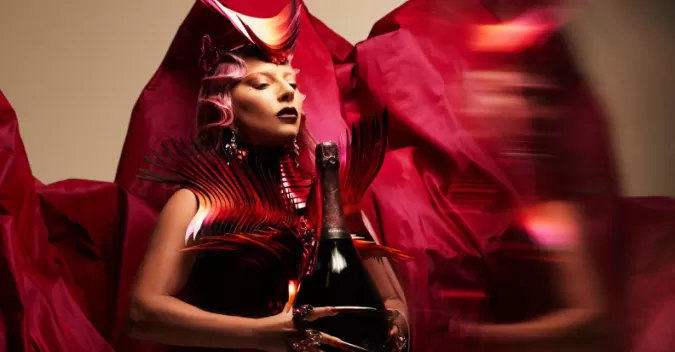
Lady Gaga holding a giant champagne bottle in a large red dress

NFT Museum • An Immersive, Shoppable Exhibit in Web3

  • Client

    Dom Pérignon

  • Solutions

    PlatformWebsites & PlatformseCommerce PlatformsImmersive Brand Storytelling

the Dom Perignon NFT museum showcasing NFTs

An NFT collection worth going gaga over.

The collaboration between champagne house Dom Pérignon and Lady Gaga marked the meeting between two creative visionaries, resulting in two limited-edition products—Dom Pérignon Vintage 2010 and Dom Pérignon Rosé Vintage 2006—and an alluring sculptural work signed by Lady Gaga. Our goal was to maximize the collaboration in France, but because French law prohibits the use of foreign advertising assets for alcohol promotion, we uncorked an avant-garde plan befitting the two masters of creativity: a virtual exhibition of NFTs inspired by the limited-edition bottles.

A champagne bottle pouring into glasses
Press A digital pop-up comes to life to discover this collection limited to 100 bottles: 50 copies of Dom Pérignon Vintage 2010 as well as 50 copies of Dom Pérignon Rosé Vintage 2006. Each bottle purchased in this space is available in two versions: physical and digital.
Read on Vogue

An integrated path to purchase for maximum immersion.

The Dom Pérignon x Lady Gaga bottles are more than vessels for champagne; they’re full-fledged art pieces. To complement their illustrious beauty, we designed and built an elegant  platform where people could immerse themselves in the partnership, browse the breathtaking NFT collection and purchase their own bottle—in its physical form and as an NFT bundled together. To ensure a seamless and intuitive experience, we built a dedicated marketplace that allowed users to create their own Ethereum wallet with ease. And after the NFT purchase was complete, a concierge delivered the bottle within 48 hours.

  • Dom Perignon x Lady Gaga logo in front of velvet curtains Dom Perignon champagne bottle in front of a black sheet

Using craft and artistry to generate desirability and demand.

Throughout the virtual exhibit, visitors could peruse 100 numbered NFTs: half for Dom Pérignon Vintage 2010 and half for Dom Pérignon Rosé Vintage 2006. Animated and artistic, the collection captured the full-bodied elegance of each bottle and sold out in just 10 hours. It was clear we succeeded in reaching both Dom Pérignon lovers and the Web3 community alike: following the initial sale, a handful of NFTs went up on the secondary market, where sales value increased by nearly 1500%. We’ll say cheers to that.

Results

  • 1,000 opt-ins
  • 30,000 users
  • 35,000 visits
  • PR coverage earning an estimated advertising value equivalency of €415K

Want to talk platforms? Get in touch.

Hey 👋

Please fill out the following quick questions so our team can get in touch with you.

Can’t get enough? Here is some related work for you!

FLUX.Monks Are Reimagining the Fashion Industry

FLUX.Monks Are Reimagining the Fashion Industry

5 min read
Profile picture for user mediamonks

Written by
Monks

A persons standing in the desert wearing a luxurious outfit

It’s difficult to believe that it has only been a year since our fashion and luxury team—the FLUX.Monks—launched. And what an incredible year it’s been. As fashion weeks cancelled, retail stores closed and supply chains were disrupted, the FLUX.Monks had their work cut out for them. But they rose to the occasion, connecting the dots across a wide range of capabilities to drive fashion’s most powerful element—its human, emotional and expressive heart—into worlds that truly span digital and physical landscapes and platforms.

Contrary to the trappings of the traditional agency with siloed data and creative teams passing the baton, our teams work together from day one to come up with truly integrated and innovative solutions for clients. “The key,” says Liam Osbourne, Global Client Partner for FLUX, “is in maintaining the delicate balance between insight and instinct to preserve the aesthetics and signature style of a brand while exploring different channels, experiences and even audiences.” 

As the industry has transformed, the FLUX.Monks have been busy helping brands reimagine how they connect with customers across numerous channels and experiences by interlacing data-driven insight, purposeful creativity and world-class production capabilities to elicit elegant and meaningful campaigns, activations and experiences. And this past year has been nothing short of amazing, both in what we’ve been able to achieve for fashion and beauty brands during this remarkable time, and what we’ve learned. 

Stepping Off the Catwalk and Into an Interactive World

Over the past eighteen months, fashion shows around the world have enjoyed a period of digital experimentation. Stepping off the catwalk and onto immersive digital channels, fashion houses have had to reimagine the way they tell their stories and represent new collections. Digital experiences have enabled unparalleled access to the previously insider-only world of fashion shows. Now untethered from the catwalk, it’s likely that show formats will never return to the previous constraints of time and space. And with deep category expertise and world-class capabilities across new and emerging technologies, the FLUX.Monks are uniquely positioned to bring the fashion show of the future to life. The trick is in creating immersive, tactile experiences that engage new consumers without alienating, or inadvertently excluding, brand loyals.

Monk Thoughts Gen Z and millennials will dictate the future of luxury fashion, but how they engage with the luxury fashion market is a complete departure from previous generations.

Osbourne goes on to add: “They’re the most digitally sophisticated consumers to date and brands need to work with a team of experts that have deep understanding of platforms and emerging technologies while also being fluid in the nuances of fashion to succeed.”

Moncler's mondogenius platform interface homepage

As Italian fashion luxury brand Moncler’s official interactive broadstream partner, the FLUX.Monks helped bring the brand’s 2021 #MONCLERGENIUS Fashion Show to life with an experience that took attendees on an immersive, game-like journey—a fantastical trip around the world. Working closely with Moncler’s physical installation and design agency, Villa Eugenie, our team helped build interactive, virtual worlds inspired by installations spanning New York, Shanghai, Milan, Seoul and Tokyo to bring a new dimension to Moncler’s physical events that allowed the brand to reach a broader audience.

Central to the show itself—which was broadcast on YouTube Live—was interactivity. From animation to live event support, our teams worked alongside Moncler to give users unprecedented access to the show as they interacted with other viewers and contributors via the live-chat system. More than 4 million people visited the dedicated microsite—numbers that will only continue to rise as the platform lives on long after the live event—and 80% engaged with the livestream, with viewing times 4.5 x longer on the interactive (vs non-interactive) livestream. 

Catering to Geographically Diverse Audiences

For most brands, no two markets are exactly alike. And that goes double in fashion and beauty where consumer tastes can be highly nuanced within even a single market. Global brands working to grow adoption across a number of markets need a multicultural partner who can help them show up meaningfully and authentically. So when Amazon Fashion Europe wanted to raise brand awareness and their cred in the fashion space, they turned to our FLUX team. 

Challenged with penetrating five key but distinctly different markets within Europe—UK, Germany, France, Italy and Spain—the team not only brought their fashion expertise, but worked very closely with our social influencer and data teams to become a relevant part of the fashion conversation and strengthen Amazon Fashion’s presence in the channels where fashion and lifestyle are the main drivers.

Amazon fashion influencer ad campaign

Spanning content and asset creation, social and influencer marketing, and community management, FLUX established the Amazon Fashion Council to ensure a humanized feel to the brand’s wide offering. Each member of the council—stylists, designers and fashion influencers—represents a key European market and shares their words of wisdom across the Amazon Fashion channel, engaging consumers in a targeted and personalized manner. Complete with language and translation support—all under one umbrella.

Bringing It All Together for an Iconic Brand

When Burberry wanted to expand their omnichannel presence and develop a 360-degree vision that includes digital, they selected our FLUX.Monks as lead social, creative, strategic and production partner. “Burberry is one of the most technologically innovative and digitally expressive brands in fashion,” says Osbourne, “and we have been equal parts awed and inspired to be partnering with them on numerous integrated campaigns and initiatives designed to reach millions of people globally.”

As part of the fifth installment of the “Burberry Generation” artist collaboration project, our team was tasked with creating bespoke storytelling and driving buzz on social platforms to promote the brand’s iconic handbag—the Olympia bag. We scouted and collaborated with installation and balance artists to build four breakthrough balancing art pieces that incorporated the bag, and delivered four hero short films and a pack of key visuals to showcase execution of the balancing installation. All launched across WeChat, Little Red Book, and social video platforms while the installations were covered in several media publications.

When asked to support Burberry on the launch of their smart retail store with Tencent in Shenzhen, we sought to create social buzz and to drive traffic, online and offline. Our strategy was to tap into media and various content creators, within both the fashion and tech worlds, to cater to Shenzhen as a high-tech hub, and to collaborate with celebrities and local influencers covering WeChat, RED, Weibo, Douyin and beyond usual platforms with Bilibili. Thanks to our launch strategy and local market insights the store was a destination—both online and bricks and mortar—generating massive social buzz and setting the benchmark for a flagship launch for the sector.

A shoreline of rock sculptures in the shape of the Burberry TB Monogram

And to celebrate this year's monogram campaign for Burberry, our team worked with four land artists to reimagine Riccardo Tisci's contemporary monogram design on the Welsh shoreline, where it stood for hours before being swept back into the sea. Our second installation featured a series of 300 drones choreographed to create the iconic monogram pattern in the Colorado sky—a striking constellation above a remote mountain reserve. Together, both embody Burberry's celebration of exploration and the unexpected, and the inspiration of the great outdoors.

Yes, the FLUX.Monks—a global strategic, experiential design and creative team specializing in driving desire and relevance for fashion, luxury, lifestyle and beauty brands across the end-to-end customer journey—have had quite a year. And with the fashion industry changing moment-to-moment there’s much, much more to come.

Maintaining a balance between data and instinct, FLUX experts engage in new channels, experiences and audiences for luxury brands. Maintaining a balance between data and instinct, FLUX experts engage in new channels, experiences and audiences for luxury brands. Fashion virtualized fashion virtualized events luxury digital experience end-to-end experience

Has Fashion Week as We Know It Fallen out of Fashion?

Has Fashion Week as We Know It Fallen out of Fashion?

6 min read
Profile picture for user mediamonks

Written by
Monks

Has Fashion Week as We Know It Fallen out of Fashion?

Over the past year, fashion shows around the world have enjoyed a renaissance period of digital experimentation. From confidently stepping off the catwalk and onto immersive digital channels, fashion houses have reimagined the way they tell their stories and represent their new collections—not only to the intimate group of industry insiders, but also the masses.

Now, FLUX—our fashion and luxury team—are pulling back the curtain to examine Fashion Week through a virtualized lens in the first of a series of bi-monthly bulletins. Titled “The Future of Fashion Week,” the May 2021 issue sheds insight on the rich innovations seen in fashion shows throughout the past year while anticipating what’s next.

Fashion Week Gets a New Look

“With the last 12 months has come an explosion of creativity unshackled from business as usual, forcing brands and creatives to think of things differently—we call it a new theatricality,” says Ben Lunt, Head of Experience Design for FLUX. For many brands, this has meant rethinking the format of the fashion show itself. Consider Balenciaga’s “Afterworld” fashion-show-turned-videogame, which takes users on a hero’s journey to discover the label’s Fall ’21 collection worn by volumetrically captured digital models.

Still, the team recognizes a yearning for in-person shows to come back. “What everyone should miss is the roar of the crowd and the smell of the greasepaint. And that’s what we mean when we talk in the bulletin also about a new intimacy,” says Lunt, discussing the overall energy and excitement of being immersed in the experience. “But I can’t imagine creative directors not wanting to preserve the level of experimentation that they’ve had over the last twelve months.”

Monk Thoughts What everyone should miss is the roar of the crowd and the smell of the greasepaint.

As consumers don their Sunday best and step back out in the world—and Fashion Weeks return to cities around the world—what will shows look like? “There’s an interesting opportunity to use real-time virtual production technology to create a physical environment that is impossible, transporting the audience somewhere else,” says Lunt, mentioning the same kind of technology we have used to supercharge production at scale.

He compares the creative opportunities that virtual production enables to something like Arcade Fire’s performance of “Afterlife” live at the YouTube Music Awards several years ago—a genre-bending display that feels less like a concert and more like a live-action drama where fantasy and reality blur together. But, he adds, “realized according to the exacting standards of the category. Imagine, for example, if the audience could experience something like Gucci Aria in real life.”

Tim Dillon, SVP Growth leading in real-time experiences, echoes this vision. “People remotely watch fashion shows as camera-driven shows, where it doesn’t matter if you’re watching on a TV screen or a window on a computer,” he says. “I expect in-person shows that are augmented live by 3D elements, so there’s a reason to show up at a time or place to watch it.”

And the use of even industrial technology isn’t too foreign for a high-fashion setting; consider Alexander McQueen’s paint-spraying robots, says Alix Pennycuick, Executive Creative Director on the FLUX team. “You now have the ability to let people experience those theatrics behind closed doors—though you must also pair that with a content piece that engages the home consumer.”

But he cautions against using shiny technology simply for the sake of innovation. “Innovation without intention is meaningless,” says Pennycuick. “Take the story and narrative that’s there, then build innovation around it to enable different levels of digital and physical experience—and then you have an interesting point of intersection.”

Capturing Tactility, Stitch by Stitch

One thing that fashion shows accomplish is they let people feel the clothes’ materials and see how they move and fall on a body. And that’s a particular challenge in how to represent fashion digitally; Lunt has previously noted how high fashion has historically favored an analog aesthetic—one that might feel at odds with digital.

Monk Thoughts Innovation without intention is meaningless.

In this sense, traditional livestreams may lack the polish and glamor that high-end fashion aims to evoke. “You can always tell when you’re watching something live—it’s a little less refined, a little too real,” says Lunt. But that may be changing: he mentions The Third Day, a British series by Sky Atlantic that is told as both a pre-recorded drama and a 12-hour livestreamed event. What’s notable is that the live segment, filmed in one continuous take, is indistinguishable in quality from the pre-recorded segments. “The aesthetic of live broadcasts are starting to become sophisticated enough that it doesn’t feel as cheap,” says Lunt. 

In a strictly digital environment, there’s also the challenge of the uncanny valley, or rendering and animating garments in a way that appears realistic and believable. “Like art and film, fashion is a difficult industry to innovate because people will always be quick to argue that it’s not good enough—and in the past, they’d be right. But we’re getting right to the edge of what’s possible, and fast,” says Dillon.

DSC00078

Each outfit was photographed from several angles...

RM render

...and translated into a 3D object.

We know because we’ve used real-time technology to bring fashion off the runway and beyond the screen for at-home audiences. Earlier this year, NYFW: The Shows gave online viewers an intimate look at New York Fashion Week’s new collections and styles—including Rebecca Minkoff’s Spring 2021 collection rendered in augmented reality. We partnered with RYOT and IMG to build an immersive experience that allowed consumers to check out every stitch from the comfort of their home.

Tailor Your Approach for New Consumer Journeys

Of course, another big question looms over an industry in flux: what even is the role of a fashion show these days? “We’re at a moment where the traditional industry seems themselves being replaced by a more diverse, modern and faster way of viewing fashion that isn’t relegated by a hierarchy,” says Lewis Smithingham, Director of Creative Solutions. Take, for instance, how Travis Scott’s performance in Fortnite built buzz for his Air Jordan collaboration. While that example is very much built toward a mass audience, high fashion hasn’t been averse to similar collaborations, and the world of gaming in general—and it speaks to an overall shift in the way people engage with modern brands. Gucci is probably the most prominent luxury brand to play in this space, most recently showcasing a new collection within Roblox, of all places.

Pennycuick also notes that social platforms have displaced power of the conversation away from brands and toward consumers. “With platforms like TikTok, more things are happening organically, and that in itself means this conversation needs to be ongoing,” he says. “That’s where you see a partnership between the creative director and the consumer, using social listening to understand the perception and how they’re telling the story.”

And as the pace at which consumers engage accelerates, brands may break out from the traditional calendar too—using Fashion Week as a jumping point to build the consumer relationship over a longer term. “Dries Van Noten describes the show ‘as a grand finale of the creative process,’” says Pennycuick. “But if shows mark the end of the creative cycle,” he says, “then the journey with the consumer begins at that point—whether that’s in a store, in e-commerce or through some other experience.”

This approach can also prove fruitful for brands as the path to purchase evolves. Fashion shows often take place months before clothes are available for purchase, an ecosystem of digital content helps brands engage with consumers over the long term. “Brands want a life outside of Fashion Week, and can extend the experience into multiple touchpoints,” says Dillon. “How are you invited to see a show? What does the show itself look like, or the aftercare?” Each moment offers an opportunity to meet consumers in new ways.

Monk Thoughts If shows mark the end of the creative cycle, then the journey with the consumer begins at that point.

Digital and Fashion Week: A Perfect Fit?

Does a greater reliance on digital experience run the risk of losing out on the exclusivity that luxe fashion fans have traditionally enjoyed? Not necessarily, say the FLUX team. Rather, it’s about showing up for audiences more effectively, whether they’re insiders, ambassadors or mass consumers.

“I think digital is often associated with mass reach and accessibility, and I think the next phase of digital in fashion and luxury will be characterized by a return to some exclusivity—deliberately designed to be viewed by the right people,” says Pennycuick. He compares the intentional use of digital to the fashion industry’s challenge of sustainability: “Make content better and make it less—an approach that’s completely different from the relentless hamster wheel that the industry has had people running in of late.”

Stay fashion-forward.

Over the past year, fashion shows around the world have enjoyed wild digital experimentation—so what can we expect moving forward? Has Fashion Week as We Know It Fallen out of Fashion? The future of Fashion Week hinges on meaningful, creative digital experiences.
Flux fashion week luxury virtual events fashion shows

Through New Hires, MediaMonks Weaves Digital into the Fabric of Fashion

Through New Hires, MediaMonks Weaves Digital into the Fabric of Fashion

4 min read
Profile picture for user mediamonks

Written by
Monks

Through New Hires, MediaMonks Weaves Digital into the Fabric of Fashion

Consumer behaviors have changed dramatically throughout 2020. We’ve become dependent on digital to discover, engage with and purchase from brands like never before. As consumer behaviors and expectations have undergone several years of accelerated (and irrevocable) change in a matter of months, it’s clear that brands must be prepared to draw the offline and online experience closer through premium digital experiences moving forward.

The fashion industry has been especially affected by this hyperadoption of digital, and across the end-to-end value chain—from supply logistics to buying & merchandising, all the way through to the consumer’s point of purchase. As fashion brands address the need to virtualize their processes, both creatively and operationally, MediaMonks stands ready to offer the industry a range of bespoke solutions with its new fashion and luxury practice.

This new team of strategic and creative category experts is helmed by the former leadership team of specialist fashion agency Wednesday, and is backed by our global team of multidisciplinary talent. Led by Liam Osbourne, formerly Group Business Director at Wednesday London, the team will bolster fashion brands’ efforts to infuse the customer decision journey (CDJ) with cultural relevance and resonance, and create the kinds of premium experiences online that customers have come to expect offline.

Making the Intangible Tangible

With purchase decisions being made increasingly online, the tactility and physicality of the experience has never been more important, whether it’s evoking the feel of the materials up-close, or the excitement of trying on an outfit. And this is especially true when it comes to premium brands, who excel in providing unparalleled craftsmanship and service to loyal audiences. “A premium customer experience within the fashion and luxury industry is one of the most important elements of success,” says Victor Knaap, CEO of MediaMonks. “Technology plays an instrumental role in conveying both the tangible and intangible aspects of luxury that are so important.”

Having long honed brand-consumer relationships in person and through retail, fashion brands must rethink the CDJ to meet customers wherever and whenever they’re in the mood to shop, from offering premium digital shopping experiences like experiential ecommerce, producing enticing original content, partnering with influencers who drive conversation and more. And what’s true for consumers is equally true for industry professionals, as buyers unable to visit the physical showroom turn increasingly to virtual experiences to evaluate the brand’s collections, and inform their wholesale purchase decisions.

F&L MM Mstr Grid 3x3

Meet our well-dressed team of fashion experts.

Our own expertise in 3D content and AR empowers customers everywhere to examine the products up close, and from every angle. We brought these skills to bear for Nike earlier this year, helping them to unveil the latest Air Jordan release to an eager fan base unable to view them in-store. And in establishing our specialist fashion and luxury practice, we will continue to take this kind of work to the next level.

Reframing the Catwalk and Redefining the Event

One way or another, Fashion Week has evolved in recent years into an increasingly consumer-facing event. And, in the face of reduced travel and social distancing rules, 2020 has seen brands forced to reimagine the fashion show itself, exploring new formats through which to unveil their new collections.

Even as the industry returns to something like business as usual, we expect the fashion show to remain increasingly untethered from the physical catwalk, empowering each brand’s creative director to experiment more freely with how they express their vision. This will enable them to deliver an exclusive, real world experience for key opinion leaders and category decision makers, while continuing to reach a wider audience of highly engaged fans virtually.

Monk Thoughts Technology plays an instrumental role in conveying both the tangible and intangible aspects of luxury that are so important.
Victor Knapp

Moments like this are defined by the confluence of creativity and technology. Our existing expertise in live streaming, experiential, VR and digital installations will be supercharged by the arrival of our specialist team, allowing us to stage breakthrough events that reflect the very exacting and highly nuanced codes of fashion and luxury. Consider how we turned any environment into a virtual catwalk for Tommy Hilfiger using volumetric AR, or how Circus (who merged with MediaMonks earlier this year) helped beloved Brazilian brand Havaianas drive real cultural impact by hosting virtual weddings during Pride month. Imagine what else could be achieved by some of the category’s most premium brands.

Matching Surface with Substance

This category has always existed as the pinnacle of expression in a commercial context—expressive imagery, evocative language and exquisite products, all providing the ultimate platform for aspiration. As brands rely increasingly on digital to reach consumers, we will be concentrating on aesthetics and innovation in equal measure.

Monk Thoughts This is a pivotal moment for the fashion world, and the digitization of the industry is more important than ever before.

But just as digital is transforming consumer behaviors, so is it also shifting attitudes. Matters of sustainability, longevity and more ethical standards of production are an increasing priority, and not just for younger audiences. These shifts encourage fashion brands to find new ways to exhibit their ethos through retail, content and digital platforms. And as craftspeople ourselves, we have an ambition to support brands by reinforcing the purpose and quality they promise to consumers whilst weaving digital into their social fabric.

“This is a pivotal moment for the fashion world, and the digitization of the industry is more important than ever before,” says Osbourne. “Together we can supercharge luxury, bring the brand’s purpose to life and elevate consumer experiences—both in the physical and the digital world.”

While the way in which we all, as consumers, engage with the category may have changed substantially—and will continue to change from season to season, year on year—fashion has always been a powerful conduit for creative expression, enabling each of us to explore and convey our individual identity. Fashion is more than just fabric; it’s about how it feels to be you. And just as style is unique to every consumer—and specific to their day-to-day situation—brands must be equipped to cater to those multifaceted needs.

Fashion is, by definition, intrinsic to culture and individual self-expression. As fashion labels aim to enhance the cultural relevance of their brand and products within a fiercely competitive industry, our team of experts is primed to create indelible digital experiences, services and content at speed and scale, helping premium brands make their mark on the most discerning of audiences.

Fashion and luxury brands stand at a pivotal moment with a need to digitize and deliver on promise–and our new fashion practice is poised for action. Through New Hires, MediaMonks Weaves Digital into the Fabric of Fashion Announcing our fashion-forward approach to digital innovation.
Fashion luxury premium brands digital experience Wednesday agency

Choose your language

Choose your language

The website has been translated to English with the help of Humans and AI

Dismiss