Choose your language

Choose your language

The website has been translated to English with the help of Humans and AI

Dismiss

Imprinting Brand Value Through Experiential Marketing

Imprinting Brand Value Through Experiential Marketing

4 min read
Profile picture for user mediamonks

Written by
Monks

A crystal showing the experiential.monks in type

In a hyperconnected world where most of us are one click away from endless sources of content, it’s no surprise that consumers crave unique experiences that take them out of their everyday lives. Whether physical, virtual or hybrid, brands that create these meaningful moments have the power to forge closer ties with people—and not by interacting for interaction’s sake. “Experiential is not only about bringing a product to market,” explains Chris Kaliszewski, VP, Experiential & Virtual Events. “It’s about providing value to your customers and doing so in a way that puts them at the center of the experience.”

But generating value is where the challenge usually lies. Take a look at the world of experiential marketing, and you’ll find most brands use it almost exclusively as a way to kick off a product launch or a specific release. But to treat these experiences merely as a one-and-off strategy is to miss out on the opportunity to inspire people to build a long-lasting relationship with your brand—one that goes beyond the release of a specific product, and instead keeps them coming back for more.

00:00

00:00

00:00

Make People the Heroes of an Unforgettable Experience

Experience is an essential element of customer engagement, which makes it important to connect with audiences in ways that stand out and are unique to your brand. The shape that these experiences will take ultimately comes down to your goals. “Experiential marketing is so broad that most brands struggle to identify what their activation should look like, or where to start,” explains Kaliszewski. “The first stage is one of discovery and collaboration, where we try to identify what kind of medium will help us achieve our objectives.”

In that exploration stage, you may find that a long-term installation better suits your requirements. When Pepsi wanted to build an experience reflecting its historic partnership with the Super Bowl Halftime Show, our colleagues at Jam3 worked with them to create a permanent installation cementing the brand’s commitment to the iconic annual concert. The experience at Hersheypark in Pennsylvania features private performance pods with gesture-based interaction and navigation. Inside, guests can create their own pop star avatars and select a killer track from artists like Imagine Dragons or the Black Eyed Peas. When the music starts, they can let loose and bust out their best moves while the avatar on screen matches their movements, all in a fully touchless experience that hits on the fun and excitement of the Halftime Show.

A permanent installation like this one lets you shape new spaces for consumers to experience your brand firsthand. Of course, experiences can come in many forms. Whether your experience is a permanent installation or a temporary one, one thing is true for them all: the more immersive it is, the more affinity, loyalty and awareness it drives.

Valuable Brand Activations Enhance Their Surroundings

It’s easy to think of experiential activations as self-contained spaces. But some of the most effective ones make clever use of their surroundings in order to tap more authentically into a community or cultural moment. For experiences that stand out, it is sometimes better to blend in—with a unique twist.

DoorDash branded concession booth with candy and treats

Earlier this year, the Tribeca Film Festival marked the return of in-person cultural experiences in New York City. With the aim of feeding the locals’ passion for film, we partnered with DoorDash to build a classic movie theater concession stand combined with a typical NYC deli ticket counter. Packed with bagels, pretzels and anything you would normally order through DoorDash, the space felt familiar to hungry viewers—until it was time to make an order. In exchange for their food (and a redeemable coupon from DoorDash) visitors were invited to perform the line of dialogue written on their ticket.

The concession stand’s ability to capture the unique interest of festival film fans led to thousands of cumulative impressions on social media as people shared their attempts to reenact iconic scenes.  Ciaran Woods, VP Experiential & Virtual Events, explains, “For us, experiential has always been focused on online amplification, and now the industry has grown accustomed to its benefits. With this kind of event, virtualization continues to be cost-effective: you can get the value of a physical venue while amplifying your reach online.”

Turning Traditional into Transformational

All things considered, it’s important to focus on the consumer at the heart of the experience at all times. So no matter what, default to simply providing an experience that’s fun and couldn’t have been made possible without your brand.

An event booth with two people standing on casino chips playing a game

For the release of the new Netflix film “Army of the Dead,” we teamed up with advertising agencies Dziadek do orzechów and Plej to turn Warsaw’s passersby into zombie-apocalypse survivors. Playing for the chance to win official Netflix merchandise, visitors could use their phones to control their character as they make their way through an abandoned casino, take as much money as possible and wipe out any zombies that they encountered along the way.

Combining an in-person experience with a compelling digital layer, we amplified the level of engagement and turned the film’s release into a very tangible experience. Moreover, the act of blending real-world objects with augmented sets—whether AR, VR or any immersive technology—enables a new breed of experiences that can hardly be replicated. 

When done right, experiential marketing can imprint people's memories, which then translates into brand awareness, affinity and loyalty. But the most compelling activations provide true value for audiences and their communities beyond simply promoting a specific product. When in doubt, focus on crafting new, original concepts for how you present your brand to consumers every day, and the results will follow.

The Experiential.Monks share insights on creating brand activations that provide true value for audiences. The Experiential.Monks share insights on creating brand activations that provide true value for audiences. experiential experiential marketing live experiential virtual events
People enjoying drinks at a popup bar in new york city
A red box of valentine goodies with rose petals around it

An Experiential Partnership • A Feast of Savory Experiences

  • Client

    DoorDash

  • Solutions

    ExperienceVR & Live Video ProductionExperiential Strategy & ProductionImpactful Brand ActivationsSocial

Delivering on brand promise.

DoorDash is among the leading delivery platforms around the world, and the frontrunner in the United States. In addition to the convenience and value the service offers to hungry customers everywhere, a secret to DoorDash’s success lies in its ability to support the businesses people buy from and the Dashers who deliver. As DoorDash’s experiential partner, we’ve teamed up with the brand to host a series of events that reinforce the role the platform plays in connecting each of these users, delivering a series of tasty IRL experiences across the US.

Lights, camera, snack-tion.

To help DoorDash show up for customers in fun and unique ways. In summer 2021, DoorDash rolled out the red carpet for New York City’s return to in-person events. At the Tribeca Film Festival, we made a mashup of the classic NYC deli counter and a movie concession stand. The experience invited movie-goers to take a ticket and act out an iconic movie scene—complete with props and backdrops—in return for a treat. Drawing locals and A-listers alike, the “Take a Scene, Please” activation authentically tapped into the city’s local creative culture and landed DoorDash brand in the limelight and resulted in 150K cumulative impressions on Facebook and Instagram.

A large tunnel with people playing basketball around it
Inside the DoorDash tunnel with people checking out the outdoor event

Fueling competition (and appetites).

2021 was also a comeback for the Brooklyn Nets and their fans. Following the 2021 NBA playoffs, DoorDash brought their A-game to Barclays Center, the Nets’ home court. Fans could make a dramatic entrance through a one-of-a-kind photo op: the DoorDash Tunnel, inspired by the iconic NBA tunnel walk. Complete with smoke, dynamic lighting and an announcer calling their name, the tunnel got visitors in the competitive mindset before practicing their shooting, snagging some gametime swag before the buzzer and getting their heads (and stomachs) into the game through a series of basketball-themed activities.

Our Craft

A delicious blend of sights and sound

  • DoorDash Love Delivered Campaign ad showing Boyz II Men above food
  • A black shirt with Boyz II Men logo and rose petals
  • Boyz II Men singing during a live stream part of the DoorDash campaign
  • End credits from Boys II Men live stream

Delivering the secret ingredient of love.

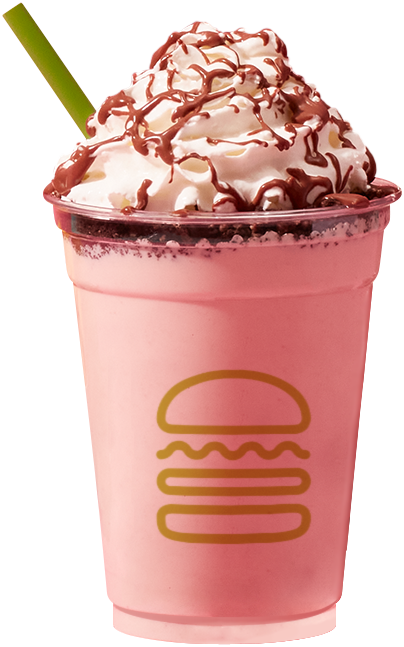
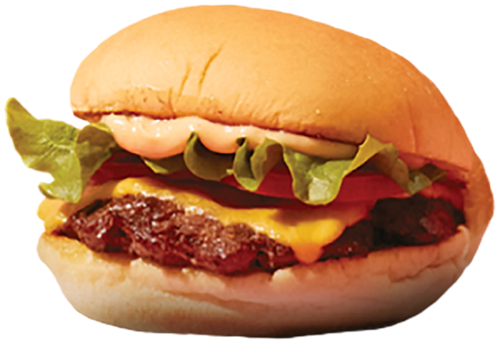
A key part of DoorDash’s business is supporting its partner restaurants—and their fans. For Valentine’s Day, we helped DoorDash and Shake Shack create Love Delivered: a virtual date-night experience featuring 90s boyband Boyz II Men. Couples sandwiched together on the sofa and singles alike were treated to a sweet night of livestream serenade. Those in New York City and Philadelphia (the band’s hometown) merchandise to mark the occasion—including a scented candle to set a romantic mood. We developed the entire look and feel of the campaign, from concept to the custom merch kit, and managed the livestream on Facebook and Twitch to ensure total experience was as smooth as the band’s soulful ballads.

Shake shack strawberry milkshake
A cheeseburger from Shake Shack
Press Celebrating this year has taken on a new meaning as we look for ways to show our love even if we can't be together in person.
Read on Muse by Clio

Giving a toast to growth.

Over the last year, DoorDash has grown to serve more than just restaurants by expanding into convenience store delivery and offering a wider range of products. To raise awareness that people can purchase alcohol on the platform, we built a collapsible, fully stocked bar that fits in DoorDash’s iconic delivery bag and invited New York to a drink on us. The “Open Bar” pop-up bar was so well received that we took the open bar on the open road to cities around the US.

  • DoorDash delivery on a bike Delivery person setting up a bar on a cobblestone street in new york city
  • Ice being poured into a DoorDash glass Two bartenders pour drinks at the DoorDash event

A full-course obstacle course.

DoorDash has done more than expand its partner businesses: it’s also expanded its fleet of Dashers, including students who want to earn extra cash. At the start of the school season, we toured college campuses to put interested Dashers to the test, challenging them to make their way through the “Dash Course”: a series of food-themed obstacles like running through donut holes, hopping over hotdogs, sliding down pizza slices and more. By enlisting new Dashers across campuses (and building buzz on social channels like TikTok), the activation made the grade.

A person in mid air stretches across the DoorDash obstacle course
A person with a DoorDash delivery bag jumps through hoops in an obstacle course
Monk Thoughts Having a collaboration partner with you through all your events ensures that experiences are tailored to specific audiences and markets while still feeling like a cohesive whole, which builds brand equity.
Chris Kaliszewski headshot

Want to talk experiences? 
Get in touch.

Hey 👋

Please fill out the following quick questions so our team can get in touch with you.

Can’t get enough? Here is some related work for you!

Rocks on a beach making up the Burberry Monogram

TB Summer Monogram • Weaving Nature and Technology to Celebrate Fashion

  • Client

    Burberry

  • Solutions

    ExperienceImpactful Brand ActivationsRetail Concept InnovationStudioOriginal Content

An overhead view of a shoreline showing the rock formations for Burberry

An ephemeral mark that leaves an everlasting impression

Every year, Burberry’s monogram campaign marks the start of the upcoming season and sets the mood for the new TB Summer Monogram collection. In 2021, we honored the brand’s key pillars, nature and modernity, by transforming the timeless symbol into a stylish piece of land art on the Welsh shoreline—made exclusively with elements that were already part of the beach.

Cloud
A rock
Press Reimagining the house’s longstanding heritage of exploration, nature melds with technology on a journey of discovery as the Thomas Burberry Monogram is cast across global landscapes, each with its own breathtaking beauty.
Read on VMan

Nature melds with technology to celebrate the unexpected

Inspired by the brand’s long-lasting history of exploration, we also took the campaign to a remote mountain reserve, where a series of 300 drones choreographed to create the iconic motif in the Colorado sky. And the reach was not limited to these secluded locations—for the first time in Burberry’s history, the monogram was displayed in their flagship stores around the world for everyone to see. Weaving nature and technology, we paid homage to Burberry’s heritage while setting the stage for the new era.

Monk Thoughts By implementing a truly 360° approach and working with nature as a medium, we developed and executed activations that were not only sustainable, but also gorgeous reminders of the symbiotic relationship between the earth and humankind.
portrait of a woman with dark hair, wearing a collared shirt, against a shiny white background
  • TB monogram made from lights in the night in front of mountains
  • drones in the sky lights making up the TB monogram
  • Burberry monogram made up by lights in the sky at night
Monk Thoughts Being able to depict that narrative between man and nature in such an incredibly beautiful way was extremely inspiring to me.
Nafeesa Yousuf headshot

Want to talk experiences? Get in touch.

Hey 👋

Please fill out the following quick questions so our team can get in touch with you.

Can’t get enough? Here is some related work for you!

Hybrid Experiences Are the Future—Here’s Why

Hybrid Experiences Are the Future—Here’s Why

4 min read
Profile picture for user Daniel Magnanelli

Written by
Daniel Magnanelli
Partner and Business Director, Media.Monks

Music fans experiencing the Super Saturday Night: Lady Gaga Activation

Ever since the start of the pandemic, marketers have been finding their way around social distancing measures and sanitary guidelines. Those of us in the experiential industry quickly flipped the script, turning instead to building virtual experiences and coming up with creative solutions to connect people online—many of which will prevail for years to come. Now, as we daydream about the big comeback of physical events in Brazil, we’re rethinking our strategies to develop new, powerful ideas that build on these learnings.

Compared to other regions in the northern side of the world, Covid-19 vaccines are rolling out a bit slower in South America. Therefore, Brazilian brands may not deem it necessary to start thinking about in-person events yet. But sooner or later, the distancing rules established by the pandemic will be lifted completely—and by the time that happens, brands will have to be fully prepared to retake the physical scene, or fall behind their competition.

As Partner and Business Director at Media.Monks, I work hand in hand with our global virtual events and experiential team. I’ve seen how excited some brands are to give consumers onsite experiences, but I’m also aware of the countless benefits that virtualization has brought to our industry. There’s no way of knowing exactly how the upcoming months will play out, but one thing is certain: as we move forward, marketers will have to bring the best of both worlds to provide real value to their consumers. 

The Rise of Hybrid Experiences

When I look back at what we’ve accomplished since the start of last year, I can barely wrap my head around it. Together with my experiential team, we’ve developed online museums, virtual carnivals, hosted the World Press Freedom Conference and more. Each of these experiences were conceived at a time when virtualization was the only option; now, just think of the myriads of options we’ll have at hand once we add physical elements to the equation.


Monk Thoughts The right combination of in-person value and online amplification can be more cost-effective than just another broadcast or purely offline installation.
Portrait of Daniel Magnanelli

Take hybrid experiences, for example, a model that’s blurring the lines between the possible and impossible with experiences that haven’t been thought of before. By definition, hybrid experiences involve an in-person experience augmented with virtual elements. How these come together depends on your goals as a marketer: it’s all about leveraging the benefits of both online and offline experiences and adapting it to your requirements. The digital element can be as small as a digital exchange of contact information with attendees, or as big as a robust virtual platform broadcasting an in-person conference to remote audiences. 

Naturally, different setups will have different costs, but with a more flexible range of possibilities, brands don’t need the largest budget in the market to deliver compelling experiences. The right combination of in-person value and online amplification can be more cost-effective than just another broadcast or purely offline installation.

One Small Step for Marketers, One Giant Leap for Sustainability

It goes without saying that social distancing taught us a lot about how to both keep production going and engage with audiences remotely. Virtualization allowed us to bring people together in unexpected ways, tearing down the physical barriers to meet faraway audiences. That desire to fuel online amplification while safeguarding consumers’ ability to interact with a brand is what gave way to the development and release of LiveXP—our internal tool that connects audiences and performers by enabling true two-way communication. 

Tools like LiveXP allow brands to give virtual events a deeper level of interactivity, and have paved the way for digital events of the highest caliber. BRIC’s Celebrate Brooklyn! Festival is a great example of this: for its 2020 edition, one of New York City’s longest-running outdoor performing arts festivals became a digital destination where everyone around the globe could meet from home. The purely digital experience extended the local event beyond a single location—and when in-person concerts return, one can imagine the value in connecting people from afar will remain. I strongly believe these types of experiences are not going anywhere.

Musicians performing remotely at BRIC’s Celebrate Brooklyn! Festival

LiveXP offered audiences and performers the ability to connect and engage with each other in a new way during the BRIC Celebrate Brooklyn! Live Everywhere festival.

We can go hybrid on the production front, too. In the last year and a half, we’ve built up a muscle for getting the show on the road with fewer people on site and less need for traveling. Not only is this cost-effective; it also supports our commitment to sustainability, as travel is one of the biggest contributors to an event’s carbon footprint. Think about it: what’s the use of flying an entire team across the country when you can easily keep production going remotely? This will be a permanent change of mindset, not just a response to the pandemic.

Leaving the Door Open for Creativity

As we move toward hybrid experiences, sanitation guidelines will continue to play a bigger role. Commitment to safety will go beyond producing remotely; brands will have to make sure they’re doing everything they can to keep people safe in front of and behind the scenes, going as far as hiring a Covid-19 compliance officer. 

The implementation of sanitary guidelines can be intimidating for some, but don’t shy away from them. Think about how they can give way to creative opportunities and innovation. Only a few weeks ago, Pepsi inaugurated a permanent exhibition at a theme park in Pennsylvania that uses gesture-based technology. This experience, made in collaboration with Jam3, wouldn’t have ended up being as unique without the need for touchless interactivity.

Nowadays, both brands and audiences want to be more efficient with their time and resources, which is a key reason why hybrid experiences will take the main stage in upcoming years. With hybrid platforms, brands can virtually deliver more content with less physical or monetary constraints, while simultaneously combining the thrill and excitement of onsite action. Or they can leverage virtual platforms to include more diverse audiences through greater accessibility. 

Hybrid experiences are more than another option to add to the marketing mix. They’re the natural response to how consumers are interacting and engaging with the world around them, and a way for brands to meet them where they are. There’s a new, expanded universe of opportunities before us to connect with consumers, and technology is on our side to deliver those innovative experiences that will remain engraved on their memories—whether they experience it physically, virtually or both.

This article was originally published in Portuguese by Fast Company Brazil.

Daniel Magnanelli dives into the future of experiential marketing in Brazil, and why hybrid experiences will bring a new, expanded universe of opportunities for brands. Daniel Magnanelli dives into the future of experiential marketing in Brazil, and why hybrid experiences will bring a new, expanded universe of opportunities for brands. experiential marketing hybrid events virtual events brand activation
A hand and a pen
A screen shot of the uncensored library in the game minecraft

The Uncensored Library • Circumventing Censorship in a Whole New Way

  • Client

    Reporters Without Borders, DDB Germany

  • Solutions

    ExperienceExperiential Strategy & Production

00:00

00:00

00:00

Case Study

0:00

The only library where silence is discouraged.

Together with Reporters Without Borders and DDB Germany, we set out to drive public awareness of press censorship happening around the world by leveraging one of the world’s most popular games: Minecraft.

Freely available around the globe—even in countries with strict online censorship—Minecraft served as the perfect loophole to circumvent censorship, and the perfect spot for the first virtual library of articles banned around the world. In this 12.5- million-block structure, users can explore and access content they wouldn’t be able to see otherwise, both in English and their language of origin.

Since opening its doors on World Day Against Cyber Censorship, The Uncensored Library has reached more than 20 million gamers from 165 countries, and amassed multiple accolades—including nine Cannes Lions. 

Results

  • 9x Cannes Lions

  • 4x CLIOs

  • 2x Webbys

  • 8x Pencils

  • 13x One Show Awards

  • 8x ADC Awards

  • 1x Pro Award

  • 1x Lovie

Want to talk experiential? 
Get in touch.

Hey 👋

Please fill out the following quick questions so our team can get in touch with you.

Can’t get enough? Here is some related work for you!

Translating Ideas into Action at #Davos2020

Translating Ideas into Action at #Davos2020

4 min read
Profile picture for user mediamonks

Written by
Monks

Translating Ideas into Action at #Davos2020

The 50th meeting of the World Economic Forum took place in Davos, Switzerland this week, where leaders across industries met to discuss the pressing matters of our time and engage with big ideas that are driving agendas across every sector.

At the conference, S⁴Capital Executive Chairman Sir Martin discussed the growth of markets around the world where he finds great potential. “I met with both the president and prime minister of Ukraine [Volodymyr Zelensky and Oleksiy Honcharuk], which was really interesting because they’re trying to build a Singapore on steroids and offer incentives for people,” he said. “They have their youngest prime minister, who’s very keen to reform and invest.”

He also touched upon developments around the world, including India, where MediaMonks recently merged with content house WhiteBalance. “We’re very bullish on Asia, in China and India despite the trade wars and tariffs. It’s amazing what some Chinese companies have done despite the trade wars.”

Elsewhere at this year’s conference, the theme focused on stakeholder capitalism, or the idea that a business must focus its efforts on the needs of not only shareholders or employees, but every stakeholder—including its customers, the communities it impacts and society as a whole. It’s a theme that demands change and asks that brands put plans into action for tangible effect. 

In line with this need, MediaMonks aided two businesses whose technologies power initiatives around the world —IBM and Microsoft—by designing and building experiential activations that bring the impacts of their services to life. Both installations demonstrate the role of creative content in making sense of tough-to-grasp concepts, and how to effectively utilize a space to build lasting connections.

Build Value with Creative Content

IBM has called for a new business model built for the 21st century: the cognitive enterprise. While many brands may still feel a need to catch up to their peers in digital transformation, the cognitive enterprise is built around the idea that in today’s world, everyone is digital—and companies must evolve and reinvent themselves to remain competitive.

cognitive enter

The content that drives our IBM exhibit puts the entire business ecosystem of the cognitive enterprise into perspective.

But what actually is a cognitive enterprise, how does one actually work, and what tools are available to help it function? These are the questions MediaMonks aimed to answer in a short, friendly and digestible way, translating IBM’s report on the model into an engaging and interactive exhibition. 

At the IBM space, our installation invited attendees to explore each part of the cognitive enterprise across different industries: industrial, government, consumer and banking. Once attendees walk into the space, they see a series of LED walls and smart tables; placing a token on the table activates a demonstration featuring beautifully rendered, interactive animations that bring the cognitive enterprise to life through real-world context and application. After attendees get an overview of the Cognitive Enterprise, they are prompted to dive deeper into specific workflows which are activated by the tokens.

Giving meaning to the cognitive enterprise was key: “As enterprises continue on their transformation journey, the Cognitive Enterprise is IBM’s proprietary framework for businesses to solve their toughest business challenges and gain competitive advantage,” said Stephen Leps, Global Content Lead & Editor-in-Chief at IBM Services. “This activation showcases the latest ideas and examples of the Cognitive Enterprise brought to life, and more importantly goes deeper into ‘how’ organizations can derive maximum value through technology and become a smarter business.”

IMG_8308

Encapsulating the many connections across a business ecosystem into a concise narrative was one of the most difficult parts of the process, as the cognitive enterprise can operate differently across different industries. “We wanted to offer an engaging, personalized experience for anyone interacting with the experience so they can tailor it to their specific business needs,” say Heather Hosey, VP of Client Engagement at MediaMonks. 

Focus on Form and Function to Drive Impact

Such installations have become increasingly important at a time when our sense of connection has changed. Culture is defined by an intersection of physical and digital ecosystems, and experiential enables brands to tell their stories within a live experience—an important opportunity at a future-focused conference like Davos where so many leaders lay out their vision of the future.

On that note, Paige Kenmore, Senior Experiential Producer at MediaMonks, notes how critical it is to pay attention to the space you have at your disposal at an event or on the floor to ensure an enjoyable user experience. “From the beginning of the project, we were challenged with how to make a big impact experience in a small space meant to serve many purposes throughout the event,” says Kenmore. “Our team delivered on multiple aspects of the project to bring the space to life. This included the architectural design of the activation, content creation, lighting and sound design, software development and signage.”

20200118_090736

In addition to IBM, we worked with Microsoft to deliver human stories to attendees. Our mosaic wall installation—composed of a Microsoft Surface Hub 2S surrounded by smaller devices from partners like Samsung, HP, Lenovo and Panasonic—shared stories on 20 different initiatives for social good made possible through Microsoft technology. It has a bit of an artsy, gallery-wall vibe, and invites viewers to stop and engage through the tactile element of touch.

Showcasing the tech giant’s dedication to making an impact, the mosaic wall is quite versatile: it offers three different modes depending on the style of the event (for example, allowing viewers to interact by choosing a story to play on a showroom floor, or functioning as an aesthetically unique backdrop for keynote events). 

These capabilities showcase the value of a multidisciplinary partner that understands both the physical and digital interactions that make a tech-driven experience. In a live experiential exhibition, these multiple components combine into a single coherent experience or interaction that delivers lasting impact to consumers or potential partners. This way, brands not only tell their stories, but immerse viewers in a way that substantiates their values and makes them more tangible and actionable—bringing the future a little bit closer to the present. 

At the World Economic Forum meeting in Davos, many weigh in on their vision of the future. But through experiential exhibits, others are turning that vision into tangible reality. Translating Ideas into Action at #Davos2020 We put big ideas into perspective at this year’s annual meeting at Davos.
Davos world economic forum IBM microsoft experiential showroom installation experiential marketing

How Travel Tech Puts Destinations on the Map

How Travel Tech Puts Destinations on the Map

4 min read
Profile picture for user mediamonks

Written by
Monks

How Travel Tech Puts Destinations on the Map

Raising awareness or building compelling content around destinations that are newly offered, remote or struggle with mixed perception can be a challenge for travel brands. But through emerging tech and improvements in mobile platforms, brands can provide experiences that let consumers explore far-flung locales without having to leave their homes, letting them intimately learn about a place through immersive storytelling. 

According to a report from Expedia Group, one third of Latin American Gen-Z and millennial travelers perform the entire travel shopping journey via mobile devices. The finding showcases the importance in offering mobile experiences that streamline the decision-making process through value adds, attention-seeking imagery and tie-in to social platforms.

Know Your Audience & Grab Their Attention

In essence, brands can better reach these young travelers through mobile moments: the points at which users turn to their devices to seek inspiration or answer a question. Brands can achieve this by adopting a mobile-first mindset when designing user experiences. Start by thinking about the context through which consumers engage with their devices.

Next Destination: Our 2019 Travel Trends Report

Screenrecording Hawaii.00_00_13_36.Still002

The website promoting Hawaii begins with a visual motif inspired by the NYC subway...

Screenrecording Hawaii.00_00_28_36.Still004

...before letting users explore what the islands have to offer in gorgeous detail.

When Edelman sought to promote Hawaii as a destination, they targeted busy New Yorkers on their daily commutes—a key moment in which users are staring at their phones.  With an attractively redesigned MetroCard directing users to an elegant mobile site, the campaign intervenes with commuters’ daily grind to inspire a sense of wanderlust. Produced by MediaMonks, the mobile site lets users discover each of the archipelago’s islands in stunning visual detail before entering a drawing to win a free trip. In addition to its visual design, another strength of the campaign is how well it “gets” its local New York audience and situates itself within their daily routine.

Monk Thoughts Brands that want to appear more relatable must understand audiences' interests, concerns and sense of humor.

Innovate through Scalable Experiences

With competition shifting its focus to mobile as well, it can be a challenge for travel brands to stand out. But investing in emerging technologies or supporting new social platform features provide opportunities for brands to reach consumers in fascinating and noteworthy ways. Take airline brand KLM for example, which is no stranger to using mobile AR to transport users to another place.

MediaMonks worked with the brand to innovate even further by offering AR advertising directly within Facebook’s newsfeed—a feature that isn’t yet available to the public. The ads invite users to open a virtual door as they scroll past, which activates a 360-degree photo allowing users to view landmarks from different angles by moving their device. The immersive content focuses on new or lesser-known destinations serviced by the airline brand, making use of the technology to drive awareness and allow users to almost literally stumble into a brand-new environment.

unveil_saudi_making_of_v703_eng_online_master.00_02_17_14.Still005

A similar example is STC’s “Unveil Saudi” series of VR experiences. STC isn’t a travel brand—the content serves to showcase the strength of its network—but it does an excellent job of letting users inhabit remote landmarks in stunning 360-degree video. Users can enjoy the content by strapping their device to a VR headset, or simply drag their cursor to control the view on desktop. This versatility showcases an important consideration for immersive storytelling: it’s easily scalable and accessible to audiences.

Reap the Full Potential of Mixed Reality

The strategies above are great for raising awareness about destinations or pique consumers’ curiosity about a place. But what better way is there to showcase a travel destination than by giving consumers the opportunity to really feel as if they were there?

A best-in-class example of bringing the destination directly to consumers is the 4D trishaw ride in VR that we developed with TBWA for the Singapore Tourism Board. Users strap into a real trishaw equipped with a VR headset, which transports them to Singapore’s hustle-and-bustle. The trishaw makes for an excellent vehicle—excuse the pun—for such an experience, as participants inhabit the role of a passenger.

stb_stills4

Participants begin the experience by hopping in an authentic trishaw and strapping on a VR headset.

temple0

They're then instantly transported to the sights, scents and sounds of Singapore.

By focusing their gaze in different directions, users can choose the path they want to take. Along the way, spatial sounds, vibrations and scents provide a multi-sensory, immersive experience that makes users feel like they’re really there. This type of experience won’t be practical for every brand; as an installation, it makes a better fit at trade shows, for example. But travel brands that want to make an event out of highlighting a destination (like a tourism board) can benefit greatly from the technology.

Improvements in emerging tech and consumers’ favorite social networks provide new opportunities for brands to connect with audiences and inform them about their services or destinations. By letting users inhabit or explore an immersive location—whether it be just a quick moment on their phone or a lengthy drive through a city in VR—brands can raise awareness in compelling ways and increase their digital maturity.

From offering mobile moments to emerging tech, travel brands can provide immersive experiences that let travelers see, feel and experience a destination without leaving the home. How Travel Tech Puts Destinations on the Map Let travelers see, feel and experience far-away destinations—no transport required.
Travel marketing trends travel marketing experiential marketing AR VR mobile moments micro-moments 360 video digital transformation digital maturity

Choose your language

Choose your language

The website has been translated to English with the help of Humans and AI

Dismiss