Choose your language

Choose your language

The website has been translated to English with the help of Humans and AI

Dismiss

Are Ad Partners Doing Right by Plant-Based Brands?

Are Ad Partners Doing Right by Plant-Based Brands?
Culture Culture, Original Content, Studio 4 min read
Profile picture for user film.monks

Written by
Film.Monks

A plant based burger sitting on a table with leafy greens and veggies

Letters from the fringe.

The world’s first official vegan was a British man named Donald Watson, who coined the term in 1944 and shared his Vegan Society newsletter with 25 subscribers. By the time he died 61 years later, the vegan community comprised more than 2 million vegans in the US alone.

A number of factors have fuelled an increase in plant-based foods, from dairy alternatives to meat substitutes. The branding of these products tends to be bold, punchy and irreverent, with an equal emphasis on health and personality. The days of vegans being largely viewed as fringe weirdos wearing hemp shirts are gone. Instead, veganism has become almost sexy. It’s no longer a single carton of soy milk hidden at the back of the store, but it’s young brands like Oatly that turn a yearly profit of hundreds of millions of dollars by producing over ten different types of oat drink, ice cream, and vegan yogurt called “oatgurt.” Rather than having Donald Watson explain how to pronounce “vegan” to a small group of subscribers, it’s Ariana Grande sharing #vegan recipes with her 289 million followers on Instagram. 

This leaves our Creative Director Films & Content Ben Phillips, Executive Creative Director Christy Srisanan, and Senior Copywriter Omnya Attaelmanan wondering: Is the advertising industry helping plant-based brands lean into veganism’s popularity and perceived edginess? Or are we relying too much on tried and true food marketing techniques, failing to support these brands in setting themselves apart from more traditional ones with fresher approaches to advertising? 

More consumers are going for clean greens.

Surprisingly, vegans aren’t necessarily the driving force behind the rising popularity of plant-based products, as one in four consumers identify as flexitarian. This means that the largest, most significant consumer group for plant-based products might not be vegans or vegetarians, but omnivores trying to fit a few non-meat days into their weekly menu. 

For many consumers, concern for the environment is a driving factor behind choice of diet. A study by the University of Oxford found that animal products are responsible for more than half of all food-related greenhouse gas emissions, and according to the Intergovernmental Panel on Climate Change (IPCC), adopting a plant-based diet can help fight climate change. Simply put, plant-based food and drinks can offer up a flavorful experience without the carbon footprint associated with animal products. 

Flexitarianism, vegetarianism and veganism represent steps towards more climate-friendly ways of consuming. This opens up great opportunities for marketing and advertising plant-based products in a way that emphasizes their minimal impact on our planet. Such environmental messaging is likely to resonate more strongly than ever, especially considering recent extreme weather events around the world—because selling plant-based food is all about the mission.

Thinking outside the animal-based box.

As opposed to animal products, plant-based food and drinks are rarely advertised with a focus on the sensory pleasure of consuming them. That’s the case for beef burgers, not plant-based patties. For the latter, advertising always needs to account for a consumer mindset that’s deliberate and thoughtful in its approach to food. Besides trying to compete with animal products in terms of taste and texture, vegan brands also aim to focus on their mission and bake it into their branding at every level. 

This typically translates into positioning themselves as being morally superior to “old school” animal products. The messaging of plant-based products often tends to call out non-vegan competitors, from Oatly’s “It’s like milk, but made for humans” to Beyond Meat’s “You’ve evolved. So should your snacks.” Sometimes, this can have dramatic results. Oatly, for instance, was sued by the Swedish dairy lobby over an ad that featured their slogan and the line “Wow, no cow.”

These brands are navigating multiple fine lines—between confrontational and adversarial, between punchy and preachy, and, perhaps most importantly, between cool and commercially viable. Too quirky, and you might lose consumers who would otherwise be interested. However, too bland, and you don’t stand a chance in a market full of edgier brands. Maintaining the right balance is a real challenge, which is an opportunity for advertising partners to step up their game. 

(Re)planting the seeds for plant-based brands’ success.  

When partnering with vegan brands, it’s crucial to bear their mission in mind. It isn’t just important—the mission is everything. Even the most profit-focused vegan brands will want to highlight their commitment to fostering sustainability, animal rights and healthy eating habits. So, it is our job to tap into that shared passion between plant-based food producers and consumers. 

However, there’s still plenty of room to explore the sexier side of veganism and promote both the mission and the taste, texture and satisfaction of the product. So, we believe that the next step for advertising partners is to think about how, when and where we can help vegan brands add some sizzle to all the substances. How do we make plant-based food and drinks not just appealing, but actively tempting? How do we elevate both the mission and the marketing? How do we do all of this without rehashing old, stale techniques to sell food that the industry has relied on for decades?

“There’s usually a strong directive from brands to ‘stay in category’ to meet consumer expectations, resulting in a lot of food-related ads using similar tropes,” says Catherine Millais, our Film Director and tabletop photography expert. “Think of dairy products being shot in morning light, the classic chocolatier stirring his melted chocolate, or ads highlighting a burger’s ingredients through slow-motion footage—usually with a male voice-over and masculine energy.”

In addition, Millais argues that there’s room for much more storytelling in the plant-based product space. “Older, more established brands rarely introduce themselves to consumers anymore,” she says. “Why should they? The legacy has already been established and the origin story has largely been told. We all know about Ray Kroc and McDonald’s. Newer brands, however, have a chance to introduce themselves and tell their brand story in engaging, inventive ways that weren’t available ten or more years ago.”

By adhering to traditional food advertising tropes, we’re missing important opportunities to market plant-based products as an entirely separate category. This is a chance to substitute standard practices for new, innovative ideas and swap masculine energy for gender-neutral joie de vivre—all to exceed and subvert consumer expectations.

Plant-based food brands represent a bold departure from a long-established norm. This is as true today as it was back when Donald Watson started his Vegan Society. In trying to appeal to a consumer base of both vegans and meat-eaters, we can’t afford to tread the same old paths and forget that boldness—this does a disservice to brands that strive to fulfill a mission, consumers that try to take a more conscious approach to food, and advertising partners that aim to connect them through meaningful marketing.


Is the advertising industry relying too much on tried and true food marketing techniques, failing to support plant-based brands in setting themselves apart? Our Film.Monks weigh in. film content sustainability brand strategy Studio Original Content Culture
uni orange logo
Uni pens with blue, purple, and pink colors

Start Your Story • A Transformational Brand Refresh and Launch Campaign

  • Client

    uni

  • Solutions

    BrandBrand Identity & SystemsGo-To-Market StrategyMediaPaid SearchPaid Social

00:00

00:00

00:00

Case Study

0:00

Reimagining a legacy brand.

As a world-class provider of innovative writing and art instruments, uniball had always been well aware of the power that lies in doing things differently. But for a 135-year-old brand that held its position as an industry leader for decades, change doesn’t come without its challenges. To write the brand’s most exciting chapter yet, we teamed up with uniball and developed a fresh brand identity, along with a go-to-market strategy that helped introduce it to the world. Renamed as uni, we launched the brand through an end-to-end omnichannel campaign spanning content, film, media buying and more—honoring its heritage while looking forward to the future.

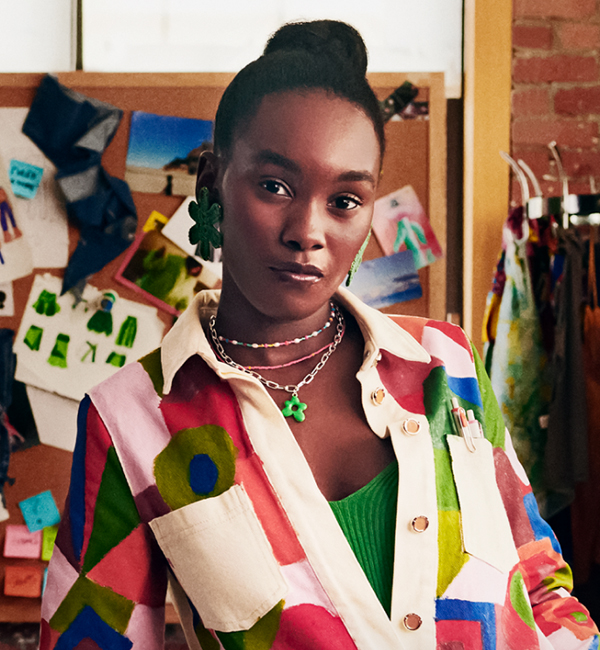
A woman wearing a colorful jacket stands in her studio
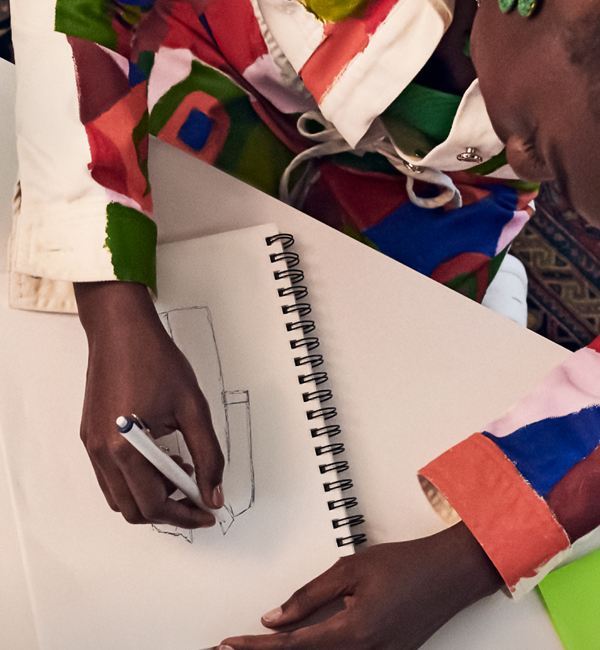
A woman drawing in her notebook with a uni pen
Press The vision for this campaign is to celebrate and empower people to take control of their personal journey.
Read on The Drum Pen maker Uniball writes new chapter as Uni

Transforming the brand experience from the inside out.

To create a new brand identity that resonates with consumers, we started by conducting a research study surveying over 500 primary household shoppers in the writing instrument category. This study informed the overall tone of voice, as well as the creation of hundreds of new brand assets—including a refined logo and color palette, brand guidelines, packaging and merchandising, social media channels, applications, OOH and print advertising. Turning uniball into uni, we helped create a more friendly brand, an approach that’s reflected in the optimized, revamped website. With different textures and popping colors, uni’s brand identity went from traditional to transformational—changing consumer perception while driving inspiration and fostering a stronger connection to the brands’ identity.

An insight-led campaign to establish stronger relationships.

To create a brand that resonates with consumers today, it’s vital to understand their core needs and shifting behaviors, as well as the market trends. So before we could introduce uni to the world, our strategy team identified customer, cultural, category and company insights through both primary and syndicated research. In doing so, we found that recent world events had awakened a desire to create and take on new challenges in the target audience. With this in mind, we developed a go-to-market strategy that articulated this sentiment.

Inspiring audiences to craft their own stories.

Once the new brand identity was ready and the research concluded, we developed and launched Start Your Story, an omnichannel campaign that centers on the first-person experiences of those writing their own futures. We focused on the brand’s inspiration pillar and kept an optimistic tone of voice that encouraged the audience to connect with their creative selves—raising brand awareness and driving audiences to see uni as a modern brand with a fresh new take.

To achieve maximum reach, our teams worked together to leverage the original research and created target personas, as well as allocated budget splits across media channels. This included using a testing framework with three creative variations and four measurement initiatives such as Brand Lift Studies and GWI Research, with data shown on an interactive live dashboard. In other words, we ensured the campaign was rolled out across today’s most relevant channels, according to their purpose within the brand ecosystem.

Results

  • 616% + planned paid media via online video and YouTube reach
  • 353% + planned social paid media reach
  • 46% + benchmark video completion rate
  • 30% + benchmark click-through rate
  • 29% + CPC benchmark with SEM

Looking to rebrand? Get in touch.

Hey 👋

Please fill out the following quick questions so our team can get in touch with you.

Can’t get enough? Here is some related work for you!

film

Combining talent and technology to rewrite the future of digital-first storytelling.
Watch video

00:00

00:00

00:00

  • Awards

    38

  • Countries Represented

    32

woman in a white dress laying in a field of flowers
portrait of a man in a space suit
A woman lying down with a blue butterfly over her nose

Stories with soul.

We believe that great communication starts with great story telling. No matter the cost, length, or the size of the screen, the Film.Monks seek to create brave and captivating stories that make our audiences feel.

With humble beginnings in Amsterdam, we’re growing hubs across the globe from LA to Kuala Lumpur, Mexico to Madrid. We take on all aspects of production from script to screen to deliver across multiple platforms, disciplines, technologies and genres. As a result, our awards cabinet is filling up, including a 2022 Gold Lion for Best Fiction (Long Form) for our Victoria 'Cempasúchil' film.

The (open) secret to our success is our robust ecosystem of established and emerging talent around the globe, which helps us develop a diverse range of stories that matter. The latest technology in filmmaking further enhances the abilities of our team: collaborations with subject matter expertise in the Lab.Monks, Experiential.Monks, Data.monks, immersive web and more give us an edge.

Monk Thoughts If the work washes over the audience, we haven’t done our job. We seek out the stories that resonate and make people feel and do something.

00:00

00:00

00:00

Christy Srisanan Global Executive Creative Director

A passionate community committed to the exceptional.

We’re creatives, writers, directors, producers, designers, VFX artists, editors and sound designers. It’s by inspiring, empowering and developing this creators community that we can produce the most innovative work, spanning integrated campaigns, branded entertainment, music videos, food and liquid, always-on content, broadcast and experiential.

Diversity is a word that has been swallowed up by the industry and spat out in many different forms. For us, it’s simply about giving a platform to unique, unheard and untold perspectives in filmmaking. Beyond influencing how we shape our team, this ambition drives our support of initiatives like FreeTheWork and BidBlack.

A person falling in the air
A person lies with their eyes closed

Case Study

XibalbaThrough both a film and a digital experiential platform, we paid authentic tribute to one of Mexico's most ancient traditions.

See Full Case Study

Behind the lens.

  1. A glimpse behind some of our favorite collaborations within our global talent network • Salomon Ligthelm - Nick Enriquez - Nina Meredith - David Darg - Lewis Smithingham

  2. several women standing in a field, wearing white dresses, looking away from the camera toward a mountain

    Together for the fourth time we partnered with esteemed director Salomon Ligthelm, we shot, scored and post-produced a three-minute film reuniting families with their late loved ones in honor of the Day of the Dead.

  3. portrait of a woman in a space suit against a red rock background

    We partnered with award-winning director Nick Enriquez to capture out-of-this world stories of researchers at the Frontier Development Lab, augmented by archive and stock footage.

  4. woman sitting in a cafe booth with a patron at the next table behind her and a waitress approaching

    To support Robinhood’s mission to democratize finance for all, we teamed up with Clio and Cannes Lion-winning director Nina Meredith to produce a film that premiered during the 2021 Super Bowl.

  5. man riding a Harley Davidson motorcycle down a road through a desert landscape

    Oscar-nominated and Emmy award-winning director David Darg helped us extend focus beyond the stereotypical “hog” rider in a series of films produced for Harley-Davison’s first-ever virtual event.

  6. singer Post Malone standing in the middle of a blue room with archways and a semicircle of singers in the background

    To accompany the launch of Post Malone’s album Twelve Carat Toothache, we worked with Lumière award winner Lewis Smithingham to take fans on a musical journey made possible only in VR.

  7. We're always on the lookout for new talent to collaborate with.

Swipe
For More!

Drag
For More!

Monk Thoughts Taking an innovative approach to filmmaking breaks down traditional silos, opens up different workstreams, enables collaborations with other disciplines and lets magic happen.
woman in a red dress sitting against a gray background

The stories we’ve told.

  1. Connection, creation and coordination • These are the three facets to innovation within the Film.Monks. Giving the talent the tools to tell new and exciting stories, produce the work more efficiently and collaborate easier with creators around.

  2. child playing with a ball, silhouetted against a yellow window curtain

    On Mexico’s National Day Against Discrimination, we launched “Mario.” The film is based on the story of Maribel “Marigol” Domínguez, who pretended to be a man for the chance to play football—and became the top scorer of the women’s national team. 9 El Ojo Awards and 6 Circulo Creativo Awards earned.

  3. Athlete putting on fencing equipment against a mirror reflection

    To support Team Toyota USA during the Tokyo Summer Olympic and Paralympic Games, we leveraged new and existing footage to pay homage to the friends, families and fans who lend athletes the determination to achieve greatness.

  4. Rapper Roxxxane standing on a soapbox in the middle of a brick sidewalk as people walk by, blurred

    Railing against the artificial lifestyle ideals so common in beer culture, we took to the soap box with BrewDog and rapper Roxxxane. More akin to social commentary than typical advertising, the film celebrates BrewDog’s raw, authentic and rebellious nature.

  5. Image, drawn from arranged Oreo cookies to look like pixels, of an anime character holding an Oreo cookie

    Celebrating 25 years of adventure, we supercharged the OREO x Pokémon cookie collab with a film merging the pixel-art style of classic Pokémon video games with the look and feel of its anime series—all rendered in OREO pixels.

  6. Portrait of computer-generated Bob Paisley, an older man, looking onto a field in a stadium

    In memory of his 100th birth year, we celebrated the life of Bob Paisley in a series of 5 films. Marrying hours of archived footage with meticulous sculpting in CGI, we brought the legendary Liverpool FC manager back to the screen one last time.

  7. Two women in colorful outfits kissing, in a city setting

    To help support the launch of ZWART, a broadcaster committed to representing Dutch society in a more diverse way, we offered our creativity and studio facilities to co-develop a campaign that casts a spotlight on a variety of voices and faces.

  8. Can we bring the magic to your story? Get in touch below.

Swipe
For More!

Drag
For More!

Global studios designed to flex 
to future needs.

Our studios are equipped with an arsenal of high-end cameras, lighting equipment and robotic rigs, all operated by skilled inhouse crew who know how to get the best from them. These tools are hand-picked to keep our clients and ourselves ahead of the game, from high speed, SFX and tabletop in our Amsterdam studio and a dedicated virtual production studio in New Delhi, to beauty, fashion and automotive in our Stuttgart and LA hubs.

Want to talk films? Get in touch.

Hey?

Please fill out the following quick questions so our team can get in touch with you.

On our minds

IBM Examines Coding’s Impact in New Film

IBM Examines Coding’s Impact in New Film

4 min read
Profile picture for user mediamonks

Written by
Monks

IBM Examines Coding’s Impact in New Film

When you think of first responders, you might imagine disaster relief services like police, firefighters, medical personnel or the National Guard. But there’s another breed of first responders that’s largely invisible, and whose contributions are easy to take for granted: the coders whose skill and creativity power the tools that bring relief to those affected by disaster.

In collaboration with IBM Originals, Media.Monks produced a feature-length documentary film, Code & Response, that examines the ambition that drives several members of the global coding community to develop new, first-responder solutions amidst a backdrop of natural disasters that have grown in strength and number—and stand to become even worse in the future.

The film features four projects around the world, each tackling disasters that may have seemed far away and abstract to viewers before watching, but that are all too real for the coders and their communities. “We wanted to raise their profile in the culture’s discourse,” says Elisa Thomas, Content Strategist at IBM Originals. “To do that meant going deeper into their motivations and allowing their stories to unfold in a way that couldn’t be done in a two-minute clip. We wanted high-production value and time to do it right.”

And it looks like those stories have resonated with viewers; running the film festival circuit, Code & Response has taken home a few awards, like Best Documentary at International New York Film Festival and a Gold Award for Best Feature at the Southeast Regional Film Festival. A writer from The Next Web called it “the single most touching, inspiring documentary I’ve seen this year.”

Bringing Ideas to Life

The documentary’s acclaim offers a great lesson on what brands can achieve when they marry creativity with authenticity; despite its being made by IBM Originals, the brand doesn’t insert itself into the narrative. Instead, it focuses on the everyday people bringing their innovative (and important) ideas to life: for example, an offline mesh network that lets people communicate when normal connections are down, or drone scouts that identify SOS signals with image recognition technology.

“The point isn’t about the brand in the story, but telling a good story,” says Heather Hosey, VP Client Engagement at Media.Monks, who worked on the project. “IBM was pushing to tell a good story without promoting themselves, which is so different among what others do.”

KENJI_RIVER_10

Kenji Kato developed an application that helps first responders track and understand the path of wildfires.

Celebrating coders and letting them tell their own stories does more than demystify tech to a general audience. For developers, the stories can be inspiring. For those with the motivation to make something, too, IBM’s larger Code & Response initiative—including its “Call for Code” contest, local events and a resource platform for self-learning—is there to support them.

“When we titled the film, we didn’t expect it to become the title for a greater IBM initiative,” says Joe Esposito, Creative Director at IBM Originals. “Code & Response is now a $25 million, four-year IBM initiative to help bring these new open source technologies and solutions into the world. We hope the movie bolsters that commitment.”

An Authentic Connection to Community

The film owes much of its power to distilling complicated technology into relatable, human stories. “We didn’t want to typecast, so we featured normal people who are very passionate about their work,” said Hosey. The secret to surfacing up such powerful stories lies in embedding the creative team directly within the community: “We went to them, rather than ask that they come to us, and that yielded a better output,” says Hosey.

This meant digging deep and building contacts at IBM’s hackathons on a local level—easy enough if you’re profiling a single one, but requiring a bit of dedication when your focus extends across the globe. This led the team to meet with Pedro Cruz, one of the film’s subjects, who won first place at IBM’s Call for Code in Puerto Rico for DroneAid, his drone scouting project. Subalekha Udayasankar, also portrayed in the film, was a finalist in the global Call for Code with Project Lantern. But the team wasn’t interested in just the winners. Their drive to unearth the most compelling stories brought them in touch with Kenji Kato, who participated in Fremont, CA with a wildfire tracking system; and WOTA, a team of Tokyo-based engineers who developed a water circulation system that provides access to clean, running water to disaster victims.

Suba_1

Subalekha Udayasankar developed an offline mesh network that connects people when typical connections are down.

Keeping Goals Aligned

This investigative style of digging into the trenches ensures the story doesn’t get lost in the tech. Instead, the process authentically weaves in the impact that the coders have made on their communities through their work, aligning well with the film’s goals of challenging the way audiences look at developers and inspire its community of developers.

“There are so many archetypes for developers in the media—mostly, they’re wearing hoodies in basements, hacking companies for some sort of monetary gain,” says Thomas. “In reality, many are incredibly thoughtful and passionate people who use their skills to help people. And they do so with such humility and sincerity.”

Monk Thoughts Assessing all company priorities ahead of time is key to building a better story.

Hosey emphasizes the importance of ensuring everyone is on the same page early in the process. Film is a big endeavor, incorporating several players: brand leadership, the creative team, the production team and more. “Assessing all company priorities—creative and business—ahead of time is key to building a better story.” she says. “There will always be many players, and it helps creative and production to understand all those angles to set up a successful story.”

For IBM, the film not only brings to light the impact that coders have on their communities—it serves as example of how we can work together to build a better future. “IBM has always taken a progressive stand about building a smarter planet and we have thrived for more than 100 years because we focus on the shared success of business and society,” says Christopher Schifando, Creative Director at IBM. “By putting smart technologies to work in the hands of coders, we can invent new ways to help first responders save lives and create lasting and sustainable change.”

It takes close trust and partnership to align the narrative with what the creative team wants to convey and the results that leadership wants to achieve. The Media.Monks team worked alongside IBM throughout the film and production process, and the shared vision of the project kept the team focused and energized. “Our tagline was ‘One team, one dream,’” says Hosey. “What kept us all going was that it was a really cool project.”

“Code & Response,” a new film by IBM Originals and MediaMonks, presents a stirring depiction of how innovative ideas come to life. IBM Examines Coding’s Impact in New Film “Code & Response” examines coders and impact in first response and inspires the next generation of makers.
IBM code and response branded content film content brand film documentary filmmaking MediaMonks film content ecosystem

Choose your language

Choose your language

The website has been translated to English with the help of Humans and AI

Dismiss