Choose your language

Choose your language

The website has been translated to English with the help of Humans and AI

Dismiss

AWS re:Invent 2025 Recap: Building the Infrastructure of the Agentic Era

AWS re:Invent 2025 Recap: Building the Infrastructure of the Agentic Era

AI & Emerging Technology Consulting AI & Emerging Technology Consulting, Industry events 5 min read
Profile picture for user mediamonks

Written by
Monks

A photograph of a large, crowded convention center hall. A large, curved sign with a colorful pink, orange, and purple gradient background reads "Welcome to re:Invent". The space is illuminated with purple and blue lights, and the floor has a geometric pattern. Numerous attendees are walking around the hall.

Another AWS re:Invent has wrapped, leaving the industry to digest a whirlwind of announcements from Las Vegas. With over 1,000 sessions and countless product launches, it is easy for marketers to get lost in the noise of new instance types and database upgrades. However, for customers looking to stay competitive, a single, urgent narrative emerged from the chaos: the era of the passive AI assistant is ending, and the era of the autonomous AI agent has arrived.

Discussion about the potential of agentic AI isn’t particularly new. But if the beginning of 2025 was about the promise of autonomous agents, re:Invent was about implementing the plumbing required to make them work at scale reliably, with proper governance, and at scale—moving past simply building agents to building them well. This maturation of infrastructure, from silicon to software, is a continuous effort focused on the reliability, resilience and enterprise compliance needed to support the agentic era. By simplifying these foundational layers, AWS is accelerating the work we do for global customers, allowing us to move faster from concept to secure, end-to-end autonomous workflows.

For customers, this shift requires a new strategic roadmap. Here is what you need to know about the transition to an agent-led future.

Frontier agents are transitioning from reactive chat to complex, 24/7 orchestration.

The headline coming out of AWS leadership is a strategic pivot from simple assistants to autonomous AI agents, governed with strong foundations and data-driven development. To understand the difference, think of a chatbot as a reactive tool that waits for your prompt to generate a single response. An agent, by contrast, is designed to collaborate over time, handle multi-step tasks, and work independently to achieve a goal.

AWS introduced the concept of Frontier Agents, or AI teammates capable of handling highly technical tasks like DevOps and Security. While these initial use cases are technical, the implication for marketing operations is profound. We are moving toward a reality where an AI agent can not only write a campaign email but orchestrate the entire deployment: autonomously segmenting the audience, setting up A/B tests, monitoring performance in real-time, and even adjusting ad spend based on ROI targets without needing a human to click “send” at every step.

This creates a “serverless-first” culture where the bottleneck is no longer content creation, but orchestration. To succeed, customers will manage a workforce of silicon agents executing strategy at the speed of software.

Expert agents require more than just a powerful model.

Building high-quality agents requires a closed-loop system, not just a smart LLM. It starts with trusted, permissioned data that is transformed into a rich, multi-layer context. By moving beyond basic search methods and using techniques like hybrid retrieval (combining keywords and context) and graph traversal, organizations can give agents the precision and "common sense" they need for enterprise use.

However, data is only one piece of the puzzle. At re:Invent, AWS emphasized that agents must operate within a strict architectural contract to remain safe and predictable. This includes "least-privilege" security—giving agents only the specific tools they need—and clear decision boundaries. Observability has also become foundational; every decision an agent makes and every tool it calls must be traced and attributable back to a source. By embedding automated quality checks and human-in-the-loop safeguards, organizations can turn unpredictable AI into reliable, enterprise-grade systems of record and action.

Expertise delivers the AI “last mile” of value.

A consistent theme across the 2025 tracks was that while AWS provides the powerful building blocks, like Amazon Bedrock, the “last mile” of value is found in the integration. The industry is moving away from treating AI as a standalone tool and toward integrated AI services that bridge the gap between cloud infrastructure and specific business outcomes. Closing this gap is how organizations are finally escaping proof-of-concept purgatory and realizing significant gains in efficiency and engagement.

On the operational side, we are seeing the emergence of brand intelligence systems that solve the “hidden tax” of internal friction. A representative example is a solution we recently built for a global technology leader, which moved beyond a standalone tool to become a core enterprise integration. By seamlessly connecting agentic architecture with the brand’s existing data environments and daily workflows, we provided over 1,800 users with definitive, reference-backed answers instantly. This integrated enabler cleared manual bottlenecks and reduced the message cycles previously needed to approve time-sensitive assets.

On the engagement side, a focus at re:Invent was the transformation of live media and broadcast workflows. The challenge in modern media isn't just storage, but the inability to identify and extract moments of value within a live stream in real-time. Our demo at the event illustrated this industry shift through the lens of a “sneakerhead” basketball fan. By using agentic workflows to scan live footage for visual cues and automatically triggering rendering pipelines, we demonstrated how live video can evolve from a passive broadcast into a searchable, personalized experience. Such innovations show how the media supply chain is becoming a dynamic revenue engine by connecting fan interests to personalized content at scale—provided you have the integrated architecture needed to bridge the gap between cloud infrastructure and the complex, real-time demands of a live broadcast. 

The move to micro-models allows for specialized, cost-effective intelligence.

Finally, re:Invent 2025 addressed the cost barrier that has kept many customers from building bespoke AI solutions. The prevailing trend isn't just about bigger models anymore; it is about specialization.

While the “teacher-student” architecture—using massive, high-intelligence models to train and evaluate smaller micro-models—has been a known engineering strategy for some time, AWS is now making it accessible for every enterprise. Announcements like Amazon Nova 2 and Nova Forge are designed to democratize this process, lowering the barrier for organizations to build their own frontier models.

This enables marketing or technical teams to build proprietary micro-models that are hyper-specialized. You might have one small model specifically trained to write in your brand voice, another dedicated to checking legal compliance, and a third for analyzing customer sentiment. This approach reduces latency and cost while dramatically improving accuracy, as each model is an expert in its narrow lane.

Adapt to become the architect of the future.

The experimental phase of generative AI is evolving into an era of industrial-grade execution, moving past the novelty of chat interfaces and into a reality where success depends on the sophistication of your infrastructure. The ones who win in this new landscape won't just be those with the best creative ideas, but those with the most robust agentic plumbing: structured data, specialized micro-models, and autonomous workflows that run 24/7.

For customers, the mandate is to look beyond the immediate output of AI and focus on the architecture behind it. By investing in structured knowledge graphs and embracing the shift from human-in-the-loop to human-on-the-loop orchestration, organizations can unlock a level of personalization and efficiency that was previously impossible. The infrastructure is built; the agents are ready. The question is no longer what AI can do for you, but what you are prepared to let it build.

Discover how AWS re:Invent is launching the era of autonomous AI agents and learn about reliable, governed infrastructure for enterprise-scale success. Discover how AWS re:Invent is launching the era of autonomous AI agents and learn about reliable, governed infrastructure for enterprise-scale success. AWS reinvent autonomous ai agents enterprise ai infrastructure agentic ai AI & Emerging Technology Consulting Industry events

The Takeaways from Advertising Week NY That Demand Action Now

The Takeaways from Advertising Week NY That Demand Action Now

AI AI, AI & Emerging Technology Consulting, Industry events 5 min read
Profile picture for user mediamonks

Written by
Monks

A panel discussion in progress at an event, with the "Advertising Week New York" logo overlaid in the center. In the background, a group of panelists sits in a semi-circle of chairs facing an audience, with a large screen displaying speaker headshots on the wall.

In an industry defined by rapid change, the conversations at Advertising Week NY provided a clear and urgent playbook for marketers. This recap moves beyond the theoretical buzz to offer a practical blueprint for how to re-architect your marketing model for a real-time, AI-powered world. Here’s what’s covered:

  • Re-engineering the creative model is no longer optional. Brands must move from a linear supply chain to a fluid, interconnected ecosystem that leverages AI for speed, scale and personalization.
  • ROI must be framed in the language of business value. The pressure is on to move beyond last-touch attribution and embrace holistic measurement models that connect marketing efforts directly to pipeline and revenue.
  • True relevance requires an infrastructure built for speed. Building a real-time brand is less about reacting to trends and more about proactively creating an agile system of people, processes and technology that can act on cultural insights immediately.

Another Advertising Week NY has come and gone, leaving the industry to digest a whirlwind of panels, predictions and prognostications. But beneath the familiar buzz around AI, measurement and retail media, a clearer, more urgent narrative emerged. 

This year, from the sessions we hosted to the conversations we joined, a clear theme of pragmatism took center stage. Conversations moved beyond the theoretical promise of new technologies to confront the practical challenges of execution: how brands can fundamentally re-architect their organizations to make real-time, AI-powered marketing a reality. The week’s discussions provided a practical blueprint for modern marketing, one centered on reimagining creative models, redefining value and building true organizational agility.

The AI mandate calls for a re-engineering of the creative supply chain.

For years, brands have operated on a linear creative supply chain: brief, ideate, produce, distribute. The consensus from Advertising Week NY is that this model is no longer fit for purpose. In an AI-powered world, the goal now is to transform the old assembly line into a fluid, interconnected ecosystem. This requires a foundational shift in thinking, moving away from rigid processes and toward agile, tech-enabled partnerships that can unify disparate teams and technologies under a single, strategic vision.

This pivot is precisely the kind of transformation Monks is undergoing with clients like General Motors. During the “Under the Hood on the New Marketing Creative Model” session, our Global Chief Client Officer, Deborah Heslip, spoke alongside General Motors Executive Director of Global Marketing Excellence, Molly Peck, to discuss the new strategies and partnerships required to thrive in this new era. The ultimate aim is a powerhouse that moves at the speed of the market. “It’s bringing everything together... what does marketing look like in the 21st century as a brand?” Peck said of the early stages of General Motors’ transformation.

This sentiment was echoed in “The AI Horizon: Shaping the Future of Work” panel at the Female Quotient Lounge, which explored how emerging AI applications will revolutionize customer experiences. Unlocking this technological promise demands a profound cultural shift. For marketing teams wondering where to begin, the answer lies in education and experimentation. The first practical step is creating a culture of learning through consistent internal education—like weekly sessions on the latest tools—and empowering teams to start asking creative questions. Fostering the curiosity to ask, “I wonder if AI could do this?” one way to kick off such initiatives. This can be as simple as using generative AI for low-risk creative tasks like brainstorming copy variations, creating image storyboards or generating mood boards to test the waters and build confidence.

Brands must move from vanity metrics to clear business value.

Alongside the push for operational transformation is a renewed, intensified pressure to prove its value. The need to connect marketing efforts to tangible business outcomes has never been greater, and the session “The ROI Revolution: Moving B2B Marketing from Vanity to Value” highlighted a key challenge: traditional attribution models, often built for B2C, simply miss the mark in today's complex buying journeys, which involve multiple stakeholders and touchpoints over extended periods.

The solution lies in moving beyond vanity metrics and last-touch attribution. Marketers must learn to speak the language of the C-suite. As Jae Oh, Director of Product Management at LinkedIn, noted, sales team doesn’t care about CPCs; they care about pipeline and revenue. “Your job is not to prove that marketing is working. Your job is to make it better.” This means embracing a more holistic view of measurement and getting marketing and sales to the same table, armed with the same data and rowing in the same direction.

A collage of four different event photos. The top left photo shows three women sitting on a stage with a banner that reads "THE AI HORIZON SHAPING FUTURE OF W". The top right photo shows two people on a stage with a large red and blue geometric background. The bottom left photo shows a "Measurement Lunch 2025" event with several people seated at tables and a speaker on a small stage. The bottom right photo shows a group of people sitting in chairs listening to a speaker in a room with a red backdrop.

This need for a more sophisticated measurement mindset was also the focus of a TikTok Luncheon on media mix modeling (MMM). The session reinforced that in a fragmented media landscape, relying on last-click attribution results in a fundamentally flawed view of media effectiveness. For marketers looking for the catalyst to bring to their CFO, the discussion provided a powerful example: one study found that TikTok captures 23x higher return on ad spend (ROAS) in media mix modeling versus last-click attribution. This is the kind of business-focused data that can justify a pilot project to quantify how much value a company’s current measurement model is leaving on the table, reframing the conversation from marketing metrics to business impact.

The push to operate in real time starts with building speed, strategy and smarter spend.

If AI provides the engine for transformation and ROI provides the map, then real-time agility is the vehicle that drives it forward. Building a real-time brand requires constructing an entire system that allows a brand to be truly relevant in the moments that matter.

The panel “When Imagination Meets Intelligence: Building Real-Time Brands with Data-Driven Precision” explored how to bridge the gap between creative storytelling and media effectiveness by emphasizing a test-and-learn methodology. The key is to design multi-dimensional creative systems that can be adapted and optimized on the fly, implementing real-time feedback loops that fuel both short-term performance and long-term brand growth.

Perhaps no group embodies this fusion of art and science better than today’s creator class. As Ronan O’Mahony, Senior Director of Brand & Advertising at T-Mobile, told our Head of NAMER, James Stephens, in one session, “You get on a phone with one [creator] and they will tell you, ‘What works for me is this, and here's what I see in my results, and here's how I think about that.’” This reality calls for a new collaboration model where creators are treated as strategic partners. Their value extends beyond content creation; they are a live feedback loop. For example, if a creator’s audience is consistently asking for a specific product feature, a real-time brand can use that insight to immediately inform a flash sale, test a limited-edition run or feed the data directly to the product team for the next iteration, turning cultural insights into business action.

Achieving this agility demands a specific organizational infrastructure and mindset, supported by technology. The “Anatomy of a Real-Time Brand” session tackled this topic head-on off-site at Adweek House, where leaders discussed how to equip their teams with the tools, data and—crucially—the risk tolerance needed to act on cultural moments immediately. This focus on proactive strategy was also central to the “Holiday 2025: Winning the Season with Strategy, Speed & Smarter Spend” discussion, where panelists emphasized a forward-looking approach. The goal is to create “seasons defined not by bigger budgets, but by smarter and more inspired marketing,” said Aisuluu Eralieva, AVP Data Driven Experiences & Audience Strategy, Consumer Products, at L’Oreal, ensuring that a brand is actively shaping the conversation.

Advertising Week NY culminated in a clear call to action.

The throughline connecting every major conversation at Advertising Week NY was clear: the modern marketing organization must be built for change. This transformation represents an immediate imperative, built on a holistic culture of innovation that seamlessly integrates AI into creative processes, measures success in terms of business value and operates with the speed and agility of a real-time brand. Advertising Week provided the forum and the focus; now, the work of putting that playbook into action begins.

Get the key takeaways from Advertising Week NY, including how to re-engineer your creative model, prove ROI, and build a real-time, AI-powered brand. Get the key takeaways from Advertising Week NY, including how to re-engineer your creative model, prove ROI, and build a real-time, AI-powered brand. advertising week ny ai-powered marketing marketing roi real-time brand creative model AI & Emerging Technology Consulting AI Industry events

IBC Recap: From Legacy Models to a Live, AI-Powered Mindset

IBC Recap: From Legacy Models to a Live, AI-Powered Mindset

AI AI, AI & Emerging Technology Consulting, Emerging media, Industry events, New paths to growth, VR & Live Video Production 4 min read
Profile picture for user mediamonks

Written by
Monks

Large, three-dimensional red letters spelling "IBC2025" stand on a brick plaza in front of the entrance to a modern convention center with a glass facade.

The media and entertainment landscape is witnessing a massive transformation. The rigid, linear model of broadcast, with its costly on-site infrastructure and time-consuming workflows, is ceding ground to an era of fragmented audiences and a relentless demand for real-time, personalized content. At IBC 2025, the industry was abuzz with a clear message: the future is software-defined, and the brands that thrive will be those that embrace agility.

But talk of agility is easy. The real challenge, and the focus of the conversation in Amsterdam, was how to ground these ideas in reality. How can broadcasters break free from decades-old production models? Where are the real revenue opportunities in vast, dormant media archives? And how can businesses adopt powerful new technologies without being crippled by cost and complexity? The discussion needed to shift from conceptual promises to tangible solutions, with many on display throughout the conference.

Decades old broadcasting models are evolving to meet modern audience demands.

For decades, the broadcast industry has stood on what seemed like solid ground, but that foundation has irrevocably shifted. As Lewis Smithingham, EVP MEGS at Monks, noted on stage, “Media production has been done effectively the same way for something like 58 to 59 years.” But that traditional model is breaking under the strain of a new reality where audiences are no longer a monolith, but a diverse collection of interests scattered across countless platforms. To reach them, he explained, “We can't deliver with a straight line of sight anymore, because there isn't a straight line, and there is no primary platform. It's all over the place.”

This new landscape demands a new approach that breaks free from the institutional inertia of how things have always been done. Reaching modern audiences requires the agility of cloud-native production, which is more a fundamental change in mindset than merely a technological upgrade. It means letting go of old “golden rules,” such as never turning off a generator for fear of a system collapse, and instead embracing an agile, software-defined approach that manages systems through adaptable software rather than rigid, physical hardware.

Nowhere is this shift more apparent than in the evolving role of the media archive. For too long, valuable content has been locked away in dusty vaults. Now, AI is rewriting that playbook, transforming stagnant libraries into living, breathing performance archives. 

A panel of four male speakers sits on a stage, addressing an audience. The two men on the left are seated on white armchairs, while the two on the right are seated on white stools. Behind them, two large screens display headshots and names of "Panel speakers" with "Moderator" at the top. The stage is lit with blue light, and the audience, mostly men, are visible from behind, facing the stage.

On panels and on-stage experiences, Lewis Smithingham discussed innovation within broadcast media.

This evolution means moving beyond thinking about rights on a per-title basis and seeing the monetization opportunities in the underlying IP. For a sports broadcaster, this could mean using AI to instantly find and package player highlights following a high profile trade—a process that would traditionally take significant manual effort. For a studio, it means transforming a classic radio show into an animated series for social media. By democratizing archives with AI-powered tools, we give editors, producers, and even fans the ability to unearth new value, create new stories, and generate novel revenue streams from content that was once forgotten.

Ultimately, these technological shifts point to a single imperative. As Smithingham simply put it: in today's environment, “if you're not real time, you’re history.” Success now comes from using technology to transform dormant IP into the dynamic, personalized experiences that connect with audiences in real time. This is the new frontier of broadcasting, and it's a future we are actively building.

AI-powered tools empower teams to deliver better viewer experiences.

The ultimate goal of all this innovation is to deliver a better, more personal experience for the audience. One of the central themes of the talks throughout the show was the need to empower creators with agile, real-time tools that make this possible. Our LiveVision™ demo illustrated this point in action.

LiveVision™ is an AI-powered tool that operates within live production workflows. Built to run on a full stack of NVIDIA hardware and software technologies including NVIDIA RTX PRO Server, Video Search and Summarization Agent, and Holoscan for Media , LiveVision™ can be deployed on edge, in the cloud, or in a hybrid environment. It brings real-time intelligence to the broadcast by analyzing multiple camera feeds simultaneously, introducing object detection and analysis into the broadcast pipeline for shot prioritization, scene description, and audio transcription. This frees up production teams for the creative process and provides end-of-day summarizations.

Two men and a woman pose smiling at a conference booth. The man on the left and the woman in the middle are both giving a thumbs-up. They stand behind a table that features a green sign with the NVIDIA Partner logo. In the background, a large sign reads, "M&E ORCHESTRATION PARTNER."

The Monks booth showcased demos, including our LiveVision™ solution.

New tools are turning dormant media archives into new revenue streams.

Our Time Addressable Media Storage (TAMS) demo offered a powerful solution to the challenge discussed above of unlocking value in dormant media archives. This demo showcased a practical application of the industry's shift from static storage to “performance archives”—systems that actively surface valuable content.

TAMS tackles the time-intensive process of manual search by using AI to analyze and index the content itself, making footage searchable by actions, objects or people within seconds. This provides instant, frame-accurate access to massive media libraries, transforming a dormant archive into a dynamic, monetizable asset. For example, a sports rights owner could use TAMS to instantly pull clips of a specific player's key moments to create a personalized highlight reel for fans, or quickly curate footage for live betting markets.

The industry’s future depends on a fundamental shift in mindset.

Ultimately, conversations at IBC 2025 painted a clear picture of an industry at a crossroads. It's clear that the transition to a real-time, AI-driven world requires more than simply adopting new tools and platforms. The real challenge is to overcome the inertia of legacy workflows and embrace a more agile, experimental and software-defined approach to creating and monetizing content.

Success in this new era requires orchestrating creativity and technology to build systems that are not just innovative, but deeply relevant, efficient and profitable. It’s this synthesis of vision and execution that will define the next chapter of media.

From legacy models to AI-powered production, IBC 2025 showed how media is evolving toward agility, personalization, and real-time storytelling. IBC Logo description placed outside of IBC 2025 Venue software defined production cloud-native broadcasting media archives live production broadcast technology AI & Emerging Technology Consulting VR & Live Video Production Industry events AI Emerging media New paths to growth

Inside Salesforce Connections 2025 and the Conversational Potential of Agentic AI

Inside Salesforce Connections 2025 and the Conversational Potential of Agentic AI

AI AI, CRM, Data Strategy & Advisory, Industry events 5 min read
Profile picture for user Nathan Bouman

Written by
Nathan Bouman
Salesforce Marketing Cloud Personalization Consultant

A low-angle, wide shot of large, illuminated, three-dimensional letters spelling "CNX" in a dimly lit event hall. The 'C' glows blue, the 'N' glows purple, and the 'X' glows with a bright blue light. The letters are placed on a dark blue carpet with a subtle pattern, and they cast colorful reflections on the floor. In the blurred background, people can be seen walking around the conference space.

Each year, Salesforce Connections brings together marketers, technologists, and digital leaders to explore the cutting edge of customer engagement. It’s a key moment for the industry to see what’s next for the Salesforce platform and the broader ecosystem. As a Salesforce partner, our team was on the ground, and one theme emerged with crystal clarity: the role of AI is undergoing a fundamental evolution. The vision on display at Connections was not just about making existing tools smarter, but about repositioning AI as the primary, conversational interface between a brand and its customers.

In fact, the concept that echoed through every session was the rise of the AI agent. Far from being just another chatbot, Salesforce’s powerful agentic technology, Agentforce, is positioned as a new face for the brand—a concierge, a personal shopper and a problem-solver, all powered by a company's unique data and content. This vision has the potential to reshape everything from customer service to a marketer's daily workflow.

So, let’s unpack the key announcements that build toward this vision. We’ll explore what it means to redefine customer interactions through AI agents, look at the underlying platform changes in Data Cloud and Marketing Cloud that make it possible, and contextualize how this could transform your day-to-day reality.

AI agents are transforming brand communication into a dialogue. 

For years, digital marketing has largely been a monologue where brands broadcast messages and hope customers are listening. The vision presented at Connections signals a definitive move away from this dynamic. The future showcased by Salesforce is one of dialogue, where every touchpoint becomes an opportunity for a meaningful, two-way conversation orchestrated by AI.

This marks the end of the "do not reply" email. Imagine sending a promotional email with a curated set of product recommendations. Instead of that being the end of the interaction, it becomes the beginning. A customer could reply directly to the email with, “I like those pants, but do you have them in blue?” and Agentforce, acting as a personal shopper, would respond with available options, check inventory and even help complete the purchase. This transforms a static campaign into a dynamic, personal shopping experience.

This shift also forces us to rethink the purpose of content. We’ve traditionally viewed content as a destination; the goal was to get a visitor to land on a blog post or a product page. In the new paradigm, content becomes fuel for the AI engine. That blog post about new product features is no longer just for human readers; it’s a critical input that teaches AI Agents how to intelligently discuss those features with a customer. Every article, every product description, every FAQ becomes a knowledge source that makes the brand’s AI smarter and more helpful. 

Ultimately, this leads to a new front door for your website. AI Agents will become the primary way visitors interact with a brand online, moving beyond static navigation and simple search bars. It will be a conversational interface that can answer complex questions, make nuanced recommendations and even take action on the user's behalf, like booking a meeting or making a reservation.

A wide shot of a conference hall where a man is speaking on a stage to a large, seated audience. The room is dimly lit with dramatic purple and blue stage lights. The backdrop behind the speaker is a dark curtain with white star-like cutouts and the large letters "CNX" on the right. The audience is attentively watching the speaker from rows of chairs.

Salesforce Connections 2025 featured a broad range of talks designed to help brands build trusted, one-to-one customer relationships.

A unified platform makes all your data ready for AI.

This conversational future requires an immense amount of power running behind the scenes. The strategy presented at Connections rests on two pillars: unifying the marketer’s experience with the Marketing Cloud Next platform and making all data AI-ready with major enhancements to Data Cloud.

One of the key enablers of this vision is the forthcoming Marketing Cloud Next platform, built on Salesforce Core. It’s designed to solve the problem of platform fragmentation that has long challenged marketers who navigate disparate tools for different channels. Instead, the new vision is one of consistency, where the experience is seamless from one tool to the next. The HTML editor for building a web campaign will look and feel just like the one for creating an email. The same powerful product recommendation engine will be used across every channel, from web to email to mobile. And a single, unified AI brain—Agentforce—will power every interaction. This consistency will not only streamline workflows but also make it significantly easier to cross-train teams, allowing them to become true cross-channel experts.

Of course, any AI is only as good as the data it’s trained on. This is where the enhancements to Data Cloud become critical. Salesforce showcased features designed to supercharge the process of getting data ready for AI agents and recommendation engines.

  • A renewed focus on data foundations: While new features are exciting, they amplify the need for a solid data foundation. Without it, brands face common challenges like low-quality data that erodes trust, data sprawl across disconnected systems, and limited access that prevents teams from acting on insights. Getting the foundation right is the prerequisite to unlocking the true power of AI.
  • Smarter, broader data resolution: We’re familiar with identity resolution for customer profiles, but a key enhancement is the extension of these resolution rules to all Data Model Objects (DMOs). Imagine being able to resolve your entire product catalog, ensuring clean, consistent product data for your AI to use.
  • Making unstructured data usable: One of the most powerful announcements was the ability to "vectorize" unstructured data. In simple terms, this is a kind of technological magic that allows AI to understand the meaning and context of content without needing manual tags. The full text of a blog post can now be used as if it were perfectly structured data, allowing the AI to mathematically determine which parts are most relevant for answering a specific question.
  • Secure, seamless collaboration: To further break down data silos, Salesforce announced Data Cloud-to-Data Cloud zero-copy connectors. This will allow different business units, or even different companies, to join their Data Cloud instances together. These “data clean rooms” enable data sharing for richer insights in a completely privacy-compliant way.

AI will become an essential co-pilot for every marketer.

So, what does this all mean for the marketer? Their role will evolve from a manual builder to something more akin to a creative director. Using Agentforce, a marketer will be able to generate campaign ideas, customer journeys and even certain components of creative assets simply by providing a strategic brief. Crucially, this output is fully editable. The marketer remains in complete control, but their time is freed up to focus on strategy, creative oversight and optimization, rather than the nuts and bolts of campaign setup and creative production.

Monks is also building tools that empower marketers to take their ability to scale content to the next level. Monks.Flow can be integrated into Salesforce to supercharge a marketer's ability to build net new creative assets that power these journeys and are incorporated into these HTML templates to support better, smarter dynamic personalization.

Nathan is on a conference stage, holding a microphone and presenting. To his left, a woman peeks over a wooden lectern that has a Salesforce logo on it. Behind them, a large screen displays a presentation slide with a quote that reads: "'The most important KPI we want to improve with MC Personalization is tune-in.' - Sports League Client." The stage is lit with blue and purple lights and has three empty wooden chairs to the right of the speaker.

The author of this piece, Nathan Bouman, spoke on stage at Salesforce Connections to discuss personalized outreach that drives fan loyalty, ticket sales and streaming.

Collaboration will also become more fluid. These AI agents can be invited directly into Slack channels, acting as a new kind of teammate. Teams will be able to brainstorm with the agent, review its proposals in real-time and collaborate on campaign elements in the same digital space where they conduct the rest of their work.

Finally, this changes how we approach analytics. Instead of digging through complex dashboards and manually cross-referencing reports, marketers will be able to use AI dashboards to get instant, natural-language summaries of campaign and channel effectiveness. This boosts the productivity of not just marketers, but data scientists as well, allowing them to focus on deeper strategic questions instead of routine reporting.

Brands can prepare now for this conversational shift.

The message from Salesforce Connections was clear: the future of marketing is a shift from monologue to dialogue. This approach is built on the pillars of a unified platform that simplifies execution, smarter data that makes every piece of content valuable and AI co-pilots that empower marketers to work more strategically and creatively.

The key takeaway for brands isn't simply to "buy more AI." It's to start thinking differently today. How can we prepare our content to be AI fuel? How can we structure our data to be ready for these new conversational experiences? Those who begin asking these questions now will be the ones best prepared to lead in the conversational future. The time to prepare is now.

Explore highlights from Salesforce Connections 2025, where agentic AI is reshaping marketing from a one-way monologue into a continuous customer dialogue. salesforce connections data cloud salesforce marketing cloud AI agents CRM Data Strategy & Advisory AI Industry events

3 Key Takeaways and New Tools from Google Marketing Live 2025

3 Key Takeaways and New Tools from Google Marketing Live 2025

AI AI, Industry events, New paths to growth, Performance Media 5 min read
Profile picture for user evansparling

Written by
Evan Sparling

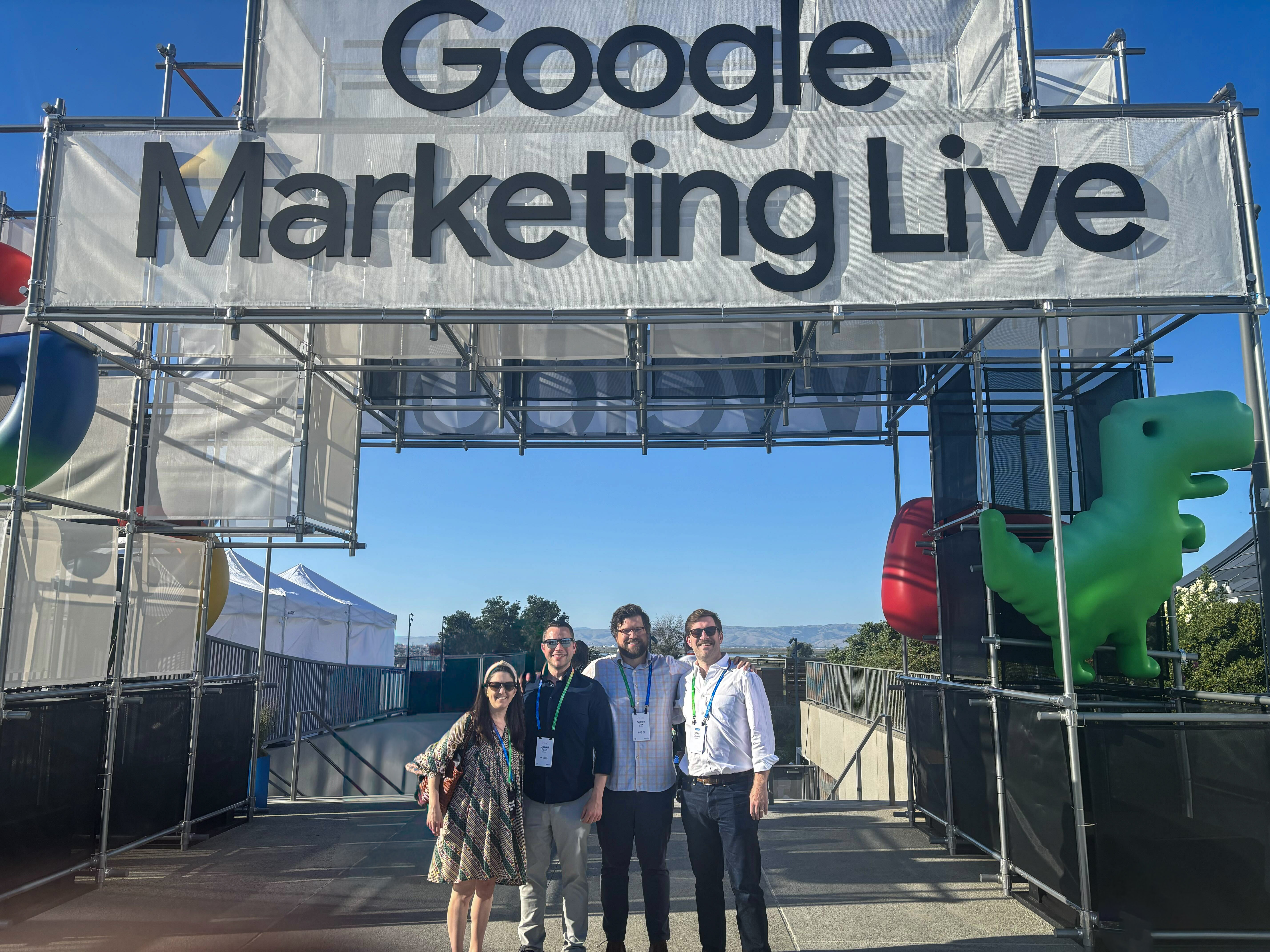
A group photo of Monks standing in front of a banner that reads "Google Marketing Live."

Google Marketing Live 2025 showed that the way people search, shop and make decisions is shifting—and Google’s ad ecosystem is shifting with it. With AI baked deeper into Search, new transparency tools for performance reporting, and ad formats designed for faster conversion, this year’s announcements reflect a platform trying to meet users in the moment while giving marketers better ways to steer outcomes. Here’s what stood out and how to make it work for you.

These are our three takeaways that defined GML 2025.

Takeaway 1: Ad delivery is getting more flexible across Google’s network.

Google is shifting away from channel-based ad setups and leaning into more fluid, moment-driven experiences. Instead of building separately for Search, YouTube, or Display, ad products are increasingly designed to find users wherever they are—scrolling, streaming, or shopping. This expansion means more opportunities to reach users but also more demand for creative that fits each touchpoint, which often requires brands to scale video visuals and messaging quickly with the help of AI (or not). Measurement tools are also being updated to support this shift, aiming to track how these moments connect and contribute to sales across the journey. Flexible measurement (going beyond pixel-based attribution by incorporating incrementality, MMM, etc.) is essential as customer paths rarely follow a straight line.

Takeaway 2: AI is now embedded in Search and how brands connect. 

The rollout of AI Mode and ads in AI Overviews marks a shift in how users navigate Search and how brands show up. These tools change not just ad placement, but the buying journey. Search is becoming more visual, more video-led, and more human in tone, which results in a search and shopping experience that’s more tailored and productive for users. For advertisers, what used to require multiple campaign types and formats is continuing to evolve into a single system of outcome-based products. This year Google’s messaging this as their “power pack”—Performance Max, AI Max and Demand Gen—for brands that use AI to reach consumers. If advertisers want to capitalize on the relevance and performance Google says the “power pack” provides, media buyers must focus on giving the AI the right quality inputs, in high volumes (conversion data, creative assets, etc.). 

Takeaway 3: Google is rolling back the black box for visibility and transparency.

Advertiser pressure for more transparency is starting to pay off. Google is introducing new Performance Max insights, lower spend thresholds for incrementality testing, and agentic tools like “Your Google Ads Expert” to make results easier to explain and optimize. But blind spots remain. For example, there’s still no placement-level reporting for ads in AI Mode or Overviews. Progress, yes. Total clarity, not yet.

These are the new features our team expects to be most impactful for advertisers.

AI tools are reshaping how we search, shop and advertise.

Search is no longer just a typed query in a box. With tools like Gemini, Google Lens and AI Overviews, the buying journey is becoming more visual, conversational and context-aware. The path from awareness to purchase is increasingly possible in one scroll, without leaving Google’s ecosystem. Google’s newest tools reflect this shift:

  • Smart Bidding Exploration (in beta) blends flexible ROAS targets with new bidding logic to uncover valuable queries you may be missing.
  • AI Overviews are live on mobile in the US, with desktop and other markets coming next. These ad placements are designed to align with broader search intent.
  • AI Mode, currently in testing, introduces a conversational, multimodal search experience with an AI-powered shopping layer launching in the US soon.
  • Agentic tools like “Your Google Ads Expert” and “Your Google Analytics Expert” (in beta) aim to speed up insights and surface optimizations. “Your Marketing Advisor,” a Chrome-based AI assistant, will soon help teams manage tasks and surface recommendations across tools.

Put it into practice: These evolutions in the SERP are reshaping user behavior and redefining what ad success looks like. For advertisers, your inputs—site content, product feeds, conversion data, creative assets, etc.—matter more than ever as the content and experience will be derived automatically with AI. Invest in shoring up those foundations to make sure you’re showing up accurately and effectively in these new SERP experiences.

AI Max for Search gives you automation with a clearer view.

AI Max for Search Campaigns is a one-click upgrade that uses AI to match your landing pages, ads and keywords to real-time search intent. Google reports early tests showed up to 27% more conversions at similar CPA or ROAS, especially when using exact and phrase match. Unlike Dynamic Search Ads, which auto-generate content with limited reporting, AI Max surfaces clear insights into which queries, headlines and landing pages are driving performance. It’s still automated, but with a clearer view of what’s happening behind the scenes.

Put it into practice: Try AI Max on a campaign where broad match is performing well but hasn’t hit its ceiling. Use the new reporting to spot high-converting queries and creative, then scale what’s driving results. 

Performance Max now shows where results are coming from.

Performance Max has always prioritized automation over transparency. But Google is finally pulling back the curtain. Channel-level reporting now shows results across Search, YouTube, Shopping and other surfaces. Asset-level insights and fuller search term visibility offer more granular data to understand what’s actually working. For brands running full-funnel campaigns, this is a significant improvement.

Put it into practice: Shift budget to top-performing surfaces using channel data by influencing Google's spending. Update or remove underperforming assets within your campaign. If YouTube is lagging, shorten your video creative or adjust your audience signals.

Monk Thoughts Having channel-level visibility in PMax makes the campaign more accountable, customizable, and measurable—turning it from a black box into a smarter, more collaborative tool for growth.

Video ads in Search and Shopping compress the funnel.

Video placements are now being tested directly within Search and Shopping results, giving advertisers a shot at influencing high-intent shoppers without relying on separate awareness plays. The line between discovery and purchase is disappearing, and Google wants to keep the entire journey within its ecosystem. Users aren’t skipping steps in the funnel, they’re completing all of them in a single scroll.

Put it into practice: Add horizontal and vertical video assets to your ad groups. Focus on short-form content that delivers value fast, such as how-to clips, testimonials or product highlights.

Monk Thoughts This is the new prime real estate. If your video doesn’t stop the scroll and say something meaningful, you’re wasting a huge moment.

Measurement tools are improving, but still require setup.

Google maintained its focus on measurement this year, sharing advertiser stories about the value of Meridian and unveiling updates to measurement features within Google Ads.  For example, they lowered the threshold significantly for in-platform incrementality testing, making it more accessible for brands to measure what tactics are creating incremental results. 

Additionally, Data Manager is Google Ads’ latest tool aimed at improving signal quality and measurement reliability. It helps advertisers connect and validate first-party data from websites, apps, CRMs, and in-store systems, making campaign data cleaner, more actionable, and privacy-compliant. It also supports better attribution by ensuring tags and signals are set up correctly. 

Put it into practice: Use Data Manager to set up and quality check your tagging configuration, confirm that key data sources are linked to your Google Ads account, and connect first-party data from third-party platforms like BigQuery, Salesforce, Shopify, Google Sheets, and more. A clean setup leads to better optimization and clearer insights.

Turn GML 2025 updates to real business outcomes.

GML 2025 showed that performance marketing is becoming more creative, more automated and more measurable. These updates are your chance to simplify workflows and scale impact. If you’re connecting creative, data and AI in one system, you’re going to move faster than your competitors.

Need help connecting the dots?
Let’s talk. We help brands turn updates like these into growth strategies that drive results.

GML 2025 rolled out new Google Ads features focused on AI, tracking and automation. Learn how to apply them to your performance strategy.
3 Key Takeaways and New Tools from Google Marketing Live 2025 GML 2025 rolled out new Google Ads features focused on AI, tracking and automation. Learn how to apply them to your performance strategy.
Google AI Overviews Google advertising industry AI agentic ai AI brand experience ai experiences Performance Media Industry events AI New paths to growth

Why Discounts Hurt Your Brand on Amazon (And What to Do Instead)

Why Discounts Hurt Your Brand on Amazon (And What to Do Instead)

Commerce Commerce, Industry events, Retail media, Seasonal marketing, eCommerce Platforms 3 min read
Profile picture for user Aaron Snow

Written by
Aaron Snow
Sr. Director of Sales

discounts-amazon

Amazon sales events such as Prime Day and Black Friday/Cyber Monday drive massive traffic and sales. But for brands, participating in every sales event can come at a cost. While deep discounts might deliver short-term revenue boosts, they also condition shoppers to wait for deals, ultimately damaging brand perception and long-term profitability. So, how can brands win Amazon sales events without falling into the discount trap? Let’s break it down. 

Discounting hurts your brand long-term.

As tempting as sales spikes are, aggressive discounting has hidden costs: 

  • It erodes margins. Short-term revenue gains are offset by lower profit margins. 
  • It trains consumers to wait. Shoppers begin expecting frequent discounts, hurting your ability to sell at full price.
  • It damages brand value. Consumers associate your products with price cuts instead of quality, undermining your brand’s premium positioning. 

Once shoppers become accustomed to discounts, shifting their mindset becomes increasingly difficult. Recent industry insights highlight that frequent discounts can significantly reduce consumers’ willingness to pay full price, leaving brands vulnerable to sustained margin pressures. Amazon thrives on a cycle of continuous promotions, encouraging consumers to hold out for lower prices and brands to participate in sales events to stay visible. But this turns pricing into a race to the bottom. When a brand tells me, “Sales are up, but our margins are suffering,” one of the things I ask is: Are you controlling your discounting strategy, or is Amazon controlling it for you? 

Here are smarter ways to win Amazon sales events.

To protect profitability while still benefiting from Amazon’s major sales events, brands need strategic alternatives to pure discounts: 

1. Bundle for value. Instead of slashing prices, create bundles to enhance perceived value. This naturally increases your Average Order Value (AOV) and maintains healthier margins.

Example: A skincare brand combined popular full-priced products with trial sizes in bundles for Prime Day, preserving margins and driving higher sales volumes.

2. Leverage Subscribe & Save and repeat purchases. Use sales events as a springboard for customer retention. Promoting Subscribe & Save discounts can drive long-term customer loyalty rather than one-time transactions. 

Example: A pet food brand promoted a 10% Subscribe & Save offer during Prime Day, securing ongoing monthly purchases and consistent long-term revenue.

3. Emphasize brand building and premium positioning. Sometimes the most effective strategy is not discounting at all. Instead, invest in branding, storytelling, enhanced product pages and high-quality creative content to justify premium pricing.

Example: A luxury kitchenware brand eliminated discounts entirely, focusing instead on premium branding, optimized listings and strategic ad placements to maintain full-price sales throughout Amazon’s sales events. 

4. But if you must, be selective with discounts. Not every product needs a price cut. Discount strategically, focusing on slow-moving inventory, new product launches or lower-priced items that attract new shoppers without sacrificing premium product margins. 

Example: A home goods brand offered discounts on select introductory items during Prime Day to attract new shoppers while preserving full prices on premium core products. 

Take control of your Amazon strategy.

Amazon’s promotional strategy doesn't have to dictate yours. If you control how and when you discount, you can win sales events without losing pricing power. But if you let Amazon dictate your pricing cycle, you risk becoming just another brand in the discount bin. At Monks, we prioritize your long-term success, guiding strategic decisions rather than short-term sales spikes. Our expert strategists are here to help your brand achieve sustainable, profitable growth on Amazon. Reach out today to start winning smarter. 

Strengthen your Amazon strategy during sales events without racing to the bottom. Learn how to use discounts, smart bundling, retention tactics, and premium positioning to protect profitability. Why Discounts Hurt Your Brand on Amazon (And What to Do Instead) Strengthen your Amazon strategy during sales events without racing to the bottom. Learn how to use discounts, smart bundling, retention tactics, and premium positioning to protect profitability. amazon prime amazon seller central vendor central online shopping ecommerce amazon ads amazon advertising eCommerce Platforms Commerce Seasonal marketing Retail media Industry events

Prosper & Shoptalk 2025: What You Missed and Why It Matters

Prosper & Shoptalk 2025: What You Missed and Why It Matters

Commerce Commerce, Industry events, Retail media, Seasonal marketing, eCommerce Platforms 4 min read
Profile picture for user mediamonks

Written by
Monks

Collage of Shoptalk and Prosper

Prosper Show and Shoptalk have earned their spots as the go-to events for retail media leaders and ecommerce operators alike. This year, both events focused on clarity, transformation, and the rising expectations of modern commerce. If you were heads-down managing Q1 campaigns or just couldn’t make the trip, we’ve got you covered. Our team attended both events and distilled the key takeaways ecommerce brands need to know now to stay ahead. Whether you sell on Amazon, Walmart, or DTC, these insights are designed to spark action.

These are our key takeaways from Prosper Show 2025.

  • Marketplace mastery was front and center. Prosper doubled down on how brands can win on marketplaces like Amazon and Walmart. Sessions focused on profitability through automation, scaling with Amazon DSP and Google Ads, fulfillment efficiency, and more.

Put it to work: Treat your product detail pages (PDPs) like your top-performing ad campaigns. Underperforming content is often the root of conversion loss. Start with A/B testing imagery and copy, and revisit your inventory planning to reduce stockouts and storage fees.

  • Retail media got tactical. With sessions diving into various ad formats, targeting options, and how to measure effectiveness within platforms like Amazon Advertising, retail media was a central focus at Prosper.

Put it to work: Stop viewing retail media as a cost center. Winning brands treat it as a revenue engine. Not using Amazon Marketing Cloud (AMC) yet? That’s step one. AMC unlocks signals like lifetime value, multi-touch attribution, and repeat purchase patterns.

  • Partnerships matter. The show floor was packed with tech partners, software providers, and ecommerce consultants. Each of them offers tools to help brands move faster.

Put it to work: Pressure-test your current tech stack. Are your partners helping you grow, or just maintaining the status quo? Now’s the time to evaluate and fill strategic gaps. 

Brush up on top insights from Shoptalk 2025.

  • Customer-centricity isn’t optional. Shoptalk was clear: everything must start with the customer. Sessions like “Embracing Welcoming Retail Experiences” and “Maximizing Shopper Value” reinforced that personalization, hospitality, and relevance are table stakes.

Put it to work: Every touchpoint either builds trust or breaks it. Map out your current customer journey and identify where friction or inconsistency exists. Whether it’s mobile UX or post-purchase communication, small improvements can drive big returns.

  • The rise of “The New Market.” Retail media grew up fast, and Shoptalk carved out an entire “show-within-a-show” for it. Think: connected TV, in-store ad tech, and the convergence of content and commerce.

Put it to work: If you’re not testing new ad formats, you’re falling behind. Explore influencer-led commerce, livestreaming, and video ads that blend shopping with entertainment.

  • Tech, innovation, and the retail road ahead. From generative AI to loyalty tech, Shoptalk showcased practical ways brands are applying emerging tools. The “Tech Solution Spotlights” were especially insightful for seeing what’s working now, not five years from now.

Put it to work: Skip the shiny objects. Invest in tools that directly improve your workflows (e.g., AI-powered content generation, dynamic promotions, or behavioral loyalty engines).

  • Future-proofing retail strategy. Shoptalk’s "Visions of the Future" track asked tough questions about what retail will look like in five to ten years. It’s clear that brands investing now in customer data, innovation, and agile operations will have the edge.

Put it to work: Think of this as your invitation to do a strategic audit. Where do you want to be in five years? Are your current tools and partners helping you get there?

  • Storytelling still wins. From brand voice to creator partnerships, Shoptalk underscored the importance of resonance in crowded markets. Sessions on brand narrative and talent-led growth made it clear that people connect with stories, not specs.

Put it to work: Revisit your brand messaging. Does it still resonate? Is it consistent across marketplaces, social, and DTC? If not, your customer experience is fragmented.

  • Unified commerce is the new normal. Digital and physical retail are no longer separate tracks. Sessions like “Store Operations that Blend Engagement and Efficiency” emphasized that shoppers expect one seamless journey.

Put it to work: Your customers don’t care about your internal silos. They just want a seamless experience. Audit your current ops and tech stack to make sure your front-end matches the back-end.

  • Data-driven decisions drive growth. Across the board, brands shared how they’re using analytics to better understand their shoppers and drive business decisions. The key here is actionable insights, not just dashboards.

Put it to work: Set clear KPIs for every campaign and channel. Then make sure your team has the right tools (and time) to actually analyze and act on that data. 

TL;DR: Let us simplify ecommerce complexity.

We attend these events so you don’t have to—because staying on top of ecommerce trends shouldn’t take you away from running your business. Our job is to make sense of what’s next and help your team turn insights into action. 

Prosper’s biggest lesson this year: Marketplace success is operational first, media second. If you want to scale, sharpen the basics and build your growth stack from there. Specifically:

  • Treat PDPs and inventory as growth levers, not maintenance tasks. 
  • Retail media needs strategic oversight and cross-functional alignment. 
  • The right partnerships can accelerate your growth trajectory.

Shoptalks’ biggest message: Future-proofing starts now. Customer experience, retail media expansion, and smart adoption of tech are no longer differentiators but expectations. Focus on the following:

  • Customer experience is your competitive edge. Start every strategy there. 
  • Retail media is evolving fast. Diversify your placements and lean into new formats. 
  • Practical innovation beats flashy tech. Invest in tools that solve real pain points. 
  • Think long-term. Your future strategy starts today. 

Whether your focus is retail media, marketplace growth, brand storytelling, or unified commerce, we’re here to help you take the next step. Ready to turn these insights into revenue? Let’s talk about what this means for your brand.

Get key takeaways from Prosper Show and Shoptalk for retail media and e-commerce leaders to stay ahead in modern commerce. Prosper & Shoptalk 2025: What You Missed and Why It Matters Learn about what went down at Prosper Show and Shoptalk 2025. amazon prime amazon seller central vendor central online shopping ecommerce amazon ads amazon advertising eCommerce Platforms Commerce Seasonal marketing Retail media Industry events

AI-Powered Transformation: Reimagine the Creative Enterprise

AI-Powered Transformation: Reimagine the Creative Enterprise

AI AI, Artificial Intelligence, Industry events 2 min read
Profile picture for user mediamonks

Written by
Monks

three people sitting on a stage at CES

Brands today face a perfect storm of challenges: skyrocketing demand for personalized content, shrinking timelines and an explosion of data that’s often underutilized. As these pressures mount, generative AI offers a vital solution. However, navigating this new landscape requires more than tools—it demands a transformation of workflows and mindsets.

At CES 2025, industry leaders from Meta, Adobe, NVIDIA and AWS convened to discuss the future of AI in creative enterprises. Moderated by our Chief Innovation Officer, Henry Cowling, the panel explored gen AI’s role in transforming workflows, breaking organizational silos and unleashing the potential of data and creativity. For those unable to attend, the full session is accessible below, along with key insights from the discussion.

“It’s critical that organizations move from being static and siloed to becoming more fluid. The key isn’t just adopting AI but organizing your teams in an organism mentality.”

— Jimmie Stone, VP, Creative Shop at Meta

Tackling the pressure to do more with less.

Today, brands are being asked to do far more with the same—or even fewer—resources. Varun Palmer, General Manager at Adobe Gen Studio, captured this challenge perfectly: “There is a need for 5x more content in the next two years. But I don’t know any CMO with a budget that’s increasing five-fold.” 

Enter the indispensable role of generative AI. It offers not just cost-effective scalability but also operational efficiencies that make it possible to meet rising demands. Adobe’s own marketing workflows reflect this promise, with their team now generating billions of emails annually using generative AI, delivering faster and more personalized experiences without sacrificing quality.

Jimmy Stone, who is VP, Creative Shop at Meta, emphasized the shift required for creative teams, encouraging brands to evolve from relying on singular big ideas to embracing systems of ideas. Fueled by AI, this approach enables diverse campaigns that adapt to the speed of culture, delivering relevant content at the right moment and scale.

Building an organization fit for an AI era. 

A recurring theme throughout the panel was that AI alone is not the solution—it’s how organizations prepare themselves to integrate it. Generative AI holds vast potential to unlock data insights, enhance creative workflows, and drive efficiency, but rigid, siloed structures within enterprises are a significant barrier to success. NVIDIA’s Director of Data Science for Media & Entertainment, Bianca Pryor, emphasized this point, calling on brands to break down internal silos and unify scattered datasets across marketing, IT and sales.

“The future of machine learning and AI is in experimentation. You’re sitting on a treasure trove of data—now’s the time to get down and dirty with it, running models, creating insights, and accelerating workflows.”

— Bianca Pryor, Director of Data Science for Media & Entertainment at NVIDIA


AWS’s Worldwide Strategy & Business Development Leader of Monetization, Chris Ziemer, reinforced this approach, noting that a strong foundation of integrated data infrastructure—combined with AI—enables companies to adapt quickly and scale creative and operational efficiencies.

Ultimately, brands must evolve into dynamic, collaborative organisms. This shift demands more than embracing AI—it requires rethinking internal workflows, encouraging cross-team collaboration and unlocking innovation at every level. To learn more about how to make this shift, watch the full session for deeper insights.

Fresh from CES 2025, explore how gen AI is revolutionizing creative enterprises with scalable workflows, personalized content and data-driven innovation. AI adoption Generative AI personalized content AI workflows Artificial Intelligence Industry events AI

Choose your language

Choose your language

The website has been translated to English with the help of Humans and AI

Dismiss