Choose your language

Choose your language

The website has been translated to English with the help of Humans and AI

Dismiss

Enabling Representation and Self-Expression in the Metaverse

Enabling Representation and Self-Expression in the Metaverse
AI & Emerging Technology Consulting AI & Emerging Technology Consulting, Accessibility, DE&I, Experience, Metaverse 6 min read
Profile picture for user mediamonks

Written by
Monks

group of various avatars, including a woman in athleisure outfit with lightsabers, a robot in armor, a smiling man, a man with a seeing eye dog, and more

As we continue to give shape to the metaverse, we become increasingly aware of our responsibility to help foster a digital environment that is truly inclusive and accessible—one that gives everyone the chance to create and participate. Accessibility in the metaverse means providing an equitable playing field so everyone can participate in and profit from the key economic driver it is projected to be, and businesses can play an important role in upskilling and providing such access.

In addition to making digital spaces like the metaverse accessible to audiences far and wide, it’s crucial that brands offer consumers a wide variety of representational features to facilitate self-expression and secure a sense of belonging. Online you can be whoever you want—the beauty of the internet is that it has long enabled people to self-present on their own terms, but it is up to the creators behind the scenes to provide consumers with the tools to do so. 

Why are representation and self-expression in the metaverse important?

To younger generations, real-life and digital identities are equally important. The first generation that grew up with digital avatars has now come of age, and digital experiences are pivotal to shaping their identity, our virtualization report highlights. In fact, 60% of Gen Z and 62% of Gen Y “believe that how you present yourself online is more important than how you present yourself IRL.”   

Digital platforms are important spaces for identity construction, and virtual-first brands can satisfy an audience’s desire to build identity by providing accessible, personalized experiences that enable self-expression. Movements like #BlackLivesMatter and #SayHerName, which have a standing both online and offline, are driven by identity and fuel the growth of social groups connected by shared beliefs, interests or experiences. Virtual-first brands that actively engage with such new, hybrid identities are able to foster a sense of belonging for diverse audiences.  

Beyond the element of fun, the metaverse can serve as a tool for empathy. Brands play an important part in determining the metaverse’s impact on consumers. The Ancient Greek philosopher Plato once said, “you learn more about a person in an hour of play than in a lifetime of conversation.” While we’re well into the 21st century, this statement is as valid today as it was back then. 

“The metaverse gives us a shared sense of space that you don't get through 2D experiences,” says Catherine D. Henry, SVP Growth, Metaverse & Innovation Strategy. “This medium enables intellectual and emotional connections that transcend our physical bodies, allowing us to experience (once again) the purity of relationships formed as children—when people connect over interests and shared play, rather than commonalities and socially imposed signifiers. This is truly liberating, and the reason why fantastical avatars and gender fluidity in the metaverse are so important.”

Through play, people can engage with others in a fun and meaningful way and learn to get along with their peers, as seeing others from a different point of view allows people to practice empathy, our Social Innovation Lab argues. Research shows that the embodied experience of inhabiting an avatar that is physically different from oneself can lead to behavioral changes that align with that avatar and influence someone’s self-perception, suggesting one can start to see overlap between the avatar and the self. “This is important because empathy and tolerance can be fostered in virtual environments, and help bridge the social divide created by Web2,” says Henry. “The missed opportunity for brands is not so much to have games, but now it’s more about amplifying authentic, often underrepresented voices and creating space for people to learn.” So, rather than an escape from real-world problems, virtual-first brands view digital as a tool to help solve them.

Besides all the perks, digital spaces also come with problems—that’s no secret. One thing to watch out for is (unconscious) biases of creators that limit representation and self-expression, such as customization options based on stereotypes and cultural appropriation, or exclusion of customization features that people want to use, like Black hairstyles. Even more worrisome is the issue that user behavior can go against expectations. Think of how some social media platforms are used as a tool to manipulate through fake news, or how online groups are weaponized to harbor hate groups—when they could serve as a refuge for those looking for belonging. However, the metaverse is a new digital chapter and thus presents new opportunities to do better. 

So, how do we achieve representation and self-expression in the metaverse? 

Diversify avatar use and customization. Given that in the US 48% of Gen Z consider themselves non-white and one-third of Gen Z identify outside the gender binary, providing a wide variety of representational features to facilitate self-expression and belonging is essential. This means offering a range of skin tones, choice of prosthetics, hairstyles, body shapes, voices, and so on. Another important step brands can take is to keep default avatars free or cheap, and only charge (more) money for additional differentiators, like a cool jacket. That said, features for self-presentation can go beyond physical characteristics to represent a more emotive sense of self-identity as well. Adidas, for instance, partnered with Ready Player Me to create unique avatars that are based on a person’s personality rather than their physical likeness, ensuring an authentic reflection of who they are. Above all, don’t force people to show up as themselves, but allow them to choose whatever they want their avatar to (re)present in the metaverse. 

As a brand, give user-makers the tools and get out of the way. It’s crucial not to constrain user-makers, since they’re the ones forging the future of how we use the metaverse—keeping in mind that we encourage brands to be transparent about how they monitor their users’ contributions to ensure the metaverse remains a safe space for everyone. That aside, brands can invest in education and work with influencers to market the tools they offer to DIY. Duolingo is a great example of a brand that has built assets for its users to create their own games, but then got out of the way. This circles back to the point of accessibility; we need to make sure as many creators from different walks of life as possible are included in the building process to counter biases.

Monk Thoughts The more creators there are, the more diversity you’re going to see.
Catherine Henry headshot

Allow ways to gather and group for belonging. Digital environments offer a safe space for exploring identities—and to ensure safety, brands need to establish ethics and guidelines from the get-go. Online you can be whoever you want, so people tend to feel more confident to speak up. Fortunately, many people are able to bring something from that experience back to their real lives. For instance, people from the LBGTQ+ community were able to form community support systems within social VR—and for some, this offered the only form of support as they weren’t able to access any offline. This combination of a supportive community and the embodied avatar experience empowers many in the real world and helps them understand their identities better.  


In all, the whole engine behind the metaverse world must be diversified. From executives and employees who work at the companies making the metaverse, to decision-makers at brands creating experiences in the metaverse, owners of digital environments, and influencers and user-makers—the metaverse is for everyone, so everyone should be able to contribute a building block. The issue is, many people don’t know how.

Monk Thoughts To facilitate this, companies can provide free training to the public on creating in this digital space, which will ultimately help bridge social, economic and developmental gaps.
James Nicholas Kinney headshot

In the same vein, looking at the expected influence and impact of the metaverse, brands can integrate metaverse strategies into their ESG commitments—the possibilities to diversify are endless. 

How does this all come back to the real world?

Digital behavior inspires real-world change, that’s a fact. Conversations that take place in the metaverse expand out into other spaces, such as meet-ups, talk shows and other real-life events. In a digital environment like the metaverse, we’re able to meet people from around the world that we would’ve otherwise never met and actually get to know them on a deeper level. Some may just see avatars, but we see people who are willing to be their authentic selves in connecting with others. 

“People are more willing to be open, vulnerable and their real selves when, ironically, they're not actually in person and when they’re behind an avatar, so people have more ‘real’ experiences connecting with somebody that in real life they wouldn’t have ended up talking to,” says Susan Parker, Executive Creative Director. “And then they might take it outside the metaverse.”

Insights for this piece were contributed by Catherine D. Henry, SVP Growth, Metaverse & Innovation Strategy; James Nicholas Kinney, Chief of Diversity and Talent Discovery; Sam Haskin, Inclusive Marketing Practice Lead; Susan Parker, Executive Creative Director; and Vanessa Zucker, Director of Marketing and Communications

Our team discusses the importance of representation and self-expression in the metaverse and how this can be achieved. metaverse diversity and inclusion diversity avatars social media digital experiences Experience AI & Emerging Technology Consulting Metaverse DE&I Accessibility

Using the Power of Connection in Social Communities

Using the Power of Connection in Social Communities

Community Management Community Management, Social, Social AOR, Social moments 4 min read
Profile picture for user aaron.wong

Written by
Aaron Wong
Influencer Marketing Campaign Manager, Media.Monks APAC

Two people playing video games with controllers

Humans are inherently social, and the Covid-19 pandemic has proven that we remain very much so: online connections have grown even as the pandemic separated us individually. Social media platforms such as Reddit, TikTok, YouTube and Twitch have seen the number of social communities rise with increased social engagement and community building. It’s easy to see why engagement of online communities grew by 81% since the beginning of the Covid-19 pandemic.

The role of digital communities is multifaceted and growing—not just to connect with loved ones or those who share similar interests, but to also gain information and understanding of the world around us. In short, digital communities aren’t just for the bottom of the social media marketing funnel any longer. For today’s virtualized era, they play a significant role in driving purchasing decisions, arguably more than traditional advertising. My colleague Ryan Ford aptly put it this way: “TikTok made me buy it isn’t just a meme; it’s a powerful driver of social proof.” Given the elevated role that communities play in consumers’ lives today, brands must infuse community across their digital marketing strategy—an important tactic behind brand virtualization as brands aim to remain relevant within a new era in digital. Here’s how you can.

Bringing users closer to your brand.

Communities thrive on human-to-human connection. In realizing the power they have to forge deep relationships, savvy brands are tapping into communities’ highly engaged members and the key opinion leaders (KOLs) they admire—an approach to marketing that’s built around driving conversation, not conversion.

Monk Thoughts Social communities are the new word-of-mouth marketing, where authenticity reigns supreme.
Portrait of Aaron Wong

Acting with a sense of purpose is key to supporting—not exploiting—the communities that your audience has carefully built, and this reinforces communities’ power to validate or amplify a brand’s values. For example, OPPO realme’s inspiring and inclusivity-minded campaign exemplified the power of community by featuring local influencers known to defy the status quo in their own communities. A brand film championed the pursuit of their individual and collective truths—a rallying cry that resonated so well that it achieved 1.5 billion topic engagements in just two weeks.

There are many more ways brands can effectively and authentically engage with existing communities—or maybe even launch their own. To know how to best plug into communities, it’s helpful to understand the different kinds that exist.

Personal interest communities.

Platforms focused on user-generated content like Reddit and Discord are examples of personal interest communities. Diverse groups of highly active users meet in these self-governed communities to share their interests and passions. Norms are unique to each one, making it important that brands understand their culture to engage with them authentically.

In some instances, personal interest communities cross social media platform lines, meaning that accounts set up on one social media platform may funnel users to another. For example, an instructor in sports anatomy may post an instructive video on Instagram that tells followers to tune in for a live Q&A session on TikTok. Another example, this time among gaming communities, is overlaying Discord chats on Twitch streams.

Brand-initiated communities.

Brand-initiated communities are communities built by brands that draw in audiences who align with their core values. Fitness giant Nike has cultivated its lifestyle communities via a range of apps and touch points such as Nike+ and Nike Running Club. These spaces allow Nike to actively engage not just individuals, but also their personal circles, by allowing consumers to share their own fitness and lifestyle goals with like-minded friends within the Nike ecosystem.

LG recently took an approach that blended key aspects of both personal interest and brand-initiated communities. Partnering with Star Wars to promote its OLED TV, LG launched a Discord server focused on the sci-fi franchise in conjunction with its presence at the Star Wars Celebration held at Anaheim Convention Center.

To entice fans to join the new Discord community, LG handed out lenticular cards with a QR code that directly linked visitors to the group. Merging product demonstration with digital activation, an LG TV acted like a photo booth for visitors to take photos from. Animated photos could also be retrieved digitally from the Discord channel.

Monk Thoughts With consistent engagement and interactions on the Discord channel, LG attracted a passionate and highly engaged community, with more than double the initial expected membership on its Discord channel.
Portrait of Aaron Wong

KOL-led communities.

KOL-led communities are centered around key opinion leaders and are ready made for brands to tap into. Much like brand-initiated communities, KOLs attract followers who align with their personal values and enjoy the content they put out. Therefore, brands partnering with KOLs can associate themselves with values of those community and the positive associations that come with them.

Automobile innovator Kia engaged with KOL communities to great effect with their “Movement that inspires” rebranding campaign. Kia created a virtual instrument using high-resolution music samples captured from nature. Partnering with Soundcloud, Kia then launched a music competition with its freely available virtual instrument.

Media.Monks curated a list of prominent music producers known not just for their artistic ability, but also for their past work as advocates for the environment. This fostered genuine synergy between Kia’s rebranding and the music community and demonstrated to audiences how Kia is both sophisticated and conscious of sustainability.

In order to thrive, being genuine is key.

Connected by shared passions and values, audiences in social communities are incredibly engaged. Brands who immerse themselves in these spaces authentically have an opportunity to gain new fans and drive culture in compelling ways.

Staying true to your brand’s values and being consistent in how you show up—despite the fleeting and fickle nature of social media—instills trust. By fueling conversation and supporting audiences, brands can build deeper relationships with consumers and position themselves at the forefront of how people connect today.

As the role of social continues to grow in the digital customer journey, explore the different types of social communities that people call home. social social media influencer marketing Influencers social media marketing Social Social AOR Community Management Social moments

O ano dos criadores digitais

O ano dos criadores digitais

2 min read
Profile picture for user mediamonks

Written by
Monks

Greek statue with VR headset and women looking out with binoculars

O status da economia dos criadores conteúdo em constante mudança

A economia de criadores de conteúdo está crescendo rápido — e enquanto isso, os próprios criadores estão se adaptando a novas formas da tecnologia, eles estão mudando simultaneamente as formas com que os consumidores se engajam/envolvem e se conectam com as marcas. Por meio de sua criatividade altamente valorizada, os criadores construíram um ecossistema próspero e instauraram formas inovadoras de interagir com o comércio, culturas e distribuição de conteúdo. Como resultado, eles se concretizaram como recursos indispensáveis para marcas alcançarem novos públicos e construírem posicionamentos de sucesso a longo prazo. Essa tendência chamou a atenção do chamado Social Innovation Lab, ou Laboratório de Inovação Social [da Media.Monks] e inspirou o desenvolvimento do  relatório “O Ano dos Criadores Digitais” – um olhar aprofundado sobre a rápida evolução da economia de criadores de conteúdo, que está imprimindo sua importância no espaço mais amplo das redes sociais.

Neste relatório, vamos explorar o status da indústria de criadores de conteúdo, como eles inspiram as pessoas e como as marcas podem trabalhar em conjunto com eles para alcançar novos públicos em todo o mundo.

Digital Creators title on a colorful background a scribbles

Você precisa fazer apenas um download para:

  • Aprender sobre o potencial da economia de criadores de conteúdo, quando o assunto é atrair a atenção de um consumidor.
  • Se aprofundar no conceito da tecnologia dando vida a novas formas de comunicação e criação de comunidades.
  • Entender melhor sobre como plataformas emergentes/em ascensão estão criando novas formas de parceria entre marcas e criadores.

Para uma melhor experiência, utilize um computador.

Download Now
Media.Monks explora o status do mercado de criadores, como eles inspiram as pessoas e como as marcas podem trabalhar em conjunto com criadores para alcançar novas audiências. social media social commerce influencer marketing social content

El año de lxs creadorxs digitales

El año de lxs creadorxs digitales

2 min read
Profile picture for user mediamonks

Written by
Monks

Greek statue with VR headset and women looking out with binoculars

El estado de la cambiante economía de lxs creadorxs

La llamada creators economy, o economía de lxs creadorxs, está creciendo rápidamente. Y en la medida que las creadoras y creadores se adaptan a las nuevas formas de tecnología, cambian simultáneamente la forma en que las audiencias interactúan y se conectan con las marcas. A través de su creatividad altamente valorada, han construido ecosistemas prósperos y han innovado en las formas de interactuar con el comercio, las culturas y la distribución de contenido. Como resultado, se han consolidado como los recursos por excelencia para que las marcas lleguen a nuevas audiencias y construyan un posicionamiento a largo plazo. Esta tendencia llamó la atención de nuestro Social Innovation Lab, e inspiró el desarrollo del informe “El año de lxs creadorxs digitales”, una mirada más de cerca a esta economía en rápida evolución que ha implantado su importancia en las redes sociales. 

En este informe, exploraremos el estado de la industria de lxs creadorxs, cómo inspiran a las personas y cómo las marcas pueden trabajar junto a ellxs para llegar a nuevas audiencias en todo el mundo.

Digital Creators title on a colorful background a scribbles

Estás a una descarga de distancia de:

  • Aprender sobre el potencial de la economía de lxs creadorxs para atraer la atención de las audiencias.
  • Adentrarte en la tecnología que da lugar a las nuevas formas de comunicación y creación de comunidad. 
  • Sacar partido de los nuevos modos de asociarse con las marcas que las plataformas emergentes están generando.

Está experiencia se ve mejor en computadora

Download Now
Media.Monks explora el estado de la industria de las y los creadores, cómo inspiran a las personas y cómo las marcas pueden trabajar al unísono para llegar a nuevas audiencias. social media social commerce influencer marketing social content

Report | The Year of Digital Creators

Report | The Year of Digital Creators

1 min read
Profile picture for user mediamonks

Written by
Monks

Greek statue with VR headset and women looking out with binoculars

The State of the Ever-Changing Creator Economy

The creator economy is growing fast—and while creators themselves are adapting to new forms of technology, they’re simultaneously changing the ways consumers engage with them and connect with brands. Through their highly-valued creativity, creators have built thriving ecosystems and pioneered innovative ways to interact with commerce, cultures and content distribution. As a result, they’ve cemented themselves as quintessential resources for brands to reach new audiences and build long-term positioning. This trend caught the eyes of the Social Innovation Lab and inspired the development of “The Year of Digital Creators” report, a closer look into the quickly-evolving creator economy which is imprinting its importance in the broader scope of social media. 

In this report, we will explore the state of the creator industry, how they inspire people and how brands can work in unison with creators to reach new audiences around the globe. This report is also available in both Spanish and Portuguese

Digital Creators title on a colorful background a scribbles

You're one download away from:

  • Learning about the creator economy’s potential to attract customer’s attention.
  • Diving into the technology giving rise to new forms of communication and community creation.
  • Tapping into how emerging platforms are generating new forms of brand partnerships.

This experience is best viewed on Desktop

Download Now
Media.Monks explores the state of the creator industry, how they inspire people and how brands can work in unison with creators to reach new audiences.
social media social commerce influencer marketing social content
A beyond meat box with a green label
A beyond meat ad from the superbowl

#GoBeyond • A Social Strategy to Sink Your Teeth Into

  • Client

    Beyond Meat

  • Solutions

    SocialSocial CampaignsCommunity Management

00:00

00:00

00:00

Case Study

0:00

A social-first campaign pushing beyond limits.

Founded in 2009 and launching their first product (Chicken-Free Strips) in 2012, Beyond Meat is one of the true pioneering players in the plant-based food category. While its B2B strategy was taking them exactly where they wanted to be, there hadn’t been a defined B2C approach until July 2020, when Beyond Meat partnered with us to launch a social-first, end-to-end campaign that would carry the brand well beyond the shifting values, attitudes and appetites of consumers and onto dinner plates around the world.

Our Craft

Appetizing assets.

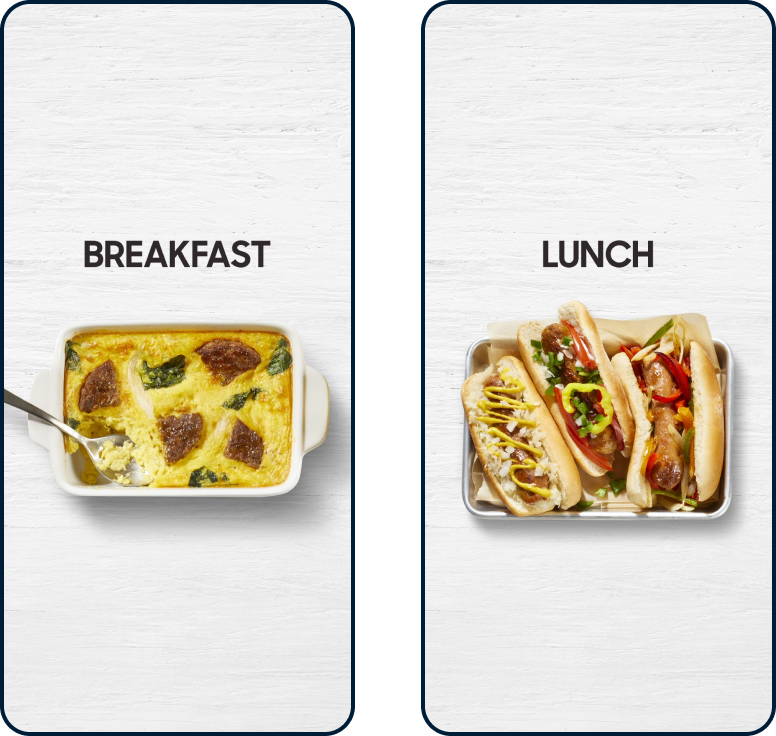
  • Breakfast and Lunch dishes made using Beyond Meat products
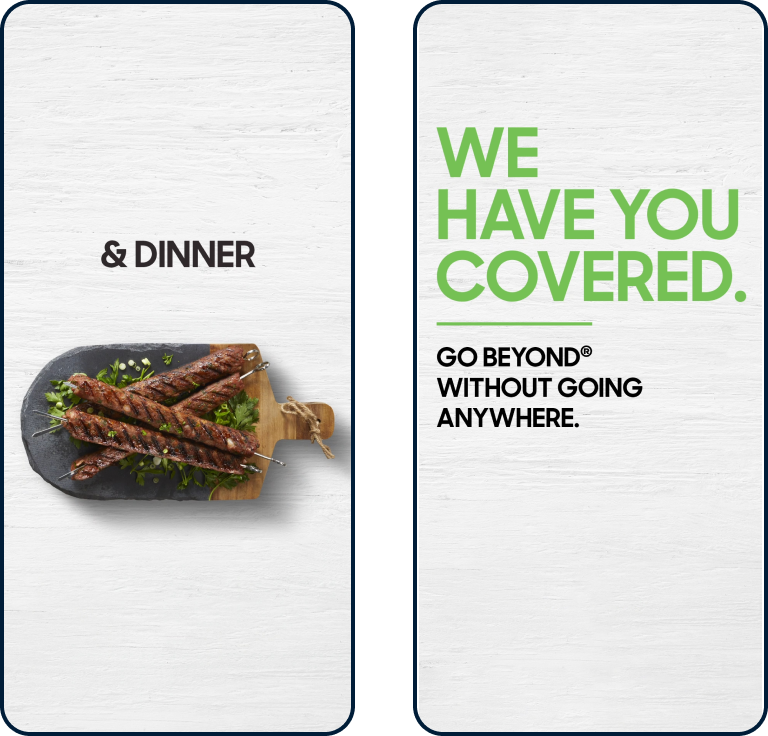
  • Dinner dish made from beyond meat

Making a movement.

Based on Beyond Meat’s mission to make small changes that lead to greater impact, we asked on Twitter: “What if we all…?” and invited people to fill in the question with their own ambition for a better world. Within hours of posting, influencers amplified the message to inspire millions of others on the platform. The response was overwhelming and would go on to fuel our strategy from end to end, including 55 pieces of flavorful fit-for-format content and a purposeful TV spot that pushed the brand forward from a campaign to a movement.

  • Cheesy nacho dish made with beyond meat A big cheeseburger made using beyond meat
  • Beyond meat corndog with mustard Beyond beef mac & cheese

Keeping the conversation going.

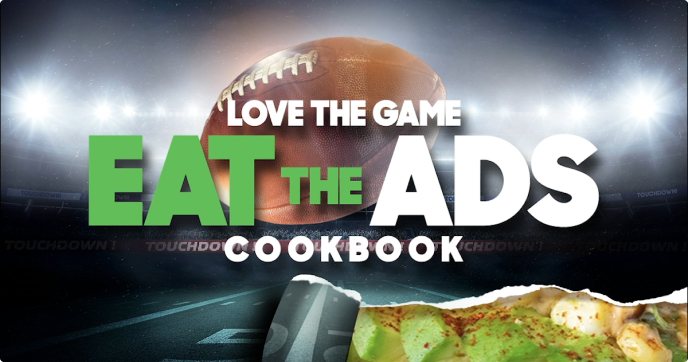
After launch, we wanted to continue the conversation and ensure Beyond Meat remained at the top of shopping lists, taking the form of real-time community management. During the Super Bowl – arguably the biggest day in advertising – we reacted to the crave-inducing food commercials on everyone's big screen with a series of recipes featuring those same products in real time. We knew that one of the most common requests the brand receives on Twitter is for recipes people can try with the product, making the opportunity to deliver savory stories and tweets too delicious to pass up.

Results

  • 150 million total impressions
  • 87% of replies reflected a positive response
  • 10 twitter posts resulted in 10k organic impressions

Want to talk social? Get in touch.

Hey 👋

Please fill out the following quick questions so our team can get in touch with you.

Can’t get enough? Here is some related work for you!

Build Brand Love Through Fandom

Build Brand Love Through Fandom

2 min read
Profile picture for user mediamonks

Written by
Monks

A title accompanied by a few fans celebrating

When people interact with a brand, an emotional bond is created similar to when we build a relationship with another person. It's this emotional connection that gravitates passionate fans around the brand, celebrity or franchise—and brands who are looking to build loyalty can learn a thing or two from the culture of fandoms.

In their inaugural issue of Social Bites, a series of quick explorations into a monthly theme, the Social Innovation Lab puts a spotlight on fan communities to help brands better understand their motivations and attitudes. You can find the issue of Social bites here, along with a short summary of key ideas below.

What do we mean when we talk about fandom?

Built around shared passions, fandoms are communities of people who are more than just consumers of the stuff they enjoy—they're producers and creatives in their own right (think fan art, fan fiction, cosplay or even commentary channels). Fandom is an example of participatory culture, and subcultures and communities often feel a sense of fellowship through their shared interests and attitudes.

Consumer, fans and stans

There are three levels of fandom: the average consumer, the fan and the stan. Consumers are indiscriminate shoppers whose relationship with a brand is based on convenience—they show little to no loyalty. Fans are co-creators and promoters who are capable of amplifying a brand by word-of-mouth. A stan—a playful portmanteau of “stalker” and “fan”—are excessive in their enthusiasm and carry strong loyalty.

The Northstar of fandom

Properly tapping into a fandom effectively means making a match between your brand and your potential fans. Every fan has what we call an “inner mantra,” or a vision of who they are or long to be. A person's inner mantra is linked to their sense of identity—and in seeking new fans, brands should carefully consider how their implicit and explicit values connect and align to the attitudes and ambitions of potential fans.

Fandom tactics for brands

How to best connect with consumers, fans and stans depends on the actions of your audience, which you'll want to match in your own messaging. Our new issue of Social Bites explores some of the tactics available for brands to meet every level of fandom, along with examples of brands who have already captivated communities too much success.

Looking for more social media insights? Tune into our weekly Social Innovation Lab podcast to hear from the brightest minds in social and learn how to create winning social media campaigns. Check out the latest episodes of the Social Innovation Lab podcast.

Media.Monks' Social Innovation Lab puts a spotlight on fan communities to help brands better understand their motivations and attitudes. The Social Innovation Lab puts a spotlight on fan communities to help brands better understand their motivations and attitudes. social media marketing social media brand awareness brand strategy

Introducing the Social Innovation Lab Podcast

Introducing the Social Innovation Lab Podcast

4 min read
Profile picture for user Bruno Lambertini

Written by
Bruno Lambertini
Co-Founder, Media.Monks

social innovation lab podcast logo

In our hyper connected digital era, trends and user behaviors pick up and drop off faster each day, and this is especially true when it comes to social media. In heading the Social.Monks team, I always hear from brands that they need to move at the speed of TikTok. To help them gain the flexibility and agility required to shape culture, we’re launching a new podcast: Social Innovation Lab.

Social Innovation Lab is a weekly show hosted by Claudia Cameron, our Head of Social in Amsterdam, in discussion with the smartest minds in social. The series features digital experts across disciplines and borders to provide a wide-reaching (but snackable) view into what’s happening on social media right now—and where things might be headed next. So from episode to episode, we’ll tackle different platforms, visit different regions and review high-level considerations to inform your ongoing social strategy.

We’ve hit the ground running by launching the first four episodes already, which you can find on Spotify, Apple Podcasts, Google Podcasts or your favorite podcast service. Below, I’ve pulled some of my favorite insights from each—but don’t let that stop you from listening for yourself, as each episode offers even more to explore.

Why the Future of Social Is in Asia

In our first episode, Claudia sits down with Werner Iucksch, SVP of Social in APAC. Werner drops some impressive statistics on social media use in the region: over 2 billion people are on social throughout APAC, and Filipino users spend a whopping 11 hours a day on social. All that time spent online fuels experimentation and innovation unique to the region, like live ecommerce and other locally grown platforms that don’t exist anywhere else.

But the rise of unique platforms and behaviors means western brands can’t copy and paste their existing social content to Asian markets and hope for success. “Facebook is the biggest player in APAC, but the content that works in the US or Europe won’t necessarily work there,” Werner warns. Instead, they must engage with the local culture: Werner highlights our Idioms of Love campaign with Burberry in China as an example, which reinterprets traditional Chinese love stories from hundreds of years ago with a modern twist.

TikTok’s Secret Sauce

TikTok has quickly emerged as a top channel for brands as they seek to get in front of Gen Z and drive engagement. In episode two of our podcast, our TikTok Strategist Aga Domagalska shares how the platform’s unique creation tools, collaborative spirit and algorithm work together to propel viral hits. But while TikTok may have the reputation of being a viral content engine that supercharges reach, Aga advises against taking shortcuts to relevance.

Monk Thoughts Think long term and start with a solid strategy for your brand account. Make sure you are taking advantage of paid solutions, are bringing followers to your account and that you post entertaining content frequently.
Aga Domagalska headshot

Decoding Social Signals and Human Behavior

In our third episode, Head of Social Strategic Planning Asahi Ruiz demystifies the role of a social planner. His team’s work is all about detecting and social signals that brands can use to remain relevant amidst cultural shifts. Asahi defines social signals as the cues people observe to help them make decisions and react to the excess of information around us.

One fascinating point Asahi raised is the need to develop research tools that resemble the way people collect information online—an idea that inspired his team’s modern and intimate approach to performing focus groups in WhatsApp. “We need to remember that people exchange information in a different way in WhatsApp,” he says. “Now we communicate in emojis and stickers, and this is pretty relevant when people are getting information in a focus group done in WhatsApp.” Decoding these cues and behaviors can help in the creation of work that is entertaining, informative and resonates with culture.

Connecting the Dots of the Consumer Digital Experience

Now that you’ve gathered some learnings, it’s time to put them to use. Episode four is all about how brands can integrate social into their larger digital strategy. Jouke Vuurmans, our Chief Creative Officer, notes how brands tend to think of social as a separate domain, which he sees as an outdated perspective and a missed opportunity. Jouke notes that brands can shift their perspective to view social as an integral connector across the marketing mix, and hits on our “feed the fees” mentality of tailoring big ideas into moments that drive engagement.

Monk Thoughts Social is the opportunity for a brand to be in someone’s life daily. So there’s an interesting element if you think about brand building nowadays—providing moments, conversations and activations that people are actually waiting for.
Consumer Habits Are Changing. Why Isn’t the Industry?

Social media is expansive, with each platform offering unique ways to bring people together and drive engagement. With the Social Innovation Lab podcast, we want to help you keep informed on everything that’s happening in social—as soon as it happens. Stay tuned for even more insights from across the internet and around the world!

Stay on top of the latest social media trends with Social Innovation Lab, a new podcast featuring up-to-the-minute insights from the smartest minds in social. Stay on top of the latest social media trends with Social Innovation Lab, a new podcast featuring up-to-the-minute insights from the smartest minds in social. social media digital marketing trends podcast

An Integrated Approach Accelerates Digital Transformation

An Integrated Approach Accelerates Digital Transformation

4 min read
Profile picture for user mediamonks

Written by
Monks

An Integrated Approach Accelerates Digital Transformation

With the speed at which brands have to adapt and deliver digital experiences today, having a high level of expertise and end-to-end execution at your disposal is key for survival—especially in Latin America, where brands used to stand behind other regions in the path toward digital success, but are swiftly covering more ground in less time.

Previously, many brands used to consider digital transformation important, but not urgent. Now, it’s table stakes—and happening at incredible speed. And while consultancies have spent years consulting rather than acting, brands are finding that when push comes to shove, transformation doesn’t have to be such a long, arduous process after all. 

Combining the multicultural knowledge of two of Mexico’s most awarded digital companies, Circus and MediaMonks joined forces to deliver a first-class experience—assisting brands in Latin America to transform in meaningful ways at speed through the refinement of three prioritized capabilities that will help form the bedrock for success in years to come: platform and product design, content and film production, and end-to-end social media.

Monk Thoughts We’re pushing digital transformation forward, and the only way to accelerate it is by working with multi-disciplinary and agile teams.
Sergio Escamilla

The Cornerstones of Great Digital Experience

After months of seeing consumers adopt new behaviors in the era of virtualization, being on social media isn’t enough—you have to be intimately aware of the way audiences connect on a variety of channels, and it’s imperative that brands innovate in a way that resonates with digital audiences today. This means they must not only recognize opportunities to show up for audiences in new ways, but also require new skill sets and expertise that bring those ideas to life.

We’re cutting through this challenge by having a unitary structure that joins together expertise in data insights, community activation, engaging digital experiences and impactful content built by talent around the world. Circus-MediaMonks operates at the intersection of creativity and technology.

“We’re pushing digital transformation forward, and the only way to accelerate it is by working with multi-disciplinary and agile teams,” says Sergio Escamilla, Managing Director in Mexico City. “Moving forward, digital transformation is going to be the main brand strategy, and both performance and conversion are needed to stay ahead. In Mexico, it’s hard to find agencies that have integrated more than one of these capabilities.”

Gathering creative, strategic and production expertise collaboratively in-house, our teams are equipped to not only tackle big ideas, but ultimately execute them—for example, by building a web platform that integrates Google technologies and social media tools with Mexico’s biggest airline’s ecommerce backend.

Aeromexico.Still001

We gave travelers the chance to choose people (rather than cities) as destinations to select.

In our work for Aeroméxico, we combined platform and product design with multichannel communication to create a comprehensive travel booking experience, driven by a cultural narrative. The bespoke website offered people (rather than cities) as destinations to select. When booking a flight, the chosen person would print on the ticket, enabling a more personalized experience to users—who also had the option to promote themselves as a destination through a video generated by their social media data. In the Forrester webinar “AI And Automation Will Shape The Agency Of The Future” Forrester Principal Analyst Jay Pattisall used the platform as an example of how automation at scale benefits creative differentiation.

“If you think about airline apps, they all do the same thing. But the notion of intelligent creativity helps us push beyond that digital sameness and provide business and technology leaders the ability to execute not only in volume, but with a deep understanding of people and empathy of people,” Pattisall says.

“…Aeroméxico shows us a really striking contrast… So you can see how the combination of a creative idea with technology scale created a very differentiating execution, a breakthrough execution that helped them achieve that higher value benefit.” The human-driven campaign stitched social media content with a seamless innovative experience, adding value to the audience’s relationship with the brand and impacting 20% of online sales.

That’s how virtualization connects distinct experiences across a wider digital ecosystem, and it’s important to consider it should look like an ongoing, integrated process rather than a piece-by-piece jigsaw puzzle of random acts of digital

Monk Thoughts Transparency, accountability, senior management, time and resource optimization—these are all advantages of having a unitary structure and an integrated approach to digital transformation.
Sergio Escamilla

An Integrated Approach Ensures the Greatest Impact

In the era of virtualization, brands must not only make relevant content for existing channels but also develop entirely new experiences. And while most projects are developed in just a few weeks, they are oftentimes the gateway to long-term strategies and collaborations. In that sense, having an integrated approach can help expand an initial creative idea into subsequent, connected content and experiences. To make this happen, we usually opt for a “zero-to-one” strategy, in which short-term goals yield quick results for brands, then progressively build and aggregate into longer-term goals.

Still, having a unified approach and overcoming silos within the brand is fundamental to achieve agility. Divided budgets and departments working independently will soon cease to be profitable—or even sustainable. “Transparency, accountability, senior management, time and resource optimization—these are all advantages of having a unitary structure and an integrated approach to digital transformation,” Escamilla explains. “But for that to happen, brands must have the same mindset. In the future, we will see a combination of technology and integrated marketing. Today, most brands are managing that separately.”

abi_victoria_icnocuicatl_60seg_v12.00_00_14_07.Still001

A poetic film captures the ancient-Mexican tradition of dealing with death through poetry.

Having a partner that can work end-to-end and sit at the co-creation table ensures the greatest possible impact within budget limitations, and it’s the best way to service multiple channels by producing content simultaneously. For our ongoing collaboration with Cerveza Victoria through the last three years, we weaved high-end film production with platform and product design to create cultural relevance tied to the Day of the Dead. While the shootings of each annual film took place, we created toolkits with Instagram slider ads, Tweet videos, AR face filters, living images for the social ecosystem and even an interactive website where users could build their own altar to make a Day of the Dead offering—the kind of simultaneous creation process that is not feasible without a digital-first outlook. 

The need for personalized, fit-for-format content and the power of innovative digital experiences will shape brands’ strategies in years to come. And as they aim to connect digital touchpoints into a holistic brand ecosystem, relying on partners who can bring a variety of skills and expertise to the table will provide the agility they need to survive. While we continue to fulfill brand promise through interactive platforms, high-end film and social media, smart holistic digitalization will determine engagement and relevancy.

Through three prioritized capabilities, we are assisting brands in Latin America to transform meaningfully at speed. An Integrated Approach Accelerates Digital Transformation Three capabilities will help define success in 2021.
latam mexico aeromexico cerveza victoria digital transformation platform product design film production social media

From One Screen to Every Screen, A Fit For Format Approach to the Classic TV Special

From One Screen to Every Screen, A Fit For Format Approach to the Classic TV Special

4 min read
Profile picture for user mediamonks

Written by
Monks

Two years ago, Netflix launched one of its most popular international TV series to date: La Casa de las Flores. Teaming up with Manolo Caro, one of Mexico’s hottest directors, the series has not only become one of the country’s most talked-about shows because of its star-studded cast – including legendary soap opera actress Verónica Castro – but also because of its huge cultural and social relevance due to its open and positive portrayal of LGBT topics. The series’ third and final season made its debut last week on April 23rd.

The pandemic has significantly shifted the way audiences are spending their time, with a 57% increase in usage of streaming services and a 47% increase in time spent on social media, according to DataReportal. With more people at home using streaming services, brands can no longer rely on OOH and other flashy stunts to promote their content with relevance and fuel social chatter.

With our attention spread across many channels, and even more competing entertainment options, it’s important to understand how content performs differently on each with a fit-for-format approach. By tailoring social content to user behaviors that are unique to a given platform, brands can maximize effectiveness. Despite linear TV being a more traditional format, Netflix – in partnership with Circus Marketing, who merged with MediaMonks earlier this year – demonstrated how brands can extend the value of content to digital audiences with a fit-for-format strategy, just as it did by creating an ode to the classic TV special by celebrating La Casa de las Flores before its final season premiere. 

Extending the Experience

La Casa de las Flores rapidly became a phenomenon thanks to its careful portrayal of social topics and willingness to tell stories that viewers may not commonly see in the media, depending on where they live. Given its popularity and propensity to get people talking, Netflix decided to give fans a space to reflect on the series and create a dialogue through a TV special that extended into social platforms as well. Circus Marketing worked on the ideation, scripting and creative direction for the special, and executed in partnership with Plataforma who led remote filming and small crew shoots to work within recommended safety guidelines.

Hosted by the series creator, the special aimed to generate buzz for the upcoming season by connecting fans, turning them into active participants by voting on the best and most shocking moments from previous seasons. The very same digital channels that viewers use every day became the stage for the special, with cast members chatting in video calls (both in and out of character), fans contributing through polls, WhatsApp audio and other social content. Taking this digital format over a traditional production approach enabled us to create the program within local safety guidelines. “What is really exciting is not just the project itself, but the timing and how we approached the strategy to reach these goals,” says Bruno Lambertini, Founder of Circus Marketing. 

“We used animations, audio, polls, fan art, tweets and other types of social assets to connect with users on different platforms and in different ways,” says Israel Rojas, Content Lead at Circus Marketing, noting the importance of using an omnichannel strategy to reach such a wide and varied audience. The special itself took different forms based on where viewers saw it: without standard television ratings and regulations, for example, the YouTube version was uncensored, clocking at 40 minutes in its entirety. From there, we were able to develop dozens of smaller, snackable assets distributed across social channels.

Monk Thoughts What is really exciting is not just the project itself, but the timing and how we approached the strategy to reach these goals.
Bruno Lambertini headshot

Not All Platforms Were Created Equal

What makes La Casa de las Flores really special is that while it may fit in the classic format of a telenovela, it’s widely viewed as a millennial soap opera. Given this reaction, we knew the special couldn’t live on TV only – it would have to meet its audience in the very space where they meet and discuss the show itself: online.

To prepare fans for this event weeks in advance, Netflix shared hundreds of snippets for social media, each one adapted to different platforms. This content was shared on the series’ official social media channels on YouTube, Facebook, Twitter and Instagram, but also through influencer activations. “Not only did we create a 40 minute long video format, but we also took that to different platforms and levels from a single production – with fit-for-format,” says Yaneth Velázquez, Global Head of Client at Circus.

“Social content is really important when creating fandom,” says Velázquez. “We’re creating clusters of people looking for a show – spaces where you can consume content and extend the experience of watching it.” During the first 72 hours after launching, the special program registered over 2 million views on online platforms.

Monk Thoughts We created a 40 minute long video format and took that to different platforms and levels from a single production – with fit-for-format.

People go to various platforms for different reasons. What works on Instagram won’t work on TikTok, even for the same user, because the way one engages with content on each differs. By building upon the way that viewers discuss cultures and shows across different platforms, the La Casa de las Flores special successfully built impact in the leadup to the series’ third, final season. It serves as a great example of how a fit-for-format mindset is important to maintain relevance when casting such a wide net on digital audiences – especially when people are looking to connect with others and engage with them sharing their love for the show.

With the La Casa de las Flores TV special, Netflix delivered a piece of content that adjusted to the current times, pivoting OOH and other experience-led social campaigns into the means available today – cleverly rethinking the creative process to create buzz, connect with viewers and give these shows and social movements the interaction, engagement and recognition they deserve.

Netflix revolutionized the TV Special classic with a fit-for-format model designed for the social distancing era for the final season premiere of La Casa de las Flores. From One Screen to Every Screen, A Fit For Format Approach to the Classic TV Special Experience the TV Special classic like never before.
fit-for-format fit for format TV special Netflix social media platforms digital La Casa de las Flores Mexico social distancing social platforms

Choose your language

Choose your language

The website has been translated to English with the help of Humans and AI

Dismiss