Choose your language

Choose your language

The website has been translated to English with the help of Humans and AI

Dismiss

Amazon A+ Content: Guide to Take Full Advantage

Amazon A+ Content: Guide to Take Full Advantage

4 min read
Profile picture for user johnl

Written by
John Ghiorso
SVP of Global eCommerce

Amazon A+ Content: Guide to Take Full Advantage

Amazon A+ Content

Are you taking full advantage of your Amazon product detail pages? As a vendor, one of the biggest factors to increasing conversion rates on your product detail page is the inclusion of Amazon A+ Content. Amazon’s own research and analytics shows that A+ Enhanced Marketing Content increases product sales by an average of 3-10%, giving brands a big advantage in a competitive retail space.

Amazon A+ Content is available to first-party (1P) vendors and allows them to add high-quality images and comparison charts to their product descriptions, boosting conversions with more detail, and persuasive content that goes way beyond text on a page. Third-party (3P) sellers using Seller Central can take advantage of high impact content through Enhanced Brand Content.

Related Article: Amazon 1P vs 3P vs Hybrid – How to Choose the Right Supply Method

In This Article:

Advantages of Amazon A+ Content

Everyone knows that pictures are more persuasive sales tools than simply text on a screen, but there are some unique advantages of Amazon A+ Enhanced Marketing Content:

  • Enhance your brand. With Amazon A+ Content, your product detail pages can be more visually consistent with your brand, and reflect more of your brand messaging. Bringing your branding to your Amazon product pages increases recognition and brand loyalty, and it’s an important benefit of using A+ Enhanced Marketing Content.
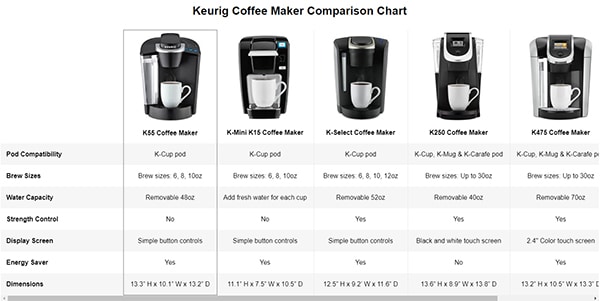
  • Create comparison charts. Amazon often adds a product comparison widget to product pages, helping consumers make the right product choice for them. With A+ Enhance Marketing Content, you can create your own comparison charts to help educate and inform consumers yourself. Your charts cannot compare your product with the competition, but it’s a fantastic way to showcase your related products and feature comparisons within a single ASIN. Charts can help consumers choose the right product within your brand family. This often prevents customers from navigating to another brand’s product page.
    A+ Content - Comparison Chart
  • Stay competitive. If your competition is selling their products with slideshows, and interactive charts, it’s a good idea for you to step up and do the same.

Is Amazon A+ Content Right for You?

Before you begin adding A+ Content to all your ASINs, it’s important to consider how each product fits into your overall marketing strategy, and evaluate your needs accordingly.

Do you qualify?

In the beginning, A+ Enhanced Marketing Content was only open to Amazon vendors (1P), not sellers (3P). However, Amazon has significantly expanded the program since its inception, and the rules have changed. Today, Amazon offers A+ Enhanced Marketing Content for first party vendors on Vendor Central and Enhanced Brand Content for third-party sellers on Seller Central. A third-party Amazon seller is only eligible if they’re brand-registered. Vendors and sellers have different levels of enhanced content available to them, with different numbers of modules and content types.

Do you have the right ASINs?

Creating Amazon A+ Enhanced Marketing Content takes time, and might even cost you money if you need to create new content and material for your A+ detail pages. This is an investment in your product, your brand, and your position in the minds of Amazon shoppers. It’s important that you invest in the right products for your Enhanced Content, to make the most of the program.

  1. Choose a product with the right margin. Depending on your production costs to create high-quality enhanced marketing content, you will be investing in marketing each ASIN. Assuming you can boost conversions by 3-10%, how long will it take for A+ Content to pay for itself on that ASIN? Assess your existing marketing assets along with the costs (internal and external) to create new content. This will help you figure out which products make the most sense for the budget.
  2. Choose a product with the right features. An ASIN with strong differentiators, complex features, or a compelling story lends itself to enhanced content. A simple product that doesn’t require detailed explanation, zooms or exploded images, or doesn’t lend itself to feature comparison probably isn’t the best choice for A+ Enhanced Marketing Content.
  3. Choose a product with the right traffic. Amazon A+ Content may offer a slight uptick in SEO, but shouldn’t be relied upon to boost traffic. Choose an ASIN where you can focus on converting the traffic you already have, and where your channel marketing efforts will pay off the most.

Planning Your A+ Content

Your A+ Content is as important and visible as any other marketing content you create, and therefore should be treated as such. Here are some things to keep in mind when gathering assets for A+ Content.

  • Look after the details. With Amazon A+ Content, you don’t have real-time control over your product pages. It can take Amazon a week or more to correct Typos, omissions, and mistakes you catch after publishing your A+ Enhanced Marketing Content. Be thoughtful and plan carefully. It’s a good idea to have multiple people proofread and double check your content before publishing. Also, don’t forget to optimize A+ Content for mobile.
  • Design to spec. Whatever template or module you use, Amazon provides resolution, dimensions, and other guidelines that should be followed closely. Read and review the guidelines carefully. This ensures that your marketing assets look as good on your Amazon pages as they do on your monitor.

Closing Thoughts

Amazon A+ Enhanced Marketing Content can be a powerful way to increase sales and revenue through Amazon. But it’s not just about boosting conversions; it’s also about boosting your brand. With enhanced detail pages, you can more effectively communicate your value proposition and your brand identity. As a result, you will turn Amazon shoppers into your loyal customers. These incredible tools should be used thoughtfully and strategically to make the most of your relationship with Amazon and your customers. At Orca Pacific, we take a full-funnel approach to building the long-term success of our clients’ Amazon businesses. A+ Content is just one of the many marketing tactics we use in developing individualized strategies for growing sales and profitability for our clients.

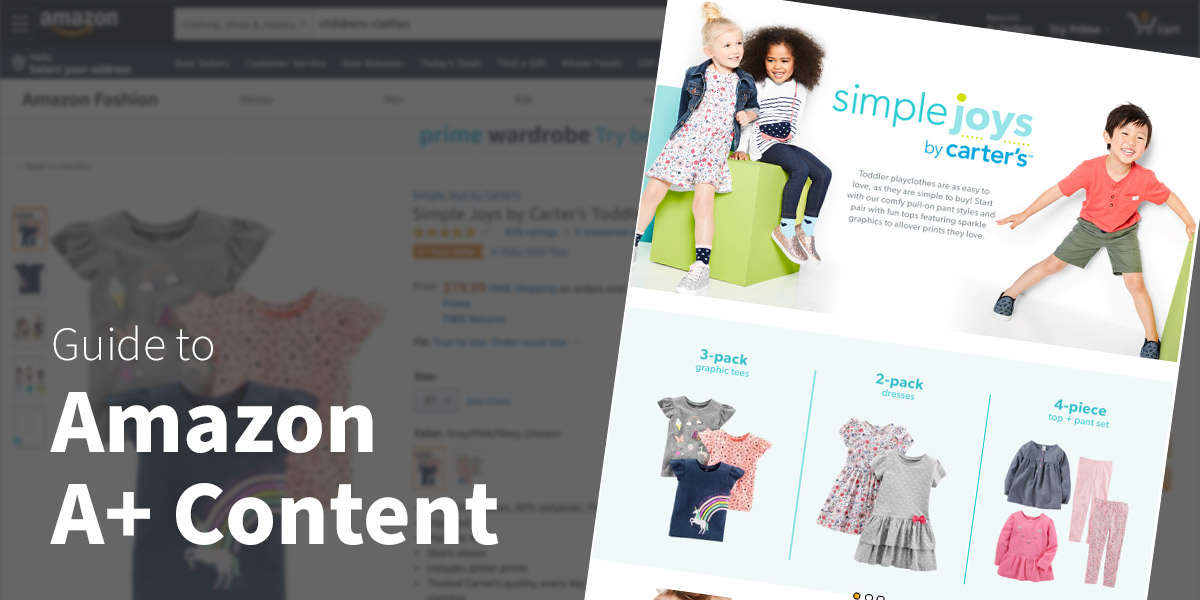
What is Amazon A+ Content and how do you use it? A guide to taking full advantage of enhanced content on your product detail pages. Amazon A+ Content: Guide to Take Full Advantage Are you taking full advantage of your Amazon product detail pages? As a vendor, one of the biggest factors to increasing conversion rates on your product detail page is the inclusion of Amazon A+ Content. Amazon’s own research and analytics shows that A+ Enhanced Marketing Content increases product sales by an average of 3-10%, giving brands a […]
amazon ecommerce

Upgrade Your Digital Marketplace Strategy to Build Brand Love

Upgrade Your Digital Marketplace Strategy to Build Brand Love

3 min read
Profile picture for user mediamonks

Written by
Monks

Upgrade Your Digital Marketplace Strategy to Build Brand Love

Consumer buying habits have significantly shifted to digital over recent months. Ecommerce giant Amazon, achieved record growth in Q1 2020, seeing its largest increase ever in revenue for its online stores, with 24.3% growth in online store revenue alone. Now is the time for brands to change their consumer approach by building digital marketplace strategies that recognize and meet consumer needs across the entire customer decision journey, not just when they visit a marketplace to make a purchase.

One need only look at the rise in online grocery shopping to understand the increasing importance of ecommerce today: online grocery penetration is expected to meet (or exceed) 10% in the US, beating previous industry forecasts. While buying a mattress online may have felt strange and novel five years ago, today’s consumers don’t bat an eye by turning to digital marketplaces to discover, research and ultimately purchase products of all types.

Digital Marketplaces Double as Important Media Channels

This shift in user behavior has elevated the role online marketplaces as media channels that are important to telling the brand story to shoppers. “By serving ads to their customers at relevant moments, digital business professionals and commerce companies deliver a superior customer experience while also cultivating a rapidly growing new revenue stream with healthy margins,” writes Forrester VP, Principal Analyst Sucharita Kodali in the Forrester report, “Retailers: You’re The Next Media Moguls.”

Monk Thoughts Customers are already in shopping mode, making the creative much more powerful.

One reason why advertising is so effective on these channels is because consumers are already in the shopping mindset when visiting a digital marketplace. “Mercado Libre has millions of users and visits each day, among different advertising formats,” says Pablo Tajer, Creative Director at MediaMonks Buenos Aires, discussing the most popular ecommerce giants in LatAm. “People that see these ads are already in shopping mode, which makes it much more powerful than seeing it on another channel where you’re not thinking about buying anything.” By connecting technology and creative, brands can lend greater value to an audience that is more receptive to learning about products and their features.

Identify Brand Opportunities Across the Full Digital Retail Ecosystem

Tajer leads our newly announced BrandLab partnership with Mercado Libre Publicidad. BrandLab serves as a team that highlights advertising opportunities for the biggest brands on the platform. Previously, Tajer fulfilled a similar role within Facebook’s Creative Shop. After receiving a brief from a brand, the BrandLab team helps build bespoke creative ideas that fit Mercado Libre’s formats and ecosystem, fulfilling a real need for brands that strive to differentiate and stand out in the user experience.

MercadoLibre MM

“The cool part is that we have an opportunity to create an idea that goes throughout the whole customer journey across Mercado Libre’s ecosystem,” says Tajer. “It can start with the branding on a product description page, then move to the payment step with the platform’s digital wallet (MercadoPago), and finally when you get the product itself through Mercado Libre’s shipping service.”

In this respect, to succeed in digital marketplaces brands must look beyond simply converting at a point of sale. Global ecommerce giants like Amazon in the US, Mercado Libre in LatAm or Alibaba in China are more than just marketplaces; they provide total ecosystems that include digital payment systems and delivery logistics networks. By managing each step of the customer journey—from awareness to purchase or even receiving the package itself—these ecommerce platforms offer several opportunities for brands to engage with their customers.

Monk Thoughts We have an opportunity to create an idea that goes throughout the customer decision journey.

Inject the Brand Story into Your Ecommerce Efforts

The opportunity to embrace the total brand experience on ecommerce highlights a common misstep for brands selling and advertising on online marketplaces: the brand story is often missing from the equation. “It’s a platform that people view as purely performance based,” says Tajer. “It’s not just about performance, but also branding. Between searching for products and comparing which is better than another, there’s a lot more happening on an ecommerce platform than just clicking ‘buy.’”

For many consumers, a digital marketplaces is often the first place they visit for product searches. As important spaces for product discovery, it’s important that marketers don’t assume consumers are visiting with a specific product already in mid—or are even aware of the brand before seeing its product listed. This highlights a need for brands to view ecommerce as an important space to build brand love and awareness through impactful creative storytelling. “We want to be a lighthouse that shows brands and their partners the way.” says Tajer, “Together, we can grow stronger, platform-specific campaigns that drive consumer value.”

Support your audiences across the creative experience journey.

Digital marketplaces offer significant creative opportunities throughout the path to purchase, yet the brand story is often absent. Upgrade Your Digital Marketplace Strategy to Build Brand Love Fit-for-format ecommerce content shouldn’t just convert; it should build brand love, too.
Mercadolibre brandlab amazon digital marketplace online marketplace ecommerce digital retail ecommerce strategy creative that converts customer decision journey cdj customer obsession online shopping mercado libre

Mix Entertainment and Shopping with Livestream Commerce

Mix Entertainment and Shopping with Livestream Commerce

4 min read
Profile picture for user mediamonks

Written by
Monks

Mix Entertainment and Shopping with Livestream Commerce

Sectors of the retail industry have been hit especially hard with many businesses unable to open their physical doors. These brands are left to rely on big name retailers or pivot their approach to increase reach visibility to convert consumers digitally. To do so, many are seeking inspiration from the direct to consumer model to engage directly with their audiences and make their products more widely available. While retailers and brands have both incrementally invested in digital platforms more and more, year after year, these challenges show how the need to digitally transform has accelerated to keep up with shifting user behaviors.

At a time when consumers are craving entertainment and connection while at home, livestream commerce—evoking the idea of home shopping TV programs, but made more interactive—is an intriguing solution for brands to directly and authentically engage with audiences. As a response to increased video viewership of at-home audiences, the strategy builds on recent trends in shoppable social content and the rise of influencer partnerships.

China is No Stranger to Livestream Commerce

While it may be having a moment right now, livestream commerce isn’t new; Taobao Live, the largest ecommerce streaming platform in China and owned by Alibaba, made $2.85 billion in sales on Singles Day (the country’s biggest shopping event) last year. The COVID-19-induced lockdown in China has increased the popularity of the platform even further; in February, merchants on the platform raised by 719%, according to Glossy.

Much of the appeal of livestreaming commerce is its ability to mix engaging, interactive content with brand stories. JD.com, another ecommerce platform in China, hosted online “e-clubbing” events featuring musical performances and DJ sets—and the ability to buy liquor in a few taps, replicating the social experience of being at an actual club.

How Western Brands Are Experimenting with Shoppable Content

In the west, Amazon has similarly mixed commerce and content with its “Twitch Sells Out” event for Prime Day, enlisting influencers and content creators in the gaming space to showcase items on sale that are relevant to the content they typically put out—for example, listing their streaming setup, gaming equipment or merchandise for a favorite game franchise. More than just a one-off event, Amazon employees livestream commerce on its Amazon Live platform, where brands and influencers broadcast content with shoppable listings underneath.

Monk Thoughts If ecommerce and conversion-based content is an essential bucket, we can help fill it faster and more effectively.
black and white photo of Wesley ter Haar

Elsewhere, other platforms have begun experimenting with shoppable advertisements. Instagram Checkout, lets users discover and purchase products right within the feed, and Levi’s has had success with a similar feature on TikTok. In the linear TV space, NBCUniversal has introduced NBCUniversal Checkout, making content across the brand shoppable. Emarketer’s Q1 2020 Digital Video Trends report notes that NBC’s Peacock streaming service will include shoppable content among the ads that it serves.

While these examples aren’t live, their development suggests there is a general growing demand for content that converts. MediaMonks Founder Wesley ter Haar notes that for many brands, conversion-based content remains top of mind as they consider ways to pivot existing strategies or continue to engage with audiences digitally.

“Brands are asking themselves if they need to keep the ‘content machine’ running,” he says. “If ecommerce and conversion-based content is an essential bucket, we can help fill it faster and more effectively by shifting from traditional production to tapping into influencers and livestreaming.”

While Social Distancing, Video is King

Over the course of the pandemic, at-home users have flocked to video content. According to data from WARC, 38% of consumers are watching more online video content now than they had before the pandemic. Out of that group, 73% say they expect to maintain that higher amount of viewing time. Among the most popular video content that people want to watch are how-to and tutorial videos, according to data from Hootsuite, a category that lends itself well to influencer content and B2B stories.

In fact, influencers are ideally situated to engage with new and existing customers with creative and livestreamed content. They are adept at using their voice and authority to recommend products to audiences and have built loyal followings through tutorial content—for example, the lucrative beauty space on YouTube that has catapulted popular vloggers into full-fledged business owners.

Monk Thoughts User behavior is being built that will change how we use these tools and how we create and connect together.
black and white photo of Wesley ter Haar

In response to the challenges that brands and retailers have felt due to the ongoing pandemic, our influencer activation team IMA recently offered a few solutions, including multichannel influencer campaigns that amplify voice and awareness across communities, as well as partnering with existing product advocates to carry business momentum on social media. Such strategies enable brands to reach consumers authentically, backed by a consolidated effort to ensure working teams can easily continue production safely at home and produce the stream remotely.

Build Value Through Assistive Content

While brands and retailers are focused on solving the “now,” they must also look ahead into how they will serve consumers throughout what may be a difficult year ahead. As consumers seek out content and connection that helps them understand and make the most of a new normal—whether that means staying sane while social distancing or stretching the value of a dollar—livestream commerce offers a great opportunity to build a brand relationship.

Despite being a vehicle for commerce, it doesn’t have to be too salesy—think about a retailer offering a live cooking show focused on recipes using ingredients that are already in the pantry, for example, or a makeup artist giving tutorials featuring “dupes,” or greater-value versions of popular cosmetics.

“This is the new family dinner, this is how we watch movies together,” says ter Haar on the innovative ways that people are connecting. “We’re building traditions now that we don’t yet know are traditions. User behavior is being built that will change how we use these tools and how we create and connect together.”

Now more than ever, brands and retailers must be there for their audiences. Through livestream commerce, brands can accommodate new user behaviors that have emerged and engage in authentic, informative ways with video content. Accommodating a need for connection and entertainment, the format is well tailored to building strategic relationships into the year ahead.

With consumers spending more time watching video at home, livestream commerce offers an opportunity to entertain and convert. Mix Entertainment and Shopping with Livestream Commerce Entertain audiences and build connections through livestreams.
Livestream commerce livestream content livestreaming ecommerce dtc influencers influencer marketing amazon taobao alibaba shoppable content shoppable video

Amazon 1P vs 3P vs Hybrid – How to Choose the Right Supply Method

Amazon 1P vs 3P vs Hybrid – How to Choose the Right Supply Method

3 min read
Profile picture for user johnl

Written by
John Ghiorso
SVP of Global eCommerce

Amazon 1P vs 3P vs Hybrid – How to Choose the Right Supply Method

Vendor Central vs. Seller Central

Choosing your supply method is one of the most consequential decisions you can make regarding your Amazon business. While Amazon has largely evened the playing field between Vendor Central (1P) and Seller Central (3P) in terms of marketing capabilities, there is still a lot to consider when it comes to your supply relationship.

There’s no generic or simple way to know what is right for your business. And there isn’t an obvious advantage between 1P and 3P in terms of driving sales. Instead, your choice should depend on your unique circumstances and capabilities. 

How do you sell to other retailers? Do you sell directly to consumers? What does your channel look like? Do you enforce a MAP policy? Several factors should come into play and can even change over time. Just because 1P was effective for your business three years ago does not mean that 3P isn’t the right way to go now.

To make the best choice, decision makers need to be focused on three critical questions:

1. What are your operational capabilities?

Here’s an opportunity to play to your strengths. If you are a brand that does a lot of direct to consumer sales, then the 3P marketplace might be more aligned with your operational capability than a retail environment. 

Conversely, if you are a traditional retail brand and have established success shipping pallets and truck loads to retailers, you might be better suited to a 1P retail environment.

Don’t underestimate the work that goes into shifting your operational set-up. If you plan to grow your Amazon business dramatically (and you should), you will need to consider how your operational setup might handle a dramatic increase in volume.

While there are options like Dropship and FBA (Fulfilled by Amazon) which give 1P vendors and 3P sellers some flexibility with warehousing and shipping, brands shouldn’t consider them reasons to overlook a complimentary operational setup.

2. What does your channel look like?

One of the biggest differences remaining between Vendor Central and Seller Central is how Amazon handles pricing. On the 1P side, Amazon is going to price match your products across channels. If you have a channel that is not fully MAP compliant (like 99% of brands) you can expect Amazon to price match or sell below. As a 3P marketplace seller, you have the ability to set your own retail pricing with few exceptions. This can be significant for brands that experience frequent channel issues.

3. What makes you most profitable on Amazon?

Much like operational capability and channel health, profitability depends on a myriad of factors. Neither 3P or 1P is always more profitable for every business. Brands should consider their ASP (average selling price), item volume, and product weight and size among other factors. The best approach is to run a pro forma profitability analysis ahead of making a decision to go one direction or another.

… What about driving Amazon revenue?

Most brands are concerned with choosing a supply method that allows them to maximize their sales and understandably so. In past years, the decision to go 1P, 3P, or hybrid had a big impact on your ability to drive business and, indirectly, to create revenue for your brand on the platform. This was because Amazon was offering drastically different programs at different times for each supply method. In the last two years, however, that gap has been almost entirely closed. There are still a few exceptions with some programs being easier to access or slightly more nuanced on either side of the platform. But for all intents and purposes, your ability to drive business through content, SEO, paid search advertising, display advertising, promotions, and marketing programs is largely the same whether you are 1P, 3P, or Hybrid. Brands are much better off choosing their supply method by evaluating their operational capabilities and what’s best for their channel.

… What about hybrid strategies?

Don’t do it just to do it. Hybrid may sound like “best of both worlds,” but it can very quickly add unneeded complexity to a business. Certain conflicts between 1P and 3P can become obstacles rather than solutions. That’s why most hybrid brands only add on the other supply method after already establishing their business on one side of the fence. In these circumstances, a real business need like profitability or channel issues will drive the additional investment (because it is an investment).

Related Article: 6 Steps to Transition to Seller Central on Amazon (Without Losing Sales)

Conclusion

Avoid oversimplifying your choice. Focus on your operational capability, channel needs, and profitability. And only pursue a hybrid approach if you have good reason to. Lastly, consider Orca Pacific to help guide your business through these critical decisions. With over a decade of experience working from Amazon’s backyard, our team of 50+ former Amazonians and top industry minds are ready to discuss what the best path forward is for your Amazon business.

Compare the supply models, their pros and cons, and how to choose the right one for your brand. Amazon 1P vs 3P vs Hybrid – How to Choose the Right Supply Method Understand What You Should Consider When it Comes to Choosing Between Vendor Central vs. Seller Central Amazon.
amazon ecommerce

Zip-Lining from a War Zone and onto Computer Screens

Zip-Lining from a War Zone and onto Computer Screens

4 min read
Profile picture for user mediamonks

Written by
Monks

Physical activations are great for impressing an in-person audience, but they can pull double duty by engaging with audiences far away as well. In fact, they should.

The online buzz, PR and social media engagement produced by an impressive physical experience can be well worth the cost when done right. The secret to a good experience? It’s one that “compresses time and space,” says MediaMonks Director of US Production and Partnerships Chris Byrne. What might sound like witchcraft (or a scary sci-fi plot) is actually a simple strategy for producing experiences that engage far and wide—here’s how to achieve it.

Treat physical and digital experience as equals.

It might be tempting to privilege physical experience over digital, but an experience that truly engages with a distant audience must not treat digital as an afterthought. When planning out your experience, try considering first and foremost how to create an exciting experience for digital audiences, then look for answers on how physical elements can make it even cooler. The key is to provide your audience with the ability to make significant impacts on the experience no matter where they are in the world—not treat them as a passive viewership who’s watching everyone else have fun.

physical

In addition to the typical geek-themed influencers you’d expect at Comic-Con, the Jack Ryan Experience also invited pro athletes like Ronda Rousey and Richard Sherman to take part. Their presence helped to stretch the experience’s appeal beyond just geek culture while maintaining relevance to the experience’s physically demanding challenges.

Physical and digital experiences go really well together—a bit more like peanut butter and jelly than oil and vinegar. Your approach to extending the reach of any physical experience, then, involves carefully considering how one audience’s actions support (or challenge) the other’s. By striking this balance, you should have little trouble extending your experience’s digital reach.

Curious what the Jack Ryan Experience was really like?

map

Early in its planning stages, the Jack Ryan Experience was conceived as a game of laser tag in which IRL participants were pitted against the internet. It eventually ballooned into a 60,000 square-foot hyperreal obstacle course that took the form of a Middle East black site, though one quality remained from the beginning: both digital and IRL participants were supported in equal measure. In the project’s final iteration, the competitive aspect between those participating physically vs. online were retained by allowing Twitch viewers to launch attacks at participants while they watched live.

Monk Thoughts Quality of interactivity is key—just react in a fun way.

If flashy explosions rendered in VR seem outside the realm of your budget, don’t despair. “It’s not about the size of the interaction, but how you do it,” says Byrne. What really makes the digital interaction click for Twitch viewers of the Jack Ryan Experience is that they get instant visual feedback and can see how their presence makes a mark on the environment by hindering the progress of those attending in-person.

Ask participants to share the fun.

Experiences that are given a life online aren’t bounded by physical constraints, nor should they be bounded by time. Even if your experience or activation takes place during an event, a smart multichannel strategy should allow it to extend beyond the confines of its event or hosting stage. From microsites that promote the experience before and after to highlighting key user-generated content (UGC) collected over its course, plan for ways to attract audiences no matter where—or when—they browse.

ugc

UGC played a key role in the Jack Ryan experience’s success. At the experience’s bazaar segment, for example, participants were tasked to fulfill small missions that involved puzzle-solving, engaging with actors and taking photos. These small challenges helped participants insert themselves into the world of an IP, then share that experience with their friends. Automatic video capture also provided participants with a custom video of their visit that they could also share to social media.

Some participants even walked away with some swag, which also provided them with something to share and brag about online. And that’s an important note to remember: UGC also has the potential to ignite a sense of fear of missing out (FOMO) in digital audiences, prompting them to sniff out more information or to follow along with the event from afar. In fact, encouraging FOMO was among the top goals for the Jack Ryan experience to build buzz: “The throughput wasn’t the intent,” Eric Shamlin told the audience at the DigitalLA summit. “FOMO and social conversation were the intent, along with PR response.” Consumers want to strike a human connection through digital media, and sharing their good experiences—wish you were here!—is a key way to do it.

Broaden the audience with influencers.

One key way to share the fun is to invite influencers to participate in your experience, then broadcast their impressions to their online audience. While partnering with influencers aligned with your niche is a great idea, you might also consider working with someone who can extend beyond the first demographics that come to mind.

Brand activations and experiences can go a long way—literally. Integrating digital user experience is essential to extending your brand activation campaign to audiences far and wide. Zip-Lining from a War Zone and onto Computer Screens A solid activation bridges the gap between in-person participants and those experiencing the fun from far away.
brand activation brand activation plan brand activation strategy jack ryan experience amazon digital reach

Choose your language

Choose your language

The website has been translated to English with the help of Humans and AI

Dismiss