Choose your language

Choose your language

The website has been translated to English with the help of Humans and AI

Dismiss

2023 Seller’s Guide to Amazon Prime Day

2023 Seller’s Guide to Amazon Prime Day

1 min read
Profile picture for user mediamonks

Written by
Monks

An illustrative team of workers moving boxes

Gear up for Prime Day and maximize your earnings with our guide.

Amazon’s annual Prime Day, anticipated to take place in July is right around the corner, meaning now is prime time for Amazon sellers to prepare. Because this is one of the largest sales events of the year, we've put together a resource that unpacks Prime Day tactics and sets brands up for success on the platform.

With Prime Day a few months away, brands must align budgeting tactics, promotional campaigns, and inventory levels to ensure a profitable shopping event.

Amazon prime day guide cover

You're one download away from success on the Amazon platform with:

  • Forecasting inventory levels to prepare for Prime Day traffic.
  • Selecting the products to promote.
  • Learning marketing tactics and promotions to win Prime Day and beyond.
  • Keeping the momentum going post-Prime Day.

This experience is best viewed on Desktop

Download Now
Amazon’s upcoming Prime Day Sale is right around the corner. We've put together a resource that unpacks Prime Day tactics and sets brands up for success on the platform. amazon amazon account management amazon listing optimization performance marketing brand strategy

Split and A/B Testing for Amazon Sellers

Split and A/B Testing for Amazon Sellers

Data maturity Data maturity, Digital transformation, Media, Media Analytics, Media Strategy & Planning, New paths to growth, Performance Media 4 min read
Profile picture for user Xuanmai Vo

Written by
Xuanmai Vo
Content Marketing Manager

A colorful green background showing a laptop illustration

If you are selling on Amazon, you may find yourself scratching your head wondering why your competitors are outranking and outselling you. There are lots of variables that affect success on Amazon, including how you market your products through Sponsored Ads, A+ Content, Basic Content, etc. That said, crafting a product listing to persuade shoppers to choose your product over your competitors requires an in-depth understanding of testing methods and analyzing results. Since this is not a one-time task, it is critical to run A/B testing on various elements of your listing and identify which version performs best.

What is A/B testing?

In a digital environment where everything can be tracked and measured, testing your strategies is a no brainer. Content strategy plays a key role in driving organic traffic and converting sales, so by leveraging and optimizing your content, you can increase the chances of shoppers purchasing your product over your competitors. A/B testing is one of a handful of the best practices you can use to enhance content on the platform.

Also known as split testing, A/B testing on Amazon is a method of determining the best-performing product listing variation. By comparing two versions of the same content, you can identify the exact element that is driving purchase-ready shoppers to act, taking into account metrics such as conversion rate, sessions, and total sales. That being said, you should have a strong understanding of your current metrics, performance and challenges before building an A/B testing plan. This will allow you to have a solid base foundation before making any changes.

Start by running an A/B test experiment on Amazon.

Amazon launched its own A/B testing tool in 2019 called Manage Your Experiments, which allows US brand owners to test two variations of one product listing element. As a brand owner wanting to test different A+ content elements, you must have eligible ASINs, otherwise they will not be displayed in the A/B test experience. To be eligible, ASINs must belong to your brand, and they must have high enough traffic in their respective categories to determine content winners with confidence. 

Keep best practices for A/B testing in mind.

By following a few tips, you can begin your test experiment with confidence. Here are some recommendations:

  • Strategically create a hypothesis to learn something from the experiment regardless of the outcomes.
  • To get a larger sample size, experiment on high-traffic ASINs.
  • Stick to making one change at a time to avoid confusion on which variables influenced the experiment outcomes. 
  • Don’t stop early – you can run experiments for four, six, eight or ten weeks to ensure accurate results.

Get to know the elements of A/B testing.

Nearly any element of your A+ content can be A/B tested. However, you should use your own judgment to determine what to test based on your current performance. Consider working with an Amazon Ads Partner to strategically outline the testing method. Some variation ideas for your A/B experiment: 

  • Utilize a comparison chart.
  • Rearrange and update your modules and images.
  • Present the same images and text using a different module layout.
  • Include lifestyle images.
  • Highlight one set of product features versus a different set.
  • Add your brand name to the product title.
  • Use different headlines to engage and motivate shoppers to learn more about your product.

Keep in mind that your experimental content should differ from the existing content, otherwise it is less likely to affect consumer behavior and you may not be able to confidently determine a winning variation. The key to a unified branding strategy is consistency, which applies to your color scheme, icons, layout, and even text fonts.

Wait for optimal data.

Patience is key here as most tests need several weeks to gather enough data to determine a winning variation. While Amazon recommends testing for eight to ten weeks, you can adjust the schedule or even turn off the test while it is running. You will start to see data within one or two weeks, although this preliminary data is not representative of the true impact of your experiment. Be sure to let your experiment run its full course before interpreting the results and making a decision. 

Gauge the effectiveness of your experiment.

While launching new marketing initiatives on Amazon can lead to an increase in traffic, you should know how to gauge the effectiveness of each initiative to dial in on what works best. 

Once your A/B test ends, you will get the following from Amazon: 

  • Recommendations on which content variation is more effective
  • A confidence level of the recommendations
  • A confidence interval of likely outcomes from that content
  • Estimated 12-month impact on sales

These insights will highlight the most effective content for your product detail pages to boost total sales and conversions for your Amazon products. By learning from these experiments, you can optimize and improve your other product listings. You might find it beneficial to run experiments during different seasonal periods as this will provide you with a better understanding of your consumers and their expectations. 

When analyzing your results, be sure to keep your audience in mind to make the most informed decision. Although it takes time and patience to run A/B tests, the optimization is worth it if you want to dominate your market. Happy testing and selling!

There are lots of variables that affect success on Amazon. Learn how A/B testing can determine the best-performing product listing and your success. amazon amazon account management amazon consulting amazon listing optimization performance marketing Media Media Strategy & Planning Media Analytics Performance Media Data maturity Digital transformation New paths to growth
`

Amazon Services

Amazon Account Management

Elevate your Amazon strategy to accelerate growth.

Amazon brand store image
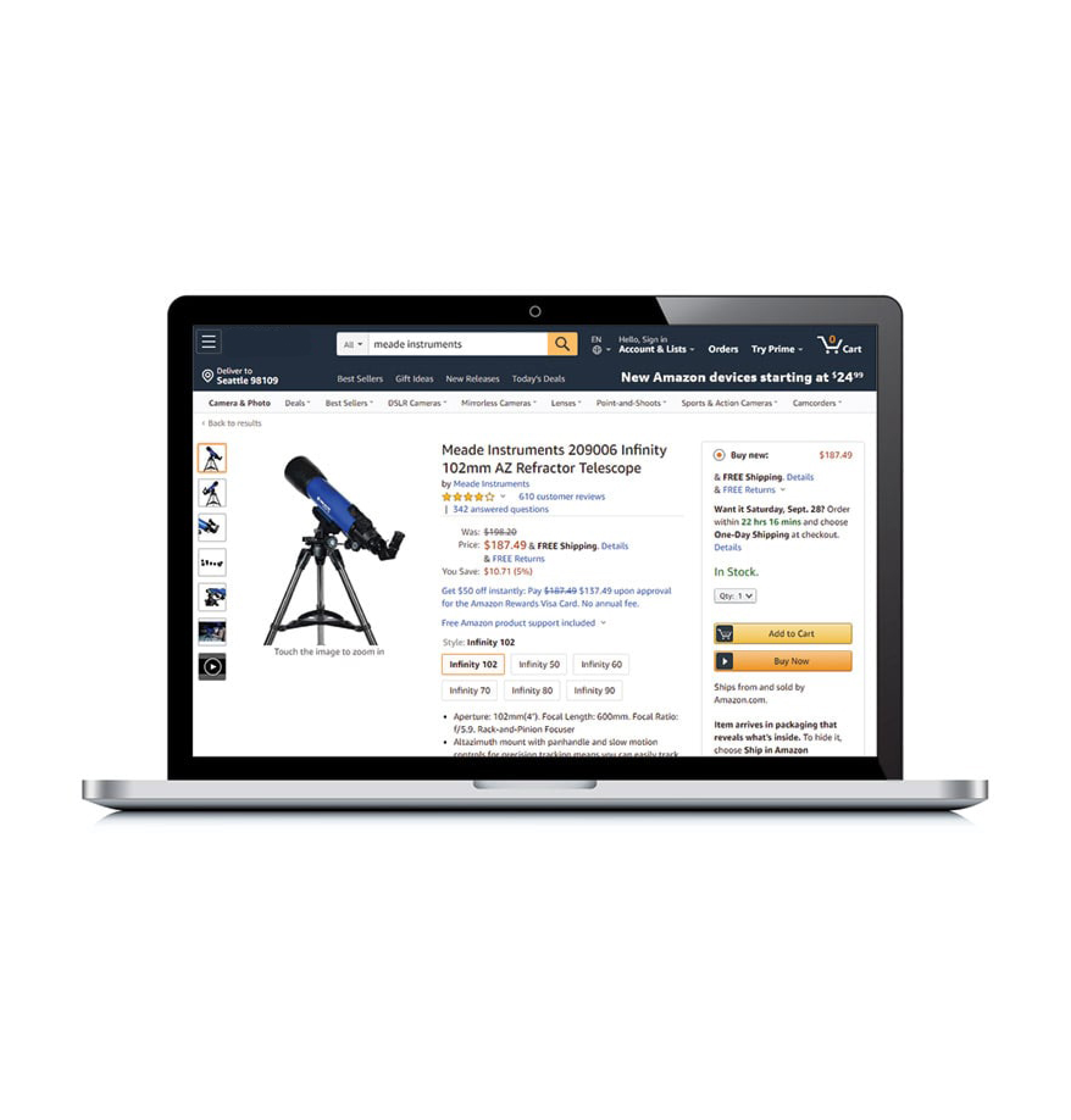
Amazon product detail page image

Maximize your Amazon success with a strategic partner.

amazon ads partner badge


We’re the expansion pack that leading brands leverage to accelerate growth through embedded Amazon strategy. Combining repeat wins as AdExchanger’s Best Commerce Agency with AdWeek’s inaugural AI Agency of the Year. We deliver world-class Amazon conversion-driven strategy, execution, management and operational support with tactical advertising and conversion content performance, backed by a full suite of tech capabilities to solve any problem you may face as your business scales.


  1. Full-service management on Amazon • We offer comprehensive Amazon management services to help you get in front of your customers and achieve long-term growth, on and off the platform.

  2. Amazon platform illustration

    From Amazon Sponsored Ads (PPC) to Amazon DSP, our combined value of talent + technology helps you maximize your ad spend, measure results, and drive remarkable sales.

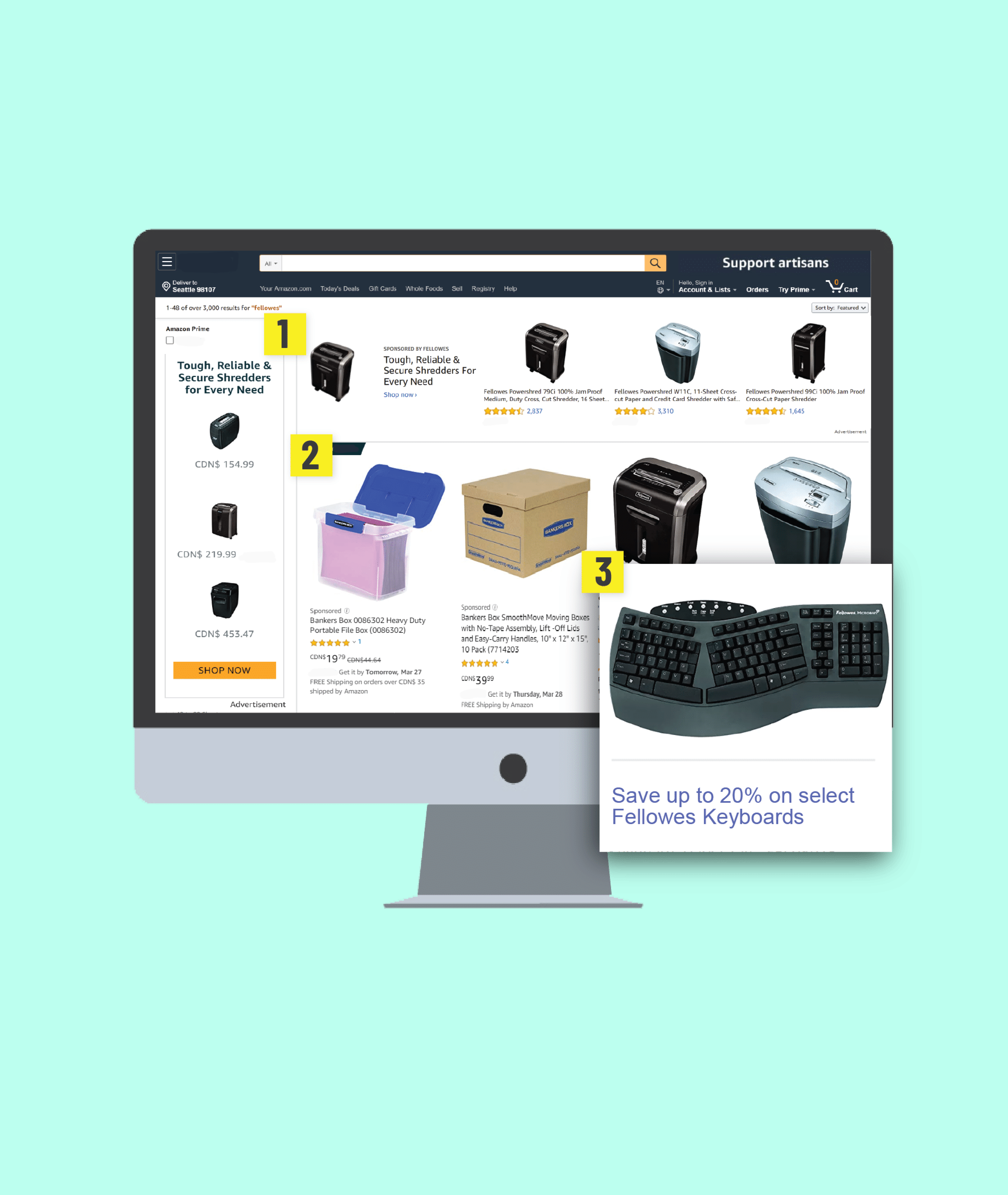
  3. Illustrative desktop with ecommerce ads

    We design and optimize best-in-class product listings and utilize top-industry software tools to build brands' share of voice, increase discoverability, and drive customer loyalty.

  4. Illustration showing a person leaving a truck with boxes

    Our team offers forecasting & demand planning, 1P/3P strategy, review monitoring, profitability & pricing, and more to achieve operational success.

  5. A colorful chart trending upwards

    Flytedeck - Our state-of-the-art software gives our clients unprecedented visibility into their Amazon business and the technological edge over their competitors.

  6. Find out more about our Amazon services.

Swipe
For More!

Drag
For More!

Badges of Retail and Ecommerce awards that Monks has won, including AdExchanger Award for Best Commerce Services, Amazon Ads Partner Awards, and NRF's Retail Voice Award 2026

Start growing your Amazon business today.

Hey👋

Please fill out the following quick questions so we can learn more about your amazon business.

Logos of notable brands that we have worked with

In partnership with

  • Reebok
Client Words We selected Monks from a group of their peers and couldn't be happier with the choice. Their command of the Amazon platform is second to none.
Reebok logo in black

AJ Purpura

Senior Key Accounts Manager

This how we launch on Amazon

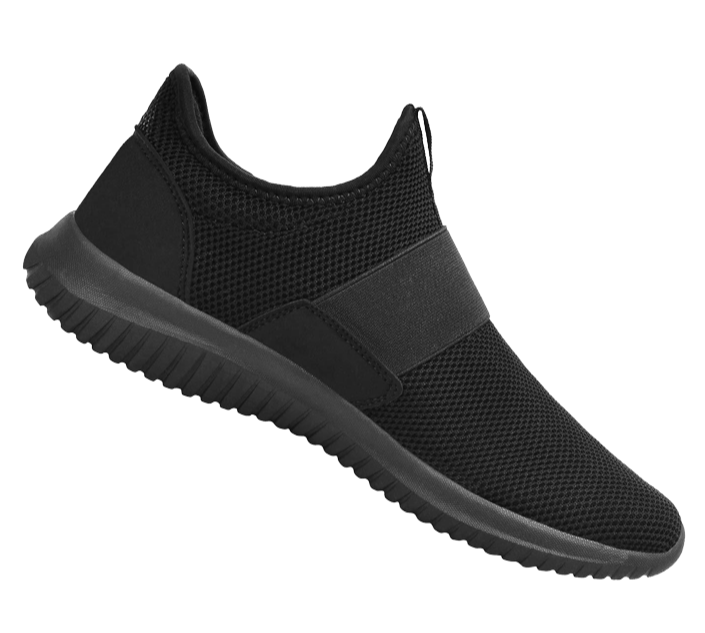
A black reebok shoe
Reebok logo
A person doing crossfit climbing a rope

Case Study

Amazon Sponsored Advertising •Facing relentless competition on Amazon, we helped Reebok turn the tide with a restructured PPC strategy that resulted in a 106% increase in month-one sales.

See Full Case Study

Contact us today to learn more about our Amazon services.

Hey👋

Let us know how we can reach you and discuss how to grow your Amazon business.

Interested in more? Here's some related Amazon advertising content.

A black reebok shoe
Reebok logo
A person doing crossfit climbing a rope

Amazon Sponsored Advertising • Doubling Reebok’s month-one Sales while reducing ACoS

  • Client

    Reebok

  • Solutions

    MediaPerformance MediaPaid SearchCommerce

A red background holding a tablet with the reebok amazon page

An exercise to get PPC in shape.

Reebok is a global fitness brand with a wide catalog of products from athletic to fashion footwear. While the ubiquity of the brand produced ample organic search traffic on Amazon, the storied shoemaker was struggling to gain new customers and fend off competitors due to various structural inefficiencies in their Amazon Pay Per Click (PPC) strategy. With a need to defend their brand and reach new Amazon customers, we partnered with Reebok to restructure their Amazon PPC strategy.

A shoe-in sales strategy to meet high-priority goals.

Reebok's primary goal was to drive top-line sales. Together, we designed an advertising strategy to promote best-selling products and other high-priority items that lined up with initiatives Reebok was running both on and off the Amazon platform. By shifting marketing budget toward high-priority items and optimizing high-traffic content first, Reebok was able to lean into their strengths to drive incremental growth. Throughout this process, efficiency was key; because advertising campaigns were organized by specific category type, Reebok could easily swap out products for new priority items without sacrificing keyword relevancy.

A tablet showing a line graph trending down

Keeping the pace for long-term success.

On a platform known for disruption like Amazon, it's important for brands of all sizes to get noticed. So while driving sales was always the top goal, we understood the value in building brand awareness. This took shape through several Sponsored Brand campaigns that increased Reebok's share of voice and new-to-brand sales.

Finally, for brands like Reebok who are subject to conquesting on the platform, brand keyword defense is crucial. Instead of starting out with a high number of keywords within their campaigns, Reebok utilized phrase and exact match to strategically add keywords over time as campaign performance grew. Together, these strategies helped carry the footwear icon beyond short-term sales goals and into long-term success.

Want to talk performance? Get in touch.

Hey 👋

Please fill out the following quick questions so our team can get in touch with you.

Can’t get enough? Here is some related work for you!

Performance

Scale your brand through performance-driven, results-oriented strategies.

  • Annualized
    Growth

    56%

  • Happy
    Clients

    650+

A woman and a boy stare at each other with a little gofundme graphic next to them
Two women with laptops are working together happily at a media.monks office

Performance-first, always-testing, data-driven, growth-obsessed media and creative expansion pack for your brand.

In a world of accelerating digital transformation, performance marketing reigns supreme by driving direct revenue, leads, or new customers through innovative strategies. That's why our team is designed to build always-on growth machines rooted in a deep understanding of your business—and the metrics that truly matter. From Search to Programmatic to Amazon and more, we use media, creative, and data to scale the world’s fastest growing digital brands. The best part? We measure it all.

Start your new digital growth engine right now.

Hey👋

Let us know a little about you so we can connect you with the right monk.

Paid Search

Drive results with paid search marketing.

No matter your goal, search engine marketing is a foundational digital marketing channel—meaning you don't just want clicks; you want results. Working as an extension of your team, our best-in-class paid search experts and data-driven approach are designed to maximize your investment by providing you with measurable results to fuel your growth. Go beyond just placing ads and changing bids and unlock insights that can profoundly change your business for the better.

Enterprise growth within reach

  1. Work

    Audience-Based Market Growth • Leading Human Capital Management SaaS platform Paycor hired us to segment and increase small/medium business leads for search.

  2. Two performance.monks in a meeting

    Together we matched audiences by cross-referencing known audience data from Paycor's CRM with searchers who are already categorized and known to Google.

  3. A person sitting at their desk using paycor on a tablet
    A paycor interface tracking data
  4. Using our Compass reporting tool, Paycor integrated their CRM data to analyze keyword groups based on historical behavior.

    These insights allowed teams to categorize search markets and personalize the customer journey. For the key SMB audience, teams were able to add price and funnel-specific language to ad messaging for those closer to the purchasing decision, resulting in a 67% increase in ad CTR.

    This kind of specificity had not been possible before, resulting in a 240% increase in leads and a 63% improvement in cost per acquisition.

  5. Interested in hearing more? Check out the full Paycor story:

Swipe
For More!

Drag
For More!

Paid Social

Supercharge paid social growth.

The customer acquisition power of paid social is paramount to any successful digital marketing strategy, with highly specific audience data providing targeting opportunities that are simply unavailable elsewhere. Whether it's with established social partners or emerging platforms, our team of experts will maximize your brand's impact and drive significant growth.

Test your way to performance that sticks

different colored headbands
clothing items lying on a white background
A woman lying on a white bed with a robe and towel

Case Study

High-Performance Social Campaigns •We helped D2C lifestyle brand Hill House Home stand out in the fiercely competitive social space to achieve dream performance results: a 250% increase in new customers.

See Full Case Study

Performance Creative

Make it personal with performance creative.

Creative is key to driving strong performance results and reducing ad fatigue. Founded on a rigorous iterative testing methodology, we produce video and design content at scale to deliver your brand’s message in a highly engaging and personalized way. All creative is based on quantitative insights that build brand equity and grow alongside your creative ambition.

A woman stretching on a bed with white sheets and linens
hatch restore on a nightstand

Case Study

High-Performance Ad Creative •Leveraging our insights in creative performance, we partnered with Hatch to help accelerate their creative output and keep up with growing demand.

See Full Case Study
An amazon page open in a google chrome browser
Monk Thoughts The future of performance media is where media and creative meet. The advertisers who win will be the ones who can marry brand knowledge, performance expertise, creative thinking, and AI prompt engineering.
Tory Lariar in front of a blurred white background

Marketplace

Master the customer journey on Amazon & beyond.

Ecommerce marketplaces are dynamic and require skillfully implemented cutting-edge strategies—and for high-growth brands, a performance-first partner is key. We’re a leading team of ecommerce marketplace experts and thought leaders who are fluent in the growth-obsessed mindset. From advertising and content optimization to account management and strategic consulting, we cover every stage of the customer journey.

Want to talk performance marketing? Get in touch.

Hey👋

Please fill out the following quick questions so our team can get in touch with you.

Here's more on performance

5 Steps to Product Launch on Amazon

5 Steps to Product Launch on Amazon

6 min read
Profile picture for user karleigh-roberts

Written by
Karleigh Roberts

5 Steps to Product Launch on Amazon in 2021

Launching a new product on Amazon is like being thrown into the cockpit of a plane in flight. There are dozens of levers and flashing buttons but no clear indication of how to stay in the air.

It’s not enough to have an amazing product. And shoveling loads of cash into advertising simply does not work. The truth is, rushing what should be a detailed and incremental process quickly turns an all-but-guaranteed success into an expensive and underwhelming cold-start.

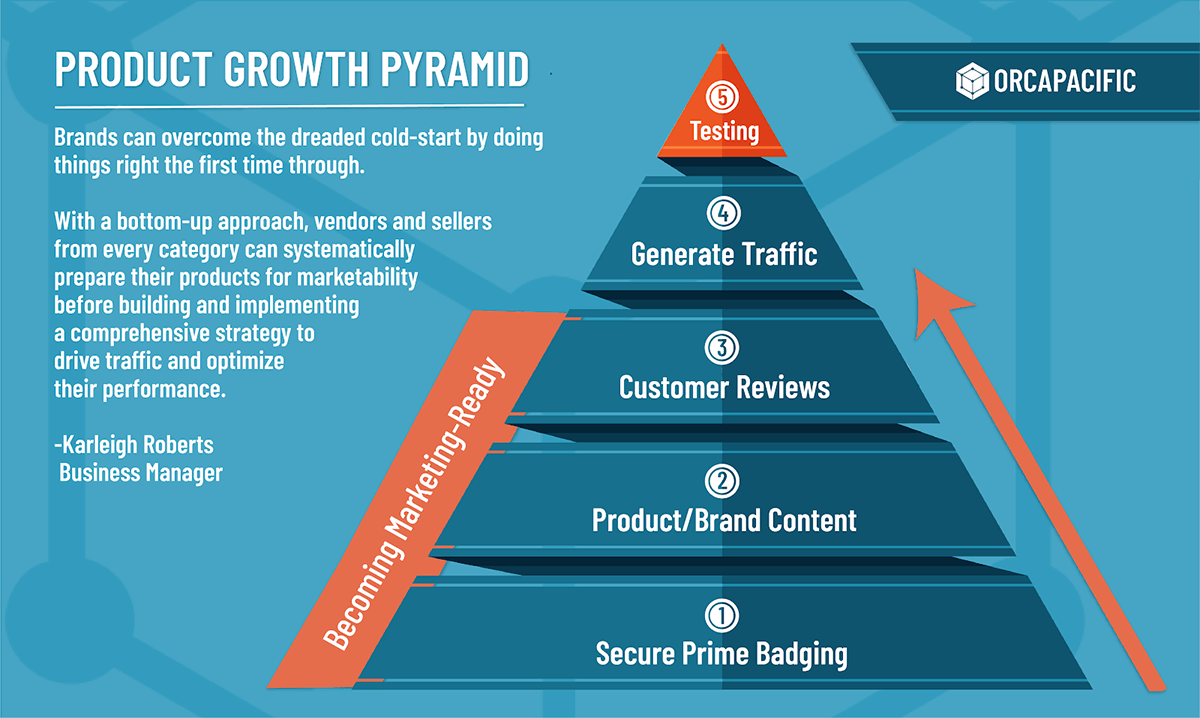
Successful product onboarding requires a step-by-step plan that leverages Amazon’s algorithm and accounts for the unique challenges that new products are likely to face. With a bottom-up account management approach, brands of all kinds can systematically prepare their products for marketability before implementing a comprehensive strategy to drive customer traffic and optimize performance.

If you read my instructions carefully, you can land this plane and make it safely to the bank.

Strategies For Launching a New Product on Amazon
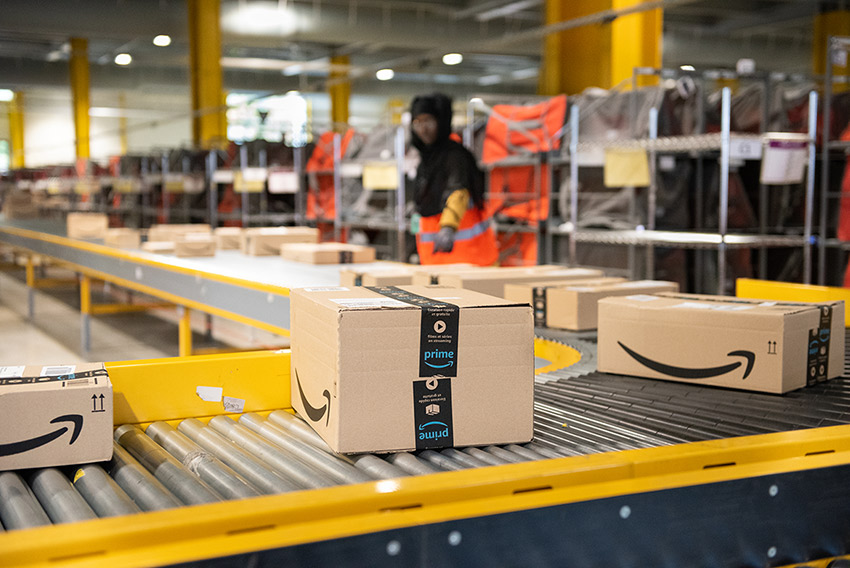
Amazon Product Launch

Step #1: Secure the Prime Badge

Always (and I mean always) start with securing your Amazon Prime badge. It’s the marker that lets a customer know that your product can be reliably and safely shipped to their front door in two days or less.

For over a decade, Amazon has been investing in its promise to the Amazon Prime customer. So it’s no surprise that customer conversion drastically increases when a product receives the Prime badge, leading to an average sales lift of over 50%. This is, in part, because Amazon’s search algorithm is more likely to place Prime-eligible products in front of Prime shoppers who spend more time and money on the platform.

Most first-party vendors are Prime eligible by virtue of selling wholesale to Amazon. However, third-party sellers need to take extra steps to receive the badge. One option is to enroll in FBA (Fulfilled by Amazon), a popular fulfillment option which allows sellers to fulfill their orders from Amazon warehouses while maintaining ownership over the products.

Related Article: Amazon 1P vs 3P vs Hybrid – How to Choose the Right Supply Method

Although FBA is not the only way that brands can receive the all-important Prime badge. Those who utilize the Fulfilled by Merchant (FBM) program to ship products directly to consumers can apply for Seller Fulfilled Prime if they can prove their ability to reliably and consistently meet the Prime shipping standards. Seller Fulfilled Prime products appear on the platform like other Prime products but are shipped directly from the seller. While the program is not currently accepting new enrollment, brands can get on Amazon’s waitlist here.

Step #2: Product and Brand Content

Often when on-boarding new products, brands are eager to begin driving customer traffic with advertising campaigns and promotions. But without high-quality content to communicate product value and drive conversion, their advertising budget is wasted on low sales volume. That’s why establishing optimized basic and enhanced content is a crucial step that should be taken early on in the product onboarding journey.

It should be noted, though, that high-quality content is not as cut-and-dried as Prime badging. Good content can look different from one product to the next dependent upon the category and target customer base. Lifestyle images may be more important, for instance, on a fashion product than on office supplies.

Though making too many category generalizations can lead to an oversimplified approach. Instead, brands should be catering to a clearly defined avatar who represents a psychographic conception of their ideal customer. Every creative decision thereafter should be made with that avatar in mind. And as a rule, the more impactful that content is for the avatar, the more likely customers will be to convert.
Strategies for Launching a Product on Amazon

Another overlooked aspect of content is mobile optimization. This means ensuring that your content follows Amazon’s best practices for mobile devices by literally thumbing through your content on a mobile device to make sure that it renders well. Sometimes images will appear pixelated or oddly cropped when viewing in mobile, so taking the time to check is imperative, especially considering that almost 60% of customers are shopping on mobile.

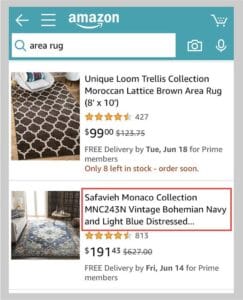
Be sure to also check your product titles while on mobile, as they can often become shortened. If you don’t include your relevant keywords early in the title, Amazon shoppers might see your “Tropical, 8×11, hand-made, fits well in your home…” as a picture frame instead of an area rug.

Lastly, brands with an existing catalog should set up a brand store (if they haven’t already). This is an exclusive page for your brand hosted on Amazon featuring grouped product listings, branded video and image content, product comparison charts, and much more. These online storefronts are a huge opportunity for brands because they allow for a catered brand experience without the concern of competitors advertising on the page. They are also an ideal location to highlight newly launched products. By listing “New Arrivals” next to “Best-Sellers,” existing traffic and customer interest can be leveraged to kickstart new products.

Step #3: Customer Reviews

Over 49% of customers listed reviews as their primary influence. In other words, half of all customers want a review to verify their purchase decision. This statistic alone should encourage brands to establish a basis of reviews before driving traffic to their products. But further still, for customers (like myself) who filter their searches based on review quality, products without reviews are immediately dropped out of consideration. So it’s clear that getting even a handful of initial reviews can help get a product marketing-ready. Unfortunately, getting reviews can be easier said than done. After all, the average organic review rate is around 2%. In other words, you have to sell 50 products to get one review.
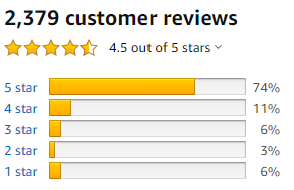
Amazon Reviews

Amazon does have a program to speed up the process Amazon Vine. However, this program requires some level of sales to work properly. And since reviews are needed to drive conversion, these options are often best suited for after a baseline of reviews has already been set and a product is marketing-ready.

There are other options that have been shown to reliably improve your product review rate. One of which is Buyer-Seller messaging, a free program for third-party sellers whereby brands can send a customizable message out to customers after purchase. Brands can include useful information to their customers like tips for product use, maintenance instructions, and even creative add-ons like recipes or word games. Of course, the additional touchpoint also serves as an avenue for requesting product feedback with a simple message like, “Tell us how we did.” While you can’t incentivize feedback or request positive reviews, the messaging is still an effective method for increasing review rate, often bumping the average up to 5 or 6%.

Step #4: Traffic, Traffic, Traffic

You’re finally there. You patiently took the prior steps to ensure the highest level of conversion. Now your product marketing-ready, meaning everyone’s favorite word finally comes into play. Traffic, traffic, traffic.

Advertising for new products should be hitting both sides of the funnel. Search advertising should include spending on broad keywords, with emphasis on driving traffic and increasing brand awareness, as well as detailed keywords to drive conversion and increase organic search rank.

But ranking and algorithms also take into account external traffic. So brands with the financial bandwidth should also utilize Amazon DSP (Demand-Side Platform) to deliver customizable display advertisements across the web to customers targeted using Amazon shopper data.

In addition to DSP, external traffic can be driven using social media, blogs, and any other brand-controlled online presence. The key to generating higher relevance is capitalizing on every possible avenue for traffic to your new product.

Step #5: Testing and Optimization

Above all else, brands want a guarantee that their new products will be successful. And while certainty is hard to come by on Amazon, there are ways to check your work and optimize for better performance.

Optimizing and problem solving based on metrics is only possible when the prior four steps have been checked-off. Otherwise, the number of variables lead to crowded explanations for poor performance.  Conversion across Amazon averages out to about 5-6% but varies based on price point and category. New products might land a bit lower, but if you are hitting anywhere below 1% conversion, you should start digging.

Is my content targeting the correct customer avatar? Do I have enough reviews? 

Are my ad strategies effectively hitting both the upper and lower parts of the marketing funnel?

Organic keyword rank is a good indicator of the overall performance of your new product. When the above steps are working in tandem, you should see your rank slowly increase over the first weeks. Are you stuck on the 300th page? Or have you moved up to the 100th page?

Another option is to do some A/B testing. This means testing out different images for your products, allocating advertising spend differently, and generally testing the performance of your product after tweaking. But remember to only change one variable at a time, otherwise you will be unsure as to what is truly making the difference.

Lastly, brands should take a look at their competitors and evaluate how their strategies differ. Perhaps the top-10 brands in your category are all designing content for a customer avatar different than your own. Or maybe they are all offering promotions and undercutting your product’s price. Taking lessons from those who have already established success can give you a leg-up when searching for ways to optimize your own strategy.

Final Thoughts:

Launching a new product on Amazon can be one of the more difficult tasks brands face on the platform. After all, the marketplace favors products with established sales momentum. But by executing a plan based on long-term lift, products can break into the pack.

There is no exact timeline for launching products. For some products, sales momentum picks up almost immediately. For others, it can take upwards of 90 days. The key is to pull the right levers in the right order and maintain patience as you prepare your product for an influx of traffic. Once the traffic hits, constantly work to maintain lift. And before you know it, your product will have taken flight.

Planning an Amazon product launch? Follow these 5 steps to prepare, launch and set your new product up for growth on Amazon. 5 Steps to Product Launch on Amazon in 2021 Launching a new product on Amazon is like being thrown into the cockpit of a plane in flight. There are dozens of levers and flashing buttons but no clear indication of how to stay in the air.
amazon ecommerce

How to Sell Internationally with Amazon Global Selling

How to Sell Internationally with Amazon Global Selling

5 min read
Profile picture for user mediamonks

Written by
Monks

How to Sell Internationally with Amazon Global Selling

The pandemic has accelerated the inevitable rise of online shopping around the world. Record numbers of shoppers worldwide are turning to Amazon for the very first time to fulfill their everyday buying needs. In response, brands of all categories and sizes have recognized the surge of global traffic as an opportunity to utilize Amazon’s vast network to expand into new international markets throughout North America, Europe, Asia, and the Middle East.


Amazon’s Global Selling program makes global expansion possible for many brands who otherwise wouldn’t have access to international markets. Below, we’ll explore what Amazon’s Global Selling program is and how to get started.

What is Amazon Global Selling?

Amazon’s Global Selling program is designed to help sellers leverage Amazon’s platform and fulfillment network to reach millions of buyers around the world.


“With over 150 million paid Prime members globally and over 300 million active customer accounts worldwide, you can leverage Amazon’s global scale using Amazon’s state-of-the-art international logistics capabilities.” – Amazon

Amazon Global Selling

How to Sell Internationally on Amazon

While Amazon’s network makes international selling easier, it’s not as simple as just listing your products in another market. Brands who decide to go global should expect to spend time handling taxes, shipping restrictions, customs, product regulations, language barriers, among other potential roadblocks. By following the below steps, you can handle each of these factors without major setbacks.

1. Determine Your Marketplace(s)

Start by selecting the right Amazon global marketplace(s) for your brand. As of 2021, there are 17 different sites globally:

Americas

  • US: Amazon.com
  • Canada: Amazon.ca
  • Mexico: Amazon.com.mx
  • Brazil: Amazon.com.br

Europe

  • Germany: Amazon.de
  • France: Amazon.fr
  • Italy: Amazon.it
  • Spain: Amazon.es
  • Netherlands: Amazon.nl
  • United Kingdom: Amazon.co.uk

Middle East

  • Turkey: Amazon.com.tr
  • Saudi Arabia: Amazon.sa
  • UAE: Amazon.ae

Asia-Pacific

  • Indonesia: Amazon.in
  • Australia: Amazon.com.au
  • Singapore: Amazon.sg
  • Japan: Amazon.co.jp

Some of these marketplaces are newly launched while others are well established, and each has its benefits and challenges. Opting for a well-established marketplace allows you to access a vast client base while posing cut-throat competition at the same time. 

On the other hand, a newly launched marketplace has low site visitors but little competition, allowing you to establish your brand on Amazon and build your momentum while advertising cost is low.

2. Register a Seller Account

Selling on Amazon requires you to open an Amazon Seller Central account, regardless of which marketplace you choose to operate in. For those who already have a seller account, an entirely new account must be created for each marketplace you want to operate in.


However, sellers who already have an account in North America or Europe have access to unified account features, meaning they can gain access to other countries in their region through a single account and without any additional setup fees. 

For instance, a unified seller account in the United Kingdom will allow you to access German, French, and Italian marketplaces without incurring extra expenses.


Listings do not automatically populate in these marketplaces just because a seller has a unified account, but they have immediate access to setup listings in those marketplaces.


Below are some of the details you will need to complete the registration process once you choose how to register.

  • Business name
  • Credit card number
  • Phone number and email address
  • Bank account information
  • Tax information

3. Choose Your Fulfillment Channel

There are two main ways to approach international product fulfillment. The first is to fulfill the orders on your own. That means you are responsible for shipping from end to end and must provide customer service in the official local language of the target marketplace.


This approach can lead to several challenges, and the cost of hiring a carrier that can ship internationally in addition to duties and customs can eat into your profits. There may also be an endless trail of returns and refunds, and dealing with these issues in international marketplaces is a daunting task. 

You can avoid all that by choosing Fulfilled-by-Amazon (FBA) as your fulfillment channel. Enrolling in FBA will reduce your shipping time, ensure your products are eligible for Amazon Prime, and all returns and customer support in the local language will be Amazon’s responsibility.

With Amazon FBA, your products are stored in fulfillment centers, and Amazon picks, packs, ships, and provides customer service. But is Fulfillment by Amazon (FBA) worth it?

4. Currency, Fees, Taxes, and Languages

Currency and Fees: 

Since various nations use different currencies, opting for Amazon’s Currency Converter for Sellers (ACCS) is advisable when selling internationally through Amazon. That way, you will receive payments from international buyers in their local currency, but the deposit into your account will be in the currency you use.

Amazon will charge a 4% fee, but sellers can save on that fee by setting up a bank account in the respective countries where they sell. 

Taxes:

Taxes will also come into play in global business transactions, and they differ from one country to another. For that reason, you need to conduct in-depth research on the taxes you will incur in the countries you sell, and hiring an expert to handle such a responsibility is a wise idea.

Languages:


When you scale your business into a new Amazon marketplace, something you should consider is how effectively you can operate in the local language. Local language proficiency is necessary for performing country-specific research and positioning your products accordingly with better titles, descriptions, etc. 

Amazon’s Seller Central Language Switcher allows brands to manage their operations in all of these Amazon marketplaces in English, enabling you to quickly get up to speed on your international business by providing you a familiar interface you can quickly learn to use.

5. List Your Products

When listing products on Amazon, you need to keep the following information handy.

  • Product images
  • Product ID
  • Search terms
  • Product title
  • Product description
  • Bullet points

There is no room for bulk listing across all marketplaces, which means that listing your products automatically is not an option. Translating your listing into the local language may also be necessary, and using Google Translate is not the solution here. Adding marketplace relevant local keywords is also necessary for organic ranking.

6. Get Your Products Retail Ready

A robust marketing plan will help ensure a successful launch of your products regardless of the marketplace. The priority as you start should be becoming retail-ready. This includes optimizing your content, incorporating the proper keywords in your listings, setting up your Prime shipping offer, generating reviews, and more.

Note: Reviews are specific to the marketplace where you sell, and they will not carry over.

Conclusion

The Amazon Global Selling program presents a world of opportunities. It can also become a major headache if not done properly. Planning out your expansion step by step and fully estimating the costs of fees, taxes, fulfillment, customer service, language translation, can make the difference between a successful expansion and an expensive mistake. 

How to sell internationally on Amazon with Global Selling: what the program is, how to expand to new marketplaces and what to plan for. How to Sell Internationally with Amazon Global Selling The pandemic has accelerated the inevitable rise of online shopping around the world. Record numbers of shoppers worldwide are turning to Amazon for the very first time to fulfill their everyday buying needs. In response, brands of all categories and sizes have recognized the surge of global traffic as an opportunity to utilize Amazon’s vast […]
amazon ecommerce

How to Get the Amazon Climate Pledge Friendly Badge

How to Get the Amazon Climate Pledge Friendly Badge

3 min read
Profile picture for user mediamonks

Written by
Monks

How to Get the Amazon Climate Pledge Friendly Badge

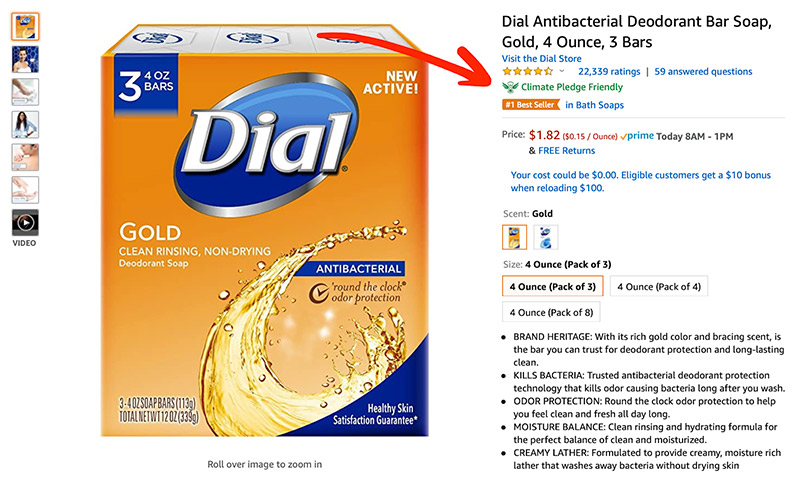
Amazon is making it easier for eco-conscious customers to discover and shop for green products. The Climate Pledge Friendly badge now highlights products on Amazon that meet certain third-party sustainability certifications such as ENERGYSTAR or Fairtrade.

The Climate Pledge Friendly badge is available for products across a wide range of categories including grocery, household, fashion, beauty, health, consumer electronics, and more.

Customers can see the badge on products as they scroll the search page or on product detail pages. Clicking on the badge allows customers to view which certifications the product meets and learn more about how those certifications positively impact the environment.

Amazon Climate Pledge Friendly Badge

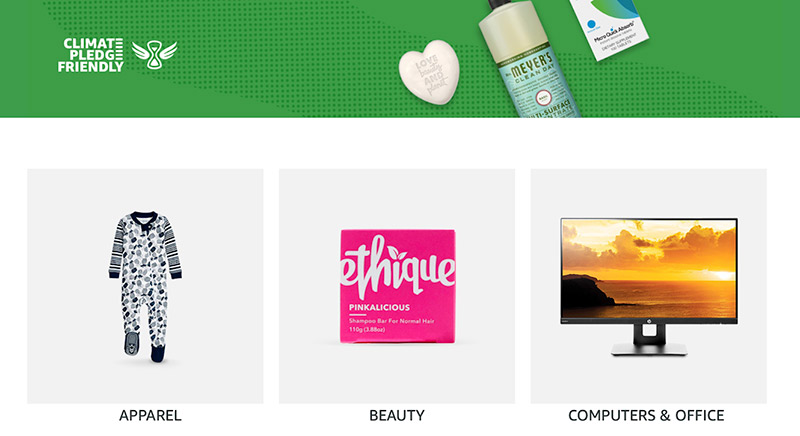
Amazon has also created a Climate Pledge Friendly storefront to allow customers to browse through certified products by category.

As more customers factor sustainability into their purchasing decisions, the new badge provides Amazon sellers with a unique opportunity to stand out against competitors as a greener option.

Amazon Climate Pledge Friendly Storefront

How to Get the Climate Pledge Friendly Badge

The Climate Pledge Friendly badge is specific to products, not to brand. To secure the badge, your product must be certified by one or more of the sustainability certifications partners listed on Amazon’s certification page.

(Note: Many certifications are specific to an industry.)

Climate Pledge Friendly Certification Partners

  1. ENERGY STAR Most Efficient
  2. Fairtrade International
  3. Bluesign
  4. Reducing CO2
  5. Carbon Free Certified
  6. ECOLOGO
  7. Cradle to Cradle Certified
  8. EPEAT
  9. Global Recycled Standard
  10. Green Seal
  11. Forest Stewardship Council
  12. Rainforest Alliance
  13. Recycled Claim Standard 100
  14. Recycled Claim Standard Blended
  15. Responsible Wool Standard
  16. Organic Content Standard 100
  17. Global Organic Textile Standard
  18. Made in Green by Oeko-Tex
  19. Amazon’s Compact by Design

Amazon has promised to “routinely evaluate and reassess the certification landscape,” so brands who carry certifications not included in the partnership could have the opportunity to qualify for Climate Pledge Friendly in the future.

Once your product is certified in one of the nineteen certifications, Amazon will automatically begin displaying the “Climate Pledge Friendly” badge and list each of your certifications. If the badge does not display, you should contact Amazon via Vendor or Seller Central to ensure the badge is added

(Tip: If your product is Climate Pledge Friendly, be sure to also call out your sustainability in your product detail page content and on your Amazon Storefront. This allows you to play off your certification to make the most of your eco-friendly value proposition. Read more about selling premium products on Amazon.)

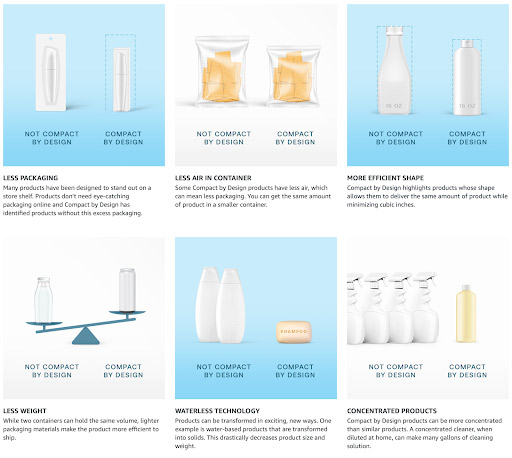
Amazon’s “Compact by Design” Certification

Along with their 18 other certification partners, Amazon created their own certification called “Compact by Design” which recognizes products that use efficient design. According to Amazon, removing excess air or water from products will result in less packaging and more efficient shipping. 

To qualify for Compact by Design, a product must have great “unit efficiency”. According to Amazon, a unit is defined as the “total amount of product in the container being evaluated” and is standardized across product categories (loads for detergent, ounces for coffee, etc.). You can find the “unit” listed in your product catalog in Seller Central or Vendor Central.

Amazon Compact by Design Certification

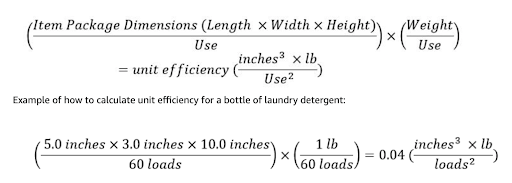
Calculating Unit Efficiency

Amazon calculates unit efficiency as: (cubed volume per unit) x (weight per unit). This metric allows Amazon to standardize the utilization of volume and weight for the units that any product delivers.

In this equation, having a lower unit efficiency value is good because it means that your product has a more efficient design. For example, a concentrated laundry detergent can deliver the same number of units (loads) in a smaller volume and weight than a non-concentrated detergent, resulting in a better unit efficiency.

Amazon sets category thresholds by calculating unit efficiency across all items in a product category. By having a better unit efficiency than your category’s threshold, you prove to be among the most Compact by Design in your category and receive the Climate Pledge Friendly badge.

The Future of Eco-Friendly Retail

Shopping behavior is changing. As more consumers look for ways to support sustainable products with their dollar, standing out as the “green” option can prove to be beneficial for your business on Amazon.

Another avenue Amazon has taken to be more eco-friendly is to provide options for Frustration-Free Packaging which is specifically designed to be unpacked without the hassle and generates minimal waste.

Just like organic certification, being Climate Pledge Friendly can often help justify a price difference to consumers who are willing to pay more for products that help preserve the natural world.

But the benefits aren’t just in the short term.

It’s also likely that Amazon will continue to promote its Climate Pledge Friendly products in new and exciting ways on the site. That means that early adoption in the free program can be extremely rewarding!

How to get the Climate Pledge Friendly badge on Amazon: what it is, which certifications qualify and how to apply for your products. How to Get the Amazon Climate Pledge Friendly Badge Eligibility for the Climate Pledge Friendly badge on Amazon products. The badge highlights products that meet sustainability certifications.
amazon ecommerce

Frustration-Free Packaging: An [Updated] Guide for Amazon Sellers in 2020

Frustration-Free Packaging: An [Updated] Guide for Amazon Sellers in 2020

4 min read
Profile picture for user kyleo

Written by
Kyle Olson

Frustration-Free Packaging: An [Updated] Guide for Amazon Sellers in 2020

[UPDATE, 2/25/20]

Amazon is now reducing the dimensions for oversize/non sort items to be exempted from SIOC. Right now, if any one side is smaller than the 9” x 6” x 0.375”, it does not need SIOC even if the other dimensions are above 18” x 14” x 8”. The new rule is reducing the exemption (minimum SIOC dimensions) to 6” x 4” x 0.375”, so items that were previously exempt may no longer be. Here’s a message from Amazon:

“We are making a reduction in the qualifying package dimensions for a product to require certification as Tier 1 – Frustration-Free Packaging (FFP) or Tier 2 – Ships in Own Container (SIOC).  Effective February 1, 2020, with a grace period until August 1, 2020, the minimum package dimensions that require certification of an ASIN as FFP or SIOC are 6″ x 4″ x 0.375″ (previously 9” x 6” x 0.375”). Any non-sort packaged item that is fulfilled through Amazon’s fulfillment network with any one or more of its dimensions less than 6 inches on it longest side, or less than 4 inches on its median side, or less than 0.375 inches on its shortest side is excluded from the SIOC chargeback.”

“If you ship your products in a small and thin package (longest side <6”, shortest side <0.375” or median side <4”), you don’t need to do anything at this time. However, if your package exceeds any of these limits on any side and is fulfilled in Amazon’s non-sort network, you must certify it as FFP (Tier 1) or SIOC (Tier 2), which was introduced in September 3, 2019.”

Amazon requires any product (a) larger than 18″ x 14″ x 8” and/or (b) weighing 20 lbs or more to be “designed and certified as ready-to-ship within Tier 1 (FFP) or Tier 2 (SIOC) of their Frustration-Free Packaging program.” The initiative is designed to reduce packaging waste and improve the unboxing experience for customers.

So what does Frustration-Free Packaging mean to sellers on Amazon?
And how do you go about making sure that your products are compliant?

We’ll answer these questions and many more in the guide below. Sit tight.

What is Frustration-Free Packaging?

Frustration-Free Packaging is that which is specifically designed to be unpacked without the hassle and generates minimal waste. Amazon deems the packaging “a critical component of providing a great customer experience and an important part of the sustainability mission at Amazon.”

Amazon first rolled out the Frustration Free Packaging program in 2008 to raise packaging standards for select brands. Since that time, the program has grown in scale and is now being extended to more products sold throughout Amazon by both 1P Vendors and 3P Sellers.

Why Should Vendors and Sellers Care?

The widespread rollout of Frustration-Free Packaging requirements indicates that Amazon is serious about improving packaging across their platform. Brands who ignore the requirements could be subject to chargebacks and other consequences which can stifle business. Taking care of product certifications early can be is best, especially as crucial high-traffic events approach. Additionally, participation in programs like Amazon Vine may be contingent upon product certification.

Other potential perks of the Frustration-Free Packaging program include:

  • Decreases in packaging and shipping costs
  • Happier customers and, thus, better reviews
  • More environmentally sustainable footprint
  • Greater Amazon search relevancy
  • Additional messaging on product detail pages
  • Much more…

What are the Packaging Requirements?

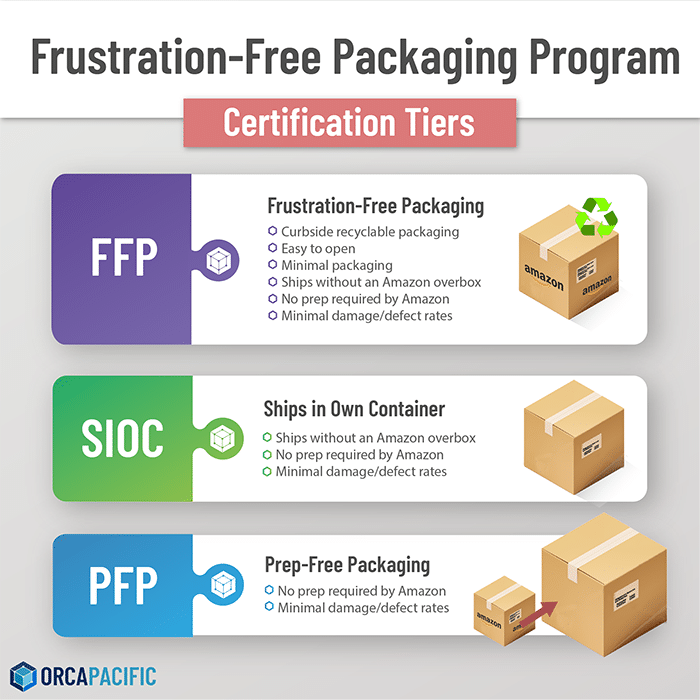
There are three certification tiers to Amazon’s Frustration-Free Packaging program:

  • Tier 1 | FFP (Frustration-Free Packaging)
  • Tier 2 | SIOC (Ships in Own Container)
  • Tier 3 | PFP (Prep-Free Packaging)

If you product is (a) larger than 18″ x 14″ x 8” and/or (b) weighs 20 lbs or more, it must be designed and certified as Tier 1 (FFP) or Tier 2 (SIOC) within the program. Here are the requirements for each tier:

Amazon Frustration-Free Packaging Certification

Tier 1 (FFP) Requirement: Easy to Open

According to Amazon, to qualify as easy-to-open “all contents of a package must be removable within 120 seconds” and require minimal use of cutting tools like scissors and/or box cutters. Additionally, packages with “blister packs, plastic inserts, packaging peanuts, shredded paper, or welded clam shells” are prohibited.

Tier 1 (FFP) Requirement: Recyclable Packaging

To qualify for Tier 1 (FFP), packages must be made of 100% curbside recyclable materials and be in compliance with all applicable packaging laws. Amazon lists the accepted materials as: “corrugated and other paper-based materials and/or plastic components marked with SPI codes 1 (PET), 2 (HDPE), and 5 (PP).”

Amazon notes that “printing and/or treatments must not affect recyclability of the package.” Plastic bags and twist ties are subject to more specific requirements outlined in Amazon’s full FFP document available here. Silica gel bags and plastic films that maintain product freshness are permitted.

Tier 1 & 2 (FFP) (SIOC) Requirement: Minimal Packaging

Amazon determines minimal packaging by “Box-Utilization Score,” a number achieved by calculating a product-to-package ratio (or the volume of the product, divided by the total volume of the packaging). The Box-Utilization Score must be “greater than 30% and 50% for fragile and non-fragile products”, respectively for Tier 1 (FFP) and Tier 2 (SIOC).

According to Amazon, fragile products include but are not limited to items containing:

  • Glass, ceramic/porcelain/clay
  • Liquid/semi-liquids; Solids that can become liquid at temperatures experienced during the distribution cycle (above 70°F or 21.1°C).
  • Electronics  easily damaged when dropped from 18 in. or 45.7 cm. without packaging.

Other Requirements and More Details:

For more specialized requirements and an outline of certification, look here.

How Do I Certify My Products?

To certify products in the Frustration-Free Packaging program, 1P Vendors and 3P Sellers must test the qualification of their product packaging with a third-party ISTA certified lab and submit the results to Amazon directly. However, prior to testing, it is important to “ensure you have performed the appropriate ISTA 6-Amazon.com test method and are confident that your product will pass.”

Amazon stresses that lab testing is only appropriate as a final step after already independently verifying that products meet packaging requirements. A list of third-party labs certified by ISTA to perform the appropriate tests methods has been provided by Amazon and can be viewed here.

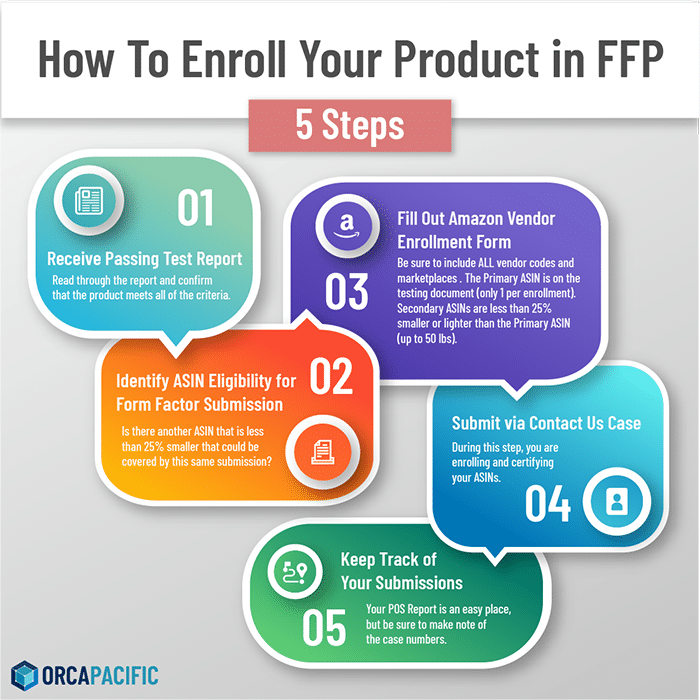
Once a product receives a passing test report, it can be submitted through the Contact Us portal within Vendor Central and Seller Central. Products must be ready to be shipped immediately upon approval or risk losing certification. Every submission and approval should be tracked to ensure proper catalog coverage.

Amazon outlines the certification process along with program case studies here.

How to Enroll in Amazon Frustration-Free Packaging

Final Thoughts on Frustration-Free Packaging:

Completing certification for Frustration-Free Packaging can seem confusing but as long as you follow the steps outlined above you will be able to take advantage of the benefits of easier-to-open and environmentally-friendly packaging.

What is Amazon Frustration-Free Packaging? Learn what FFP and SIOC are and what sellers need to know about Amazon's packaging requirements. Frustration-Free Packaging: An [Updated] Guide for Amazon Sellers in 2020 [UPDATE, 2/25/20] Amazon is now reducing the dimensions for oversize/non sort items to be exempted from SIOC. Right now, if any one side is smaller than the 9” x 6” x 0.375”, it does not need SIOC even if the other dimensions are above 18” x 14” x 8”. The new rule is reducing the [&hellip;]
amazon ecommerce

4 Ways You Can Benefit from Amazon FBA

4 Ways You Can Benefit from Amazon FBA

4 min read
Profile picture for user becky-ecomengine

Written by
Becky Trowbridge [Guest Contributor]

4 Ways You Can Benefit from Amazon FBA

Utilizing the Amazon FBA program (Fulfilled by Amazon) is a smart way to grow your business faster. You can trust Amazon to provide the quality customer service and quick fulfillment experience buyers have come to expect. That same consistency also pays off when it comes to maintaining your own seller health.

Whether you’re a long-time Amazon seller or just getting started, let’s explore four ways you can benefit from fulfilling orders with Amazon FBA.

Amazon FBA

What are the Benefits of Amazon FBA?

  1. Turbo Charge Business Growth
  2. Test International Expansion on Amazon
  3. Keep Your Amazon Seller Account Healthy
  4. No Warehouse Needed

1. Turbo Charge Business Growth

Amazon has built an incredible audience of millions of loyal Prime members. Enrolling your products in FBA makes them Prime-eligible, which is commonly used as a filter by Amazon shoppers who expect to receive their orders fast. Amazon fulfillment centers are equipped to get your orders on the way to buyers quickly, which benefits you in several ways.

For one thing, you can sell more products without needing additional staff to pick, pack, and ship orders. Shipping products to Amazon and managing FBA inventory is much simpler than managing inventory in your own warehouse unless you have a full-time operation and plenty of staff to ensure that products get out the door on time.

With FBA, you can add more products to your line without the need for extensive internal training. You can even pay an additional fee to have your inventory prepped, packaged, and/or labeled at the fulfillment center. Outsourcing these tasks makes it easy to continue to focus on building your business, because you can rest assured that the daily operations are running smoothly. Amazon has invested extensive time and money into developing an exceptional customer experience, and your business can reap the rewards.

2. Test International Expansion on Amazon

If you’re not already selling your products internationally, Amazon makes it easy to get started. For instance, the FBA Export program allows you to list your products on Amazon or your own site. Order fulfillment is a snap as Amazon exports your orders directly to customers in other countries.

You can also list and sell your products on several Amazon sites in other countries with Amazon Global Selling. Ship your products to the countries you want to list them in, and Amazon fulfillment centers in those locations will fulfill the orders for you.

If you’re located in North America, you can sign up for a North America Unified Account. Conveniently toggle between the Amazon.com, Amazon.ca, and Amazon.com.mx marketplaces to list products and manage orders. You can use FBA to fulfill your orders.

These options all provide an opportunity to test your products in other countries. This is particularly helpful for brands looking to increase recognition and reach wider audiences. Selling internationally through FBA Export or Amazon Global Selling is an easy way to dip a toe into new marketplaces to get an idea of demand and start to determine whether it makes sense to commit to truly building your brand in another location.

3. Keep Your Amazon Seller Account Healthy

Amazon doesn’t trust just anyone to sell products to its customers. As an Amazon seller, you are expected to meet and exceed Amazon’s expectations to provide a consistently positive experience for buyers. After all, many Amazon shoppers don’t even realize they are purchasing items from third-party sellers. Fulfilling orders with FBA helps you keep your seller account healthy by making it easy to meet Amazon’s performance standards.

Assuming there are no issues with the quality of your product, your main challenge is getting orders to buyers quickly and damage-free. Several of the performance metrics considered for your overall account health are only applicable to orders you fulfill outside of FBA: Cancellation Rate, Late Shipment Rate, Valid Tracking Rate, and On-Time Delivery Rate.

Another key measurement of your account health is the Order Defect Rate, which encompasses negative feedback, A-to-z Guarantee claims, and credit card chargebacks. You are less likely to receive any of these when fulfilling orders with Amazon FBA. If you do receive negative seller feedback for an order that was fulfilled by Amazon, the feedback may be struck through and will not affect your overall seller feedback score.

Shipping, professionalism, and customer service are all components of Amazon seller feedback which Amazon manages if you are using FBA to fulfill orders. In short, using Amazon’s logistics to ship your orders is one way to ensure that buyers consistently receive good service and get their orders quickly.

4. No Warehouse Needed

One of the main benefits of Amazon FBA is the ability to store your inventory at Amazon’s fulfillment centers. When you send in your shipment, Amazon will have you ship stock to different locations to ensure that your products can be delivered in a timely manner.

Selling products via FBA isn’t quite a “set it and forget it” process, though, which brings us to the importance of inventory management. Staying in stock without overstocking is key to your success. After all, Amazon charges a variety of fees for the services provided by FBA, including long term storage fees for items that haven’t sold in the past 365 days. You must have a good understanding of supply and demand to manage your Amazon inventory effectively.

Amazon’s warehouses are not meant to be long term storage facilities for products that don’t sell. Ideally, your products are selling steadily or experience increased sales due to seasonality. It’s important to keep your Amazon IPI healthy, which means avoiding excess inventory, maintaining good FBA sell-through and in-stock rates, and managing stranded inventory right away.

While you may need a large garage or local inventory storage facility to store additional inventory that is not yet needed at the fulfillment centers, you can save a lot of time and money by stocking the bulk of your inventory at FBA warehouses. Whether you’re renting or purchasing, maintaining your own warehouses can get very expensive, especially when repairs are needed or if property taxes are high in your area. You can scale faster without purchasing real estate by leveraging FBA to grow your business.

Get Growing with Amazon FBA

Amazon is an exciting platform with numerous opportunities but navigating all that it has to offer can be challenging. Combining Amazon’s FBA services with expert guidance can help you grow even faster.

What is Amazon FBA? Learn how Fulfillment by Amazon works, its four main benefits for sellers and when it makes sense for your business. 4 Ways You Can Benefit from Amazon FBA Utilizing Amazon FBA is a smart way to grow your business faster. You can trust Amazon to provide the quick fulfillment buyers expect.
amazon ecommerce

Choose your language

Choose your language

The website has been translated to English with the help of Humans and AI

Dismiss